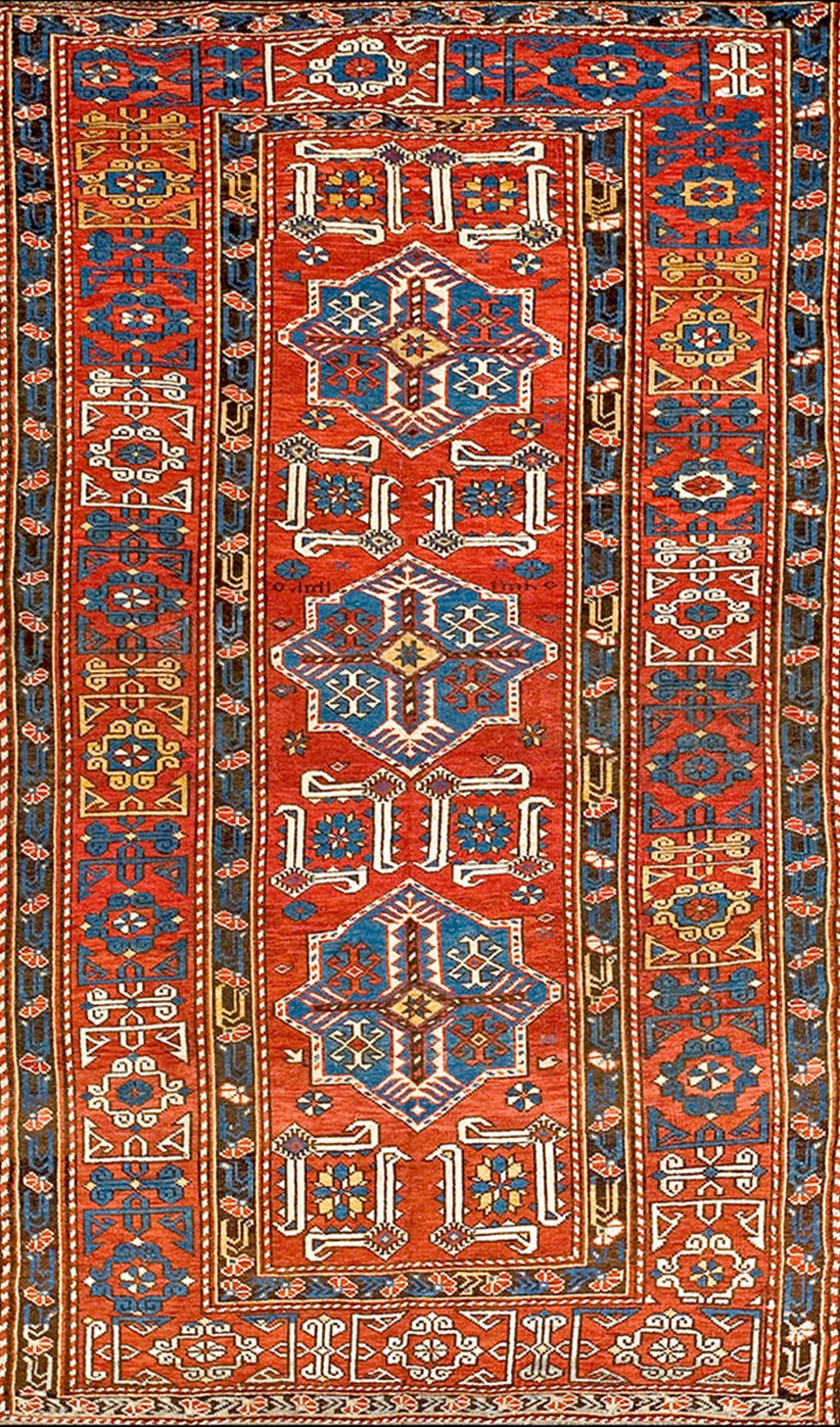
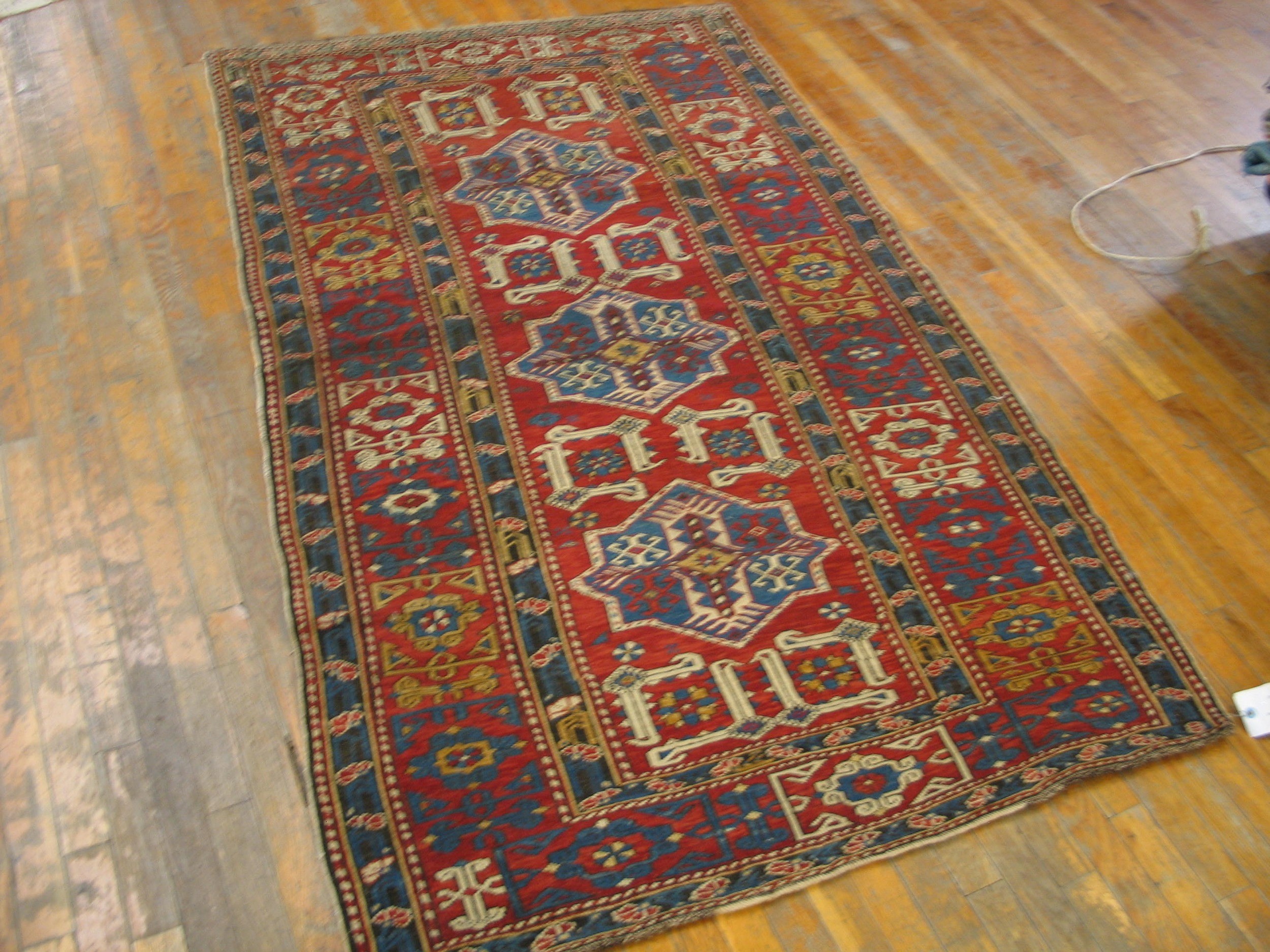
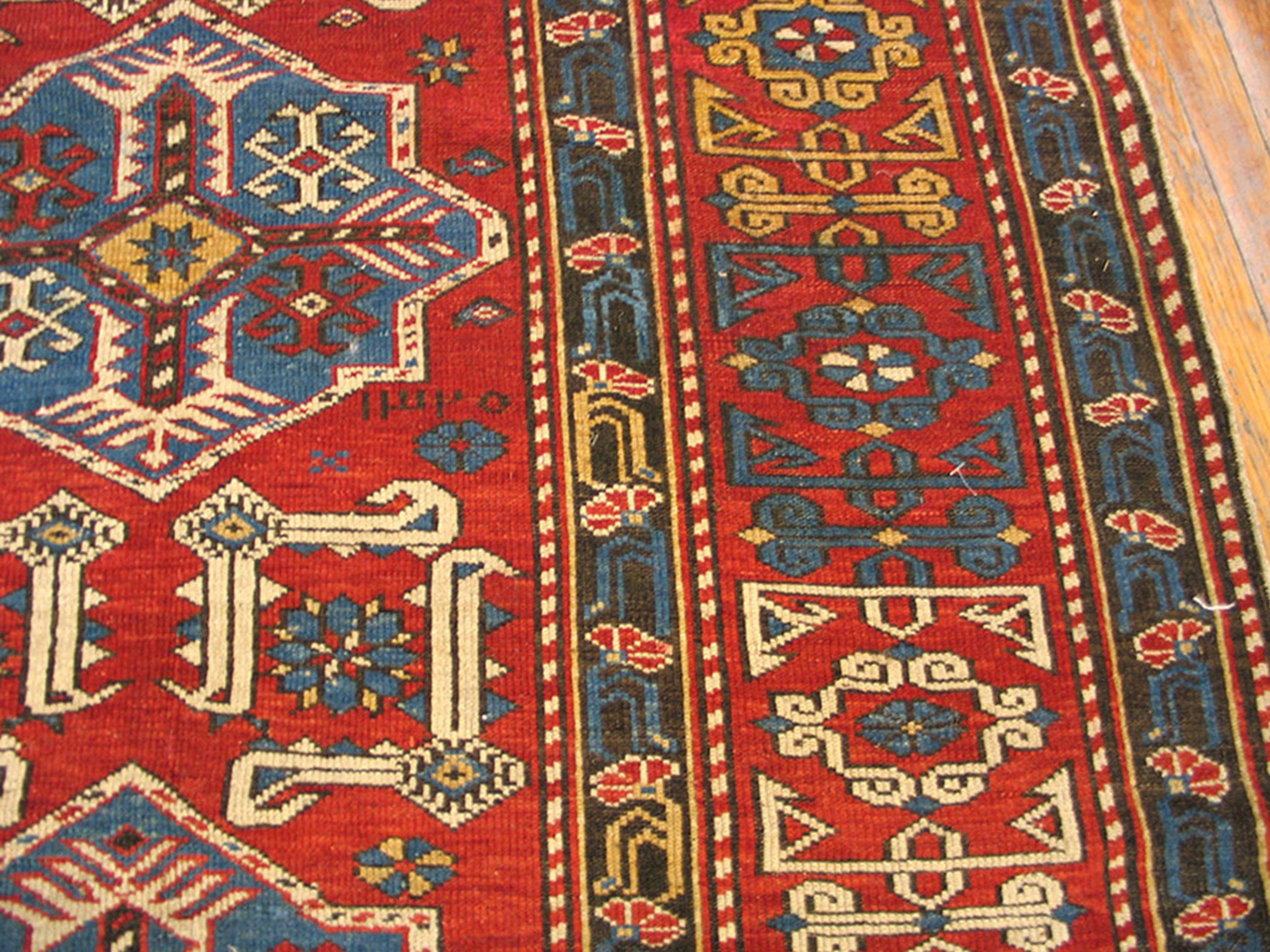
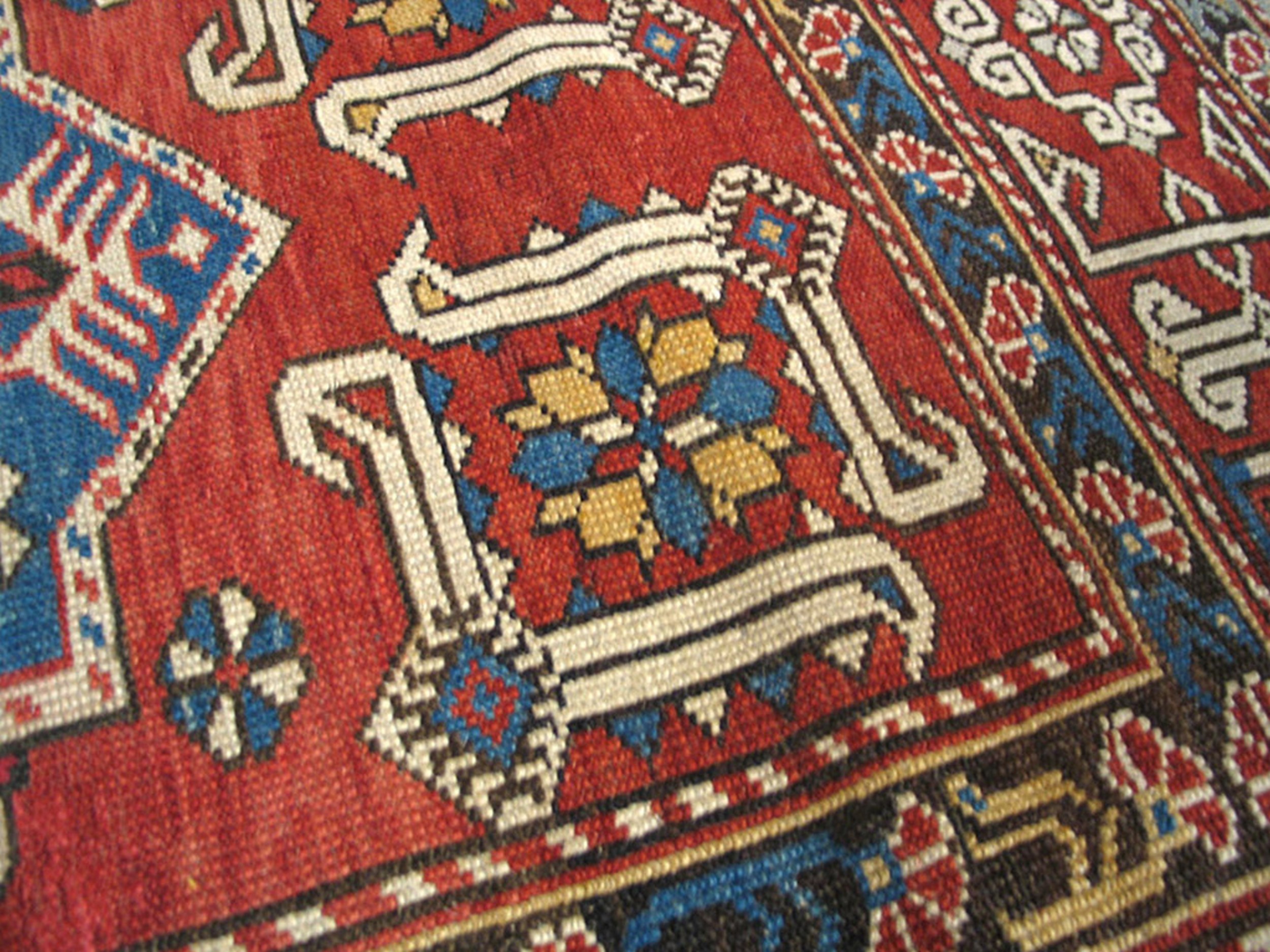
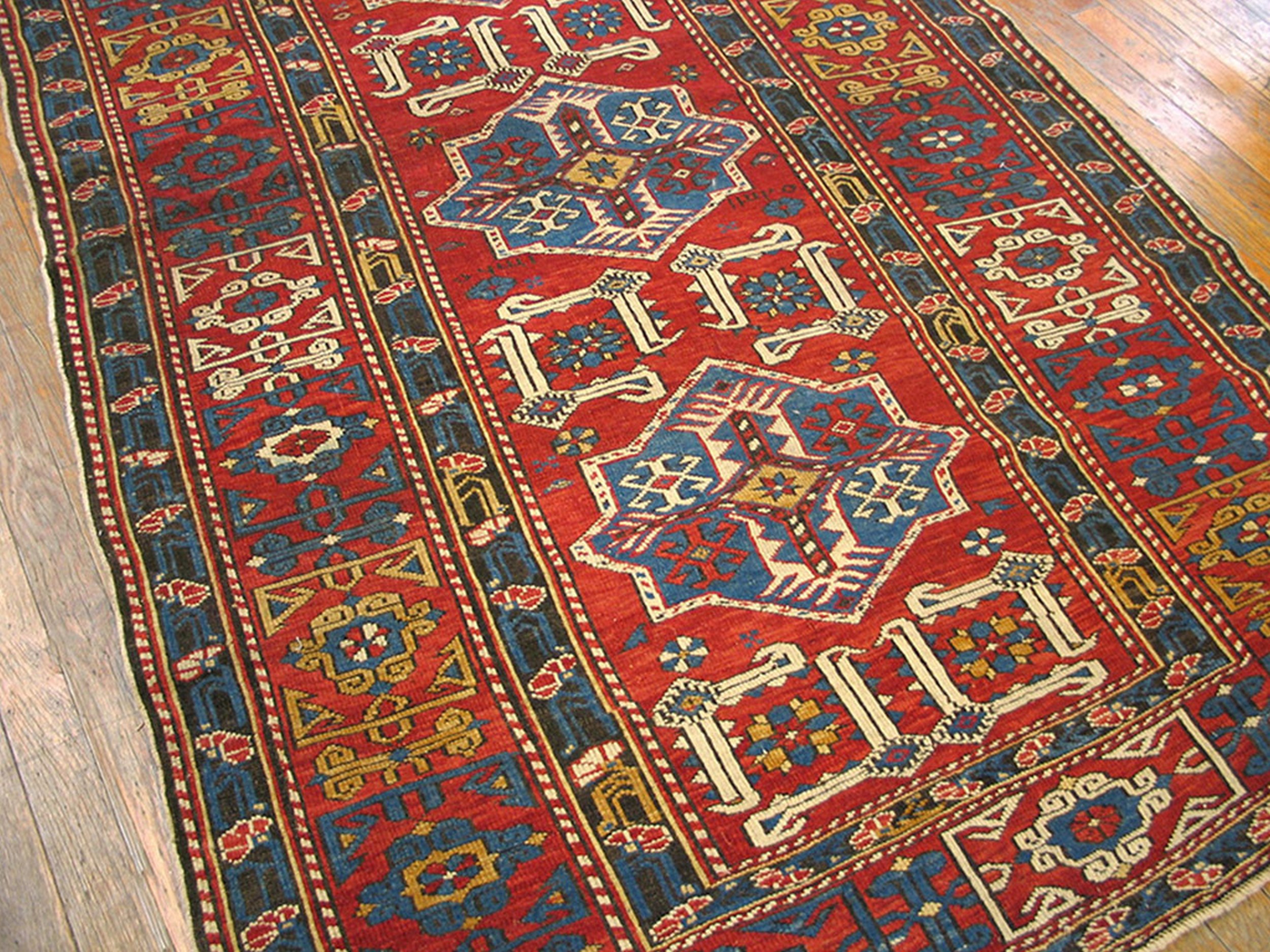
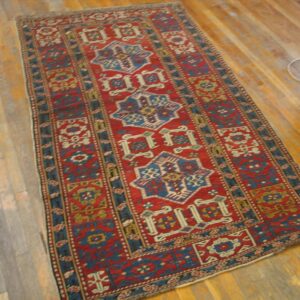
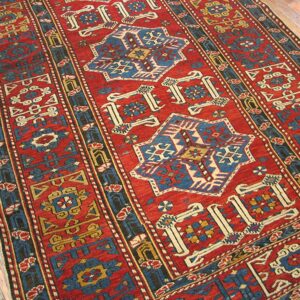
This late nineteenth-century Caucasian Shirvan tribal geometric rug is a vibrant and meticulously executed example of the “High-Art” tribal weaving tradition from the eastern Caucasus. While the neighboring Kazak weavers are celebrated for their thick pile and bold, sprawling motifs, the Shirvan aesthetic is defined by its crystalline clarity, finer weave, and sophisticated use of complex geometric symbolism. This specific specimen is a masterwork of chromatic energy, anchored by a “Bright and Bold” Red and Blue palette.
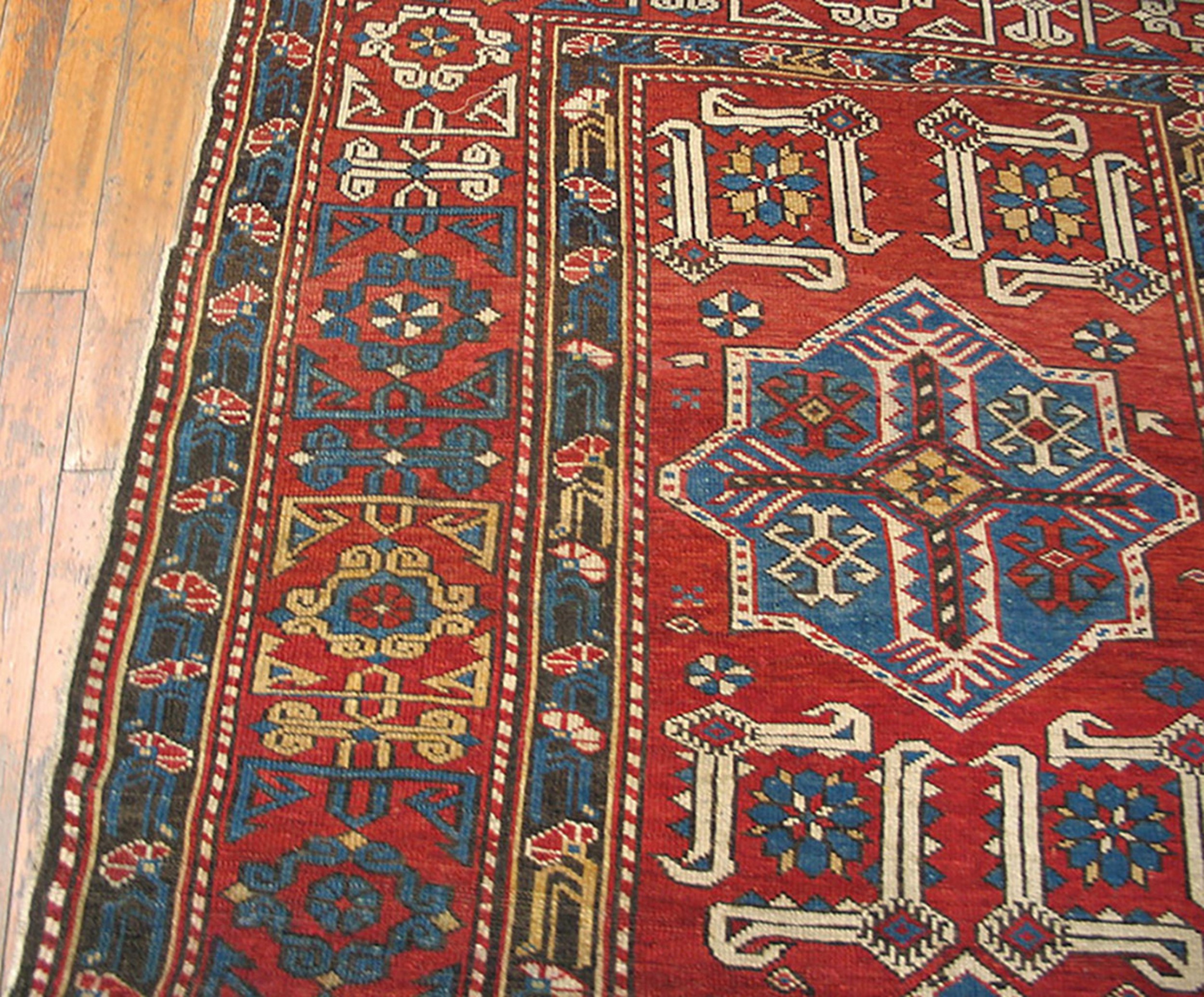
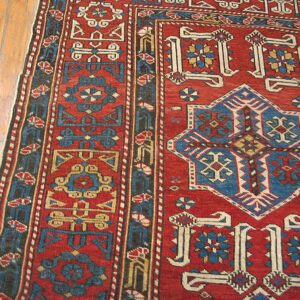
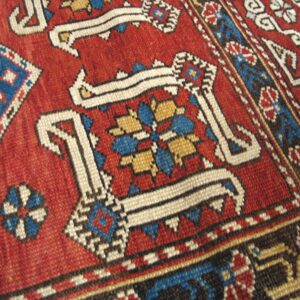
The composition is centered upon a series of rhythmic, highly geometric tribal medallions, often featuring the iconic “Lesghi Star” or “St. Andrew’s Cross” motifs. These elements are rendered with “razor-sharp” precision, emphasizing the weaver’s ability to maintain perfect mathematical symmetry within a hand-drawn framework. The field is typically populated with a “galaxy” of secondary symbols—eight-pointed stars, stylized birds, and “S-hook” protection motifs—each acting as a visual fragment of the weaver’s ancestral narrative.
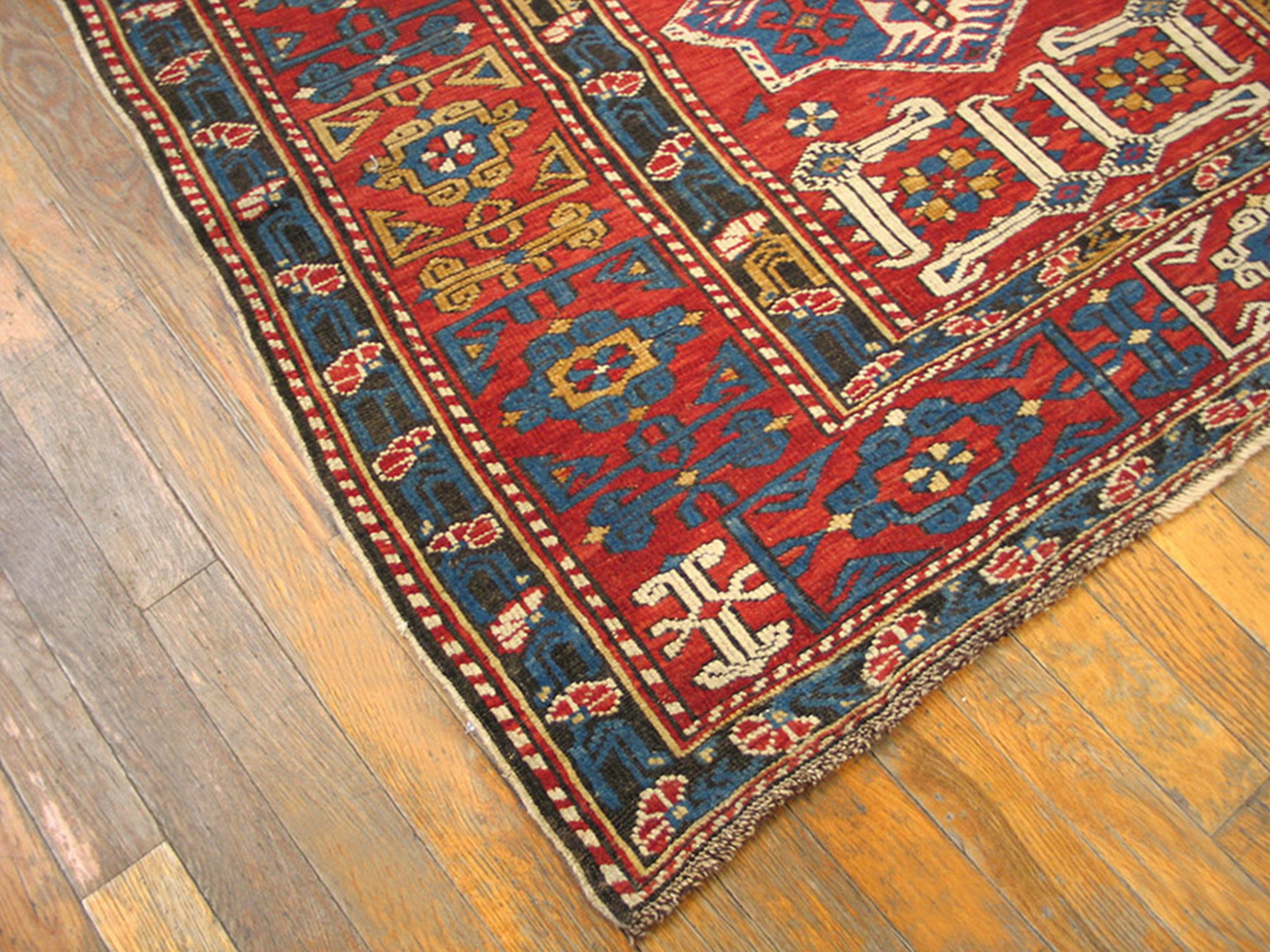
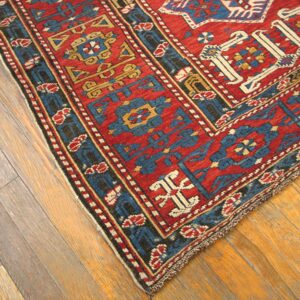
The palette is the defining feature of this textile. The juxtaposition of saturated Madder Red and deep Indigo Blue creates a high-contrast, “electric” visual energy. Because these colors were derived from natural vegetable dyes, they possess a magnificent abrash (tonal variation) that prevents the bold primary colors from appearing flat. Over more than a century, the red has matured into a spectrum ranging from terracotta to crimson, while the blue retains a shimmering, “ink-like” depth, giving the antique tribal patterned area rug a luminous, historical patina.
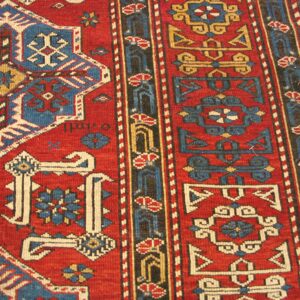
Technically, a Shirvan rug is prized for its short-cut pile and firm, crisp handle. Unlike the “fleshy” feel of other antique tribal Caucasian rugs, the Shirvan’s lower pile height allows the intricate geometric patterns to appear with maximum definition. The wool is hand-spun from high-altitude sheep and remains rich in natural lanolin, providing a soft, matte luster that enhances the vibrancy of the dyes.
The borders act as a disciplined architectural frame, often featuring the iconic “Running Dog” or “Kufic” patterns in high-contrast ivory or golden ochre. This framing “locks in” the explosive energy of the central red and blue field, providing a sense of historical permanence and order. To possess this antique Shirvan rug is to hold a monument to a vanishing tribal heritage—a work that bridges the gap between rugged nomadic life and the sophisticated geometric modernism sought by today’s most discerning collectors.