
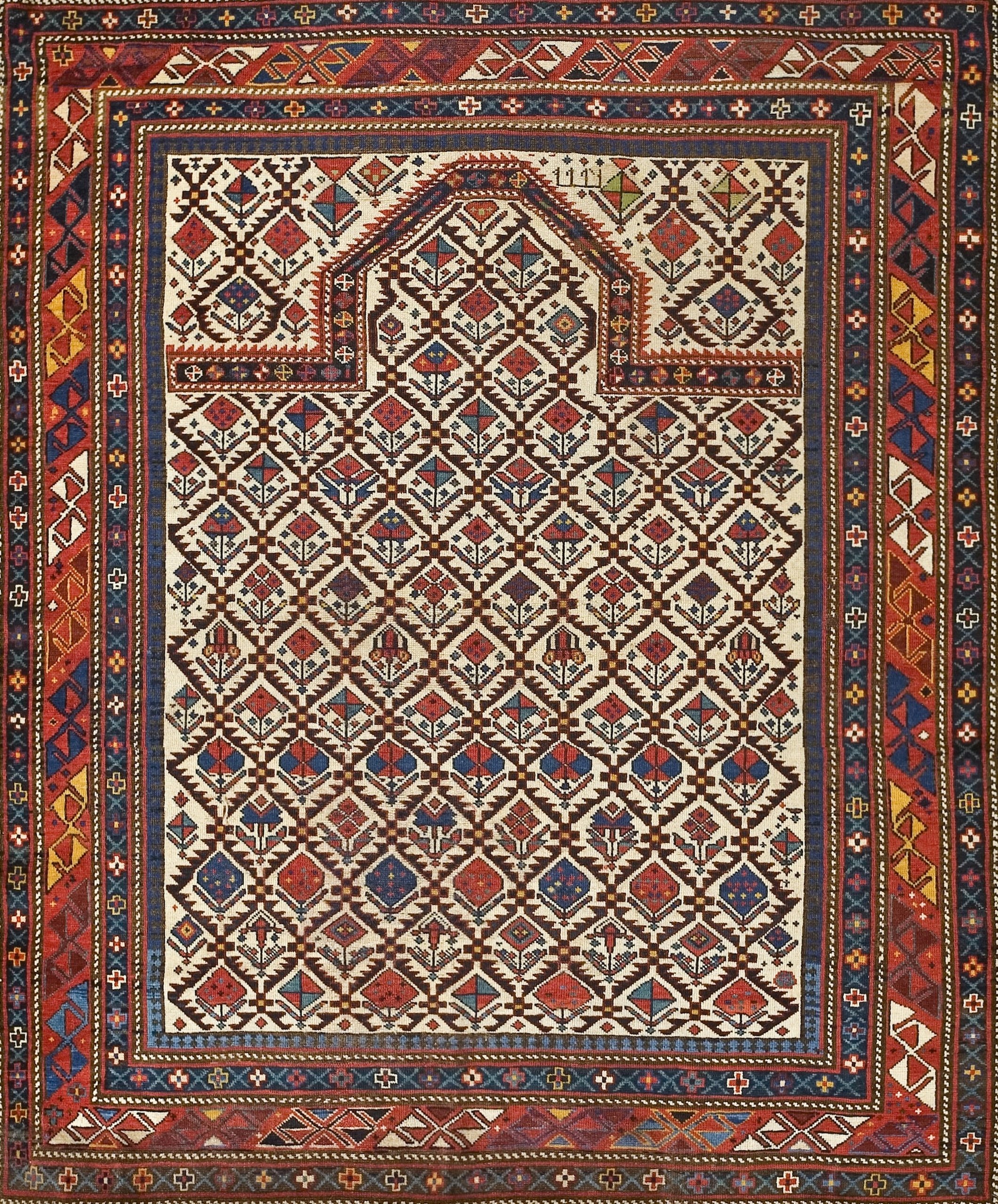
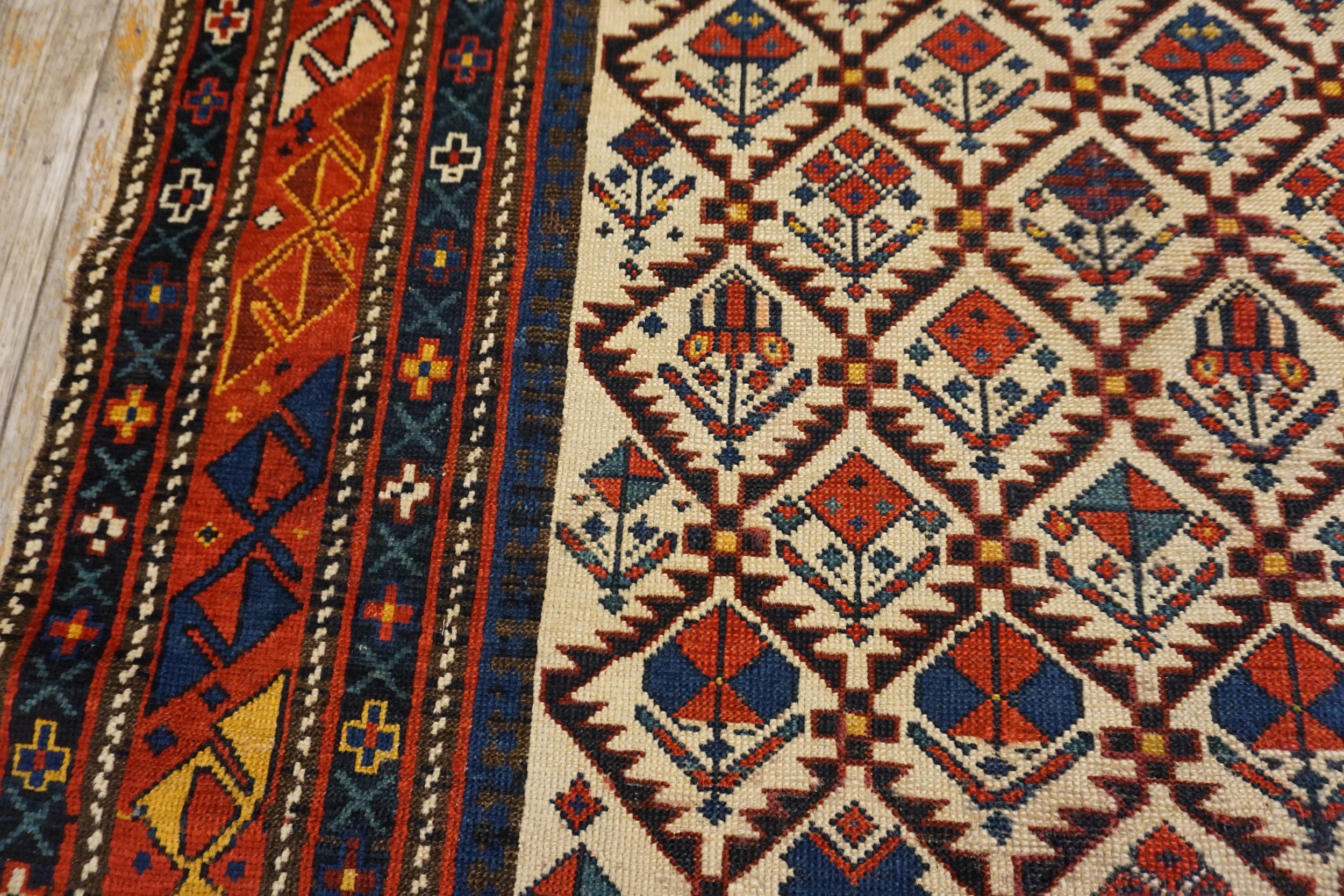
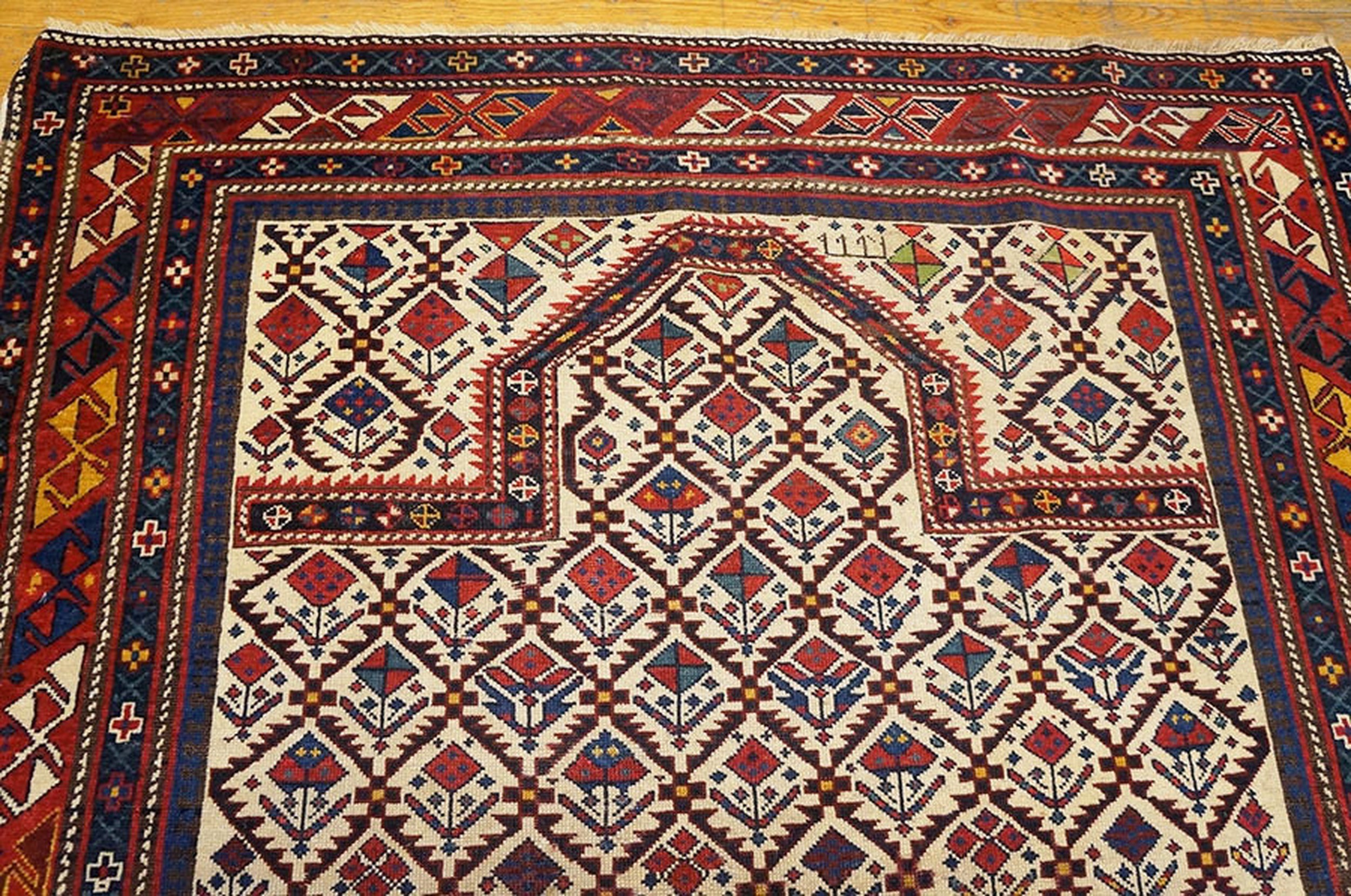
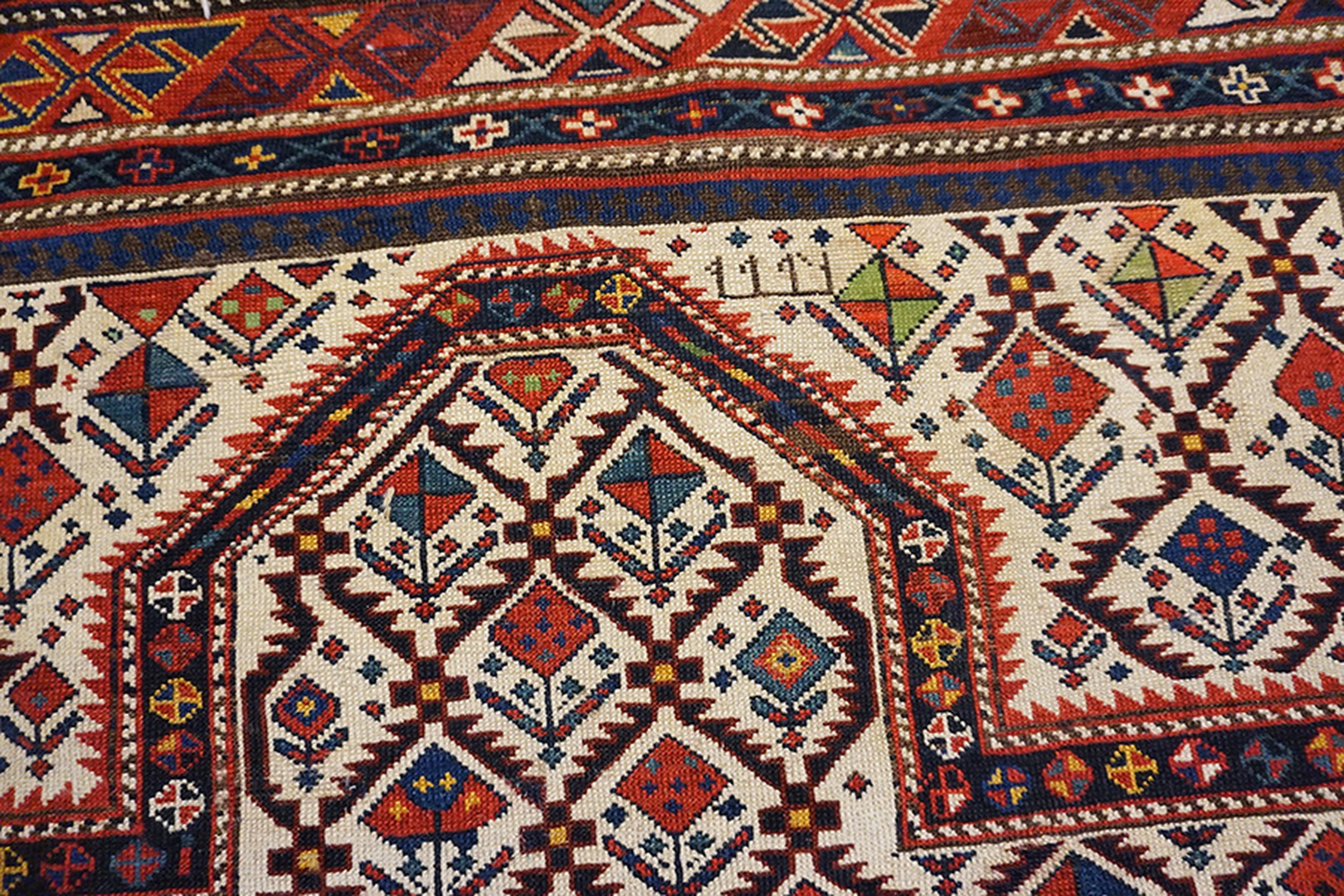
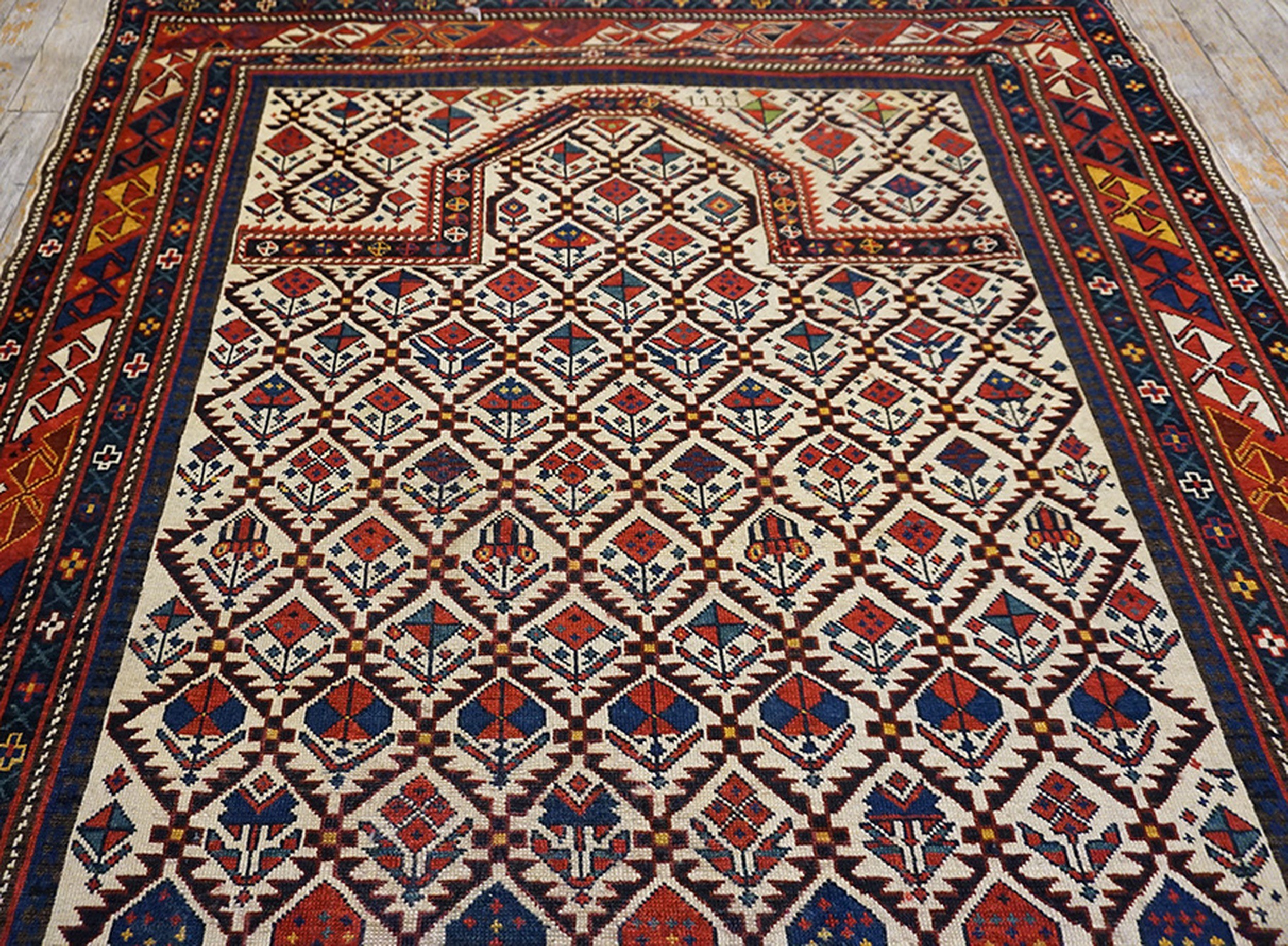
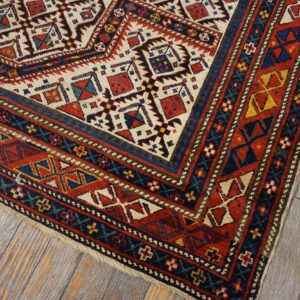
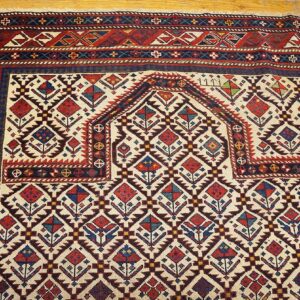
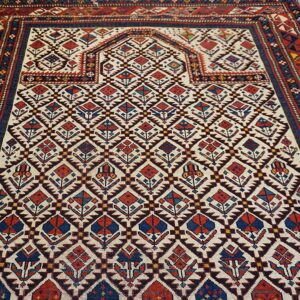
This nineteenth-century tribal Caucasian Shirvan rug is a superlative example of the “Scholarly Tribal” style, originating from the Shirvan district of Azerbaijan. While its neighbors in the Caucasus—the Kazak rugs—are known for bold, chunky geometry, the Shirvan weavers were celebrated for their extraordinary fine knotting and sophisticated, miniature-scale ornamentation. This specific specimen is distinguished by its rare Ivory field, a ground color that was traditionally reserved for special commission or highly symbolic textiles.
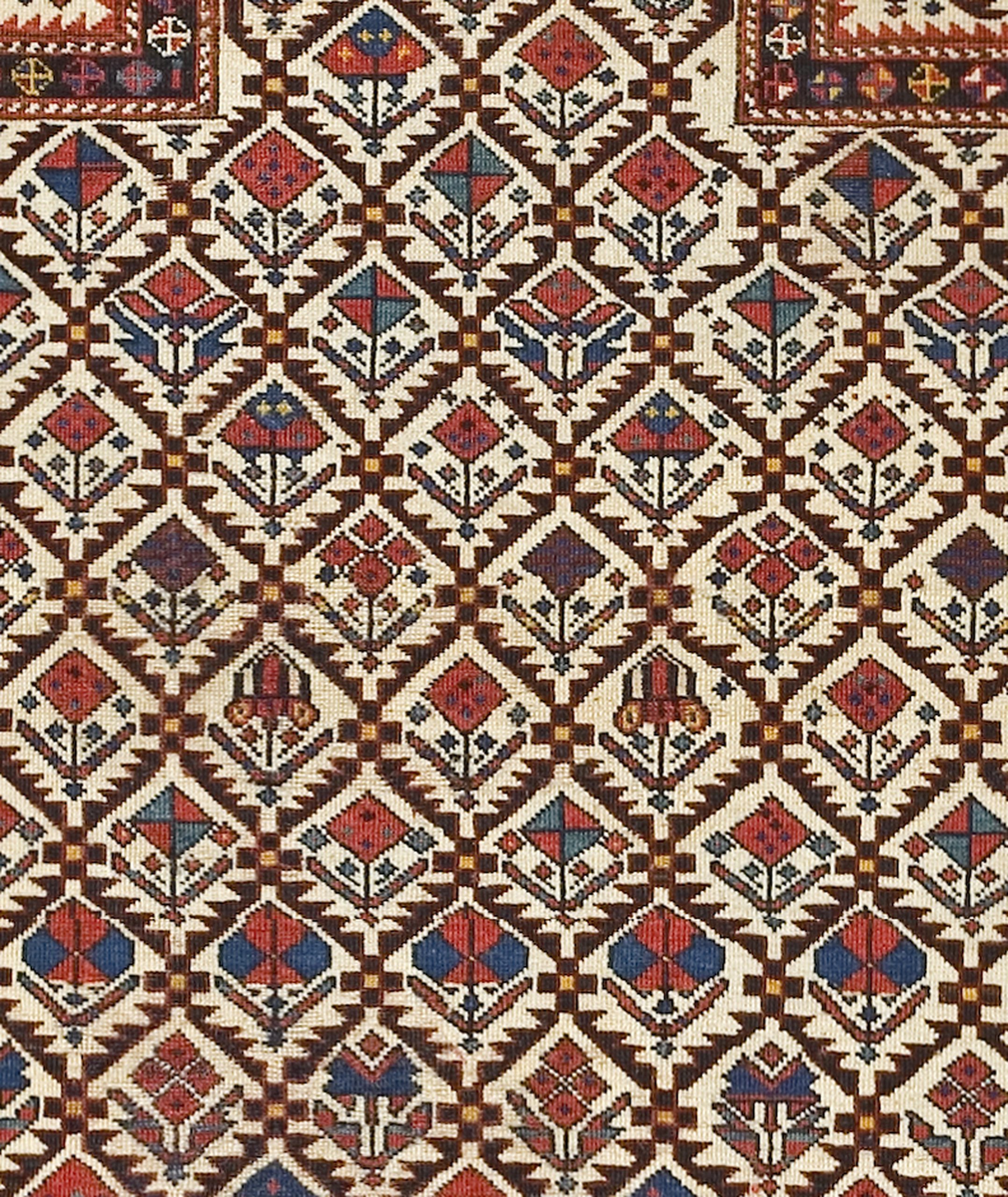
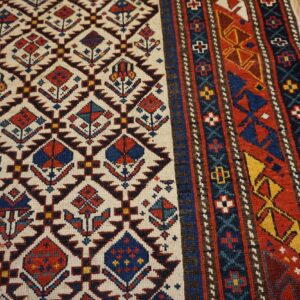
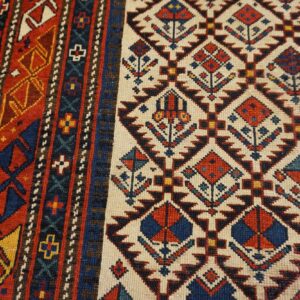
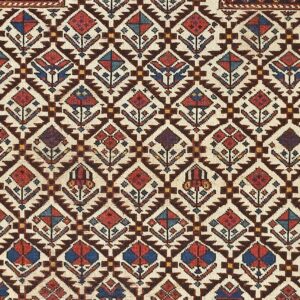
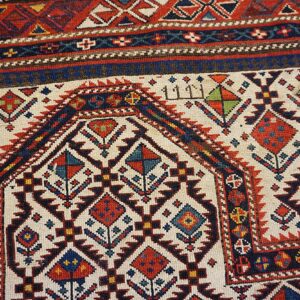
The Muslim prayer rug composition is centered upon a classic Mihrab (prayer niche), which serves as a spiritual “window.” In the Shirvan tradition, the arch is often rendered with architectural precision, featuring “stepped” or “serrated” edges. The ivory field is typically densely populated with a “shattered” geometric narrative—star-rosettes, “S” protection charms, and stylized boteh (seeds of life). The use of the ivory ground provides a luminous, high-contrast stage that makes the intricate, multi-colored tribal symbols appear to float with jewel-like clarity.
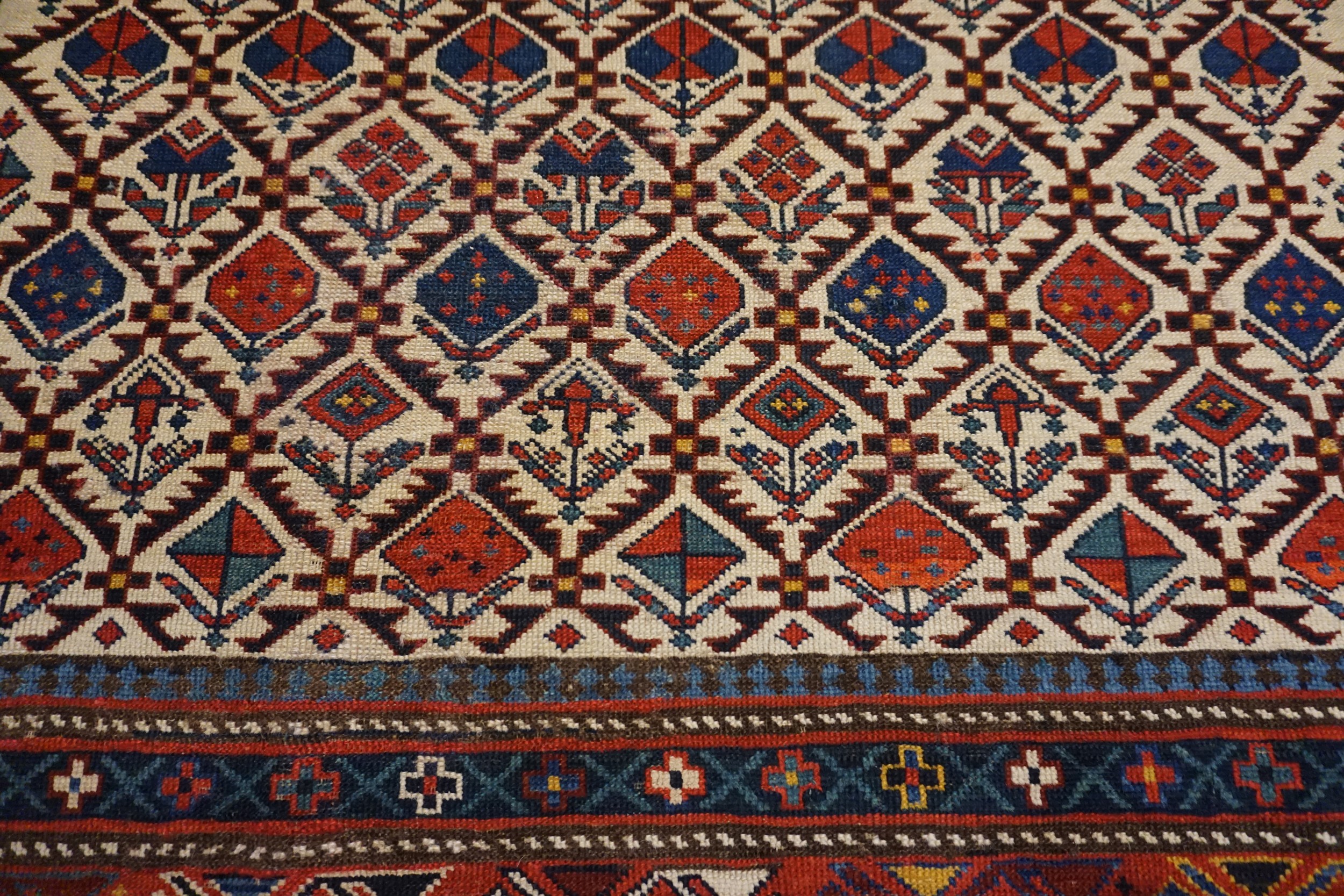
The palette is a masterclass in the use of natural vegetable dyes. Against the creamy ivory foundation, you will find a vibrant spectrum of “Shirvan blue” (indigo), madder red, and clear saffron yellow. Over the course of 130+ years, these colors have developed a soft, shimmering patina that prevents the high-contrast design from feeling harsh. The presence of ivory indicates the use of the highest quality undyed wool, prized for its natural lanolin and silken sheen.
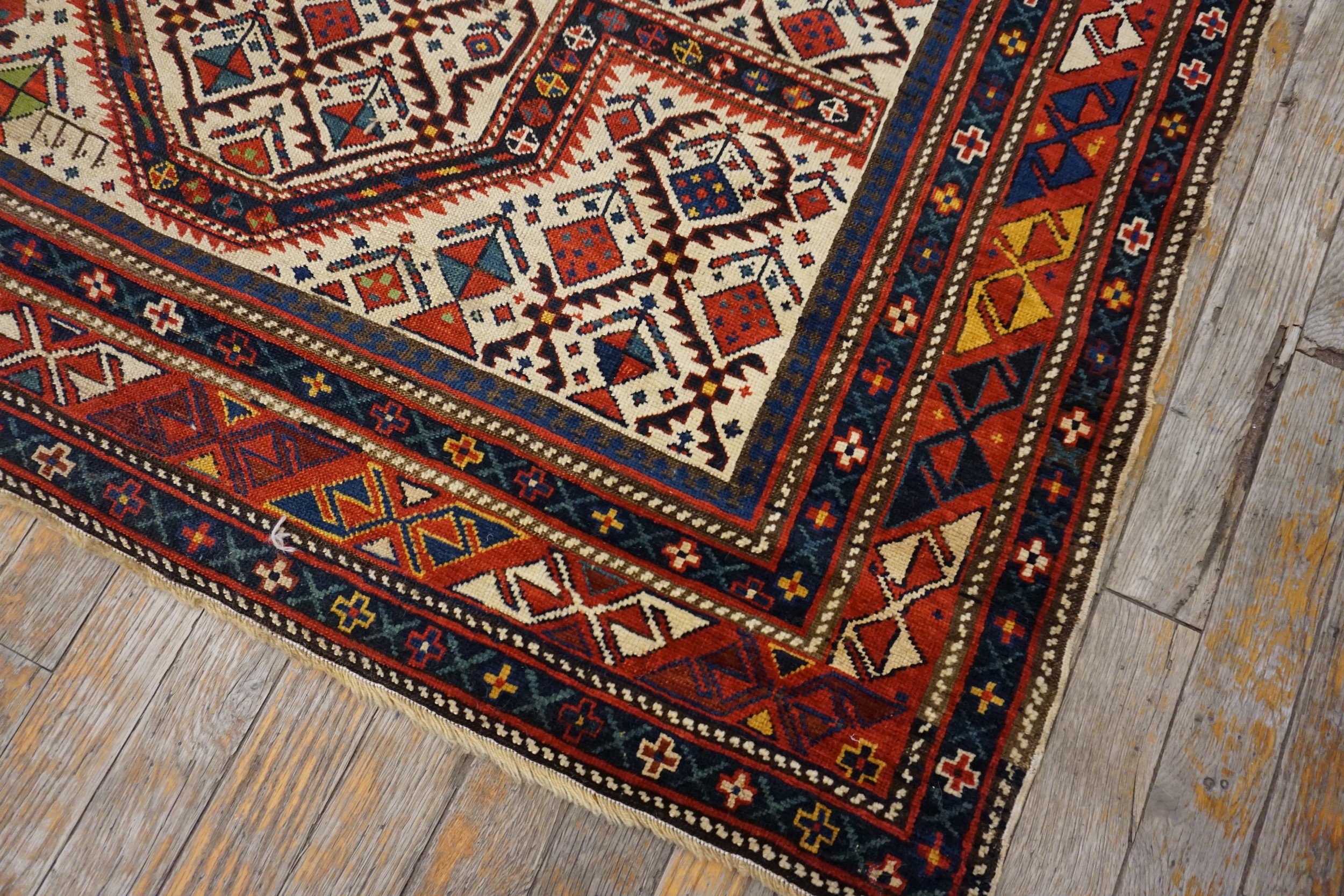
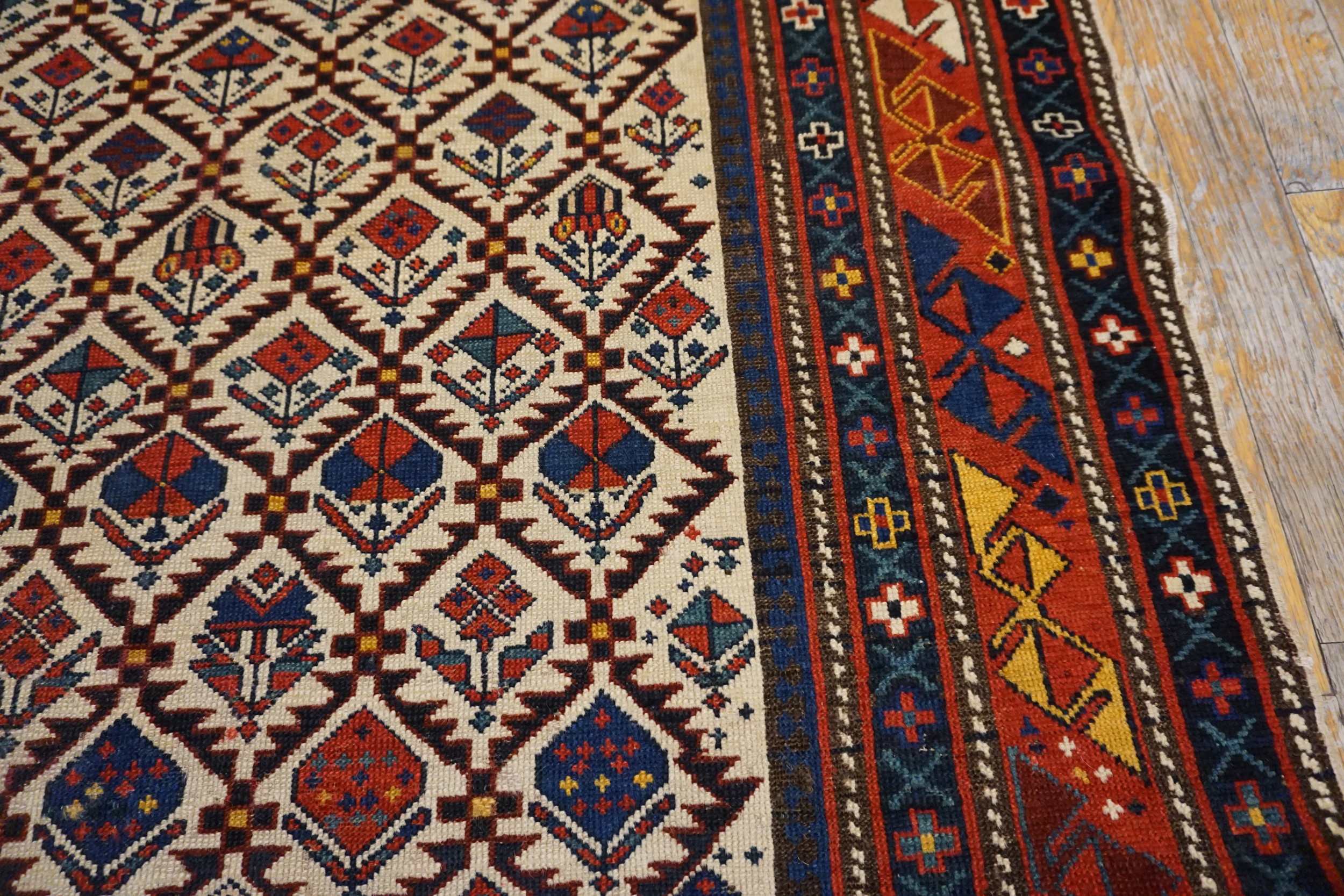
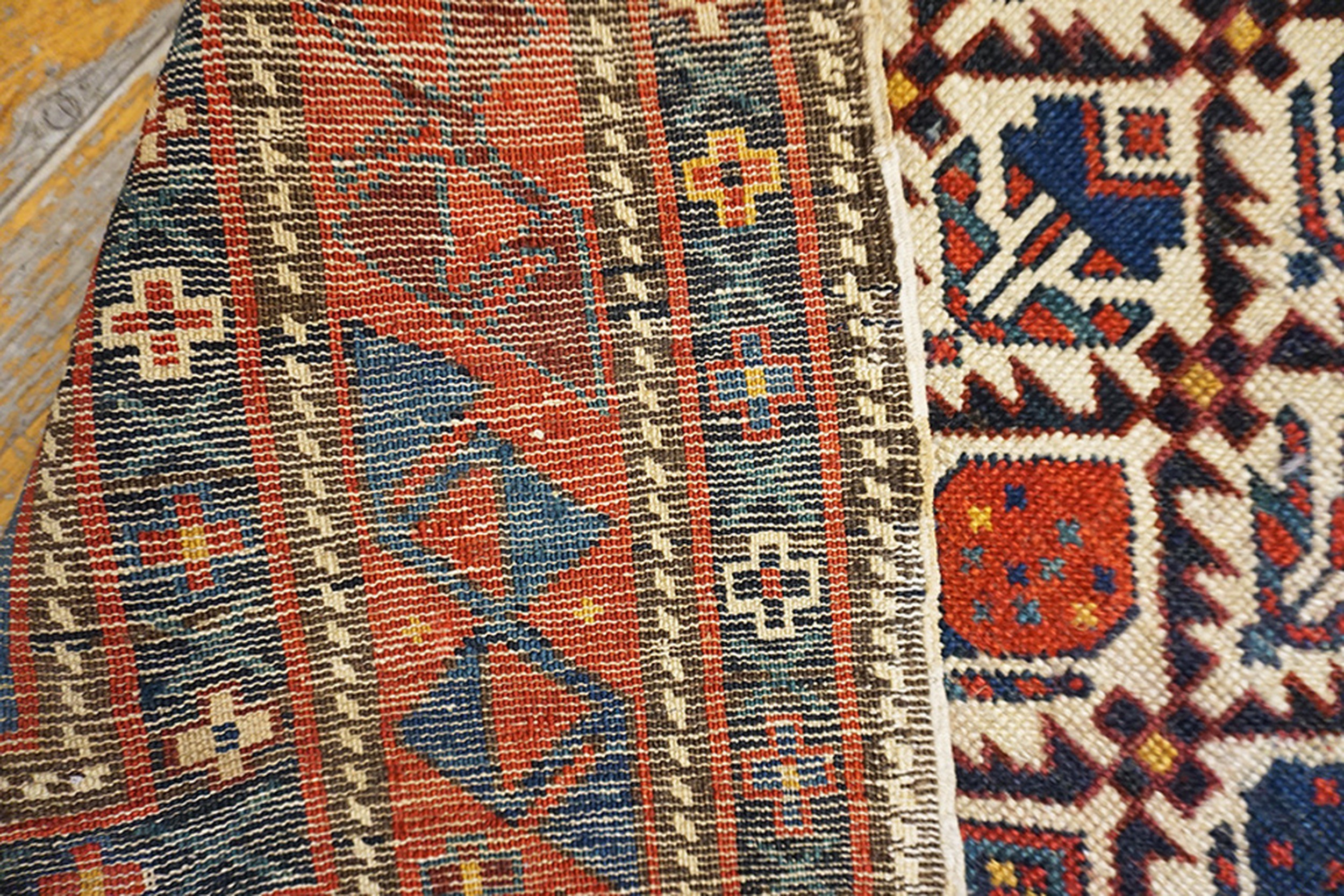
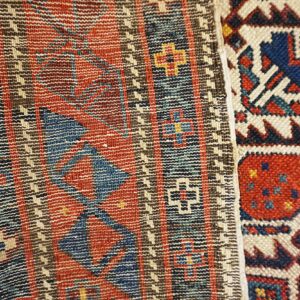
Technically, a Shirvan of this caliber is a “Fine” weave. Unlike the plush, thick pile of a rustic Kazak, the Shirvan pile is clipped short and crisp. This allows for the “razor-sharp” execution of the geometric motifs, ensuring that even the smallest eight-pointed star is rendered with mathematical accuracy. The handle is typically thin and “leathery,” a hallmark of the sophisticated urban-tribal workshops of the eastern Caucasus.
The borders act as a disciplined, regal frame—often featuring the iconic “Kufic” or “Leaf and Calyx” patterns. These borders provide a sense of historical permanence, “locking in” the spiritual energy of the central prayer niche. To possess an antique tribal Caucasian area rugs like this ivory Shirvan prayer rug, is to own a monument to the intersection of nomadic soul and scholarly precision—a work that transforms a wall or floor into a sanctuary of historical gravity and timeless, hand-wrought opulence.