
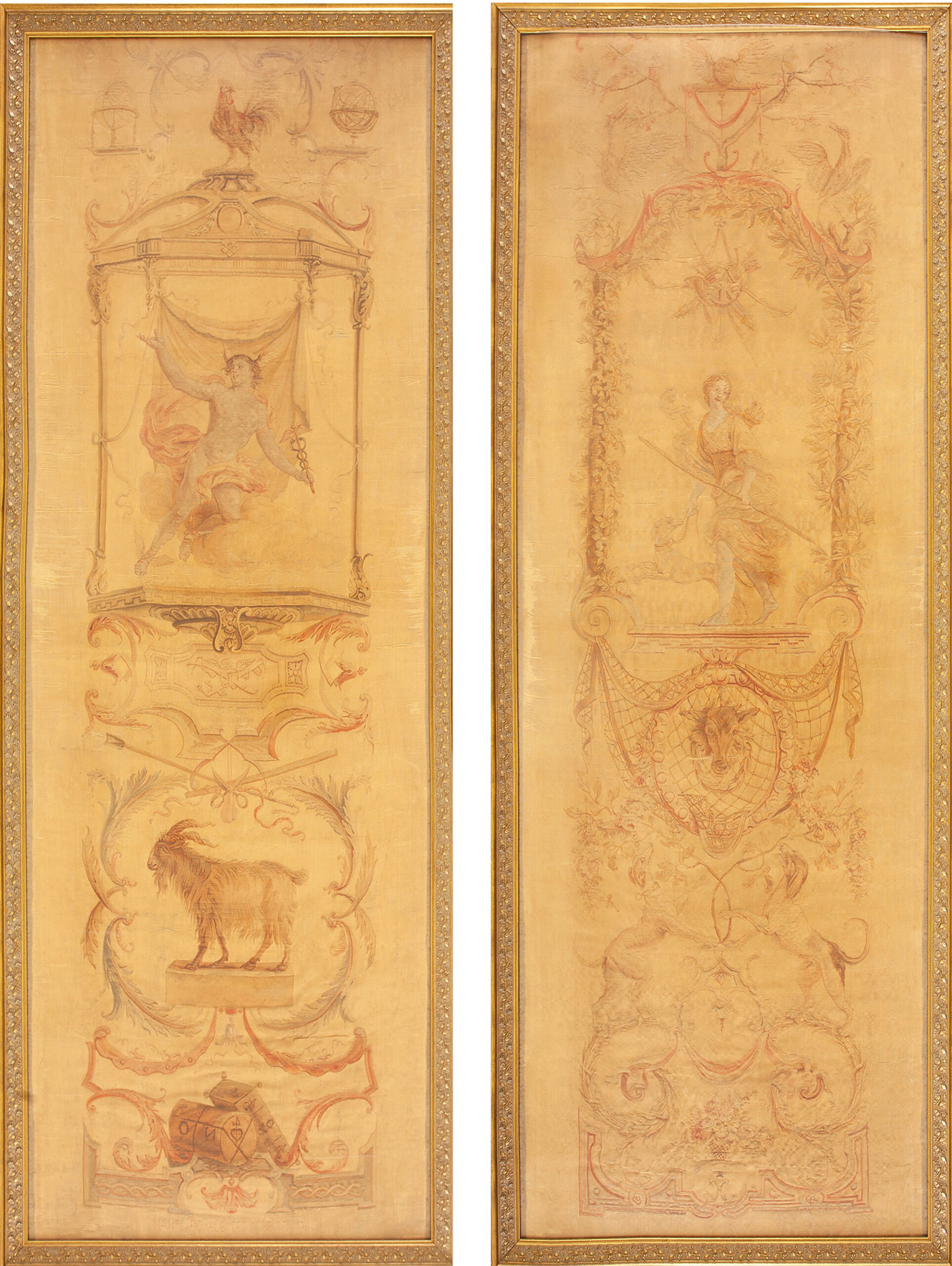
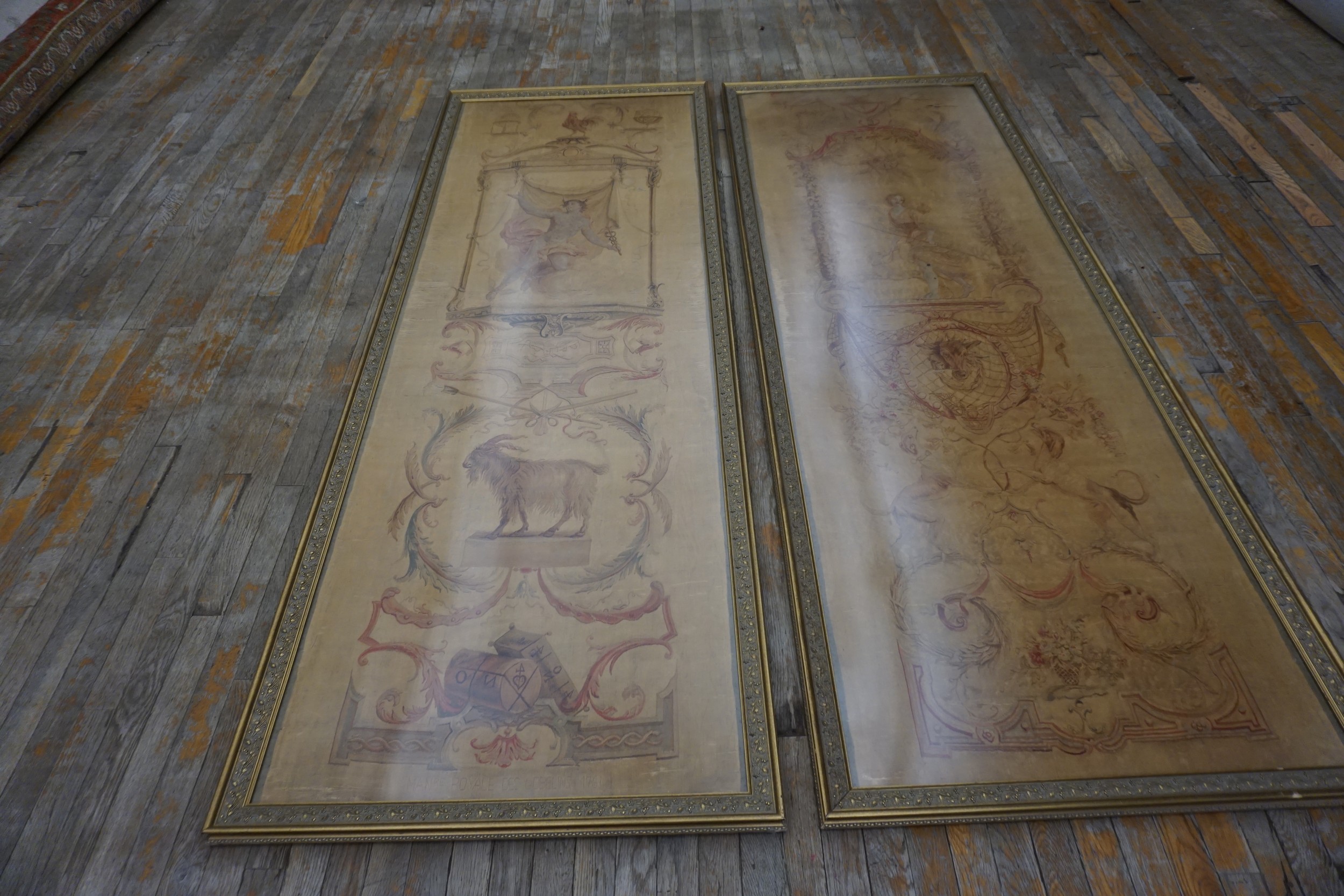
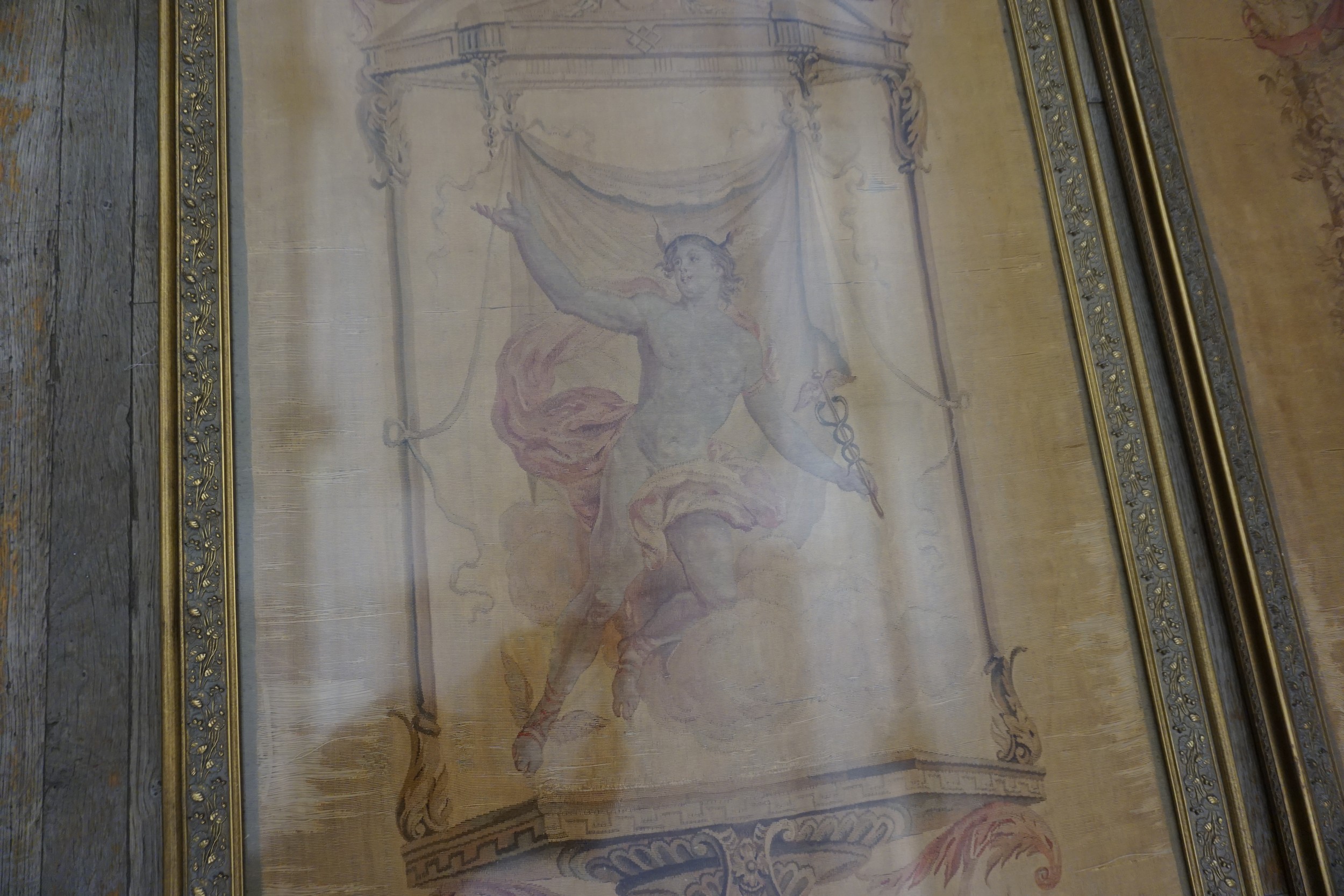
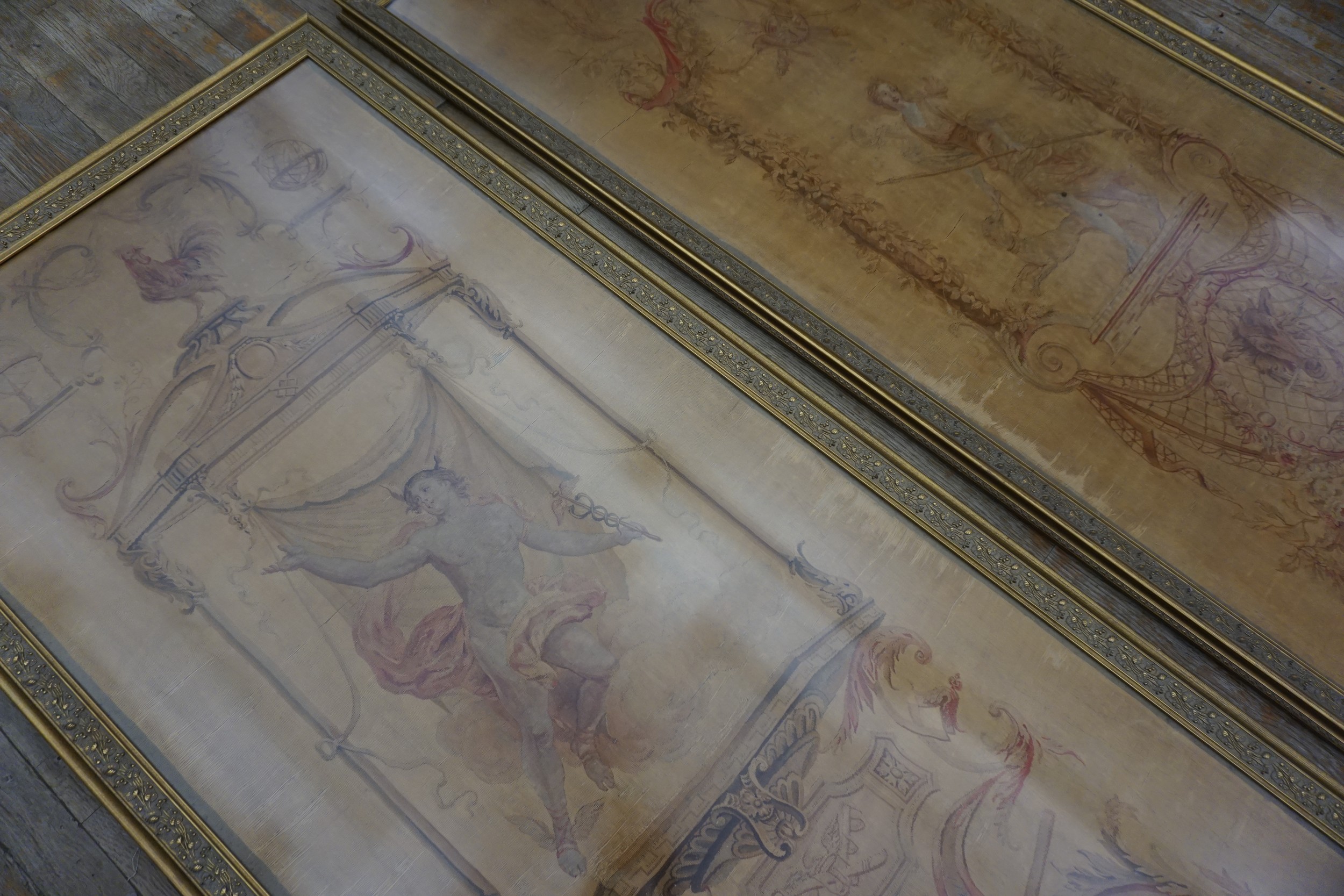
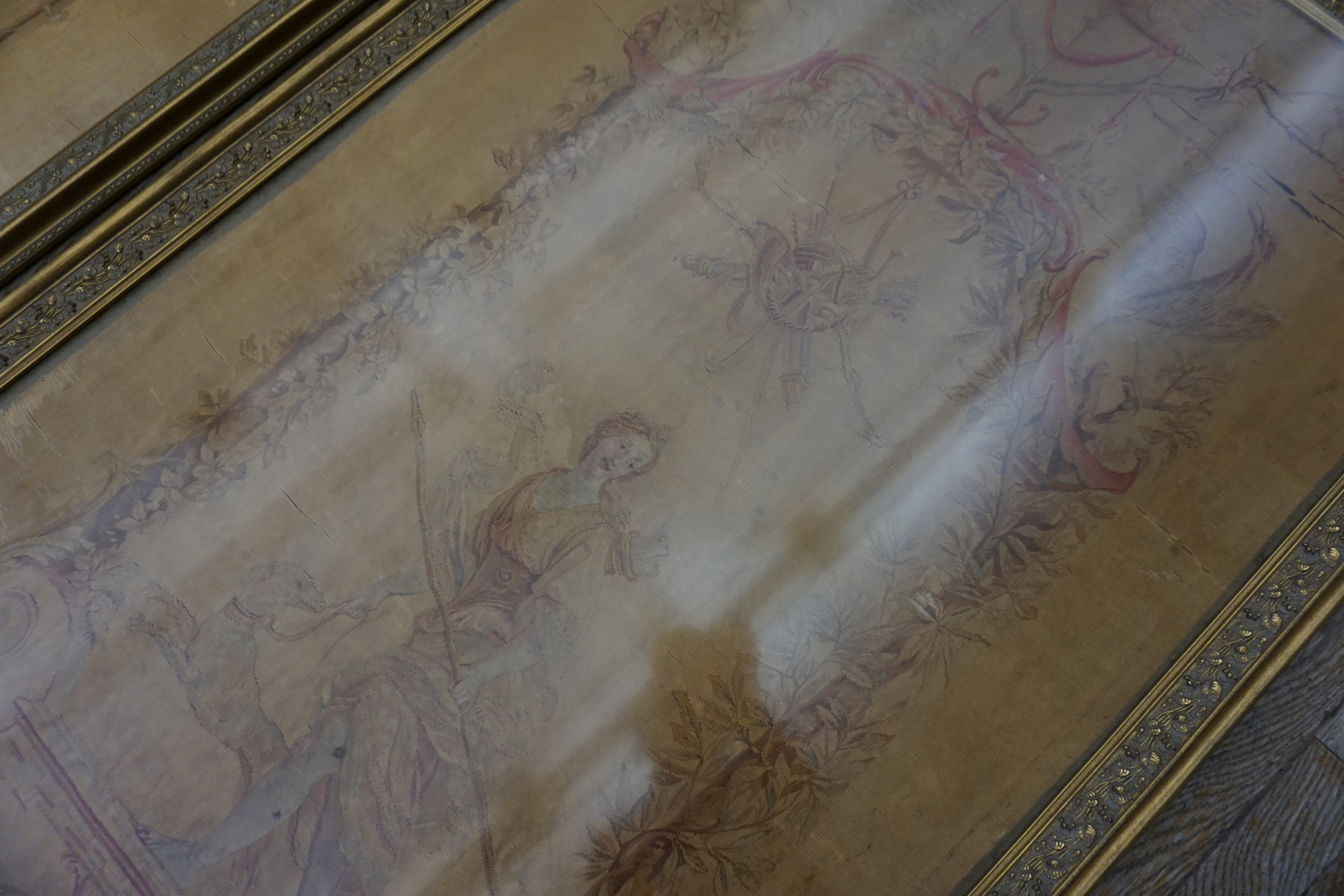
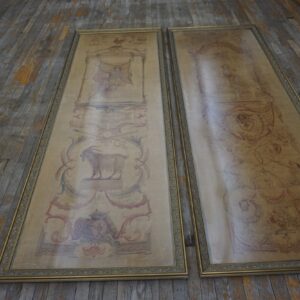
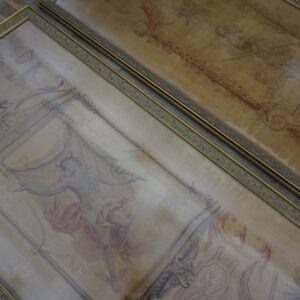
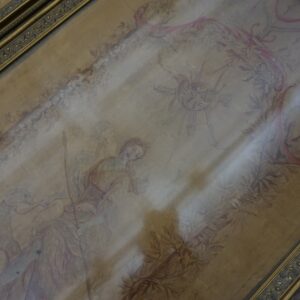
Pair of Scenic Antique 18th Century Beauvais French Tapstries, Circa Date: 1750s. This exquisite French flat weave textile, though titled as a rug, functions as a superb piece of wall art, embodying the high artistry of 18th-century European weaving. It represents the pinnacle of antique rugs and tapestries produced during the height of the Rococo period, showcasing the sophisticated demands of the era’s elite clientele.
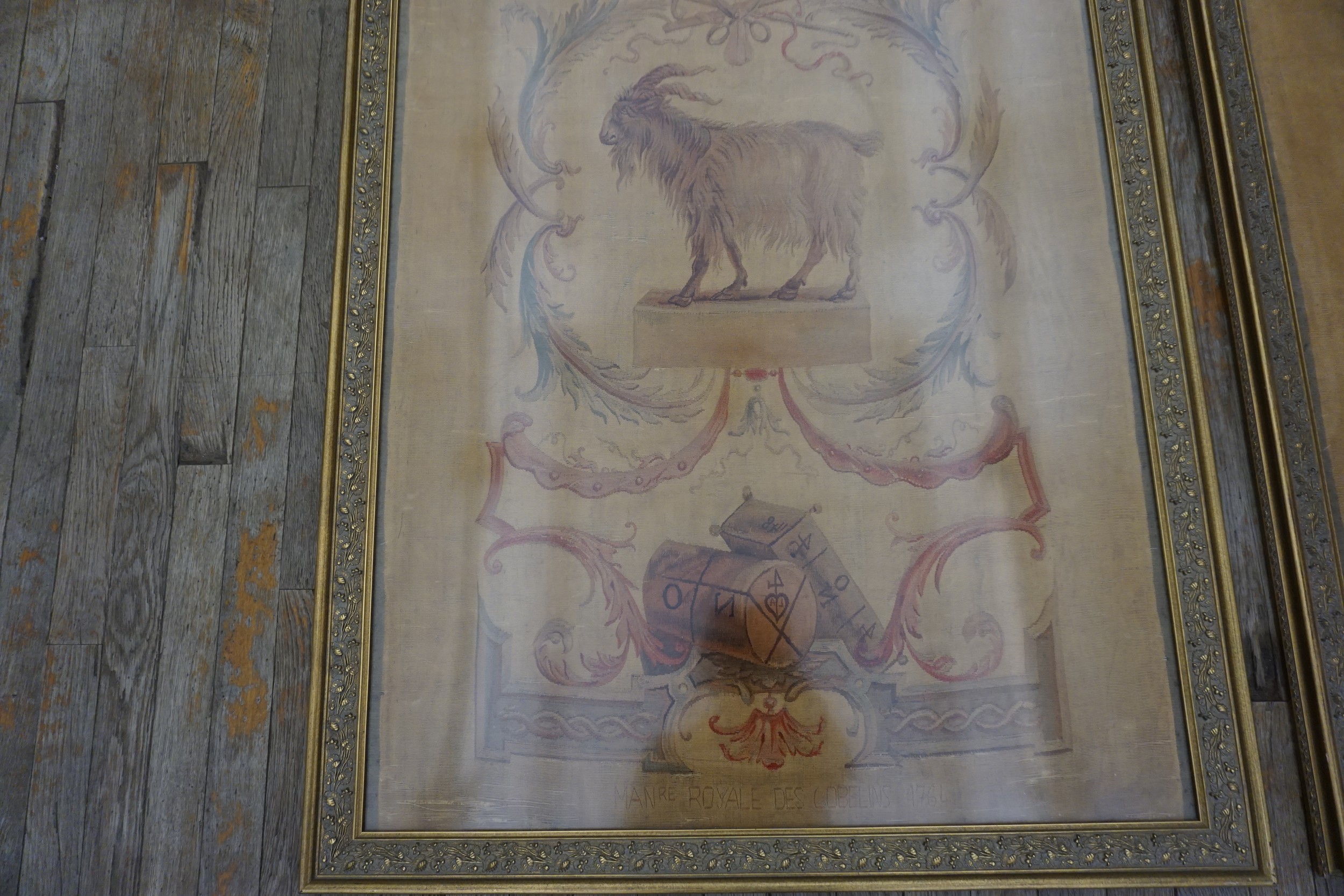
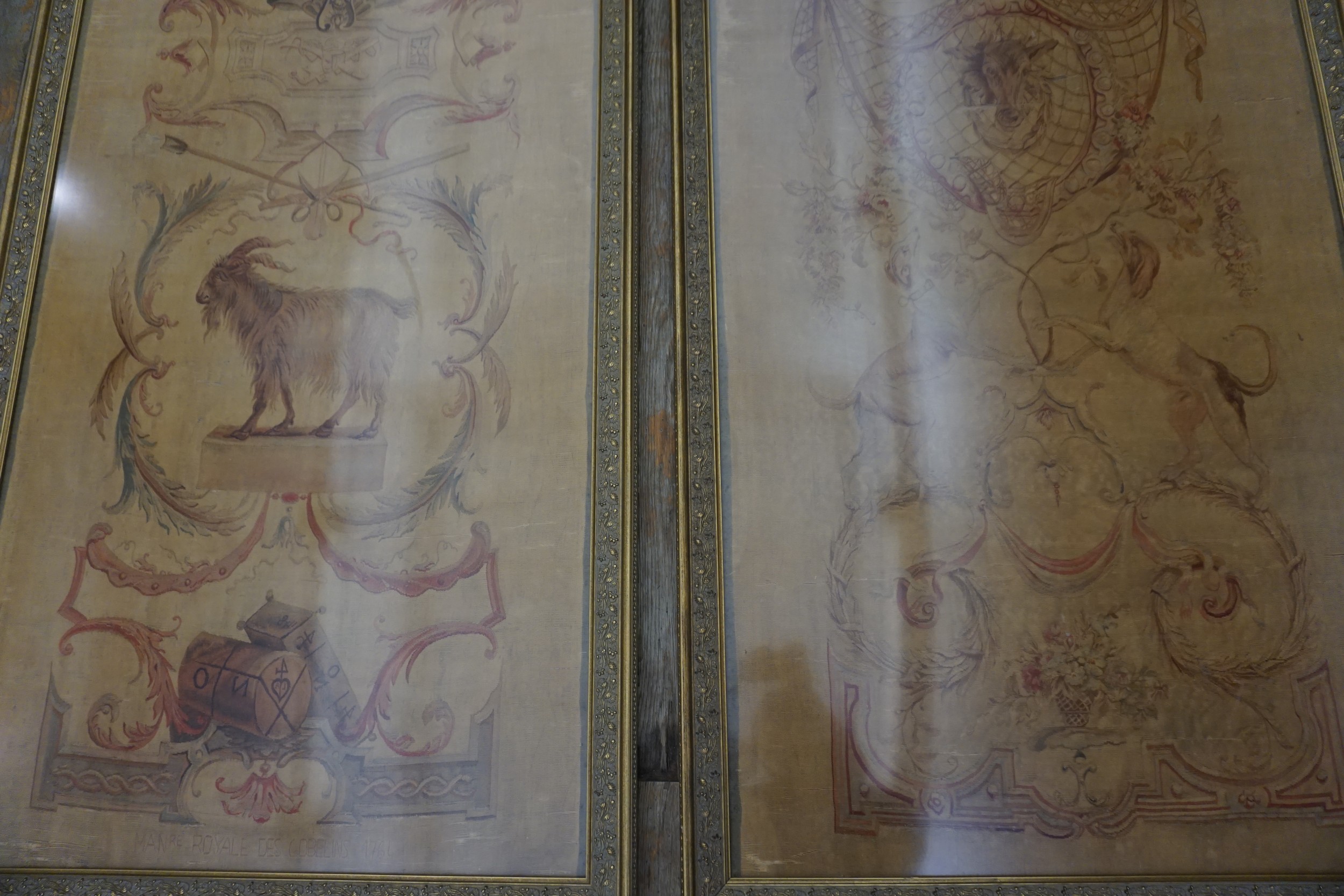
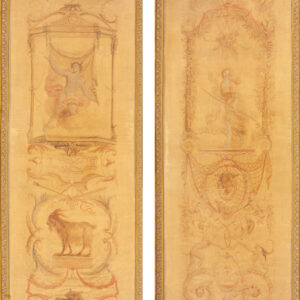
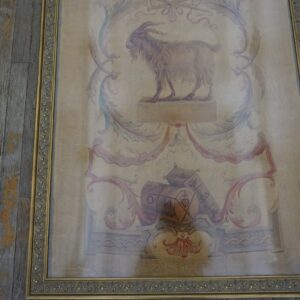
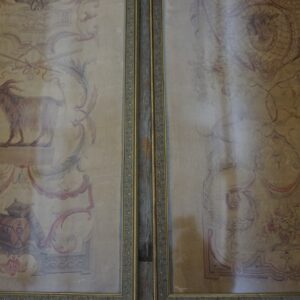
The design centers on a naturalistic depiction of a long-haired goat or ibex, standing upon a classical plinth. This central medallion is framed by highly detailed scrolling acanthus leaves, ribbons, and elaborate drapery swags, executed with a painterly precision typical of the finest French court workshops. The composition is masterfully balanced, creating a sense of theatrical grandeur despite the textile’s intimate scale.
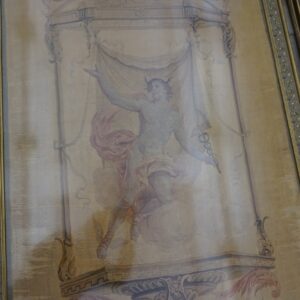
The palette is wonderfully restrained, utilizing soft hues of pale rose, muted blue-green, and russet against a luminous ground of ivory and beige. The flat weave construction allows the intricate details of the pictorial scene to emerge with exceptional clarity, lending the textile a delicate, almost watercolor-like appearance that speaks volumes about its age and provenance.
Pieces of this caliber were often commissioned for royal residences or aristocratic homes, reflecting the transition from heavy Baroque design to the lighter, more graceful aesthetics of Louis XV. While many tapestries were grand salon decorations, the dimensions of this particular textile suggest it may have been intended for a more intimate cabinet or private study, placing it in the category of a small scatter size textile, though its artistic merit is monumental.