
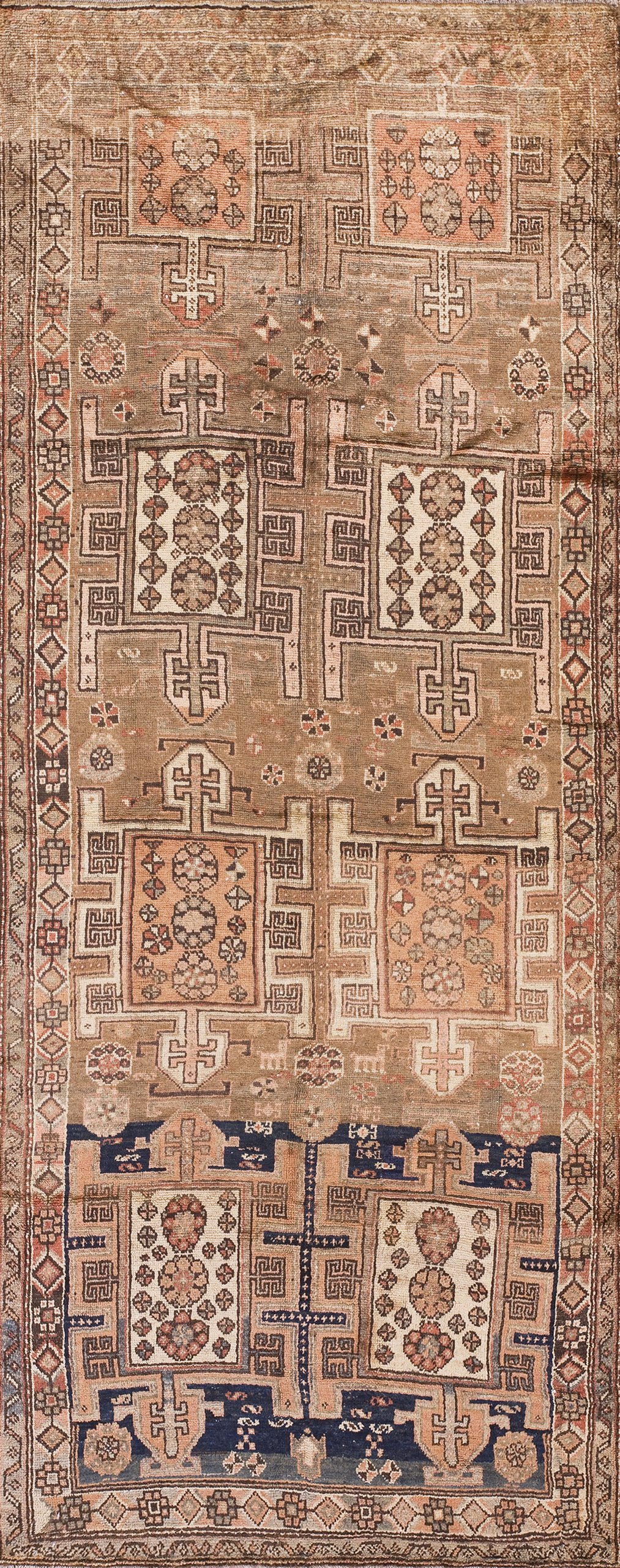
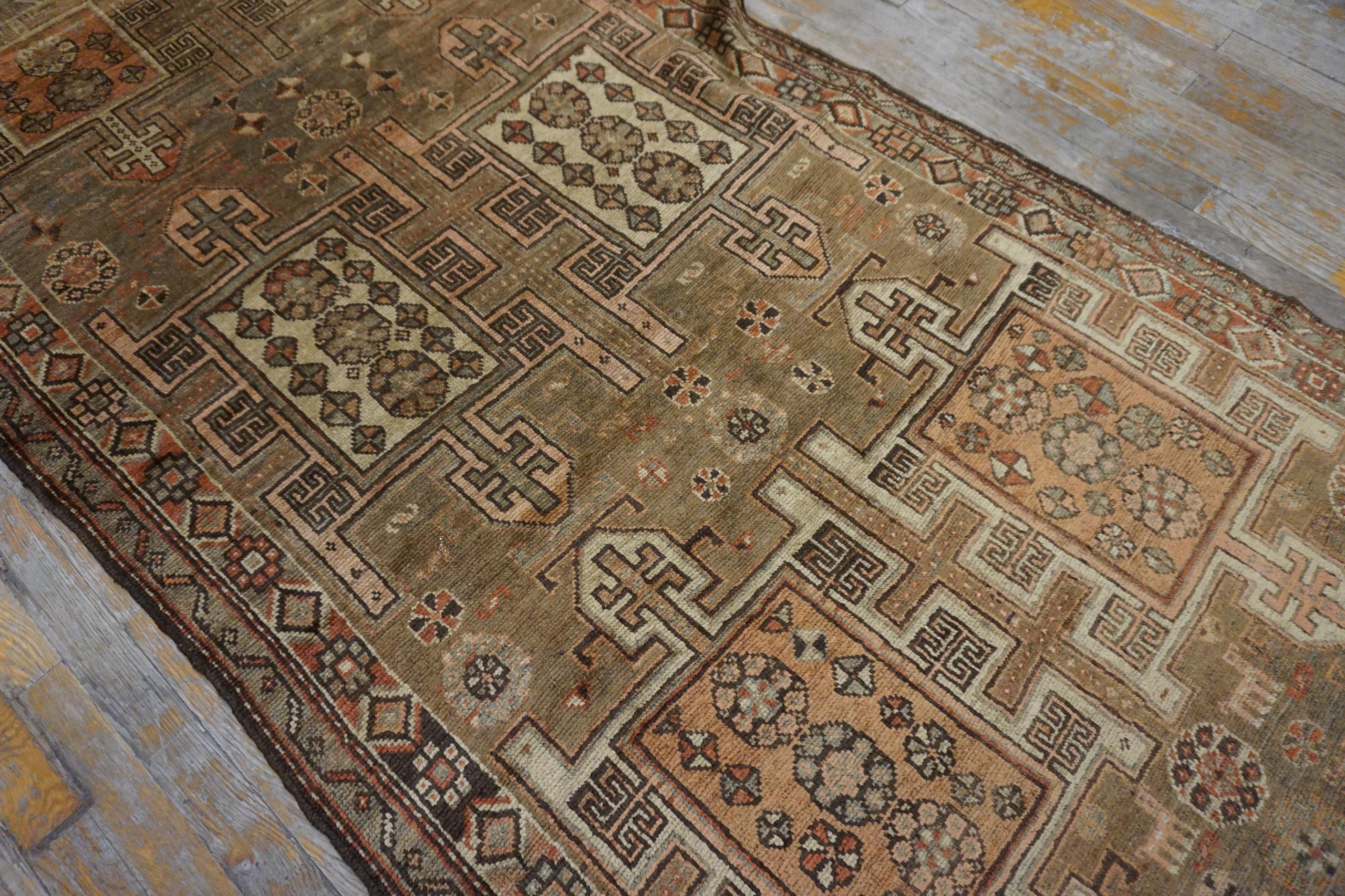
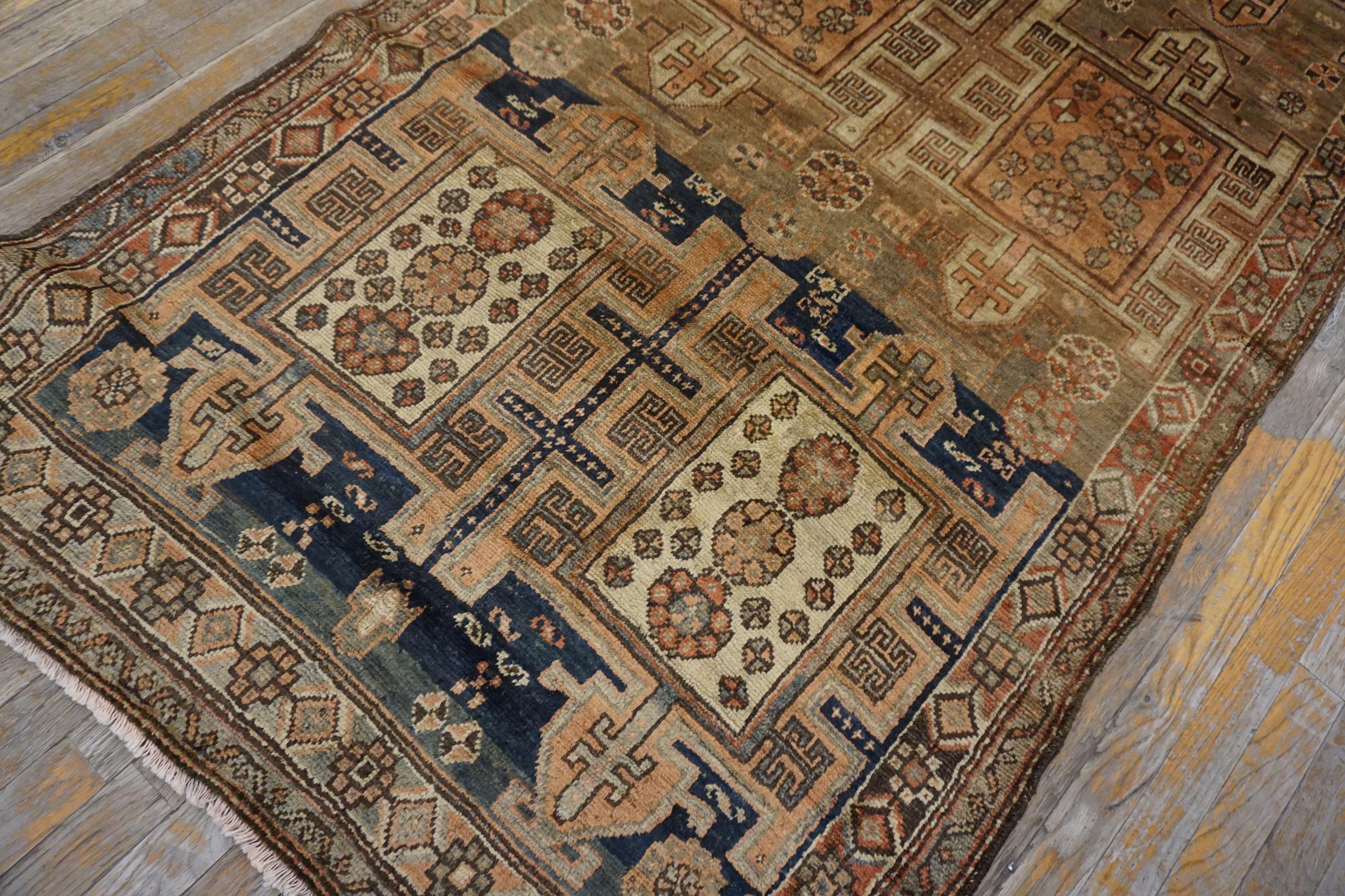
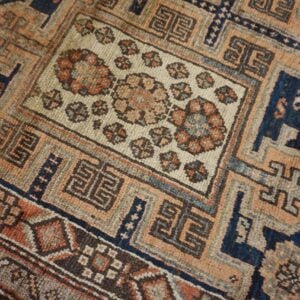
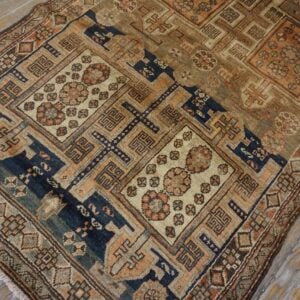
This early 20th-century antique tribal Northwest Persian hallway runner is a rugged and soulful monument to the nomadic weaving traditions of the Azerbaijan and Kurdistan borderlands. While many city Persian rugs of the era focused on delicate floral symmetry, this hallway runner in the “Kenareh” format is defined by its fierce geometric character and its deep connection to the high-altitude landscape of the Zagros Mountains.
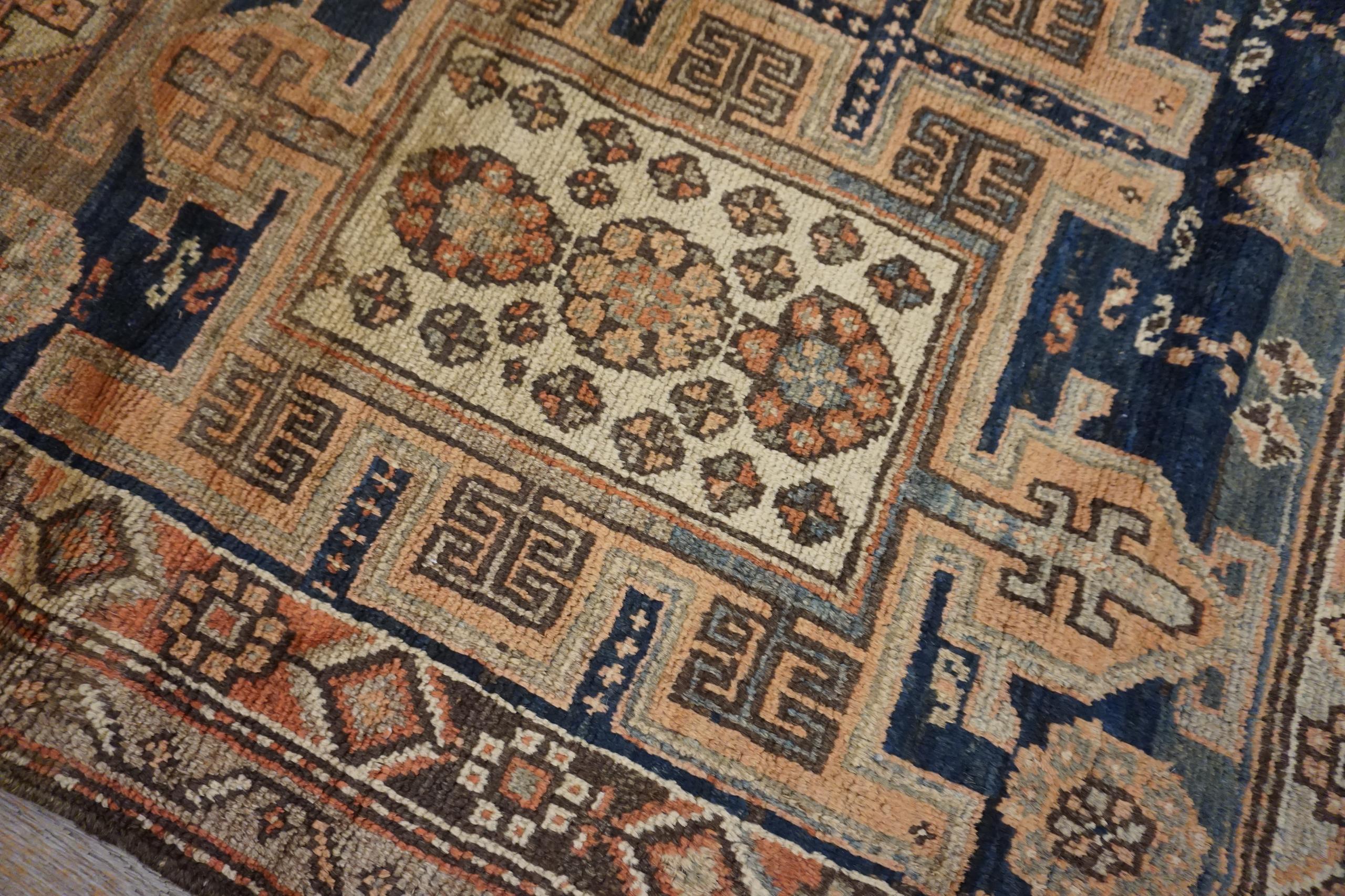
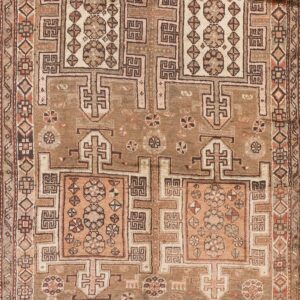
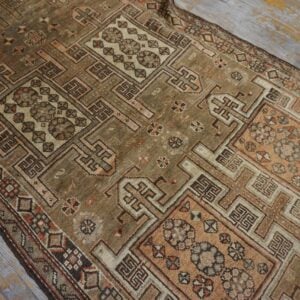
The composition is centered upon a series of rhythmic, repeating tribal medallions, likely “stepped” or “hooked” diamonds that represent the ancestral crests of the weaver’s clan. The drawing is remarkably bold and “Primitive”—characterized by a charming asymmetry where the motifs slightly shift in scale and orientation as they travel down the length of the field. This “breathing” design is a hallmark of authentic nomadic art, reflecting a world where the weaver works from memory rather than a rigid paper cartoon.
The palette is anchored by a sophisticated Earthy color theory, dominated by the rich, organic tones of the Persian highlands. The field is a masterclass in “Abrash” (tonal variation), featuring a magnificent blend of burnt terracotta, deep chocolate brown, and sandy ochre. These colors were achieved through the expert use of madder root, walnut husks, and pomegranate skins. Because this is an antique specimen, the natural dyes have oxidized over a century to create a “painterly” depth, where the earth tones shift and shimmer like the sun-drenched cliffs of the Northwest.
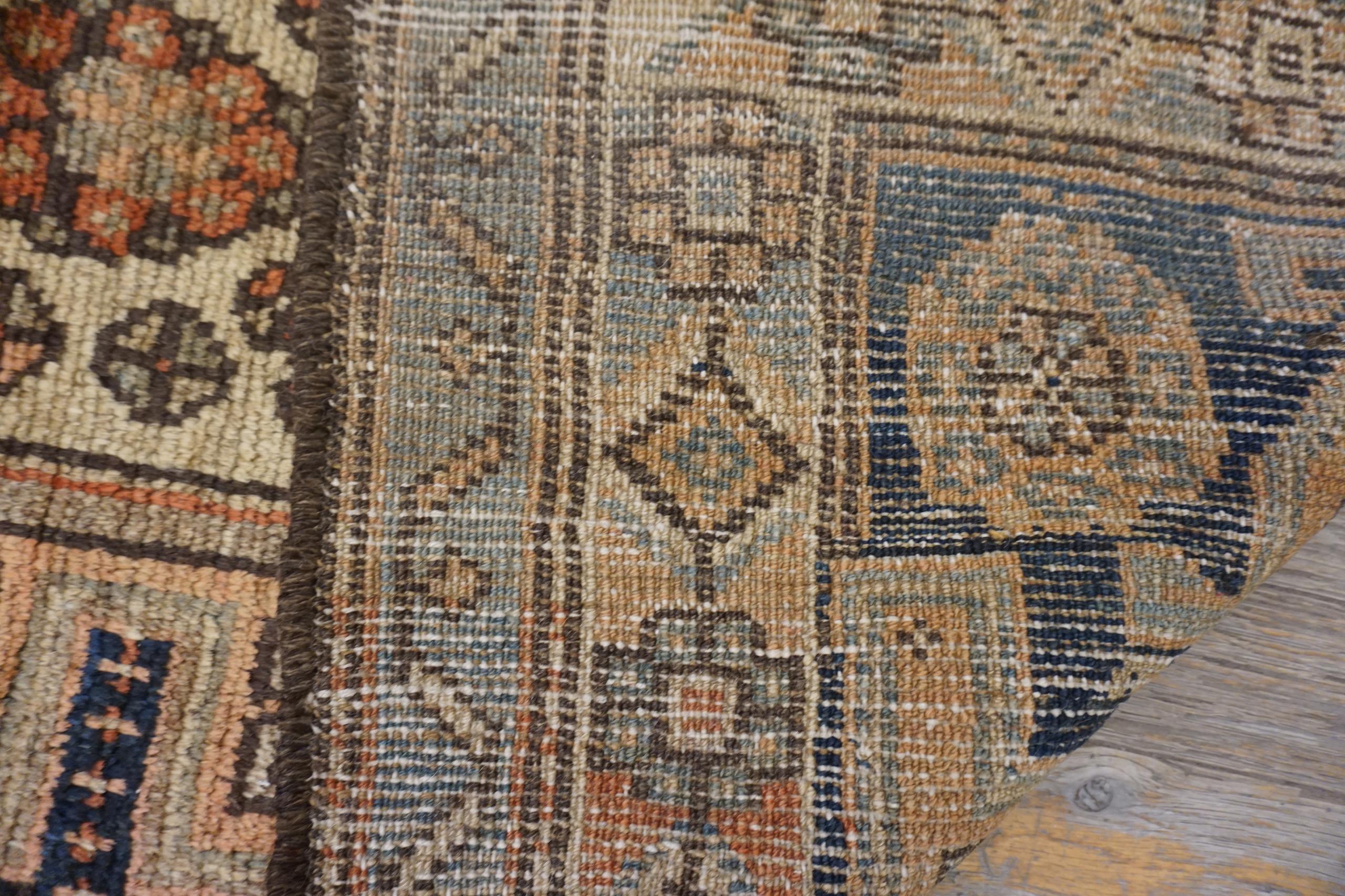
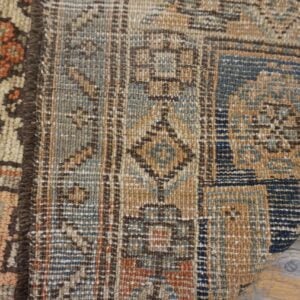
Technically, antique tribal hallway runners like this one are prized for their substantial, “meaty” handle and its high-grade “highland” wool. Sourced from local sheep that grazed in cold mountain climates, the wool is exceptionally rich in natural lanolin, resulting in a pile that is both incredibly durable and naturally lustrous. The weave is tight and disciplined, yet the rug retains a flexible, “floppy” handle—a necessary trait for a textile intended for use on the uneven floors of a tribal tent.
The borders act as a protective architectural frame, often featuring the “Running Water” or “Dragon” motifs intended to ward off bad luck and symbolize the continuity of life. The hallway runner format makes it a versatile masterpiece, perfect for a grand hallway, a library gallery, or as a grounding architectural element in a contemporary open-space loft. To possess this antique Northwest Persian tribal motif hallway runner is to own a piece of nomadic history—a work that bridges the gap between rugged survival and sophisticated geometric art, transforming any space into a sanctuary of historical gravity and warm, tribal soul.