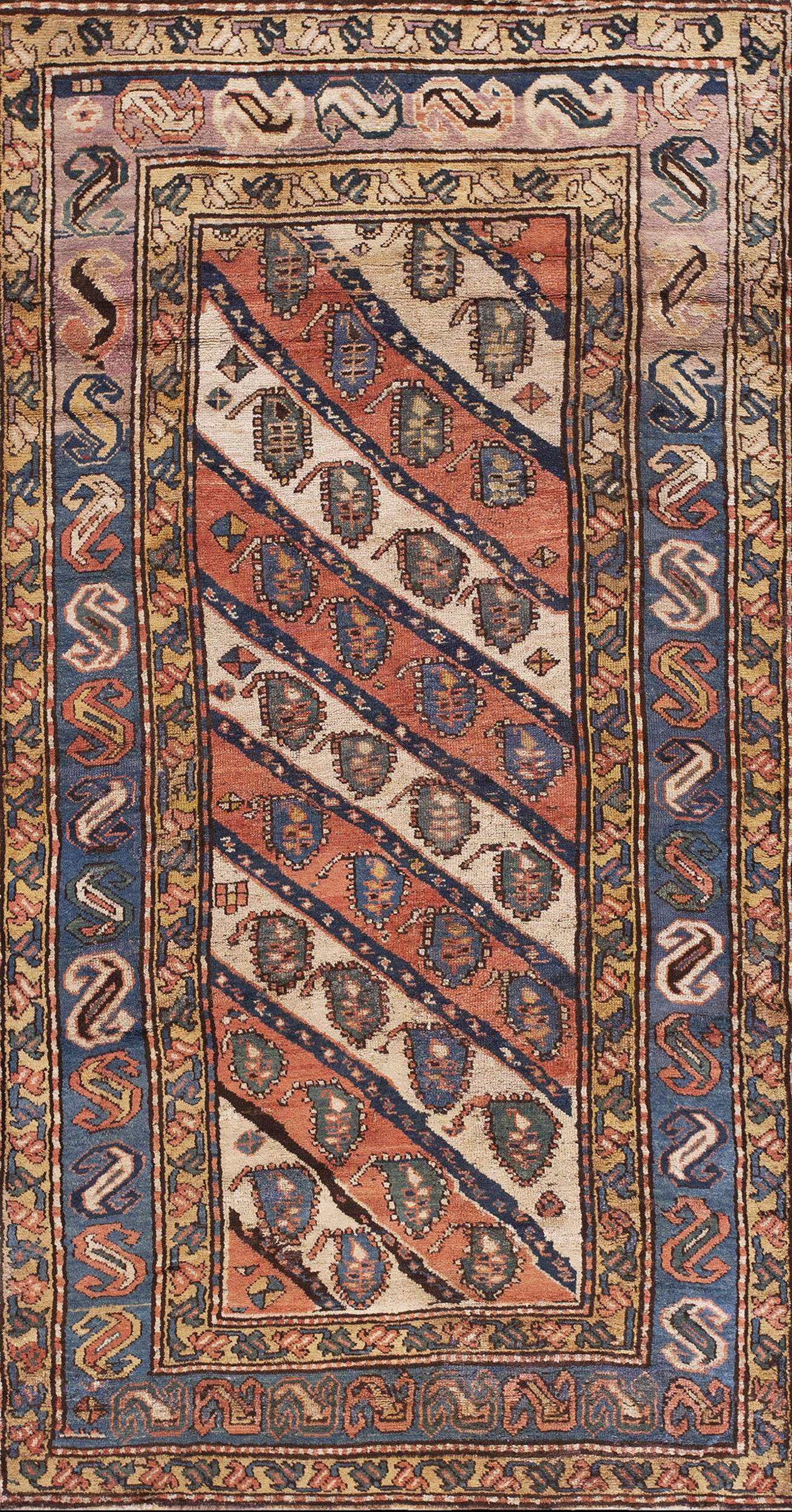
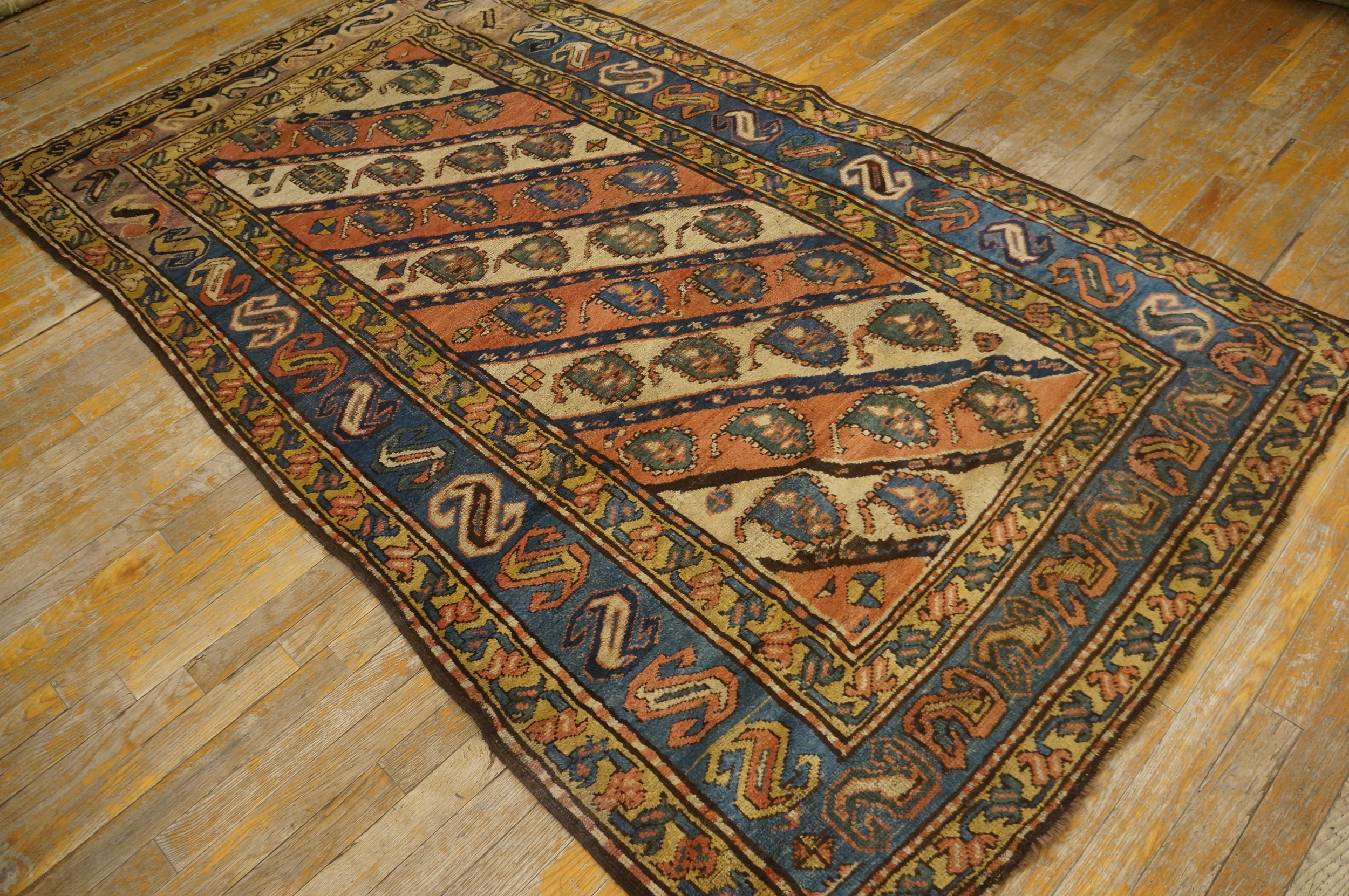
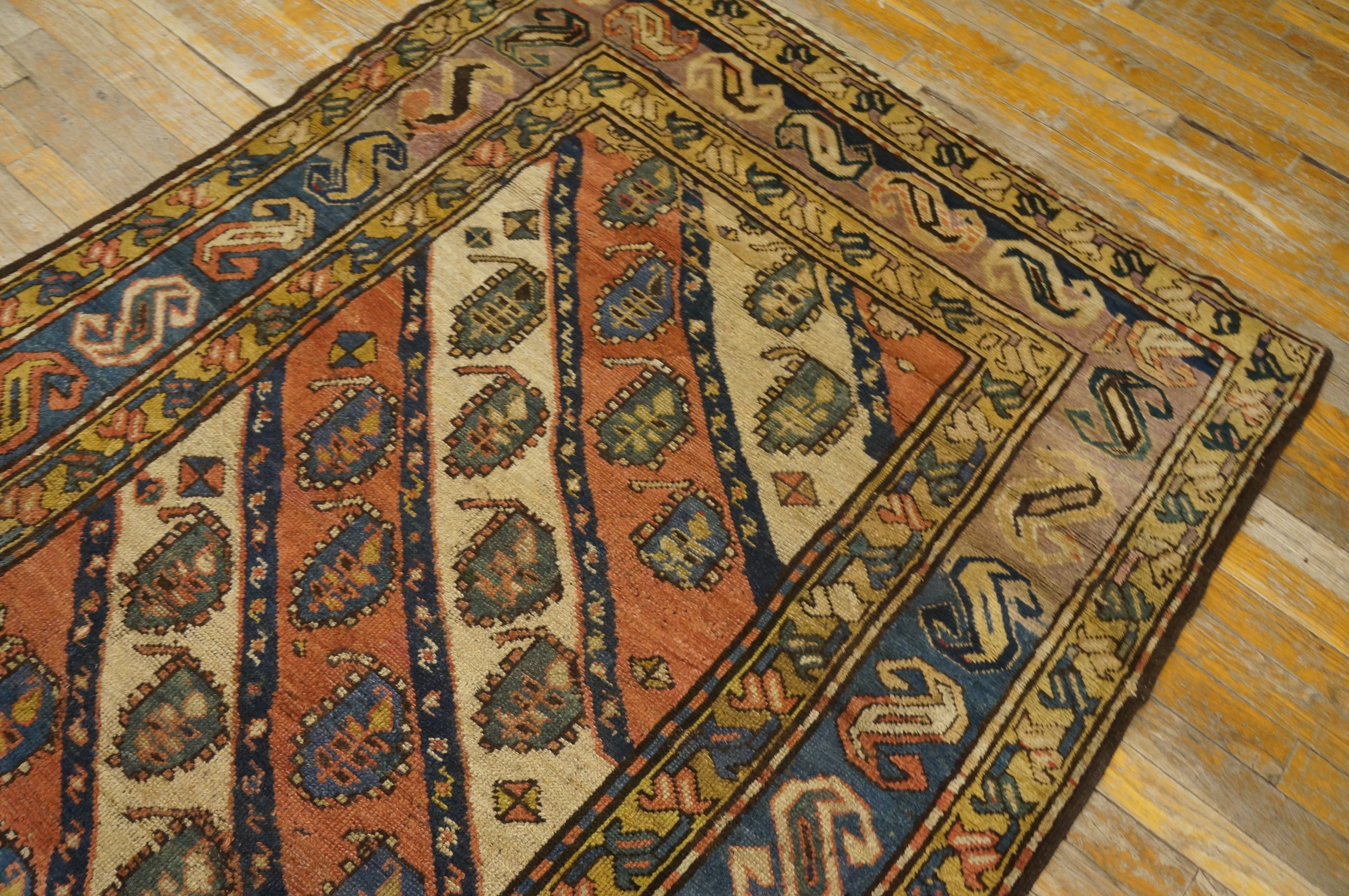
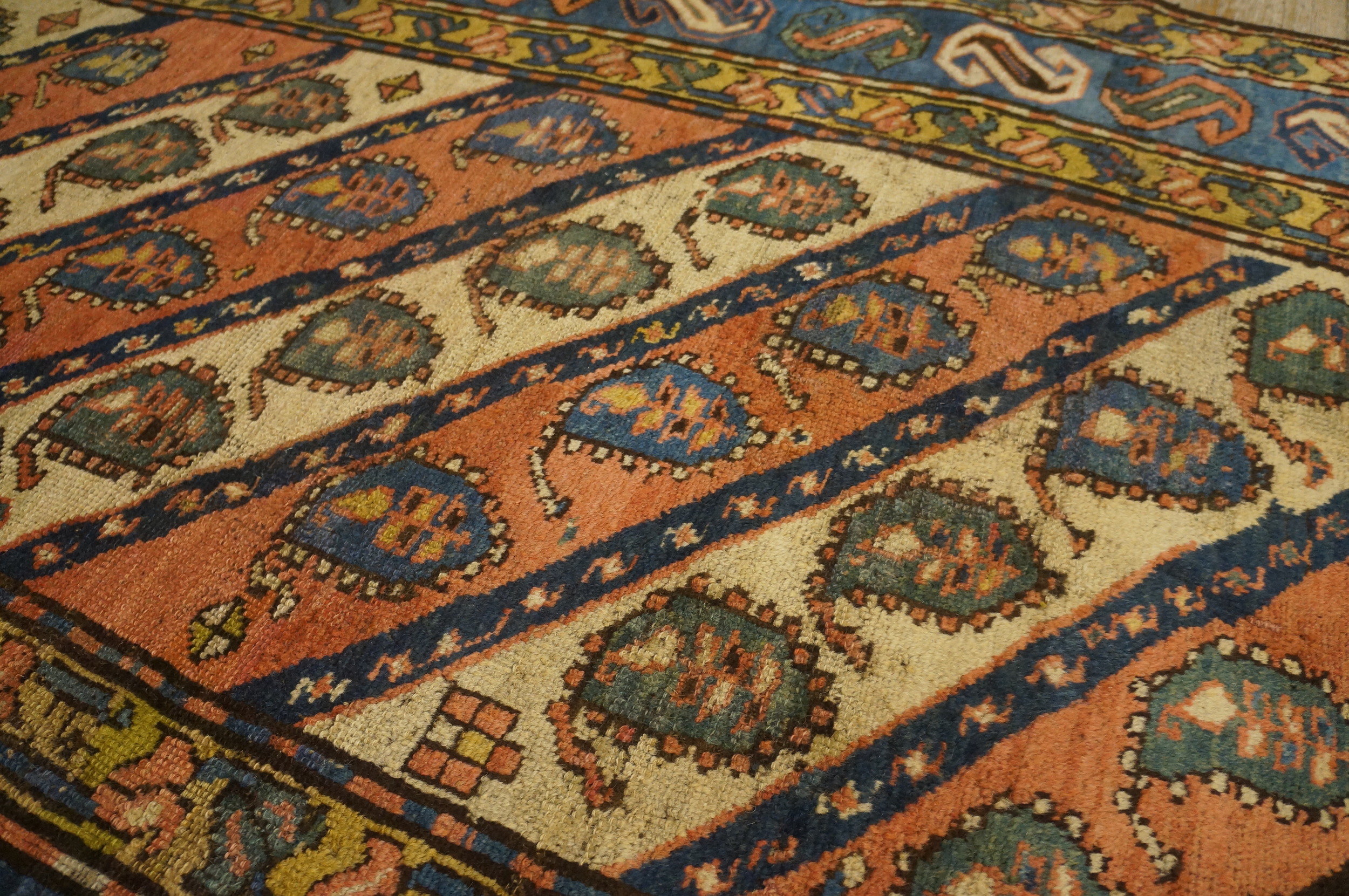
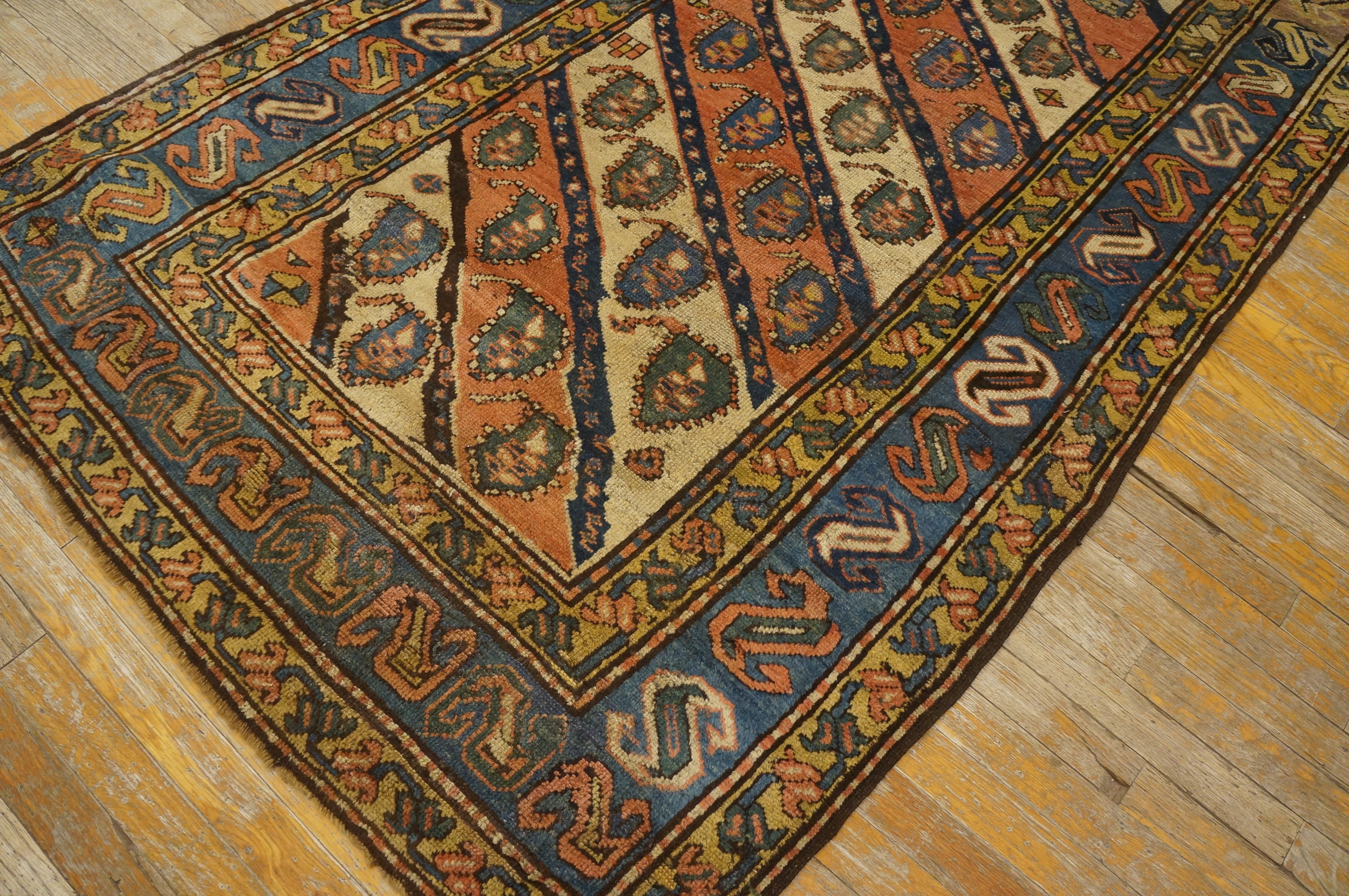
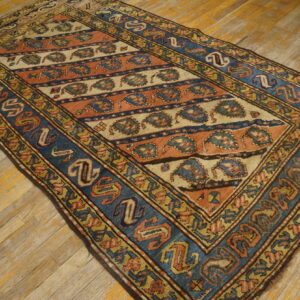
Antique Caucasian Caucasus Allover Geometric Hand Knotted Pile Rug, Country of Origin: Caucasus, Circa Date: 1930s. This exceptional example of early 20th-century weaving showcases the robust, saturated Coral palette typical of the distinct Caucasian style production. The wool quality and tight knotting suggest a piece intended for daily use, yet executed with remarkable precision and a sophisticated understanding of regional motifs.
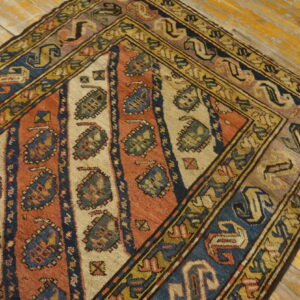
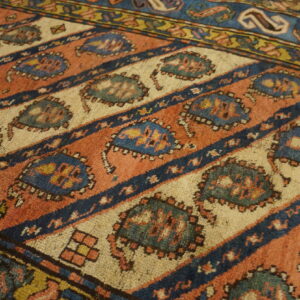
The central field employs a dynamic, diagonal lattice structure, separating bands of Coral and light neutral tones. Within these bands, stylized, shield-like motifs, often interpreted as highly abstracted Boteh, repeat consistently across the surface, defining the allover geometric design. This continuous repetition ensures visual movement without relying on a central medallion, creating a highly textural and engaging visual plane.
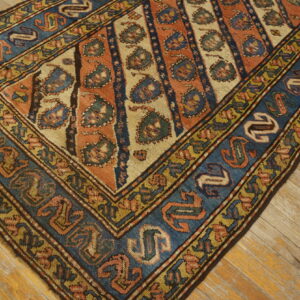
Framed by multiple guard borders, the main border features powerful, interlocking S-hook and geometric forms rendered in deep dark tones and contrasting earthy hues. While the precise dimensions are critical, the scale suggests a small scatter size format, making it highly versatile for entryways or intimate spaces. Such finely preserved antique rugs from this period are increasingly rare and valued for their authenticity and durability.
Woven during the 1930s, this piece represents the enduring textile traditions of the Caucasus region, even as production shifted under Soviet influence. The strong, durable wool pile and natural dyes have aged gracefully, offering a rich Coral patina that speaks to its history. It is a genuine example of the traditional weaving techniques still utilized in pieces Knotted in Caucasus during this era.