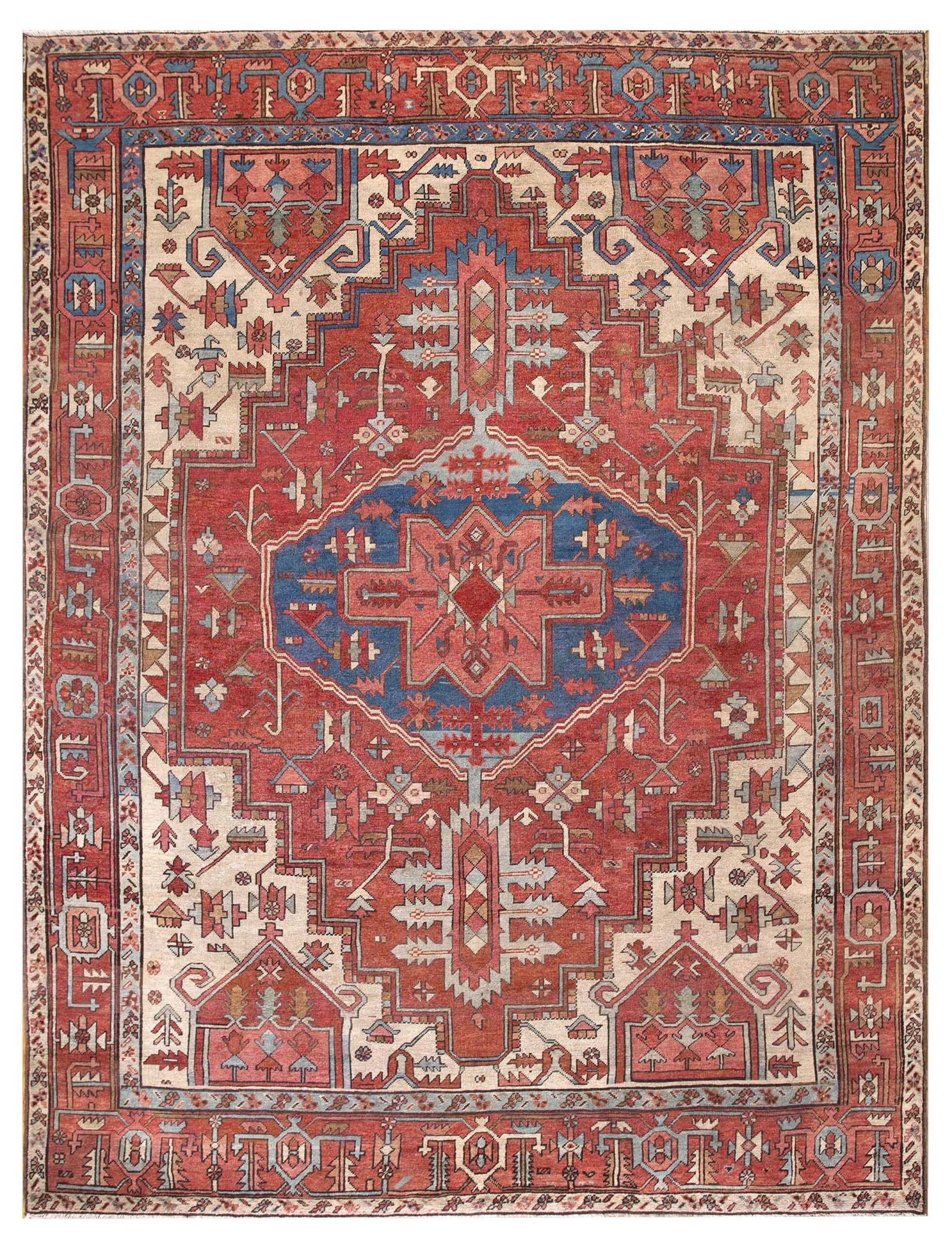
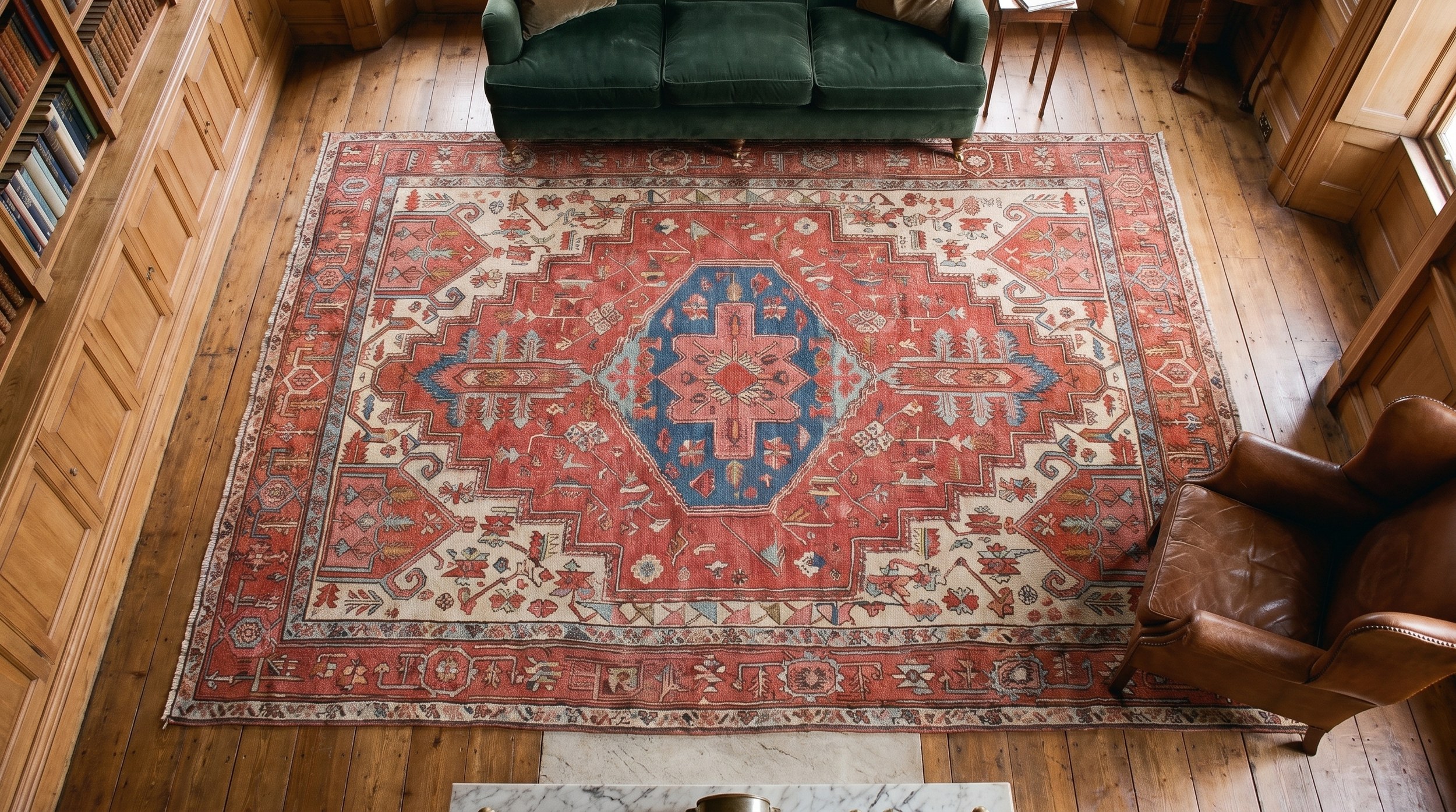
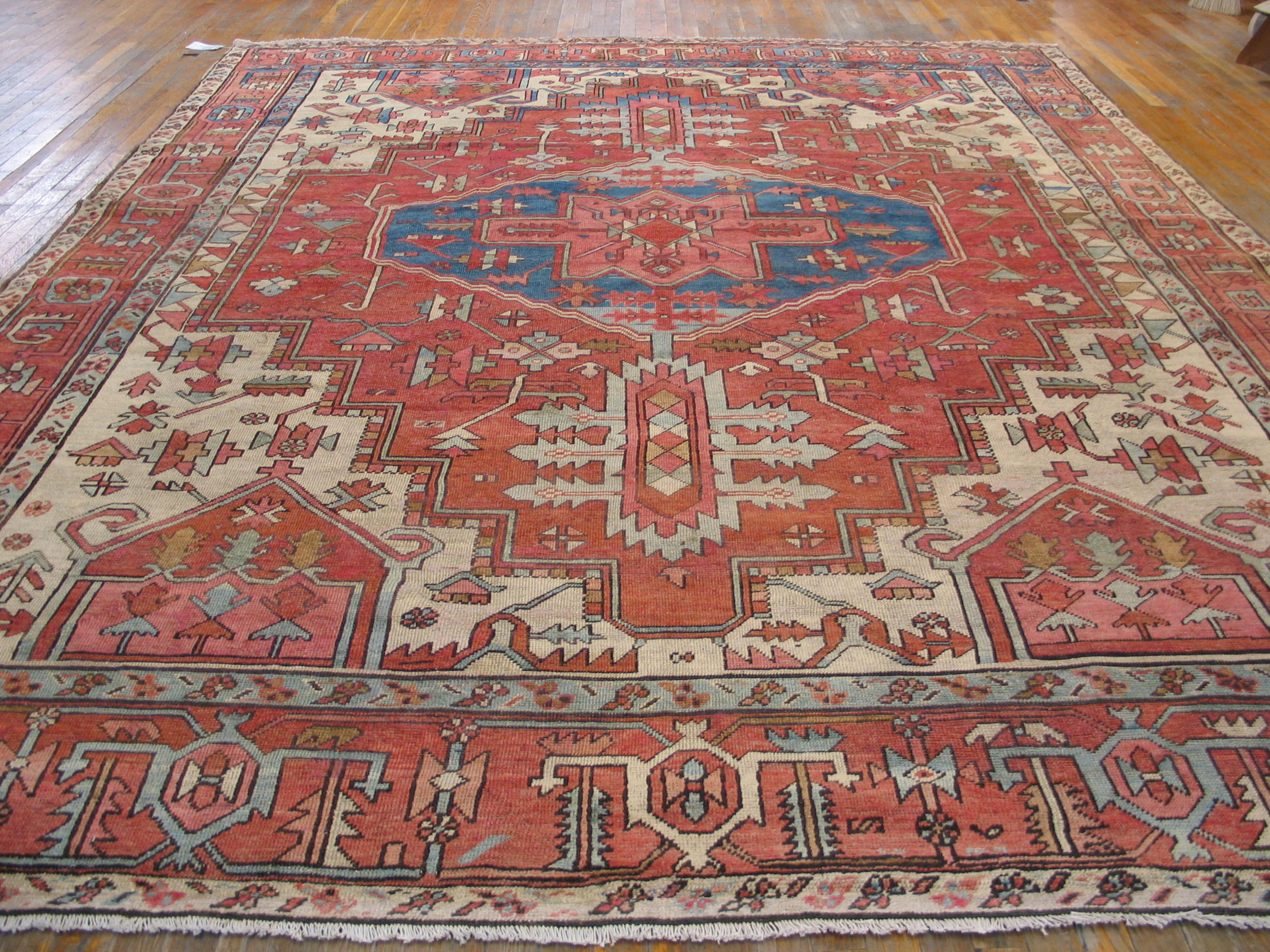
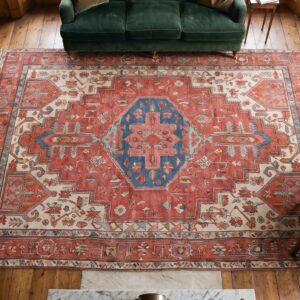
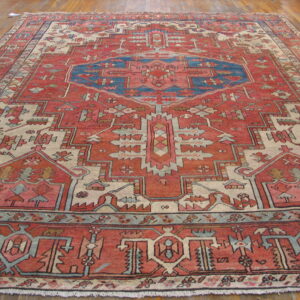
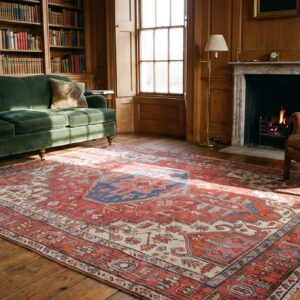
Antique Coral Serapi Persian Geometric Medallion Hand Knotted Pile Rug, Country of Origin: Iran Persia, Circa Date: 1890s. This exceptional example of 19th-century weaving hails from the mountainous regions of Northwest Iranian Persian rugs. Serapi pieces are highly prized for their robust construction and distinct aesthetic, often featuring bold, graphic designs that distinguish them from other courtly styles.
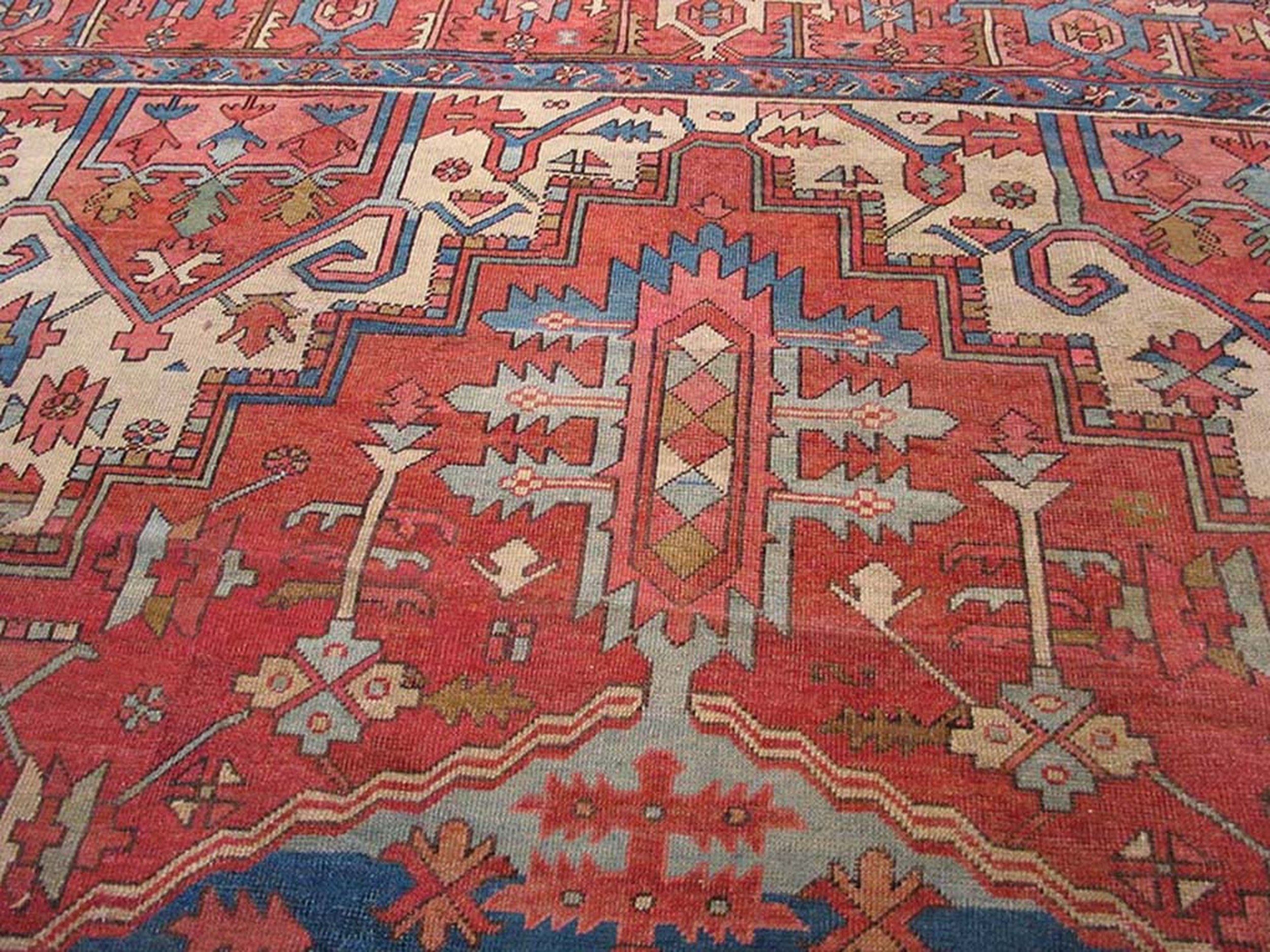
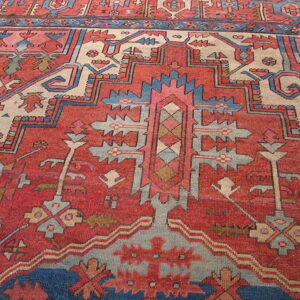
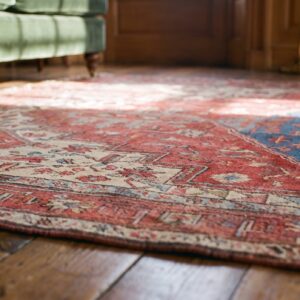
The commanding central medallion dominates the field, executed in a striking palette of coral, oxidized madder red, and deep indigo blue, set against a contrasting ivory ground. The use of natural dyes ensures a rich, variegated patina, highly sought after in genuine antique rugs. This piece exhibits the characteristic open field and powerful scale associated with the finest examples of the genre.
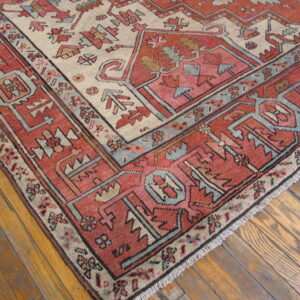
Unlike the highly curvilinear designs of central Persia, this rug showcases the powerful, rectilinear characteristics of geometric rugs. The stepped outlines and stylized botehs within the spandrels emphasize the tribal heritage of the weaving tradition. Given its generous dimensions, this piece functions perfectly as a foundational element for a grand living space, falling into the category of true room size rugs.
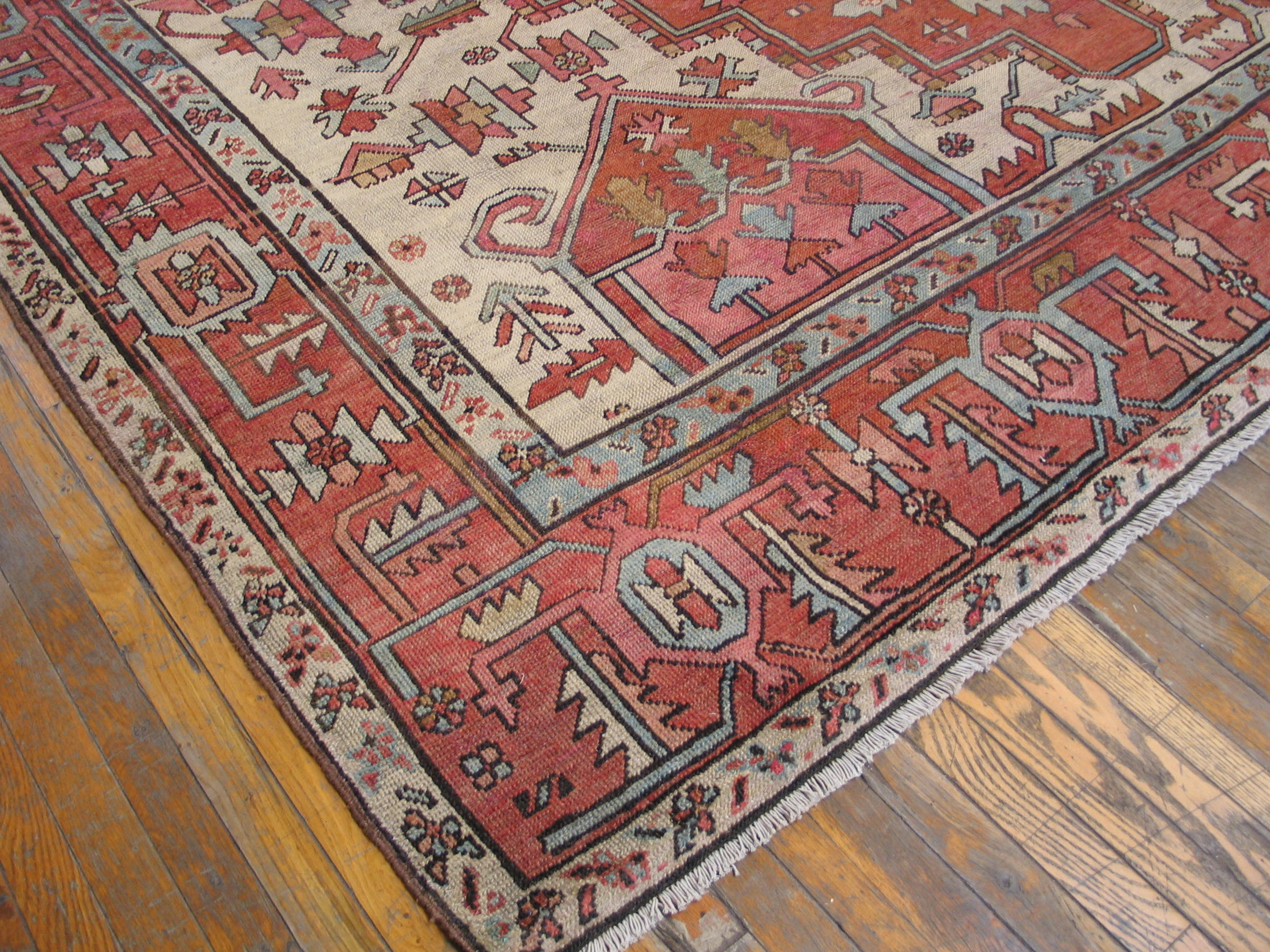
The term Serapi rugs is often used to denote the highest quality antique carpets woven in the Heriz district before 1900. This specific example, dating to the late Victorian era, retains excellent pile height and structural integrity, testifying to the superior wool and knotting techniques employed by the weavers of the period. It remains a timeless statement of enduring artistry.
Condition: Good.