
Introduction to Turtle & Tortoise Motifs in Rugs
Discover our curated selection of Turtles Tortoises Motifs Rugs available for immediate purchase.
Definition and Key Features
- Rounded, four-lobed forms that echo the shape of a turtle or tortoise shell with protruding extensions for limbs are the most recognizable aspects of these motifs. — Why: These shapes allowed weavers to convey animal symbolism while staying within the geometric constraints of tribal looms.
- Abstract geometric preference dominates over naturalistic portrayals, with most motifs simplified into cross-like or medallion patterns. — Why: Geometric abstraction made them easier to weave in nomadic and village contexts where detail was restricted.
- Placement as central medallions or border motifs reflects their dual role as decorative anchors and talismanic emblems. — Why: Rugs were not merely floor coverings but carriers of protective and symbolic meaning, and central placement enhanced their perceived power.
- Prevalence across regions from Anatolia to Central Asia and the Caucasus. — Why: The turtle/tortoise motif transcended cultural boundaries, making it one of the most widely adapted protective and longevity symbols in oriental carpet traditions.
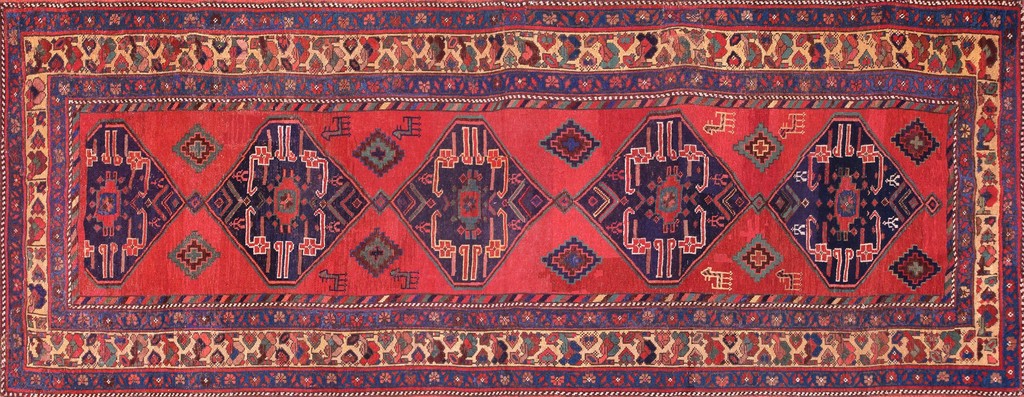
Antique Persian Allover Geometric Wool Hand Knotted Pile Coral / Salmon Pink 1900s Rug by Rugs On Net
Visual Identifiers: Turtle vs. Tortoise
In rug weaving, the distinction between turtles and tortoises lies less in zoological accuracy and more in stylistic representation. Turtle motif rugs often feature highly abstract, geometric renderings—four-pointed or rounded medallions resembling stylized shells. These appear frequently in tribal kilims and pile carpets, where schematic forms were the norm.
By contrast, tortoise design carpets occasionally lean toward more naturalistic or figurative depictions, with the shell pattern outlined in clearer detail and sometimes even the limbs suggested. Such depictions are rare but appear in village or court settings where figural art was more acceptable. The coexistence of geometric and figurative approaches highlights the adaptability of the motif within both rustic and refined weaving traditions.
Symbolic Meanings: Longevity, Protection, Fertility, Wisdom
The turtle and tortoise have carried symbolic weight for centuries, embedded in the collective imagination of weaving cultures. In Persian and Turkish rugs, the turtle motif symbolizes longevity, stability, and divine protection, aligning with ancient cosmologies that viewed the tortoise as a creature carrying the world on its back.
Tortoises, in particular, became common symbols of long life and endurance in oriental carpet design, their slow yet steady nature embodying permanence. Beyond longevity, turtle and tortoise motifs serve as protective rug motifs, often woven into borders or central fields as talismanic guardians of the household.
Their shells evoked resilience and safety, making them ideal emblems for families seeking blessings and warding off misfortune. Additionally, the motif connects to fertility and creation myths, with the rounded, womb-like form of the shell symbolizing birth and renewal. In some nomadic traditions, turtles were believed to embody wisdom and patience, virtues essential to survival in harsh landscapes.
Ultimately, turtle and tortoise motifs operate at the intersection of decoration and storytelling. They are iconic for their form and revered for their meaning, bridging the abstract and the animal world. In doing so, they anchor rugs not only as aesthetic objects but also as vessels of cultural memory, belief, and protection—true longevity symbol rugs that carry more than just design across generations.
Name, Etymology, and Regional Terminology
Western “Turtle Border” & “Samovar” Motif
In Western rug scholarship and trade catalogs of the 19th and 20th centuries, the term “turtle border” emerged as a convenient label for a distinctive design resembling a turtle’s silhouette. This motif typically appears as a repeating sequence of four-lobed or rounded figures connected along the rug’s border, evoking the shell and limbs of a turtle.
Collectors and dealers adopted the term not because the weavers themselves intended a literal animal, but because the shape offered a familiar point of reference for Western audiences. A related designation is the “samovar border,” used in both Persian and Western contexts. The form’s resemblance to a traditional Persian samovar (tea urn) linked the motif to themes of hospitality and domestic life. This alternate name shows how the same shape could be interpreted differently depending on cultural associations: one group saw an animal, while another envisioned a household vessel.
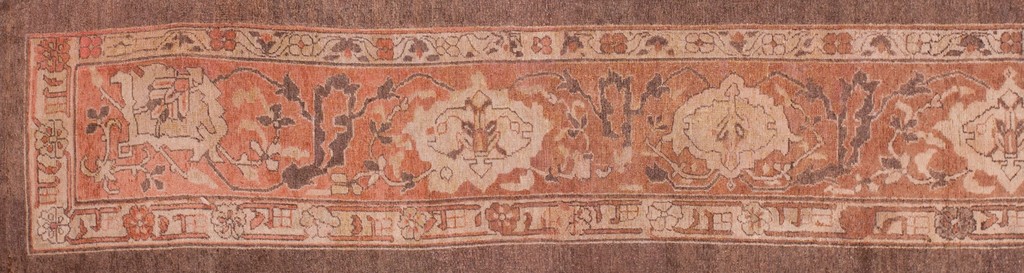
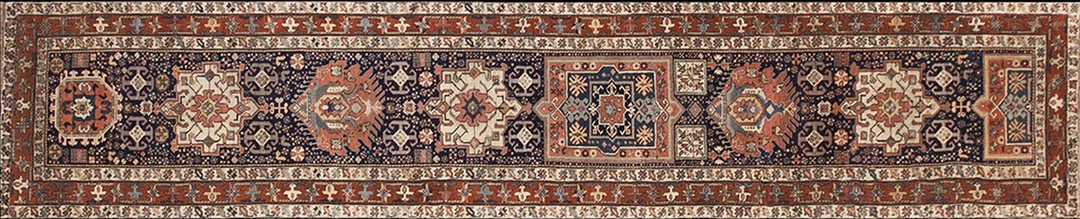
Rustic Coral Color Antique Agra Extra Long and Narrow Size Hallway Runner Rug by Rugs On Net
As for origins, tortoise-shell borders were first woven in Persian carpets of the Safavid era, particularly in court and workshop productions of the 16th and 17th centuries. These borders then filtered into village and nomadic designs, gradually spreading across Anatolia, the Caucasus, and the Balkans. The transmission illustrates how elite workshop patterns often trickled down into regional weaving traditions.
Local Names: Kornjača, Lenkoran, and Beyond
Regional rug terminology enriches our understanding of the motif’s cultural diffusion. In Serbia, the turtle form is widely known as kornjača, literally meaning “tortoise.” Variants like željka also occur in certain weaving villages, pointing to local linguistic diversity. In the Caucasus, particularly in carpets from the town of Lenkoran, the tortoise-like medallion became so central that it lent its name to an entire carpet type—the Lenkoran rug—where the turtle motif dominates the field or border.
Further east, Turkish weavers call the figure kaplumbağa, while Armenian traditions record the name kria. These localized terms demonstrate how a single motif could be indigenized and renamed across linguistic frontiers, embedding itself in each culture’s symbolic vocabulary. What began as a shared geometric idea evolved into multiple identities depending on geography and language.
Etymology & Naming Conventions
- Resemblance-based naming — Why: Most rug motif names arise from what the pattern looks like to the viewer (animal, flower, vessel) rather than the weaver’s original symbolic intent.
- Western marketing adaptation — Why: Terms like “turtle border” were coined to simplify rug descriptions for collectors and dealers unfamiliar with local names, making the designs more marketable.
- Cross-cultural rebranding — Why: Alternate labels such as “samovar border” show how the same figure could be reframed to highlight different associations—animal symbolism in one context, hospitality in another.
- Regional linguistic imprint — Why: Local words like kornjača, kaplumbağa, and kria underscore the motif’s adoption into community identities, ensuring its continuity as more than a mere decorative element.
The naming of turtle and tortoise motifs reveals how rug designs are not static. They are interpreted, reinterpreted, and renamed as they move across cultures. From the kornjača kilim of the Balkans to the samovar border of Persia, these rug motif names embody both the universality and the regional specificity of design heritage.
Origins & Geographic Spread
Ancient Roots: China, India, Armenia
The story of turtle and tortoise motifs in rugs begins deep within the mythic imagination of Asia. In China, the tortoise was revered as one of the Four Celestial Animals, a cosmic creature symbolizing stability and longevity. Its domed shell was imagined as the vault of heaven, while its flat underside represented the earth, making it a central figure in creation myths and cosmology.
In India, the tortoise appeared in the Kurma avatar of Vishnu, where the deity assumed the form of a giant tortoise to support the churning of the ocean—a myth embodying creation, fertility, and cosmic balance. These ancient associations of endurance, protection, and cosmic order traveled westward through trade and migration.
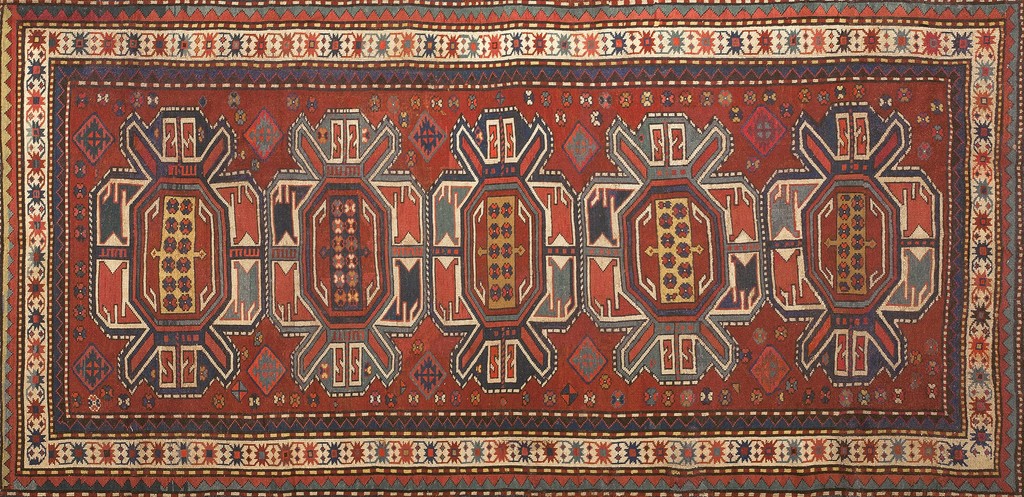
Antique Caucasian Coral 1930s Rug by Rugs On Net
In Armenian tradition, tortoise and turtle images entered textile vocabulary through cross-cultural exchange with both Persian and Asian sources. Early Armenian rug motifs adopted the four-lobed form not as literal animals but as sacred geometry linked to life cycles, cosmic order, and the endurance of the Armenian people across turbulent centuries.
This ancient layering of myth and symbol laid the foundation for the turtle’s enduring role in carpet design.
Evolution Across Caucasus, Persia, Balkans, Anatolia
As weaving traditions expanded along the Silk Road, the turtle motif was repeatedly adapted and reinterpreted. In the Caucasus, particularly in Lenkoran and Karabagh, the turtle motif became a hallmark of regional carpets. The so-called Caucasian turtle carpet often featured bold, geometric medallions—sometimes nearly filling the field—that abstracted the turtle into a four-limbed cosmic emblem.
In Persia, the motif found fertile ground in Heriz and Tabriz workshops, where geometric medallions incorporated tortoise-shell borders and turtle-like forms as part of their highly structured fields. These designs balanced nomadic abstraction with urban refinement, blending protective symbolism with market-driven aesthetics.
Moving westward into the Balkans, particularly in Pirot kilims, turtles were woven as repeating diamond or medallion shapes, known locally as kornjača. The Balkan kilim turtles highlight how the motif adapted to flatweave looms, taking on a crisp, linear character while retaining its talismanic associations. In Anatolia, Turkish weavers absorbed the motif into both village carpets and prayer rugs, naming it kaplumbağa and embedding it into borders and medallion layouts.
Thus, from Armenia to Anatolia, the turtle motif served as a cultural bridge, linking Asian cosmology with European textile art through the medium of the rug.
Key Milestones in Motif Development
- Ancient Origins in Asia: Tortoise as cosmic creature in China and India provided symbolic DNA for later rug adaptation.
- Armenian Transmission: Early Armenian rug motifs preserved and localized the turtle’s sacred geometry.
- Medieval Abstractions: During the medieval period, motifs such as dragons and lotuses were abstracted into turtle forms, blending animal and floral imagery into a recognizable four-lobed structure.
- th–19th Century Expansion: The motif became widespread across the Caucasus, Balkans, and Persia, appearing in both tribal and workshop production.
- th Century Revival: Collectors and heritage weavers resurrected the motif for global markets, recognizing its strong visual identity and layered symbolism.
The turtle origin rugs illustrate how one design could travel vast distances and evolve in form without losing its essential meaning. By the 19th century, the turtle motif had become one of the most distinctive rug motif names across Eurasia, symbolizing longevity and protection while also serving as a shared artistic language among Armenian, Caucasian, Persian, Balkan, and Anatolian weavers.
Design Characteristics & Motif Types
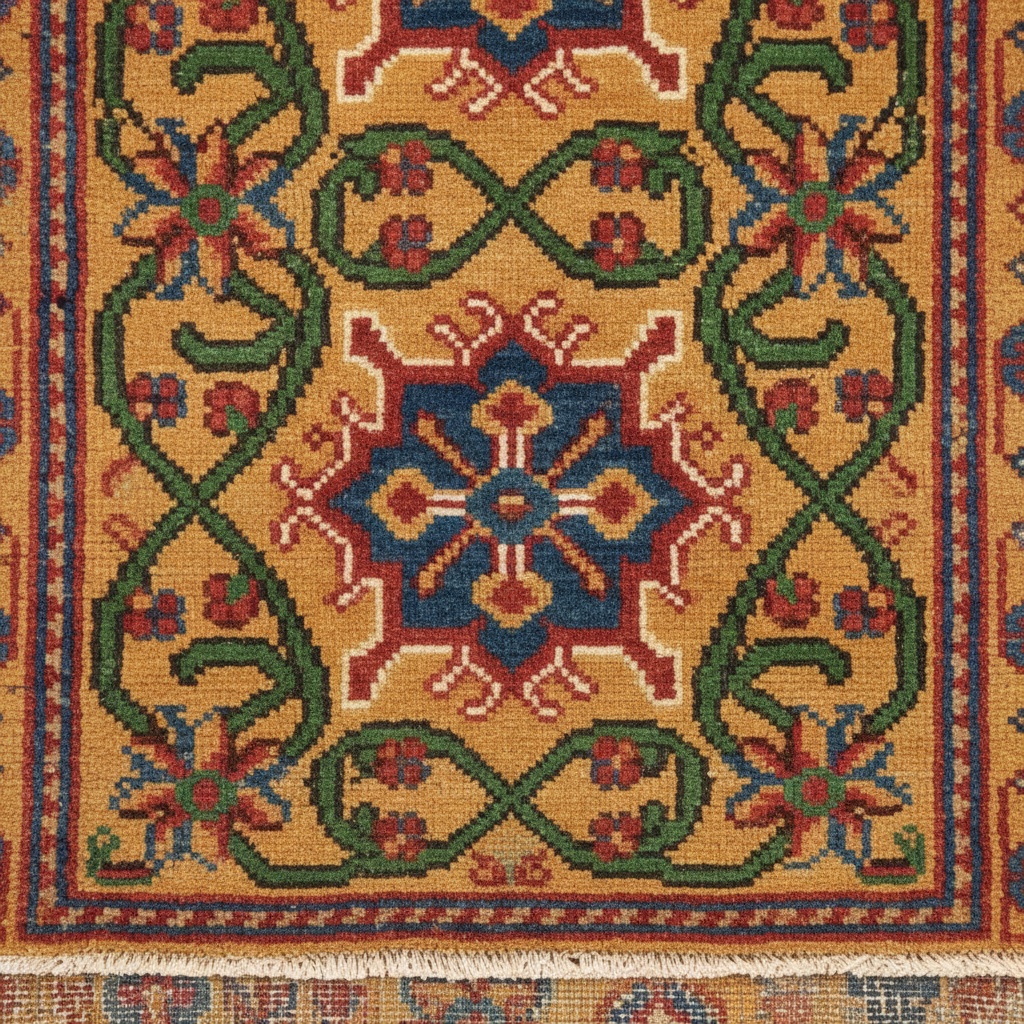
Geometric medallion and vine motifs in field design
Structure: Medallion, Border, Field, Flatweave
- Medallion placement — Why: The turtle motif often appears as a central medallion, symbolically anchoring the rug with stability and longevity.
- Border repeat — Why: In Tabriz and Heriz carpets, the turtle motif is integrated into the vine-scroll border, serving both as decoration and as a talismanic chain of protection.
- Field scatter — Why: Tribal and village rugs may place turtle forms throughout the field in scattered arrangements, reflecting both aesthetic rhythm and symbolic repetition.
- Flatweave adaptation — Why: In Pirot and Anatolian kilims, turtles become highly geometric, expressed in stepped, angular outlines suited to slit-tapestry technique, ensuring bold contrast and instant recognition.
Spotting Turtle Shell Borders in Antique Rugs
The turtle shell border is one of the most recognizable design signatures in antique Persian and Caucasian rugs. In Tabriz rug motifs, the turtle border takes the form of a half-palmette flanked by four protruding extensions, creating the illusion of a turtle’s body with head and limbs. These are repeated rhythmically along a scrolling vine, alternating inward and outward to frame the central field. In Heriz rugs, the form is often bolder, with angular interpretations that reflect the geometric style of the region. In Kazak carpets, the turtle border appears in strikingly colorful variations, with high-contrast outlines and simplified turtle-like figures placed in sequence around the field. For collectors, the key is to look for these four-limbed palmettes consistently repeated within a vine-scroll or chain—an unmistakable hallmark of the turtle tradition.
Stylized vs. Naturalistic
The overwhelming majority of turtle and tortoise rug motifs are stylized and geometric. Their design language emphasizes symmetry, repetition, and angular abstraction, a natural outcome of tribal looms and flatweave construction. These stylized forms dominate in Caucasian, Anatolian, and Balkan traditions, where turtles are reduced to crosses, diamonds, or four-lobed medallions.
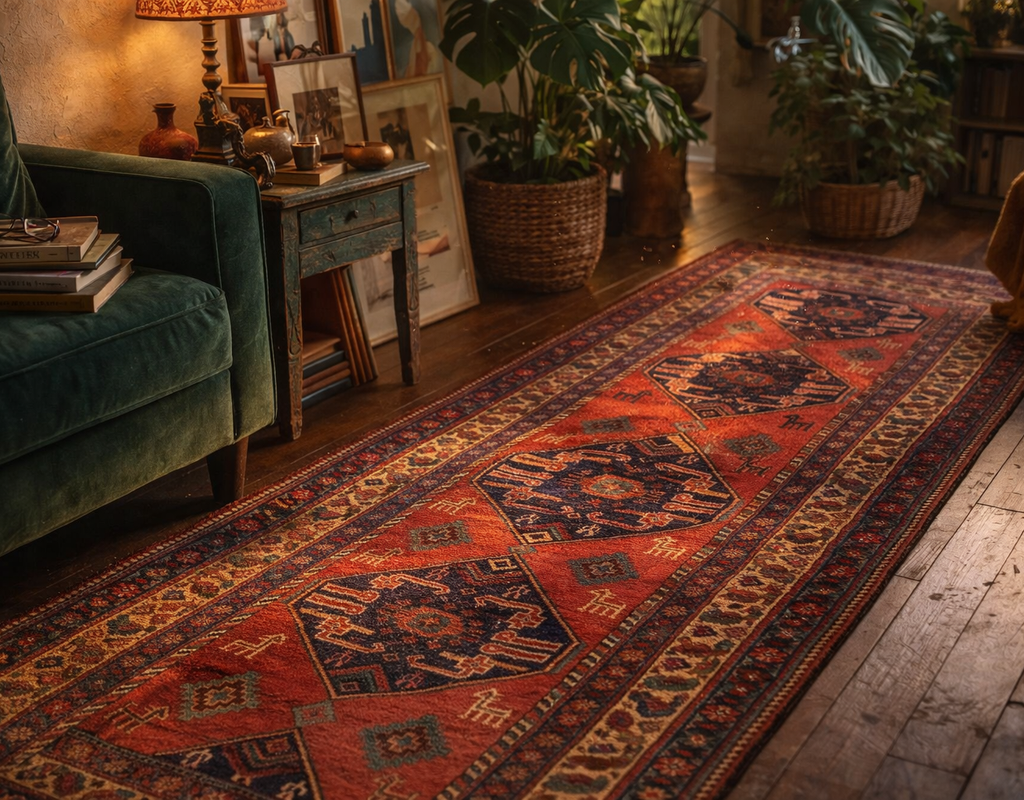
A richly patterned runner rug anchors this cozy corner filled with dark wood furniture and abundant greenery.
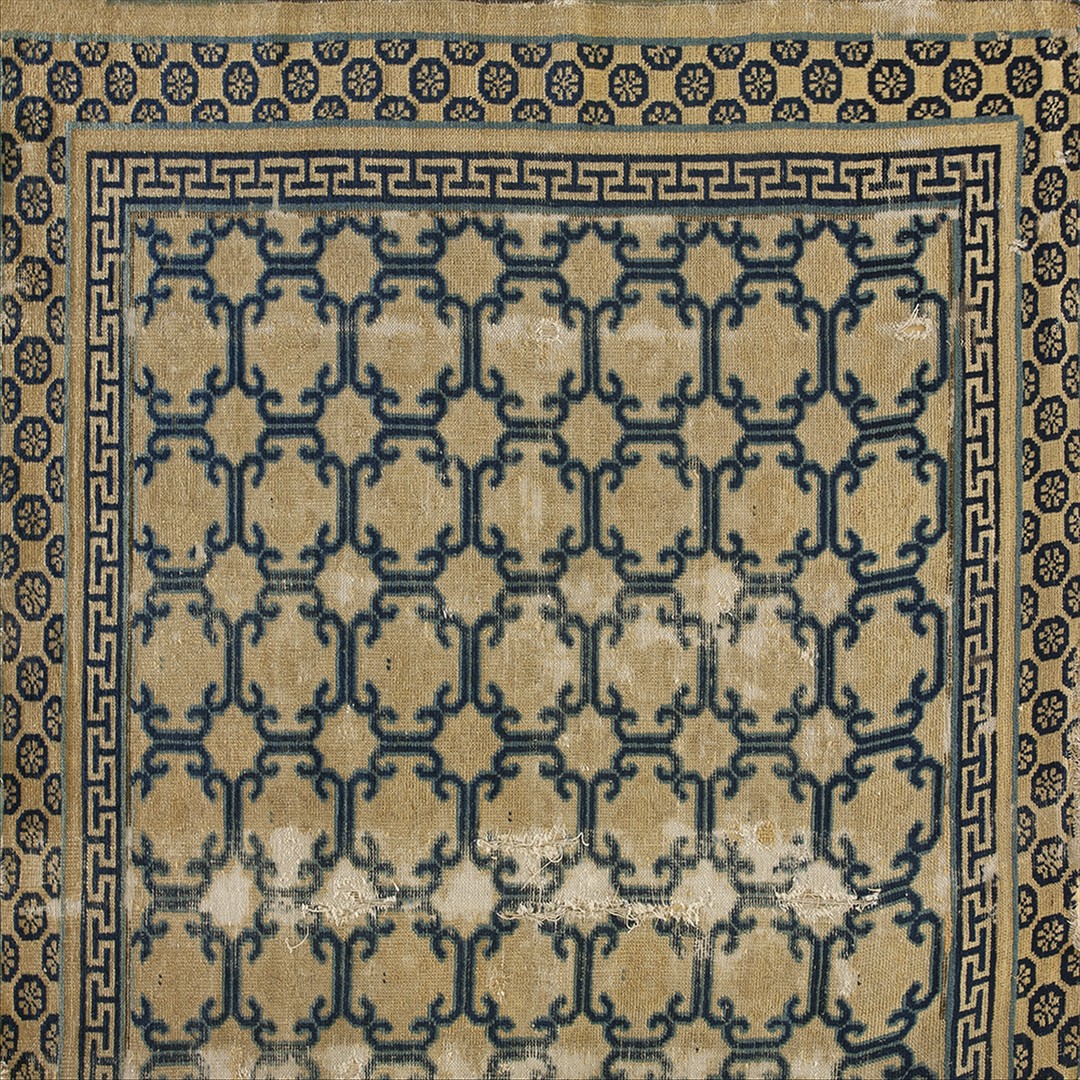
Rare naturalistic examples do exist—such as Navajo pictorial rugs that depict turtles in recognizable animal form, or Qing-dynasty Chinese carpets with tortoise-shell hexagonal grids—but these are exceptions. The dominance of stylization underscores the universal weaving practice of abstraction over realism, especially in portable, nomadic art.
Tortoise-Shell Patterns in Kilims
In flatwoven kilims, the turtle motif takes on its most geometric form. The Pirot kilim tortoise pattern is characterized by a stepped diamond or lozenge with four hooked “legs” at the corners, rendered in sharp, high-contrast color combinations such as red and black or blue and ivory. The motif stands out boldly, often repeated in rows, making it both a decorative anchor and a talismanic protector. In Anatolian kilims, similar turtle figures appear as hooked or notched medallions, their angularity heightened by the slit-tapestry weave.
Another variation of the tortoise-shell pattern is seen in Chinese and Khotan rugs, where the design emerges as a hexagonal grid, directly referencing the segmented plates of a tortoise’s shell. These patterns carry cosmic overtones, symbolizing structure, order, and stability, while still functioning as striking geometric animal rugs. Whether appearing as a turtle medallion, a border repeat, or a kilim tortoise pattern, the motif demonstrates extraordinary flexibility.
A single design could serve multiple symbolic and visual purposes: as a guardian along the edge, a cosmic symbol at the center, or a repeating geometric form across the field—always recognizable, yet endlessly adaptable.
Materials, Weaving, and Technical Aspects
Pile vs. Flatweave for Turtle Motifs
The way a turtle motif appears in a rug depends greatly on whether the rug is pile or flatweave. In pile turtle motif rugs such as those from Heriz and Tabriz, the extra height and density of the wool pile—secured by the Turkish knot—allow for bold, raised turtle figures with strong outlines and a sense of depth.
By contrast, in flatweave turtle rugs, such as Balkan kilims, the absence of pile produces crisp, sharply geometric turtles, defined by stepped edges and color-block precision. Each construction highlights different strengths: pile creates tactile richness and relief, while flatweave emphasizes graphic clarity and rhythm.
Weaving Techniques: Soumak, Tapestry, Knotting
The soumak turtle is a hallmark of Caucasian weaving. Soumak, a weft-wrapping technique, produces a braided, raised line that outlines turtle figures and gives them texture while leaving the back smooth and flat. This makes the motif stand out in low-relief, ideal for emphasizing turtle-shell borders. Tapestry weaving, used in Balkan kilims, relies on interlocking colored wefts to create angular, stepped turtle forms on vertical looms—an efficient method for nomads and villagers working without pile. In contrast, knotting techniques in Persian and Anatolian pile rugs—especially the symmetrical Turkish knot—enable bolder turtle medallions with defined edges and thicker body. Together, these techniques offered a range of stylistic expression, from the sculpted to the linear.
Materials: Wool, Cotton, Silk, Polypropylene, Recycled Fibers
- Wool — Why: The primary material for tribal and workshop rugs, wool’s elasticity and durability make it ideal for pile turtle motifs, adding depth and warmth.
- Cotton — Why: Often used for warps and foundations, cotton provided structural stability in larger rugs with turtle-shell borders, especially in Persian production.
- Silk — Why: Rare but luxurious, silk allowed for shimmering turtle medallions in courtly carpets, giving the motif an almost luminous quality.
- Polypropylene — Why: Modern polypropylene coastal rugs use this synthetic fiber because it resists moisture, withstands outdoor use, and allows for printed sea-turtle rug graphics.
- Recycled fibers — Why: Contemporary eco-friendly weaving incorporates recycled textiles, creating affordable kilim-style rugs with turtle designs while supporting sustainability.
Natural vs. Synthetic Dyes
Traditional turtle motifs glowed with the rich hues of natural indigo and madder. Indigo produced deep blues that often formed the background for turtle borders, symbolizing water and cosmic depth, while madder yielded reds, rusts, and warm yellows that highlighted turtle limbs and shells. These natural dyes aged gracefully, softening into harmonious palettes that enhanced the talismanic aura of turtle figures.
In contrast, synthetic dyes, increasingly used from the late 19th century onward, offered brighter and more fade-resistant colors, especially in modern sea-turtle rugs. Polypropylene rugs in particular use synthetic coloration for vivid coastal motifs that remain stable under sunlight and outdoor conditions.
Raised Turtle-Shell Patterns
Certain weaving techniques intentionally gave turtle motifs a three-dimensional shell-like relief. In soumak, the wrapped wefts create braided outlines that make turtles rise slightly from the flat surface. In high-pile pile rugs, the extra depth allows the turtle shell to stand out against lower-pile backgrounds, almost sculptural in effect.
By varying pile height and knot density, weavers could simulate the curved dome of a tortoise shell, turning symbolic abstraction into tactile realism. In summary, the choice of construction, materials, and dyes determines how turtle designs are perceived—whether as sharp, geometric symbols in flatweaves or as bold, raised emblems in pile.
From the indigo-dyed rug of Anatolia to the polypropylene coastal rug of today, the soumak turtle and its variants show that technical artistry is inseparable from the symbolic power of these enduring motifs.
Symbolic Meaning & Cultural Significance
Longevity, Protection, Fertility, Wisdom
The turtle symbol in rugs carries one of the most universally recognized sets of meanings in textile art. The turtle’s long life made it a longevity rug design, present in Chinese cosmology, Persian talismanic borders, and Balkan folklore. Its hard shell naturally symbolized protection and stability, mirroring myths in which the world itself rests upon the back of a cosmic turtle.
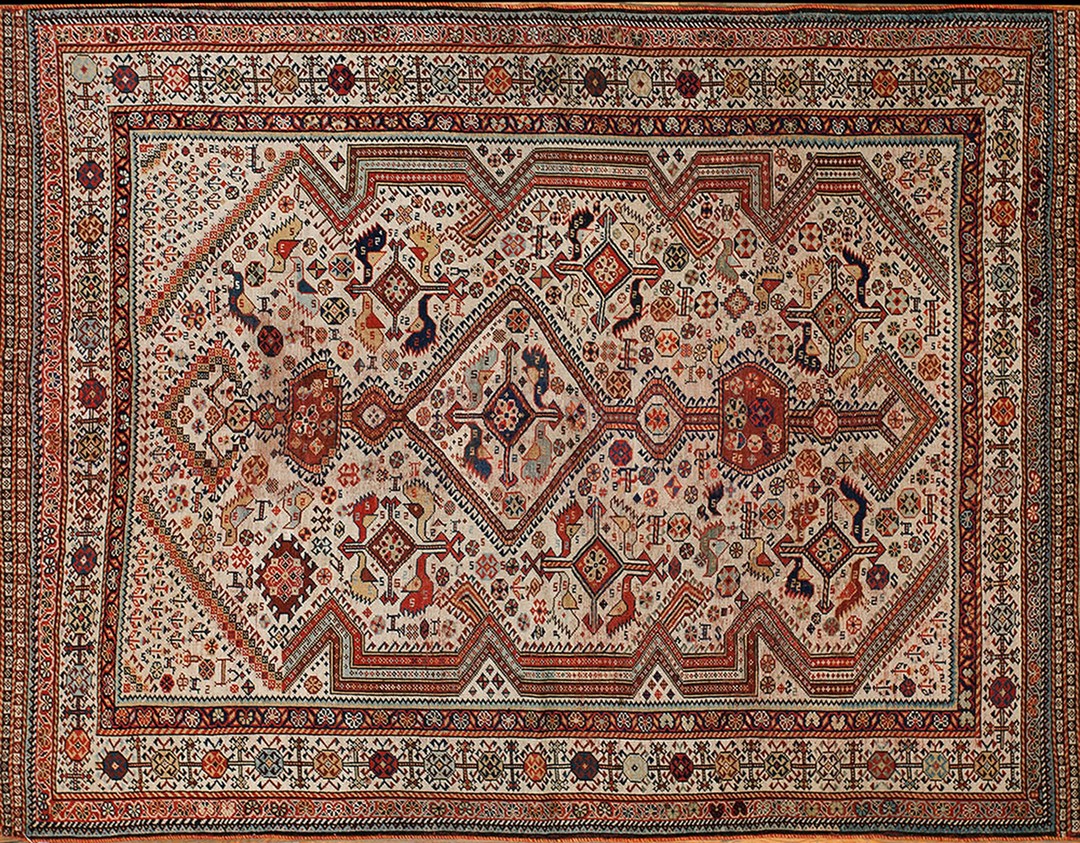
Among tribal weavers, the rounded, womb-like shell shape was associated with fertility and creation, making the motif a common presence in dowry weavings among Persian Qashqai and Serbian kilim traditions. The turtle also embodied wisdom and patience, admired for its slow but enduring progress in Central Asian and even Native American lore. Each woven turtle, whether abstract or geometric, therefore represented a composite of blessings: life, safety, abundance, and insight.
Turtle Motif in Persian & Turkish Rugs
In Persian turtle meaning, the motif was incorporated into both medallions and especially turtle shell borders in Tabriz and Heriz carpets. These forms symbolized protection for the household while simultaneously serving as highly aesthetic frames of repeating palmette-like turtles. Persian weavers placed them deliberately to combine beauty with talismanic effect, ensuring that the rug both decorated and safeguarded.
In Turkish rug symbolism, particularly in Anatolia, the kaplumbağa motif was understood as a charm for longevity and endurance, woven into both pile carpets and prayer rugs. The turtle form was abstracted into angular, geometric borders and medallions, yet always carried the same dual weight of beauty and blessing.
For both Persians and Turks, the turtle motif fused practicality with spirituality, securing its place as one of the most enduring protective rug motifs in the region.
Tortoises & Longevity in Oriental Carpets
Tortoises are common symbols of longevity in oriental carpet design because their natural characteristics—slow pace, long lifespan, and protective shell—resonated across cultures. In oriental philosophy, longevity was more than just a long life; it meant the endurance of family lines, prosperity, and cultural continuity.
The tortoise medallion became a woven metaphor for this ideal, appearing in Persian, Caucasian, and Balkan carpets. By embedding tortoise imagery into rugs, weavers invoked a wish that their creations, like the animal itself, would endure through generations and provide lasting blessing to the home.
Placement & Ritual Use
The placement of the turtle motif further reinforced its meaning. When used at the center of a rug, it acted as the focal point of stability, anchoring the design with cosmic permanence. When repeated in borders, it became a chain of protective shields, encircling the household in safety. In tribal dowry weavings, turtle motifs symbolized fertility, longevity, and protection for a new marriage.
In prayer rugs, their placement carried ritual overtones, protecting the worshipper and reinforcing the steady, patient path of devotion. In ceremonial pieces, especially kilims, turtles often appeared in repeating rows, functioning as communal symbols of blessing and continuity. The turtle motif’s cultural significance lies in its ability to condense universal human hopes into a single form.
From Persian turtle meaning in ornate court carpets to Turkish rug symbolism in village prayer pieces, and from dowry kilims to ceremonial textiles, turtles and tortoises wove together a message of long life, prosperity, and protection that resonated across generations and regions.
Regional & Historical Variations
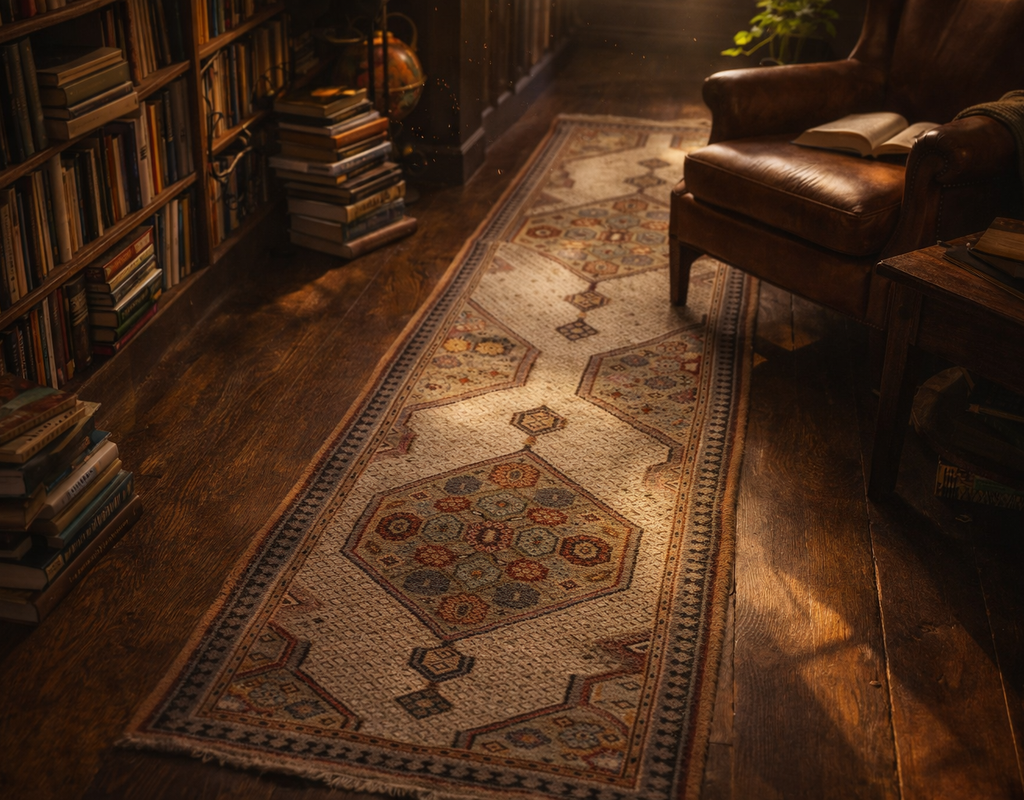
A traditional runner rug anchors the reading nook in this richly textured, book-lined space.
Caucasian (Karabagh, Kazak, Lenkoran)
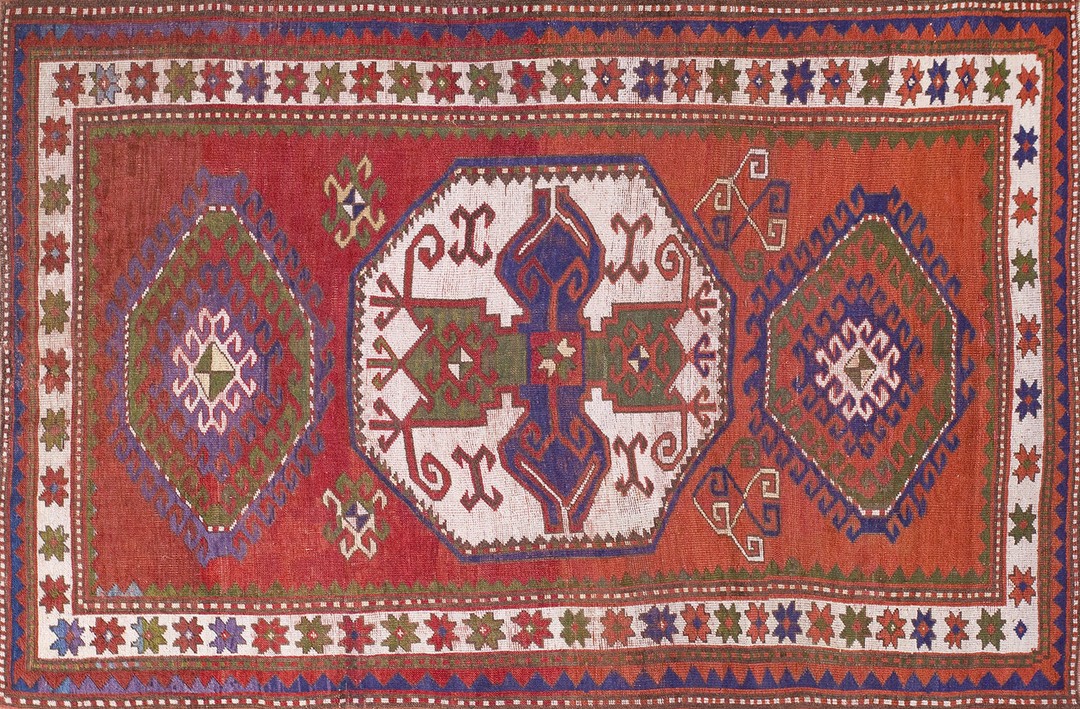
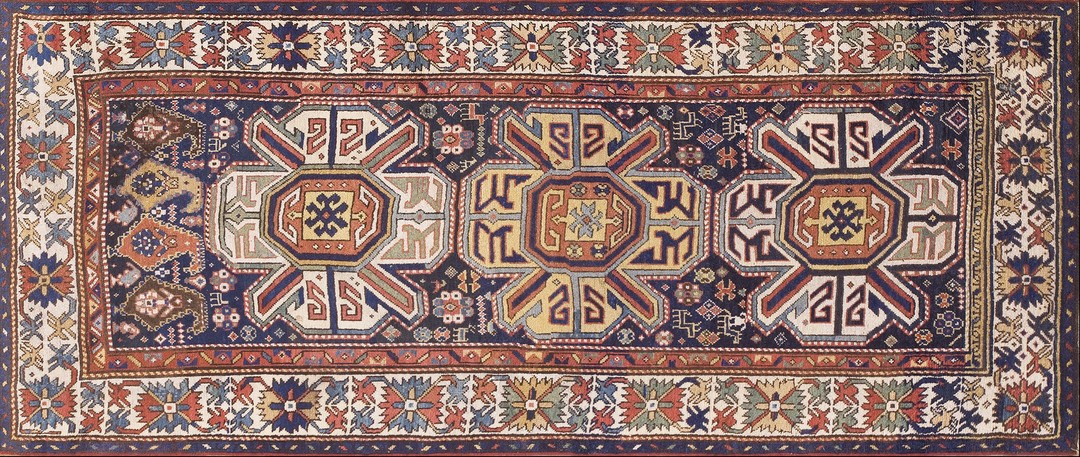
The Caucasian turtle rug tradition is among the boldest, with large geometric turtle medallions dominating fields in Karabagh, Kazak, and Lenkoran carpets. These designs use strong contrasting colors—reds, blues, greens—paired with sharp angular outlines, reflecting both tribal identity and talismanic purpose. The Lenkoran turtle rug is particularly iconic, featuring elongated shield-shaped medallions that incorporate turtle forms as their structural core.
To authenticate a 19th-century turtle-shell design in Caucasian rugs, experts look for hand-spun wool, natural dyes, asymmetry in drawing, and the patina of age. The tribal vigor of these rugs lies in their geometric clarity and the deeply symbolic use of the turtle motif as both protector and cultural emblem.
Persian (Heriz, Serapi, Tabriz), Urban vs. Tribal Styles
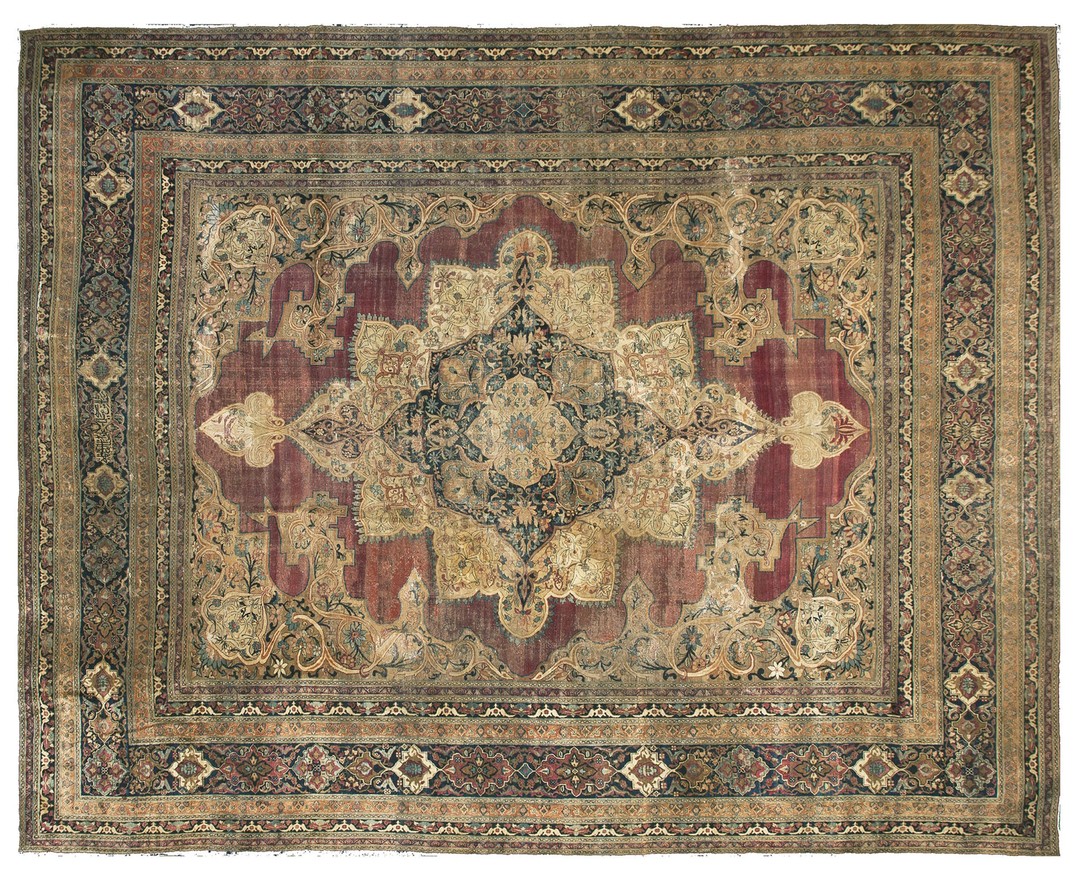
In Persia, the turtle motif evolved into one of the most iconic border patterns. The Heriz turtle border uses a half-palmette form with four protruding extensions, repeated in vine-scroll fashion, forming a protective chain around the field. Tabriz carpets, woven in sophisticated urban workshops, rendered the same turtle motif with fine precision, balanced symmetry, and subtle natural dyes, appealing to elite markets.
By contrast, Serapi and tribal Heriz variants presented freer, more dynamic turtle forms, their irregularity conveying the energy of village production. Urban Persian turtle motifs often leaned toward decorative refinement, while tribal versions retained the talismanic liveliness that kept the symbolism close to its roots.
Balkan Kilims (Pirot, Chiprovtsi)
In the Balkans, the turtle motif took on a distinctly flatwoven identity. The Pirot kilim turtles, known locally as kornjača, appear as bold geometric diamonds or lozenges with hooked limbs, typically woven in red, black, and yellow for maximum contrast. These motifs were central in dowry weaving, symbolizing protection, fertility, and longevity for the new household.
In Chiprovtsi kilims of Bulgaria, variations of the turtle pattern appear in stepped angular outlines, sometimes combined with other zoomorphic symbols, illustrating the adaptability of the motif in Balkan village traditions.
Anatolian, Central Asian, Chinese, Indigenous Variations
In Anatolia, turtles are relatively rare but appear in village rugs and some Melas prayer rugs, where they act as protective border symbols. Their angular interpretation aligns with the geometric language of Turkish village weaving. In Central Asia, the motif occasionally merges with octagonal gul forms, abstracted almost beyond recognition, yet still symbolizing endurance.
In Chinese carpets, the tortoise appears in two forms: the tortoise-shell hexagonal lattice, symbolizing order and cosmic stability, and more realistic turtle depictions seen in Qing-era textiles, where they serve as auspicious emblems of longevity.
Among Indigenous Navajo weavers, turtles enter the modern pictorial repertoire, woven with recognizable realism. Here, the turtle embodies earth and water symbolism, representing survival, wisdom, and harmony with nature, showing that the motif continues to find new cultural expression outside Eurasia.
Cross-Cultural Adaptability
The turtle motif’s survival across time and geography owes to its extraordinary adaptability. From the Caucasian turtle medallion to the Heriz turtle border, from Pirot kilim turtles to Chinese tortoise-shell hexagons, each region reshaped the design to fit its techniques and beliefs. What unites them is the universal symbolism of longevity and protection.
The result is a motif that not only bridges tribal and urban weaving traditions but also carries its meaning intact across continents, producing some of the most recognizable and authentic turtle rugs in the textile world.
Collecting, Authentication, and Value
Vintage vs. Modern Turtle-Border Rugs
For collectors, the key distinction lies between vintage turtle border rugs and modern reproductions. Antique and vintage examples—especially from the Caucasus, Tabriz, Heriz, and Serapi regions—are increasingly rare on the market. Their scarcity, coupled with historic craftsmanship, drives strong demand among serious collectors.
Modern turtle-border rugs, by contrast, are widely available, often woven with synthetic dyes or machine assistance. While they provide affordable access to the motif, they lack the rarity and artistry that underpin long-term appreciation. — Why: Vintage examples embody authentic traditions, while modern pieces serve primarily as decorative options rather than investments.
Appreciation Potential for Antique Turtle-Motif Rugs
Yes, vintage turtle-motif rugs can and do appreciate in value over time. Collectors prize authentic Caucasian turtle designs and tortoise-border Persian carpets not only for their beauty but for their cultural significance.
As supply diminishes—many 19th-century examples already reside in museums or private collections—their market value trends upward. This makes turtle-motif rugs especially appealing to those seeking investment-grade textiles, provided authenticity and condition are verified.
Authentication Tips for 19th-Century Caucasian Turtle Designs
Determining whether a Caucasian turtle rug is truly 19th-century requires careful inspection. Collectors look for:
- Hand-spun wool and natural dyes (indigo, madder) with age-softened hues. — Why: Synthetic dyes or overly bright colors usually indicate later production.
- Coarse, tribal weave structures with irregularities in line and drawing. — Why: Perfection in symmetry often signals modern reproductions.
- Motif clarity and geometric strength in the turtle medallion or border. — Why: Authentic examples show balance between abstraction and symbolism.
- Provenance and documentation from auction houses, museums, or reputable dealers. — Why: Proper paper trail significantly boosts both authenticity and value.
What Drives the Price of a Collectible Tortoise-Border Tabriz Rug?
A collectible tortoise carpet from Tabriz derives its value from a combination of factors:
- Age: Earlier pieces from the 18th–19th century command far higher prices than later workshop rugs.
- Design clarity: Well-drawn turtle-shell borders with balanced vine-scrolls are prized over blurred or cramped versions.
- Condition: Rugs with minimal repairs, intact borders, and strong pile height achieve premium results.
- Provenance: A documented history of ownership, particularly ties to museums or well-known collections, can dramatically elevate market price. Typical market ranges vary widely, but authentic tortoise-border Tabriz rugs often sell from the mid–five figures at auction, with exceptional, museum-grade examples climbing into six figures.
Investment & Diversification
For serious collectors, museum-grade turtle-motif carpets are increasingly viewed as an alternative investment.
Just as fine art or rare manuscripts diversify portfolios, rugs with proven age, cultural significance, and limited supply represent tangible, appreciating assets. — Why: They combine aesthetic enjoyment with long-term financial potential, particularly when drawn from renowned weaving centers like Tabriz, Heriz, or Karabagh.
Key Takeaway
The turtle motif adds enduring value to antique carpets. Authentic 19th-century Caucasian turtle designs and collectible tortoise carpets from Persia stand at the intersection of artistry and investment.
With proper authentication and provenance, these rugs not only safeguard cultural heritage but also offer rug investment opportunities that continue to appreciate, making them treasures for both collectors and connoisseurs.
Modern Production, Trends, and Sustainability
Artisanal Revivals, Custom Reproductions
A growing movement in rug-making emphasizes heritage revival. Skilled weavers and workshops are producing custom turtle rugs that reimagine historical motifs from Tabriz, Heriz, or Pirot kilims, but in palettes suited to contemporary interiors.
Collectors and homeowners now request custom reproductions that retain the geometric strength of antique turtle borders while exploring softer neutrals, pastel shades, or modern jewel tones. These projects highlight how the turtle motif remains relevant, bridging tradition with modern design trends. — Why: They allow new artisans to sustain endangered skills while meeting today’s market demand for personalization.
Sea-Turtle & Coastal Themes
In the mainstream market, sea-turtle and coastal rugs have become highly popular. Here, polypropylene dominates because of its unique advantages: it is resistant to water, durable for indoor-outdoor use, and inexpensive compared to wool. This makes the polypropylene sea-turtle rug especially common for beach houses, children’s rooms, or outdoor patios.
The fiber also accommodates machine-printed designs, enabling realistic sea-turtle graphics that would be nearly impossible to achieve in hand-knotted or flatwoven formats. — Why: Consumers in coastal and family markets prioritize easy cleaning, bright color retention, and affordability over heritage authenticity.
Printing Turtle Graphics on Modern Rugs
When it comes to producing printed sea-turtle rugs, materials matter. Polypropylene and polyester blends are best suited for digital or heat-transfer printing, as their synthetic fibers hold dye securely and resist fading in sunlight.
Wool or silk, by contrast, are rarely used for printed graphics, as their textures distort fine outlines. For buyers seeking playful, lifelike turtle designs, synthetic-based printed rugs remain the dominant choice.
Sustainable Materials & Eco-Friendly Dyes
While synthetics drive mass-market production, a parallel trend emphasizes eco-friendly turtle carpets crafted with natural wool, cotton, or recycled fibers. These rugs appeal to environmentally conscious consumers who value tradition and sustainability. Dyeing practices are central: sustainable dyes for rugs include natural indigo (deep blue), madder root (reds and pinks), and weld (yellows to greens).
These plant-based sources create enduring, harmonious palettes and reduce environmental impact compared to chemical dyes. Artisans in both the Middle East and contemporary Western studios now highlight their use of such dyes to attract eco-conscious buyers. — Why: Sustainability aligns with both heritage authenticity and modern consumer values. The modern turtle motif has split into two vibrant directions: one toward custom artisan revivals that honor history in new palettes, and another toward polypropylene sea-turtle rugs that cater to playful, coastal décor through digital printing.
At the same time, a surge of interest in eco-friendly turtle carpets demonstrates that the motif is being woven into broader sustainability movements. Whether in a custom tortoise reproduction or a printed sea-turtle rug, turtles continue to thrive in contemporary rug design, proving their adaptability across both heritage and modern markets.
Care, Cleaning, and Practical Considerations
Cleaning Raised Turtle-Shell Textures in High-Pile Rugs
Yes, cleaning does differ for raised turtle-shell textures in high-pile wool rugs. The sculpted relief created by soumak outlines or variable pile height means dirt and dust can settle deeper into the design. For proper cleaning turtle rugs with raised shells, a vacuum on low suction with a brushless head is recommended to avoid pulling fibers.
Spot cleaning should use mild soap and water, always blotting instead of scrubbing to preserve the motif’s definition. Periodic professional cleaning is essential, as experts can deep-clean without flattening the raised turtle design, ensuring the motif remains crisp and tactile.
Durability: Pile vs. Flatweave in High-Traffic Homes

A richly patterned vintage runner rug anchors this warm, light-filled transitional space.
- Pile rugs — Why: A durable turtle carpet with pile construction can handle heavy foot traffic while showcasing bold, raised motifs, but requires more care to avoid wear on the pile tips.
- Flatweave rugs — Why: A flatweave turtle rug is easier to maintain, reversible, and less prone to trapping dust, making it ideal for kitchens, hallways, and busy family spaces. Its crisp geometric turtles stay clear even with frequent use.
- High-pile rugs — Why: Raised turtle-shell textures create striking dimension but are best reserved for living rooms or bedrooms where wear is moderate, as they demand more delicate maintenance.
Hand-Knotted vs. Machine-Made Turtle-Border Rugs
When deciding between a hand-knotted vs. machine-made rug, the choice comes down to durability, artistry, and budget. A hand-knotted turtle-border Persian rug is a long-term investment: each knot reflects artisan skill, the wool or silk ages gracefully, and the rug often appreciates in value.
For collectors or those seeking heirloom-quality, hand-knotted is the clear choice. Machine-made turtle-border rugs, however, provide an affordable option for households seeking decorative impact without the cost or maintenance of fine wool.
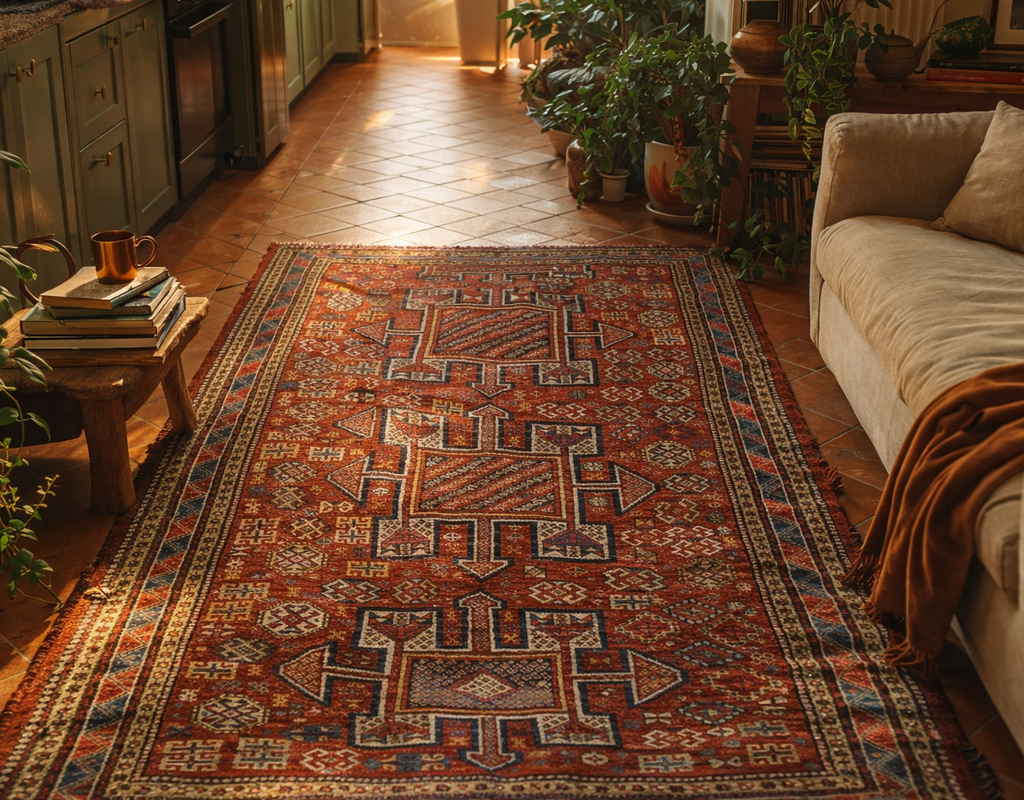
A detailed focus on the intricate, vivid colors and geometric weave of a traditional textile rug.
These are easier to replace, mass-produced for consistency, but lack the uniqueness and endurance of authentic hand-knotted examples. Care for turtle motif rugs depends on construction: raised textures need gentle, specialized cleaning; pile rugs offer durability but demand upkeep, while flatweaves excel in practicality.
And when it comes to hand-knotted vs. machine-made rugs, the decision hinges on whether one values collectible artistry and longevity or affordable, functional décor. Either way, turtle carpets remain versatile, blending symbolic heritage with modern utility.
Explore a Few of Our Favorite Turtle & Tortoise Rugs
FAQ
- How should I hang a turtle-motif rug on the wall?
Sew a cotton sleeve along the top and mount on a sealed wooden slat. Leave at least ½” clearance from the wall for airflow.
- Are turtle-motif rugs pet-friendly?
Wool hides dirt and releases fur easily; tightly woven low piles resist snags. Patterned mid-tones (e.g., teal or olive) camouflage paw prints.
- What sizes work for hallways and entries?
Runners (2’6″x8′ or 2’6″x10′) and small mats (2×3) are ideal. Choose darker borders or allover patterns to mask traffic wear.
- Can I use these rugs over radiant floor heating?
Yes—keep surface temperatures below \~81°F (27°C) and use a breathable pad. Avoid plastic-backed pads that trap heat.
- Will sunlight fade turtle-motif dyes?
Yes—rotate every 3–6 months and use UV film or shades. Even an hour of direct midday sun daily can visibly lighten reds over a year.
- How do I spot a fake “antique” Turtle Kazak?
Watch for machine-stitched edges, uniform backs, harsh chemical smells, and artificially “tea-stained” fringe. Overly even color with no abrash is a red flag.
- Are there Balkan or Anatolian turtle motifs?
Some kilims include turtle-symbol designs associated with protection and longevity. Expect flatweaves with bold, graphic outlines.
- Do Chinese rugs depict tortoises with other symbols?
Yes—tortoises may appear with cranes, deer, peaches, or pines for layered longevity wishes. Small accent rugs (2×3) often feature these vignettes.
- How do I style a turtle motif without over-theming?
Keep colorways tight (two to three dominant hues) and mix with stripes or small-scale geometrics. Try indigo + ivory + khaki for balance.
- Are turtle motifs considered traditional or modern?
Both—pictorial turtles are traditional in several regions, while tortoise-shell hexagons read modern. Geometric lattices pair well with minimalist rooms.
- What pad works best under these rugs?
Use felt-rubber for hard floors—about 1/8″–1/4″ thick to prevent slips and add cushion. Trim pads 1″ short of the rug edge.
- Will a robot vacuum damage my rug’s turtle design?
It’s usually fine on low-pile rugs without fringe; disable “edge clean” near fringes. Set suction to medium to reduce fiber fuzzing.
- Can I use turtle-motif rugs outdoors?
Choose UV-stabilized polypropylene or PET and rinse monthly during peak season. A 5×7 is a common patio size.
- Are turtle-motif rugs good for kids’ rooms?
Yes—choose low-pile or flatweave for easy cleanup and less lint. Aim for under 0.4″ pile and a non-slip pad.
- How do I clean a turtle-motif wool rug safely?
Vacuum with suction only and blot spills with cool water and a few drops of neutral-pH soap. Professional cleaning every 1–3 years helps preserve dyes.
- What’s the price range for turtle-motif rugs?
New machine-made designs often cost \$80–\$400; hand-knotted contemporary pieces \$700–\$3,000; desirable antiques can exceed \$2,000–\$10,000+, depending on condition and provenance.
- How do I authenticate an antique turtle-motif rug?
Check for hand-knotted backs, natural-dye abrash, and uneven selvedges. Antique knot counts often range 70–120 KPSI, lower than fine city carpets.
- What materials suit a turtle motif for everyday use?
Wool is durable and naturally stain-resistant for indoor pieces; polypropylene works outdoors. Aim for wool pile heights around 0.3″–0.5″ for easy care.
- Are turtle motifs appropriate for coastal or beach interiors?
Yes—pair sea-blue, sand, and ivory palettes with subtle shells or pictorial turtles. A 6×9 or 8×10 anchors medium living rooms.
- Do Navajo pictorial rugs ever show turtles?
Some pictorial weavings include animals like turtles, but meanings vary by weaver and aren’t always ceremonial. Early pictorials were rare before the 1940s.
- How do Caucasian “Turtle Kazak” rugs look?
Expect bold octagonal medallions with projecting lobes read as turtles, saturated reds/blues, and tribal geometry. Typical sizes include 3×5, 4×6, and gallery runners.
- Is the tortoise-shell hexagon pattern used in rugs?
Yes—Japanese kikkō (tortoise-shell) hexagons and Chinese “turtle back” grids inspire hexagon lattices in modern and traditional rugs. Hexagon repeats can range from 1″ to 4″ cells.
- What is a “turtle border” in Persian rugs?
It’s a stylized palmette border whose side “arms” resemble turtle shapes. You’ll see it in Bidjar, Heriz, and Feraghan rugs from the late 1800s to early 1900s.
- Where do turtle motifs appear most in antique rugs?
They’re common in Caucasian pieces (Kazak/Karabagh) and in Chinese weavings with auspicious animals. Look for octagonal “turtle” medallions or borders in late-19th-century examples.
- What do turtle and tortoise motifs in rugs typically symbolize?
They usually represent longevity, protection, and stability. In Asian arts, the tortoise is an auspicious emblem of long life, often paired with cranes or pines for “long life” blessings.