
Introduction to Four-Pointed Star Rugs
Discover our exquisite collection of rugs featuring the four-pointed star motif and find a statement piece for your home.
The 4-pointed star motif feels calm and grounded. It’s often associated with direction and balance in rug design. If you’re exploring star motifs more broadly, here are useful references across the series.
Explore other star motifs: 5-pointed, 6-pointed, 7-pointed, 8-pointed.
What is a Four-Pointed Star Motif?
The four-pointed star motif in rugs is one of the oldest and most distinctive geometric patterns in textile design. Unlike the more commonly seen six-pointed or eight-pointed stars, which radiate out in complex symmetry, the four-pointed version is immediately recognizable by its X-shaped form. Each arm extends outward in equal length, creating a balanced cross-like structure. In rug design, this often appears either as a bold central medallion or as a repeated grid of small star elements across the carpet field. Unlike hexagonal or octagonal stars, which emphasize intricate geometry, the four-pointed star stands out for its simplicity, clarity, and bold visual identity. For those learning how to recognize a four-pointed star rug pattern, look for an X-shaped rug pattern where four evenly extended arms converge at a single central point, often outlined or filled with contrasting colors to highlight its symmetry.
Why Four-Pointed Stars in Rugs?
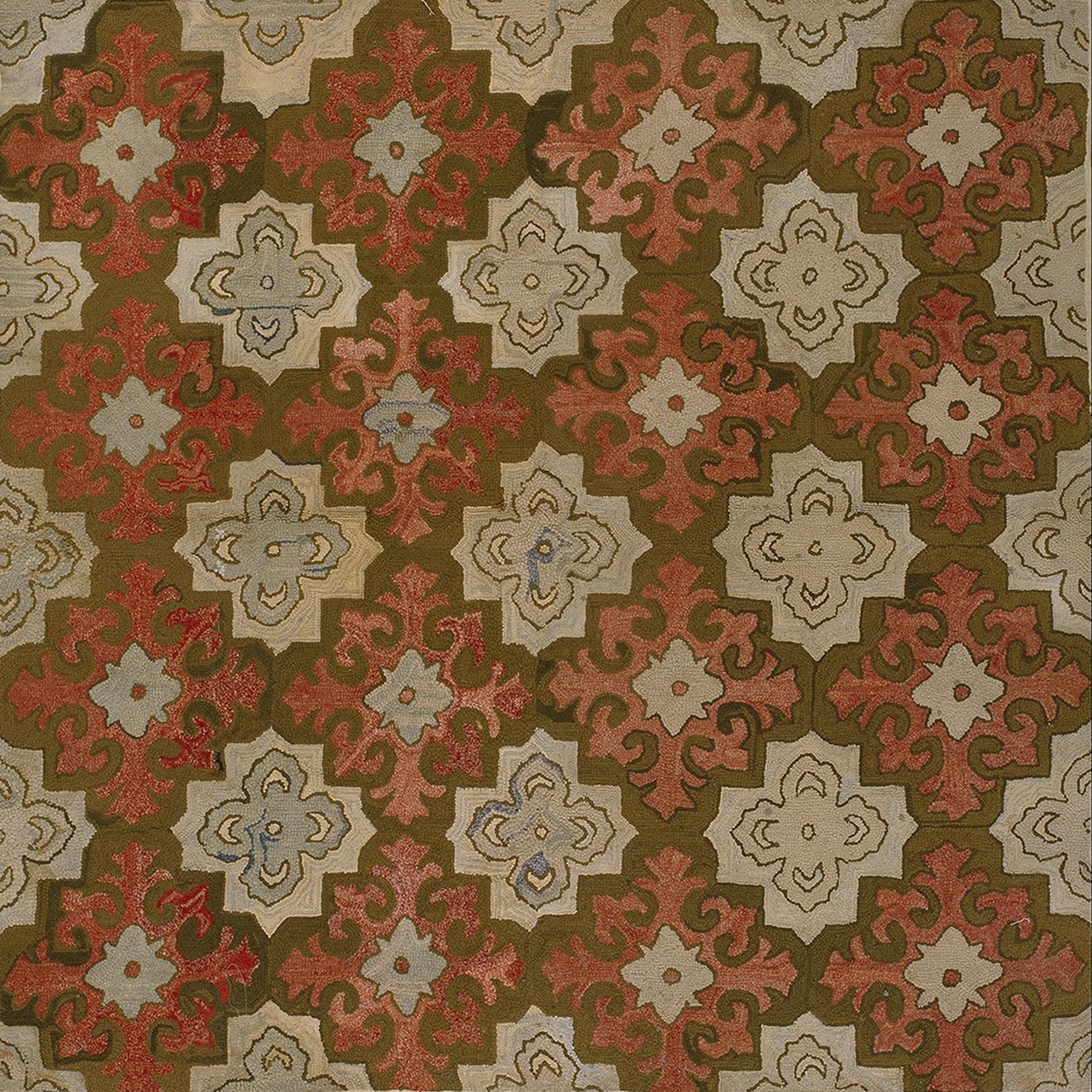
Antique American Hooked Rug America Geometric Hand-Woven – by Rugs On Net
The choice of the four-pointed star motif carries deep symbolic meaning. Historically, rug weavers used this design as a marker of both protection and cosmic order. In many tribal traditions, the four arms of the star represented the four cardinal directions, suggesting security against harm or evil coming from any side. Others saw it as a cosmological sign, balancing the heavens and the earth, or as a tribal identity marker passed through generations. Archaeological finds, including the famed Pazyryk carpet of the 5th century B.C., show evidence of early star motifs, proving the design’s ancient roots. In this way, four-pointed star rugs embody both decorative beauty and talismanic power, carrying forward beliefs of guidance, harmony, and spiritual shielding.
The Motif’s Appeal in Modern Interiors
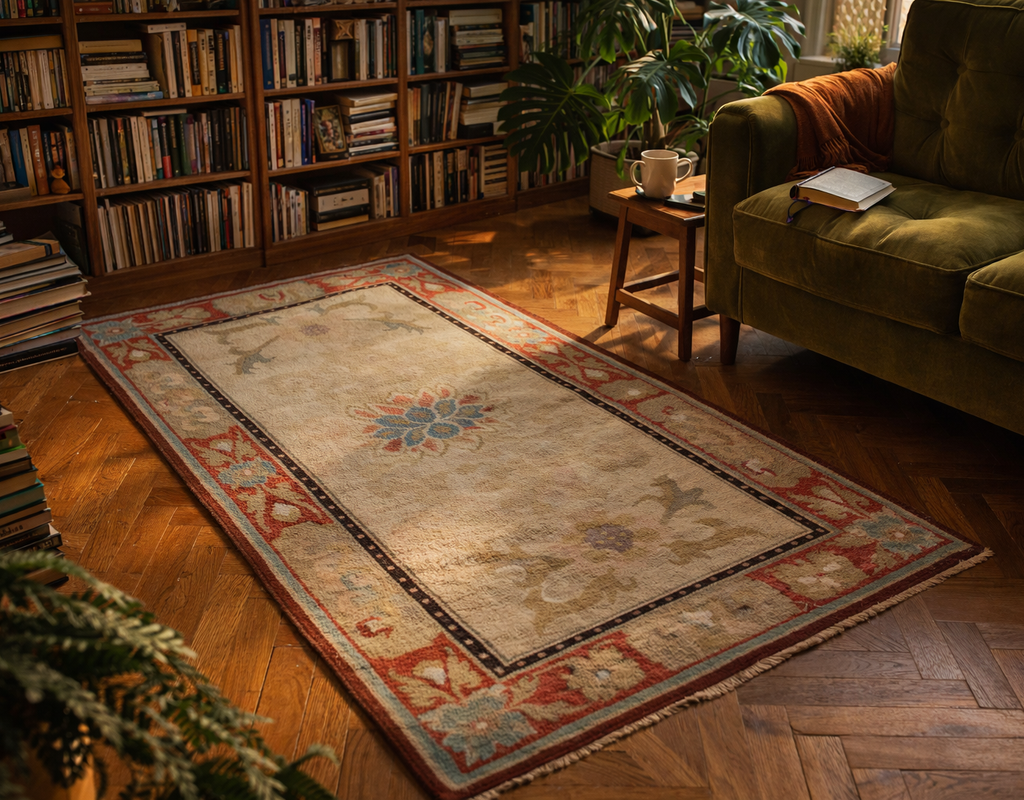
The richly patterned area rug adds warmth and character to this intimate reading nook.
- Balanced Symmetry — The equal-armed geometry naturally appeals to modern eyes trained on order and proportion. — Why: Minimalist interiors benefit from clean, structured motifs that don’t overwhelm the space.
- Versatility Across Styles — The star motif in rugs adapts seamlessly to eclectic, bohemian, and even luxury settings. — Why: Its simple X-shape works equally well as a subtle repeating background or as a bold, oversized medallion.
- Timeless Heritage — Four-pointed star rugs bridge the gap between ancient weaving traditions and modern design aesthetics. — Why: They bring an authentic historical element into interiors without feeling dated.
- Geometric Visual Impact — The X-shaped form creates rhythm and movement across a carpet field. — Why: This allows the rug to serve as both a grounding element and a visual statement piece in the room.
The appeal of geometric star carpets lies in their ability to embody two worlds: they honor centuries of cultural weaving traditions while offering a sleek, geometric pattern that feels right at home in today’s interiors. Four-pointed star rugs are both artistic and meaningful, making them a favored choice for homeowners and designers who value designs that are decorative yet protective, historic yet fresh.
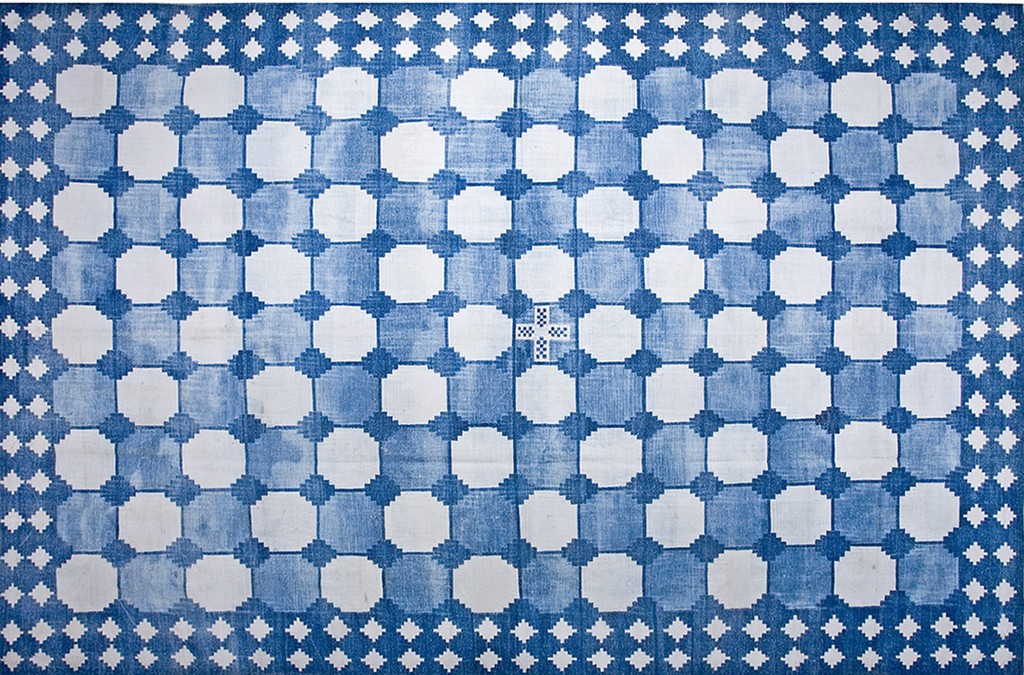
Large Geometric Mid Century Modern Design White and Blue Flatweave Dhurrie Rug by Rugs On Net
Origins and Cultural History
Ancient Roots and Regional Origins
The origin of four-pointed star rugs can be traced back to some of the earliest surviving woven textiles. The famed Pazyryk carpet of the 5th century B.C., discovered in Siberia, already contained variations of star-like motifs, showing that this symbol was deeply embedded in early Eurasian design. From there, the motif spread widely, with especially strong roots in Anatolia, the Caucasus, and Central Asia. In Anatolian kilims, the four-pointed star symbolized joy, prosperity, and fertility, carrying a protective role within village households. In the Caucasus, the design found its boldest expression in the Kazak star carpet tradition, with standout examples such as the Pinwheel Kazak rug and the so-called Star Kazak, both of which highlight the star as a central medallion element. Central Asian weaving, particularly Turkmen and Uzbek pieces, also incorporated X-shaped stars into their geometric fields, tying the design to tribal identity and cosmic order.
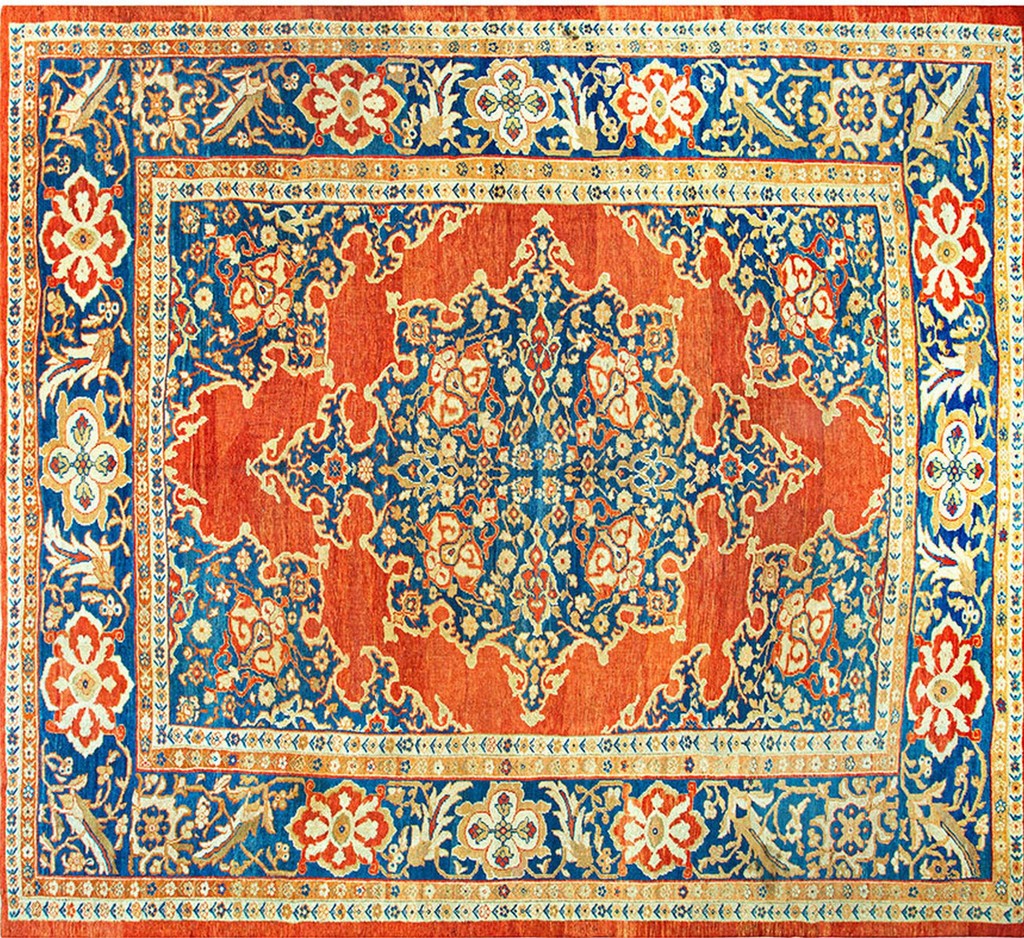
Antique Sultanabad Persian Floral, Medallion Knotted Rug by Rugs On Net
Star Motifs Across Weaving Traditions
As discussed earlier, the four-pointed star motif differs from six- or eight-pointed stars by its simplicity and balance, appearing as an X-shaped rug pattern with equal arms. This clarity allowed it to travel easily across weaving traditions. Each region reinterpreted the star to suit its own cultural values: in Anatolia, it became a fertility emblem; in the Caucasus, a powerful central medallion; in Central Asia, a talismanic device of tribal protection. Despite these differences, the motif always carried a sense of cosmic symbolism and spiritual strength, unifying otherwise diverse weaving traditions under a shared visual language.
Four-Pointed Star in Tribal and Village Weaving
- Spiritual Protection — Tribal weavers used the four-pointed star to guard homes from evil entering from the four directions. — Why: The motif acted as a woven talisman, believed to ensure safety and balance.
- Identity and Belonging — Villages and tribes integrated star motifs into signature rug patterns to mark cultural heritage. — Why: The design helped distinguish one group’s weaving from another while signaling continuity with ancestors.
- Everyday Symbolism — The star was not just spiritual but also associated with blessings of fertility, joy, and prosperity. — Why: Rural households saw rugs as both decorative objects and carriers of life-affirming symbols.
Navajo and Non-Eurasian Uses
Beyond Eurasia, the Navajo storm rug star motif demonstrates how the four-pointed star resonates cross-culturally. In these weavings, the four-pointed star or cross-like form represents the four sacred mountains that frame the Navajo world, each aligned with a cardinal direction. This design links the rug to spiritual geography and ritual meaning, showing that the motif’s essence—cosmic balance, protection, and order—is not limited to Old World traditions. For collectors and scholars, the Navajo example underscores how the four-pointed star functions as a universal symbol, bridging distant weaving cultures while retaining its local significance. In sum, the four-pointed star motif is not confined to a single birthplace but thrives across regions—from Pinwheel Kazak rugs of the Caucasus to Navajo storm rugs of North America—each culture embedding its own interpretation of the star’s enduring power.
Recognizing Four-Pointed Star Rug Patterns
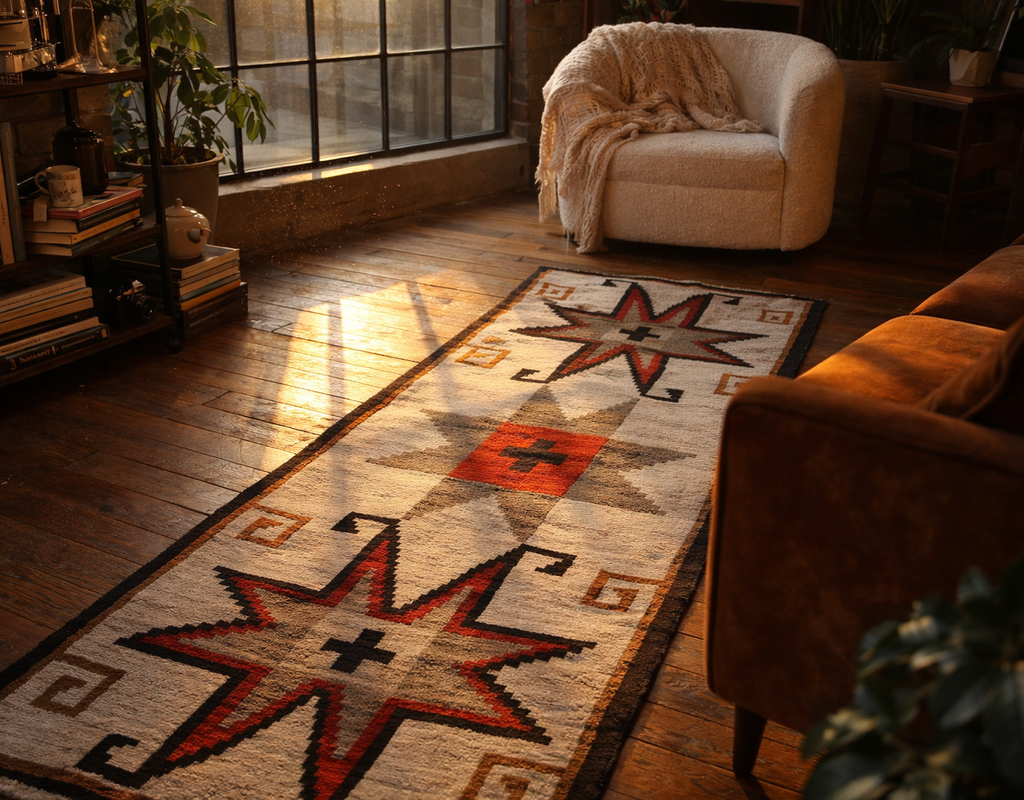
Warm, late afternoon light highlights the bold patterns of a Southwestern rug in a stylish, plant-filled nook.
Visual Hallmarks and Geometry
When recognizing star rug patterns, the first cue is the clear X-shape at the heart of the design. Unlike floral or curvilinear motifs, the four-pointed star is marked by sharp angles and equal-length arms radiating from a single center point. The arms may be pointed, stepped, or flared, but the symmetry always forms a balanced cross-like figure. In many cases, the star is outlined in a contrasting color or filled with secondary motifs, making it stand out against the field. Compared to other geometric patterns, these stars create significant negative space around them, enhancing their bold visual identity and ensuring the eye is drawn to their centered geometry.
Four vs. Six/Eight-Pointed Star Motifs
One of the biggest challenges in identifying Kazak star rugs or other examples is distinguishing four-pointed stars from six- or eight-pointed versions. The key difference lies in the density of the geometry:
- Four-pointed stars emphasize boldness and clarity, with fewer points and more open ground around them. They often appear larger, with pronounced angular ends.
- Six- and eight-pointed stars are more intricate, filling space with interlocking lines and appearing less solitary. They create a dense, decorative look rather than a stark cross.
For collectors and buyers, learning to recognize these differences is crucial since the number of points changes both the symbolic meaning and the cultural value of the piece.
Iconic Examples: Pinwheel Kazak, Star Kazak, Kilims
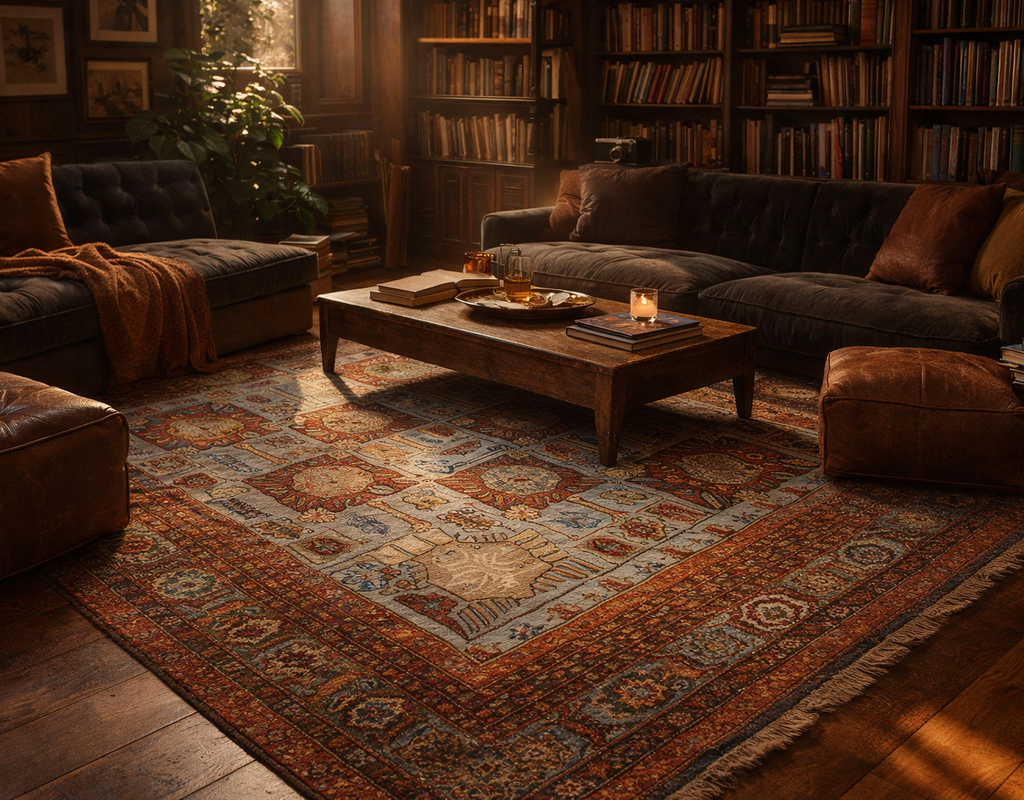
A vibrant, traditionally patterned rug enhances the intimate and scholarly feel of this dark, comfortable living space.
- Pinwheel Kazak Rug — Features swirling four-pointed stars that almost resemble a rotating cross. — Why: Its dynamic motion makes it one of the most recognizable Caucasian star carpets.
- Star Kazak Rug — Places large, central four-pointed stars across the field. — Why: These serve as bold medallions, anchoring the entire composition and boosting collectible value.
- Anatolian Kilim Star — Uses stepped, geometric variations of the motif, often surrounded by protective symbols. — Why: Flatweave kilims relied heavily on the star for spiritual and decorative purposes.
These examples demonstrate that while the four-pointed motif appears across regions, each weaving tradition adapts its form for local meaning and aesthetics.
Moroccan vs. Anatolian Stars
The question of how Moroccan star carpets compare with Anatolian kilim stars reveals important stylistic contrasts. Moroccan weaving tends toward rounded or lozenge-linked star shapes, which often blend into surrounding diamonds and geometric fields. These stars are softer, more organic, and frequently integrated into tribal lozenge lattices. By contrast, Anatolian kilim stars are rigid, stepped, and angular, emphasizing a sharper geometry that reflects the region’s symbolic language of fertility and protection. For buyers and enthusiasts, learning these distinctions ensures both accurate identification and appreciation. Recognizing a four-pointed star rug pattern is not just about counting points but also about observing form, contrast, and cultural style, all of which play vital roles in authentication and valuation.
Materials and Weaving Techniques
Traditional Materials: Wool, Silk, Cotton
The majority of four-pointed star rugs are woven from wool, the most traditional and widely available fiber across tribal and village settings. A wool star rug offers durability, warmth, and a matte texture that enhances bold geometric contrasts. In contrast, silk star carpets were historically produced in city workshops, where fine materials elevated the star motif into a shimmering, luxurious centerpiece. Cotton is often used in the foundation—warp or weft—to stabilize the rug’s structure. For buyers choosing between wool or silk for star accent rugs, the decision depends on setting: wool suits high-traffic or casual spaces, while silk, with its lustrous sheen, is best reserved for display or formal interiors.
Kilim Weaving: How the Star is Made
In kilims, the four-pointed star emerges through the slitweave technique, which allows sharp color separation by leaving a narrow slit at the join of two colors. This approach produces crisp, angular stars with strong outlines—ideal for the geometric clarity of kilim star weaving. The result is a star motif that looks graphic, flat, and highly architectural, perfectly aligned with the abstract nature of tribal kilim design.
Pile vs. Flatweave Star Motifs

A detailed focus on the intricate, vivid colors and geometric weave of a traditional textile rug.
The choice between pile and flatweave directly impacts the appearance of the star motif. In pile rugs, symmetric Turkish knots are used to define the X-shape, giving the star texture and depth. The pile adds dimensionality but can slightly soften edges if knot density is low. In contrast, flatweaves like kilims produce the most geometric stars, with razor-sharp outlines and minimal blurring, since no pile interrupts the angular design. This difference makes flatweaves more graphic, while pile rugs feel tactile and sculptural.
The Role of Natural Dyes
Dyes play a critical role in the clarity and longevity of the motif. With natural dye effects on rugs, newly woven pieces display bright, vivid stars outlined in strong contrast. Over time, however, natural dyes mellow: reds fade into warm rusts, blues soften, and yellows deepen to gold. This aging can enhance patina and highlight the antique quality of the star. In some cases, dye fading slightly softens the sharpness of the motif’s edges, blending it into the field. For collectors, this process adds charm and value, as the star motif evolves visually while retaining its structural presence.
Suitable Knot Density for Detail
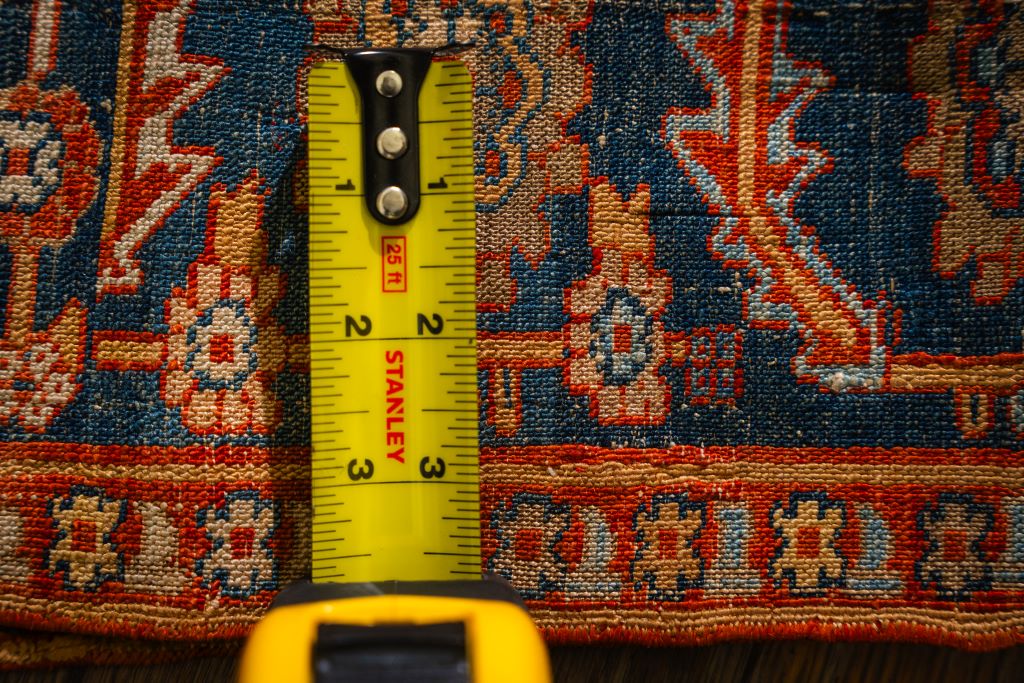
A detailed inspection of a richly colored oriental rug pattern while measuring its dimensions.
For pile carpets, knot density for star rugs determines how precise the motif appears. A range of 60–120 knots per square inch (kpsi) is typical for detailed four-pointed stars. At lower densities, the motif appears blockier, while higher counts produce razor-sharp edges that emphasize the geometry. Tribal rugs often favor medium density for balance, while workshop pieces use finer knots to showcase technical skill and highlight the star’s symmetry. In every case—whether in a wool star rug or a silk star carpet—the interplay of material, dye, and weave directly influences how clearly the four-pointed star emerges, ensuring that the motif is not only decorative but also structurally and aesthetically embedded in the rug’s very fabric.
Symbolism and Spiritual Significance
Symbolic Meaning of the Four-Pointed Star
The four-pointed star meaning in rugs goes far beyond simple decoration. Across weaving traditions, the motif embodies protection, fertility, happiness, and cosmic harmony. The four arms are widely understood to represent the four winds and four cardinal directions, signifying stability and safeguarding against harm from every side. As such, a protective star rug was not merely a floor covering but a woven talisman, believed to bless and shield the home. For many cultures, the motif also symbolized guidance and balance, functioning as both a cosmological marker and a deeply personal emblem of spiritual continuity.
Protective, Fertility, and Cosmic Motifs
- Protection — The star served as a shield against evil and misfortune. — Why: Its four arms radiated in all directions, symbolically guarding the household.
- Fertility — In Anatolia, the four-pointed star was linked to the mother goddess and the womb, embedding life-giving symbolism within the rug. — Why: The star acted as a fertility symbol in rugs, blessing marriages and future generations.
- Cosmic Harmony — Across tribal traditions, the star expressed a balance between natural and spiritual worlds. — Why: It reminded communities of their alignment with the cosmos, seasons, and nature’s cycles.
Gender, Balance, and Tribal Identity
Beyond universal meanings, the star motif symbolism carried cultural nuances that deepened its resonance. In Anatolia, the motif could symbolize feminine enclosure and fertility, while in the Caucasus, it evoked masculine radiance and guidance—a duality that reflects balance between gendered forces. More broadly, the star also served as a tribal identity marker, allowing communities to weave their lineage and belief systems directly into their rugs. Owning or gifting a rug with this motif was thus a declaration of both spiritual grounding and cultural belonging. The four-pointed star in rugs consistently transcends its geometric form: it is at once a protective emblem, a fertility blessing, a cosmic compass, and a cultural signature. Its enduring symbolism ensures that every protective star rug carries not just design, but the weight of identity, harmony, and ancestral prayer woven into its very fabric.
Star Motifs in Different Rug Traditions
Anatolian & Turkish Rugs
Anatolian weavers are especially renowned for their mastery of the star motif, a reputation built upon centuries of slitweave kilim traditions. The slitweave technique allowed artisans to create crisp, geometric stars with striking contrast, ensuring that each figure stood out as both decorative and symbolic. In folk art, the star represented fertility, joy, and protection, making it a central theme in village weaving. A typical Anatolian star rug or Turkish kilim star carries sharp, stepped edges, embodying the balance of symmetry and symbolic power. These traditions made Anatolia a benchmark region for weaving star patterns that remain highly collectible today.
Persian & Caucasian Rugs
In the Caucasus, the star motif reached bold expression in iconic carpets such as the Kazak star carpet, Shirvan rugs, and the distinctive Lesghi stars. These designs often feature large, central four-pointed stars arranged in medallions or repeated across the field, outlined in vibrant contrasting colors. While Persian city carpets leaned more toward curvilinear floral patterns, star symbols still appeared in tribal Persian rugs, where they carried talismanic meaning. In both Persian and Caucasian traditions, the four-pointed star signaled cosmic order, protection, and local identity.
Central Asian & Turkmen Rugs
Among Central Asian and Turkmen tribes, the star motif frequently appeared in guls—the repeating medallions that structure the entire carpet field. These stars often blended with octagonal or diamond shapes, creating layered designs that reflected both tribal heritage and cosmological symbolism. For nomadic communities, the star in their rugs served as a portable marker of identity, woven into the very fabric of everyday life.
Navajo and Global Interpretations
Outside Eurasia, the Navajo storm rug incorporated star-like crosses to symbolize the four sacred mountains that frame the Navajo world. These stars anchored the design to the four directions, embedding spiritual geography into each weaving. Globally, star motifs appear in diverse traditions, but whether in Navajo, Anatolian, or Caucasian rugs, they consistently embody guidance, balance, and protection.
Moroccan Star Motifs
When comparing Moroccan with Anatolian traditions, the difference in form is clear. Moroccan star designs tend to be softer, rounder, and more diamond-like, often merging with lozenge lattices that dominate Berber weaving. By contrast, the Anatolian star rug emphasizes sharp, stepped geometry achieved through slitweave precision. Symbolically, both carry protective and auspicious meanings, but their visual languages diverge: Moroccan stars are woven into flowing, organic compositions, while Anatolian stars assert bold, angular clarity. Across regions—from the bold medallions of the Kazak star carpet to the delicate Turkish kilim star—the four-pointed star adapts to each weaving culture, shifting in form and meaning yet always retaining its central role as a symbol of balance, heritage, and spiritual protection.
Collecting and Authenticating Star Rugs
Identifying Genuine Star Rugs
To determine whether a piece is an authentic star rug, collectors must look closely at its construction and materials. Genuine handwoven examples show slight irregularities in weave and design, reflecting the artisan’s hand rather than mechanical perfection. Natural dyes, wool or silk fibers, and region-specific features such as the stepped edges of an Anatolian kilim star or the bold medallions of a Kazak star carpet are key identifiers. By contrast, synthetic dyes, uniform machine finishes, or low-quality fiber blends usually indicate modern or mass-produced copies.
Online Sources for Antique Star Rugs
For those seeking investment-quality pieces, trusted online sources for antique star rugs include specialty dealers, auction houses, and vetted marketplaces. Many collectors turn to established platforms like Sotheby’s or Christie’s for rare antique star Kazaks, while boutique dealers specializing in Caucasian or Anatolian textiles often provide verifiable provenance. Collectors should always ask for detailed photos of the weave, dye, and foundation, as well as any available documentation, before making a purchase online.
Price Factors and Resale Value
- Age and Provenance — Antique rugs, especially 19th-century or earlier Star Kazaks and Lesghi stars, command significant premiums. — Why: Their scarcity and documented history make them highly desirable to collectors.
- Rarity of Pattern — Distinctive star variations such as the Pinwheel Kazak rug often fetch higher prices. — Why: Unusual designs with strong regional identity are rarer on the market.
- Material Quality — Silk star rugs are prized for their sheen, while wool pieces maintain authenticity and durability. — Why: Material directly affects both aesthetic appeal and longevity.
- Condition — Rugs with crisp star motifs and intact edges retain higher resale value. — Why: Wear, fading, or repair diminishes both symbolic clarity and collector worth.
Together, these factors determine star rug value, with antique and rare examples often reaching tens of thousands at auction.
Machine Tufted vs. Handwoven Accuracy
While a machine-tufted star carpet can mimic the basic shape of a four-pointed motif, it rarely achieves the precision, depth, and cultural authenticity of handwoven rugs. The X-shape may appear overly uniform or lack the subtle irregularities that give handwoven stars their vibrancy. Collectors seeking true value should prioritize handwoven examples, as machine-made rugs hold little long-term worth.
Maintaining Crisp Motif Edges
To keep the four-pointed star design sharp, avoid over-wetting or aggressive machine cleaning. Instead, gentle hand washing with controlled moisture preserves the clarity of edges and prevents dye bleeding. Proper care maintains the visual power of the motif, which is central to both aesthetic and symbolic appeal.
Verifying Authenticity
For those wondering how to authenticate a kilim, begin with fiber and dye analysis—genuine pieces use handspun wool and natural dyes. Examine the back for weaving irregularities and look for traditional slitweave joins. Provenance documents, expert appraisals, and comparison with museum examples further strengthen authentication.
Wool vs. Silk for Star Rugs
When choosing between materials, wool star rugs are generally preferred for traditional authenticity, durability, and cultural accuracy. Silk star carpets, while less common in tribal settings, provide luminous elegance and are often produced in workshop or city environments. The choice depends on whether the buyer values authenticity and resilience (wool) or luxury and sheen (silk). In short, authentic star rugs represent some of the most collectible textiles in the world. From rare antique star Kazaks to tribal kilims, these pieces carry both cultural depth and high star rug value—but only when carefully authenticated and properly preserved.
Four-Pointed Stars in Contemporary Rug Design
Modern Weaving and Revival Pieces
Contemporary Star Rugs: Many workshops and artisans continue to weave contemporary star rugs, both as faithful revivals of traditional Kazak, Anatolian, or Turkmen designs and as modern reinterpretations. — Why: The four-pointed motif remains culturally iconic and visually versatile, making it attractive to today’s buyers. Modern Kilim with Star Motif: Designers often reintroduce the star into flatweaves using updated palettes or scaled-down patterns. — Why: Kilim techniques lend themselves naturally to the sharp, geometric qualities of the star motif. Boho & Designer Trends:In eclectic interiors, stars are used for their graphic punch and as conversation pieces. — Why: The motif carries history and symbolism, aligning with the bohemian aesthetic that values both story and artistry.
Vintage vs. Modern Colors
When comparing vintage vs modern star rug colors, the differences are immediately apparent. Traditional star kilims relied on natural dyes that produced deep reds, indigo blues, and golden yellows. Over time, these tones softened into warm patinas that give antique rugs their prized character. Modern star rugs, by contrast, often employ synthetic dyes and softer palettes—earthy neutrals, greys, or pastels—that reflect current décor trends. While both approaches highlight the star motif, vintage examples feel bold and timeless, whereas modern pieces lean toward subtlety and versatility.
Minimalist Interiors: Using Star Rugs
A common question is whether four-pointed star pieces are suitable for minimalist interiors. The answer is yes—precisely because of their geometric clarity. A minimalist star carpet provides clean lines and a structured focal point without excessive ornamentation. In neutral-toned rooms, a rug with a single bold star can act as a grounding statement, while in monochrome spaces, soft-colored stars add understated visual rhythm. The motif’s symmetry makes it especially compatible with modernist and Scandinavian-inspired interiors.
Designer Trends & Boho Aesthetics
Interior designers increasingly look to the star motif for its ability to merge story and style. In boho aesthetics, the star becomes a link to heritage weaving and talismanic symbolism, while in high-design spaces, it functions as a striking geometric centerpiece. The motif’s adaptability ensures that whether rendered in a modern kilim with star motif or a sleek workshop carpet, it remains as relevant in 21st-century interiors as it was in tribal households centuries ago. In every case, the enduring appeal of the contemporary star rug lies in its ability to bridge past and present: vintage palettes celebrate deep tradition, while modern tones and minimalist contexts prove the four-pointed star remains a timeless and adaptable design language.
Care, Maintenance, and Display
Preserving Natural Dyes & Color
For those wondering whether natural dyes affect star motif sharpness over time, the answer is yes—but often in a desirable way. Natural dyes soften with age, and while this can slightly blur the edges of a four-pointed star, it also enriches the patina and depth of the rug. To slow excessive fading, owners should protect rugs from direct sunlight, rotate them regularly, and use rug pads to minimize friction. Gentle care preserves both the motif’s clarity and the richness of the palette, ensuring the star carpet color matures gracefully rather than deteriorating.
Cleaning Tips for Star Motif Rugs
To properly care for a star motif rug, avoid harsh detergents or machine cleaning, as these can strip dyes and blur edges. Instead, use wool-safe cleaners and gentle hand washing methods with controlled moisture. For kilims, vacuuming without beater brushes keeps the surface free of dust without damaging fibers. Periodic professional cleaning by specialists in cleaning kilim rugs or antique carpets helps maintain structural integrity while protecting the crispness of the star design. Above all, avoid over-wetting, which can cause dye bleeding and diminish the sharp definition of the motif.
Showcasing Star Rugs in Home Design
Because the four-pointed star is both decorative and talismanic, it deserves to be displayed as more than just floor covering. Consider using a rug with a bold central star as a focal point in a living room, or mount smaller kilims as wall hangings or under glass to highlight their cultural significance. In minimalist interiors, a single star carpet anchors the space, while in eclectic rooms it can serve as a conversation piece that bridges global heritage and contemporary taste. To ensure the beauty and symbolic power of your rug lasts, prioritize gentle cleaning, dye preservation, and thoughtful display. By maintaining crisp edges and showcasing the design prominently, a four-pointed star rug continues to radiate its protective and aesthetic strength for generations.
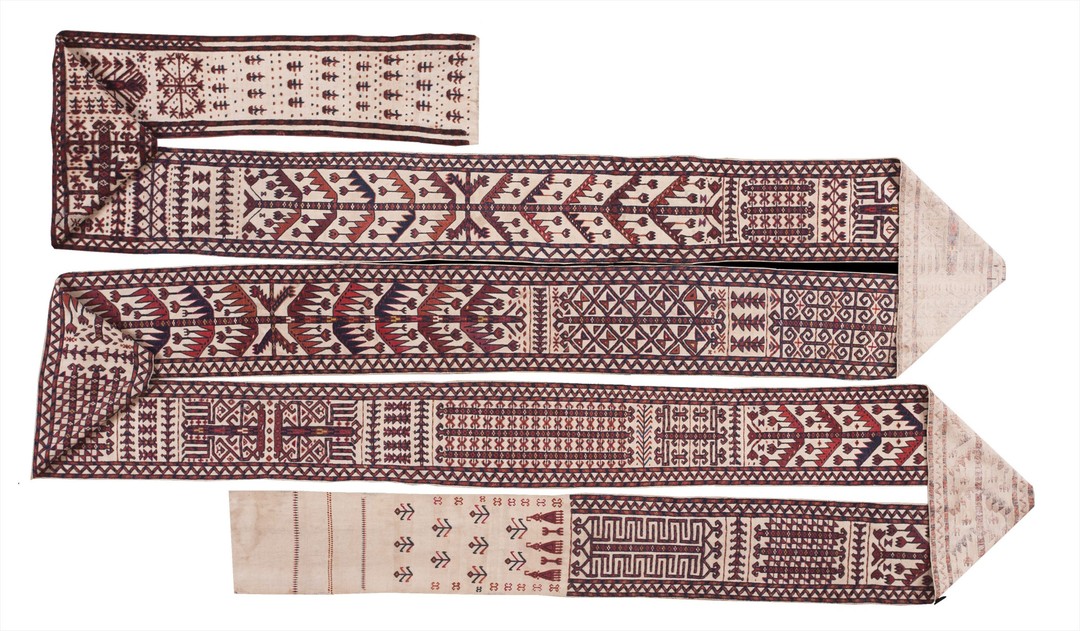
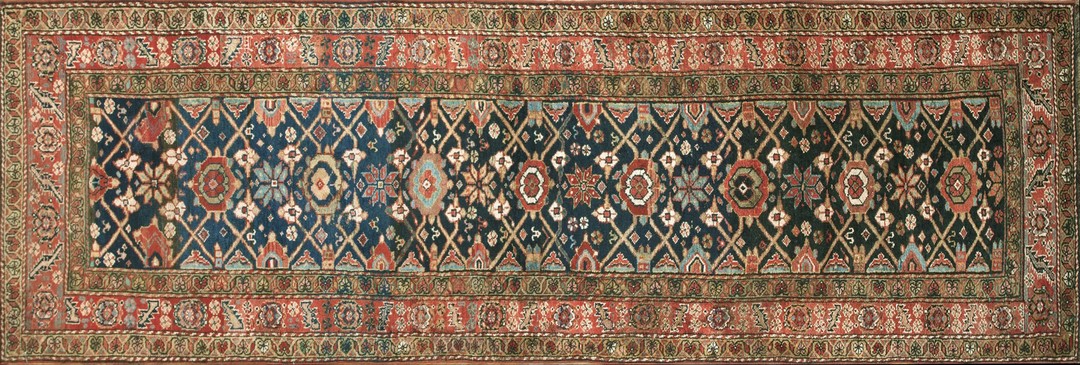
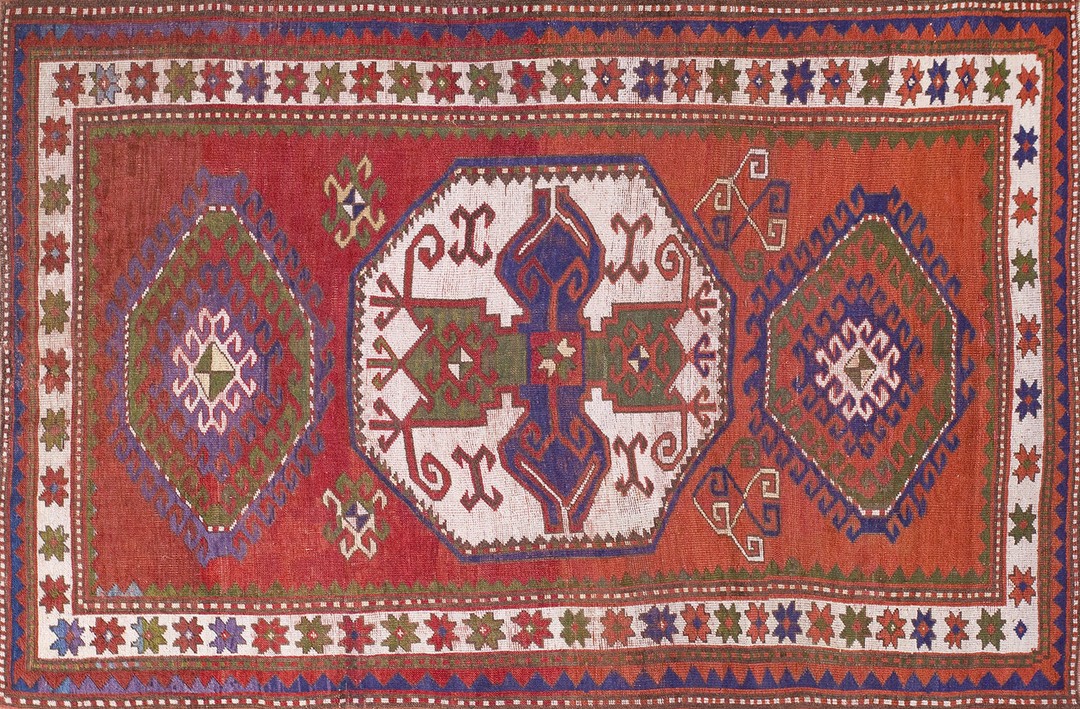
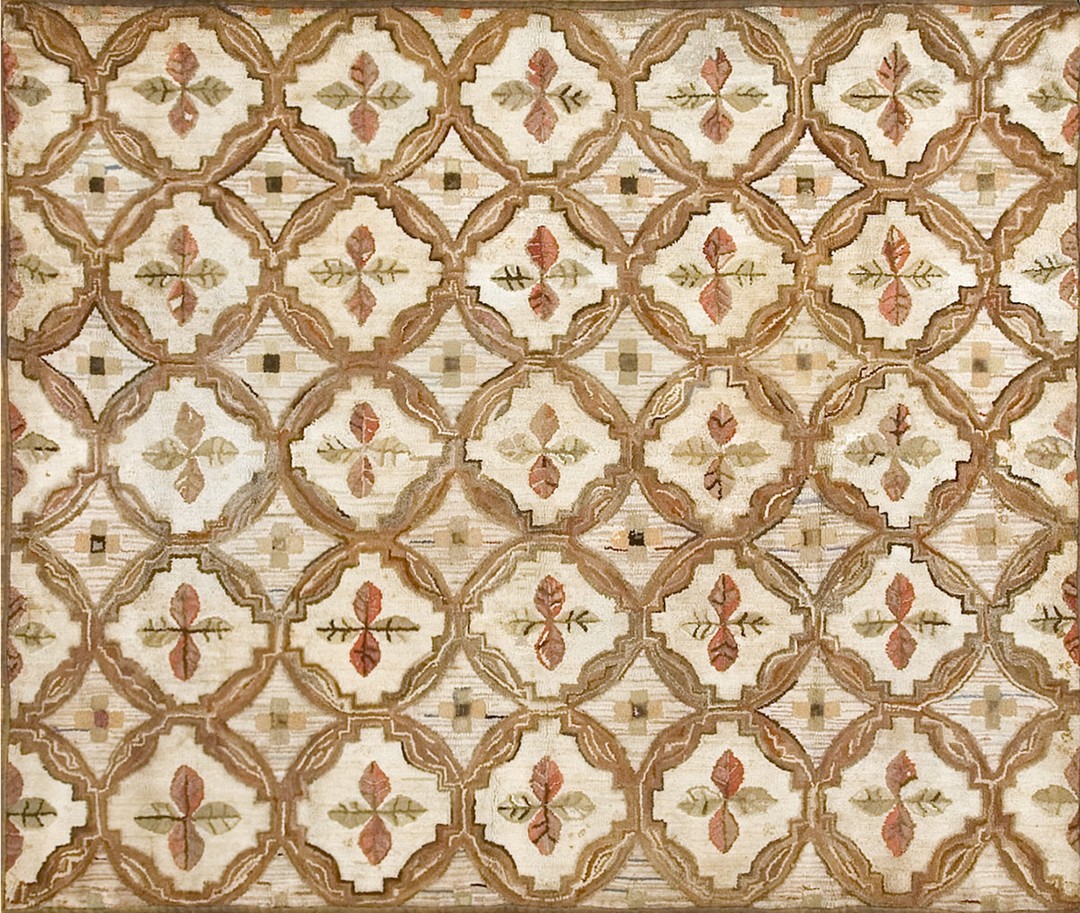
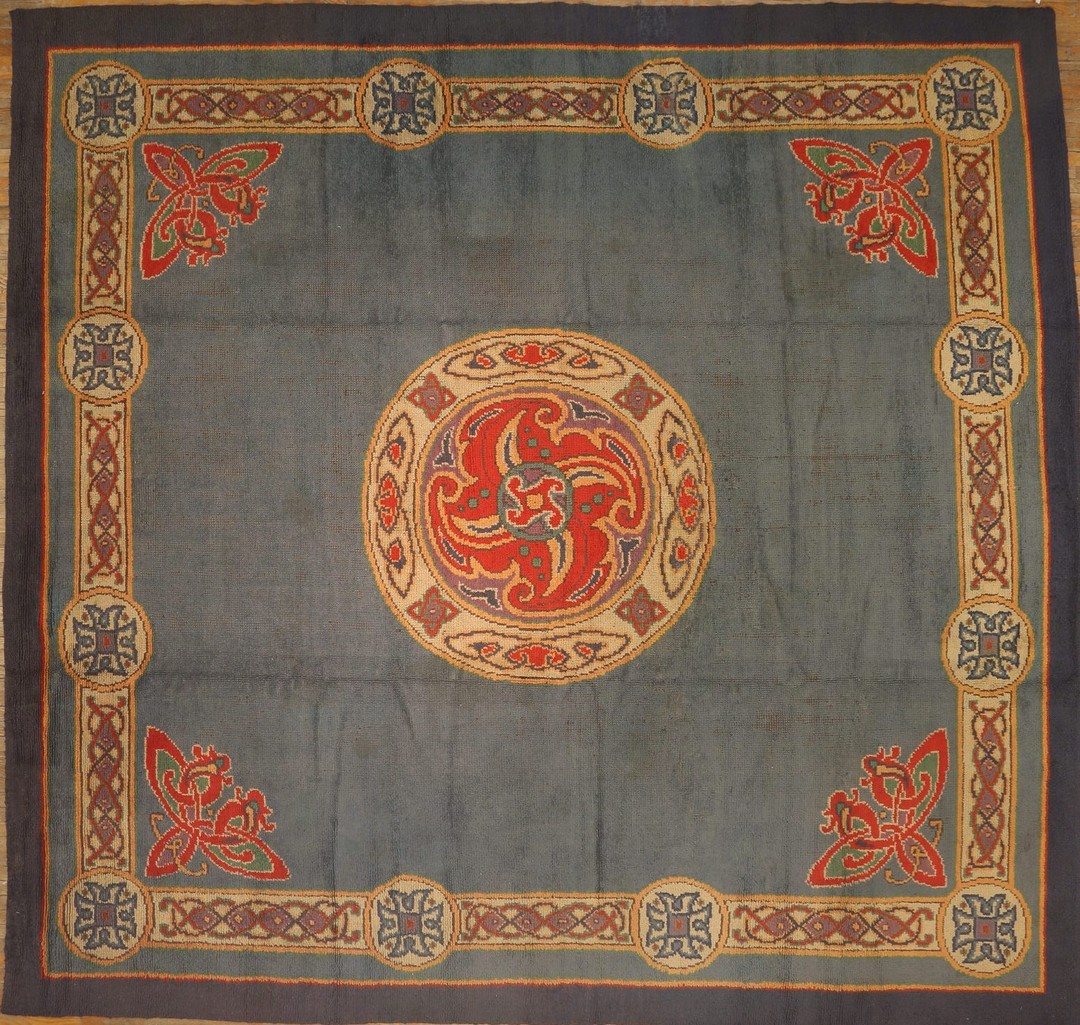
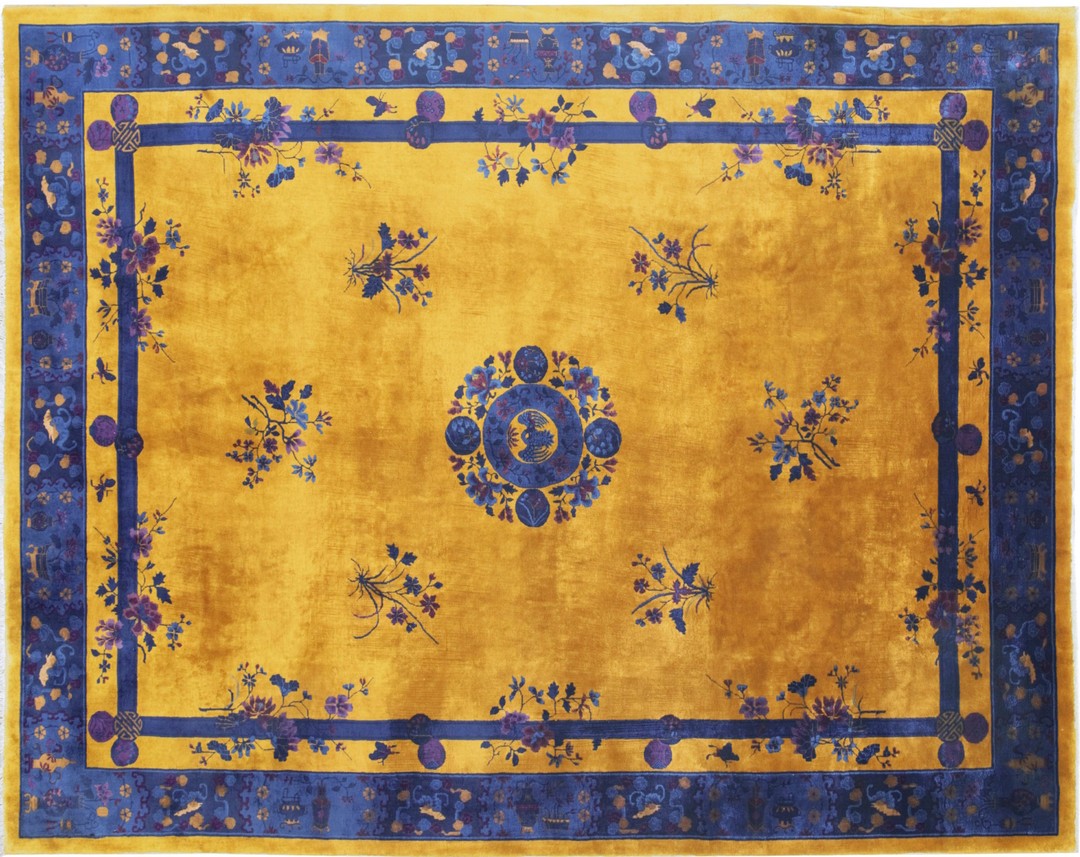
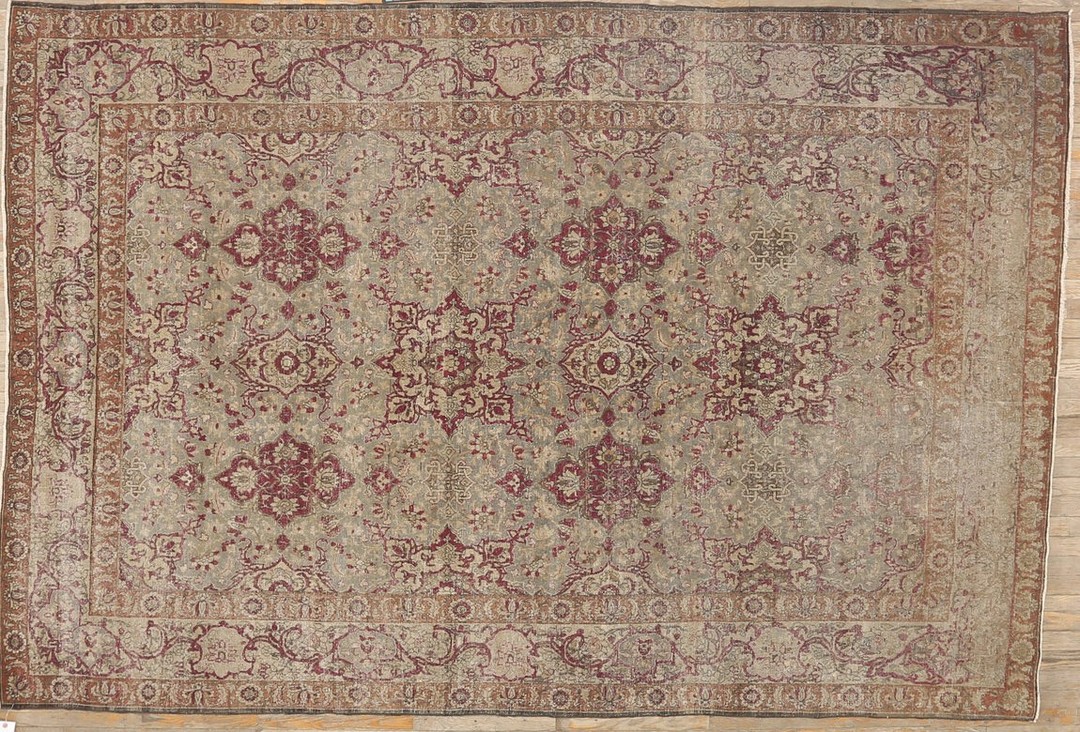
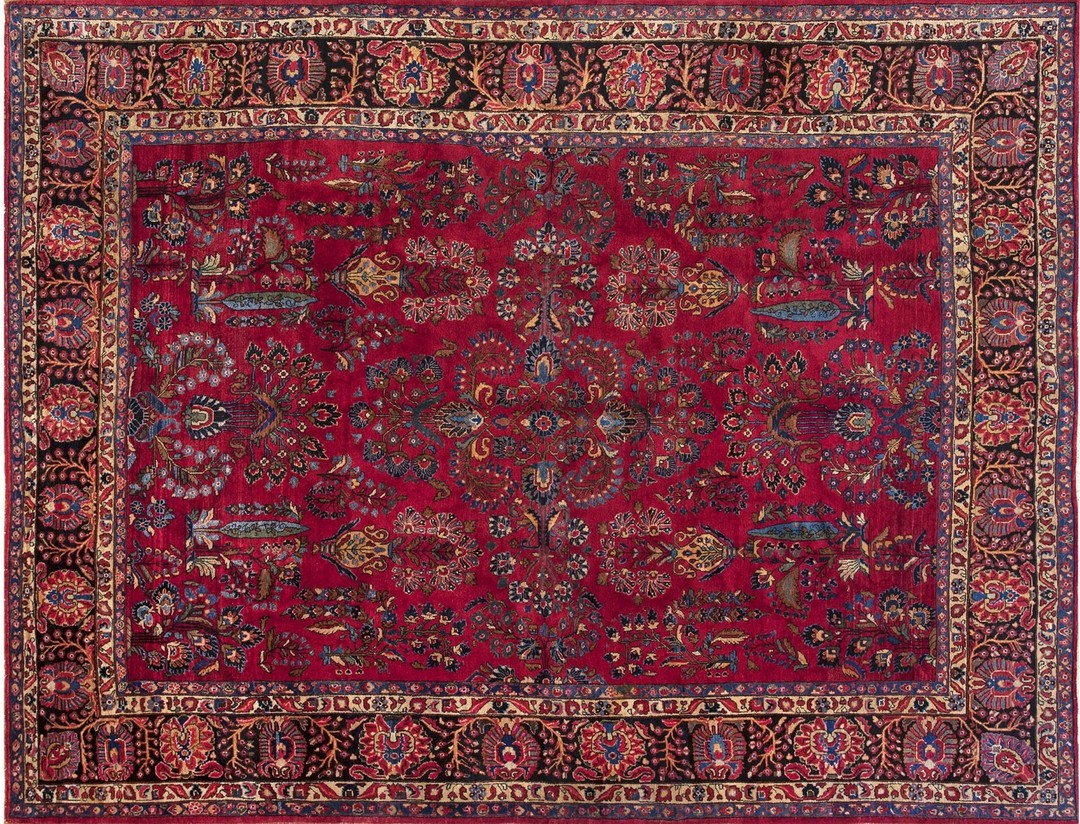
Explore a Few of Our Favorite 4 Pointed Star Rugs
FAQ
- Where can I buy four-pointed star rugs in the U.S.?
Look for four-pointed star rugs at reputable rug galleries and established online dealers. Ask for back-of-rug photos, a written return policy (14–30 days), and care instructions.
- What other names might sellers use for four-pointed star rugs?
Four-pointed star rugs may be listed as “diamond,” “lozenge,” “cruciform,” or “cross-star.” Note: terms like “Lesghi star” usually reference eight-pointed designs.
- What risks should I consider with vintage four-pointed star rugs?
Expect abrash (tone shifts) and potential dye bleed in vintage four-pointed star rugs. Avoid soaking; consult a specialist for repairs and washing.
- What colors are typical in four-pointed star rugs?
Traditional four-pointed star rugs skew madder red, indigo, ivory, and saffron; Moroccan-style versions favor cream with charcoal. Modern lines add greige and denim blues.
- Are outdoor four-pointed star rugs a good idea?
Polypropylene four-pointed star rugs handle moisture and UV better than wool outdoors. Hose off seasonally and dry fully to prevent mildew.
- Can I layer four-pointed star rugs over jute or sisal?
Yes—place a 5×8 four-pointed star rug over an 8×10 natural-fiber base for texture and definition. Use a thin pad between layers to prevent creep.
- Are four-pointed star rugs culturally or religiously specific?
Four-pointed star rugs draw from broad geometric vocabularies; meanings vary by maker and region. When in doubt, treat the motif as decorative rather than doctrinal.
- How can I tell if four-pointed star rugs are hand-knotted?
Flip four-pointed star rugs: look for distinct knots and pattern clarity on the back, fringes as warp ends (not sewn on), and slight irregularities versus perfectly uniform machine weave.
- How much do four-pointed star rugs cost?
Machine-made four-pointed star rugs often run \$100–\$400 for 8×10. Hand-knotted wool pieces vary widely—roughly \$600–\$5,000+ depending on age, origin, and dyes.
- What rug pad works best under four-pointed star rugs?
A felt-rubber pad (about 1/4″) keeps four-pointed star rugs anchored and cushioned on hard floors. Trim the pad 1–2″ smaller than the rug.
- Do robot vacuums work with four-pointed star rugs?
Low-pile four-pointed star rugs are robot-friendly, but fringes tangle. Tuck or tape fringe underneath, or set no-go zones at fringed edges.
- Are four-pointed star rugs safe over underfloor heating?
Yes—use breathable natural fibers and a heat-safe pad under four-pointed star rugs. Keep settings moderate and avoid extra-thick piles that trap heat.
- What’s the best first aid for spills on four-pointed star rugs?
Blot four-pointed star rugs immediately with white cloth; use cool water and a tiny amount of wool-safe detergent. Test for colorfastness; avoid harsh spot removers on natural dyes.
- How often should four-pointed star rugs be professionally cleaned?
High-traffic wool four-pointed star rugs benefit from a professional wash every 1–3 years. Rotate 180° twice yearly to even wear.
- How should I vacuum four-pointed star rugs?
Vacuum four-pointed star rugs weekly with suction-only on wool (skip beater bars). For flatweaves, vacuum both sides monthly to lift grit.
- Are four-pointed star rugs kid- and pet-friendly?
Choose low-pile wool four-pointed star rugs; patterns camouflage crumbs, and wool naturally repels stains. Add a felt-rubber pad to reduce slips.
- How do I style colorful four-pointed star rugs without clashing?
Let four-pointed star rugs lead; keep nearby upholstery solid and pull one accent hue for pillows. Mix pattern scale—large star rug + thin-stripe throw feels balanced.
- Do four-pointed star rugs fit modern interiors?
Yes—four-pointed star rugs bring crisp geometry that complements minimal, Scandinavian, or contemporary spaces. Neutral palettes (ivory/charcoal) read modern instantly.
- What sizes work best for four-pointed star rugs in living rooms?
Common picks are 8×10 and 9×12 four-pointed star rugs, letting front sofa legs rest on the rug. For small rooms, a 5×8 can anchor chairs and a coffee table.
- Which materials hold up best for four-pointed star rugs?
Wool four-pointed star rugs balance durability, stain resistance, and color richness. Synthetics (polypropylene/polyester) offer budget prices and easy care but less longevity and repairability.
- What constructions are common for four-pointed star rugs?
Four-pointed star rugs show up in flatweave kilims and hand-knotted wool piles; machine-made versions mimic both. Flatweaves sit low (\~0.1–0.2″), knotted piles run \~0.25–0.5″.
- How do four-pointed star rugs differ from eight-pointed star rugs?
Four-pointed star rugs skew lozenge/cruciform, while eight-pointed stars (e.g., Lesghi) form layered polygons. Eight-point stars are typical in Caucasian pieces; 4-point stars lean simpler, often in kilims.
- Are four-pointed star rugs the same as diamond-pattern rugs?
Many four-pointed star rugs render the star as a rotated diamond (lozenge) with pointed ends. In listings, “diamond,” “lozenge,” or “cross-star” may describe the same motif.
- Which regions are best known for four-pointed star rugs?
Four-pointed star rugs appear in Anatolian kilims, Caucasian geometrics, and Moroccan/Berber weavings where lozenge-stars are common. You’ll also see modern interpretations in power-loomed lines.
- What does the four-pointed star motif in rugs usually symbolize?
Four-pointed star rugs often echo the diamond/lozenge symbol—commonly tied to protection, guidance, and fertility—though meanings vary by region and tribe. Treat symbolism as interpretive, not absolute.