
Introduction to Yellow Rugs: History, Aesthetics & Appeal
Explore our stunning selection of Gold Yellow Orange color rugs and bring sunlit luxury into your home.
What Makes Yellow Rugs Unique in Rug History?
Yellow rugs hold a special position in textile history because the color itself was both rare and symbolically powerful. Natural yellow dyes were difficult to produce and often unstable, which meant that achieving a bright, lasting yellow was an accomplishment reserved for skilled dyers with access to costly resources such as saffron, weld, or turmeric. This scarcity heightened the prestige of yellow in rug weaving traditions, making it a coveted color that instantly elevated a carpet’s status.
Yellow in rugs has long been linked to sunlight and warmth, evoking the life-giving qualities of the sun and the glow of spiritual illumination. In Persian and Indian carpets, golden hues often symbolized wealth, divine favor, and luxury. Woven into the heart of palaces, mosques, and noble homes, these rugs radiated brilliance, marking them as objects of both aesthetic and cultural importance.
Even in smaller details, the introduction of yellow provided what many collectors and historians describe as a “spark,” an accent that transformed the entire composition of a rug. Because of this rarity and brightness, antique yellow rugs are prized today as much for their historical craftsmanship as for their enduring visual impact. The yellow rug appeal lies not only in its color but in the story of scarcity and symbolism that the shade carries with it.
Appeal and Aesthetic Roles Across Traditions
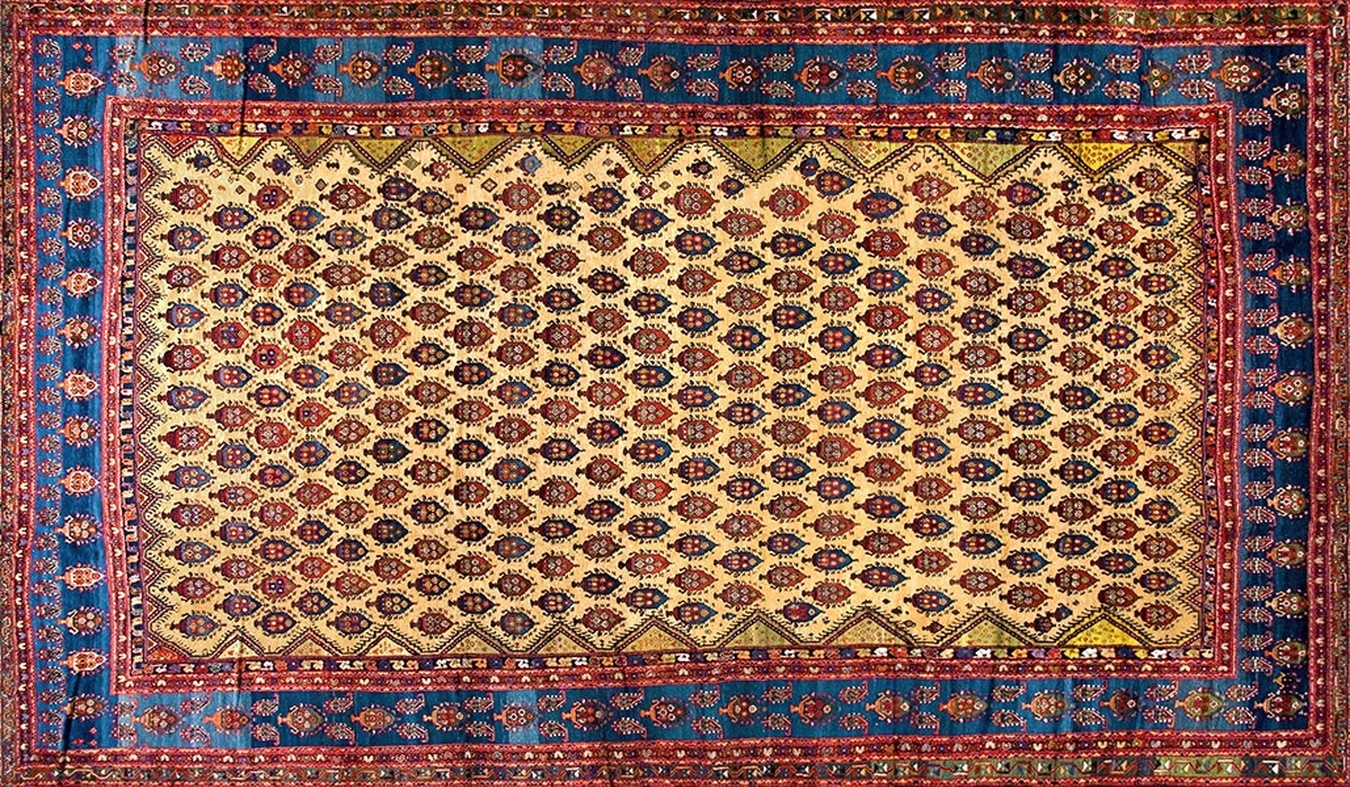
Across weaving cultures, yellow played a strategic aesthetic role. In Persian and Anatolian designs dominated by reds, blues, and deep greens, yellow served as a counterpoint—a flash of brightness that added vitality and contrast. A small yellow medallion, border, or floral motif could shift the entire composition, making the rug appear more dynamic and balanced. In Indian Mughal carpets, gold-infused yellows reinforced royal splendor, emphasizing the connection between earthly beauty and divine light.
In Tibetan and Chinese traditions, golden yellow carried imperial significance, tying rugs to authority, spiritual merit, and cosmic order. Each cultural tradition found ways to integrate yellow as a source of energy, radiance, and contrast, whether through broad fields of color or intricate accents woven into complex geometric or floral schemes. The cheerful rug color quality of yellow also extends to its versatility in interior design. Whether ancient or modern, yellow rugs catch and reflect light, enhancing the atmosphere of a room. This “sunlight in rugs” effect is timeless: the eye is naturally drawn to brightness, and a touch of yellow immediately enlivens the surroundings.
Why Are Yellow Rugs Associated with Happiness and Warmth?
Yellow rugs are closely tied to feelings of happiness and warmth because the human mind instinctively connects the color yellow with sunlight. Just as the sun’s rays foster growth, vitality, and comfort, yellow carpets project a similar emotional resonance within living spaces. Psychologically, yellow is associated with optimism, cheerfulness, and energy—qualities that make it a happy rug design choice. In historical settings, this connection was amplified by the context of use. A rug adorned with yellow was not only visually radiant but also carried symbolic weight: warmth of the hearth, abundance of wealth, and blessings of divine favor.
The warmth of yellow carpets extends beyond symbolism into lived experience, as the brightness of the color literally makes rooms feel lighter, cozier, and more inviting. Ultimately, yellow rugs combine rarity with radiance, history with emotion. Their unique ability to transform a rug’s mood and perceived value—whether through lavish fields of gold or the smallest luminous motif—ensures their enduring place as one of the most cheerful and appealing rug colors in the global weaving tradition.
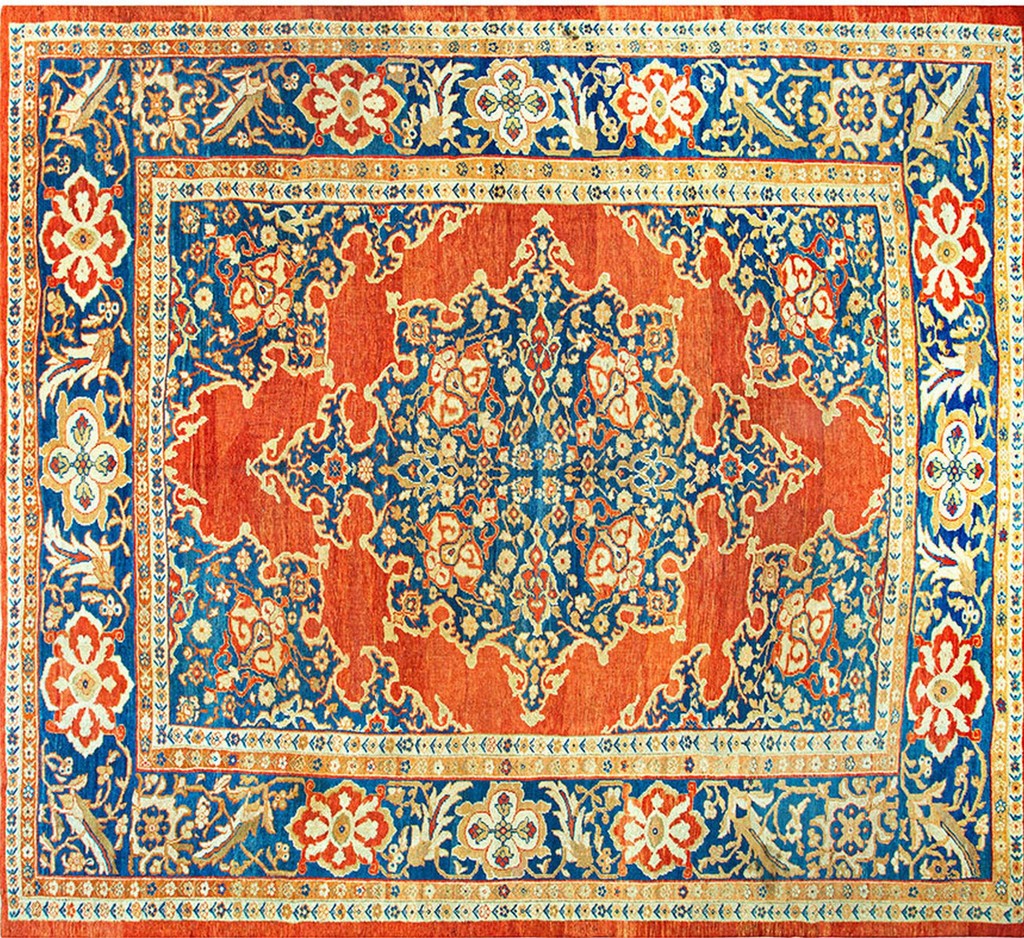
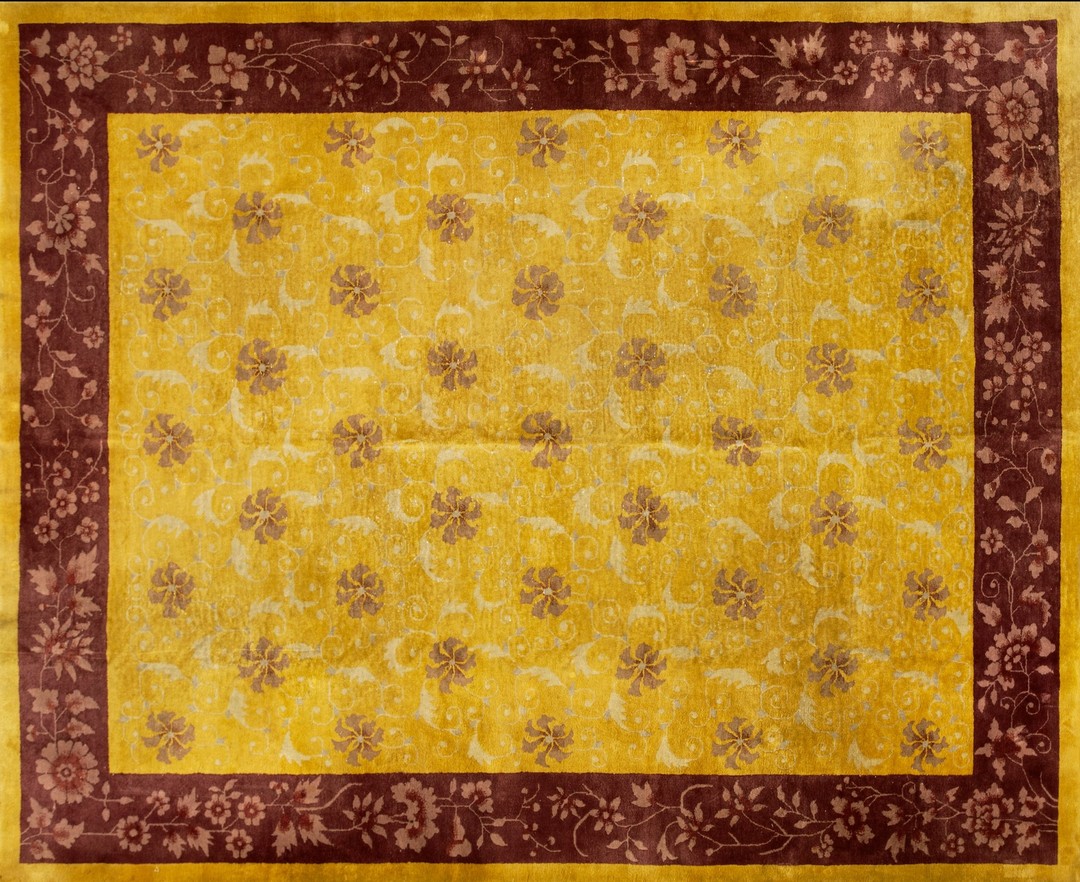
Antique Sultanabad Persian Floral, Medallion Knotted Rug by Rugs On Net
The Chemistry of Yellow: Natural vs. Synthetic Dyes
Natural Dye Sources: Key Plants & Minerals
- Weld (Reseda luteola) — Why: Known as the most reliable and lightfast of the natural yellow dyes, weld produces bright, clear tones that resist fading.
- Saffron — Why: Derived from the stigmas of the Crocus sativus flower, saffron was historically one of the most luxurious and expensive dyes, used sparingly to create brilliant golden hues in elite carpets.
- Turmeric — Why: A vivid and easily accessible dye that yields striking yellows, but it fades quickly when exposed to light, making it less reliable for long-term rug coloration.
- Pomegranate rind — Why: Provides softer, golden-yellow shades and is often used in combination with other mordants or dyestuffs for complex tones.
- Safflower — Why: Produces delicate yellows and pinkish overtones, historically used in both textiles and cosmetics.
- Onion skin — Why: An accessible household dye producing warm, rustic yellows with subtle variegation.
- Fustic — Why: A wood-based dye source yielding strong, earthy yellows and often paired with indigo to create greens.
- Larkspur and related plants — Why: Regional sources that contributed to more localized traditions of yellow dyeing.
These sources of natural yellow rug dye provided weavers with a palette ranging from pale lemon to deep golden tones, each with distinctive fastness and depth.
Saffron, Weld, Turmeric: Process and Use
The process of dyeing with natural yellow sources required patience and skill. Wool was first treated with a mordant—commonly alum or iron salts—to fix the color.
- Saffron-dyed carpet wool was achieved by steeping precious saffron stigmas in hot water and immersing prepared fibers. Because saffron was extraordinarily costly, it was often used only for accents, yielding luminous, golden tones that signified wealth and divine favor.
- Weld yellow was produced by boiling the plant’s leaves and stems to extract the dye, then soaking mordanted wool to achieve crisp, lightfast yellows. Unlike turmeric or saffron, weld’s stability meant that its color endured for centuries, making it one of the most trusted sources for rug weavers.
- Turmeric dyeing involved boiling powdered turmeric rhizomes. The results were brilliant, but highly fugitive; exposure to sunlight caused colors to dull and brown, which is why antique rugs rarely retain their original turmeric brilliance.
How are saffron and weld used to dye yellow wool? Saffron was used sparingly, often to highlight motifs with golden brilliance, while weld was boiled to release dye and soak wool for stronger, more enduring hues. Together they represent both the luxury and practicality of yellow dyeing traditions.
Synthetic Yellow Dyes: Evolution, Fastness, Authenticity
The arrival of synthetic dyes in the late 19th century dramatically changed rug weaving. Early aniline dyes offered vivid, affordable yellows, but they lacked fastness—many rugs suffered from rapid fading or “bleeding,” leading to distorted patterns. Collectors often judge these early synthetics harshly because they undermine both beauty and value. By the early 20th century, chrome-based synthetic dyes improved lightfastness significantly. These modern synthetics often surpass natural sources in stability, making them less prone to fading. However, they can appear overly uniform or “flat” compared to the nuanced abrash of natural yellows.
For this reason, connoisseurs often prefer the subtle irregularities of vegetable dyes, which give antique rugs depth and character. Can yellow vegetable dyes fade faster than synthetic alternatives? Yes. Certain natural dyes, particularly turmeric, fade more quickly than modern synthetics. However, high-quality natural dyes like weld are exceptionally durable, and their subtle variegation provides a richness that synthetics rarely replicate. Knowing the dye source is essential for rug buyers and collectors.
A rug colored with weld or saffron suggests authenticity and potential long-term value, while a fading yellow rug with early synthetic aniline tones signals reduced desirability. The ongoing discussion of synthetic vs. natural yellow highlights the balance between stability and authenticity, and why the origin of a rug’s yellow color remains a key factor in assessing its beauty and worth.
Cultural Symbolism & Meaning of Yellow in Rugs
Yellow in Persian Carpet Design
In Persian weaving traditions, yellow has long carried profound symbolic weight. It was frequently used to represent sunlight, divine favor, and the wealth of kingship. A gold rug’s meaning in Persia was often tied directly to royal grandeur, with the color evoking the brilliance of the sun and the radiance of spiritual blessing. In some carpets, yellow appears in medallions or borders, functioning as a visual embodiment of light itself, illuminating the surrounding colors with a sense of energy and vitality.
What does yellow symbolize in Persian carpet design? In Persian carpets, yellow symbolizes the sun, wealth, divine blessing, and the gold of royalty, making it a sacred and powerful color that elevates the rug’s status. Its presence transforms a rug into both an object of beauty and a bearer of cultural meaning, linking earthly craftsmanship with celestial imagery.
Joy, Warmth & Happiness: Universal Themes
Across weaving cultures, yellow universally signifies joy, warmth, and happiness. Just as sunlight nurtures life, yellow in rugs creates an atmosphere of optimism and comfort. This association is deeply psychological: the human eye instinctively links yellow with vitality and cheer. Rugs that incorporate yellow radiate a sunlight rug meaning, embodying hope and positive energy within the home.
Why are yellow rugs associated with happiness and warmth? Yellow rugs are tied to happiness and warmth because they mirror the qualities of the sun. Bright yellows echo the warmth of daylight, creating feelings of optimism and liveliness. Whether woven into ancient Persian medallions or modern living room carpets, the meaning of yellow in rugs is to lift spirits and brighten spaces.
Symbolism in Turkey, Caucasus, Central Asia, and India
- Turkey (Anatolia) — Why: Yellow represents light, luck, and sacredness, often woven as a talisman for protection against the evil eye.
- Caucasus — Why: In Caucasian weaving, yellow signifies wealth, vitality, hospitality, and eternity, linking rugs to ancestral spirits and enduring family traditions.
- Central Asia — Why: Yellow carries meanings of wisdom, prosperity, joy, and reverence for ancestors, reinforcing rugs as both functional and spiritual heirlooms.
- India — Why: Yellow is a sacred color in Hinduism, associated with the god Vishnu, the arrival of spring, knowledge, and enlightenment. It is also a color of marriage rituals and renewal, making yellow rugs deeply tied to sacred and celebratory contexts.
Together, these traditions highlight cultural yellow in rugs as a color that transcends borders, always carrying connotations of light, prosperity, and divine blessing.
Contrasts: Positive and Negative Connotations
While yellow nearly always represents positive qualities such as energy, light, and protection, some cultures also acknowledged its more complex side. In folklore, pale or sickly yellows could suggest illness or frailty. Yet this rarely influenced rug design, where yellow remained overwhelmingly tied to blessing and vitality. The contrast lies in how communities viewed yellow: as a reminder of both life’s fragility and the enduring power of the sun. In practice, rug weavers emphasized its positive side, embedding yellow in motifs as a source of protection, royalty, and divine light.
In many designs, carefully placed yellow served as a talismanic element, intended to guard the home and bring prosperity to its occupants. Ultimately, yellow carpet symbolism is defined by radiance and blessing. Whether in Persian royal courts, Anatolian villages, or Indian temples, the meaning of yellow in rugs consistently celebrates life, joy, and the sacred warmth of sunlight.
Regional Styles & Yellow’s Role in Rug Design
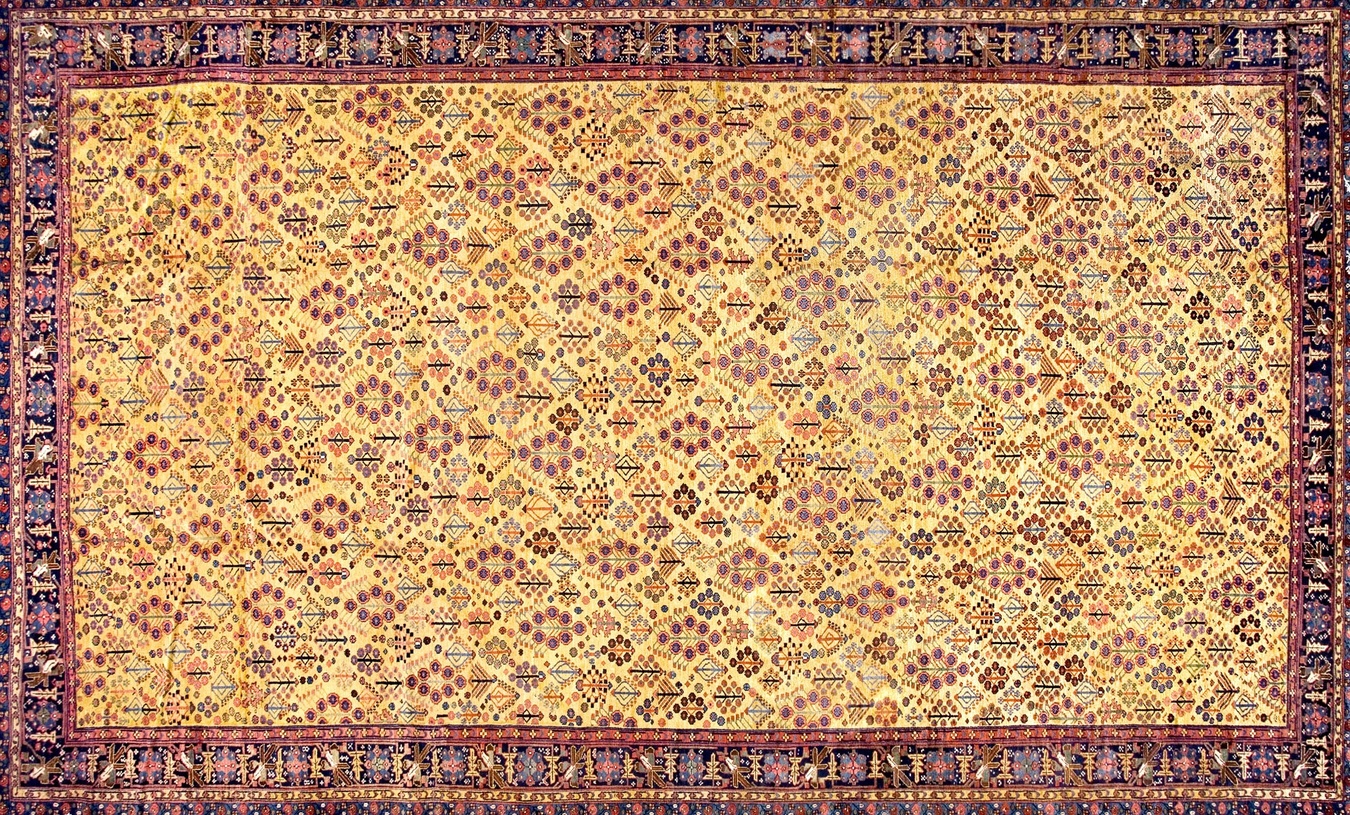
Persian Rugs
In Persian weaving, yellow was often reserved for luxury details and symbolically charged placements. A Persian yellow rug might highlight the medallion at the center, drawing the eye with a burst of radiant gold.
In prayer rugs, yellow was sometimes used for the niche, symbolizing divine light and the presence of spiritual blessing. Courtly commissions of the Safavid period frequently employed golden tones to emphasize wealth and kingship, making yellow one of the most regal hues in Persian rug design. Whether applied sparingly or in expansive detail, yellow in Persian carpets always suggested elevated status and sacred meaning.
Turkish & Anatolian Rugs: Kilims, Lotto, Oushak
In Anatolia, yellow played a more energetic and talismanic role. Turkish kilim yellow was a key accent woven into bold geometric motifs, enhancing visual contrast and carrying symbolic power as a protective element. Kilim weavers often used yellow to represent light and vitality, embedding it in stars, diamonds, and other forms believed to guard against the evil eye.
How is yellow used in traditional kilim motifs? Yellow in kilim motifs is typically woven into angular, geometric patterns to energize the composition and serve as a protective talisman. It creates striking contrast against reds, blues, and browns, adding both visual energy and symbolic blessing. The Oushak yellow tone, often golden and luminous, became a hallmark of Western-favored Turkish rugs. Similarly, Lotto carpets, with their intricate latticework designs, often featured yellow highlights that gave them vibrancy and prestige.
In Anatolian prayer rugs, yellow could also symbolize sacred light within the prayer niche, directly tying rug design to devotional practice. What rug styles typically feature bright yellow accents? Bright yellow accents are common in Turkish kilims, Lotto carpets, Oushak rugs, and Anatolian prayer rugs, where they serve both aesthetic and symbolic roles.
Caucasian & Central Asian Rugs: Kazak, Shirvan, Uzbek, Kazakh
- Kazak yellow carpet — Why: Often featured expansive yellow fields or bold motifs, symbolizing hospitality, wealth, and vitality.
- Shirvan rugs — Why: Incorporated bright yellow details into borders and medallions, adding brightness and protective meaning.
- Uzbek felt rugs — Why: Used yellow as a dominant background color, associated with prosperity and auspicious fortune.
- Kazakh tribal rugs — Why: Employed yellow boldly to reinforce spiritual strength and protective energy within communal or ceremonial contexts.
- Turkmen rugs — Why: Yellow appeared less frequently, but when present, it emphasized secondary motifs with symbolic depth.
These traditions reflect a spectrum: some regional weavings, like Kazak or Uzbek, embraced yellow as a dominant tone, while others, like Shirvan, preferred it as an accent.
Indian & South Asian Rugs: Mughal, Amritsar, Dhurries
In India, yellow and gold were woven into carpets with profound symbolic resonance. The Mughal yellow carpet embodied royal luxury, drawing on gold tones to emphasize divinity and grandeur.
Amritsar rugs often included warm yellow details in floral borders and medallions, reinforcing their place in aristocratic interiors. Dhurries, especially those woven for weddings, employed yellow as an auspicious color tied to marriage, renewal, and sacred Hindu symbolism. Across South Asia, yellow carried both ceremonial and regal importance, making it a favored tone for spiritually significant and festive textiles.
Moroccan & North African Rugs
In Morocco and across North Africa, yellow rarely dominated fields but was instead used as a strategic accent color. Paired with bold reds, deep blues, or neutral ivory, yellow highlighted motifs with warmth and brightness.
Contemporary Moroccan rug design continues this tradition, often weaving yellow as a contrast tone in modern interiors, where it enlivens neutral palettes and carries forward the historic role of yellow as both cheerful and symbolic.
Must-Highlight Themes
From Persian yellow rugs symbolizing royalty and divine light to Turkish kilim yellow energizing tribal motifs, the placement of yellow was never arbitrary. In Kazak yellow carpets and Mughal yellow carpets, it could dominate fields, while in Moroccan rugs, it often served as a sharp, modern accent.
In prayer rugs, a yellow niche conveyed sacred radiance. Across all regions, the unifying theme is clear: yellow in rugs was always chosen with purpose, blending symbolic meaning with aesthetic brilliance.
Yellow in Rug Motifs, Patterns & Accents
How Is Yellow Used in Traditional Kilim Motifs?
Traditional kilim weavers relied on yellow to inject energy and contrast into their flatwoven designs. Kilim yellow accents often outlined medallions, emphasized geometric diamonds, or filled symbolic motifs such as stars and hooks believed to offer protection. Yellow also conveyed happiness and light, making it a favored shade to enliven otherwise dark or muted color palettes.
In kilim tradition, yellow was rarely neutral—it was always purposeful, intended to bring brightness, spiritual protection, and a sense of vitality to the weaving. How is yellow used in traditional kilim motifs? Yellow is typically woven into medallions, outlines, and protective motifs in kilims, giving them vibrancy, symbolic power, and visual balance against reds, browns, and blues.
Where Are Bright Yellow Accents Found?
- Medallions — Why: Yellow outlines or fills medallions to highlight the rug’s central focus.
- Borders — Why: Yellow woven into outer edges creates contrast and frames the design with warmth.
- Small motifs — Why: Stars, diamonds, or amulets in yellow act as protective talismans while adding sparkle to the pattern.
- Prayer rug niches — Why: Yellow used in the niche symbolizes divine light and spiritual energy.
What rug styles typically feature bright yellow accents? Bright yellow accents are common in Turkish kilims, Oushak rugs, Lotto carpets, Persian prayer rugs, and Caucasian Kazak designs, each using yellow to energize, protect, or symbolize divine light.
Pairings: What Colors Work with Yellow?
- Gray with yellow — Why: A timeless modern pairing; the sleek neutrality of gray grounds yellow’s brightness, creating the popular yellow and gray rug style often seen in contemporary living rooms.
- Blue with yellow — Why: A classic combination that conveys harmony and balance; yellow’s warmth complements blue’s cool depth, seen historically in Persian and Anatolian rugs.
- Ivory with yellow — Why: Ivory softens yellow’s intensity, giving rugs a light, airy feel suitable for minimalist or transitional interiors.
- Green with yellow — Why: Evokes natural harmony, reflecting landscapes and freshness.
- Red with yellow — Why: Intensifies warmth and energy, often found in bold tribal and kilim patterns.
Does yellow pair well with gray in living room rugs? Yes. Yellow and gray together create a chic, modern aesthetic. The neutrality of gray balances yellow’s cheerfulness, making a living room rug stylish yet inviting. What colors complement a mustard yellow Oushak rug? Mustard yellow in Oushak rugs pairs beautifully with deep blue, terracotta, ivory, and gray. Deep blue creates richness, terracotta adds warmth, ivory lightens the palette, and gray provides a contemporary counterpoint. These combinations highlight the earthy yet luxurious qualities of an Oushak mustard yellow rug.
Modern Patterns & Geometric Uses
In today’s rug design trends, yellow continues to serve as a dynamic accent but is also finding new roles. Modern geometric rugs often use yellow to outline bold shapes or to create eye-catching patterns against neutrals. Abstract designs pair muted yellows with gray or black for sleek minimalism, while bohemian styles lean on mustard yellows mixed with terracotta and indigo for an earthy, grounded effect.
Whether woven into yellow rug motifs of traditional kilims or reimagined in cutting-edge geometric patterns, yellow remains one of the most versatile rug colors. Its strategic placement—whether as a glowing accent or a dominant design tone—ensures its lasting appeal in both historic weavings and modern interiors.
Modern Usage & Trends
Yellow in Contemporary Rug Design
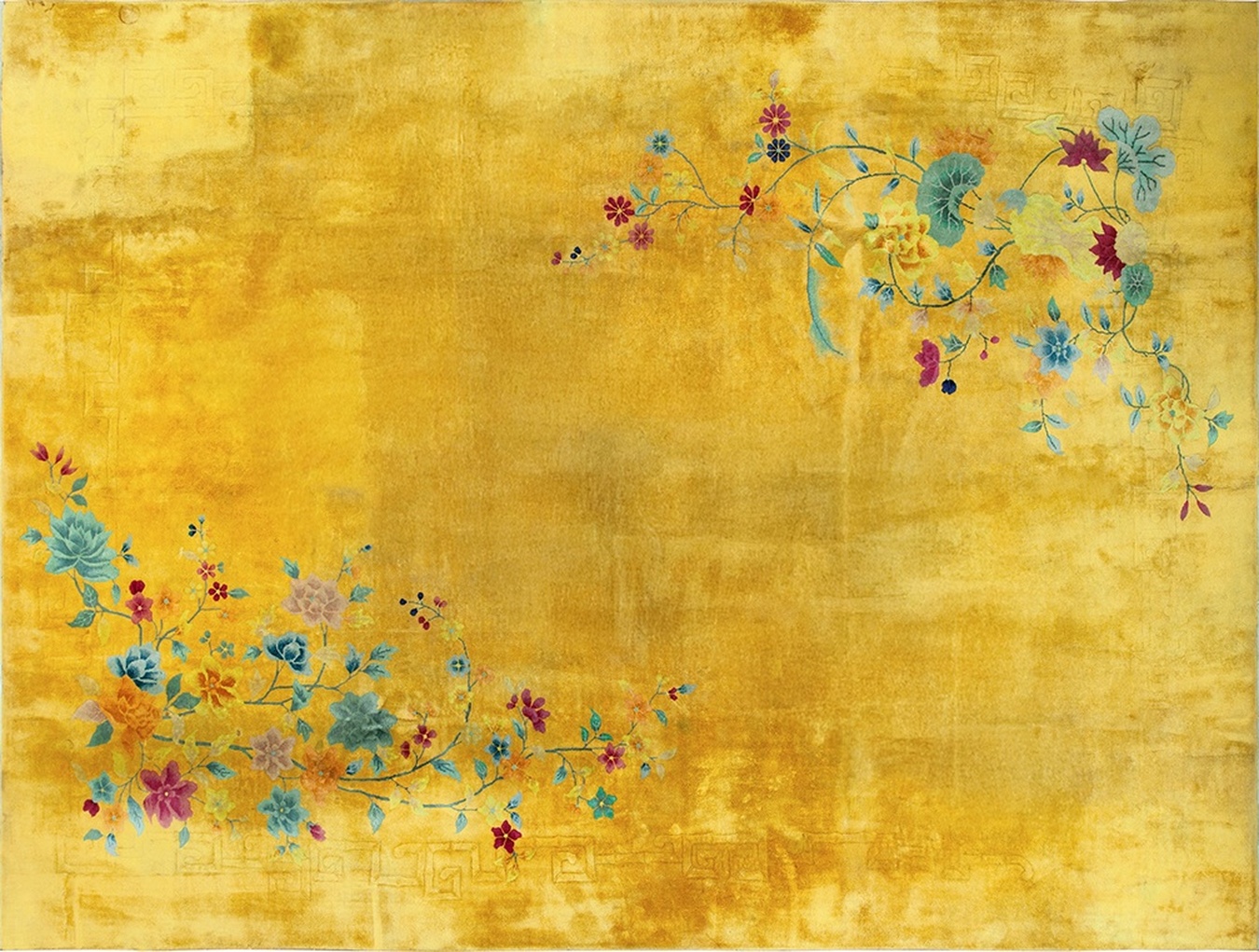
In today’s interiors, yellow has moved from being a rare accent to a deliberate statement color. A modern yellow rug instantly energizes a space, whether used in bold geometric designs or as a solid block of color within minimalist schemes. Designers often rely on yellow to create mood enhancement, especially in rooms that feel dim or underlit.
In particular, north-facing room rugs benefit from yellow tones, since they reflect warmth and counteract cool natural light, making spaces feel brighter and more inviting. Should designers use yellow rugs to brighten north-facing rooms? Yes. A yellow rug is one of the most effective tools to lift a north-facing room, introducing warmth, brightness, and cheer where natural light may feel cold or muted.
Pairing Yellow with Neutrals: Gray, Beige, Black
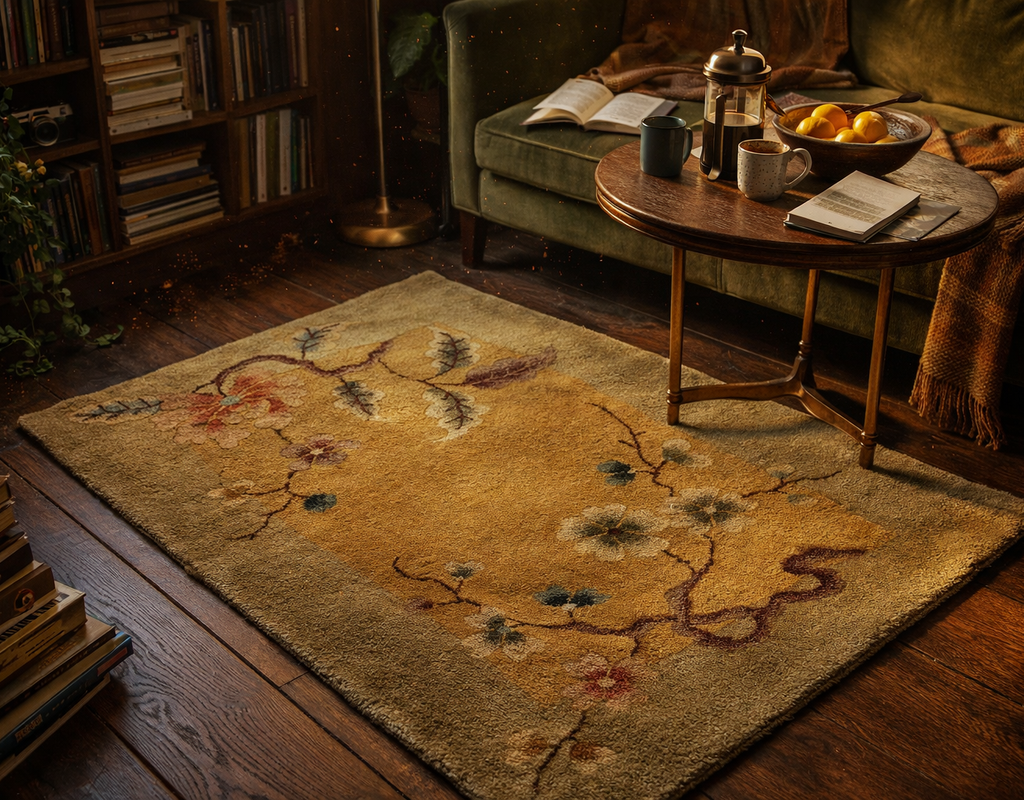
A warm and inviting study space highlighted by the textured, floral-patterned area rug.
Modern interiors embrace yellow as a versatile partner to neutral tones.
- Gray and yellow — A defining trend in contemporary living rooms, where the balance of gray’s sophistication with yellow’s cheer creates a chic yet approachable environment. A yellow and gray living room rug instantly blends modernity with warmth.
- Beige and yellow — Beige provides softness, allowing yellow to radiate without overwhelming. This pairing works well in transitional spaces.
- Black and yellow — Bold and high-contrast, this combination creates dramatic modern statements, often used in eclectic or urban interiors.
Does yellow pair well with gray in living room rugs? Absolutely. The pairing is a staple of modern interior design, as gray’s neutrality grounds yellow’s brightness, creating a balanced yet lively effect.
Mustard Yellow and Trending Interior Styles
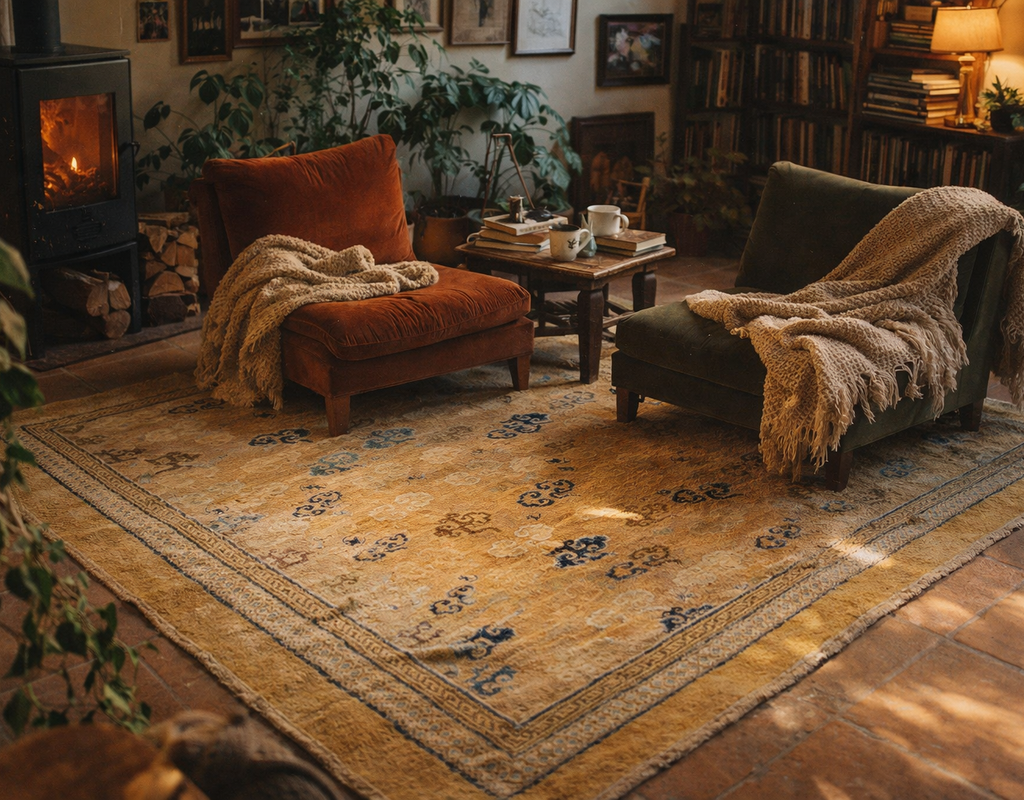
An inviting sanctuary perfect for reading by the fire, grounded by a beautiful distressed area rug.
- Scandinavian design — Why: Mustard yellow adds warmth to otherwise cool, minimal palettes of white, gray, and light wood.
- Modern boho decor — Why: Mustard yellow complements terracotta, indigo, and natural textures, enhancing the eclectic, earthy vibe.
- Mid-century modern — Why: Mustard hues echo vintage design sensibilities, tying rugs to classic retro furniture.
- Eclectic urban spaces — Why: Mustard yellow serves as a bold color anchor that prevents overly neutral rooms from feeling flat.
These trends demonstrate why the mustard yellow rug continues to be one of the most popular rug choices across global interiors. What colors complement a mustard yellow Oushak rug? A mustard Oushak yellow rug pairs beautifully with deep blue for richness, terracotta for warmth, ivory for lightness, and gray for modern balance. These combinations highlight both its traditional roots and contemporary relevance.
Where to Place a Yellow Runner or Rug for Maximal Impact
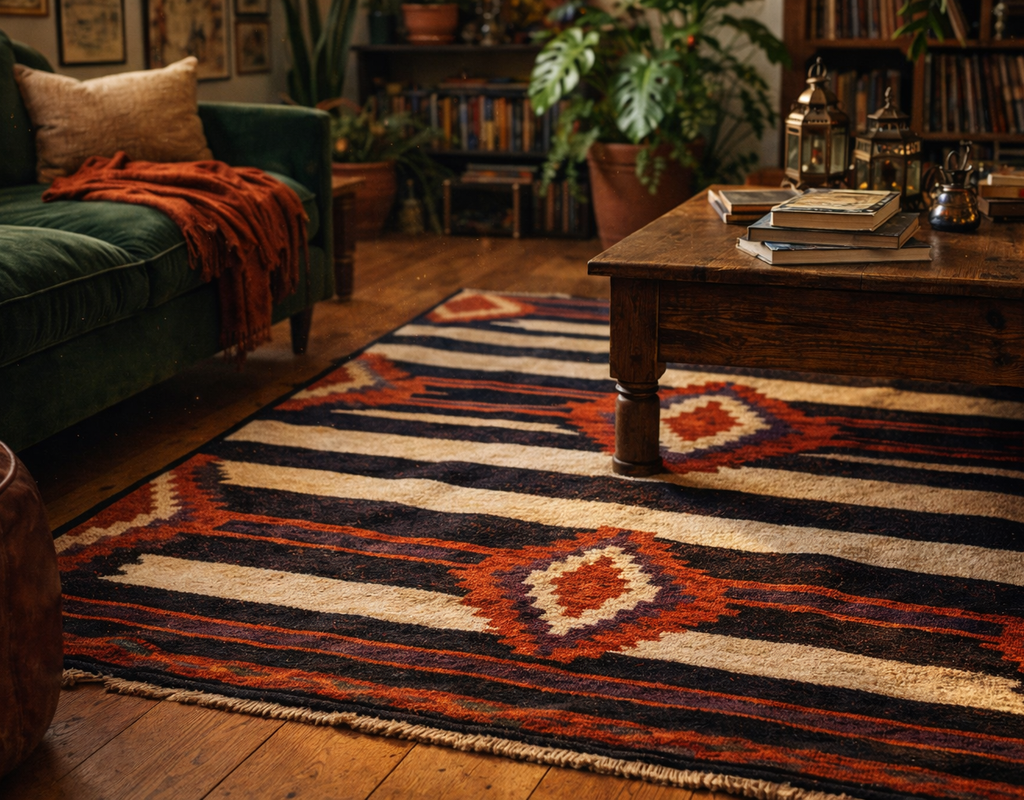
A vividly patterned, tribal-inspired rug provides warmth and contrast to the dark wood and jewel-toned furniture.
Strategic placement of yellow rugs can transform how a space feels and functions. A yellow runner placement in an entryway sets an inviting tone for the home, symbolizing warmth and hospitality. In hallways, yellow prevents transitional spaces from feeling forgotten, infusing them with light and cheer. Kitchens also benefit from yellow runners, where the color introduces both energy and coziness. Where should a yellow runner be placed for maximal impact? The best placements are entryways, kitchens, and hallways.
These locations amplify yellow’s energy, ensuring the rug is noticed while enhancing the mood of spaces that benefit most from brightness and warmth. The modern yellow rug thrives as both a design anchor and a mood enhancer. Whether brightening a north-facing living room, adding sophistication in a yellow-and-gray pairing, or setting the tone in an entryway with a yellow runner, this color continues to prove its versatility.
Contemporary interiors increasingly turn to yellow not only for style but also for its unique ability to transform the emotional atmosphere of a home.
Practical Questions: Care, Preservation & Value
Fading: Natural vs. Synthetic Yellow Dyes
Can yellow vegetable dyes fade faster than synthetic alternatives? Yes. Certain yellow vegetable dyes—such as turmeric and safflower—fade more quickly than modern synthetic dyes, especially when exposed to direct sunlight.
However, stable natural dyes like weld and larkspur can retain their brilliance for centuries. By contrast, early synthetic aniline yellows were notorious for rapid fading, while modern chrome-based synthetics often surpass natural dyes in lightfastness. The charm of natural yellows lies in their subtle abrash and depth, even if they require greater care.
Sunlight, Rotation, and Cleaning Frequency
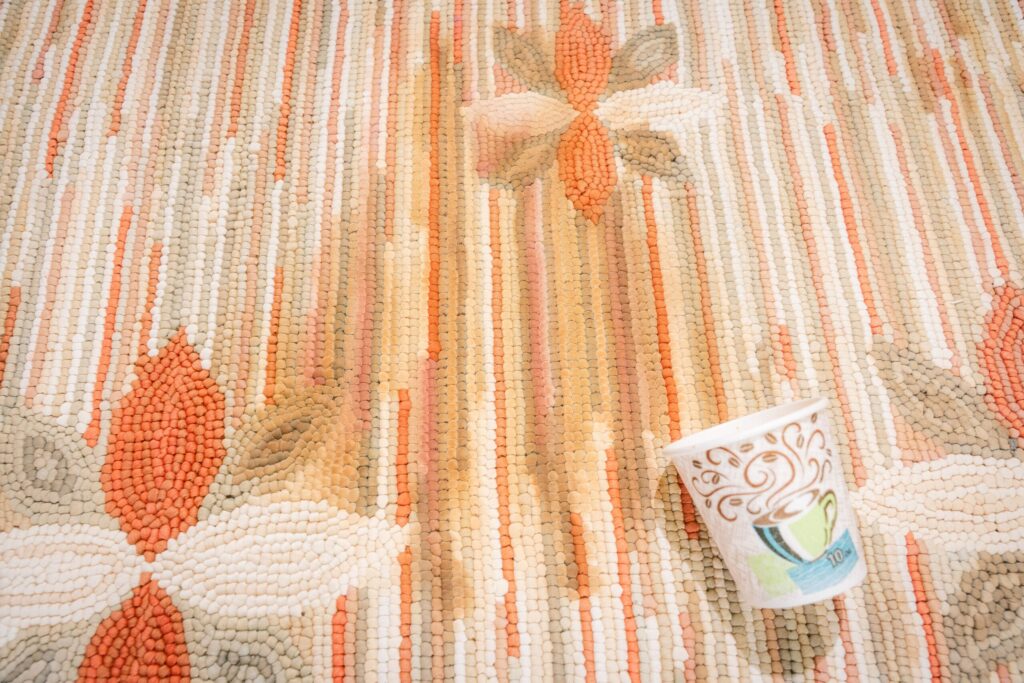
Close-up view of a tipped paper coffee cup resting on a handwoven wool rug, highlighting the rug’s dense pile, subtle color variations, and traditional geometric motifs in warm neutral and terracotta tones.
- Sunlight protection — Why: Direct sun causes yellow rug fading and even bleaching. Curtains, UV-protective window films, or rotating the rug help minimize damage.
- Rotation every 3–6 months — Why: Rotating prevents uneven fading and wear, especially in high-traffic areas.
- Gentle cleaning — Why: Regular vacuuming and occasional professional cleaning extend a rug’s life. Avoid high-pH cleaners or harsh scrubbing, which can dull yellow tones.
How do I prevent a yellow wool rug from sun bleaching? Keep it out of prolonged direct sunlight, use UV-filtering window coverings, and rotate it regularly to distribute light exposure evenly. When should I rotate a yellow rug to avoid uneven fading? Rotate every three to six months to ensure even wear and color preservation.
How does cleaning frequency affect a yellow rug’s longevity? Light, regular maintenance extends rug life, but over-cleaning or using harsh methods can strip or alter yellow hues. Gentle care is best for preserving color depth.
Value: Naturally Dyed vs. Chemically Dyed Yellow Rugs
Are naturally dyed yellow rugs more valuable than chemically dyed ones? Generally, yes. A naturally dyed yellow rug value is higher if the dye source is stable and traditional, as these rugs carry authenticity and cultural heritage.
Chemically dyed rugs, though often more colorfast, may lack the subtle variation and prestige associated with vegetable-dyed antiques. Collectors often pay a premium for naturally dyed yellow when the tones are well-preserved.
Investment & Resale: Vintage vs. New, Over-Dyed Rugs
Should I choose a vintage yellow Moroccan rug or new kilim? For long-term investment, a vintage Moroccan rug may hold more value due to age and uniqueness, while a new kilim offers durability and affordability for everyday use. The choice depends on whether you seek decorative charm or future resale potential.
Can over-dyed vintage rugs achieve a stable yellow tone? Yes. An overdyed yellow rug can achieve a highly stable tone with modern chemical processes. However, collectors may view over-dyes as less authentic, which can impact value despite their durability. Is a pale yellow rug a good investment for resale? Pale yellows can be tricky. If naturally faded from age, they may hold charm and value. If artificially muted or unstable, they may be less desirable. Investment depends heavily on authenticity, provenance, and stylistic appeal.
Knot Density & Yellow Hue Longevity
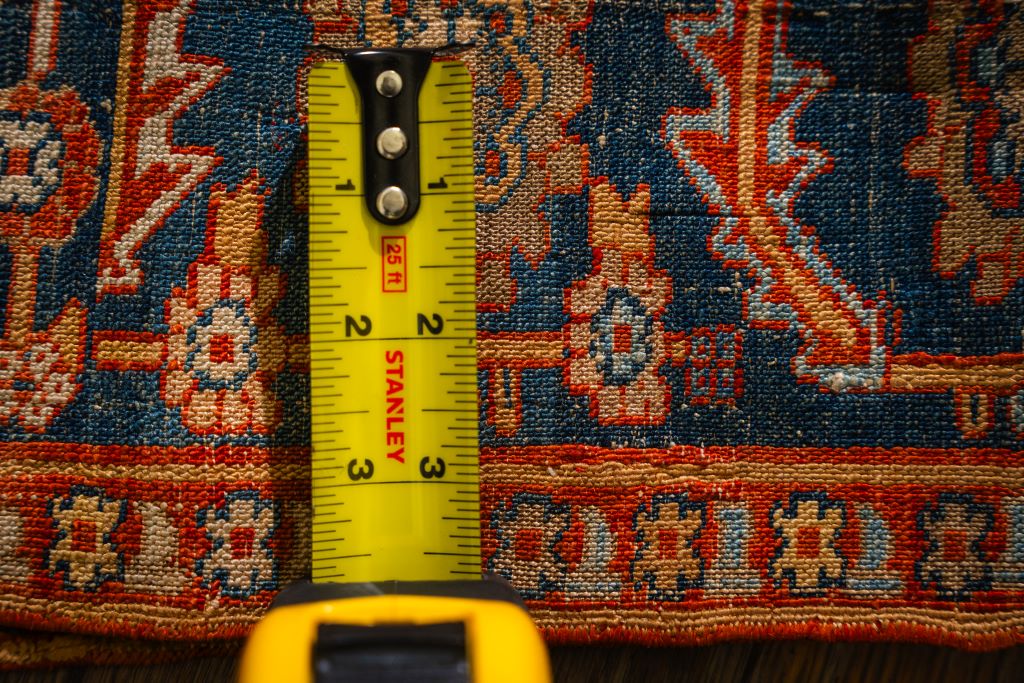
A detailed inspection of a richly colored oriental rug pattern while measuring its dimensions.
How does knot density affect yellow hue longevity in rugs? High knot density rug color retention tends to be better. Dense knots protect individual fibers from friction and light exposure, helping yellow hues remain richer for longer.
Fine Persian and Caucasian weaves, with high knot counts, often preserve yellow tones better than loosely woven tribal rugs.
Most Durable Weaving Regions for Yellow Rugs
What weaving regions produce the most durable yellow rugs? Regions with strong dye traditions and dense weaving techniques—Turkey, Iran, and the Caucasus—produce the most durable yellow rugs.
Their use of stable natural dyes like weld, coupled with high-quality wool and fine knotting, ensures longevity. Central Asian felt rugs and Indian Mughal carpets also showcase durable yellows, though fading risks are higher when less stable dyes were used.
Key Takeaways
Caring for a yellow wool rug requires attention to sunlight, rotation, and gentle cleaning. Natural dyes offer beauty and authenticity but can be vulnerable to fading, while synthetics promise stability but less nuance.
Yellow rug investment value rests on authenticity, dye stability, and design appeal. Whether choosing a naturally dyed antique, a new kilim, or an overdyed modern piece, understanding dye chemistry, weave density, and cultural origin is key to preserving both the beauty and worth of a yellow rug.
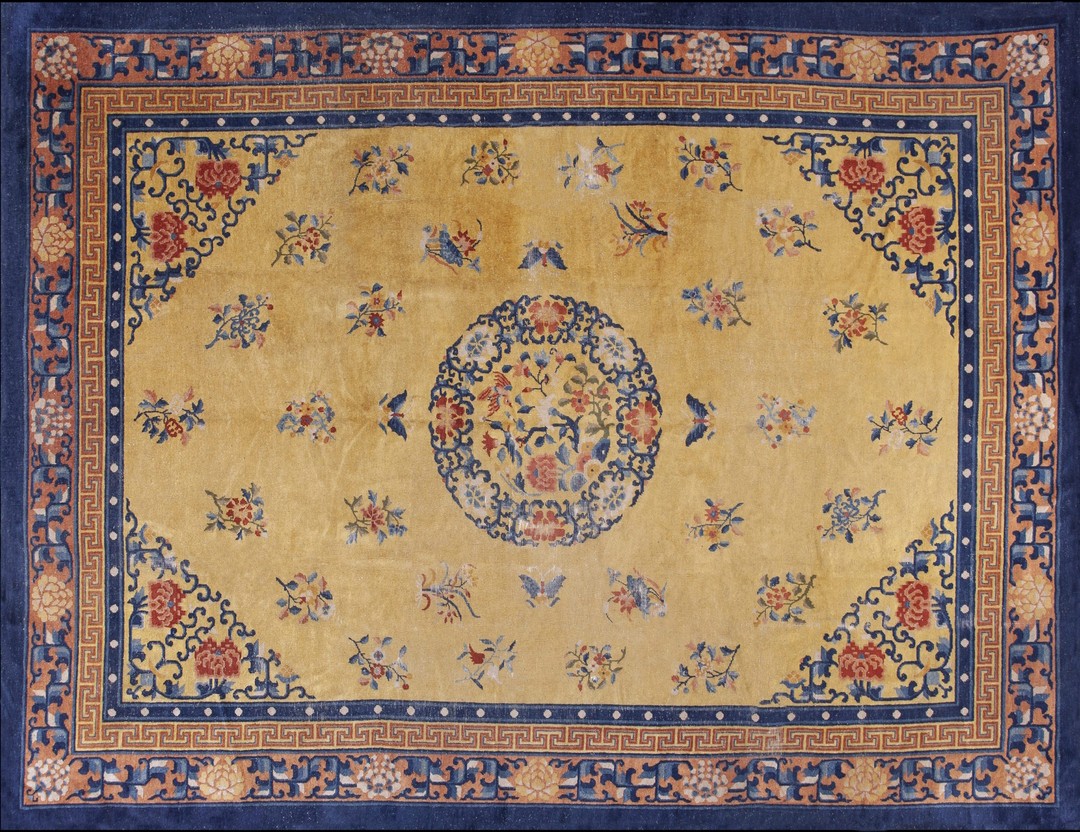
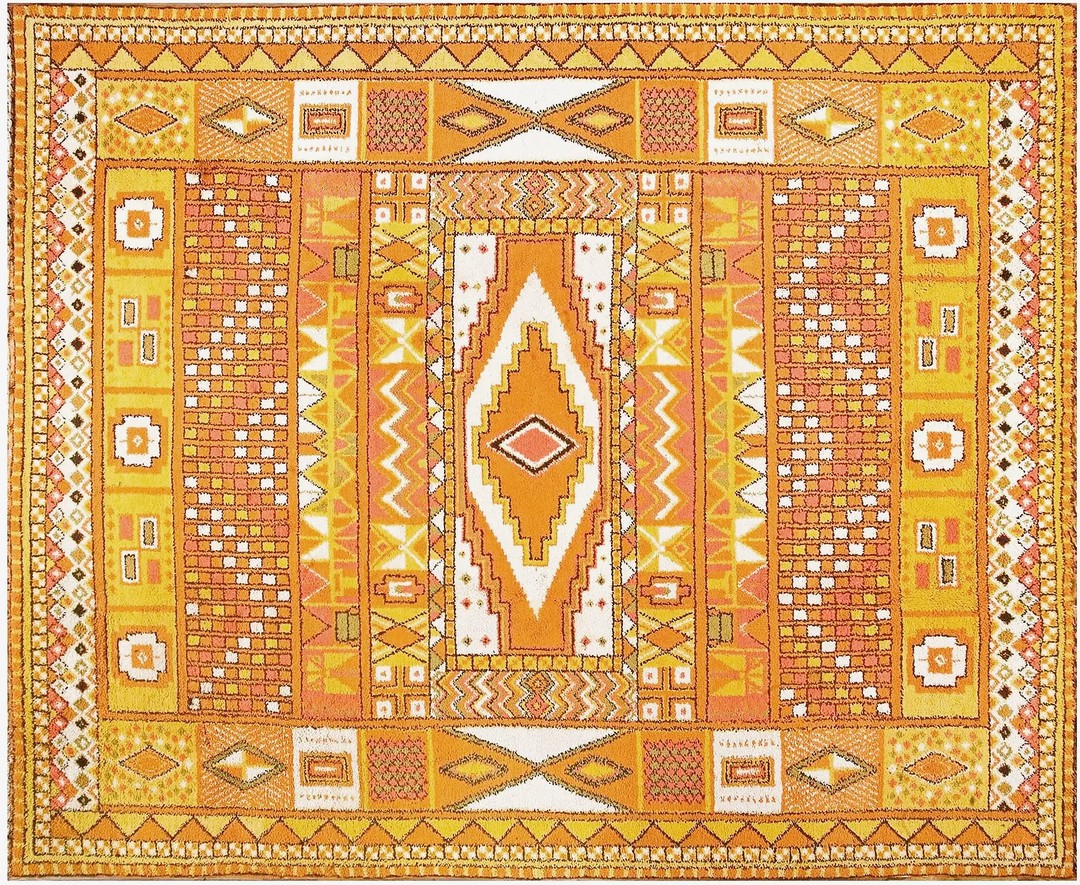
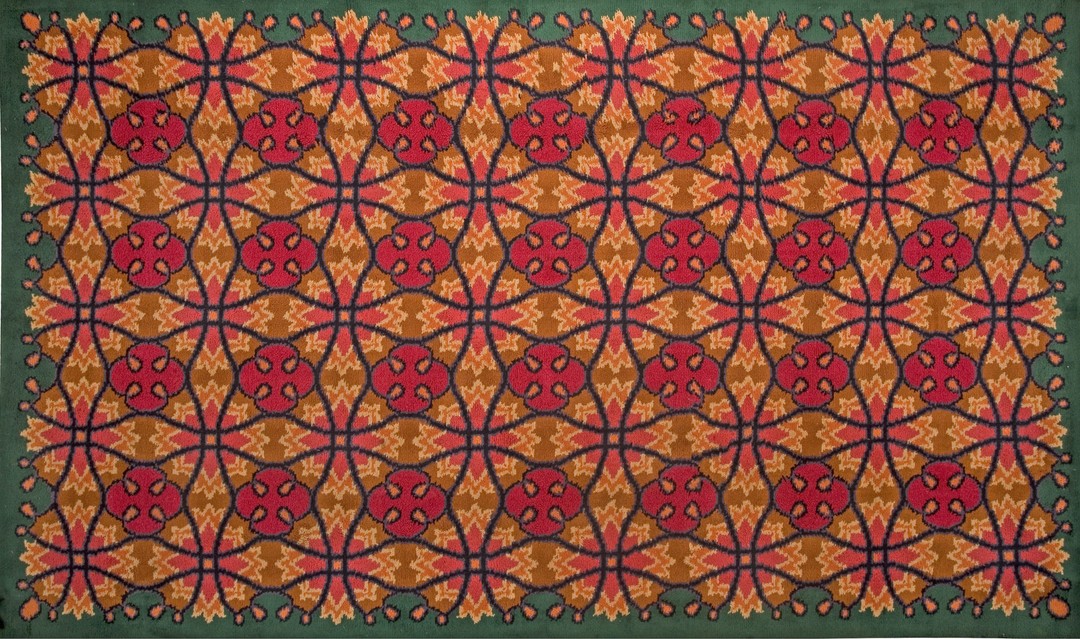
Explore a Few of Our Favorite Yellow Rugs
FAQ
- Mustard yellow rug vs bright lemon yellow—what’s the difference?
Mustard yellow rugs read earthy and forgiving; bright lemon feels vivid and modern. Mustard pairs easily with wood and black; lemon suits white, light oak, and chrome.
- What rug pad is best under a yellow rug?
Use a felt-and-rubber pad for grip and cushioning under yellow rugs. Trim it 1 inch smaller on all sides to hide edges.
- Can I layer a yellow rug over jute?
Yes—layer a 5×8 yellow rug over a larger jute base for texture. Leave a 6–12 inch border of jute showing.
- What wall colors suit yellow area rugs?
White, cream, greige, and soft sage walls flatter yellow rugs. For contrast, try navy or charcoal on an accent wall.
- Do yellow rugs work with gray sofas?
Absolutely—yellow rugs and gray sofas are complementary. Mustard yellow adds warmth; add two matching yellow accents for cohesion.
- Will a yellow rug make a small room feel bigger?
Lighter yellow rugs brighten and visually expand small rooms. Choose a larger size that extends under furniture legs for a unified look.
- How do I prevent dye bleed on yellow rugs?
Test yellow rugs for colorfastness with a white cloth and water; if dye lifts, use only dry methods. Avoid hot water; clean with minimal moisture and neutral pH.
- Are yellow rugs in style right now?
Yes—earthy mustard and ochre yellow rugs trend as warm neutrals. Pair with natural woods and cream for longevity.
- Solid vs patterned yellow rugs—what hides dirt better?
Patterned yellow rugs (melange, geometric, or vintage-wash) conceal footprints and crumbs better than solids. Medium tones outperform very pale shades.
- How much do yellow rugs cost?
Machine-made yellow rugs typically cost \$60–\$600; hand-knotted wool can range from \$800 to \$5,000+. Prices vary by size, material, and origin.
- Are yellow rugs kid-friendly?
Yes—patterned yellow rugs hide messes better than solids. Choose stain-resistant synthetics and spot-clean promptly.
- Are yellow shag rugs hard to maintain?
Yellow shag rugs are cozy but trap debris; vacuum with a suction-only head weekly. Shake outside and rotate quarterly to reduce matting.
- Do robot vacuums struggle with yellow rugs?
Robot vacuums rarely misread yellow rugs, but dark borders or high fringe can confuse sensors. Secure fringe or choose borderless designs.
- Can yellow outdoor rugs handle weather?
Yellow outdoor rugs in solution-dyed polypropylene or acrylic resist UV fade and moisture. Store during heavy snow or weeks of rain.
- Are yellow runner rugs practical for kitchens?
Yes—choose low-pile, washable yellow runner rugs in polypropylene or PET. Use a breathable, anti-slip pad to keep edges flat.
- Are yellow rugs good for bedrooms?
Yellow rugs add warmth; choose buttery or muted tones for calm. A 5×8 fits under a full bed; 8×10 suits a queen.
- What size yellow rug works for a living room?
Most living rooms need 8×10 or 9×12 yellow area rugs. Aim for at least 6–8 inches wider than the sofa on both sides.
- How do I clean a yellow rug without discoloring it?
Blot a yellow rug with diluted dish soap (a few drops in 2 cups water) and cold water; test first. Avoid chlorine bleach; use color-safe oxygen cleaner on synthetics only.
- Are yellow wool rugs good for homes with pets?
Yes—wool yellow rugs rebound and naturally resist soiling, but treat accidents quickly. Use an enzyme cleaner and blot, never rub.
- What materials are best for high-traffic yellow rugs?
Polypropylene, recycled PET, and wool yellow rugs handle traffic and clean-ups well. Flatweaves and low-pile constructions are easiest to maintain.
- Will a yellow rug fade in sunlight?
Some yellow rugs fade under UV exposure; solution-dyed polypropylene or outdoor-grade fibers resist fading. Rotate or flip every 3–6 months in sunny rooms.
- What colors go with a yellow rug?
Yellow rugs pair well with gray, navy, forest green, and warm wood tones. For contrast, try blue (color-wheel complement).
- Do yellow area rugs show stains easily?
Yes, pale yellow rugs highlight spills more than medium or patterned styles. Choose a small-scale pattern or flecked design to conceal everyday dirt.
- Which shades of yellow rugs are easiest to live with?
Mustard, ochre, and gold yellow rugs hide dirt better than neon. Pair with muted grays or taupes.
- What decor styles do yellow rugs work with?
Yellow rugs suit modern, boho, Scandinavian, and traditional rooms. Mustard or ochre yellow reads more sophisticated than neon.