
The Evolution of Gray in Rug-Making
Explore our complete selection of sophisticated gray color rugs to find the perfect shade for your interior design.
Historical Use and Symbolism
In the rug history of gray rug colors, the color carried marginal importance in the great traditions of Oriental weaving. Within Persian carpets, gray was rarely used as a main field tone, largely because it was considered somber, melancholic, or even symbolically impure. Persian rug motifs leaned heavily on vibrant reds, blues, and ivory fields, each tied to life, vitality, and spiritual purity.
Gray rug colors did appear, but usually only in minor details or as an incidental result of undyed wool from gray- or black-fleeced sheep. In these cases, the muted tones came through naturally, rather than by design. Faded black dyes also created grays in antique carpets. Over time, the oxidization of iron-based or vegetable blacks could soften into silvery-gray shades. These subtle transitions were appreciated as part of patina, but not intentionally celebrated as a dominant palette.
The rarity of gray field rugs in older collections underscores how tightly symbolism shaped design choices. Unlike blue, which conveyed protection, or red, which embodied joy, gray symbolized neutrality and absence—qualities less desirable in area rugs meant to project strength, prosperity, or sacred meaning.
Thus, the historical reason for gray’s rarity in Oriental rugs was twofold: technical limits in producing stable gray dyes and cultural associations that framed the tone as secondary, lacking the prestige of other colors. It remained an accent, never the stage upon which the full drama of motifs unfolded.
Modern Aesthetic Shift
The perception of gray transformed dramatically in the late 20th and early 21st centuries, reflecting broader shifts in interior design. Once marginal, gray became one of the most in-demand tones, celebrated for its neutrality, sophistication, and calming effect. The rise of modern gray rug colors trends was driven by consumer demand for versatile foundations that could anchor contemporary homes filled with mixed materials, minimalist palettes, and evolving tastes.
Designers embraced gray as a color that could harmonize with both stark modernist interiors and soft transitional spaces. The tone no longer represented absence but balance, serenity, and timeless elegance.
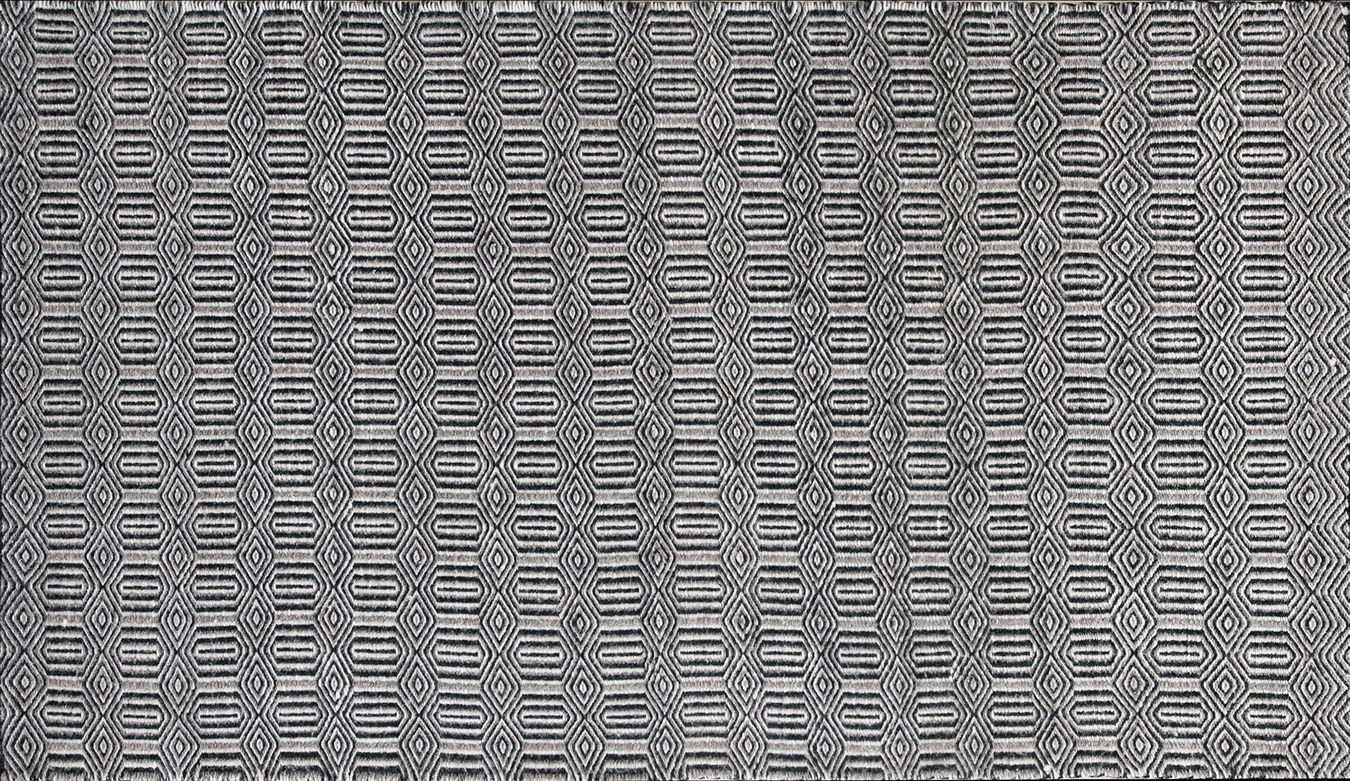
As a result, manufacturers began producing gray field rugs across a wide spectrum—from hand-knotted Persian-inspired pieces with softened gray grounds to sleek machine-made abstracts in steel, slate, and silver tones. Gray’s ascent to prominence also coincided with the neutral color boom of the 21st century, when white, beige, and taupe dominated wall and furniture trends. In this context, gray rugs became both practical and stylish, offering depth without overwhelming a space.
What was once overlooked as a symbolically marginal color now forms the backbone of entire collections, proving how dramatically cultural values and consumer tastes can reshape design history. Gray’s shift from underused accent to foundation of modern rug design reflects more than fashion—it represents a full reevaluation of what neutrality means in art and décor. Where Persian tradition once sidelined the tone, today’s rug industry has elevated gray into a signifier of elegance, adaptability, and contemporary living.
Visual Qualities of Gray Rug Colors
Hue Range: Warm vs. Cool Grays
The gray rug colors spectrum is wide, spanning from silvery, blue-tinted grays to warm, brown-leaning charcoals. Cool grays, often achieved through dyeing, create a sleek and contemporary aesthetic that enhances clarity in geometric or minimalist rug patterns. Warm grays, on the other hand, often result from natural wool fibers or blended tones, lending a softer, earthier character that pairs well with rustic or transitional interiors.
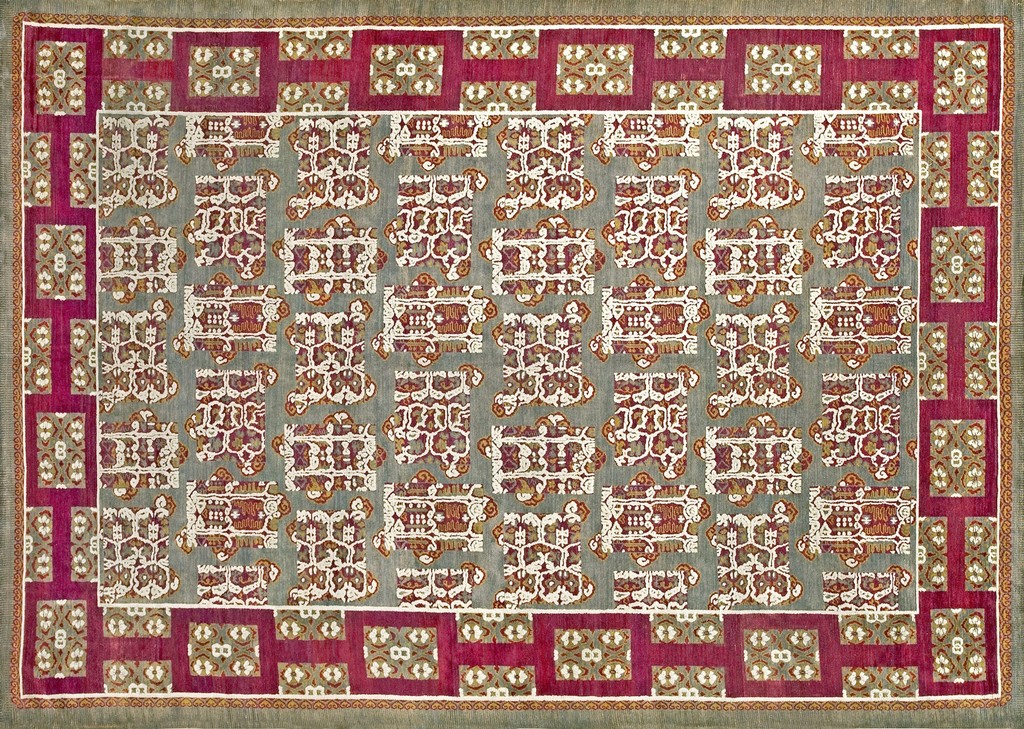
Antique Ukrainian Knotted Rug by Rugs On Net
Natural gray wool from sheep offers a subtle, organic look that is inherently colorfast, while synthetic dyes allow for precise control but can produce a more uniform or even flat effect. Historically, some gray tones were created using iron-based or vegetable dyes, but these have a tendency to oxidize and fade into brown over time. By contrast, undyed natural gray rug colors retain their integrity across decades, making them a favored choice in both traditional and modern rug weaving.
Texture and Abrash
One of the most distinctive qualities of heathered gray rug colors is the presence of gray abrash, or tone variation, which occurs naturally in handspun yarns and undyed wool. Abrash creates a shifting play of light and dark striations that lend a rug vibrancy and visual depth, even within a single color field. Rather than appearing flat, these rugs shimmer with subtle complexity, enhancing their aesthetic and artisanal value.
Because abrash reflects the hand of the weaver and the natural irregularities of wool, it is considered an asset rather than a flaw. While some might wonder if heathered gray rug colors should be chosen for higher durability, the answer is nuanced: abrash itself does not strengthen fibers, but undyed natural wool often carries a more resilient structure than heavily processed or chemically treated fibers. In this way, durability comes not from the visual effect but from the integrity of the material.
Matte vs. Lustrous Finishes
The finish of gray color area rugs significantly shapes its impact in a room. Matte gray wool rugs—especially those woven from undyed sheep wool—provide a grounded, understated elegance that works well in relaxed, organic settings. Their muted surface helps soften patterns, making them ideal for rooms where quiet texture is preferred over bold statements.
By contrast, lustrous finishes—whether from silk, mercerized cotton, or high-sheen synthetic blends—highlight gray in a completely different way.
Silvery or steel-gray rug colors with sheen accentuates fine motifs, enhancing clarity and giving patterns sharper definition. This is particularly effective in modern or luxury interiors that thrive on contrast and reflective light. As for application, pale gray flatweaves work in certain rooms where lightness and openness are desired, such as kitchens, entryways, or minimalist living areas.
Their flat pile and lighter tone make them practical for easy maintenance while visually expanding space. Thus, the choice between matte, lustrous, or heathered gray effects depends less on durability than on the desired interplay of light, texture, and pattern clarity within a room’s design.
The Chemistry and Sources of Gray Dyes
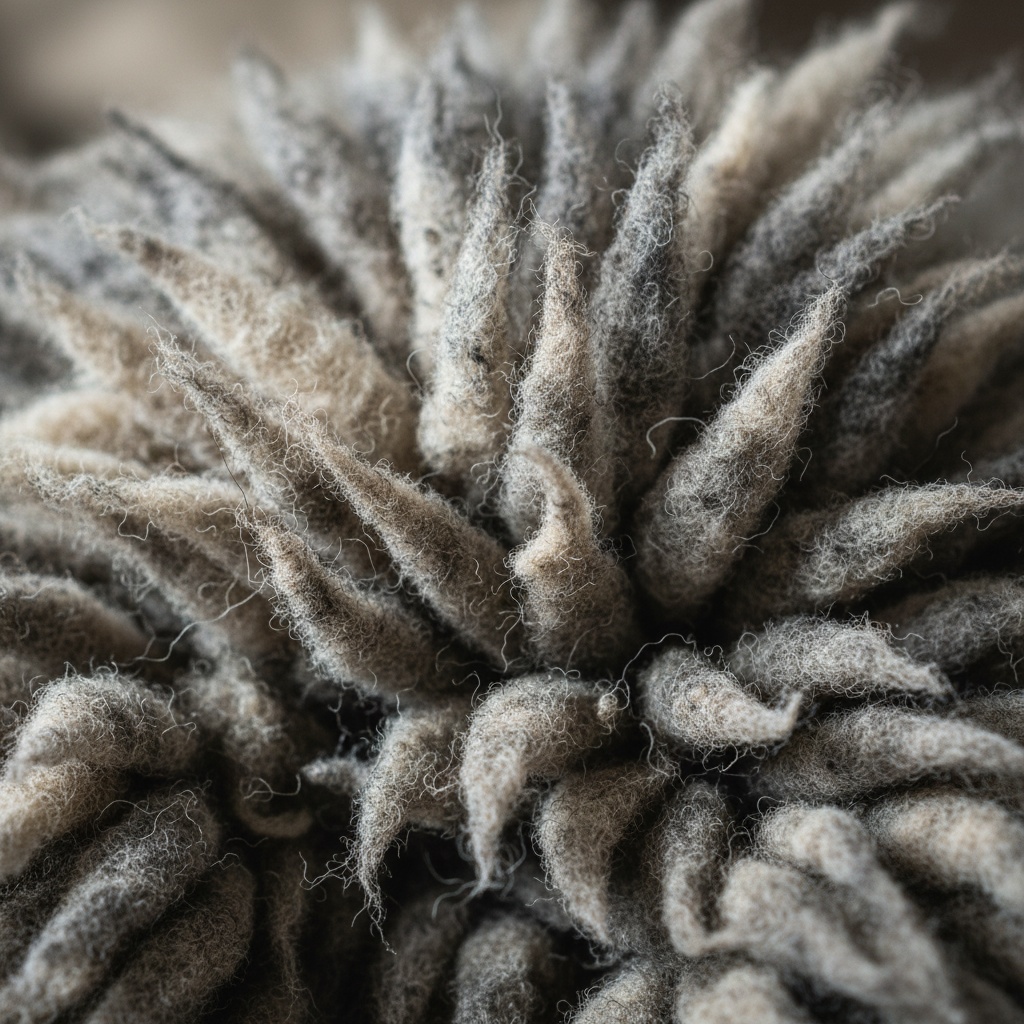
Texture of gray wool fibers showing natural variation.
Undyed Fibers: Gray from Nature
- Natural gray wool from sheep with gray, black, or mixed fleeces provided the earliest and most reliable source of gray in rug-making. — Why: It required no chemical treatment, meaning the fibers retained their full strength and colorfastness.
- Blending black and white wool also created subtle heathered grays in handspun yarn. — Why: This method allowed weavers to control tone without relying on mordants or unstable dyes.
- Undyed grays are still prized in antique rugs for their soft, matte quality and durability across centuries. — Why: They do not fade into brown or break down the way some mordant-based grays do.
Mineral and Plant-Based Grays
- Mineral gray rug colors dye could be achieved with iron compounds, used historically to “sadden” brighter colors like blue or red into grayish tones. — Why: This offered weavers flexibility to mute or shift hues without inventing a separate gray dye process.
- Plant-based gray rug colors / dyes included blue lupine, which produced a cooler gray, and juniper mistletoe, which created warmer gray-brown shades, particularly in Navajo weaving traditions. — Why: These natural sources provided subtle tonal variation that could harmonize with other vegetal dyes in traditional dye baths.
- Ashes, bark, and tannin-rich plant extracts were also used to darken or neutralize fibers, sometimes in combination with iron. — Why: This gave artisans a broader palette while relying on locally available materials.
Synthetic Grays: Aniline and Chrome
The introduction of aniline dyes in the 19th century allowed for chemical gray rug colors, but these early synthetics often aged unpredictably, turning greenish or fading unevenly. Chrome dyes that followed in the 20th century were far more reliable, producing stable gray tones that resisted fading and suited the demands of mass rug production.
Today, chrome-based synthetics dominate, ensuring consistency in the many shades of gray popular in contemporary rug design.
Dye Stability and Lightfastness
The choice of mordant directly determines whether dye of gray rug colors will remain vibrant or degrade over time. Iron mordant in rugs was a traditional tool to dull colors into gray, but its chemical aggressiveness can damage wool proteins, leading to fiber weakness and a phenomenon known as “dye rot.” Conservators often find antique rugs with iron-mordanted areas more fragile than those woven from undyed wool.
In contrast, undyed natural gray wool or plant-based tones retain their stability for centuries, demonstrating excellent lightfastness. Synthetic chrome dyes, too, hold up well against sunlight and washing, making them reliable for modern interiors.
Minerals are used to dye wool subtle gray by acting as mordants that darken or “sadden” colors; plant-based dyes like lupine and juniper mistletoe create lasting natural gray tones; and mordant choice impacts gray dye lightfastness by determining both the visual outcome and the long-term health of the fiber itself.
Cultural Meaning and Symbolism of Gray
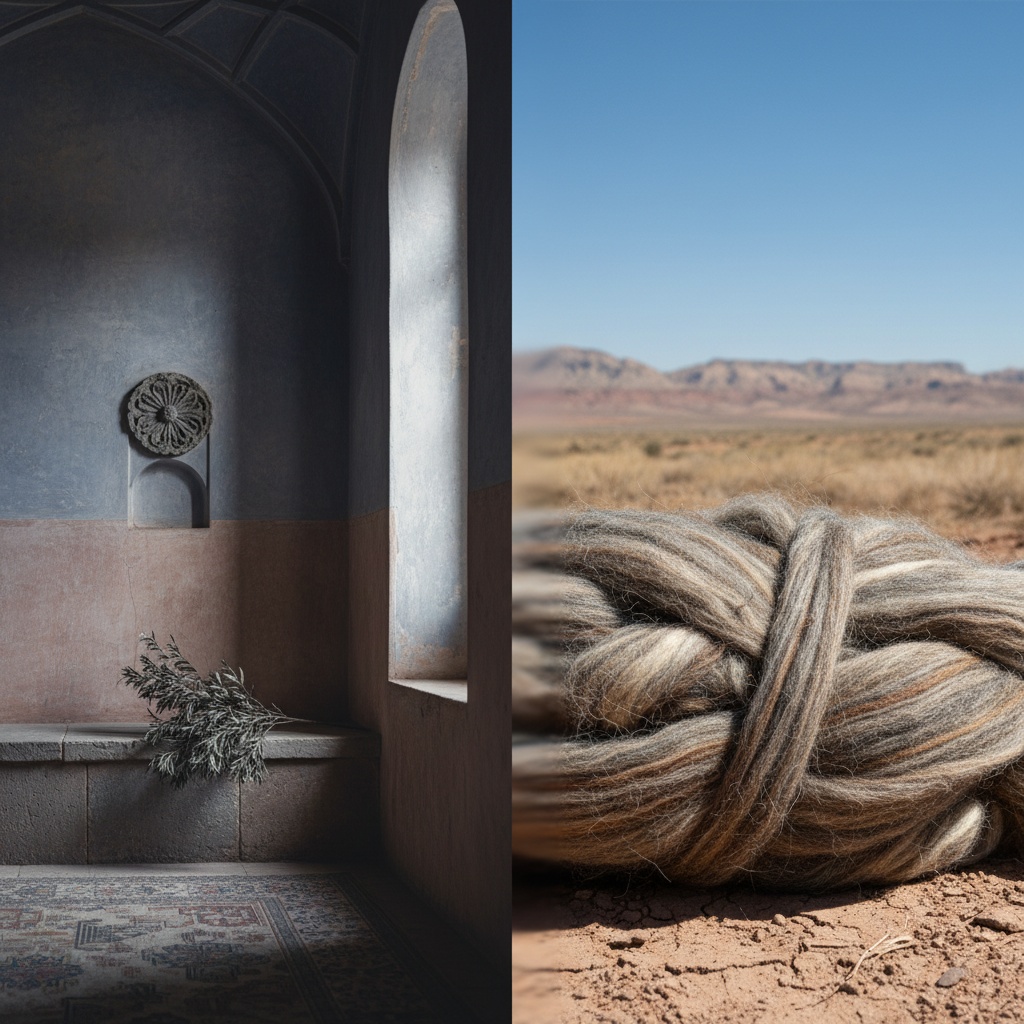
Color palette inspiration from architecture and fiber
Persian Attitudes and Motifs
In the Persian weaving tradition, the symbolism of gray rug colors carried little weight compared to the strong associations of red, blue, or ivory. Gray was seldom chosen as a dominant field tone, and when it appeared in motifs, it sometimes suggested sorrow, mourning, or darkness. Because Persian carpets were designed to radiate vitality, abundance, and sacred order, gray’s somber undertones made it an undesirable choice.
Thus, gray rug colors, in Persian rug motifs, was largely avoided, relegated to secondary outlines or incidental effects of faded black dye rather than deliberate symbolism. This cultural attitude helps explain the scarcity of antique Persian gray field rugs.
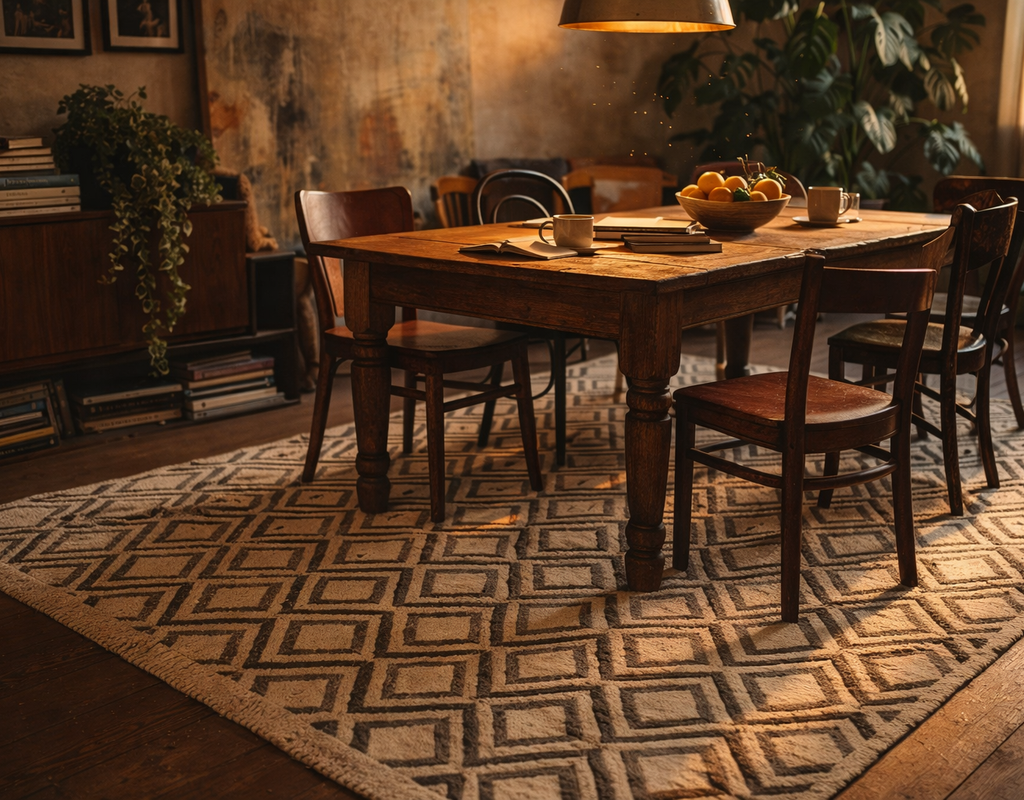
The geometric patterned rug grounds the rich, dark tones of the rustic wooden dining set under warm, atmospheric lighting.
Navajo and Indigenous Approaches
By contrast, in Native American weaving traditions, particularly in the renowned Two Grey Hills Navajo rugs, gray held profound value. These masterpieces celebrated the natural beauty of undyed sheep’s wool, including its full range of black, brown, ivory, and gray tones. In this context, gray in Navajo weaving symbolized authenticity, connection to the land, and the integrity of natural materials.
Instead of sorrow, gray rug colors embodied endurance and harmony with the earth, a view entirely distinct from the Persian avoidance of the color. This divergence highlights how cultural frameworks shape the perception of the same hue.
Modern Western Interpretations
In modern Western design, gray has undergone a complete revaluation. No longer marginalized, it has become one of the most desired colors in contemporary interiors.
Today, the calming effect of gray rugs is central to their appeal: gray is viewed as balanced, neutral, and mature, a tone that fosters serenity without overwhelming the eye. Its versatility allows it to pair seamlessly with both bold accents and minimalist palettes, making it a cornerstone of modern rug collections. This shift underscores the evolution of gray’s meaning.
Where Persian traditions saw absence and Navajo traditions saw authenticity, Western designers now emphasize tranquility, sophistication, and adaptability. The rise of gray’s positive symbolism in contemporary rug design ensures its place not just as a practical neutral, but as an intentional, expressive color in global rug-making.
Gray Rug Colors in Rug Styles, Past and Present
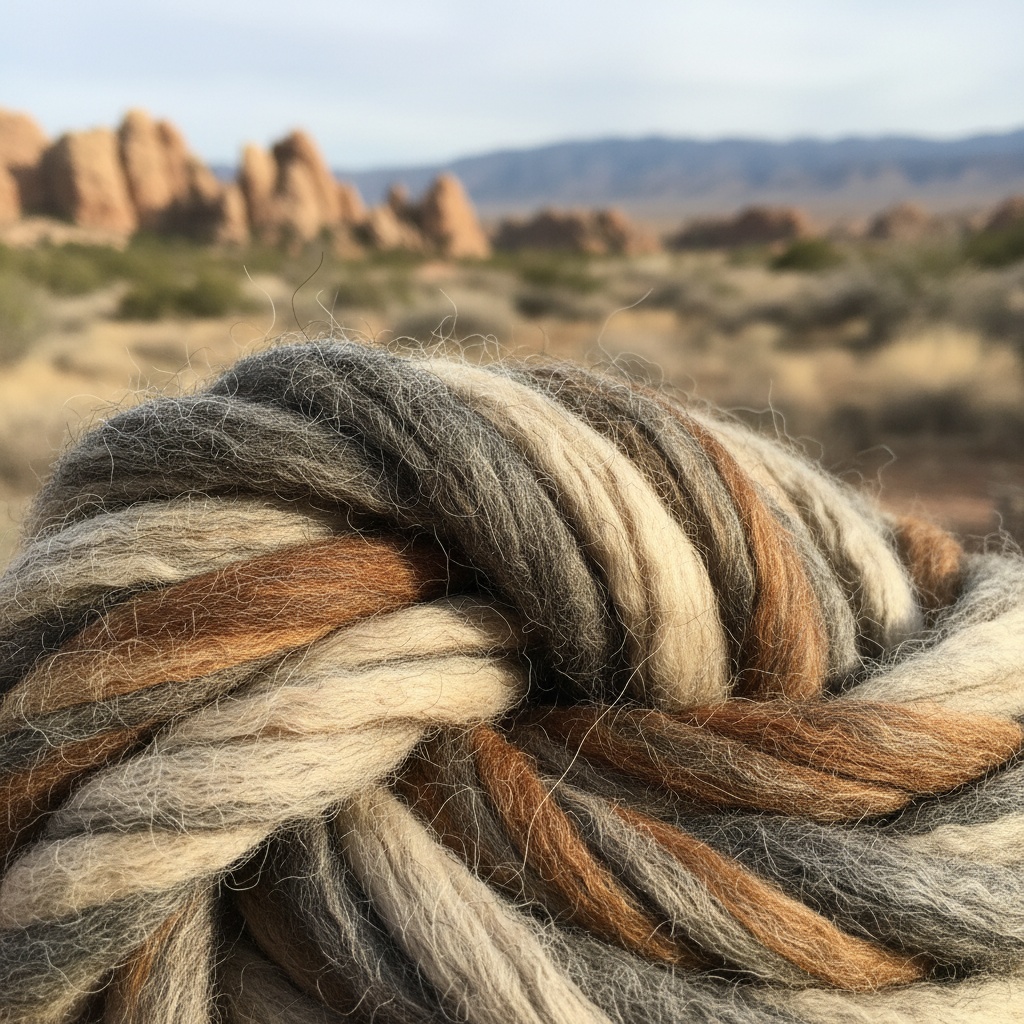
Natural gray and brown tones in thick roving.
Tribal & Nomadic Rugs
- Baluch, Kurdish, and Turkoman rugs sometimes incorporated gray rug colors from undyed wool, often used in the ground or borders to create contrast with deep reds and dark blues. — Why: Natural gray provided a practical and durable base without relying on unstable dyes.
- Berber rugs of North Africa frequently featured undyed gray and ivory wool in geometric or abstract patterns. — Why: The palette reflected the natural sheep wool available, grounding the rugs in cultural and environmental authenticity.
- Yörük and other Anatolian nomadic groups occasionally wove gray tones into striped or patterned rugs. — Why: Gray added variation without costly dyes, offering subtle sophistication within simple tribal designs.
These traditions highlight gray’s role as a naturally occurring neutral, quietly balancing bolder hues rather than standing at the center.
Two Grey Hills Navajo Rugs
Among the most iconic uses of gray rug colors in rug-making are Two Grey Hills Navajo rugs, where undyed wool forms the design core. These rugs are celebrated for their masterful interplay of grays, browns, and ivory, woven into intricate geometric patterns. Unlike Persian traditions, where gray implied sorrow, Navajo weavers elevated gray as a symbol of authenticity and direct connection to the land.
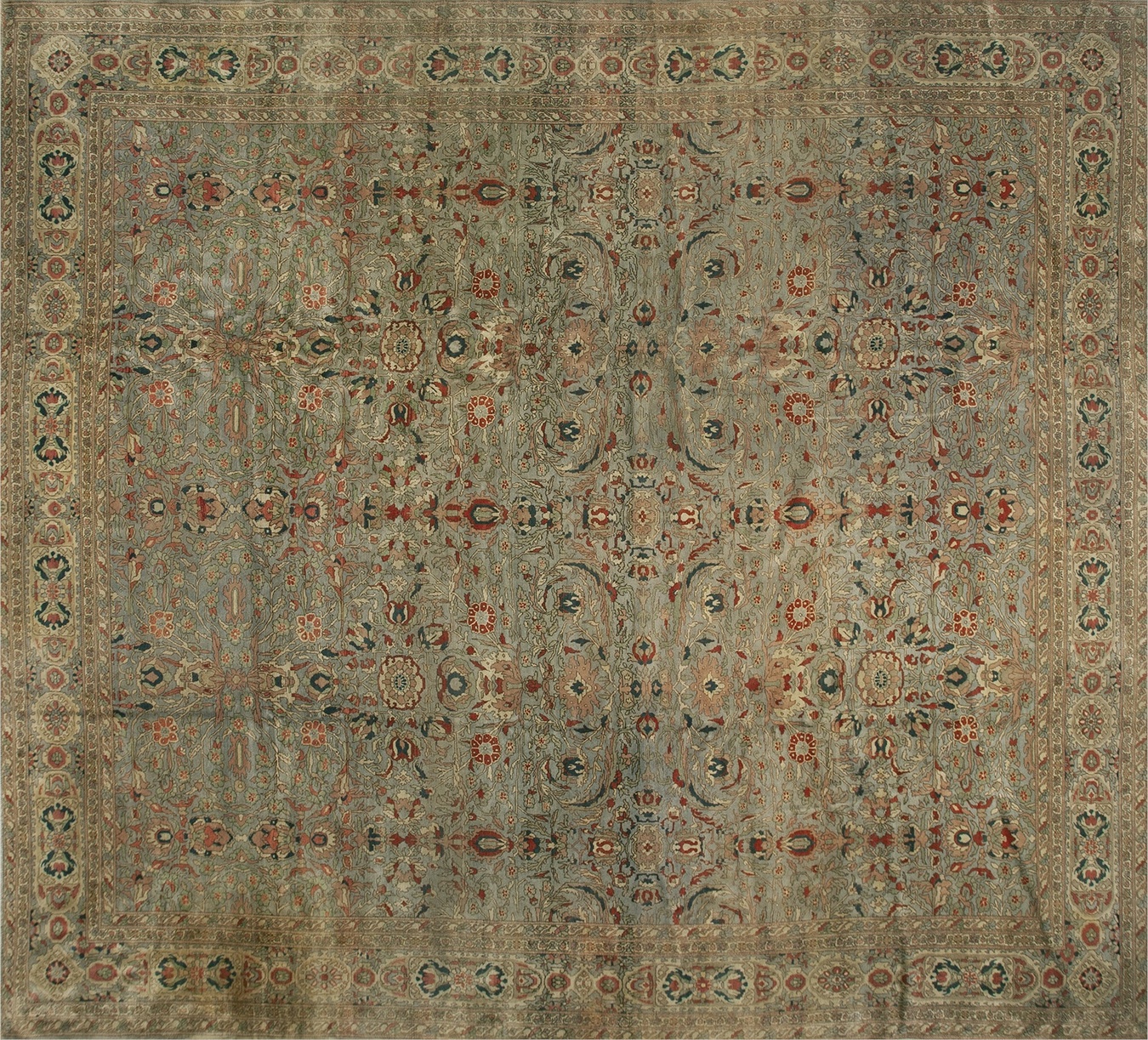
Antique Large Sivas Turkish Allover Geometric Knotted Rug – by Rugs On Net
The tonal subtlety of these textiles demonstrates how undyed gray wool can achieve remarkable complexity, making Two Grey Hills pieces among the most collectible and admired of all Navajo rugs.
Art Deco & Modernist Rugs
- Gray Art Deco rugs produced in China during the 1920s–30s often used pearl or pale gray backgrounds behind bold floral or geometric motifs. — Why: Gray projected modern chic, offering a sophisticated canvas that contrasted sharply with earlier Oriental color schemes.
- Modernist European rugs of the early 20th century experimented with cool grays in abstract designs. — Why: The neutral tone aligned with avant-garde architecture and interiors, emphasizing simplicity and form over ornate pattern.
These styles demonstrate how gray rug colors transitioned from incidental to intentional, marking a cultural embrace of its elegance in decorative arts.
Contemporary Rug Trends
In today’s market, gray Persian revival rugs and modern designs dominate. Over-dyed gray rugs transform older carpets by stripping original hues and washing them in chic monochrome gray, giving outdated pieces new life. Abstract and geometric motifs in silver, slate, and charcoal are popular, as are distressed finishes that mimic antique patina. Scandinavian flatweaves often feature soft gray rug colors in minimalist stripes or checks, prized for their clean, versatile appeal.
Vintage rug styles that often feature elegant gray rug colors in their backgrounds include Art Deco Chinese rugs and certain tribal Berber pieces. Modern rug patterns trending in soft gray rug colors include distressed abstracts, geometric designs, and minimalist Scandinavian weaves. Over-dyeing can indeed transform an outdated rug into chic gray, making it suitable for contemporary interiors.
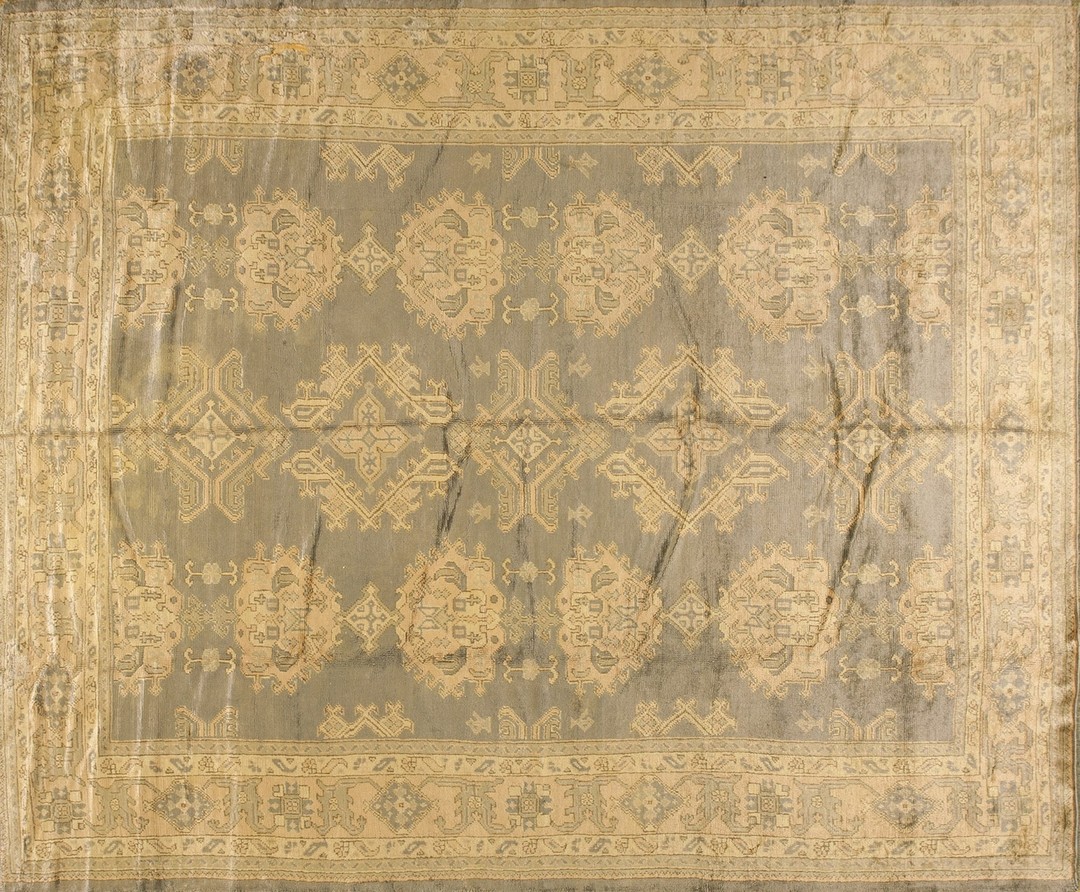
And for buyers seeking timeless quality, investing in a hand-knotted gray Oushak rug offers both elegance and long-term value, as these rugs balance traditional craftsmanship with modern neutral palettes. From Two Grey Hills Navajo rugs to gray Art Deco rugs and today’s over-dyed gray rugs, the story of gray reveals how a once secondary tone has become central to both tradition and innovation in rug design.
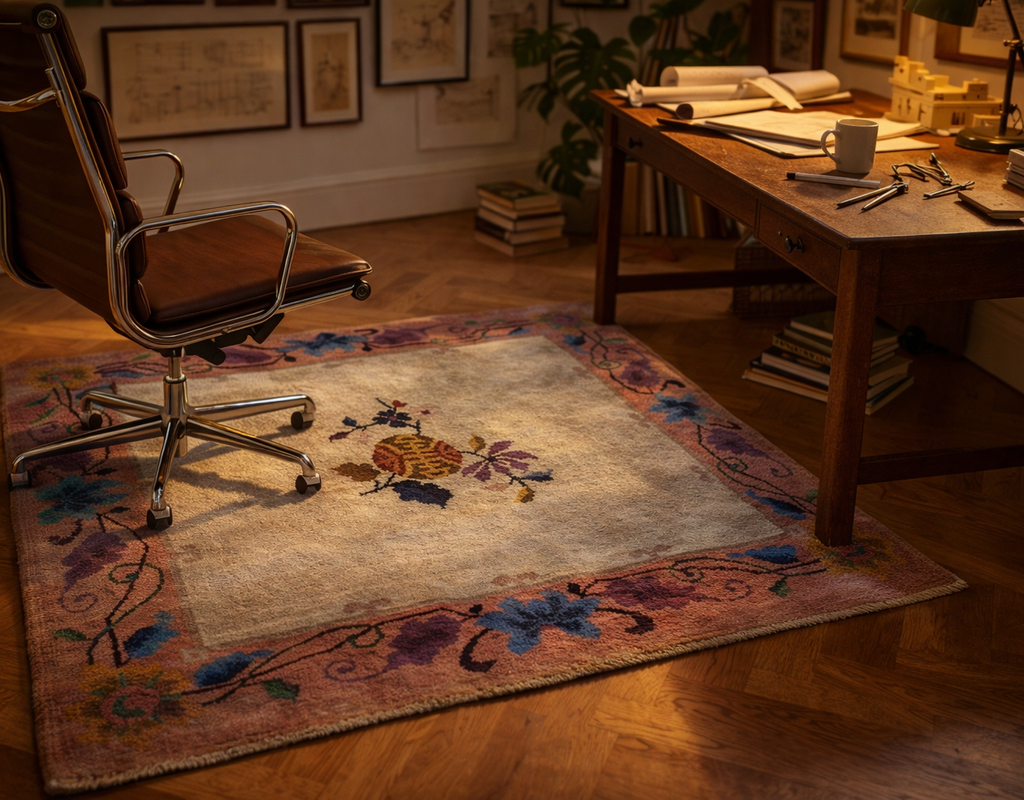
A vividly patterned floral rug adds color and texture beneath an Eames-style chair in this richly toned study.
Decorating with Gray Rug Colors: Design & Practical Guidance
Calming & Neutral Effects
When it comes to decorating with gray rugs, one of their strongest assets is their ability to visually calm a space. Unlike bold reds or high-contrast patterns, gray rug colors absorbs excess visual noise, creating balance and harmony.
This is why the calming color effect of gray rug colors makes them especially suited for living rooms filled with varied textures, open-plan spaces, or bedrooms designed for rest. The neutrality of gray also means it pairs easily with almost any palette, functioning as a quiet backdrop that highlights art, furniture, or architectural details without competing with them.
Pairing with Wood & Warm Tones
Choosing the right gray rug with wood floors depends on whether the wood has warm or cool undertones. Cool gray rugs complement pale woods like white oak, ash, or maple, creating a modern, airy atmosphere. Warm grays, by contrast, pair beautifully with red oak, walnut, or cherry, where the slightly brown undertone in the rug enhances the richness of the wood.
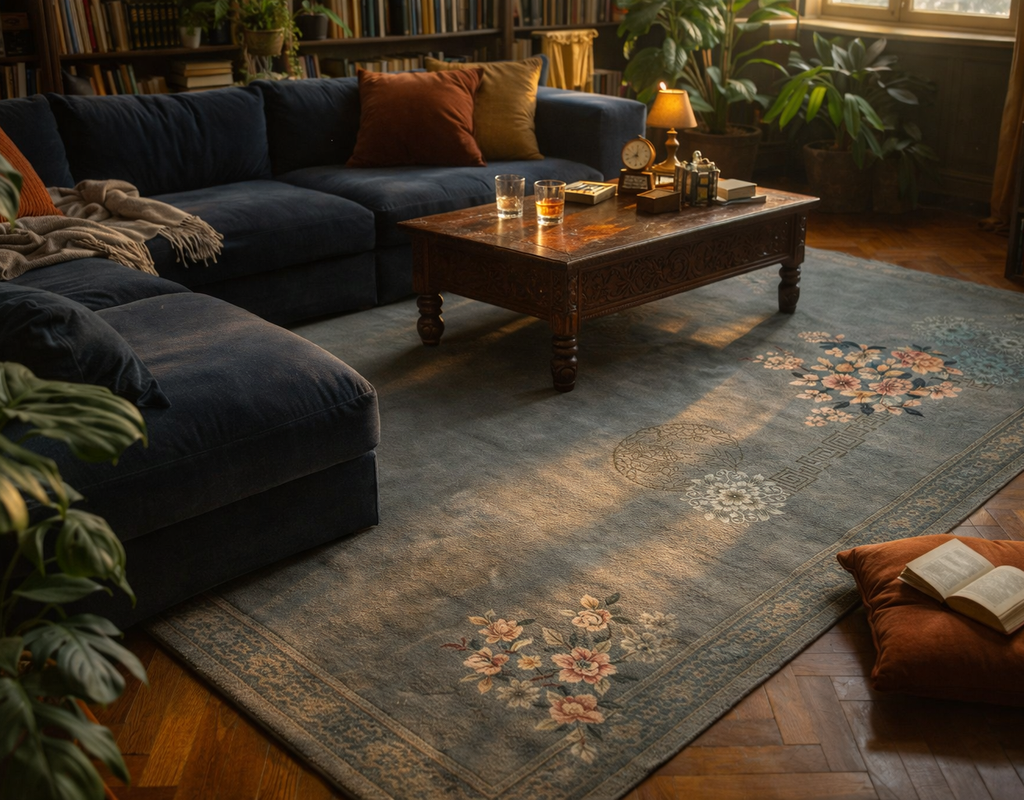
A beautifully detailed floral rug anchors a comfortable seating area perfect for reading and relaxation.
Warm gray rug colors work best with warm oaks, while cool gray suits lighter, cooler-toned woods. This flexibility explains gray’s rise in popularity—it adapts to a wide variety of materials without clashing.
Layering, Flatweaves, and Shags
Placement and texture choices are equally important. Pale gray flatweaves are best placed in bedrooms, home offices, or light-filled living spaces, where their subtle tone adds softness without overwhelming. Their thin profile also makes them practical under desks or furniture.
By contrast, a charcoal-gray shag rug can overwhelm small living rooms, especially if the space lacks natural light. In compact rooms, lighter grays or low-pile rugs open up the floor plan, preventing the rug from dominating the visual field. Designers often enhance texture by layering kilims over gray rug colors.
Solid or heathered gray rug colors foundation grounds the room, while a patterned kilim adds vibrancy, depth, and cultural interest. This technique creates both softness underfoot and layered visual richness—an approach common in contemporary interiors that value eclectic but balanced design.
Durable Grays: Heathered & Blended Yarns
Durability is another advantage of gray rug colors, particularly those woven from heathered gray yarns or blended fibers. These rugs naturally conceal dirt and wear better than solid, uniform grays.
For high-traffic areas like hallways or family rooms, heathered gray rug durability makes them an excellent choice, ensuring longevity without constant maintenance.
Resale Value and Investment
For homeowners and collectors, the question of value is important. Neutral rug resale value tends to remain stronger than that of bold or unusual colors because gray rug colors appeal to a wider market. A hand-knotted Oushak or Persian revival rug in neutral gray tones is easier to resell than a highly specific patterned rug in orange or purple, simply because more buyers can envision it in their homes.
Thus, gray rug colors are not only a flexible design element but also a practical investment in terms of future resale.
From calming interiors to practical layering strategies and long-term durability, gray rugs offer unmatched design versatility. Whether paired with warm oak floors, used as a backdrop for kilims, or chosen for their resilience in high-traffic rooms, they continue to prove their place as both a stylish and sensible choice in modern interiors.
Gray Rug Care and Conservation
Preventing Fading & Bleaching
One of the most common issues in the care of gray rugs is fading caused by prolonged sunlight exposure. Even stable undyed gray wool can lighten over decades when placed under direct light. To prevent fading in gray wool rugs, it is best to use UV-filtering window treatments, rotate the rug regularly, and avoid placing it in areas with harsh sun exposure.
Rotation also helps distribute wear evenly and prevents localized fading in gray wool rugs, ensuring the tone remains consistent across the surface. Thus, the answer is clear: yes, gray rugs should be rotated to avoid uneven bleaching and to preserve their visual balance.
Cleaning Techniques
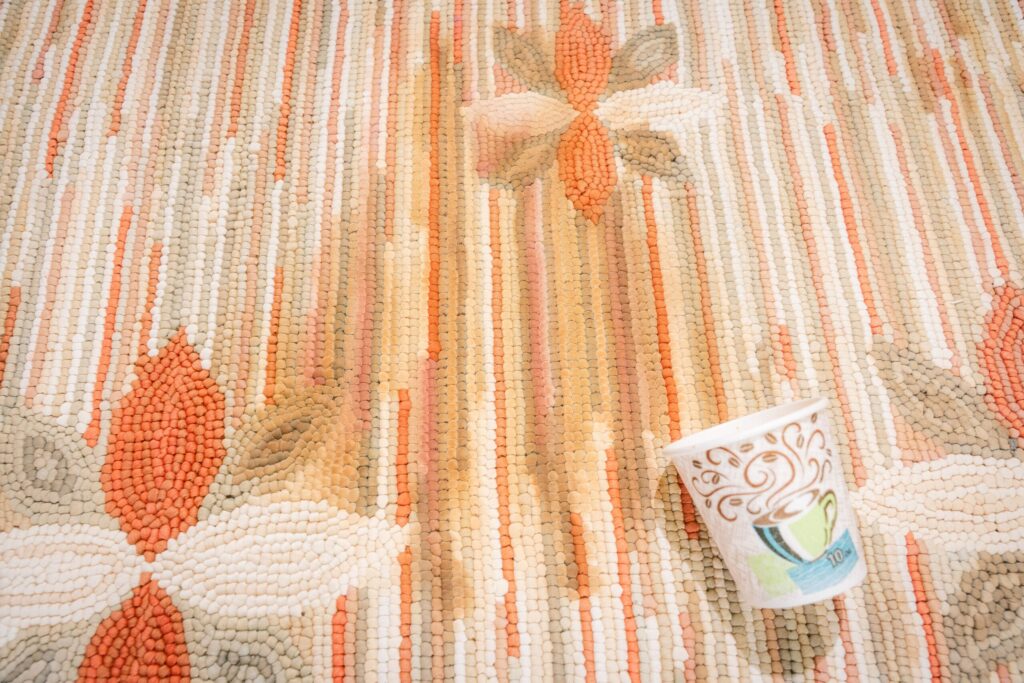
Close-up view of a tipped paper coffee cup resting on a handwoven wool rug, highlighting the rug’s dense pile, subtle color variations, and traditional geometric motifs in warm neutral and terracotta tones.
Delicate fibers require specialized approaches. Viscose gray rug care is particularly challenging because viscose has a weak fiber structure that compresses easily, creating visible traffic patterns. These rugs should be reserved for low-traffic rooms like bedrooms or studies to minimize wear. For silk, care must be even more precise.
When stains appear on light-gray silk rugs, only neutral pH cleaners should be used to lift the marks safely. Harsh detergents or alkaline solutions can strip the sheen and weaken fibers. Gentle blotting and, ideally, professional silk rug cleaning services help protect the luster while addressing spills.
Restoration & Over-Dyeing
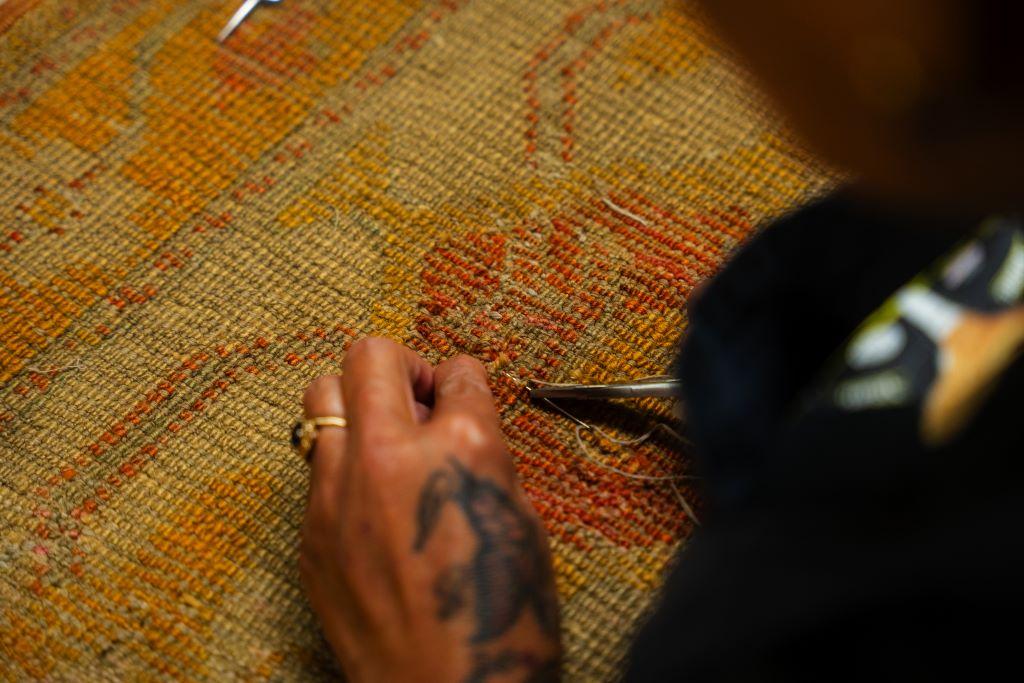
Detail of hands mending a rustic, richly colored woven rug.
In contemporary design, one option for dealing with outdated or faded rugs is over-dyeing, a technique that saturates the textile with a modern monochrome, often transforming it into a chic gray rug colors.
This not only conceals uneven wear but also extends the usable life of the rug in today’s interiors. While controversial among purists, over-dyeing has gained popularity as a practical and aesthetic form of restoration.
Conservation Challenges from Dyes
Antique rugs featuring iron-based mordants face significant conservation concerns. The same compounds that produced mineral gray rug colors also introduced long-term risks of fiber degradation, known as dye rot in antique rugs. Weakened by chemical breakdown, these areas can become brittle and prone to loss. Conservators approach such damage by stabilizing the textile, reweaving where necessary, and carefully limiting exposure to light and stress.
Ultimately, the longevity of gray rugs—whether wool, viscose, or silk—depends on thoughtful upkeep. From viscose gray rug colors care in low-traffic settings to silk rug cleaning with pH-safe solutions, to preserving antique pieces threatened by iron mordants, proper maintenance ensures that gray rugs continue to embody both elegance and endurance.
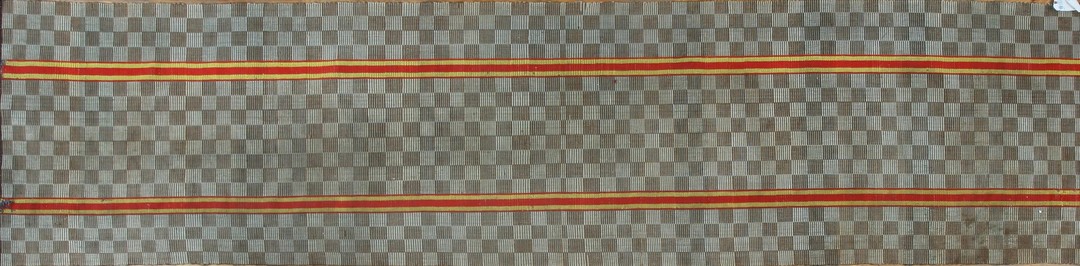
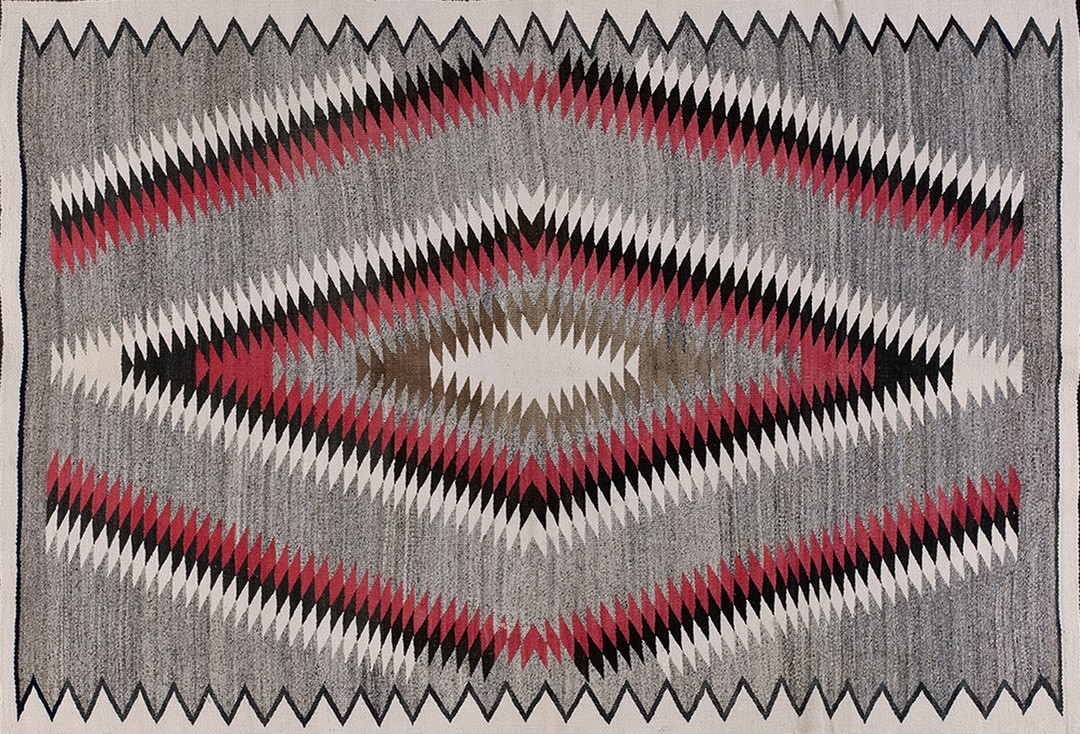
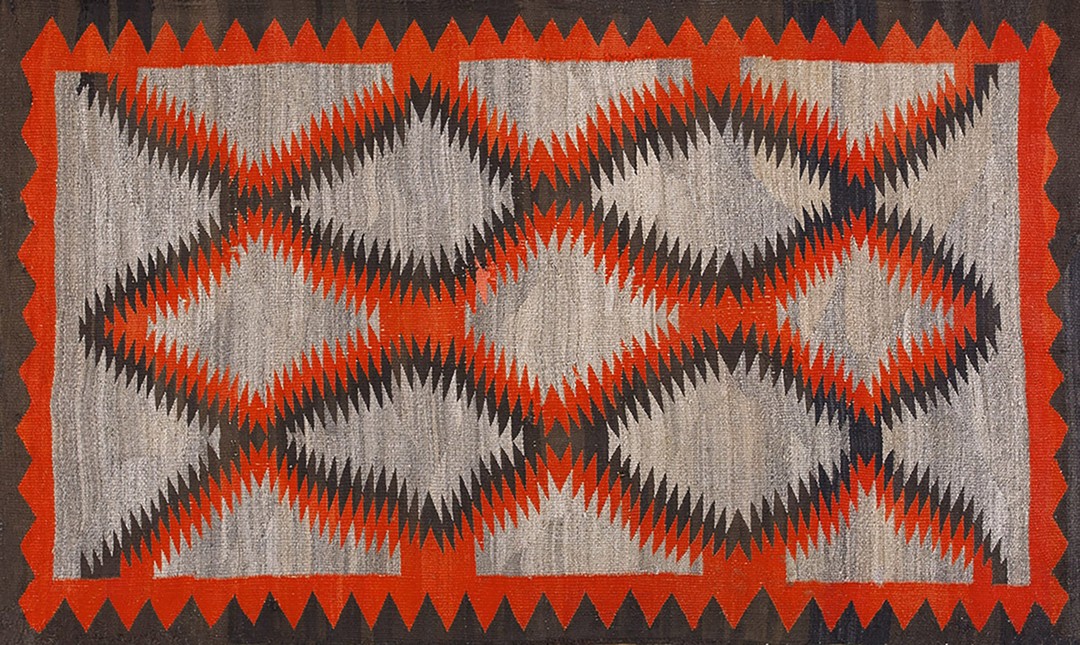
Explore Some of Our Favorite Gray Rugs
FAQ
- What’s a simple maintenance routine for gray rugs?
Vacuum weekly, rotate every 3–6 months, and blot spills immediately. A good rug pad reduces wear and keeps edges from rippling.
- How much do gray rugs cost?
Prices vary by size, material, and construction—machine-made is most affordable, wool-tufted mid-tier, and hand-knotted highest. Expect big jumps when moving from 5’×8′ to 8’×10′.
- Do gray rugs cause static shocks?
Static is more likely with synthetic fibers in dry air. Raise indoor humidity to about 40–50% and use a felt pad to reduce shocks.
- Which gray rugs work on gray floors?
Create contrast: use a light gray rug on dark gray floors or vice versa. Add warm accents (wood, tan leather) to avoid a flat monochrome look.
- Can I layer gray rugs over carpet?
Yes—place a low-pile gray rug over plush carpet with a rug-on-carpet pad to prevent creeping. Contrast textures (flatweave over cut-pile) for definition.
- Are outdoor gray rugs good for patios?
Yes—solution-dyed polypropylene gray rugs resist weather and UV. Hose clean and let them dry fully before rolling or storing.
- How do I fix curling corners on a gray rug?
Use a quality pad and corner grippers. Reverse-roll overnight and gently warm edges with a hair dryer on low, then press flat.
- Can a light gray rug make a small room look bigger?
Yes—light gray reflects light and visually opens space. Use a larger rug and keep a 12–18 inch floor border for an airy feel.
- Which gray rug patterns hide stains best?
Heathered, marled, speckled, or small-scale patterns disguise dirt better than solids. Mid-tone charcoal-on-gray works especially well in high-traffic areas.
- How can I keep a gray rug from making a room feel cold?
Choose greige (warm gray) or layer warmth with beige textiles, wood, and brass. Mix textures—wool, bouclé, or knitted throws—to add coziness.
- Do robot vacuums handle gray rugs well?
They excel on low-pile gray rugs; high-pile and long fringe can cause jams. Tuck fringe and set no-go zones if needed.
- Are washable gray rugs worth it?
They’re great for entryways, kitchens, or rentals. Confirm your washer’s capacity and use cold, gentle cycles; air-dry flat to prevent warping.
- Do gray rugs work with brown furniture?
Absolutely—light gray rugs soften dark brown sofas and bridge warm wood tones. Add brass or wood accents to tie the palette together.
- What rug pad should I use under a gray rug on hardwood?
A felt + natural rubber pad gives cushion and grip without floor damage. Avoid cheap PVC pads that can stick or discolor finishes.
- Are viscose gray rugs a bad choice for busy rooms?
Often yes—viscose (art silk) looks luxe but weakens and can yellow with moisture. Avoid in kitchens, dining rooms, or homes with frequent spills.
- How do I clean a fresh spill on a wool gray rug?
Blot—not rub—with a white cloth, then treat with cool water and wool-safe detergent. Test in an inconspicuous spot first and blot dry thoroughly.
- Will gray rugs fade in sunlight?
Any rug can lighten with prolonged direct sun, though many synthetics are UV-stabilized. Rotate every 3–6 months and use shades or film to reduce exposure.
- Can I use gray rugs over radiant floor heating?
Yes—choose thin, low-pile gray rugs with breathable pads. Keep overall insulation modest (aim low tog) and follow the floor system’s manual.
- Are wool gray rugs durable and do they shed?
Wool gray rugs are highly durable and naturally soil-resistant. Expect initial shedding for 1–3 months, tapering by about six months with regular vacuuming.
- Which materials make gray rugs most kid- and pet-friendly?
Solution-dyed polypropylene or nylon gray rugs resist stains and clean easily. Low-pile, patterned designs hide messes better than solids.
- What size gray rug should go under a dining table?
Extend the rug 24–30 inches beyond the table on all sides so chairs stay on the rug when pulled out. Round tables prefer round rugs for balance.
- What size gray rug works for most living rooms?
Pick a size that gets the front legs of sofas/chairs on the rug; 8’×10′ fits many setups. Leave about 12–18 inches of floor showing around edges.
- Are gray rugs out of style in 2025?
No—gray rugs are a timeless neutral, though warmer palettes trend. Choose greige (warm gray) or textured patterns to feel current.
- Do gray rugs show dirt easily?
Mid-tone gray rugs hide everyday dust well; very light grays show stains and very dark charcoals highlight lint. Subtle patterns or heathered textures camo foot traffic.
- What colors pair best with gray rugs in a living room?
Warm whites, beige, camel, and wood tones keep gray rugs from feeling cold; add navy or olive for contrast. Match undertones (cool with cool, warm with warm) for harmony.