
Introduction to Brown Earth Tone Rugs
Infuse your home with grounding warmth when you browse our handpicked selection of brown earth tone rugs today.
What is a Brown Earth-Tone Rug?
Brown earth tone rugs encompass a broad palette of hues ranging from pale beige and sandy tan to rich walnut, coffee, and deep chocolate. These rugs can be produced using both natural and synthetic dyes, with some of the most authentic variations achieved through undyed wool, cotton, jute, or other natural fibers. The subtle spectrum of brown earth tone rugs makes them some of the most versatile floor coverings, as they blend easily into a wide range of interiors. Unlike brighter colors that may dominate or clash with existing décor, neutral brown carpets act as grounding elements, enhancing the texture, depth, and warmth of a room without overwhelming the design.
Why Are Earth Tones Trending in Décor?
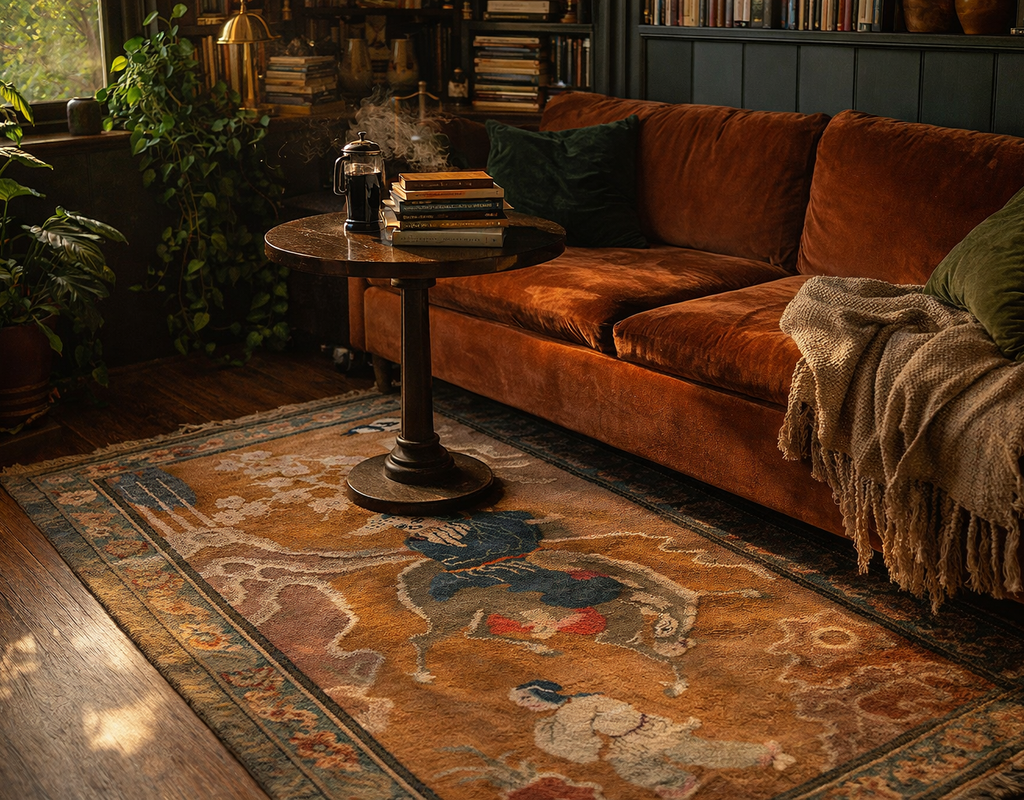
A warmly lit, moody reading corner accented by richly colored velvet and a distinctive patterned area rug.
Antique Allover Geometric Square Ivory Beige Cream White 1930s Hand Knotted Pile Wool Rug – by Rugs On Net
The popularity of earth-tone area rugs is tied to broader shifts in interior design toward natural, calming, and restorative spaces. Over the last decade, designers and homeowners alike have embraced earthy rugs as part of the biophilic design trend, which emphasizes a connection to nature. Browns, tans, and other neutral earth tones evoke soil, wood, and stone, creating harmony in homes that increasingly serve as sanctuaries from overstimulation. Earth-tone browns first gained widespread popularity in carpets and textiles during the 1960s–1970s, an era marked by natural fibers, muted palettes, and a return to organic living. Today, they remain timeless staples, reemerging as the perfect balance between minimalism and warmth.
Emotional and Practical Appeal
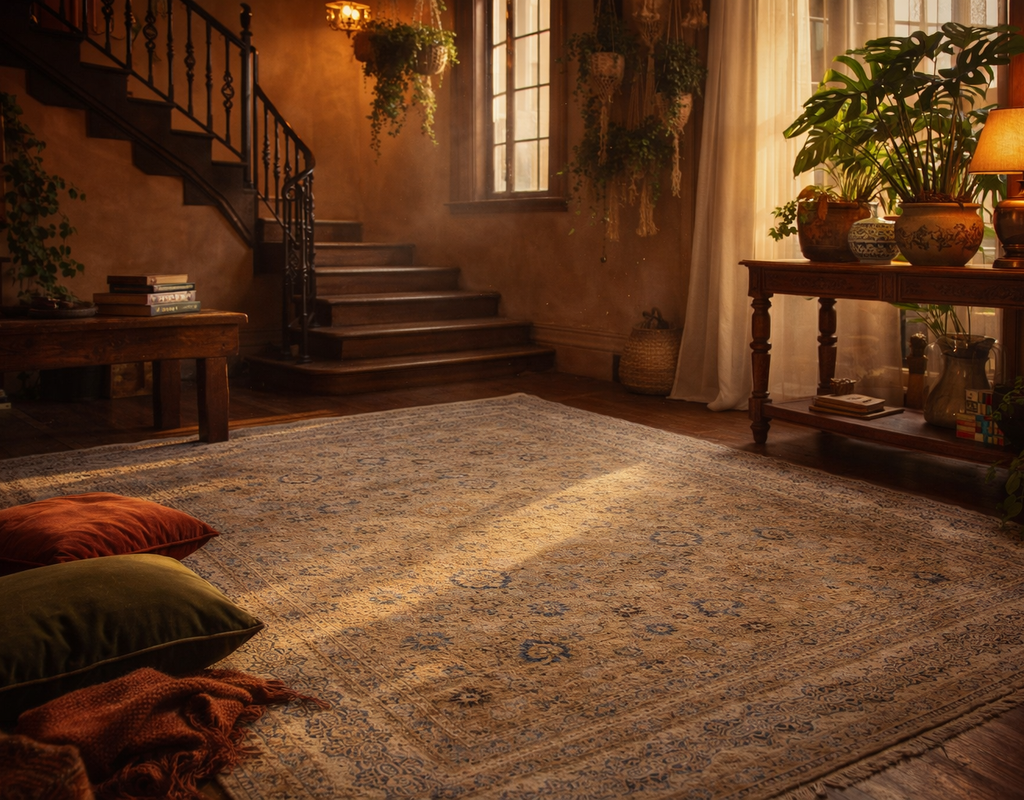
Sunlight streams across a faded Oriental-style rug in a richly textured, plant-filled entryway.
- Warmth and Comfort — Brown earth tone rugs make rooms feel cozy and welcoming. Their connection to natural landscapes helps people feel grounded and at ease. — Why: Brown rug symbolism is tied to stability, security, and comfort, making them ideal in living rooms, bedrooms, and family spaces.
- Timeless Versatility — Neutral brown carpets complement nearly every décor style, from rustic farmhouse to sleek modern lofts. They adapt seamlessly to changing furniture, wall colors, and accent trends. — Why: Choosing earthy rugs reduces the need for frequent replacements, ensuring long-term relevance in evolving interior design schemes.
- Practical Durability — Darker shades of brown naturally conceal dirt, wear, and spills better than lighter rugs, while lighter tans brighten spaces without showing lint as much as darker neutrals. — Why: This makes brown earth tone rugs practical investments for high-traffic areas and family-friendly homes.
- Natural Harmony — The earthy hues provide a visual connection to the outdoors, blending effortlessly with wood, stone, and greenery. — Why: This connection enhances well-being by reinforcing a calming, balanced environment in interior spaces.
What Does a Brown Earth-Tone Rug Symbolize?
A brown earth-tone rug symbolizes grounding, dependability, and natural harmony. Across cultures, brown is associated with soil, wood, and the cycle of nature, which conveys stability and resilience. In home décor, earthy rugs reinforce these associations, making them symbols of warmth, balance, and timeless strength.
When Did Earth-Tone Browns Gain Popularity in Carpets?
Earth-tone browns gained widespread popularity in carpets during the mid-20th century, particularly in the 1960s and 1970s, when interior design leaned heavily on organic textures and muted palettes. While brown rugs have existed for centuries—especially in traditional handwoven carpets using undyed wool—their mainstream rise coincided with modernist and naturalist design movements. Today, neutral brown carpets remain equally relevant, with a contemporary resurgence fueled by minimalist and eco-conscious lifestyles.
The Visual Qualities of Brown in Rugs
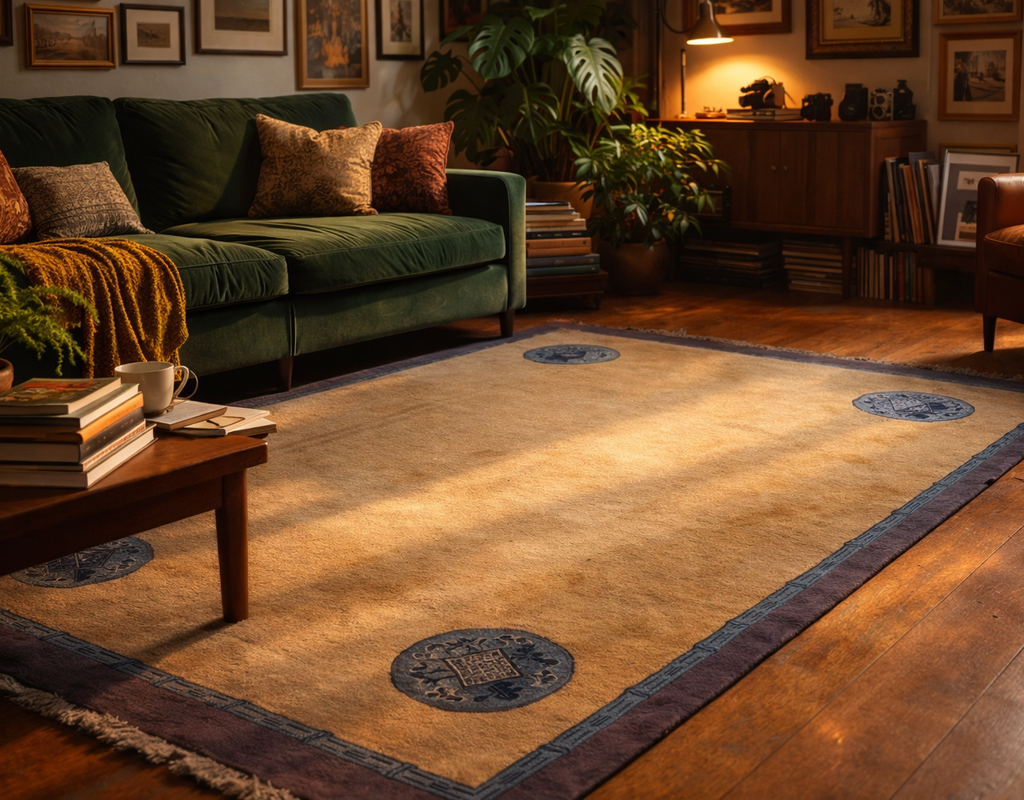
A sunny beam highlights a beautiful gold rug with indigo accents in a richly decorated, cozy living space.
Hue Ranges & Abrash
Brown earth tone rugs span an extensive range of hues, from pale tan and camel to mid-toned walnut and the deepest espresso shades. Many handmade rugs feature abrash, the natural variation in tone that results from small differences in dye batches or fiber absorption.
- Light Browns (tan, beige, camel) — Brighten interiors while maintaining a natural, understated look. — Why: Their neutrality works as a versatile backdrop for both bold and muted décor.
- Medium Browns (walnut, chestnut) — Provide balance between warmth and sophistication. — Why: These tones are adaptable across rustic, transitional, and modern interiors.
- Dark Browns (coffee, chocolate, espresso) — Convey richness and grounding depth. — Why: They anchor spaces visually and pair well with lighter walls and furniture. The presence of abrash in brown rugs is particularly valued, as the striations create a sense of depth and movement, distinguishing them from flat, mass-dyed surfaces.
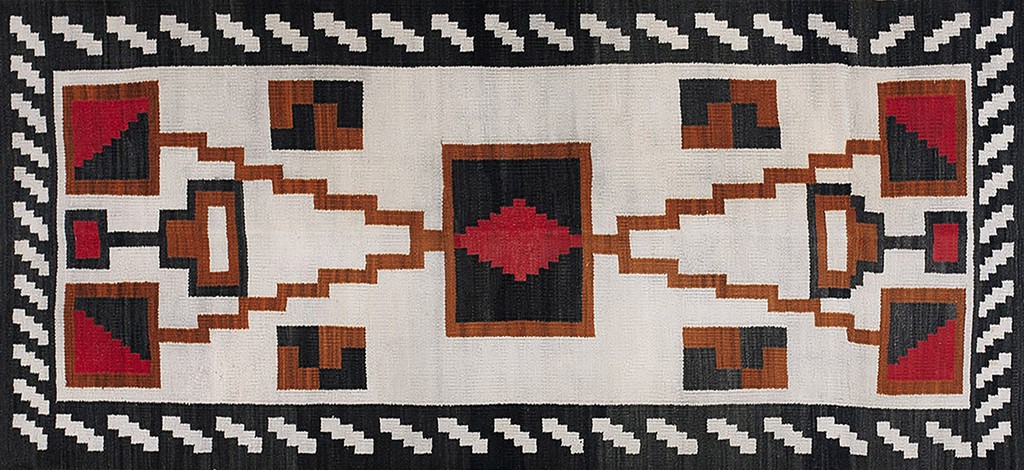
Antique Native American Navajo Geometric Design Ivory Color Rug by Rugs On Net
Natural vs Synthetic Browns
Natural brown dye or undyed wool produces earthy rug tones with subtle variegation and an inner warmth that reflects the original character of the fiber. The microscopic scales on natural fibers interact with light differently, giving these hues a lively, organic appearance. By contrast, synthetic browns tend to be more uniform and consistent, delivering stability but sometimes lacking the nuanced undertones found in natural dye. This difference means natural-dyed brown rugs often feel richer and more complex, while synthetic versions excel when colorfastness and predictable uniformity are priorities.
Patina and Ageing
One of the defining qualities of brown in rugs is how beautifully it ages. Over time, brown sections develop a patina, a soft glow or luster that enhances their depth. In antique rugs, particularly Persian and Caucasian examples, the use of iron mordants in very dark browns can lead to pile corrosion. This gradual wearing away of the wool leaves the dark brown areas recessed, creating a relief effect that adds sculptural texture and dimension. Collectors often prize this characteristic because it gives the rug a tactile, almost carved appearance. Far from detracting, this aging process elevates the rug’s visual and historical character.
Does a Brown Earth-Tone Rug Hide Dirt Effectively?
Yes. Brown earth tone rugs are among the most practical for concealing dirt and wear. Medium to dark brown hues naturally disguise dust, soil, and minor spills, making them ideal for high-traffic areas such as living rooms, hallways, and entryways. Even lighter tans show debris less readily than white or cream rugs, thanks to their earthy undertones. This balance of beauty and function is one reason abrash brown rugs and neutral brown carpets remain timeless choices for both design and practicality.
The Origin and Composition of Brown Dye
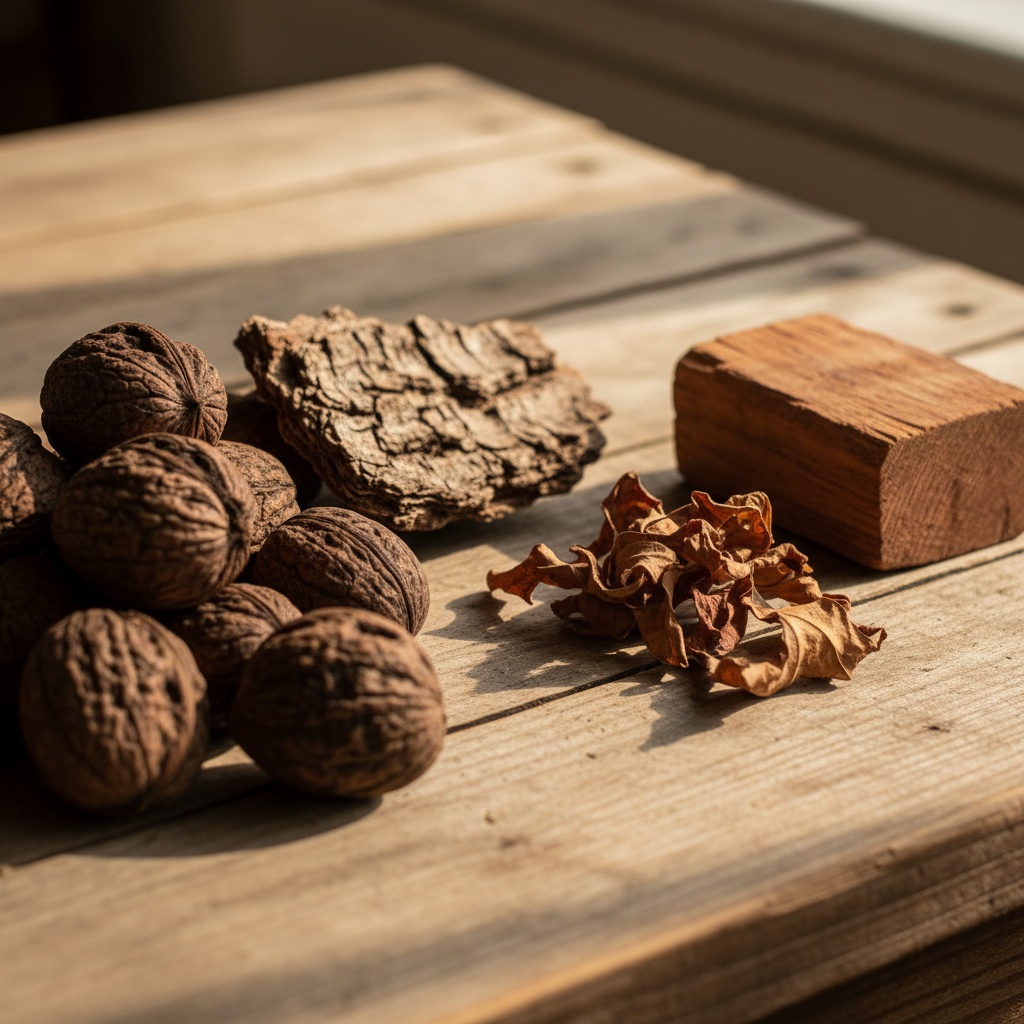
Natural elements evoking earth tones for dye origins.
Key Plant Dyes for Brown
Brown has long been one of the most accessible and versatile colors in rug weaving, achieved through a variety of plants rich in tannins and natural pigments.
- Walnut Husks — Among the most widely used sources, walnut shells and husks yield rich, warm browns ranging from golden to deep chocolate. — Why: Walnut brown rugs are valued for their depth of tone and the dye’s relative stability compared to other natural sources.
- Oak Galls and Bark — Oak provides tannin-heavy material that creates softer, earthy browns, often used as a base or modifier in combination with other dyes. — Why: Oak gall dye was historically abundant and produced reliable neutral shades across regions.
- Sumac Leaves and Twigs — Sumac produces yellowish to mid-brown hues and is sometimes paired with iron mordants for darker tones. — Why: Its availability across the Middle East and Mediterranean made it a staple in traditional workshops.
- Acacia/Catechu (Cutch) — Extracted from acacia wood, catechu creates robust, reddish-brown tones. — Why: Cutch brown rugs carry a warmth and density especially favored in South Asian weaving traditions.
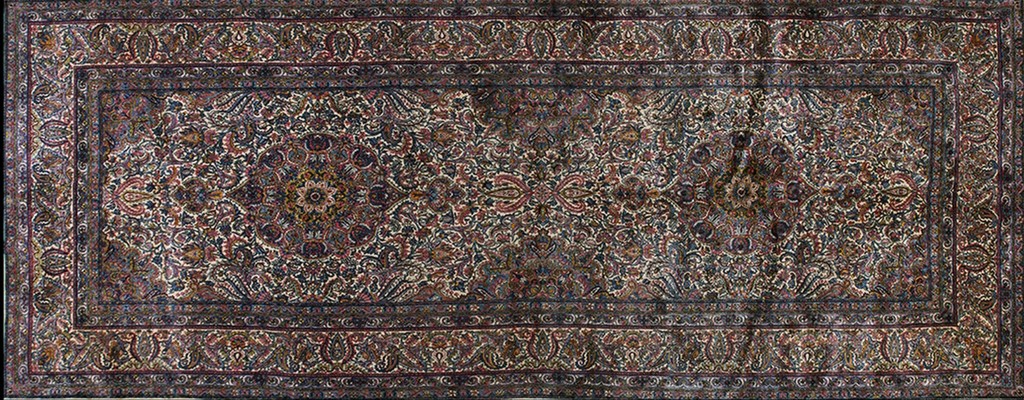
Antique Kilim Persian Knotted Rug by Rugs On Net
Iron Mordant: Deep Browns & Risks
Artisans often mix tannin-rich plant dyes with an iron mordant to achieve darker, near-black browns. Chemically, iron binds strongly to the fibers and deepens the saturation of the dye. However, the same reaction that enhances color can also weaken wool over time. In antique rugs, dark areas dyed with iron mordant frequently show fiber corrosion, where the pile has worn down more quickly than surrounding colors. This creates a recessed texture, adding visual relief but also presenting conservation challenges. Collectors prize the aesthetic effect, but restorers must address the fragility of these sections carefully.
Use of Undyed Fibers
In addition to plant dyes, many rugs rely on the natural coloration of animal fibers to create earthy brown carpets.
- Camel Hair — Offers glowing golden-brown tones that require no dye, often used in nomadic and tribal weaving. — Why: Its natural sheen and rarity give rugs a distinctive richness.
- Sheep Wool — Provides a wide spectrum of browns, from pale fawn to dark chocolate, depending on the breed. — Why: It delivers authenticity and durability, often seen in rustic and village rugs.
- Goat Hair — Typically coarser, producing deep, almost black-brown tones when used in warps, wefts, or accents. — Why: Adds contrast and structural strength, particularly in utilitarian tribal pieces.
Modern vs Traditional Dye Use
Traditional rug-making cultures relied on locally available plants and undyed fibers, producing natural brown carpets with subtle variegation and warmth. In contrast, modern rug production often employs synthetic dyes for their consistency, stability, and mass-market appeal. However, revival movements such as the DOBAG project in Turkey have reintroduced authentic plant-dye practices, preserving heritage techniques while ensuring greater dyefastness. Today, both approaches coexist: artisans celebrate the depth of walnut, oak gall, and cutch brown rug shades, while contemporary manufacturers favor synthetic solutions for uniformity.
How Do Artisans Create Brown Hues with Natural Dyes?
Artisans achieve brown hues by boiling fibers with tannin-rich sources like walnut husks, oak galls, sumac, or catechu, sometimes modifying the bath with iron mordant to darken the result.
What Plant Dyes Produce Deep Brown Shades in Rugs?
Walnut husks and catechu (cutch) are the most common sources of deep, enduring browns, while oak and sumac provide mid-tones.
Why Mix Iron Mordant to Darken Brown Rug Dyes?
Iron mordant reacts with plant tannins to create near-black browns, offering dramatic contrast in patterns, though at the risk of long-term fiber damage.
Where Is Walnut Husk Dye Used for Brown Carpets?
Walnut husk dye has been used widely across Anatolia, Persia, and the Caucasus, where walnut trees were abundant and their husks provided a strong, stable source for natural brown rug dye.
Cultural Symbolism and Meanings of Brown Rugs
New growth echoing earthy brown tones
Brown as Grounding/Earthy Color
- Stability and Strength — Brown rug symbolism is tied to the solid presence of soil and stone. — Why: In many weaving traditions, grounding rugs embody the strength of the land itself, offering a visual anchor in the home.
- Fertility and Abundance — Brown hues echo fertile soil, suggesting prosperity and sustenance. — Why: Earthy rug meaning often reflects agricultural roots, where the soil was central to survival.
- Humility and Hospitality — Neutral brown tones are associated with warmth and modesty. — Why: Grounding rugs in these shades evoke openness, making guests feel welcomed.
Symbolism in Persian, Turkish, and Central Asian Traditions
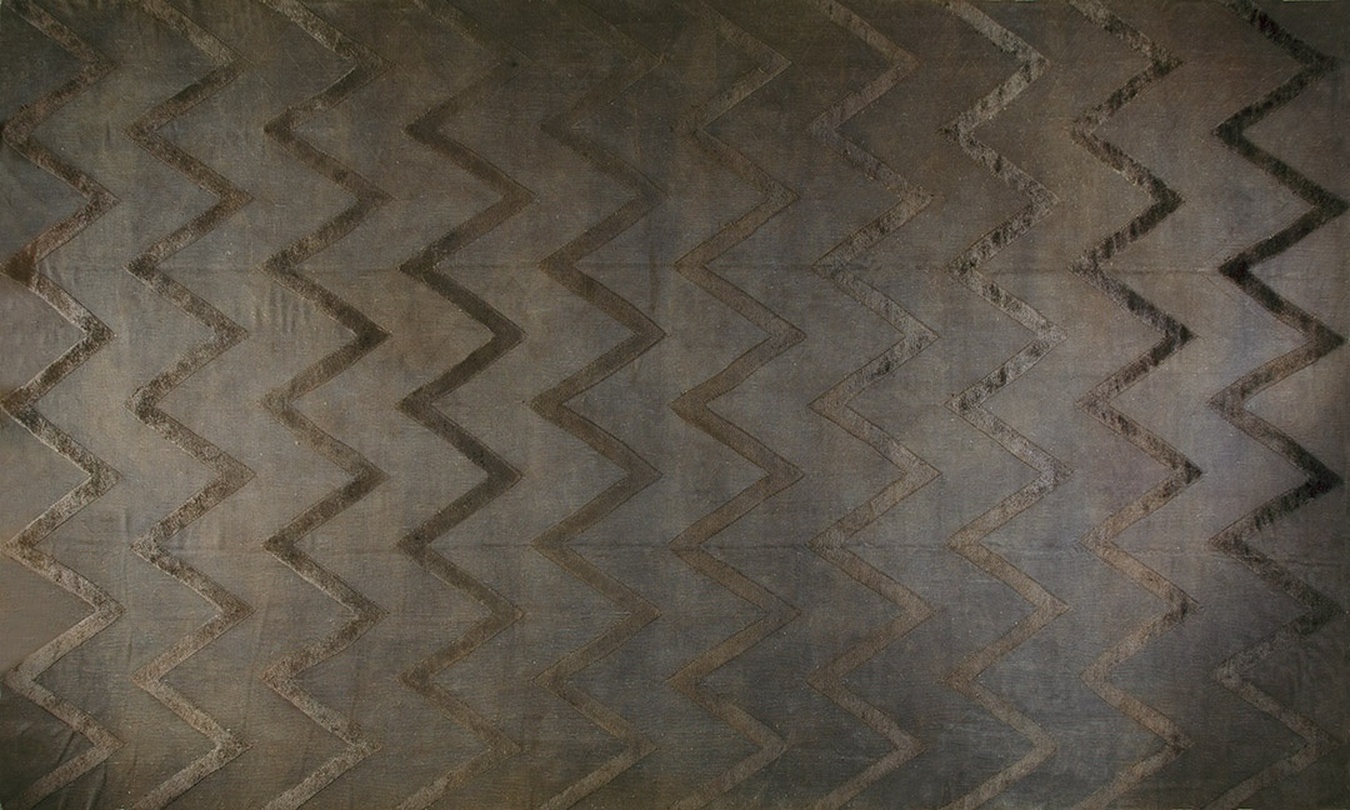
Vintage Oversized Art Deco – European French Allover Geometric Flat Weave Rug – by Rugs On Net
In Persian carpets, brown is often understood as a metaphor for Mother Earth—a symbol of fertility, nourishment, and the grounding cycle of life. This Persian brown rug meaning links the color to abundance and enduring strength. In Turkish weaving traditions, brown embodies steadfastness and cultural rootedness, reflecting the Anatolian landscape of soil, rock, and livestock. Across Central Asian nomadic carpets, brown frequently represents endurance and connection to the steppes, where earth and animals shaped daily life. These associations elevate earthy rug meaning beyond aesthetics, embedding them into cultural identity and spirituality.
Brown in Tribal and Village Identity
For tribal and village weavers, brown is more than a color—it is a direct tie to the land and animals that sustained their lives. Tribal brown carpets often incorporate undyed camel, sheep, or goat fibers, rooting the rug physically in the environment. These tones symbolize a community’s connection to place, marking strength, resilience, and identity. The use of naturally sourced browns reinforced authenticity, distinguishing nomadic weavings from the more elaborately dyed urban carpets.
Motifs & Narrative Uses
- Animals and Livestock — Brown is often used to depict sheep, camels, or horses, central to pastoral life. — Why: Their representation highlights the wealth and survival of the community.
- Trees and Soil — Trunks, branches, and fertile earth are rendered in brown to emphasize growth and life cycles. — Why: These elements symbolize continuity, rootedness, and natural harmony.
- Figures and Clothing — Humble garments in brown tones convey modesty and daily labor. — Why: This grounds the narrative of the rug in everyday village life rather than courtly luxury.
What Does a Brown Earth-Tone Rug Symbolize?
A brown earth-tone rug symbolizes grounding, fertility, humility, and strength. It connects directly to the soil and animals, representing abundance and stability.
Why Are Brown Earth-Tone Rugs Considered Grounding?
They are considered grounding because they visually and symbolically echo the earth itself. Grounding rugs in brown tones evoke the nurturing quality of soil, creating stability and calm in the home.
Who Traditionally Uses Brown Rugs for Cultural Symbolism?
Brown rugs are deeply symbolic in Persian, Turkish, and Central Asian weaving traditions, and especially among tribal and nomadic communities, where earthy tones reflected cultural identity, connection to the land, and daily life.
Brown in Major Rug Traditions
Persian Rugs: Camelhair & Browns
In Persian weaving, brown earth tones appear most prominently in tribal and village carpets. Camelhair rugs from regions like Serab and Bijar feature glowing golden-brown fields or borders created with undyed camel fibers, giving these pieces warmth and authenticity. Urban Persian workshops, by contrast, leaned more toward vivid reds and blues, though they sometimes incorporated brown for grounding borders or symbolic motifs. The tribal reliance on camelhair and natural brown wool created rugs deeply tied to the land and animals of their environment, distinguishing them from the more polished city carpets.
Anatolian & Turkish Village Rugs
Anatolian brown rugs frequently drew their color from walnut husks, oak bark, and other tannin-rich sources, yielding earthy hues that defined many village and tribal textiles. While synthetic browns became common in the 20th century, revival movements like the DOBAG project reintroduced authentic walnut and oak gall dyes, preserving the vitality and depth of traditional tones. Today, Turkish village rugs with natural brown fields or borders carry both cultural heritage and renewed appeal in contemporary homes.
Caucasian Rugs: Outlines & Accents
In Caucasian carpets, full brown fields are rare, but the color plays an important role in motifs. Brown often outlines medallions, animals, or geometric forms, providing contrast against vibrant reds, blues, and ivories. In antique examples, areas dyed with iron-tannin browns sometimes corroded, leaving the pile recessed and creating a sculptural relief effect that collectors admire. This unique textural play makes brown accents in Caucasian rugs both functional and visually compelling.
Baluchi & Turkmen: Dark, Earthy Palettes
Baluchi and Turkmen rugs are iconic for their dark, somber palettes dominated by brown and near-black tones. Often derived from iron-tannin dyes, these browns anchor the design and emphasize the strength and dignity of tribal identity. Camelhair also appears in Baluchi weaving, adding depth and symbolic ties to nomadic life. These pieces are less about vibrancy and more about grounded symbolism, valued for their earthy dignity and cultural resonance.
Moroccan Shag Rugs
In the modern market, Moroccan brown shag rugs have surged in popularity. Their long pile and organic brown hues fit perfectly with contemporary trends that emphasize texture, warmth, and natural palettes. Whether in creamy tans with brown accents or full deep-brown shags, these rugs bring both comfort and on-trend style to living spaces. Their adaptability to bohemian, Scandinavian, and minimalist interiors has cemented their place as a staple of modern décor.
Vintage Oushak, Heriz, and Iconic Styles
- Oushak Brown Rugs — Vintage Oushak carpets often display soft brown fields or borders, paired with muted pastels. — Why: Their relaxed, earthy aesthetic makes them popular with designers seeking understated elegance.
- Heriz Brown Rugs — The bold, geometric patterns of Heriz carpets look striking in brown tones, as the earthy background enhances contrast with strong medallion motifs. — Why: A Heriz brown rug balances timeless strength with design clarity.
- Other Vintage Brown Rugs — Many collectible pieces across Anatolia, Persia, and the Caucasus integrate brown as primary or secondary tones, ensuring their appeal in both antique and modern interiors. — Why: Brown’s grounding qualities add value to vintage rugs, making them timeless investments.
Which Rug Styles Commonly Feature Brown Earth-Tone Palettes?
Brown earth tones are found in Persian camelhair rugs, Anatolian village rugs, Caucasian outline motifs, Baluchi and Turkmen tribal pieces, Moroccan shag rugs, and vintage Oushak and Heriz carpets.
How Popular Are Moroccan Shag Rugs in Brown Hues?
Extremely popular. Moroccan brown shag rugs are highly sought-after in modern décor for their warmth, organic feel, and ability to harmonize with minimalist and contemporary interiors.
Does a Persian Heriz Look Good in Brown Tones?
Yes. A Persian Heriz brown rug looks especially striking, as the geometric motifs gain clarity and contrast against earthy brown fields.
Are Vintage Oushak Rugs Available in Brown Earth Tones?
Yes. Oushak brown rugs exist in vintage forms, often showcasing soft, muted browns paired with other gentle earth tones. Their relaxed palette and iconic design make them desirable collector and designer pieces.
Style & Décor: Using Brown Earth Tone Rugs
Why Brown Rugs Feel Grounding
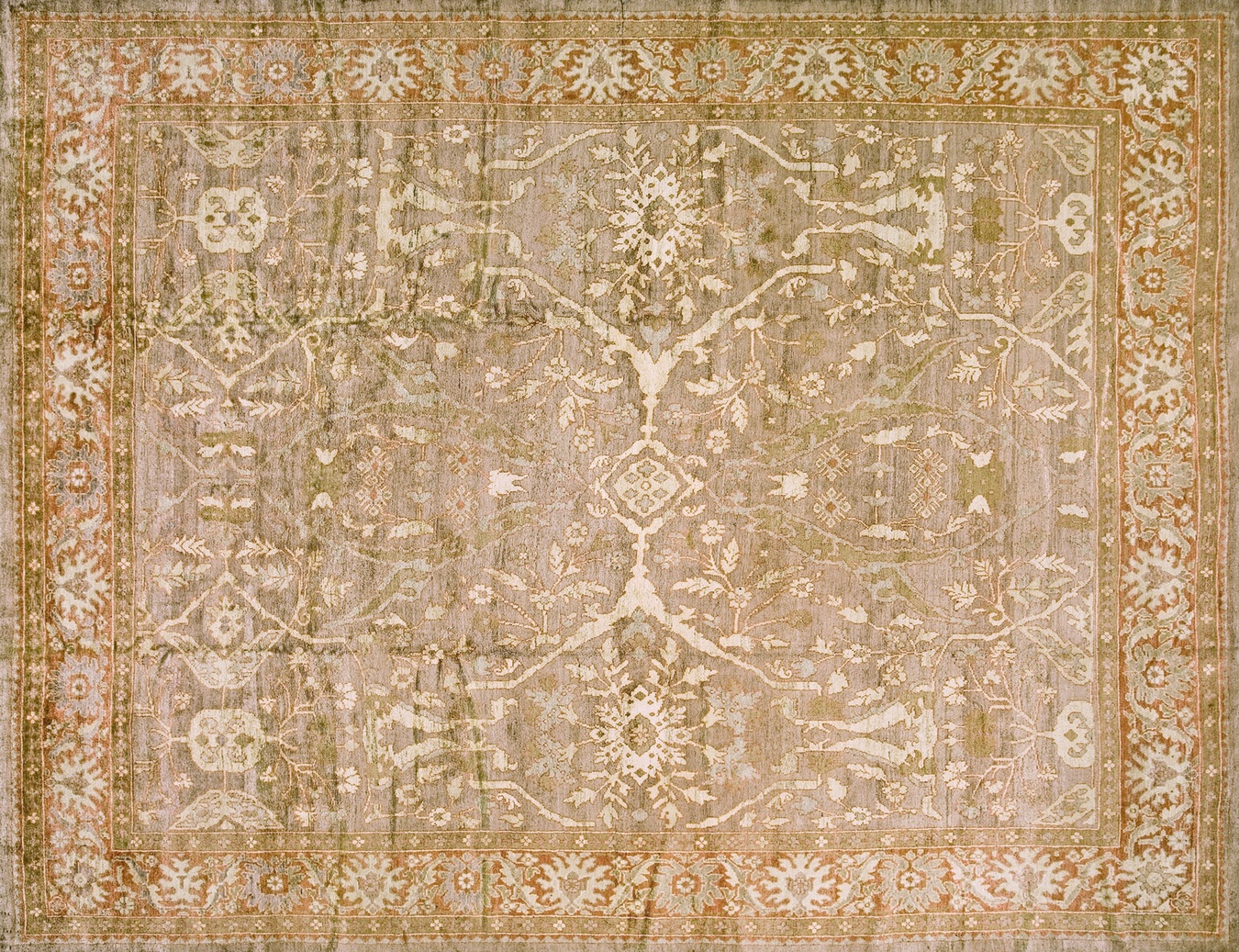
- Warmth and Calm — Brown earth-tone rugs radiate natural warmth, making interiors feel cozy and welcoming. — Why: The color recalls soil and wood, anchoring a room with organic stability.
- Balance and Neutrality — They act as visual anchors without overpowering surrounding décor. — Why: Neutral brown carpets provide a strong foundation while allowing accent colors to shine.
- Connection to Nature — Brown tones link interiors to landscapes, forests, and farmland. — Why: This connection enhances comfort and well-being, creating spaces that feel restful.
Styling with Black & Minimalist Rooms
One of the most striking combinations is brown rug and black furniture. The earthy warmth of a brown carpet softens the severity of black finishes, creating balance between richness and minimalism. In minimalist interiors, a minimalist brown rug adds texture and organic character, preventing the space from feeling stark or overly cold. The subtle variations in earthy rug tones enrich the clean lines of contemporary design, proving that even in pared-back spaces, brown rugs play a transformative role.
Complementary Colors and Palettes
- Creams & Off-Whites — Brighten the space and enhance contrast with darker browns. — Why: Prevents interiors from looking too heavy.
- Sage & Olive Greens — Echo the natural landscape, pairing harmoniously with earthy tones. — Why: Creates calming, biophilic palettes.
- Rust & Terracotta — Add vibrancy and warmth while staying within the earth-tone family. — Why: Ideal for cozy, rustic, or bohemian décor.
- Gold & Mustard — Provide a touch of luxury against matte brown bases. — Why: Elevates the look without clashing.
- Soft Blues & Teal — Offer cool contrast, highlighting the richness of brown fields. — Why: This creates a dynamic yet balanced palette.
Brown Rugs in Kitchens, Runners, and Practical Spaces
An earthy rug kitchen runner combines practicality with style. Darker brown runners are excellent at concealing dirt and food spills, while lighter tans brighten functional spaces. The natural resilience of wool or flatweave designs ensures durability under heavy foot traffic. Style tip: pair a brown kitchen runner with wooden cabinets or black hardware for a warm yet modern finish. Brown earth-tone rugs also suit entryways, hallways, and mudrooms, where their grounding tones bring both elegance and utility.
Earth Tones in Heritage & Contemporary Interiors
Brown area rug décor adapts fluidly to any style. In heritage or traditional interiors, a brown rug reinforces authenticity and warmth, complementing antique furniture and natural woods. In contemporary or urban lofts, earthy rugs soften metal, glass, and concrete, preventing sterility. Whether rustic farmhouse, bohemian lounge, or sleek minimalist apartment, brown rugs remain timeless anchors of design.
What Colors Complement a Brown Earth-Tone Area Rug?
Cream, sage, olive, rust, terracotta, gold, mustard, and blue are the most effective complements, each enhancing the earthy rug tones while balancing the palette.
Can Brown Earth-Tone Rugs Work with Black Furniture?
Yes. A brown rug and black furniture pairing creates sophisticated contrast, softening the boldness of black with the warmth of earthy browns.
How to Style a Brown Earth-Tone Runner in Kitchens?
Use a darker earthy rug kitchen runner to hide spills, and pair with wood, black, or neutral cabinetry. Flatweave or wool constructions are best for resilience in high-traffic areas.
Can a Brown Earth-Tone Rug Modernize Minimalist Décor?
Absolutely. A minimalist brown rug introduces texture, warmth, and organic grounding to stark interiors, transforming them into inviting spaces while maintaining simplicity.
Practical Considerations for Brown Rugs
Cleaning & Care for Brown Rugs
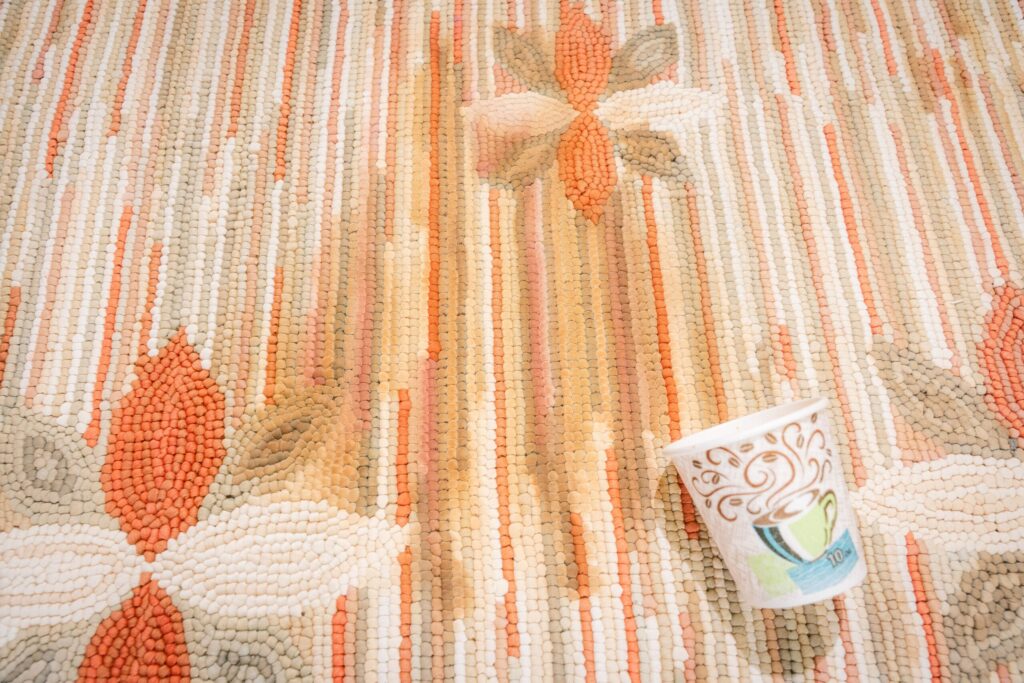
Close-up view of a tipped paper coffee cup resting on a handwoven wool rug, highlighting the rug’s dense pile, subtle color variations, and traditional geometric motifs in warm neutral and terracotta tones.
- Gentle Vacuuming — Use a vacuum without a beater bar to remove dust and grit. — Why: This prevents fiber wear and protects delicate earthy rug tones.
- Spot Cleaning with Neutral Soap — Address spills immediately using mild, pH-balanced soap and water. — Why: Harsh chemicals can strip or alter natural brown dye, while gentle cleaning preserves hues.
- Professional Washing — Have rugs deep-cleaned by experts every few years. — Why: Professionals use techniques that safeguard both the wool and the richness of brown dyes.
- Rotation — Turn rugs every six months. — Why: Ensures even wear and consistent color exposure, keeping brown tones balanced.
Preventing Fading & Sun Damage
Even though walnut, oak, and other traditional brown dyes are relatively lightfast, direct sun exposure can cause gradual fading. To prevent rug fading, avoid placing brown rugs in south-facing windows without UV protection. Use blinds, sheer curtains, or UV-filtering films to reduce brown rug sun damage. For high-value antiques, occasional relocation to shadier spots helps extend their longevity.
Durability & Dirt Concealment
One of the strongest advantages of brown rugs is practicality. Earthy hues naturally mask soil, lint, and daily wear, making them excellent for high-traffic or family-centered rooms. Darker shades conceal spills and footprints especially well, while mid-tones balance brightness with resilience. This ability to hide imperfections, combined with their grounding aesthetic, makes brown rugs some of the most functional choices for everyday living.
Conservation of Antique Brown Rugs
Antique brown rugs present unique conservation challenges. Dark browns produced with iron mordants may cause brown pile corrosion, where fibers weaken and recess compared to surrounding areas. Restorers often use naturally dyed replacement wool to repair these sections, ensuring both structural integrity and seamless color matching. Because of this fragility, antique brown rugs should be handled gently, kept away from excessive sunlight, and maintained with careful professional oversight.
How Can I Prevent Brown Rug Colors from Fading?
Keep rugs out of direct sunlight, use UV-filtering window treatments, rotate the rug regularly, and avoid harsh chemical cleaners.
What Cleaning Methods Best Preserve Brown Earthy Hues?
The best brown rug cleaning methods are gentle vacuuming, spot cleaning with neutral soap, and periodic professional washing to maintain both fiber strength and color depth.
Should Brown Natural-Dye Rugs Avoid Direct Sunlight Exposure?
Yes. Even though plant-derived browns are relatively stable, natural-dye rugs should still avoid prolonged direct sunlight to preserve their earthy rug care and maintain their original richness.
Explore a Few of Our Earth Tone Rugs
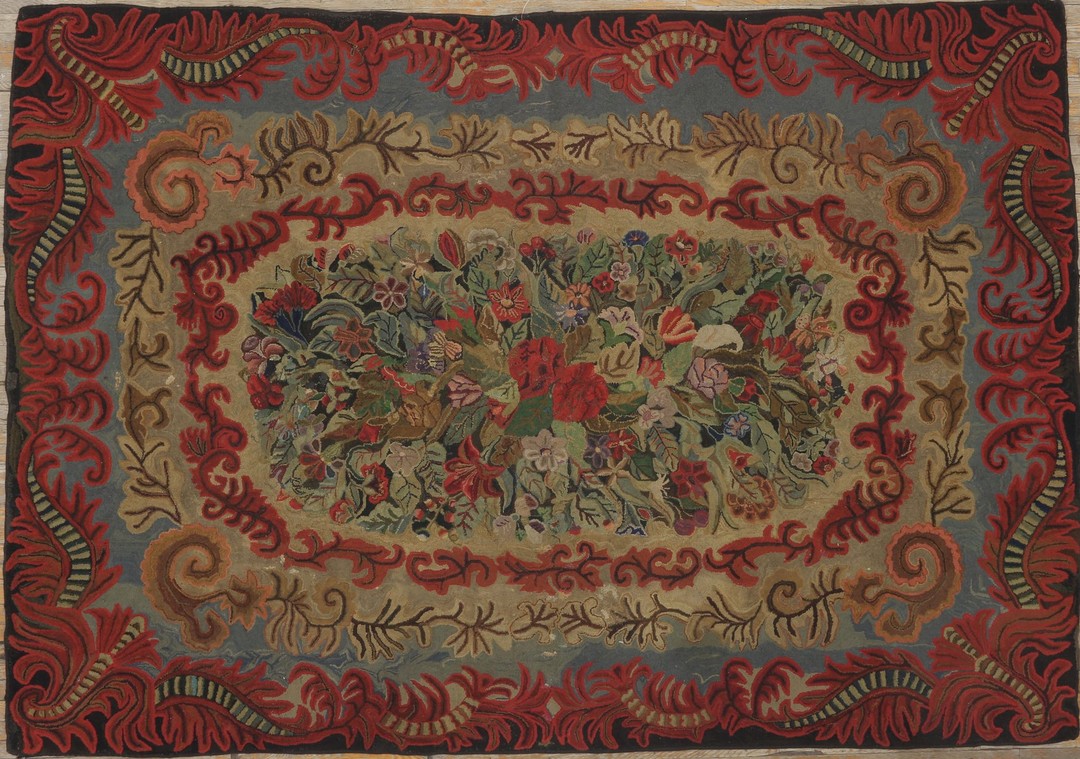
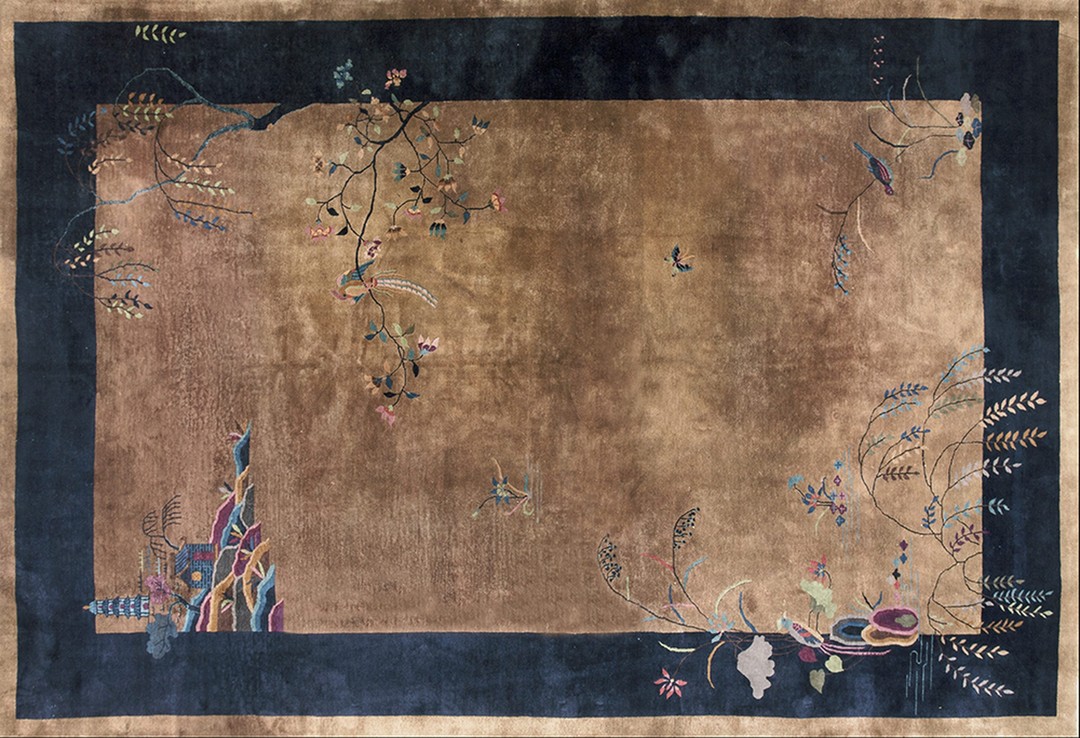
FAQ
- Can earth tone rugs suit modern or minimalist rooms?
Absolutely—solid or lightly patterned earth tone rugs warm minimal spaces. Stick to simple geometry and ½–2⁄3 furniture-coverage for a clean look.
- Do brown rugs work in small apartments?
Yes—size up to visually expand the room (often 8×10) and keep walls light. Choose a subtle pattern to add interest without clutter.
- Are brown rugs sensible for kitchens or entries?
Yes—choose low-pile, washable, or indoor/outdoor brown rugs with pattern to hide drips. Add a non-slip pad for safety.
- Are earth tone wool rugs a low-tox option?
Usually—look for OEKO-TEX or GOTS labels and undyed or low-VOC finishes. Pair with natural-rubber/felt pads for healthier indoor air.
- How much do earth tone rugs typically cost?
Machine-made earth tone rugs (8×10) often run about \$100–\$400; wool tufted \$300–\$800; hand-knotted typically \$1,000+ depending on origin and detail.
- Can I layer brown rugs over a jute base?
Definitely. A neutral jute base with a smaller patterned brown rug (e.g., 5×8 over 8×10) adds texture and warmth.
- What rug pad is safest under brown rugs on hardwood?
Use felt or natural-rubber pads sized 1–2 inches smaller than the rug. Avoid PVC/latex pads that can discolor finishes.
- Are earth tone rugs still in style for 2025?
Yes—earthy palettes are trending. Soft browns, olive, oxblood, and terracotta feel current while staying timeless.
- Do brown rugs show lint or pet hair more than others?
Solid dark brown rugs can show light lint and fur. Medium-tone brown rugs with pattern hide debris best between cleanings.
- Do earth tone rugs pair well with wood floors?
They’re great—with contrast. Use deeper earth tones on light wood and lighter earth tone rugs on dark wood to add depth.
- Will robot vacuums handle brown rugs with fringe?
Robot vacuums can snag fringe. Tuck or secure tassels, choose low-pile brown rugs, and consider anti-tangle brush models.
- Are earth tone outdoor rugs practical?
Yes—solution-dyed polypropylene or PET earth tone outdoor rugs resist moisture and UV. Hose clean, then dry; store during snow or severe weather.
- Are brown jute rugs easy to maintain?
Brown jute rugs are durable but sensitive to moisture. Vacuum regularly, blot spills immediately, and avoid soaking—use dry carpet shampoo if needed.
- Do earth tone rugs fade in sunlight?
Any rug can fade with UV. Rotate earth tone rugs every 3–6 months and use blinds or UV film to slow color loss.
- Can I use brown rugs over radiant or heated floors?
Yes—choose low-to-medium pile and breathable pads; avoid thick insulation. Keep coverage moderate and follow flooring temperature limits.
- How do I spot-clean brown wool rugs safely?
Blot—not rub—with a white cloth and mild, wool-safe detergent; test first. For oily spots, use a small amount of solvent, then water-based cleaner.
- Are earth tone wool rugs durable for busy homes?
Yes—wool earth tone rugs resist soiling and bounce back naturally. With routine vacuuming and rotation, they can last for decades.
- What materials make brown rugs most pet-friendly?
Low-pile wool or polypropylene brown rugs with pattern hide fur and stains well. Choose cut pile (not loops) and use a washable spot cleaner.
- How big should earth tone rugs be under dining tables?
Let earth tone rugs extend about 24 inches beyond the table edges so chairs stay on the rug when pulled out. For six chairs, 8×10 or 9×12 often works.
- What size brown rug should go under a queen bed?
An 8×10 brown rug fits most queen setups; 9×12 suits larger rooms. Aim for 18–24 inches of rug showing beyond the sides and foot.
- Will dark brown rugs make a small room feel smaller?
Dark brown rugs can visually shrink space by absorbing light. Counter with a larger size (e.g., 8×10) and light walls to keep the room open.
- Do earth tone rugs work with gray sofas and greige walls?
Absolutely—earth tone rugs add warmth to cool grays and tie into greige’s warm undertones. Choose patterns mixing taupe, clay, and charcoal for cohesion.
- What wall and accent colors go best with brown rugs?
Brown rugs love creamy whites, beiges, muted blues, and soft greens. Try cream walls, a navy throw, and brass accents for balance.
- Are brown rugs considered a neutral in decorating?
Yes—brown rugs read as a versatile neutral that works with both warm and cool palettes. They anchor bolder colors like navy or emerald and soften creams and whites.
- What are earth tone rugs and why choose them?
Earth tone rugs use nature-inspired hues—tan, taupe, olive, terracotta, soft brown—that ground a room. They pair easily with neutrals and wood, adding warmth without dominating a space.