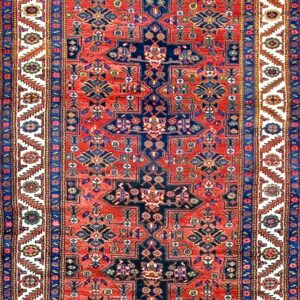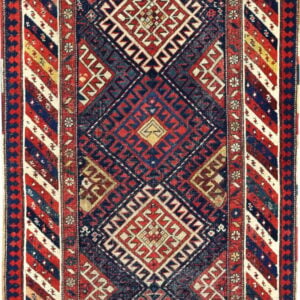
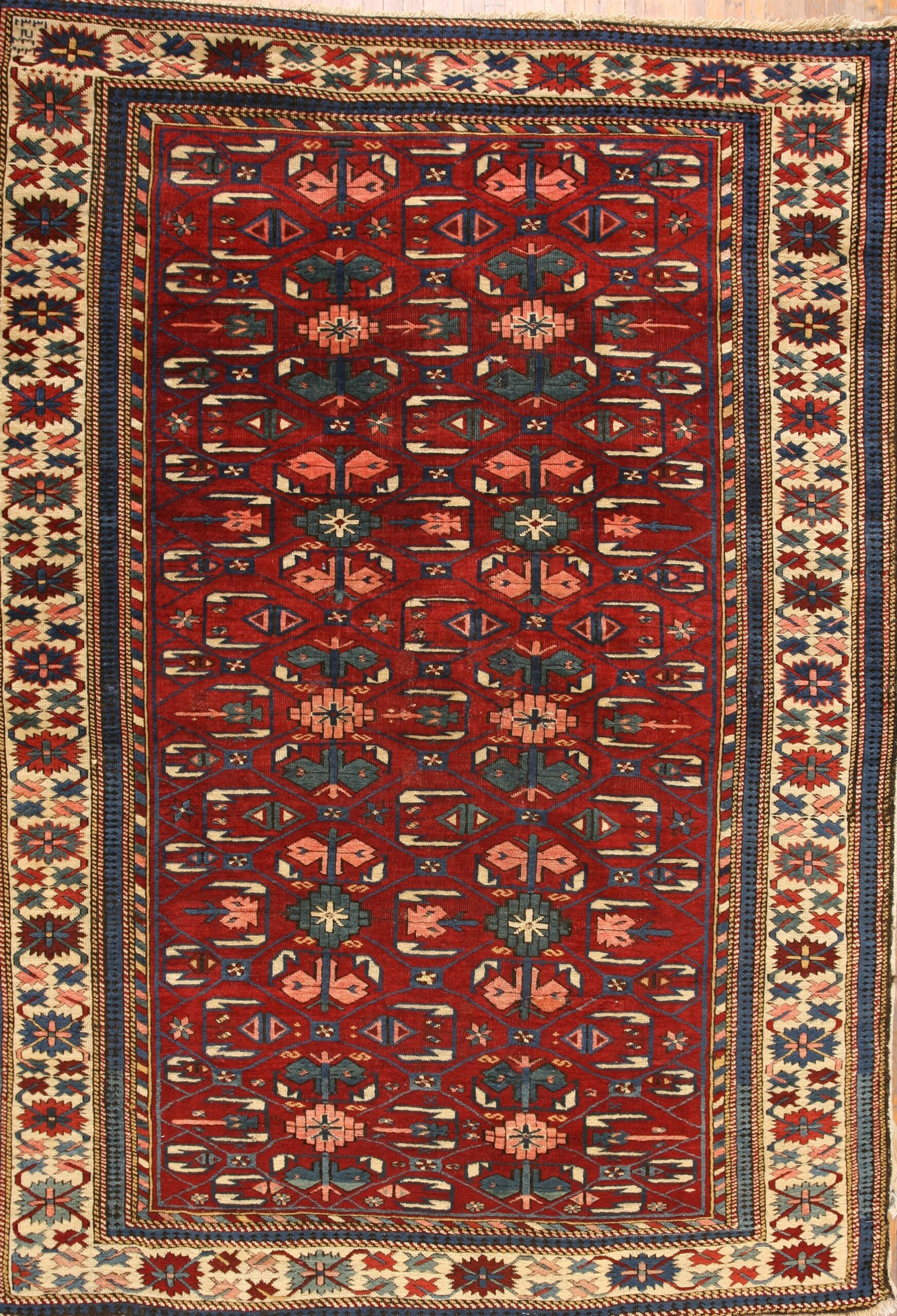
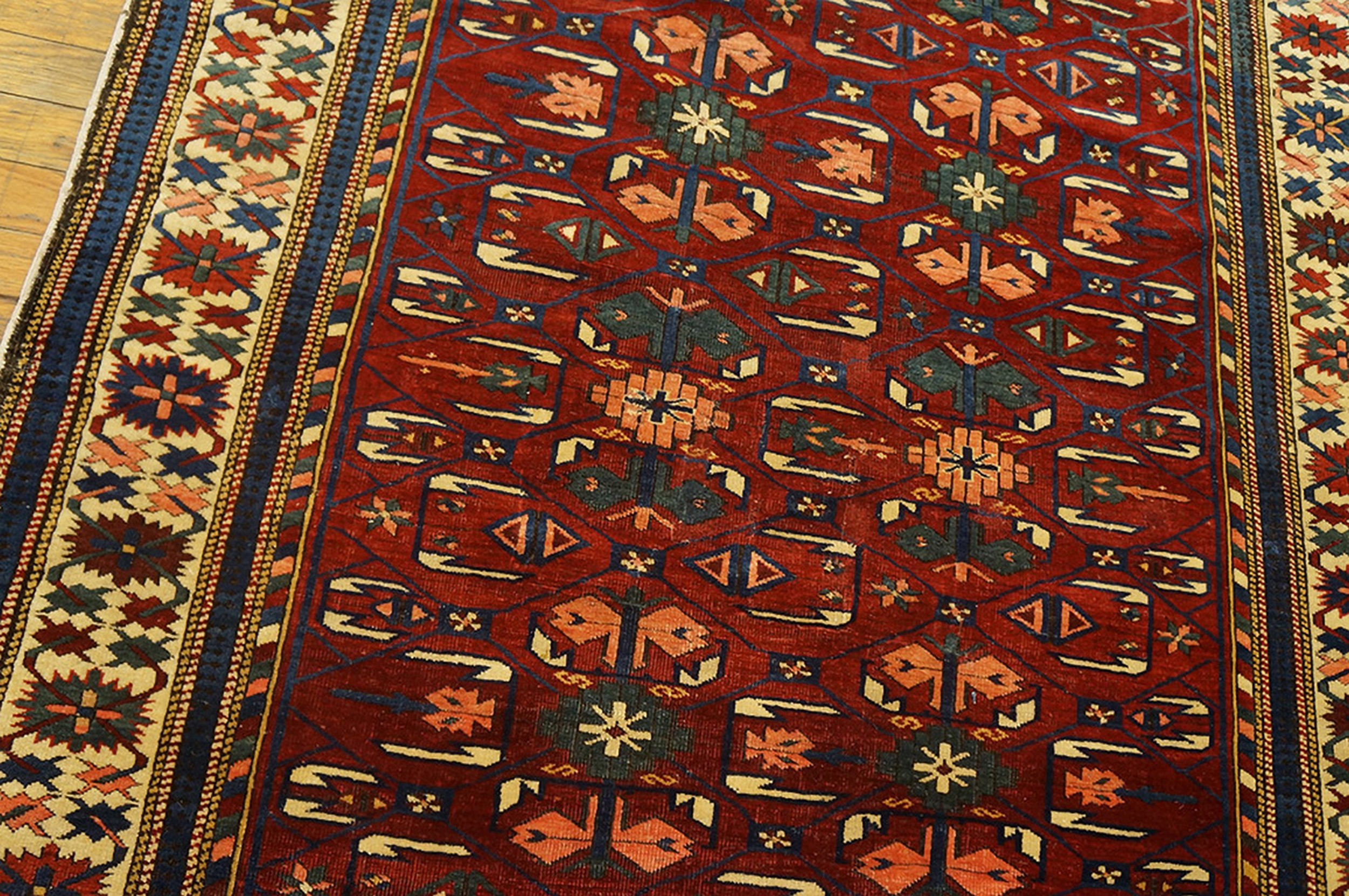
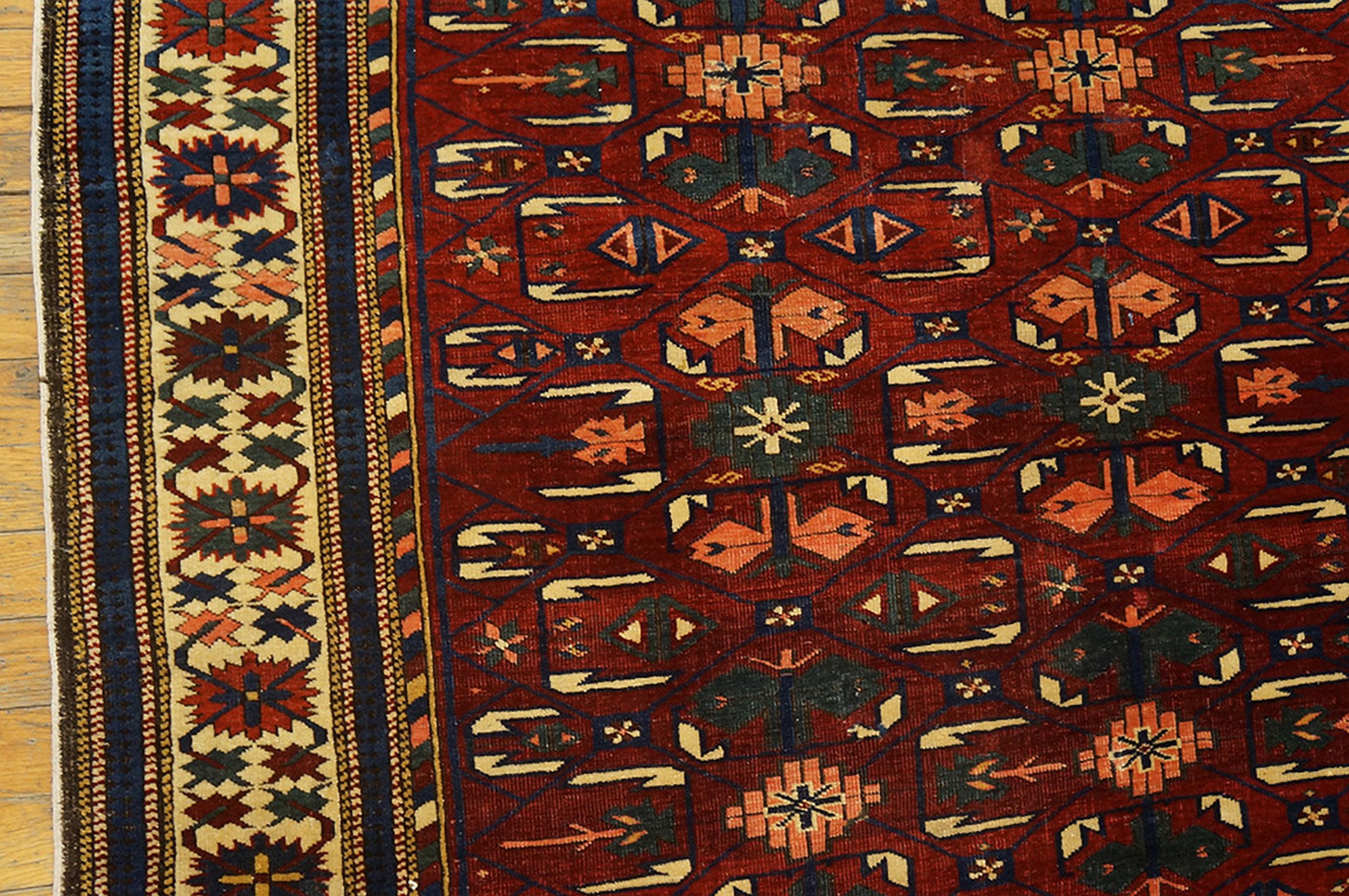
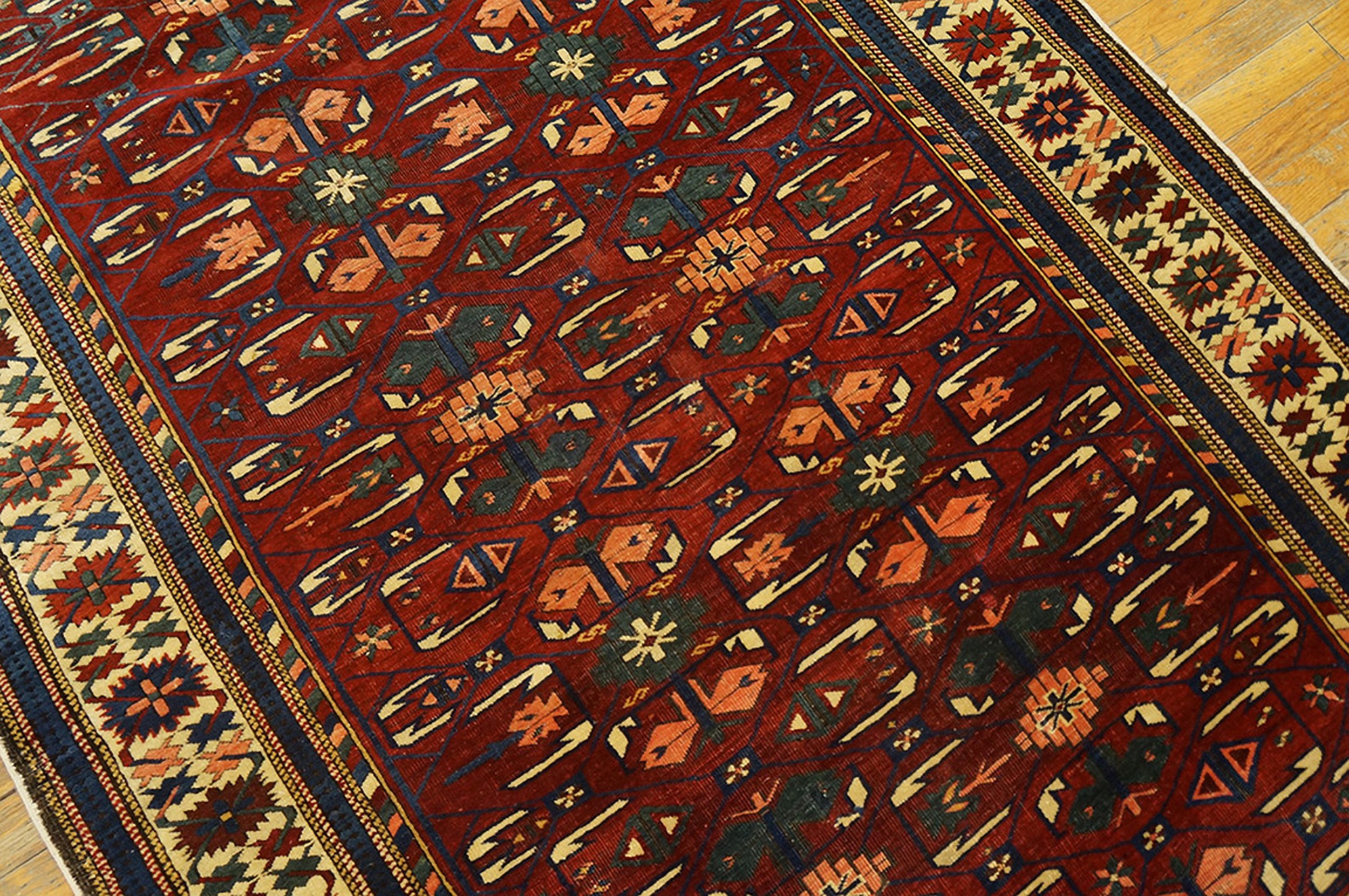
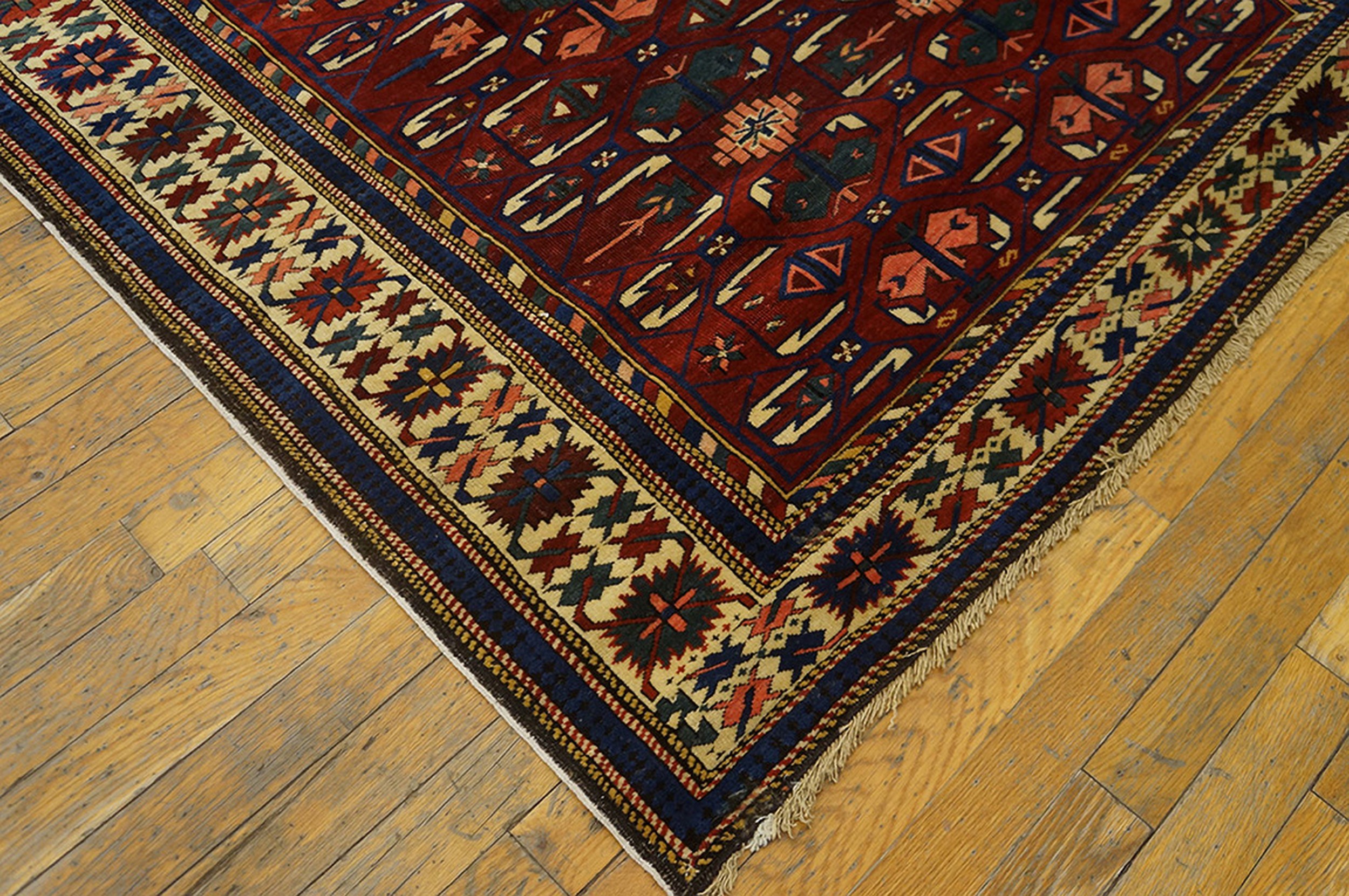
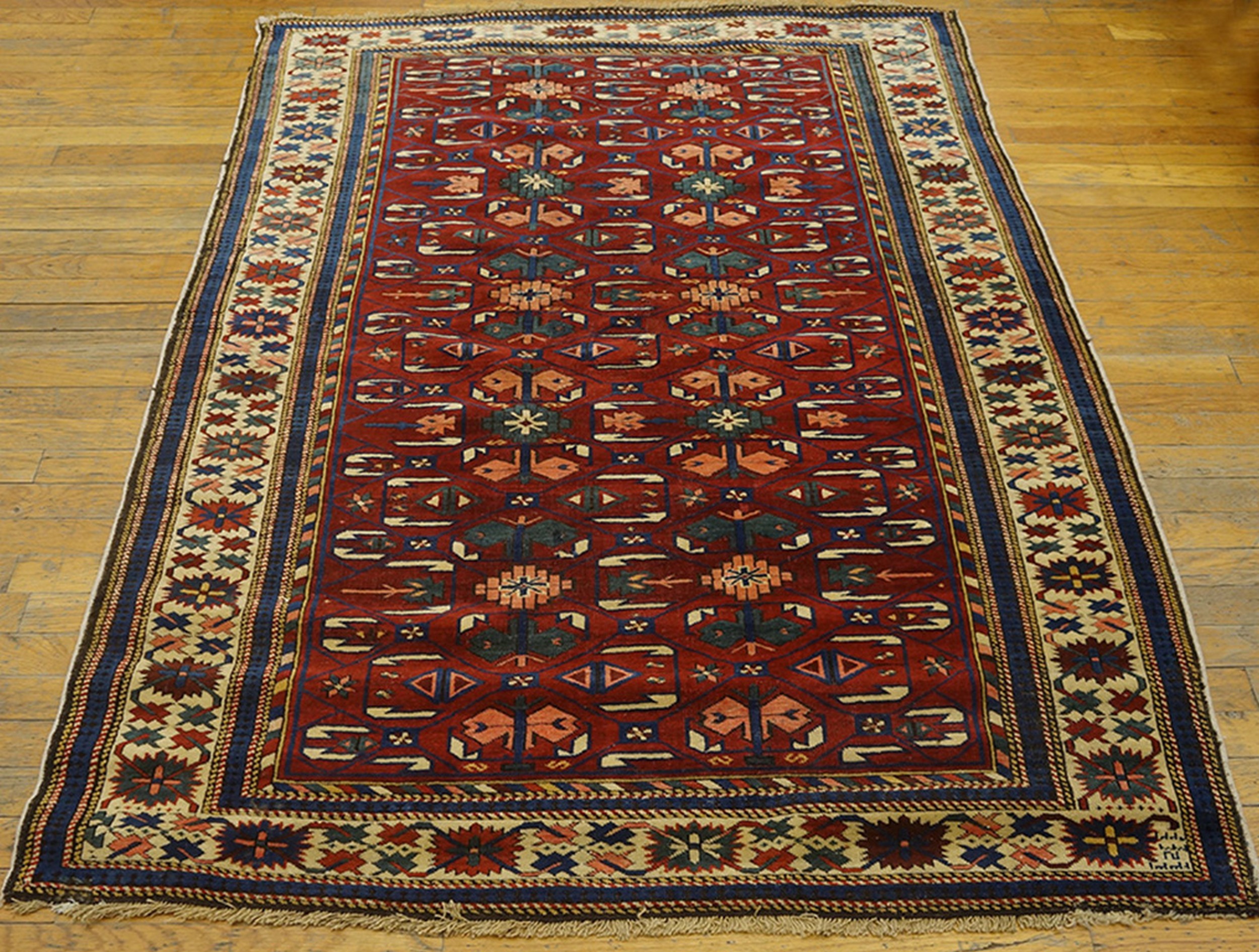
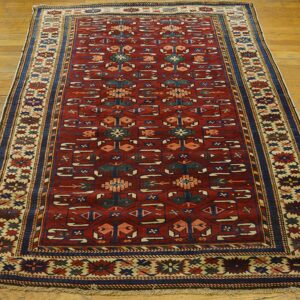
This nineteenth-century Caucasian Kuba rug is a superlative example of the “High-Art” tribal weaving traditions from the northeast Caucasus. While many antique tribal geometric Caucasian rugs are defined by their rugged, nomadic spirit, the Kuba district was historically famous for producing the most finely woven and intricately detailed textiles in the region. This specific scatter-size specimen is a masterwork of geometric discipline, distilled into a vibrant, high-contrast narrative.
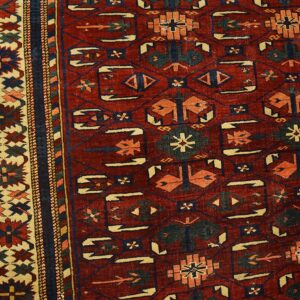
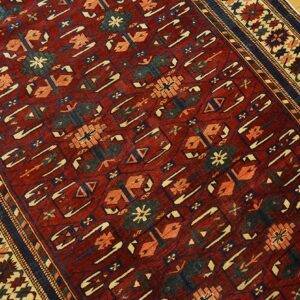
The composition is centered upon a classic Kuba geometric pattern, often featuring a rhythmic “all-over” field of stylized blossoms, star-medallions, or the iconic “Lesghi star.” Unlike the bold, open spaces of the Kazak tradition to the west, the Kuba aesthetic favors a “horror vacui” approach—filling every inch of the field with a dense, scholarly vocabulary of tribal totems. These motifs are rendered with “razor-sharp” precision, emphasizing the weaver’s ability to maintain perfect symmetry and mathematical alignment even on a smaller, personal scale.
The palette is dominated by a rich, saturated Madder Red ground, a hallmark of the finest 19th-century Caucasian dyes. This powerful red provides a dramatic stage for the high-contrast accents of midnight indigo, ivory, and golden ochre. Because this piece utilized natural vegetable dyes, the colors have developed a sophisticated abrash (tonal variation) over the last 130+ years, imbuing the flat red field with a shimmering, watercolor-like depth that modern synthetic dyes cannot replicate.
Technically, a Kuba is prized for its fine, compact weave and low-cut pile. Unlike the “fleshy” handle of a Kazak, the Kuba is characteristically firm and thin, allowing the intricate geometric patterns to appear with crystalline clarity. The wool is hand-spun from high-altitude sheep and remains rich in natural lanolin, giving the surface a soft, matte luster. The scatter size (typically around 3×5 or 4×6 feet) was historically the most intimate format for a weaver, often intended as a luxury dowry piece or a specific architectural accent.
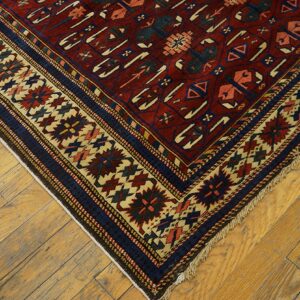
The borders act as a disciplined, regal frame, often featuring the iconic “Kufic” or “Running Dog” motifs. These borders “lock in” the explosive energy of the red field, providing a sense of historical permanence and architectural order. To possess antique tribal rugs such as this antique red Kuba scatter rug is to hold a monument to a vanishing tribal heritage—a work that bridges the gap between rugged nomadic utility and sophisticated geometric art, transforming a small space into a gallery of 19th-century Caucasian brilliance.