
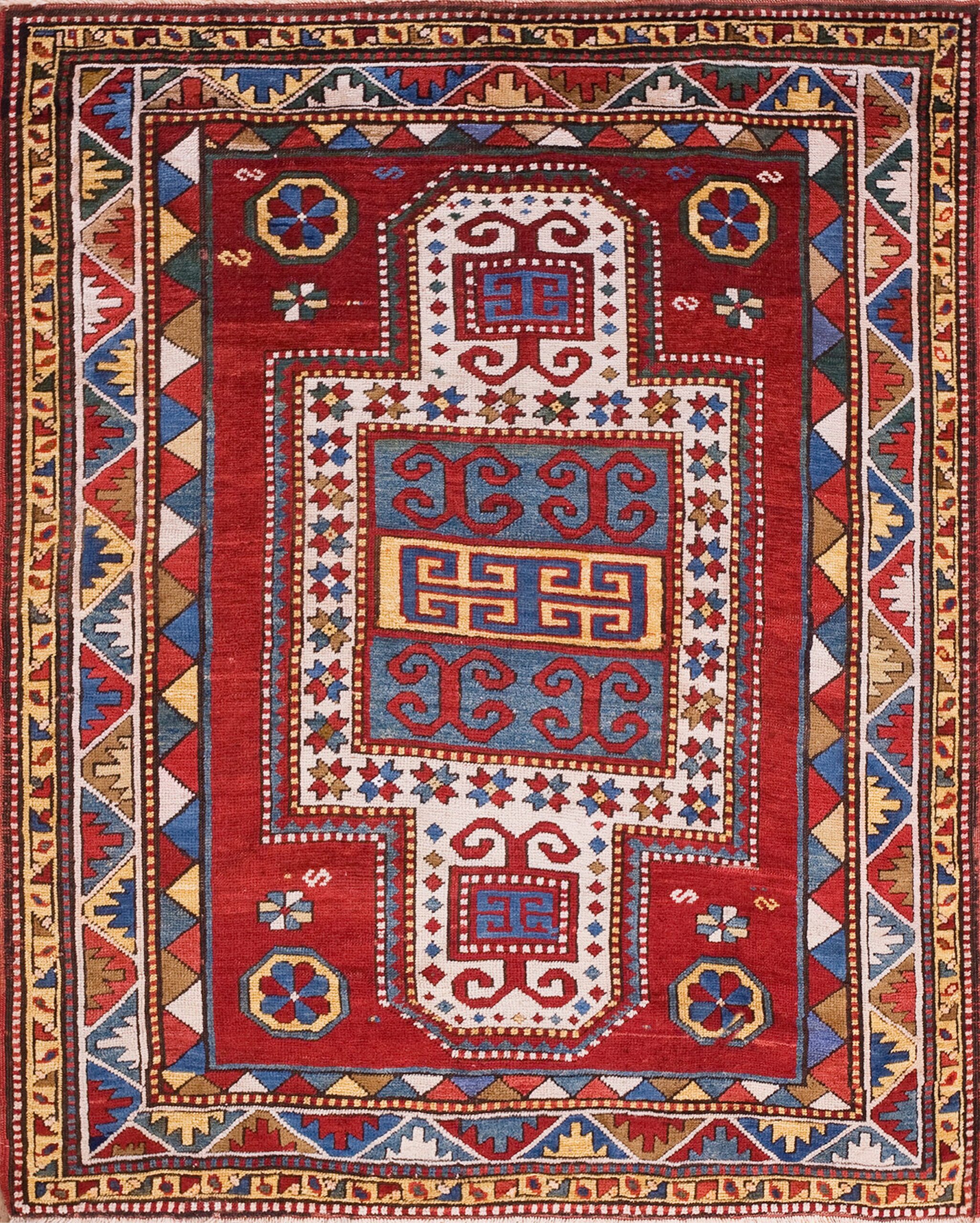
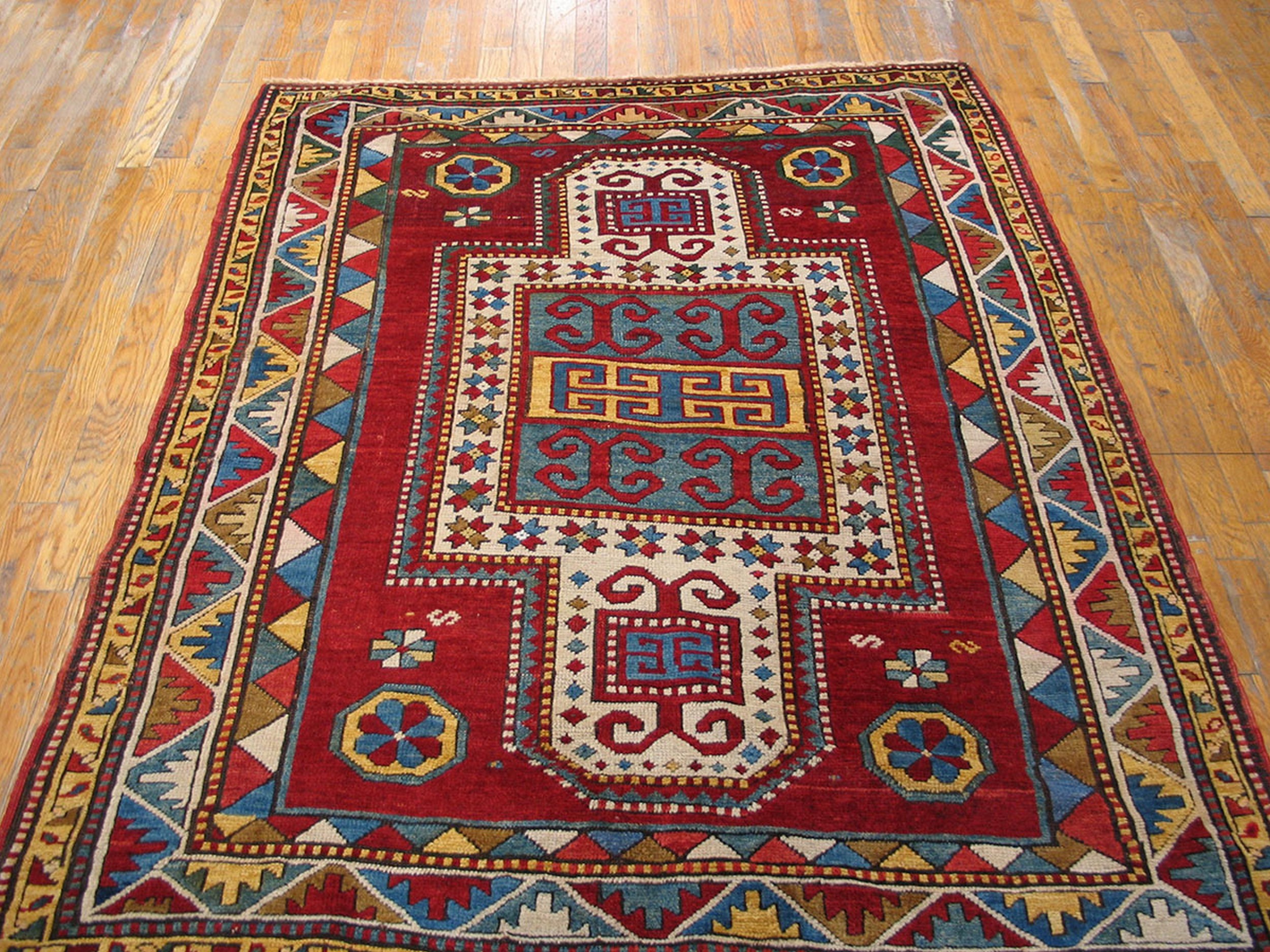
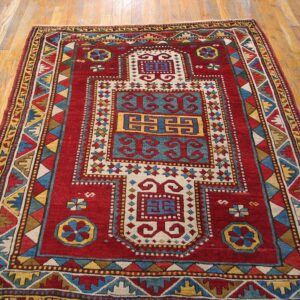
This early twentieth-century Caucasian Kazak rug is a powerful distillation of tribal energy, hailing from the high-altitude weaving centers of the South Caucasus. While the neighboring Kuba weavers were known for their fine, miniature detail, the Kazak tradition is celebrated for its “heroic” scale and raw, primitive power. This scatter-size specimen is a perfect example of a “power rug”—a smaller textile that commands a room through the sheer weight of its graphic presence.
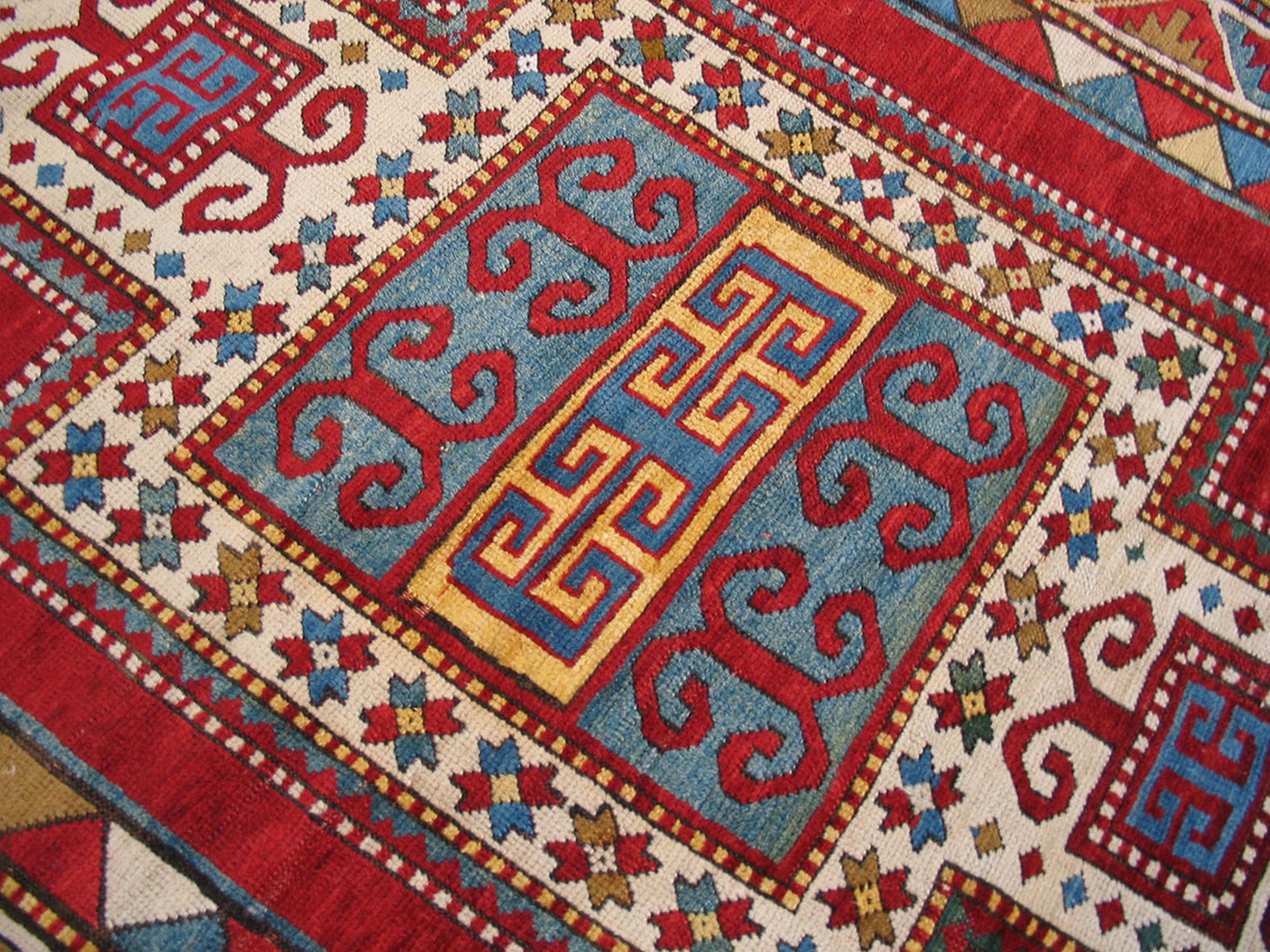
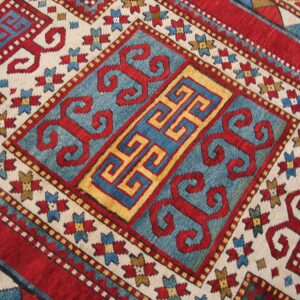
The composition is centered upon a bold tribal geometric design, likely featuring massive, hooked medallions or stepped polygons that seem to pulsate against the field. In the Kazak lexicon, these large-scale motifs serve as ancient protective totems, rendered with a chunky, architectural geometry that anticipates the abstract expressionism of the 20th century. The “spaciousness” of the design—allowing the motifs to breathe within the field—is a hallmark of the nomadic Kazak aesthetic, emphasizing strength over intricacy.
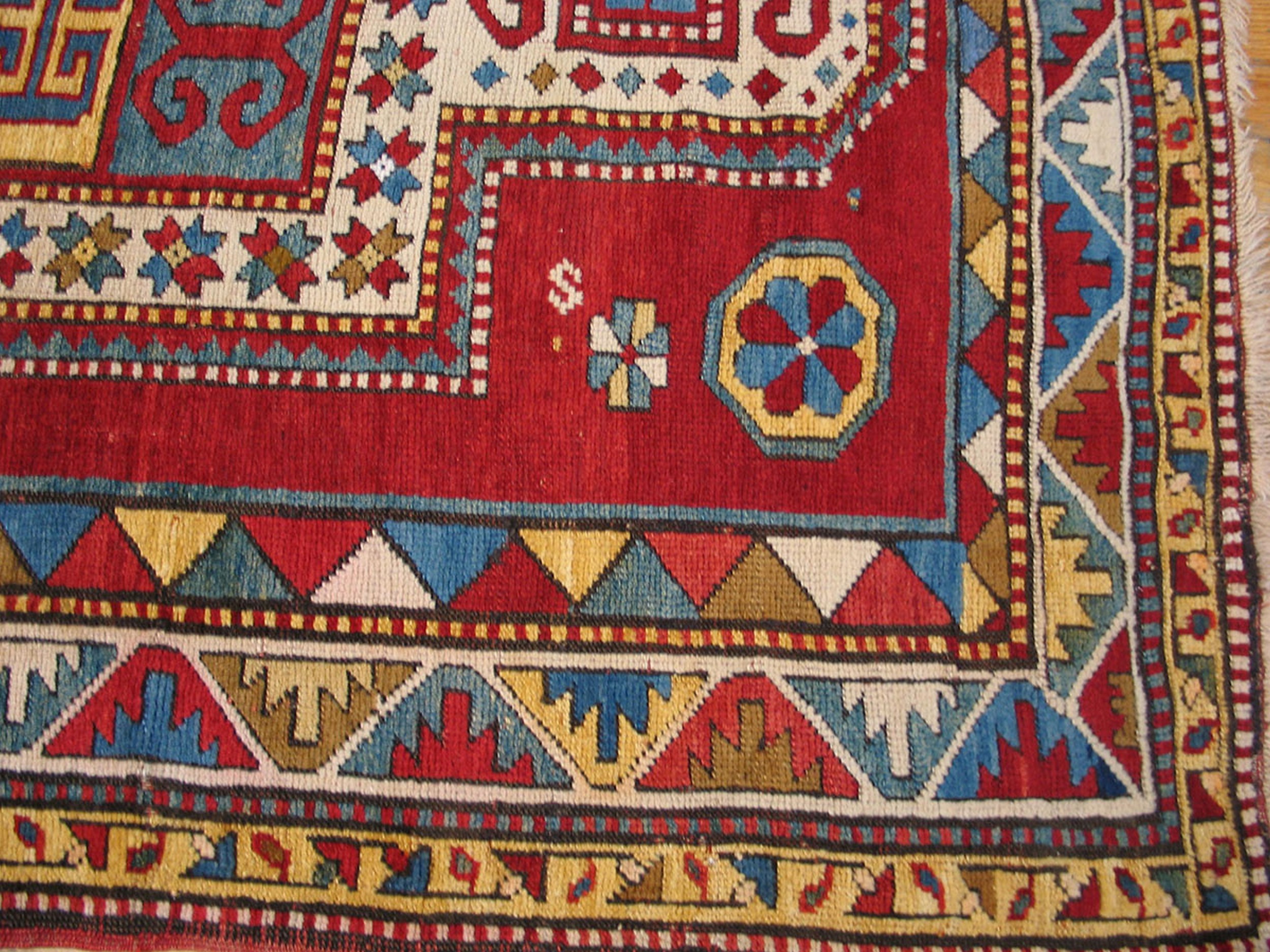
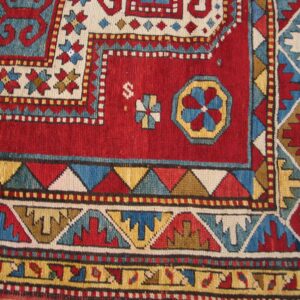
The palette is anchored by a vibrant, saturated Madder Red, a color that has defined the “High-Art” antique tribal design area rugs. This isn’t a flat, commercial red; because it was created using natural vegetable dyes, it possesses a magnificent abrash (tonal variation). Over 130+ years, the red has matured into a complex spectrum of deep red, crimson, and flame, creating a shimmering depth. This fiery ground is balanced by high-contrast accents of ivory and deep indigo blue, which make the geometric patterns appear to “pop” with three-dimensional intensity.
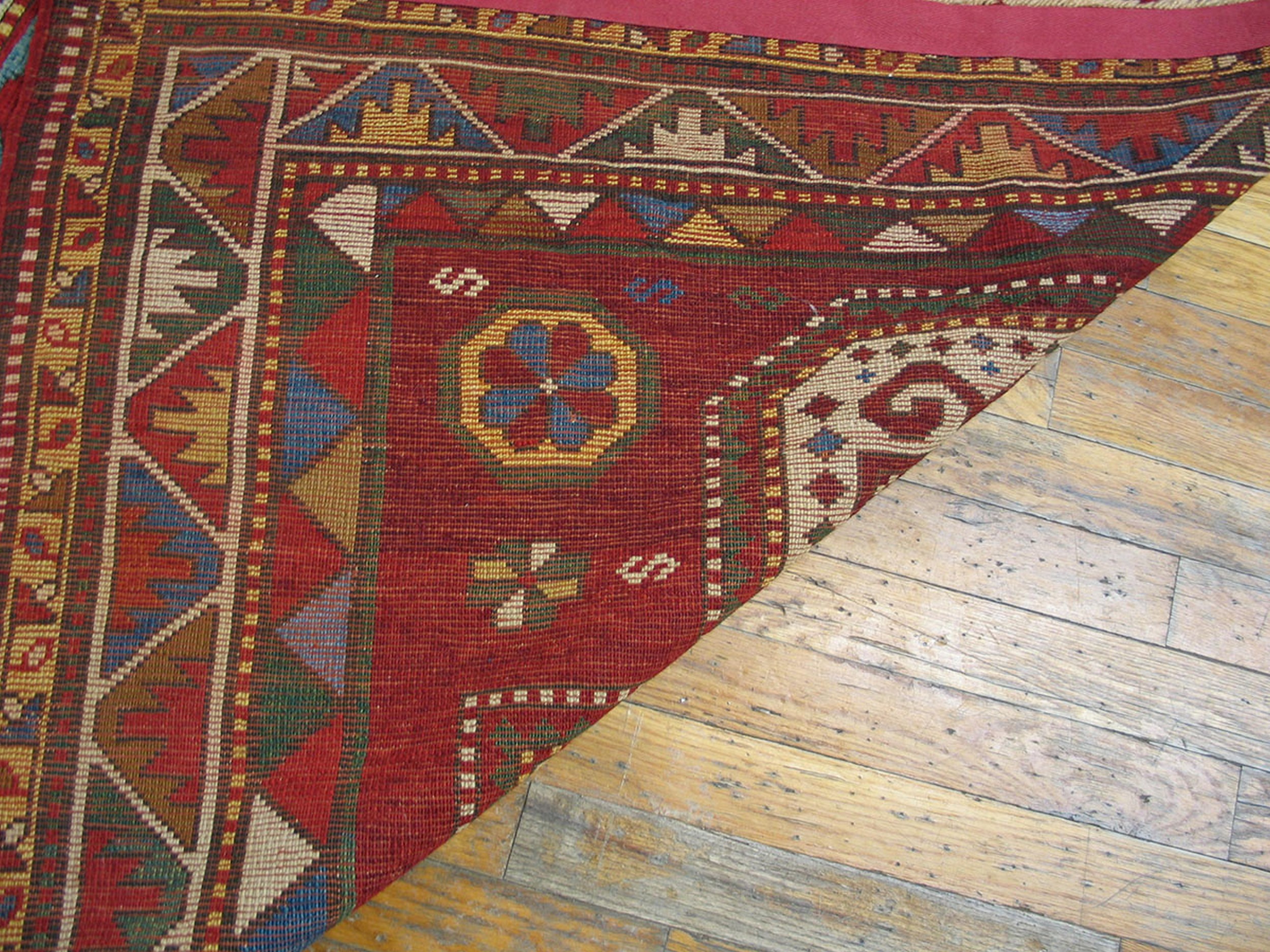
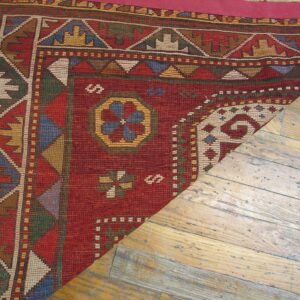
Technically, this Kazak is prized for its substantial, fleshy pile and its heavy, “leather-like” handle. Woven from the wool of high-altitude sheep, the fibers are exceptionally rich in lanolin, resulting in a lustrous, light-reflective surface that feels incredibly soft yet durable. The scatter size (ideal for an entryway, a bedside, or even a wall hanging) allows the viewer to appreciate the “individual hand” of the weaver—where intentional irregularities in the symmetry serve as a badge of authentic, nomadic origin.
The borders act as a disciplined, rhythmic frame, often featuring the iconic “Running Dog” or “Wine Glass” patterns. These borders provide a sense of architectural containment for the explosive energy of the central red field. To possess antique tribal Caucasian rugs like this bold red Kazak scatter rug is to hold a monument to a vanishing way of life. It is a work that bridges the gap between ancient tribal symbolism and the minimalist requirements of the modern interior—a hand-wrought masterpiece of historical gravity and rugged, artistic power.