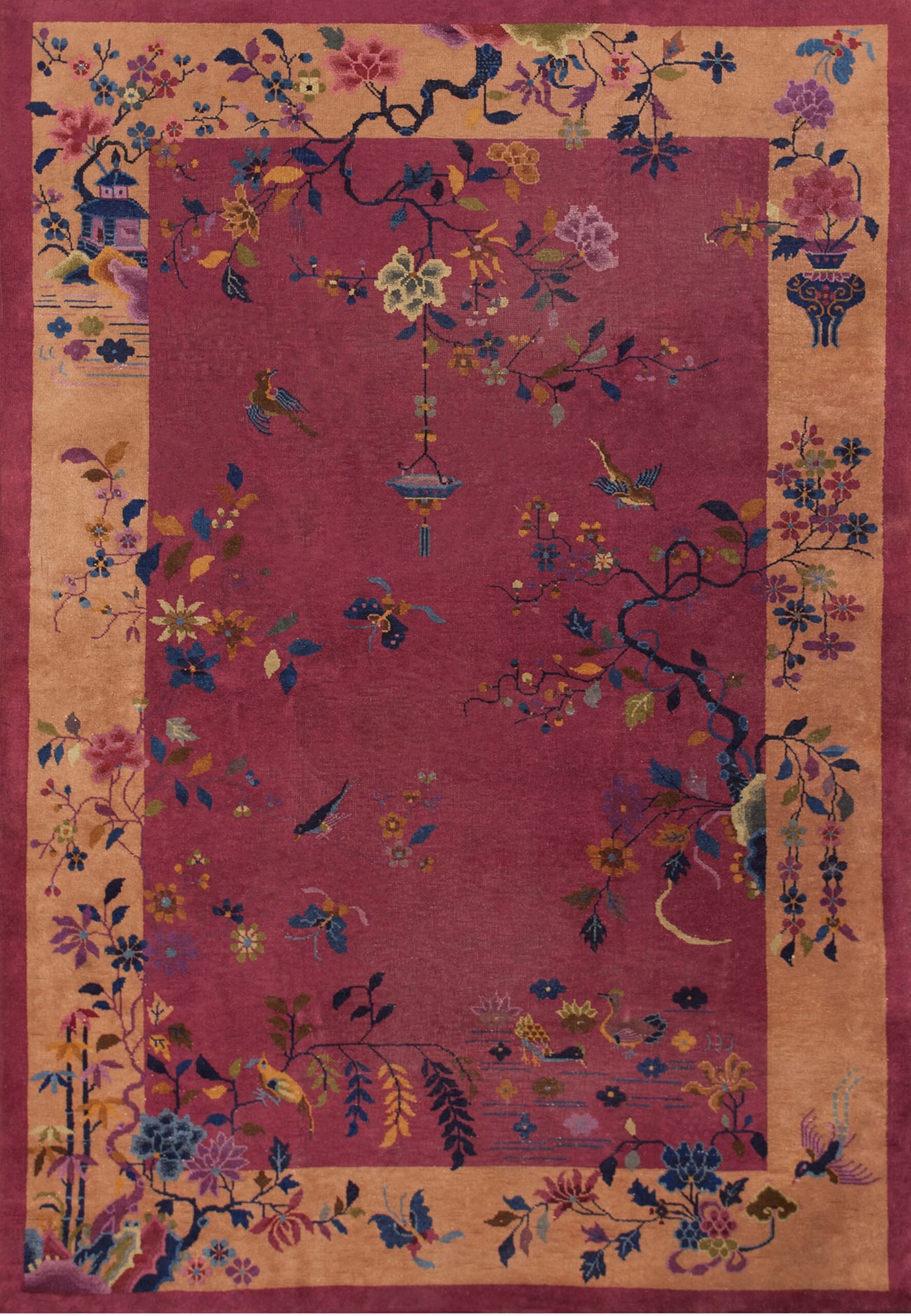
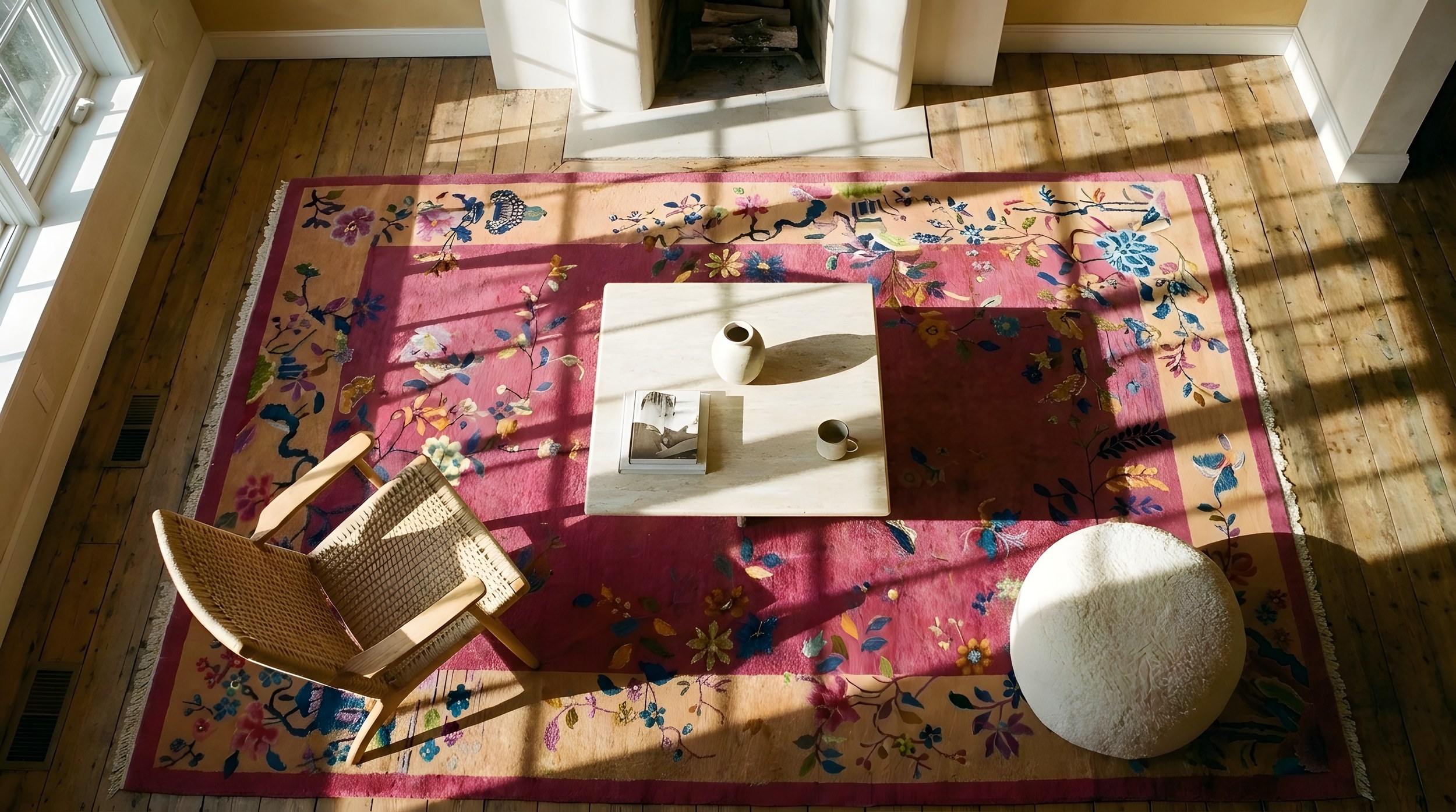
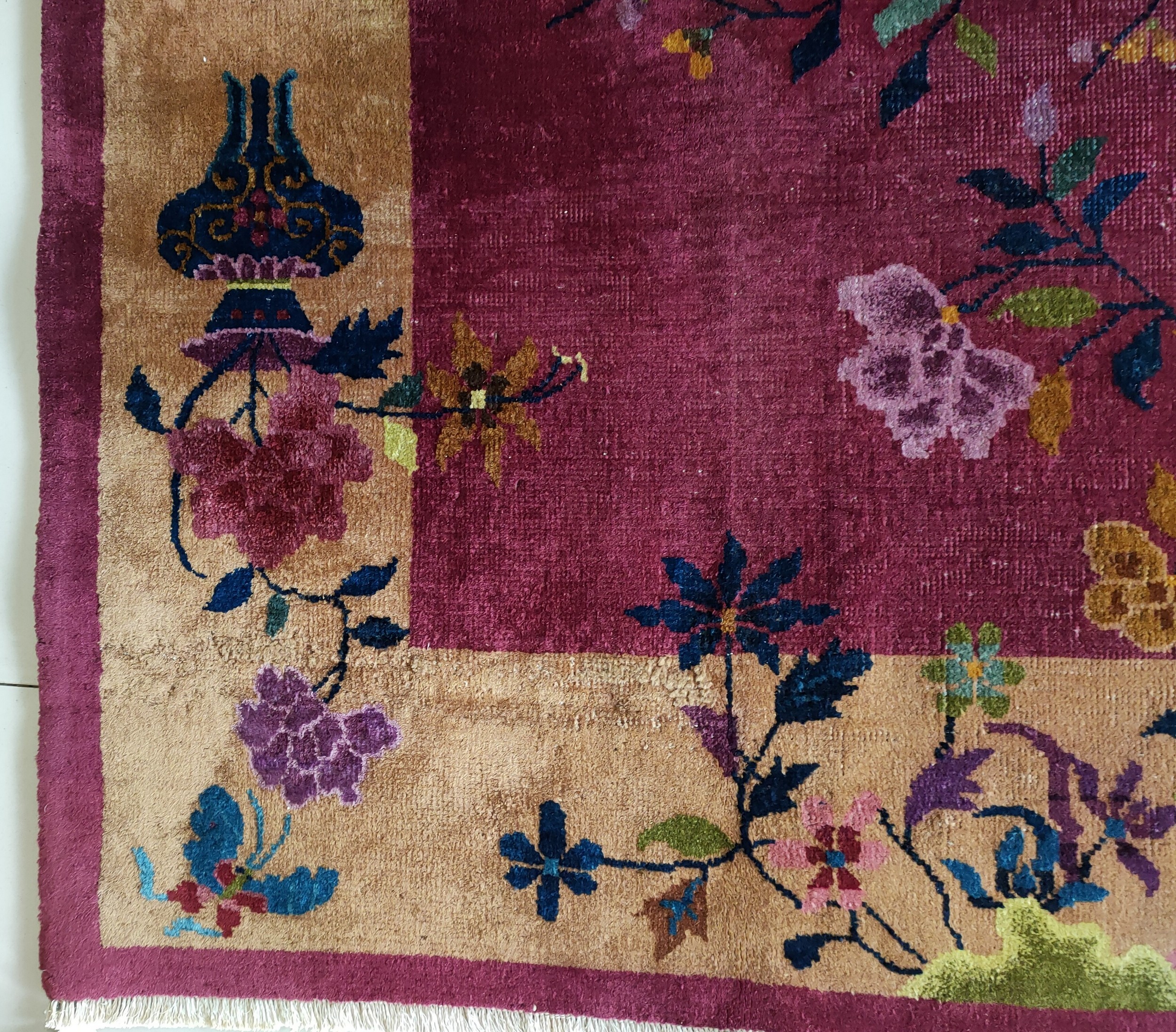
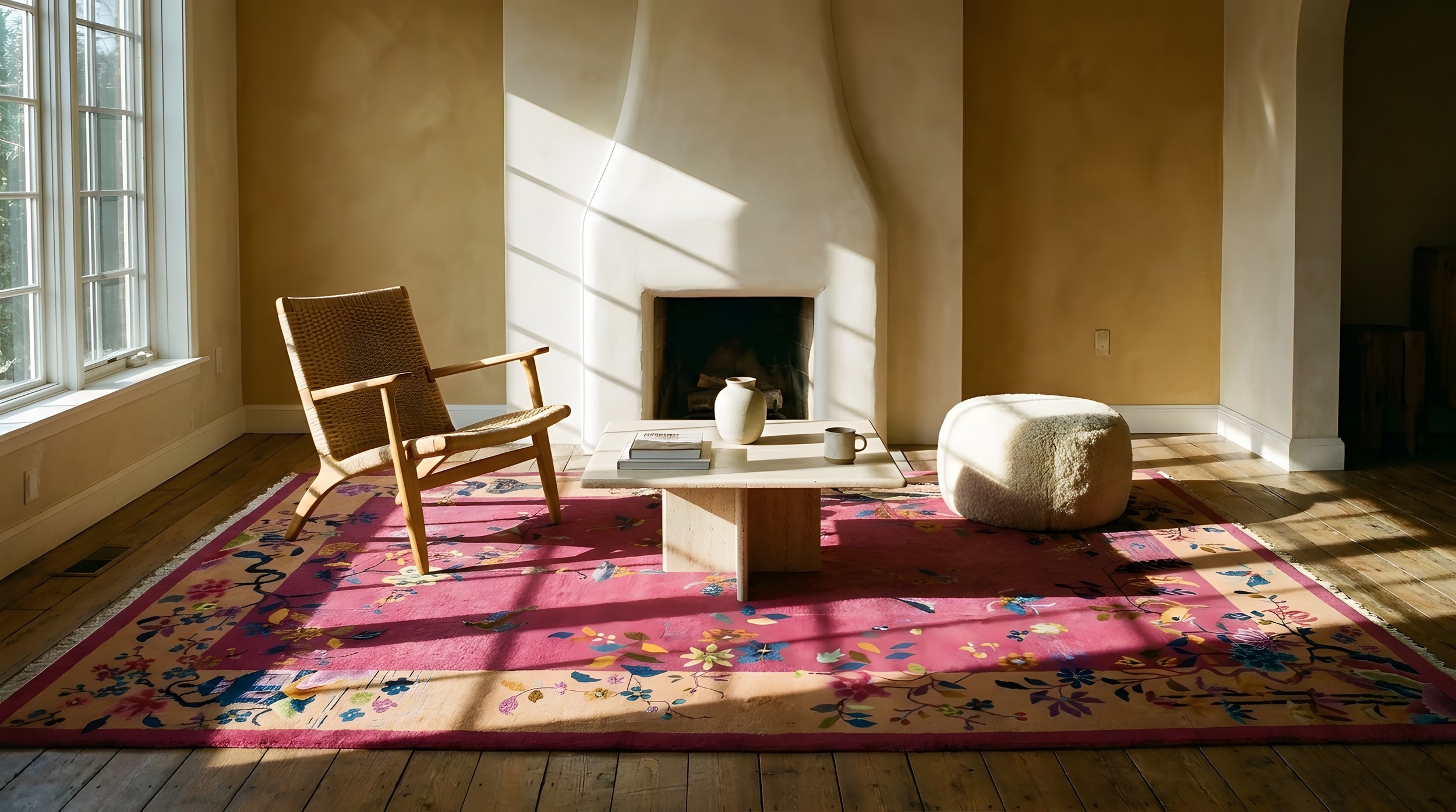

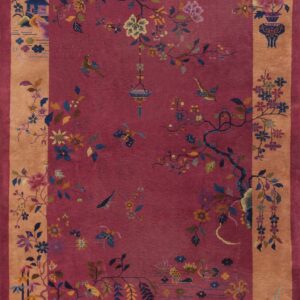

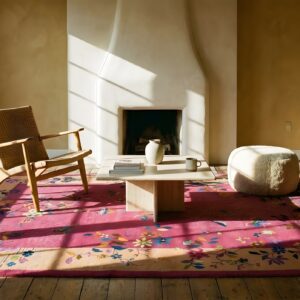
This circa 1920s Chinese Art Deco rug is a collector’s dream, distinguished by one of the rarest and most coveted colors in the antique textile world: Imperial Purple. During the “Nichols” era of production in Tientsin, while blues and golds were common, the use of a true purple foundation was reserved for the most sophisticated commissions, representing the height of Jazz Age luxury and Eastern prestige.
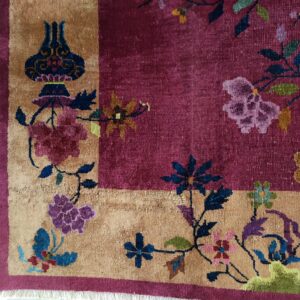
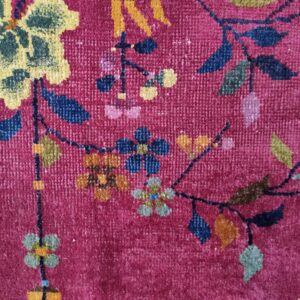
The composition is a masterclass in Art Deco minimalism and asymmetry. Rather than a traditional centered medallion, this art deco rug features a “cascading” floral arrangement. Stylized peonies, lotus blossoms, or perhaps weeping cherry branches appear to drift in from the corners, leaving a vast expanse of the purple field “open.” This use of negative space is a hallmark of the 1920s Chinese aesthetic, creating a sense of airy, modern sophistication that allows the rich color of the ground to resonate without distraction.
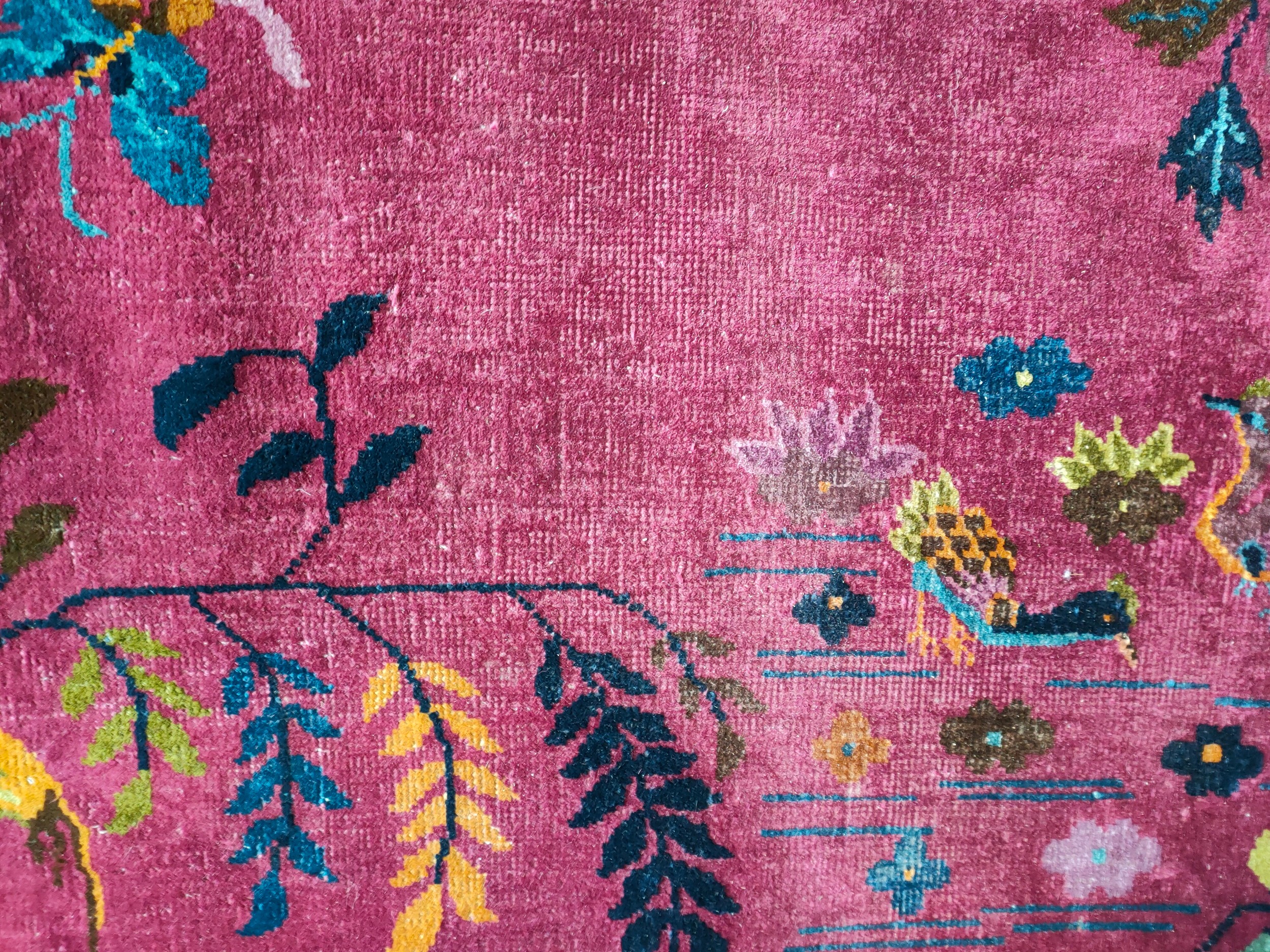
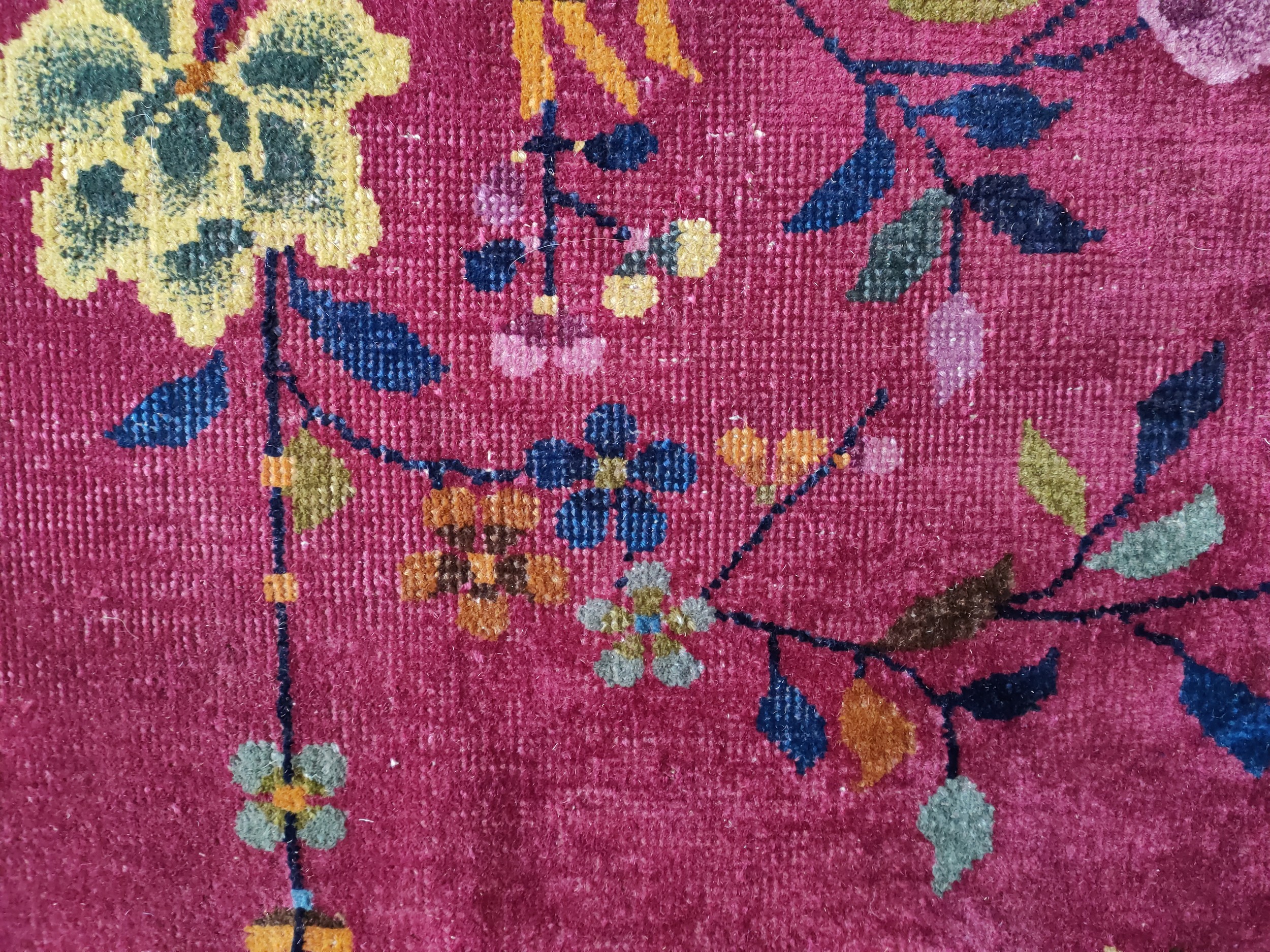
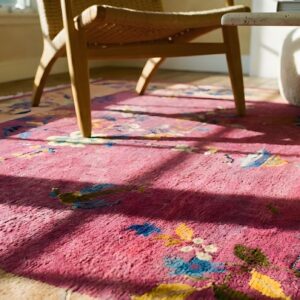
The palette is anchored by that magnificent saturated purple ground, achieved through high-quality chrome dyes that were revolutionary at the time. This deep, regal hue provides a dramatic stage for the “Jewelry Box” accents of the flowers, which are typically rendered in contrasting shades of emerald green, golden yellow, and dusty rose. Because of the specialized care given to these rugs from China in the early 20th century, the wool possesses a shimmering, silk-like sheen that makes the purple tones appear to shift in the light, from deep, regal shades to soft, luminous hues.
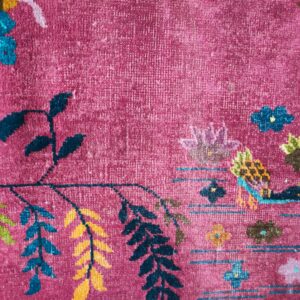
Technically, this small-size (scatter) carpet is prized for its incredibly plush and heavy pile. Chinese Art Deco rugs are famous for their “meatiness”; they are woven with thick, high-grade wool on a multi-ply cotton foundation, making them exceptionally durable and soft underfoot. A defining technical feature of this piece is the hand-carving or “sculpting” around the floral motifs. The weaver used specialized shears to cut into the pile, creating a three-dimensional, embossed effect that gives the botanical elements a lifelike, sculptural presence.
The borders are often minimal or entirely absent (“open field”), which underscores the rug’s modernist credentials. To possess an antique purple Chinese Art Deco rug is to own a piece of “Technicolor” history. It is a work that bridges the gap between ancient Chinese symbolism and the high-fashion requirements of the 1920s Western interior—a hand-wrought sanctuary of historical gravity and rare, chromatic opulence.