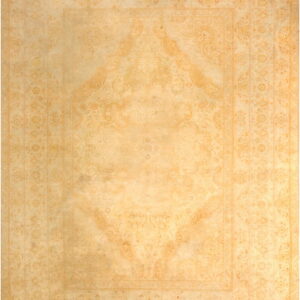
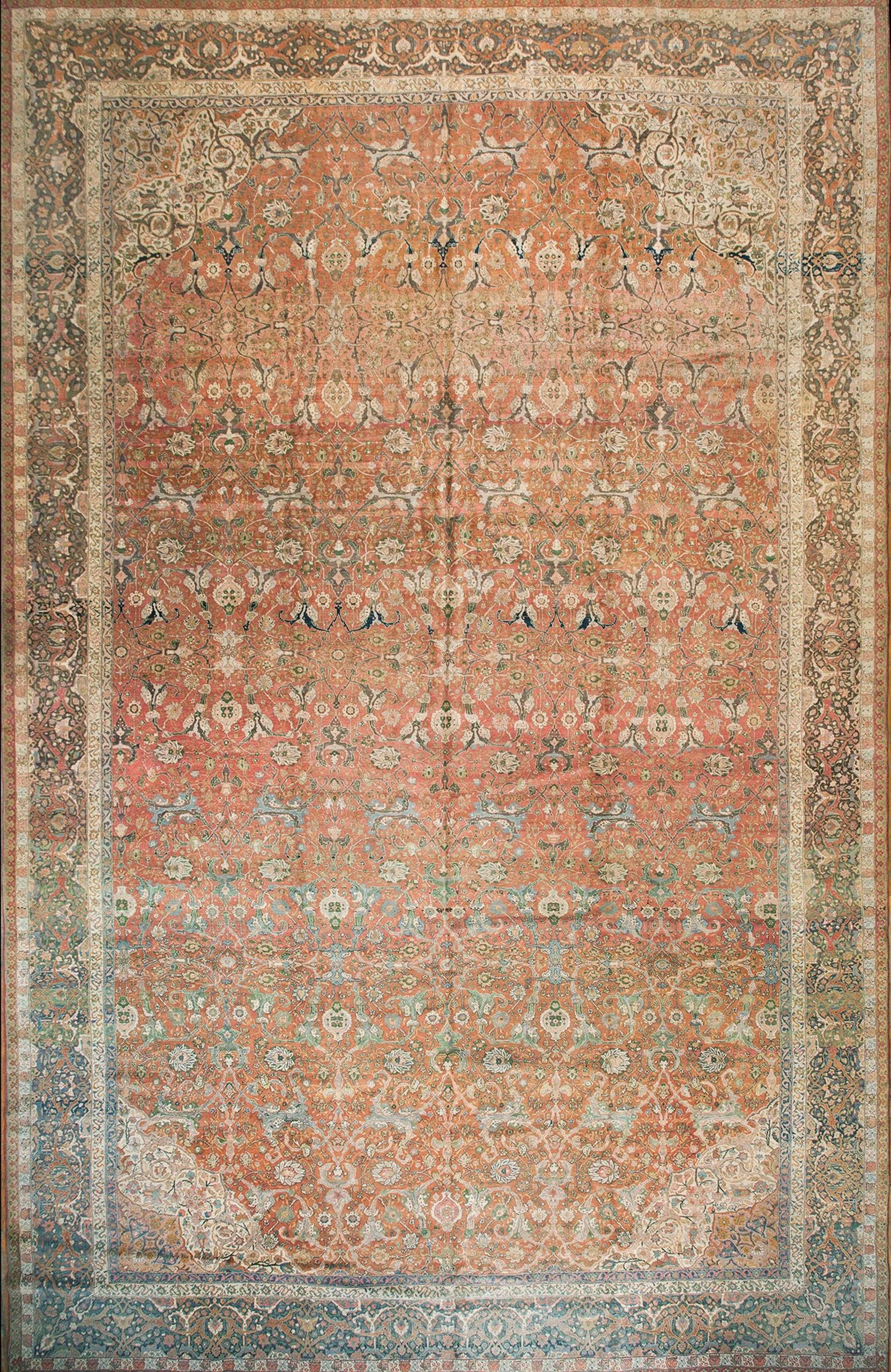
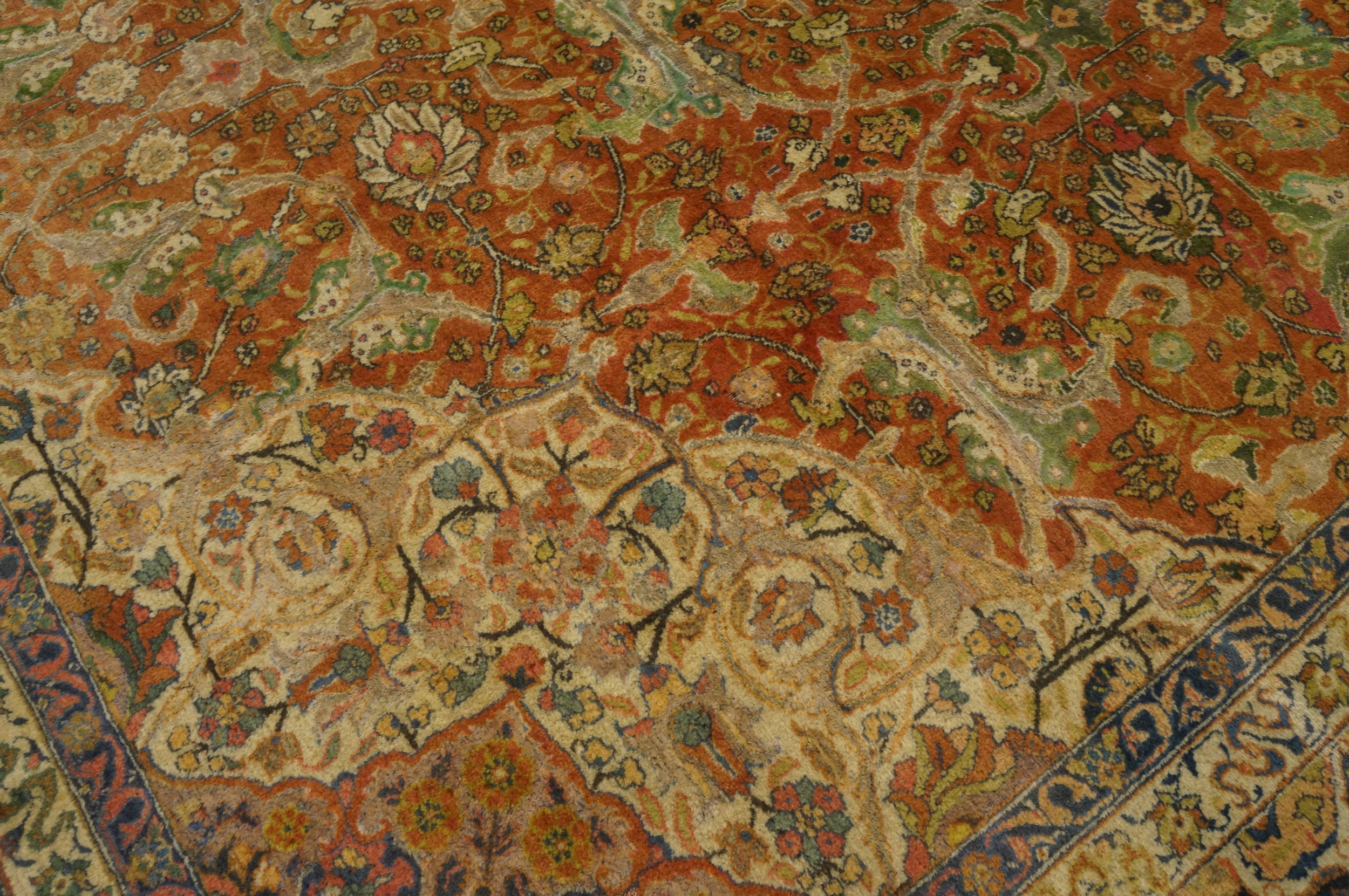
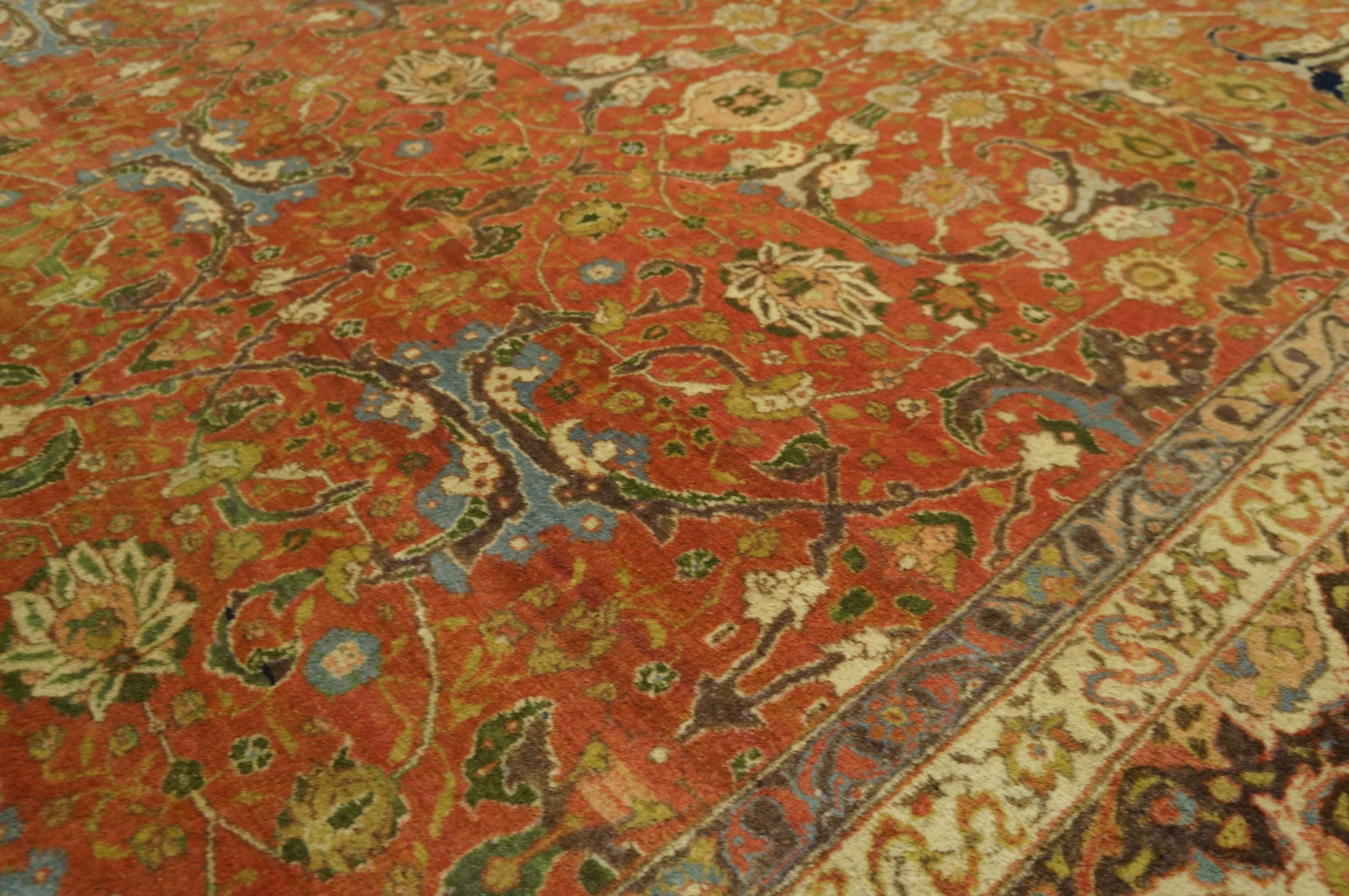
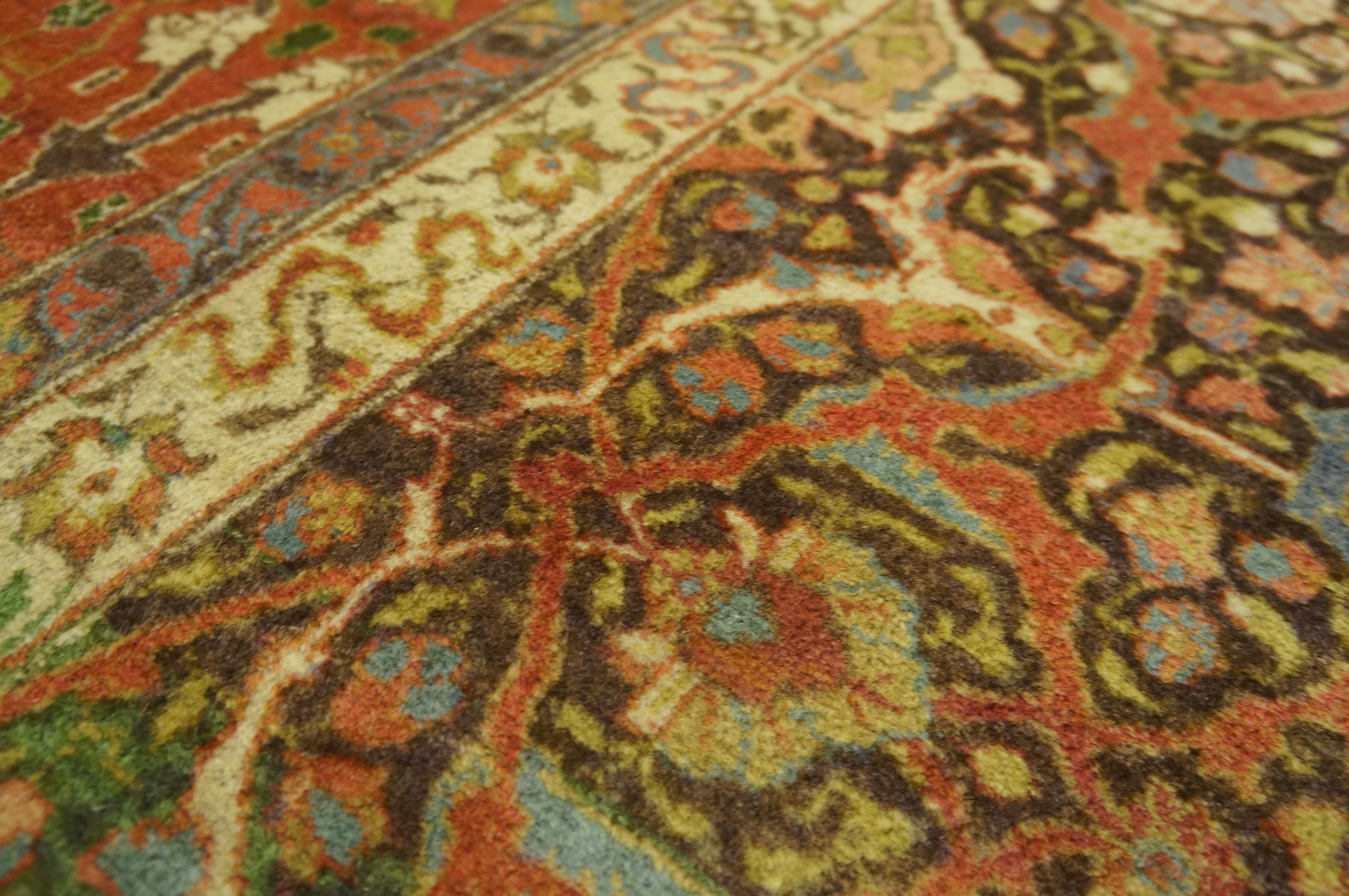
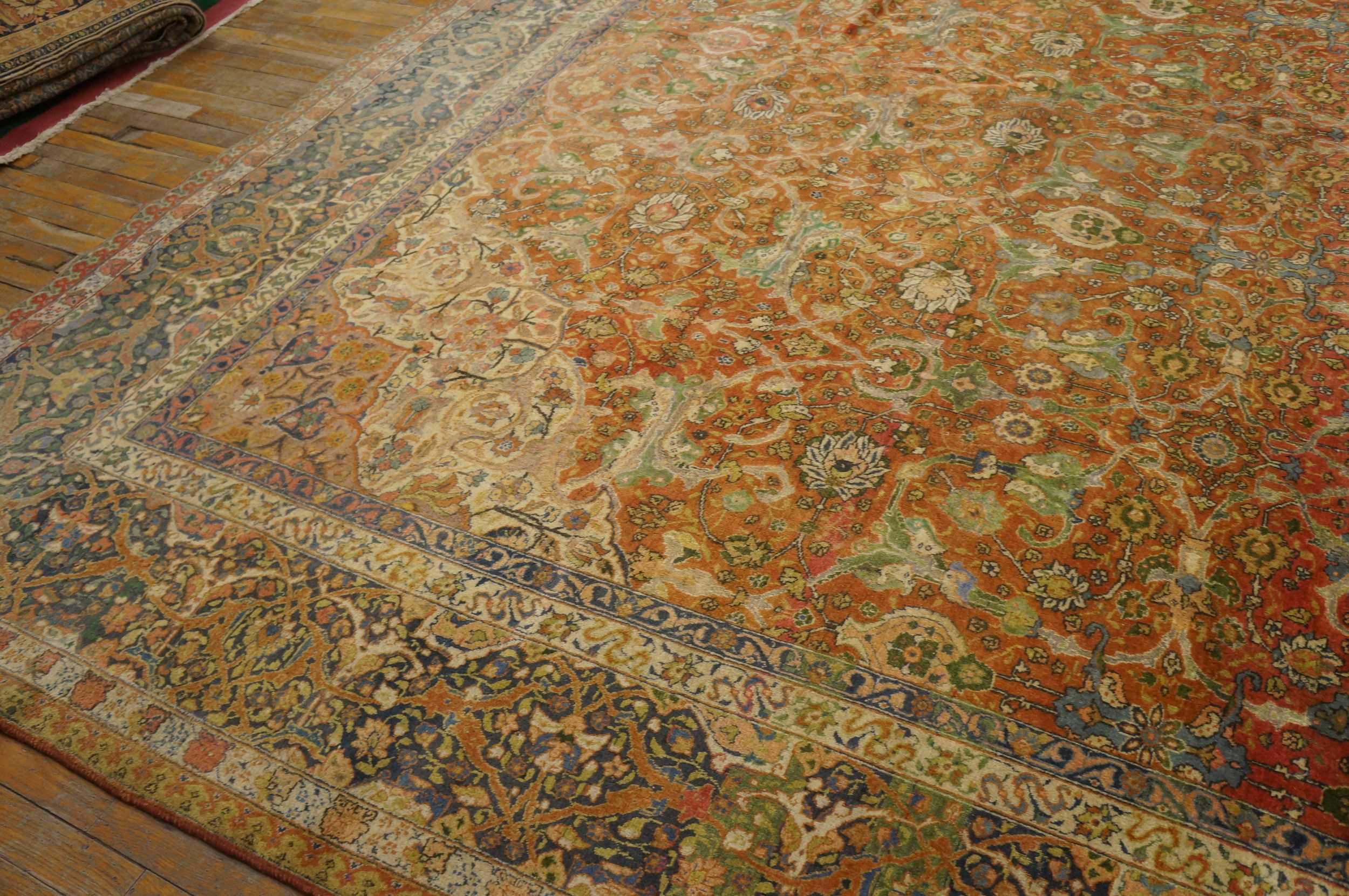
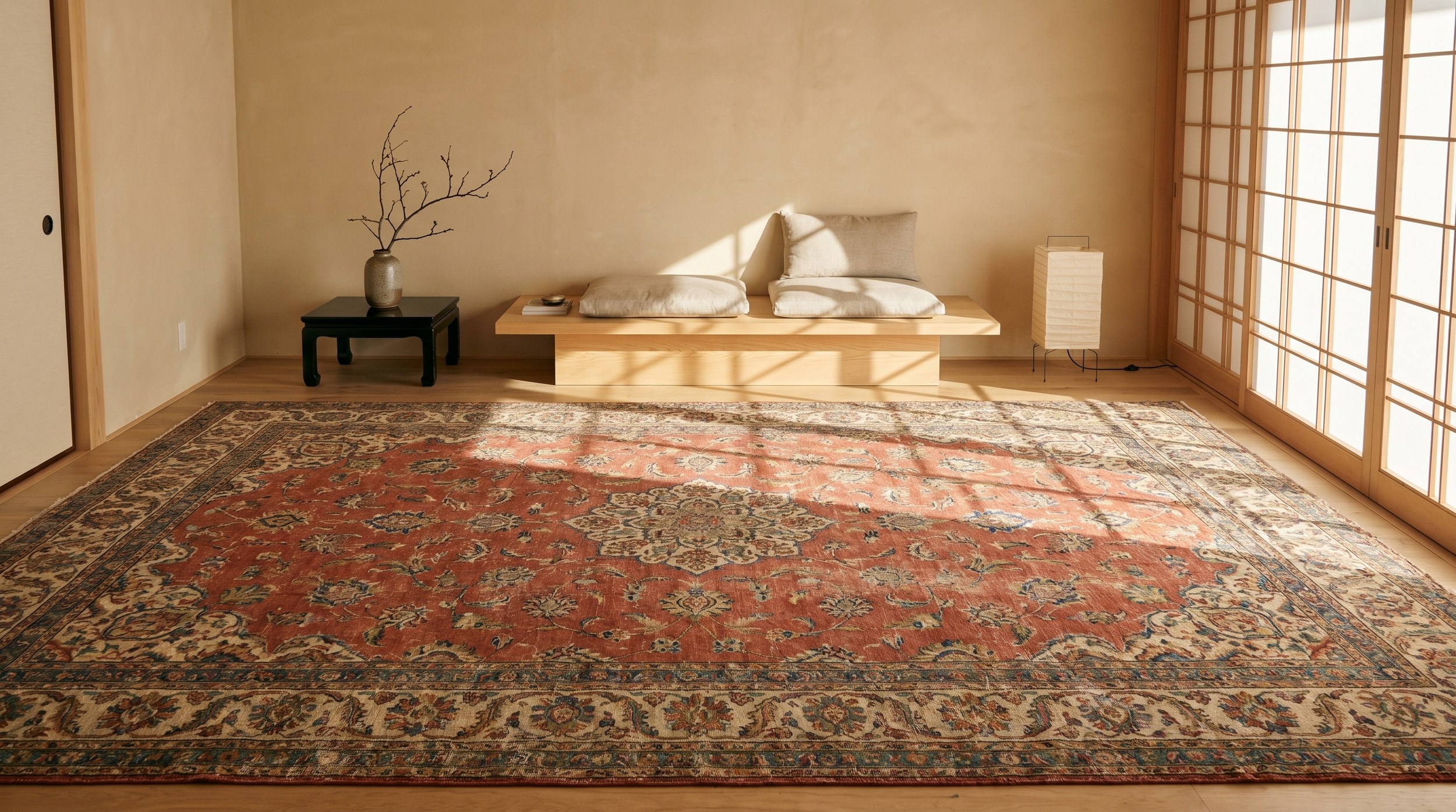
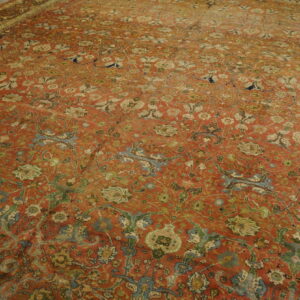
An exceptional testament to 19th-century Persian weaving, this antique Tabriz carpet reflects the distinguished aesthetic and technical mastery associated with the celebrated Haji Jalili workshop — a name synonymous with some of the most refined and sought-after Persian carpets produced during Tabriz’s artistic renaissance in the late 1800s. Haji Jalili’s work is revered for its harmonious balance of delicate floral ornamentation, elegant color modulation, and meticulously executed hand-knotting, inviting both collectors and designers to appreciate it as a textile masterpiece rather than merely a utilitarian floor covering.
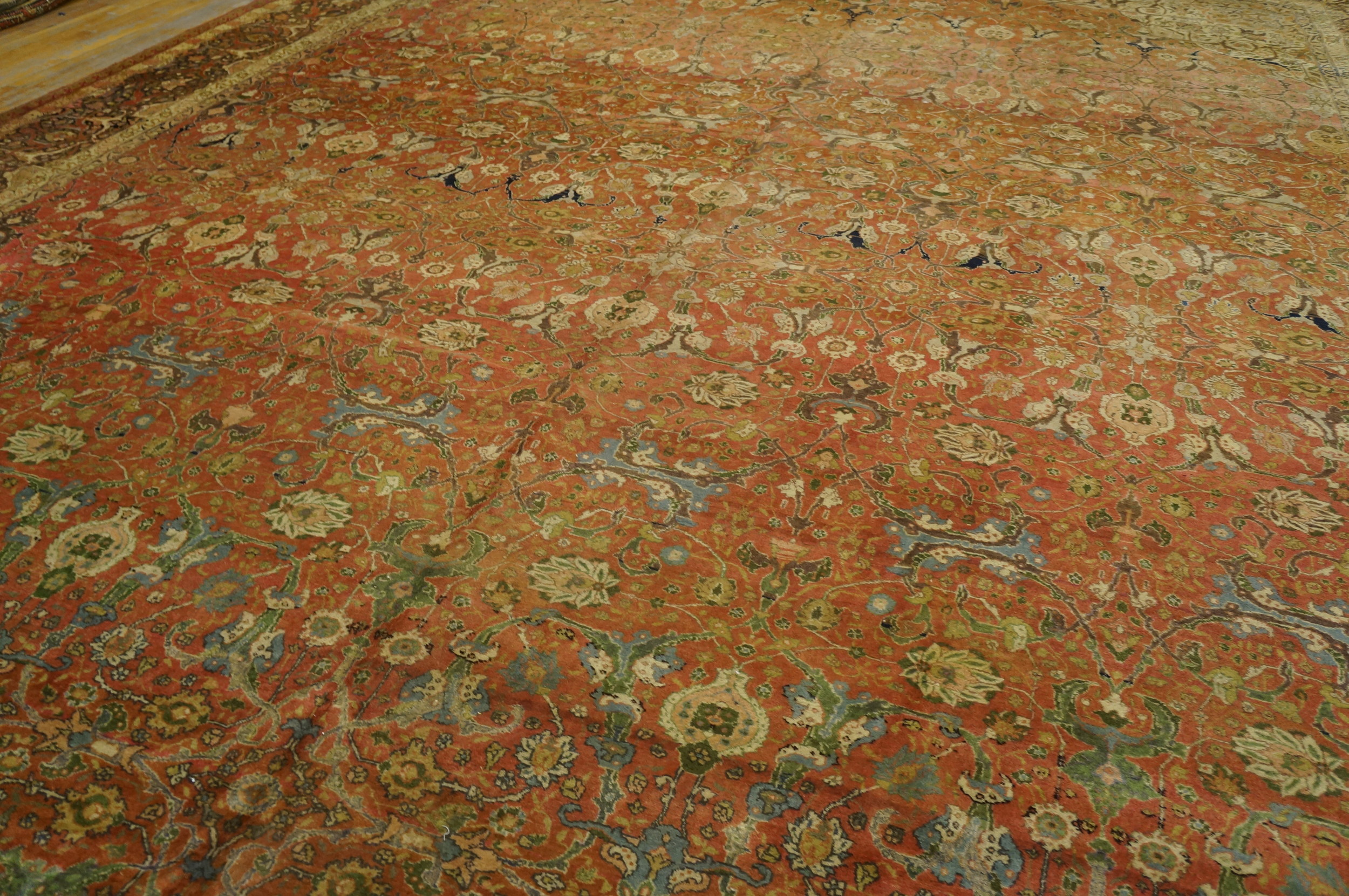
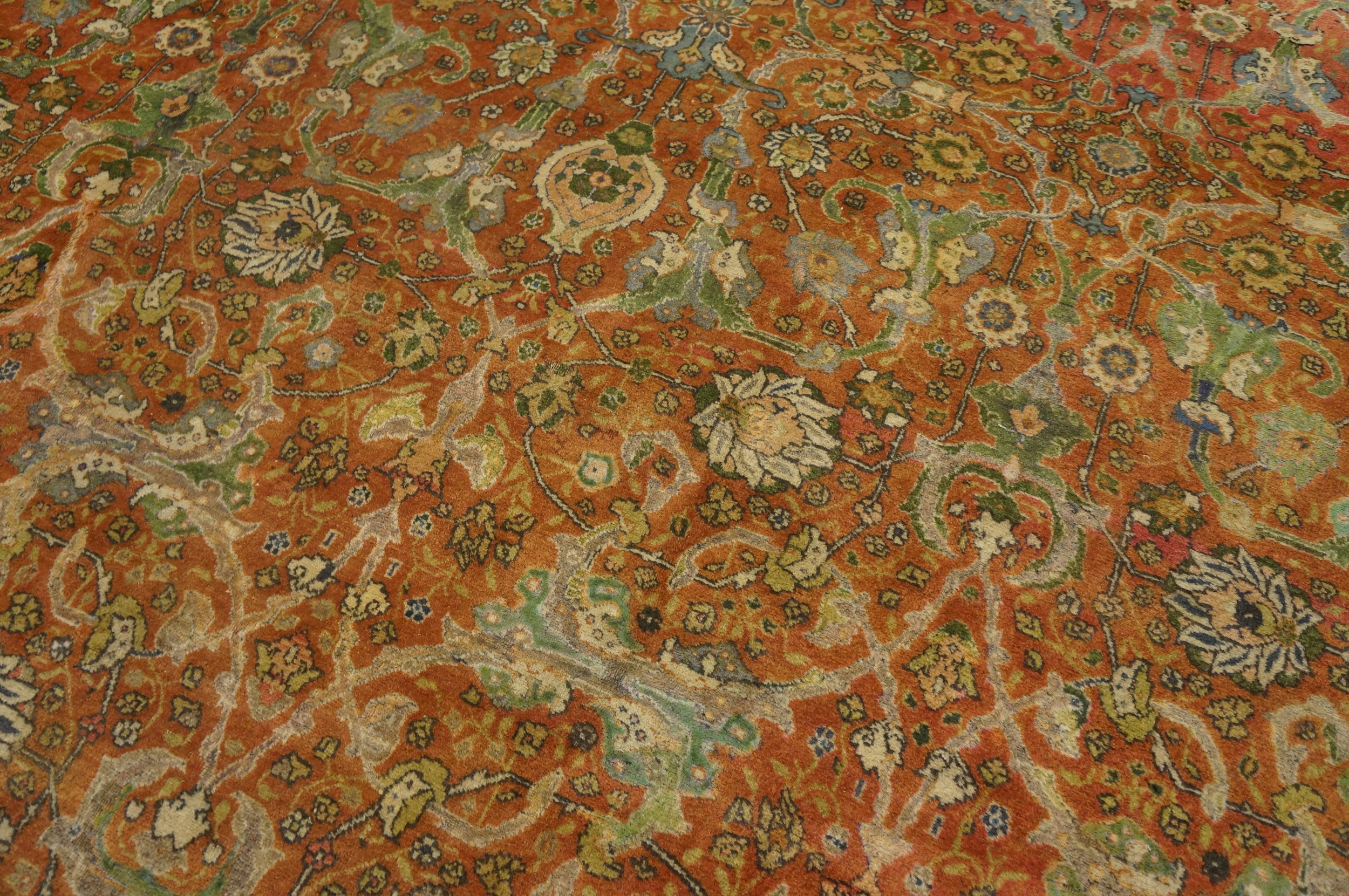
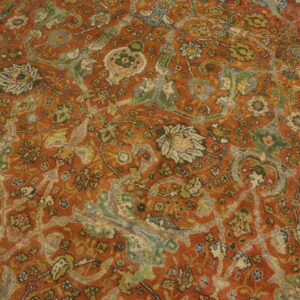
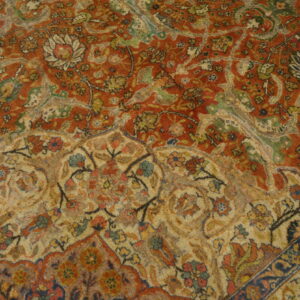
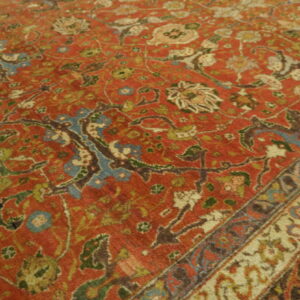
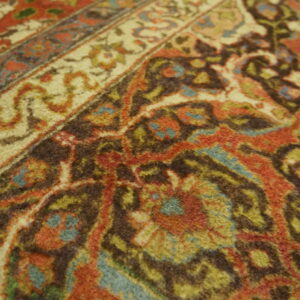
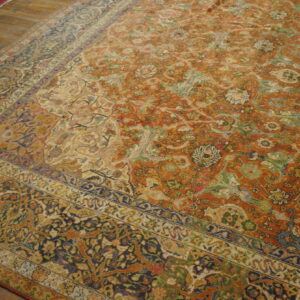
The carpet’s all-over floral design creates a rhythmic tapestry of organic forms that seem to bloom across the field in a carefully orchestrated pattern, offering visual richness without overwhelming the senses. This fullness of ornament recalls the garden landscapes celebrated in Persian art — where blossoms, vines, and fronds are woven into a cohesive, flowing whole that rewards close inspection and sustained appreciation.
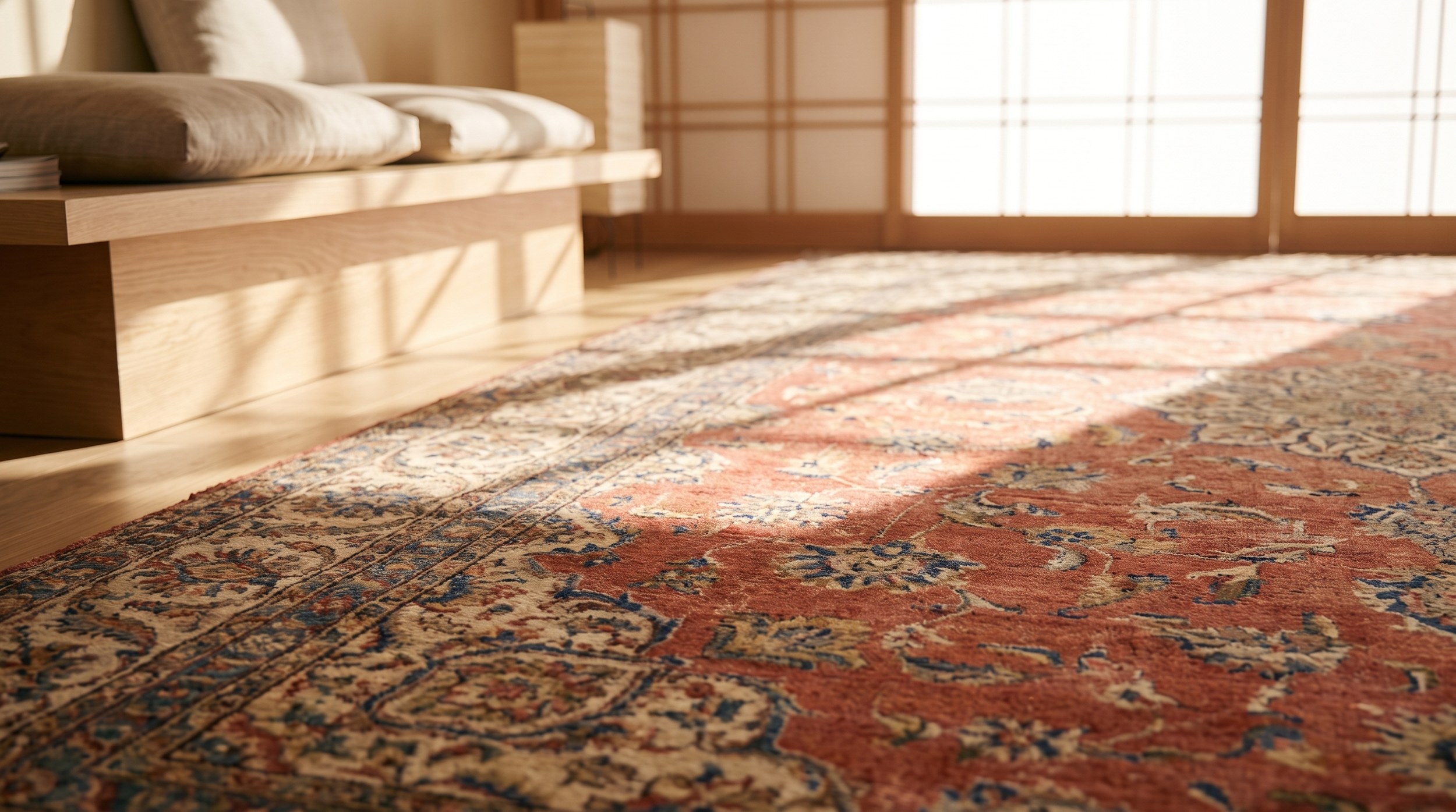
Characteristic of Tabriz weaving excellence, the beautiful red color rug was crafted with a hand-knotted wool pile on a sturdy foundation, yielding both tactile warmth and enduring structural integrity. The vibrant yet graceful quality of the floral motifs — enlivened by soft tonal shifts and natural dyes that have mellowed beautifully over time — imbues the carpet with a timeless, lived-in elegance that bridges classic and transitional interior schemes.
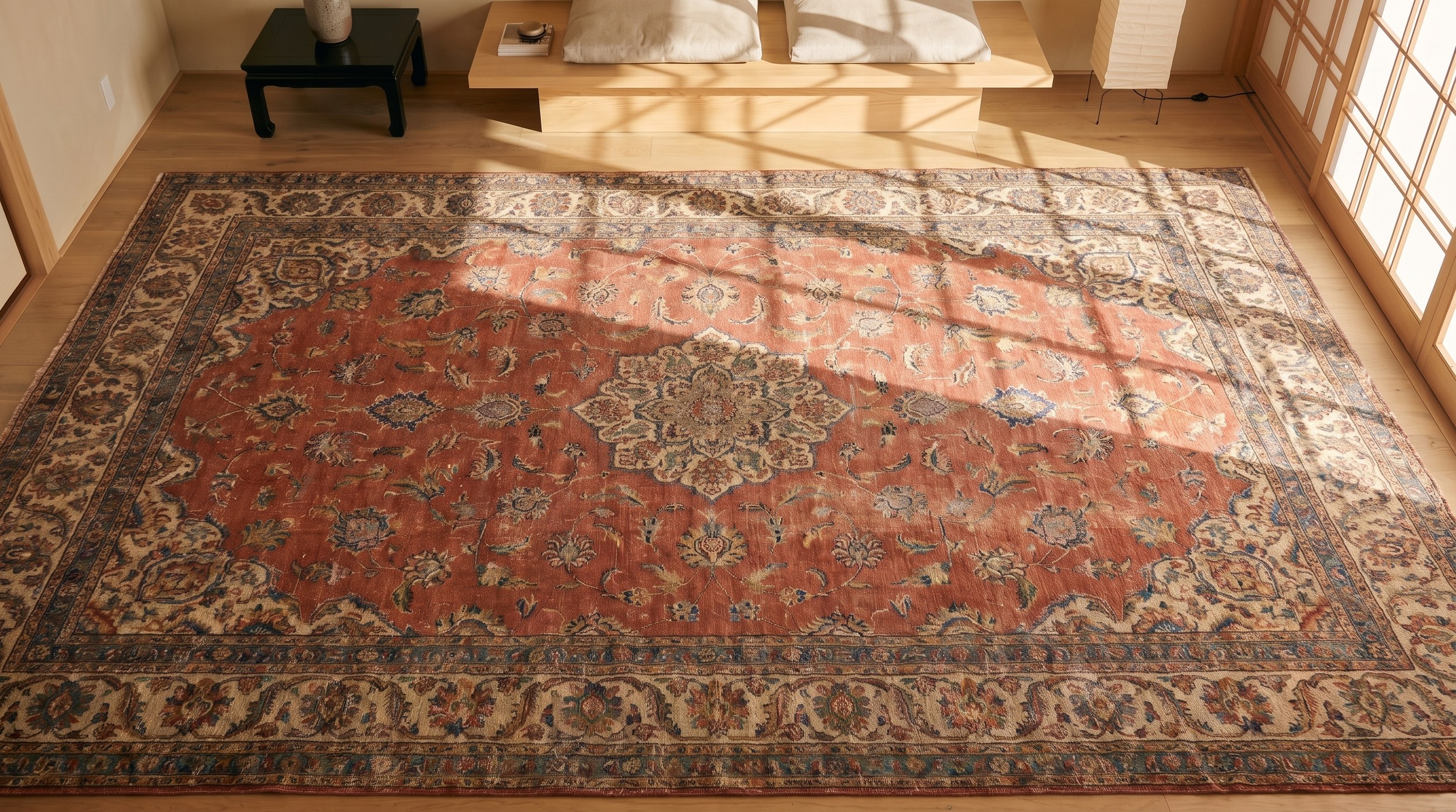
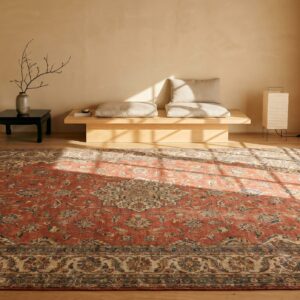
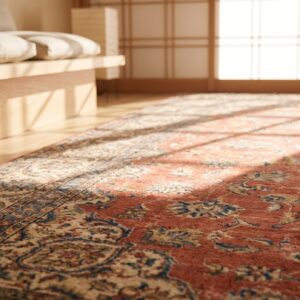
In interiors, this carpet functions as a cultural and artistic anchor: its floral tapestry enhances formal living spaces, quietly complements eclectic contemporary settings, or brings historic depth to curated quarters of art and design. As a work of antique Persian weaving, it speaks to a rich heritage of craftsmanship and aesthetic refinement that continues to resonate with modern sensibilities.