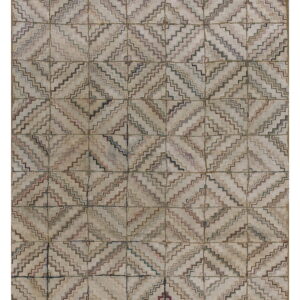

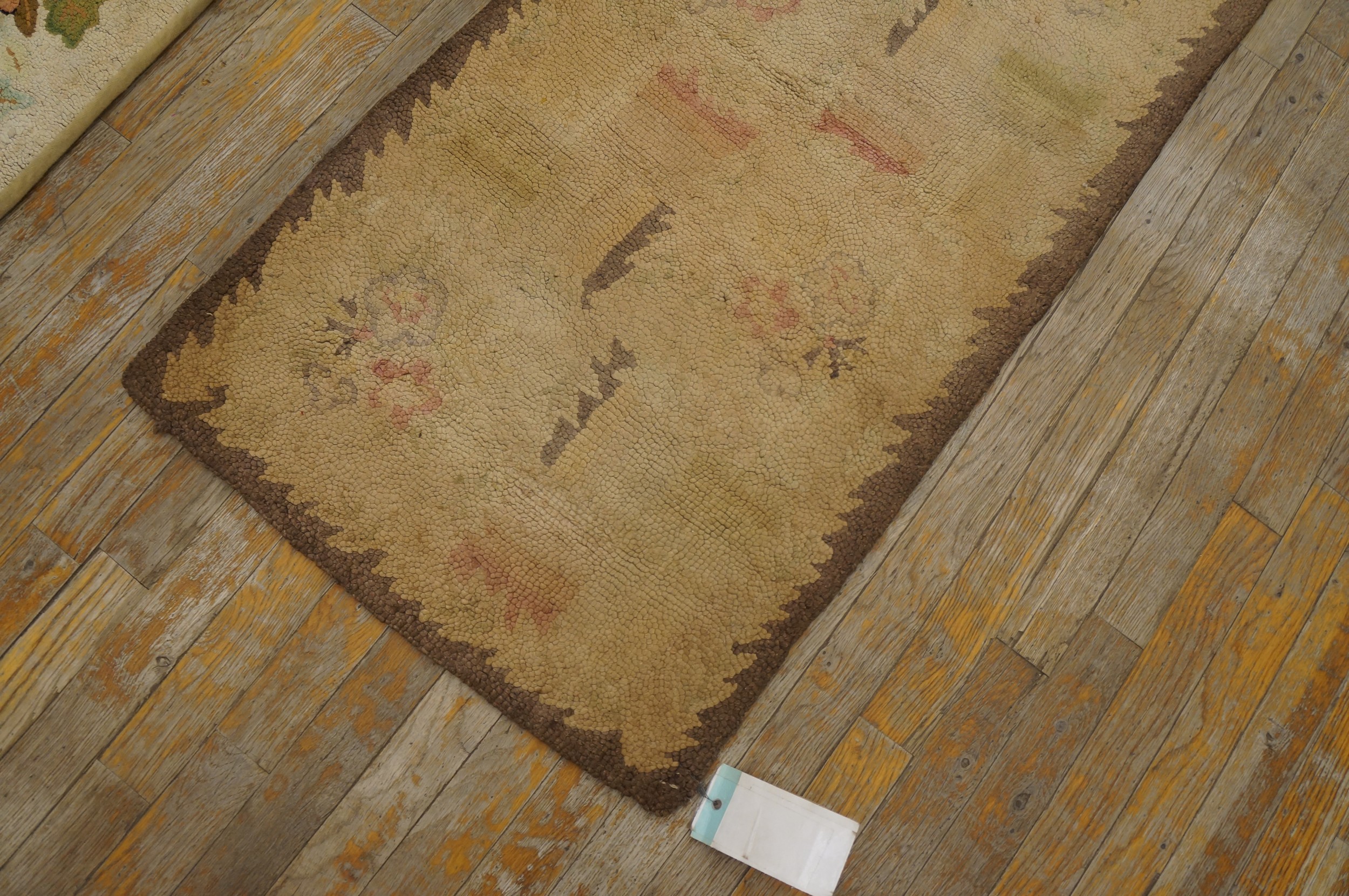
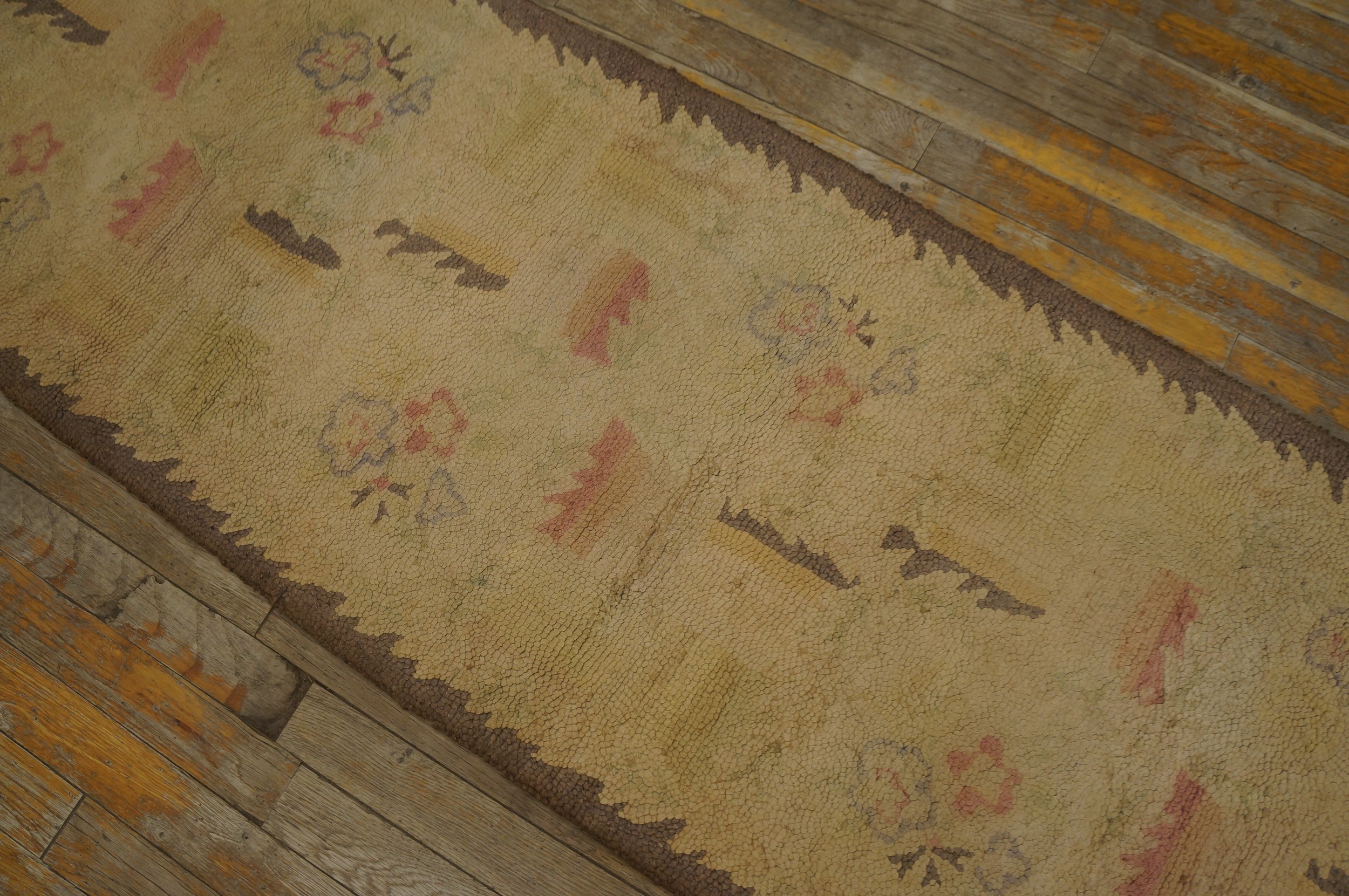
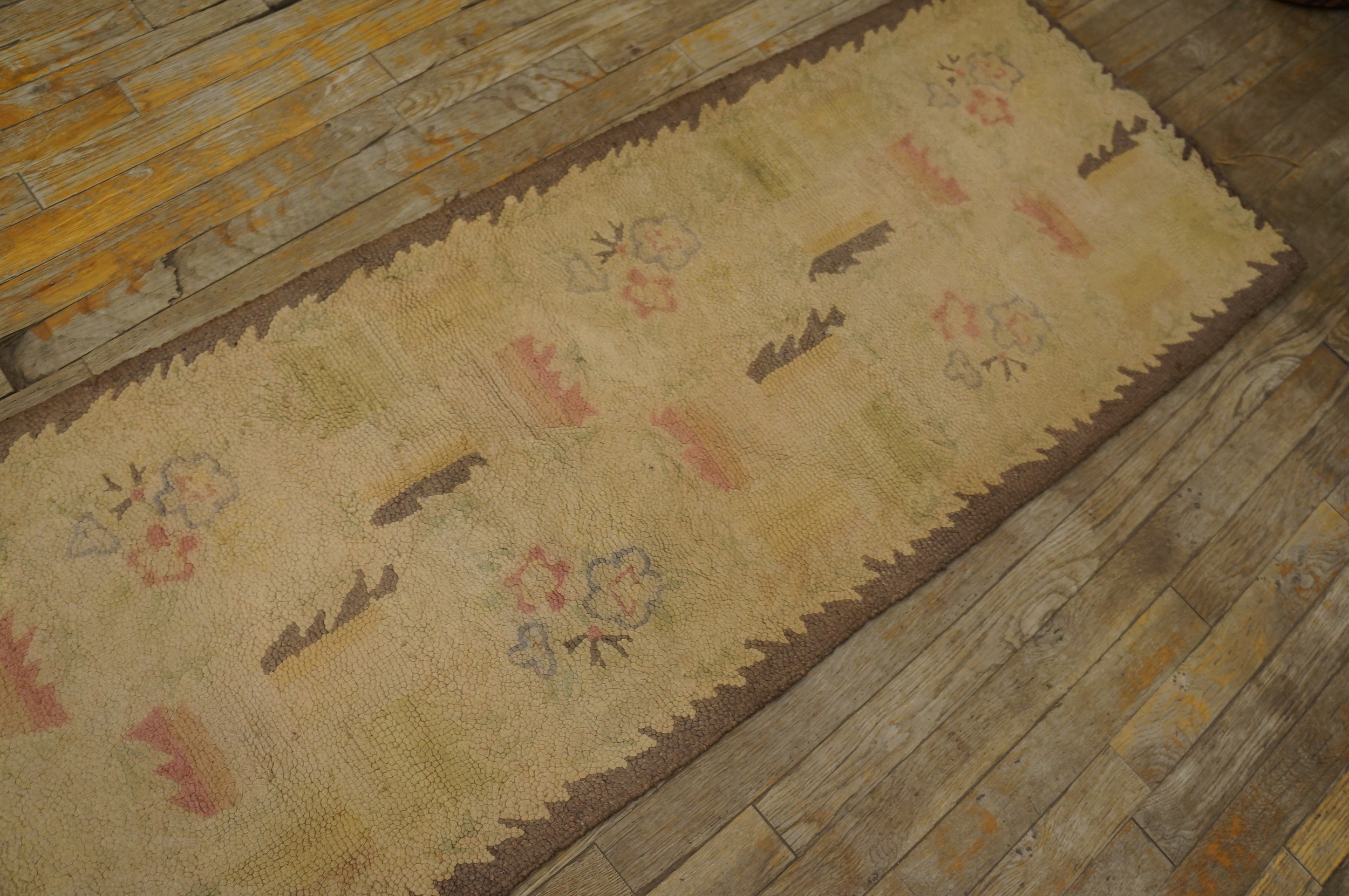
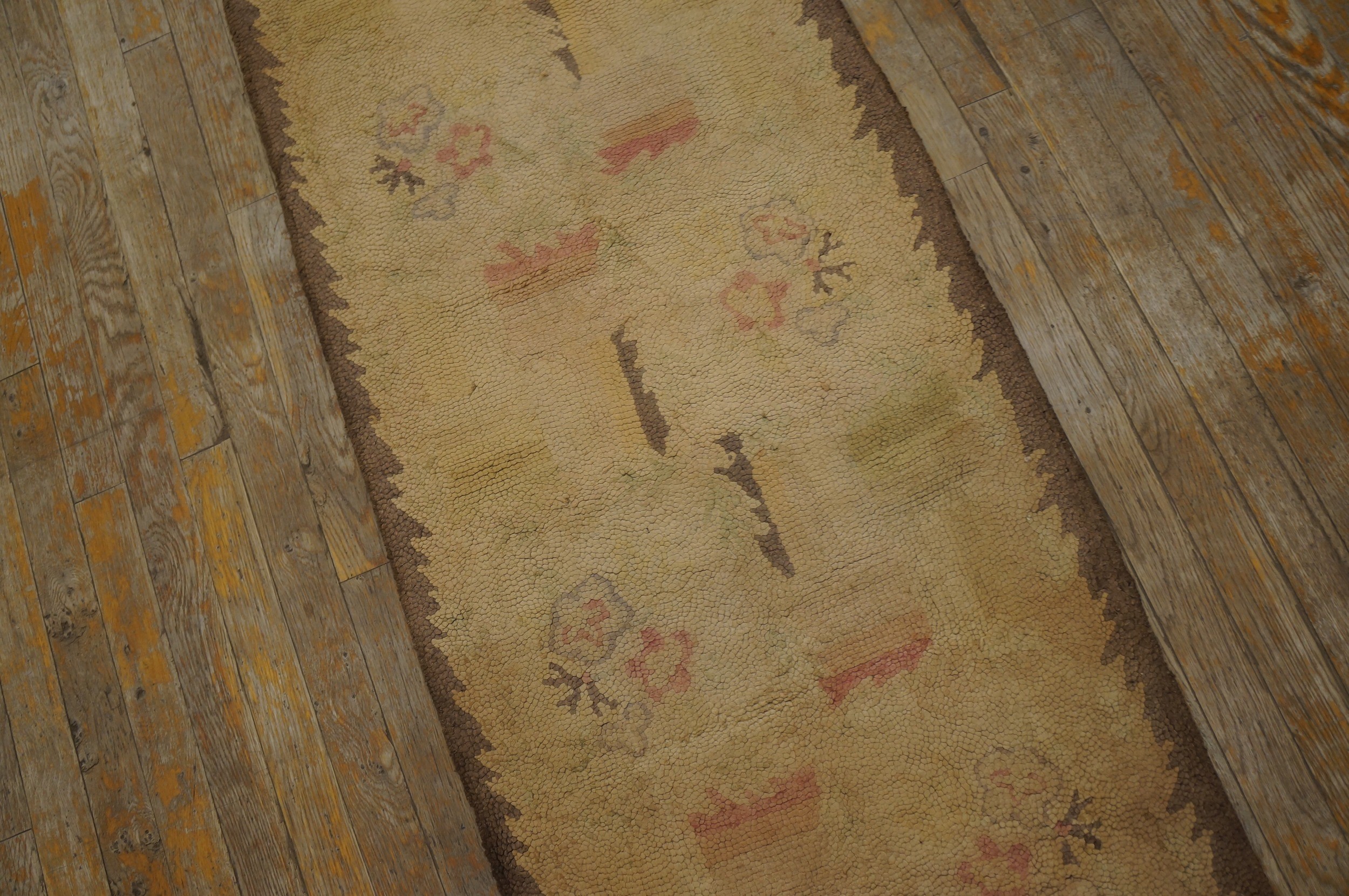
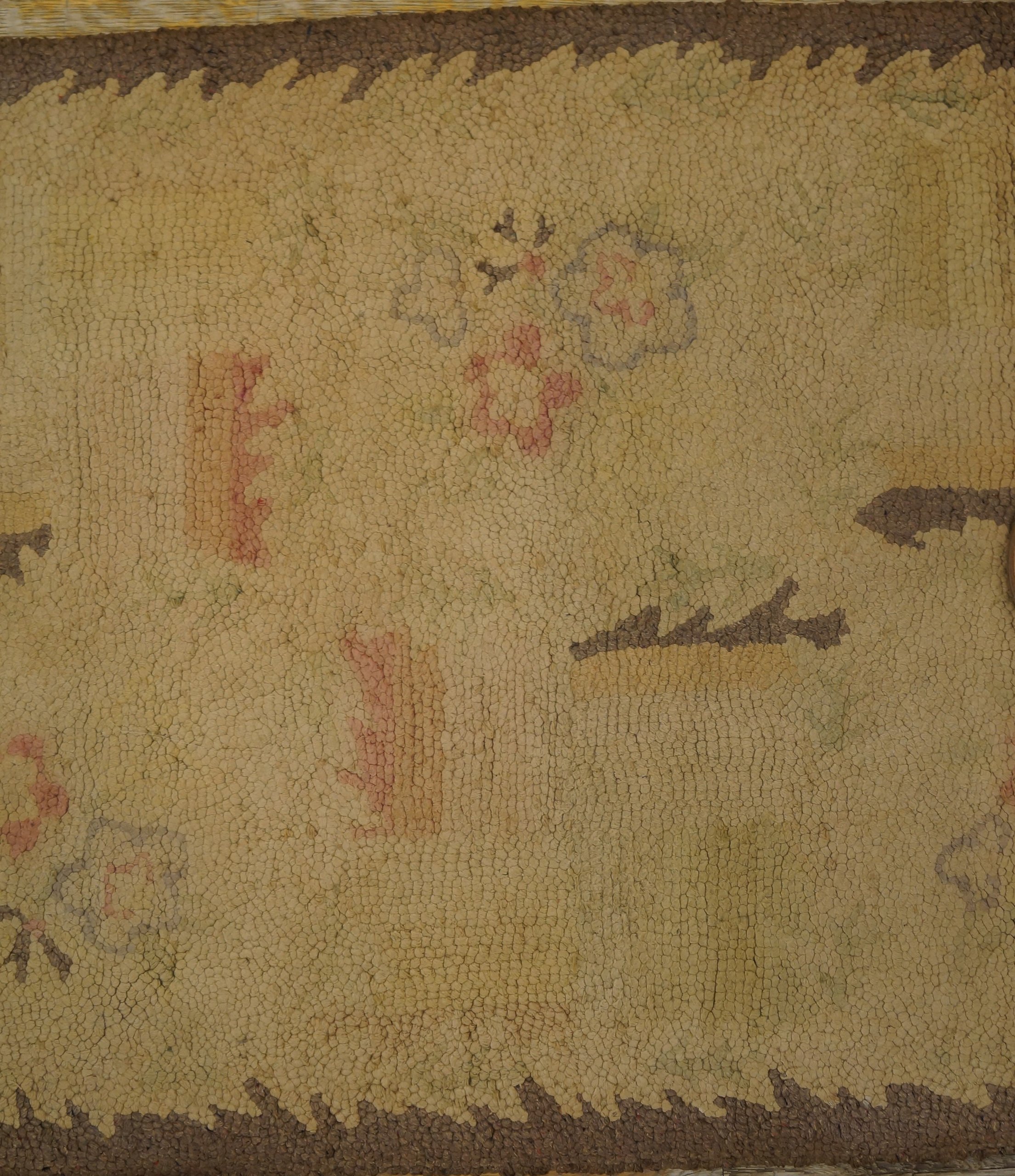
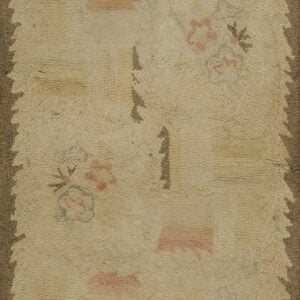
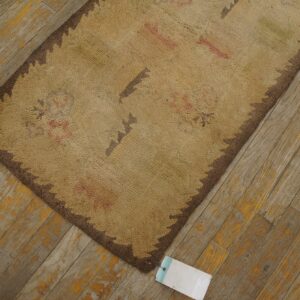
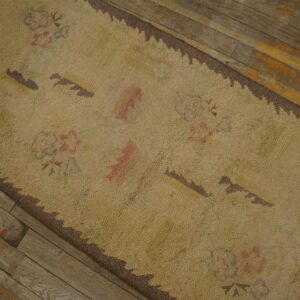
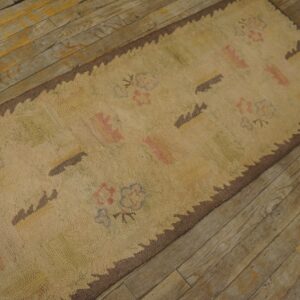
This mid-20th-century American hooked long hallway runner rug is a masterclass in “Rustic Modernism,” representing a period where the traditional domestic crafts of the New World began to embrace the clean, reductive aesthetics of Mid-Century design. While earlier American hooked rugs often featured dense, multi-colored floral explosions, this narrow hallway runner is defined by its sophisticated restraint and “Quiet Luxury.”
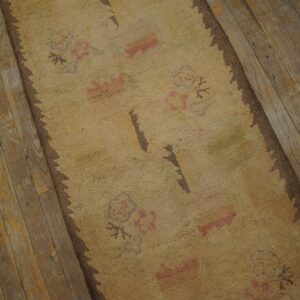
The composition of the area rug is centered upon a minimalist American folk art design philosophy. Rather than overwhelming the field with complex patterns, the weaver has utilized “visual breathing room,” allowing a few carefully placed, stylized motifs—likely subtle botanical sprigs or soft geometric elements—to float within the long expanse. The drawing possesses a “primitive” elegance, characterized by hand-drawn lines that feel organic and personal. This minimalist approach highlights the narrow architectural format, making it a perfect sculptural element for a long, sleek corridor.
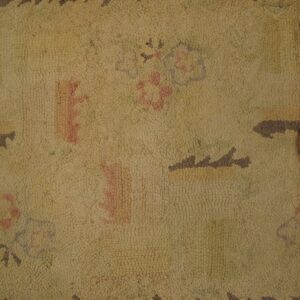
The palette is anchored by a luminous antique ivory and cream foundation. This soft, neutral ground acts as a sun-drenched stage for the secondary accents. Because the hooked American area rugs from this era were made using hand-cut strips of recycled wool and flannel, the ivory field possesses a magnificent “marbled” variegation (the folk-art equivalent of abrash). This shimmering, “salt-and-pepper” texture gives the “solid” field a watercolor-like depth and a soft, historical glow that prevents the minimalist design from feeling cold or sterile.
Technically, this runner is prized for its tightly looped, nubby texture and substantial, “meaty” handle. The process of hand-hooking individual loops through a burlap or linen backing creates a three-dimensional surface that catches the light with a unique, matte quality. Over the decades, the wool fibers have slightly “felted,” resulting in a velvety, suede-like patina that is incredibly soft underfoot and provides a sense of “broken-in” historical gravity.
The borders act as a whisper-thin architectural frame, often using a tonal “mottled” edge to “lock in” the airy lightness of the ivory field. To possess this Vintage Minimalist American Hooked runner is to own a monument to mid-century transitional art. It bridges the gap between the humble resourcefulness of the 19th-century hearth and the sophisticated “less is more” requirements of the modern interior—transforming a transitional hallway into a sanctuary of historical soul and serene, ivory grace.