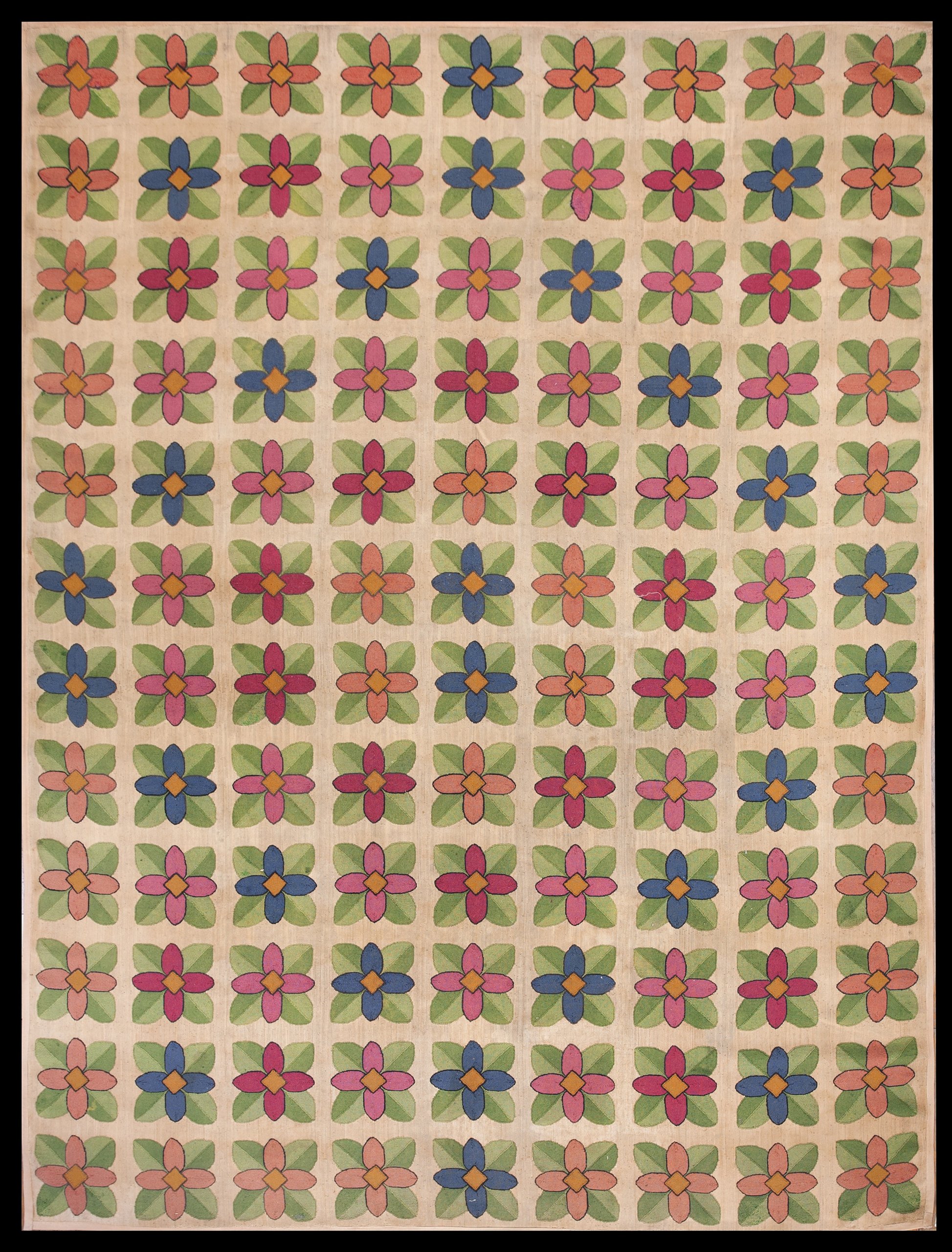
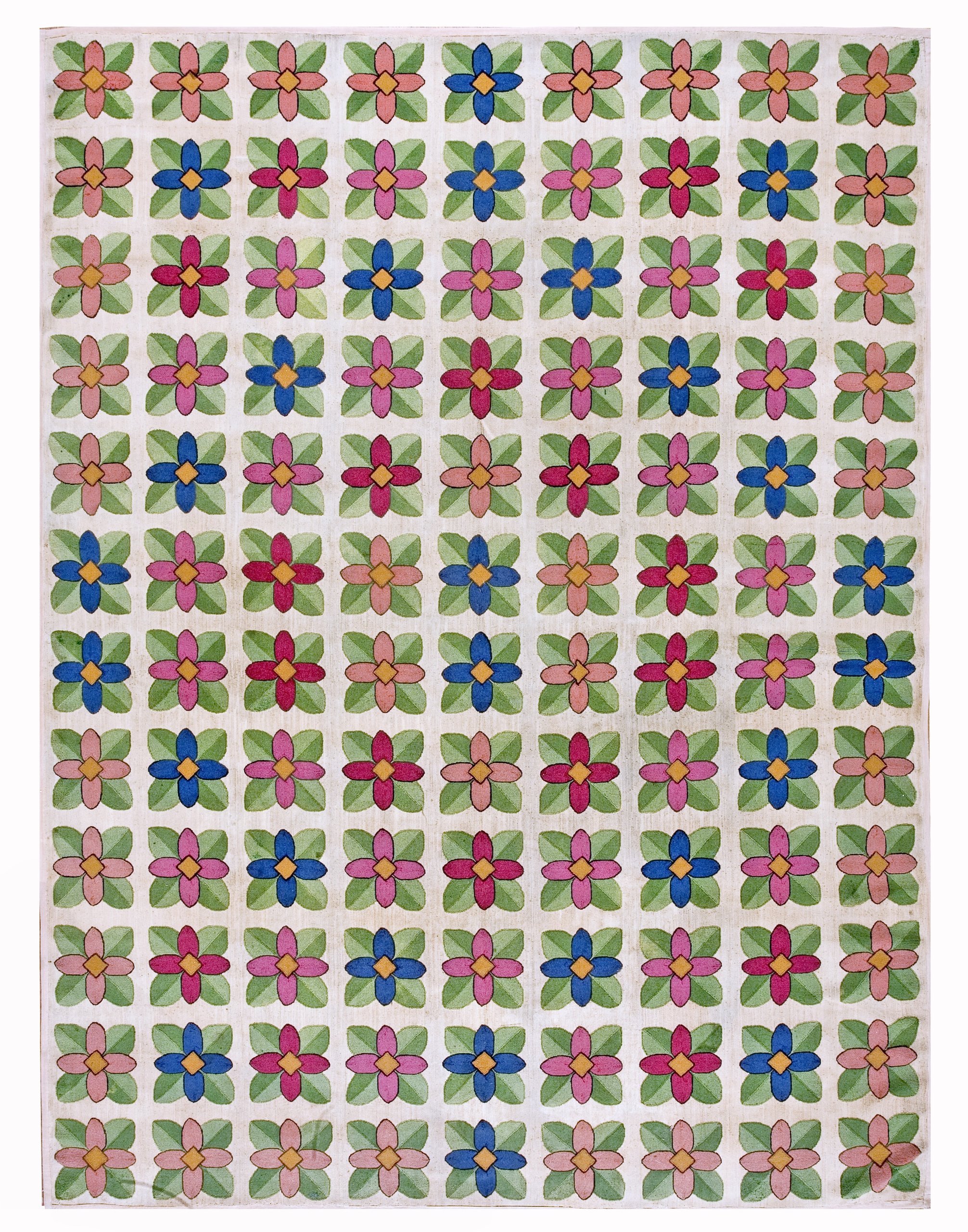
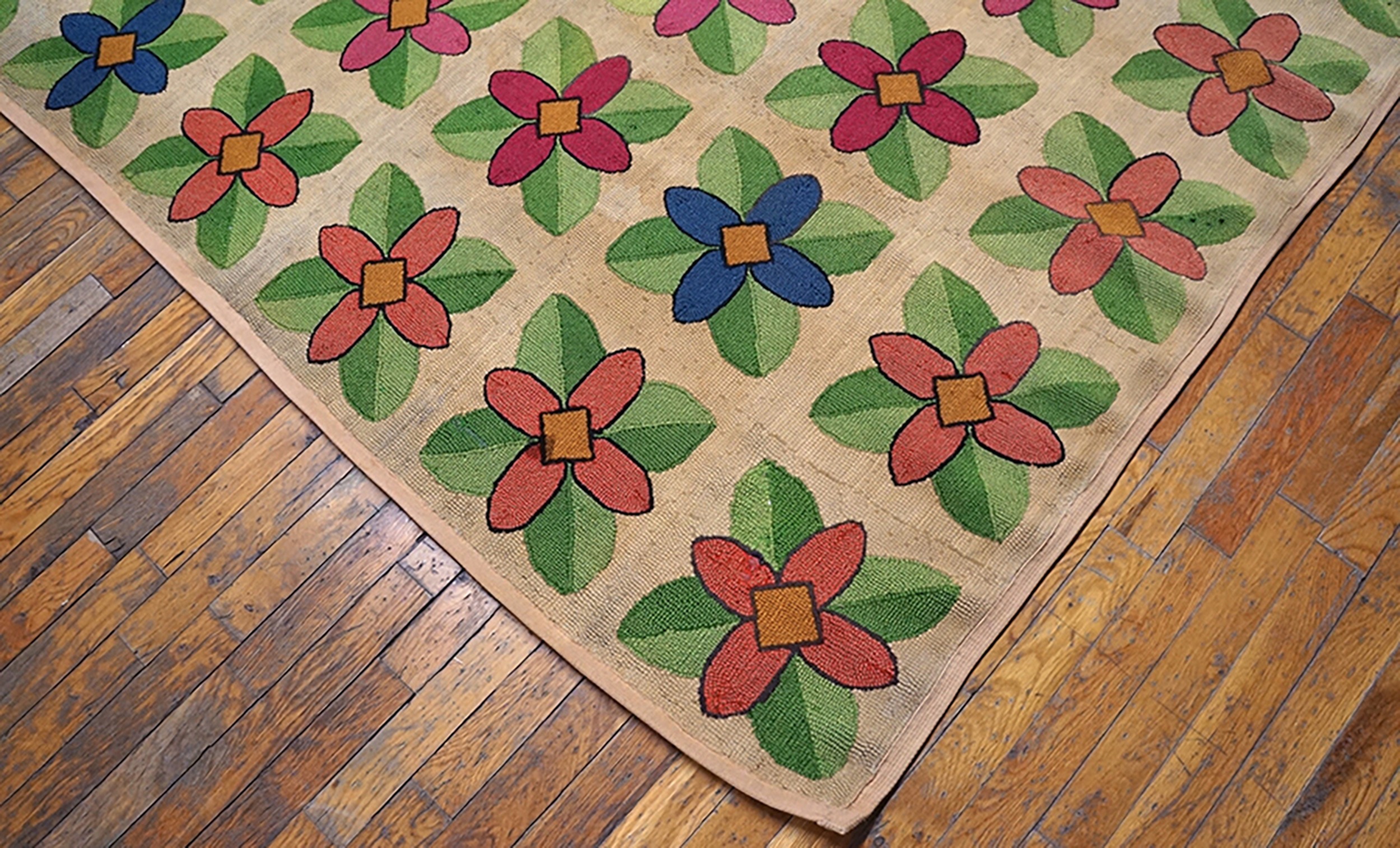
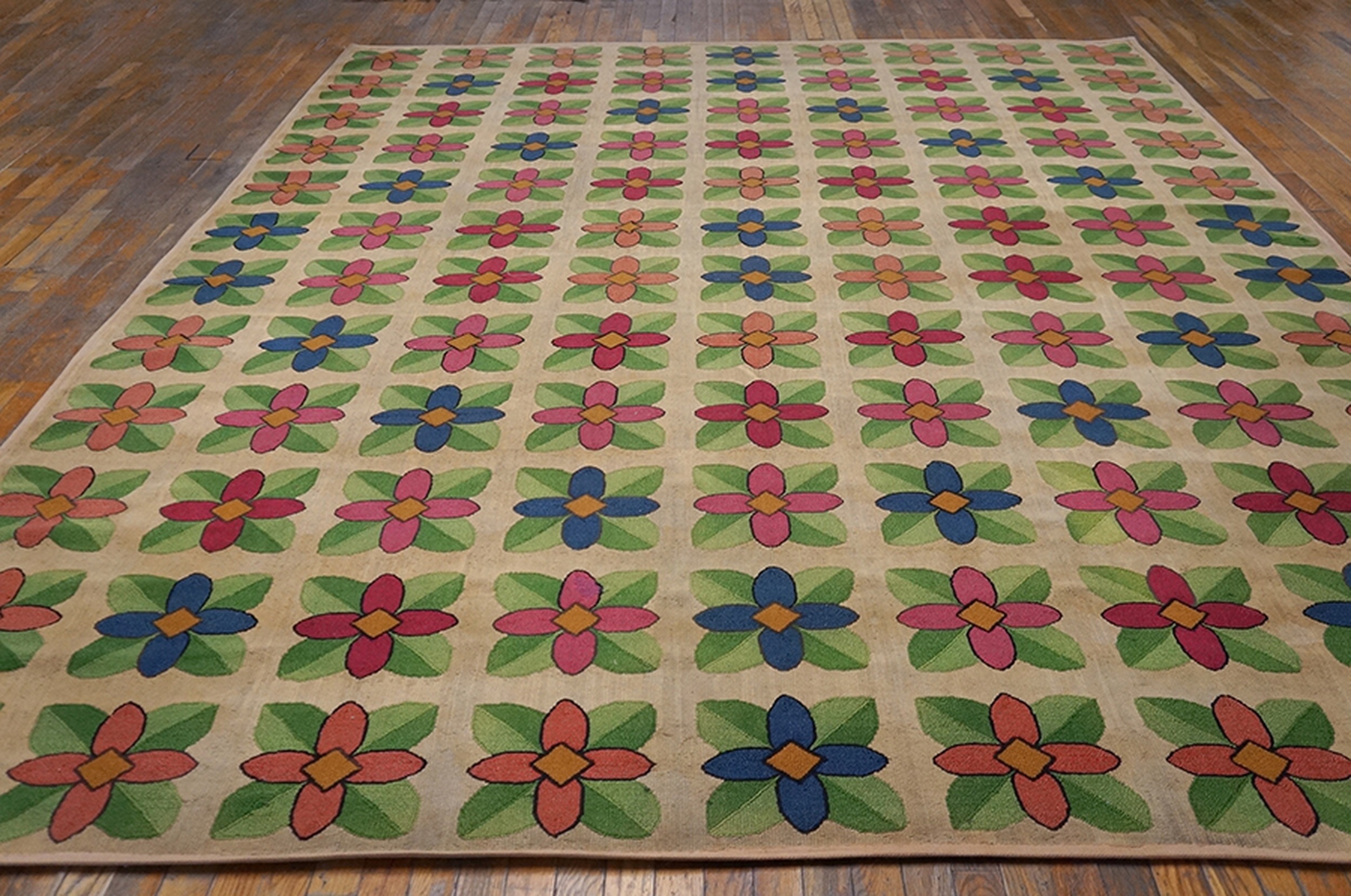
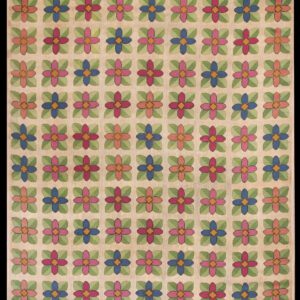
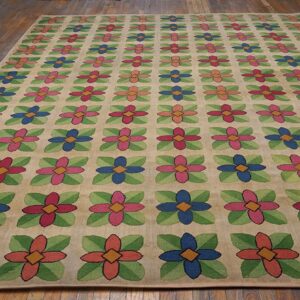
This magnificent room-sized antique American hooked rug, dating from the late nineteenth century, is a superlative example of the “Golden Age” of American folk art. Historically, hooked area rugs from America were the quintessential textile of the American Northeast, born from a fusion of pioneer resourcefulness and a deep-seated desire to bring decorative warmth to the colonial home. While most antique American hooked rugs from this era were small “scatter” sizes or hearth rugs, a specimen of this “room-sized” magnitude represents an immense investment of time and labor, likely serving as the prestigious centerpiece for a formal parlor or a high-status bedchamber in a New England estate.
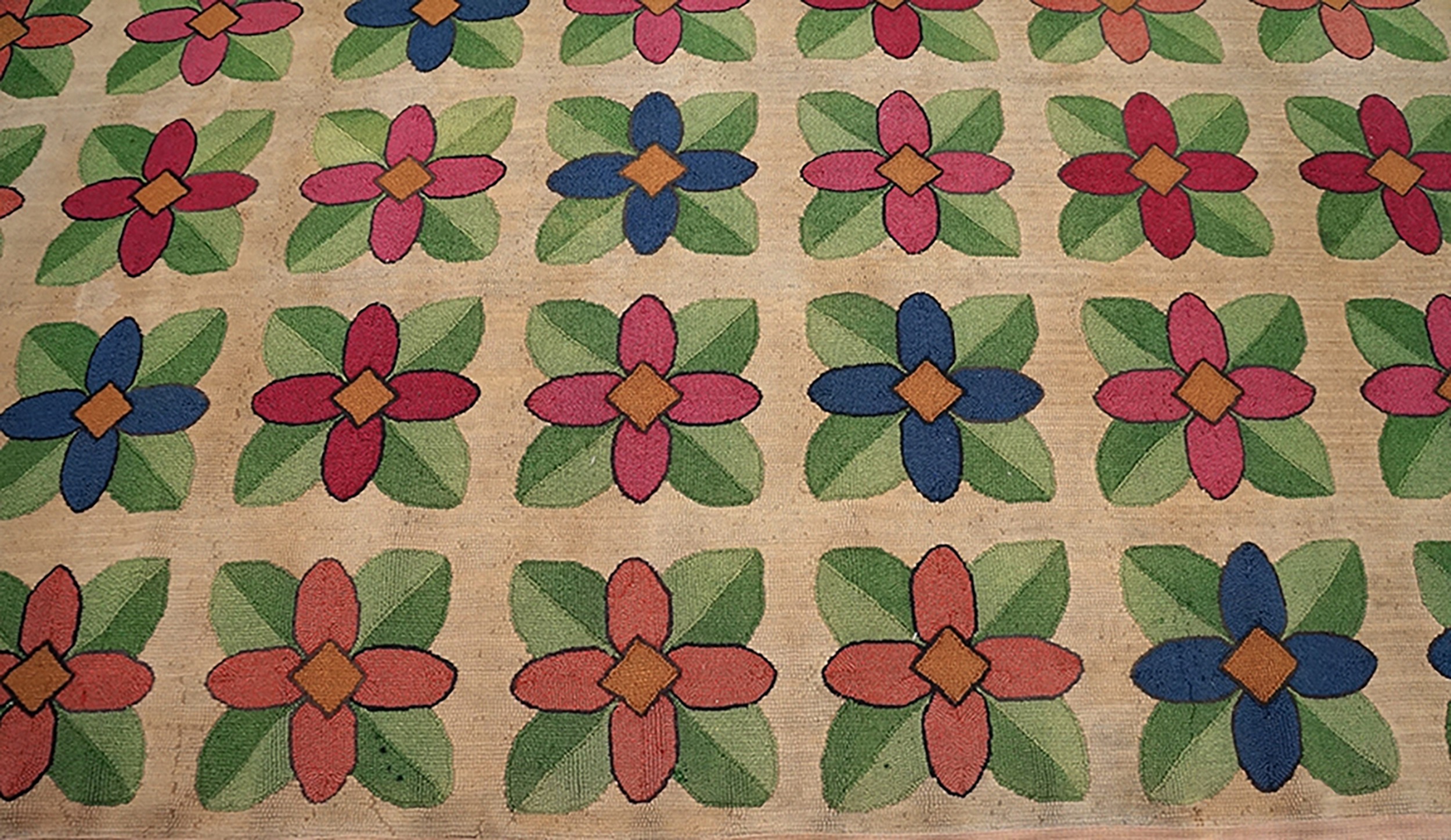
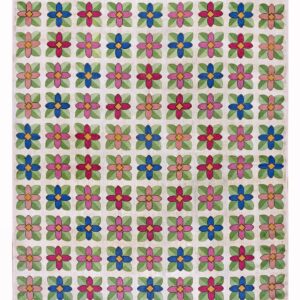
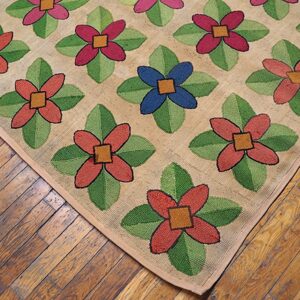
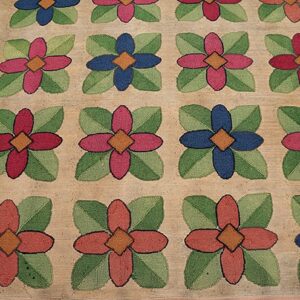
The composition is a virtuoso display of the “Geometric-Floral” hybrid style, a sophisticated design language where the rigid discipline of tile-work patterns meets the organic whimsy of the American garden. The rug features a luminous ivory field—a color of significant prestige that suggests a “best room” commission, as ivory required the careful selection of the cleanest undyed woolens. Upon this radiant stage, a series of geometric compartments or “tiles” house delicate floral sprigs, creating a sense of structured abundance. This layout reflects the nineteenth-century fascination with “orderly nature,” where the wild beauty of botanical motifs was harmonized through the mathematical symmetry of the grid.
Technically, the beautiful American folk art design rug was hand-hooked using a traditional hook tool to pull narrow strips of hand-dyed wool and fabric through a coarse burlap or linen backing. This process gives the rug its characteristic “nubby” texture and substantial weight, making it both a durable floor covering and a significant piece of textile sculpture. The palette, featuring a sophisticated array of soft blushes, sage greens, and autumnal ochres, has developed a soft, “shabby-chic” patina over a century of use—a quality highly coveted by collectors of Americana. Today, this ivory room-sized hooked rug stands as a vibrant monument to a vanishing domestic craft—a work that transforms the floor into a sprawling, hand-wrought canvas of nineteenth-century American history and rustic elegance.