
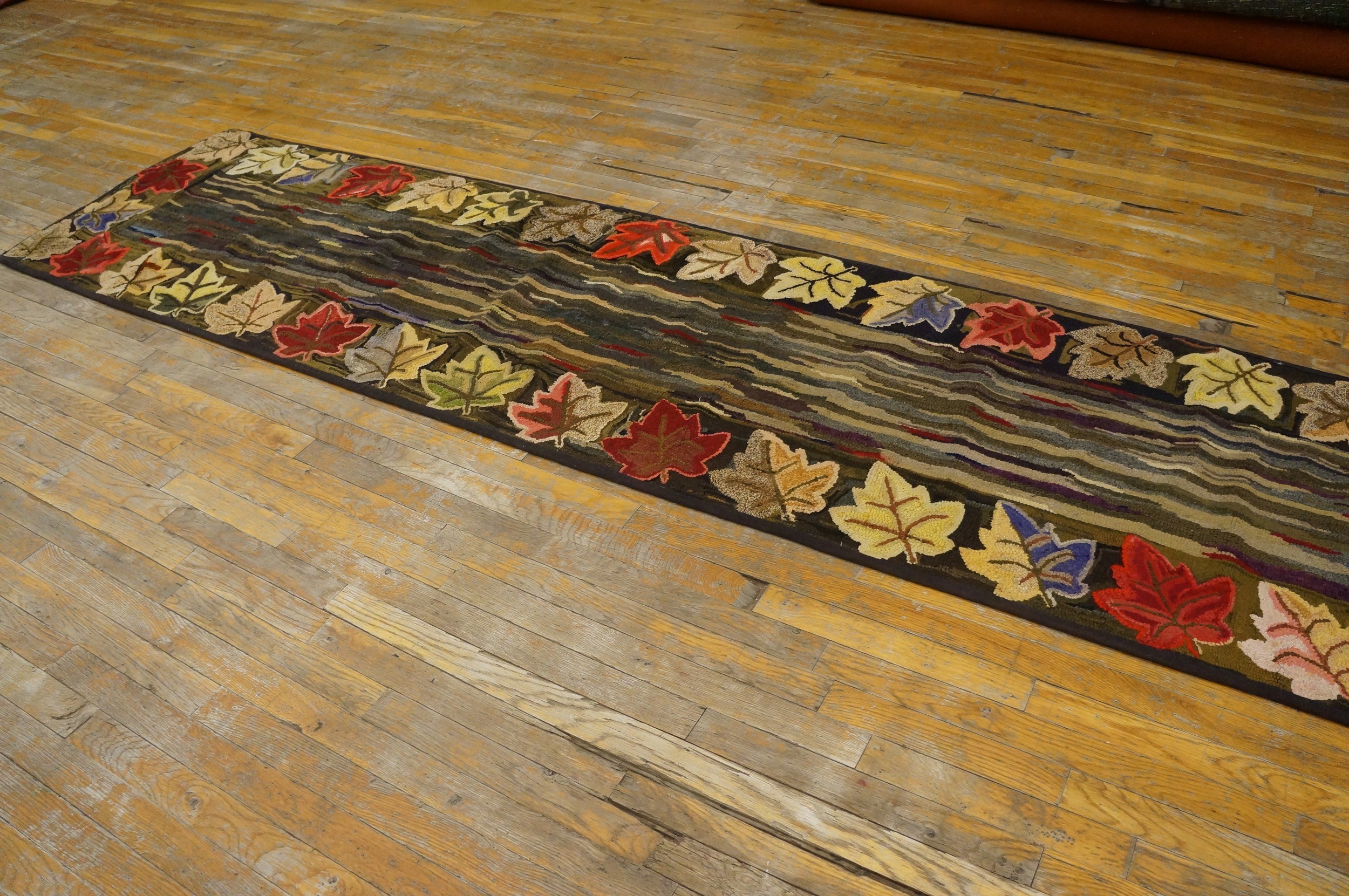
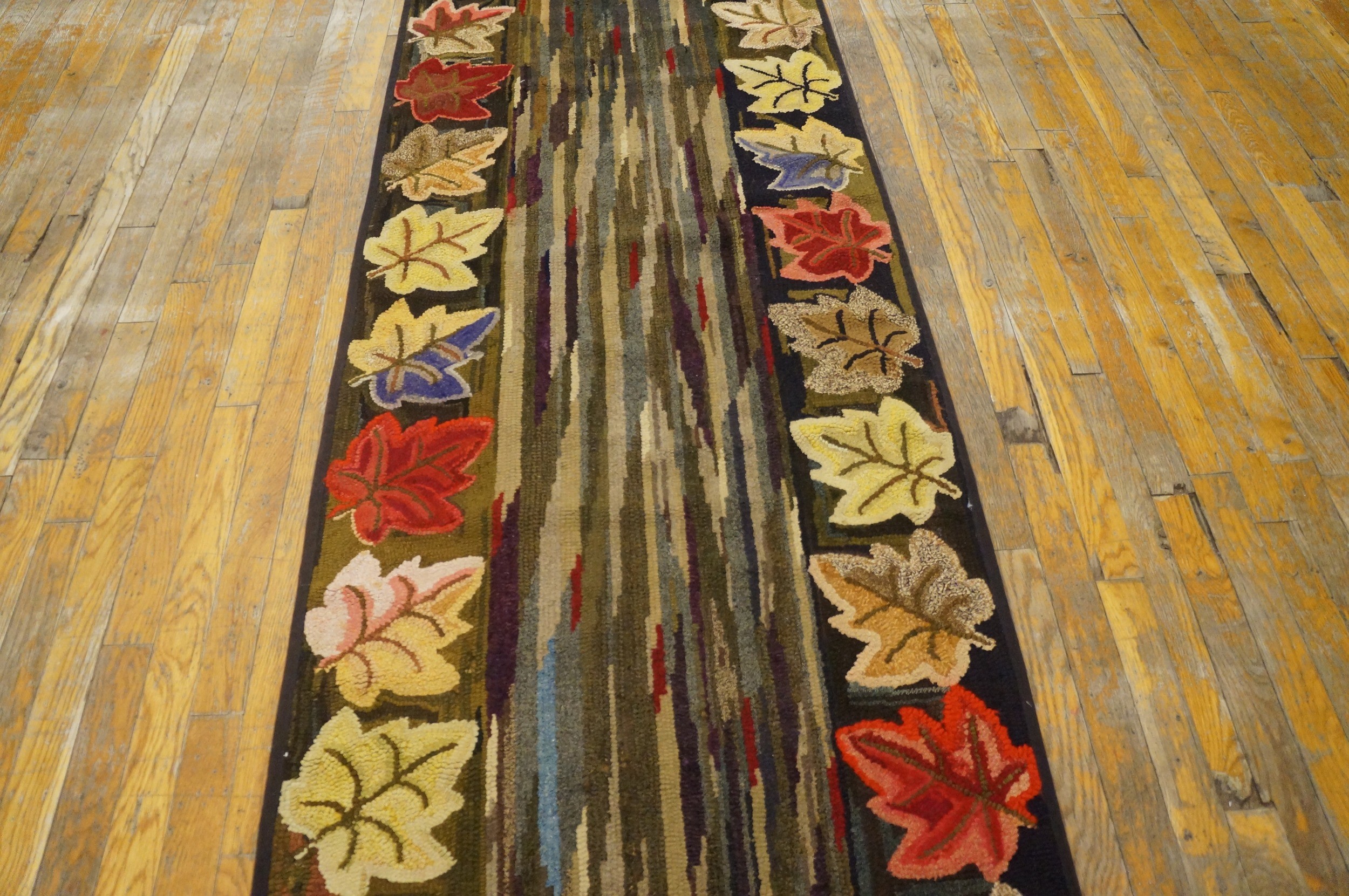
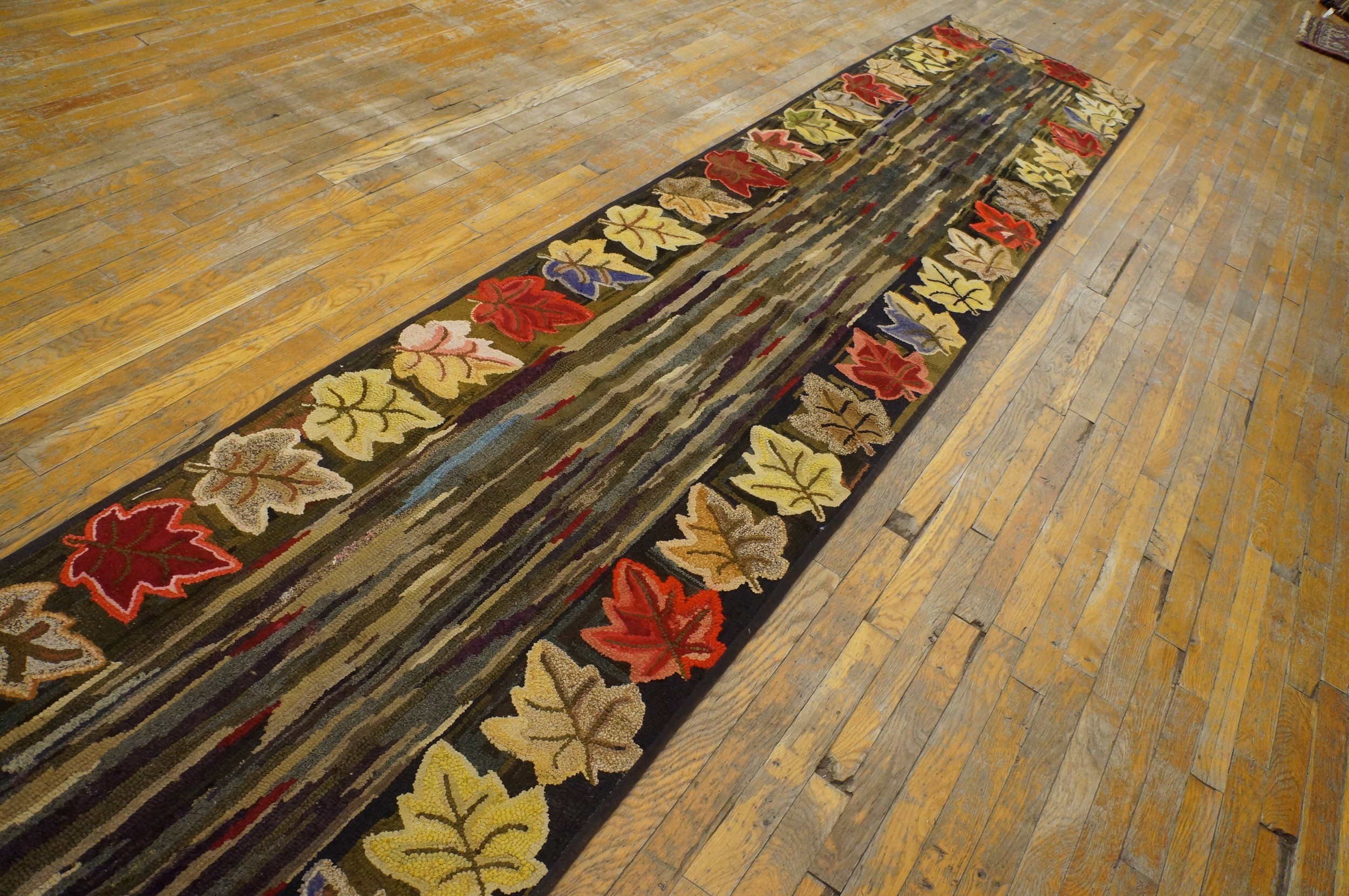
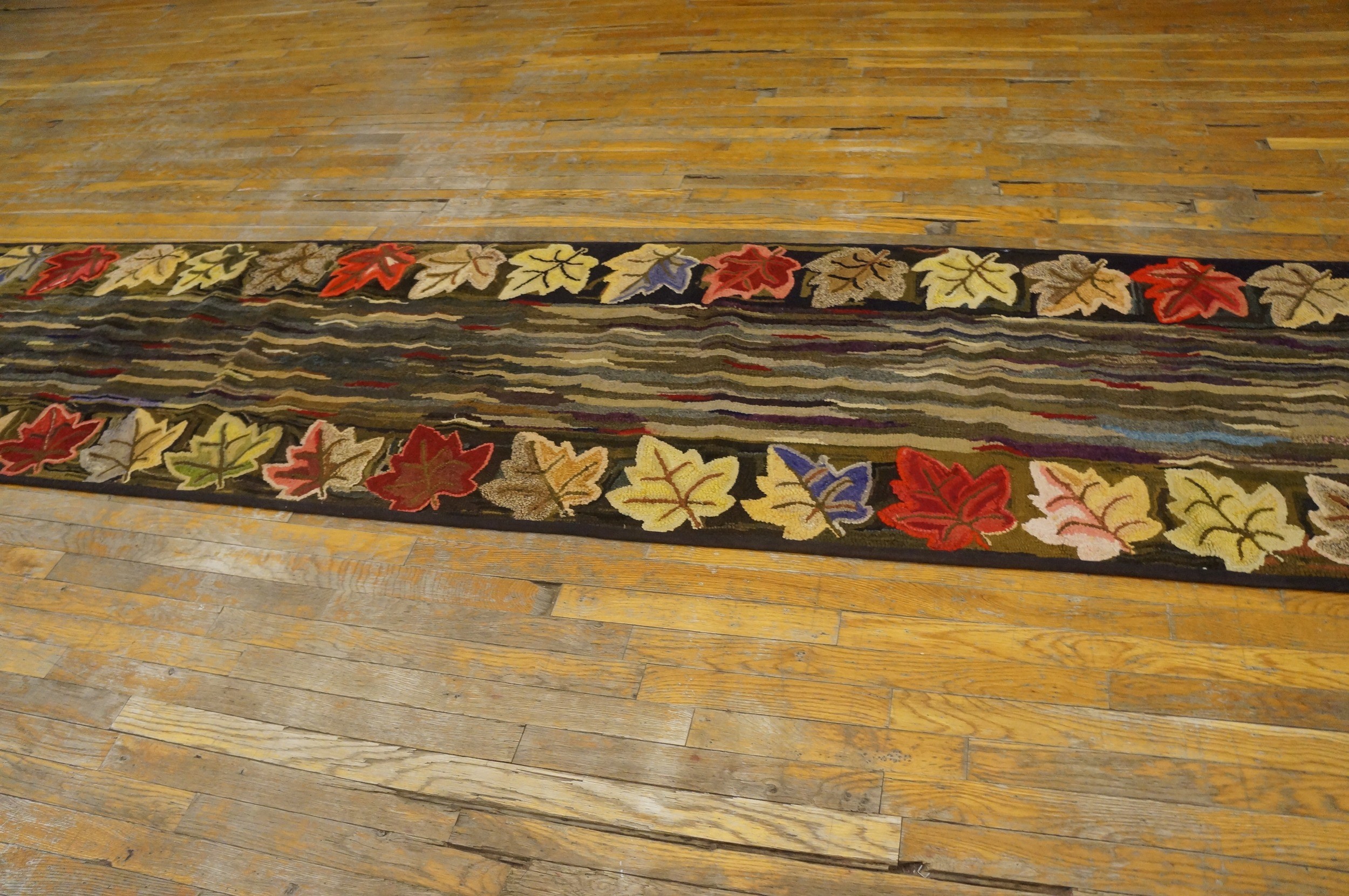
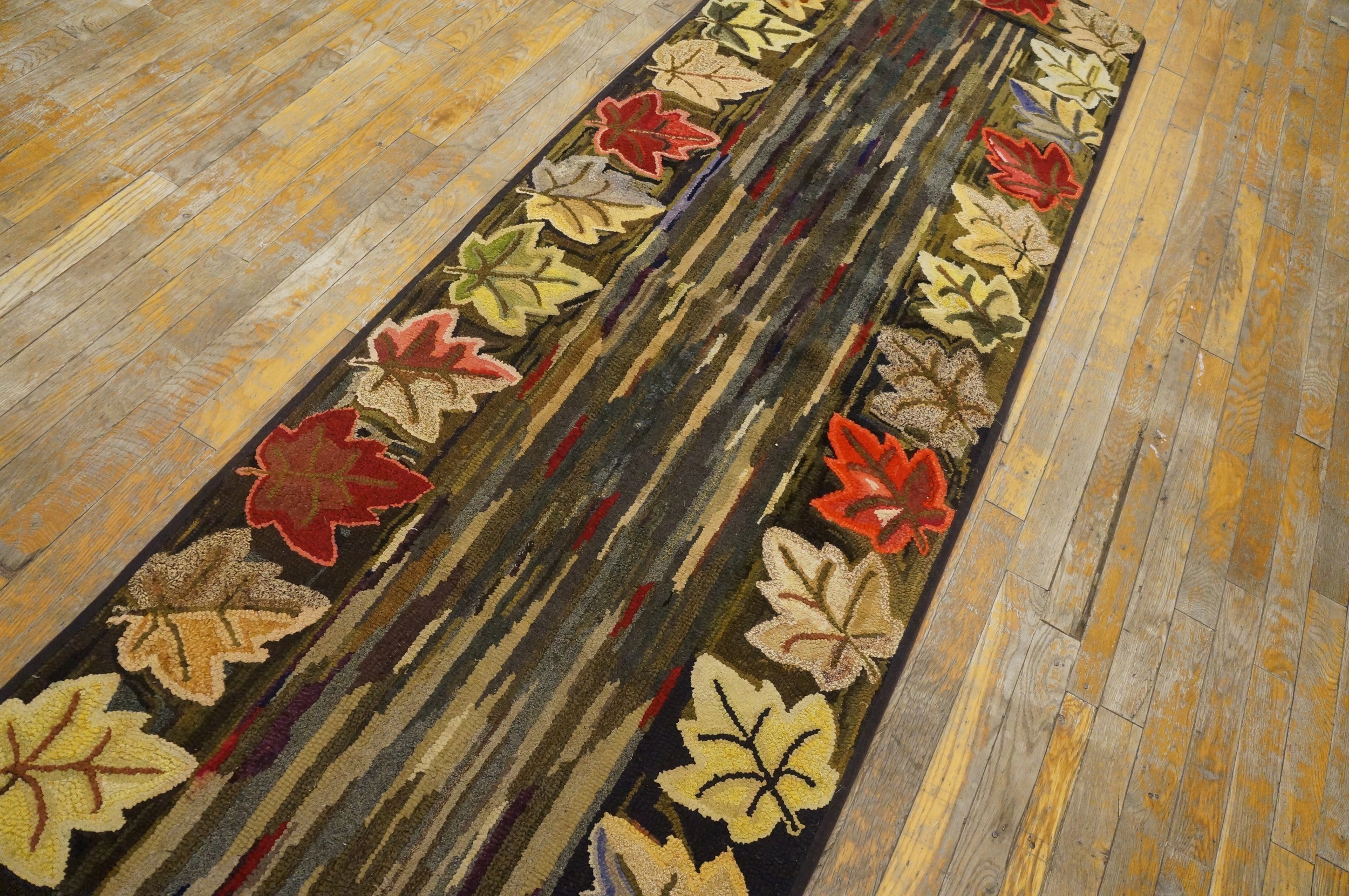
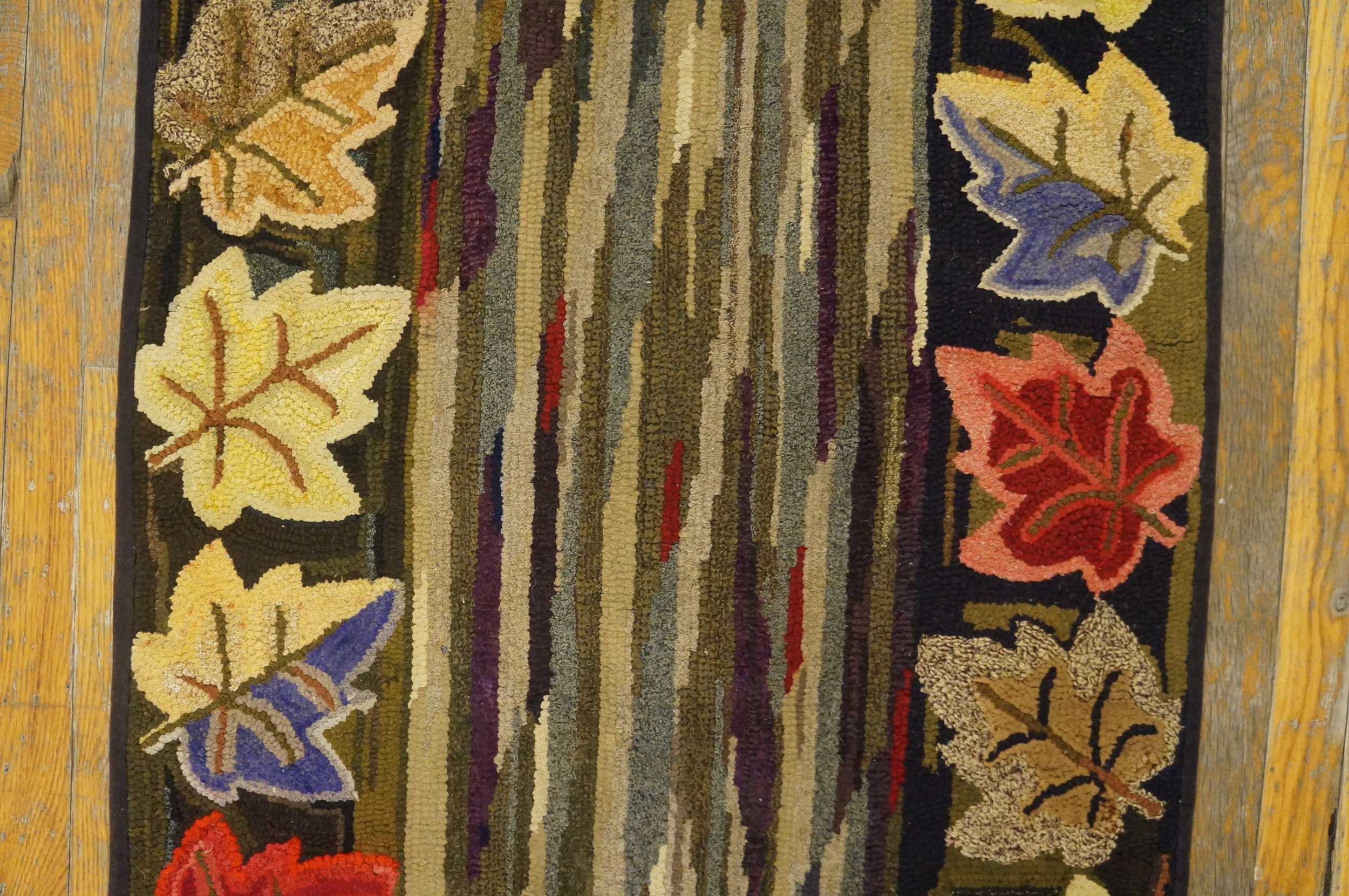
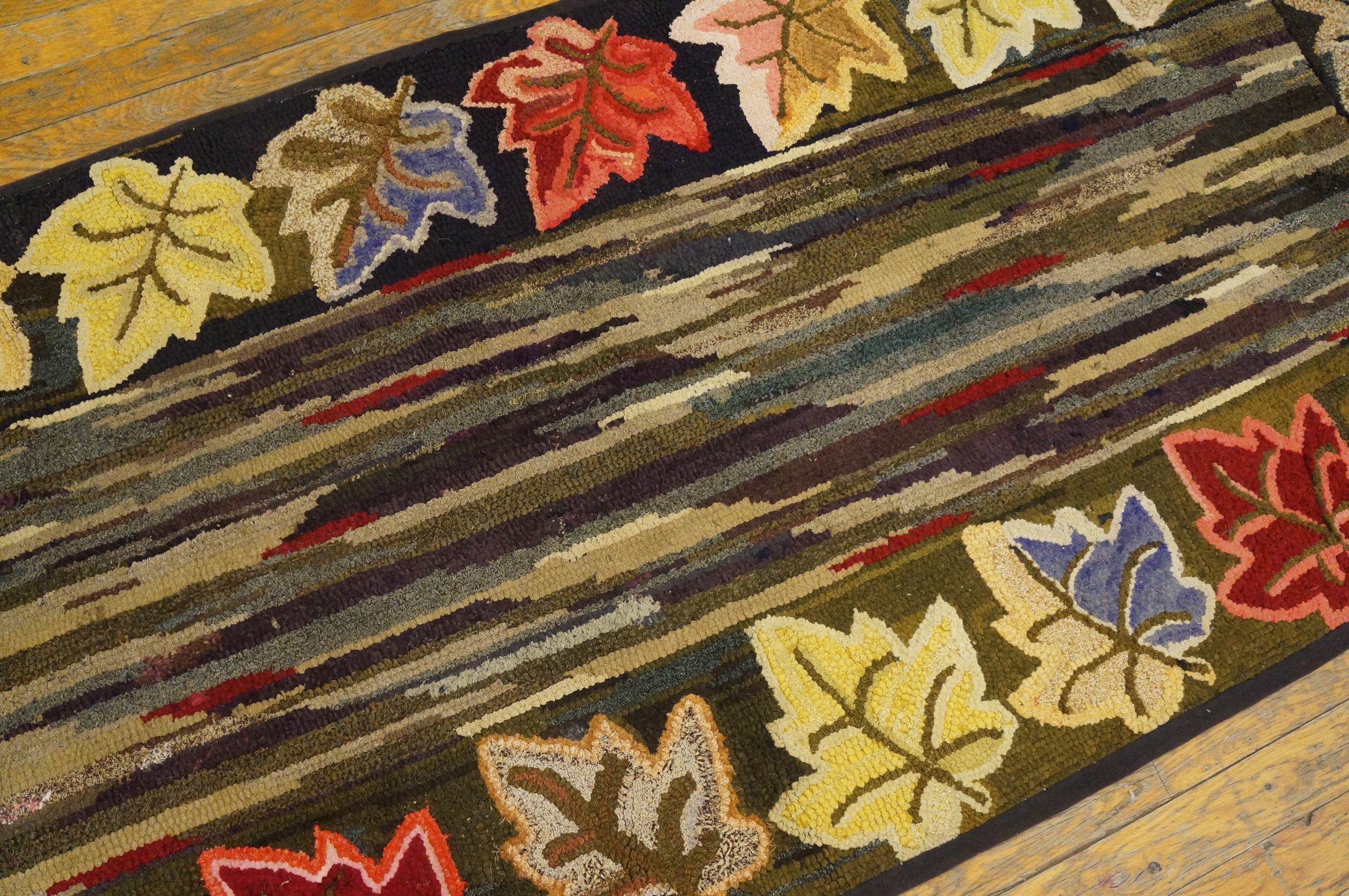
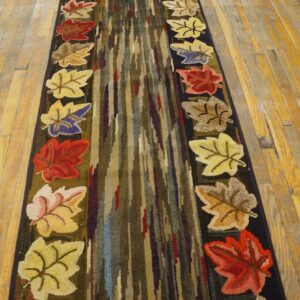
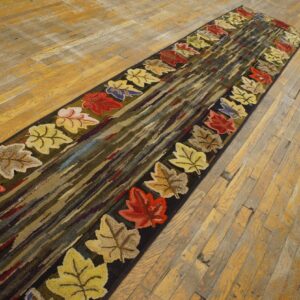
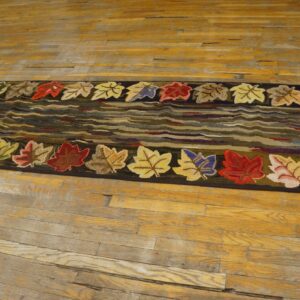
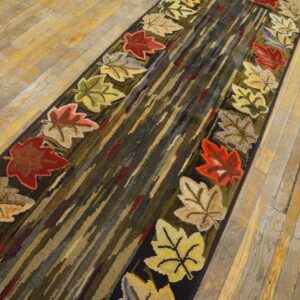
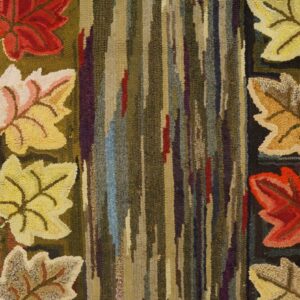
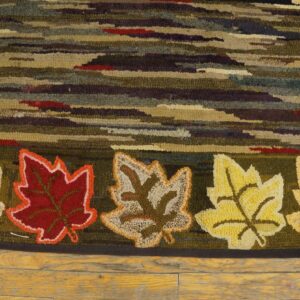
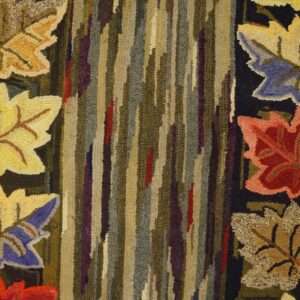
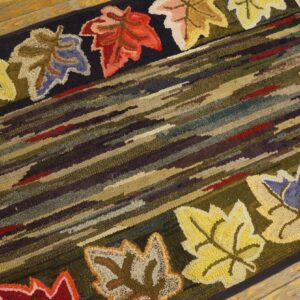
This magnificent early 20th century American hooked runner is a superlative example of “Accidental Modernism,” a phenomenon where rural artisans, working within the American Folk Art tradition, intuitively anticipated the abstract movements of the 20th century. Historically, American hooked rugs were born of necessity and resourcefulness, but this specific specimen transcends utility, utilizing a Modernist Abstract vocabulary that feels remarkably contemporary despite its antique origins.
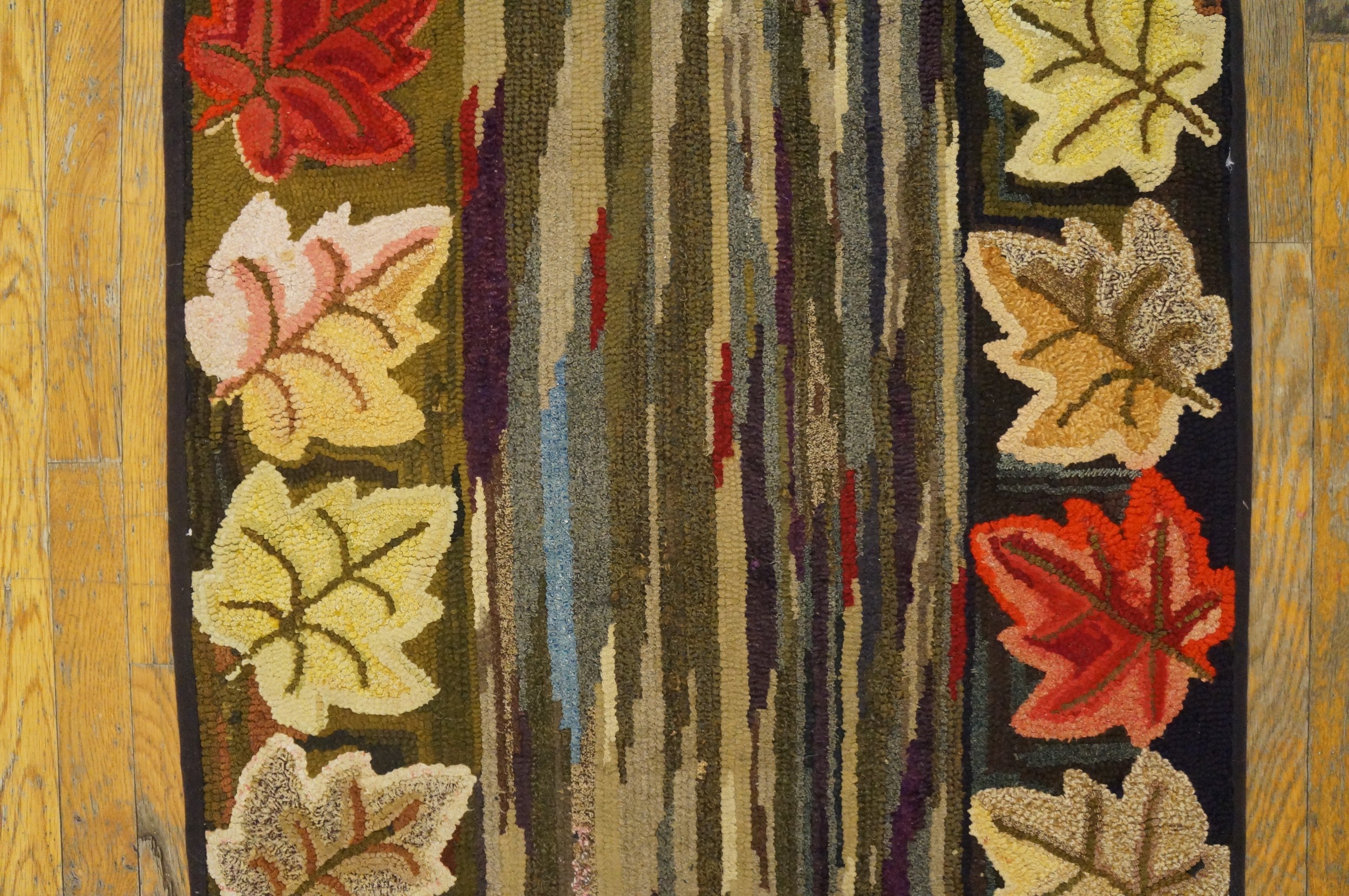
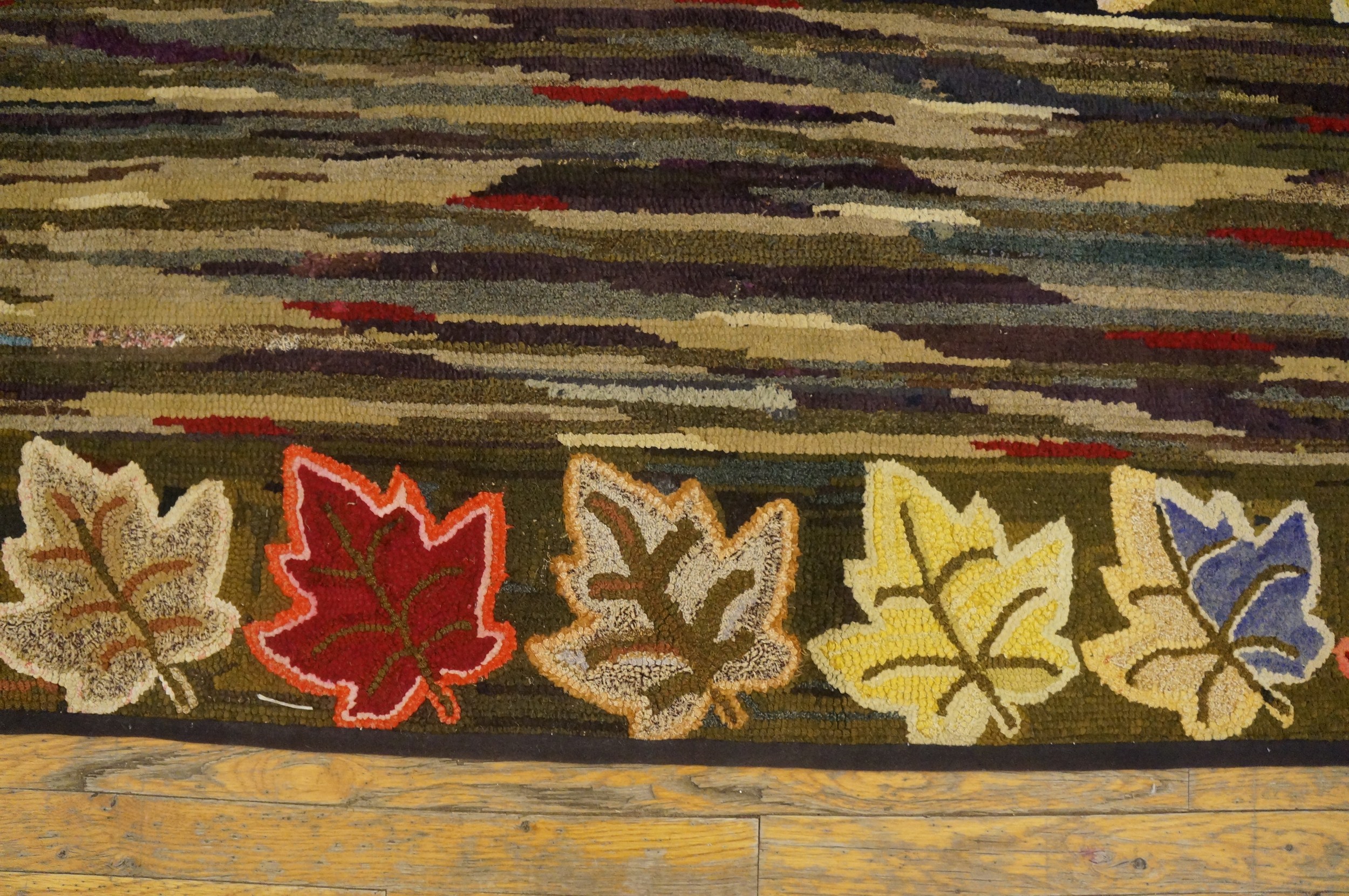
The composition is defined by its rhythmic, non-linear design, which eschews traditional floral or pictorial motifs in favor of a sophisticated play of color and form. Often referred to in the folk tradition as a “Hit-or-Miss” or “Mosaic” pattern, this style was created by using variegated strips of recycled fabric—wool, cotton, and flannel—as they became available. The result is a vibrant, kinetic field of staccato lines and shifting tonal blocks that echo the works of early abstract painters. The “Runner” format provides a long, cinematic stage for this abstraction, allowing the pattern to evolve and pulsate along the length of a hallway or gallery.
The palette is a masterclass in the use of natural, “earthy” tones interspersed with surprising pops of saturated color. Deep indigos, forest greens, and charcoal grays are often balanced by “jewel-tone” accents of madder red or ochre, all of which have mellowed over a century into a sophisticated, watercolor-like patina. Because these antique American rugs were made from a collage of different materials, they possess an inherent abrash (tonal variation) that gives the surface a shimmering, three-dimensional depth and a tactile, “nubby” texture that is unique to the American hooked tradition.
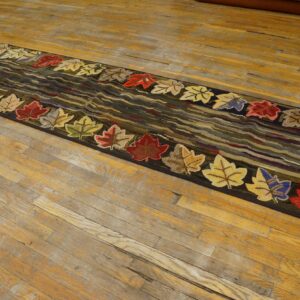
Technically, an antique runner of this length is a significant rarity. Hooking a piece of these proportions required a custom-built frame and an immense investment of time and patience by the weaver. To find one that leans so heavily into an abstract, modernist aesthetic makes it a true “crossover” piece—equally at home in a rustic farmhouse as it is in a minimalist urban loft.
To possess this antique abstract hooked runner is to hold a monument to individual creativity and domestic history. It is a work that bridges the gap between the humble “cottage industry” of the 1800s and the sophisticated world of modern textile art, transforming a transitional space into a hand-wrought gallery of American soul.