
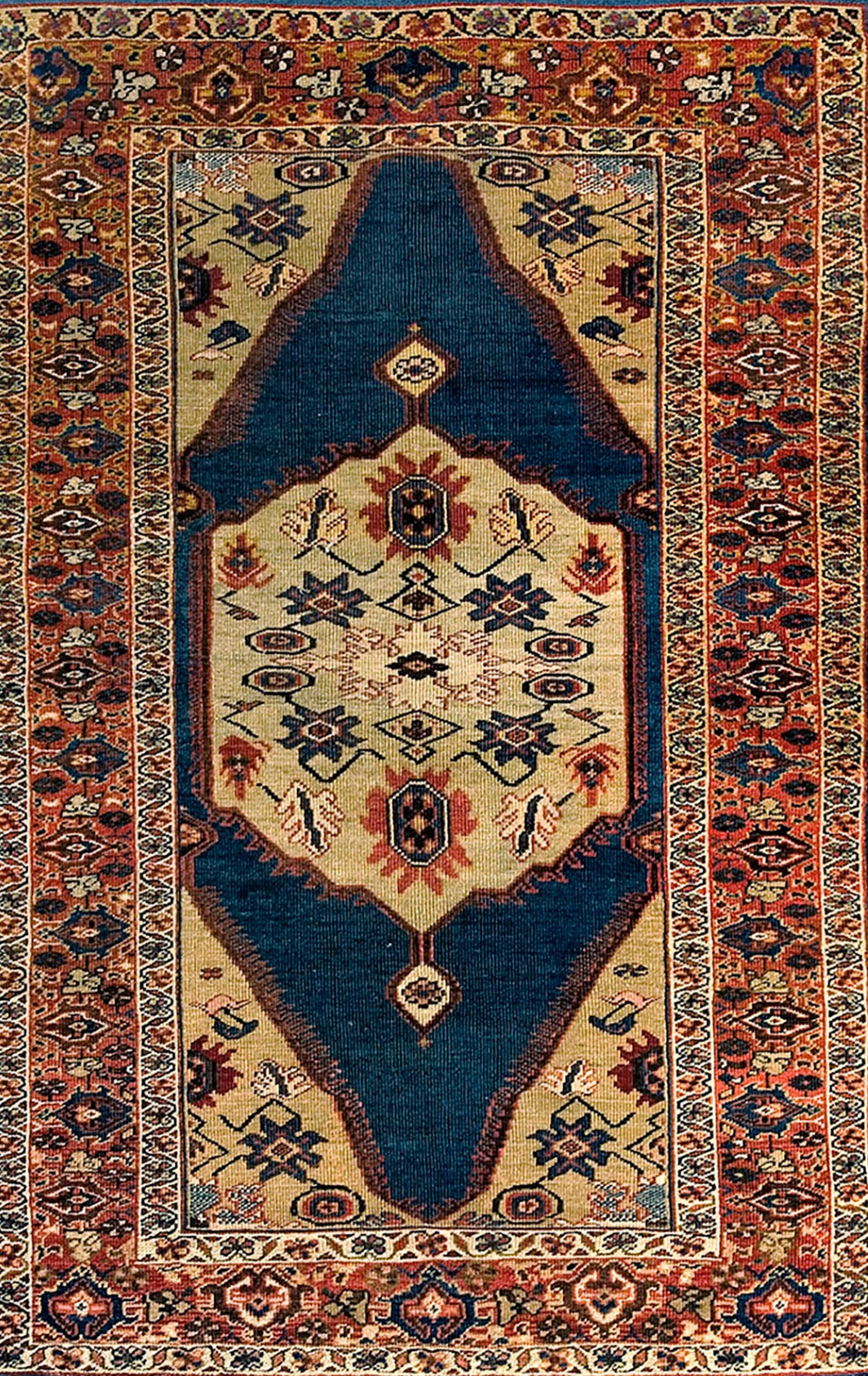
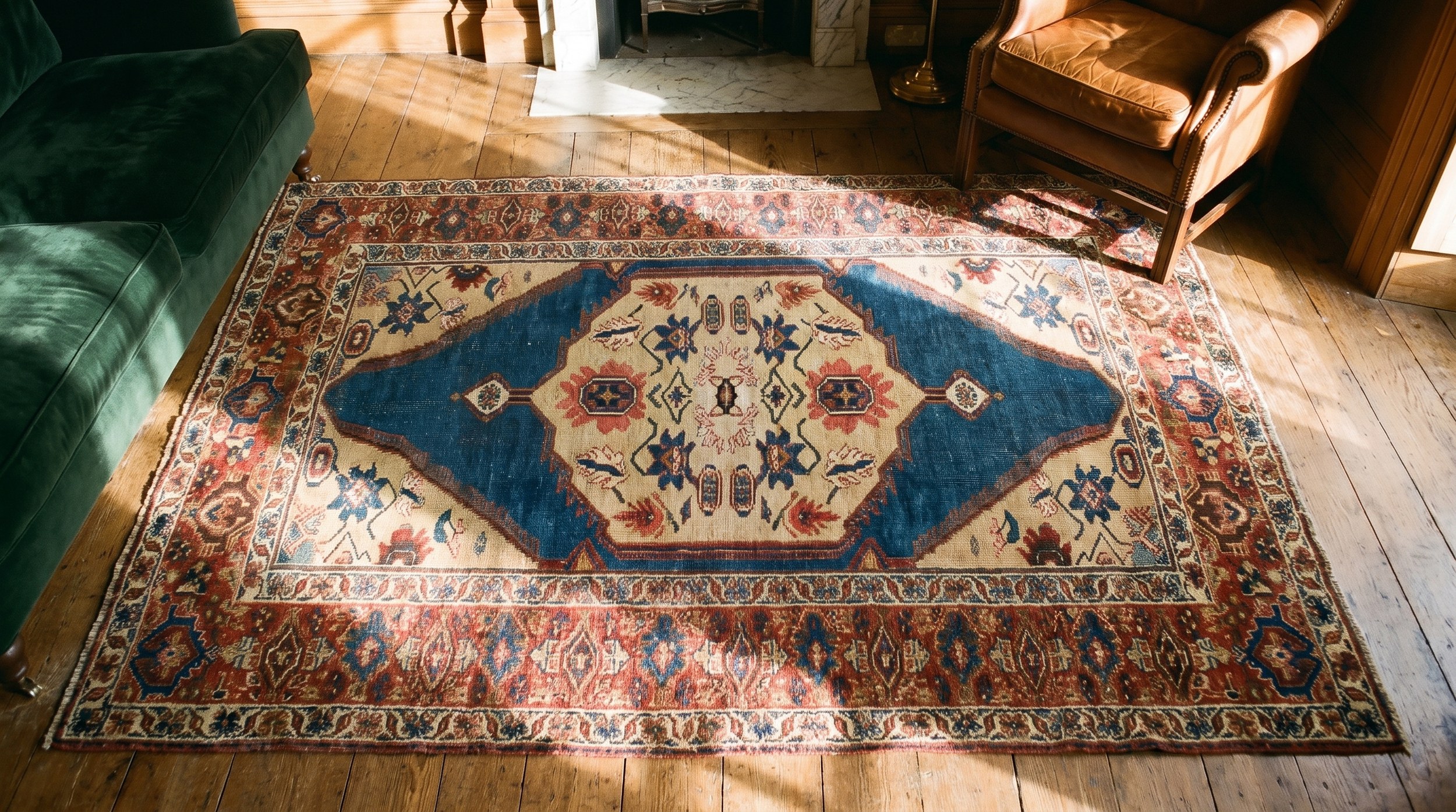
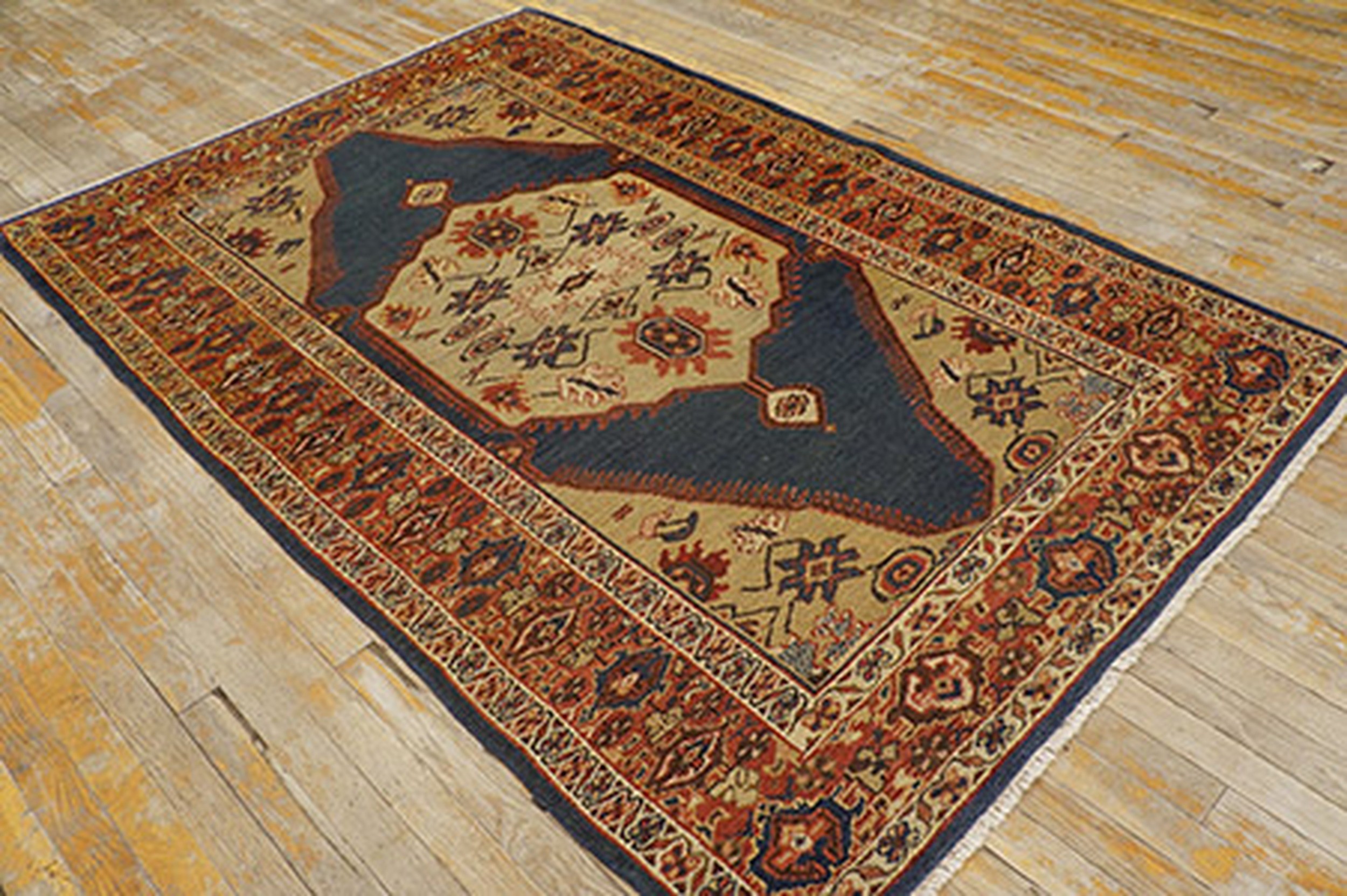
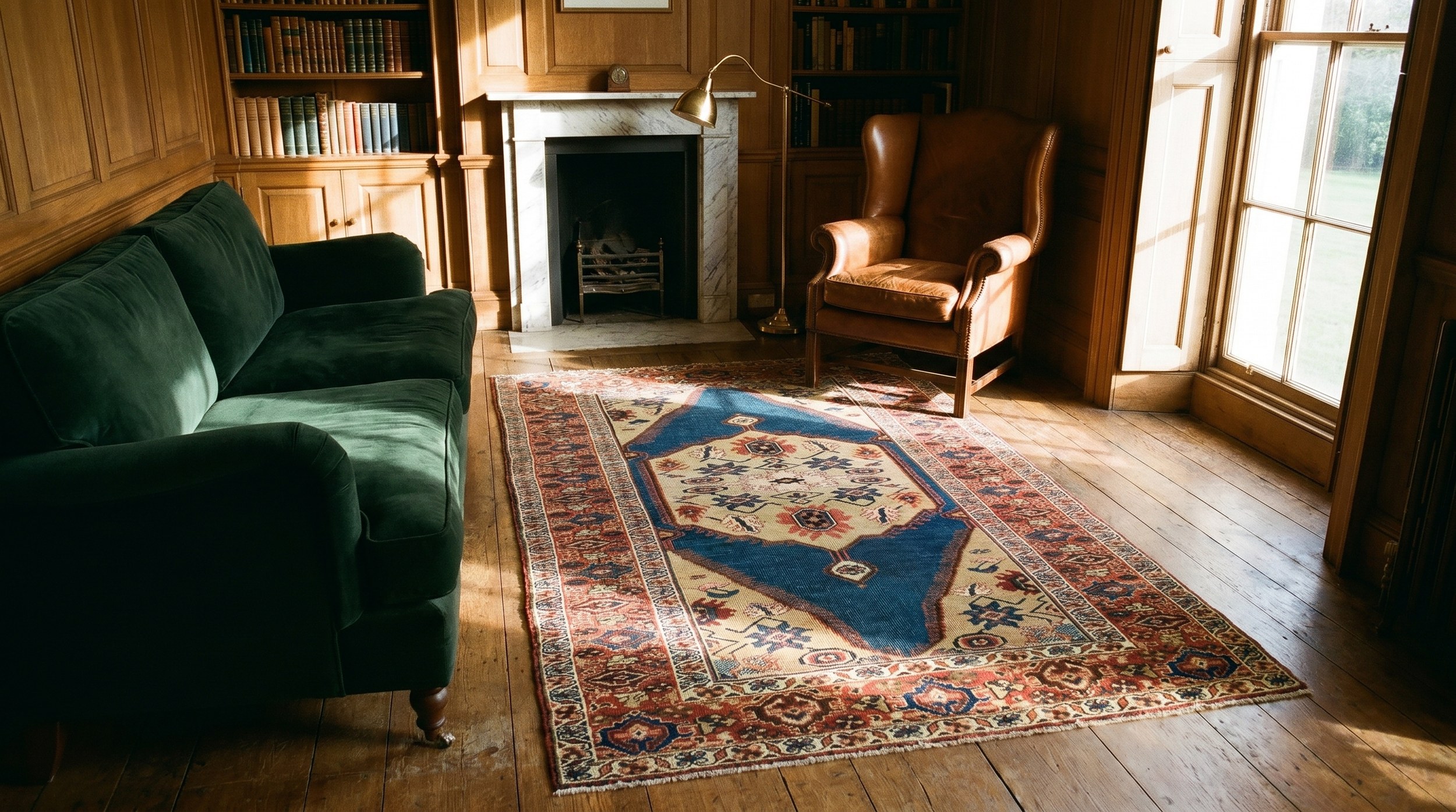
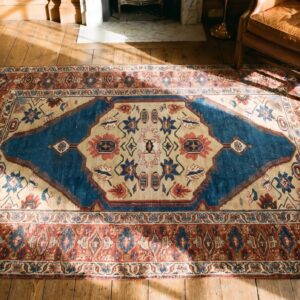
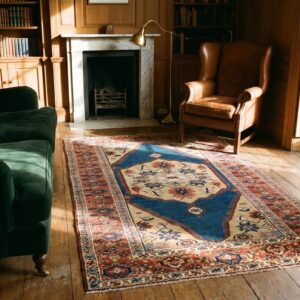
This late nineteenth-century Persian Sultanabad rug is a rare “jewel-box” specimen from one of the most prestigious weaving centers of the Arak district. While large-scale Sultanabad Persian rugs (and their Ziegler counterparts) are world-renowned for anchoring grand estates, this small scatter-size rug is a significant rarity, distilling the monumental “High-Style” aesthetic of the region into an intimate, scholarly format.
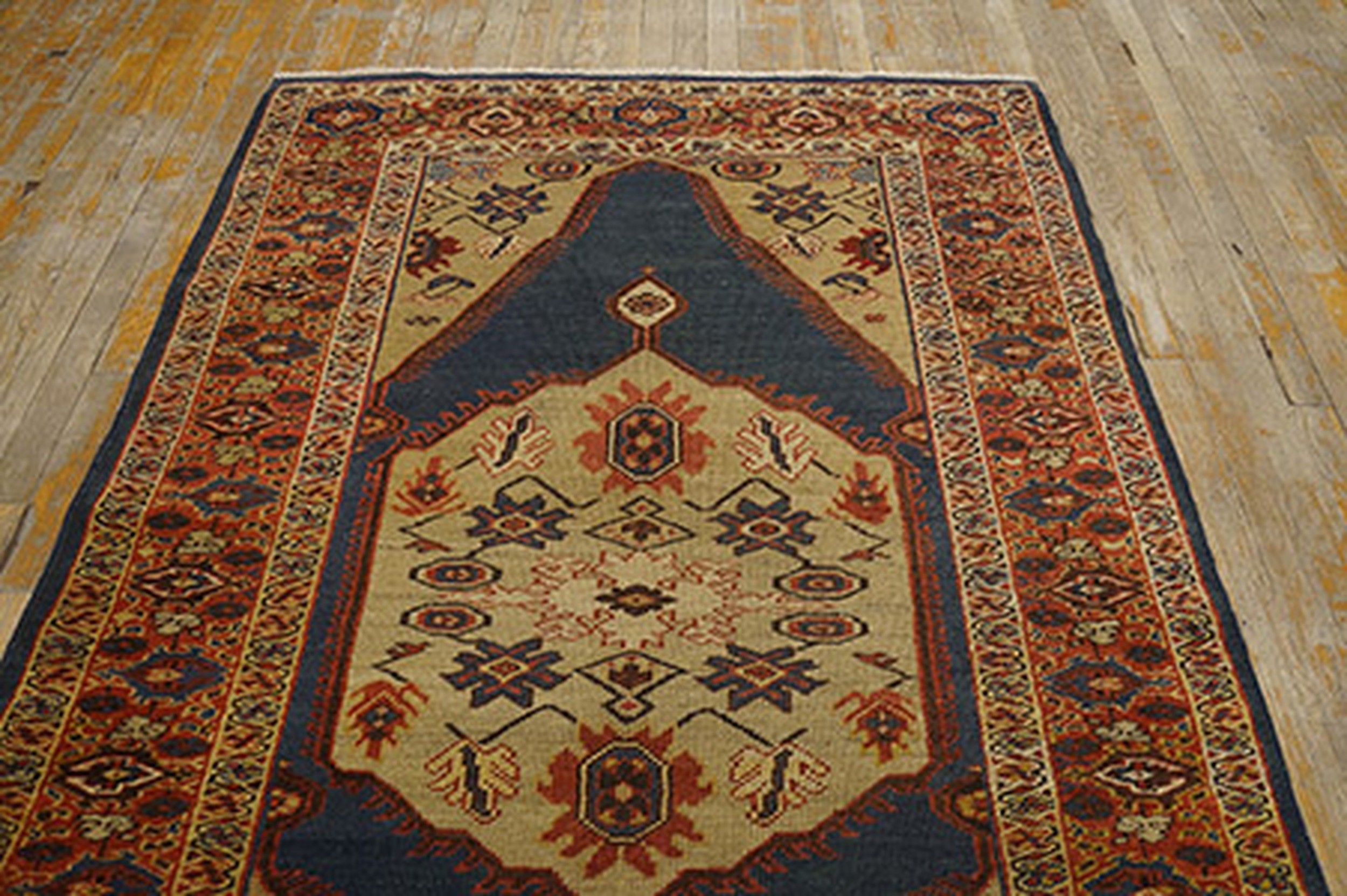
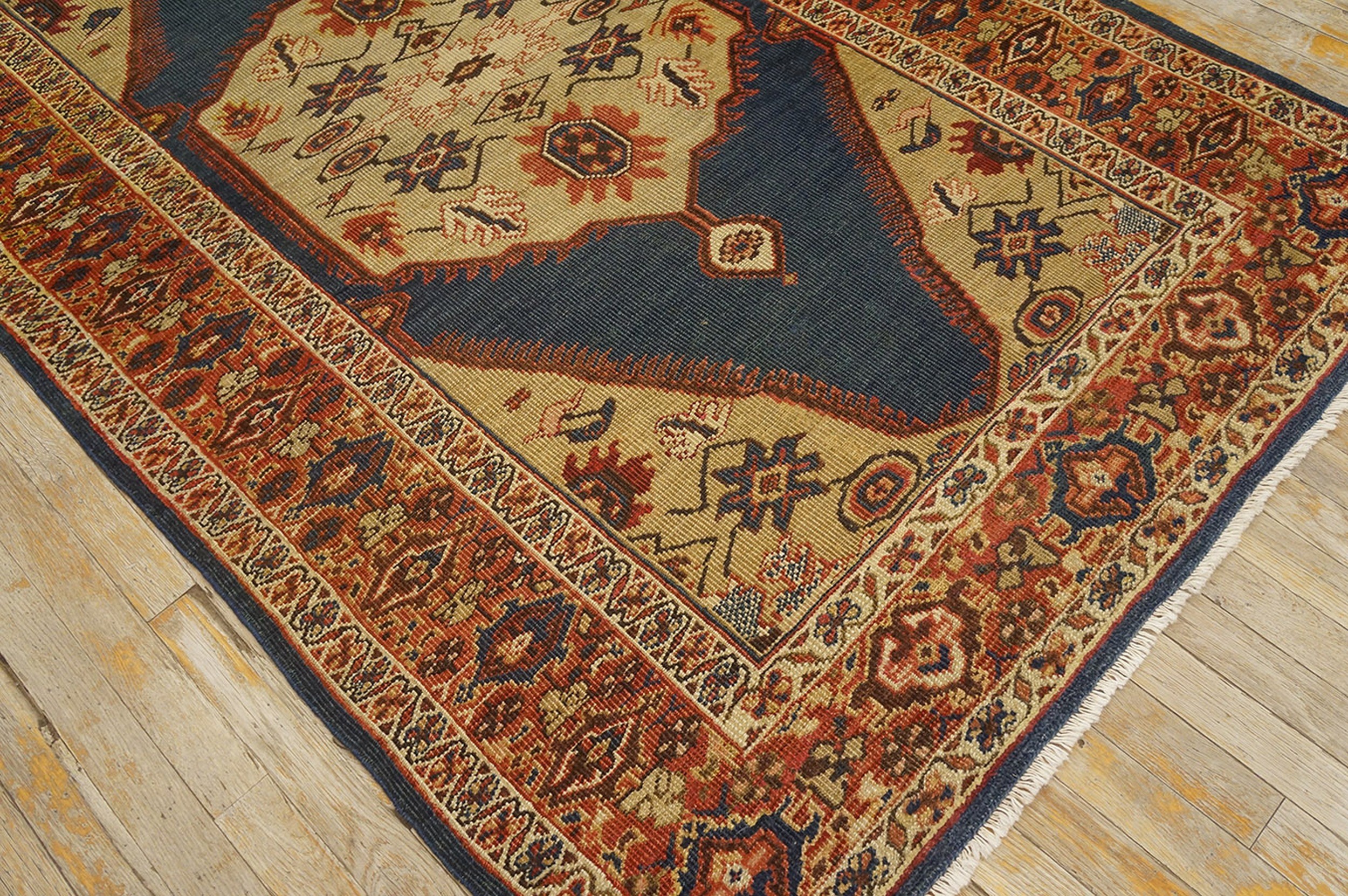
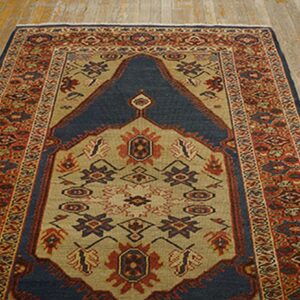
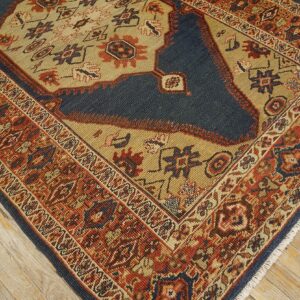
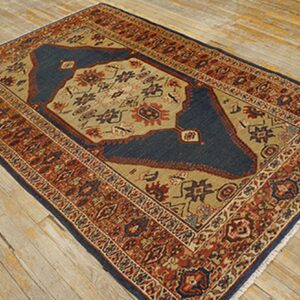
The composition is centered upon a powerful Tribal Geometric Medallion, which commands the field with an architectural authority. Unlike the sprawling “Mahal” patterns that often define this region, this specific antique tribal area rug utilizes a more structured, tribal geometry. The central totem is flanked by stylized botanical motifs and geometric blossoms, rendered with the “soft-edged” drawing style that is a hallmark of Sultanabad. This creates a fascinating visual tension between the rugged soul of a village weave and the sophisticated balance of a city-commissioned carpet.
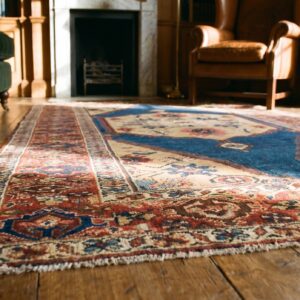
The palette is the defining feature of this “Collector’s Piece.” It features a shimmering Blue Field—likely achieved through a master-dyer’s use of indigo—which provides a deep, “liquid” stage for the high-contrast Cream and Ivory accents. Because Sultanabads were woven using hand-spun wool and natural vegetable dyes, the blue ground possesses a magnificent abrash (tonal variation), shifting from midnight to a soft cerulean. This luminous field makes the ivory geometry appear to “pop” with three-dimensional intensity, lending the rug a vibrant, watercolor-like depth.
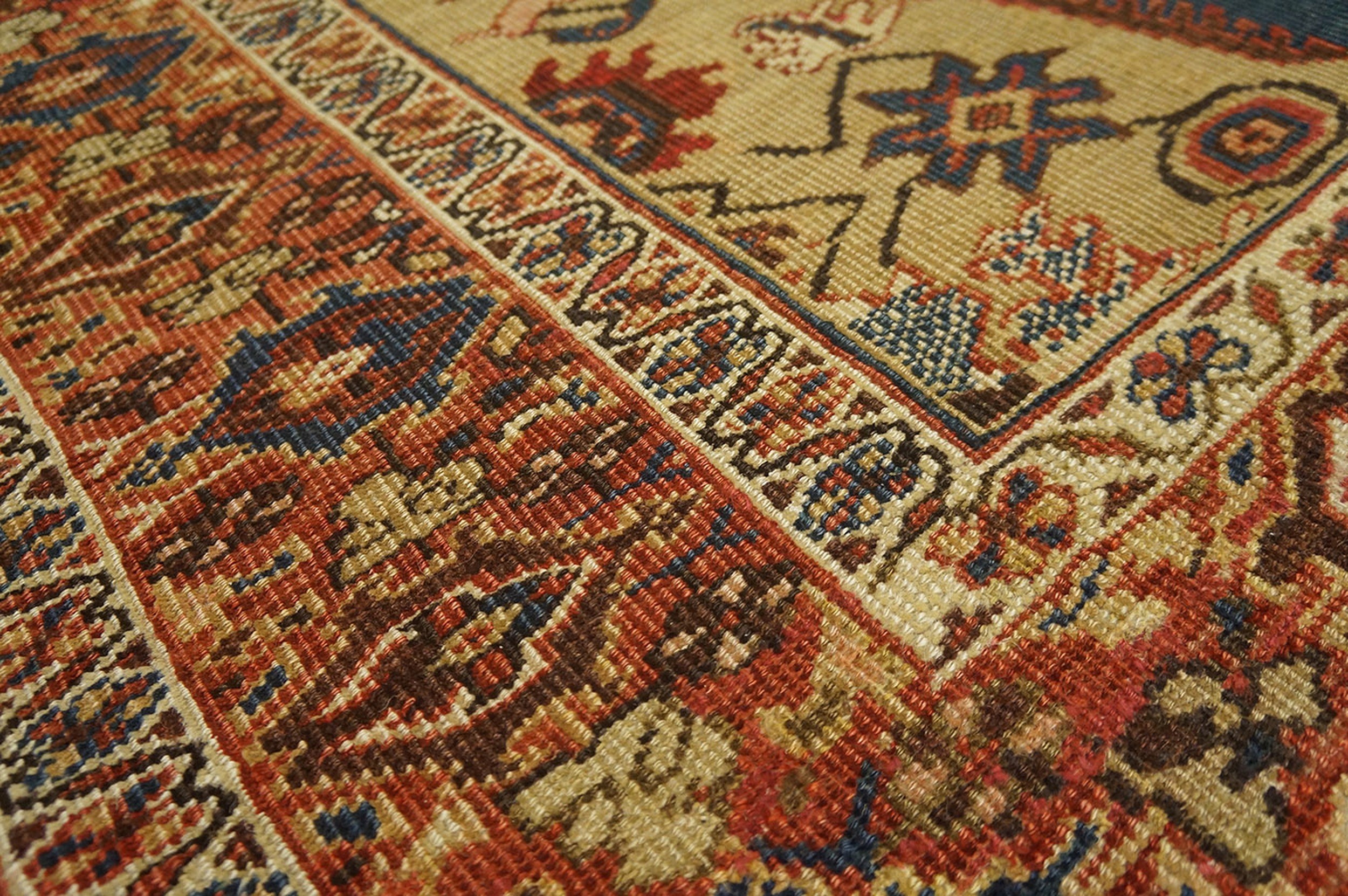
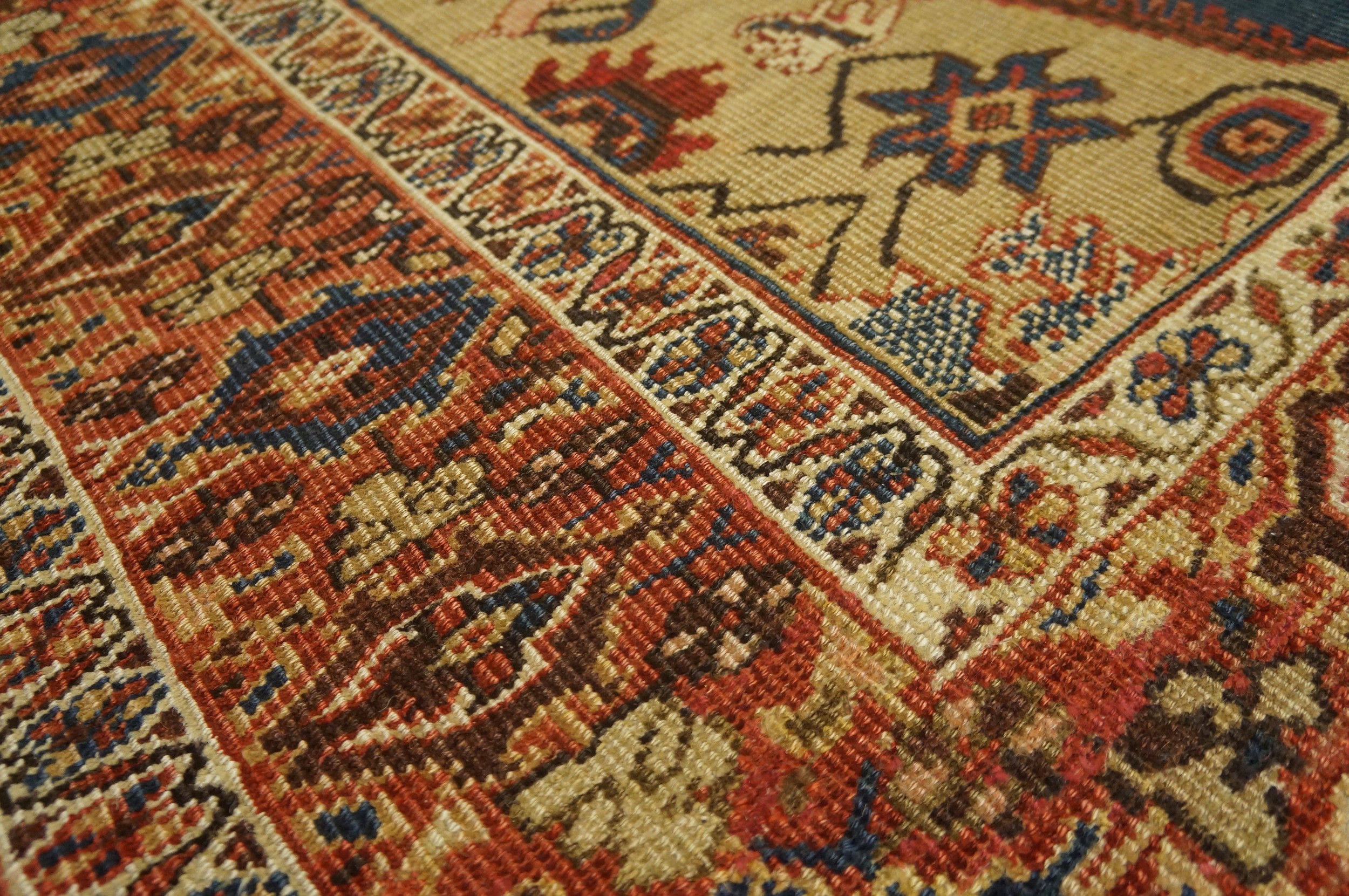
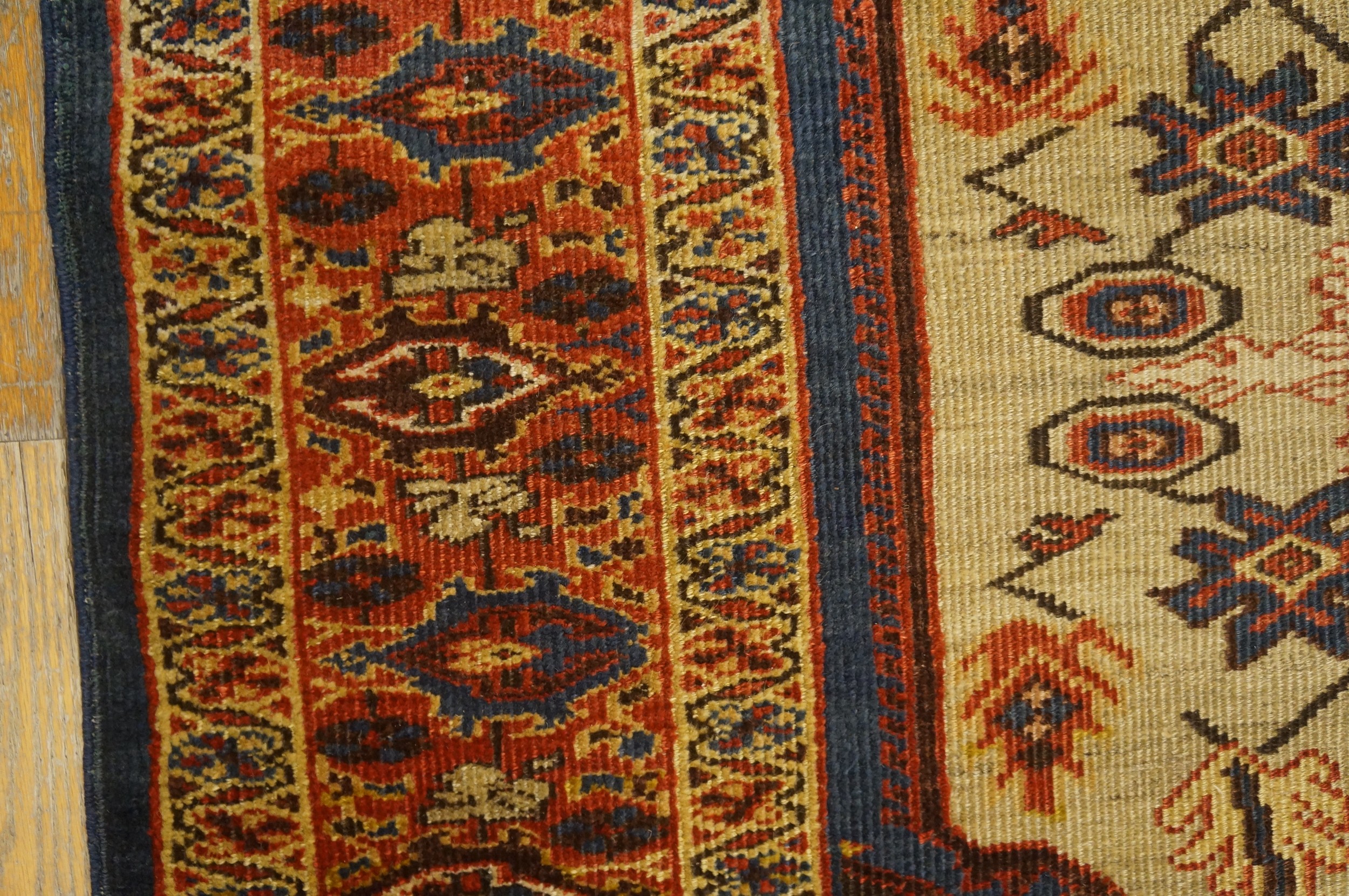
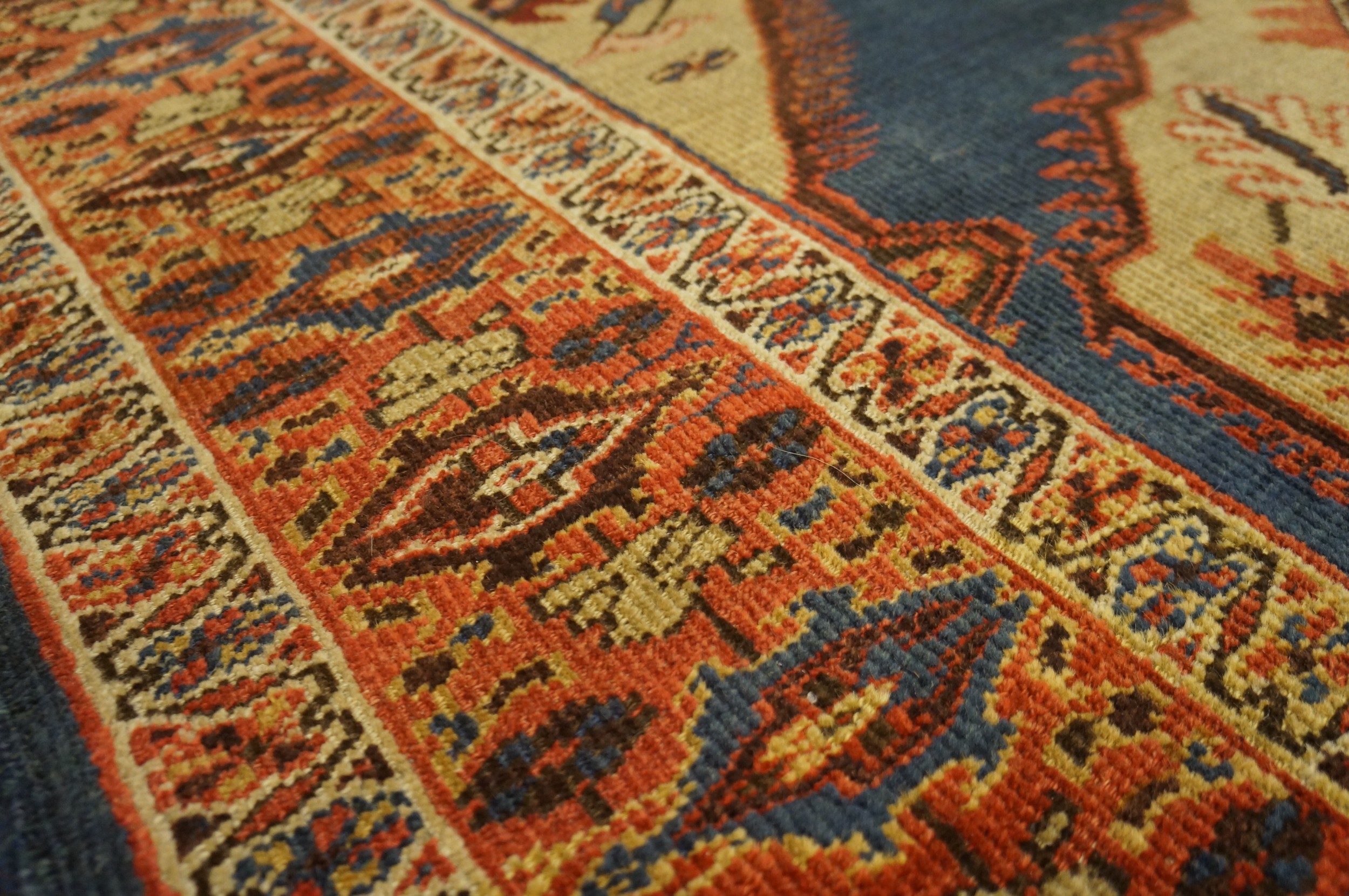
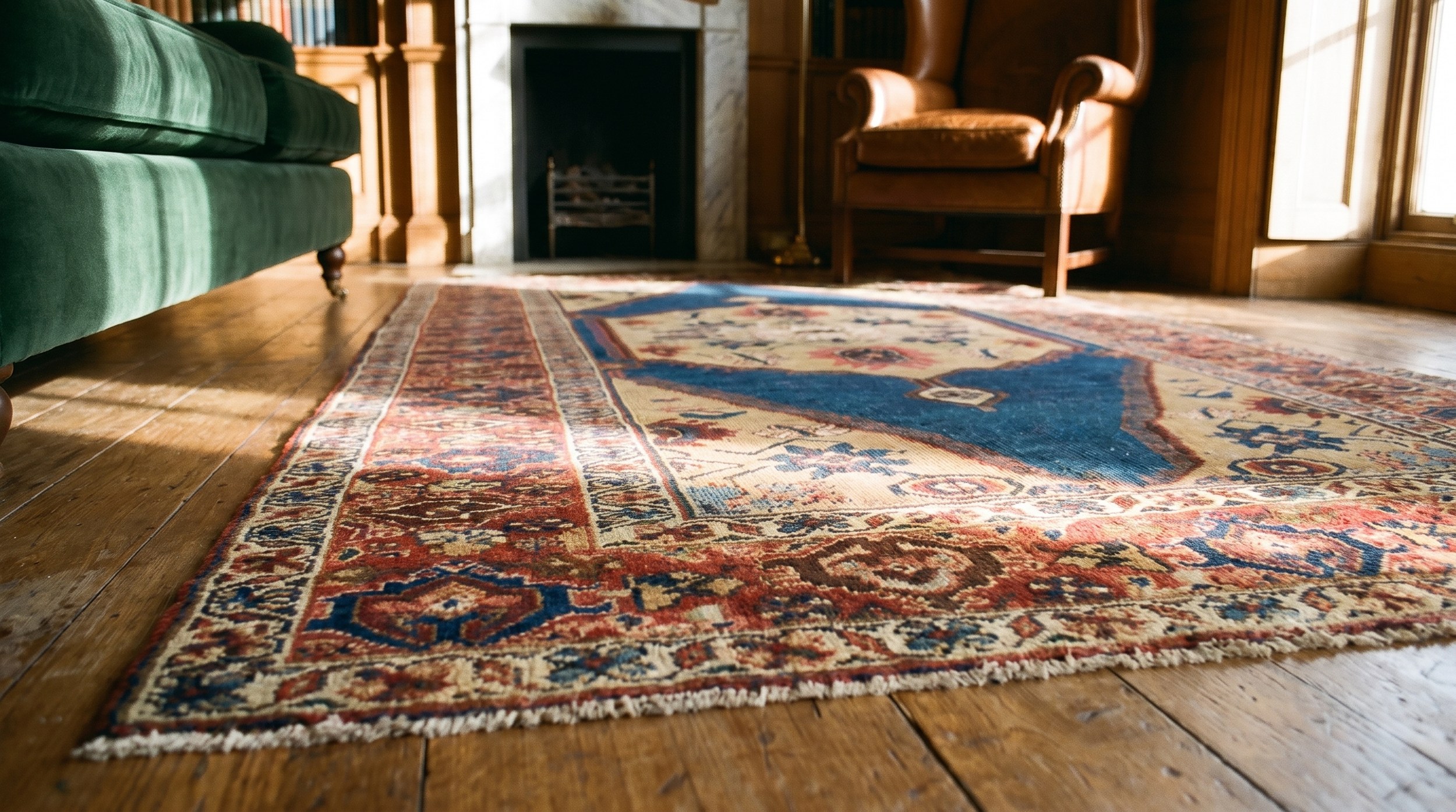
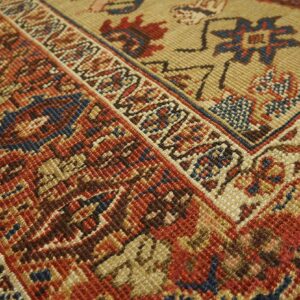
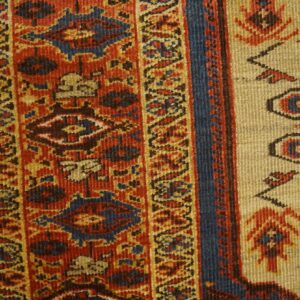
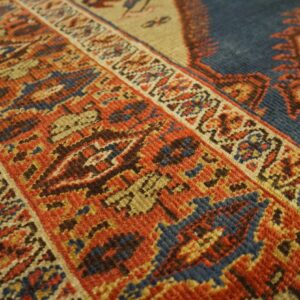
Technically, an antique Sultanabad is prized for its lustrous, “fleshy” wool and its substantial handle. Even in a small size, the rug retains a heavy, luxurious feel. The wool is rich in natural lanolin, which has allowed the fibers to develop a soft, matte patina over more than a century of use. The weave is characteristically supple, giving the rug a “drapery-like” quality that allows it to sit beautifully on a floor or hang with the presence of a fine painting.
The borders act as a disciplined architectural frame, typically featuring a “Main Border” of alternating rosettes and scrolling “serrated” leaves. This frame “locks in” the explosive energy of the blue and cream center, providing a sense of historical permanence. To possess this small blue Sultanabad is to own a monument to nineteenth-century Persian excellence—a work that bridges the gap between grand architectural scale and intimate tribal art, transforming a small space into a sanctuary of historical gravity and rare, chromatic brilliance.
Condition: Good.