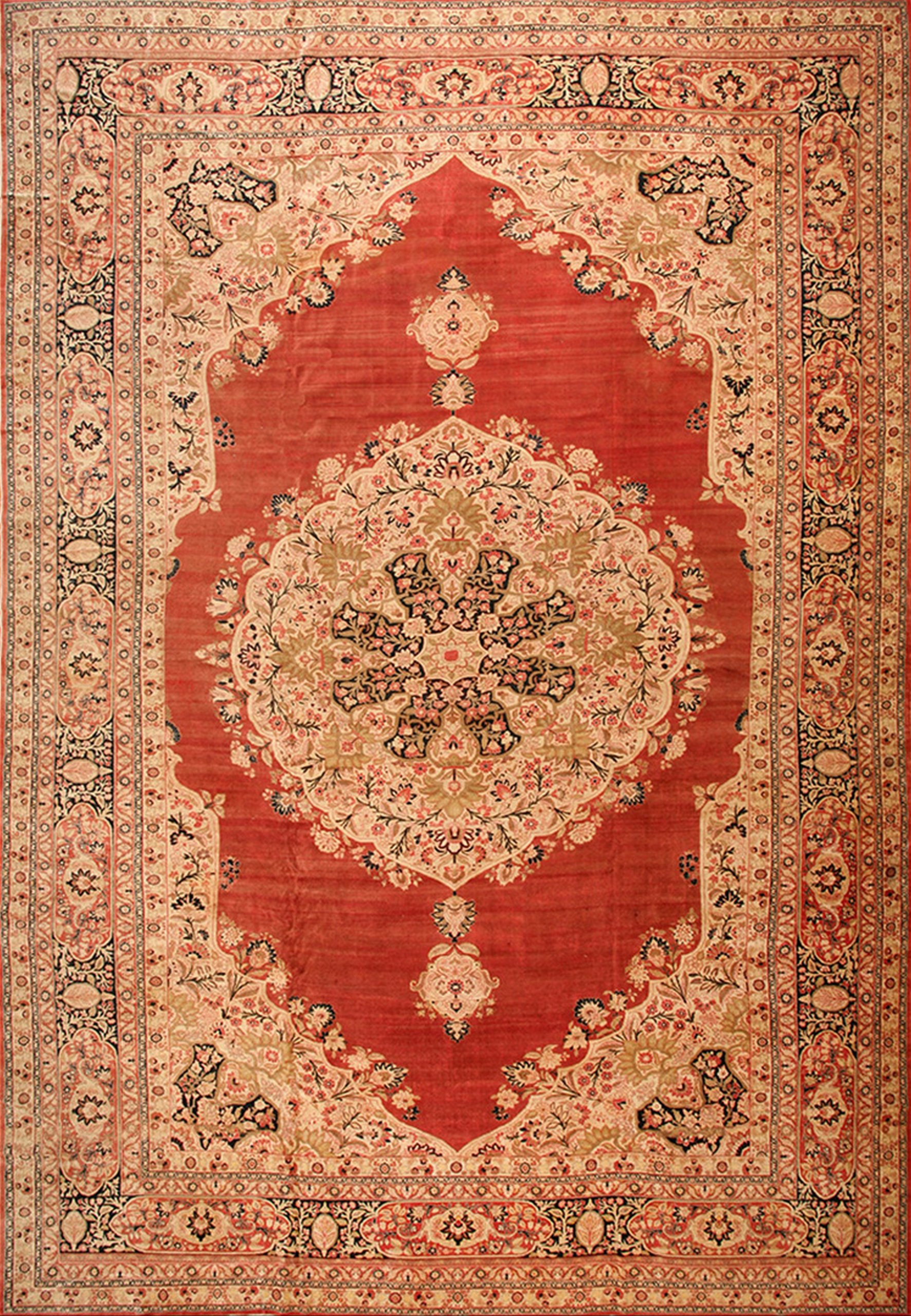
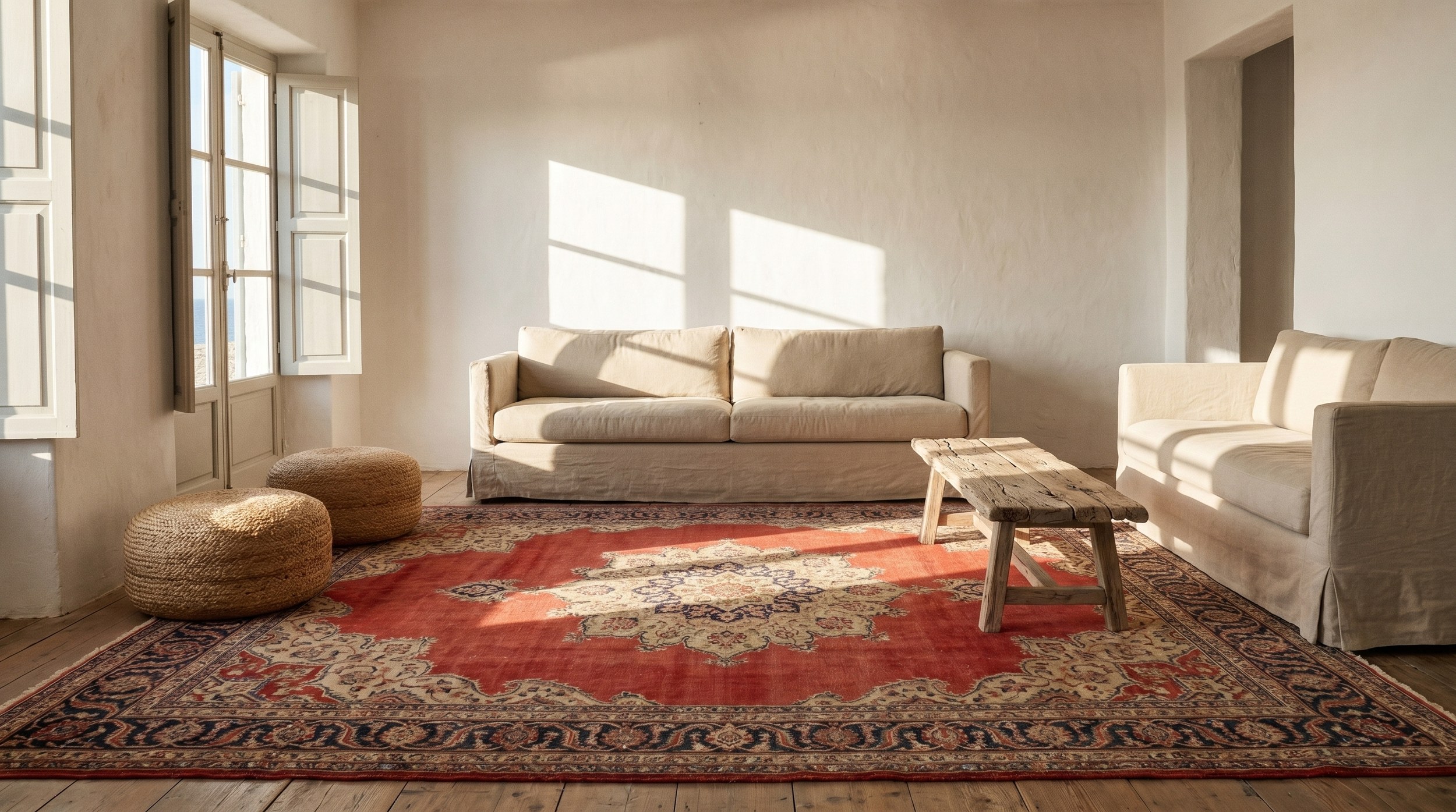
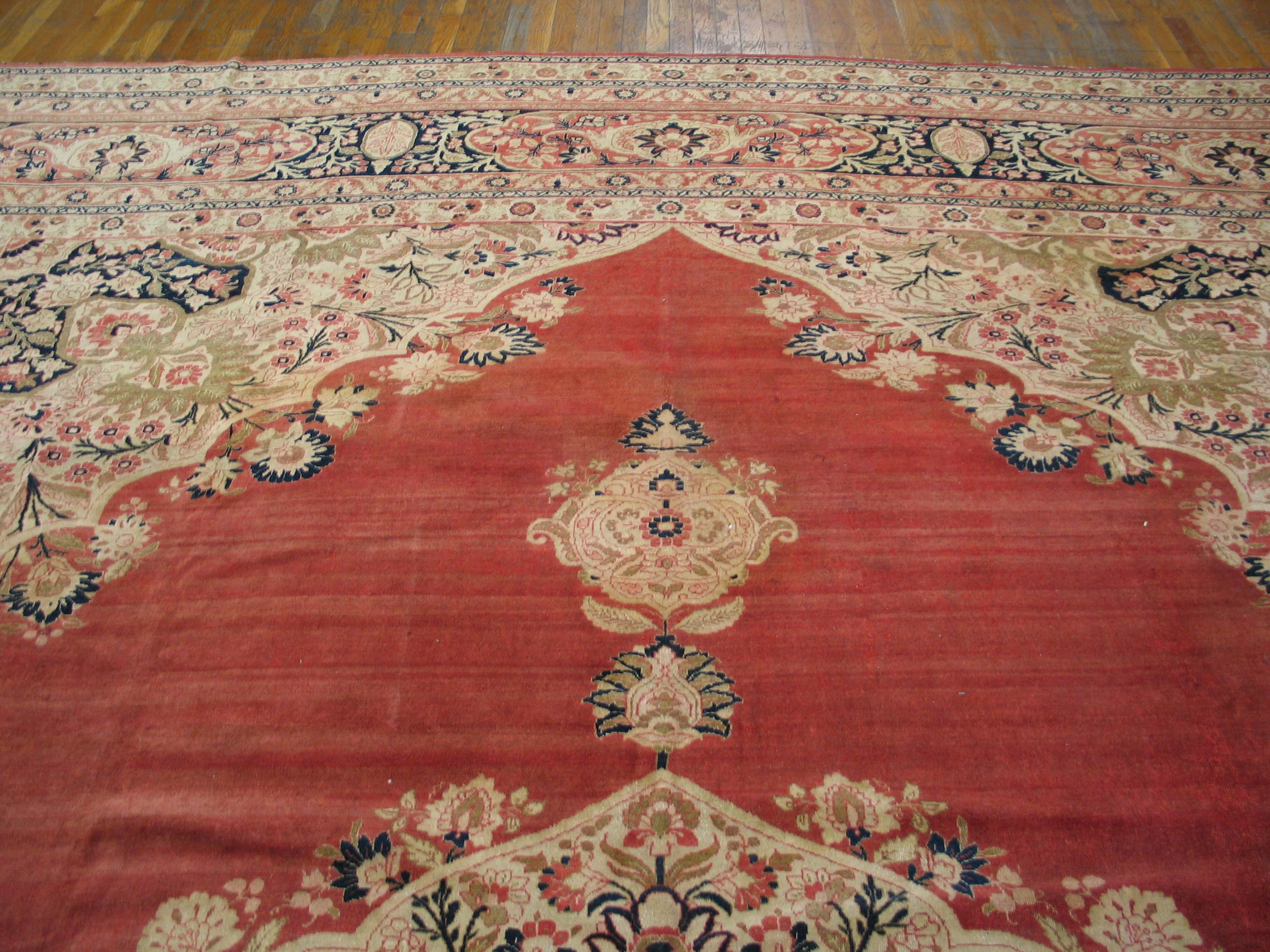
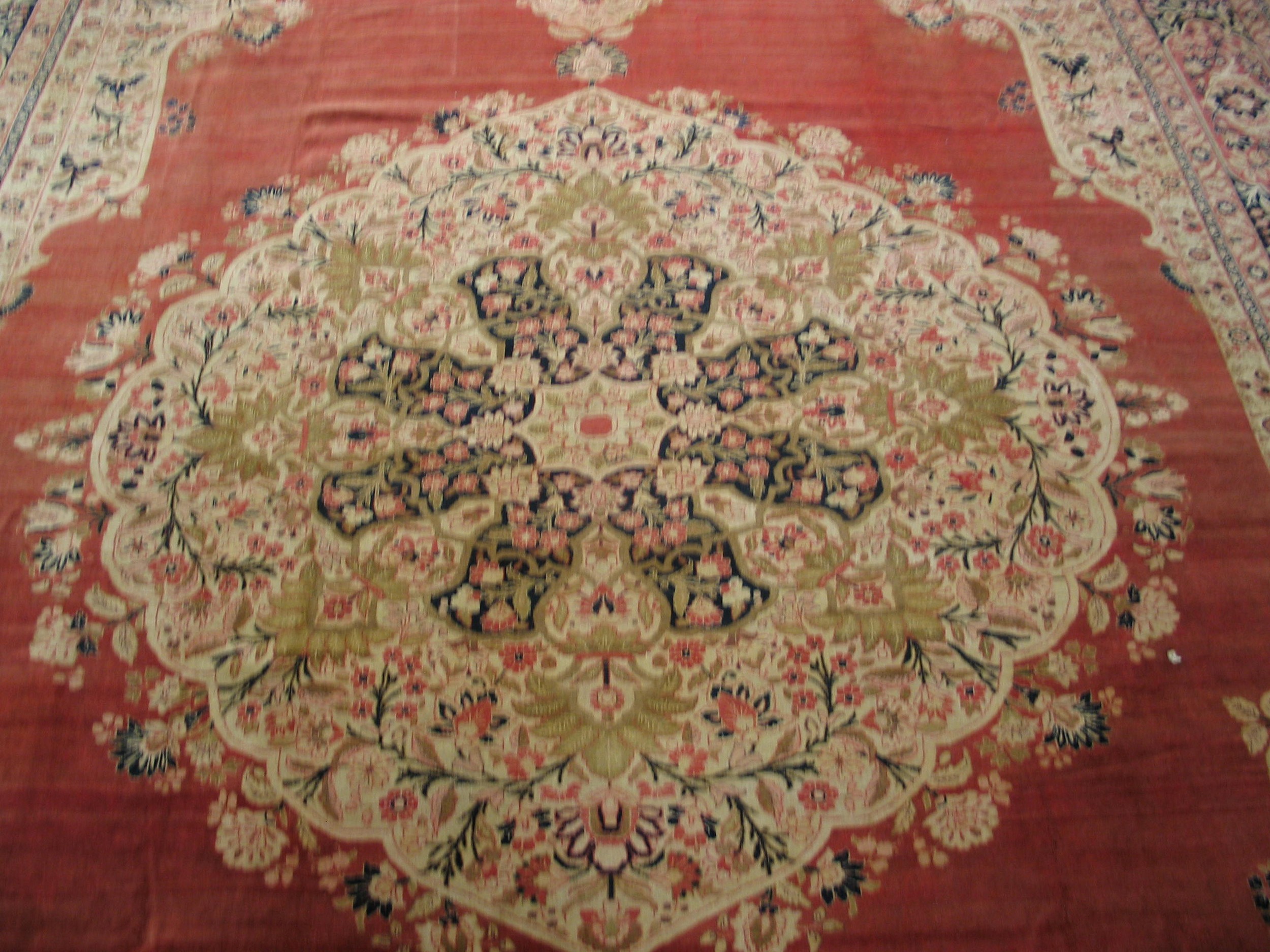
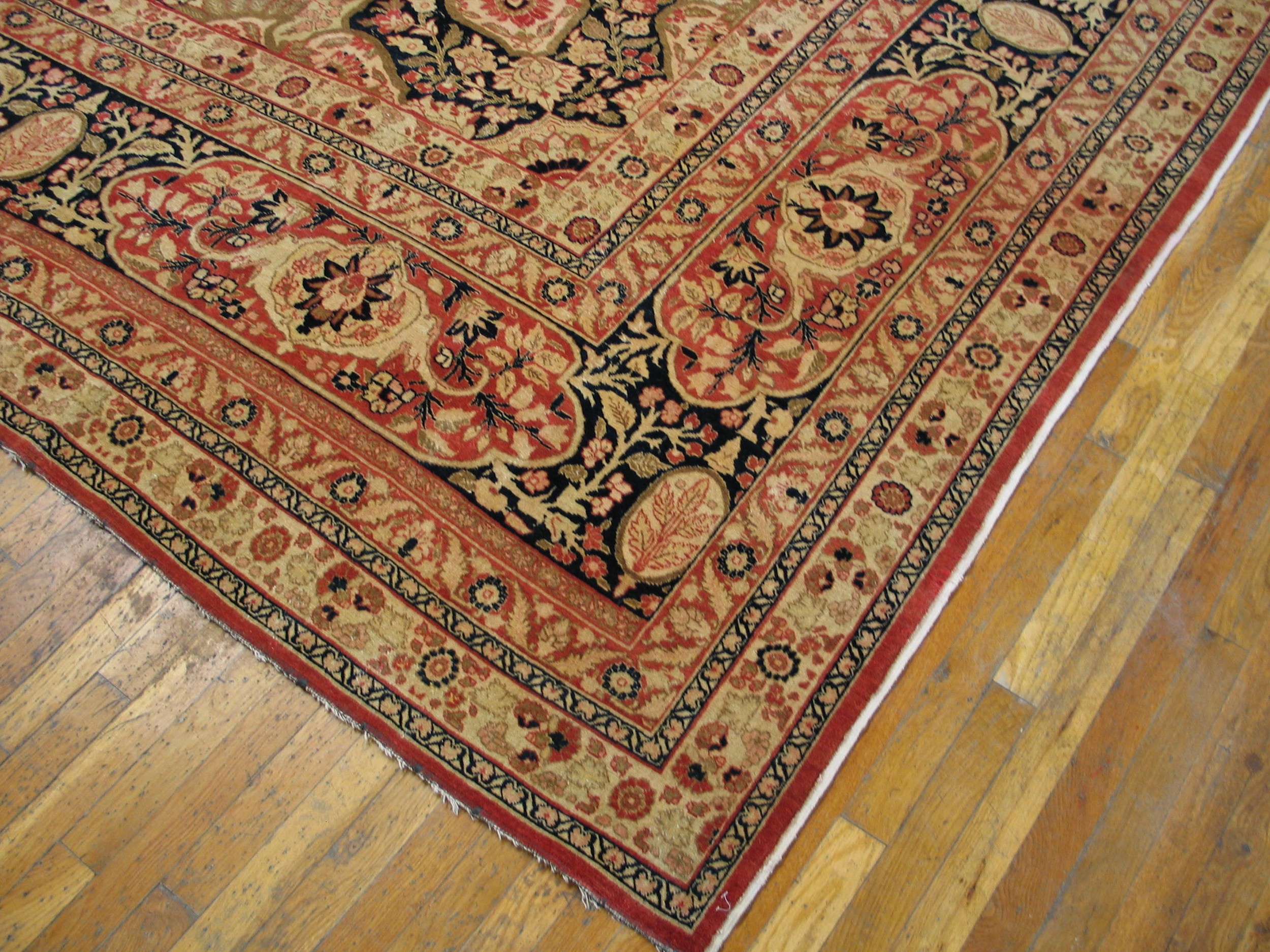
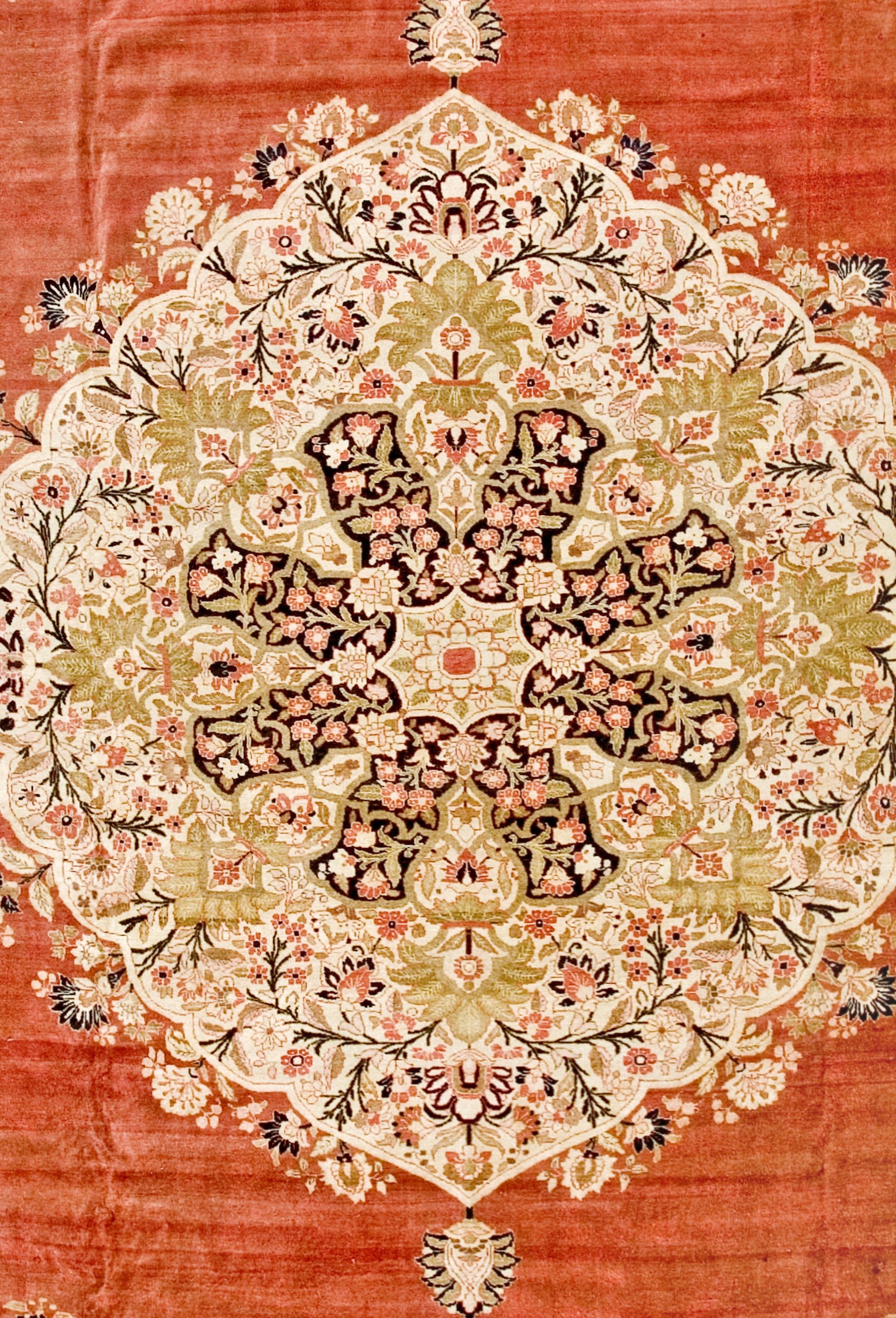
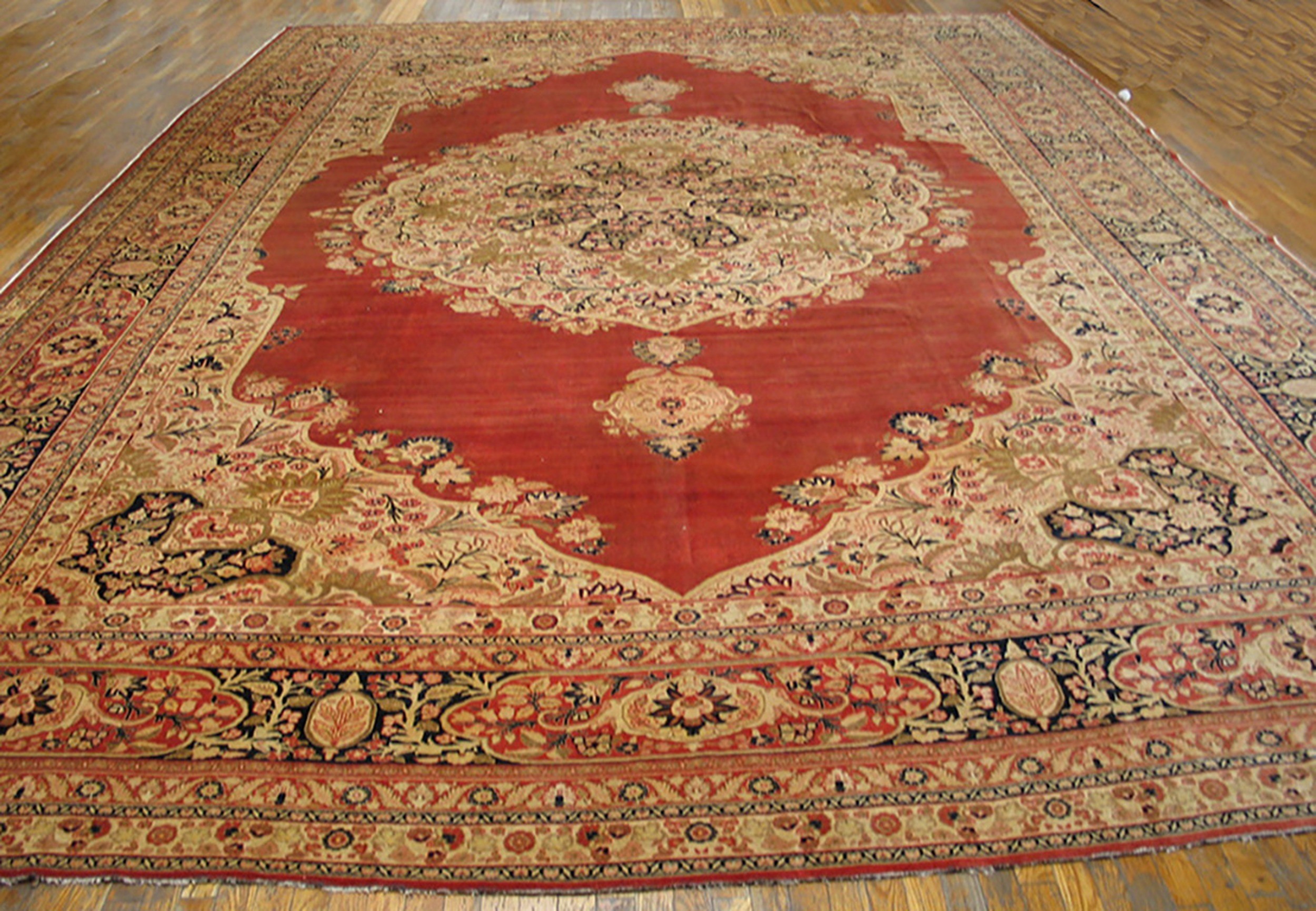
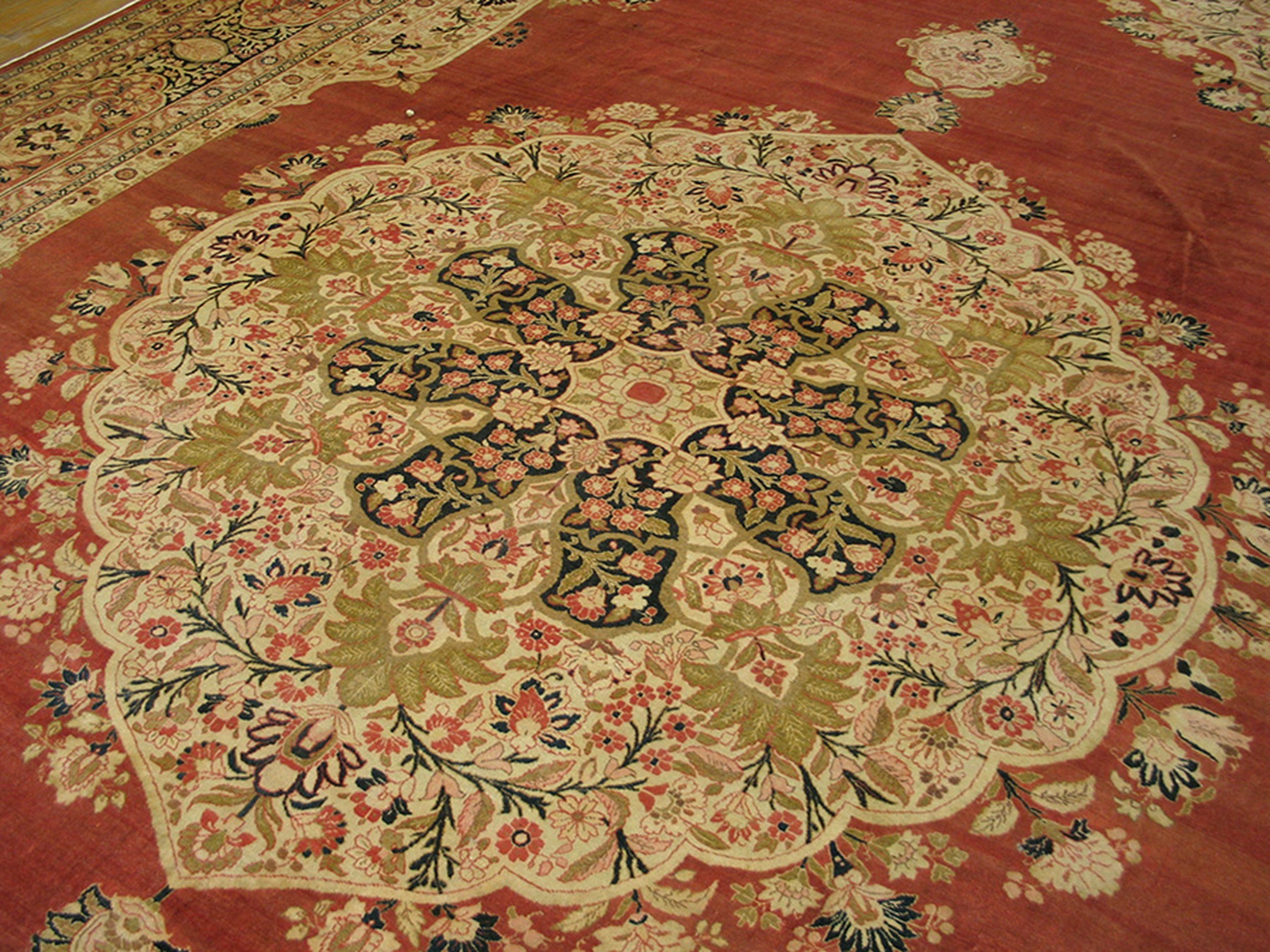
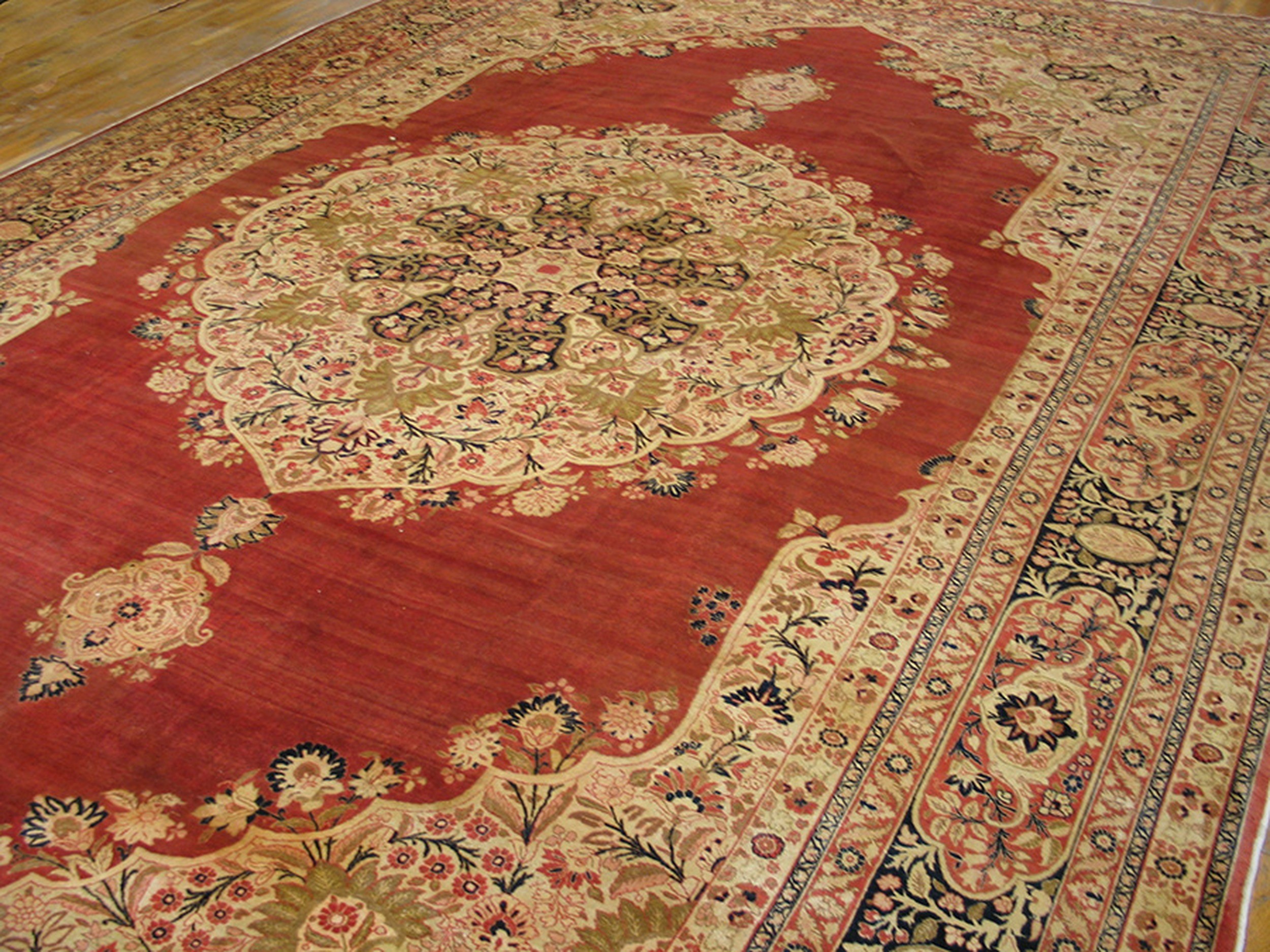
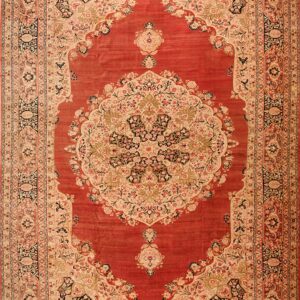
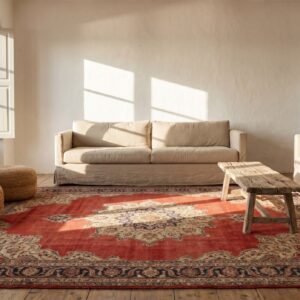
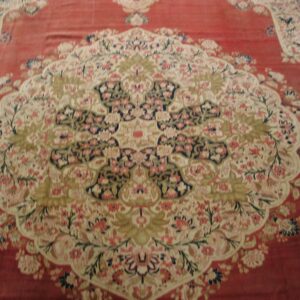
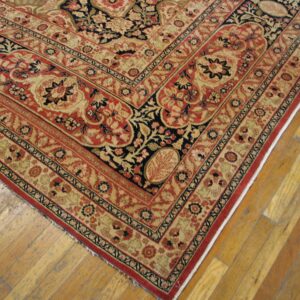
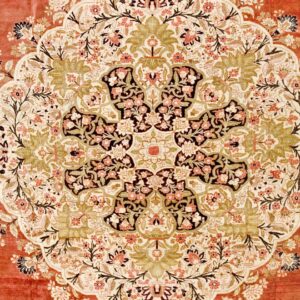
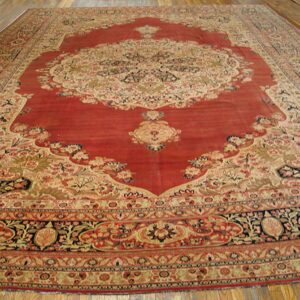
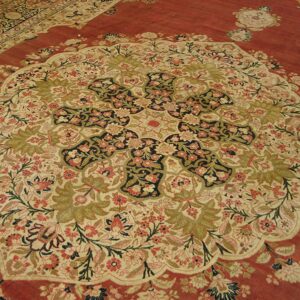
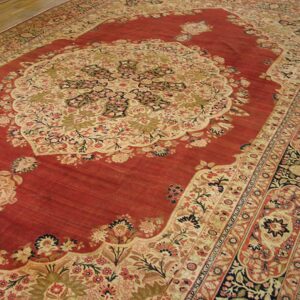
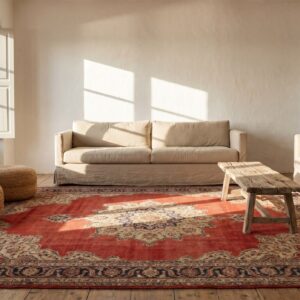
This monumental fine antique Persian Tabriz carpet represents the pinnacle of Azeri weaving excellence, characterized by its rare “open red field” and a breathtakingly intricate “Gonbad” medallion. The city of Tabriz, one of the oldest and most prestigious weaving centers in the world, was a critical node on the historic Silk Road, allowing its master weavers—known as ustads—to draw upon a diverse array of global artistic influences. This specific rug features the fabled Gonbad design, which is a direct architectural translation of the magnificent, multi-layered domes found in Persian mosques, such as the 15th-century Blue Mosque of Tabriz. The design is intended to draw the eye toward a celestial center, utilizing a mathematical precision that creates an illusion of three-dimensional depth, effectively mirroring the “vault of heaven” upon the floor of a grand interior.
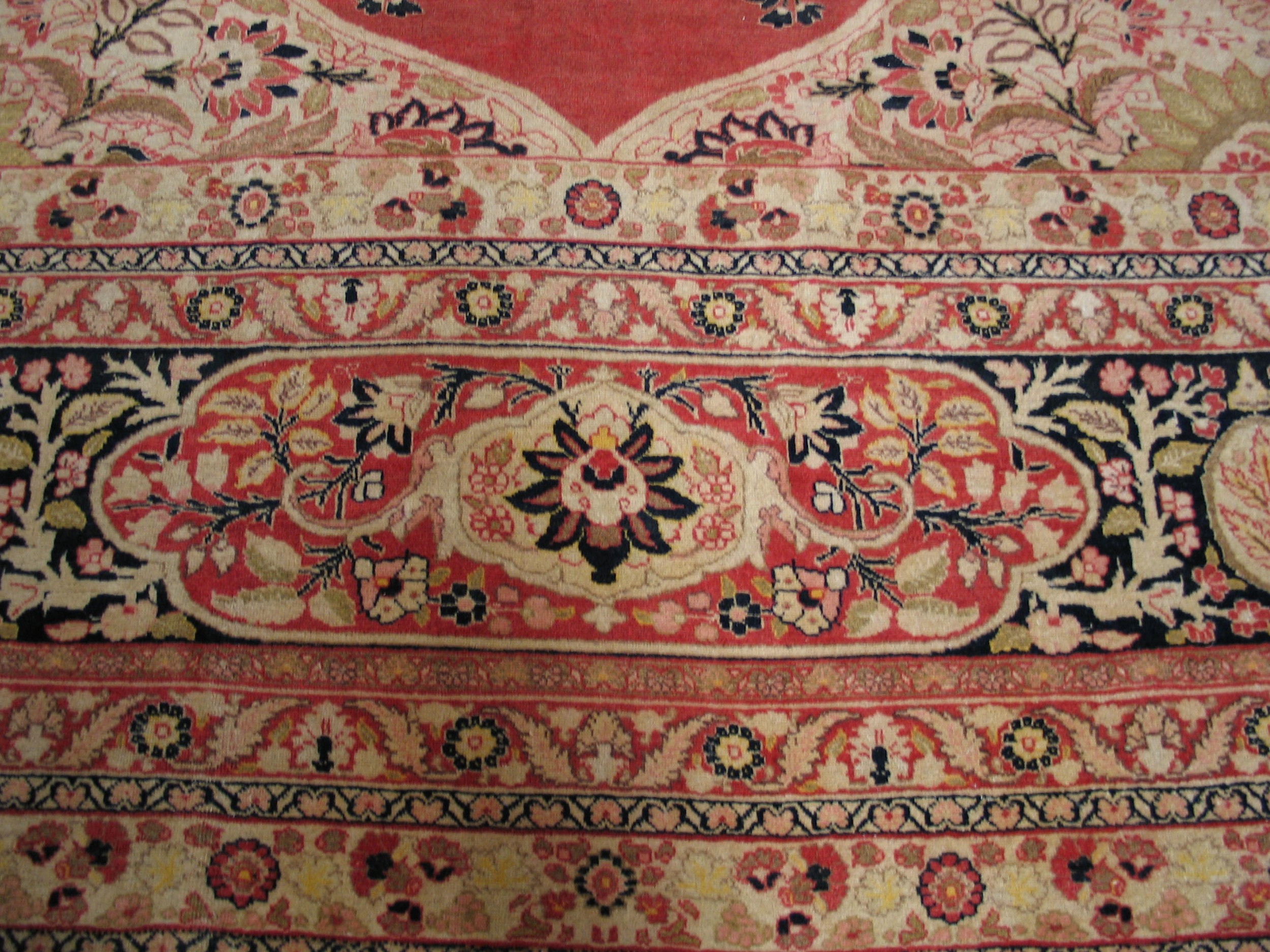
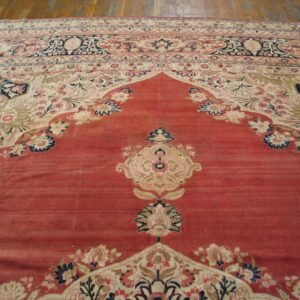
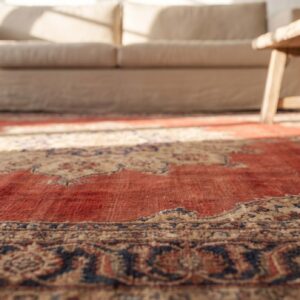
Historically, the “open field” aesthetic is a sophisticated design choice that signifies both luxury and restraint. By leaving the expansive red-toned ground largely unencumbered by secondary motifs, the weaver allows the central medallion and the complex floral borders to resonate with greater visual power. This style became particularly popular during the late 19th and early 20th centuries as Tabriz re-emerged as a global leader in carpet exports, tailoring its classical Persian vocabulary to suit the architectural proportions of grand Western estates. The “red” palette of this carpet is achieved through the masterful use of natural dyes, where madder root, walnut husks, and indigo are blended to create earth-toned hues that provide a grounded, organic warmth. Unlike the more rigid city weaves, the subtle variegation in color—known as abrash—gives the open field a sense of movement and “lived-in” history, a hallmark of authentic hand-knotted artistry.
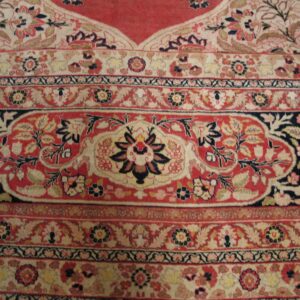
The technical execution of a Tabriz carpet of this magnitude is a feat of extraordinary human labor, often utilizing the symmetrical Turkish (or Ghiordes) knot which allows for the crisp, razor-sharp definition of its floral linework. The intricate scrolling vines and palmettes that frame the Gonbad center are not merely decorative; they represent the Islimi style, a continuous spiral of foliage that symbolizes the infinite nature of the divine. As an oversized example, this antique Persian carpet was undoubtedly a special commission, requiring a massive upright loom and a team of highly skilled artisans working in perfect synchronicity for several years. Today, such a piece stands as a testament to the “Golden Age” of Tabriz weaving—a bridge between the spiritual geometry of Islamic architecture and the timeless elegance of the Persian garden.