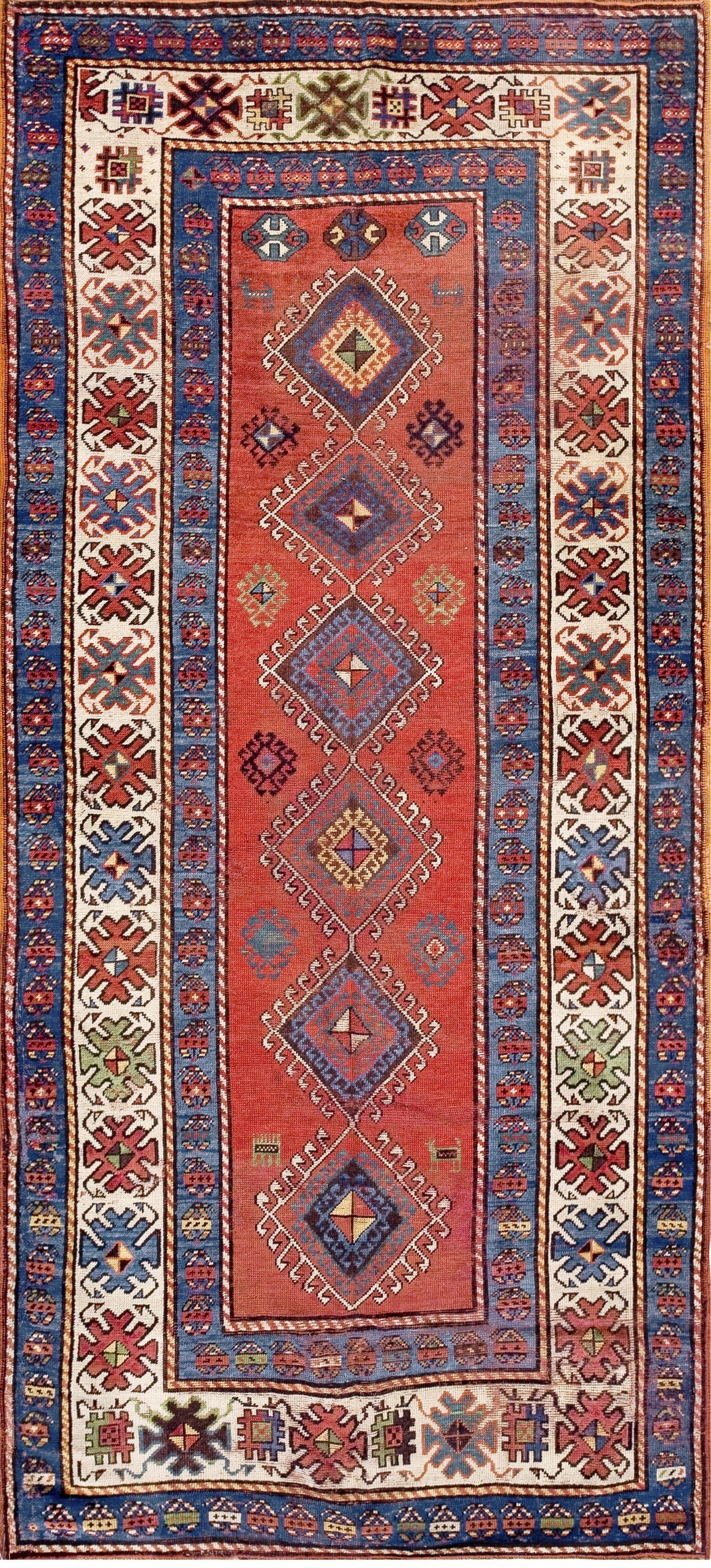
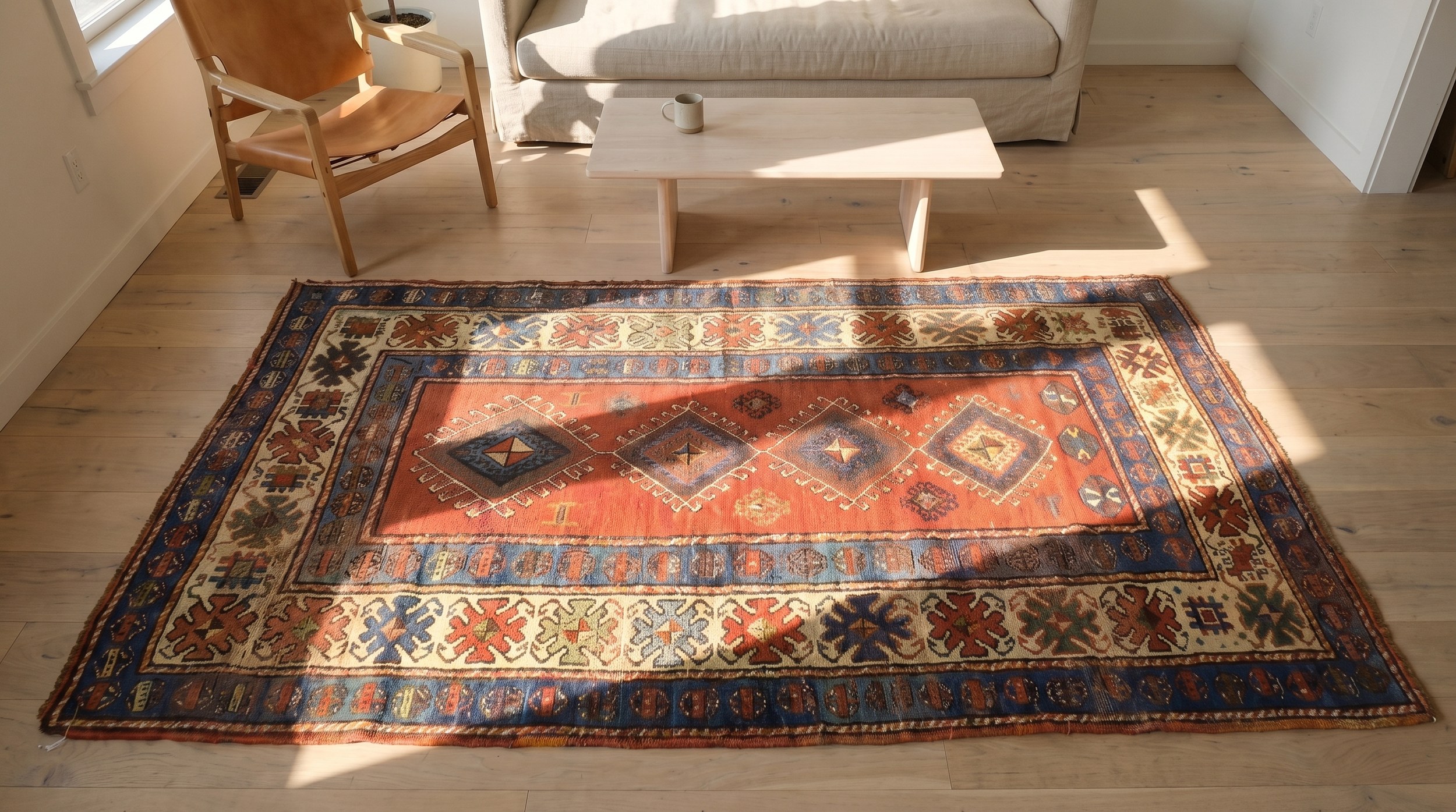
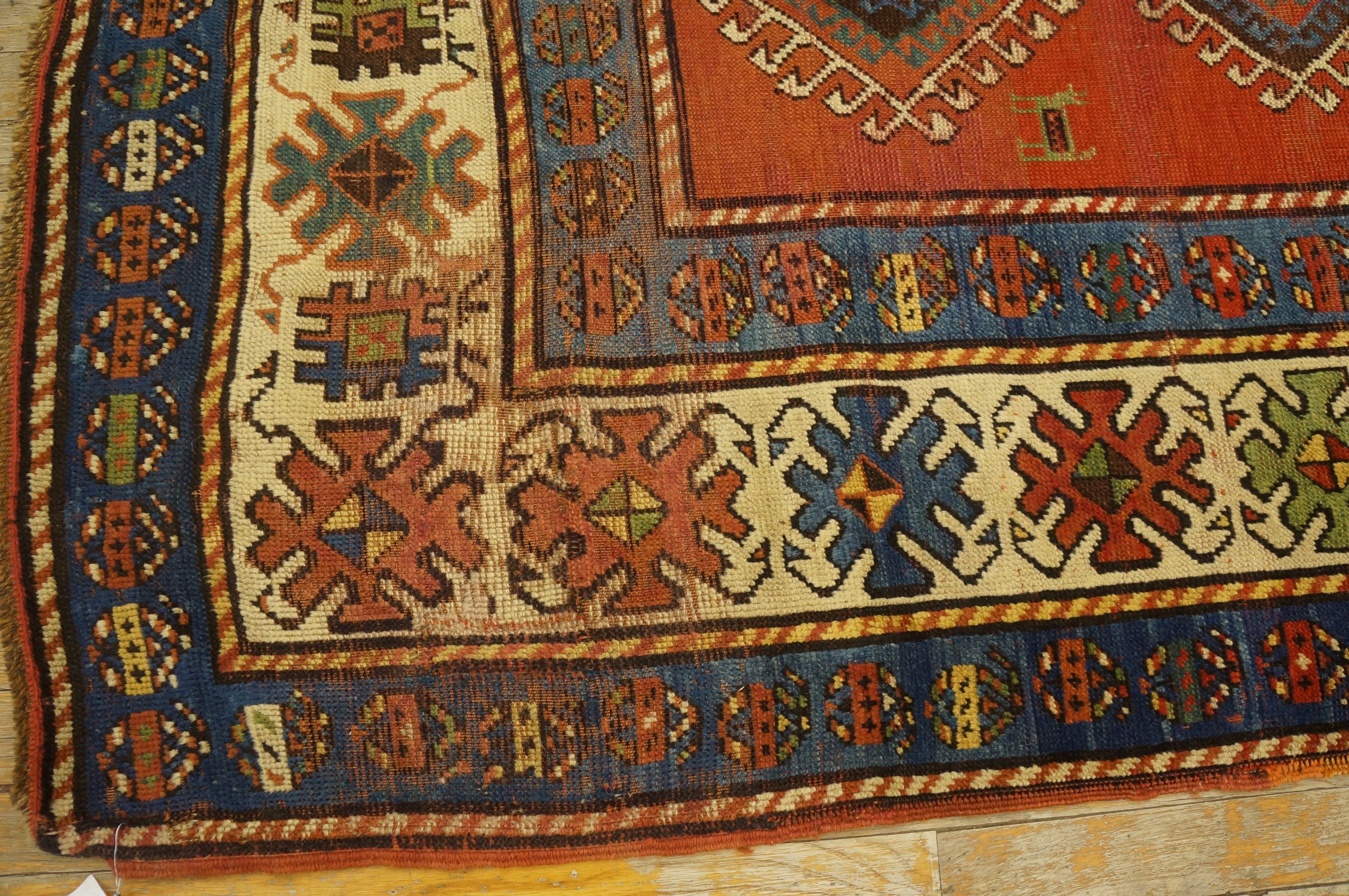
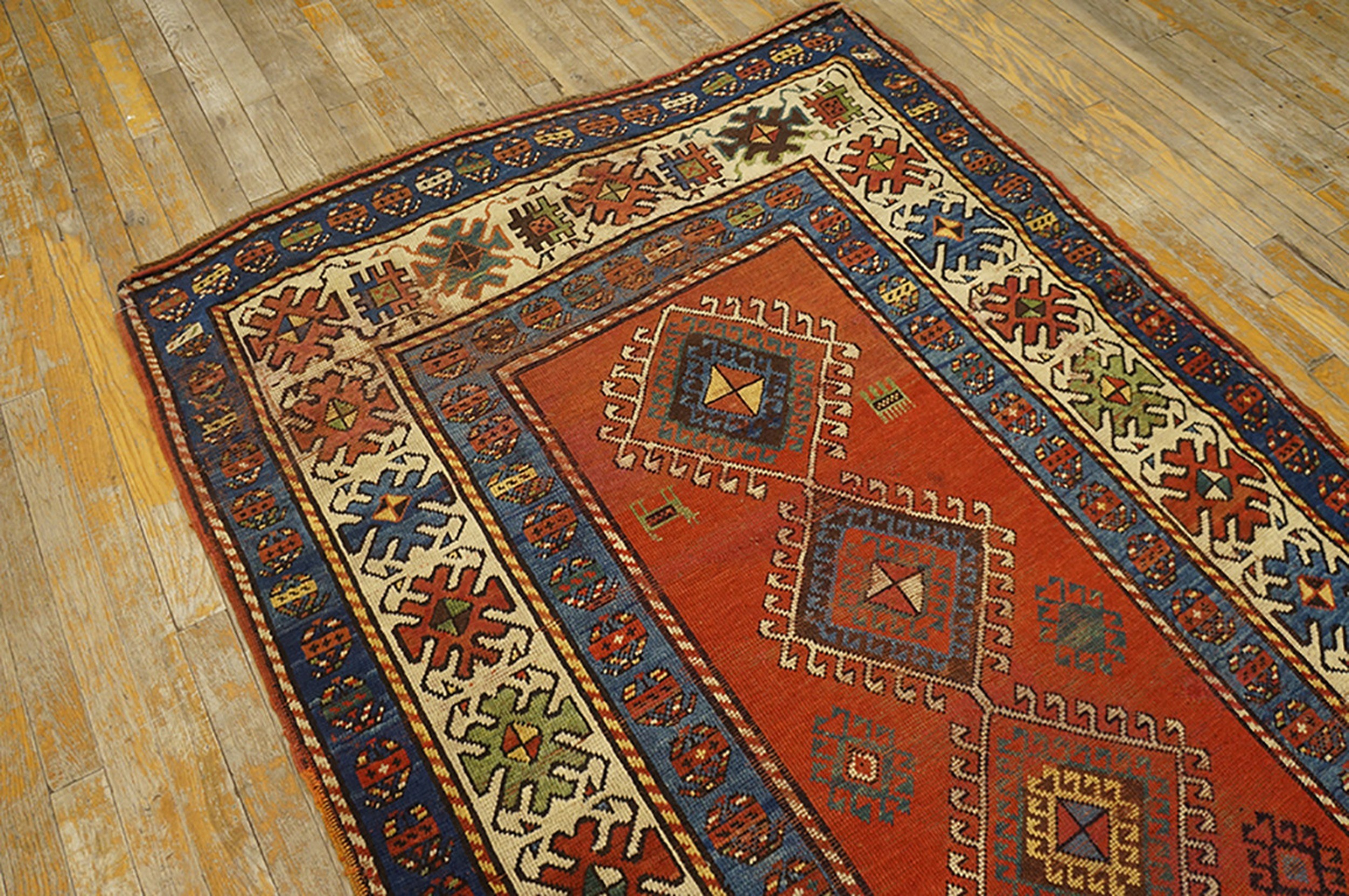
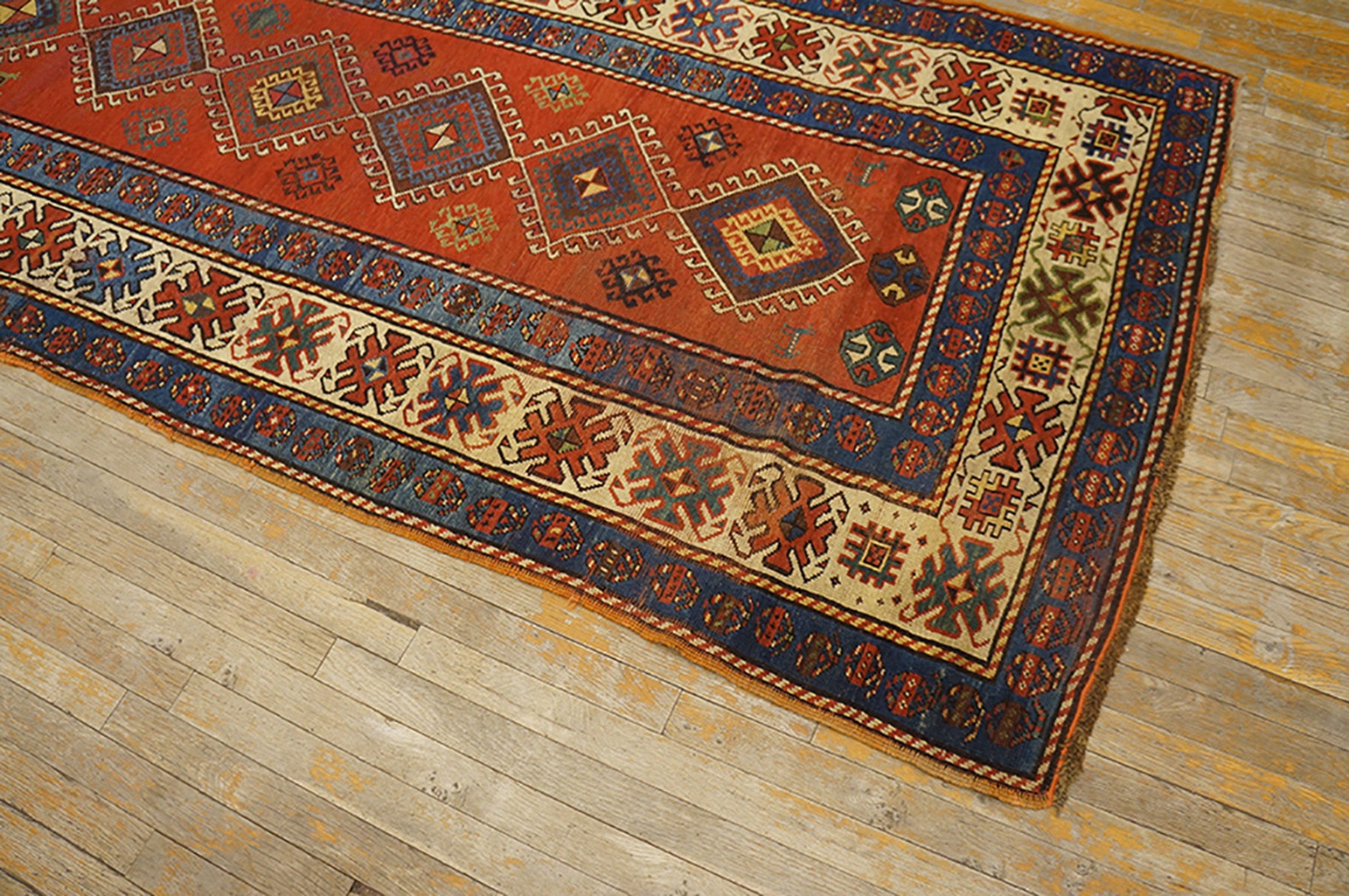
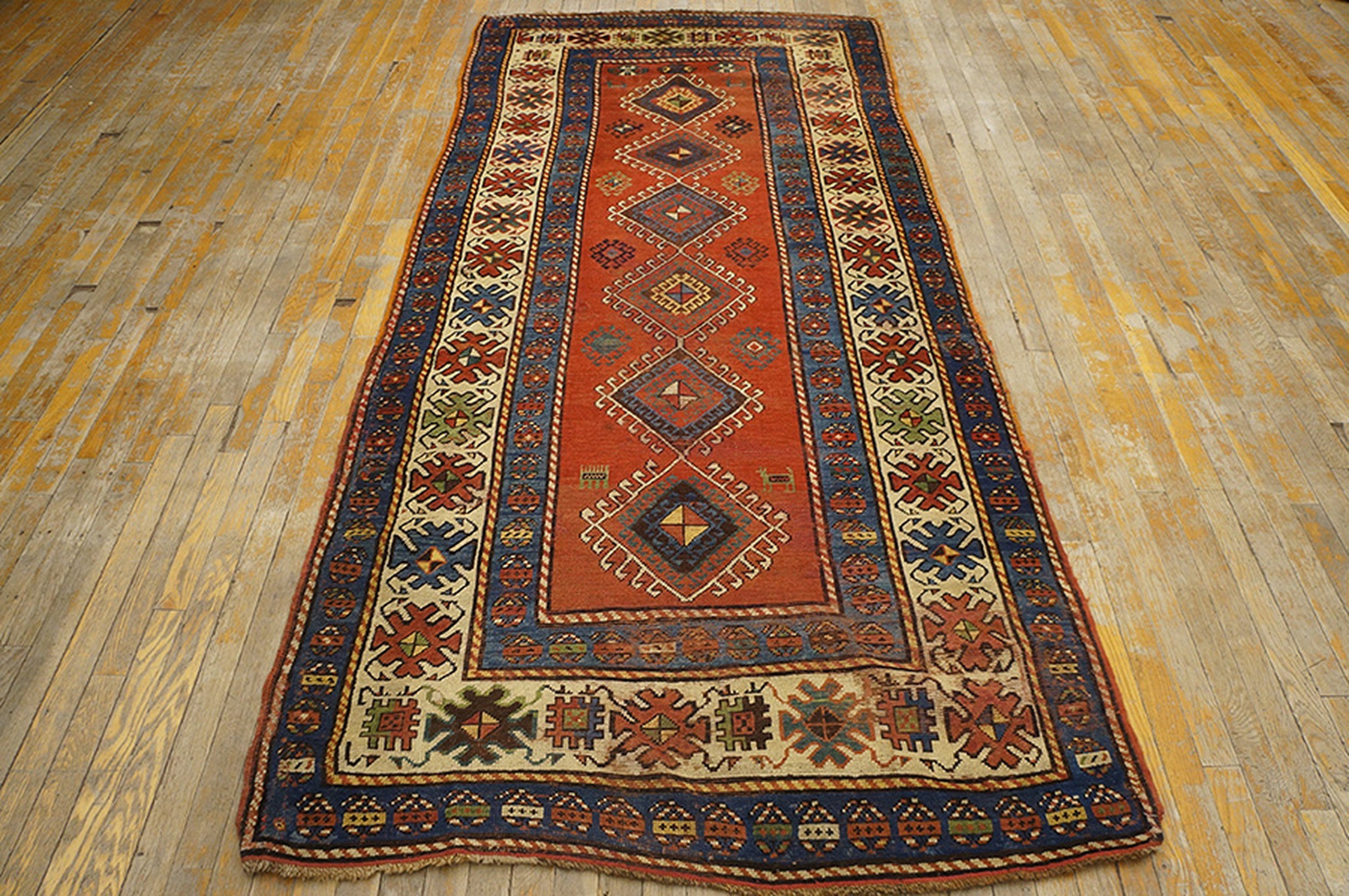
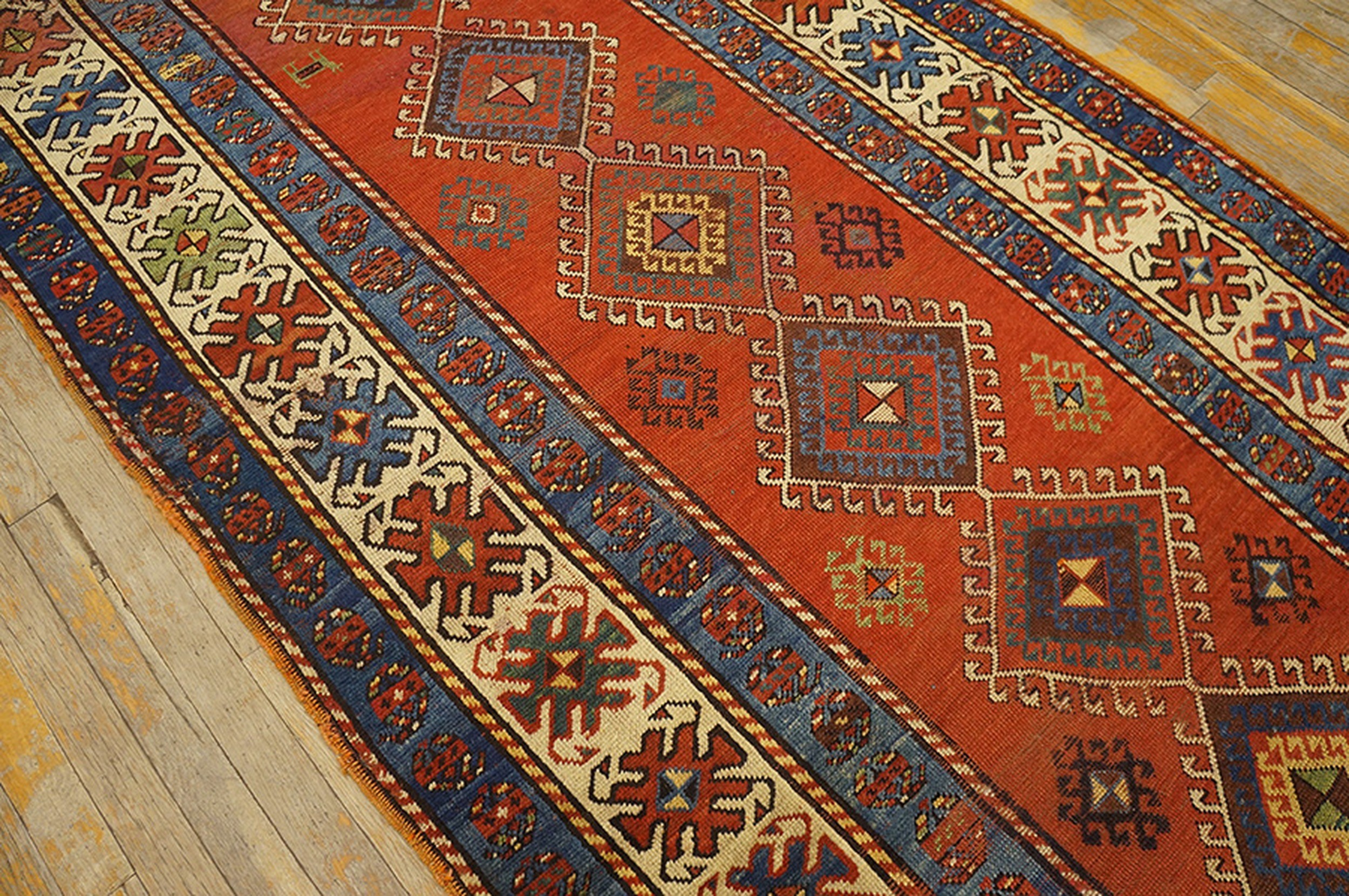
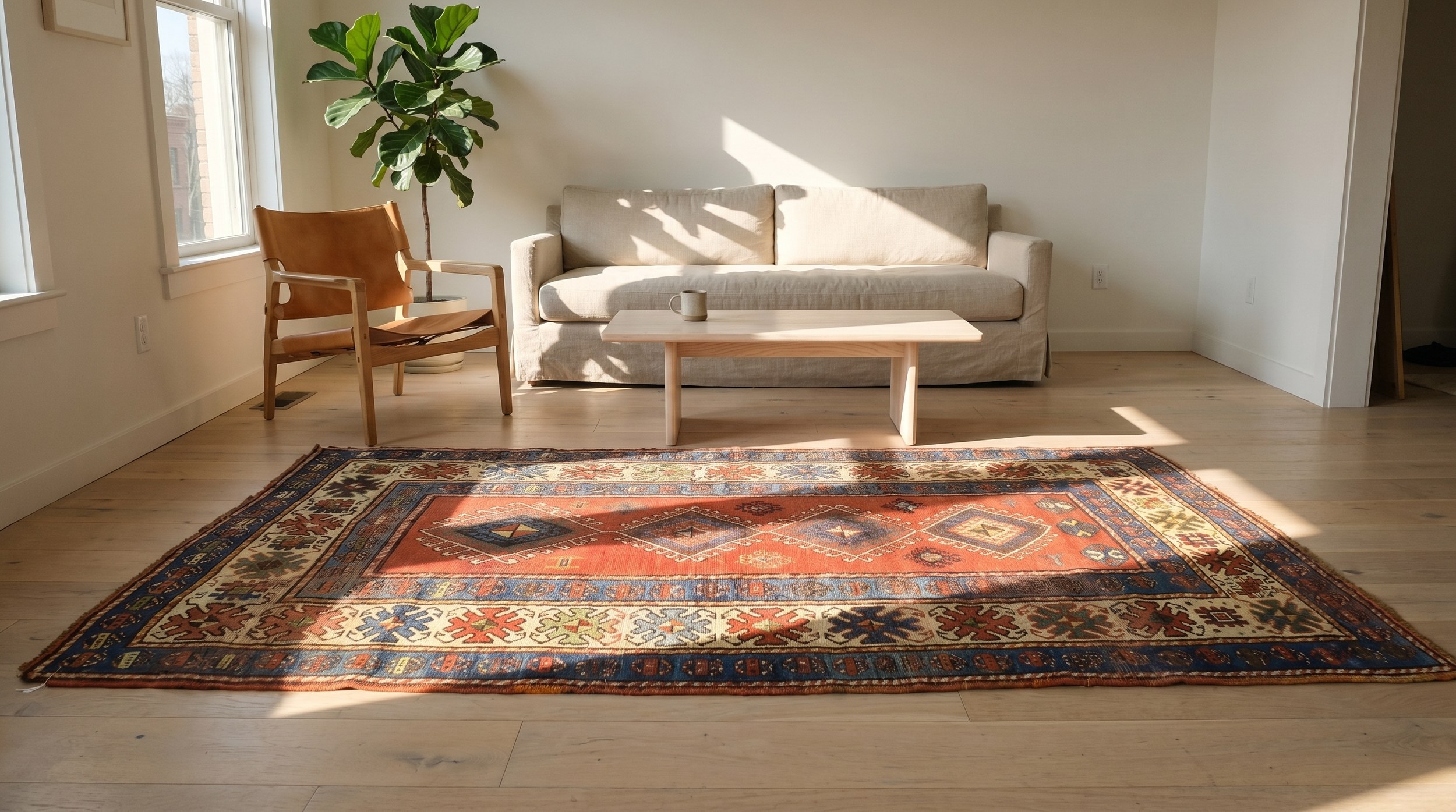
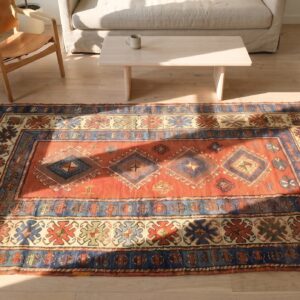
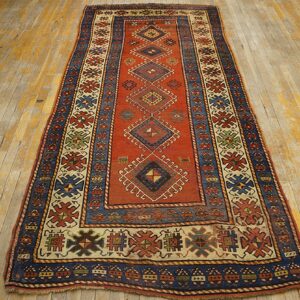
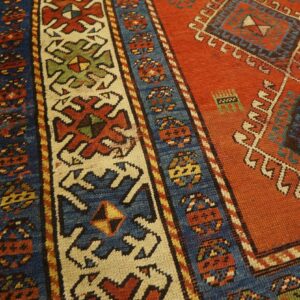
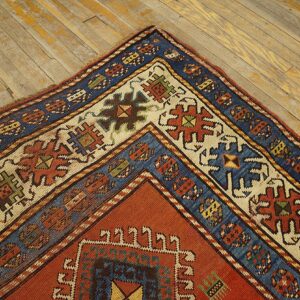
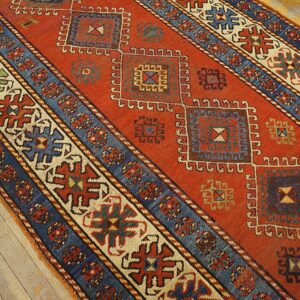
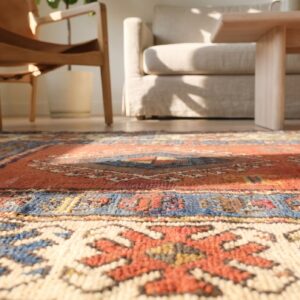
This magnificent late nineteenth-century Red Caucasian rug is a quintessential example of the “high-altitude” tribal weaving traditions of the Southwestern Caucasus. Historically, Caucasian Kazak rugs were crafted by nomadic and semi-nomadic tribes who lived in rugged mountainous regions, and their textiles were designed to provide warmth and durability against harsh winters. This specific Red specimen is distinguished by its “Rustic” character—a term that refers to its bold, unpretentious aesthetic and its thick, luminous pile, which embodies the primal energy of the Caucasian steppes.
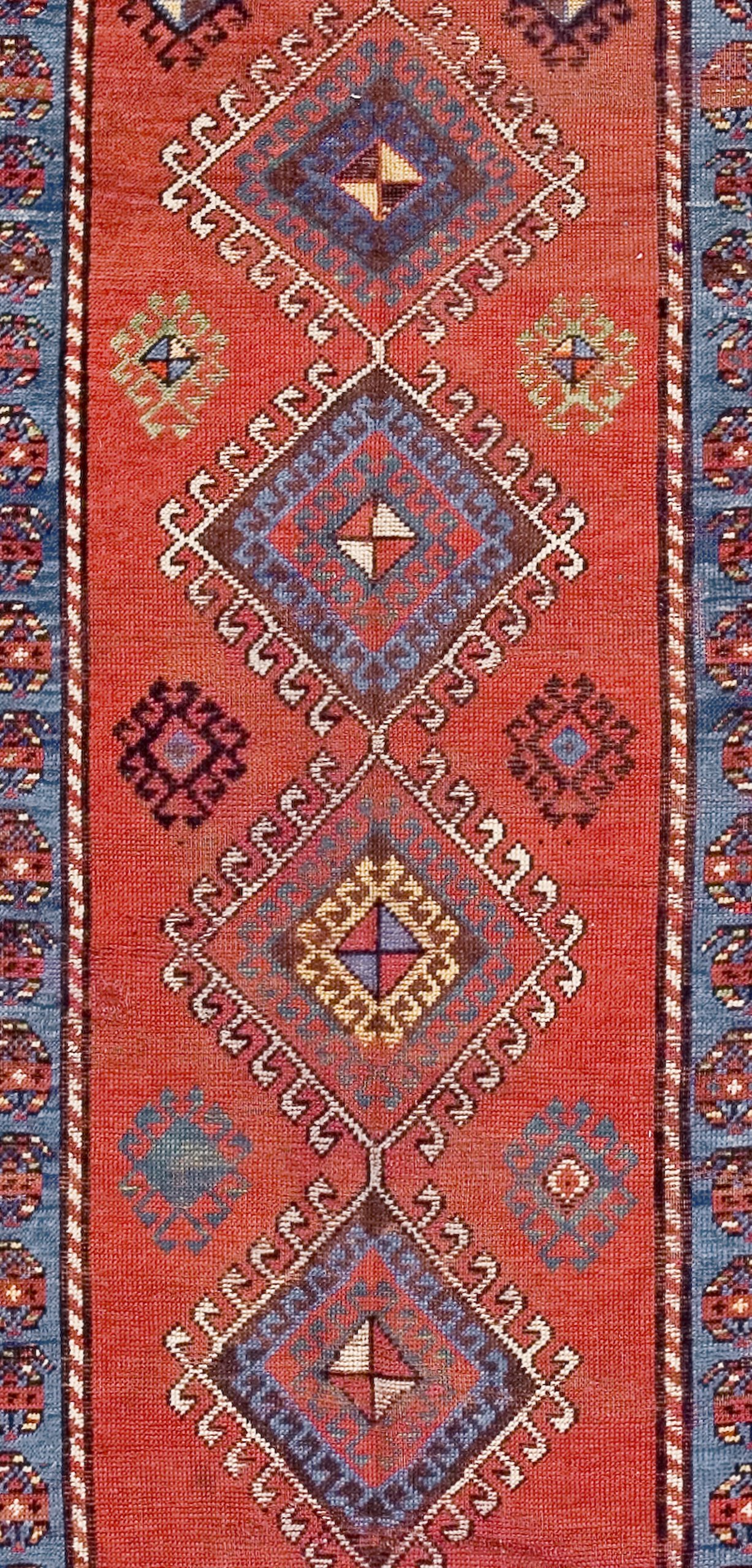
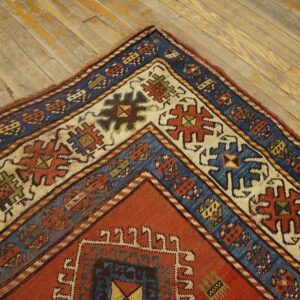
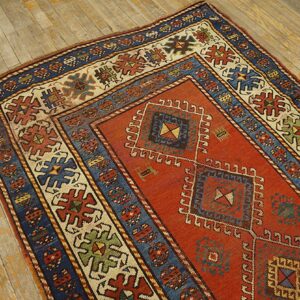
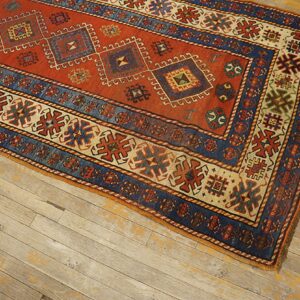
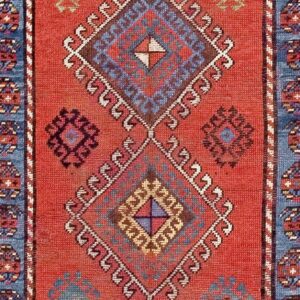
The composition is defined by its powerful tribal geometric pattern, often featuring a series of monumental medallions or stepped polygons known as “scales” or “shields.” In the lexicon of Kazak design, these motifs are symbols of protection, fertility, and tribal identity. The geometry is intentionally bold and “chunky,” eschewing the fine, floral detail of city area rugs in favor of a graphic, high-contrast narrative. The field is typically saturated with deep madder red, providing a moody, grounded backdrop for the secondary geometric accents.
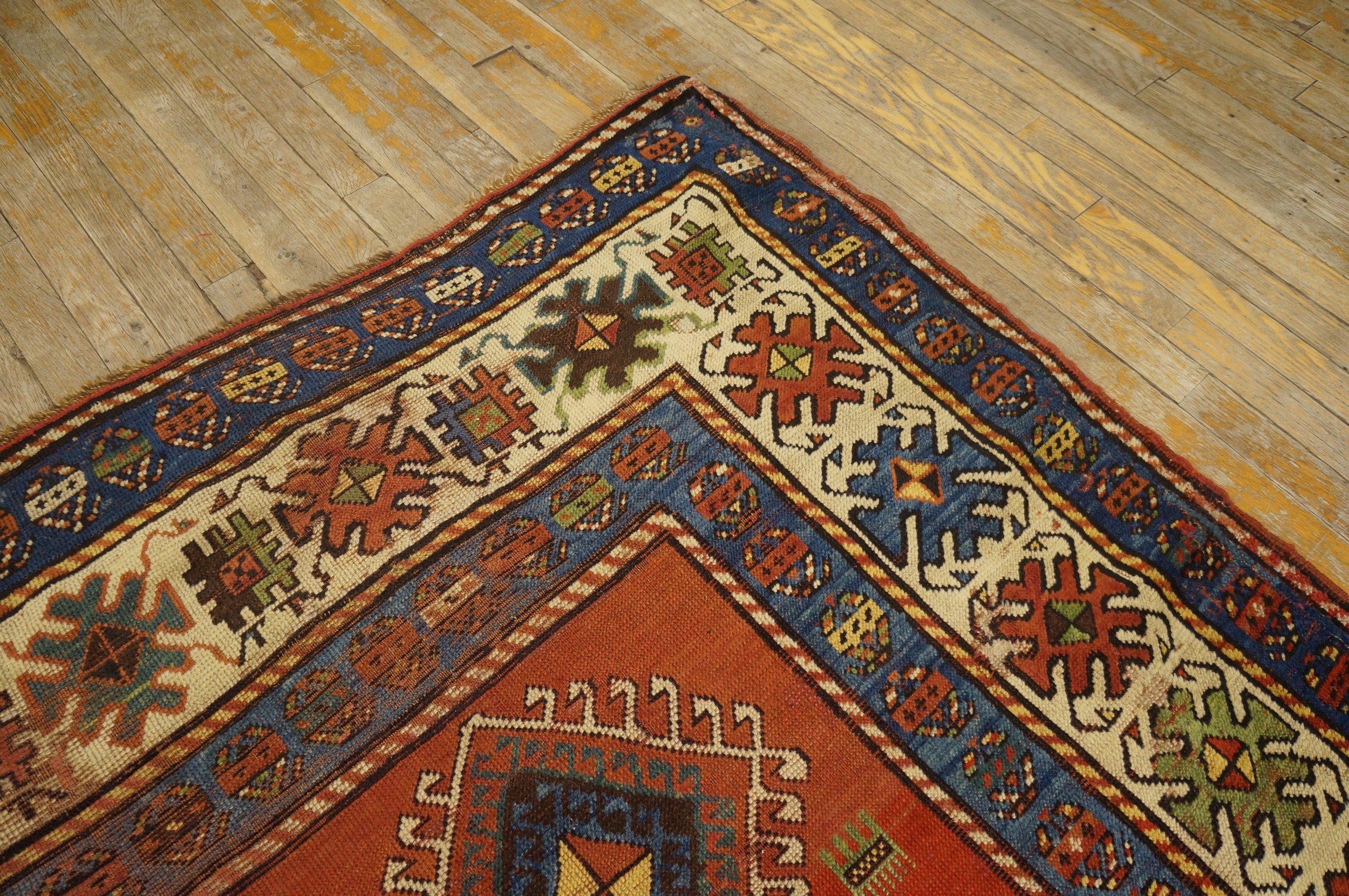
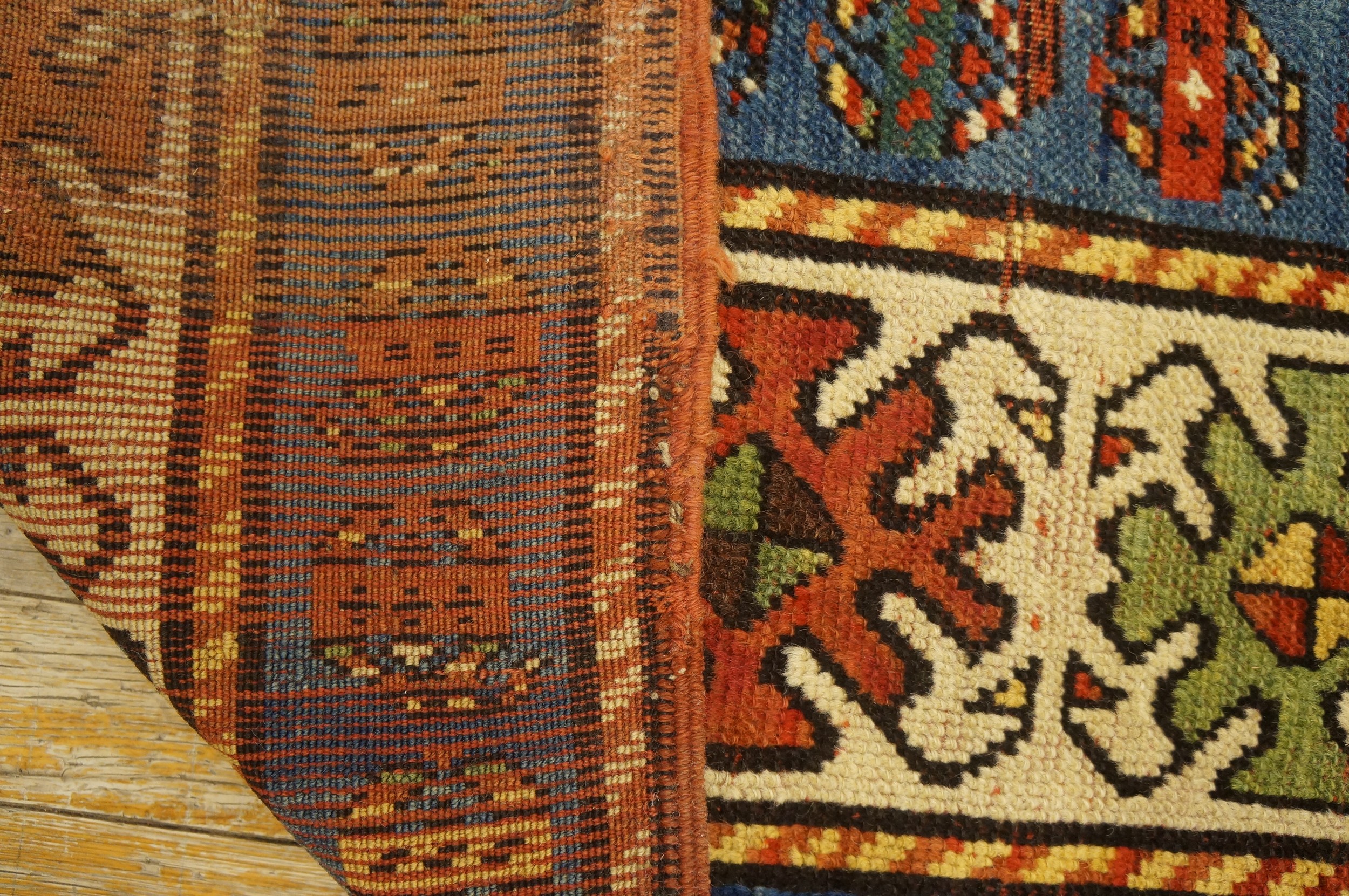
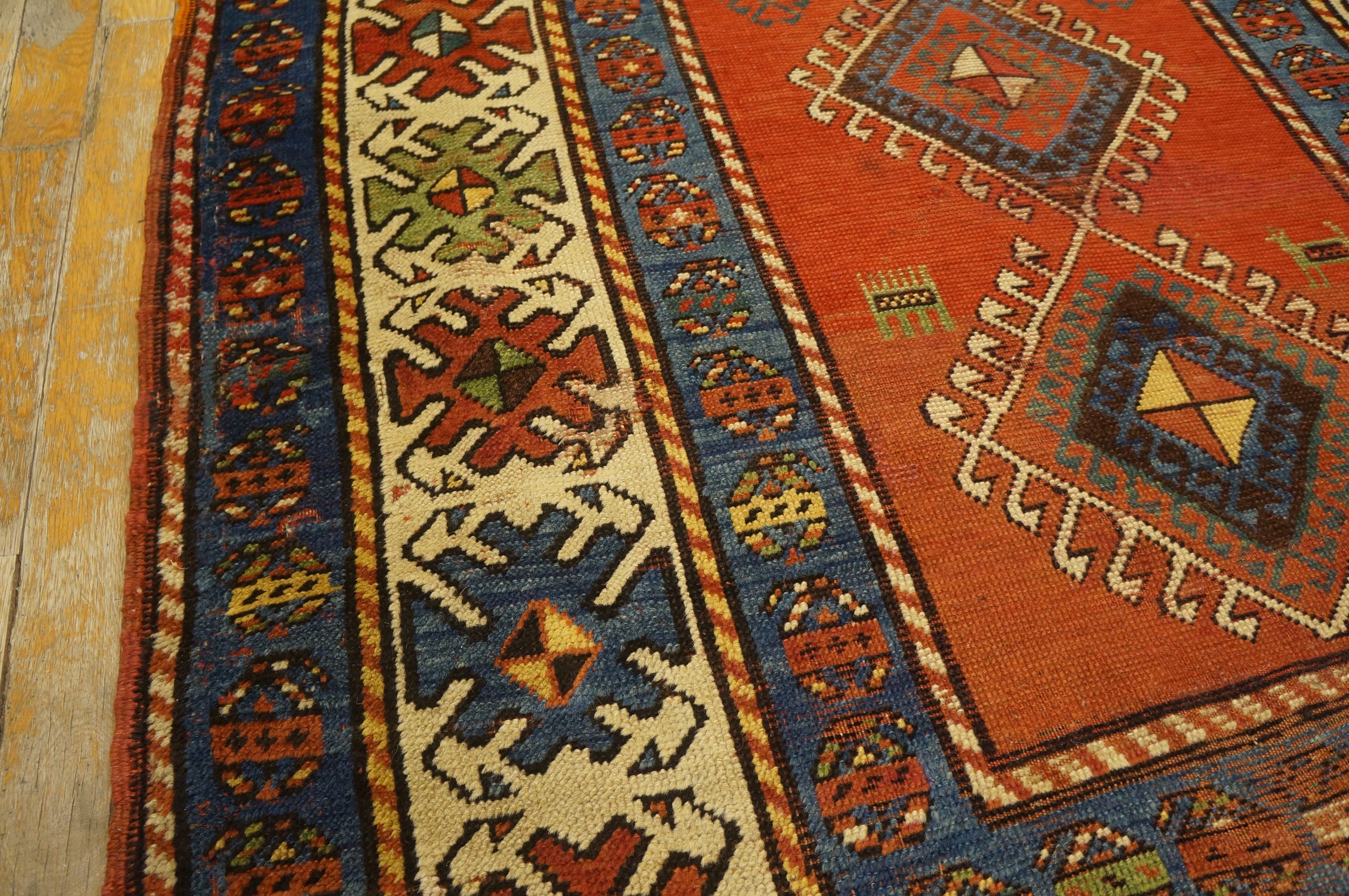
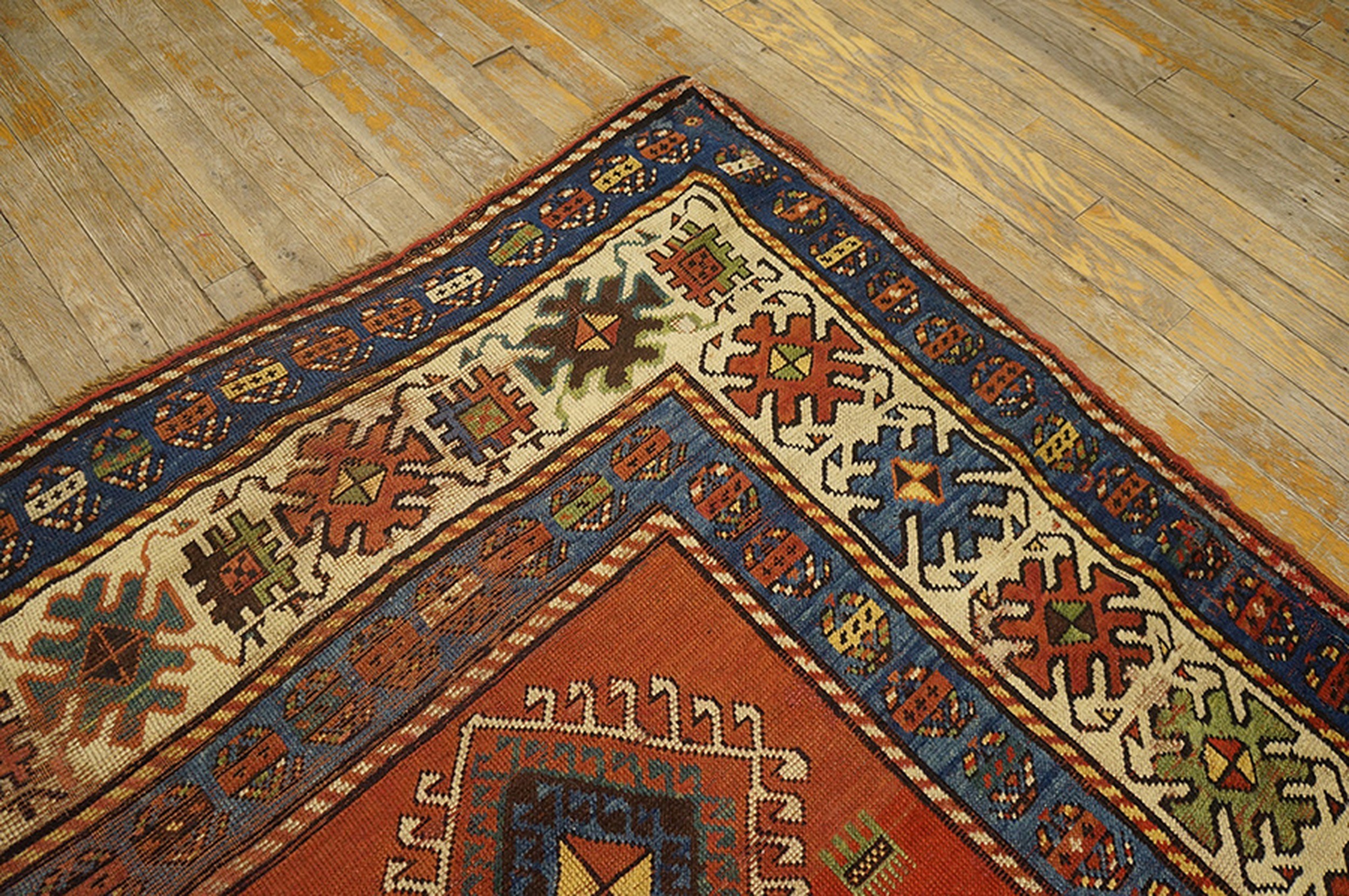
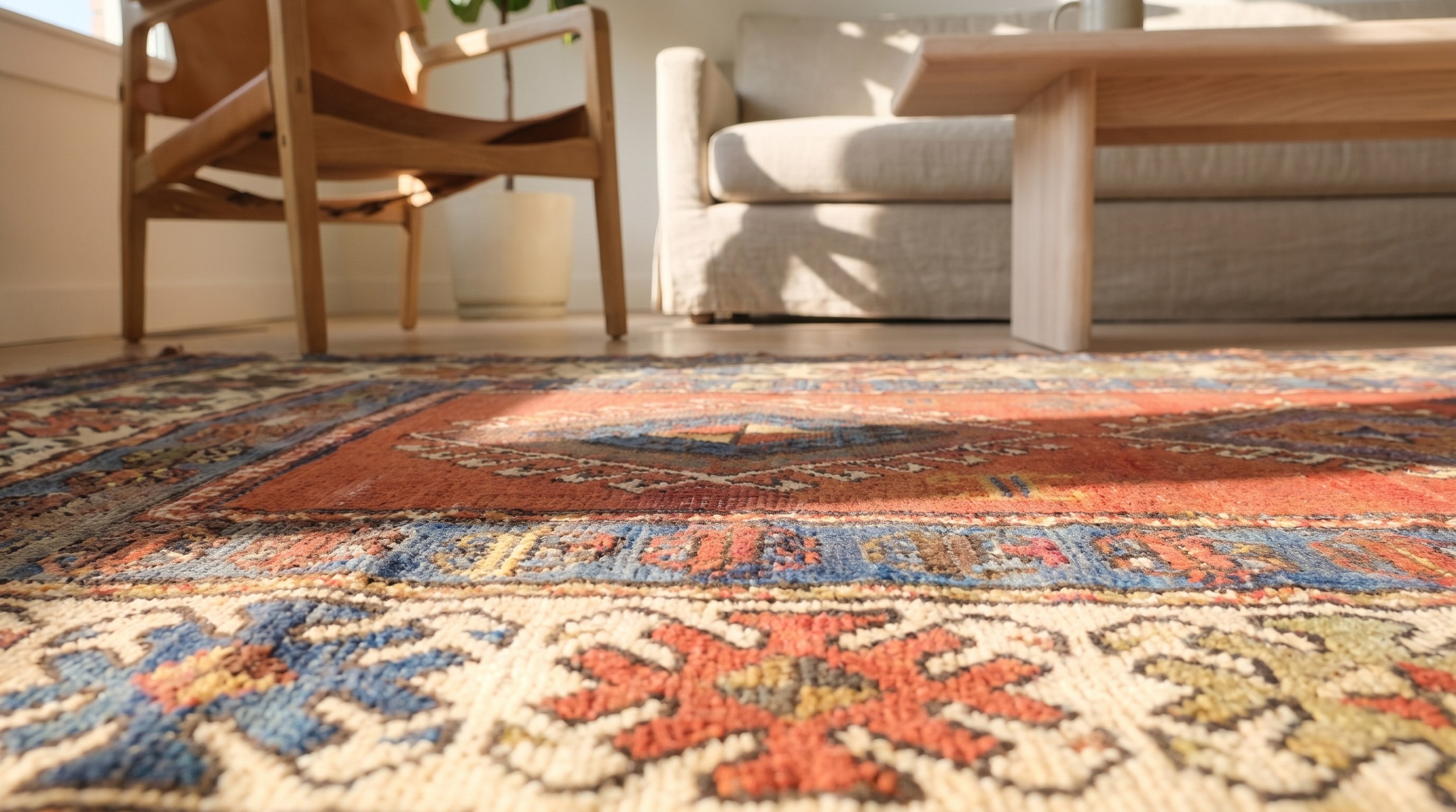
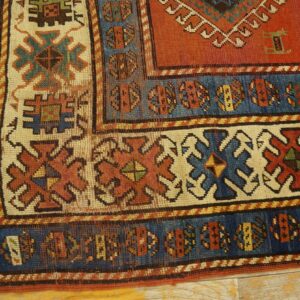
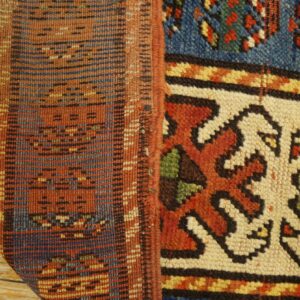
Technically, an antique Red Kazak is prized for its substantial, fleshy pile and its heavy, “leather-like” handle. The wool used is exceptionally long-staple and rich in lanolin, which gives the rug a lustrous, shimmering quality known as a “mirror finish.” Over more than a century, the natural vegetable dyes have developed a sophisticated abrash (tonal variation), creating a watercolor-like movement within the solid blocks of color. Unlike the more rigid symmetry of urban carpets, this Red Kazak possesses a “charming irregularity” that reveals the individual hand of the weaver.
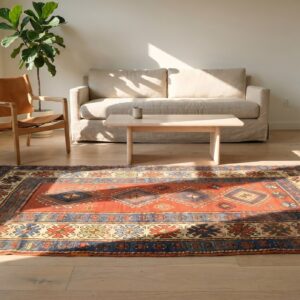
The borders act as a disciplined architectural frame, frequently featuring the classic “Running Dog,” “Wolf’s Track,” or “Medallion and Calyx” patterns. These borders serve to “contain” the exuberant, explosive energy of the central geometric field. To possess an antique rustic Red Kazak is to hold a monument to a vanishing nomadic way of life. It is a work that bridges the gap between ancient tribal geometry and the bold, minimalist requirements of the modern interior—a hand-wrought textile that transforms a room into a space of historical gravity and rugged, artistic power.