
Introduction to Tribal Rugs
Discover our full range of handwoven tribal design rugs to infuse authentic history into your home.
Defining Tribal Design
What defines tribal design in handmade rugs is its deep connection to nomadic life and its improvisational approach to weaving. Unlike city or workshop carpets, which follow highly structured designs and patterns drafted on graph paper, tribal design area rugs are created from memory and intuition.
Weavers often rely on motifs passed down orally or visually through generations, resulting in bold, geometric patterns that may vary within the same rug.
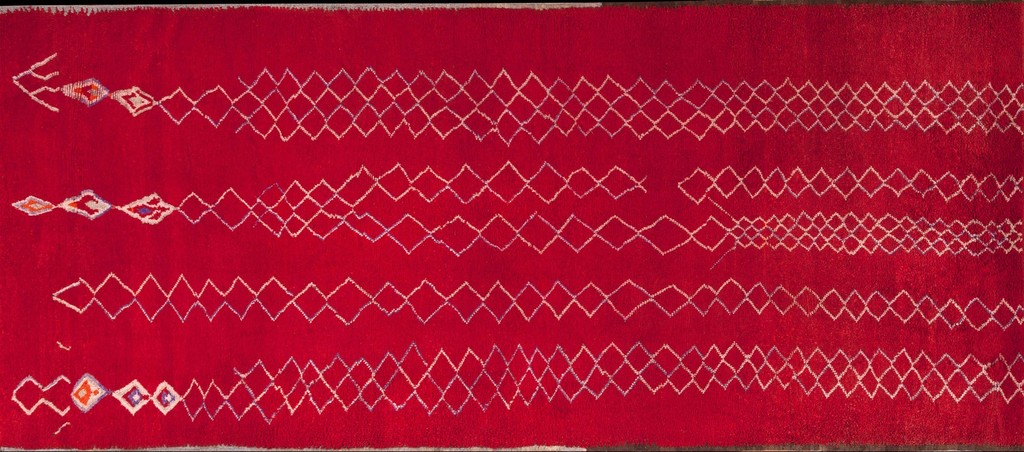
Vintage Red Color Diamond Pattern Rabat Moroccan Berber Rug by Rugs On Net
The individuality of each piece stems from this lack of rigid repetition—no two rugs are ever alike. Improvisation and personal expression are hallmarks of tribal design, allowing the weaver’s heritage, environment, and daily life to be reflected in the carpet.
Etymology and Classification
In the rug world, the term “tribal” refers to the origin of the weaver and their community rather than a single aesthetic. It denotes rugs made by nomadic or semi-nomadic groups, or by small village families who maintain traditional practices outside of urban weaving centers.
Tribal design rugs often emerge from groups united by language, shared lineage, and distinctive motifs—such as the Qashqai, Turkmen, or Baluch.
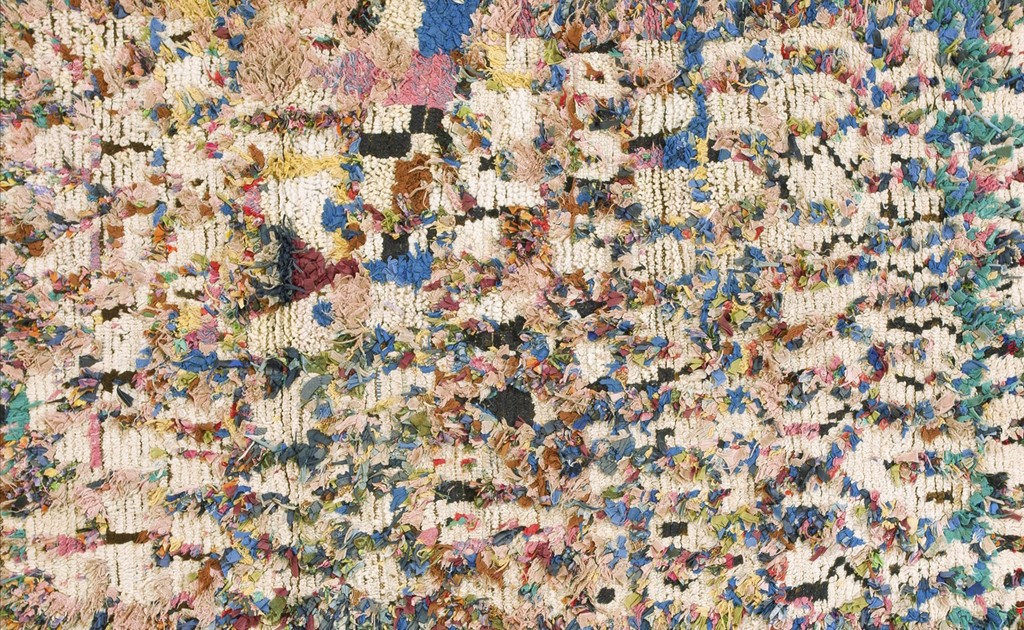
Vintage Berber Moroccan Boucherouitte Small Scatter Size Wool & Cotton Rug by Rugs On Net
The word “tribal” thus classifies carpets not by size or material but by their cultural and social origin. This distinguishes them from workshop rugs, which are typically produced in cities under more centralized and commercial systems of design and quality control.
Executive Snapshot
Tribal rugs embody a lively, one-of-a-kind artistry rooted in nomadic life. Their designs are bold, spontaneous, and infused with cultural symbolism, often using geometric abstraction to depict animals, plants, or protective motifs. These handmade tribal design carpets represent not only functional floor coverings but also woven records of identity and tradition.
Crafted in tents or village homes, they reflect the authenticity of daily life, the creativity of the individual weaver, and the shared motifs of their people. Unlike uniform workshop carpets, each tribal design rug is a singular creation—an authentic expression of both heritage and improvisation.
Geographic & Cultural Origins of Tribal Rug Weaving
Early Centers of Weaving
Tribal designs rug weaving traditions first emerged in the vast landscapes of Central Asia and Achaemenid Persia, where nomadic and semi-nomadic groups used wool from their herds to create durable, symbolic floor coverings and textiles. The most famous early evidence is the Pazyryk carpet, discovered in a Scythian tomb in the Altai Mountains and dating to the 5th century BCE.
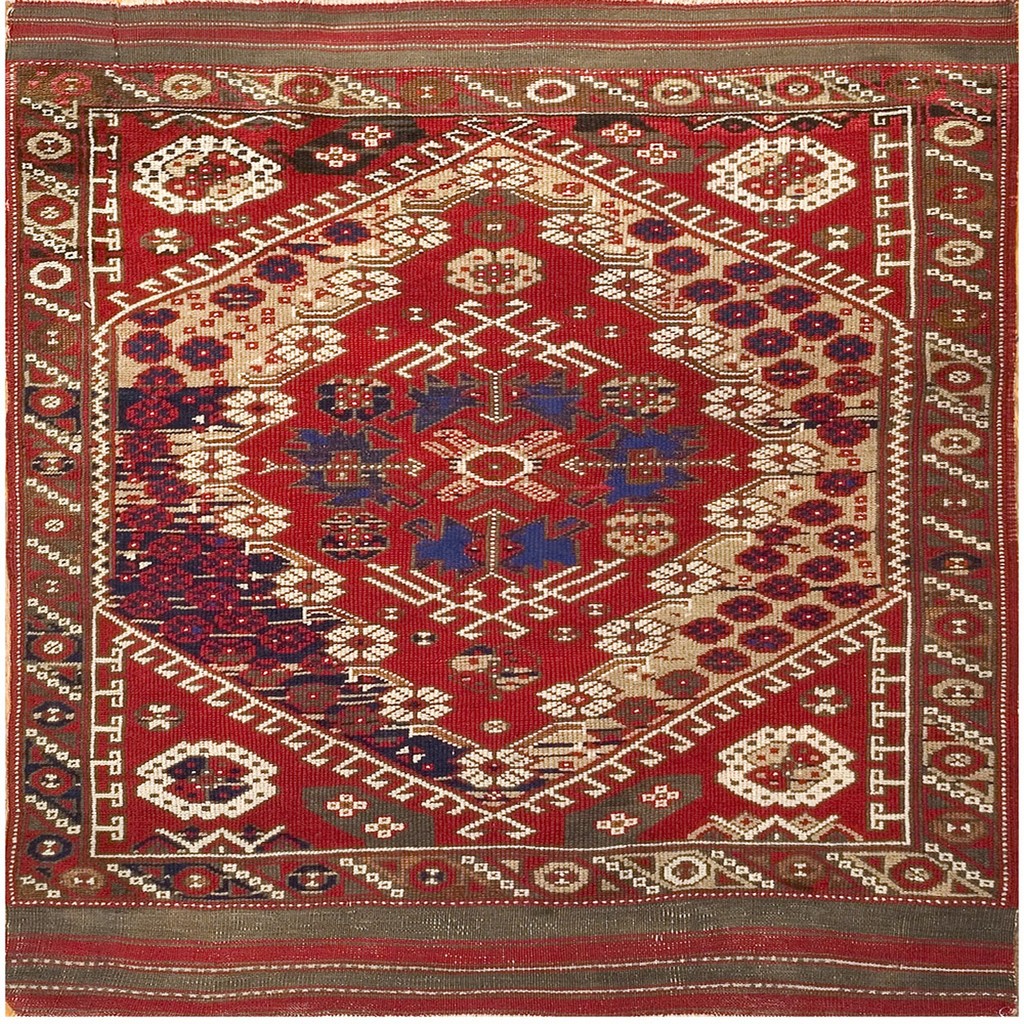
Antique Turkish – Bergama Knotted Rug by Rugs On Net
This remarkably preserved piece demonstrates that tribal rug origins stretch back over 2,500 years, highlighting a long-standing relationship between portable weaving and nomadic life.
From these roots, the craft spread westward into Persia, Anatolia, the Caucasus, and North Africa, adapting to each region’s climate, materials, and cultural traditions.
Major Regions: Persia, Caucasus, Central Asia, Anatolia, North Africa
- Persia (Iran): Persian tribal groups such as the Qashqai and Kurdish weavers developed highly symbolic motifs and natural dye techniques, anchoring the art in one of the world’s richest weaving heritages. — Why: Persia’s diverse climates and centuries of cultural exchange nurtured both variety and refinement in tribal designs.
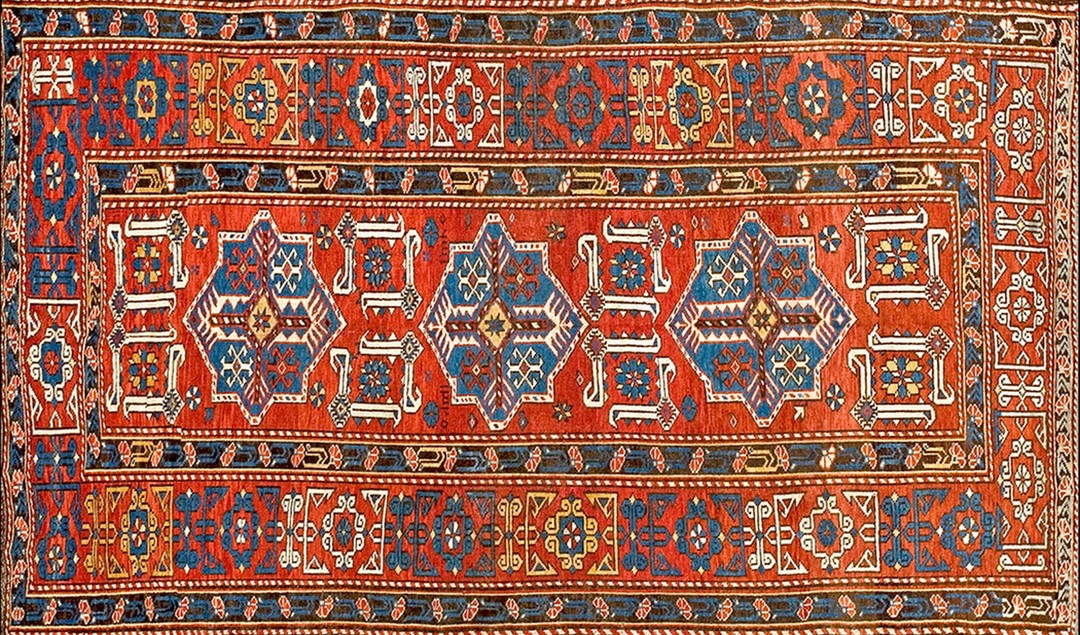
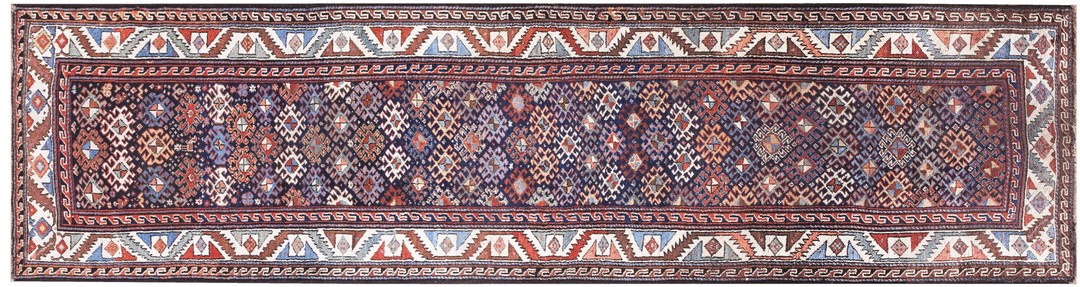
- Caucasus: Rug traditions among Armenian, Azeri, and Dagestani tribes feature bold geometric medallions and vivid contrasts. — Why: The mountainous environment and cultural crossroads produced strikingly angular motifs suited to small looms.
- Central Asia: Turkmen and Baluch nomads are known for deep red grounds and repeating guls, reflecting both tribal identity and practicality. — Why: Constant migration required sturdy, transportable rugs, which became essential symbols of clan affiliation.
- Anatolia (Turkey): Turkish tribal design weaving includes Yörük rugs, kilims, and prayer rugs, often with strong symbolic content. — Why: Anatolia was a hub between Asia and Europe, blending influences while maintaining distinctly Turkish patterns.
- North Africa: Berber rugs from Morocco and surrounding regions embody abstract, asymmetrical motifs tied to oral traditions. — Why: Local materials (like undyed wool) and cultural practices produced minimalist yet highly expressive designs.
The Spread of Techniques and Motifs
As nomadic groups migrated with the seasons, techniques and motifs diffused across continents, adapting to new environments and cultural encounters. Natural dyes, geometric symbols, and flatweave or knotted constructions moved with migrating tribes, creating a network of related yet distinct weaving traditions.
The result is a geographically broad but interconnected legacy: each tribal design rug reflects not only the weaver’s immediate surroundings but also echoes of ancient nomadic weaving roots, from the Pazyryk carpet to today’s village and pastoral traditions.
Design Language of Tribal Rugs
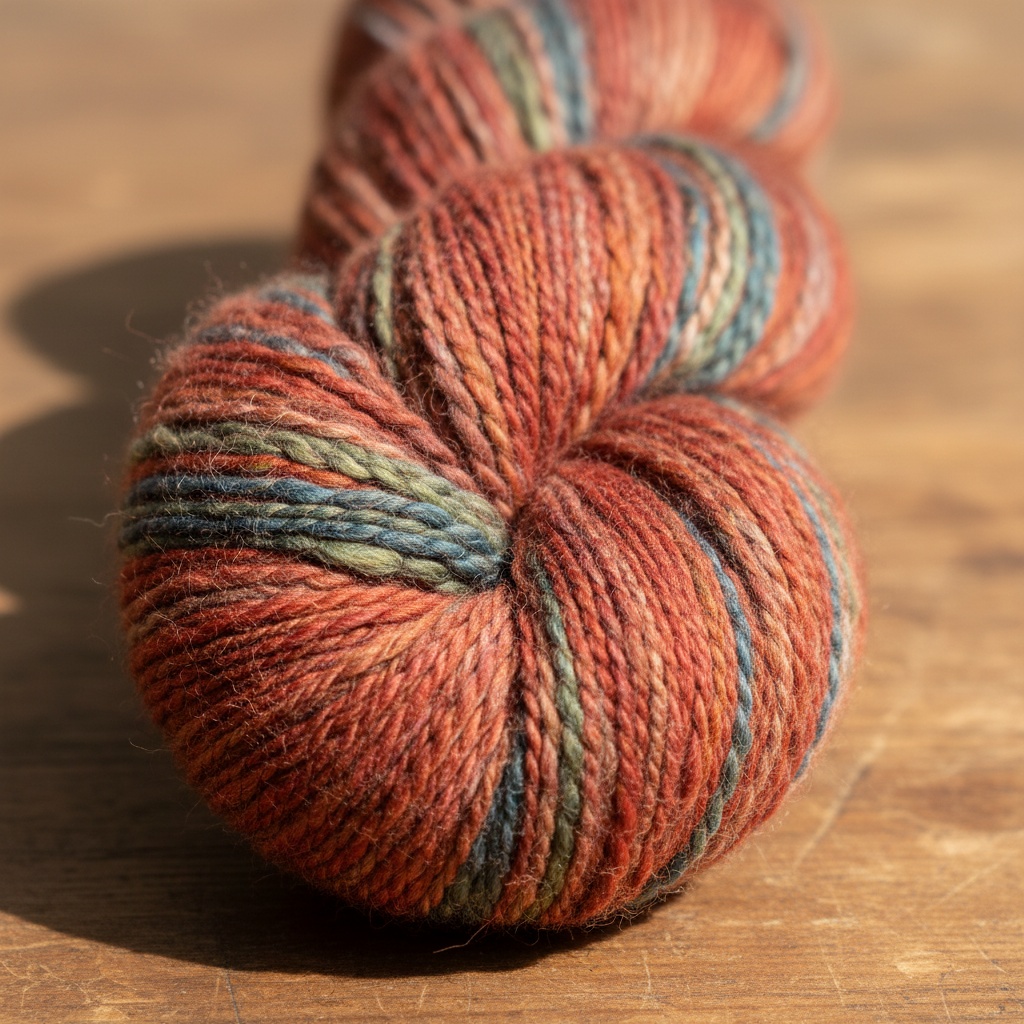
Color variations found in natural dyed yarn.
Motifs: Geometric vs. Curvilinear
Nomadic weavers favor geometric tribal design motifs because of both technical and cultural factors. Portable ground looms used in tents or seasonal camps limit the ability to weave fluid, curving forms, making rectilinear shapes more practical. The freehand nature of improvisational weaving further encourages bold, simplified geometry such as diamonds, hexagons, or stepped medallions.
Beyond technique, the abstract style resonates with tribal design tradition: geometric rug patterns are timeless, symbolic, and adaptable to personal interpretation. This combination of practicality and heritage ensures that angular, linear designs remain central to tribal rug motifs.
Symbolism: Icons & Their Meanings
- Diamond (protective eye): Wards off evil and brings safety to the household. — Why: The shape echoes ancient talismanic symbols used across nomadic cultures.
- Star: Represents joy, light, and happiness. — Why: Celestial forms link the weaver’s world to spiritual guidance and cosmic order.
- Boteh (paisley/seed form): A symbol of eternity, growth, and fertility. — Why: Its flame- or seed-like form conveys continuity of life.
- Ram’s Horn: Associated with strength, masculinity, and protection. — Why: Reflects the pastoral life of sheep and goat herders, where livestock symbolized wealth and security.
- Elibelinde (hands-on-hips figure): A fertility symbol emphasizing womanhood and continuity of family. — Why: It ties weaving directly to generational identity and lineage.
- Mihrab (prayer arch): Indicates a sacred direction and spiritual devotion. — Why: Rooted in Islamic art, it transforms a rug into both functional object and devotional symbol.
Color: Natural Dyes, Abrash
Vintage tribal design area rugs often display abrash, the subtle striations of color shifts across a field. This occurs because nomadic weavers dyed wool in small, uneven batches using natural sources like madder, indigo, or pomegranate rind.
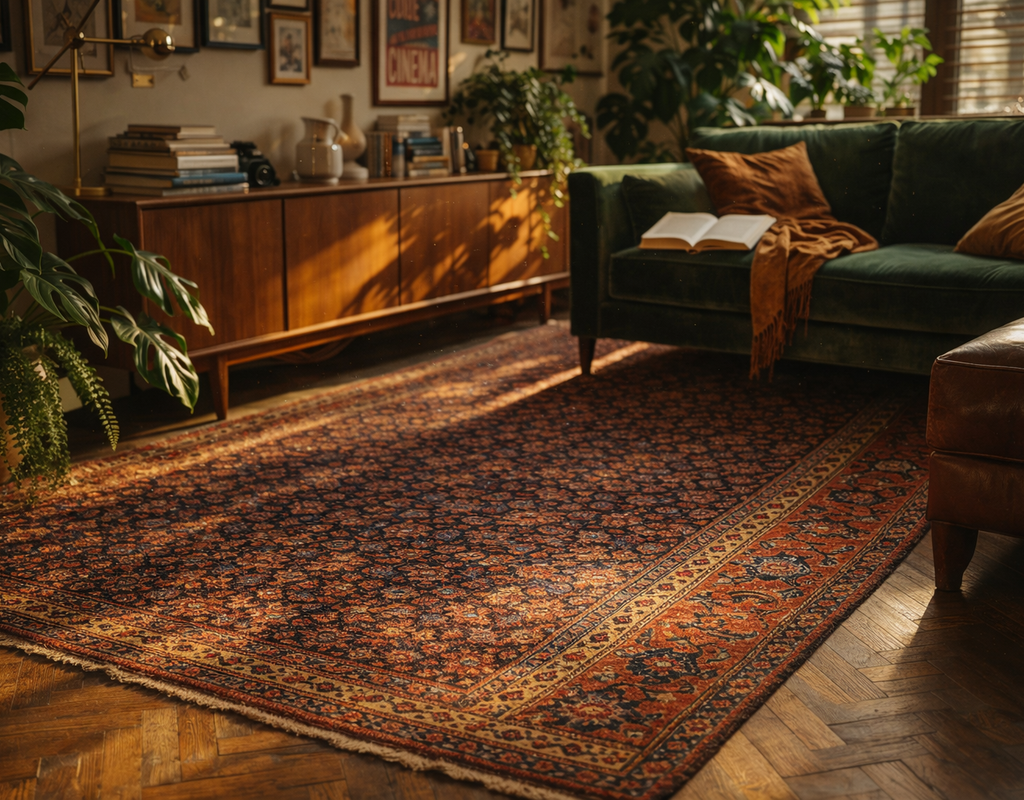
A richly patterned traditional rug anchors this cozy and warmly lit living space filled with vintage and botanical elements.
Each batch of hand-dyed wool carried slight variations, and when woven together, these differences created visible bands or gradations. Rather than being a flaw, abrash is now celebrated as a hallmark of authentic, artisanal dyeing—a visual record of the rug’s handmade process and organic beauty.
Composition: Freehand vs. Patterned, Symmetry & Asymmetry
Unlike city workshop carpets, which follow strict templates, tribal design rug composition emerges through improvisational weaving. Patterns are executed freehand, guided by memory and tradition rather than drawn designs. This results in spontaneous quirks: a motif may shift size midway, borders may not perfectly align, and symmetry often gives way to asymmetry.
These irregularities embody the individuality of the weaver, transforming each rug into a living expression of improvisational weaving rather than a rigidly repeated design. The result is a composition that feels dynamic, personal, and deeply connected to nomadic identity.
Materials, Dyes & Weaving Techniques
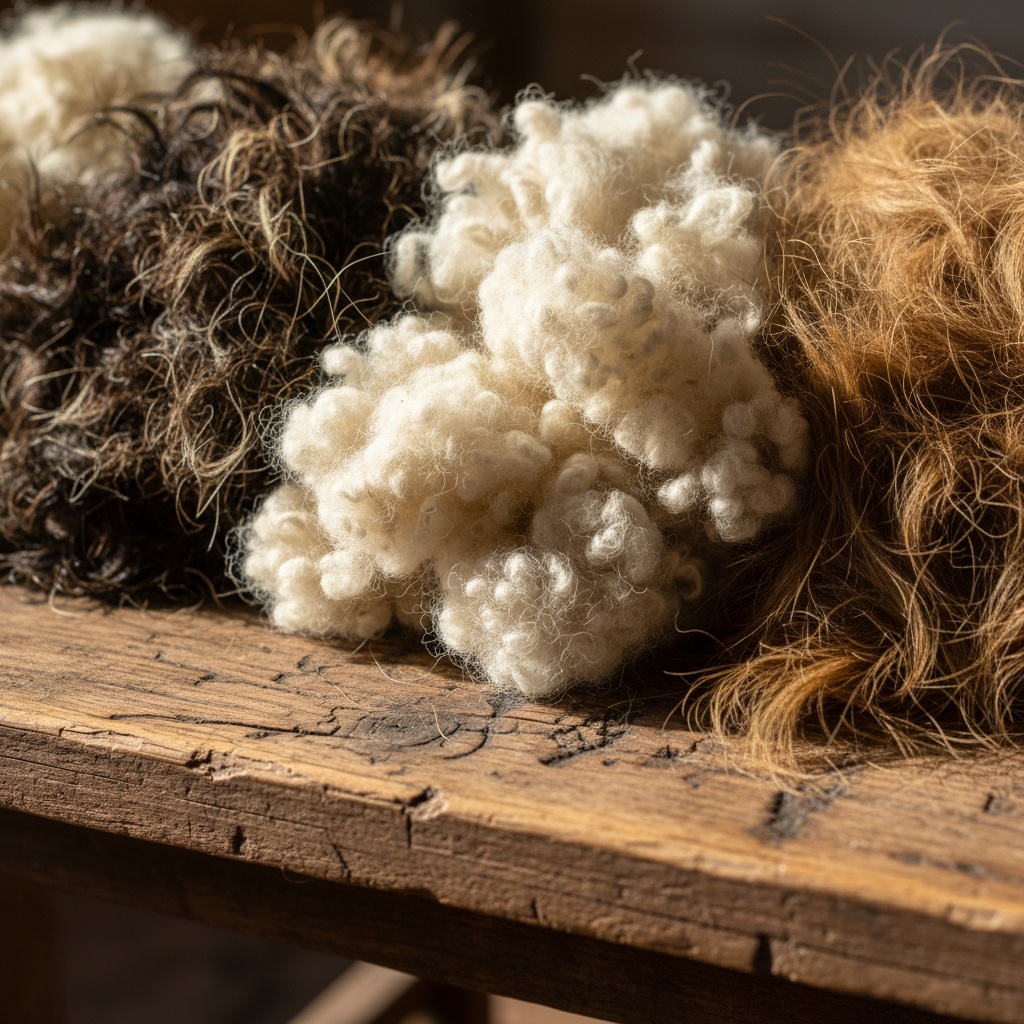
Natural wool fibers showing raw material colors.
Wool, Goat Hair, Camel Hair
The most common tribal rug weaving materials are wool, goat hair, and camel hair, with wool dominating both pile and foundation. Wool is abundant among pastoral nomads, prized for its softness, durability, and ability to absorb dyes vibrantly. Goat hair, darker and coarser, is often used in warps, edges, or accents to strengthen rugs or add visual contrast.
Camel hair, though less common, is valued for its silky texture and warm golden-brown tones, frequently appearing in luxury tribal pieces. Together, these natural fibers root tribal rugs in the sustainable resources of nomadic life, each chosen for both practicality and aesthetic effect.
Vegetable Dyes & Abrash
Early tribal designs in rugs were dyed entirely with natural dyes derived from plants, minerals, and insects. Madder root produced deep reds, indigo yielded blues, walnut husks created browns, while saffron and pomegranate rinds gave yellows and golds. Undyed, naturally white, brown, or black wool was often left exposed to balance the palette.
Because dyes were prepared in small batches, colors varied slightly, creating the prized abrash effect—subtle striations or shifts across the rug’s field. This variation is now recognized as a signature of authentic vegetable dye artistry, embodying the organic, imperfect beauty of handmade tribal rugs.
Knotting: Symmetrical vs. Asymmetrical, Knot Density
Tribal rugs employ two primary knotting methods: the symmetrical (Turkish or Ghiordes knot) and the asymmetrical (Persian or Senneh knot). Both produce durable weaves, but their appearance differs: symmetrical knots create a more robust, geometric look, while asymmetrical knots allow finer detail. Knot density in tribal rugs usually ranges from 25 to 100 knots per square inch.
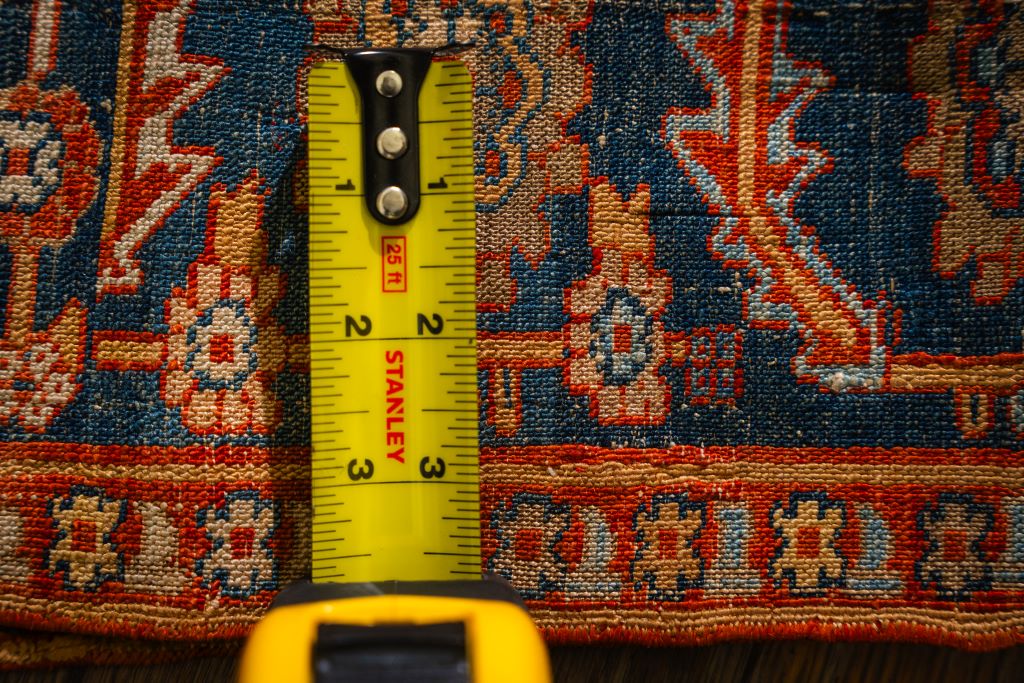
A detailed inspection of a richly colored oriental rug pattern while measuring its dimensions.
While not as high as city workshop rugs, this density ensures strength and flexibility. Higher knot density increases durability and sharpness of design, while looser knots result in a softer, more rustic feel. In every case, knotting reflects the balance between portability, endurance, and artistry in nomadic weaving.
Flatweaves vs. Pile Rugs
Beyond knotted pile rugs, many tribal groups also produced flatweaves such as kilims and soumaks. Woven without pile, these textiles are lightweight, reversible, and ideal for tent use, bedding, or wall hangings.
Their motifs—diamonds, hooks, protective symbols—mirror those found in pile rugs, ensuring continuity of tribal designs and symbolism across different weaving techniques.

A detailed focus on the intricate, vivid colors and geometric weave of a traditional textile rug.
Flatweave tribal design kilims often highlight the improvisational, graphic side of design, while pile rugs emphasize texture and warmth. Together, they illustrate the versatility of tribal weaving traditions, adapting form and technique to every need of nomadic life.
Major Regional Styles and Their Differences
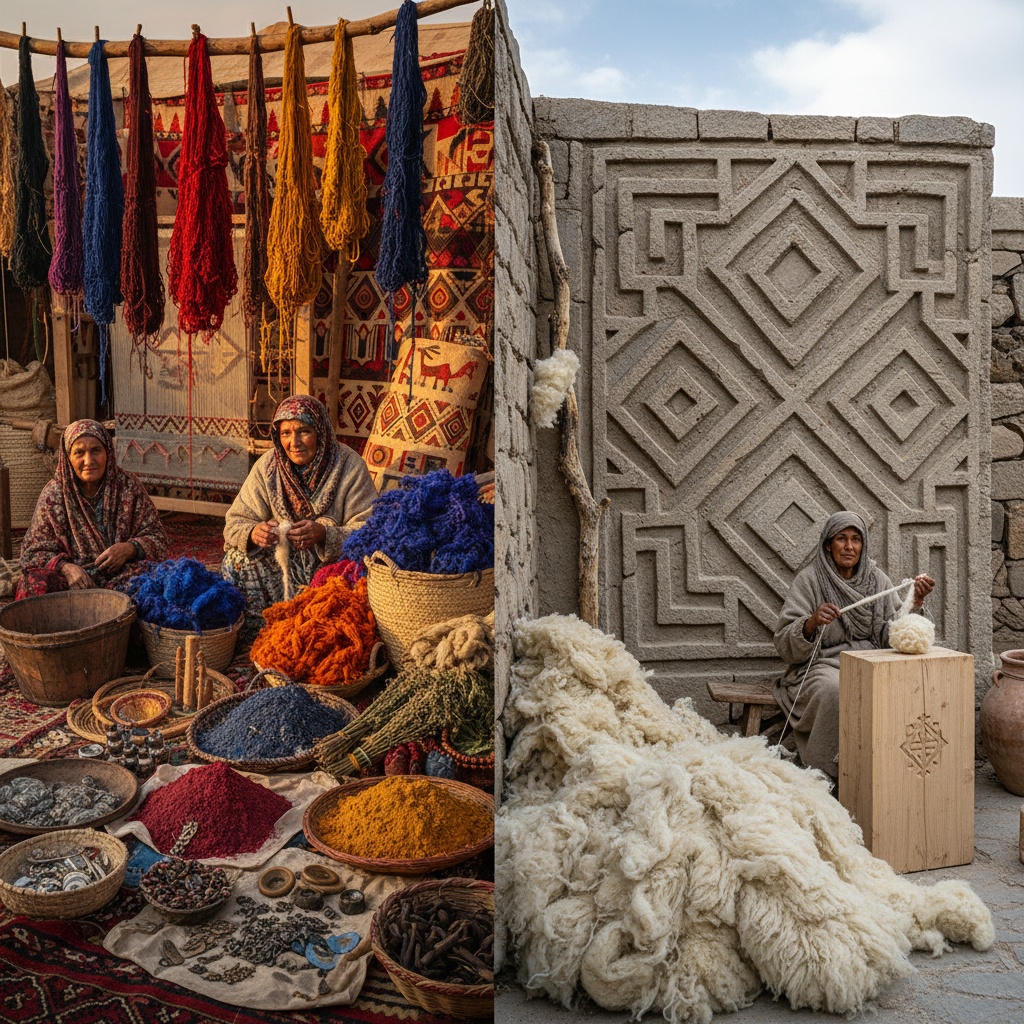
Materials for dyeing and spinning yarn
Persian Tribal vs. Moroccan Tribal
Moroccan tribal rugs differ significantly from Persian tribal design carpets in both structure and style. Persian tribal rugs, woven by groups such as the Qashqai or Kurdish, often feature finer, denser knotting, saturated colors, and fields filled with symbolic motifs. Their designs are compact and intricate, reflecting centuries of continuity in Persian tribal design weaving traditions.
Moroccan Berber rugs, by contrast, are usually thicker and more tactile, woven with a high-pile, plush texture suited to the colder Atlas Mountains. Their designs lean toward minimalist abstraction, often expressed through bold diamond lattices or sparse symbolic marks on neutral wool grounds.
Where Persian pieces display richness and density, Moroccan rugs embrace simplicity, texture, and geometric restraint.
Major Types: Qashqai, Baluch, Turkmen, Berber, Kurdish, Caucasian
- Qashqai (Persia/Iran): Renowned for lively color palettes, intricate diamond medallions, and high knot density. — Why: These rugs reflect the Qashqai’s mobile lifestyle and Persian dyeing expertise, combining portability with elaborate design.
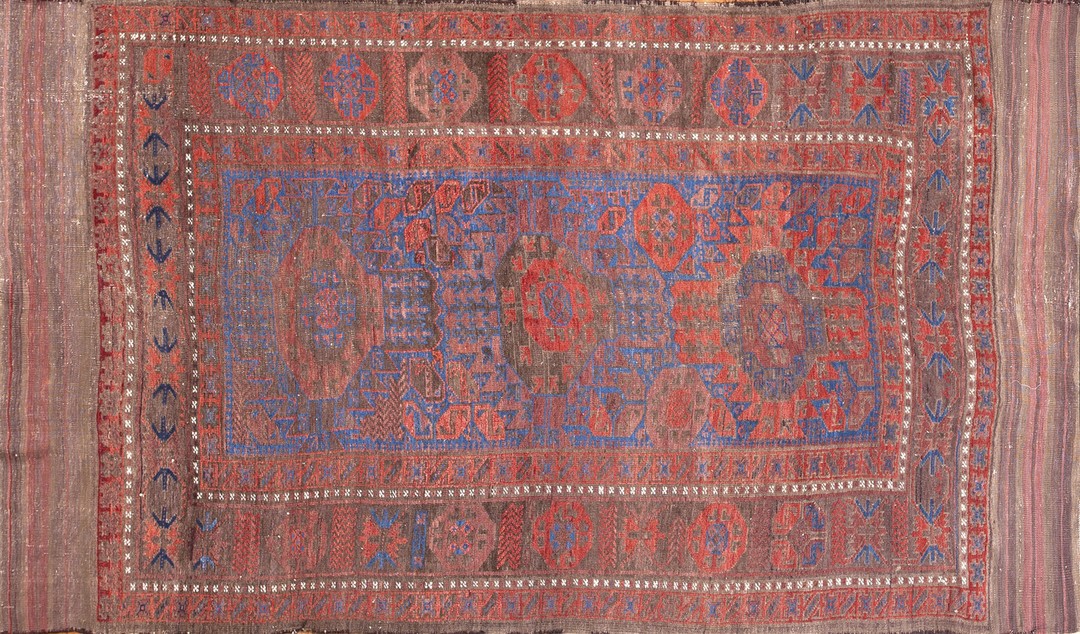
- Baluch (Iran/Afghanistan): Dark, moody palettes of browns and indigos, small-scale motifs, and soft wool. — Why: Baluch rugs embody austerity and practicality, woven for everyday tribal use with symbolic subtlety.
- Turkmen (Central Asia): Famous for repeating gul motifs, deep red fields, and sturdy symmetrical knots. — Why: Each gul serves as a clan emblem, making these rugs a direct expression of tribal identity.
- Berber (Morocco): Thick-piled, ivory or neutral tones with abstract diamond and lozenge patterns. — Why: The high-pile construction insulates mountain homes, while abstract motifs preserve oral traditions in visual form.
- Kurdish (Persia, Iraq, Turkey): Robust, coarsely knotted rugs with bold geometric medallions and vivid natural dyes. — Why: Their rustic strength reflects Kurdish pastoral traditions and the influence of multiple borderland cultures.
- Caucasian (Armenia, Azerbaijan, Dagestan): Angular, highly stylized medallions and crosses with strong contrasting colors. — Why: Mountainous geography and cross-cultural exchange fostered striking geometric rug traditions prized by collectors.
Comparative Motif and Structure Analysis
Regional styles of tribal design rugs diverge not only in symbolism but also in materials, knotting, and pile thickness. Persian tribal design carpets rely on tightly knotted wool foundations that allow dense motifs and saturated vegetable dyes. Moroccan Berber rugs instead prioritize plush texture over precision, with minimalist designs woven into thick wool.
Turkmen carpets emphasize uniformity and clan symbols, while Caucasian rugs showcase sharp, rectilinear motifs reflecting mountainous geography. Baluch rugs are known for their subdued, practical character, while Kurdish rugs emphasize resilience and bold tribal design.
These differences highlight how environment, culture, and weaving technique shaped distinct yet equally authentic expressions of tribal weaving traditions.
Cultural Role, Symbolism & Social Meaning
Everyday Use: Home, Ritual, Dowry
In nomadic and village life, tribal weaving culture was never solely about decoration—it served daily and ceremonial functions. Rugs acted as bedding in tents, portable partitions, prayer mats, and protective floor coverings.
They were also essential in dowries, symbolizing a bride’s skill, her family’s status, and the continuity of tradition. In many cases, the quality and number of woven pieces reflected the prosperity of a household, embedding rugs into the very fabric of home and ritual life.
Women as Weavers
Tribal rug production has long been the domain of women, making weaving a central thread of matrilineal transmission. Mothers taught daughters the techniques of spinning, dyeing, and knotting, along with the meanings of motifs and patterns. Each rug carried the identity of its maker, often blending inherited symbols with personal improvisation.
Through this process, women weavers preserved cultural memory and ensured the survival of tribal artistry. Every knot tied was not just craftwork but a statement of belonging and continuity across generations.
Symbolism in Daily Life
Tribal rugs were more than functional objects; they were canvases of cultural symbolism. Geometric motifs carried protective power, such as the diamond “eye” warding off evil, or the ram’s horn representing strength. Fertility motifs like the elibelinde invoked family continuity, while boteh forms symbolized eternity and renewal.
These patterns were woven not as random decoration but as embedded prayers, blessings, or spiritual guidance. Each rug became a visual language of protection, luck, fertility, and cosmology, uniting design with the rhythms of everyday life.
Storytelling & Oral Tradition
Weaving was also a form of rug storytelling, where designs encoded narratives, histories, or personal memories. Just as oral traditions passed down myths and histories, rugs provided a tangible record of these cultural stories. A tribal design carpet design pattern might commemorate migration routes, important events, or hopes for the future.
By improvising within traditional motifs, women weavers ensured that each piece became both a personal expression and a collective memory. In this way, tribal rugs embodied not only artistry but also the emotional and spiritual weight of the communities that created them.
Tribal Rugs in Modern Interiors & Global Markets
Historical Entry into Western Decor
Tribal rug designs first influenced global interiors in the 19th century, when world fairs, museum exhibitions, and international auctions exposed European and American audiences to nomadic weaving traditions. Collectors admired the vivid colors, geometric motifs, and handcrafted individuality of these pieces, contrasting them with the uniformity of industrial textiles.
By the late 1800s, tribal design rugs were entering Western homes as both floor coverings and wall hangings, prized for their exotic character and connection to ancient craftsmanship. This moment marked the beginning of their enduring role in global interior design.
Modern Styling Trends
Today, tribal design rugs in modern decor are central to several major design movements. In bohemian interiors, they serve as layered statement pieces—rich in color, history, and personality. Minimalist homes embrace them for contrast, using a single bold tribal rug to add warmth and texture against clean white walls or polished concrete.
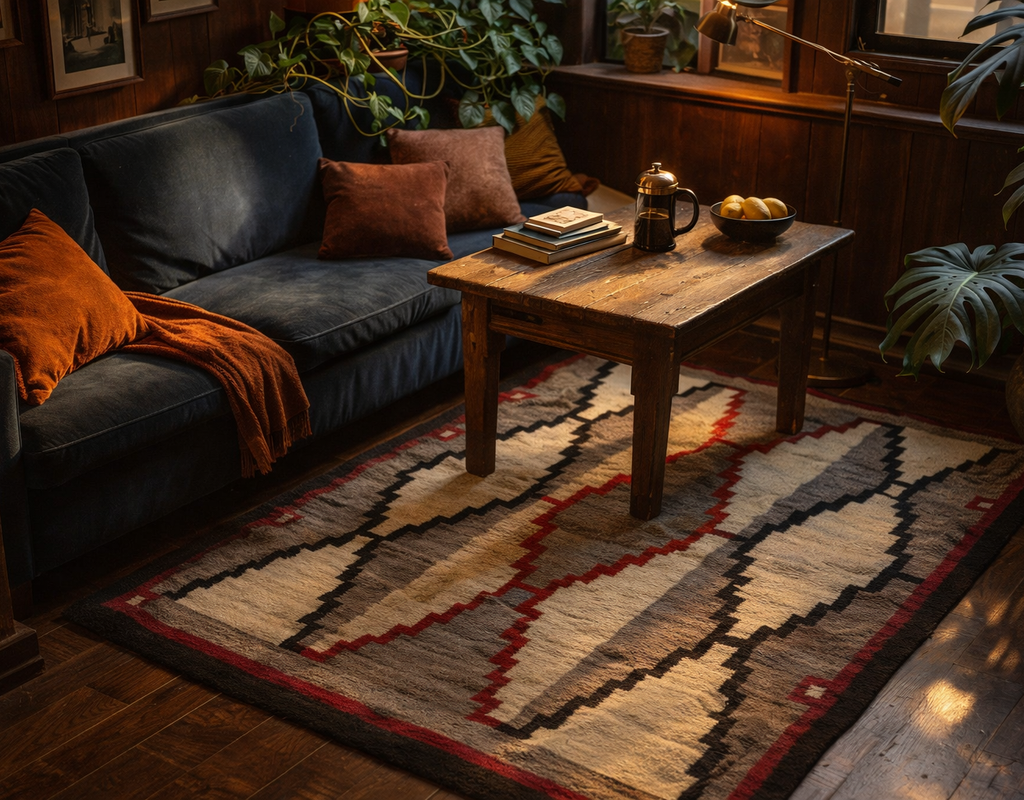
A textured, geometric rug anchors a comfortable seating area filled with rich colors and natural wood elements.
Eclectic styles mix tribal designed rugs with vintage furniture and contemporary art, creating spaces that feel both curated and organic. The appeal lies in their authenticity: each rug brings soul, uniqueness, and the hand-crafted aura that modern designers and homeowners crave.
Pairing Design Schemes with Tribal Runners
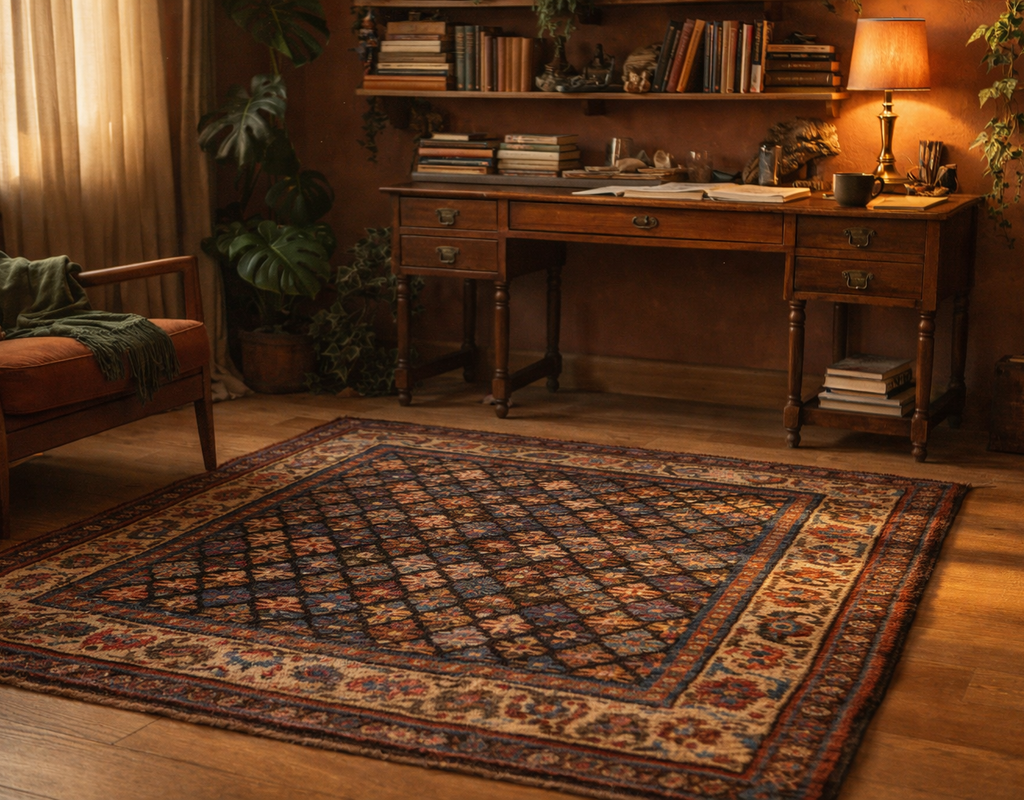
A traditional, jewel-toned rug anchors the warm, vintage ambiance of this private study nook.
- Neutral Minimalism: A bold tribal runner adds warmth and visual rhythm to pared-back spaces. — Why: The contrast between muted interiors and patterned textiles prevents sterility while preserving simplicity.
- Bohemian Mix: Layering multiple runners with kilims or shaggy rugs builds a textured, lived-in aesthetic. — Why: Tribal rugs embody the global, eclectic spirit central to boho rug style.
- Rustic or Farmhouse: Runners with earthy dyes and geometric motifs complement wood and stone finishes. — Why: They reinforce natural textures while introducing cultural storytelling.
- Modern Urban Loft: A brightly dyed or antique tribal runner cuts through industrial steel and concrete. — Why: It adds warmth and a sense of artisanal craft to sleek, urban spaces.
Influence on Modern Designers
Contemporary designers consistently draw inspiration from tribal weaving traditions. Fashion labels reinterpret tribal rug motifs into textiles, while furniture and interior brands incorporate kilim patterns into upholstery and décor.
High-profile interior designers use tribal design rugs as focal points, building entire schemes around their colors and motifs. In an era where sustainability and authenticity are valued, handmade tribal design carpets remain timeless icons, connecting modern style with nomadic heritage and global craft traditions.
Authenticity, Collectibility & Ethical Considerations
Where to Buy: Certified Dealers, Auctions
Collectors seeking authentic tribal rugs should prioritize certified dealers and reputable auction houses. These sources provide provenance, professional appraisals, and guarantees of authenticity.
Vintage tribal carpet dealers often specialize in specific regions or tribes, offering curated collections that preserve cultural integrity. Major international auctions also feature rare tribal designed pieces, sometimes with documented histories that enhance both cultural and monetary value.
Hand-Knotted vs. Machine-Made
While machine looms can reproduce tribal design patterns, they lack the cultural authenticity and individuality of hand-knotted tribal rugs. Machine-made imitations strip away the improvisational weaving, symbolic motifs, and matrilineal tradition embedded in true tribal pattern weaving.
A hand-knotted rug carries the weaver’s identity and the imperfections that mark it as a unique artifact, whereas mass-produced pieces are uniform and disconnected from their origins.
Contemporary Production & Fair Trade
Are contemporary tribal designed area rugs ethically produced today? The answer is increasingly yes—when fair trade and artisan cooperatives are involved. Many modern initiatives ensure that weavers are paid fair wages, provided safe working conditions, and supported in preserving traditional practices.
Ethical rug sourcing emphasizes not just craft preservation but also community well-being, making contemporary production a viable and responsible option for buyers who want to sustain living traditions.
Vegetable Dye Fading
Professional cleaning can fade vegetable dyes in tribal rugs if improper chemicals or harsh methods are used. Vegetable dyes are natural and often more delicate than synthetic alternatives, requiring specialists who understand traditional dye processes.
Proper cleaning preserves vibrancy, while careless handling risks stripping away the very colors that define the rug’s authenticity.
Sustainability and Value
Are sustainably sourced tribal rugs worth premium pricing? Yes—because sustainability ensures that materials are natural, traceable, and harvested responsibly, while also safeguarding weavers’ livelihoods.
Paying a premium supports both the environment and the continuation of tribal motif weaving traditions. For collectors, sustainable tribal rugs carry added value as ethically grounded, culturally respectful works of art.
Authenticating Hand-Knotted Kilims Online
- Clear, High-Resolution Photos: Essential for assessing knotting, weave irregularities, and natural abrash. — Why: Authentic kilims display unique quirks and signs of hand craftsmanship.
- Back and Edge Shots: Images of the underside and fringes reveal whether knots and finishes are handmade. — Why: Machine-made rugs often have uniform backings, unlike authentic tribal pieces.
- Certificates or Provenance Documents: Trusted sellers should provide certificates or detailed origins. — Why: Provenance adds both value and cultural assurance.
- Seller Reputation: Established vintage tribal design carpet dealers and fair-trade cooperatives are safer than anonymous sellers. — Why: Market reputation signals reliability and respect for cultural heritage.
In sum, authenticity and ethics define the true worth of tribal rugs—whether vintage or contemporary. Collectors and homeowners alike should buy with awareness, ensuring that their purchases support artisans, protect traditions, and preserve the cultural integrity of these enduring weavings.
Buying, Restoration & Investment Insights
Investment Strategy: Age vs. Condition
In the realm of tribal design rug investment, both age and condition matter, but collectors typically prioritize condition over age. While older pieces may carry historical significance, damage or excessive wear often diminishes their value.
A younger tribal rug in excellent, original state can be more desirable than an older but heavily restored or compromised piece. Ultimately, originality and integrity of the weave, dyes, and motifs weigh heavily on resale value, making condition the leading factor for long-term investment.
Provenance & Documentation
Provenance documentation greatly impacts tribal design rug valuation. Clear records of origin, ownership, or exhibition history enhance trust among buyers, confirming authenticity and cultural importance.
Area rugs linked to specific tribes, regions, or notable collections command higher prices because provenance adds both scholarly and market credibility. For investors, documented tribal design carpets are not only more liquid in resale but also carry prestige within the collector community.
Resizing & Value
Resizing almost always decreases resale value because it compromises the rug’s structural integrity and distorts original tribal design motifs. Cutting or altering dimensions disrupts borders, truncates symbols, and erases evidence of authentic weaving.
Collectors and dealers prefer unaltered pieces, even with some wear, to resized rugs that have lost their historical and artistic completeness. Preserving original proportions is essential for maintaining investment-grade value.
Restoration Best Practices
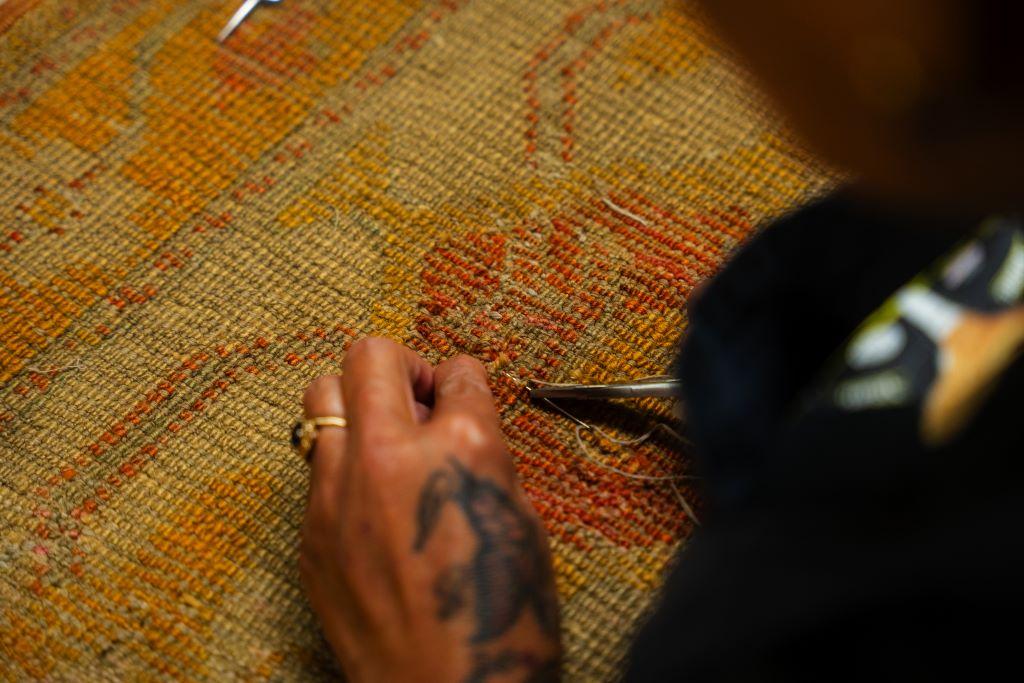
Detail of hands mending a rustic, richly colored woven rug.
- Preserve Original Artistry: Restoration should aim to stabilize, not reinvent, the rug. — Why: Over-restoration erases authenticity and reduces long-term collector interest.
- Use Authentic Materials: Wool, dyes, and knotting techniques should match the original as closely as possible. — Why: Inauthentic materials stand out, lowering both aesthetic and monetary value.
- Engage Specialists: Only skilled restorers with tribal carpet expertise should attempt repairs. — Why: Amateur fixes can cause permanent damage, diminishing resale potential.
- Focus on Structural Repairs: Address foundation breaks, holes, and unraveling edges first. — Why: These stabilize the rug for continued use and prevent further deterioration.
- Limit Intervention: Minor imperfections and abrash are part of the rug’s authenticity. — Why: Collectors value natural signs of age, which contribute to character and provenance.
In conclusion, tribal design investment thrives on condition, provenance, and careful stewardship. Original, well-documented pieces retain the strongest long-term value, while resizing or poor restoration can severely compromise a rug’s worth.
For collectors, thoughtful preservation and respect for authenticity ensure that each tribal carpet remains both a cultural artifact and a viable investment.
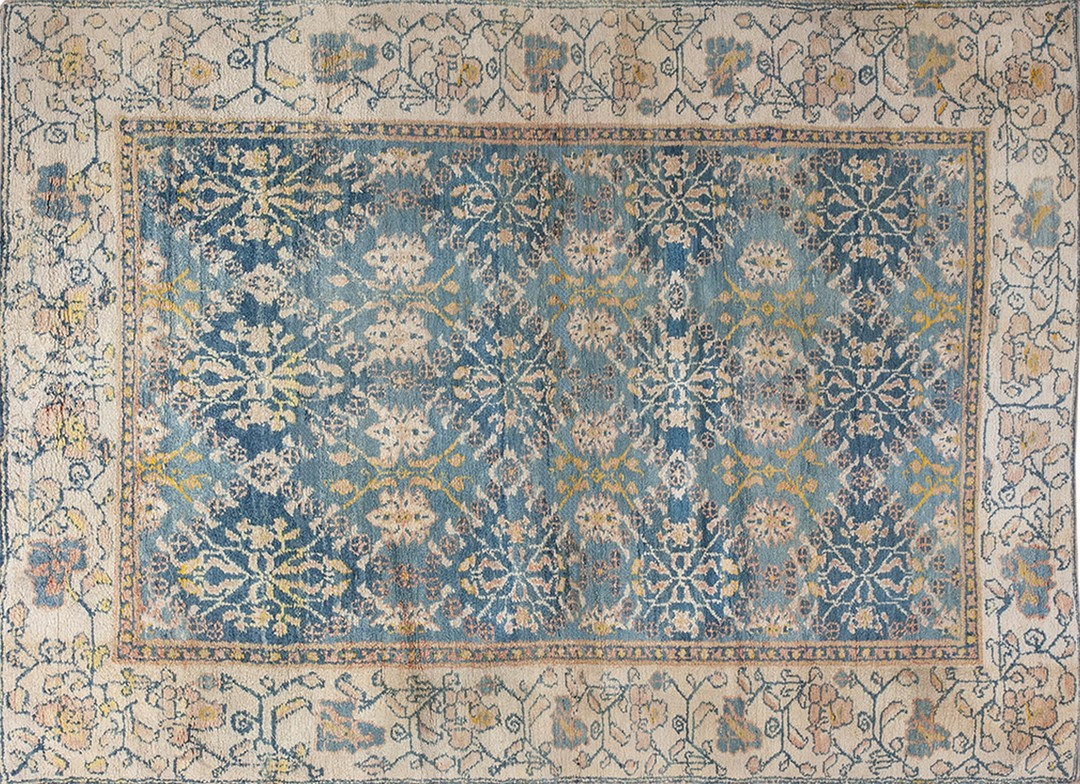
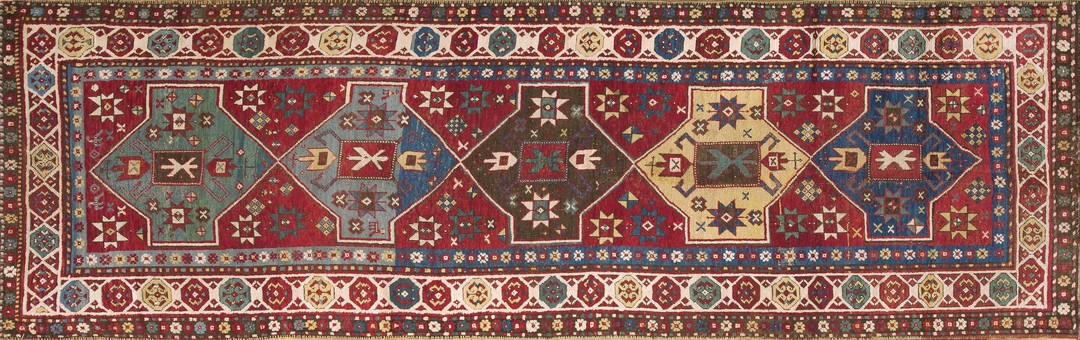
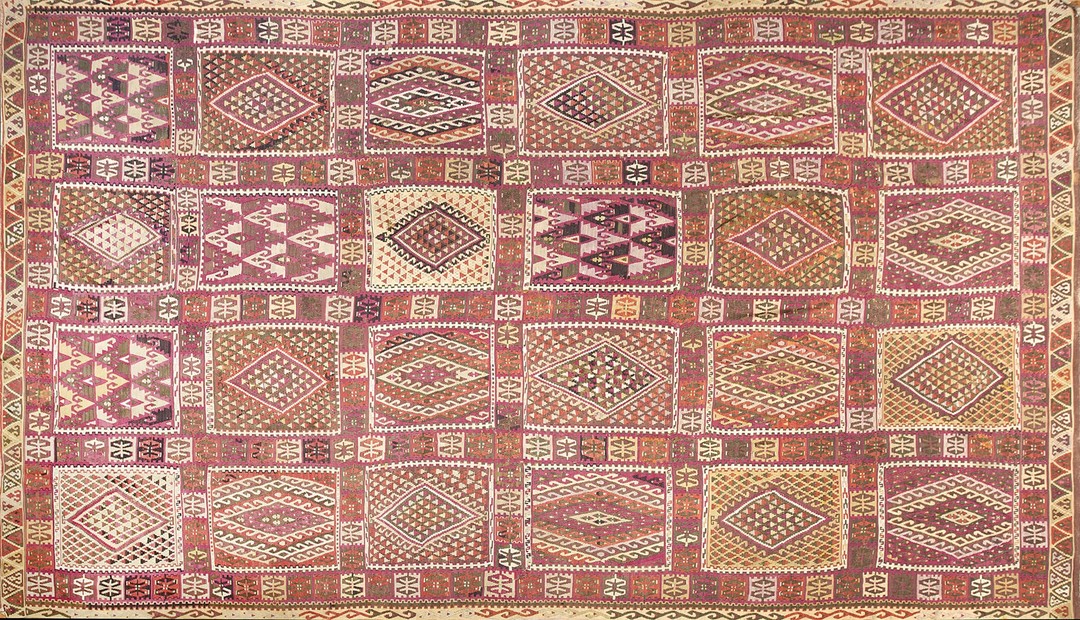
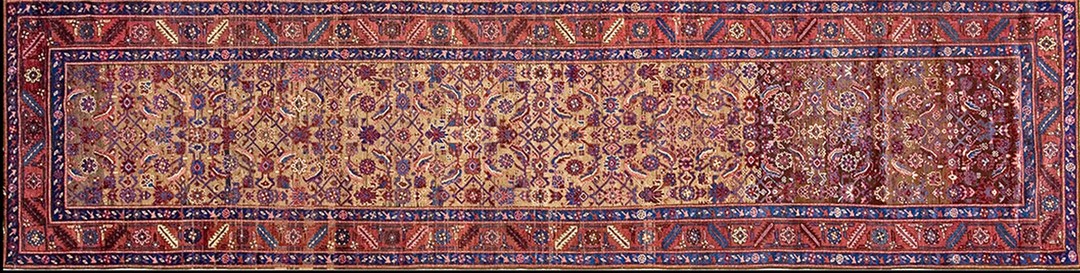
Explore a Few of Our Tribal Design Rugs
FAQ
- How do I fix curling corners on tribal rugs?
Reverse-roll the curl for a day and use a quality pad. Corner grippers help on hard floors; persistent waves may need a professional block/stretch.
- Are tribal rugs suitable for bathrooms or outdoors?
Generally no—humidity and frequent wetting can damage wool and dyes. Use outdoor-rated or washable alternatives in those areas.
- Can tribal rugs be layered with other rugs?
Yes—try a tribal rug over a neutral jute or sisal base for scale and grip. Keep the base rug 6–12 inches larger around the tribal piece.
- How should I store tribal rugs?
Roll (never fold), wrap in breathable material, and keep off damp floors. Avoid sealed plastic for long periods; inspect every few months.
- Are tribal rugs sustainable or ethically made?
Many are woven with renewable wool and vegetable dyes. Look for fair-trade cooperatives or transparent sourcing; ask about working conditions and dye processes.
- How much do tribal rugs cost?
New hand-knotted tribal rugs range widely by size, origin, and knot density; small pieces start in the low hundreds, room sizes can reach several thousand. Antique examples may command much more.
- Will sunlight fade tribal rugs?
Prolonged sun can lighten colors. Use window UV film, rotate the rug seasonally, and consider a sheer or shade on bright exposures.
- What do symbols on tribal rugs typically represent?
Meanings vary by group, but stars can suggest harmony, ram’s horns strength, and protective eyes ward off harm. Treat interpretations as cultural, not universal.
- How can I tell a handmade tribal rug from a machine-made look-alike?
Check the back: hand-knotted knots are slightly irregular, and edges/fringe are integral, not sewn on. Designs on the back remain clear, not printed.
- How do Moroccan tribal rugs differ from Caucasian tribal rugs?
Moroccan pieces often use ivory grounds with abstract lines or colorful asymmetry; Caucasian tribal rugs favor saturated reds/blues, crisp diamonds, and bold guls.
- How do I size tribal rugs for living or dining rooms?
In living rooms, an 8×10 tribal rug typically lets front sofa legs rest on it; in dining rooms, ensure chairs stay on the rug pulled out (add \~24 inches beyond the table).
- Can tribal rugs go over radiant/underfloor heating?
Yes—use natural fibers (wool, cotton) and a heat-rated pad with low thermal resistance. Avoid covering most of the heated floor to maintain efficiency.
- What rug pad works best under tribal rugs?
A felt + natural-rubber pad adds cushion and grip without staining. Trim the pad 1–2 inches smaller than the rug on all sides.
- Are robot vacuums safe on tribal rugs with fringe?
Fringe can tangle. Fold fringe under, set no-go zones, or lift the rug before runs; use a handheld for edges.
- Can dyes in tribal rugs bleed?
It’s possible, especially with saturations and older vegetable dyes. Test each color before wet cleaning, and avoid steam or heavy soaking.
- What’s the right way to spot-clean spills on tribal rugs?
Blot immediately with a white cloth; use cool water and mild wool-safe detergent if needed. Always test for colorfastness in an inconspicuous spot first.
- How should I vacuum tribal rugs without damage?
Use suction only (no beater bar) on pile; vacuum kilims gently on both sides. Avoid catching fringe; clean weekly in busy rooms.
- Are tribal rugs kid- and pet-friendly?
Wool tribal rugs naturally resist soil and bounce back from compression. Choose low pile or flatweaves, spot-clean promptly, and use a pad for grip and cushioning.
- Are tribal rugs good for high-traffic areas?
Yes—dense wool and tight flatweaves handle foot traffic well. Choose low-to-medium pile or kilims and rotate every 3–6 months to even wear.
- Do tribal rugs shed more than other wool rugs?
New wool tribal rugs may shed initially as loose fibers release; this tapers with regular vacuuming. Low-pile and flatweave tribal rugs shed less than shaggy styles.
- Which regions most influence tribal rugs?
Major sources include Moroccan Berber, Caucasian, Anatolian, Persian tribal (Qashqai, Baluchi), and Central Asian Turkmen weavings. Each region favors distinct palettes, motifs, and structures.
- How do tribal rugs differ from Persian city rugs?
Tribal rugs lean geometric and spontaneous with lower knot counts; city rugs use curvilinear, highly detailed motifs. Tribal pieces often feel more rustic and graphically bold.
- Are tribal rugs always hand-knotted, or can they be flatweave kilims?
Both exist. Tribal rugs include hand-knotted piles and flatweave kilims; flatweaves are thinner, reversible, and often show crisp geometric stripes or diamonds.
- What common patterns appear on tribal rugs?
Diamonds, stepped medallions, “gul” octagons, ram’s horns, stars, and protective eyes are frequent. Layouts are usually repeating or banded, with strong borders and high contrast.
- What defines tribal rugs as a motif and style?
Tribal rugs are hand-made designs from nomadic or village traditions, favoring bold geometric patterns and symbolic motifs over curving florals. Many are hand-knotted or flatwoven on smaller, portable looms.