
Introduction to Trellis-Lattice Rugs
Explore our curated collection of Trellis Lattice Motif rugs and redefine your living space today.
What is a Trellis/Lattice Motif?
A trellis or lattice rug is defined by its repeating grid structure, a design framework that organizes the surface of the carpet into a network of interconnected shapes. These motifs are essentially geometric trellis designs, where the rug’s field is divided into diamonds, lozenges, or squares that interlock seamlessly across the entire surface.
The most common arrangement is the diamond pattern rug, where diagonal lines intersect to create an ordered succession of lozenge forms. Another classic configuration is the square or rectangular grid motif carpet, evoking the architectural rigor of tiled floors or woven screens. Trellis-lattice designs are not limited to straight lines; they may incorporate curvilinear elements, producing quatrefoil or floral-inflected grids.
Some tribal weavings present rough-hewn, almost hand-drawn diamonds, while luxury court carpets transform the same lattice into refined frameworks, sometimes filled with blossoms, medallions, or arabesques. Across all variations, the trellis-lattice provides symmetry, order, and structure, acting as both a background framework and a central decorative statement.
The enduring appeal of the trellis-lattice rug lies in its versatility.
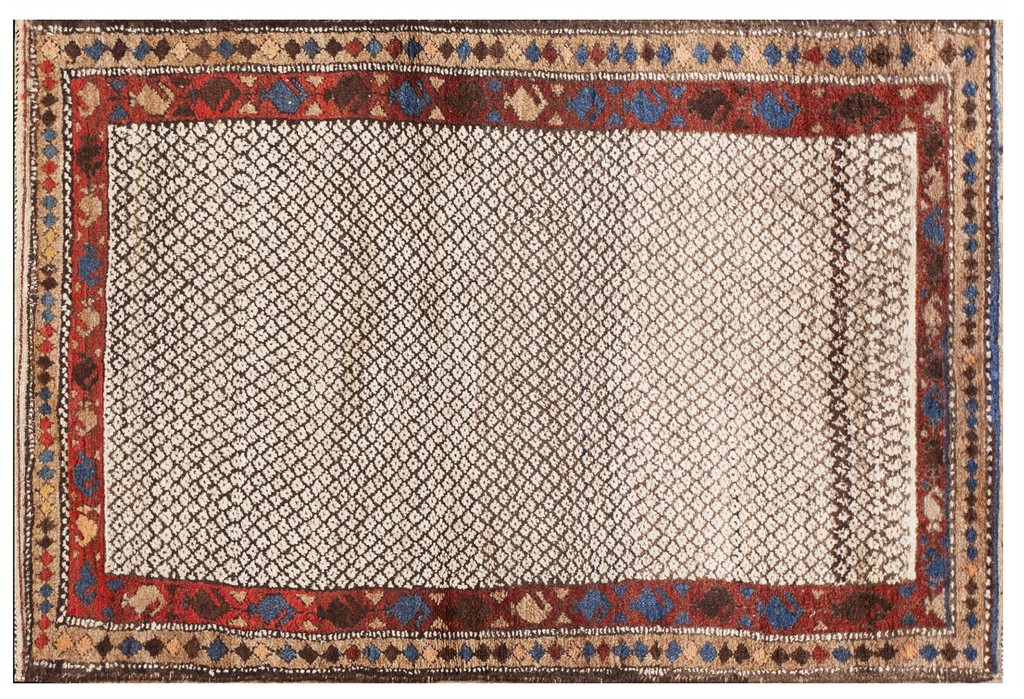
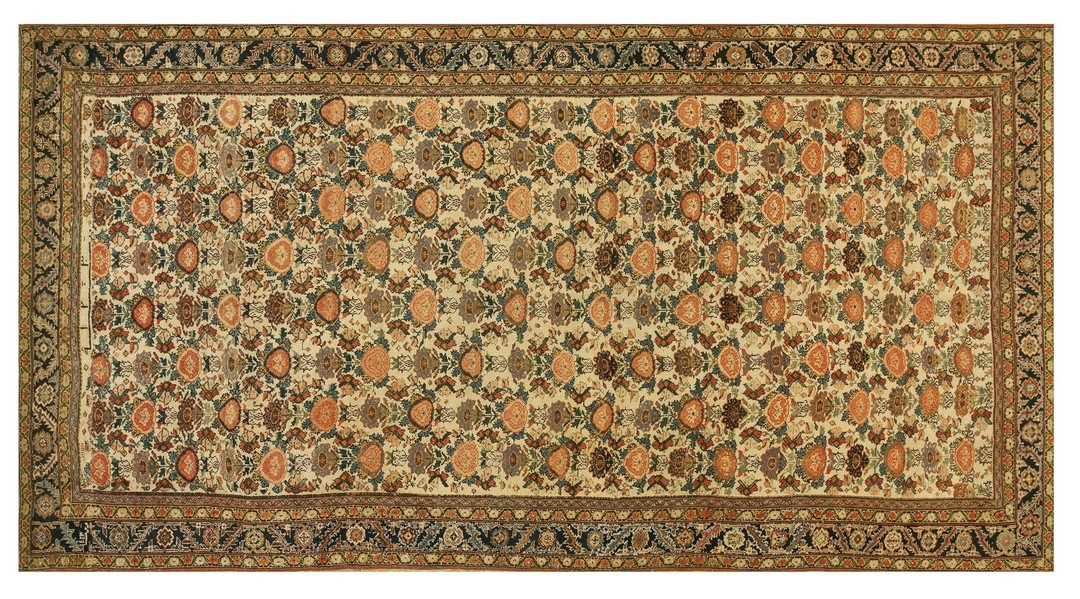
Antique Persian Allover Tribal Design Hand Knotted Wool Pile Shahsavan Rug by Rugs On Net
It can be stark and minimalist, highlighting the rhythm of geometry, or richly ornamented, with each cell of the lattice serving as a container for detailed floral motifs. Whether woven into nomadic kilims or knotted into imperial Persian carpets, the lattice transforms a rug’s field into a visual architecture—a framework that balances decoration with control.
Name & Etymology
The terms “trellis” and “lattice” have origins outside the world of textiles but migrated into rug scholarship because of their structural associations. “Trellis” derives from the Old French treillage, meaning the wooden frameworks used in garden design to support climbing plants. Its visual reference is clear: an open, interwoven pattern of diagonals resembling the diamond grid of a trellis rug.
“Lattice,” by contrast, comes from Middle English and Old French roots tied to openwork grids and meshes, evoking fencing, screens, and woven frameworks. In global textile traditions, the “mesh” or net has long been a symbolic concept, suggesting containment, protection, and order. In rugs, this term aptly describes the lattice rug structure, where a repeating network of lines encloses and defines the decorative field.
Etymology highlights how these rug designs were understood as structural frameworks first and decorative surfaces second. The architectural comparison is not accidental: trellises and lattices organize space in gardens, architecture, and weaving alike. Just as a garden trellis provides scaffolding for plants to grow, the trellis-lattice motif in carpets provides a geometric armature for color, pattern, and symbolism to unfold.
A Foundational Motif
The trellis-lattice is among the most foundational rug motifs, spanning both ends of the weaving spectrum. In luxury court carpets, trellis systems might be elaborated into vast gardens of blossoms framed within interlocking lozenges. In tribal and nomadic weavings, the same structure reduces to bold, hand-drawn grids that emphasize rhythm and repetition over embellishment.
This range explains why trellis and lattice are used interchangeably in rug discourse: both describe a visual strategy of imposing grid-based order onto the surface of the textile. In every case, the motif works as a unifying device, giving coherence to fields of ornament while allowing endless variation in detail. To answer the essential question—what is a trellis/lattice rug?—it is a carpet defined by an interlocking grid motif, whether diamond, square, or curvilinear. These forms may appear stark and structural or richly filled with floral and symbolic detail.
The trellis-lattice is not simply a decorative flourish but a deep-rooted design language that conveys balance, continuity, and architectural elegance across centuries of weaving traditions.
Origins & Historical Development
Early Emergence and Geographic Spread
The origin of lattice rugs is not confined to a single culture but emerges in parallel across distinct weaving traditions. In the 16th–17th centuries, Persian Safavid workshops and Mughal India produced some of the earliest courtly examples of the Mughal lattice carpet and Persian “Vase” carpets, where interlaced grid systems framed blossoms and arabesques in an ordered layout.
At the same time, Moroccan Berber tribes wove their own Berber diamond rugs, often using rough, geometric lattices composed of diagonal lines and lozenge patterns.
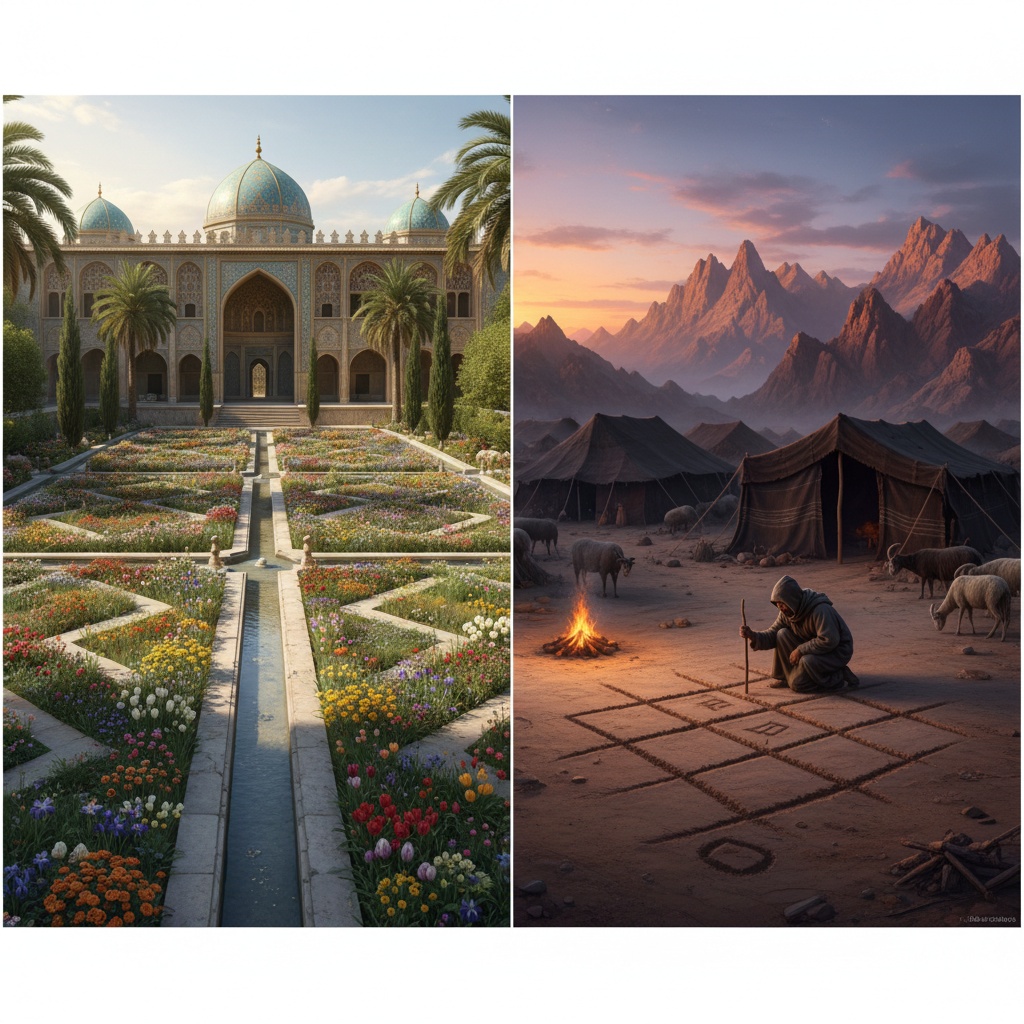
Garden geometry shows early patterned layouts.
These traditions developed independently: the Moroccan lattice belongs to an indigenous tribal vocabulary, while the Persian and Indian lattices drew inspiration from garden symbolism and the Chahar Bagh (four-part garden) ideal. From these two poles—tribal Morocco and courtly Persia/India—the lattice design spread widely through trade and cultural exchange.
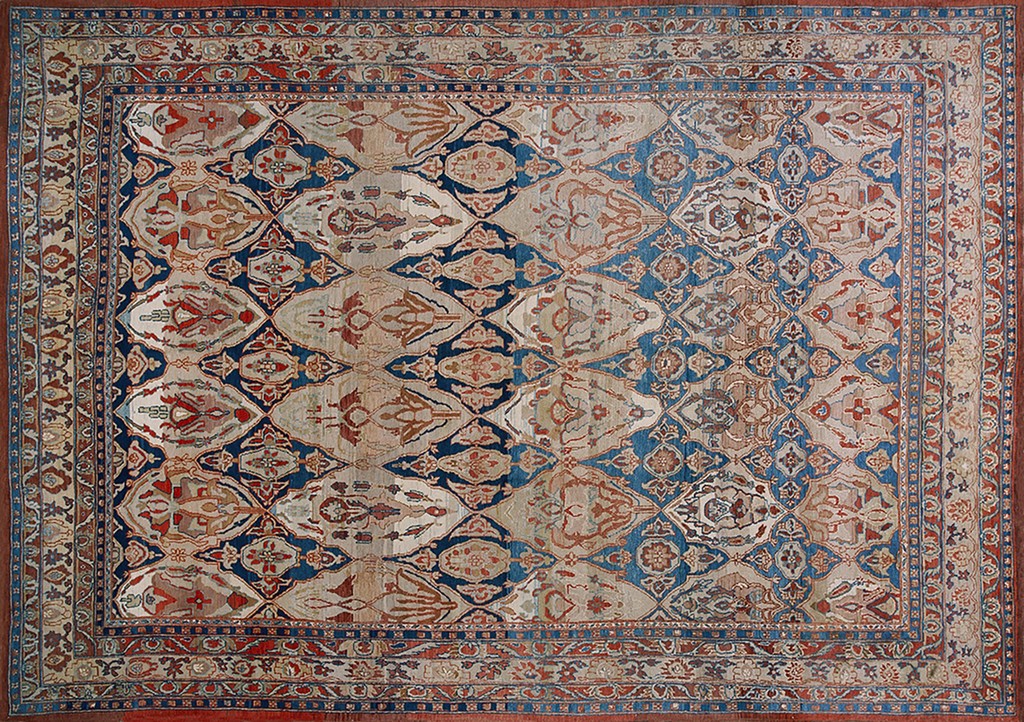
Vintage Mahal Iran Knotted Rug by Rugs On Net
Turkish Ottoman looms, Caucasian workshops, and Central Asian artisans adapted the grid motif, reshaping it to local aesthetic sensibilities. Thus, the trellis-lattice motif became a multicultural, multi-origin design, capable of expressing both nomadic austerity and imperial opulence.
First Lattice Rugs Appearance in Moroccan Design Patterns
The Moroccan lattice rugs history extends deep into pre-modern Berber traditions. The Beni Ourain and related tribes employed diamond grids as structural and symbolic motifs, representing fertility, protection, and continuity. Surviving examples from the 19th century confirm the antiquity of this form, though scholars believe the design predates even these documented weavings, rooted in centuries of oral tradition and tribal practice.
Unlike the court-inspired lattice carpets of Persia and India, the Moroccan diamond grid reflects tribal cosmology and practical weaving conventions. Bold lozenges, staggered diamonds, and broken lattices appear across flatwoven kilims and piled rugs alike. This independent evolution highlights the universal appeal of the lattice structure: a simple yet powerful way of organizing space, adaptable to the tools and traditions of both nomadic and settled cultures.
Evolution in Persian Weaving
In Persia, the trellis motif evolved into a sophisticated language of luxury. The Persian garden rug tradition directly mirrored the layouts of walled gardens and palace grounds, translating paths, water channels, and flower beds into symmetrical grids.
Safavid-era weavers refined this into the Mina Khani lattice—a repeating rosette-and-diamond network—and the celebrated Vase carpets, where trellises frame scrolling arabesques and floral sprays. As Persian weaving matured, the trellis became not only a structural backdrop but also a symbol of paradise, abundance, and cosmic order.
The motif’s adaptability allowed it to bridge courtly opulence with popular production, ensuring its survival into later centuries and influencing both Ottoman and Mughal workshops. Even today, trellis patterns remain central to Persian carpet design, connecting contemporary weavings to a lineage of architectural and botanical symbolism.
A Multicultural Motif
To summarize the origin of lattice rugs, the design is not the product of one place but a dual inheritance: the Berber diamond rug of Morocco, rooted in tribal antiquity, and the Mughal lattice carpet and Safavid Persian masterpieces, grounded in garden cosmology and courtly luxury. The Moroccan lattice appears in documented area rugs at least by the 19th century, likely centuries earlier.
In Persia, trellis patterns evolved into complex frameworks like the Mina Khani, marrying geometry with symbolism. Together, these streams demonstrate how the lattice motif could express both tribal identity and imperial grandeur, making it one of the most enduring and universal designs in the history of rugs.
Visual Structure & Defining Elements

Interlocking curved bars define this structural motif.
Visual Elements of Lattice Rugs
At its core, the lattice rug pattern is defined by a repeated geometric framework that organizes the entire surface of the carpet. This framework may consist of interlocking diamonds, lozenges, squares, or quatrefoils, giving the rug a rhythm of symmetry and order. The grid itself is the unifying element: even when the spaces within the lattice are left bare, the underlying armature imposes balance.
Within these frameworks, details can shift dramatically. In tribal weavings, the lattice may be bold and empty, highlighting the skeletal geometry with little embellishment. In contrast, courtly carpets often transform the same structure into a filled lattice, each cell packed with flowers, rosettes, or small medallions, creating a sense of lush density. Whether minimal or ornamental, the defining quality of a trellis is its consistency of grid, rhythm, and symmetry, which holds the design together.
Diamond, Quatrefoil, and Other Trellis Forms
Both the diamond lattice rug and the quatrefoil rug fall under the umbrella of trellis designs. Diamonds and lozenges are perhaps the most widespread, appearing in Moroccan Berber rugs, Persian Mina Khani carpets, and countless regional variations. These forms emphasize directionality, leading the eye in diagonal movement across the textile.
Quatrefoils, by contrast, emerge more often in Persian and Mughal traditions, where the trellis is softened by curvilinear geometry. Instead of sharp diamonds, the grid bends into rounded clover-like shapes, often enclosing blossoms or rosettes. Turkish and Caucasian weavers introduced additional variations, such as star lattices or hexagonal grids.
Together, these forms illustrate how the trellis is not a single pattern but a family of interrelated frameworks, each adapted to different aesthetic priorities.
Scale and Visual Impact
One of the most important factors in appreciating a large-scale trellis carpet versus a finely detailed one is scale. Small-scale lattices create a dense, tapestry-like surface, where each unit contributes to an intricate overall texture.
This is typical of Persian floral lattices, where the eye delights in the repetition of countless blossoms. By contrast, large-scale trellis designs produce a bold, graphic effect. Oversized diamonds or quatrefoils dominate the rug’s field, lending a sense of openness and modernity.
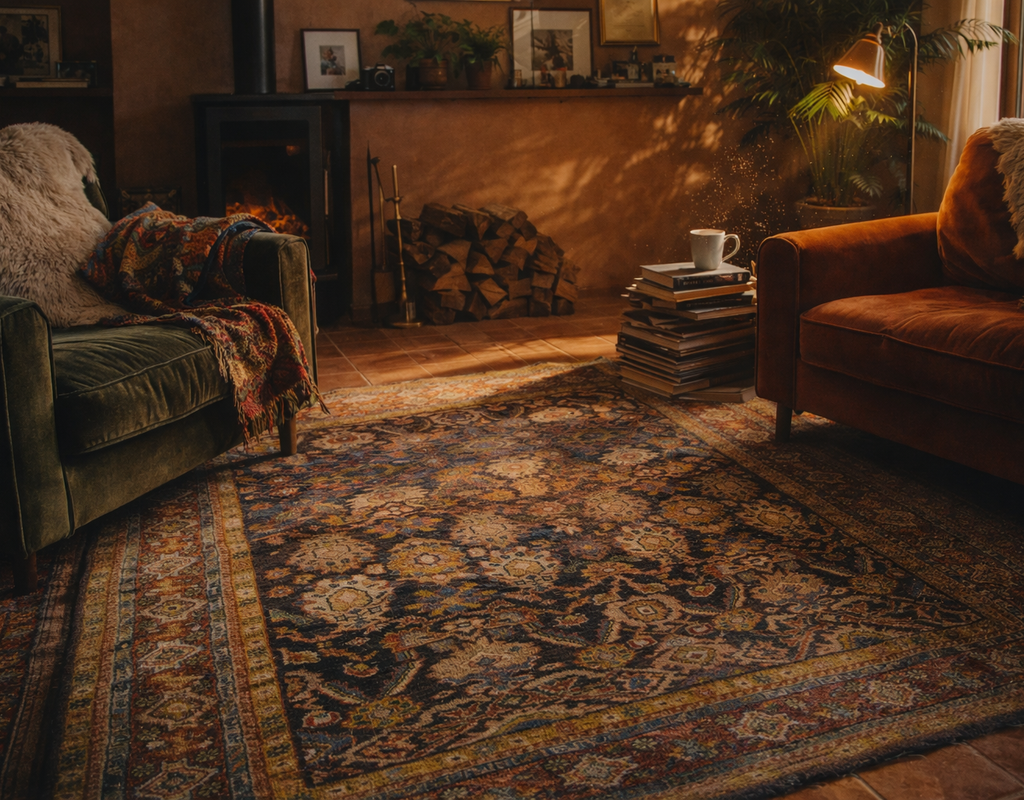
A richly textured, vintage-inspired area rug complements the jewel-toned velvet seating in this inviting, warmly lit reading nook.
This difference in scale dramatically shifts the mood: a fine lattice reads as ornate and luxurious, while a broad grid conveys minimalism and strength. Collectors and decorators alike use scale to align a trellis rug with either traditional or contemporary interiors.
Motif Variations and Authenticity
Recognizing authentic trellis patterns requires attention not only to the grid itself but also to the cultural details layered within it. The Mina Khani lattice of Persia, for example, combines rosettes with interlacing diamonds, while Mughal floral trellises showcase delicate vines and blossoms contained within curvilinear grids.
Moroccan diamonds, often drawn with a rough hand, emphasize bold simplicity, while Turkish star lattices reveal regional adaptations of the grid into angular celestial forms. Authenticity comes from the weaving tradition, materials, and construction, rather than from the lattice alone. A true trellis rug will exhibit consistency in rhythm and structure, but its variations—floral fills, empty diamonds, quatrefoils, or stars—signal the cultural origin of the piece.
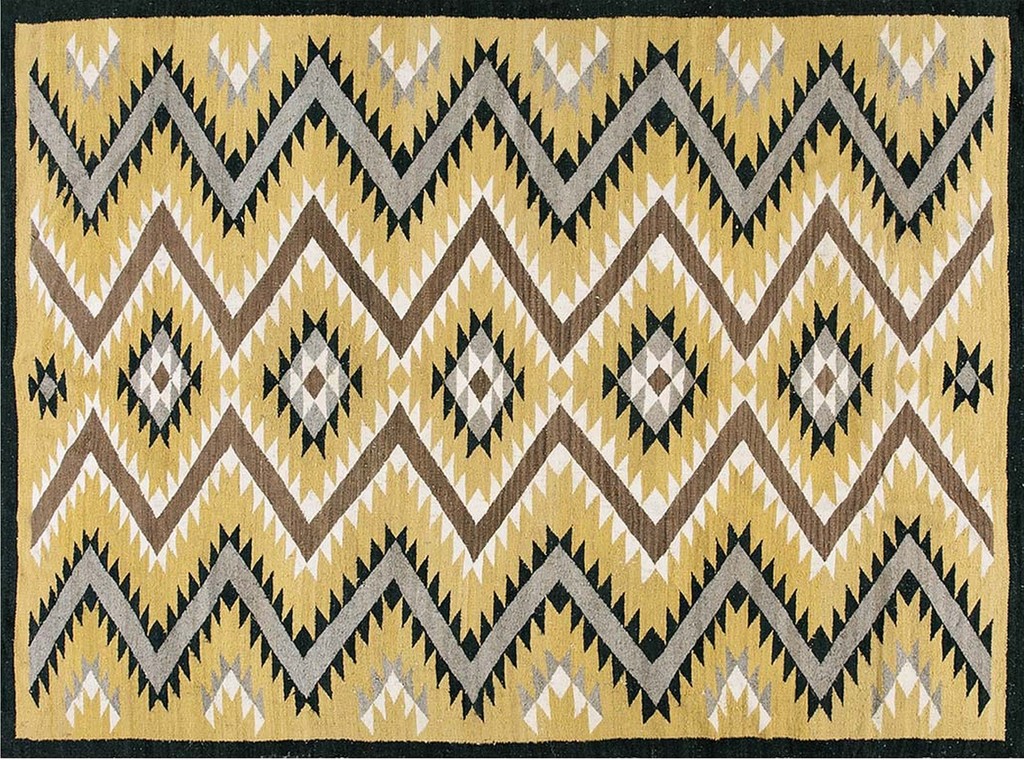
Vintage Geometric Chevron Pattern Native American Navajo Small Scatter Size Wool Yellow Rug by Rugs On Net
By learning to read these distinctions, one can identify whether a lattice belongs to Moroccan tribal heritage, Persian garden symbolism, or Ottoman-Turkish reinterpretation.
Defining the Trellis Motif
The visual elements of a lattice rug are its repeated geometric grids, whether filled or empty. Diamond and quatrefoil designs are both forms of trellis, reflecting linear and curvilinear approaches to the motif. Scale does affect impact, determining whether the rug feels intricate or bold.
And identifying authentic trellis motif variations depends on recognizing regional signatures—Mina Khani in Persia, Berber diamonds in Morocco, Mughal floral trellises in India, or Turkish star lattices. Together, these elements define one of the most enduring and versatile frameworks in rug design.
Materials, Construction, and Techniques
Pile Materials Best Suited for Lattice Rugs
The choice of material is central to how effectively a trellis motif can be expressed. The most traditional option is the wool lattice rug, prized for its durability, softness, and ability to hold dyes richly. Wool has been the backbone of tribal and courtly rug weaving for centuries, making it the most reliable all-around material for lattice designs.
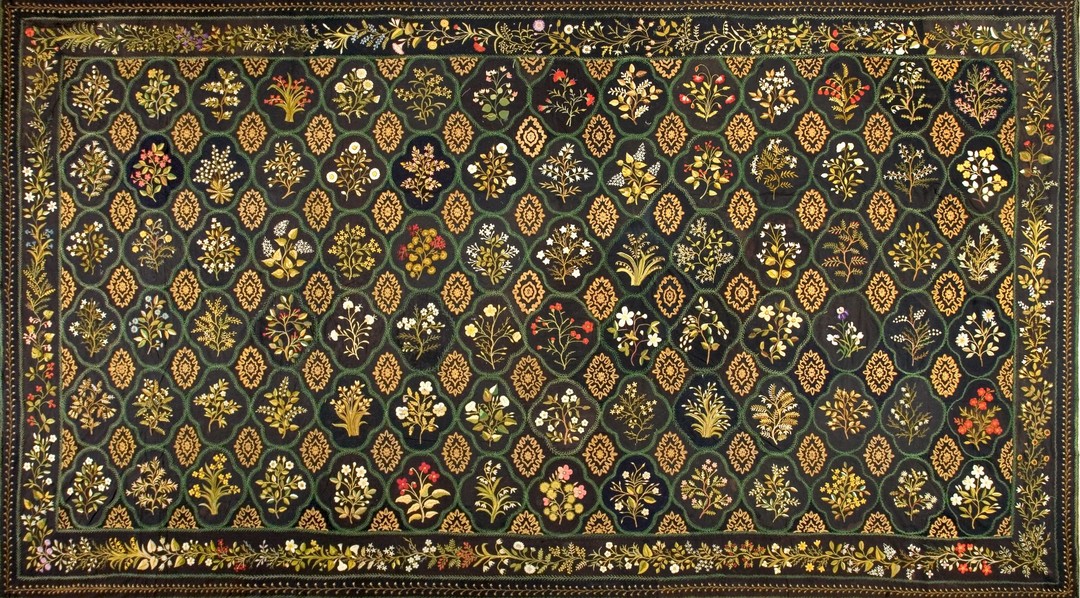
For luxury production, the silk trellis carpet offered unparalleled refinement. Silk’s sheen and fineness allow trellis grids to be drawn with extreme clarity, often seen in Safavid and Mughal masterpieces where each lozenge might contain delicate blossoms. Mughal elites also used pashmina, a rare and ultra-soft fiber, in some of their finest lattice carpets.
Cotton is not typically used as pile but serves as a foundation material, providing stability and helping trellis frameworks maintain sharp geometry. In modern contexts, polypropylene lattice rugs have become popular, offering affordability, stain resistance, and robust wear for everyday households. Still, when comparing tradition with modern substitutes, wool remains the best long-term choice for balancing authenticity, resilience, and comfort.
Hand-Knotted Lattice Rug Construction
A hand-knotted trellis rug is constructed through the interplay of foundation and knot. The warp and weft threads form the skeleton, while each knot of wool or silk is tied onto this foundation to build the pile. The trellis framework emerges through meticulous repetition: each diamond or quatrefoil grid is carefully plotted, knot by knot, ensuring the symmetry of the lattice is preserved.
Persian and Mughal workshops favored the asymmetrical (Persian/Senneh) knot, which allows for finer detail, making it ideal for elaborate floral trellises like the Mina Khani pattern. Moroccan and Turkish weavers often used the symmetrical (Turkish/Ghiordes) knot, which produces a denser, more robust pile, perfectly suited to bold tribal diamond lattices.
Knot density, often measured in KPSI (knots per square inch), determines the clarity of the lattice: higher density enables finer grids, while looser knotting emphasizes bold, graphic geometry.
Flatweave and Other Techniques
A flatweave lattice rug achieves the trellis effect without pile. Techniques such as kilim or zilu weaving interlace warp and weft threads in ways that naturally highlight angular lattice forms. While these rugs lack the plushness of knotted pile, their flat structure makes the trellis appear crisp and linear, often with striking contrast. They are also reversible, lightweight, and well-suited to nomadic traditions.
Because flatweaves cannot achieve the same lush detail as pile carpets, their trellis motifs tend to be more geometric and minimalistic, emphasizing the framework rather than filling it with floral ornament. Yet this very clarity often makes them desirable for modern interiors, where bold grids and simple diamond structures resonate with contemporary aesthetics.
Knotting Styles, Density, and Durability
The longevity and value of a trellis rug depend on its knotting style, density, and materials. A silk trellis carpet with a high KPSI will command prestige for its detail but requires careful handling. A robust wool lattice rug, particularly with a dense symmetrical knot, will endure heavy use for generations. Flatweaves, though thinner, resist wear in their own way and remain practical for lighter or reversible applications. Durability is also a key distinction in modern materials.
When asking whether polypropylene or wool should be chosen for lattice durability, the answer depends on context. Polypropylene lattice rugs are durable, affordable, and stain-resistant, making them suitable for high-traffic, budget-conscious households. However, wool remains superior for authenticity, natural resilience, repairability, and long-term value.
The Material Foundations of Trellis Rugs
The best pile materials for trellis rugs are wool (for versatility and tradition), silk (for luxury detail), and polypropylene (for modern durability on a budget). Hand-knotted lattice rugs are constructed knot by knot, using symmetrical or asymmetrical knots to maintain lattice symmetry.
Flatweave techniques like kilims can indeed showcase trellis motifs clearly, though in a more angular, less plush form. And when it comes to durability, while polypropylene is practical, wool lattice rugs stand unmatched as the time-tested foundation of trellis weaving.
Regional and Style Variations
Persian, Mughal, and Indian Trellis Rugs
The Persian lattice rug tradition is one of the most refined expressions of the trellis motif. Safavid and later Persian workshops developed curvilinear lattices where grids were softened into floral arabesques. The celebrated Mina Khani lattice interlocked rosettes with diamonds, while the great Vase carpets combined trellises with scrolling blossoms and palmettes. These rugs often symbolized the ordered beauty of the Persian garden rug, translating the Chahar Bagh into woven form.
In India, under Mughal patronage, trellis motifs took on a distinct identity. The Mughal flower lattice emphasized ogival and quatrefoil grids filled with naturalistic blossoms, often woven in pashmina wool for the court elite. The lush floral fillings, delicate symmetry, and luxurious fibers made these carpets prized across the Islamic world and Europe, cementing the Mughal lattice as a symbol of opulence and cosmological order.
Moroccan & Berber Lattice Rugs
The Moroccan diamond rug represents the tribal counterpart to the courtly Persian and Mughal trellises. In the weaving of the Beni Ourain and related Berber groups, the trellis appears as a bold diamond grid, drawn with simplicity and raw power. Often woven in cream wool with dark geometric lines, these rugs convey a striking minimalism.
The design carries deep symbolic value: diamonds and lozenges in Berber tradition represent protection, fertility, and continuity of life. Unlike the ornate floral lattices of Persia, the Moroccan trellis is spare and symbolic, emphasizing the framework itself rather than intricate fillings. This stark geometry has made Moroccan trellis rugs particularly beloved in modern interiors, where their minimalism aligns with contemporary taste.
Turkish, Anatolian & Caucasian Variants
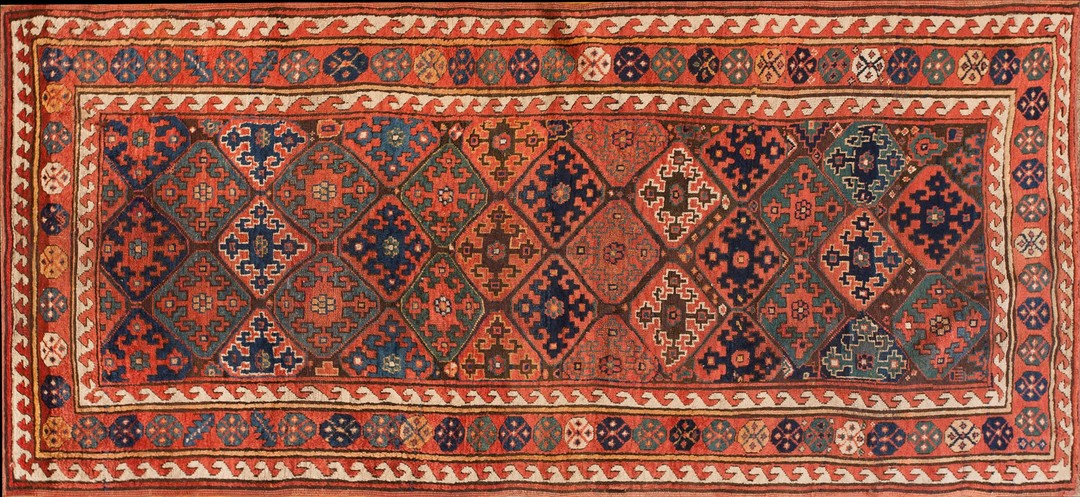
In Anatolia and the Caucasus, trellis motifs evolved into highly graphic frameworks. The Turkish lattice carpet often features star-shaped grids or bold medallion-centered lattices, paired with folkloric motifs. Unlike the Persian emphasis on curvilinear detail, Turkish and Caucasian trellises favor angular geometry and strong color contrasts, producing a dynamic, almost architectural rhythm.
The Caucasian variants, woven in regions such as Shirvan and Karabagh, further highlight bold reds, blues, and ivory backgrounds. These lattices often incorporate tribal symbols or medallions, blending structural grids with local iconography. The result is a trellis design that feels both geometric and folkloric, distinct from either Moroccan minimalism or Persian floral luxury.
Distinctive Features by Region
- Persian lattice rug: Curvilinear, floral, Mina Khani and Vase carpets, symbolic of gardens. — Why: Courtly luxury and cosmological order.
- Mughal flower lattice: Ogival/quatrefoil grids filled with naturalistic blooms, often in pashmina. — Why: Elite refinement and Indian artistic naturalism.
- Moroccan diamond rug: Bold lozenges in cream and black, minimal filling. — Why: Tribal symbolism and striking visual simplicity.
- Turkish lattice carpet: Stars, medallions, bold colors, angular motifs. — Why: Regional folklore, strong contrasts, architectural geometry.
- Caucasian variants: Geometric lattices with tribal symbols, high-contrast palettes. — Why: Blend of tribal identity with grid-based order.
Recognizing Authentic Variations
To identify authentic trellis motif variations, one must look beyond the grid itself to the cultural fingerprints layered within it. Persian lattices feature curving arabesques and floral fillings, Mughal examples favor naturalistic blossoms in ogival grids, Moroccan trellises emphasize bold tribal diamonds, and Turkish/Caucasian rugs highlight angular stars and medallions with vivid contrast.
The grid provides structure, but the fillings, knot styles, and color palettes reveal the cultural origin. Regional style not only determines the look but also the symbolic meaning of a trellis rug, with each weaving culture embedding its worldview—whether Persian visions of paradise, Mughal cosmological gardens, Berber tribal symbols, or Anatolian folklore—within the lattice framework.
Historical and Modern Trellis Rugs: Comparison
Vintage vs. Modern Reproductions
The vintage trellis rug carries hallmarks that distinguish it from contemporary versions. Traditionally woven with hand-spun wool and natural dyes, vintage pieces often show visible signs of age: softened colors, patina from wear, and subtle irregularities that reflect hand craftsmanship. Each vintage rug is one-of-a-kind, shaped by the weaver’s hand and by decades of use.
These qualities make them highly valued by collectors, not only as functional textiles but as cultural artifacts. Modern reproductions, by contrast, are created to meet today’s design and market demands. They may be machine-made using fibers such as polypropylene or polyester, or hand-knotted by artisans adapting traditional trellis motifs.
While these rugs can achieve high precision and consistency, they lack the uniqueness of vintage examples. Their affordability and accessibility, however, make them appealing for everyday use, especially when paired with modern design palettes.
Distressing in Vintage-Look Lattice Rugs
One major development in recent years is the rise of the distressed lattice rug. To satisfy demand for the aged look without requiring authentic vintage pieces, manufacturers employ distressing techniques—chemical washes, abrasive treatments, or shearing—to mimic the fading and wear of antique rugs. The result is a new carpet with the patina of age, bridging the gap between affordability and vintage aesthetics.
While some purists prefer genuine wear earned through decades of use, distressed lattice rugs have become popular in interior design, as they capture the softened elegance of old rugs while remaining widely available and budget-friendly. This makes distressing one of the most recognizable trends in contemporary rug production.
Color Palettes: Traditional vs. Modern
The color choices in lattice rugs provide a clear comparison between past and present. Traditional Persian, Mughal, and Turkish lattice rugs favored deep reds, blues, ivory, and cream, reflecting both the availability of natural dyes and symbolic cultural palettes.
Moroccan tribal versions often showcased neutral grounds in cream with stark black or brown lattices.
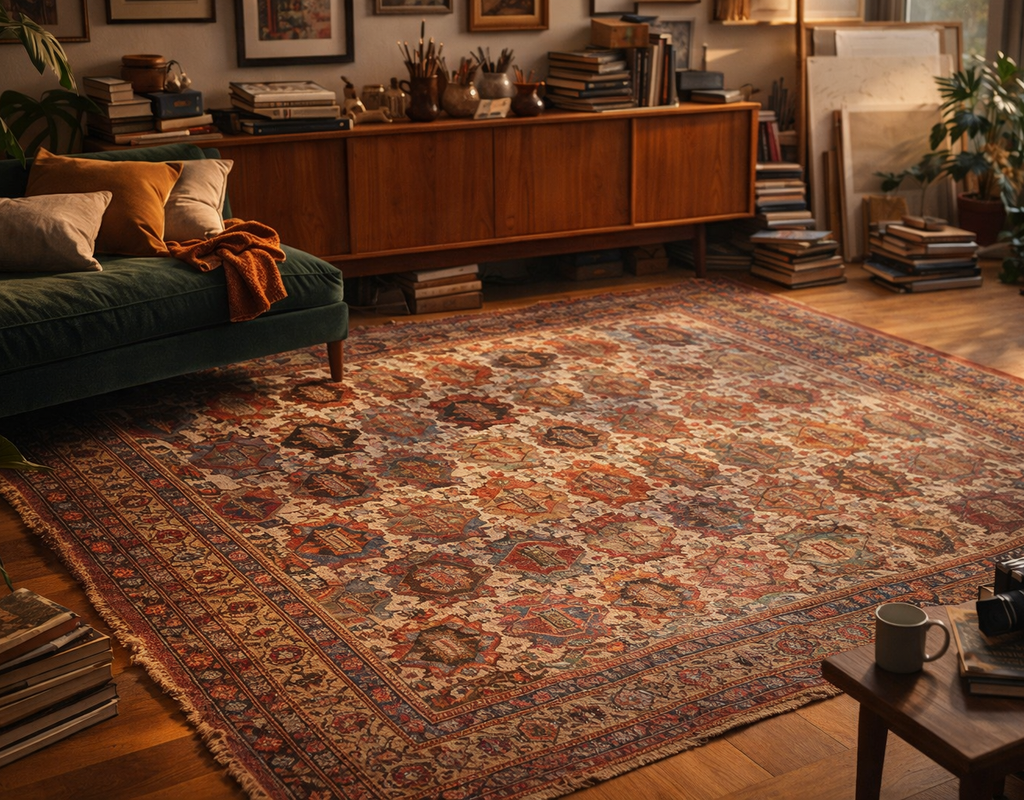
A richly patterned, traditional area rug adds depth and warmth to this inviting, book-filled living space.
Modern designers, however, reinterpret these frameworks using contemporary palettes. The modern color trellis carpet may appear in cool grays, soft pastels, monochrome blacks and whites, or even bold contrasts like teal and gold.
These adaptations allow traditional trellis structures to integrate seamlessly into modern interiors, from minimalist lofts to Scandinavian-inspired spaces.
Then and Now: A Living Motif
Vintage trellis rugs differ from modern reproductions through their hand-spun materials, natural dyes, uniqueness, and patina of age, whereas modern rugs often use new fibers and standardized production. Distressing is indeed common in contemporary trellis rugs, giving new pieces the vintage look so sought after in interior design.
And finally, modern color palettes not only suit but often revitalize traditional lattice designs, demonstrating the adaptability of the motif across centuries. In both its vintage authenticity and modern reinterpretations, the trellis motif remains a living design language, capable of bridging past craftsmanship with today’s evolving tastes.
Cultural, Symbolic & Interior Significance
Symbolism and Meaning
The symbolism of lattice rugs runs deep across weaving traditions. In Persia, trellis designs represented the structured beauty of paradise gardens, an earthly reflection of cosmic order and abundance. Each diamond or quatrefoil could be seen as a symbolic flower bed, enclosed within the ordered geometry of the garden plan.
Among Berber weavers of North Africa, the lattice carried a more personal, tribal meaning. The Moroccan diamond grid was associated with protection, fertility, and feminine power, with lozenges often linked to themes of continuity, guardianship, and life cycles.
Across cultures, the trellis framework symbolized unity and interconnectedness, making it both a decorative device and a spiritual structure.
This enduring symbolism explains why trellis motifs transcend geography: they are not only visually striking but also carry layers of cultural memory and belief.
Why Mid-Century & Contemporary Lattice Rugs Are Popular Again
The mid-century trellis rug became iconic during the 20th century when modernist designers embraced Moroccan Beni Ourain pieces. Their minimal diamond grids, often rendered in black on cream, offered a perfect balance of structure and simplicity.
These rugs paired seamlessly with modernist architecture and interiors, their stark geometry echoing the clarity of mid-century design.
Today, those same rugs are popular again because they offer a timeless graphic appeal. Their ability to feel both ancient and modern, tribal and minimalist, makes them endlessly adaptable. The revival of mid-century interiors in contemporary design has also renewed appreciation for Moroccan trellis motifs as versatile, authentic accents.
Modern Interior Design Trends
Looking at 2025 design trends, the modern lattice trend is stronger than ever. Trellis rugs are favored for their geometric chic and cross-cultural resonance, bridging traditional craftsmanship with contemporary aesthetics. Interior designers turn to trellis patterns because they work in virtually any décor style—anchoring eclectic spaces, balancing minimalist rooms, or adding structure to bohemian interiors.
Modern trellis rugs often appear in neutral palettes like gray, ivory, and taupe, but bold reinterpretations in monochrome or jewel tones are equally in demand. Their structural clarity allows them to serve as both statement pieces and subtle foundations, proving their versatility in modern living.
Enduring Relevance
Mid-century lattice rugs are popular again because their Moroccan diamond motifs embody a timeless minimalism that suits both vintage and contemporary settings. And yes, trellis rugs are trending in 2025 interiors, valued for their adaptability, symbolism, and geometric elegance.
The trellis motif endures because it is more than a design—it is a visual language of order, unity, and cultural continuity, making it as relevant in today’s interiors as it was in the gardens of Safavid Persia or the looms of Berber tribes.
Buying Guide: Choosing Trellis-Lattice Rugs
Price Range Factors
The price range of trellis / lattice rugs is shaped by several interlocking factors. The most important include the age of the rug, the material used, the knot density (KPSI), the size, the maker, and the provenance. A hand-knotted wool lattice rug from a respected Persian or Moroccan tradition will naturally command a higher price than a factory-made polypropylene version.
Silk trellis carpets or pashmina Mughal examples are at the very top of the scale, prized for their rarity and refinement. Larger rugs, higher knot counts, and well-documented origins add further to cost, while machine-made production allows entry-level affordability.
In short, handmade and vintage lattice rugs carry premium value, while machine-made options provide accessible price points.
Affordability & Where to Find Vintage Pieces
For those seeking an affordable trellis rug, modern machine-made carpets from India, Pakistan, or China offer budget-friendly alternatives that replicate lattice designs at scale. However, collectors who want older pieces without prohibitive cost can look for vintage lattice carpets for sale through estate sales, online vintage marketplaces, and regional auctions.
Platforms specializing in secondhand décor often feature Moroccan or Turkish trellis / lattice rugs at approachable prices, though condition and authenticity should always be verified. The sweet spot for affordability lies in younger vintage examples or machine-knotted versions that still retain the strong visual effect of the trellis motif.
Investment Value
When considering long-term worth, hand-knotted trellis rugs are a good investment. Authentic Persian, Mughal, Turkish, and Moroccan lattice rugs retain or even grow in value, especially those with strong provenance, fine materials, or cultural significance.
Unlike machine-made rugs, which depreciate with use, vintage hand-knotted pieces develop patina and historical importance that make them attractive to collectors and interior designers alike.
For serious buyers, investing in hand-spun wool, silk, or tribal Moroccan examples ensures not just lasting functionality but also collectible value.
Ordering Custom Trellis / Lattice Rugs
When buying rugs today, many people prefer the option of custom trellis rug orders, tailoring dimensions, color palettes, and even lattice style to suit their interiors. This is not only possible but often remarkably fast: specialist dealers and workshops in India, Turkey, and Morocco can produce custom trellis rugs within weeks, depending on size and complexity.
Modern rug ateliers combine traditional craftsmanship with efficient production pipelines, allowing clients to replicate classic motifs or innovate new color combinations with ease.
Making the Right Choice
The price of trellis rugs is determined by age, material, size, knot density, maker, and provenance. Affordable vintage lattice carpets can be found at estate sales, online marketplaces, and regional dealers. Hand-knotted lattice rugs are indeed a strong investment, valued for their craftsmanship and historical significance.
And yes, custom trellis designs can be ordered quickly, with many workshops offering fast turnaround for bespoke pieces. Whether buying for affordability, investment, or personalization, the trellis motif remains a versatile and rewarding choice, bridging everyday accessibility with timeless artistry.
A word to the wise – even if you think you found the best rug at the best price, you should still go to the internet and shop for rugs online and see all the options before you make your final selection.
Care, Maintenance & Styling Tips
Caring for Lattice Rugs
- Vacuum regularly — Why: Helps preserve the pile, keeps the grid motifs sharp, and prevents dirt from embedding into fibers.
- Spot clean spills immediately — Why: Quick attention prevents stains from setting, especially important for pale Moroccan diamond designs or lighter modern palettes.
- Rotate the rug — Why: Evens out foot traffic and sun exposure, keeping the trellis framework from wearing unevenly.
- Schedule professional cleaning — Why: Every few years, a deep wash restores vibrancy and ensures both wool lattice rugs and silk trellis carpets maintain longevity.
- Use rug pads — Why: Pads reduce slipping, protect the foundation, and add comfort underfoot, extending the life of both vintage and modern trellis carpets.
Styling Advice for Modern Spaces
- Pair with solid furnishings — Why: A trellis rug’s grid adds pattern without overwhelming, but balancing it with solid-color sofas or curtains creates harmony.
- Echo geometry in accents — Why: Mirroring the grid through wall art, pillows, or lighting reinforces the structure and makes the space cohesive.
- Use in high-traffic zones — Why: The patterned surface of a trellis rug naturally disguises wear, making it ideal for entryways, hallways, or living rooms.
- Play with scale — Why: Large-scale trellis carpets feel bold and modern, while small-scale lattices create an intricate, traditional look—choose according to room size and design mood.
- Blend traditional and modern — Why: A distressed lattice rug or vintage trellis piece can soften a sleek interior, while a crisp monochrome grid adds a modern edge to classic décor.
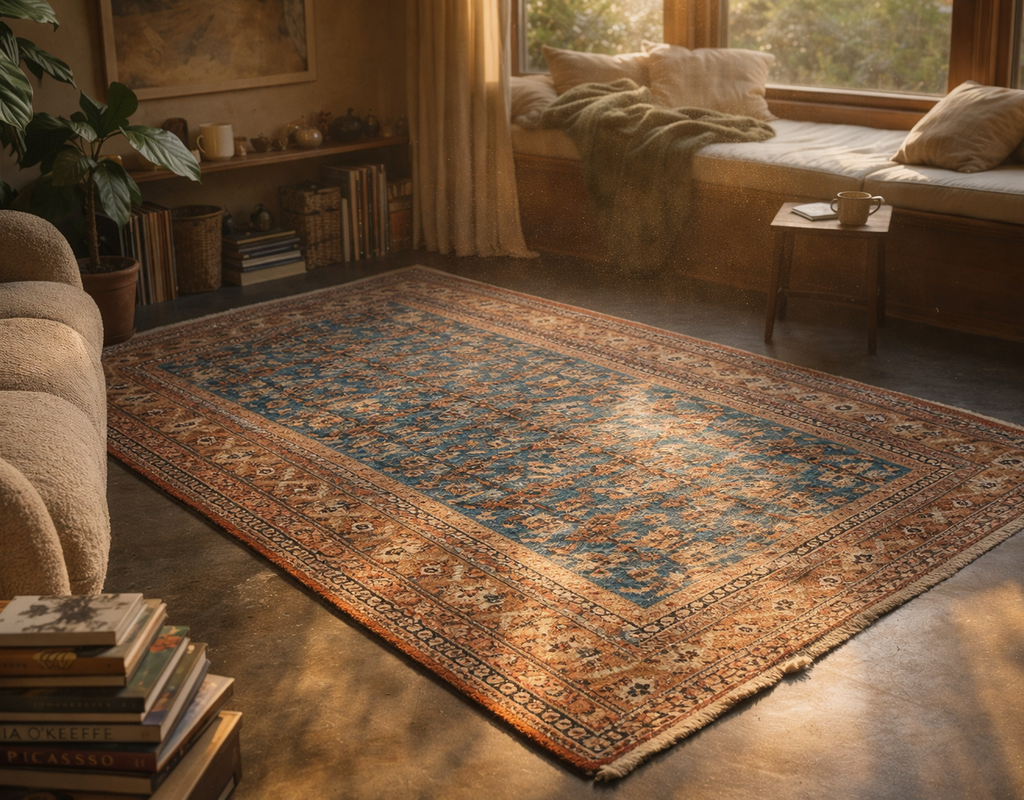
A richly patterned, vintage-style area rug adds warmth and color to this sunlit, cozy reading corner.
Trellis / lattice rugs combine practical care with versatile styling, offering designs that are both easy to maintain and endlessly adaptable.
Their structured geometry makes them as suitable for busy households as for refined interiors, proving that the trellis motif is not only timeless but also one of the most functional rug designs available.
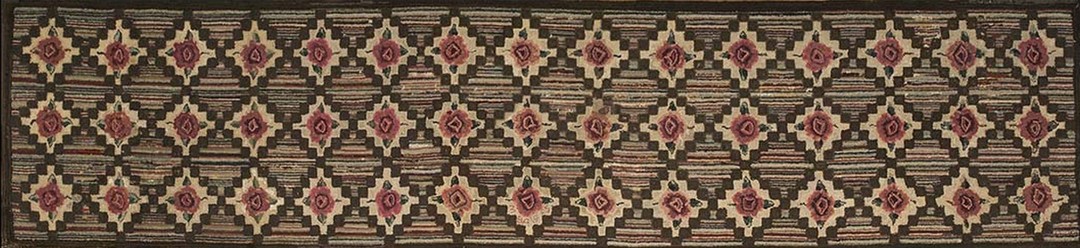
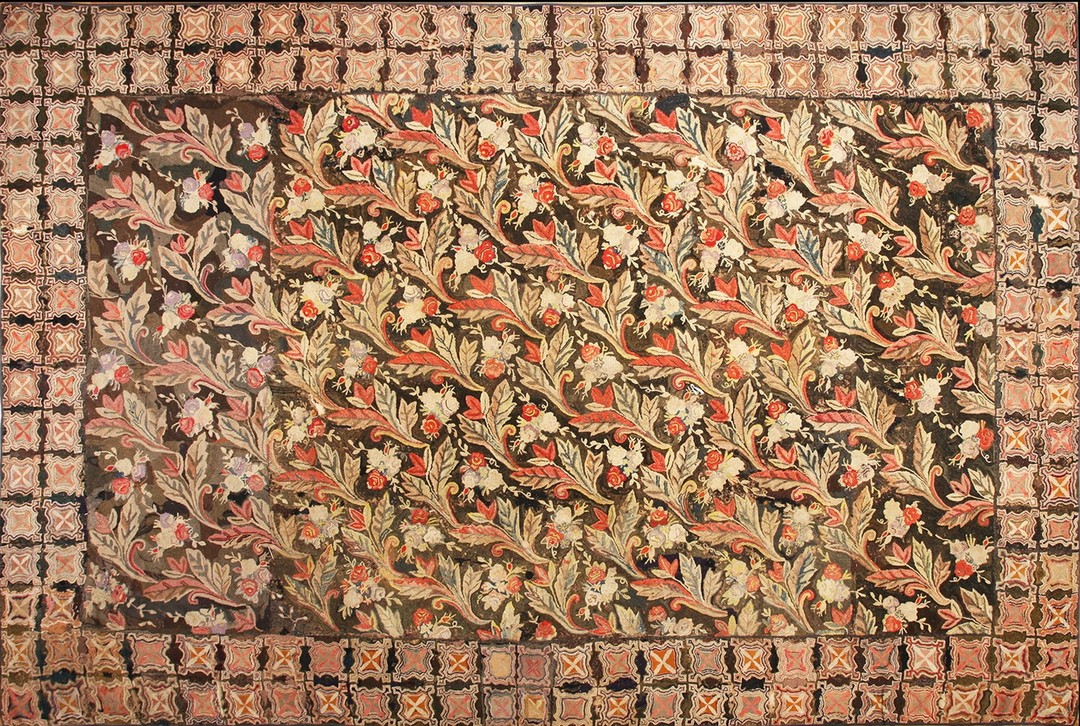
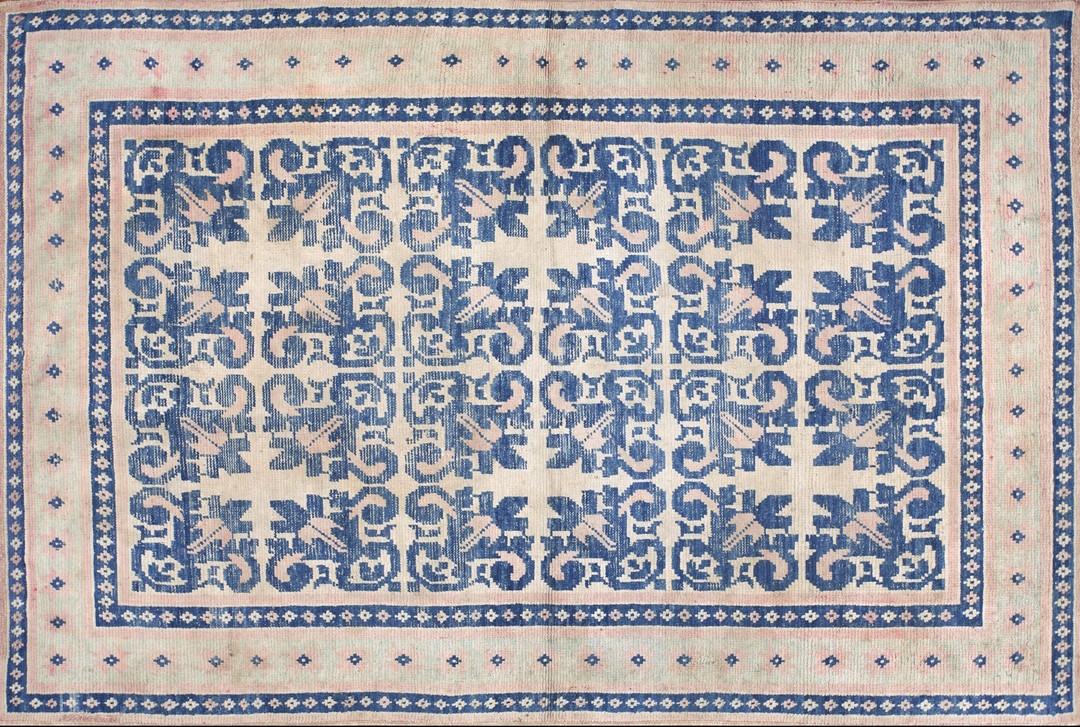
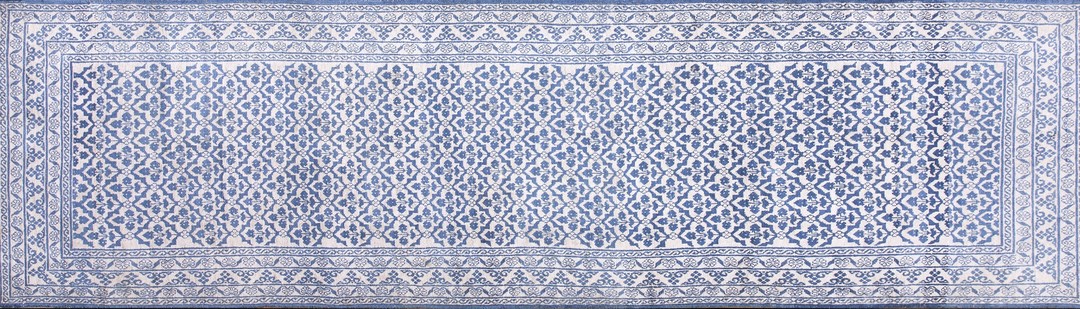
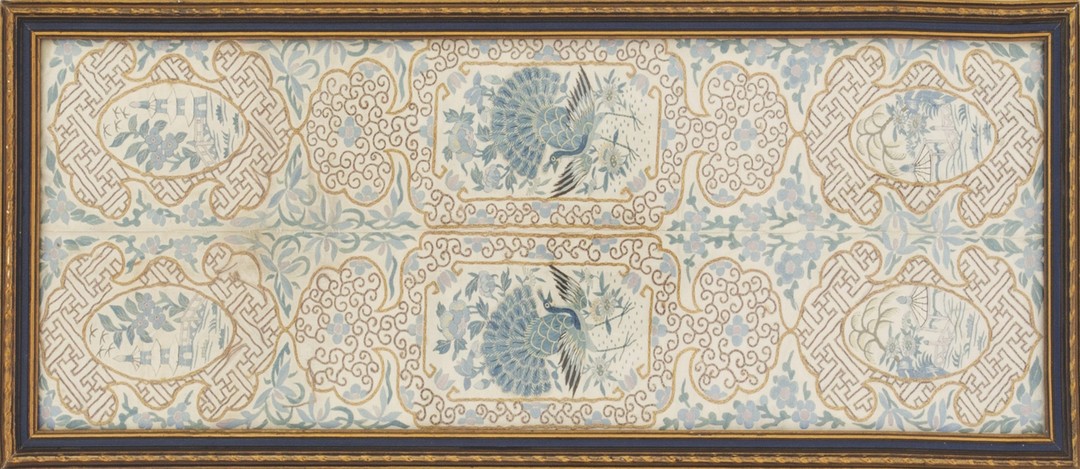
Explore a Few of Our Favorite Trellis-Lattice Rugs
FAQ
- How do I stop a trellis rug from sliding or curling?
Use a felt-and-rubber pad, add corner grippers, and reverse-roll curled edges for 24 hours. Leave a \~2-inch pad margin to reduce trip edges.
- How much do trellis rugs cost?
Machine-made polypropylene trellis rugs in 8×10 often run about \$150–\$300, while hand-knotted wool trellis rugs typically range around \$1,000–\$5,000+. Origin and craftsmanship drive price.
- Are trellis rugs timeless or trendy?
Trellis rugs are effectively timeless—historic roots with modern appeal. Neutral lattices age especially well across styles.
- Trellis rugs vs medallion rugs—how do they differ?
Medallion rugs center on one dominant emblem; trellis rugs repeat the motif across the field. Medallions suit formal statements; trellises excel at layering.
- Trellis rugs vs Greek key—how do they compare?
Greek key is a meandering border; trellis rugs cover the field with a repeating lattice. You can frame a trellis field with a Greek key border.
- Trellis vs ogee trellis rugs—what’s different?
Ogee trellis rugs use S-curves forming linked ovals; classic trellis relies on straighter crisscross lines. Ogee feels softer and more rounded.
- What’s the difference between lattice trellis rugs and Moroccan trellis rugs?
“Moroccan” typically refers to Berber diamond lattices (e.g., Beni Ourain); “trellis” is broader and includes ogee or grid repeats. Both read geometric and graphic.
- Are trellis rugs robot-vacuum friendly?
Most low-pile trellis rugs are fine, but fringe can tangle brushes. Create no-go zones or tuck fringes underneath before cleaning.
- Can I layer a trellis rug over carpet?
Yes—place a low-pile lattice rug over low-pile carpet with a carpet-to-carpet pad or grippers. Anchor edges under furniture to prevent ripples.
- Should I use a rug pad under trellis rugs?
Yes—use a felt-plus-natural-rubber pad to add cushion and prevent slipping. Cut the pad 1–2 inches smaller than the rug.
- Do wool trellis rugs shed?
New wool lattice rugs may shed for several months, then taper as loose fibers release. Gentle, regular vacuuming reduces fuzz.
- How do I clean a polypropylene lattice rug?
Spot clean with mild detergent and water; for full washes, hose, gently scrub, and rinse thoroughly. Avoid high heat, which can deform polypropylene.
- How do I clean a wool trellis rug?
Vacuum with the beater bar off, blot spills promptly, and rotate every 6–12 months. Plan professional cleaning about every 12–18 months.
- Are outdoor trellis rugs practical?
Outdoor lattice rugs in polypropylene are quick-drying, mildew- and UV-resistant, and easy to hose off. Use a breathable outdoor pad to prevent trapped moisture.
- Can trellis rugs be used over radiant or heated floors?
Generally yes—flatweave or low-pile trellis rugs allow heat to pass efficiently. Avoid thick shags that trap heat.
- Are trellis rugs kid- and pet-friendly?
Yes—opt for low-pile, stain-resistant trellis rugs and skip long fringe. Patterns camouflage everyday spills; keep enzymatic cleaner handy for accidents.
- How do I choose trellis rug pattern scale?
Large-scale lattice suits bigger rooms or minimal décor; small-scale trellis calms busier spaces. Match the repeat to the visible floor area to avoid visual clutter.
- What size trellis rugs anchor a living room?
Common sizes are 8×10 or 9×12 so front furniture legs sit on the rug. Large spaces may need 10×14 or bigger.
- What size trellis rug works under a dining table?
Pick a trellis dining rug that extends at least 24 inches on all sides so chairs remain on the rug when pulled out. 8×10 or 9×12 fits many tables.
- Are trellis rugs good for high-traffic areas?
Yes—choose low-pile trellis rugs in tightly woven wool or polypropylene for durability. Keep pile height low (≈½” or less) near entries and dining chairs.
- Do trellis rugs hide dirt well?
Yes—medium-toned lattice rugs with heathered or distressed lines disguise crumbs better than solids. Dark designs hide stains but show lint; very light shows dust quickly.
- What materials are best for trellis rugs?
Polypropylene lattice rugs prioritize easy care and value; wool trellis rugs offer luxury with natural stain resistance and resilience. Wool’s lanolin helps liquids bead for easier blotting.
- Which rooms suit trellis rugs best?
Trellis rugs work in living rooms, bedrooms, dining rooms, kitchens, and entries, where the pattern neatly defines zones. In dining rooms, extend the rug 24–28 inches beyond the table.
- Are trellis rugs modern or traditional?
Both—trellis rugs’ clean geometry reads modern, while heritage versions echo classic wallpapers and Berber diamonds. High-contrast palettes skew contemporary; washed neutrals feel traditional.
- What are trellis rugs (aka lattice rugs)?
Trellis rugs feature repeating crisscross grids—often diamond or ogee—creating an ordered, geometric field. The motif appears in 19th-century William Morris designs (1864) and Moroccan Berber lattice traditions.