
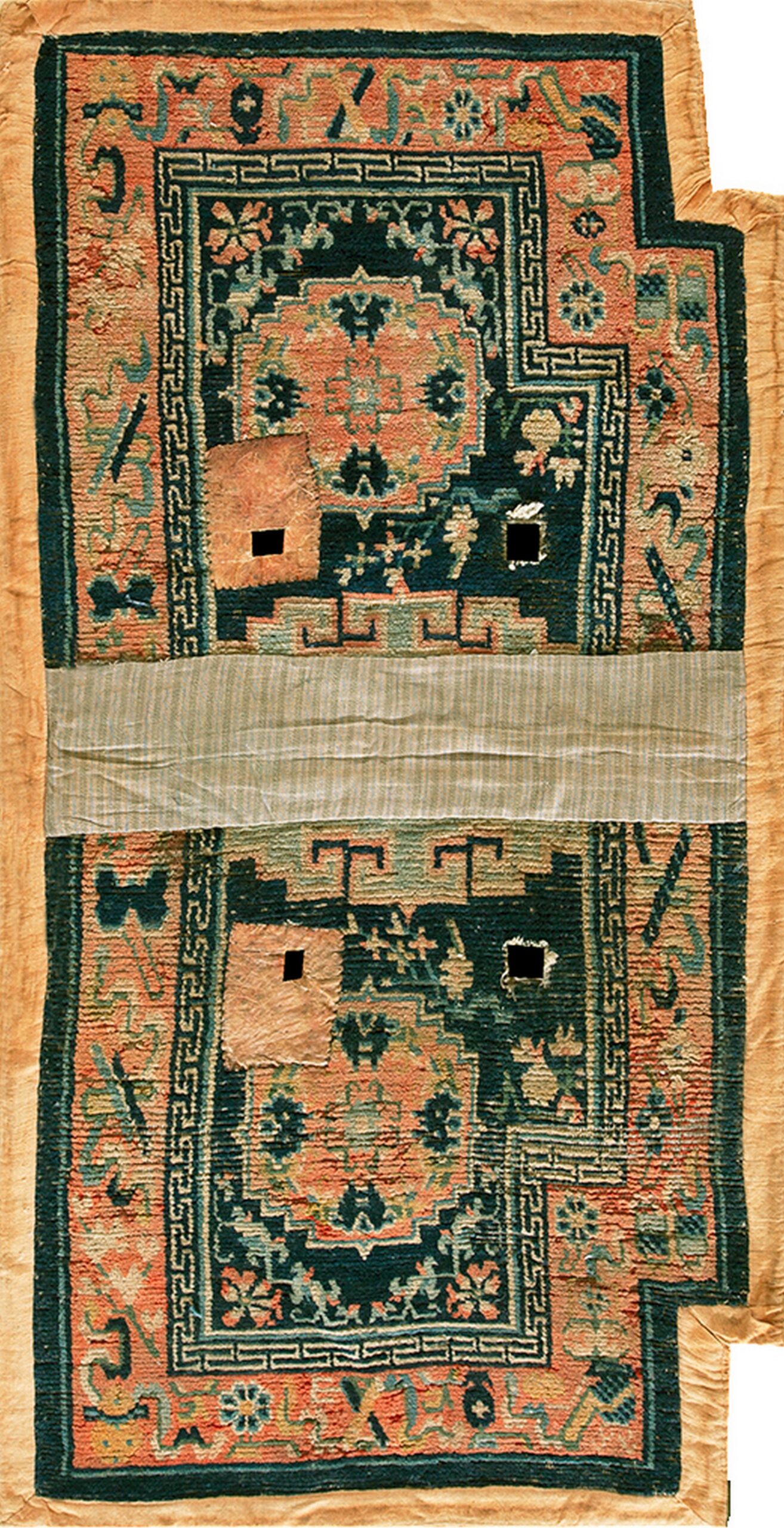
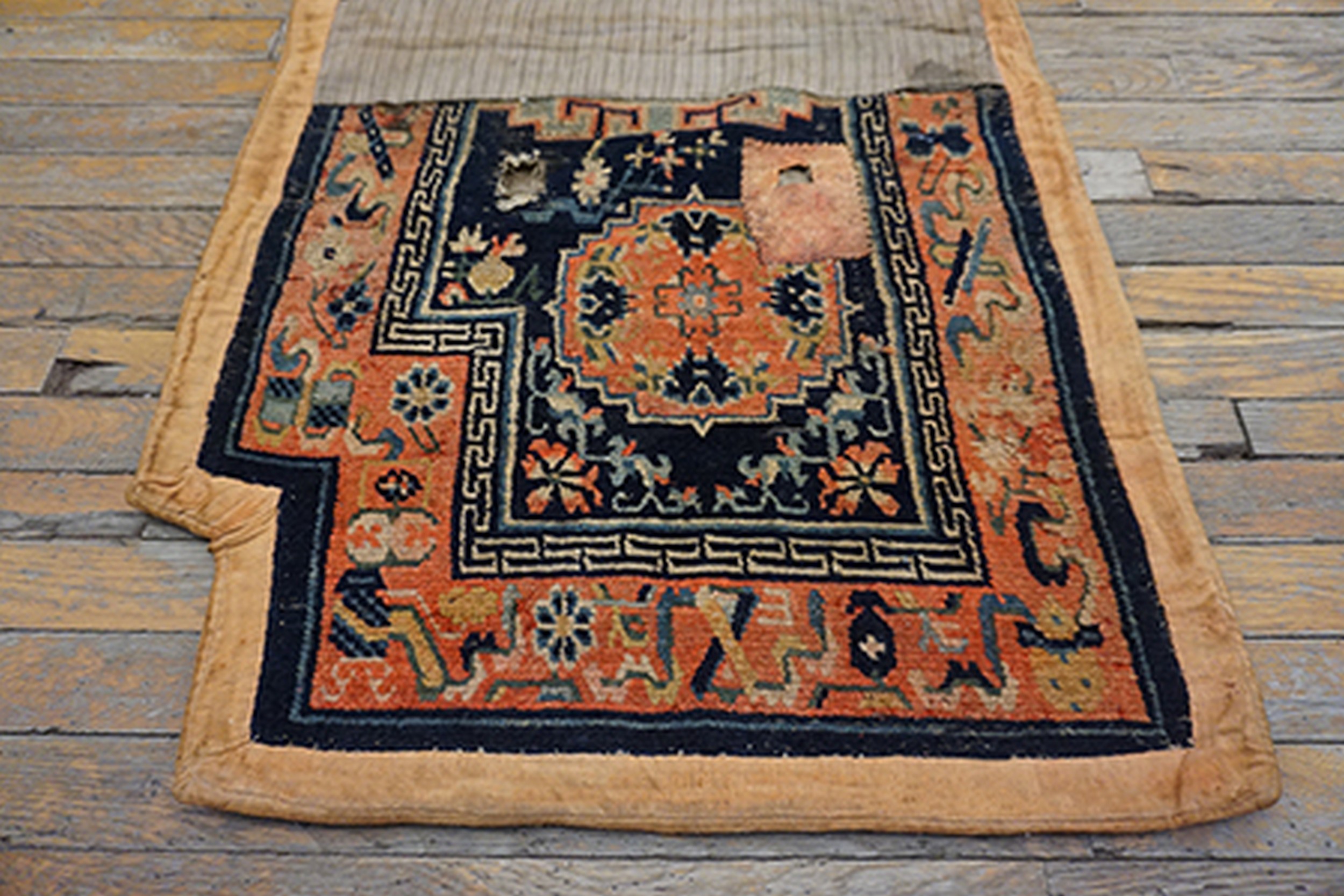
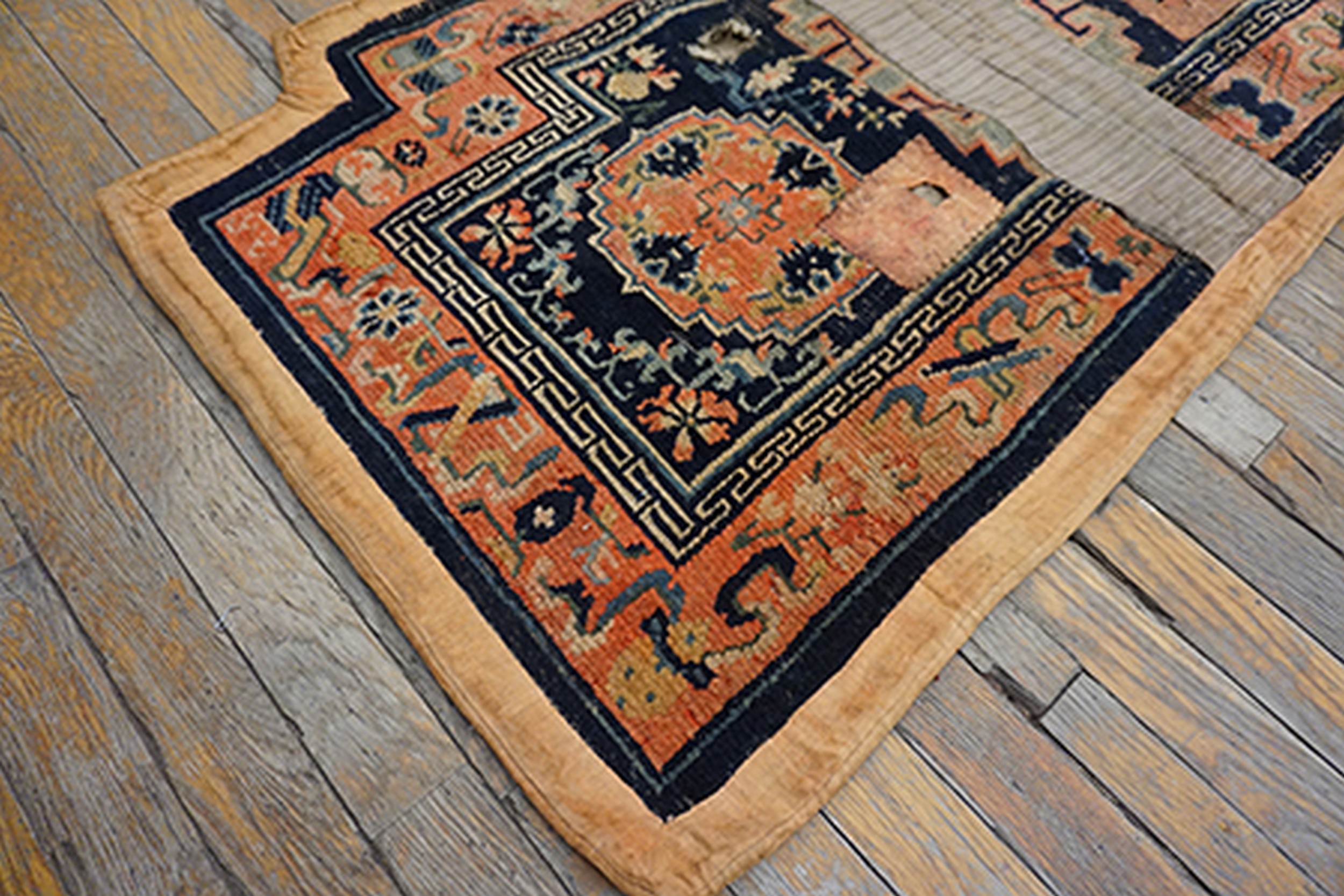
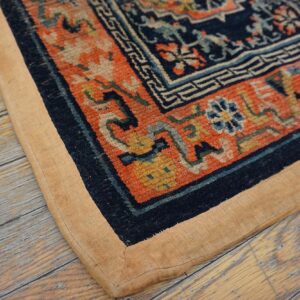
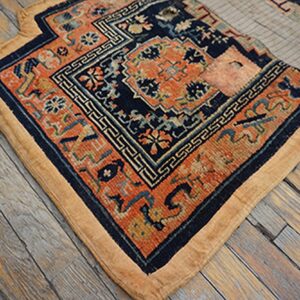
This early 20th-century Chinese rug saddle or horse cover is a rare and highly collectible artifact from the Qing Dynasty, representing a sophisticated category of “Utilitarian Art.” While room-sized antique Chinese carpets were often intended for stationary luxury, these equestrian textiles were crafted for the nomadic movement and ceremonial prestige of the Chinese and Mongolian elite, making them a significant find for connoisseurs of East Asian tribal weaving.
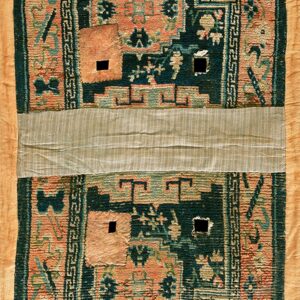
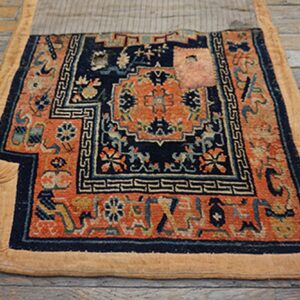
The composition is defined by its unique butterfly or “winged” silhouette, specifically designed to drape across a horse’s back. The field is typically divided into two mirrored sections that would hang on either side of the animal. The motifs are steeped in Imperial Symbolism, frequently featuring auspicious elements such as “Lahu” (endless knots), stylized peonies representing wealth and honor, or the “Meander” (Greek key) fretwork. The drawing is remarkably fluid and precise, showcasing the high-level craftsmanship associated with the Ningxia or Baotou workshops, where textile art met symbolic storytelling.
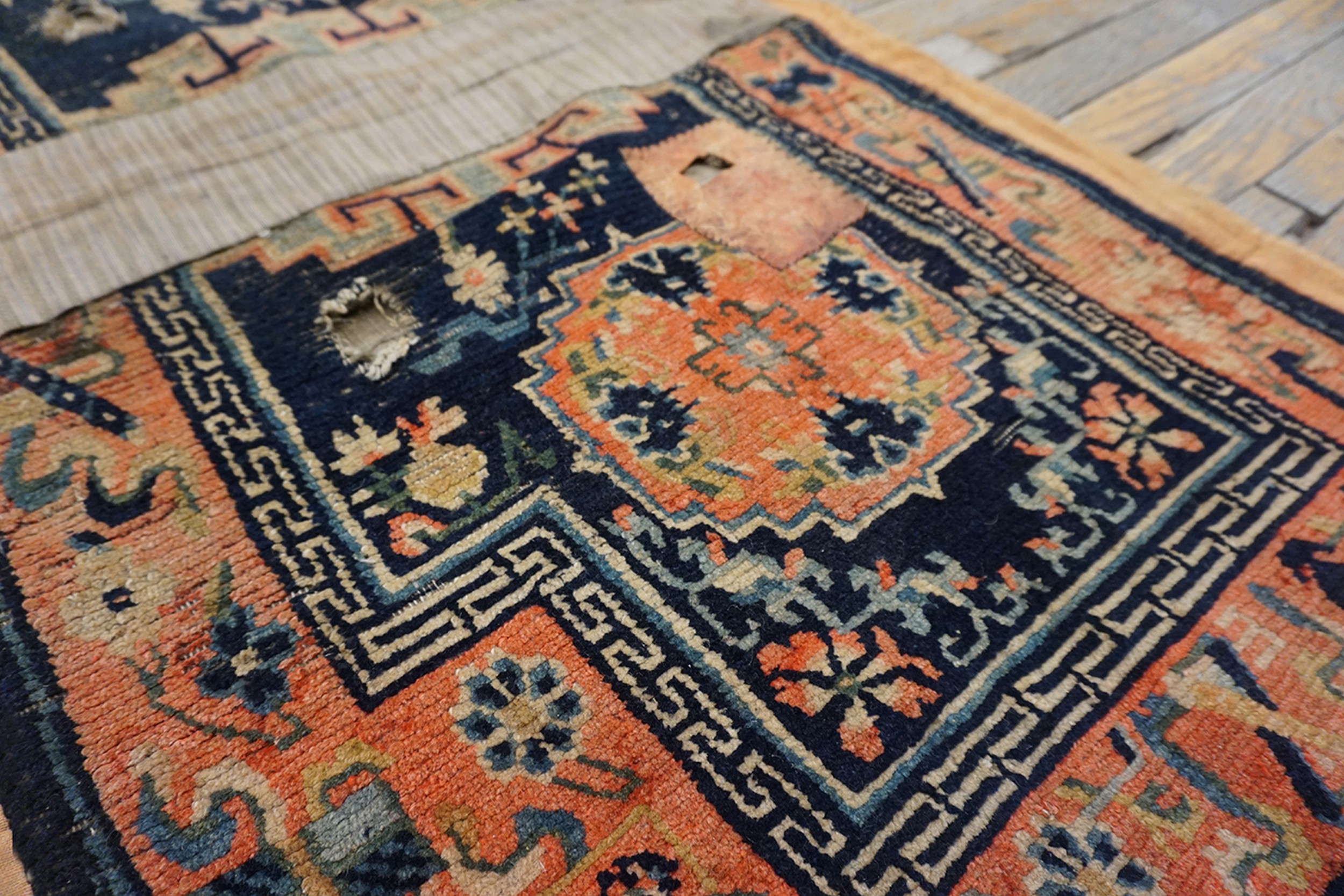
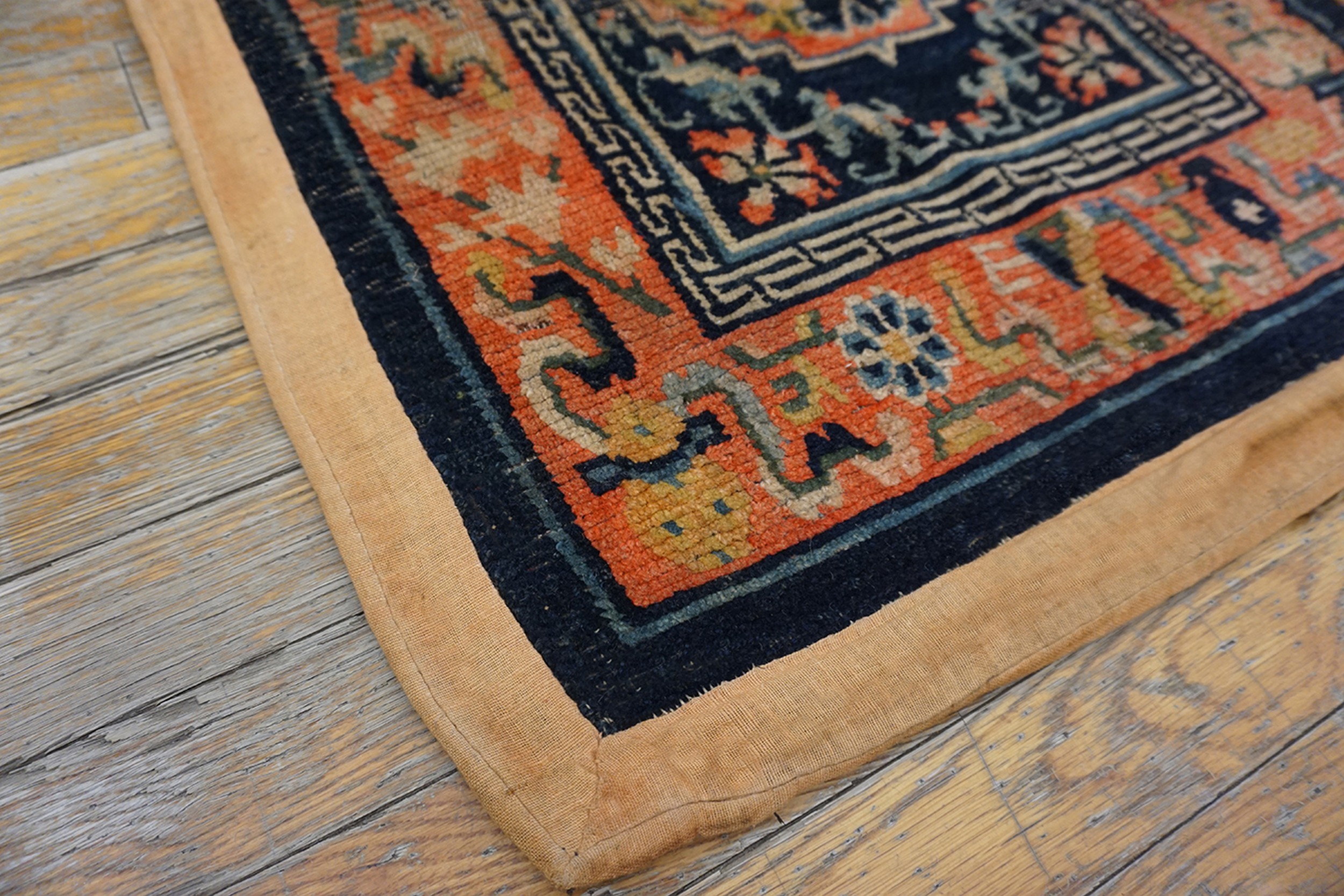
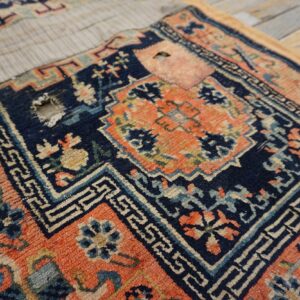
The palette is anchored by a sophisticated and “Imperial” color theory. Many pieces of this pedigree feature a vibrant Indigo Blue or a warm Madder Red foundation, often contrasted with a rich “Imperial Yellow” or soft Cream. Because this is an antique specimen, the colors possess a magnificent tonal depth and “abrash.” The natural vegetable dyes have oxidized over a century to create a soft, watercolor-like resonance, giving the blue tones a “teal-like” depth and the yellows a sun-drenched, golden patina.
Technically, this antique wool pile Chinese saddle horse cover is prized for its lush, high-grade wool pile and exceptionally soft handle. Unlike the coarser tribal rugs of the West, antique Chinese equestrian pieces are often woven with “silky” wool that contains a high lanolin content, giving the surface a shimmering, luminous sheen. The pile is typically hand-knotted on a cotton foundation, resulting in a textile that is both durable and flexible—essential for its original function as a protective and decorative horse cover.
The borders act as a disciplined architectural frame, often mirroring the central motifs to “lock in” the energetic symbolism of the field. Today, these pieces are frequently displayed as textile wall art, where their unique shape and historical gravity serve as a sculptural focal point. To possess this antique Chinese saddle horse cover rug is to own a monument to the equestrian heritage of the Far East—a work that bridges the gap between nomadic utility and dynastic sophistication, transforming any space into a sanctuary of historical soul and rare, silken grace.