
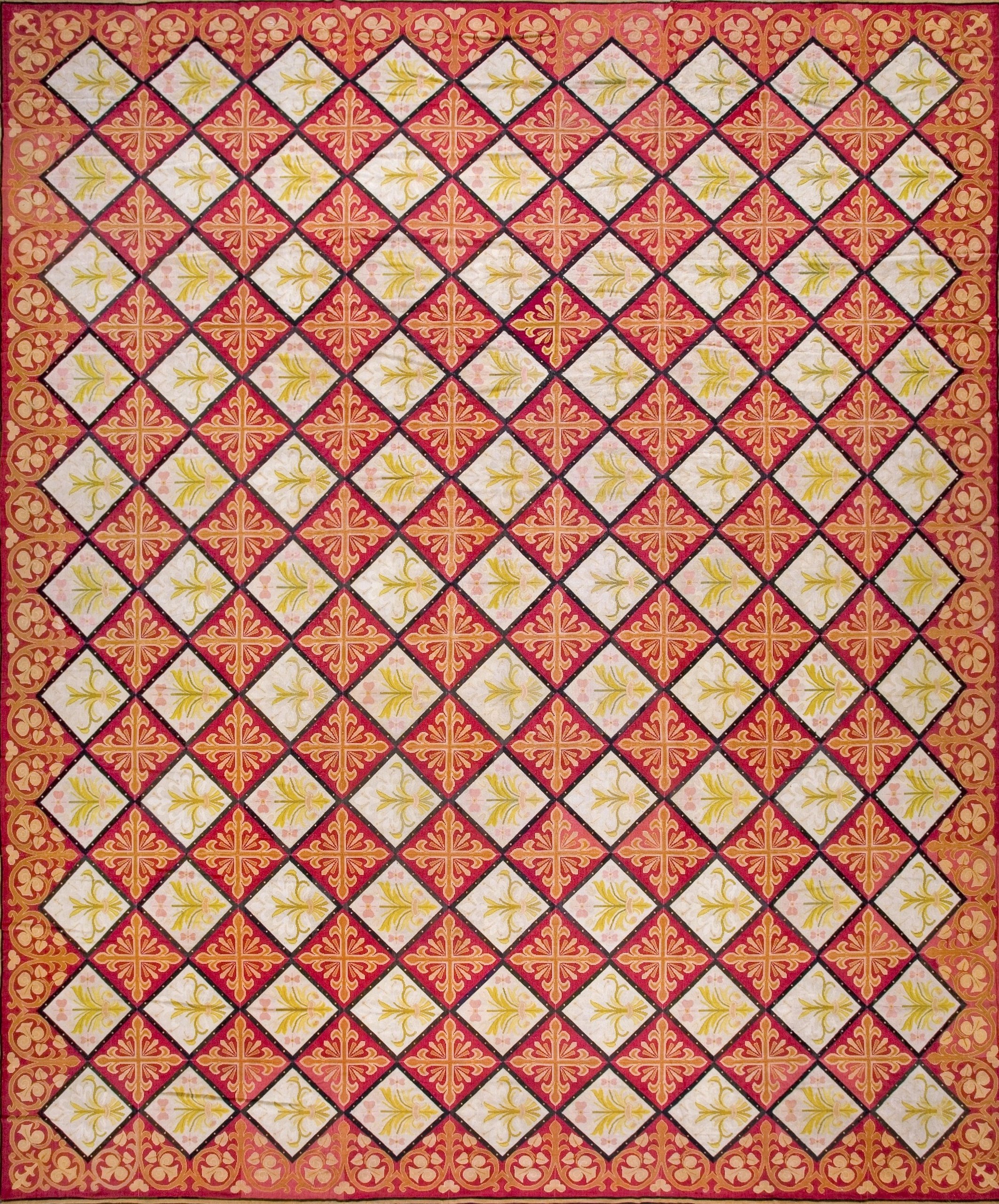
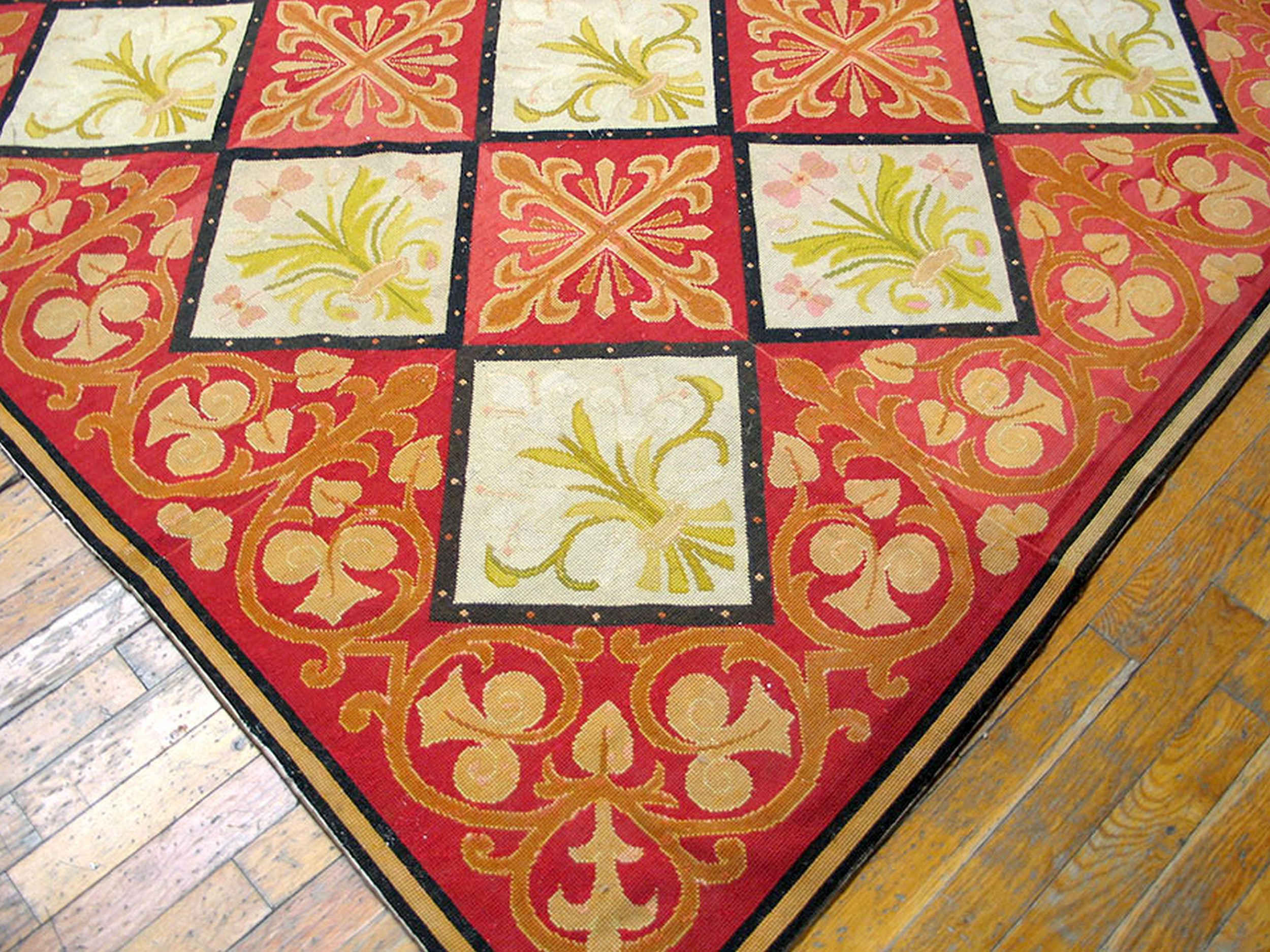
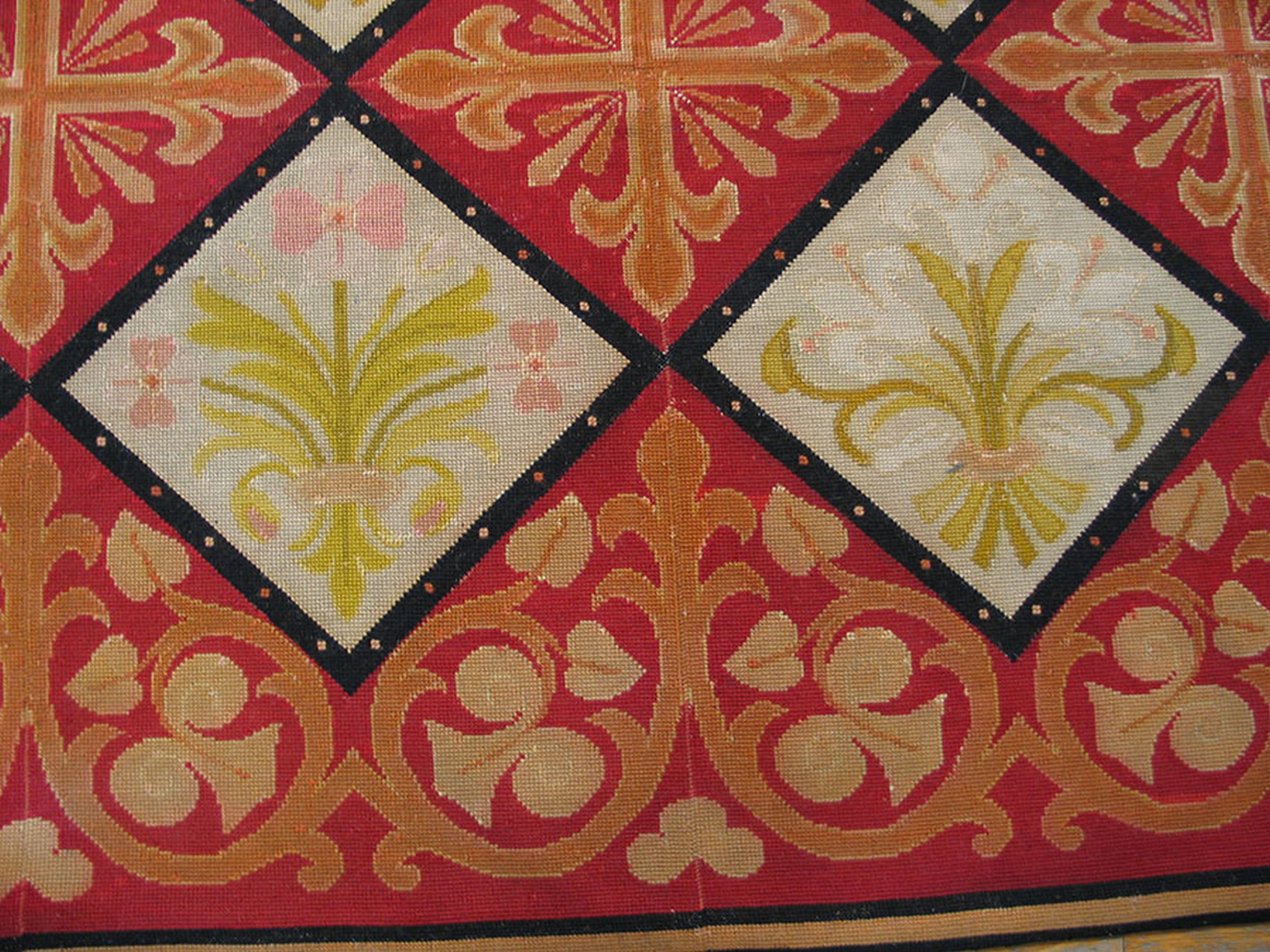
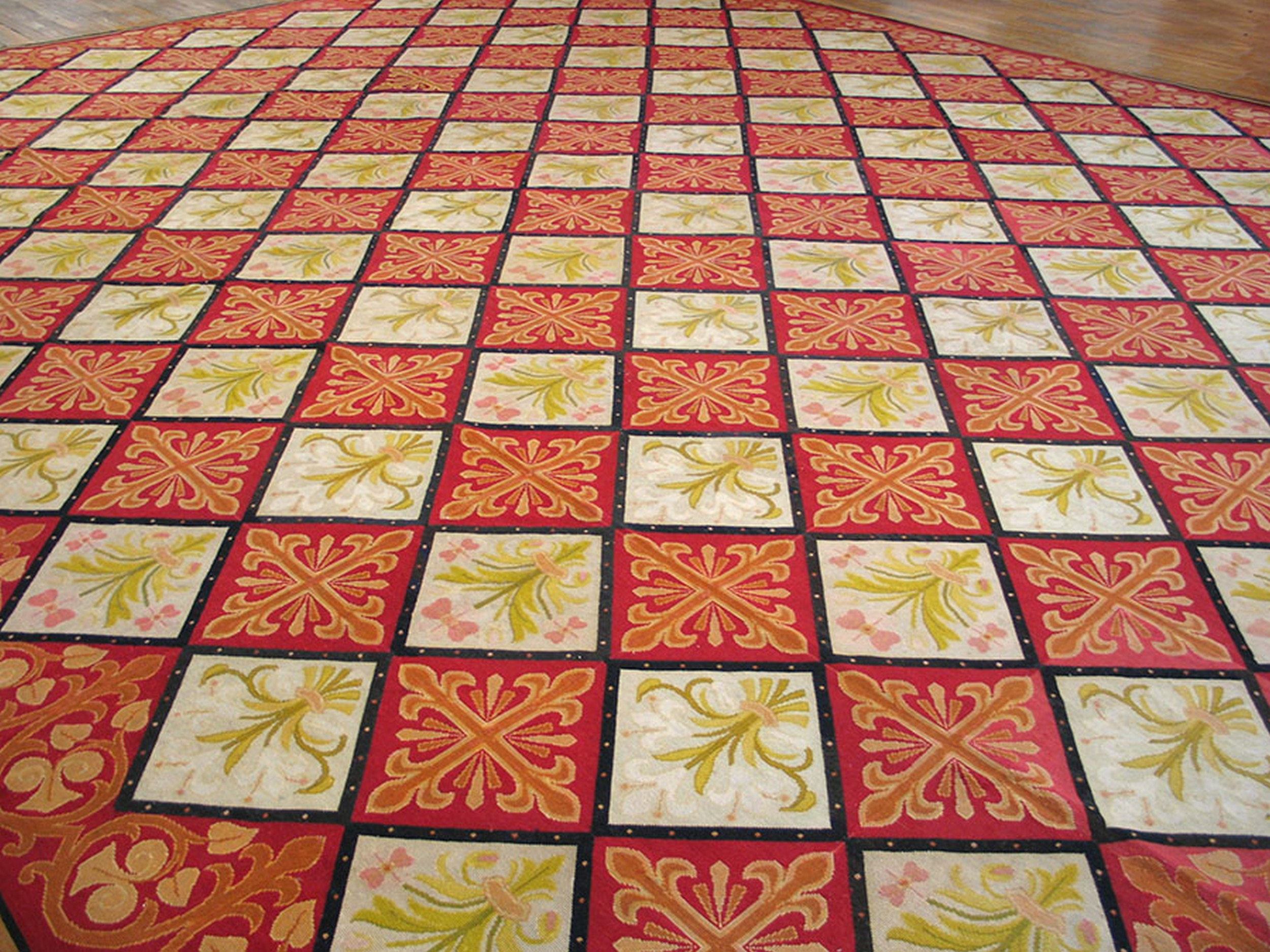
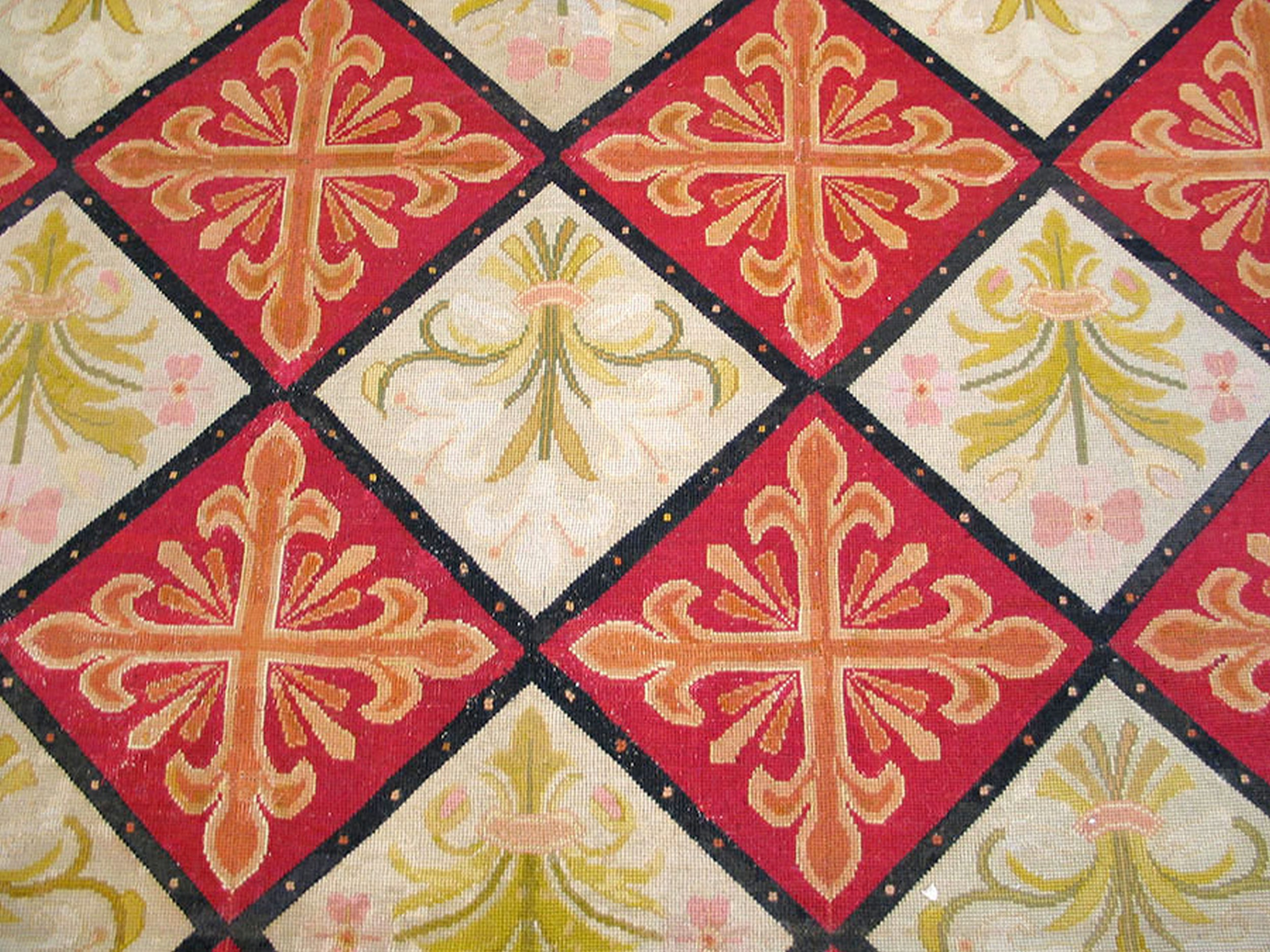
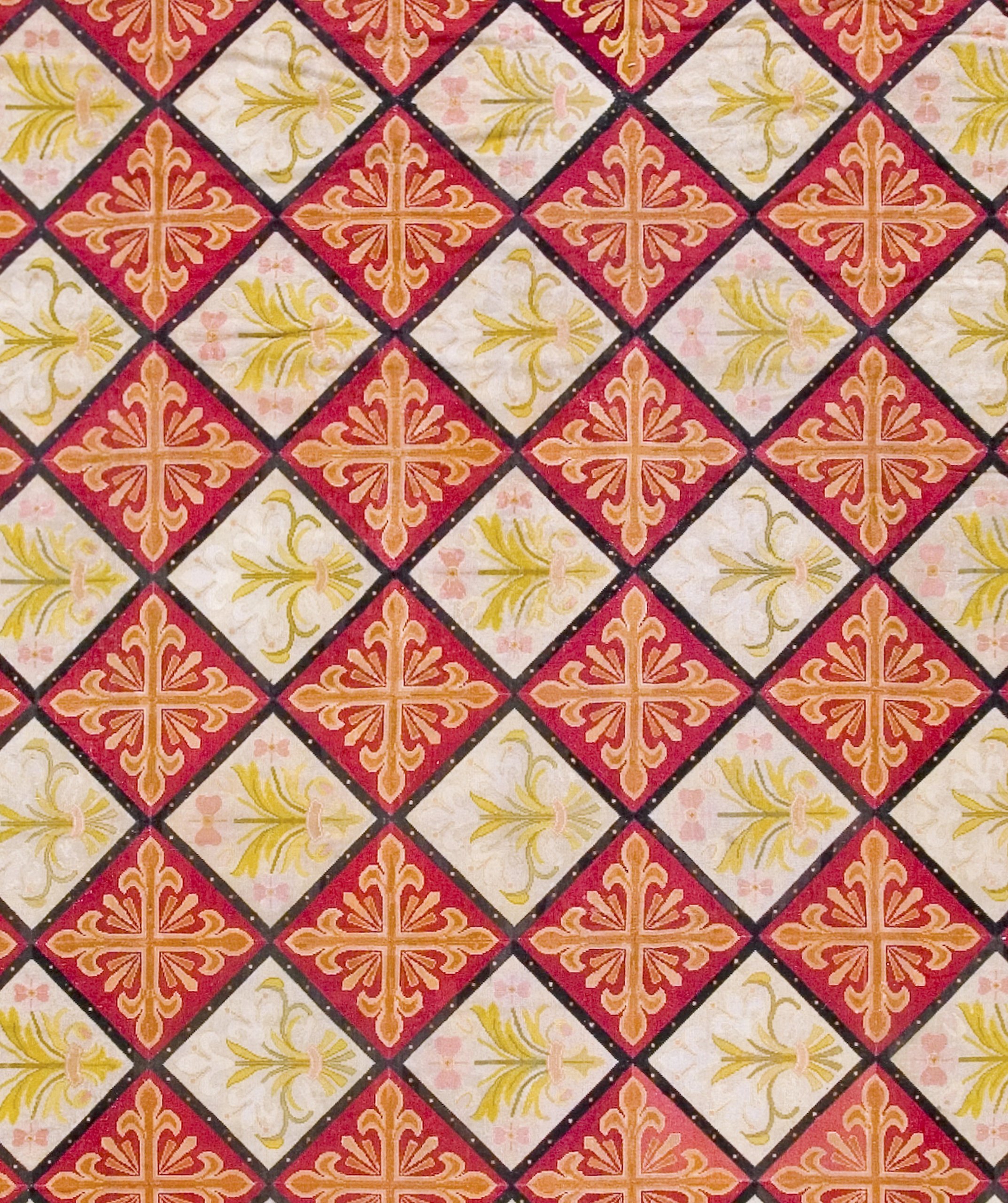
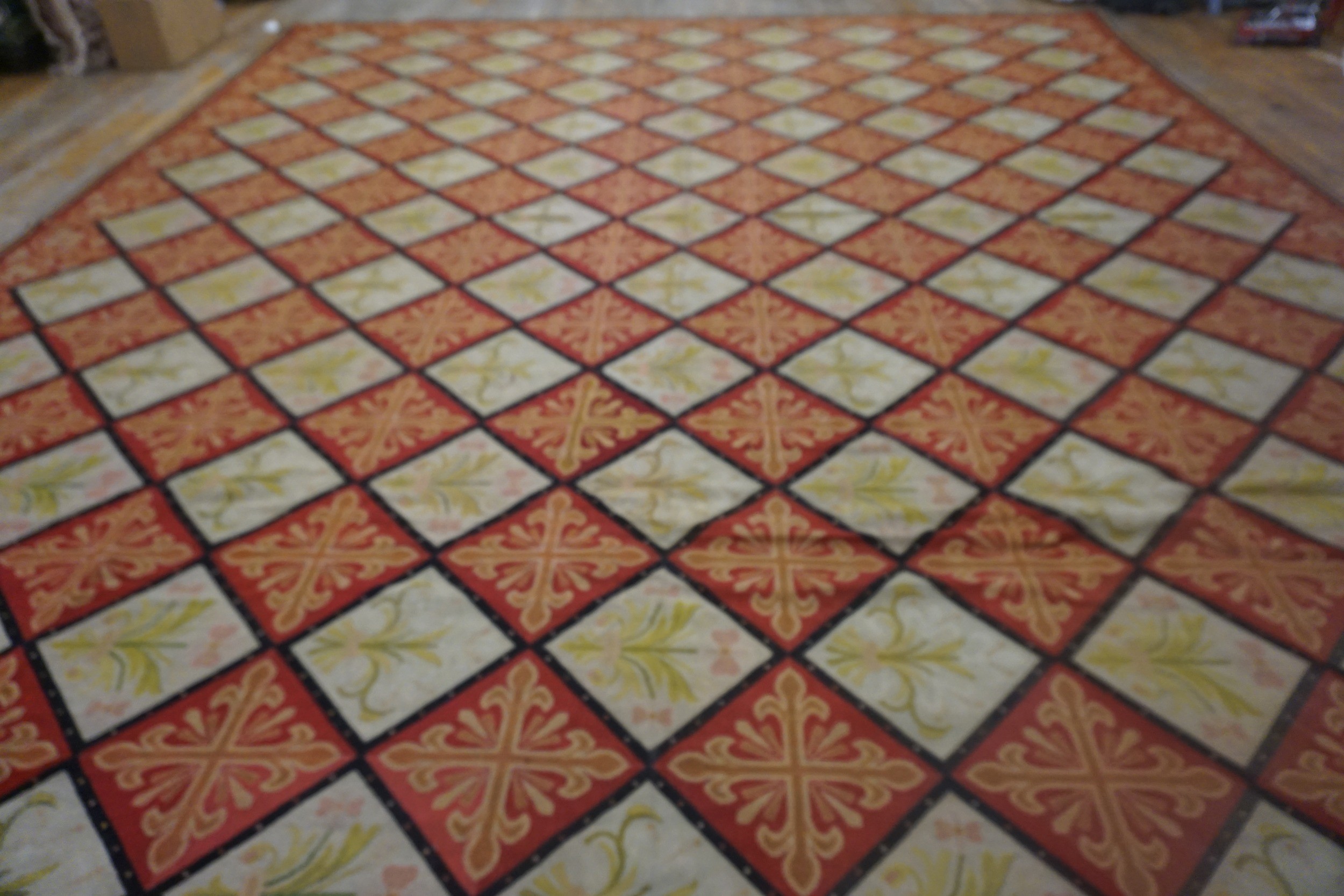
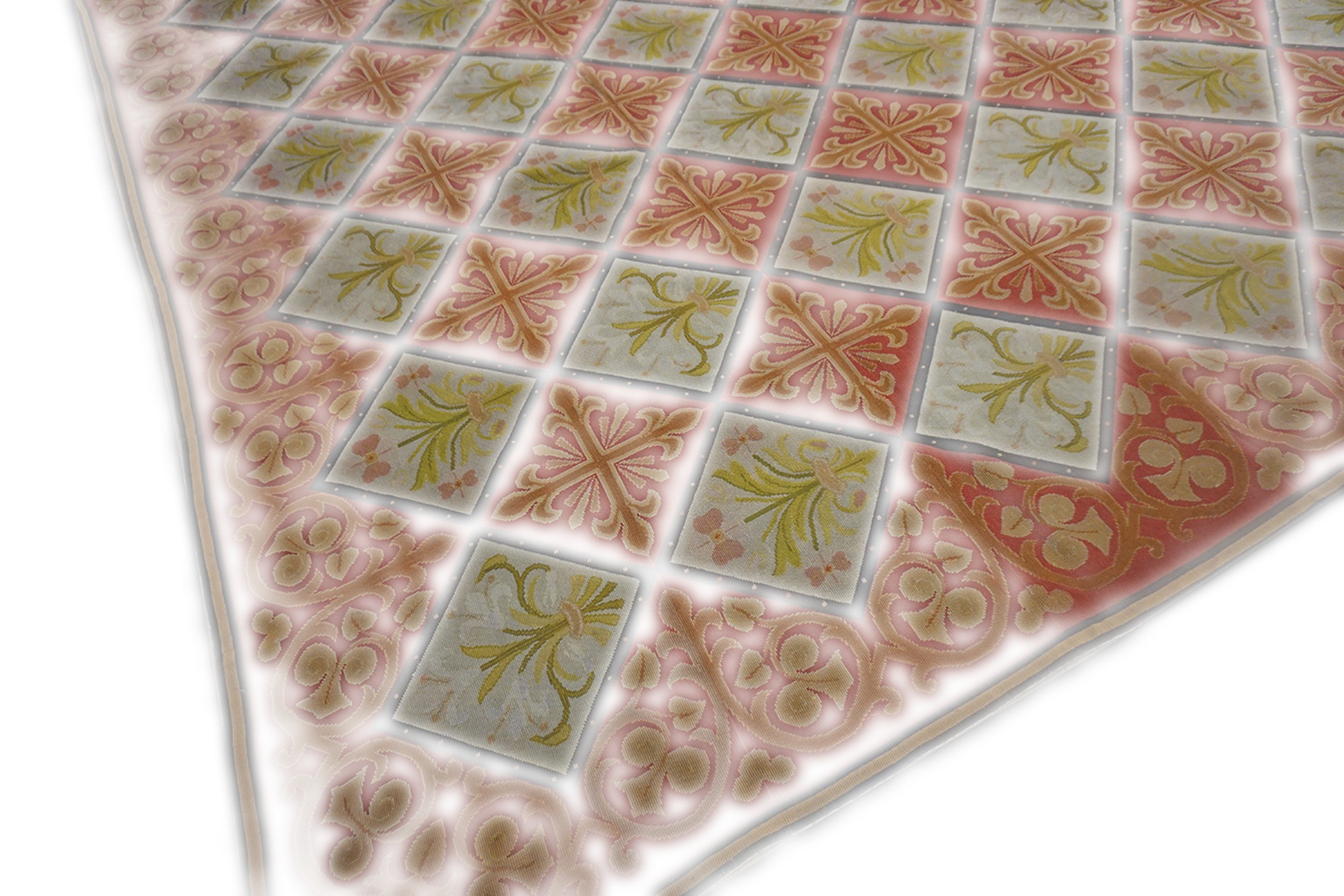
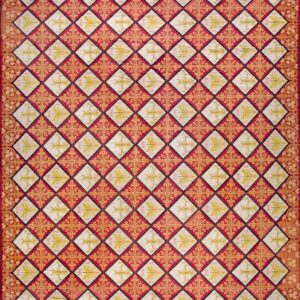
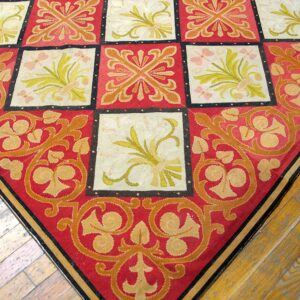
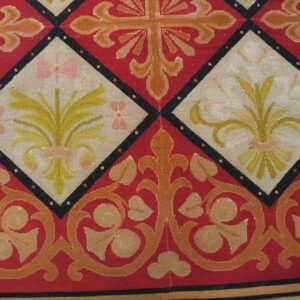
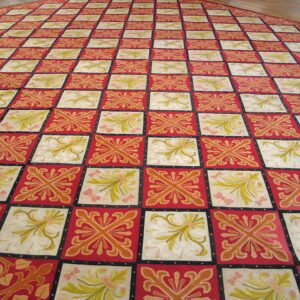
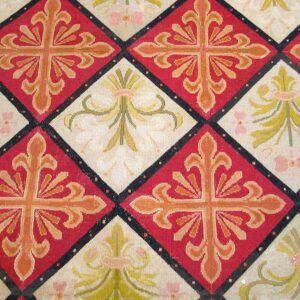
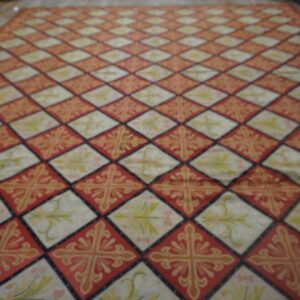
This antique French carpet, characterized by its deep red field and repeating fleur-de-lis geometry, is a sophisticated example of the “European Needlepoint” tradition that flourished during the nineteenth century. Unlike the loom-woven Aubusson rugs or Savonnerie carpets, the needlepoint rugs were meticulously hand-stitched onto a mesh canvas using a variety of wool yarns, a technique that allowed for an incredibly sharp, graphic precision in the rendering of heraldic and floral motifs. The choice of a red palette—often achieved through the use of madder or early synthetic dyes—was a hallmark of the French Provincial style, intended to provide a sense of warmth and permanence in the stone-floored manor houses and country estates of the era.
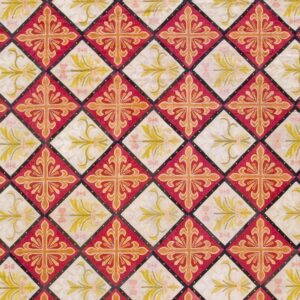
Historically, the Fleur-de-lis (the stylized lily) is one of the most potent symbols in Western heraldry, serving for centuries as the official emblem of the French monarchy. In the context of 19th-century textile design, the use of this motif represented a “Neo-Renaissance” or “Restoration” aesthetic, as the post-Napoleonic era saw a renewed fascination with the symbols of the Ancien Régime and the artistic glory of the French crown. This carpet arranges the symbol within a disciplined, tile-like grid, a design choice that reflects the influence of Gothic Revival architecture. The flatwoven nature of the needlework creates a low-profile, “carpet-as-tapestry” effect, prized by the nineteenth-century bourgeoisie for its ability to lay flat beneath heavy mahogany furniture while providing a durable, painterly surface.
The character of this piece is enhanced by its tonal depth and the subtle variegation of the red wool, which creates a textured, “lived-in” patina that is highly coveted by collectors. Historically, these needlework pieces were often commissioned as a more accessible alternative to the monumental palace carpets, yet they retained a high degree of luxury due to the immense labor required to stitch every square inch by hand. The geometric borders, featuring simplified foliate and linear guards, serve to anchor the repeating fleurs-de-lis, creating a harmonious balance between royal symbolism and utility. To possess such a carpet is to hold a fragment of the French decorative arts—a bridge between the formal halls of Versailles and the enduring, soulful craftsmanship of the French countryside.