
Introduction to Rug Symbols and Styles
What Rug Symbols Generally Represent
Rug symbols are more than decorative flourishes; they are woven expressions of culture, spirituality, and human experience. Across weaving traditions, symbolic rug patterns often embody protective functions, serving as talismans against misfortune or the “evil eye.” Many motifs also carry messages of fertility, faith, and prosperity, linking the weaver’s craft to the cycles of life and belief.
In tribal and village settings, rug motifs meaning could encode stories passed through generations. This is done through geometric forms representing human figures, animals, or cosmic elements. For communities without written records, these symbols preserved cultural identity and history, functioning as narrative archives on the loom.
Classic Traditional vs. Modern Contemporary
In traditional weaving, motifs carried layered meanings and were inseparable from cultural storytelling. Contemporary rugs, by contrast, often focus on visual impact, where symbols are adapted or abstracted into purely decorative language. This shift highlights the divergence between rugs as narrative-driven artifacts and rugs as design objects for modern interiors.
Why Symbolism Matters in Rug Weaving
- Cultural Preservation: Motifs encode history, values, and beliefs, ensuring identity survives through generations.
- Spiritual Protection: Many rug symbols act as talismans, thought to guard families and households.
- Storytelling Medium: Geometric or floral motifs convey myths, family stories, and community heritage in visual form.
- Design Depth: Even in modern rug design, symbolic echoes give patterns authenticity, linking contemporary aesthetics to ancient roots.
Rugs remain both functional textiles and symbolic art forms, bridging past and present. Whether used as protective prayer mats or abstract floor coverings, the language of motifs continues to shape how rugs are understood, appreciated, and lived with today.
For a deeper look at functional considerations in rug selection, see our area rugs guide.
Classic Traditional Symbolism
Diamonds and Fertility Motifs
One of the most enduring symbols in traditional rug weaving is the diamond rug motif, often interpreted as a stylized human eye or a sign of fertility. In many tribal traditions, a single diamond form was believed to act as a watchful eye. It protects the household from misfortune or hostile gazes.
Paired diamonds could represent man and woman, symbolizing union, fertility, and continuity of family lineage. These geometric patterns carried protective and life-giving qualities, making them central in village and nomadic designs where survival and prosperity were paramount.
Central Medallion as Cosmic Order
In Persian weaving, the Persian rug medallion meaning is profoundly tied to cosmic philosophy. Known as the Toranj, this central medallion often symbolizes the universe itself—unity, balance, and divine order woven into the heart of the carpet.
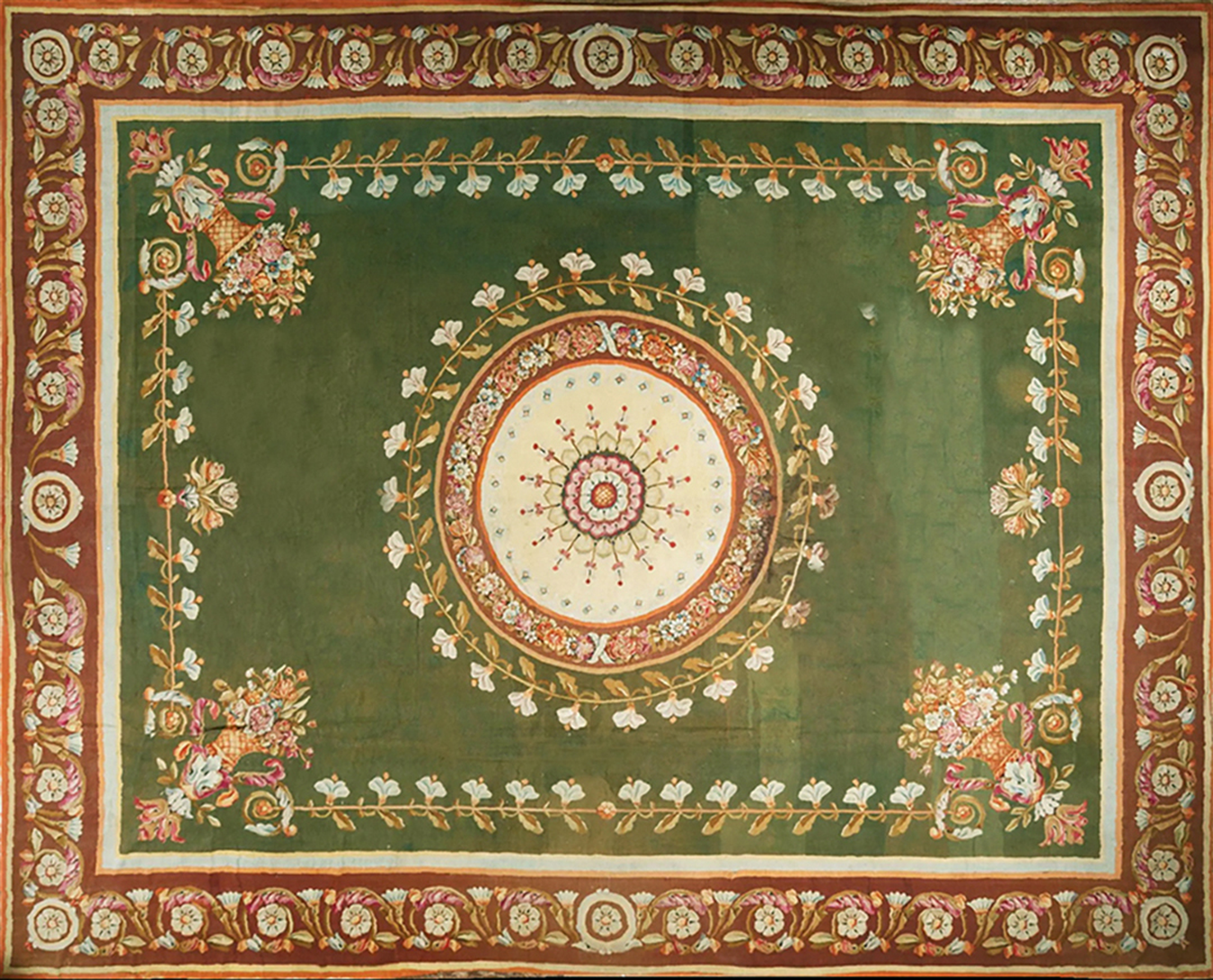
Surrounding borders echo the heavens and the infinite, while the medallion anchors the composition like a spiritual compass. In Persian design, the Toranj not only demonstrates the weaver’s artistic mastery but also conveys an enduring sense of harmony and order in life.
This cosmic symbolism elevated rugs beyond household utility, turning them into metaphysical statements of balance and faith.
The Tree of Life
Among the most iconic motifs is the Tree of Life rug, a symbol of immortality, paradise, and the eternal cycle of life. Depicted as a central trunk branching upward into heaven, this motif reflects a bridge between earth and the divine.
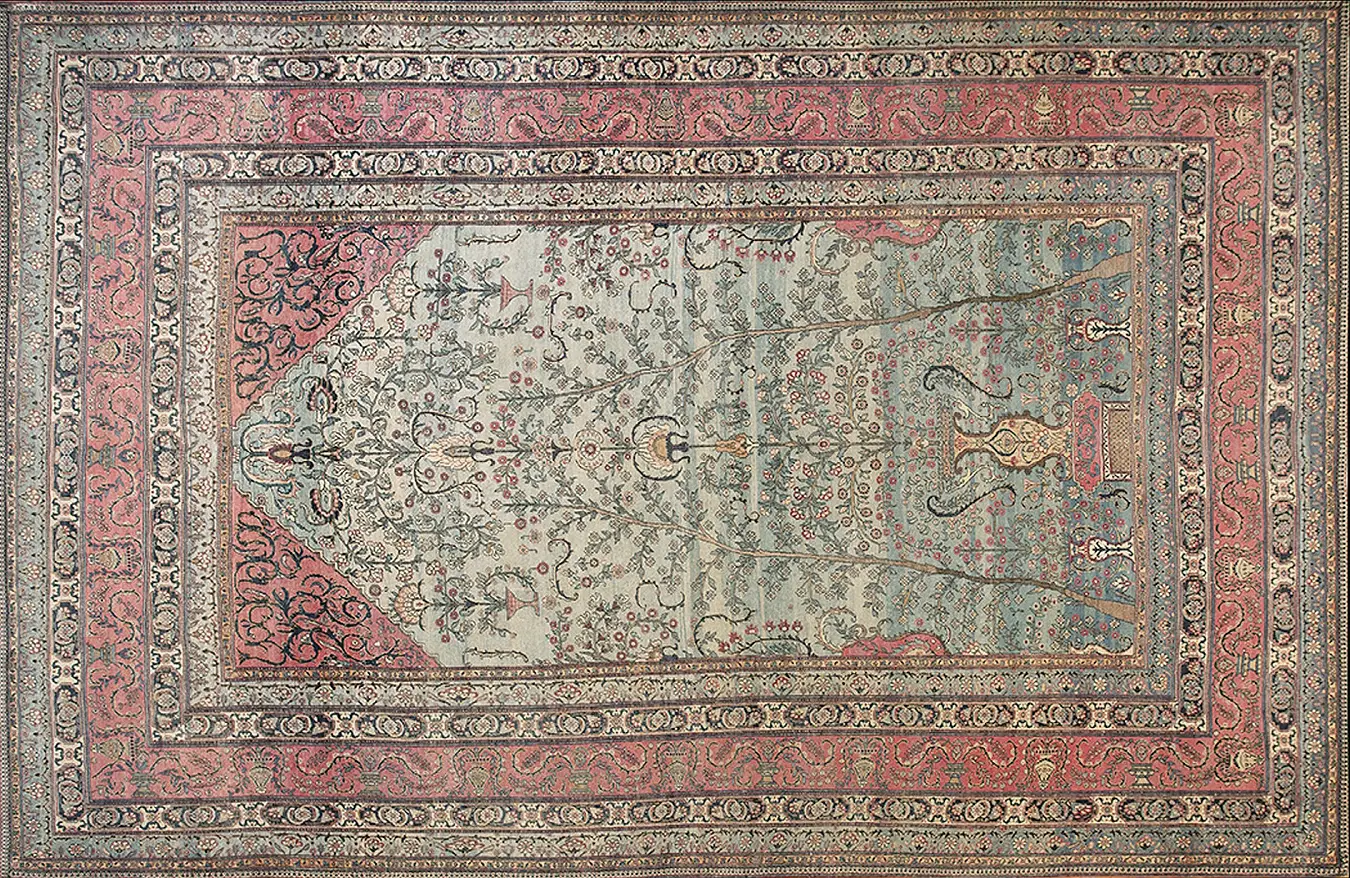
In Persian rugs and Central Asian weaving, it could symbolize paradise gardens promised in the afterlife. But in Anatolian traditions, it often represented renewal and fertility. The Tree of Life embodied hope for continuity, whether in spiritual or generational terms, and remains one of the most recognizable spiritual motifs in rug art.
Evil Eye Protection Symbols
Another widespread element is the evil eye rug symbolism, a talismanic design meant to deflect envy and harm. Often woven into kilims and tribal carpets, these motifs appear as stylized eyes, circles, or angular patterns. These rug symbols were strategically placed to guard both the rug itself and the household it served.
In cultures where belief in the “evil eye” was deeply rooted, such motifs functioned as constant spiritual protection, ensuring safety, prosperity, and peace of mind.
Animal Motifs
Animal motifs in rugs reflected the close relationship between nomadic life and the natural world. Each animal carried symbolic meaning rooted in daily necessity. For example: dogs as protectors of flocks, camels as lifelines across deserts, birds as omens of fertility, and snakes as emblems of wisdom.
These motifs preserved the intimate cultural ties between community and environment, embedding them in the language of weaving.
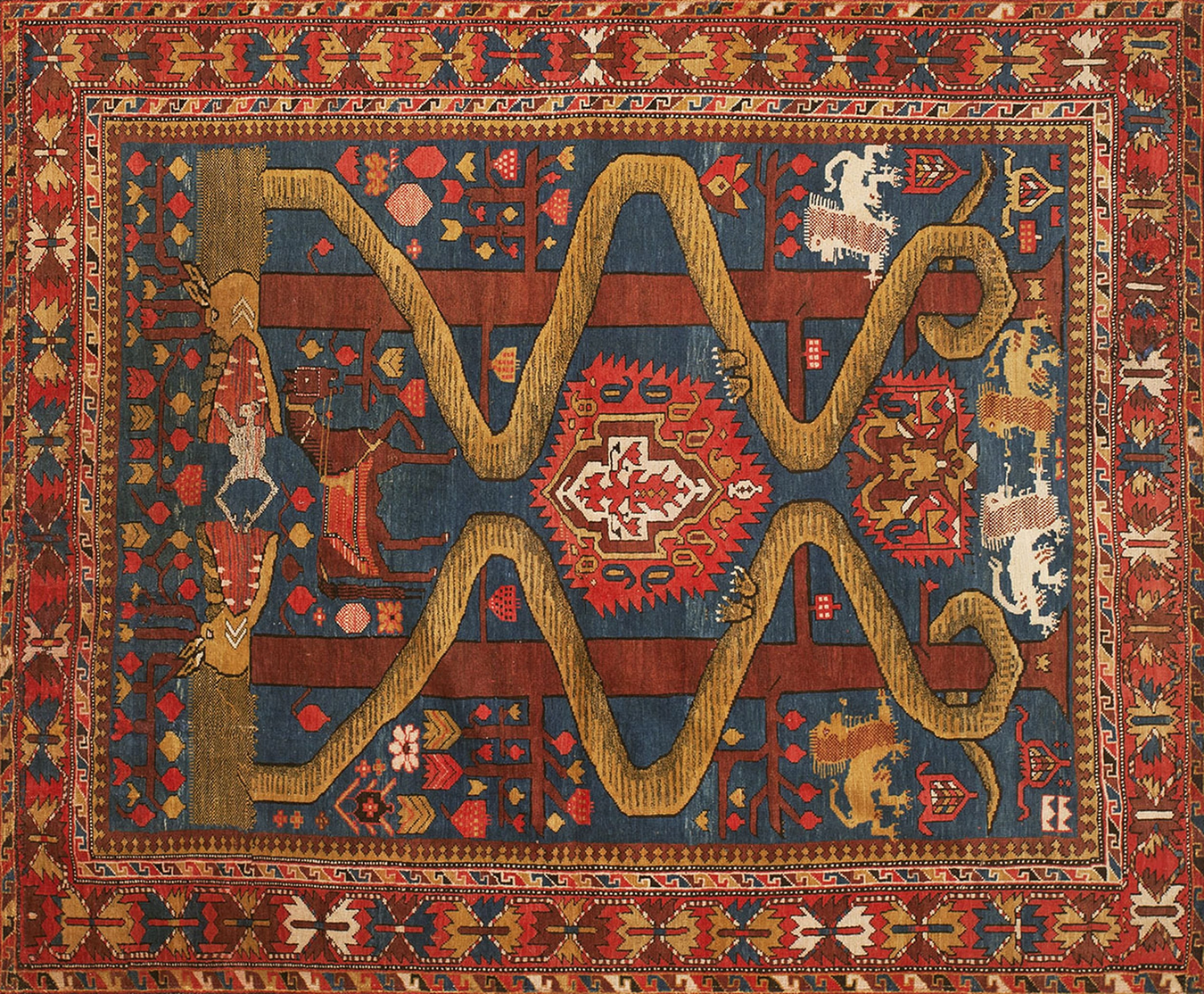
Traditional rugs therefore embody more than beauty; they serve as woven narratives of protection, cosmic order, and survival. By weaving symbols like trees and medallions, makers transformed functional rugs into a lasting art form.
Geometric and Abstract Motifs
Swastika / Hooked Cross
Among the most ancient geometric rug symbols is the swastika, or hooked cross, which predates its later misappropriations by millennia. In weaving traditions, this form symbolized eternity, fertility, and the endless cycle of life.
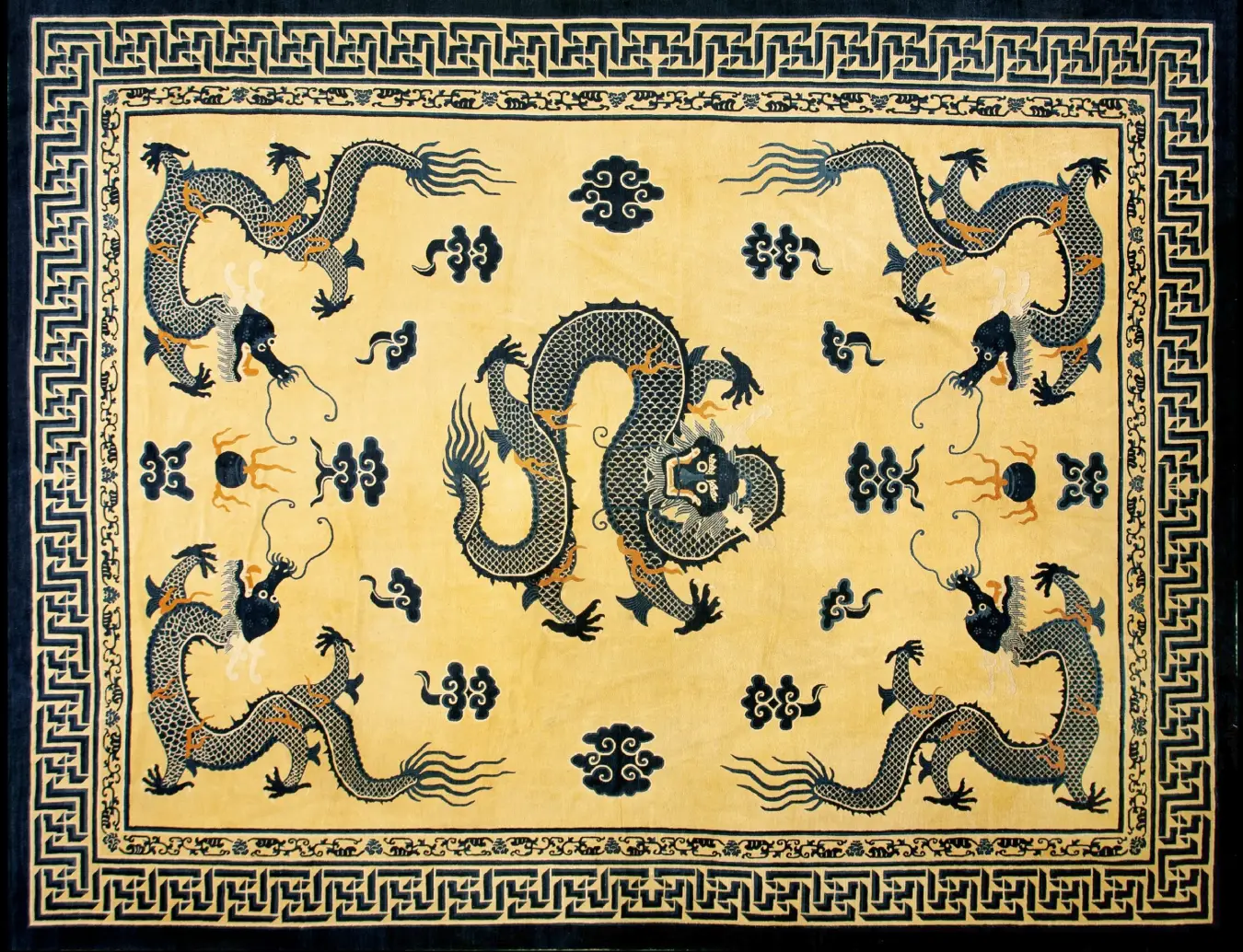
The hooked arms suggested rotation and continuity, making it a favored motif in tribal rugs to express both generational renewal and cosmic order. Its presence reflects the universality of abstract forms as conveyors of deep, timeless meaning.
Crosses, Stars, Zigzags, and Chevrons
Other tribal rug motifs also carry symbolic weight. The cross or wagon-wheel often signified balance, stability, and the four cardinal directions, anchoring the rug as a microcosm of the world. Stars were woven as emblems of guidance, hope, and divine light, echoing the celestial connection vital for travelers and nomadic peoples.
Zigzags symbolized mountains or rivers, reminders of natural barriers and the perseverance required to overcome them. Chevrons, often seen in rows, represented forward movement, protection, or the dynamic rhythm of life. Each of these patterns communicated both practical and spiritual concerns in a language of geometry.
Why Geometric Forms Suited Nomadic Weaving
The reliance on abstract, angular designs was not only symbolic but also practical. Nomadic looms were portable and narrow, better suited to straight-line weaving than complex curves. This limitation encouraged bold, linear compositions that naturally evolved into geometric motifs.
By linking forms like protective diamonds to traditional symbolism, nomadic weavers blended practicality with meaning. These technical constraints created a symbolic vocabulary that traveled with the tribes across the landscape.
Geometric motifs thus served as a universal visual language. Nomadic symbols (like the star for guidance or the wheel for stability) distilled complex themes of faith and resilience into durable, weave-ready designs. In rugs, geometry was never mere decoration; it was the distilled expression of both necessity and belief.
Regional and Tribal Differences
Persian Floral and Vine Patterns
Persian weaving is best known for its intricate Persian floral rug motifs, which reflect both artistic mastery and Islamic cultural principles. Due to the influence of aniconism in Islamic art, weavers avoided depicting human and animal figures in many settings. As a result, floral scrolls, vines, and garden themes became dominant.
These motifs were often symbolic of Paradise, with rugs envisioned as earthly reflections of heavenly gardens. Palmettes, arabesques, and blooming vines expressed harmony, eternal life, and spiritual beauty, making Persian rugs deeply connected to ideas of faith and cosmic order.
Anatolian and Turkish Fertility Kilims
In contrast, Anatolian weaving emphasized bold, linear forms, especially in flatwoven kilims. Anatolian kilim symbolism is rich in fertility motifs, with one of the most recognized being the Elibelinde, a stylized female figure with arms akimbo, representing motherhood and abundance.
Other geometric fertility signs were woven into dowry kilims, imbuing them with protective and life-giving power. The straightforward, geometric character of these rugs reflected nomadic practicality, while their symbolic richness tied them to the hopes and continuity of family life.
Caucasian Bold Angular Symbols
Caucasian rug designs are renowned for their bold, angular, and highly symbolic imagery. Protective symbols such as the ram’s-horn conveyed strength and virility, while chakmaks (stylized lightning bolts) were believed to repel evil.
Star motifs often symbolized divine guidance or cosmic order, linking the weaver’s world to celestial forces. These designs, rendered in striking geometric forms and strong color contrasts, emphasized clarity and power, making Caucasian rugs instantly recognizable in the wider weaving tradition.
Tribal vs. City Rugs
The contrast between tribal and city rugs underscores the influence of environment and lifestyle. Tribal rugs favored angular and abstract motifs, shaped by portable looms and the nomadic need for bold, protective symbols.
City workshops, by contrast, had the resources and stability to produce finely knotted rugs with complex scrollwork, medallions, and floral ornamentation, emphasizing aesthetic and spiritual ideals.
Regional traditions therefore directly shaped rug symbolism. Persian gardens reflected religious ideals, Anatolian kilims carried fertility hopes, and Caucasian designs emphasized bold protection. Together, these weaving centers created a symbolic vocabulary tied inseparably to local beliefs, practices, and ways of life.
Islamic Influence and Aniconism
Religious Restrictions on Human and Animal Imagery
A defining feature of Islamic rug design is its avoidance of human and animal depictions, a practice rooted in the principle of aniconism. In Islamic theology, figural imagery was discouraged in sacred contexts to prevent idolatry and to preserve the focus on divine transcendence.
As a result, rug weavers turned to non-figural expressions, developing a visual language of geometry, floral motifs, and symbolic abstraction. By aligning with religious guidelines, Islamic rugs developed a unique identity where spiritual meaning was expressed through pure abstraction.
Use of Arabesques, Calligraphy, and Geometry
Instead of figurative art, weavers employed arabesques, calligraphy, and geometric structures. Endless scrolling vines and arabesques symbolized the infinite nature of divine beauty, weaving a visual metaphor for eternity.
Calligraphy, when included, often featured Quranic verses or blessings, transforming the rug into a spiritual text as well as a textile. Geometric symmetry reinforced ideas of cosmic balance, with repeating patterns suggesting divine unity and order.
Together, these elements made rugs expressions of theology as much as artistry, embodying the essence of aniconism rugs while elevating the craft into spiritual symbolism.
Mosque and Prayer Rug Symbolism
Among the most profound expressions of Islamic influence are prayer rug symbolism and mosque-inspired motifs. The prayer rug often features a mihrab—a niche or arch shape that points toward Mecca—symbolizing both direction in prayer and a gateway to Paradise.
This sacred architectural reference turned rugs into portable sanctuaries, allowing believers to create holy space wherever they prayed. Mosque carpets used repeating geometric and floral patterns to mirror the harmony of creation and the shared experience of worship.
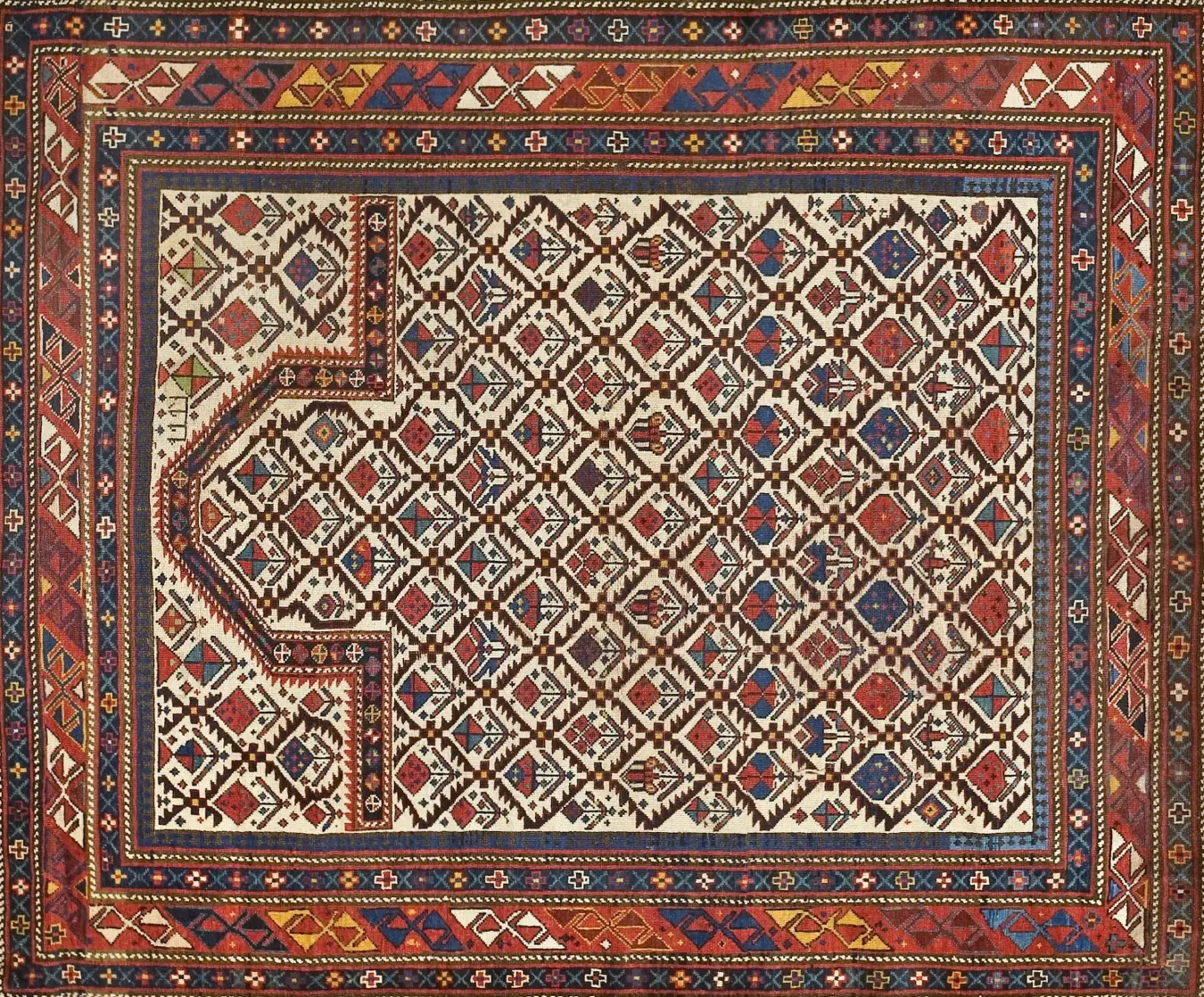
Theological roots lie at the heart of Islamic rug motifs. Artisans turned sacred prohibitions into art. Their abstract designs represented the infinite, while Muslim prayer rugs created symbolic spaces for devotion.
Through this fusion of faith and craft, Islamic rugs transcended function, standing as enduring testaments to belief and beauty.
Color Symbolism in Rugs
Red, Blue, Green, Gold, White
Colors in rugs are never incidental; they carry profound symbolic value, turning woven textiles into coded narratives of belief, hope, and identity. The following table highlights the most enduring associations:
These associations made color as important as motifs, layering designs with meaning that could be both personal and communal.
How Dye Sources Shaped Meaning
The rug color meaning was often tied directly to the natural dye sources available to weavers.
Red came from madder root or cochineal insects, both prized for their intensity and permanence, infusing rugs with vitality and energy.
Blue derived from indigo, a plant dye long associated with the heavens and divine protection.
Yellow and gold hues were often extracted from saffron or pomegranate skins, tying the idea of wealth and light to precious resources.
These natural dye rug symbolism traditions ensured that the colors of rugs were inseparable from the environment and economy of their makers, rooting every shade in local soil and craft.
Color as Emotional and Spiritual Expression
Beyond technical sourcing, color also functioned as an emotional and spiritual language in weaving. Red could energize and protect, blue could soothe and sanctify, and green carried sacred resonance as the color of Paradise.
Gold represented not only wealth but also divine radiance, while white expressed innocence and peace. Collectively, these colors were more than aesthetic; they told stories, offered blessings, and reflected universal spiritual aspirations.
In the tradition of Persian rug color symbolism, every hue was chosen with care, creating textiles that functioned as woven narratives of belief. Symbolic colors and motifs transformed rugs into stories, weaving together meanings tied to the earth, the spirit, and the divine.
Borders and Structure as Storytelling
Borders as Protection and Framing
In traditional weaving, the outer frame of a rug is never merely decorative. Rug border symbolism positions the border as a protective barrier, enclosing the central field like a sacred space.
Borders acted as a threshold—a symbolic wall between the inner world of stories and the world outside the rug. This framing gave the composition structure while also reinforcing its symbolic role as a contained universe.
Repeated Symbols as Talismanic Defense
Borders often carry rows of protective motifs in rugs, repeated continuously along the edges. These repetitions were intentional, functioning like talismans woven into the structure itself.
Whether through diamonds or ram’s-horns, endless repetition signaled vigilance. These protective borders acted as a guard, keeping the rug’s central stories spiritually secure.
Layers of Guard Bands in Traditional Weaving
Many rugs use multiple border layers, often referred to as guard bands. These narrow strips flank the main border and typically repeat smaller geometric or floral elements.
The multiplicity of these guard bands reinforces the sense of defense, adding several protective layers to the rug’s design. Structurally, they provide rhythm and balance to the composition, while symbolically they amplify the rug’s role as a shielded, sacred space.
Through borders, guard bands, and repeated motifs, rug structure design becomes storytelling in itself. The edges declare protection, the bands strengthen it, and the field within is free to hold cosmic medallions, fertility motifs, or trees of life. In this way, borders are not margins but vital symbolic structures, framing both narrative and meaning in woven form.
Cross-Cultural Parallels
Why Motifs Appear in Unrelated Weaving Cultures
One of the striking aspects of rug art is that many motifs appear across distant and seemingly unrelated weaving cultures. This phenomenon can be explained by both historical trade and shared human experience. Through caravan routes like the Silk Road, designs traveled with merchants, artisans, and goods, spreading symbolic languages across continents.
Shared human needs like protection and fertility created a universal language. From Anatolia to Central Asia, weavers independently used the same stars and trees to tell their stories.
Shared Human Symbolism
The persistence of universal rug symbols underscores the shared concerns of humanity. The eye, for example, is almost universally associated with protection, whether as the Anatolian “evil eye” or as diamonds in Caucasian rugs. The tree consistently symbolizes life, renewal, and connection between heaven and earth, appearing as the “Tree of Life” in Persian, Anatolian, and Indian traditions.
Stars reflect guidance and divine light, found in both Islamic and nomadic motifs. These parallels show that rug designs are not isolated inventions but part of a global symbolic vocabulary rooted in fundamental human hopes and fears.
Hybrid Motifs Through Cultural Exchange
Cultural blending through migration and trade often created hybrid motifs, particularly along trade corridors such as the Caucasus and Anatolia. For example, Persian floral ornamentation blended with tribal angularity to form unique transitional designs.
The spread of motifs like the ram’s-horn or Elibelinde fertility symbols across regions illustrates how neighboring cultures borrowed, adapted, and reinterpreted each other’s imagery.
This blending reflects the same principle discussed in regional and tribal differences, where geography and lifestyle shaped distinct motifs, but interaction often led to overlap and innovation.
Motifs thus stand as woven evidence of cultural interconnectedness. From the Silk Road to shared human needs, rug symbols are a universal language. They prove that weaving is about more than local craft—it’s a story of global connection.
Modern and Contemporary Stylistic Approaches
Abstract Minimalism
Modern rugs trade coded stories for minimalism and abstraction. By embracing rug styles like open fields and asymmetry, they become canvases for personal expression and modern art.
Eclectic Blends of Tribal and Floral Motifs
The rise of transitional rugs is a major innovation. These designs blend tribal angularity with Persian-inspired floral patterns to create a new symbolic language. These rugs serve as bridges between past and present, uniting the geometric strength of nomadic motifs with the fluid elegance of city designs.
The result is eclectic and versatile, appealing to contemporary interiors that demand both heritage and modernity. This blend explains why some rugs combine tribal and floral designs. It provides both symbolic depth and design flexibility, allowing them to suit many different tastes.
Sustainable Materials and Texture as Design Symbols
- Natural fibers (wool, jute, organic cotton): Signal eco-conscious values, linking material choice to sustainability rather than luxury alone.
- Recycled or upcycled fibers: Transform the rug into a statement of environmental responsibility and renewal.
- Textural emphasis (high-low piles, nubby surfaces): Serve as symbolic expressions of authenticity and tactile engagement, emphasizing connection to natural materials.
Today, sustainability and texture have become symbols of their own. Material choice now communicates values like environmental stewardship, turning contemporary area rugs into personal and cultural statements.
Symbolism, Value, and Collectability
How Unique Rug Symbols Affect Value
Condition, age, and provenance remain the primary determinants of rug worth. The presence of rare or unusual motifs can elevate a piece’s desirability. Rug symbols value often comes into play when collectors encounter uncommon or region-specific designs. Such as unique variations of the Tree of Life or rare tribal fertility signs.
These motifs transform a rug from a decorative textile into a cultural document, enhancing its collectible appeal. Rarity of design—particularly when tied to a specific tribe, workshop, or period—can significantly influence market value.
Collector Priorities: Symbols vs. Aesthetics
For most collectors, collectible rug motifs add to a rug’s story and desirability, but they do not outweigh the fundamental criteria of condition and provenance. Symbolism is best understood as a multiplier of value rather than a replacement for core factors.
Restoration and Preserving Motifs
When rugs require repair, conservators treat symbolic imagery with exceptional care. Rug restoration symbolism practices include hand-replicating missing motifs knot by knot, carefully matching dyes to original natural sources, and ensuring that the restored sections integrate seamlessly with the historic fabric.
This attention preserves not just the physical integrity of the rug but also the cultural storytelling embedded in its symbols. By safeguarding the motifs, restorers maintain the rug’s role as a narrative artifact, ensuring future generations can still read its woven meanings.
In sum, while symbols alone do not dictate value, they amplify it when combined with age, provenance, and condition. Just as importantly, restoration ensures that these motifs—the visual language of cultural identity—remain intact,. Keeping alive the symbolic legacy that makes rugs collectible works of art.
Buyer Considerations: Symbolism vs. Aesthetic Choice
Should Buyers Prioritize Meaning or Appeal?
For many buyers, the first attraction to a rug is visual—its colors, patterns, and how it fits into a space. In this sense, rug symbolism vs. design often leans toward design, as practicality and décor needs dominate most purchase decisions. Yet for others, especially collectors or those drawn to cultural depth, symbolic motifs carry equal or greater weight.
Understanding choosing rugs by meaning does not mean rejecting aesthetics; rather, it adds another layer of appreciation. A rug can be both a beautiful design element and a vessel of cultural storytelling, but the balance depends on personal priorities.
Practical Guide: When to Choose for Story vs. Style
- Choose for Meaning: If cultural heritage, narrative motifs, or spiritual symbolism resonate with you, selecting rugs with Trees of Life, medallions, or fertility motifs enhances ownership with a deeper connection.
- Choose for Style: When the rug’s role is primarily decorative, matching palette, size, and texture to the interior ensures the piece enhances the overall aesthetic of the room.
- Choose for Both: Transitional and contemporary designs allow buyers to balance symbolism and modern appeal, offering rugs that are equally meaningful and visually versatile.
Ultimately, a rug buying guide symbolism approach emphasizes that both paths are legitimate. Buyers may lean toward visual harmony, cultural resonance, or a blend of both, depending on the purpose of the rug in their lives.
The most satisfying choice often comes when the symbolic story and the aesthetic presence align, turning a rug into not only a piece of décor but also a meaningful, lasting companion.
Are Symbolic Rugs Still Woven Today?
Berber Weaving as Living Diary Tradition
Among the clearest examples of symbolism in modern weaving are Berber rug symbolism traditions. In Morocco, Berber women often describe their rugs as “woven diaries,” embedding motifs that recount personal stories, family milestones, or spiritual beliefs.
Diamonds, zigzags, and stylized figures are not random decoration but coded narratives of fertility, protection, and life’s journey. These rugs demonstrate that symbolism is still alive, functioning as a living language passed down through generations.
Tribal Artisans vs. Mass-Market Factories
The survival of tribal rug motifs today largely depends on the context of production. In small villages and nomadic groups, artisans still weave with intent, preserving the meanings of protective eyes, fertility symbols, and cosmic patterns.
In contrast, mass-market factory rugs are produced for decorative appeal, with motifs stripped of their traditional significance. These industrial pieces echo the look of heritage rugs but lack the cultural storytelling embedded in authentic weaving.
Survival of Symbolism in Modern Craft
Symbolism persists wherever weaving remains an artisanal practice. Rural workshops in regions like North Africa, Central Asia, and Anatolia continue to encode motifs tied to faith, protection, and identity, ensuring continuity of human storytelling through weaving.
At the same time, designers of modern symbolic rugs sometimes reinterpret traditional motifs for contemporary interiors, blending heritage with current tastes.
Symbolism is therefore not a relic of the past but a thread that still runs through artisanal craft. While industrial production may dilute meaning, tribal and village weaving sustains it, proving that rugs remain more than decoration—they are living documents of culture, belief, and personal expression.
FAQ
- How should I orient directional rug symbols within stylistic approaches?
Point prayer niches, animal figures, or tree motifs upright from primary seating or entry. Align borders parallel to walls for calm, or skew slightly for casual energy.
- Do rug symbols and stylistic approaches influence value or collectability?
Yes—recognized provenance, natural dyes, fine knotting, and well-executed motifs can raise prices. Condition, rarity, and balanced composition matter most.
- Are meanings for rug symbols consistent across stylistic approaches?
No—interpretations vary by tribe, region, and era, and many meanings have evolved. Treat rug symbolism as guidance rather than strict rules.
- How should I clean without dulling rug symbols and delicate stylistic approaches?
Blot spills quickly with cool water; avoid scrubbing patterns. For wool or silk, use pH-neutral cleaners sparingly and consult professionals for deep cleaning.
- Can I layer rugs to mix rug symbols and stylistic approaches?
Yes—try a flatweave with small-scale symbols over a solid or large-lattice base. Vary texture and scale so motifs don’t compete.
- What is abrash, and how does it fit into rug symbols and stylistic approaches?
Abrash is natural color variation—often horizontal bands—caused by hand-dyed yarns. Many collectors value abrash as authentic character within both tribal and classical styles.
- Which stylistic approaches in rugs make small rooms feel bigger?
Allover patterns without strong borders or a dominant medallion keep the eye moving, visually expanding a space. Light or mid-tone fields also help.
- Are there cultural sensitivities with rug symbols and stylistic approaches?
Yes—religious motifs like mihrabs or sacred inscriptions may warrant respectful placement or avoidance. When unsure, choose neutral patterns or consult knowledgeable sellers.
- How can I spot hand-knotted rug symbols versus machine-made stylistic approaches?
Flip the rug—hand-knotted pieces show the design on the back, with warp fringe integral. Machine-made often has sewn-on fringe and a very uniform backing.
- How does knot density affect rug symbols and stylistic approaches?
Higher knot counts enable finer, curvilinear motifs; lower counts emphasize bold geometry. Kilims, with no pile, display crisp, straight-edged symbols.
- Are animal figures important rug symbols across stylistic approaches?
Yes—lions may signify courage, birds blessings or news, and fish abundance. These symbols appear in tribal, Persian, and Caucasian designs, often in borders or repeating fields.
- How do Moroccan Berber rug symbols inform their stylistic approaches?
Lozenges, triangles, and X-forms can represent femininity, fertility, and protection. Lines feel spontaneous, with storytelling encoded into minimalist or shaggy compositions.
- Which Turkish motifs show up in rug symbols and Anatolian stylistic approaches?
Ram’s horn (power), elibelinde “hands-on-hips” (motherhood), and nazar amulets (protection) are common. They often combine to express fertility and safety.
- How do borders relate to rug symbols and stylistic approaches?
Main borders frame the field; guard borders add transition and rhythm. Border motifs—meanders, rosettes, vines—can echo or protect the inner rug symbols.
- What is a medallion style within stylistic approaches in rugs, and how should I place it?
A medallion style centers a large motif with corner brackets and borders. Center it visually; avoid hiding the centerpiece under heavy furniture if you want the symbol showcased.
- What distinguishes geometric stylistic approaches in rugs from curvilinear ones?
Flatweaves (kilims) favor geometric rug symbols due to tapestry structure, producing sharp edges. High-knot pile allows curvilinear florals and scrolling vines.
- How do tribal stylistic approaches in rugs use rug symbols?
Tribal weavers encode protection, fertility, and daily life through diamonds, X-shapes, rams’ horns, birds, and eyes. Motifs are bold, geometric, and often improvised.
- Which stylistic approaches in rugs feel most contemporary?
Contemporary stylistic approaches favor abstract geometry, minimal palettes, and texture—think Beni Ourain lattice or tonal stripes. They pair well with modern furniture and clean lines.
- Do colors carry meaning in rug symbols and stylistic approaches?
Traditionally, reds can suggest vitality or wealth, blues peace or power, and greens growth or hope. Interpretations vary by region and era, so treat color symbolism as suggestive.
- How is the mihrab used within rug symbols and stylistic approaches?
The mihrab (prayer niche) indicates direction for worship and symbolizes a gateway to the sacred. If used decoratively, orient the arch “up” toward your room’s focal side.
- What are gul motifs in rug symbols?
Guls are medallion-like, often octagonal motifs repeated in rows, especially in Turkmen traditions. They anchor tribal stylistic approaches with bold geometry and symmetry.
- What does the boteh (paisley) stand for in rug symbols?
The boteh may signify a seed, flame, or cypress—ideas of growth, protection, and eternity. It’s common in Persian stylistic approaches and later Western “paisley” designs.
- What does the Tree of Life mean in rug symbols?
The Tree of Life often represents vitality, continuity, and a link between earth and heaven. It appears as branching trunks, vases, or gardens in traditional stylistic approaches.
- How do rug symbols differ from stylistic approaches in rugs?
Symbols are individual emblems with cultural meanings; stylistic approaches govern composition and flow. Example: a central medallion style may feature many rug symbols inside its field and borders.
- What are rug symbols and stylistic approaches in rugs?
Rug symbols are meaningful motifs (e.g., boteh, tree of life), while stylistic approaches describe overall design methods like medallion, allover, geometric, or floral. Together they shape a rug’s story, layout, and visual rhythm.