
Introduction to Pink & Salmon Rugs
Explore our selection of vibrant salmon coral pink color rugs to elevate your home décor today.
Visual Spectrum: From Blush to Coral
Pink and salmon rugs cover a wide spectrum of tones, each offering a distinct mood and design impact.
- Blush rug — Why: This delicate shade resembles a whisper of pink, lending subtle romance and elegance to interiors without overpowering the space.
- Dusty rose — Why: Muted and sophisticated, this shade bridges traditional and modern decor, making it versatile in both antique-inspired and contemporary rooms.
- Peach tones — Why: Warm with a hint of orange, peach rugs brighten spaces and pair naturally with earth tones, wood, and warm metals.
- Salmon area rug — Why: Richer and slightly more saturated, salmon rugs project warmth and approachability, creating inviting living or dining areas.
- Coral pink rug — Why: Vibrant and bold, coral evokes energy and optimism, serving as a striking centerpiece that enlivens a room.
Together, these shades move from soft pink carpets suited for serene bedrooms to coral pink rugs that anchor social spaces, proving the adaptability of this color family.
Why Pink & Salmon Stand Out
- Gentle contrast — Why: Unlike the intensity of red, pink rugs provide a softer complement that enhances other colors without clashing, especially against neutral walls or wooden floors.
- Timeless appeal — Why: Historically rare due to natural dye limitations, pink tones once marked exclusivity; with modern dyes, their beauty is now widely accessible while retaining their aura of charm.
- Emotional resonance — Why: Associated with love, tenderness, and optimism, these colors foster warmth and positive energy, making them a natural choice for calming pink décor.
- Versatility in interiors — Why: Whether in a minimalist blush rug or a richly woven salmon area rug, these tones work across a range of styles, from Scandinavian light palettes to bold bohemian mixes.
Why Are Pink Rugs Considered Calming in Decor?
Pink rugs are regarded as calming because their hues diffuse the intensity of red into gentler tones that soothe the eye and spirit. The softness of a blush rug or salmon area rug reduces visual harshness, helping to create spaces where people feel at ease.
In design psychology, pink is linked to reducing stress and promoting a sense of tranquility, which is why a soft pink carpet in a bedroom, nursery, or reading nook naturally fosters relaxation and comfort.
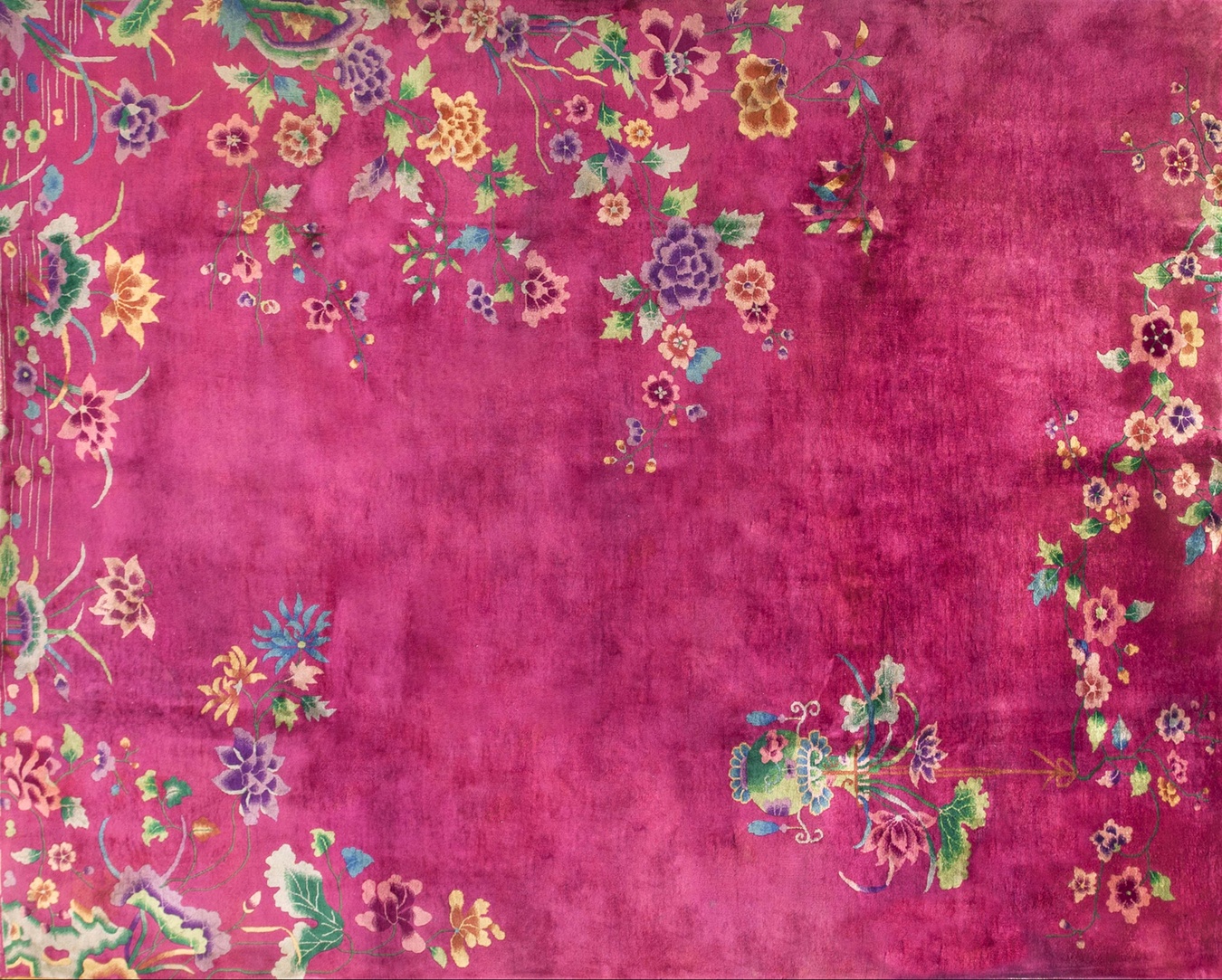
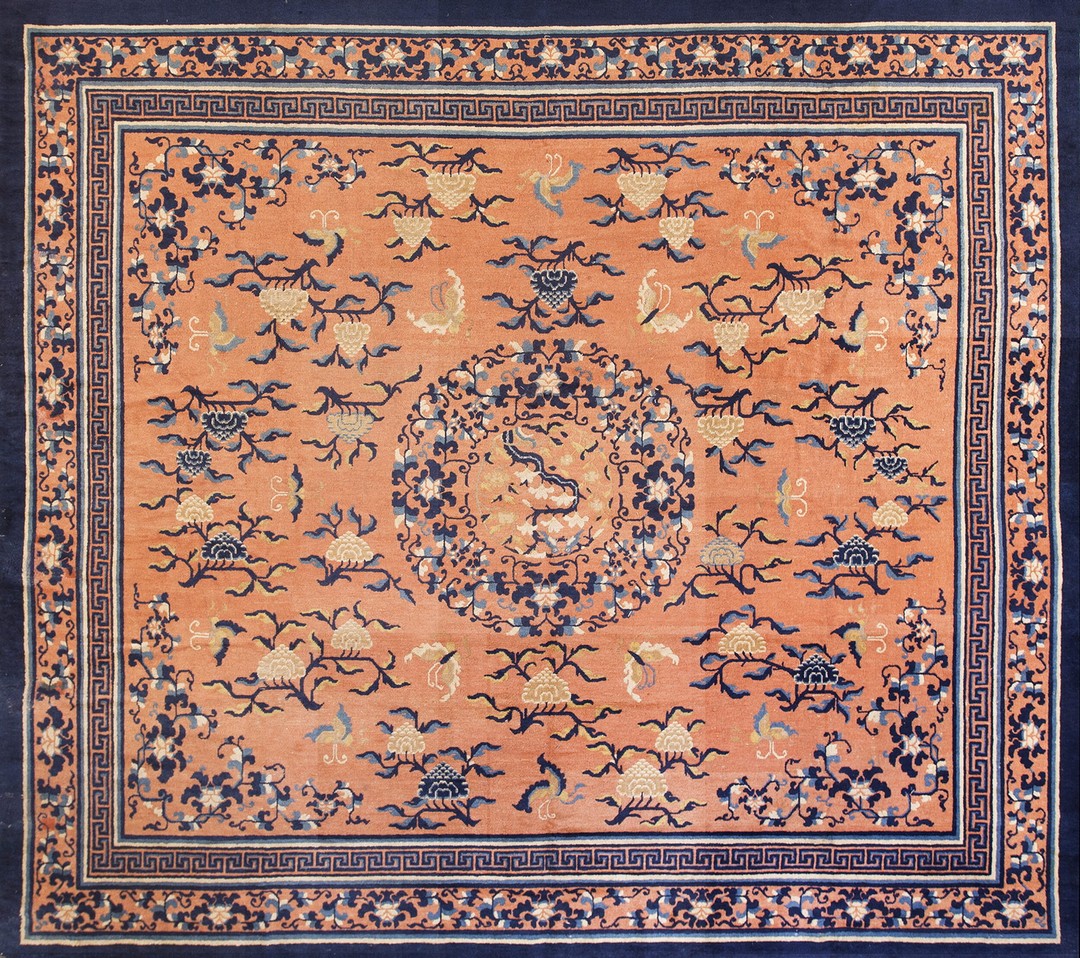
Chinese – Art Deco 1920s Antique Rectangle Knotted Room Size Coral Wool Rug – by Rugs On Net
By blending historical rarity, modern accessibility, and emotional resonance, pink and salmon rugs stand as timeless, versatile choices that bring unique warmth and serenity to interiors.
Historical Evolution of Pink & Salmon in Rugs
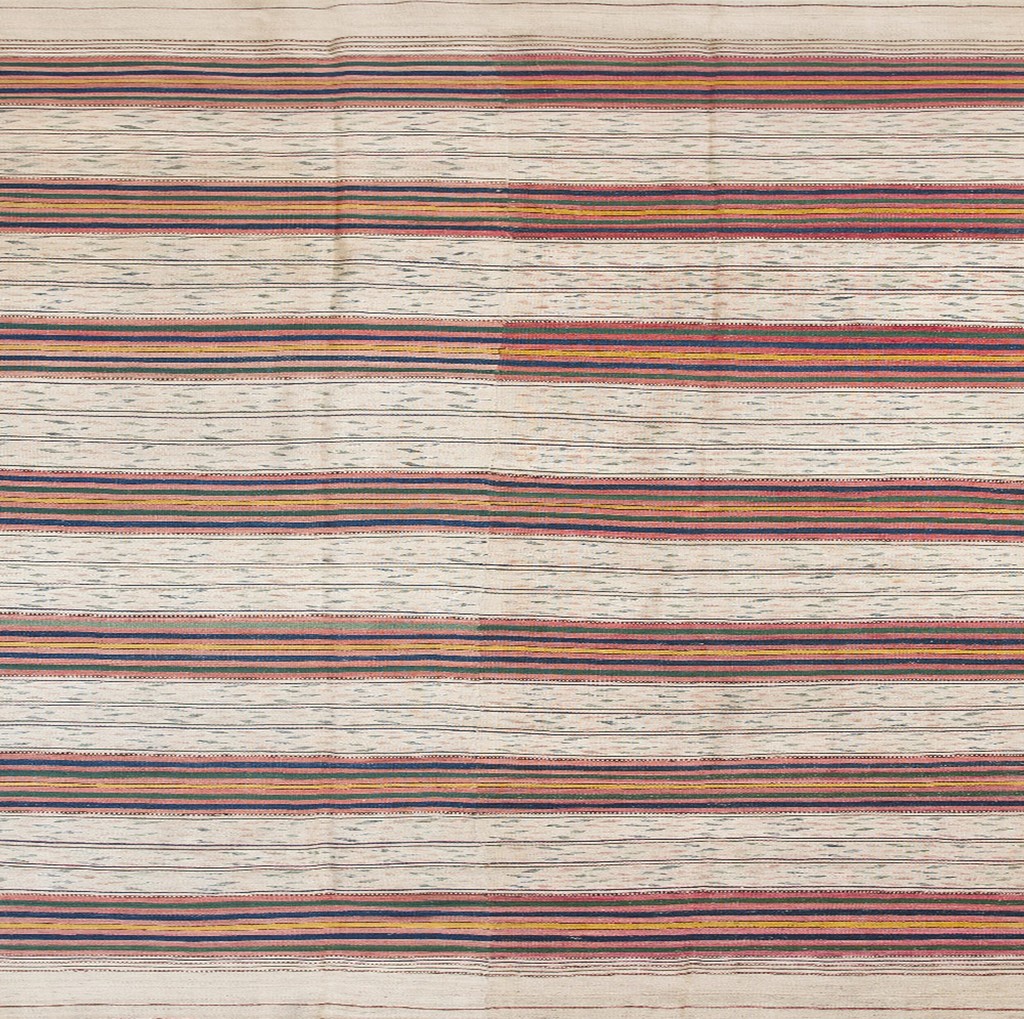
Antique Tribal Striped Flat Woven Turkish Kilim Rug by Rugs On Net
Pre-Industrial Dye Mastery
Before synthetic chemistry reshaped the palette, pink and salmon tones in rugs depended on scarce natural resources. Madder was the workhorse, producing a range of warm reds that, when diluted or modified with mordants, yielded soft blush or salmon hues—making the madder pink rug one of the earliest accessible variants.
Cochineal dye in rugs, derived from insects in the Americas and later imported to Persia and the Ottoman Empire, offered brilliant crimson-pinks of greater intensity and luminosity than madder. The difference lay in their undertones: madder leaned earthy and brick-like, while cochineal glowed with a bluish-red vibrancy.
Safflower, though fragile and fugitive, gave textiles fleeting but extraordinary pinks used sparingly in luxury garments and occasionally in high-status weavings. This reliance on plant and insect dyes meant that blush and salmon carpets were rare, cherished, and labor-intensive to produce.
The Synthetic Dye Revolution
The late 19th century introduced a radical shift with aniline magenta rug dyes such as fuchsine. These synthetics delivered colors that were far more vivid than anything natural sources could achieve. Rugs suddenly bloomed in electric pinks and magentas, accessible to broader markets at low cost.
However, the trade-off was poor fastness; these colors often faded unevenly, staining the reputation of export textiles.
Recognizing this, the Persian government banned aniline dyes around 1903 for carpets intended for export, aiming to preserve the prestige of authentic Persian rugs.
Nevertheless, synthetics persisted in local markets and continued to influence global taste, especially in early 20th-century America where “painted” Sarouk rugs with over-dyed pink fields became highly fashionable. Pastel Kermans from Iran also catered to Western interiors, reflecting mid-century design preferences for softer tones.
Modern Revival of Traditional Hues
Today, rug makers balance tradition and innovation. Projects like DOBAG in Turkey and Afghan weaving cooperatives have revived the use of natural dyes, returning to the subtle, enduring beauty of madder pink and cochineal-derived salmon. At the same time, modern synthetic pink dye formulations are now highly reliable, ensuring even, stable shades that resist fading.
Designers frequently request faded pink carpets, often achieved through controlled shearing techniques that expose lighter underlying fibers, simulating antique wear and lending rugs a romantic, timeworn patina. Climate also plays a role in pink’s longevity: in high-sun environments, both natural and synthetic tones may lighten faster, while temperate or shaded interiors preserve blush and salmon shades longer.
Market and Collectibility
Collectors increasingly prize dusty-pink Oushak rugs, whose muted salmon fields align with contemporary taste for understated, earthy palettes. Their rarity, combined with cultural heritage, has pushed values upward in recent years. Antique pink rugs thus embody both artistry and market resilience, their enduring appeal shaped by the evolution of dye technology.
From scarce artisan-dyed luxury to the reliability of modern chemistry, the story of pink in rugs is one of cultural symbolism, technical mastery, and ever-changing market values.
Visual & Technical Characteristics
Color Ranges and Abrash Effects
The visual spectrum of pink and salmon rugs is defined not only by dye choice but also by weaving technique and wool quality. Pre-1850 examples rarely show true pinks, but later carpets highlight a broad range—from soft blush area rugs to saturated salmon tones. One of the most distinctive features in this palette is abrash, the natural banding that occurs when weavers change dye batches.
In an abrash pink rug, this effect creates subtle striations of lighter and darker tones across the field, giving the carpet depth and movement. Rather than a flaw, collectors prize abrash for its authenticity and painterly quality, especially in faded pink carpets where tonal variation enhances visual charm.
Field vs. Accent Usage
- Pink as a field color — Why: In large expanses, such as in salmon field rugs from Oushak or Kerman, pink conveys warmth and luminosity, establishing a room’s overall mood.
- Pink as an accent — Why: In Persian floral designs and pink accent carpets from the Caucasus, pink threads highlight blossoms, medallions, or borders, adding vibrancy without overwhelming the ground tone.
- Balance of placement — Why: Choosing pink as either dominant or secondary shifts the visual weight—fields in salmon create softness and grandeur, while accents in blush or coral inject energy into neutral or darker grounds.
Knot Density’s Impact on Hue Perception

A detailed inspection of a richly colored oriental rug pattern while measuring its dimensions.
The knot density rug is a decisive factor in how salmon and pink shades appear. In high-density carpets, where thousands of knots per square inch tightly compress fibers, light reflects in smaller facets, producing deeper, more uniform hues. A finely knotted blush area rug may therefore seem richer, with subtle gradients of pink appearing as a luminous surface rather than discrete shifts in tone.
In looser-weave rugs, such as tribal Oushaks or Karabaghs, light disperses differently, emphasizing texture and color variation in rugs. This looser knotting allows pink dyes to appear lighter, more open, and more variegated, especially when paired with abrash.
How does knot density affect perception of salmon rug hues? Knot density directly alters how color interacts with light. High knot counts make salmon tones appear denser, deeper, and smoother, while lower knot counts allow pink hues to break into softer, more variegated shades with visible abrash.
The result is that two salmon rugs dyed with the same batch may look dramatically different depending on weave density. The interplay of abrash, knot density, and placement—field or accent—gives pink and salmon rugs their unique dynamism, ensuring no two examples ever feel alike.
Cultural Symbolism & Meaning
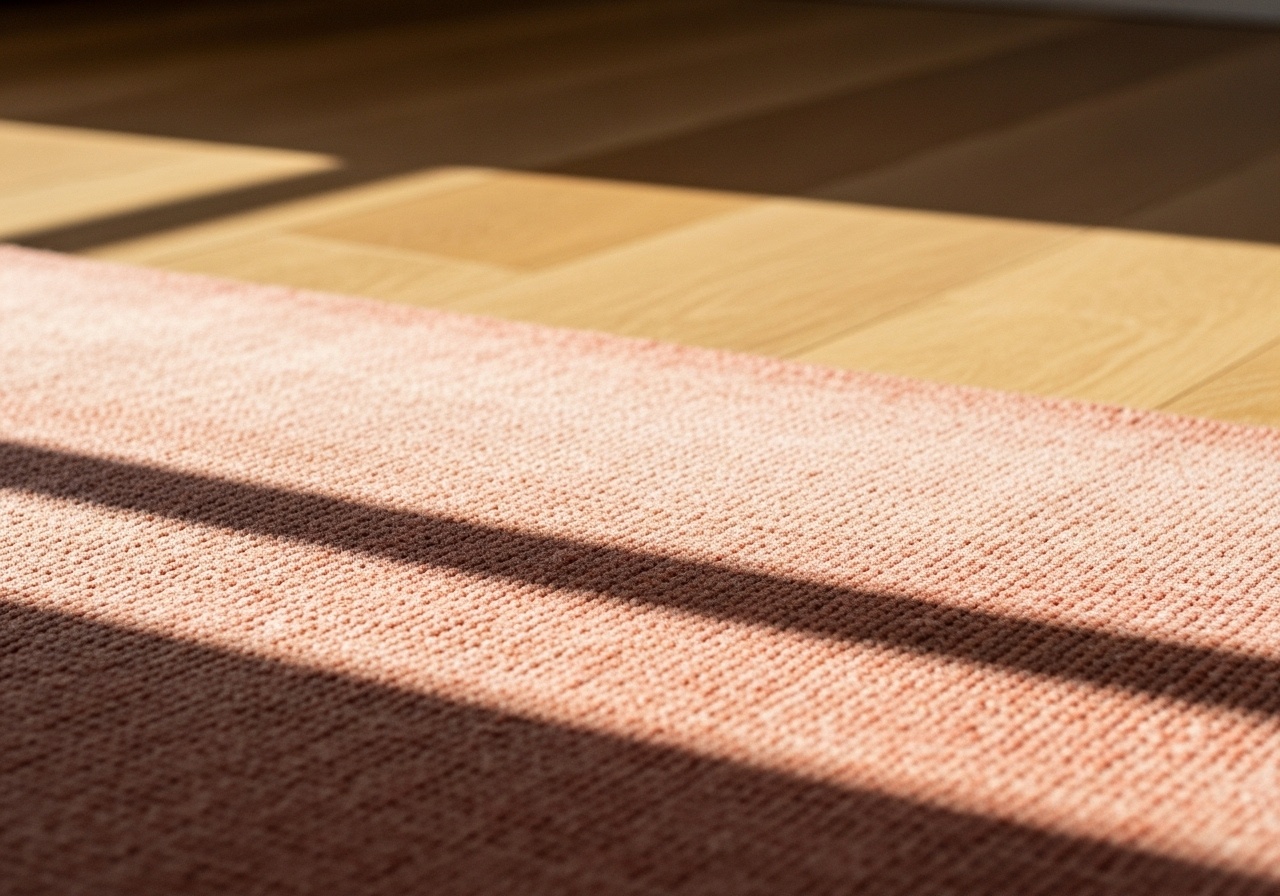
Textured salmon rug on wood floor with sun shadows.
Persian & Anatolian Symbolism
- Kindness and beauty — Why: In classical Persian carpets, soft pinks were woven to embody gentleness and aesthetic refinement, often connected with feminine grace and springtime renewal. A feminine Persian rug featuring blush fields or rose motifs reinforced ideals of love and tenderness in both poetry and textile art.
- Rose and garden motifs — Why: Pink roses symbolize paradise gardens in Persian lore. Their placement in rugs tied the carpet to themes of divine love, earthly beauty, and spiritual renewal, transforming the floor covering into a symbolic garden underfoot.
- Tribal traditions — Why: In nomadic Anatolian and Caucasian weaving, pinks signified joy, vitality, and protection. A pink symbolism rug might incorporate salmon or coral details believed to guard against the evil eye while celebrating youth and family continuity.
Universal Color Psychology of Pink/Salmon
Beyond specific weaving cultures, color psychology explains why pink rugs continue to resonate today. Pink is associated with calm, tenderness, and optimism. A color psychology pink rug can soften modern interiors, making them feel more inviting and restorative. Salmon, by contrast, carries connotations of balance and harmony.
A harmony color rug in salmon shades establishes emotional warmth and stability, making it an ideal anchor for gathering spaces like living rooms or dining areas. The consistent thread across cultures is that pink and salmon evoke gentleness and positivity, enriching the sensory and emotional environment of any home.
Salmon vs. Pink: Distinct Symbolic Nuance
While both tones share uplifting qualities, Persian tradition distinguishes between them. Salmon meaning carpet symbolism aligns with harmony and happiness—tones that strike balance between the vibrancy of red and the softness of pink.
Pink itself, however, is tied more strongly to beauty, femininity, and spring renewal. This nuanced layering allowed weavers to communicate both emotional warmth and spiritual grace through their palette choices.
What does salmon color symbolize in Persian carpet culture? In Persian carpets, salmon is seen as a symbol of harmony and happiness. Unlike pure pink, which signifies beauty and femininity, salmon adds an element of balance, uniting the emotional tenderness of pink with the grounded stability of warmer tones.
Whether woven in tribal villages or urban workshops, pink and salmon hues link rugs to timeless values of joy, protection, harmony, and renewal—ensuring that these shades carry cultural weight as well as aesthetic charm.
Key Rug Styles & Regions Using Pink & Salmon
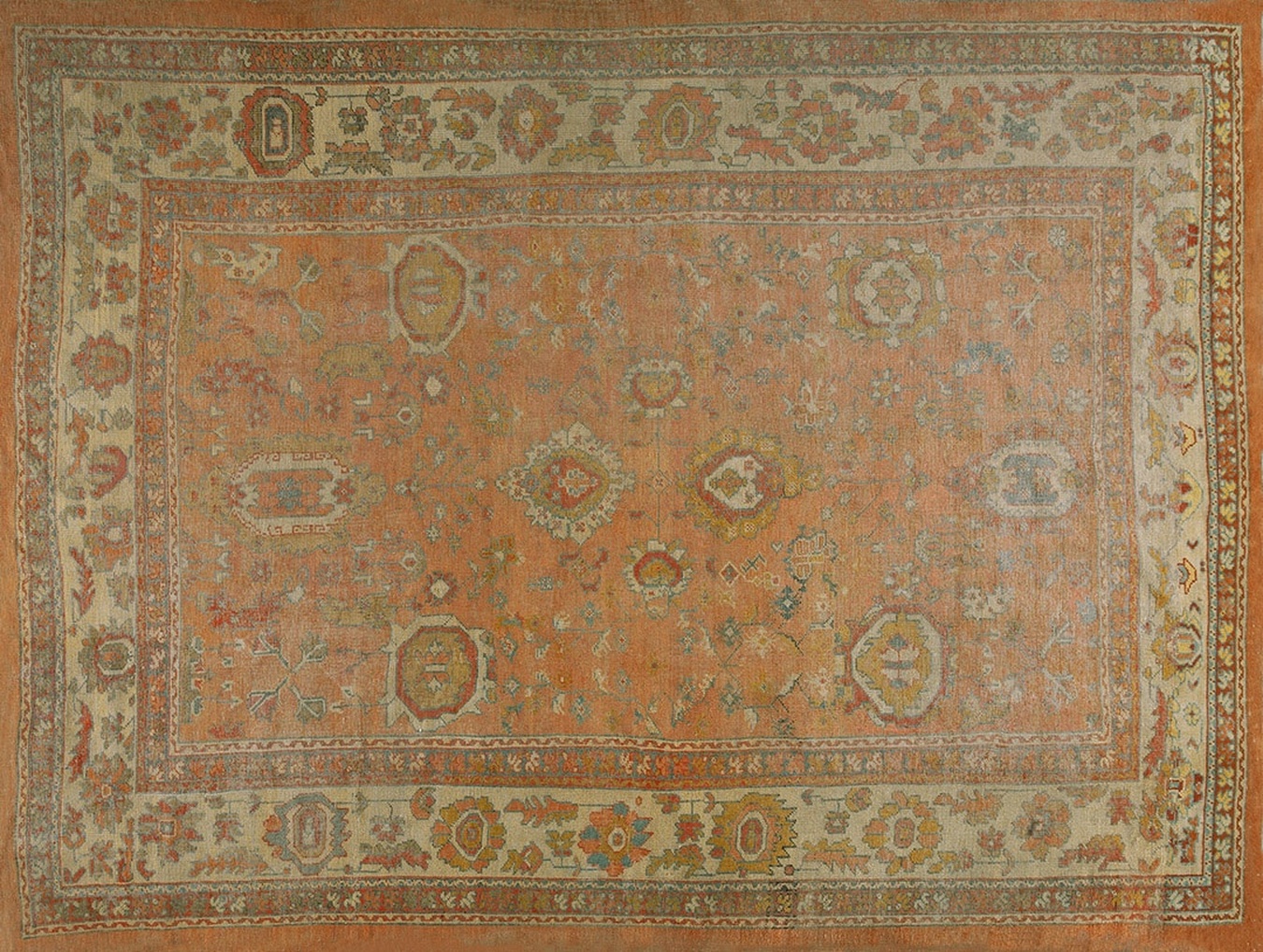
Persian Kerman, American Sarouk, and Oushak
- Persian Kerman pink rug — Why: In the early to mid-20th century, Kerman workshops embraced pastel tones, producing “sherbet” or “Miami” palettes with blush fields. These delicate shades were tailored to Western tastes, making them highly collectible today.
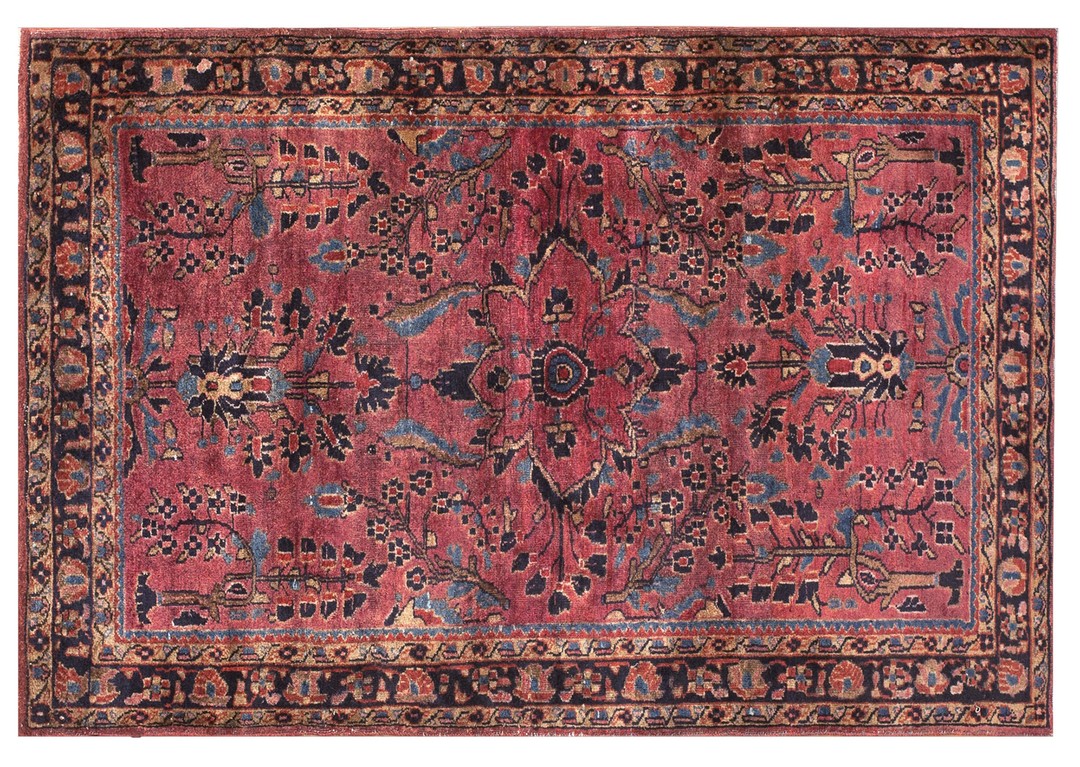
- American Sarouk rose — Why: Woven in Persia but finished for U.S. buyers, these rugs were famously “painted” with post-loom dyes to achieve deep rose and salmon fields. Their lush floral patterns and distinctive pink tones cemented their place in American interior history.
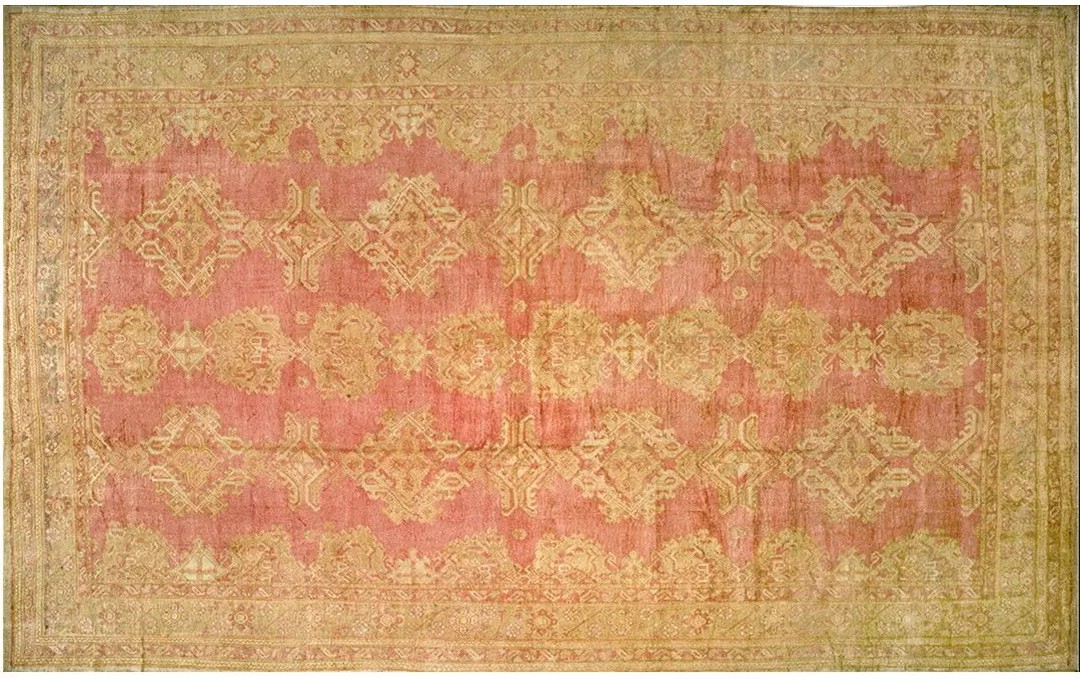
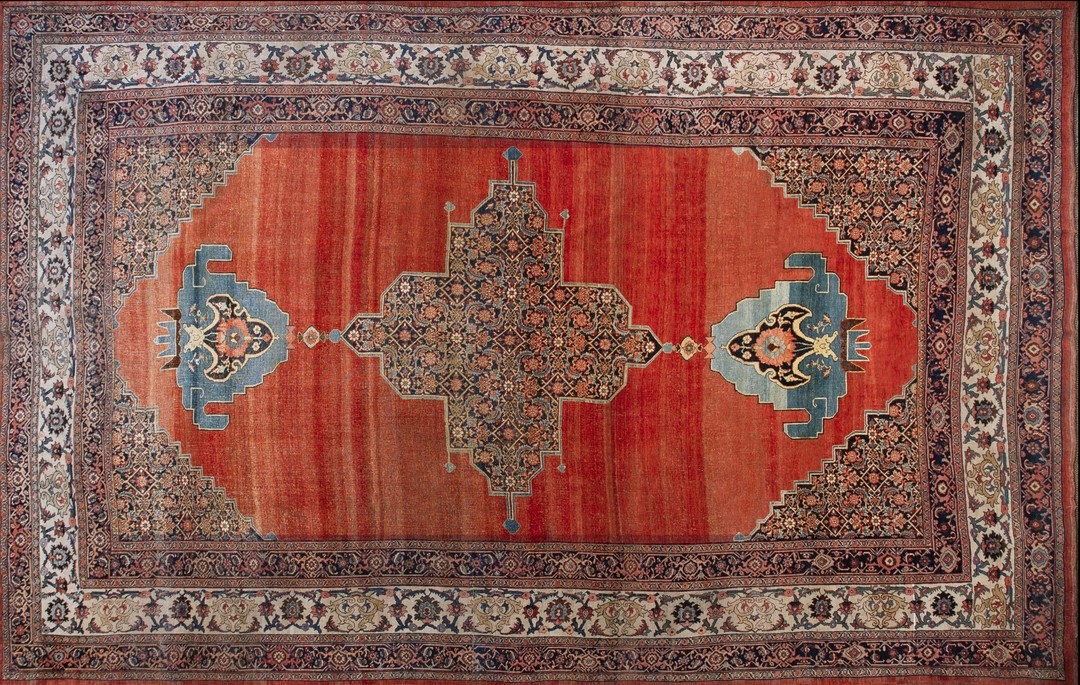
- Oushak salmon carpet — Why: Anatolian Oushaks are celebrated for their soft salmon fields derived from mellowed madder. Their broad, open designs and gentle warmth appeal strongly to collectors and designers alike, especially in large, room-sized carpets.
Caucasian Karabagh & Shirvan Florals
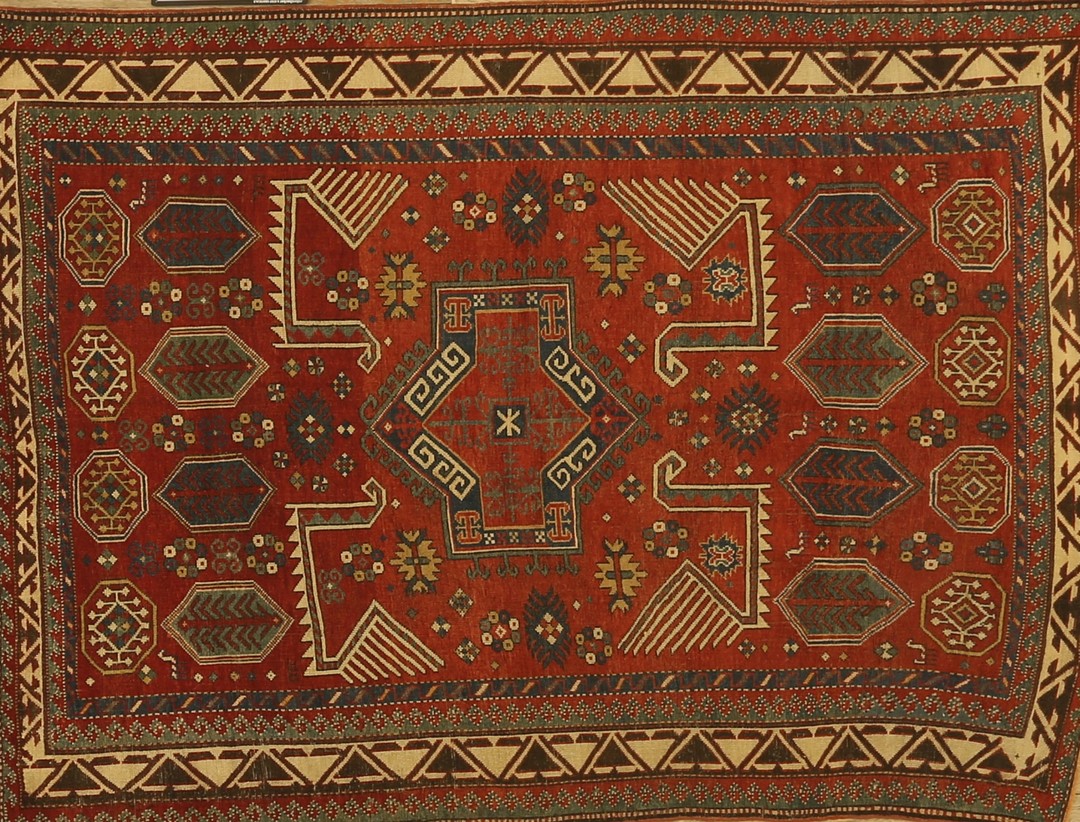
The Karabagh magenta rug from the Caucasus is one of the boldest expressions of pink in weaving history. Using cochineal and, later, aniline dyes, weavers produced vivid magentas and fuchsias to frame exuberant bouquets of oversized floral motifs.
Shirvan workshops also experimented with pinks as accent tones in geometric and floral rugs, giving these tribal pieces a unique vibrancy. These rugs stand out as some of the most colorful and daring uses of pink in antique traditions.
Moroccan Beni & Overdyed Turkish Rugs
Moroccan Beni pink rugs highlight how tribal simplicity can incorporate bold modern tones. Traditionally woven in natural ivory or brown, Beni Ourain rugs have recently embraced vivid pinks and salmons as design accents, turning abstract, minimalist patterns into contemporary statement pieces.
In parallel, overdyed Turkish pink rugs represent a modern reinvention of vintage stock: older Anatolian carpets are bleached, then saturated with fuchsia or neon pinks to achieve a striking, fashion-forward aesthetic that resonates with urban and eclectic interiors.
Central Asian & Chinese Art Deco
- Central Asian weavings — Why: Uzbek and Turkmen pieces occasionally used salmon or rose tones, often as background shades in suzanis or decorative accents in carpets, highlighting their adaptability.
- Chinese Art Deco rugs — Why: In the 1920s–30s, Chinese workshops pioneered vibrant palettes with magenta and fuchsia fields. These bold pink grounds, paired with stylized floral motifs, defined an era of glamorous interior design that still appeals to Art Deco collectors today.
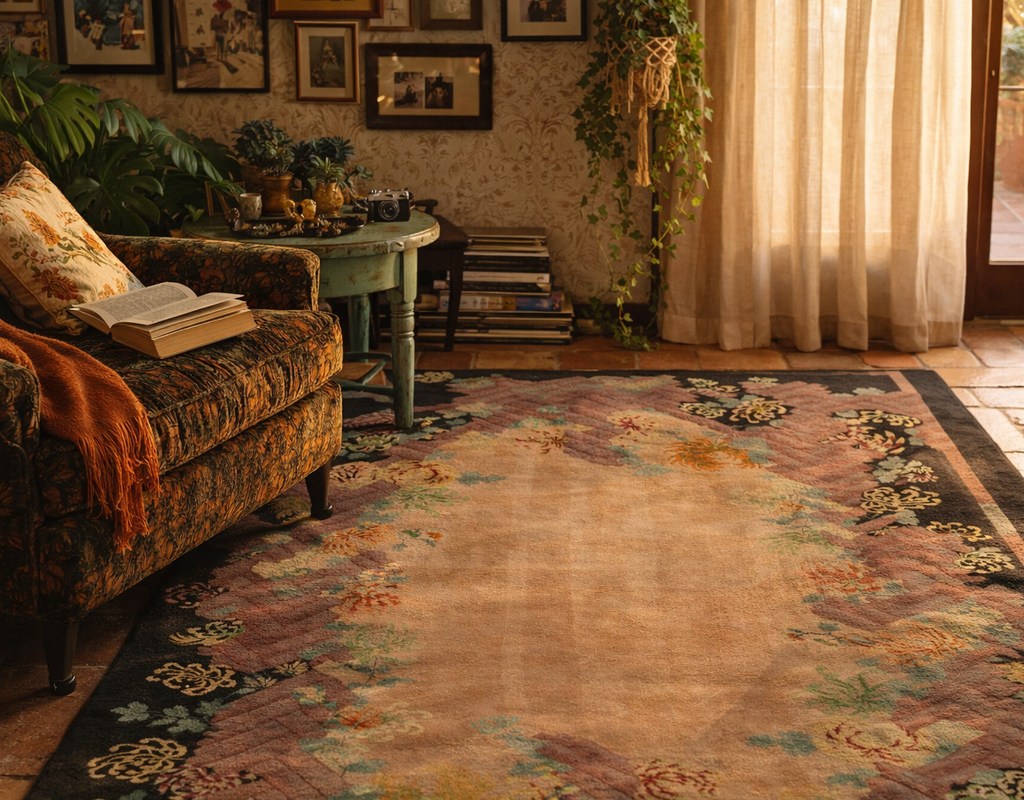
A reading nook styled with vintage charm and a richly patterned, art deco-inspired floral rug.
Notable Modern Styles
- Nepalese and Indian designer rugs — Why: Contemporary workshops experiment with pinks ranging from soft blush to neon, catering to modern interior trends. Their use of high-quality wool and silk elevates these tones into luxury design.
- Modern minimalist pinks — Why: In Scandinavian-inspired or contemporary decor, muted blush and salmon rugs offer a calming balance to stark whites and grays, proving pink’s adaptability beyond tradition.
Across these traditions, pink is never a single story—it is soft elegance in Oushak, post-dyed vibrancy in Sarouk, exuberant floral in Karabagh, and bold modernity in Moroccan and overdyed Turkish rugs. This variety ensures lasting relevance and high collector interest in pink-toned carpets.
Dye Sources & Techniques
Madder vs. Cochineal
The two most important historic sources of pink and salmon rug tones are madder and cochineal. Madder vs cochineal pink represents a contrast of chemistry, longevity, and tone. Madder, a root-based dye, produces colors ranging from salmon and blush to deep reds, often with an earthy or orange undertone. It is extremely durable, especially when combined with strong mordants, making it a backbone of Persian and Anatolian weaving traditions.
By contrast, cochineal, derived from scale insects, produces brilliant pinks and purplish tones that glow with intensity. When stabilized with alum mordants, cochineal maintains remarkable colorfastness, though its brilliance distinguishes it from the warmer, more grounded pinks of madder. Together, these dyes created the foundation for both soft blush carpets and vibrant cochineal magenta rugs.
Safflower, Weld, and Natural Blends
- Safflower pink wool — Why: This rare plant-based dye gave bright, almost neon pinks, but it was notoriously fugitive, fading quickly in sunlight. Its rarity made it a luxury accent rather than a reliable field color.
- Weld mixed with reds — Why: Weld, a yellow dye, was sometimes combined with madder or cochineal to yield coral and salmon tones, creating unique hues unavailable from a single source.
- Natural blends — Why: Regional weavers often layered or mixed dye sources, producing subtle variegations in tone. These natural pink dye rugs show depth and character that modern reproductions often strive to replicate.
Synthetic Dyeing: Pros & Cons
- Pros — Why: Synthetic pink dye offers consistency, affordability, and a wide spectrum of shades, from blush to neon. Chrome dyes, introduced in the early 20th century, are especially stable and colorfast, making them ideal for rugs intended for heavy use.
- Cons — Why: Early aniline dyes, especially fuchsine, produced unstable colors that bled or faded rapidly, damaging the reputation of many rugs. Even today, synthetics can lack the subtle tonal richness of natural dyes, sometimes appearing flat or too uniform compared to the depth of madder or cochineal.
Shearing & Overdyeing for Antique Effect
- Sheared rug — Why: By trimming the pile down deliberately, rug makers expose lighter underlying wool, creating a faded appearance that mimics antique wear. This technique is prized in both restoration and newly made rugs that aim to achieve a timeworn, romantic look.
- Overdyed antique pink — Why: A modern trend involves bleaching older Turkish or Persian rugs and re-dyeing them in vibrant pinks or salmons. This process creates bold, contemporary statement pieces while retaining the patina of vintage weaving.
- What natural dyes produce blush and salmon tones in wool? Madder, cochineal, and safflower are the primary sources, with weld sometimes added to shift tones toward coral.
- How do cochineal and madder differ for pink dyeing? Madder yields earthy salmon-pinks with orange undertones and exceptional longevity, while cochineal produces brilliant purplish-pinks of great intensity and slightly cooler tone.
- Should you choose synthetic or natural dyes for lasting pink rugs? Natural dyes offer subtlety, richness, and historic value, while modern synthetics provide stable, long-lasting color with greater precision. For collectors, naturals are prized; for everyday durability, modern synthetics perform best.
- What shearing techniques create antique-looking faded pink rugs? Controlled pile trimming reveals lighter wool beneath, imitating the patina of age. When paired with overdyeing, the effect produces a soft, antique-style faded pink carpet.
Madder and cochineal remain the pillars of authentic pink rug dyeing, but today’s blend of natural tradition, synthetic precision, and artistic finishing techniques ensures that blush and salmon hues remain as compelling in modern design as they were centuries ago.
Care, Conservation, & Longevity
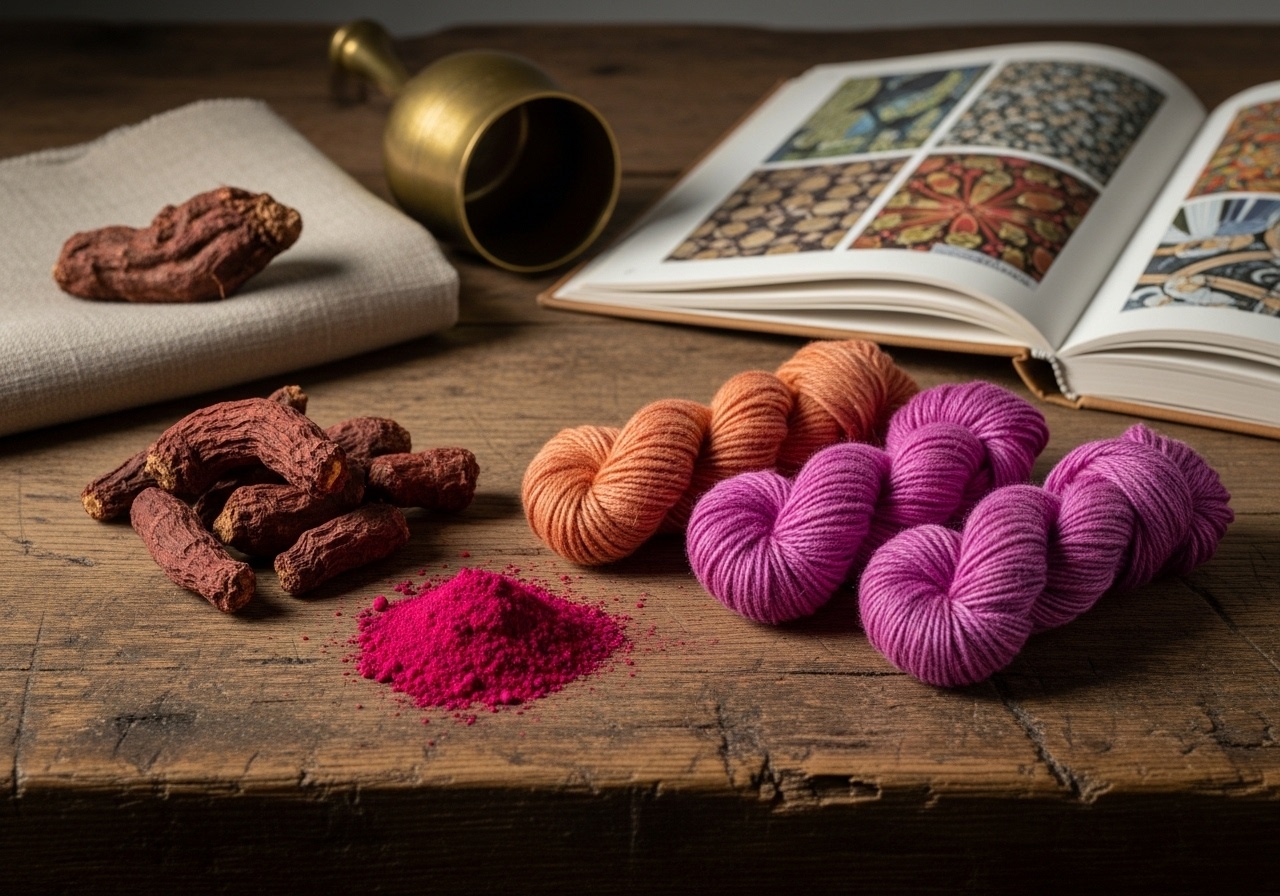
Natural dye materials and resulting pink and orange yarn.
Fading Risks: Light, Climate, and Dye Type
One of the greatest conservation challenges for pink rugs is fading. Sunlight fading carpet exposure is the primary culprit, especially in rugs dyed with early aniline synthetics or safflower, which are notoriously unstable. Over time, UV rays break down dye molecules, causing once-vibrant tones to dull or shift toward beige. Dry, sunny climates accelerate fading, while humid or temperate conditions can slow the process.
Preventive measures are essential: rotate rugs regularly, use UV-filtering window glass or shades, and avoid placing pink rugs directly in sunlit entryways. Knowing the dye source is also critical—a colorfast pink rug dyed with chrome synthetics or stabilized cochineal will endure far better than fragile safflower pinks.
Cleaning for Color Stability
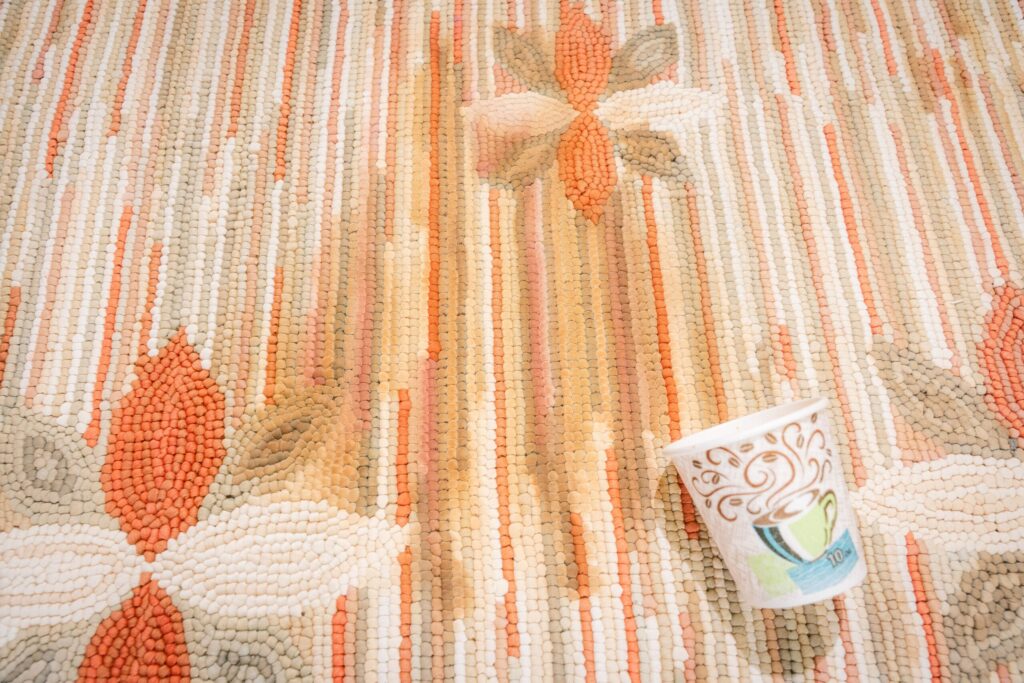
Close-up view of a tipped paper coffee cup resting on a handwoven wool rug, highlighting the rug’s dense pile, subtle color variations, and traditional geometric motifs in warm neutral and terracotta tones.
- Test for bleed before cleaning — Why: Dampen a white cloth and blot discreetly; if color transfers, the rug may require dry or low-moisture cleaning methods.
- Avoid harsh chemicals — Why: Strong detergents or bleach can strip delicate pink tones and damage wool fibers.
- Professional rug cleaning — Why: Experts use specialized solutions that stabilize dyes and preserve vibrancy, particularly for antique or natural-dyed pieces.
- Routine maintenance — Why: Gentle vacuuming without beater bars prevents dust buildup, which dulls pink fields over time.
These steps ensure pink rug cleaning protects both fiber integrity and long-term color vibrancy.
Pet & High-Traffic Durability
When considering a high-traffic pink carpet for households with pets, the dye type plays a decisive role. Synthetic-dyed pinks, especially modern chrome-based dyes, tend to be more resistant to stains, moisture, and daily wear, making them well-suited for entryways or family rooms.
By contrast, natural-dyed blush rugs, while visually rich, may be more vulnerable to abrasion or pet accidents. For high-traffic or pet-heavy areas, synthetics offer practicality, while natural pink rugs shine best in lower-wear settings where their artistry can be preserved.
Restoration Techniques: Re-piling, Tinting
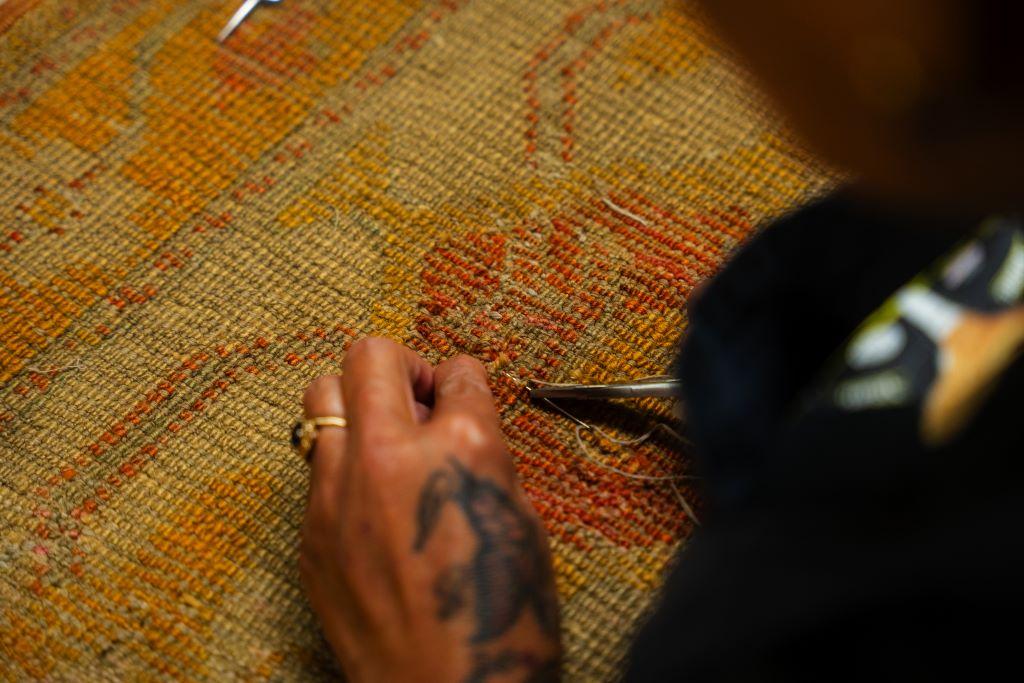
Detail of hands mending a rustic, richly colored woven rug.
- Re-piling worn areas — Why: Skilled restorers can replace damaged fibers, reviving the original texture and color distribution of the rug.
- Subtle tinting — Why: Faded zones can be carefully hand-tinted to restore even coloration, especially in antique pink rugs where authenticity matters.
- Overdyeing — Why: For modern decorative use, overdyeing transforms faded rugs into trendy overdyed antique pink statement pieces, blending heritage with contemporary fashion.
- Antique-washing — Why: Some rugs are deliberately softened in tone through controlled washing, giving them a desirable vintage patina.
Through careful placement, mindful cleaning, and restoration techniques, rug preservation pink strategies ensure that blush and salmon rugs retain their beauty, even under daily use.
Decorating With Pink & Salmon Rugs
Calming Effect in Decor
- Blush rug wall color synergy — Why: Soft pink rugs foster tranquility and pair beautifully with light greys, whites, or pale blues. These palettes amplify the rug’s calming quality, creating a peaceful retreat in bedrooms or living spaces.
- Pink rug small room advantage — Why: Lighter blush tones visually expand interiors, reflecting light and making compact rooms feel more open and airy.
- Warm pink carpet coziness — Why: Warmer salmon and rose hues add a welcoming energy to communal spaces, promoting comfort and relaxation.
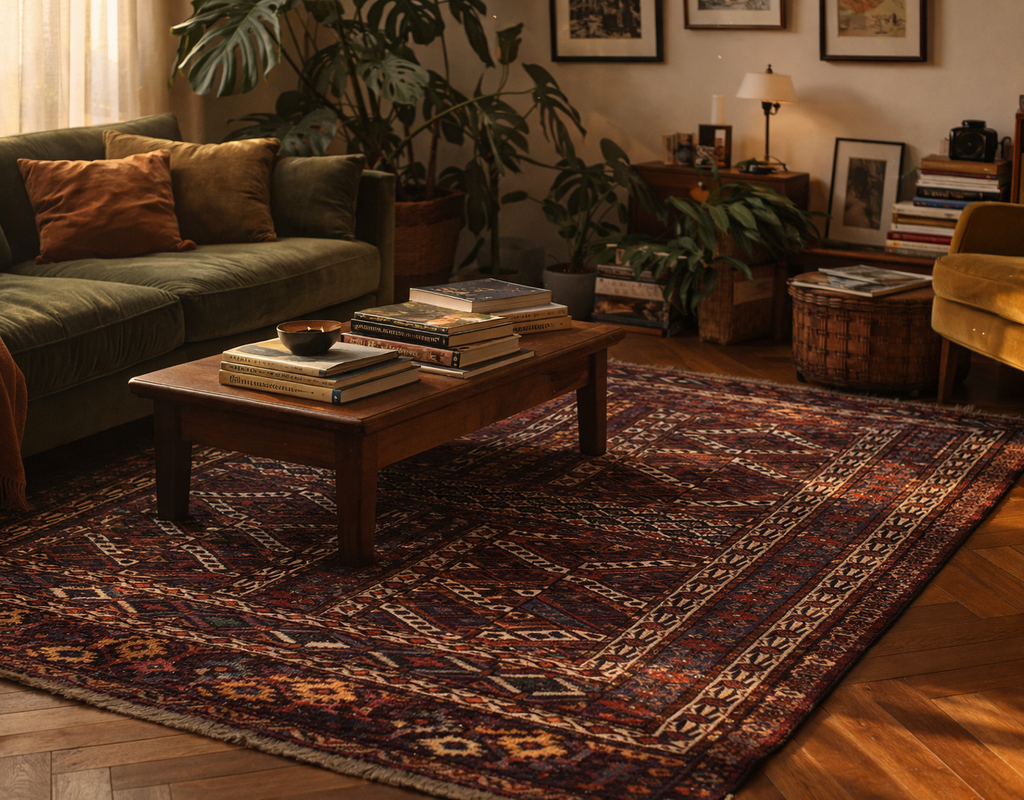
An inviting corner showcasing layered textures and deep, saturated colors under soft, dappled sunlight.
Wall & Furniture Pairings
- Blush with neutrals — Why: Pale pink rugs harmonize with white, ivory, and grey walls, keeping the decor soft and balanced.
- Salmon rug with navy — Why: This bold pairing introduces striking contrast; salmon’s warmth offsets navy’s depth, creating a sophisticated and grounded palette.
- Metallic and green accents — Why: Gold, brass, and sage green bring out the vibrancy of pink tones, elevating rugs into focal points of chic, layered decor.
Layering & Texture: Kilim Over Jute
A layering kilim pink approach—placing a flatwoven pink kilim over a chunky jute base—creates depth in both sight and touch. The jute’s coarse natural fibers contrast with the kilim’s smooth weave, resulting in a bohemian, collected aesthetic. This strategy also grounds lighter blush rugs while adding insulation and durability, especially in larger living rooms or eclectic interiors.
Perceived Warmth & Room Size Impact
- Expanding effect — Why: Blush rugs brighten and visually enlarge smaller spaces, complementing light-colored walls for an airy feel.
- Warmth in flooring — Why: On cool tile or hardwood, a warm pink carpet softens the visual impression, making floors feel cozier and less stark.
- Balancing bold furniture — Why: When paired with darker or more imposing furniture, pink rugs provide a counterbalance that prevents heaviness in the room’s overall atmosphere.
With thoughtful pairings and placement, pink rug decor strategies can transform interiors—making them feel calmer, warmer, and more expansive while highlighting the timeless beauty of blush and salmon tones.
Market & Collector Insights
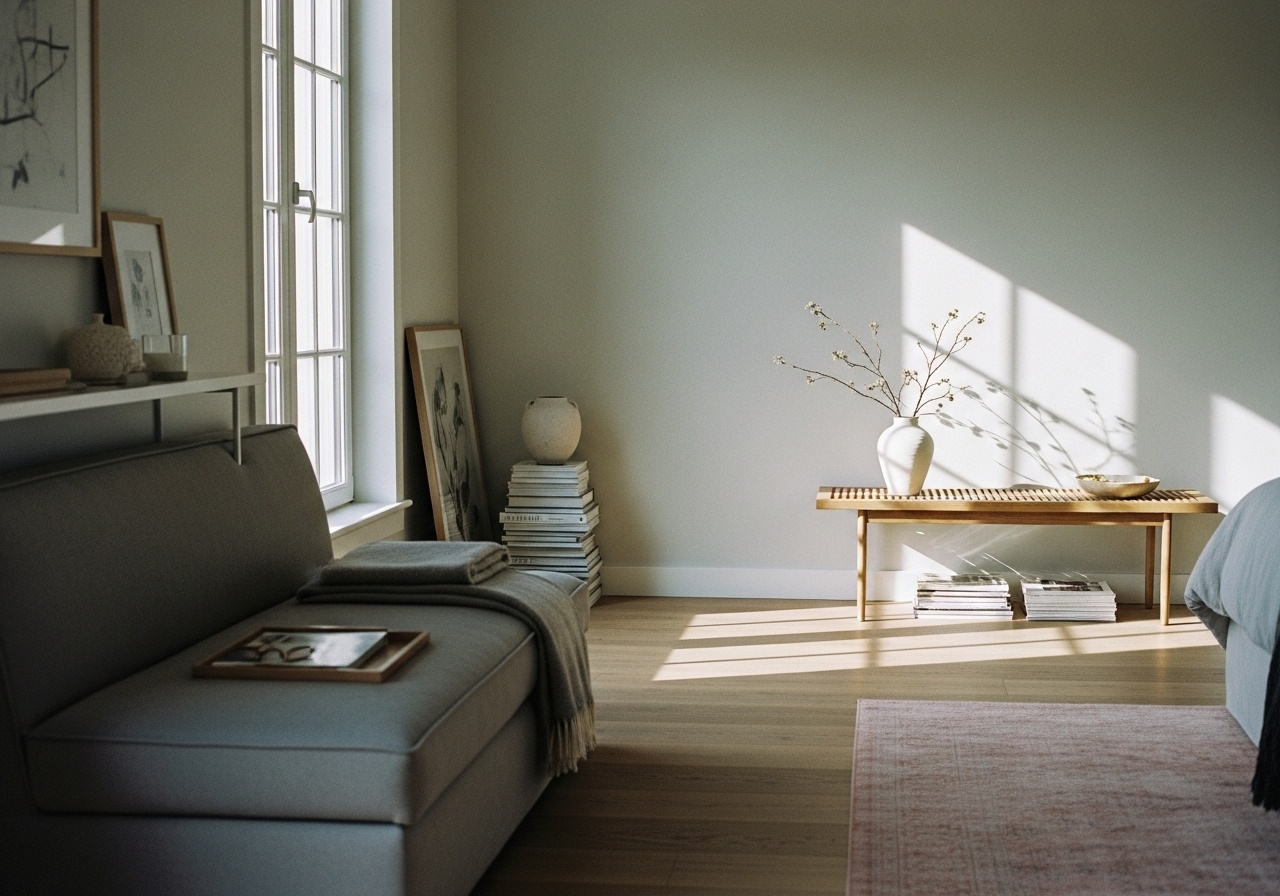
Calming sunlit room with gray chaise and pink rug.
Dusty-Pink Oushak and Collector Trends
- Oushak dusty pink — Why: Large-scale Anatolian Oushaks with mellow salmon or dusty pink fields are increasingly scarce. Their rarity, combined with their soft palettes that suit both traditional and modern interiors, makes them highly desirable to collectors.
- Kerman pastels — Why: Early 20th-century Persian Kermans featuring blush fields, sometimes called “sherbet” tones, are also gaining traction in auctions, appreciated for their unique palettes.
- American Sarouk rose — Why: Sarouks with post-dyed rose or salmon fields reflect historic U.S. market trends and continue to attract interest as culturally significant collector pink rugs.
Salmon vs. Traditional Red in Value & Rarity
Collectors often view salmon tones as more sophisticated alternatives to traditional reds. A salmon value carpet is distinctive precisely because it strays from the dominant red fields that defined many Persian and Anatolian rugs.
The softer, more nuanced pinks and salmons not only feel rare in antique contexts but also pair more fluidly with modern design schemes. This balance of rarity, subtlety, and adaptability gives salmon rugs an edge in both value and collector demand, especially when compared to more common reds.
Current Appreciation in Design Markets
- Pantone & trend cycles — Why: The global popularity of “millennial pink” and Pantone’s recurrent embrace of pink tones has fueled contemporary appreciation for rugs in these shades.
- Interior demand — Why: Designers increasingly specify blush and salmon rugs to soften modern spaces, aligning with minimalist, Scandinavian, and eclectic aesthetics.
- Investment potential — Why: Because true antique examples of rare pink rugs are limited, their values rise in tandem with shifting tastes, making them both décor highlights and viable investment rugs.
From antique Oushak dusty pink carpets to contemporary blush designer pieces, pink rug trends demonstrate enduring value across markets. Collectors prize them for their rarity, designers embrace them for their versatility, and investors see them as an opportunity in a niche yet growing sector of the rug world.
Explore a Few of Our Pink & Salmon Rugs
FAQ
- Are pink rugs safe for nurseries?
Look for OEKO-TEX or Greenguard certifications and use a non-slip pad. Avoid harsh cleaners; spot-treat gently and ventilate.
- How do I remove odors from salmon rugs?
Sprinkle baking soda, let sit an hour, then vacuum; ventilate well. Persistent odors may require professional cleaning.
- Are pink rugs OK under dining tables?
Yes—choose low-pile or flatweave pink rugs for chair glide. For six chairs, 8×10 typically fits; allow \~24″ chair clearance.
- Can salmon rugs go under radiant-heated floors?
Yes—use thin, breathable construction and keep surface temperatures below about 85°F. Confirm with your flooring and heating manufacturer.
- Do pink wool rugs shed?
New pink wool rugs commonly shed for the first few months. Vacuum gently once a week; shedding diminishes with use.
- Are salmon wool rugs more expensive than synthetics?
Generally yes; wool salmon rugs cost more due to fiber and labor. Expect higher prices but better resilience and heat resistance.
- Will pink rugs clash with gray walls?
No—pink rugs warm cool grays nicely. Add black or brass accents for definition.
- Can robot vacuums handle salmon rugs?
Usually on low-pile salmon rugs, yes. Avoid fringes and very dark borders, set no-go zones, and secure edges with a pad.
- Are pink shag rugs hard to maintain?
Shag pink rugs trap debris and are slower to clean. Vacuum weekly with suction-only and shake outside; avoid beater bars.
- What size salmon rug for a small living room?
Try 5×8 or 6×9 salmon rugs with the “front-legs” rule under sofas. In larger spaces, step up to 8×10.
- Should I use a rug pad under pink rugs?
Yes—felt plus natural rubber pads add cushion and prevent slipping. Aim for \~1/4″ thickness and trim the pad 1–2″ smaller than the rug.
- Do salmon outdoor rugs fade?
Solution-dyed polypropylene salmon rugs resist UV better than printed fibers. Expect gradual fade; store them dry off-season to extend life.
- Are pink rugs pet- and kid-friendly?
Pick low-pile pink rugs in performance fibers and busy patterns to disguise messes. A cut-pile 0.25–0.5″ height vacuums easily.
- Are salmon runner rugs good for kitchens?
Yes—choose low-pile or flatweave salmon runner rugs for easy chair movement. Washable or indoor/outdoor fibers simplify cleanup of grease and spills.
- How do I clean a red wine spill on pink rugs?
Blot immediately, then dab a few drops of mild dish soap in water and blot again. Test first; call a pro for wool if color transfers.
- What patterns suit salmon rugs?
Traditional Persian, kilim, or clean geometrics all flatter salmon rugs. Match pattern scale to room size—larger rooms handle bolder motifs.
- What size pink rug fits under a queen bed?
An 8×10 pink rug is the common choice for queens, giving 18–24 inches on each side. Use 6×9 only in tight rooms.
- Will salmon rugs work with oak floors?
They do—their warmth complements oak’s golden tones. Add blue or charcoal accents to keep the palette balanced.
- Do pink rugs fade in sunlight?
Yes—UV light fades most textiles, including pink rugs. Rotate every 3–6 months and consider UV-filtering film or curtains near large windows.
- Do salmon rugs hide dirt better than light pink rugs?
Usually yes—mid-tone salmon rugs and patterned weaves camouflage crumbs and footprints. Choose heathered or multicolor designs for high-traffic spaces.
- Which materials are best for pink rugs?
Wool pink rugs are durable and soft; synthetics are budget-friendly and stain-resistant. Expect wool around \$8–\$25/sq ft, synthetics about \$2–\$7/sq ft.
- Are salmon rugs considered a neutral?
Often, salmon rugs act like a warm neutral because their pink-orange tone is mid-saturation. Balance them with linen, oak, and charcoal accents.
- Are pink rugs good for living rooms?
Yes—pink rugs warm neutrals and anchor seating. In most rooms, 8×10 or 9×12 sizes fit standard sofa layouts.
- What wall colors match salmon rugs?
Cream, greige, sage, and navy complement salmon rugs without clashing. Try navy pillows or art to add crisp contrast.
- What colors go best with pink rugs?
Neutrals, navy, and forest green pair effortlessly with pink rugs. Use the 60-30-10 rule—e.g., 60% neutral, 30% supporting hue, 10% pink accents.