
The Allure of Orange & Coral Rugs: Visual & Emotional Impact
Discover our exclusive collection of Salmon Coral Pink Color Rugs and redefine your décor today.
Visual Characteristics of Orange & Coral
Orange in rug design encompasses a wide spectrum, from saffron, tangerine, and rust to softer tones like pastel peach or apricot. Coral, by contrast, blends orange with a pink undertone, creating hues ranging from salmon-orange to glowing peach-pink. This distinction explains why coral often feels lighter and more delicate, while deeper oranges tend to anchor a composition with earthy weight.
In antique pieces, natural plant and mineral dyes produced vibrant but grounded tones that gradually mellow into shades of apricot or cinnamon, a patina highly valued by collectors.
Modern synthetic dyes, by comparison, can yield neon-like bright oranges that initially dazzle but may fade unpredictably into washed-out shades over time. In contrast, the slow fading of natural orange or coral into honeyed warmth adds depth and character.
A signature trait often seen in antique orange area rugs and coral Persian rugs is abrash, the striated variation caused by small-batch dye lots. These subtle tonal shifts give the rug a sense of movement, preventing large blocks of color from feeling static.
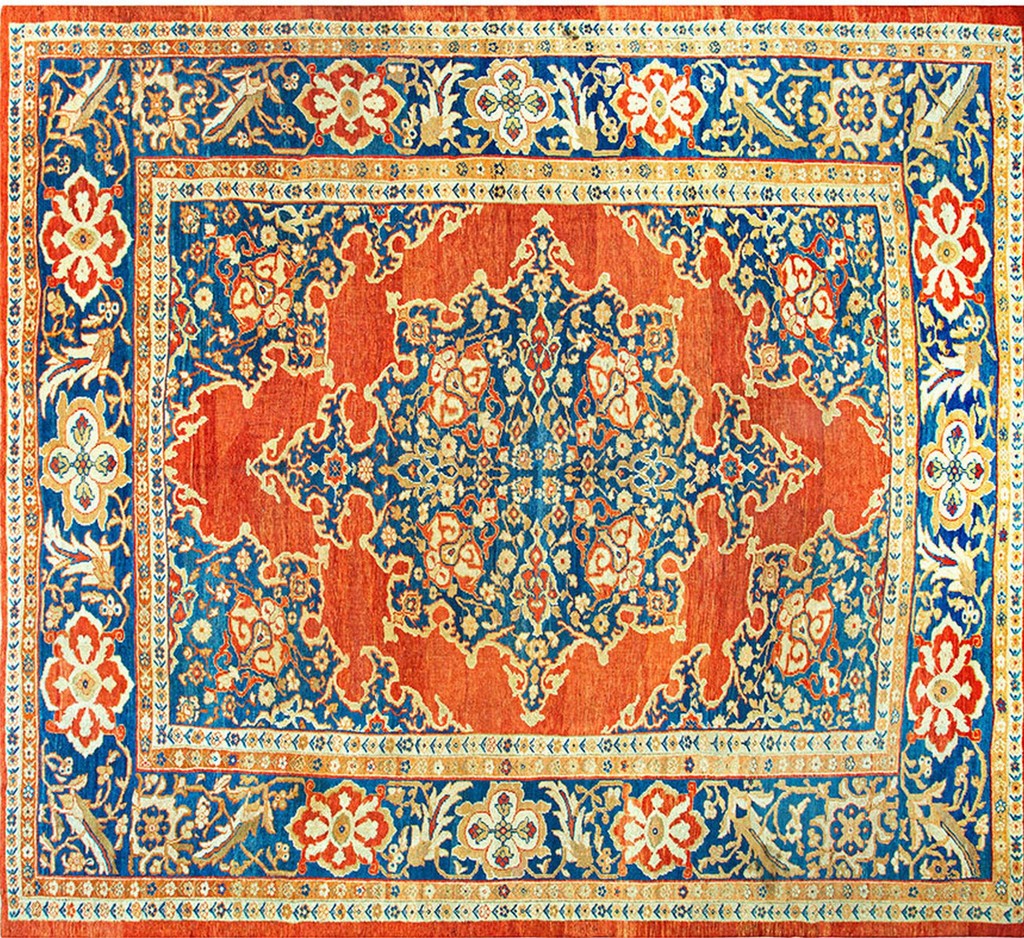
Antique Sultanabad Persian Floral, Medallion Knotted Rug by Rugs On Net
Light also plays a defining role in perception. Coral rugs often glow with a pastel softness in daylight, while becoming richer and more saturated under evening lamplight. Deep saffron or rust-toned rugs intensify in shadowed spaces, serving as focal points that energize a room.
Whether used as a terracotta accent rug or as the main field of a carpet, these tones are naturally eye-catching and vibrant, often creating striking contrast against blues, grays, and other neutrals.
Emotional and Symbolic Power
- Warmth and Vitality — Why: Orange hues radiate energy and warmth, making them ideal for rooms that need an inviting, lively atmosphere. A sunset rug color palette can transform a cold space into one that feels alive.
- Optimism and Joy — Why: Coral, with its soft pink undertone, evokes playfulness and positivity. This explains its popularity in coastal interiors, where it mirrors seashells, tropical sunsets, and reef-inspired palettes.
- Balance and Contrast — Why: Used against cooler tones, both orange and coral create dynamic equilibrium. A glowing coral runner placed in a hallway with pale walls or blue accents offers immediate visual lift.
- Symbolic Significance — Why: In many weaving traditions, orange symbolizes abundance, courage, and creativity. Coral’s unique mix of pink and orange often conveys tenderness and harmony, making it a color of emotional balance.
Orange and coral rugs are consistently prized because they not only act as vibrant orange carpets that energize a room but also carry symbolic depth and emotional resonance. The hues are adaptable, serving as bold focal points in modern interiors or as aged, time-softened tones in antique and traditional settings. This duality—fresh vibrancy when new and mellow beauty with age—makes them enduringly appealing in both design and collecting.
Origins: Dye Sources, Chemistry & Technique
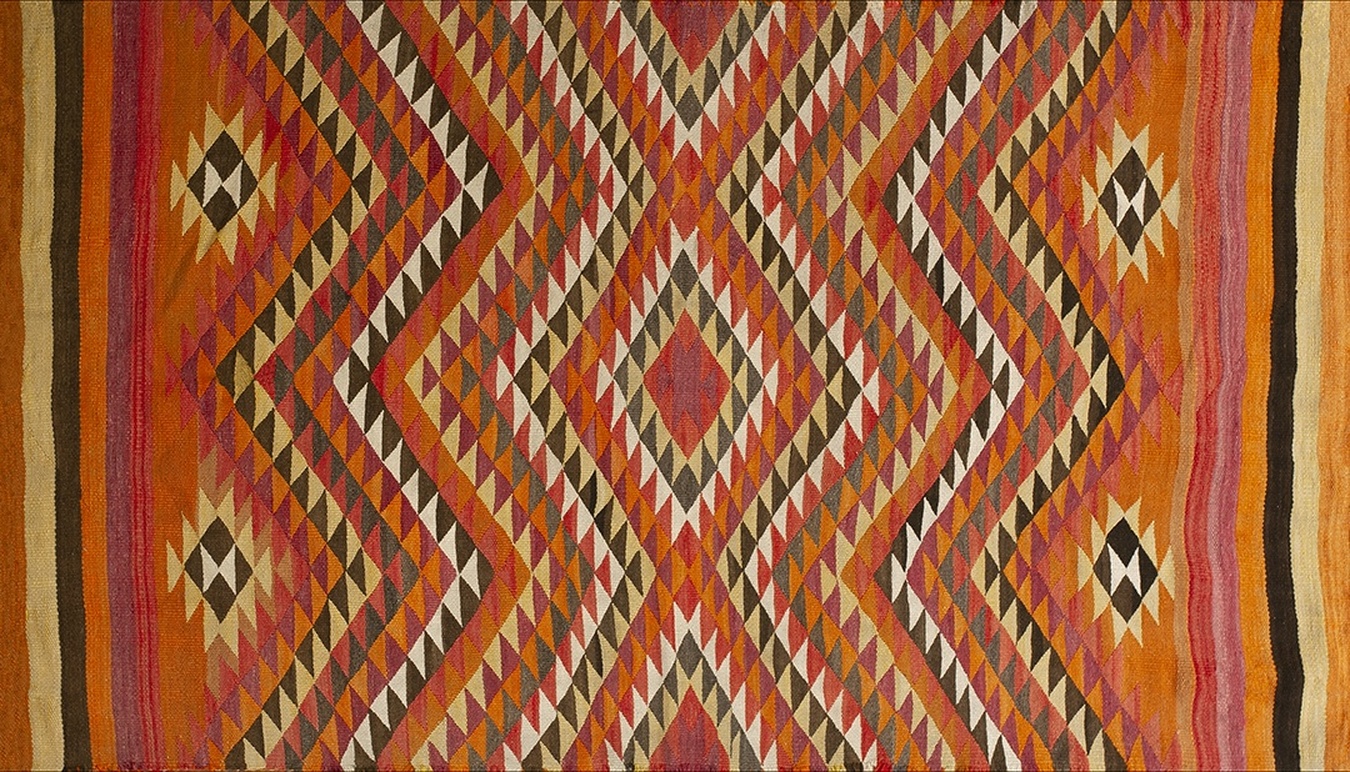
Antique Navajo American Geometric Flat Weave Rug – by Rugs On Net
Natural Dyes: Henna, Madder, Safflower, and Beyond
The foundation of orange and coral tones in traditional rug weaving lies in natural dyestuffs, each with distinct chemistry that determines vibrancy, fastness, and eventual aging. Madder root is the most important historic source, producing a spectrum of colors depending on extraction and bath strength. Its key compound, alizarin, yields deep red-orange hues, while weaker or shorter dye baths create salmon-pink or apricot tones, essential in antique madder dyed rugs.
Safflower, a less stable but highly valued plant source, produces bright pink-orange tones, especially effective on silk and cotton warps. While it can deliver glowing coral shades in a safflower orange rug, the color is fugitive on wool, fading more quickly than madder. Henna contributes a distinct orange-brown cast, and when combined with yellow dyes such as weld or onion skins, then overdyed with madder, weavers achieved the vibrant oranges seen in tribal and village carpets.
These combinations highlight both experimentation and mastery, since layering colors required deep technical knowledge. Natural dye chemistry means that orange and coral tones age gracefully. Over decades, a natural vegetable-dyed orange rug mellows from brilliance to warm apricot or cinnamon, prized by collectors for its patina. The depth of abrash in these hues reflects both the handmade dye process and the organic chemistry of natural pigments.
Synthetic Dyes & Their Evolution
The introduction of synthetic dyes in the late 19th century revolutionized rug production, but also brought challenges. Early aniline dyes produced strikingly bright orange and coral shades, but their lightfastness rating in orange rugs was poor—exposure to light and washing often shifted tones to pale, uneven yellows. By the early 20th century, improved chrome and acid dyes entered the weaving world.
These later synthetics balanced vibrancy with stability, offering much better resistance to fading. Today, most synthetic orange dye rugs use high-grade acid and chrome dyes that deliver consistent, brilliant hues without the unpredictability of natural sources. While they lack the subtle aging process and abrash of vegetable-dyed carpets, they provide a palette for modern designers to experiment with neon, sunset-inspired, or uniform orange fields.
How Dye Choices Affect Rug Value
- Natural Vegetable Dyes in Antiques — Why: A rug dyed with madder, henna, or safflower carries not only beauty but also historic authenticity. Collectors prize these for their organic aging and rarity, often elevating their market value.
- Early Synthetic Dyes — Why: Rugs with unstable early aniline dyes often show uneven fading or garish tones, reducing desirability. Such examples may be less valuable unless historically significant.
- Modern Stable Synthetics — Why: Contemporary rugs using advanced chrome or acid dyes are valued for their brightness and durability. They may not carry the cachet of antique vegetable dyes, but they perform well in everyday interiors.
- Technical Mastery of Dyeing — Why: Orange and coral tones are notoriously difficult to balance. A rug that demonstrates evenness, depth, and controlled abrash reflects the weaver’s technical prowess, directly enhancing its aesthetic and financial worth.
The chemistry behind each shade explains not only how henna rugs or madder dyed rugs achieve their glow, but also why a natural dye rug from the 19th century can command far higher value than a synthetic counterpart.
Dye choices are more than aesthetic—they determine how the rug will age, how it will be preserved, and how it will be treasured by future generations.
Cultural Symbolism & Meaning
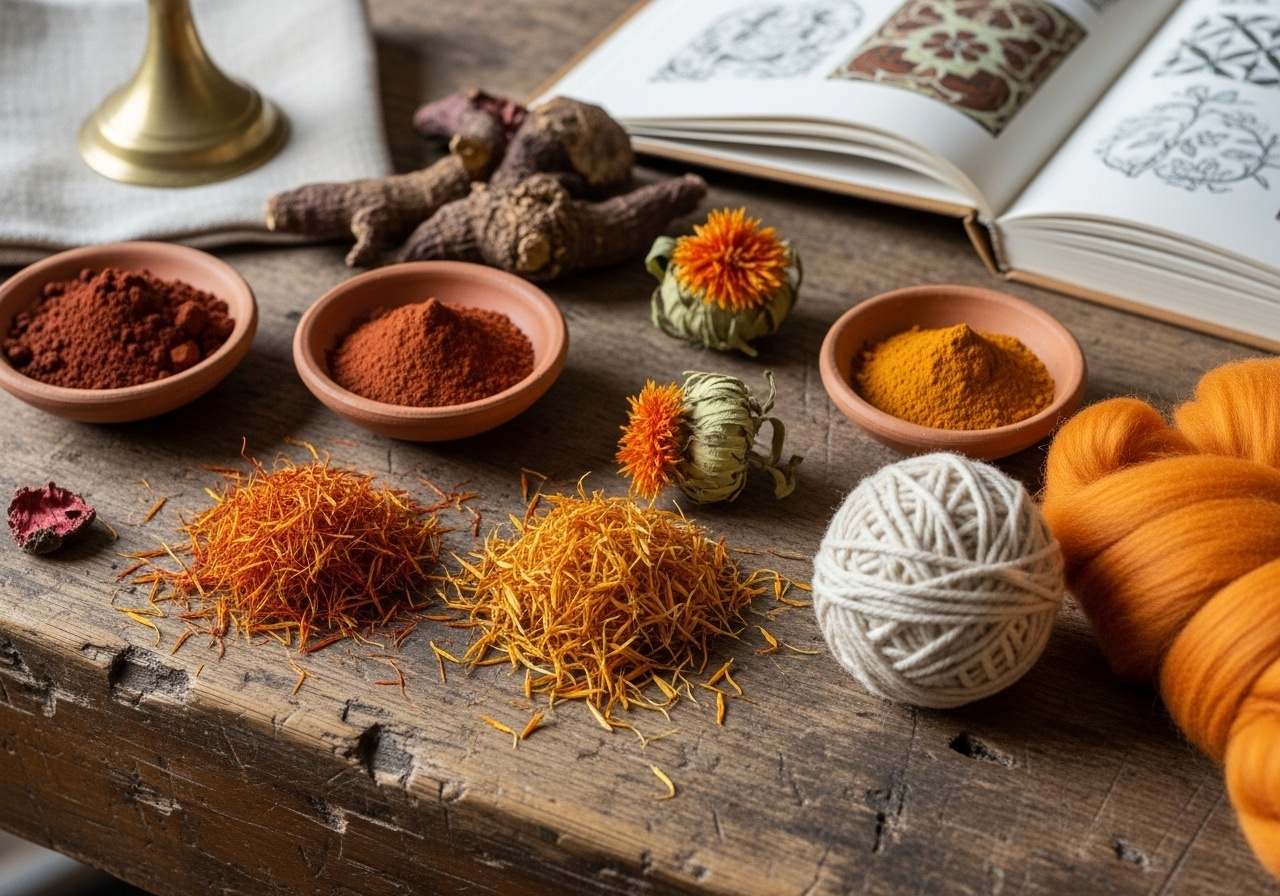
Saffron, turmeric, and other raw dyes for textiles.
Symbolism in Persian, Turkish & Central Asian Traditions
- Persian Rugs — Why: In Persian and broader Islamic traditions, orange is often tied to humility, piety, and devotion, but also to hospitality and wealth. The association with saffron, one of the world’s most valuable spices, gave orange a dual symbolism: both sacred and luxurious. This explains why an orange symbolism Persian rug may carry undertones of both spiritual depth and worldly prosperity.
- Turkish/Anatolian Rugs — Why: In Turkish weaving, orange represents joy, celebration, and protection. It was frequently used during festivals and as a safeguard against misfortune, echoing its role in talismans designed to ward off the evil eye. The prominence of orange in an Anatolian or Turkish orange rug meaning thus lies in its role as a cheerful yet protective force within the home.
- Caucasian and Armenian Rugs — Why: In the Caucasus, orange symbolized energy, courage, fertility, and growth. Armenian weavers in particular drew on the symbolism of the apricot, their national fruit, embedding warm apricot-orange hues into rugs as a metaphor for family and continuity.
Good Fortune & Protective Motifs
- Rosettes and Blossoms — Why: When woven in coral or saffron tones, floral medallions became emblems of good fortune and abundance, bringing prosperity to the household.
- Geometric Medallions — Why: Orange fields or accents in medallions symbolized spiritual enlightenment, illuminating the path of the rug’s owner.
- Protective Stripes and Borders — Why: In both Persian and Turkish traditions, stripes of orange were used as protective rug motifs, intended to repel misfortune and shield the family from harm.
- Fertility Patterns — Why: In tribal weaving, orange diamonds and latticework were linked to fertility and growth, with the color amplifying their life-affirming symbolism.
These motifs were not decorative afterthoughts; their placement and color choice carried intention. An orange stripe at the rug’s edge might stand guard against evil, while a coral blossom in the field conveyed blessings for joy and long life.
Regional Tribal Signatures: Basseri, Heriz, Oushak
Among nomadic and settled weaving groups, orange and coral tones became tribal signatures. The Basseri tribe, pastoral nomads of southern Persia, are especially renowned for their orange carpets, often featuring dominant saffron or rust-orange backgrounds that serve as a marker of identity and pride. In the Heriz region of northwest Persia, orange frequently appeared in angular medallions and geometric fields, lending warmth and boldness to designs famed for their durability.
These tribal orange rugs carried orange not as an accent but as a central, structural element. Oushak weavers in western Anatolia also made coral a hallmark, blending it into large-scale floral motifs with soft blues and ivories. The glowing coral shades of antique Oushaks are prized today for their ability to create balance between grandeur and intimacy.
From the Basseri orange carpet to the coral blossoms of Oushak, the hues were never random—they functioned as cultural narratives, embedding meanings of joy, protection, family, and spiritual intent into the very weave of the rug.
Orange & Coral in Rug Styles & Motif Placement
Styles Featuring Orange/Coral Fields & Blocks
Orange and coral have long been central to some of the world’s most iconic rug styles. In Persian tribal weaving, orange frequently dominates the field, particularly in Basseri and Qashqai rugs, where bold saffron or rust-orange backgrounds announce tribal identity. Coral, by contrast, often appears in Heriz and Serapi medallions, softening their angular geometry, while Kerman rugs incorporate apricot-orange borders as framing devices.
In Turkish traditions, especially Oushak, coral appears as full field coloration—creating a gentle, glowing backdrop for large floral motifs. More intense tones are found in Konya prayer rugs, where bright orange mihrabs infuse sacred space with warmth. Flatwoven kilims frequently employ orange in stripes and block patterns, forming rhythmic bands of color that echo tribal aesthetics. The Caucasian regions of Kazak, Shirvan, and Karabagh feature orange and coral prominently in geometric forms—octagons, hooked medallions, or border rosettes. A Kazak orange carpet often carries fiery energy, contrasting sharply with deep indigo or emerald.
In Central Asia, orange is used more sparingly as an accent, though Khotan rugs sometimes display entire coral fields that radiate quiet elegance. Together, these traditions demonstrate that orange block rugs and coral field Oushaks are not accidents of design—they are hallmarks of region, intention, and cultural symbolism.
Coral vs. Orange: Design Palette Differences
Coral and orange occupy related but distinct positions in rug palettes. Coral, with its pink undertone, creates softness and airiness. It is frequently paired with ivory and pale blue, as in a coral and ivory rug, to evoke freshness and light. Coral’s pastel glow is ideal for open, airy interiors where subtle warmth is desired. Orange, by contrast, is more saturated and forceful.
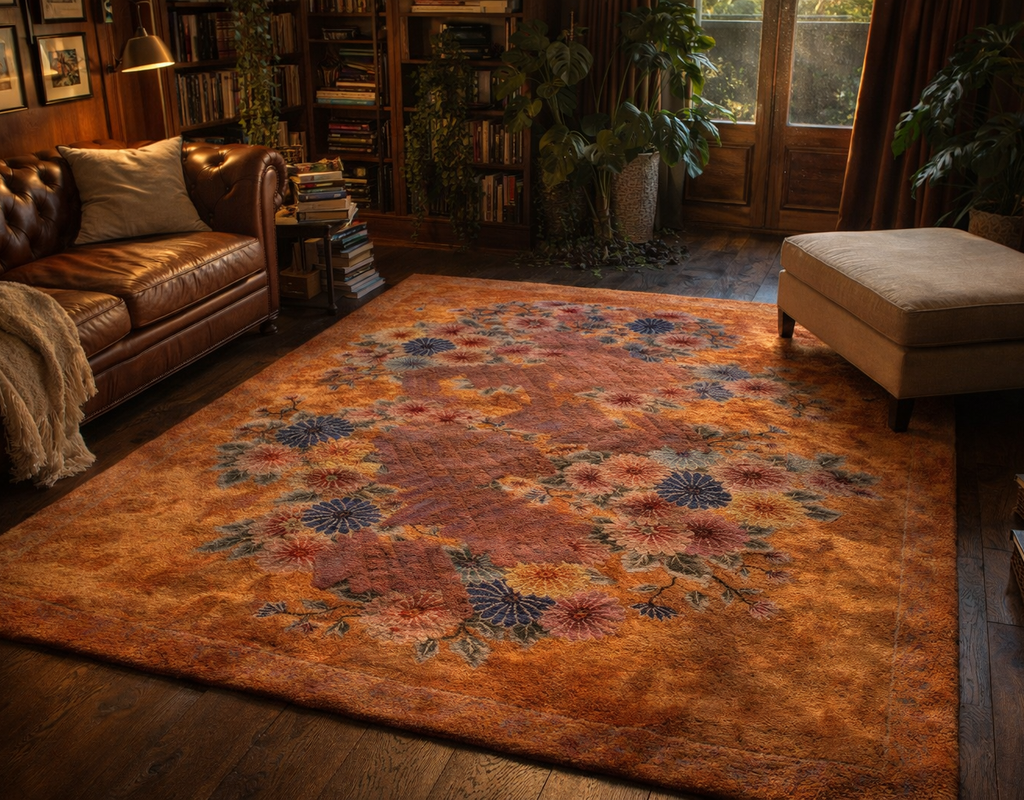
A vibrant, artistic floral rug adds a burst of color and texture to a traditionally decorated reading space.
It is paired with blue and brown for bold contrast, as in a blue and orange Persian rug, or with darker neutrals to provide grounding. Orange dominates as a statement color, while coral often balances or softens a palette. This difference explains why coral rugs integrate smoothly into coastal or modern themes, while orange rugs thrive in traditional or high-contrast interiors.
Motif Use & Color Pairings
- Orange Medallions with Blue Fields — Why: The complementary pairing creates vibrancy and depth, a signature of Persian and Caucasian rugs.
- Coral Borders with Ivory Grounds — Why: This combination lightens the composition, ideal for spaces seeking openness and calm.
- Orange Geometric Stripes in Kilims — Why: The bold, graphic quality of orange stripes reinforces rhythm and energy in flatwoven rugs.
- Coral Floral Sprays on Apricot Fields — Why: Layering related tones softens the design, adding visual harmony and warmth.
Motif placement matters: orange can serve as the dominant field, while coral may highlight outlines, rosettes, or blossoms. Together, they regulate the rug’s visual energy, shifting it between boldness and refinement.
Patterns for Pairing with Modern Interiors
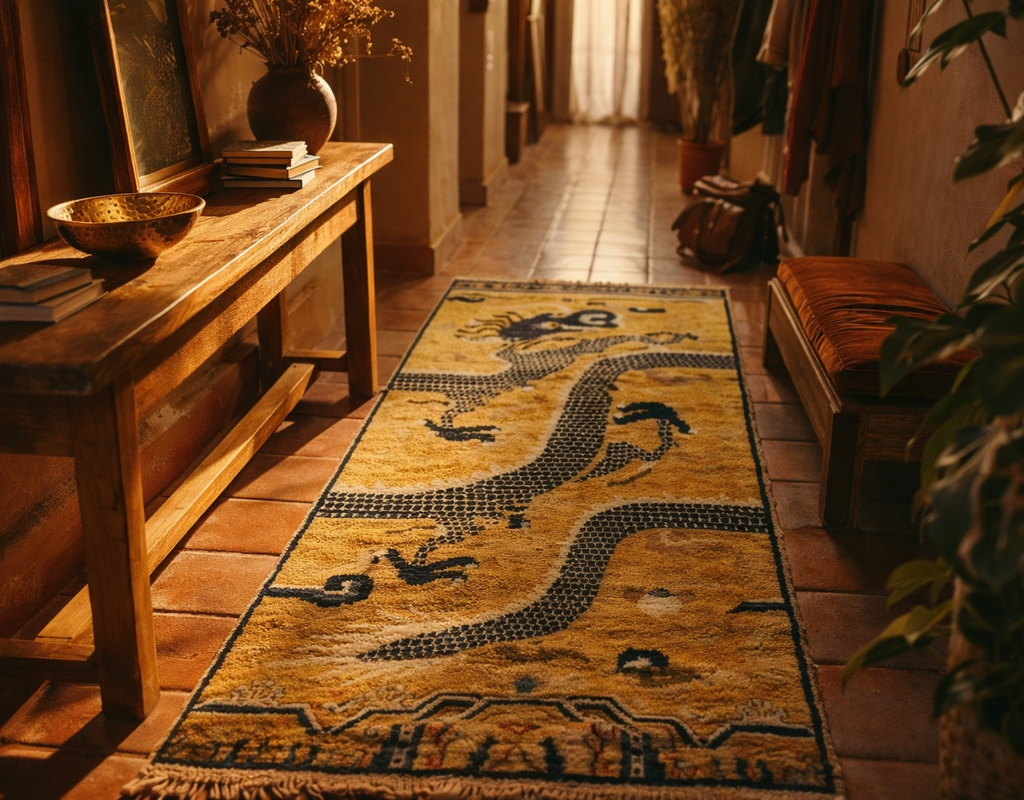
A richly colored runner rug featuring a traditional dragon design anchors this sunlit, rustic hallway.
- Orange with Neutral Sofas — Why: A modern orange runner or block-pattern rug grounds beige or gray furniture, preventing the space from feeling flat. The vibrancy of orange adds warmth while neutrals balance intensity.
- Coral with Teal Furniture — Why: A coral field Oushak or soft coral-and-ivory rug harmonizes beautifully with teal accents, since the pairing echoes coastal palettes of reef and sea. This creates freshness without overwhelming saturation.
- Orange with Wood Tones — Why: A terracotta-toned Kazak orange carpet paired with warm wood floors or furniture enhances natural richness and earthy depth.
- Coral with Modern Minimalism — Why: Coral’s pastel pink-orange undertone, paired with whites or soft grays, injects gentle warmth into pared-down interiors.
Both colors adapt seamlessly to contemporary design. Where orange dominates with energy and presence, coral lends refinement and lightness. Modern designers employ these hues for both retro-inspired interiors and avant-garde looks, proving their versatility in today’s rug market.
Historical Shifts & Market Value
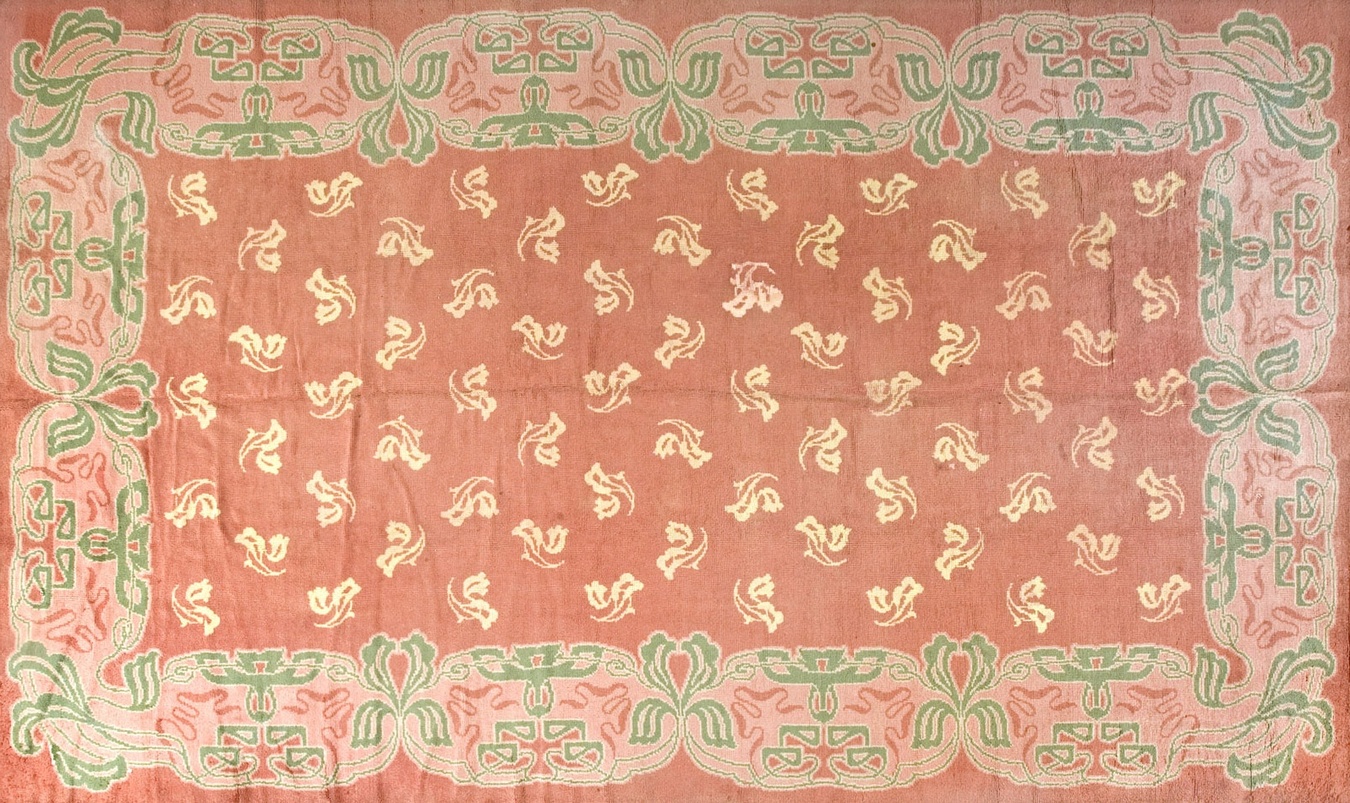
Antique Donegal – Arts & Crafts Ireland 1930s Rug – by Rugs On Net
Pre-19th Century to Modern Dye Innovations
- Before 1850 — Why: All orange and coral tones in rugs were produced with natural vegetable dyes, making them rare and prized, especially in tribal pieces where weavers relied on madder, safflower, and henna. These shades were labor-intensive to achieve, so an authentic natural orange dye antique rug signaled both skill and access to valuable dyestuffs.
- Mid-19th Century (1860s Onward) — Why: The invention of aniline and azo synthetic dyes created a boom in brighter, more varied orange and coral hues. However, these early synthetics were unstable, leading to fading, bleeding, and uneven discoloration that still affects the appearance of many 19th-century rugs today.
- Early 20th Century — Why: In 1903, the Persian government formally banned aniline dyes to preserve weaving quality and international reputation. Chrome and acid dyes gradually replaced them, offering far greater stability and lightfastness.
- Modern Era — Why: Contemporary production now uses stable synthetics while also embracing natural-dye revival movements such as the DOBAG project in Turkey and Gabbeh weaving in Iran. These efforts restored the prestige of natural orange and coral dyes, merging authenticity with durability.
Impact of Synthetic Dyes and Overdyeing
- Synthetic Dye History — Why: Rugs made with early synthetic dyes often have washed-out oranges or uneven coral tones today, lowering their desirability among collectors. This historical shift explains why dye chemistry directly impacts both aesthetic longevity and Heriz rug market price.
- Modern Synthetics — Why: Today’s synthetics provide reliable brilliance and high lightfastness ratings, particularly in silk rugs where orange shades are otherwise vulnerable to fading. This makes modern synthetics attractive for buyers seeking bold color with lower conservation concerns.
- Overdyeing Practices — Why: The practice of overdyeing old beige rugs to coral has gained popularity in contemporary interiors. While this can refresh a worn carpet with a trendy look, its cost-effectiveness depends on fiber and structure. Wool and cotton rugs can take dye successfully, but silk or already fragile pieces often do not justify the investment. Overdyed rugs also lack the nuanced abrash and natural depth of authentic coral-dyed weaves.
Vintage Oushak & Heriz Rugs: Value Trends
Among collectors, vintage orange Oushak value has risen steadily. Oushaks with original, unfaded coral or apricot fields are rare, making them especially desirable in both Western and Middle Eastern markets. Their soft coral tones, paired with monumental floral motifs, align with modern design tastes, boosting demand.
Similarly, Heriz rugs featuring bold orange medallions or borders command high prices. The Heriz rug market price reflects their durability, strong tribal geometry, and color schemes that balance fiery oranges with deep indigo. Pieces retaining vibrant natural-dyed orange are considered investment-grade, often appreciating faster than rugs with synthetic-faded tones. For orange silk rugs, the lightfastness rating is crucial to value. Collectors invest with confidence when dyes are stable—whether natural or high-grade synthetic—since fading undermines both aesthetic and financial worth.
In today’s market, the trajectory is clear: genuine natural-dyed orange and coral rugs are prized for authenticity and longevity, while stable synthetics sustain vibrancy in modern productions. Dye technology has always shaped both collectability and price, and it continues to define investment potential in the rug world.
Modern Usage, Interior Design & Decorating Tips
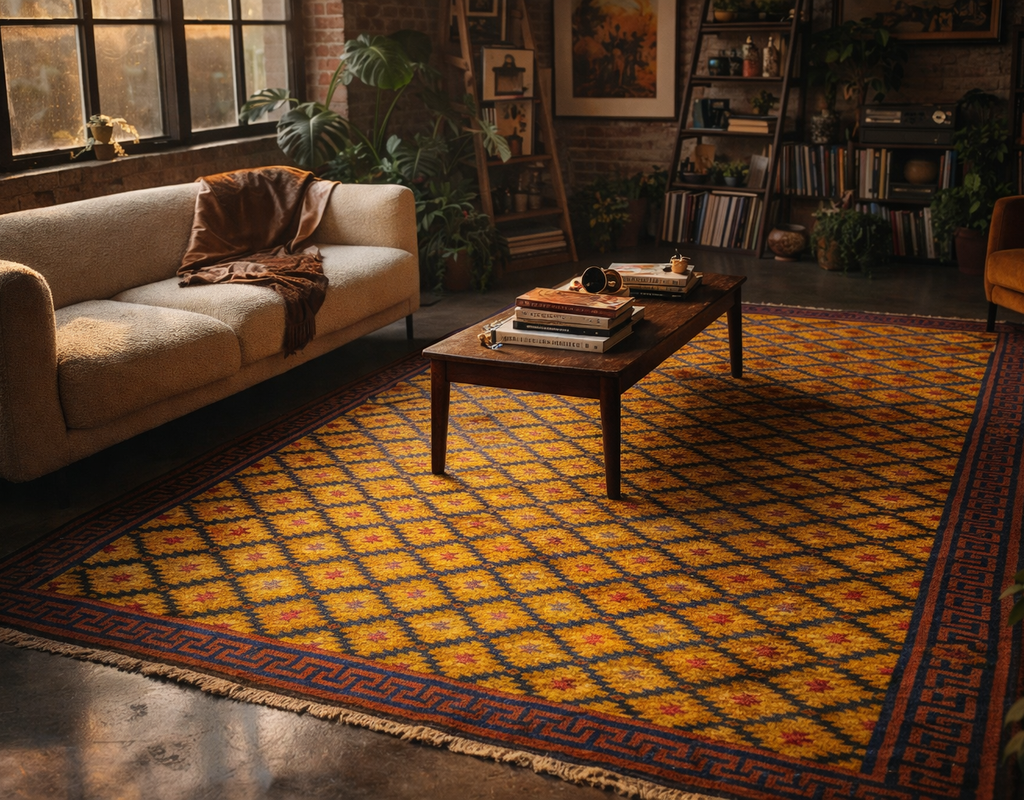
A vibrant, richly patterned rug anchors this cozy living area filled with texture and greenery.
Why Coral Rugs Suit Coastal & Contemporary Themes
- Beach-Inspired Palettes — Why: A coastal coral rug pairs naturally with whites, driftwood grays, and sea glass tones, echoing sand and surf palettes. Coral mimics seashells and tropical sunsets, making it a favorite in coastal homes.
- Fresh Contemporary Look — Why: Coral’s pastel undertone introduces warmth without heaviness, complementing modern spaces where airiness and brightness are key.
- Versatility Across Rooms — Why: Whether as a soft eco-friendly coral carpet in a bedroom or a bold statement rug in a living room, coral integrates with both classic and cutting-edge interiors.
Anchoring Rooms: Burnt Orange & Bold Fields
- Warmth with Dark Hardwood Floors — Why: A burnt orange living room rug grounds spaces with rich flooring, balancing deep browns with fiery warmth. This creates both visual focus and comfort.
- Energy and Boldness — Why: Large orange fields, particularly in modern orange area rugs, make a striking centerpiece. They energize living rooms or dining spaces where bold color is desired.
- Retro Meets Modern — Why: Burnt orange evokes mid-century design while also adapting to today’s eclectic interiors, making it a timeless anchor.
Pairing with Teal, Neutrals, and Accent Furniture
- Orange and Teal — Why: An orange and teal rug creates a high-energy, complementary pairing. Coral softens teal’s intensity, while burnt orange amplifies it for a more dramatic look.
- Orange with Neutral Sofas — Why: A neutral orange rug with beige, gray, or ivory sofas balances vibrancy with calm. Geometric or block motifs provide structure, making this ideal for modern minimalist interiors.
- Accent Furniture Integration — Why: Coral rugs harmonize with teal chairs, brass lamps, or glass accents, blending bold hues with metallic and organic finishes.
Selecting Orange Runners for Hallways
When choosing an orange hallway runner, proportion is crucial. For the best fit, select a runner that is 4–6 inches narrower than the hallway width, leaving equal space on each side for balance. Length should extend to cover high-traffic areas, with minimal gaps at either end for a polished look.
Styles vary: a modern orange runner with geometric motifs suits contemporary hallways, while a tribal or abrash-dyed piece adds warmth and character in rustic or bohemian homes. Proper sizing not only enhances aesthetics but also improves safety by preventing curling or edge wear.
Are Coral Rugs Good for Eco-Friendly Homes?
- Vegetable-Dyed Options — Why: Buyers seeking sustainable décor can find vegetable-dyed coral rugs, which use natural, toxin-free dyes and are safer for indoor air quality.
- Upcycling Potential — Why: Overdyeing old beige or neutral rugs into coral tones gives new life to otherwise outdated pieces, aligning with eco-conscious reuse—though not every fiber or rug construction is a good candidate.
- Earth-Conscious Aesthetic — Why: Coral’s organic glow harmonizes with bamboo, jute, and reclaimed-wood furnishings, strengthening a sustainable design narrative.
From burnt orange rugs anchoring hardwood spaces to coral field rugs softening coastal interiors, these colors adapt effortlessly across design settings. Their ability to harmonize with neutrals, energize with teal, and appeal to eco-friendly living ensures orange and coral remain among the most versatile rug choices today.
Care, Cleaning & Longevity
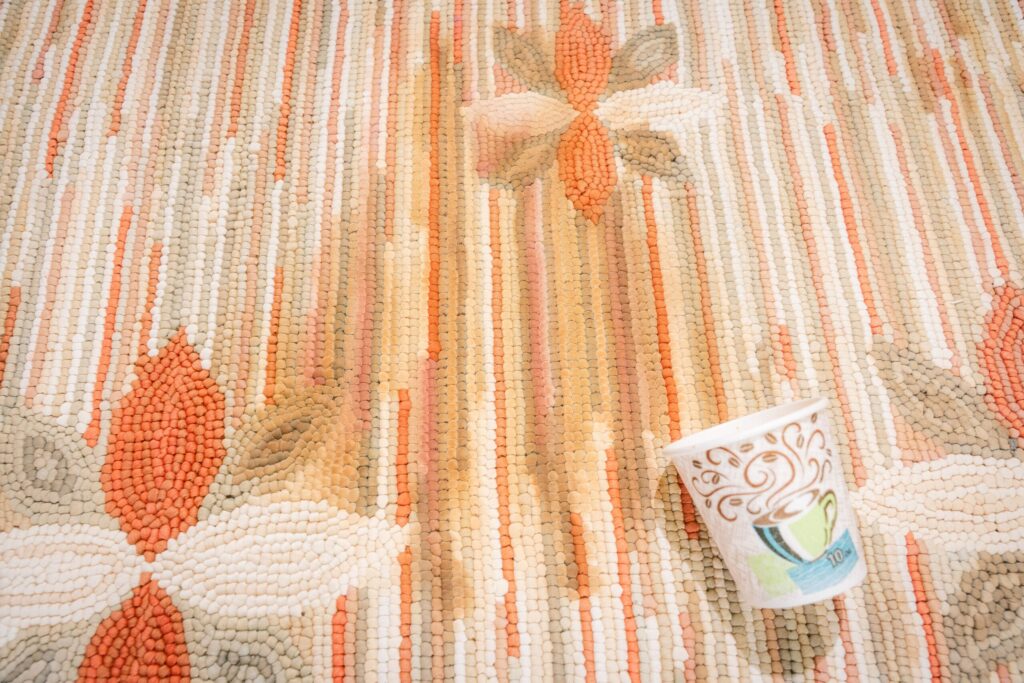
Close-up view of a tipped paper coffee cup resting on a handwoven wool rug, highlighting the rug’s dense pile, subtle color variations, and traditional geometric motifs in warm neutral and terracotta tones.
How to Rotate Rugs for Fading Prevention
- Every 3–6 Months — Why: To maintain even coloration, rotate coral rugs two to four times a year. This ensures that one section does not absorb more sun exposure than another, which is particularly important for bright or naturally dyed oranges that mellow unevenly.
- Sunlight Protection — Why: Use UV-protective window films, sheer curtains, or strategic furniture placement to reduce fading. This not only preserves the rug’s vibrancy but also sustains its long-term value.
Cleaning Methods for Orange & Coral Wool Rugs
- Mild Detergent and Low Moisture — Why: For everyday cleaning of orange wool rugs, a diluted, pH-neutral detergent and gentle blotting method prevent color dulling. Excess water risks bleeding or fiber shrinkage.
- Spot Testing — Why: Always test a hidden section before cleaning to ensure dyes remain stable, especially with antique or naturally dyed rugs.
- Professional Deep Cleaning — Why: For valuable or hand-knotted coral rugs, professional cleaning preserves dye integrity and pile quality, extending both beauty and lifespan.
Bleaching, Spot Care, and Color Migration
Bleach should never be used on coral or orange flatweaves. Attempting to bleach spots can irreparably damage the fiber, strip the dye, and leave patchy discoloration—a permanent loss. For spills, blot gently with a clean, absorbent cloth and follow up with mild soap solution if necessary.
Orange rug color migration after cleaning usually results from unstable synthetic dyes, over-saturation during washing, or incorrect cleaning agents. This risk highlights the importance of professional care for any rug with vibrant hues, especially antiques or silk blends where color migration can drastically reduce value.
Radiant Floor Heating & Rug Care
- Wool Sensitivity — Why: Hand-knotted wool rugs placed directly on radiant heating systems risk drying out, shrinking, or becoming brittle over time.
- Use of Rug Pads — Why: A quality insulating rug pad provides a protective buffer, moderating heat transfer and preserving fibers.
- Manufacturer Guidance — Why: Always consult both the rug maker’s and heating system’s recommendations for safe placement, ensuring radiant heat rug care without compromising longevity.
Lightfastness, Investment, & Long-Term Value
- Lightfastness Ratings — Why: The blue wool scale measures dye resistance to fading, with higher numbers indicating better stability. For lightfastness rug investment decisions—especially with orange silk rugs—ratings are crucial, as poor resistance can undermine both aesthetics and resale value.
- Investment Protection — Why: Correct cleaning, careful rotation, and controlled light exposure preserve vibrancy, ensuring that rugs not only last but also appreciate in value.
- Professional Oversight — Why: Antique or collector-grade orange and coral rugs require specialist care, as improper methods can turn a high-value asset into a diminished decorative piece.
With proper care, from rotating coral rugs regularly to avoiding harmful bleaching, orange and coral rugs can retain their brilliance for generations. Their longevity and market worth depend as much on daily practices as on the quality of dyes woven into their fibers.
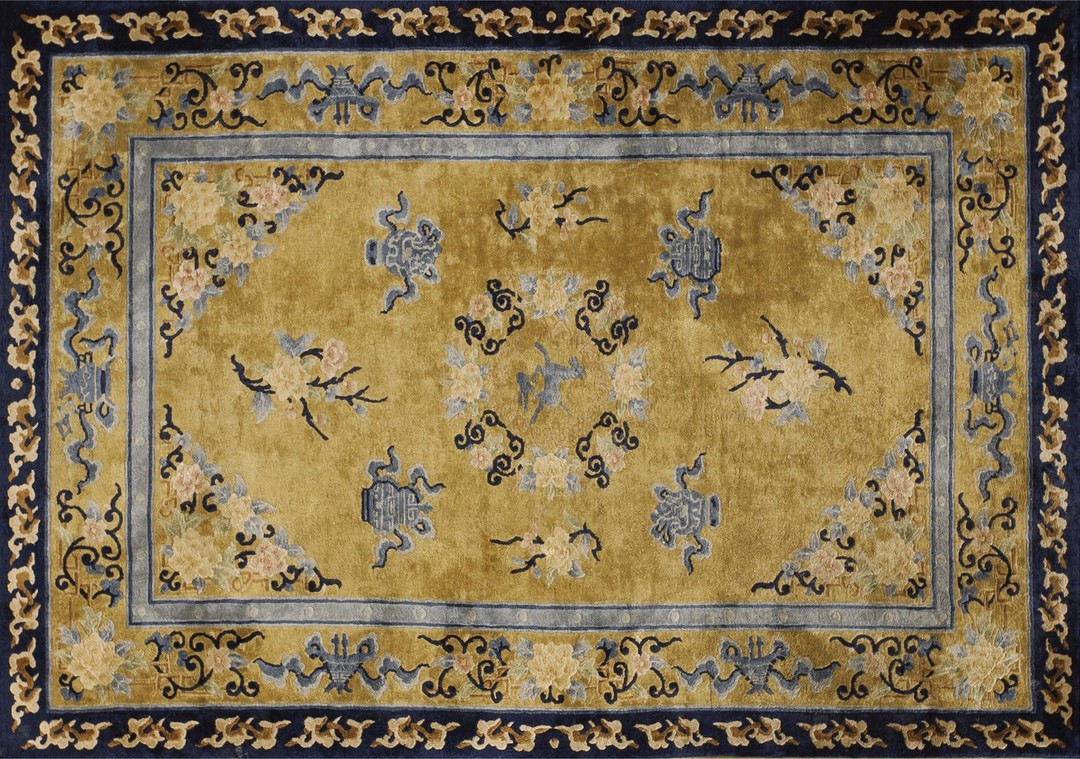
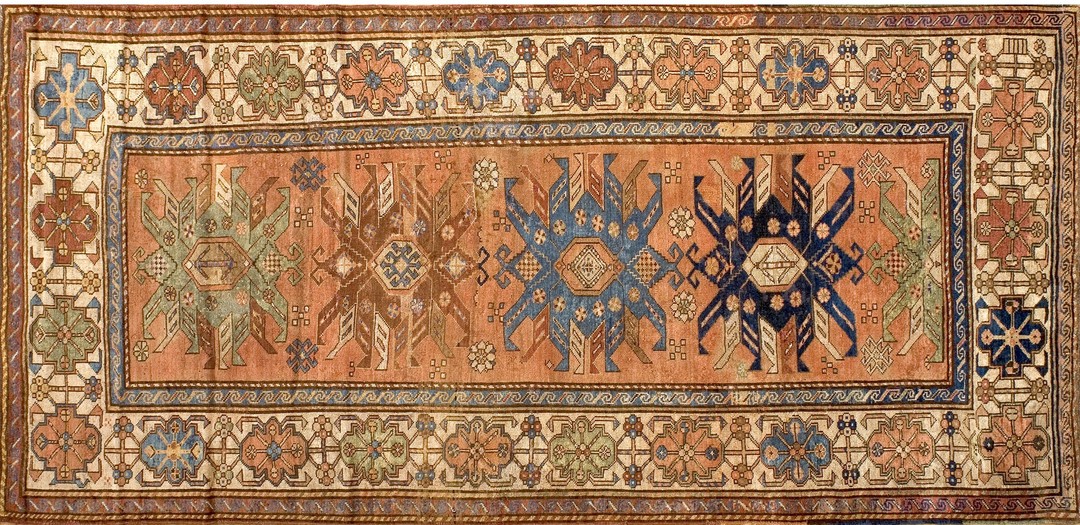
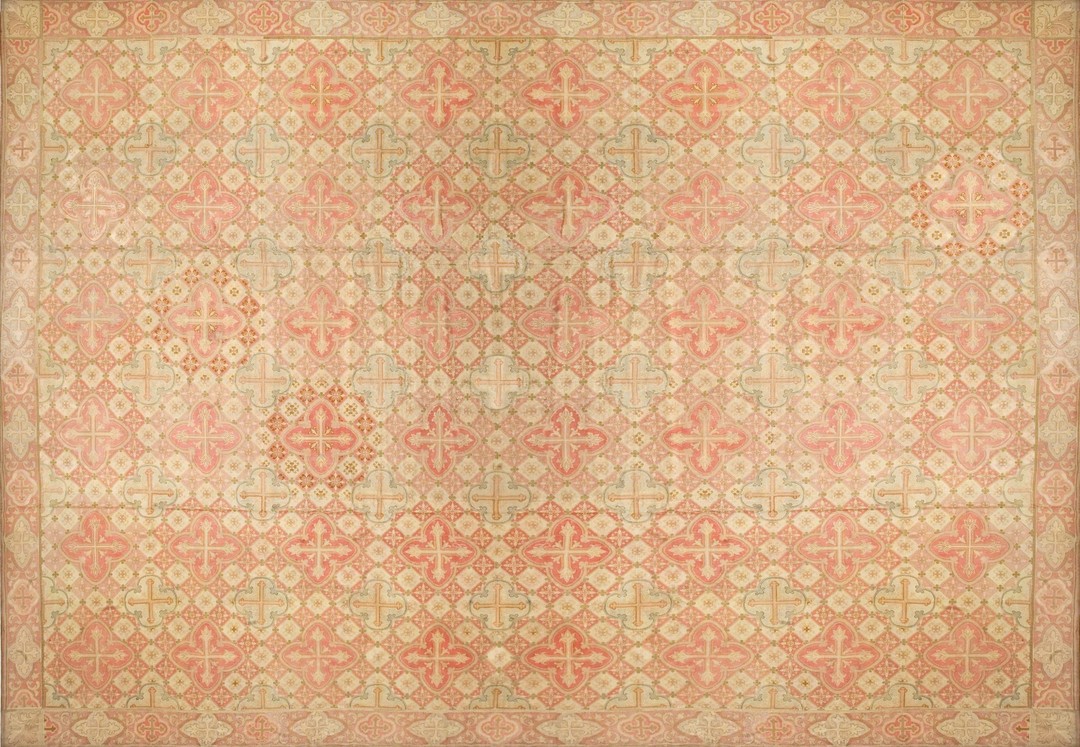
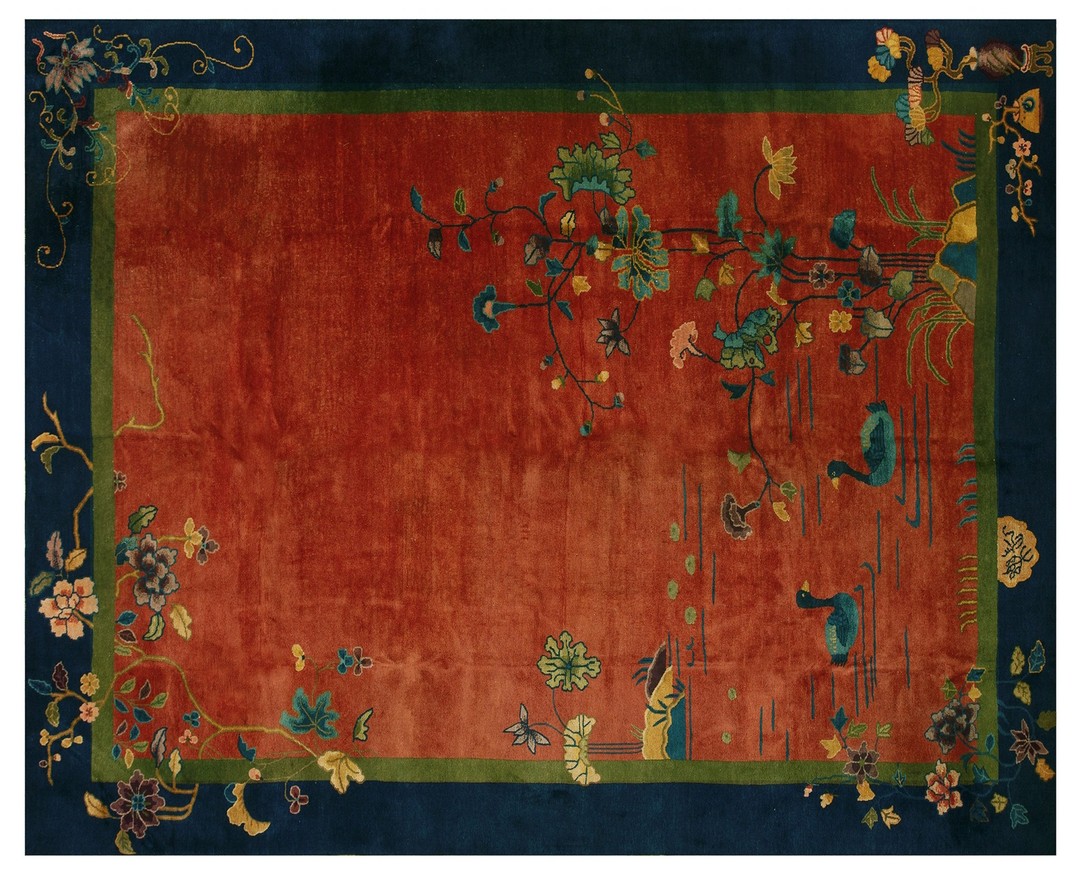
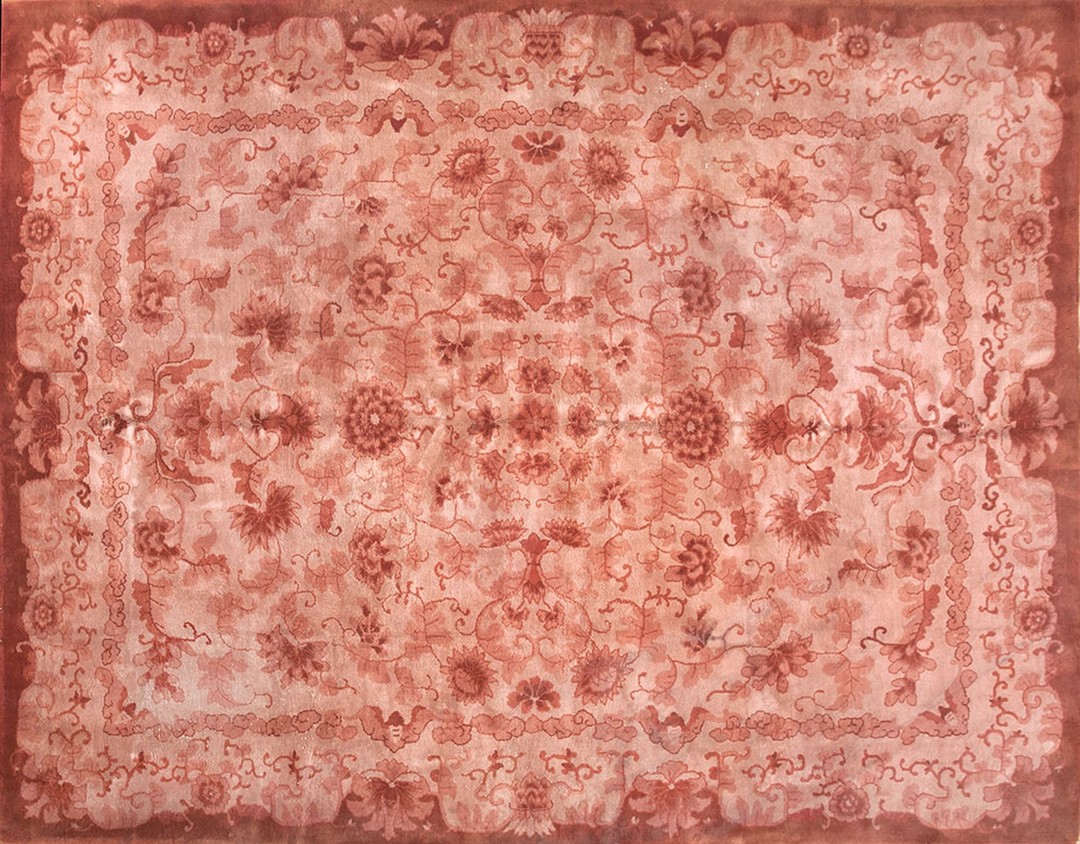
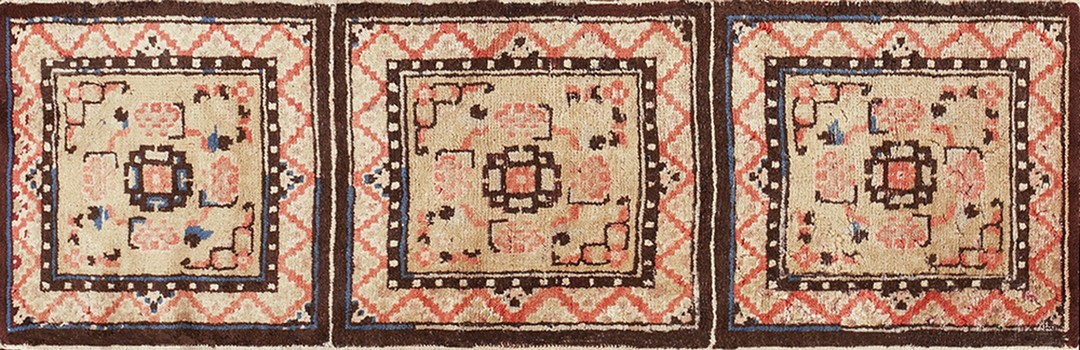
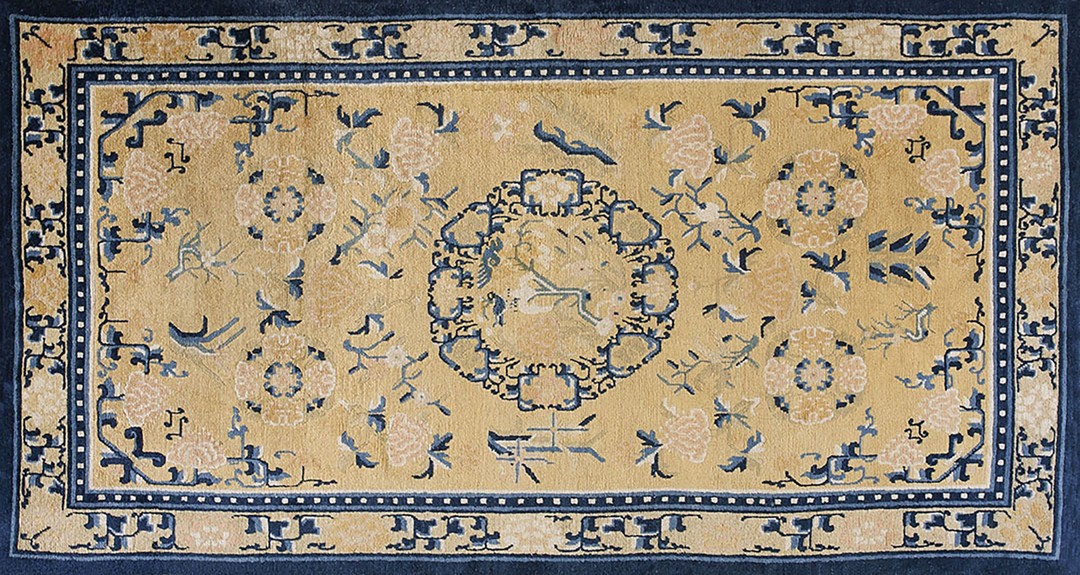
Explore a few of our orange-coral rugs

FAQ
- Should I layer coral rugs over carpet?
Yes—layer thin, flatweave coral rugs over carpet with a carpet-to-carpet pad. Keep furniture anchoring the rug to prevent ripples.
- What patterns work best on coral rugs to hide stains?
Multitone, heathered, or busy patterns (geometrics, vintage, or speckled) hide marks better than solids. Medium-scale motifs conceal everyday wear.
- Do coral rugs fade or change color over time?
Sunlight and harsh cleaners can fade coral rugs. Rotate regularly and use UV protection; solution-dyed synthetics retain color better than piece-dyed fibers.
- Are coral rugs a good choice for bathrooms or kitchens?
Choose low-pile, washable, or indoor/outdoor coral rugs for moisture-prone areas. Use non-slip backing and hang to dry after spills or steam.
- How do I prevent coral rugs from slipping on tile?
Use a felt+natural-rubber pad or low-profile natural-rubber gripper under coral rugs. Leave a 1″ margin so the pad doesn’t show.
- Will coral rugs clash with red or pink furniture?
Coral rugs sit between orange and pink, so they can work with dusty rose or muted red. Keep saturation balanced—use coral as the main pop and the others as accents.
- Are coral rugs available as machine-washable options?
Yes—many flat, synthetic coral rugs are machine-washable; follow cold-water, gentle-cycle instructions. Always check the care label and air-dry flat.
- Which materials feel soft for coral rugs without shedding?
Hand-tufted wool coral rugs feel plush but may shed initially; low-pile polyester blends are soft with minimal shedding. Vacuum with suction-only for wool.
- What size coral rug works under a dining table?
Size coral rugs so chairs stay on the rug when pulled out—add 24 inches on all sides. For a 36×72″ table, an 8×10 is typical.
- Do coral rugs make small rooms look bigger or smaller?
Light, low-contrast coral rugs can visually expand a room. Keep 10–20 inches of bare floor around the rug to frame the space.
- Are coral rugs good for coastal or beach-style rooms?
Absolutely—coral rugs complement rattan, driftwood, and light linen upholstery. Add sea-glass blues or sage for a fresh coastal palette.
- What wall colors pair well with coral rugs?
Coral rugs glow beside soft whites, warm grays, and sand tones. For contrast, try navy or teal accents with brass hardware.
- How much do orange 8x10 rugs typically cost?
Budget machine-made orange rugs often run \$150–\$600, while hand-knotted wool versions usually start around \$1,000+. Vintage or designer pieces can be much higher.
- Should robot vacuums be used on orange rugs with fringe?
Yes, but tuck fringe under and set no-go zones if possible. Many robots snag tassels; secure edges with rug tape for safety.
- How do I clean spills on orange rugs without color bleeding?
Blot immediately with white cloths, then dab a mild detergent solution; test for colorfastness first. For wool orange rugs, avoid hot water and alkaline cleaners.
- Are orange rugs okay with pets and kids?
Yes—pick low-pile, patterned orange rugs in wool, nylon, or polypropylene for easier cleanups. Washable or indoor/outdoor constructions add extra durability.
- Can I use orange outdoor rugs on a sunny patio without fading?
Choose solution-dyed polypropylene orange outdoor rugs for UV resistance. Let them dry fully after heavy rain to prevent mildew.
- What rug pad works best under orange rugs on hardwood?
A felt+natural-rubber pad gives grip and cushion; 1/4″ thickness suits most rooms. Trim pads 1″ smaller than the rug to keep edges flat.
- Are orange rugs safe on radiant-heated floors?
Yes—use orange rugs with felt or felt-plus-natural-rubber pads labeled safe for radiant heat. Avoid thick foam pads that trap heat; keep temperatures moderate.
- How do I stop orange rugs from fading in sunlight?
Rotate orange rugs every 6–12 months, use UV-filter films or lined drapes, and avoid prolonged direct sun. Solution-dyed fibers hold color better outdoors.
- Which materials are most durable for orange rugs in high-traffic rooms?
Wool and polypropylene orange rugs handle traffic well; wool is resilient, polypropylene resists stains. Look for low-pile or flatweave around entries and hallways.
- Do orange rugs show dirt easily, and how can I hide messes?
Bright solid orange shows debris, while heathered, patterned, or darker rust orange hides it better. Choose low-to-medium pile and vacuum weekly with a HEPA vacuum.
- What size orange area rug should I use under a queen bed?
An 8×10 orange rug usually fits best so 18–24 inches extend beyond the sides and foot. In smaller rooms, a 6×9 can work if nightstands stay off the rug.
- Are orange rugs in style for 2025 or are they dated?
Yes—orange rugs are trending, especially burnt orange and terracotta tones. Pair them with warm woods and earthy neutrals for a modern, grounded look.
- What colors go best with orange rugs in a living room?
Start with neutrals (cream, gray, tan) and add accents like navy, teal, or eggplant for contrast. Keep at least one repeat of orange in pillows or art to tie it together.