
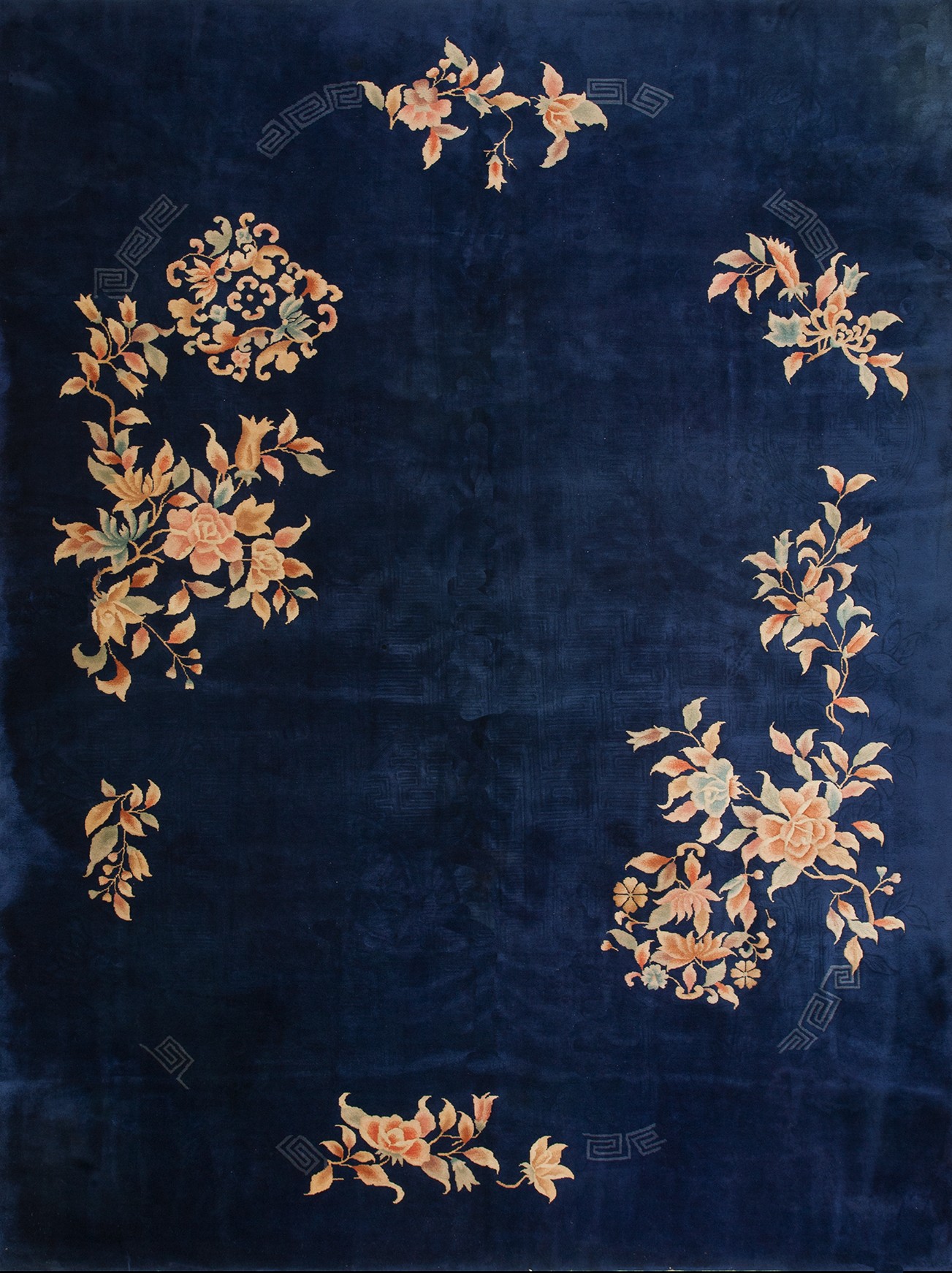
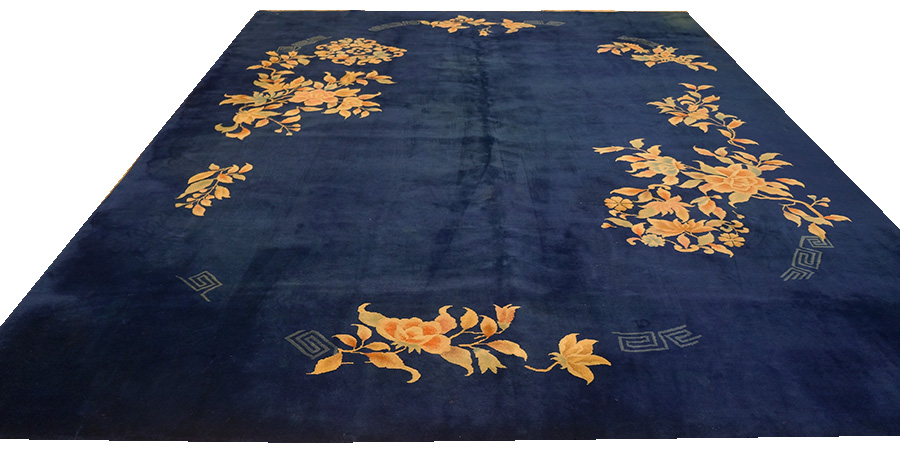
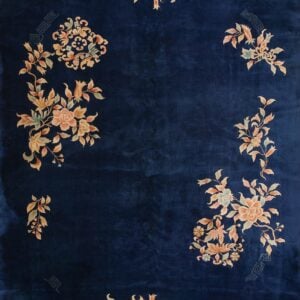
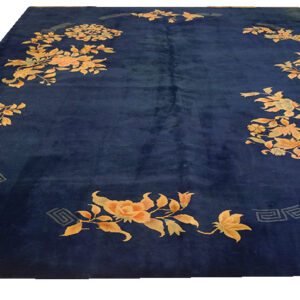
This circa 1920s Art Deco carpet from China is a quintessential example of the “Nichols-era” aesthetic, representing a time when the workshops of Tianjin and Beijing merged centuries-old Eastern craftsmanship with the bold, modernist spirit of the Jazz Age. This specific room-size specimen is a masterclass in the use of negative space, offering a serene yet powerful architectural foundation for grand interior spaces.
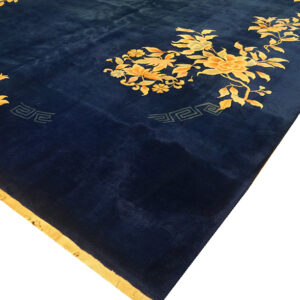
The composition is defined by its dramatic Navy Blue “Open Field.” Unlike the densely patterned “all-over” designs of traditional Persian or earlier Chinese weaving, the Art Deco style prioritizes a vast, minimalist center. This allows the richness of the indigo dye to take center stage, creating a sense of “liquid depth” and tranquility. The floral elements—often featuring stylized peonies, cherry blossoms, or chrysanthemums—are typically relegated to the corners or the border, where they appear to “float” or “creep” into the field with a painterly, asymmetrical elegance.
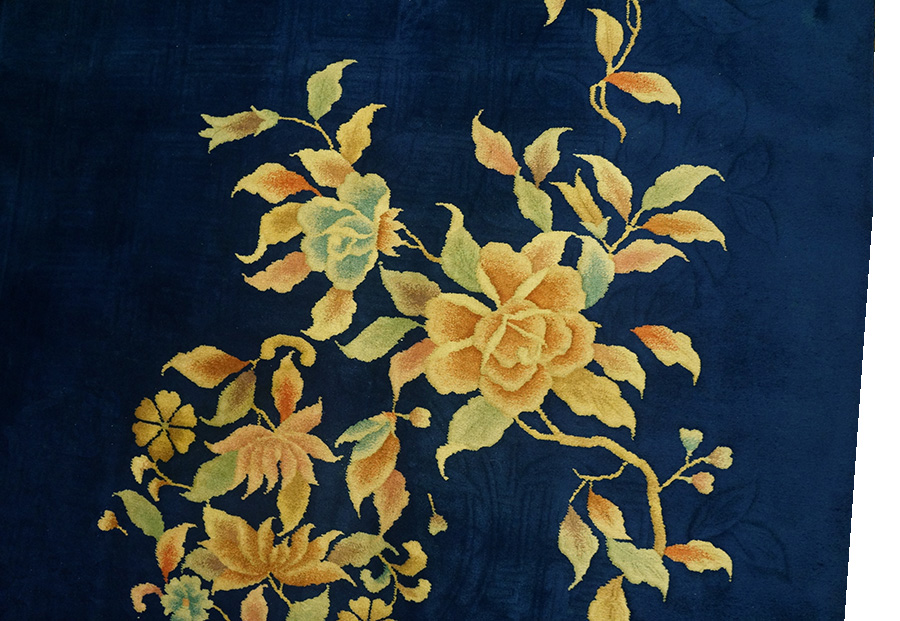
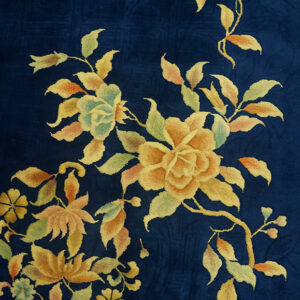
The palette is anchored by a saturated midnight navy, a hallmark of the high-quality chrome and natural dyes utilized in the 1920s. This deep blue provides a startlingly modern contrast to the “Jewelry Box” accents of the floral motifs, which often incorporate hues of emerald green, plum purple, dusty rose, and golden ochre. Because these antique Chinese art deco rugs were made with the finest wool, the colors possess a luminous, high-sheen quality that mimics the appearance of silk.
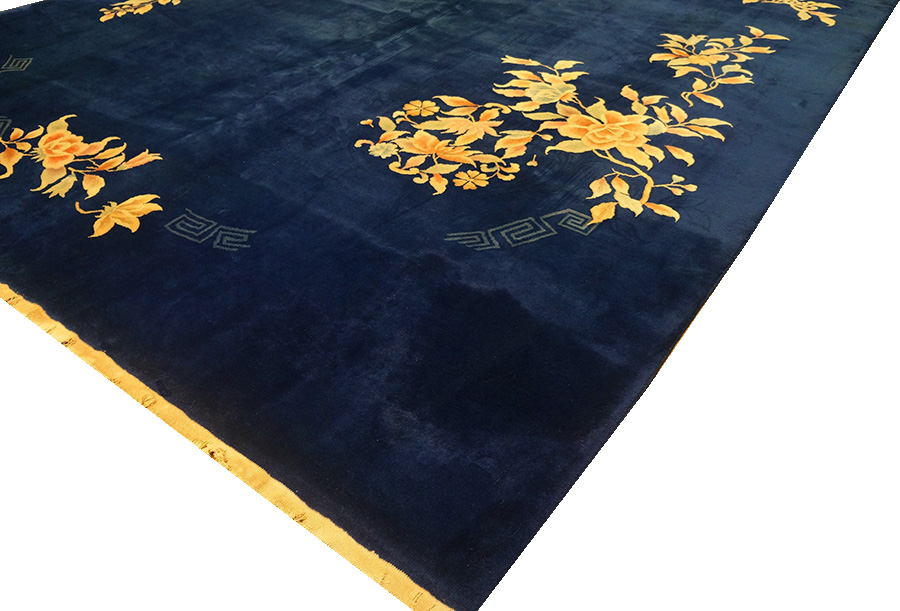
Technically, a Chinese Art Deco carpet of this caliber is prized for its substantial, luxurious pile. Woven with thick, high-luster wool on a heavy cotton foundation, the blue rug has a “meatiness” and weight that feels incredibly soft and resilient underfoot. The “sculpting” technique—where the weaver hand-carves the outlines of the flowers—creates a three-dimensional, textural effect that adds to the rug’s decorative gravity.
The borders serve as a sophisticated frame, often featuring a high-contrast color (such as a pale taupe or a rich plum) that anchors the deep navy field. These borders are frequently decorated with traditional Chinese symbols of longevity and prosperity, but rendered in the streamlined, graphic style of the Deco period. To possess this Navy Blue Open Field Chinese Deco is to own a monument to cultural synthesis—a work that bridges the gap between ancient dynastic tradition and the high-glamour sophistication of the early 20th-century Western world.