
Introduction to Native American Rugs
Discover our range of authentic Native American rugs to complete your luxury home aesthetic.
Definition & Scope
A Native American rug refers to handwoven textiles created by Indigenous peoples of North America, with the Navajo rug standing as the most recognized and influential example. These rugs are defined by their geometric motifs, symbolic meaning, and exceptional craftsmanship, qualities that distinguish them from the broader category of Southwestern-style rugs often produced commercially.
While Navajo weaving dominates the conversation, authentic Native rugs also include textiles from Hopi, Pueblo, and Rio Grande traditions, each contributing its own distinctive patterns, techniques, and cultural contexts. Authenticity is critical: not every rug marketed as “Southwestern” originates from Indigenous hands.
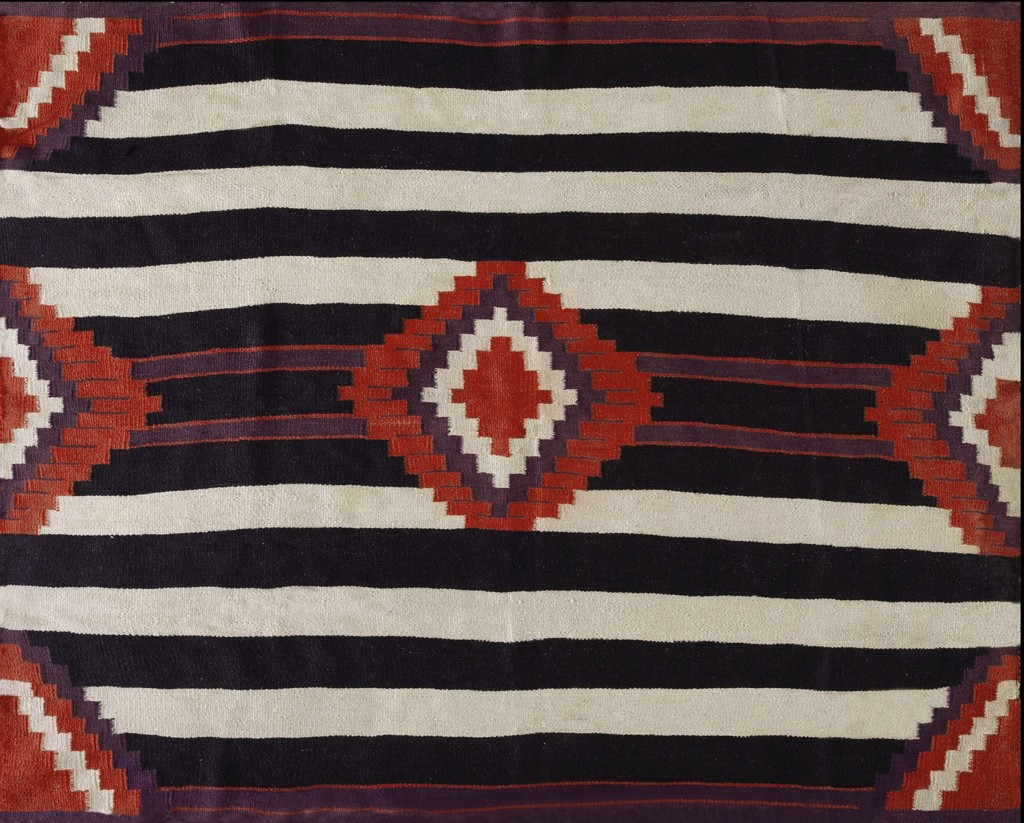
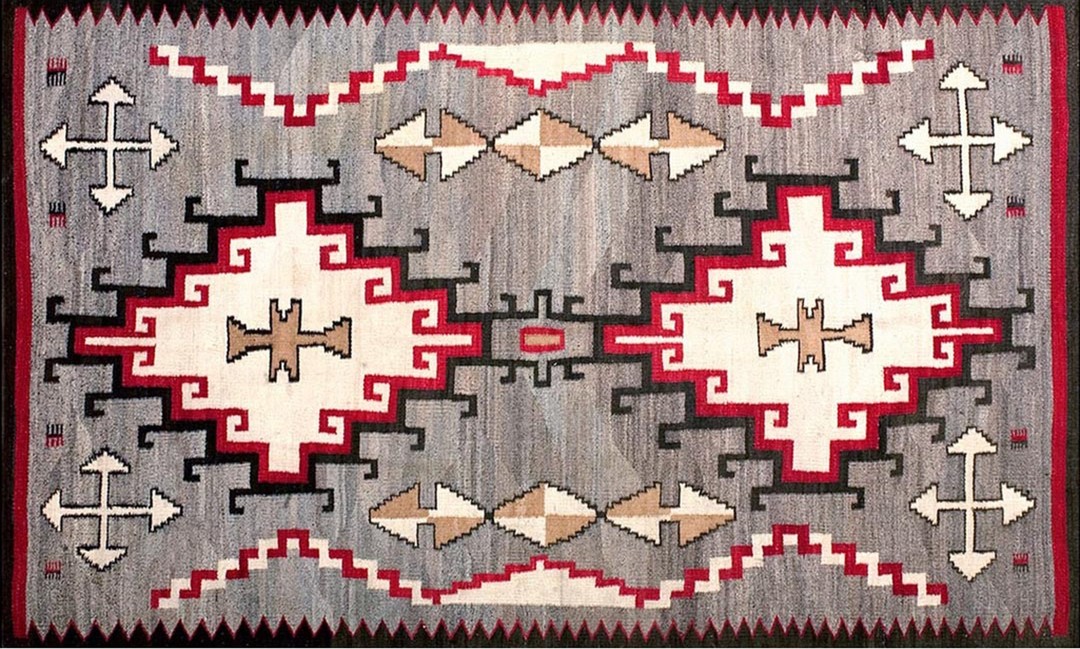
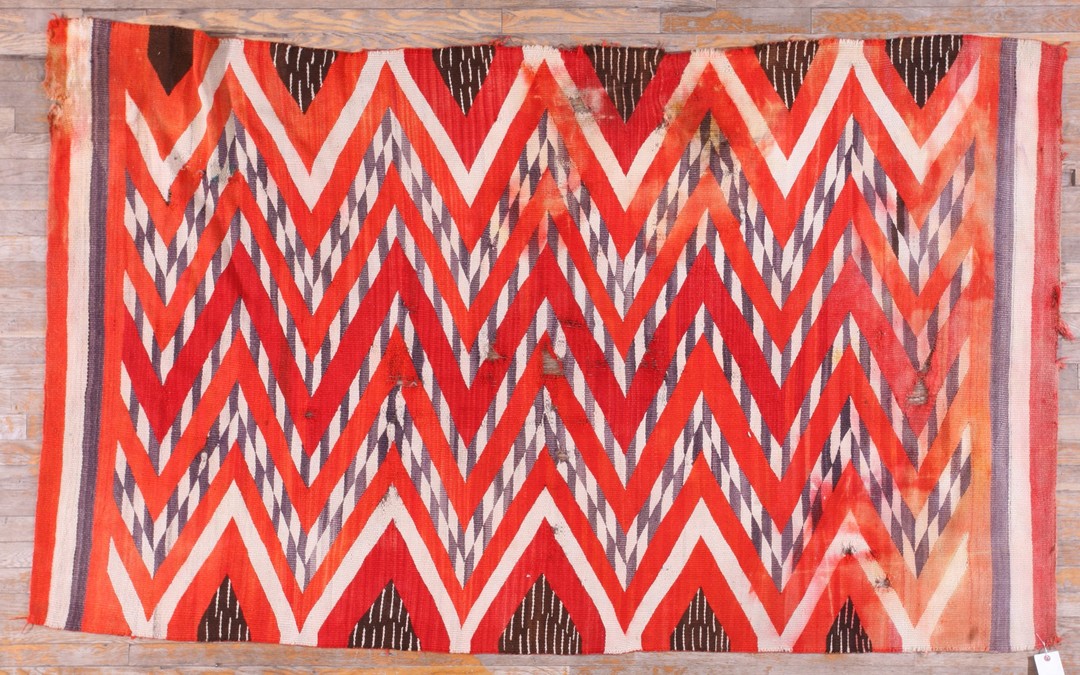
Geometric Flatwoven Antique Native American Chiefs Blanket Rug by Rugs On Net
Many factory-made imitations borrow surface-level designs but lack the cultural depth and artisanal integrity of true Indigenous weaving. For collectors, designers, and historians, understanding the scope of Native American rugs means looking beyond decorative appeal to their roots in ceremony, storytelling, and lived tradition.
Importance in North American Textile Art
Native American rugs hold a central place in the history of North American textile art, shaping regional identity and influencing global aesthetics. The Navajo rug, in particular, represents a pinnacle of weaving skill, with techniques such as vertical loom construction, natural wool dyeing, and intricate hand-spun yarns.
These textiles are not merely utilitarian floor coverings; they are works of art encoded with cultural symbols, often tied to cosmology, spirituality, and community memory. The artistic importance of Native American rugs extends beyond their communities of origin. By the 19th century, they became sought-after exports, admired for their bold geometric compositions that resonated with modernist design movements in Europe and America.
Today, their legacy continues in both museum collections and contemporary interiors, where authentic pieces are celebrated for their historical resonance and timeless design language. Within the broader framework of Indigenous art, rugs stand as one of the most visible and enduring forms. They embody survival and continuity, maintaining traditional knowledge while evolving alongside modern markets. Their presence in the Southwestern textile tradition has also profoundly shaped American interior design, with Native motifs now embedded into mainstream decor aesthetics.
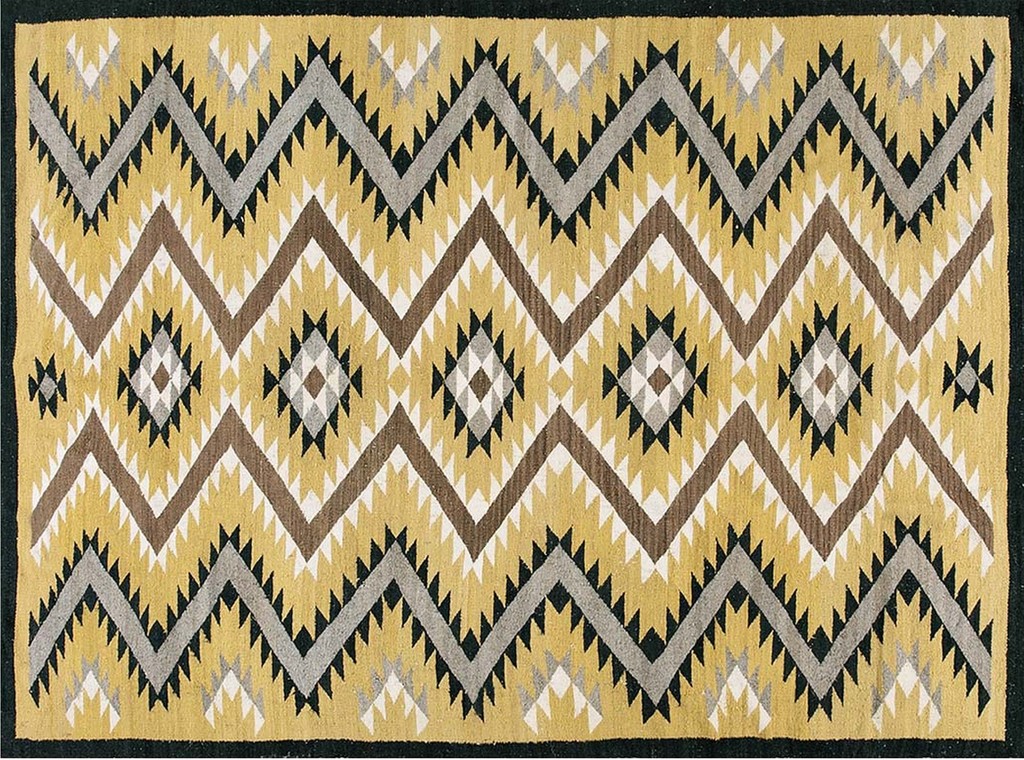
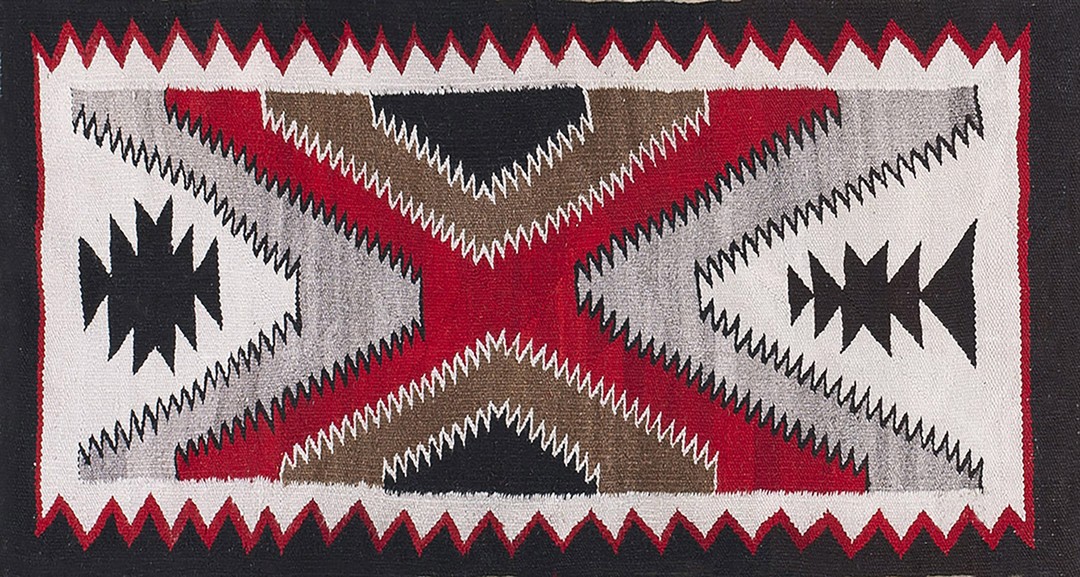
Vintage Geometric Chevron Pattern Native American Navajo Small Scatter Size Wool Yellow Rug by Rugs On Net
At the same time, it is essential to recognize that these rugs are not static artifacts. They are part of a living tradition of Indigenous weaving, still practiced by artisans who innovate within ancestral frameworks. By differentiating authentic Native rugs from mass-produced Southwestern imitations, one can better appreciate both the artistry and the cultural sovereignty that give these textiles their enduring power.
In sum, Native American rugs are a cornerstone of textile history—bridging artistry, identity, and cultural continuity. To understand them is to acknowledge their deep roots in Indigenous life and their far-reaching influence on design across North America and beyond.
Origins and Early Influences
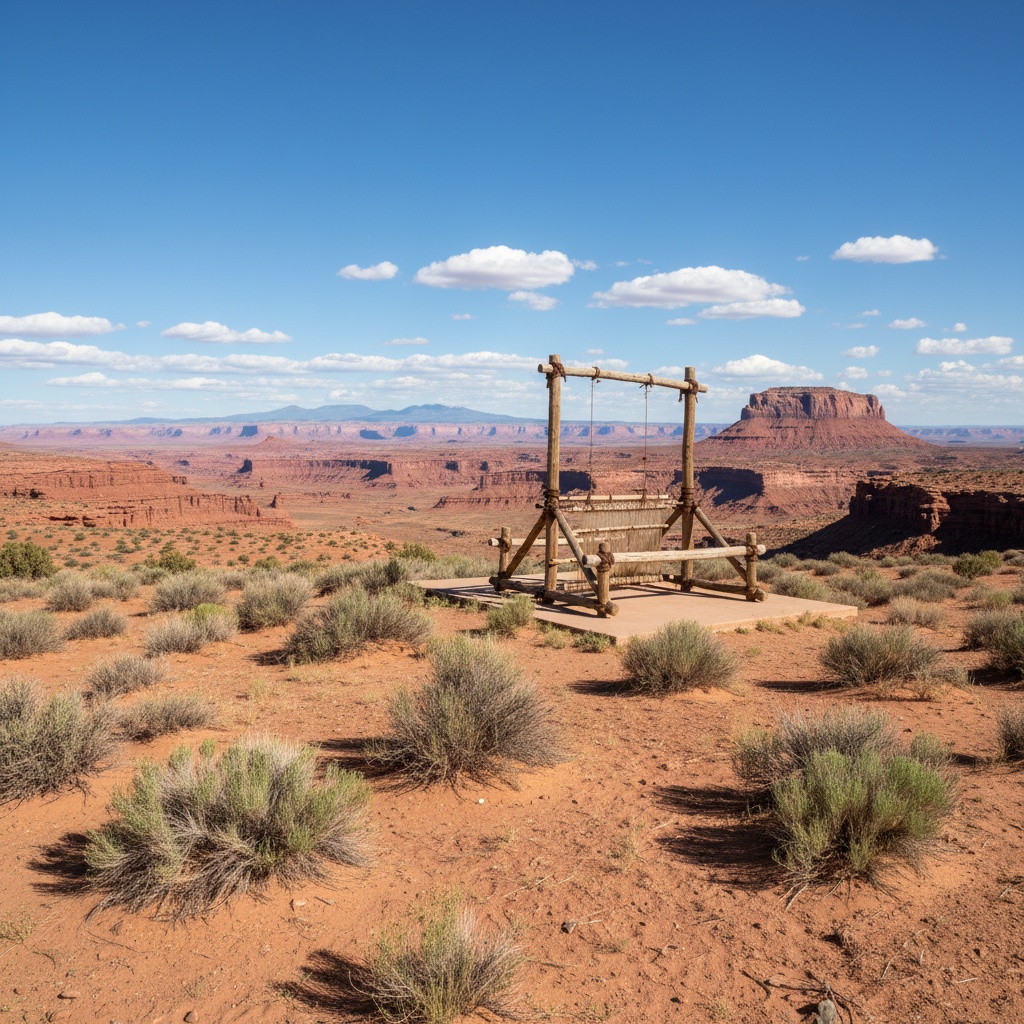
Landscape view near ancient land formations
Where Navajo Rug Weaving First Originated
The origins of Navajo weaving can be traced to the Four Corners region of the American Southwest, where the territories of Arizona, New Mexico, Utah, and Colorado converge. This high desert landscape provided both the setting and resources that shaped the earliest Navajo weaving traditions.
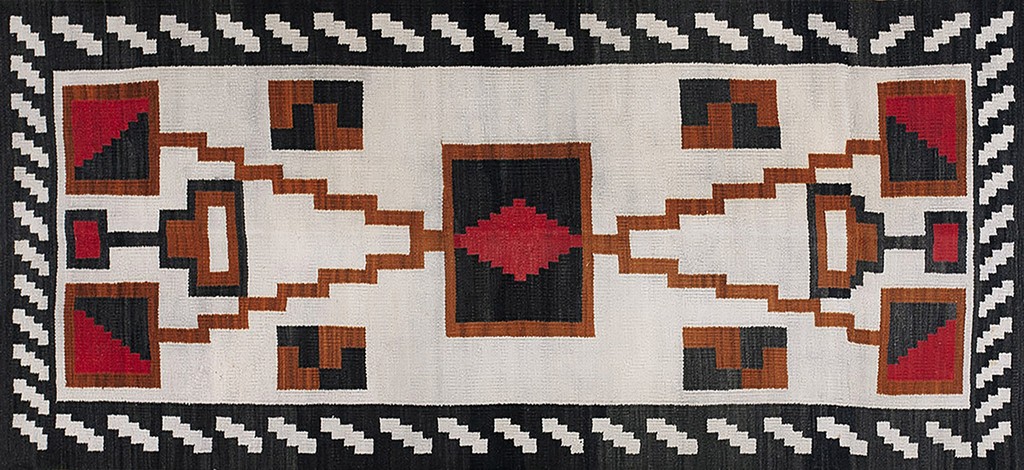
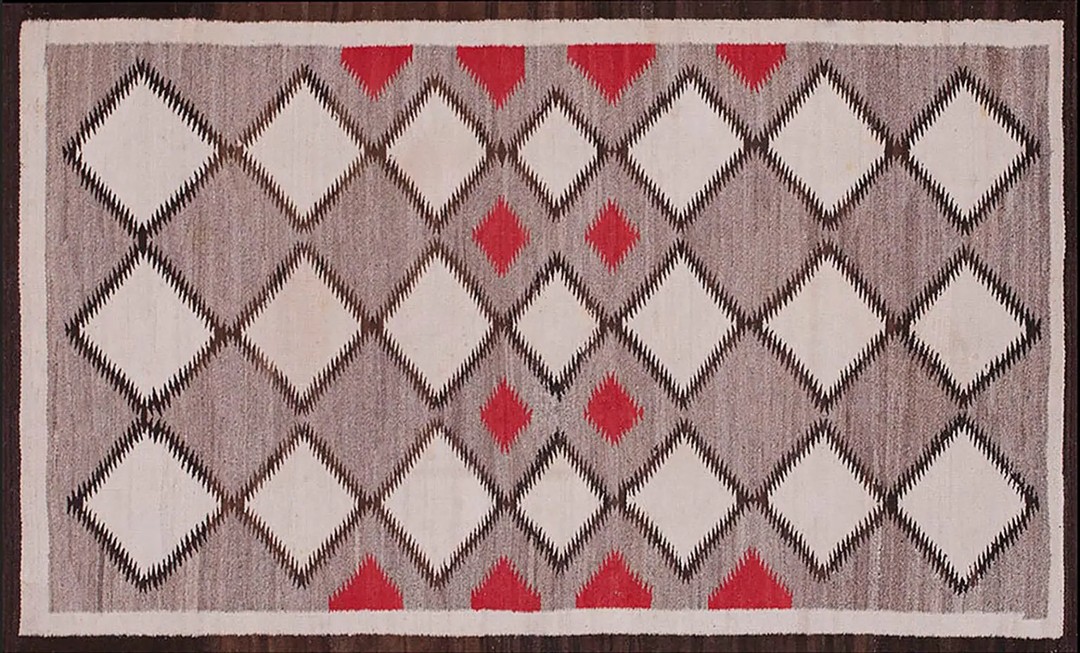
Antique Native American Navajo Geometric Design Ivory Color Rug by Rugs On Net
Here, Indigenous communities developed textiles not only as functional garments and blankets but also as cultural expressions deeply tied to the land, climate, and spiritual worldview. The region remains the heart of authentic Navajo weaving origins, anchoring these rugs within a precise geographic and cultural framework.
Who Taught the Navajo People to Weave Rugs
According to Navajo oral tradition, weaving was first taught by Spider Woman, a revered Holy Person who gifted the Navajo with the knowledge of how to spin and weave fibers. Her teachings imbued weaving with a sacred dimension, linking every rug to a spiritual lineage of creation, balance, and harmony.
Alongside this sacred narrative, history records that the Navajo also learned weaving techniques through contact with their Pueblo neighbors during the 17th century.
Thus, the story of who taught the Navajo to weave encompasses both a mythic origin through Spider Woman and a historical transmission from Pueblo peoples, intertwining divine instruction with human cultural exchange.
Influence of Pueblo Weaving Techniques
The Pueblo textile influence was pivotal in shaping Navajo weaving. The Pueblo peoples had been producing cotton textiles for centuries before European contact, creating garments, mantas, and ceremonial pieces using upright looms. When the Navajo adopted this technology, they adapted it with remarkable creativity, blending inherited techniques with their own symbolic language and design innovation.
The Spanish introduction of the Churro sheep in the 17th century further transformed the weaving tradition, as wool replaced cotton and enabled greater durability, color variation, and texture. In this way, ancestral Pueblo weaving provided the foundation, while the Navajo expanded the craft into a distinct art form that would later define the Southwestern textile tradition.
Pre-Contact Textile Traditions
Before the arrival of sheep and wool, ancestral weaving traditions in the Southwest centered on cotton cultivation and weaving, especially among the Pueblo peoples. Cotton cloth served as the primary textile for clothing, ritual items, and trade. These pre-contact practices established a framework of skill, design, and symbolic meaning that the Navajo and other Indigenous groups would build upon.
The eventual transition from cotton to wool did not erase this heritage but layered new materials and techniques onto an already rich foundation of Southwestern textile knowledge. Together, these origins highlight the dual nature of Navajo weaving origins: a sacred gift bestowed by Spider Woman and a cultural inheritance shaped by Pueblo textile influence.
This fusion of myth, innovation, and cross-cultural exchange gave rise to one of the most enduring and celebrated weaving traditions in North America.
Materials, Wool, and Dye Practices
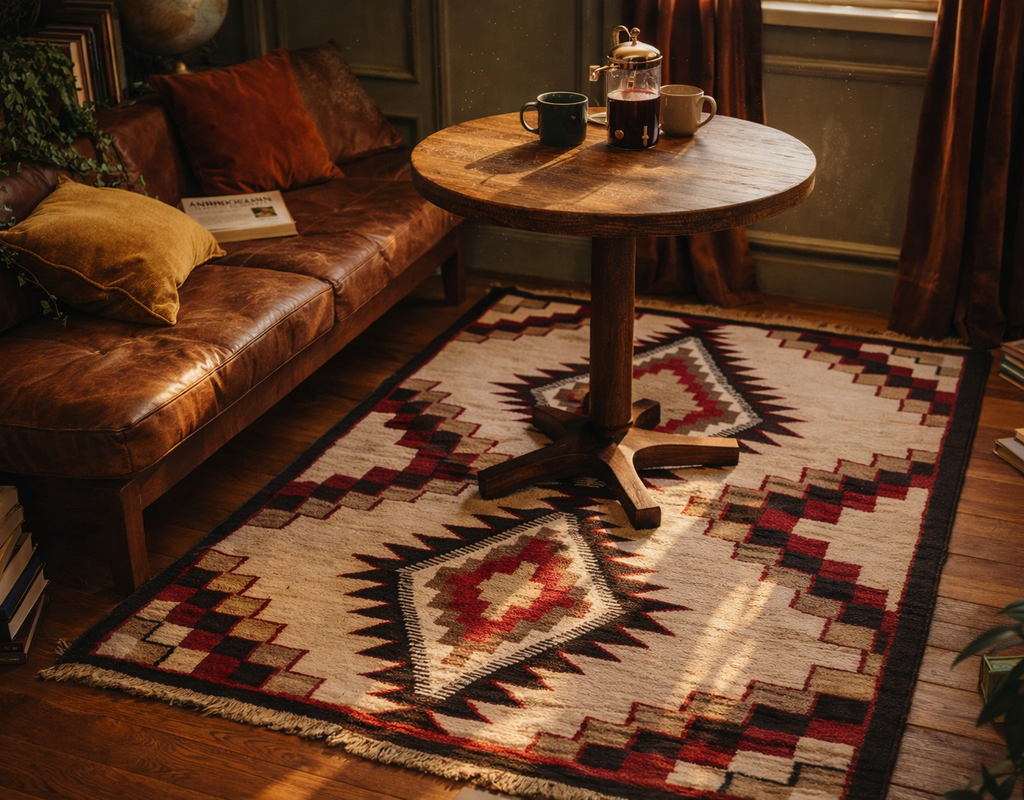
The rustic charm of worn leather and warm textiles creates an inviting reading corner.
Preparing natural wool fibers and vibrant dyes.
Sheep, Wool, and Handspun Preparation
The foundation of Navajo weaving lies in the introduction of the Navajo-Churro sheep, brought by the Spanish in the 17th century. This breed’s wool, long and lustrous, became prized for its strength, sheen, and ability to take on vibrant dyes. Early Navajo weavers transformed this wool through a careful process of hand preparation.
Wool was first cleaned, then hand-carded to align the fibers, before being spun on a distinctive thigh-rolled spindle, producing a tight Z-twist yarn. For the weft, this yarn was traditionally used without plying, preserving both its softness and strength.
The result was handspun yarn with a unique texture and resilience, giving Navajo rugs their lasting durability and tactile character.
Dye Sources: Vegetal, Mineral, Synthetic
Color in Navajo rugs was achieved through a spectrum of natural dye sources. Early weavers relied on earth tones provided directly by undyed wool—white, black, brown, and gray—as well as plant-based and mineral pigments. Indigo supplied deep blues, while local vegetal dyes produced yellows, greens, and subtle tans.
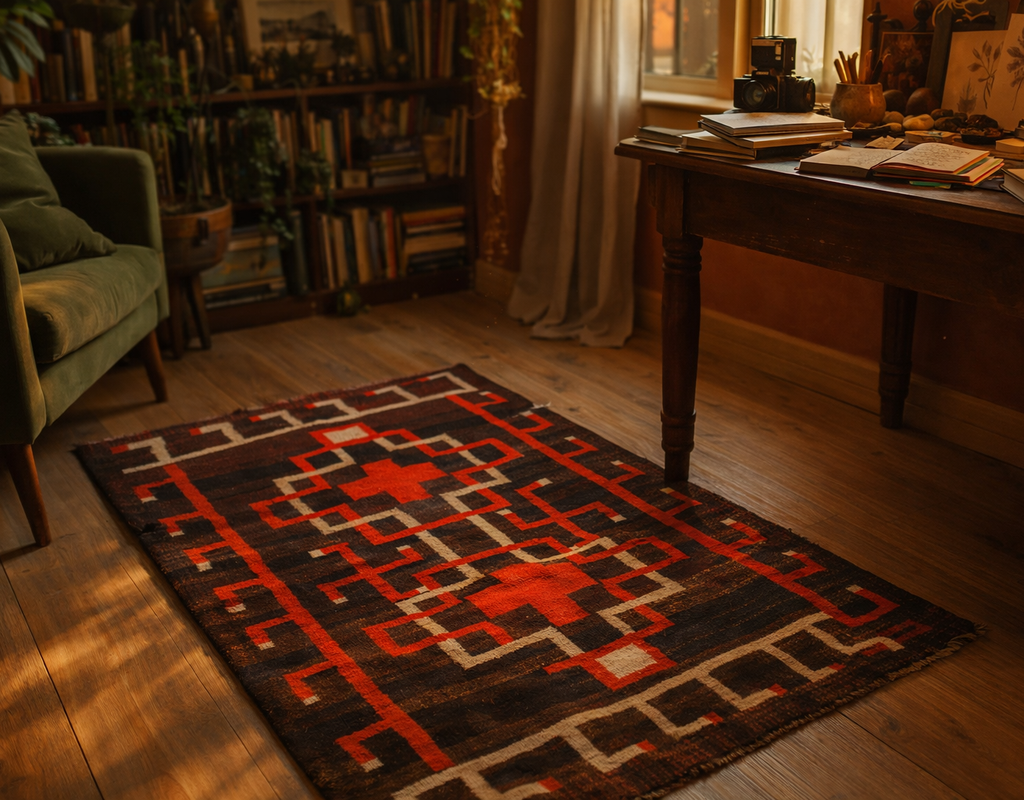
A richly patterned area rug anchors the reading nook in this dimly lit, scholarly space.
Before synthetic colors were available, a key source of red was bayeta red, made by unraveling imported European wool cloth to repurpose its dyed threads. In the late 19th century, however, the rise of aniline dye transformed Navajo color palettes, introducing brilliant reds, purples, and oranges not easily achievable with traditional vegetal methods.
How Wool and Dyes Are Chosen
The choice of wool and dyes is a deliberate act, balancing tradition, artistry, and practicality. Navajo-Churro wool remains the most desirable for traditionalists due to its luster and durability, though modern weavers may incorporate commercial wools for consistency or affordability. Dyes are selected with equal care: natural dyes appeal to those who value cultural continuity and subtle, earth-toned palettes, while synthetic dyes attract artists seeking bolder expression and colorfast brilliance.
The decision often depends on the weaver’s intent—whether to create a ceremonially grounded textile or a commercially appealing rug designed for collectors and global markets. Ultimately, these choices affect not only the texture and appearance of the rug but also its longevity and cultural resonance.
Evolution of Dye Use: From Natural to Aniline
For centuries, natural dye sources defined Navajo weaving. However, by the late 1800s, traders and markets increasingly encouraged the adoption of aniline dyes, which offered both broader hues and reduced labor compared to labor-intensive vegetal dyeing. While synthetic colors brought new possibilities, they also shifted the visual identity of many rugs, making them brighter and more varied.
Today, both approaches coexist: some weavers uphold ancestral practices of hand-dyeing with vegetal pigments, while others embrace commercial aniline dyes or combine the two methods.
This duality reflects the ongoing evolution of the art, where cultural tradition and creative innovation continue to shape each new rug. In essence, the materials of Navajo weaving—from the Churro sheep’s wool to the interplay of bayeta red, natural dye, and aniline dye—tell a story of adaptation and resilience.
Each fiber and color choice speaks to the history of survival, artistry, and exchange that defines the enduring legacy of authentic Navajo rugs.
Looms and Weaving Techniques
The Upright Loom: Distinguishing Features
The hallmark of Navajo weaving is its use of a simple upright loom. Unlike more complex looms with moving parts, the Navajo loom is entirely manual, relying on the weaver’s skill to control tension and design. Its most defining feature is the continuous warp, a looped foundation that eliminates the need for cut fringes at the ends.
This innovation not only strengthens the structure but also produces the clean, finished edges that distinguish an authentic Navajo rug from other Southwestern textiles. By working with this upright loom, weavers achieve exceptional control over density and pattern, giving each rug a unique balance of artistry and engineering.
Pueblo vs. Navajo Loom Techniques
The Navajo loom owes its origins to Pueblo weaving traditions, which introduced the upright loom to the Southwest. However, the Navajo expanded and modified the technique, pushing it beyond its original framework.
While Pueblo looms were primarily used for cotton textiles and often produced clothing or mantas, the Navajo loom was adapted for wool-based, larger-scale rugs.
This required stronger tension and more robust construction. Another distinction lies in technique: Pueblo weaving often left small gaps, or slits, at color changes, while Navajo weavers developed interlocking joins that prevented slits and reinforced durability.
In this way, the Navajo loom and weaving style evolved into a distinct system, merging Pueblo foundations with Navajo innovation.
The Weaving Process Step-by-Step
- Preparing the Warp — The warp is strung in a continuous loop, ensuring strength and eliminating fringe. — Why: This hallmark technique creates bound ends that resist unraveling and add durability.
- Carding and Spinning the Wool — Wool is carded to align fibers and spun into handspun yarn on a spindle. — Why: Handspun preparation ensures unique texture and a resilient thread suited for tapestry weaving.
- Laying the Weft — The rug is woven as a weft-faced tapestry, where the weft fully covers the warp. — Why: This produces dense, solid surfaces ideal for both function and design clarity.
- Color Joins and Lazy Lines — Colors are joined with interlocking techniques, while diagonal “lazy lines” ease transitions. — Why: Interlocking avoids gaps, and lazy lines prevent distortion, preserving the rug’s form.
- Finishing the Rug — Weavers beat the weft tightly to ensure evenness, ending with the bound, warp-looped edges. — Why: These finishing touches enhance both visual harmony and structural integrity.
Warp and Weft Choices—Impact on Durability
The relationship between warp vs. weft is central to Navajo weaving technique. Because Navajo rugs are weft-faced tapestries, the weft yarn fully conceals the warp. Durability, however, depends on both: the continuous warp provides a solid, tensioned skeleton, while the weft density determines thickness and strength. A tightly packed weft creates heavier, long-lasting rugs suitable for floor use, while a looser weave results in lighter, more flexible textiles.
By mastering these choices, Navajo weavers balance durability, texture, and artistic expression, ensuring each rug can withstand time while preserving its beauty. In short, the upright loom, continuous warp, and interlocking color joins are the technical signatures of Navajo weaving.
These innovations transformed a borrowed Pueblo structure into one of the most enduring and recognizable textile traditions in the world.
Design Motifs and Regional Styles
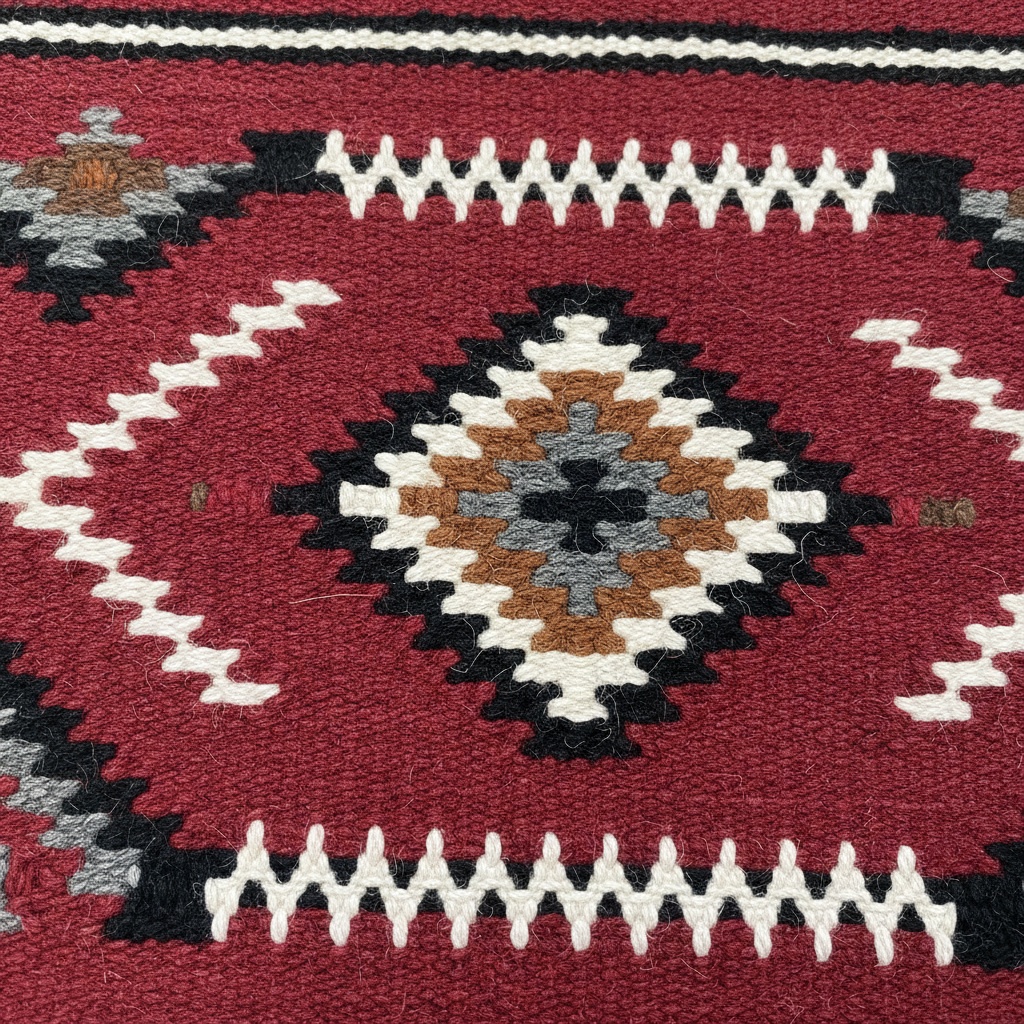
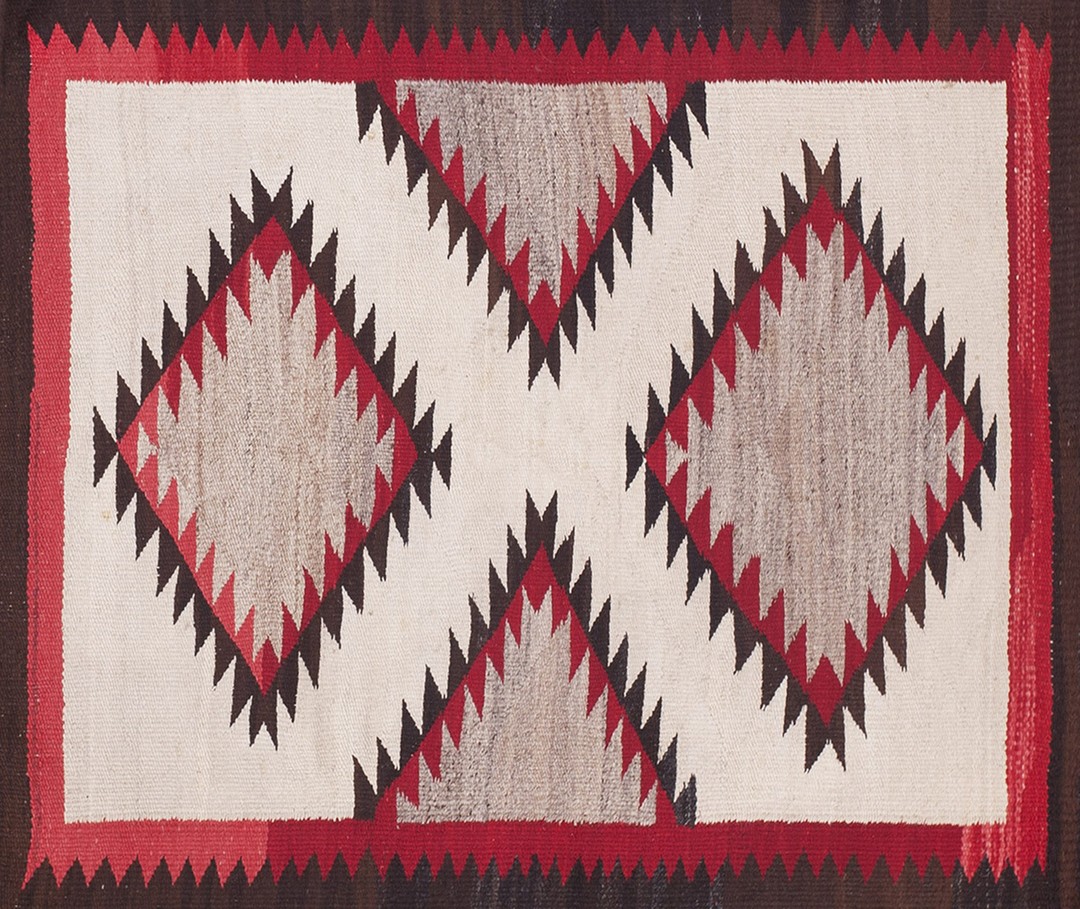
Diamond and zigzag motifs in Southwestern weaving
Traditional Geometric Patterns
The defining hallmark of Navajo geometric patterns lies in their bold, balanced designs. From the earliest striped blankets to later rug traditions, weavers employed a distinct visual vocabulary: diamonds, stepped triangles, serrated edges, lightning-like zigzags, and crosses.
These forms were not random decoration but deeply embedded cultural symbols, often evoking harmony, balance, and connection to the natural world.
The diamond motif, for example, became a central marker of Navajo identity in weaving, while stepped and serrated shapes reflected mountains, pathways, or spiritual thresholds. Over time, these geometric signatures came to distinguish authentic Navajo rugs from imitations, providing both a cultural and visual identifier.
Symbolism in Motifs
Beyond form, motifs carry layered meaning. The Spirit Line, or ch’ihónít’i, is a fine thread intentionally woven into some rugs as a pathway for the weaver’s spirit to exit the finished textile—an acknowledgment of weaving’s sacred power and the need for spiritual continuity.
Other designs honor Spider Woman, the Holy Person who first taught weaving, often reflected in web-like crosses or interconnected lines.
Symbols of rain, fertility, and agriculture appear in stepped or zigzag motifs, while the Yei rugs depict spiritual deities or figures from ceremony, blending sacred storytelling with artistry. Each motif thus functions as both design and prayer, affirming that every authentic Navajo rug embodies spiritual as well as aesthetic purpose.
Regional Navajo Styles
Regional variation defines much of the collectibility and classification of Navajo rugs. Styles are closely tied to local trading posts that promoted certain designs in the late 19th and early 20th centuries. Among the most iconic are:
- Ganado Red — Bold geometric designs with a dominant red field, accented by black and white.
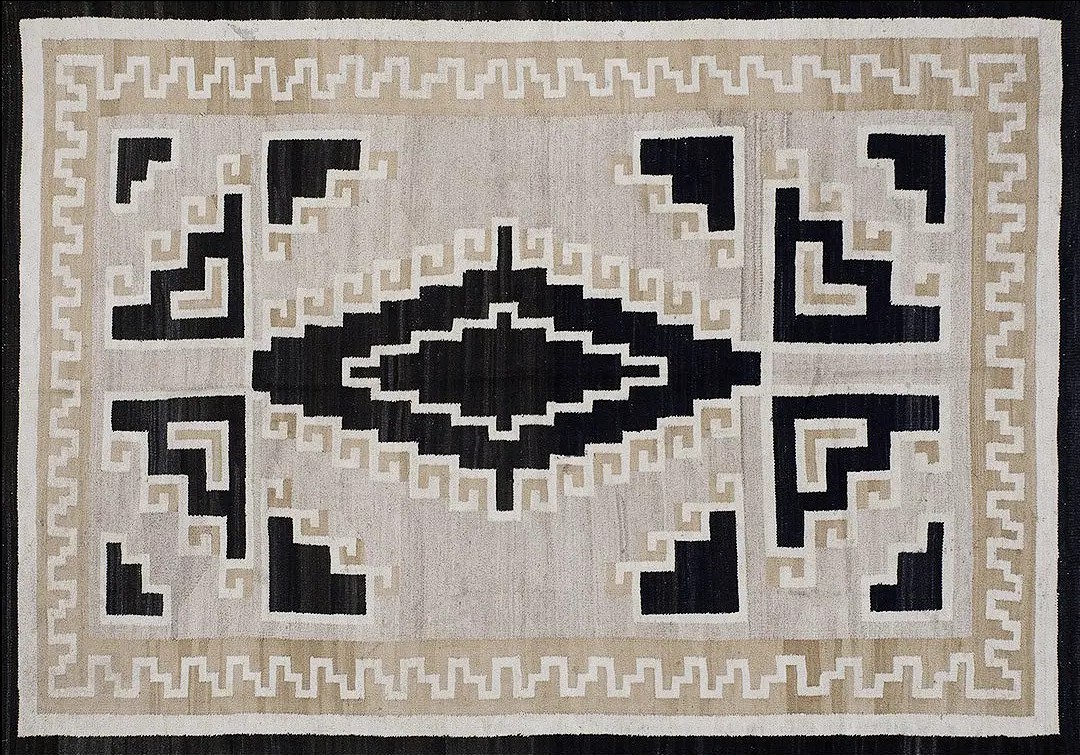
- Two Grey Hills — Earthy palettes of natural wool (greys, browns, tans), paired with finely woven, intricate patterns.
- Teec Nos Pos — Known for complex borders, bright colors, and detailed geometric fields.
- Crystal, Chinle, and Wide Ruins — Each with unique palettes, such as vegetal-dyed pastels or banded designs.
These regional rug styles not only distinguish artistry but also affect market value. A Two Grey Hills rug, prized for its high weft density and natural wool tones, may command higher prices than a more common style, while a Ganado Red offers collectors a bold, historically significant option.
Regional classification thus plays a central role in authentication, appraisal, and desirability.
Hopi, Pueblo, and Rio Grande Weavings
The influence of Pueblo textile traditions remains visible in Navajo weaving. Pueblo and Hopi textiles favored horizontal bands, stripes, and ceremonial motifs, emphasizing balance and continuity rather than pictorial storytelling.
Similarly, Rio Grande weavings—produced by Hispanic communities in New Mexico—blended Pueblo traditions with Spanish loom techniques, creating striped blankets that circulated widely in the region.
These textiles, while distinct, form part of the same Southwestern weaving continuum that shaped Navajo styles, reinforcing the Pueblo textile influence identified in earlier origins.
Pictorial and Contemporary Innovations
Alongside geometric traditions, pictorial rugs emerged as a form of narrative expression. These designs depict scenes from daily life—riders on horseback, livestock, trading posts—as well as spiritual imagery, such as Yei figures and ceremonial dances.
In the modern era, contemporary Navajo weavers continue to innovate, blending ancestral motifs with abstract designs or new color palettes. This adaptability ensures that authentic Navajo rugs remain both rooted in tradition and open to evolution, reflecting a living art form that bridges past and present.
In essence, geometric motifs provide the visual signature of Navajo weaving, while regional rug styles determine classification, authenticity, and market value. Together, these elements create a layered tradition where design is both symbolic and economic, spiritual and aesthetic.
Historical Evolution and Periods
Pre-Contact & Classic Blanket Era
Before the introduction of sheep, weaving in the Southwest relied on cotton textiles, particularly among Pueblo communities. With the arrival of Navajo-Churro sheep, the Navajo transformed weaving into a distinct art form, producing textiles of extraordinary prestige during the Classic Blanket Era (1700s–mid-1800s).
These classic Navajo blankets—including the famed chief’s blankets—were prized symbols of wealth and authority. Characterized by simple horizontal bands, bold color contrasts, and masterful balance, they were designed as garments. These garments were to be worn or displayed, elevating them beyond utility into status objects that circulated in trade networks across the Southwest and Plains.
The Long Walk and Transitional Period
The Transitional Period (1860s–1880s) was shaped by upheaval. The Long Walk, a forced removal of the Navajo by U.S. forces in 1864, disrupted communities and devastated herds of Churro sheep. New breeds of sheep introduced afterward altered the quality of wool, while access to commercial yarns and dyes through traders changed weaving practices.
During this era, blankets gradually gave way to rugs, responding to the demands of Anglo settlers who sought durable floor coverings rather than wearable textiles. The transitional period thus marks a turning point, where tradition endured but adapted to new cultural and economic pressures.
Eye Dazzler and the Tourist Trade
By the late 19th century, the introduction of aniline dyes and Anglo market demand gave rise to the Eye Dazzler rugs. These pieces were defined by their bright synthetic colors and dazzling geometric patterns, designed to attract non-Native buyers captivated by bold visual impact.
While often dismissed by purists as market-driven, Eye Dazzlers highlight the adaptability of Navajo weaving, showcasing how artisans responded creatively to new audiences while preserving traditional techniques of hand-weaving and interlocking joins. The rise of the tourist trade positioned Navajo rugs as both commodities and cultural symbols, spreading their influence beyond the Southwest.
20th-Century Revival and Modern Legacy
The early 20th century ushered in a revival period, shaped heavily by trading post influence. Traders encouraged distinct regional styles such as Ganado Red, Two Grey Hills, and Crystal, which helped classify and brand Navajo rugs for broader markets. This era also saw a resurgence of natural dyes, as both traders and collectors valued vegetal colors for their authenticity and depth.
Over time, Navajo rugs gained recognition not only as craft but as high-end collectible art, earning places in museums and private collections worldwide. Today, contemporary Navajo weavers continue to push boundaries, creating works that balance ancestral tradition with modern innovation.
Some follow regional styles closely, while others develop experimental, abstract, or pictorial forms that reflect contemporary life.
Vintage vs. Contemporary Navajo Rugs
Vintage Navajo rugs differ from contemporary pieces in several key ways. Older rugs—whether from the classic blanket, transitional, or Eye Dazzler periods—are defined by their historical materials, handspun wool, and natural or early synthetic dyes. They often show regional or trader-driven characteristics and bear the marks of provenance, such as wear, patina, and cultural context.
Contemporary Navajo rugs, by contrast, may use both natural and commercial wools, vegetal or synthetic dyes, and incorporate modern themes.
While newer rugs often maintain technical excellence, antique and vintage pieces carry historic and cultural weight that elevates their value and distinctiveness. The story of Navajo weaving is thus one of survival and adaptation: from classic Navajo blankets worn with pride, through the trauma of the transitional period, into the vibrancy of Eye Dazzler rugs and the refinements of the 20th-century revival.
This historical arc shows how the art has continually reshaped itself while preserving its sacred and cultural essence.
Cultural and Symbolic Relevance
Sacred Lore, Weaving as Spiritual Practice
In Navajo tradition, weaving is not simply craft but a sacred act of creation. According to lore, it was Spider Woman who first taught the Navajo how to weave, gifting the people a knowledge that carried both technical skill and spiritual weight. Each act of weaving is thus imbued with prayer and intention, a continuation of the cosmic gift passed down through generations.
The incorporation of a spirit line, or ch’ihónít’i, within certain rugs reflects this spirituality: a fine line of yarn that allows the weaver’s spirit to exit the textile, ensuring balance, humility, and protection. In this way, Navajo spiritual weaving affirms that every rug is not merely an object, but a living embodiment of belief.
Rugs in Ceremony, Status, Storytelling
Historically, woven blankets and rugs carried ceremonial, social, and narrative functions. Classic-era blankets signaled wealth and prestige, worn by leaders or exchanged as markers of status. In ceremonial contexts, textiles conveyed blessings, prayers, and spiritual protection. Many designs also encode stories: stepped forms for mountains, zigzags for lightning and rain, or Yei figures representing sacred beings.
In this sense, each rug became a form of pictorial storytelling, where geometric or symbolic motifs preserved history, cosmology, and collective memory. The cultural symbolism of these works positioned them as both practical and ceremonial objects of power.
Weaving as Economic and Social Empowerment
Weaving also served as a foundation of survival and empowerment. For centuries, women were the primary weavers, and the loom provided both economic independence and cultural continuity. During times of colonial disruption and economic hardship, rug weaving allowed Navajo women to sustain their families and preserve cultural sovereignty through artistry.
This role continues today, where the production of authentic Native rugs supports artisans, strengthens community economies, and resists cultural erasure. Every rug is thus also a record of resilience, documenting how artistry sustained generations through change and adversity.
Contemporary Native Artists and Activism
Today, Native weavers continue to expand the role of rugs as both living art and activism. Many create pictorial rugs that address contemporary themes: environmental justice, cultural preservation, and Native identity. Some artists use weaving as a platform to highlight Indigenous rights, while others reinterpret ancestral motifs to engage with modern aesthetics.
For buyers, the question of ethics arises—can modern Native American rugs be produced ethically?
The answer lies in supporting Indigenous artists directly, ensuring authenticity, fair compensation, and recognition of cultural heritage. By purchasing from co-ops, trading posts that honor artisans, or directly from weavers, collectors participate in sustaining a sacred and sovereign art form. In sum, weaving is at once prayer, art, survival, and resistance.
From the mythic teachings of Spider Woman to modern activist creations, every rug reflects cultural symbolism, women’s empowerment, and enduring resilience, carrying the Navajo spirit across generations and into the present.
The Modern Market: Buying, Collecting, and Value
Where to Buy Genuine Native American Rugs Today
Collectors and enthusiasts can buy Navajo rugs from a variety of reputable sources. Within the Southwest, traditional reservation trading posts remain central hubs, connecting weavers directly to buyers. Annual markets such as the Crownpoint Rug Auction, the Heard Museum Indian Fair & Market, and the Indian Pueblo Cultural Center also provide opportunities to purchase directly from artists.
Beyond the region, specialty galleries, certified Native art dealers, and auction houses offer vetted selections, ranging from contemporary works to high-value antiques. Purchasing directly from the weaver or through co-ops ensures both authenticity and community support.
Authenticity: Verification and Red Flags
Verifying an authentic Native American rug requires attention to detail. Hallmarks include:
- Continuous warp with no fringe — a signature of Navajo weaving.
- Handspun wool and natural irregularities in yarn thickness.
- Presence of a spirit line in some rugs.
- Documentation or provenance from dealers, museums, or the weaver.
Red flags include fringed edges (a sign of machine-made or non-Navajo looms), synthetic uniformity in weave, or prices that seem too low for the claimed origin. Careful rug authentication protects buyers from imitations often marketed as generic “Southwestern rugs.”
Price Range & What Vintage Navajo Rugs Cost
The value of a vintage Navajo rug varies widely. Entry-level pieces may cost a few hundred dollars, while fine examples from the late 19th or early 20th centuries can reach tens of thousands of dollars.
At the highest tier, rare pieces such as First Phase chief’s blankets have sold for over $1.5 million at auction. Condition, size, weave density, and design complexity all influence value, but even modest vintage rugs remain highly collectible due to their scarcity and historical importance.
Regional Style’s Effect on Value
Regional distinctions play a major role in determining market value. For instance, Two Grey Hills rugs, woven with tightly packed natural wool in subtle earth tones, are among the most prized for their technical excellence and durability.
Ganado Red rugs, with their bold red fields, are iconic and consistently in demand, while Teec Nos Pos rugs, known for complex borders and multicolored fields, attract buyers seeking intricate artistry. Thus, regional rug style directly shapes desirability, collectibility, and appraisal value.
Antique Navajo Rugs as Investment
For collectors, antique Navajo rugs are considered a strong long-term investment rug. Prices for top-quality pieces have steadily risen over the last century, fueled by both cultural appreciation and market scarcity.
While not every purchase guarantees financial appreciation, rare and well-documented examples—especially early blankets or finely woven regional masterpieces—remain among the most valuable textiles in the global art market. Investment, however, should always be paired with cultural respect and an understanding that these objects carry significance beyond their price tag.
Ethical Production in Modern Rugs
Can modern Native American rugs be produced ethically? Yes—by purchasing directly from weavers, tribal co-ops, or certified dealers, buyers support artisans fairly and uphold cultural continuity.
Ethical rug buying means avoiding mass-produced “Southwestern” lookalikes and instead choosing authentic works that preserve weaving traditions and provide meaningful income to Native families. Supporting women weavers in particular strengthens cultural resilience and empowers community economies.
Machine-Made vs. Handmade
A crucial distinction separates handmade vs. machine-made rugs. Machine-made “Southwestern-style rugs,” often imported, mimic geometric motifs but lack cultural authenticity, sacred symbolism, and collectible value. By contrast, an authentic Navajo rug is a handmade, handspun wool tapestry created on an upright loom with continuous warp—a textile that embodies centuries of tradition.
Only these handmade pieces qualify as true Native American rugs. In today’s market, the collector’s task is twofold: to appreciate the beauty and craftsmanship of authentic Native weaving and to ensure purchases uphold ethical, culturally respectful practices. Done correctly, buying a rug is not just an acquisition, but a contribution to the living tradition of Indigenous weaving.
Rug Care, Use, and Display
Using Pads Under Navajo Flatweaves
A rug pad is essential for anyone placing a Navajo flatweave on the floor. Because these rugs are woven as flat, weft-faced textiles without pile, they can shift or slide on hard flooring. A quality pad prevents slippage, cushions the fibers against wear, and provides ventilation that reduces the buildup of dust and grit beneath the rug.
Pads also help absorb foot traffic impact, preserving both the weave density and the rug’s shape. For collectors and homeowners alike, the use of a pad is one of the simplest and most effective steps in Navajo rug care, ensuring longevity and protecting value.
Best Practices for Display and Longevity
- Avoid Direct Sunlight — Exposure to sunlight fades both natural and synthetic dyes. — Why: Preserves the vibrancy of colors, especially in vintage Navajo rugs.
- Rotate Periodically — Switch rug placement or orientation every few months. — Why: Distributes wear evenly and prevents localized fading or thinning.
- Vacuum Gently — Use low suction without a beater bar to remove surface dust. — Why: Keeps fibers clean without damaging the weave.
- Handle Spills Immediately — Blot gently with a clean cloth; never rub. — Why: Prevents stains from setting and minimizes long-term fiber damage.
- Professional Cleaning and Repair — Seek textile conservators or specialists. — Why: Navajo rugs require expert care to maintain structural integrity and collector value.
- Wall Display with Museum Mounts — Use Velcro strips or approved mounting systems. — Why: Supports the textile evenly without puncturing fibers, unlike nails or pins.
Proper care practices transform a rug from a fragile textile into a lasting heirloom. Whether used as a floor covering, a display piece, or an investment collectible, attention to pads, placement, and preservation ensures that an authentic Navajo rug retains both its beauty and value for generations.
Legacy and Global Impact
Influence on American Interior Design
The presence of Native American rugs has left a lasting imprint on American interior design, most visibly through the rise of the Southwestern style. Bold Navajo geometric motifs, earth-toned palettes, and striking reds became foundational to rustic, lodge, and desert-inspired decor throughout the 20th century.
Today, these patterns remain central to modern design trends, reinterpreted in both luxury interiors and casual living spaces. The enduring appeal lies in their versatility: an authentic Navajo rug can anchor a minimalist modern room with cultural depth or serve as the centerpiece of a traditional Western aesthetic.
Native American Rugs in World Art History
Beyond their decorative use, Native American rugs have achieved recognition as world-class textile art. Major museums—from the Metropolitan Museum of Art in New York to the British Museum in London—feature Navajo and Pueblo textiles in their collections, displayed alongside classical Asian carpets and European tapestries.
This placement underscores their importance in global art history, not just as regional artifacts but as masterpieces of design, craftsmanship, and cultural narrative. Museum rugs highlight the ways in which Indigenous weavers balanced technical precision with spiritual meaning, making their work both historically significant and aesthetically timeless.
The Future of Indigenous Weaving Traditions
The future of Indigenous textile traditions is marked by both continuity and innovation. Revival movements are underway to restore Churro sheep herds and to encourage the use of vegetal dyes, linking present-day weaving to ancestral practices. Training programs and youth workshops pass skills to new generations, ensuring that weaving remains a living, not static, tradition.
At the same time, contemporary Indigenous weavers are innovating: some create abstract or pictorial rugs that reflect modern Native identity, while others collaborate with fashion and design brands to bring authentic Indigenous-made decor to global markets. Yet this future also grapples with challenges. Issues of cultural appropriation vs. collaboration remain central, as mass-market reproductions continue to blur lines of authenticity. Ethical practices—buying directly from weavers or Native-owned businesses—support both cultural survival and fair compensation.
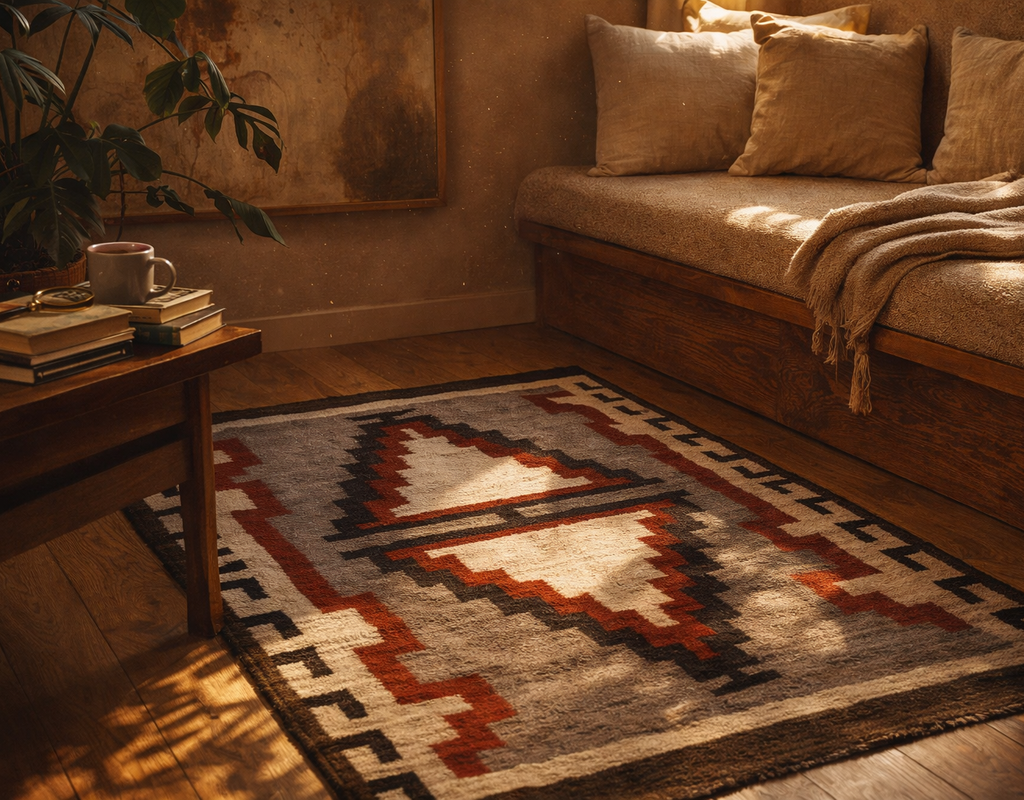
A warm, dimly lit corner offering a serene spot for relaxation, accentuated by a bold, patterned area rug.
In this balance of preservation and adaptation, rug heritage demonstrates remarkable resilience. Rooted in sacred teachings yet open to new creative directions, Native American art continues to evolve while maintaining its spiritual and cultural integrity.
The legacy of these rugs is therefore twofold: they stand as historic testaments of Indigenous resilience and as living traditions shaping the future of global textile arts.
Discover Some of Our Favorite Native American Rugs
FAQ
- How do Native American rugs differ from Persian rugs?
Many Native American rugs are flatwoven, weft-faced textiles with no original fringe. Persian rugs are typically hand-knotted pile with fringe formed from the warps.
- Are Native American rugs good under dining tables?
They can be, but chairs cause abrasion; use a pad and rotate regularly. Consider wall-mounting collectible or fragile Native American rugs instead.
- Will Native American rugs bleed color if they get wet?
Possible, especially with older aniline reds; moisture can cause dye migration. Blot spills—don’t rub—and consult a conservator before any wet cleaning.
- Can I use a robot vacuum on Native American rugs?
Avoid it—rollers and brushes can snag fibers. For Native American rugs, use a hand vacuum with suction only, ideally through a protective screen.
- Are “Native American style rugs” legal to sell?
Yes, if clearly marketed as “style” or “inspired” and not as Native-made. Misrepresenting Native American rugs violates federal law with penalties up to \$250,000.
- Where can I buy authentic Native American rugs in the U.S.?
Check the Indian Arts and Crafts Board Source Directory and reputable trading posts/galleries in AZ and NM (e.g., Two Grey Hills, Toadlena, Santa Fe dealers).
- How long does it take to weave Native American rugs?
Depending on size and fineness, a Navajo rug can take from a couple of months to several years. Larger, finer pieces require far more time.
- Are Native American rugs a good investment?
They can appreciate, but values vary with condition, provenance, and fineness. As one cue, tighter weaves (e.g., 80+ wefts/inch) often command higher prices—get a qualified appraisal.
- What’s the difference between Yei and Yeibichai Native American rugs?
Yei rugs depict front-facing Holy People; Yeibichai rugs show side-view dancers in motion. Both are inspired by ceremonial imagery but are not ceremonial objects.
- What is a “spirit line” in Native American rugs?
In Navajo rugs, a spirit line (ch’ihónít’i) is a small contrasting line that runs from the inner field to the border. It symbolically “releases” the design.
- Do authentic Native American rugs have fringe?
Typically no—Navajo rugs end with finished selvages, not fringe. Exceptions include some Germantown weavings with added fringe and Gallup throws.
- What materials are Native American rugs made from?
Navajo rugs traditionally use wool wefts over wool (or sometimes cotton) warps. Many quality pieces have \~30 wefts per inch; “tapestry” grades may exceed \~80.
- How do I protect Native American rugs from moths?
Regularly vacuum both sides and inspect edges. For active infestations, seal the rug in plastic and freeze about 72 hours at \~-20°F, then repeat after \~3–4 weeks.
- How should I store Native American rugs long-term?
Roll Native American rugs along the warp on an acid-free tube, interleave with unbuffered tissue, and wrap in washed muslin. Store cool, dark, dry, and off the floor.
- Are Native American rugs okay on radiant-heated floors?
Generally yes—wool flatweaves work best with thin, low-R pads. Keep rugs relatively thin (under \~1 inch total) and follow floor manufacturer temperature limits.
- Which rug pad works under Native American rugs?
Use a thin felt-and-natural-rubber pad trimmed slightly smaller than the rug. Avoid cheap PVC “waffle” pads that can off-gas and stain floors over time.
- What’s the best way to hang Native American rugs on a wall?
Use a Velcro (hook-and-loop) mount: stitch washed cotton muslin with loop tape to the textile and attach to hooks on a batten. It spreads weight evenly and avoids pins or adhesives.
- How do I clean Native American rugs safely?
Vacuum gently with suction only—no beater bar—and place a screen or gauze over the rug to reduce pull. Never machine-wash or steam-clean Native American rugs; consult a textile professional for stains.
- Can I use Native American rugs on busy floors with kids or pets?
Yes, but choose sturdy weaves, use a quality pad, rotate, and avoid direct sun and moisture. Reserve antique or fragile Native American rugs for low-traffic areas or wall display.
- What sizes do Native American rugs usually come in?
Many authentic Native American rugs are smaller formats like 2×3, 3×5, or 4×6. Large room sizes (e.g., 8×10) exist but are rarer and often cost significantly more.
- How much do Native American rugs cost?
Contemporary Navajo rugs commonly range about \$500–\$5,000+, depending on size and fineness. Exceptional historic pieces can sell for six or seven figures (record sales around \$1.8M).
- What patterns are most common in Native American rugs?
Popular Navajo patterns include Two Grey Hills, Ganado, Teec Nos Pos, Storm Pattern, and Yei/Yeibichai designs. Two Grey Hills often uses undyed browns, greys, black, and white.
- How can I tell if Native American rugs are authentic, not “style” copies?
Ask for written proof of tribal enrollment or certified artisan status and buy from reputable sources. Authentic Navajo rugs typically have continuous warps, side selvage cords, and no original fringe.
- Are Native American rugs the same as Navajo rugs?
“Native American rugs” often means Navajo rugs, since Navajo weaving dominates the rug category. Other Indigenous textiles exist, but floor-rugs in the U.S. market are primarily Navajo.
- What are Native American rugs?
Most Native American rugs—especially Navajo rugs—are tapestry-woven (weft-faced), not knotted pile. They’re made on upright looms and finished with four selvaged edges rather than fringe.