
Foundations: How Rug Patterns Work (Layouts vs. Motifs)
Layouts Define Overall Structure
Every rug begins with a layout, the macro arrangement that determines how the eye moves across the surface.
The main rug patterns / types include:
Understanding these rug layouts vs motifs is essential: the layout serves as the “map” of the design, setting boundaries and rhythm.
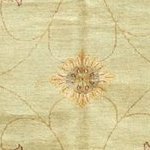 Floral Rugs | 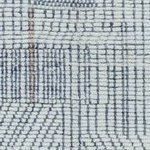 Allover Rugs | 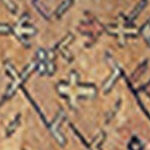 Geometric Carpets | 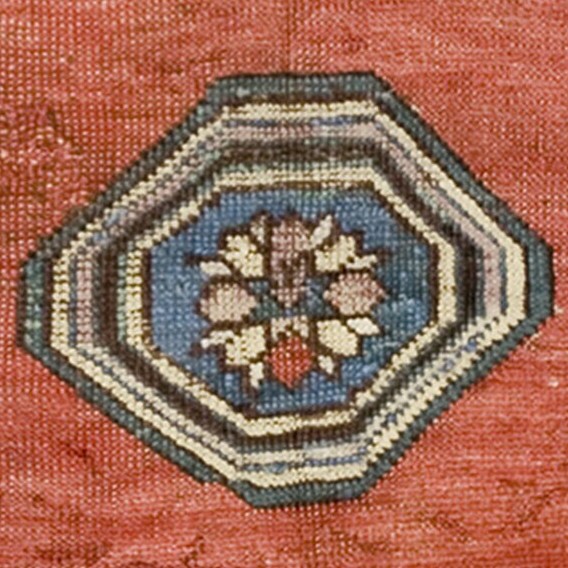 Medallion Rugs |
Motifs Populate the Structure
While the layout provides the framework, motifs are the vocabulary that populates it. Classic motifs include the boteh (a flame- or paisley-like form), the gul (tribal octagonal emblem), the herati (diamond rosette with curling leaves), and the rosette itself (stylized floral medallion). These motifs recur across regions, sometimes stylized geometrically, sometimes curvilinear, but always contributing to a rug’s identity. The distinction between layout and motif is crucial: one defines the structure, the other supplies the language of form.
Field and Border Roles
The rug’s field is the central expanse where layouts and motifs interplay, while the border frames and stabilizes the whole composition. Borders are not afterthoughts; they complete the design, pacing the eye’s movement and reinforcing symmetry.
A typical structure features a wide main border flanked by narrower guard stripes, which stabilize rhythm and prevent the field from visually “spilling out.” This field and border design balance is one of the most recognizable hallmarks of rug patterns structure and connects directly to the deeper exploration of borders.
Rug Patterns Flow and Symmetry Axes
- Four-way symmetry: Seen in medallion layouts, where quadrants mirror around both vertical and horizontal axes. — Why: Creates balance and centrality, ideal for formal interiors.
- Two-way symmetry: Found in tree or prayer rugs, where the design reflects along a single axis. — Why: Emphasizes directionality and symbolic orientation.
- Asymmetry or none: Pictorial or narrative rugs may lack symmetry. — Why: Allows storytelling and naturalistic scenes to unfold without constraint.
- Infinite repeat: All-over layouts suggest continuity beyond edges. — Why: Creates a sense of boundless space, especially in tribal weavings.
Reading a Rug’s “Design Grammar”
- Identify the layout: First locate the map—centralized, repeating, directional, or compartmental. — Why: Reveals the rug’s structural DNA.
- Decode motifs: Spot boteh, gul, herati, rosettes, or other recurring units. — Why: Provides cultural and symbolic insight.
- Trace field vs. border dialogue: Observe how borders contain, pace, and counterbalance the field. — Why: Borders frame the story while controlling visual rhythm.
- Follow symmetry lines: Vertical, horizontal, or diagonal reflection guides the rug’s balance. — Why: Understanding axes clarifies the intended harmony.
By separating the map of rug layouts from the vocabulary of motifs, and by recognizing how fields and borders interact within symmetry, one learns to read a rug’s design grammar with authority.
This knowledge answers the fundamental questions: the main rug pattern types revolve around medallion, all-over, compartment, and directional frameworks, and medallion rugs differ from all-over rugs because the former anchor attention at a center while the latter disperse it evenly across the field.
Central Medallion Layouts: Courtly Symmetry and Focus
Classic Medallion-and-Corners
The hallmark of medallion rug patterns is its central device, anchoring the field with four-way symmetry. In the most classic version, the medallion is accompanied by spandrel corners—quarter medallion motifs placed in each corner of the field.
These spandrels echo the main form, reinforcing balance and creating a sense of architectural framing. The effect is one of instant formality: the eye is drawn first to the center, then outward toward the corners, before finally engaging with the surrounding border.
Urban Curvilinear vs. Tribal Geometric Medallions
| Origin | Characteristics | Value Perception |
|---|---|---|
| City rugs (e.g., Tabriz, Kashan, Isfahan) | Curvilinear medallions with lobed outlines, finely drawn arabesques, and scrolling vines | Viewed as sophisticated, reflecting workshop refinement |
| Village rugs (e.g., Heriz, Karaja) | Geometric medallions with bold angles, strong outlines, and crisp symmetry | Valued for vigor and durability, projecting tribal strength |
Persian city rug patterns showcase intricate curves made possible by high knot density, while village weavings emphasize structure and clarity. Both achieve balance, but their visual languages differ sharply.
Iconic Types
- Heriz medallion: Recognized for its bold star-shaped center with strong angular lines. — Why: The geometry reflects both regional taste and structural resilience, making Heriz rugs enduring and instantly recognizable.
- Tabriz and Kashan medallions: Often lobed, with soft curves and floral infill. — Why: These represent the apex of urban refinement, where drawing skill and knot density allowed complex floral arabesques to radiate from the center.
- Oushak rugs: Though some feature medallions, many Oushaks favor spacious allover fields. — Why: The looser weave and soft palette of Anatolian Oushaks often lent themselves to expansive repeats rather than strict centrality.
Medallion Scale and Room Placement
- Oversized medallion in large salons — Why: Creates a dramatic focal point that anchors formal gatherings.
- Moderate medallion in dining rooms — Why: Provides structure without overwhelming furniture.
- Smaller medallion in bedrooms or libraries — Why: Balances intimacy with visual order.
- Avoid oversized medallion under heavy central furniture — Why: The medallion’s impact is lost if covered, diminishing its role as the rug’s core.
Museum Touchpoints
Museum collections highlight how the medallion-and-corners formula connects to broader garden and compartment traditions. In courtly Persian carpets, the medallion functions almost like a garden pool at the center of a formal layout, with spandrels and borders extending the architectural metaphor. These masterpieces demonstrate how execution quality—whether in perfect curves or disciplined geometry—drives both aesthetic and market value.
A medallion rug delivers formality and focus at once. Whether the crisp Heriz star or the flowing Kashan lobed medallion, the success of the design depends on the harmony between center and field, and on the craftsmanship that translates the concept into woven form.
All-Over (Overall) Layouts: Infinite Repeat and Texture
Infinite Repeat Logic
Allover rug patterns avoid a single dominant focal point. Instead, its design follows an infinite repeat logic, where motifs continue seamlessly across the field, suggesting that the pattern could extend beyond the rug’s edges.
This creates a surface that reads as texture rather than hierarchy, making it versatile for both formal and casual settings. Unlike medallion rugs, which anchor the eye to the center, allover layouts encourage the viewer to experience the rug as a continuous, flowing surface.
Common Repeats
Some of the most recognizable allover formats employ repeating motifs that establish rhythm and flow:
- Herati field: Diamond and rosette paired with curling leaves, producing a diagonal lattice effect.
- Mina Khani: Circular rosettes linked by vines, generating a floral lattice that feels endless.
- Boteh fields: Dense arrays of flame- or paisley-like botehs, producing a richly patterned surface.
- Rows of guls: In tribal rugs, especially Turkmen, octagonal guls repeat in precise rows, functioning almost as heraldic emblems.
These repeats transform the field into a tapestry of movement, balancing ornament with durability.
Tribal All-Over: Rows of Guls
Among nomadic and tribal weavings, the gul repeat is the definitive allover statement. Guls, often octagonal or polygonal, are repeated in disciplined rows. Each tribe maintained its distinctive gul form, making them both decorative and identifiers of origin.
This modular system also allowed weavers to adapt rug lengths flexibly, extending or reducing rows depending on loom size and need.
Versatility Under Furniture
- Pattern continues seamlessly — Why: Furniture placed at the center does not obscure a focal medallion.
- Works in open-plan spaces — Why: Infinite repeat rug patterns provide balance without orientation stress.
- Layer-friendly — Why: Smaller rugs or furnishings can sit atop the pattern without breaking visual order.
- Busy motifs mask furniture legs — Why: Prevents visual clutter by integrating objects into the surface rhythm.
Edge Handling and Half Motifs
- Half motifs at edges — Why: Maintain the sense of continuity, as if the rug patterns extend beyond the frame.
- Guard borders stabilize repeat — Why: Prevents the field from appearing unfinished or spilling out.
- Diagonal repeats at boundaries — Why: Create smoother transitions, reducing abrupt terminations.
Allover rugs excel in busy or high-traffic rooms, where their intricate repeats can hide stains, wear, and foot traffic better than open fields. Large-scale rug patterns also suit open spaces, where expansive repeats add unity and scale. By balancing richness with placement flexibility, allover layouts have become a practical and timeless choice across both nomadic and urban weaving traditions.
Prayer/Mihrab Layouts: Direction, Devotion, and Scale
Mihrab Arch Anatomy
Prayer mihrab rug patterns are defined by its arched niche motif, echoing the architectural form of a mosque mihrab. The apex of the arch points upward, establishing orientation and focus.
Spandrels, the triangular spaces flanking the arch, are often filled with contrasting rug patterns or floral elements to highlight the niche. This structure immediately marks the rug as a directional rug, intended to guide the user toward a single orientation during devotion.
Symbols: Lamps, Trees, Columns
Prayer rugs often include symbolic imagery that reinforces spiritual themes. Hanging lamps under the arch suggest divine light, while trees of life rise within the field as symbols of paradise.
Columns may flank the niche, creating the impression of a miniature prayer chamber. Together, these motifs elevate the rug beyond ornament, transforming it into a portable space of devotion.
Regional Flavors
- Anatolian prayer rugs: Characterized by bold, angular arches, saturated reds and blues, and stylized floral fills.
- Persian prayer rugs: Often finer, with curvilinear arches, delicate vine scrolls, and integrated tree-of-life motifs.
- Caucasian prayer rugs: Emphasize geometric niches, stepped outlines, and tribal color contrasts.
Regional traditions shaped not only the drawing of the mihrab arch but also the symbolic vocabulary within it, producing a wide spectrum of designs tied to local aesthetics.
Orientation Rules in Rooms
- Arch should face “up” when laid — Why: Honors the inherent directionality of the design.
- Avoid rotating across axes — Why: The rug loses symbolic and visual coherence if inverted.
- Best suited for alcoves or intimate corners — Why: Scale and orientation make them ideal accent pieces.
- Not for under large central furniture — Why: Obscuring the niche diminishes the rug’s purpose and artistry.
Wall-Hanging vs. Floor Use
- Wall-hanging: Preserves clarity of niche motif and protects delicate dyes. — Why: Collectors and museums often prefer display to highlight symbolic elements.
- Floor use: Honors original devotional function, allowing tactile interaction. — Why: Maintains continuity with tradition, though more wear is inevitable.
Prayer rugs are inherently directional, intimate in scale, and deeply symbolic. Their collectible value rises when dyes, symmetry, and drawing quality excel.
Regional rug patterns and styles influence layout profoundly, from Anatolia’s angular boldness to Persia’s curvilinear grace. Above all, direction matters: whether displayed on the wall or laid on the floor, the arch must always be oriented “up” to preserve both spiritual intent and visual integrity.
Compartment / Panel Layouts: Grids, Galleries, and Order
Panels, Cartouches, Checkerboards
Panel rug patterns organize the field into a structured grid of compartments. These may take the form of rectangular panels, cartouches, octagons, or checkerboards, each divided by lattice lines that act like architectural framing.
The lattice not only imposes order but also provides visual breathing room between panels, allowing the viewer to appreciate each unit as a distinct micro-scene. This clear segmentation distinguishes the compartment carpet from other layouts, emphasizing curated order over fluid repetition.
Safavid Compartment Masterpieces
In the Safavid era, panel rug patterns reached their most elaborate expression. Masterpieces from this period feature octagonal compartments filled with hunting scenes, animal combats, or dense floral vignettes.
These rugs transform the field into a visual gallery, where each unit contributes a unique element while still harmonizing with the overall lattice. Execution quality—both in drawing and dyeing—determines the success of the balance between variety and unity, making these carpets highly prized in museum collections.
Tribal Panels: Bakhtiari Khesti
Among tribal weavings, the Bakhtiari garden grid (Khesti) is the most iconic panel format. Here, square or rectangular compartments often depict trees, flowers, or birds, creating a patchwork of life and landscape.
Unlike courtly versions with refined curvilinear drawing, Bakhtiari panels favor bold, geometric outlines and strong color alternation. This approach makes each panel distinct while still supporting the overall grid, producing rugs that read as both rustic and richly narrative.
Variety vs. Cohesion
- Different motifs in each panel — Why: Creates a gallery effect, with each unit acting as a vignette.
- Alternating colors across grid — Why: Clarifies panel structure and prevents monotony.
- Repeating motifs across compartments — Why: Builds cohesion, unifying the rug’s rhythm.
- Balanced scale of panels — Why: Prevents the eye from becoming overwhelmed by too much detail.
When Panel Rugs Feel “Busy”
- Excessive motif variety without repetition — Why: The rug reads as chaotic rather than curated.
- Too many small compartments — Why: Over-divides the field, crowding the eye.
- Weak border structure — Why: Without a strong frame, the grid feels unresolved, blurring panel clarity.
- High-contrast colors in every unit — Why: Visual overload reduces harmony.
Panel rugs read like curated galleries, where the grid provides structure and each compartment tells its own story. Their impact is strongest when given space to be viewed in full, making them excellent statement pieces in large rooms.
The borders play a critical role, framing the lattice and pacing the eye around the compartments. Whether in Safavid masterpieces or Bakhtiari tribal grids, the compartment layout balances variety and order, turning the rug into a woven archive of themes and motifs.
Garden Carpets (Chahar Bagh): Paradise Mapped
Water Channels and Quadrants
The iconic garden design rug patterns, often called a chahar bagh rugs, translate the Persian concept of a paradise garden into woven form. “Chahar bagh” literally means “four gardens,” referring to a classic quadripartite plan divided by water channels.
Viewed as if from above, these channels cross the field into four main quadrants, sometimes further subdivided into smaller plots. Pools, fountains, or octagonal basins often mark the intersections, creating an aerial map of paradise rendered in wool and silk.
Flora, Fauna, and Pools
Within these compartments, designers layered rich natural imagery: flowering plants, fruit trees, animals, and birds. Some motifs are depicted in plan view (rows of trees seen from above), while others appear in profile (gazelles or birds shown side-on), blending perspectives to create a lively, symbolic environment.
Pools or central fountains often serve as anchors, symbolizing the life-giving rivers of paradise. These elements transform the rug into more than decoration—it becomes a woven metaphor for spiritual abundance and eternal renewal.
Safavid to Bakhtiari Evolutions
Garden carpets flourished in the Safavid courts, where they showcased curvilinear elegance, balanced quadrants, and delicate flora. Later, Bakhtiari weavers revived this theme in a more rustic form, adapting the compartmented gardens into bold, geometric grids.
Instead of refined vines, Bakhtiari versions often feature robust trees, vibrant blossoms, and stylized birds, echoing courtly precedents but grounded in village aesthetics. This continuity highlights the enduring appeal of paradise narratives across both elite and folk traditions.
Display and Orientation Tips
- Align quadrants with room axes — Why: Preserves the architectural clarity of the garden plan.
- Avoid covering central pool/fountain motif — Why: Concealing the focal basin disrupts the narrative.
- Best suited for large salons or open spaces — Why: Room is needed to appreciate the full garden plan.
- Wall display for smaller examples — Why: Elevates the rug as a visual map of paradise.
Collecting Considerations
- Safavid examples are museum-level rarities — Why: Their precision and silk detailing set benchmarks of artistry.
- Bakhtiari chahar bagh rugs remain accessible — Why: They offer folk interpretations of the courtly theme, often more affordable.
- Condition matters most in garden carpets — Why: Wear can obscure critical details like water channels and flora.
- Borders add architectural closure — Why: Echo garden walls or vines, reinforcing the sense of enclosure.
A paradise garden rug embodies harmony: the orderly grid of water channels and compartments balanced by the exuberance of flora and fauna. Floral motifs in these rugs emphasize vitality and renewal, while the geometric quadrants ensure structure—a contrast explored further.
Whether Safavid masterpieces or Bakhtiari revivals, garden carpets remain one of the most vivid expressions of how weaving can map both earthly and divine ideals of paradise.
Directional & Pictorial Layouts: Trees, Vases, and Scenes
Tree-of-Life Compositions
Among the most enduring directional rug patterns format is the tree of life rug, where a central tree rises vertically from the base of the field toward the apex. This one-sided orientation conveys ascent, connecting the earthly realm with the spiritual.
Birds, blossoms, or paired animals often accompany the trunk, reinforcing fertility and renewal themes. The tree of life shares symbolic kinship with the niche motif of prayer rugs, but it stands alone as an emblem of growth and transcendence.
Vase Designs and Bouquets
Another major category is the vase design rug patterns, in which a large vessel at the base releases streams of flowers or sprays of blossoms that fill the field. The vase symbolizes abundance and divine bounty, while the overflowing bouquets represent prosperity.
Sometimes these vases are flanked by smaller floral arrangements or stylized trees, creating layered directional compositions. Urban workshops often rendered them with curvilinear finesse, while village examples favored bolder geometry.
Pictorials: Hunting, Portraits, Landscapes
The most explicit narrative rug patterns are pictorial Persian rugs, which function almost like woven tapestries. Hunting scenes depict riders, animals, and landscapes in active storytelling. Portrait rugs show rulers, saints, or poets framed within cartouches or archways.
Landscapes may portray gardens, architecture, or historic events. Unlike repeat-based layouts, these pictorials abandon symmetry to tell a visual story, requiring the rug to be oriented upright for the narrative to unfold properly.
Wall vs. Floor Placement
- Wall display ideal for pictorials — Why: Preserves narrative clarity and protects delicate drawing from wear.
- Floor use works for directional trees or vases — Why: Symbolic ascent or floral bounty remains legible even when walked upon.
- Avoid heavy furniture over pictorial panels — Why: Obscures key narrative figures or motifs.
- Consider sightlines of the room — Why: Placement should allow the top of the narrative to face the main viewing position.
Reading Narrative Elements
- Locate visual “base” at rug bottom — Why: Heavy vases, roots, or ground lines establish orientation.
- Trace upward flow of motifs — Why: Reveals ascent or blossoming movement.
- Identify central actors in pictorials — Why: Figures or animals provide narrative focus.
- Observe framing devices — Why: Borders, arches, or cartouches act as visual stages for the scene.
Directional rugs reward careful orientation, whether a tree of life rising skyward, a vase overflowing with blossoms, or a pictorial scene unfolding like a story. These pieces often perform best on walls, where sightlines ensure the full narrative is visible.
By contrast, floor placement demands strategic consideration to avoid obscuring critical motifs. Together, these designs expand the rug tradition beyond ru patterns and texture into storytelling and symbolism, offering woven worlds of meaning.
Lattice/Trellis Frameworks: Ogee, Diamonds, and Mina-Khani
Ogee/Diamond Scaffolds
A lattice rug builds its structure on a repeating trellis of diamonds or ogees (curving, S-like forms). This trellis logic creates a scaffold across the field, where motifs are positioned at regular intervals.
The geometry produces diagonal flow, setting these rugs apart from vertical or horizontal repeats. Whether angular diamonds or fluid ogees, the framework lends order while keeping the field lively, giving the eye multiple paths to follow.
Mina-Khani Daisies at Nodes
The most celebrated trellis design are the Mina Khani rug patterns, where rosettes or daisies are placed at the nodes of the lattice. These blossoms link together with vine scrolls, forming a harmonious grid of interconnected flowers.
The effect is one of rhythmic growth: structured yet organic, disciplined yet flowing. Mina Khani fields often shimmer with vitality, especially when rendered in finely knotted Persian city rugs.
Color Strategies for Depth
- Alternating ground colors between lattice compartments — Why: Clarifies the trellis structure and prevents visual monotony.
- Contrasting blossoms and vines — Why: Makes floral nodes pop against the background.
- Layered tones within diamonds — Why: Creates illusion of depth, energizing the field.
- Use of darker outlines on trellis lines — Why: Reinforces order and keeps flowers from drifting visually.
Tribal vs. City Trellises
- Tribal trellis rugs: Angular diamonds, bold contrasts, simplified blossoms. — Why: Emphasize strength and rhythm with a rustic feel.
- City trellis rugs: Curvilinear ogees, subtle color gradations, refined Mina Khani infill. — Why: Highlight technical finesse and painterly drawing.
- Nomadic interpretations: Trellises used flexibly to adapt to loom size. — Why: Maintain structural order while accommodating irregular formats.
Edge/Corner Solutions
- Quarter blossoms in corners — Why: Resolve incomplete motifs where the trellis meets the border.
- Diagonal alignment along edges — Why: Keeps lattice continuity without abrupt breaks.
- Guard stripes framing trellis — Why: Stabilize the field’s dynamism.
- Color modulation at margins — Why: Prevents edges from appearing crowded or heavy.
Trellis rug patterns delivers a balance of order and motion. The diagonal scaffolding organizes blossoms into rhythmic grids, while motifs like the Mina Khani inject floral vitality. These ogee and diamond lattices are especially effective in energizing rooms: the diagonals subtly expand space and add dynamic movement, making them enduring favorites in both Persian city rugs and tribal weavings.
To answer the common question, lattice rug patterns in Persian rugs refers to this repeating trellis of diamonds or ogees that structures the field and guides the placement of floral or geometric motifs.
Floral vs. Geometric Pattern Languages
Curvilinear Florals: Court Aesthetics
Floral rug patterns dominate in urban and courtly workshops, where high knot density allows graceful curves and intricate detailing. These designs feature scrolling vines, palmettes, arabesques, and lush blossoms arranged in flowing symmetry.
The effect is painterly and refined, conveying elegance and formality. Persian city rugs like Kashan or Isfahan exemplify this curvilinear aesthetic, where every petal and vine is finely drawn to highlight artistry.
Geometric Grammar: Tribal Boldness
By contrast, geometric tribal rug patterns embrace angular motifs, strong outlines, and simplified repetition. Stars, diamonds, hooked lozenges, and stepped medallions define their visual language.
These rugs thrive in coarser weaves, where bold graphics can be executed with clarity and vigor. The emphasis is on contrast and rhythm rather than naturalistic depiction, resulting in patterns that feel powerful, rustic, and deeply rooted in tribal identity.
Transitional Blends
| Style | Hallmarks | Interior Effect |
|---|---|---|
| Floral | Curvilinear vines, arabesques, blossoms | Elegant, formal, richly detailed |
| Geometric | Angular stars, diamonds, stepped medallions | Bold, graphic, rustic strength |
| Transitional | Softened geometrics, distressed florals, modern palettes | Bridges traditional craft with contemporary design |
Transitional rugs are modern hybrids, often blending softened florals with geometric scaffolds, or reinterpreting traditional motifs in neutral or distressed palettes. They are especially popular for interiors seeking heritage resonance without the full formality of classical floral rugs.
Matching Interiors and Styles
- Floral rugs in formal salons or dining rooms — Why: Their elegance enhances refined architectural spaces.
- Geometric rugs in casual living or rustic settings — Why: Their bold outlines complement simplicity and strength.
- Transitional rugs in modern interiors — Why: They bridge old and new, pairing easily with contemporary furniture.
- Geometric motifs in children’s rooms or creative spaces — Why: Their clarity and rhythm feel energetic and playful.
Motif Translation Between Styles
Motifs often migrate between these pattern languages. A rosette that appears curvilinear in a Persian city rug may be reinterpreted as a stepped, angular flower in a tribal context. Likewise, arabesque vines can be straightened into geometric lattices, while geometric stars can be softened into floral medallions. These translations connect the vocabulary across traditions.
Floral and geometric rug patterns compare as opposites in aesthetic grammar: one curvilinear, refined, and dependent on weaving finesse; the other angular, bold, and thriving in coarser structures. Between them, transitional rugs act as a bridge, offering flexibility for interiors that seek both tradition and modernity. Ultimately, choosing the right pattern language ensures the rug resonates with the room’s character and intended mood.
Borders & Guard Stripes: Framing the Field
Main Border + Guard Stripes Rug Patterns
Every rug’s composition depends on its border system—typically a wide main border flanked by narrower guard stripes.
- Main border frames the field — Why: It stops the eye, providing a defined visual boundary.
- Guard stripes stabilize rhythm — Why: They prevent abrupt transitions, balancing the weight of the main border.
- Multiple guards on large rugs — Why: Reinforce strength and durability at the edges, which endure the most wear.
This layered border design not only protects the rug structurally but also ensures visual pacing, guiding the viewer’s eye in and out of the field.
Reciprocals: Meander, Rosette-Vine, Serrated Leaves
Borders often employ reciprocal designs, where repeating units alternate in mirrored symmetry. The most common include:
- Meander borders: Continuous scrolling lines that turn back on themselves, echoing infinity.
- Rosette-vine borders: Blossoms linked by tendrils, echoing the floral vocabulary of the field.
- Serrated leaf borders: Angular foliage alternating in direction, projecting energy and rhythm.
These reciprocal borders lend harmony, echoing and counterbalancing the interior motifs while keeping the design contained.
Scaling Borders to Rug Size
- Narrow borders for small rugs — Why: Prevents overwhelming the field; proportion is key.
- Broader borders for palace-scale carpets — Why: Ensures framing holds its weight against vast fields.
- Balanced border-to-field ratio — Why: Maintains visual equilibrium; too much border can make a rug feel cramped, too little leaves the field exposed.
Corner Solutions and Miters
- Quarter motifs in corners — Why: Smoothly resolve repeats without awkward breaks.
- Diagonal miters — Why: Provide seamless flow of vines or meanders around corners.
- Squared terminations — Why: Tribal rugs often embrace angular corner turns, matching geometric field structures.
- Planned corner drawing in city rugs — Why: Demonstrates technical mastery; poorly handled corners reduce value.
Border/Field Echoing
The most successful rug patterns achieve harmony between border and field. Medallion rugs often repeat blossoms from the field in the border; allover rugs balance busy repeats with calm rosette borders; prayer rugs echo niche outlines with columned frames. Panel rugs rely on border clarity to stabilize their compartment grids, while garden carpets extend the metaphor of enclosing garden walls. Trellis and floral rugs depend on border vines to mirror inner flow, ensuring cohesion between frame and content.
A thoughtful rug border design elevates even a simple interior field. Good borders define proportion, unify pattern vocabulary, and stabilize the eye’s movement. To answer the guiding question: borders complement field patterns by framing them, echoing their motifs, and balancing their rhythm, making proportion and execution critical to the overall success of the rug.
Boteh (Paisley): Seed, Flame, and Flow
Form: Teardrop with Hooked Tip
The boteh motif is one of the most recognizable elements in rug design, a teardrop or almond form with a distinctive curved or hooked tip. Depending on context, it may appear plump and rounded, elongated and flame-like, or compact and leaf-shaped. Its dynamic curve conveys motion, making it equally effective as a field filler, border repeat, or focal emblem.
Layouts: Saraband Rows, Scatters, Borders
The boteh adapts to multiple pattern structures:
- Saraband boteh rows: Neat alternating rows create a zigzag rhythm across the field, a hallmark of Saraband rugs.
- Scattered botehs: Random placement within a field suggests organic flow and liveliness.
- Border botehs: Scaled-down forms repeat in sequence, framing medallions or floral scrolls.
This adaptability makes the boteh a versatile design tool, equally at home in courtly rugs or tribal weavings.
Readings: Seed, Flame, Bud
Interpretations of the paisley rug patterns vary widely:
- Seed or embryo — Why: Symbolizes fertility and growth.
- Flame — Why: Conveys energy, transformation, and resilience.
- Bud or leaf — Why: Represents life’s renewal and continuity.
This range of readings contributes to the motif’s enduring appeal, allowing it to carry both abstract and symbolic weight.
Curvilinear vs. Angular Boteh
- Curvilinear boteh in city rugs — Why: High knot density allows graceful arcs and painterly detail.
- Angular boteh in tribal rugs — Why: Coarser weave translates the curve into bold, stepped geometry.
- Elongated boteh in nomadic pieces — Why: Loom limitations stretch the form into flame-like profiles.
- Compact boteh in workshop rugs — Why: Precision drawing refines scale and maintains rhythm.
Regional Tells
- Persian Saraband and Kashan: Famous for boteh rows with crisp symmetry. — Why: Workshop control emphasized refinement.
- Caucasian rugs: Angular, geometric botehs dominate. — Why: Tribal taste favored bold simplicity.
- Indian and Kashmiri textiles: Exported boteh as a global paisley pattern. — Why: Textile trade carried the motif far beyond rugs.
- Turkmen traditions: Occasionally adapt boteh into gul-like repeats. — Why: Demonstrates cross-motif borrowing.
The boteh motif—seed, flame, or bud—remains one of the most versatile and influential rug symbols. It thrives as filler, feature, or frame, with its scale and outline controlling the drama. From the zigzag rhythms of Saraband boteh fields to the refined paisleys of Persian city rugs, its diffusion across textiles shaped global taste, making the boteh a bridge between Eastern weaving traditions and worldwide design vocabulary.
Gul (Turkoman Medallion): Tribal Identity in Repeat
Gul Geometry: Octagons/Lozenges
The gul motif is the defining feature of Turkmen rugs, built from bold octagons, lozenges, or polygonal medallions. Each gul sits within a grid, repeated in ordered rows that cover the entire field. Unlike central medallions, guls work as modules—emblems that repeat with precision, giving the rug both structure and identity.
Tribe Markers: Tekke, Yomut, Salor
The gul is more than decoration: it is a tribal signature.
- Tekke guls: Rounded octagons with small internal devices, often associated with the so-called “Bokhara pattern.” — Why: Their tight weave and clarity mark them as the most widely recognized Turkmen type.
- Yomut guls: Angular, diamond-like medallions with hooked extensions. — Why: Their geometry conveys strength and energy.
- Salor guls: Large, square-leaning octagons with multiple minor motifs inside. — Why: Known for grandeur and early prestige in Turkmen weaving.
Collectors often identify tribal origin by subtle gul differences, making these motifs a language of belonging and heritage.
Field Grids with Secondary Guls
Turkmen main carpets typically display rows of large primary guls, while secondary guls fill the negative spaces between them. These smaller medallion rug patterns provide rhythm, stabilize spacing, and add complexity without disrupting order.
The interplay between primary and secondary forms keeps the eye moving across the surface, reinforcing the grid’s power.
Color Archetypes
- Deep madder red grounds — Why: A hallmark of Turkmen identity, anchoring the bold geometry.
- Accents of indigo blue — Why: Provide cool contrast against warm red fields.
- Ivory highlights — Why: Sharpen outlines and emphasize structure.
- Occasional green or yellow — Why: Introduce subtle vibrancy without overpowering the field.
These restrained palettes keep the focus on geometry, making the gul rug patterns immediately recognizable.
Engsi and Bagface Variations
- Engsi rugs (door hangings): Feature panel divisions with guls arranged in architectural quadrants. — Why: Used as symbolic “doorways,” they adapt gul structure to ceremonial function.
- Bagfaces: Small storage bag panels often decorated with gul repeats. — Why: Condense tribal emblems into portable, personal forms.
- Torba (narrow bands): Elongated versions carrying rows of miniature guls. — Why: Extend the tribal motif system into decorative strips.
The gul motif defines the identity of Turkmen weaving. Rows of guls arranged in disciplined grids—set against deep red grounds with blues and ivories—create rugs that act as tribal emblems.
Known to the wider market as the Bokhara rug patterns, these gul arrays remain iconic. Clarity of drawing and execution quality directly drive value, making gul-based Turkmen main carpets among the most collectible of all tribal weavings.
Herati (Mahi/Fish): Rosette with Four Leaves
Unit Anatomy: Rosette + Four “Fish”
The Herati rug patterns—also known as the fish or mahi rug motif—is built from a compact unit: a central rosette framed by four leaves or stylized “fish,” usually set within a diamond. These four curling figures surround the blossom like fins around a pool, giving rise to the “fish” nickname.
The tight unit structure allows it to repeat endlessly across a field or nest comfortably within a medallion ground.
Lattice Behavior and Diagonal Motion
When tiled in sequence, the Herati forms a diamond lattice floral network, generating strong diagonal motion across the field. This flow prevents the eye from becoming fixed in one spot, creating a surface that feels dynamic yet balanced.
Unlike vertical trellis repeats, the Herati achieves movement through interlocking diagonals, producing a subtle shimmer that enlivens the rug without overwhelming it.
City Fine vs. Village Angular “Mahi”
- City workshops (Tabriz Mahi, Kashan, Kerman): High knot counts allow finely drawn leaves, crisp rosettes, and painterly precision. — Why: Small-scale motifs create a refined texture suited to formal interiors.
- Village and tribal versions: Angular leaves and simplified rosettes dominate, with bold contrasts replacing delicate detail. — Why: Coarser weaves translate curves into stepped, geometric outlines, giving the pattern rustic strength.
This flexibility makes the Herati both a courtly benchmark and a village staple.
Field vs. Border Usage
- Allover Herati fields — Why: Continuous lattice generates a rich, textured surface that reads as elegance rather than busyness.
- Medallion grounds filled with Herati — Why: Provides quiet density within central frameworks, balancing ornament with structure.
- Border bands of Herati units — Why: Scaled-down repeats reinforce the diagonal rhythm around the field.
- Guard stripe infill — Why: Maintains unity between field and frame with miniature versions of the motif.
Color Planning for Legibility
- Dark ground with light motifs — Why: Ensures the rosettes and leaves stand out clearly.
- Alternating palette across rows — Why: Accentuates diagonal movement, avoiding monotony.
- Limited contrast in small-scale Mahi — Why: Creates elegant texture rather than visual clutter.
- Sharp outlines on leaves — Why: Prevents muddiness, preserving the crisp rhythm of the lattice.
The Herati pattern is one of the great benchmarks of Persian design fluency. Its rosette-and-fish unit translates equally well into fine-scale city classics like the Tabriz Mahi and bold village renderings. Small in scale yet endlessly repeatable, the Herati creates an elegant texture that balances dynamism with order, making it a foundation motif of Persian weaving tradition.
Rosettes & Shah Abbasi Palmettes: Lotus of the Safavid Aesthetic
Rosette Forms: Roundels, Sunbursts
The rosette rug patterns and motif is a circular flower form, often drawn as a roundel of evenly spaced petals or as a radiant sunburst. In rug design, rosettes punctuate vine scrolls, fill medallion centers, or appear in borders as repeating units.
Their regular symmetry and circular clarity provide balance within more fluid curvilinear networks, acting as rhythmic punctuation marks in the rug’s grammar.
Shah Abbasi Palmette Lineage
The Shah Abbasi motif, a stylized lotus palmette, became the hallmark of Safavid Persian court design. Often drawn with flaring petals and graceful lobes, it conveys both botanical richness and imperial prestige.
The motif appears prominently in borders, alternating with cloud-bands or vine scrolls, and in medallion grounds where large palmettes anchor the composition. Over centuries, the Shah Abbasi palmette spread widely, becoming a signature of Persian city rugs from Isfahan to Kashan.
Border Alternations with Cloud-Bands
One of the most recognizable Safavid design formulas pairs palmette rugs with cloud-band motifs in border alternations. This pairing combines the solidity of the lotus palmette with the fluid sweep of cloud scrolls, balancing structure and movement.
Rosettes often punctuate these borders as intermediaries, adding rhythm between the larger motifs. The resulting border design became so influential that it effectively branded entire weaving schools.
Medallion and Corner Usages
- Large palmettes in medallion quarters — Why: Anchor the corners and reinforce the symmetry of the central device.
- Rosettes as medallion centers — Why: Provide balance and unity, radiating outward like suns.
- Palmettes at field junctions — Why: Act as keystones in vine-scroll networks, preventing gaps.
- Corner rosettes — Why: Resolve transitions from border to field with circular harmony.
Reading Quality Through Petal Drawing
- Even petal symmetry — Why: Indicates high-quality design cartoons and workshop discipline.
- Sharp definition of petal edges — Why: Maintains clarity in dense curvilinear fields.
- Layered shading within petals — Why: Adds depth and three-dimensionality.
- Graceful curvature of palmettes — Why: Distinguishes refined city rugs from more rigid village interpretations.
The Shah Abbasi motif and rosettes embody the lotus associations of purity and prestige central to the Safavid aesthetic. They also serve as practical quality markers: the refinement of rosette borders and palmette outlines often reveals the workshop’s skill level. In many city rugs, the border design itself—anchored by these motifs—acts almost like a school’s brand identity, signaling origin, refinement, and artistic intent.
Ram’s Horn, Cross, and Protective Symbols
Ram’s Horn (Hooked S) Meanings
The ram’s horn motif—often drawn as a hooked S, spiral, or angular curl—is one of the most enduring tribal symbols in rug design. It conveys strength, virility, and protection, linking directly to pastoral life where sheep and rams represented wealth and survival. In some traditions, pairs of ram’s horns form stylized diamonds, amplifying the motif’s visual presence while reinforcing its symbolic charge.
Cross/Star Rosettes as Amulets
Many tribal amulets rug patterns appear in the form of crosses, stars, or rosettes. While their exact meanings vary by region, these geometric emblems often functioned as protective devices woven into the rug to ward off misfortune or the evil eye.
Star rosettes, sometimes doubled into eight-pointed forms, symbolize cosmic harmony and guidance, balancing ornament with spiritual intent.
Hands, Combs, and Water Ewers in Kilims
Flatwoven kilims often carry smaller symbolic motifs beyond the field of pile rugs. Hands or hand-shaped devices suggest human blessing, combs signal fertility and domestic continuity, and water ewers represent purity or ritual cleansing.
These motifs tend to be rendered in geometric shorthand, stitched into kilims as part of their folk visual grammar.
Caucasian Symbol Clusters
- Ram’s horns with stars — Why: Blend strength with cosmic protection.
- Crosses with hooked diamonds — Why: Layer amulets for greater protective effect.
- Eyes framed by rosettes — Why: Direct counter to the evil eye, reinforcing safety.
- Clustered on borders — Why: Edges act as thresholds, where protection is most needed.
Caucasian weavers frequently grouped multiple symbols into tight compositions, producing rugs where each element carried meaning, yet all worked together in a coherent idiom.
Combining Symbols Without Clutter
- Limit motif scale — Why: Prevents designs from becoming crowded or illegible.
- Repeat key symbols rhythmically — Why: Reinforces protective meaning while maintaining clarity.
- Use borders for symbol concentration — Why: Frames the field while leaving central space open.
- Contrast colors around amulets — Why: Enhances readability, ensuring motifs stand out.
Protective motifs embody the folk beliefs and spiritual grammar of tribal rugs. Their presence enriches geometric designs with layers of meaning, while clarity of drawing ensures readability. Overcrowding symbols risks visual confusion, but disciplined placement allows Caucasian symbols like ram’s horns, crosses, and stars to stand as powerful emblems of protection within the woven field.
Regional Pattern Dialects
Persia/Iran: City Florals vs. Village Geometrics
Persian weaving demonstrates the full spectrum of rug patterns and their nuances. City workshops such as Isfahan, Kashan, and Tabriz specialize in finely drawn curvilinear florals, medallions, and palmettes, executed with high knot counts.
By contrast, villages and nomadic groups favor bold geometric idioms—stepped medallions, boteh repeats, and angular latticework—that adapt to coarser looms. This duality makes Persia the richest source of both refined floral classics and graphic tribal statements.
Anatolia/Turkey: Oushak Medallions, Prayer Niches
Anatolian traditions lean toward large-scale Oushak medallion rugs, with spacious fields and soft palettes of golds, apricots, and blues. Prayer rugs with stepped or angular mihrab niches also dominate, particularly in western Anatolia.
These designs emphasize directional layouts and open grounds, often less intricate than Persian city pieces but prized for their monumental scale and glowing colors.
Caucasus: Bold Geometry, Panel and Star Forms
The Caucasian rug hallmarks rug patterns are crisp geometry, saturated colors, and strong contrasts. Layouts include panel rugs divided into compartments, star medallions set against dark grounds, and allover repeats of crosses or ram’s horns.
Borders often carry clusters of protective symbols. Loom size and nomadic portability shaped these area rugs, which remain admired for their graphic strength and immediacy.
Central and South Asia: Guls, Boteh, Mughal Florals
Turkmen and Uzbek tribes are defined by gul arrays, repeated in disciplined grids across deep red fields. In western Persia and Central Asia, boteh motifs flourish in both village and urban contexts. Under the Mughal dynasty, weaving in India adapted Persian garden paradigms into lush Mughal garden rugs, filled with quadrants, fountains, and flowering shrubs. These export carpets often adjusted scale and palette to meet European taste, blending local and imported idioms.
China and Tibet: Roundels, Pictorials, Art Deco Asymmetry
Chinese and Tibetan weaving traditions emphasize roundel medallions, stylized dragons, and Buddhist symbols. These rug patterns are often placed within open fields. Tibetan rugs also feature bold directional motifs like tigers or cloud bands.
By the 20th century, China became a hub for Art Deco rugs, where asymmetry, pastel palettes, and pictorial scenes diverged from classical order to suit modern interiors.
Regional Pattern Dialects Table
| Region | Hallmarks | Typical Layouts |
|---|---|---|
| Persia/Iran | Curvilinear florals, boteh, medallions | Medallion, allover Herati, lattice |
| Anatolia/Turkey | Large-scale medallions, niches | Oushak medallion, prayer mihrab |
| Caucasus | Bold geometrics, symbols | Stars, panels, crosses |
| Central/South Asia | Guls, boteh, Mughal gardens | Gul repeats, boteh rows, chahar bagh |
| China/Tibet | Roundels, pictorials, Art Deco | Roundels, narrative, asymmetry |
Regional pattern dialects are like accents in woven language: they aid attribution, provide cultural context, and guide buyers in matching rugs to interiors.
While Persian city rugs command higher values, boteh-rich village rugs from western Persia or the Caucasus remain among the most affordable sources for this iconic motif. Hybrids are also common in borderlands, where traditions mix to produce unique blends of floral and geometric expression.
Weave, Knot, and Material: How Structure Shapes Rug Patterns
Asymmetrical vs. Symmetrical Knots
The foundation of pattern clarity begins with the knot.
| Knot Type | Crispness | Typical Styles |
|---|---|---|
| Asymmetrical (Persian knot / Senneh) | Allows finer curves and greater detail; one side of the knot loops around a single warp | Curvilinear floral rugs from Persian city workshops (e.g., Kashan, Tabriz, Isfahan) |
| Symmetrical (Turkish knot / Ghiordes) | Produces firm outlines and bold geometry; loops around both warps | Anatolian and Caucasian tribal rugs with strong medallions and angular motifs |
Answer: Knot type affects pattern crispness directly. Persian knots enable flowing floral detail, while Turkish knots emphasize graphic structure.
Warp/Weft Density vs. Detail
The number of knots per square inch (rug knot density) determines how finely motifs can be drawn. High KPSI supports intricate vines, palmettes, and pictorial detail; low density simplifies curves into angular forms. In this way, warp and weft density set the boundaries for design fluency.
Wool, Silk, Cotton Effects
- Wool: Softens outlines, adding warmth and texture. — Why: Natural resilience suits both geometric and floral patterns, though fine detail may blur slightly.
- Silk: Amplifies sharpness and precision. — Why: Thin, lustrous fibers are ideal for silk floral rugs, enabling curvilinear finesse and shimmering detail.
- Cotton: Often used as warp or weft foundation. — Why: Provides stability, ensuring clarity in densely knotted designs.
Answer: Silk is the material best suited to intricate curvilinear rug patterns, since it allows delicate lines and highlights fine knotting.
Flatweave vs. Pile Patterning
- Flatweave (kilim, soumak): Sharp, crisp geometry. — Why: The absence of pile produces strong outlines, perfect for stripes, diamonds, and stepped motifs.
- Pile rugs: Softer edges and shading. — Why: Tuft height adds depth but can blur overly fine motifs at low density.
Dye Contrasts and Motif Legibility
- High-contrast dyes — Why: Ensure motifs stand out clearly from the ground.
- Subtle tonal variation — Why: Creates harmony but risks muddiness if overdone.
- Natural dyes with abrash — Why: Add life and texture, especially in geometric repeats.
- Synthetic clarity — Why: Often used in modern workshops to sharpen outlines.
Structure limits or liberates motif complexity. Knot type, density, and material dictate whether a rug supports bold geometry or intricate florals. Silk elevates fine floral drawing, wool enriches texture, and cotton strengthens foundations. Whether flatwoven or piled, each structural choice changes the “edge” of the pattern, making construction inseparable from design.
Scale, Room, and Use: Choosing Patterns for Spaces
Pattern Scale vs. Room Size
- Small-scale repeats in compact rooms — Why: Prevent patterns from overwhelming limited space while still adding texture.
- Medium-scale designs in moderate rooms — Why: Balance visibility with harmony, complementing standard furniture layouts.
- Large-scale motifs in expansive rooms — Why: Hold visual weight across bigger areas, ensuring the pattern does not get lost.
The right rug pattern scale ensures the design supports the furniture plan rather than fighting it.
Medallion vs. All-Over for Small Rooms
- All-over rug patterns in small spaces — Why: Infinite repeats create openness without a single focal point, making rooms feel larger.
- Medallion rugs in small spaces — Why: Risk losing the center under a table or sofa, diminishing the intended focus.
- Answer: For small rooms, subtle allover rugs are generally the better choice, unless the medallion is carefully scaled to remain visible.
Busy Patterns for High Traffic
- Dense, busy repeats — Why: Camouflage stains and foot traffic in entryways or family rooms.
- Herati or Mina-Khani fields — Why: Their small-scale repeats read as elegant texture, not clutter.
- Nomadic allovers — Why: Imperfections blend naturally, enhancing durability in lived-in spaces.
Busy motifs work as practical allies in high-use areas, turning wear into part of the pattern’s rhythm.
Orientation Planning for Directional Rugs
- Align rug top with main sightline — Why: Preserves narrative clarity in prayer, tree-of-life, or pictorial rugs.
- Avoid flipping orientation — Why: Directional meaning is lost if niches or trees point sideways.
- Consider wall display for pictorials — Why: Protects detail and maintains readability.
Directional rugs demand intentional placement, ensuring that motifs align with how the space is viewed.
Open Plans and Large Repeats
- Large-scale medallions or bold lattices — Why: Anchor expansive rooms where small repeats would look lost.
- Wide-open allover repeats — Why: Maintain continuity in open-plan living without forcing orientation.
- Answer: Large-scale rug patterns is indeed better for open spaces, as it balances the scale of the architecture and furniture.
Function comes first, then style. Choosing rug patterns based on room size, use, and orientation ensures harmony between rug and space. Small room rugs benefit from fine-scale or allover designs, while open plan rug design thrives on bold, large repeats that can command the eye without being drowned by the scale of the room.
Modern Reinterpretations: Transitional, Deconstructed, and Abstract Medallions
Faded/Overdyed Classics
One of the most influential innovations in the last two decades are the transitional rug patterns. This is where traditional Persian or Anatolian motifs are retained but shifted into new palettes.
Faded, distressed, or overdyed treatments mute or transform classic reds and blues into neutrals, pastels, or monochromes. This palette shift allows heritage medallions and borders to blend with contemporary interiors while retaining their historic DNA.
Deconstructed Medallions and Ghost Motifs
Designers often experiment with deconstructed medallions, breaking apart central devices so that only fragments or outlines remain. These “ghost motifs” give a subtle hint of a focal structure without overwhelming the field.
By softening or dissolving lines, the rug patterns feel far more modern and open-ended, creating harmony with minimalistic furniture while still nodding to traditional design structures.
Overscaled Single Motifs
- Single oversized medallion filling the field — Why: Creates a bold graphic statement in large lofts or open-plan rooms.
- Giant floral palmettes — Why: Transform delicate Shah Abbasi forms into modern, eye-catching icons.
- Expanded boteh or gul units — Why: Scale shift recasts familiar motifs as contemporary graphics.
Overscale motifs invert tradition, trading dense repeats for a powerful singular presence.
Contemporary Trellises and Geometrics
- Simplified diamond lattices — Why: Provide dynamic structure without the density of classic Mina-Khani.
- Neutral-toned trellis rugs — Why: Retain order but soften contrast for modern living spaces.
- Abstract geometrics in muted palettes — Why: Bridge tribal boldness with contemporary understatement.
- Broken-line trellises — Why: Add visual interest while avoiding rigid regularity.
These designs keep the essence of lattice order while stripping away historical ornament, appealing to minimalist interiors.
Machine-Programmed Repeats vs. Hand Nuance
- Machine-programmed repeats: Deliver flawless precision, with motifs aligned perfectly across large-scale production. — Why: Suits modern rugs where consistency is prioritized.
- Handwoven nuance: Introduces slight irregularities in line or dye saturation. — Why: Adds soul, warmth, and individuality, connecting contemporary reinterpretations to heritage craft.
- Hybrid approaches: Combine digital patterning with artisanal finishing. — Why: Achieve both efficiency and authenticity.
Answer: Modern rugs reinterpret traditional medallions by fading, fragmenting, enlarging, or abstracting them. A deconstructed medallion or abstract Persian rug borrows familiar forms but transforms them with palette shifts, scale changes, or new materials.
The result is a balance of rug history and innovation: modern design borrows, abstracts, and scales—but success still depends on proportion. When handled well, these reinterpretations avoid imbalance and instead extend the legacy of medallion design into contemporary living.
Value Signals & Buying Notes: Pattern, Rarity, and Market
Rug Patterns Rarity vs. Ubiquity
- Common rug patterns (Herati, boteh, gul) — Why: Widely available, keeping entry prices accessible, though fine antique examples remain highly valued.
- Less common layouts (garden, compartment, pictorial) — Why: Scarcity increases desirability among collectors seeking distinctiveness.
- Unique regional idioms — Why: Dialects tied to specific tribes or workshops can command premiums due to cultural identity.
Execution: Drawing Clarity and Balance
- Crisp outlines — Why: Clean drawing elevates both aesthetic impact and market value.
- Balanced motif spacing — Why: Prevents crowding and maintains harmony, signaling skilled design.
- Confident curves in florals — Why: Reflect high knot density and workshop precision.
- Geometry that reads strong, not muddled — Why: Shows weaving discipline, essential in tribal rugs.
Condition and Motif Survival
- Intact central medallions — Why: Focal damage sharply reduces appeal.
- Borders in good shape — Why: Framing carries weight; wear here undermines structure.
- Color preservation — Why: Natural dye vibrancy and controlled patina add value.
- Unworn symbolic motifs — Why: Survival of amulets, botehs, or guls keeps cultural meaning intact.
Antique vs. Modern Reissue Pricing
| Type | Typical Price Drivers |
|---|---|
| Antique rugs | Age, rarity, natural dyes, handspun wool, provenance, execution quality |
| Vintage rugs (mid-20th century) | Desirable palettes, condition, transitional appeal |
| Modern handwoven reissues | Material quality, knot density, faithful design reproduction |
| Machine-made rugs | Fiber choice, construction durability, design trend alignment |
Answer: Yes, vintage rugs with collectible motifs are typically pricier than modern reissues, especially when they feature natural dyes and patinated charm. Modern rugs may replicate the look but lack the provenance and rarity that drive higher antique values.
Smart Entry Points by Pattern
- Boteh and Herati village rugs — Why: Abundant supply keeps prices moderate, making them affordable introductions to iconic motifs.
- Caucasian geometrics — Why: Strong design language available at various price levels; entry pieces offer authentic tribal grammar.
- Garden and pictorial rugs — Why: Less common, but smaller-scale or village interpretations provide accessible options.
- Modern transitional rugs — Why: Offer heritage-inspired design at affordable contemporary prices.
When evaluating the rug patterns value, rarity plays a role, but buying the best drawing and color you can afford matters most for daily enjoyment and long-term appreciation. Ubiquitous motifs like boteh remain affordable in village examples, while rarer designs and antique execution command premiums. Ultimately, condition, clarity, and beauty outweigh rarity alone, guiding collectors and homeowners alike toward rugs that endure both aesthetically and financially.
FAQ
- How do I sample rug patterns before buying?
Tape out size and print a letter-size motif to test scale and contrast. View the pattern under daylight and evening lighting.
- Do bordered rug patterns make a space feel smaller?
Strong borders can visually “frame” and shrink the field. Choose thinner borders or borderless rug patterns for a more expansive feel.
- Which rug patterns pair best with curved or arched architecture?
Organic or floral rug patterns echo curves nicely. Gentle wave or vine motifs soften right-angled furniture.
- What’s the advantage of an allover rug pattern in open-plan spaces?
Allover rug patterns visually unify seating zones and hide traffic lines. They transition smoothly between kitchen, dining, and living areas.
- Can a busy rug pattern overwhelm a small bedroom?
It can—choose low-contrast rug patterns or smaller motifs. Keep bedding quieter if the rug is bold.
- Are trellis/lattice rug patterns just a trend?
Trellis rug patterns endure because their repeating geometry is easy to style. The interlocking grid provides subtle movement without overwhelm.
- What rug patterns feel most contemporary?
Abstract, geometric, and large-scale stripe rug patterns feel modern. Neutral palettes with graphic lines suit minimal spaces.
- What rug patterns feel most traditional?
Medallion and floral rug patterns read classic, especially with vines and corner motifs. Deep reds, blues, and golds enhance the heritage look.
- Which rug patterns are most forgiving for pets and kids?
Dense allover rug patterns in mid-tones mask fur and crumbs. Look for loop-free constructions to reduce snagging.
- Do rug patterns affect robot vacuum performance?
Rug patterns don’t; pile and edges do. Choose low-pile patterned rugs for easy navigation and cleaning.
- What rug pattern scale should I choose for a studio apartment?
Medium-scale rug patterns balance impact and versatility. Aim for motifs roughly the size of your palm to avoid visual clutter.
- How should I mix rug patterns with patterned upholstery?
Pair bold upholstery with restrained rug patterns (small-scale, tone-on-tone). If the sofa is solid, you can use larger-scale patterns confidently.
- Are borderless rug patterns a good idea?
Borderless rug patterns feel modern and make rooms look larger by removing visual edges. They also simplify pairing with busy furniture.
- Which rug patterns suit small living rooms?
Subtle, low-contrast rug patterns or soft geometrics keep spaces airy. Narrow stripes can lengthen the room visually.
- Which rug patterns work best for dining rooms?
Tight, allover rug patterns hide crumbs and chair scuffs. Avoid high-contrast medallions that fight table centering.
- Do patterned rugs hide stains better than solid rug patterns?
Generally yes—multi-tone rug patterns camouflage spills and footprints. Medium-scale, mid-value patterns conceal daily wear best.
- How do kilim rug patterns differ from pile rug patterns?
Kilim rug patterns are flatwoven with crisp, geometric motifs and no pile. They’re lighter, easier to clean, and great under doors or chairs.
- What do Moroccan diamond rug patterns signify?
Moroccan diamond rug patterns (Beni Ourain–style) traditionally symbolize protection and life passages. The simple lozenges pair well with minimalist interiors.
- What defines a Heriz-style rug pattern within Persian designs?
Heriz rug patterns use bold, geometric medallions with corner spandrels. The angular layout reads structured and durable in busy family rooms.
- What is an allover Persian-style rug pattern, practically speaking?
An allover Persian rug pattern covers the field with repeating motifs, with no single focal medallion. It creates consistent color and masks traffic paths.
- Are checkered rug patterns still on trend?
Checkered rug patterns are popular for graphic contrast and easy pairing with neutrals. Small-scale checks feel subtle; large checks make a bold statement.
- Do striped rug patterns make a room look bigger?
Yes—stripe rug patterns can visually stretch space; run stripes lengthwise to elongate a room or hall. Horizontal stripes can widen narrow areas.
- How do geometric rug patterns compare to floral rug patterns?
Geometric rug patterns use angles, diamonds, or grids for a crisp, modern feel; floral patterns curve and scroll for a classic vibe. Florals often suit traditional rooms; geometrics fit contemporary spaces.
- What’s the difference between a medallion rug pattern and an allover rug pattern?
Medallion patterns feature a single focal center; allover rug patterns repeat motifs evenly for a balanced look. Allover designs hide wear better in busy rooms.
- What are the main rug patterns most shoppers will see today?
The main rug patterns are medallion, allover, geometric, floral, stripe/chevron, lattice/trellis, checkered, and border vs. borderless. Medallion centers a motif; allover repeats across the field.