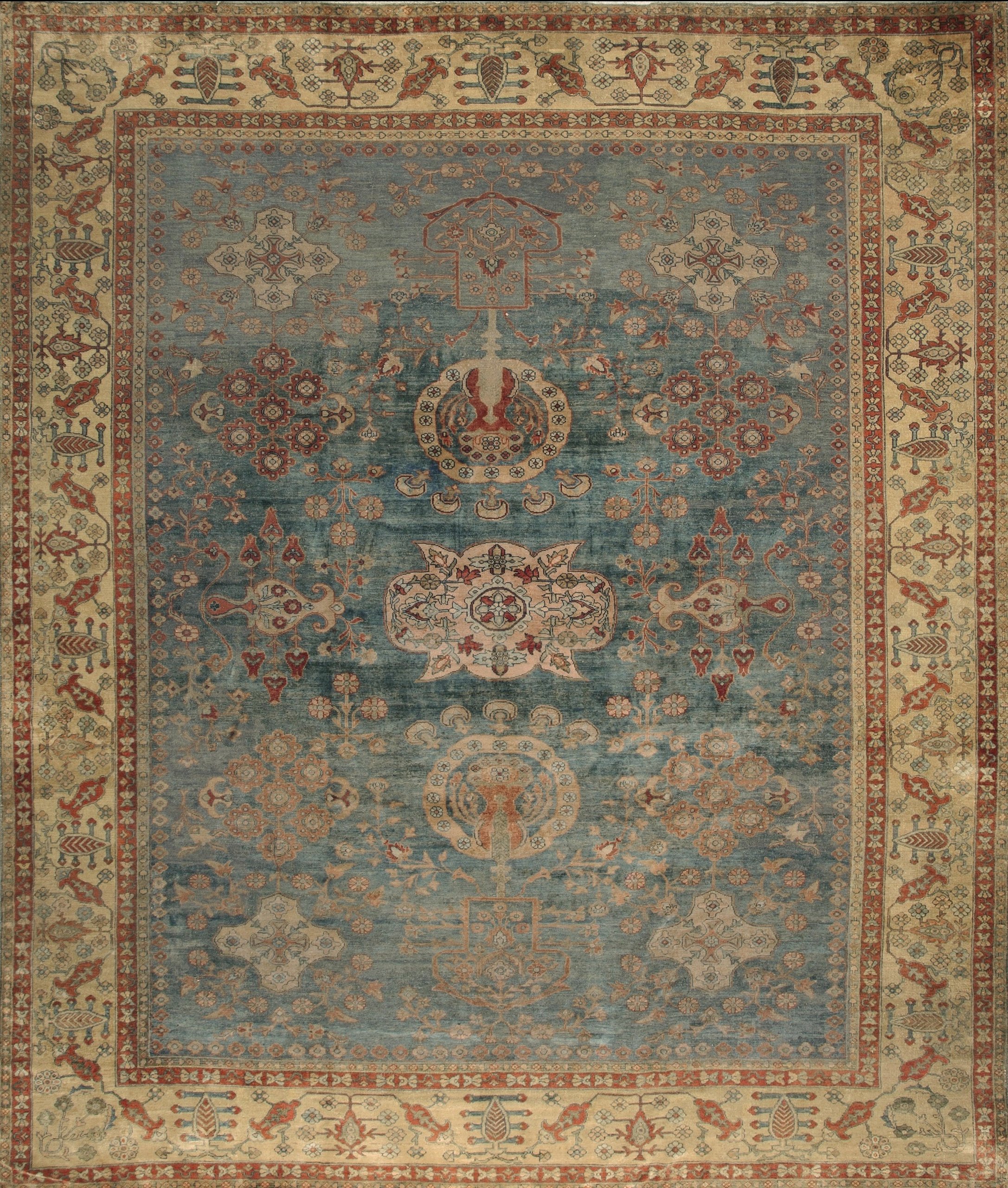


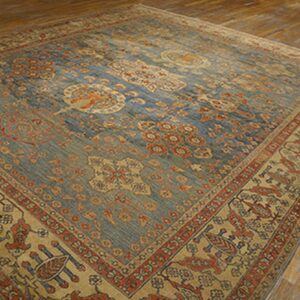
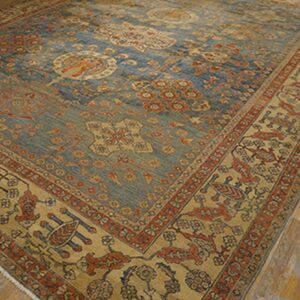
This magnificent late nineteenth-century Persian Malayer carpet is a rare and highly sought-after specimen, distinguished by its unusual square format and its ethereal, light blue palette. Historically, Malayer was a prestigious weaving center located between the grand city workshops of Hamadan and the tribal regions of the Sarouk province. This geographic positioning allowed Malayer weavers to create “scholarly-tribal” hybrids—Persian rugs that possess the structural finesse of city carpets combined with the creative, spontaneous spirit of village art.
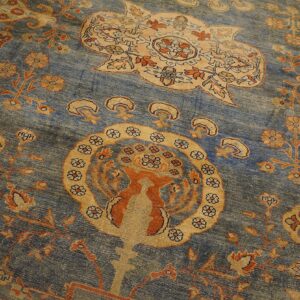
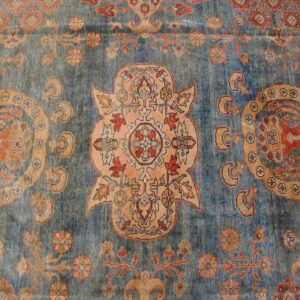
The composition is defined by its luminous light blue field, a color of immense rarity in the antique world. While deep indigo was common, achieving this specific “serene sky” or “powder blue” required a masterful control of the indigo fermentation process and a high-quality, lustrous wool that could hold the delicate pigment. Upon this tranquil ground, a rhythmic, “all-over” tribal design unfolds, featuring stylized rosettes, geometric palmettes, and the ancient Herati motif. The square dimensions suggest this was a custom commission, likely intended for a specific formal reception room or a high-status architectural space where standard rectangular dimensions would not suffice.
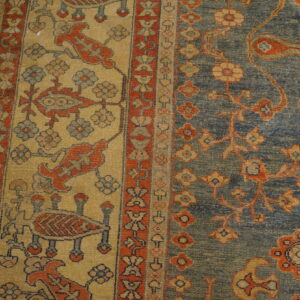
The “tribal-formal” aesthetic of this Malayer is further elevated by its sophisticated use of accent colors—soft terracotta, ivory, and sage green—all derived from natural vegetable dyes. These tones have developed a beautiful abrash (natural color variation) over the last century, giving the carpet a shimmering, watercolor-like depth. The absence of a central medallion ensures the design remains “breathable” and modern in its versatility, allowing it to anchor a contemporary or traditional room with equal grace.
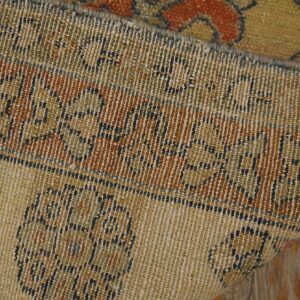
Technically, the tribal carpets from Malayer that are of this era are prized for their high-quality, hand-spun wool and their durable, low-profile weave. The borders act as a structural frame, featuring a primary “Samovar” or “Turtle” pattern that grounds the airy energy of the light blue field. To possess a square, light blue antique Malayer is to hold a monument to nineteenth-century Persian textile engineering—a work that bridges the gap between the rugged, geometric power of the tribal heartlands and the refined elegance of the Persian court style.