
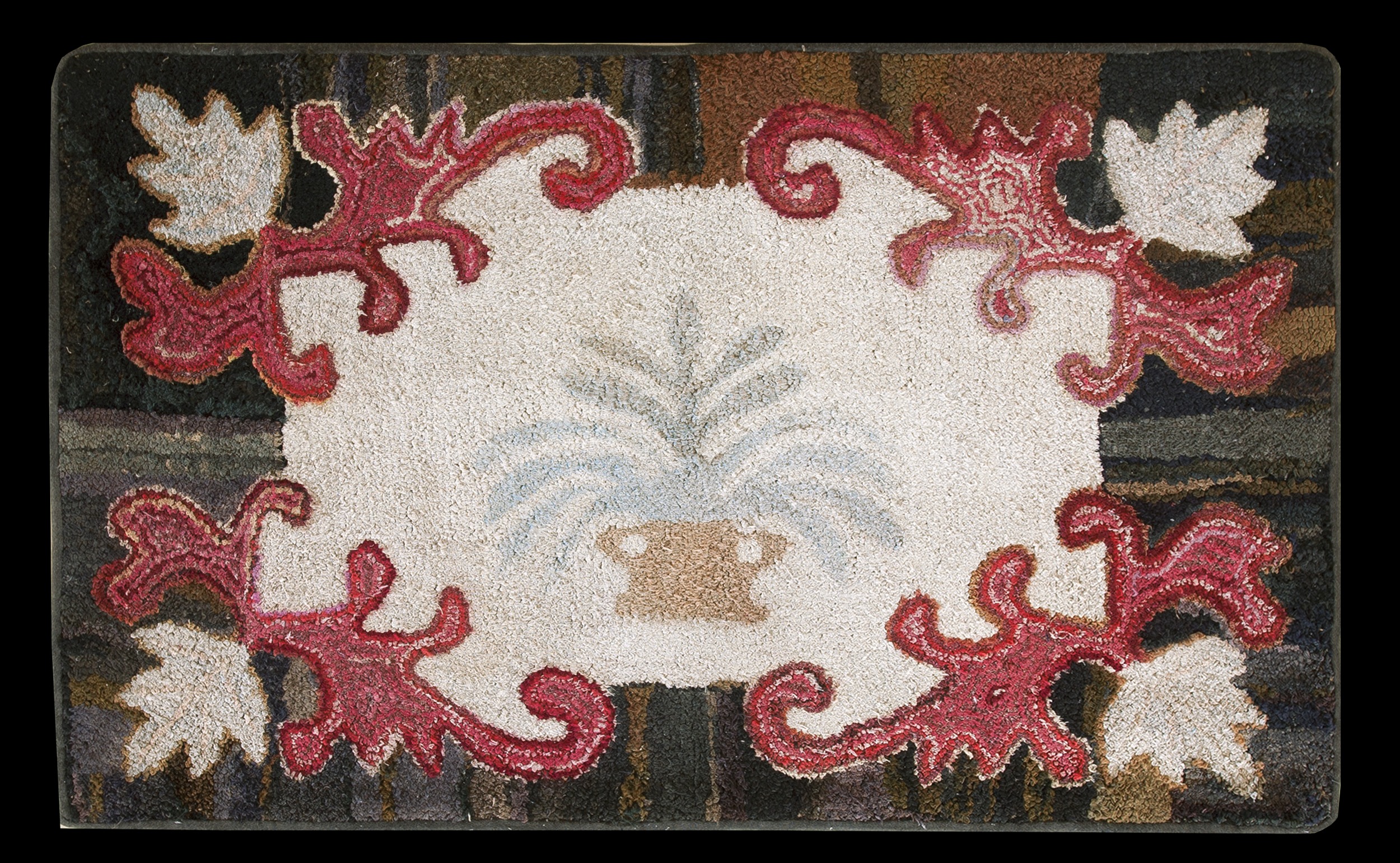
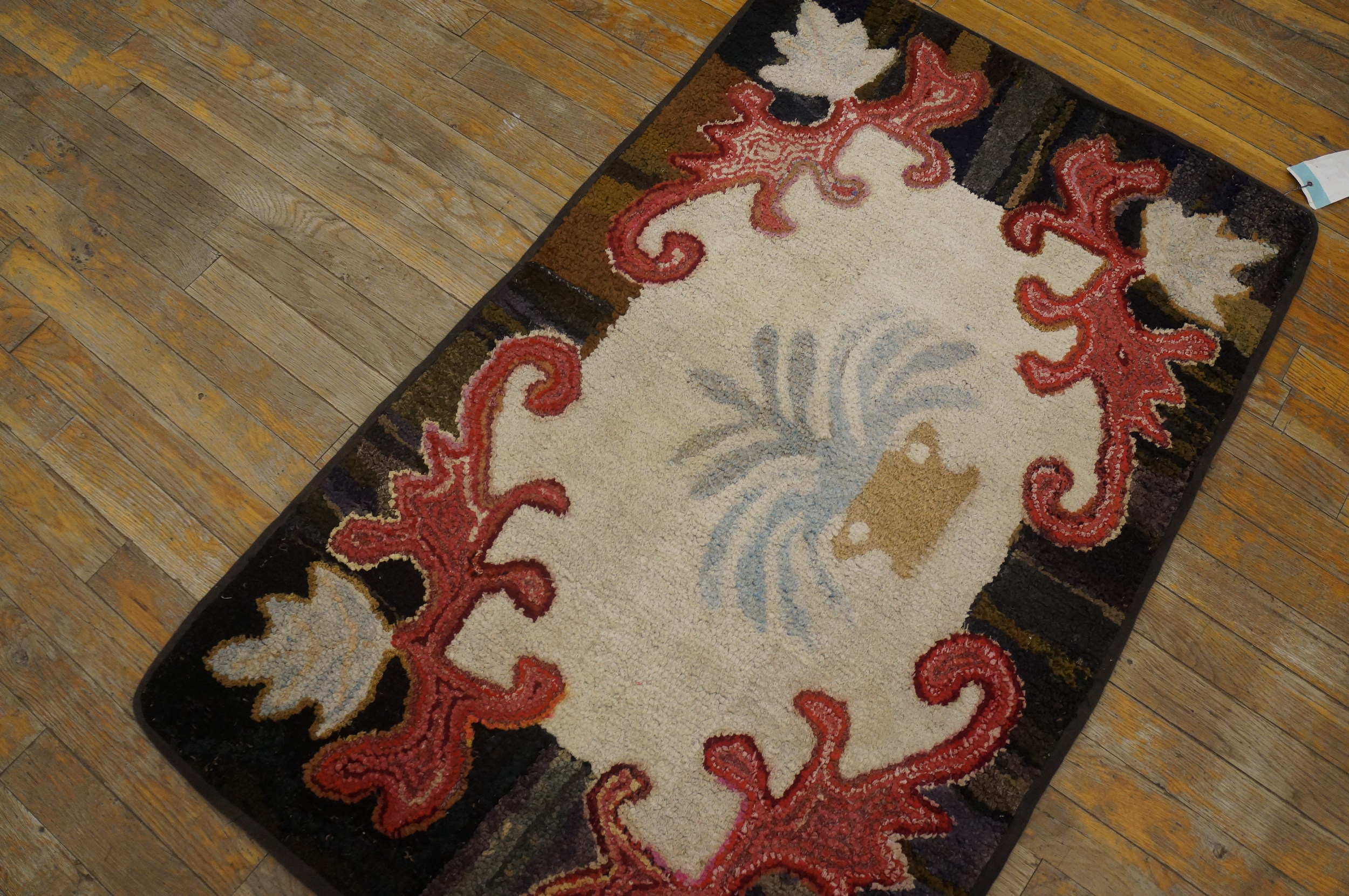
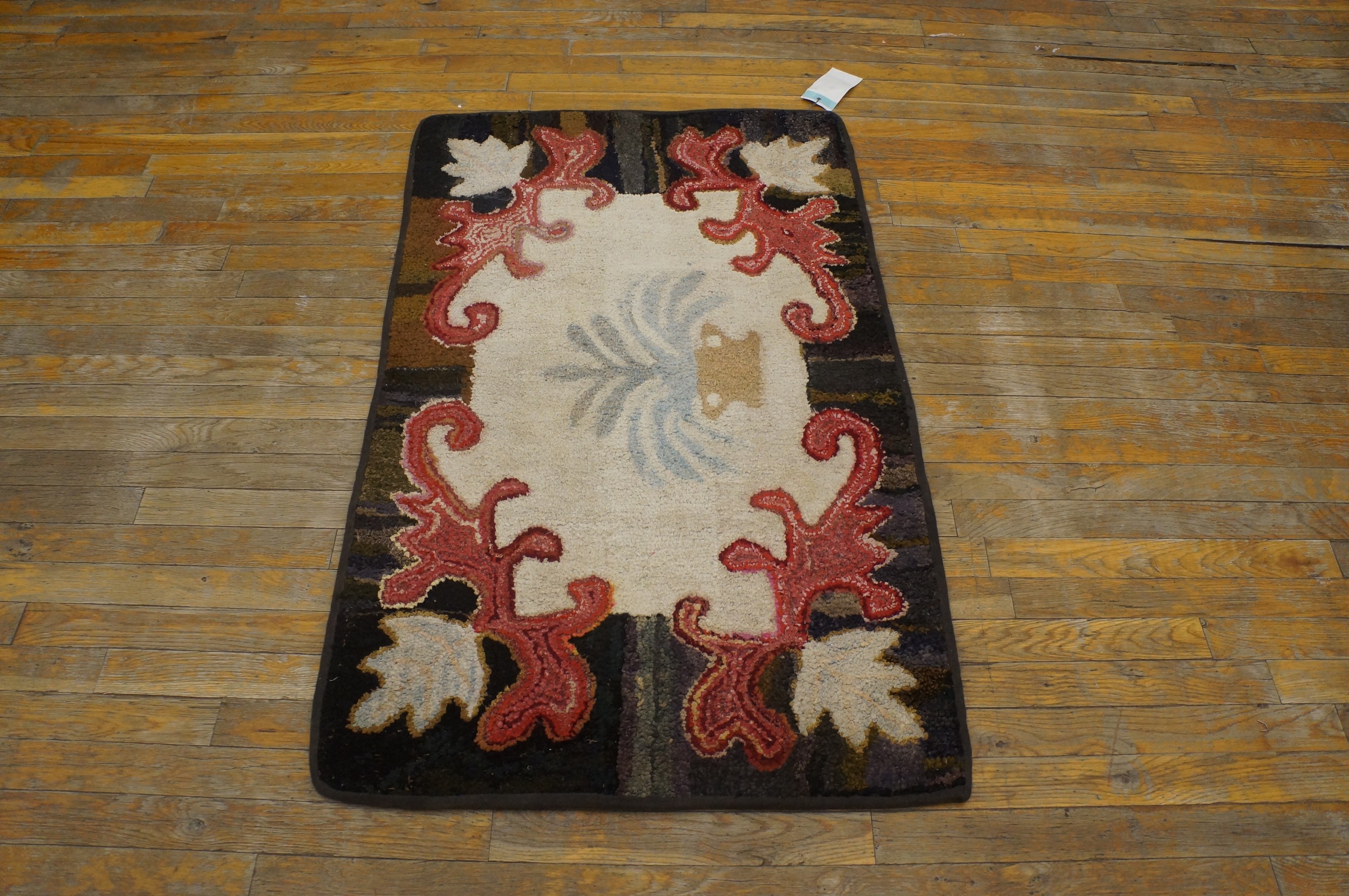
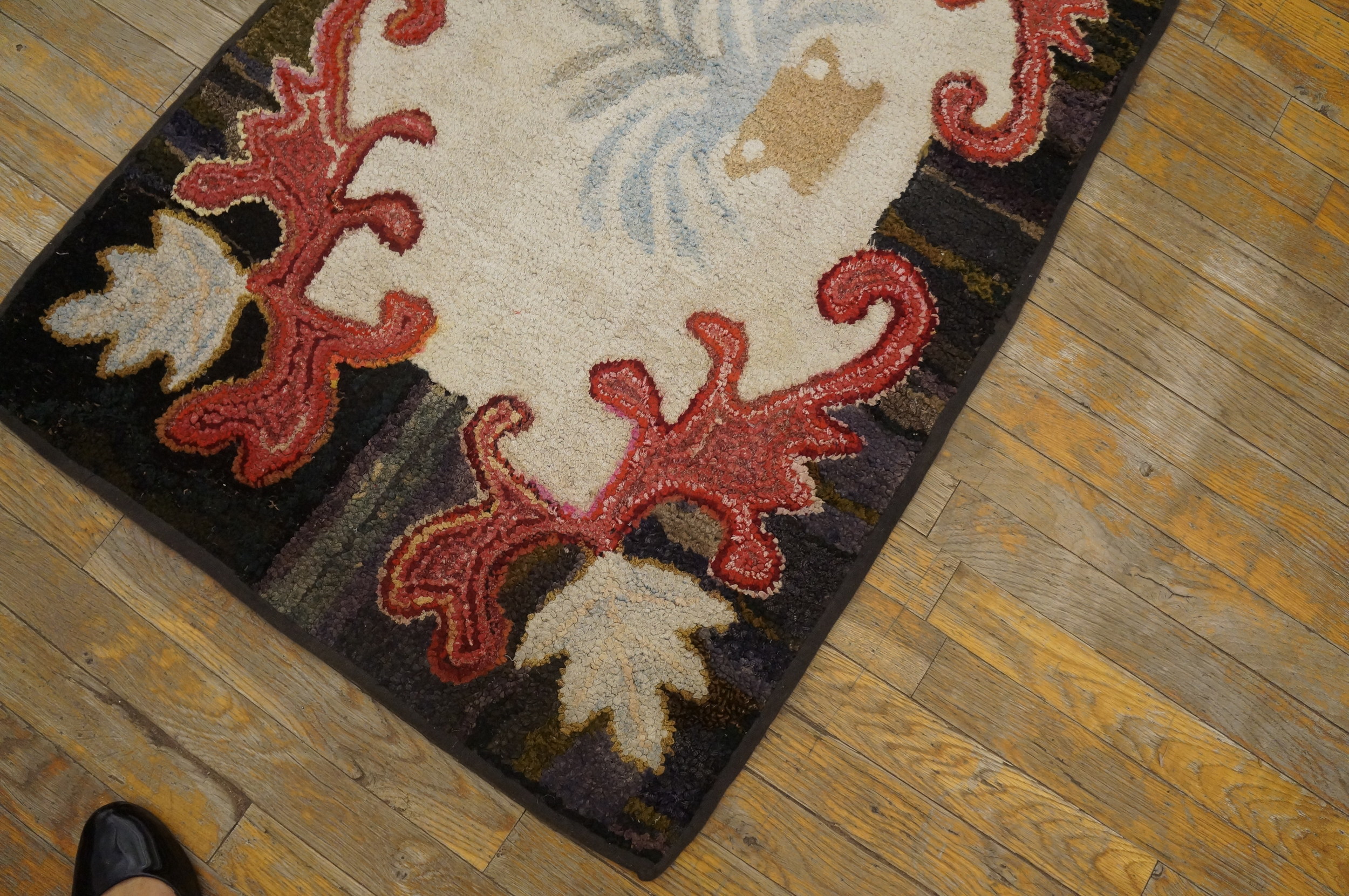
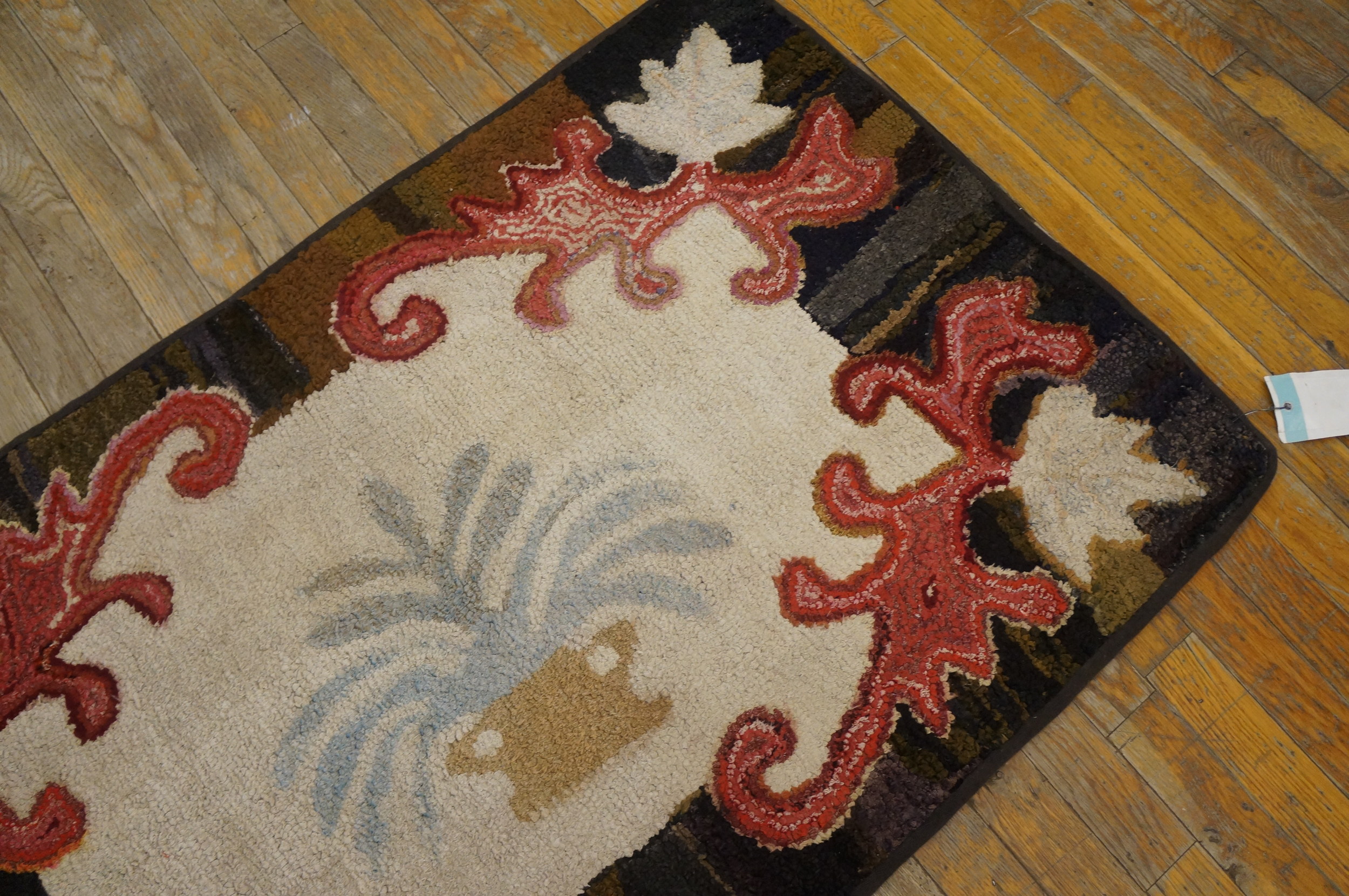
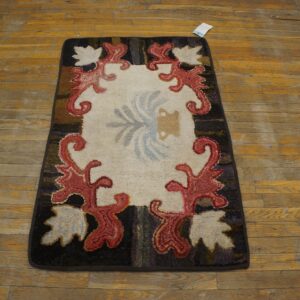
This late 19th-century American hooked rug is a charming and rare exemplar of “Domestic Folk Art,” representing the height of provincial creative expression in North America. While geometric or “hit-or-miss” patterns were common for daily utility, this Vase and Floral specimen was likely a “best” rug—a labor-intensive work of art created to bring color and a touch of Victorian refinement to a rural household.
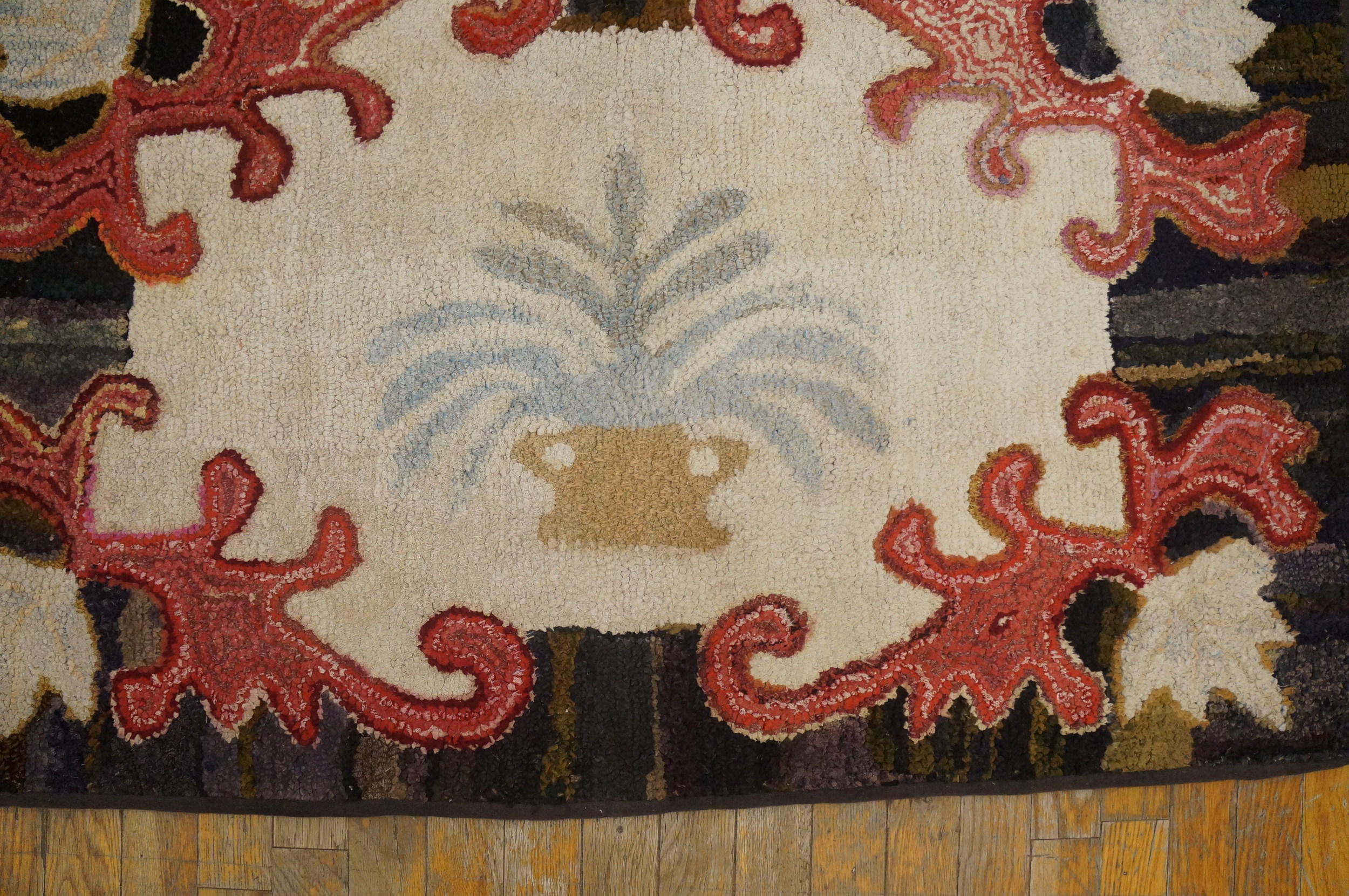
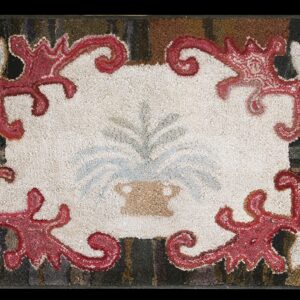
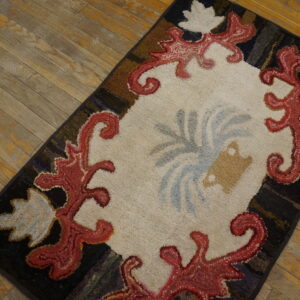
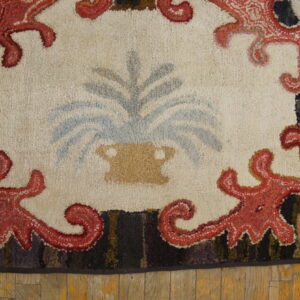
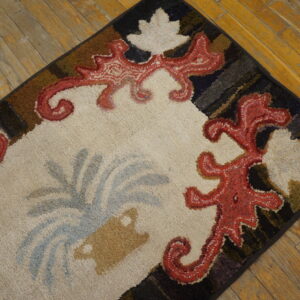
The composition is centered upon a classic folk art Vase (or Urn) motif, from which an exuberant arrangement of flowers and trailing vines emerges. The drawing is characterized by its “primitive” whimsy—the proportions are slightly stylized and hand-drawn, giving the piece a soulful, human quality that machine-made textiles lack. This central “still life” is a quintessential American motif, symbolizing hospitality, abundance, and the civilizing influence of the garden within the home.
The palette is anchored by a luminous Antique Ivory and Cream foundation. This light field provides a “parchment-like” stage for the secondary colors of the flowers and vase, which typically feature a “jewelry box” of muted rose, soft indigo, sage green, and warm ochre. Because these magnificent American folk art rugs were made using hand-cut strips of recycled wool garments and flannel, the colors possess a beautiful, variegated abrash (tonal shifting). This creates a shimmering, “salt-and-pepper” texture that gives the ivory field a watercolor-like depth and a soft, historical patina.
Technically, this American area rug is prized for its tactile, nubby texture. The process of pulling individual loops of wool through a burlap or linen backing results in a dense, substantial pile with a heavy, “meaty” handle. Over more than a century, the wool has developed a soft, felted character, softening the edges of the floral design and imbuing the piece with a sense of “Quiet Luxury” and historical gravity.
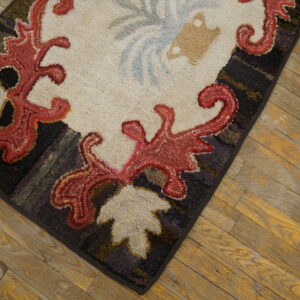
The borders typically serve as a simple, grounding frame—often a dark, “mottled” tone that “locks in” the lightness of the ivory field. To possess this antique American vase hooked rug is to own a monument to 19th-century craftsmanship. It is a work that bridges the gap between humble colonial resourcefulness and sophisticated decorative art—a hand-wrought sanctuary of historical grace and folk-art brilliance.