
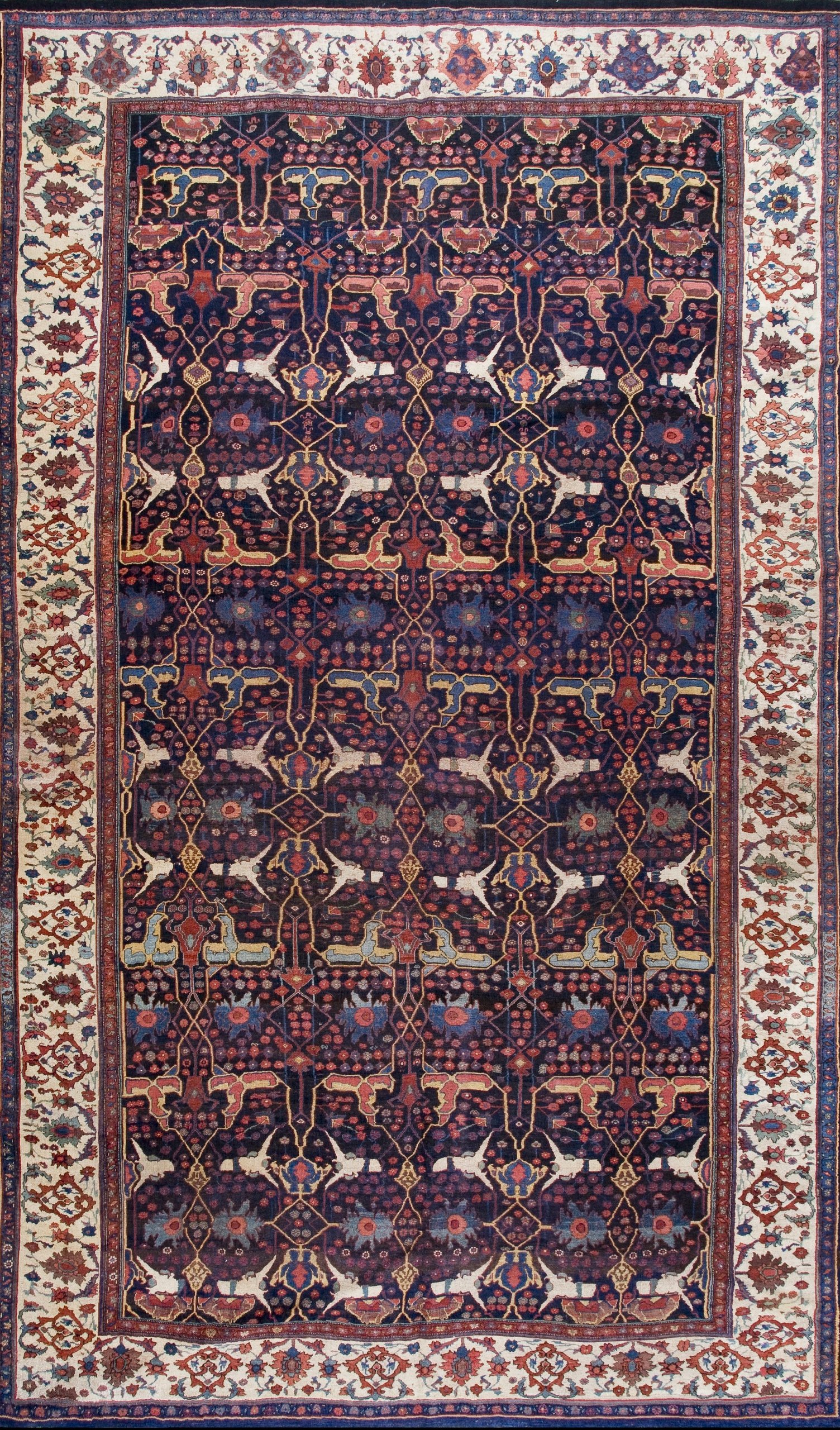
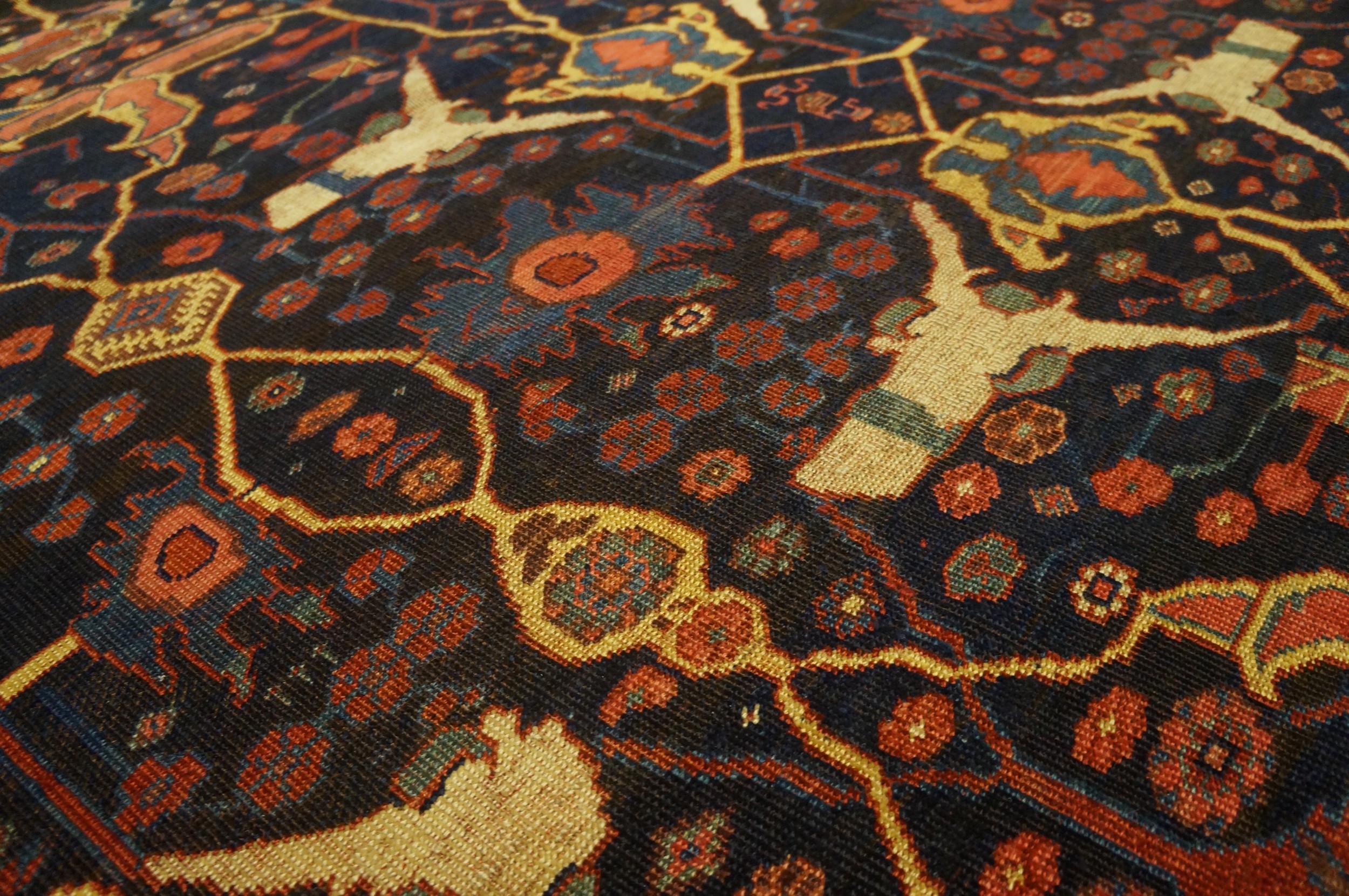
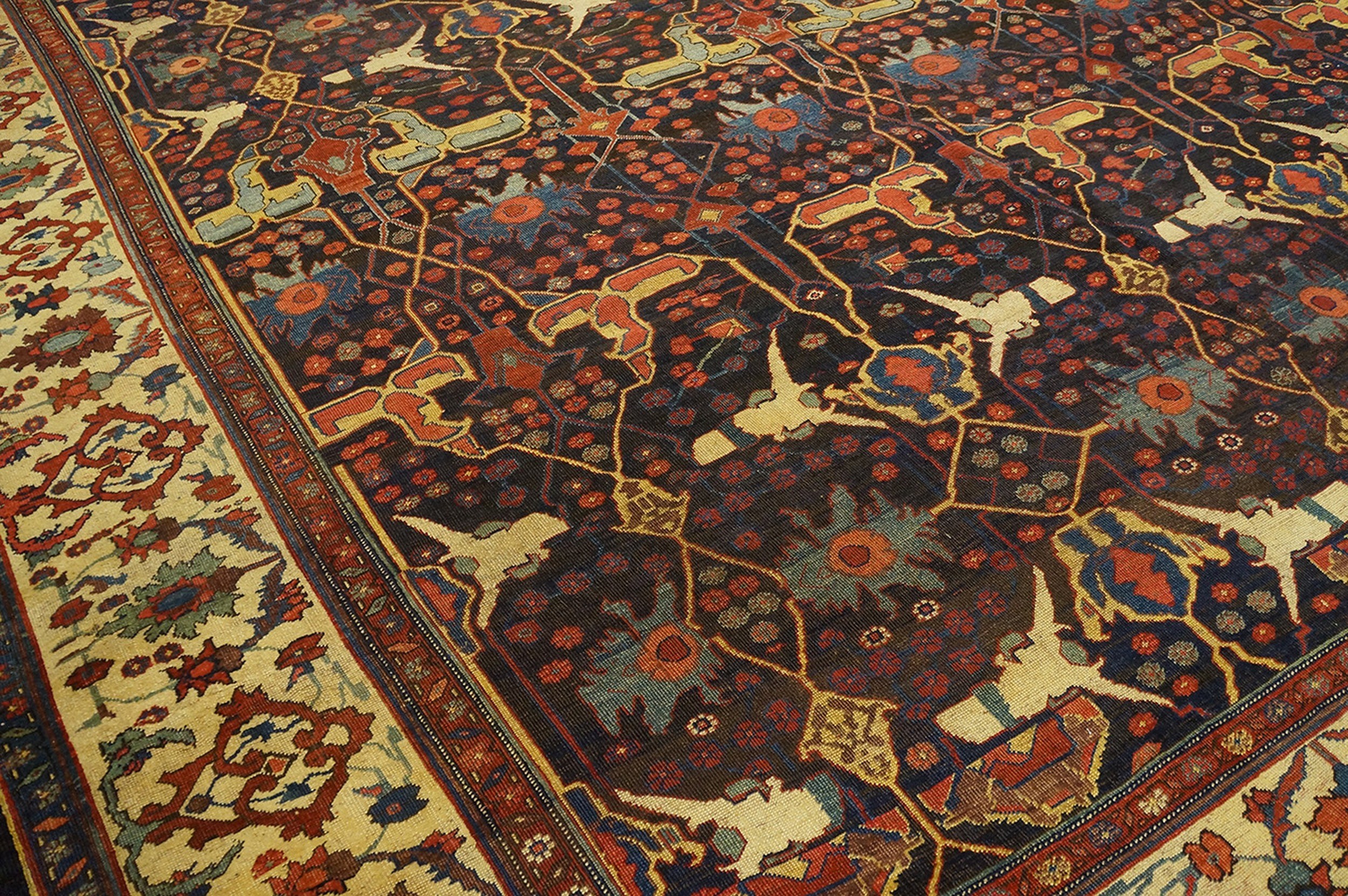
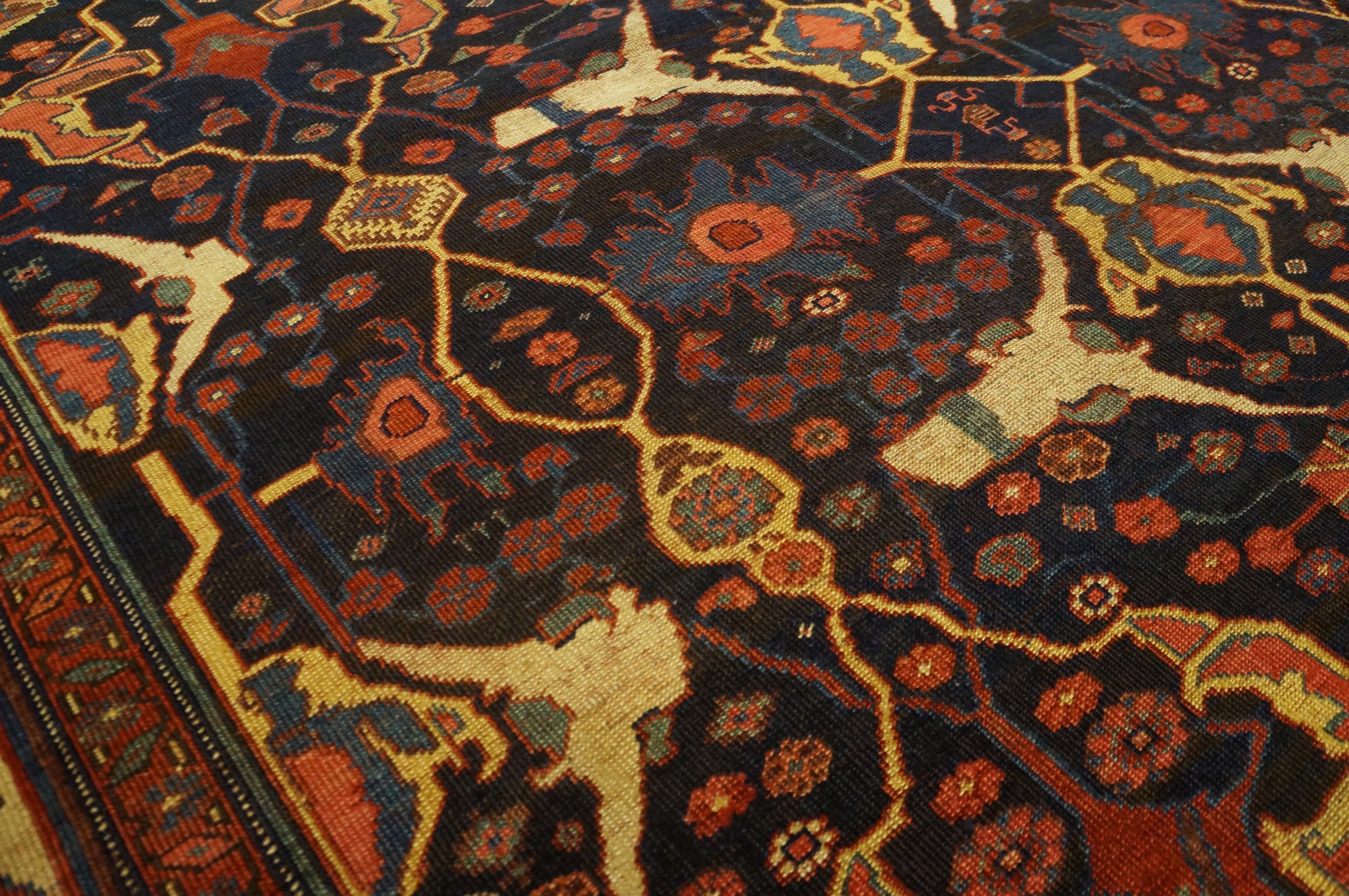
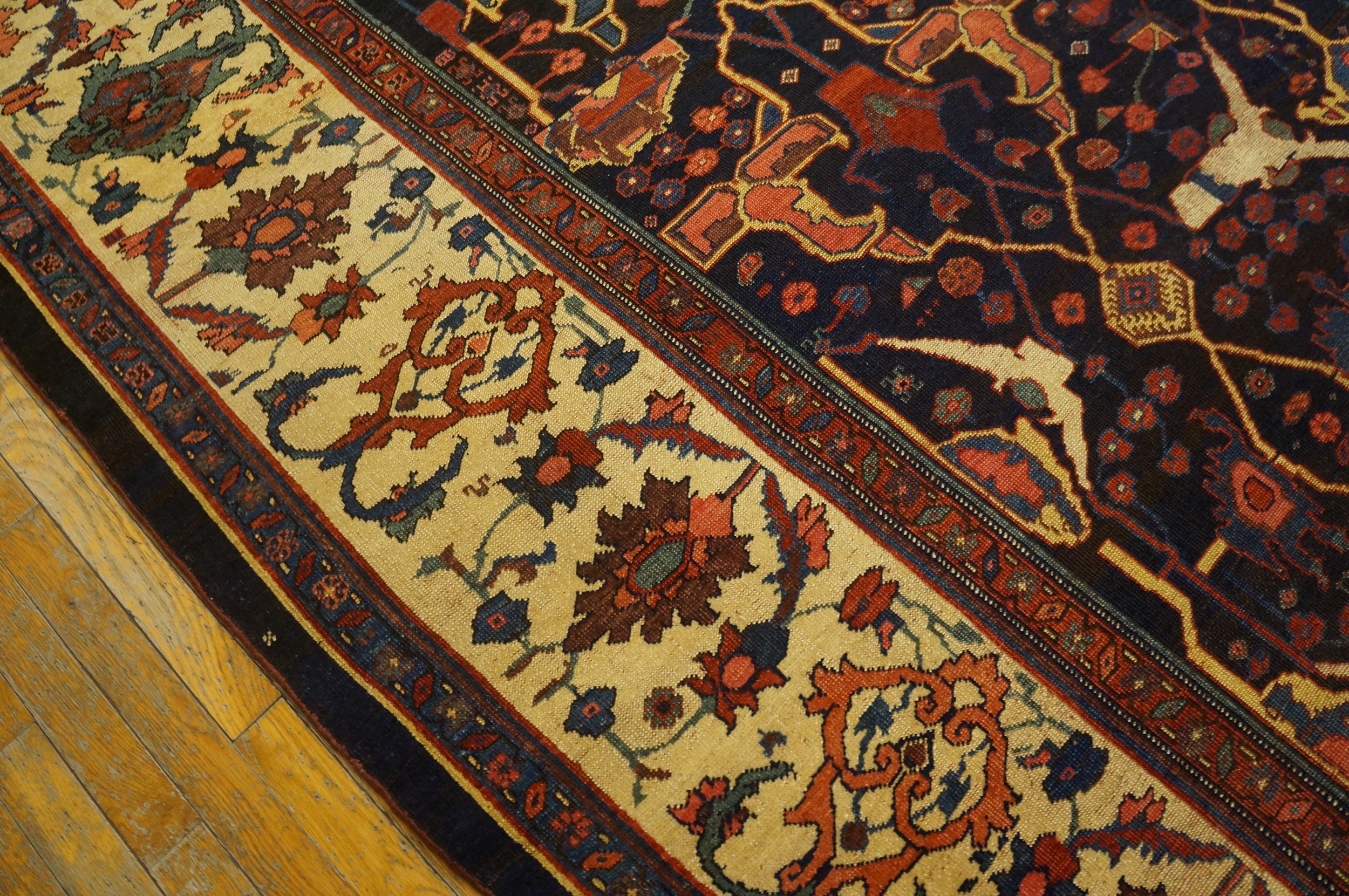
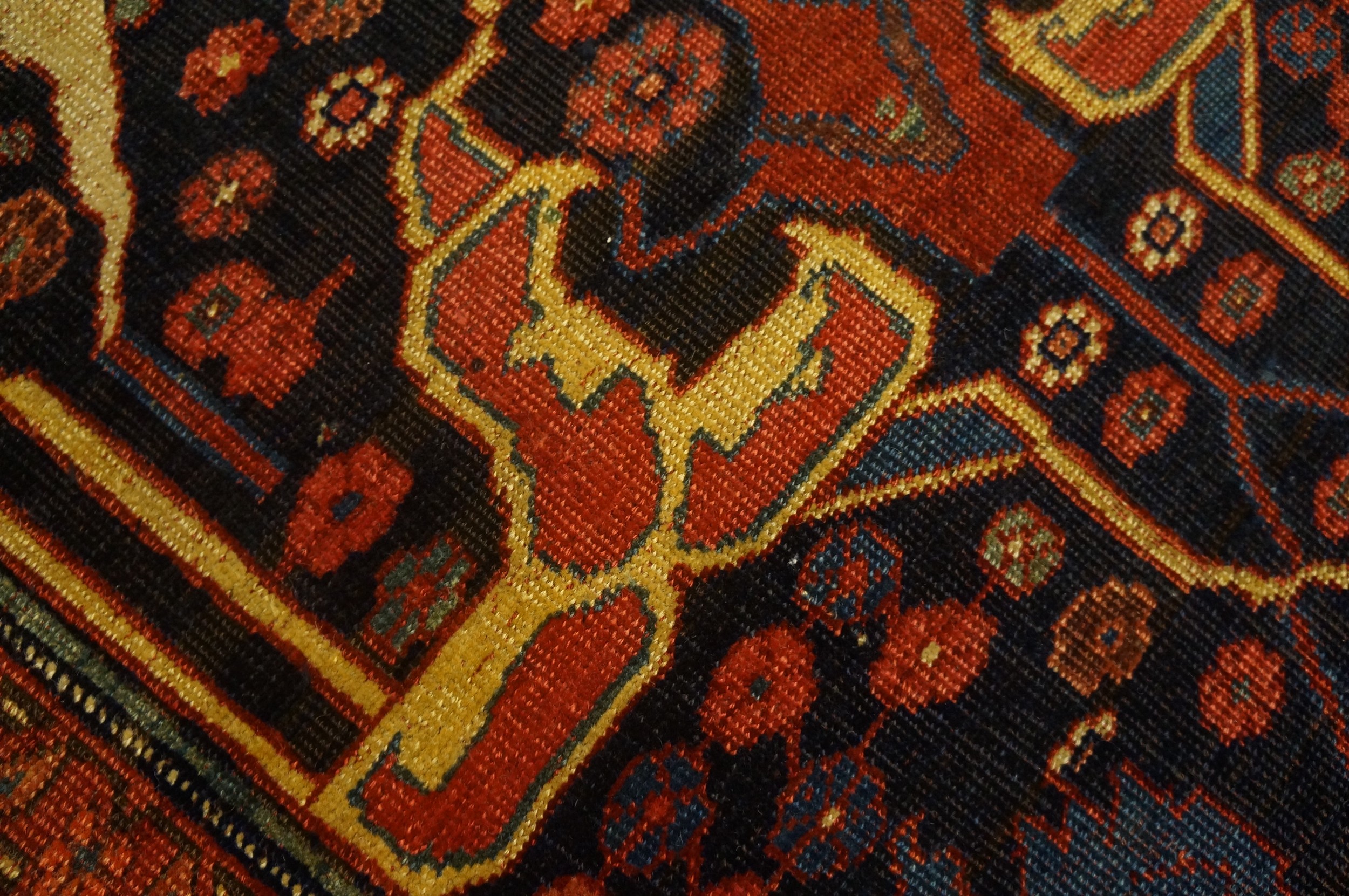
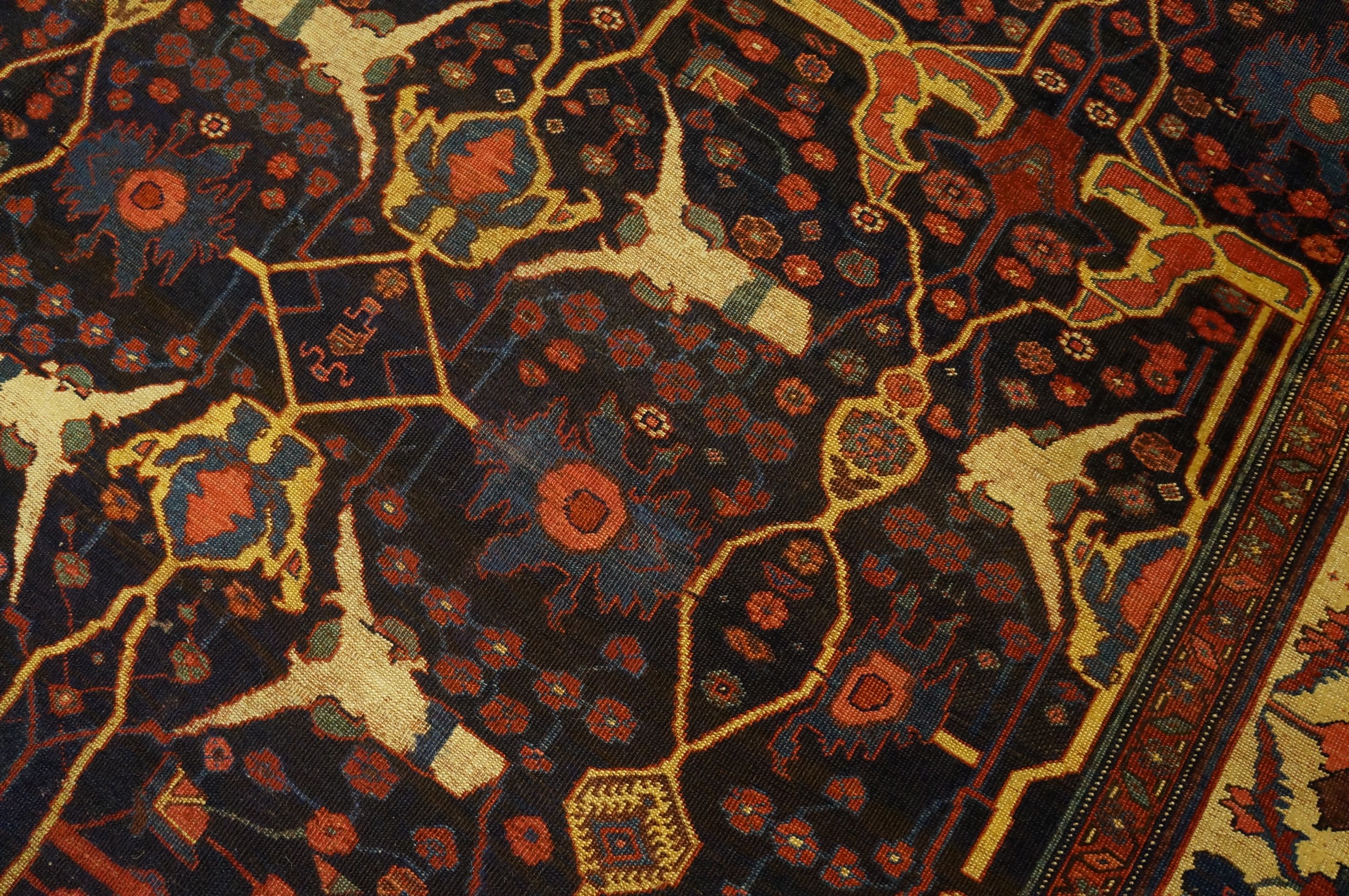
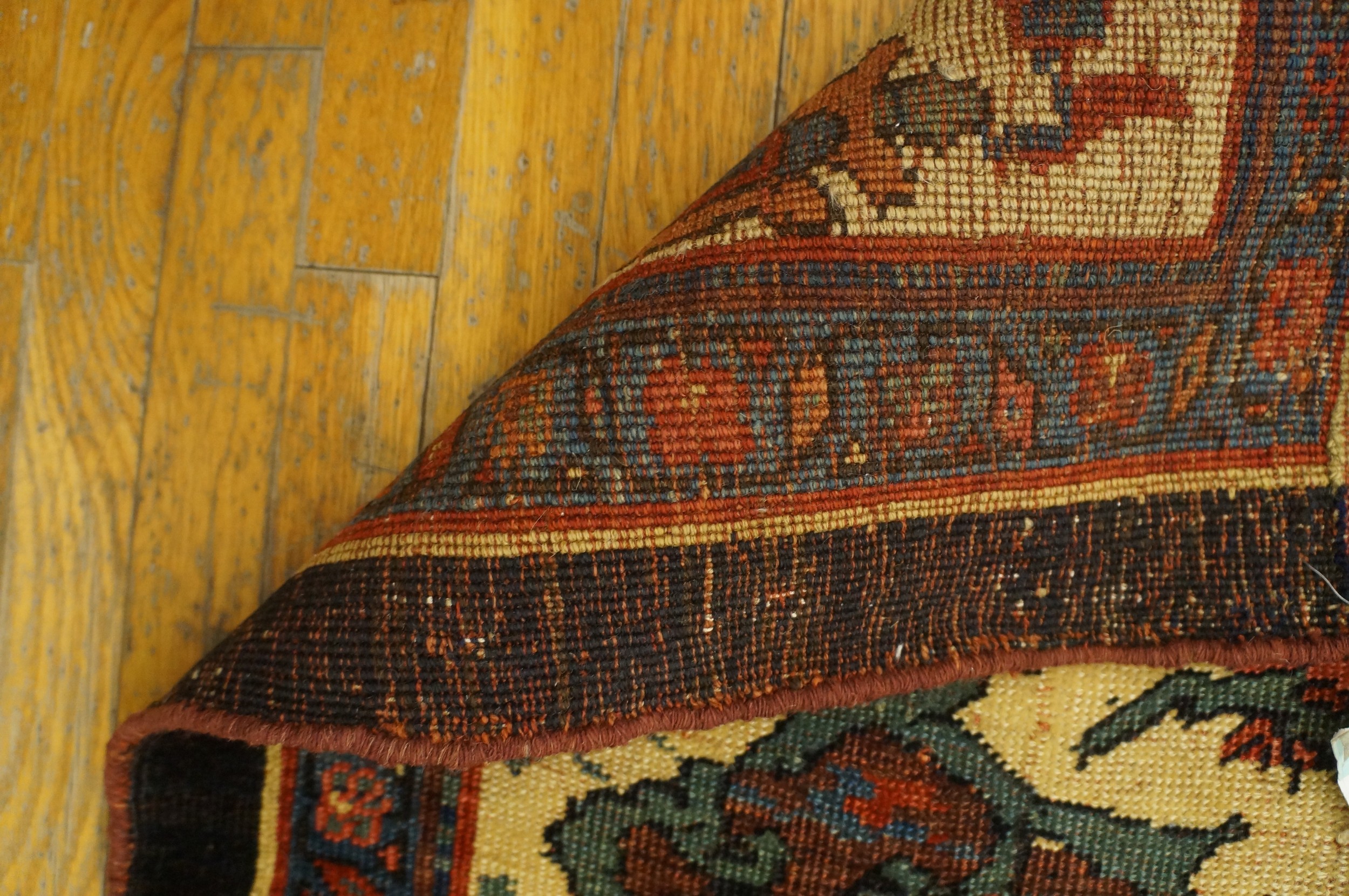
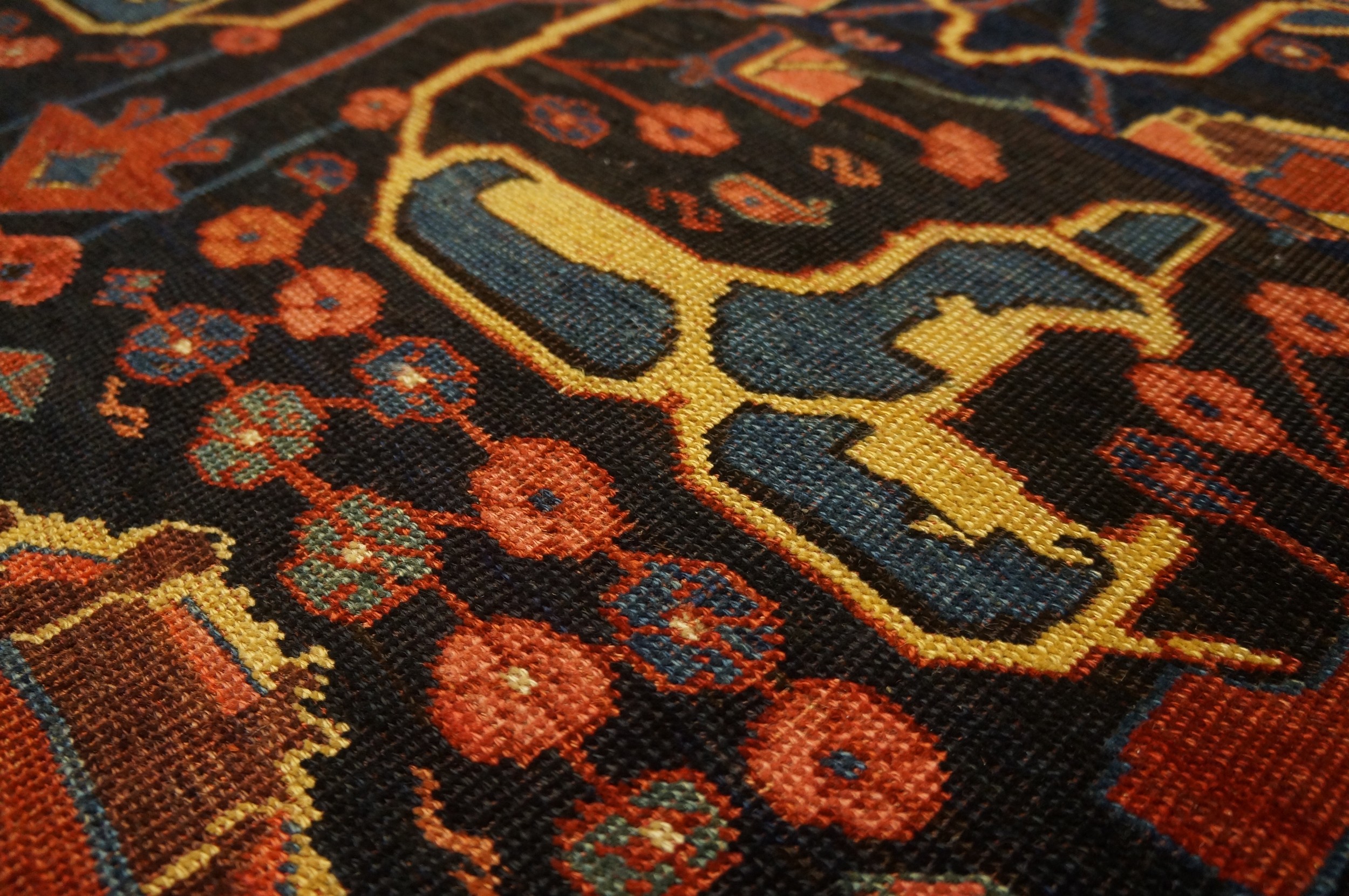
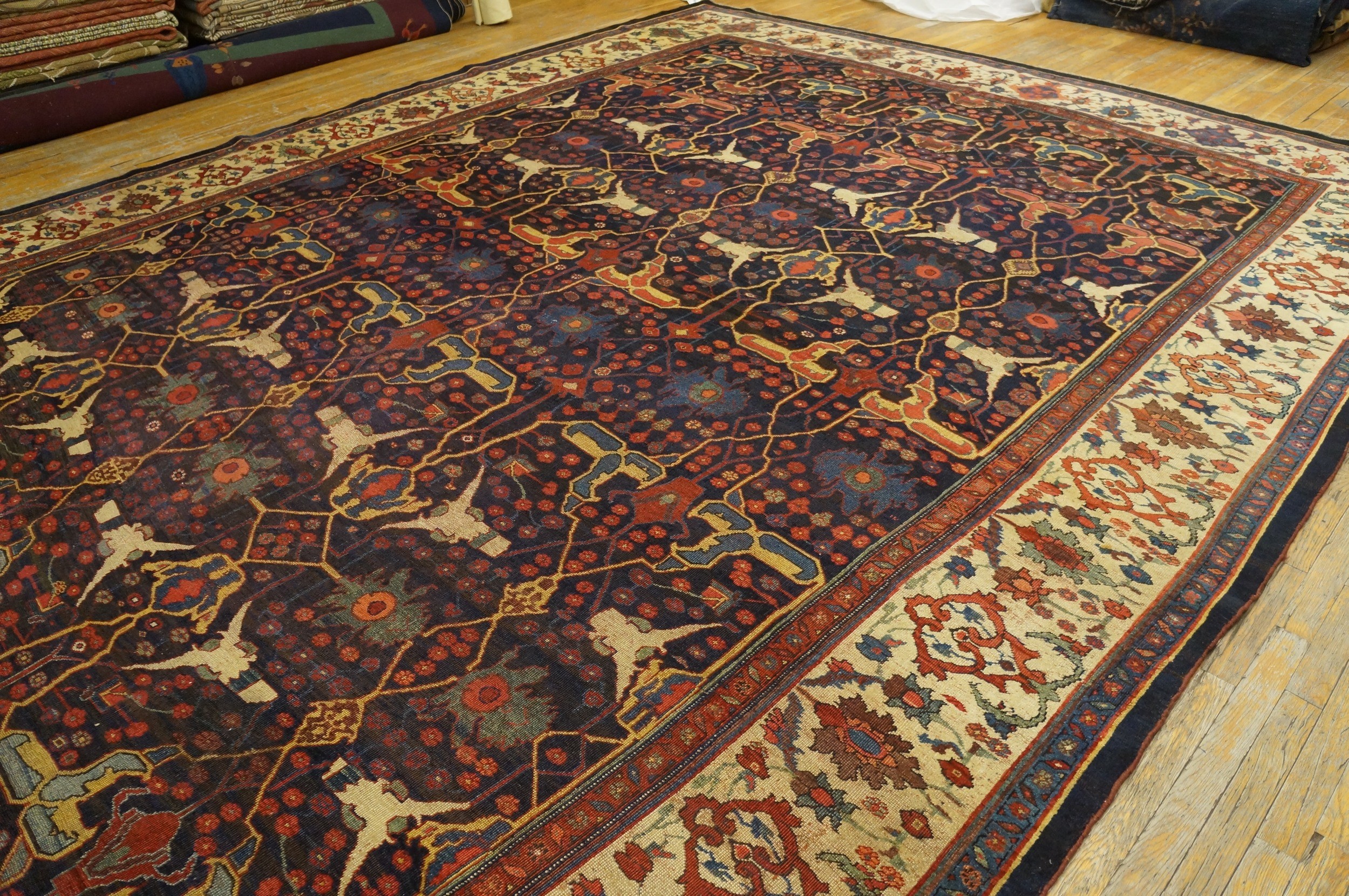
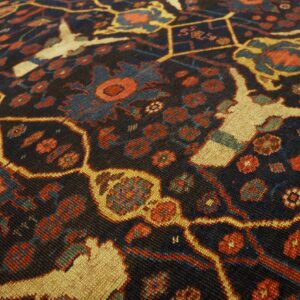
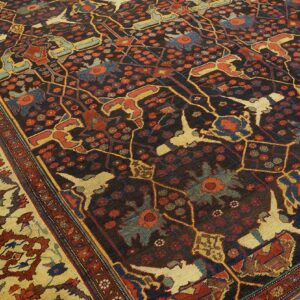
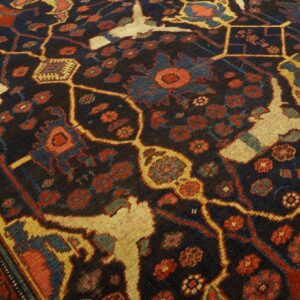
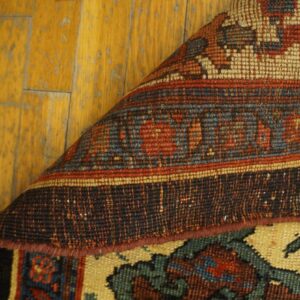
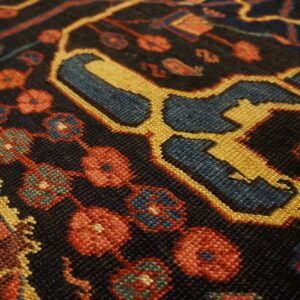
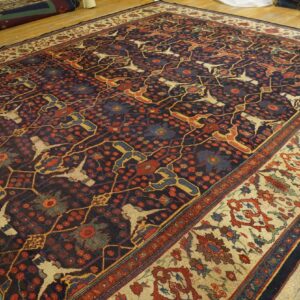
This large-scale antique Persian Bidjar rug, dating from the late nineteenth century, is a monumental example of what collectors often call the “Iron Carpet of Persia.” Antique Persian Bidjar rugs, woven by Kurdish artisans in the Northwest of Iran, are historically famous for their unparalleled durability, achieved through a unique “wet-weaving” technique. The weavers would beat the weft threads with a heavy iron comb while the wool was still damp, creating a pile so dense and rigid that it was nearly impossible to fold. This specific specimen features the esteemed “Garous” design, a pattern that originated in the nearby Garous district and is characterized by its grand, sweeping foliate scrolls and split-palmettes, representing a more sophisticated, “court-influenced” evolution of the rugged Kurdish tribal aesthetic.
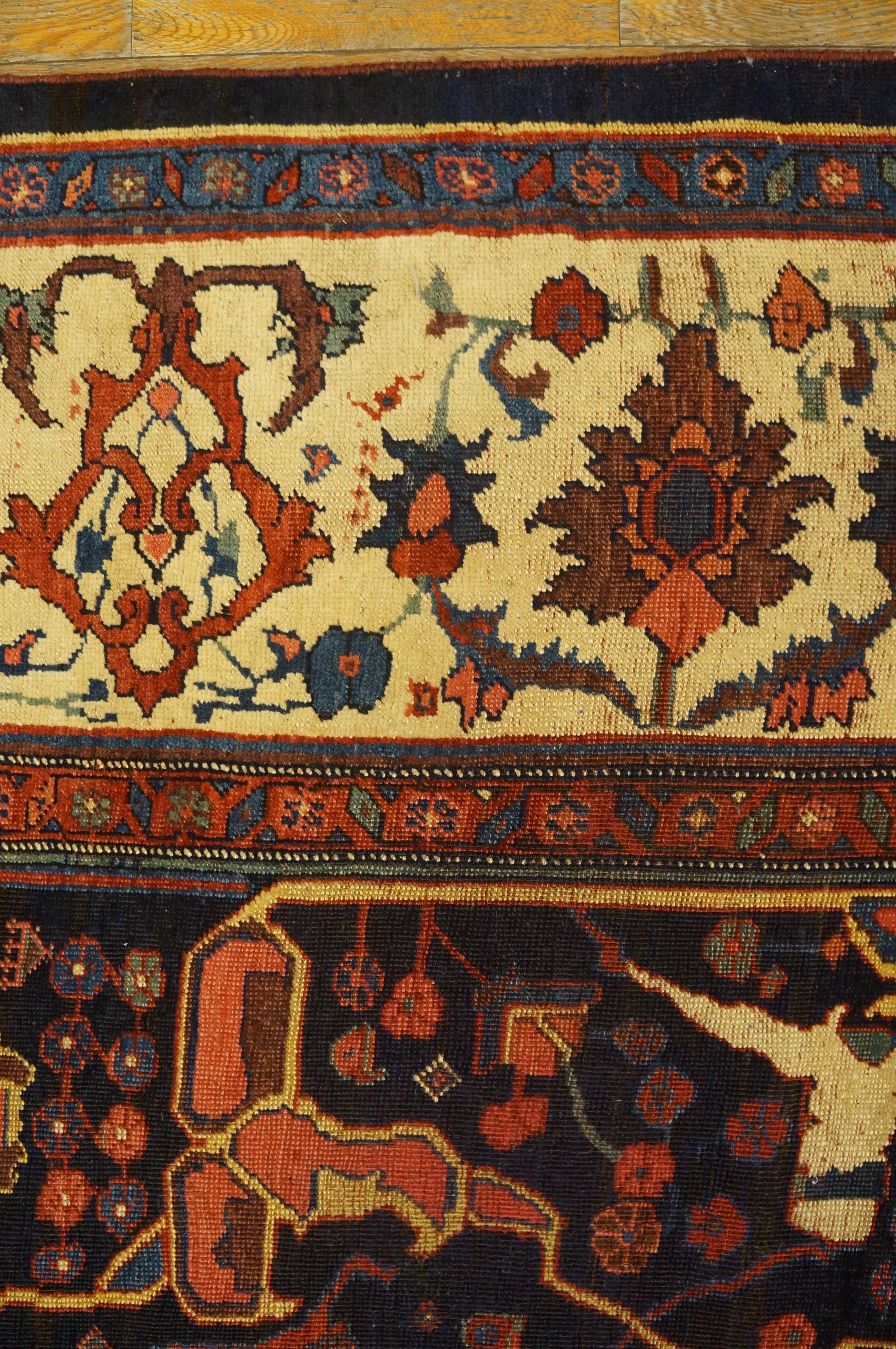
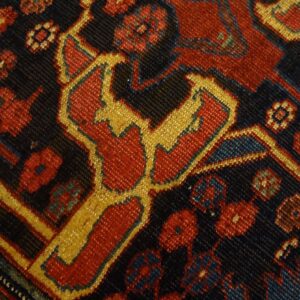
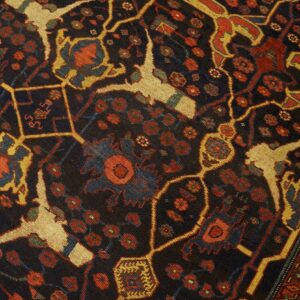
Historically, the deep indigo-blue field of this carpet is its most striking feature, achieved through a grueling fermentation process using the Indigofera plant. In the nineteenth century, a saturated blue of this depth was a sign of significant wealth and status, as it required multiple “dips” in the dye vat to reach such intensity. The Garous design pattern itself is a masterpiece of spatial balance; unlike the dense, repetitive “Herati” patterns common in smaller Bidjars, the large-scale Garous motifs allow the blue field to “breathe,” showcasing the shimmering tonal variations known as abrash. These sprawling, ivory-colored vines and earthy-toned palmettes are thought to be a tribal interpretation of the classical Safavid “Arabesque,” transforming the formal gardens of Isfahan into a bolder, more muscular language suited to the Kurdish mountain spirit.
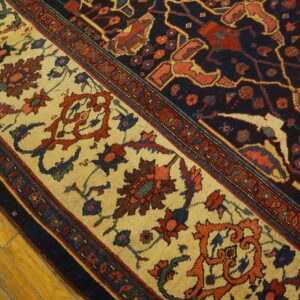
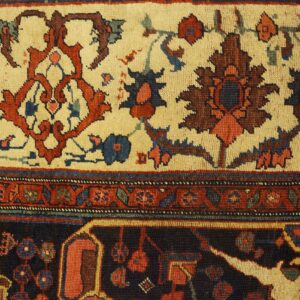
The late 1800s were the “Golden Age” of Bidjar production, a time when these magnificent Persian rugs were commissioned for the palaces of Persian nobility and the grandest Victorian estates in Europe. Because of their immense weight and durability, large Bidjars were intended to stay in one place for generations, literally forming the foundation of a family’s architectural heritage. The “Garous” border, with its alternating floral rosettes and serrated leaves, acts as a protective “fence” for the inner composition, adhering to the ancient Persian belief that a carpet should mirror the order and safety of a walled garden. To possess a late 19th-century Bidjar of this scale and color is to hold one of the most indestructible works of art ever created—a textile that combines the scholarly precision of the Garous motifs with the raw, enduring power of the Kurdish weaving tradition.