
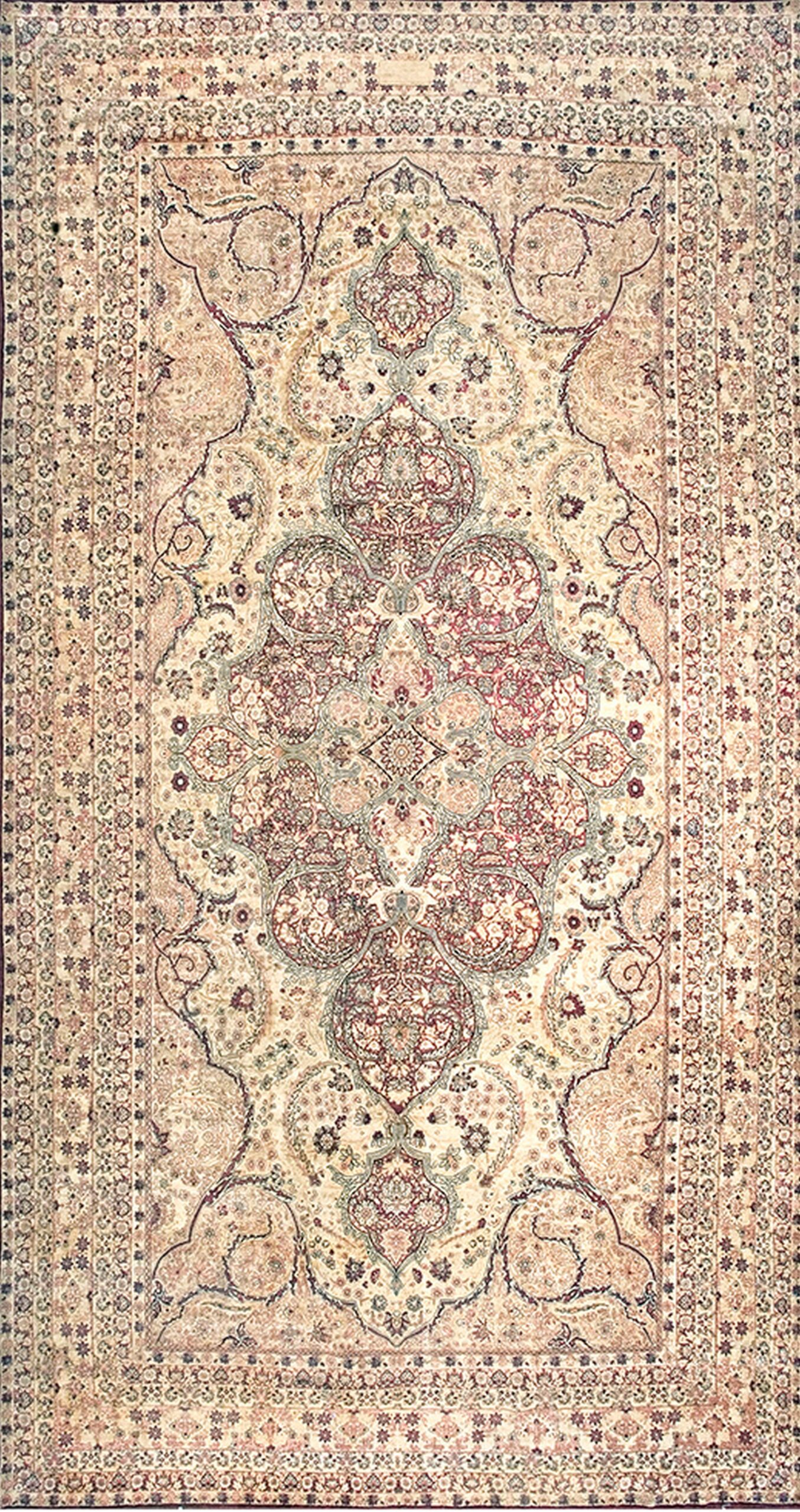
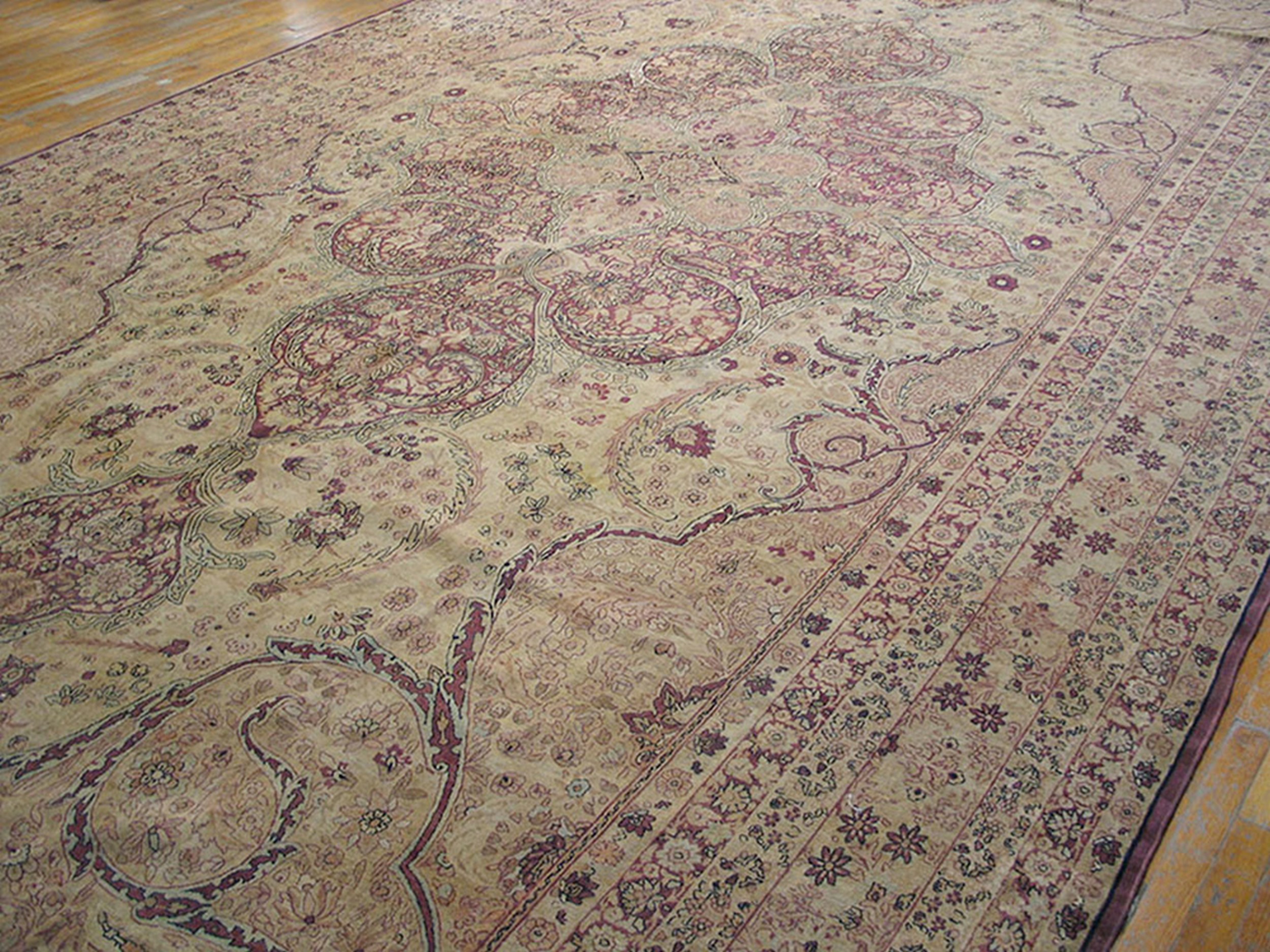
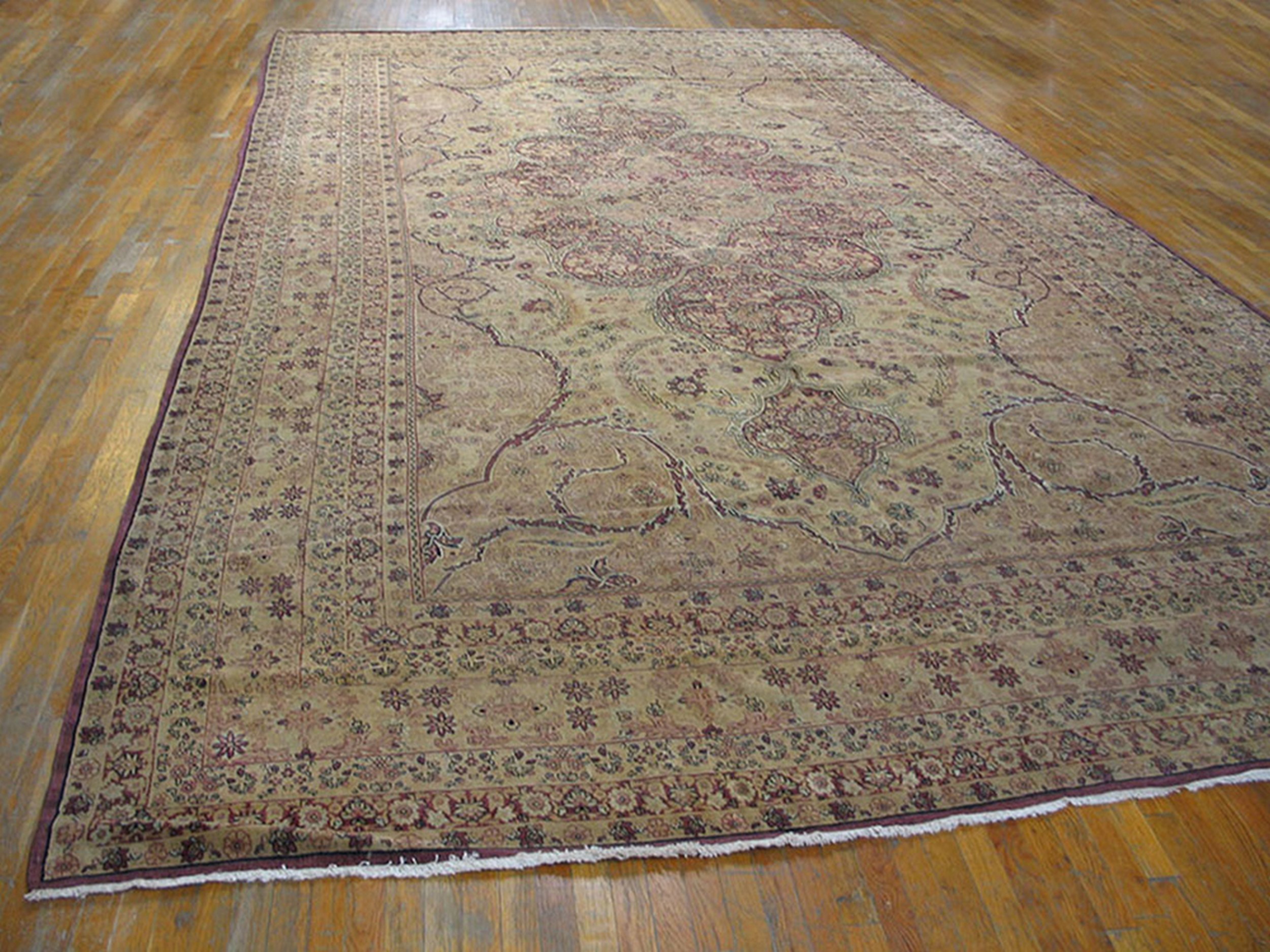
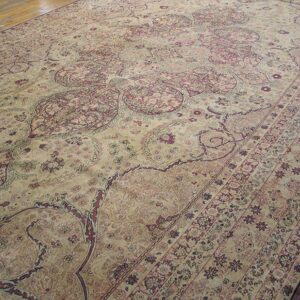
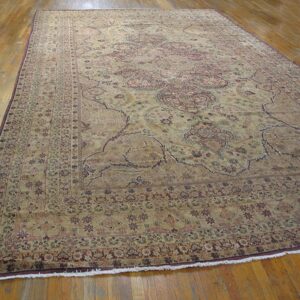
This magnificent oversized fine antique Persian Kerman, dating from the late nineteenth century, is a superlative example of the “Grand Palace” aesthetic. Originating from the storied city of Kerman—a center of weaving excellence since the Safavid dynasty—this big oversized carpet represents the peak of the region’s artistic output during the “Masterpiece Era.” Historically, Kerman weavers were renowned for their unparalleled technical skill and their ability to translate the most complex, painterly floral designs into textile form, making their work the preferred choice for European royalty and the grandest estates of the American Gilded Age.
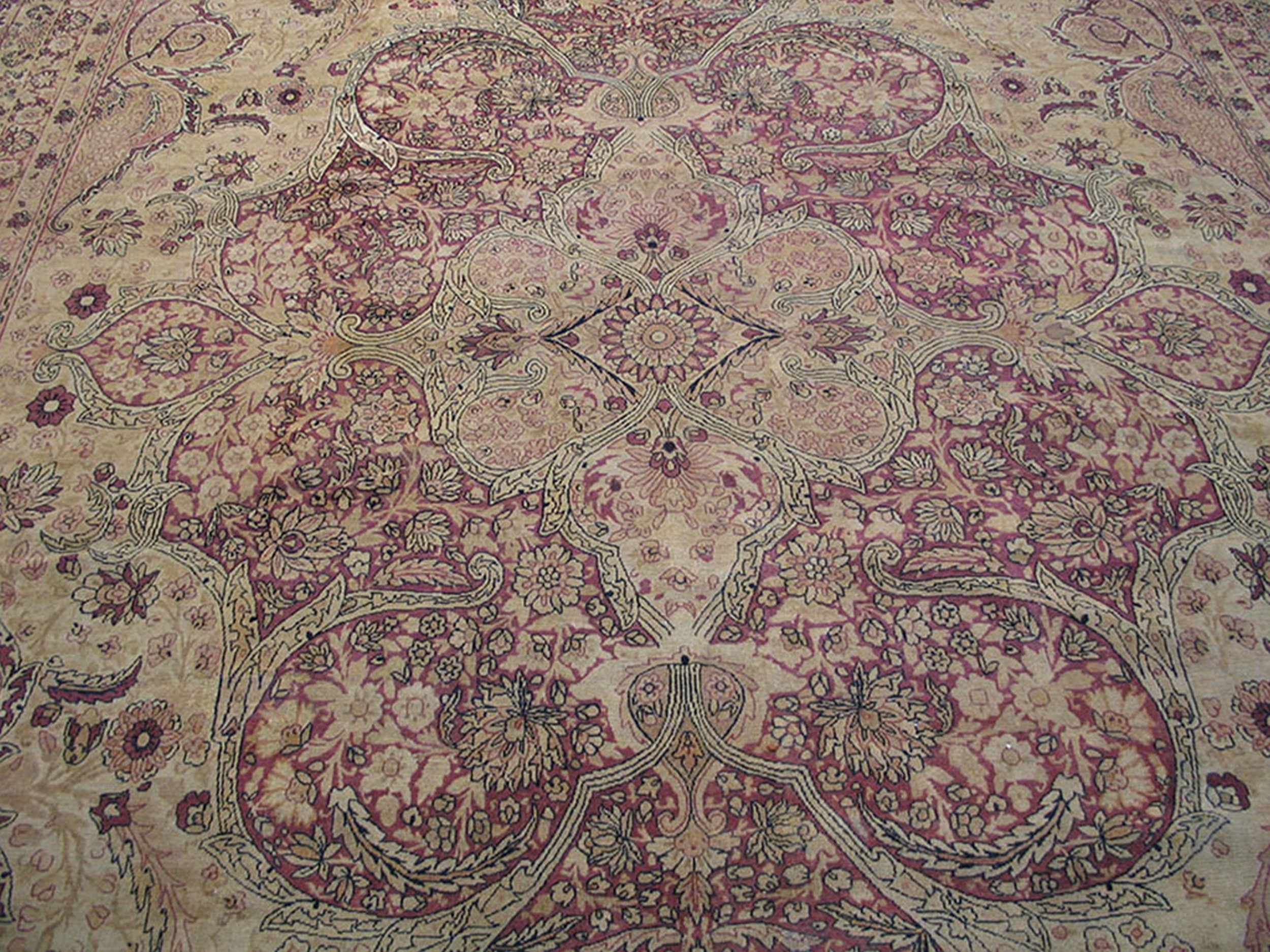
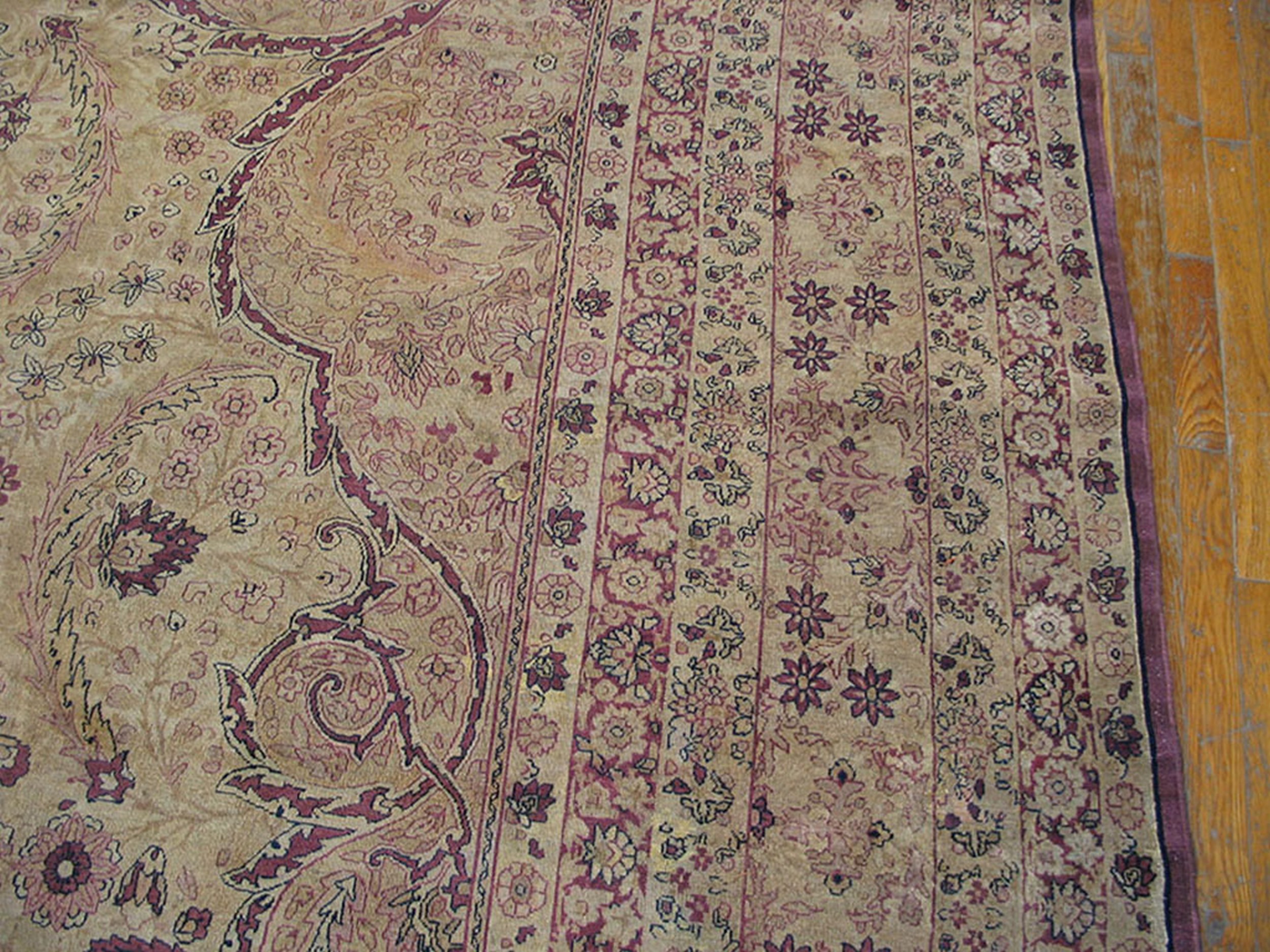
The composition is centered upon a classic, multi-lobed floral medallion that radiates outward across a luminous ivory field. This “ivory-ground” palette was a mark of extreme prestige; it required the selection of the finest, cleanest “Carmania” wool to achieve a consistent, radiant surface. Upon this ivory stage, an exuberant “Millefleurs” (Thousand Flowers) arrangement unfolds, featuring a dense tapestry of roses, lilies, and scrolling vines. The “fine weave” of this specimen allows for a level of botanical realism that mimics a Persian miniature painting, where every petal and leaf is rendered with a three-dimensional, “razor-sharp” clarity.
Historically, an “oversized” Kerman of this magnitude was a monumental undertaking, likely a bespoke commission that required a massive horizontal loom and a team of master weavers working for years in perfect unison. Unlike the more rugged tribal rugs of the era, this Kerman possesses a sophisticated, architectural symmetry and a “silken” handle, a result of the high-quality, lanolin-rich wool and the meticulous knotting technique. The soft, vegetable-dyed accents—featuring shades of blush pink, sage green, and pale indigo—create a shimmering abrash that gives the antique Persian carpet an ethereal, watercolor-like depth.
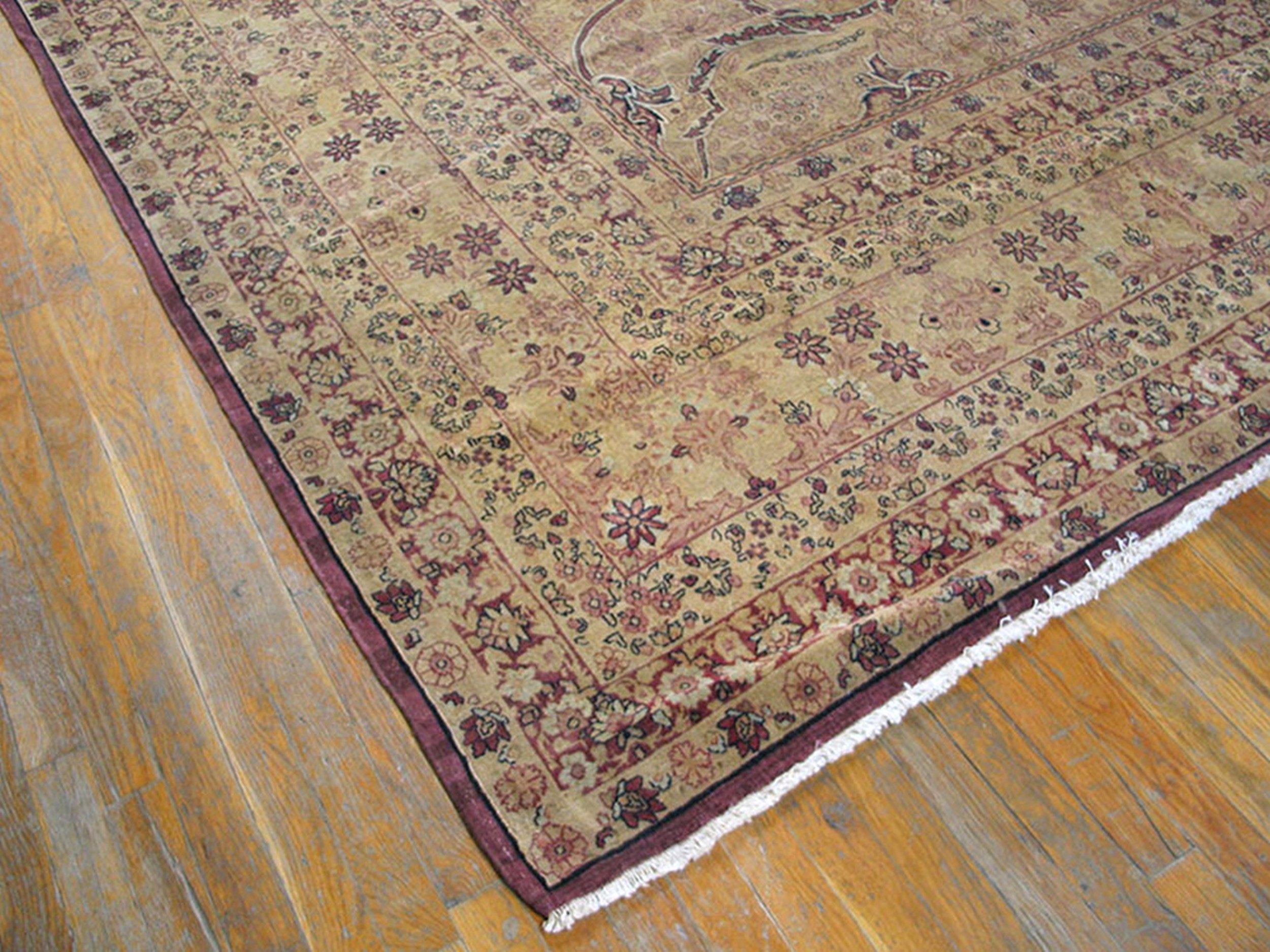
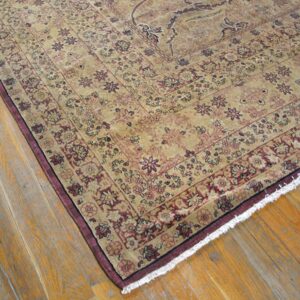
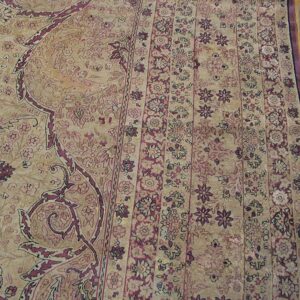
The borders act as a regal frame, featuring a primary band of scrolling foliate guards and floral cartouches that mirror the complexity of the central field. This design serves to “contain” the exuberant energy of the floral display, grounding it in a sense of classical permanence. To possess this 19th-century oversized Kerman is to hold a monument to the highest levels of Persian craftsmanship—a work that transforms a grand architectural space into an eternal, hand-wrought garden of the East.