
Antique French Restoration-Era Aubusson Carpet
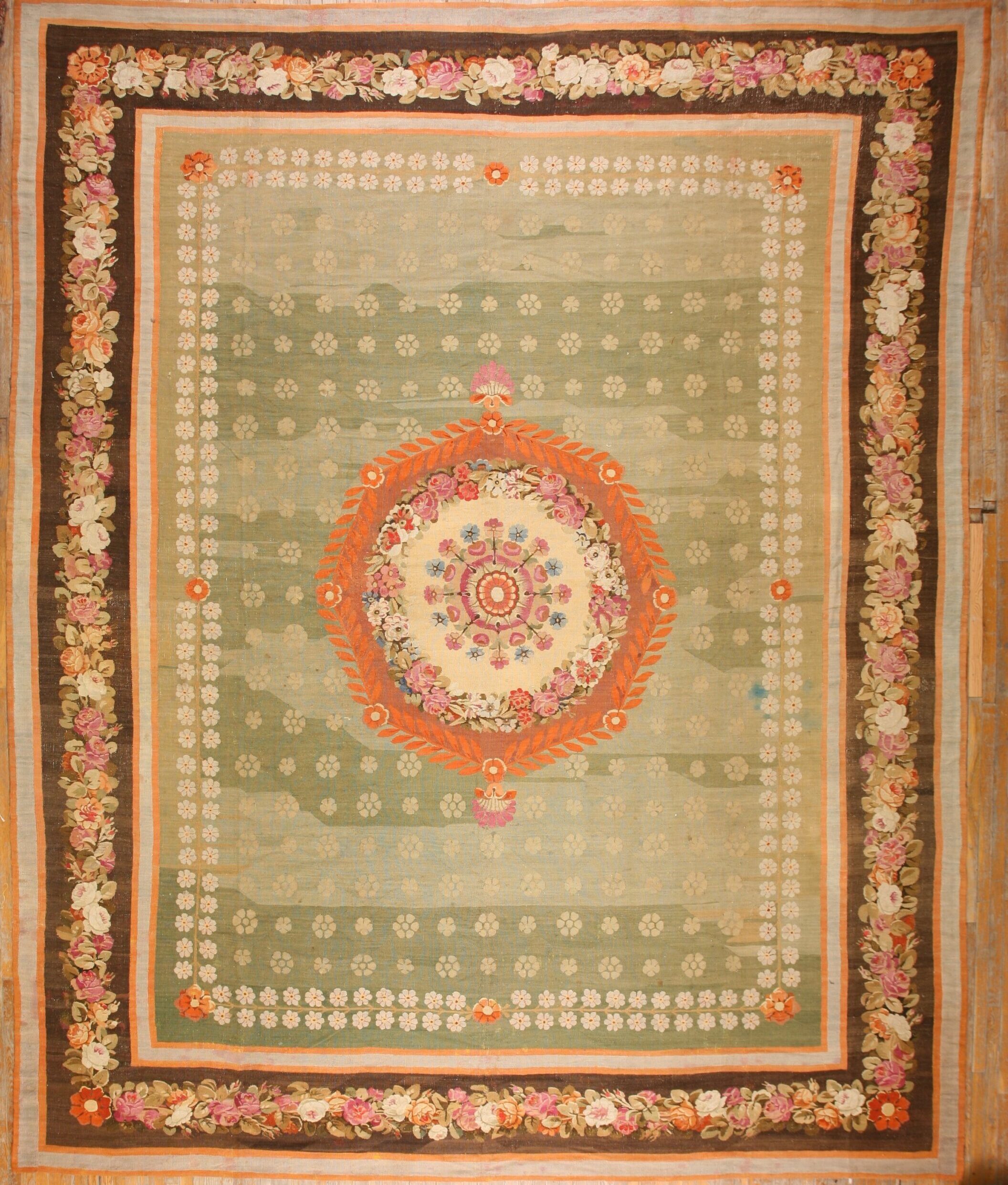
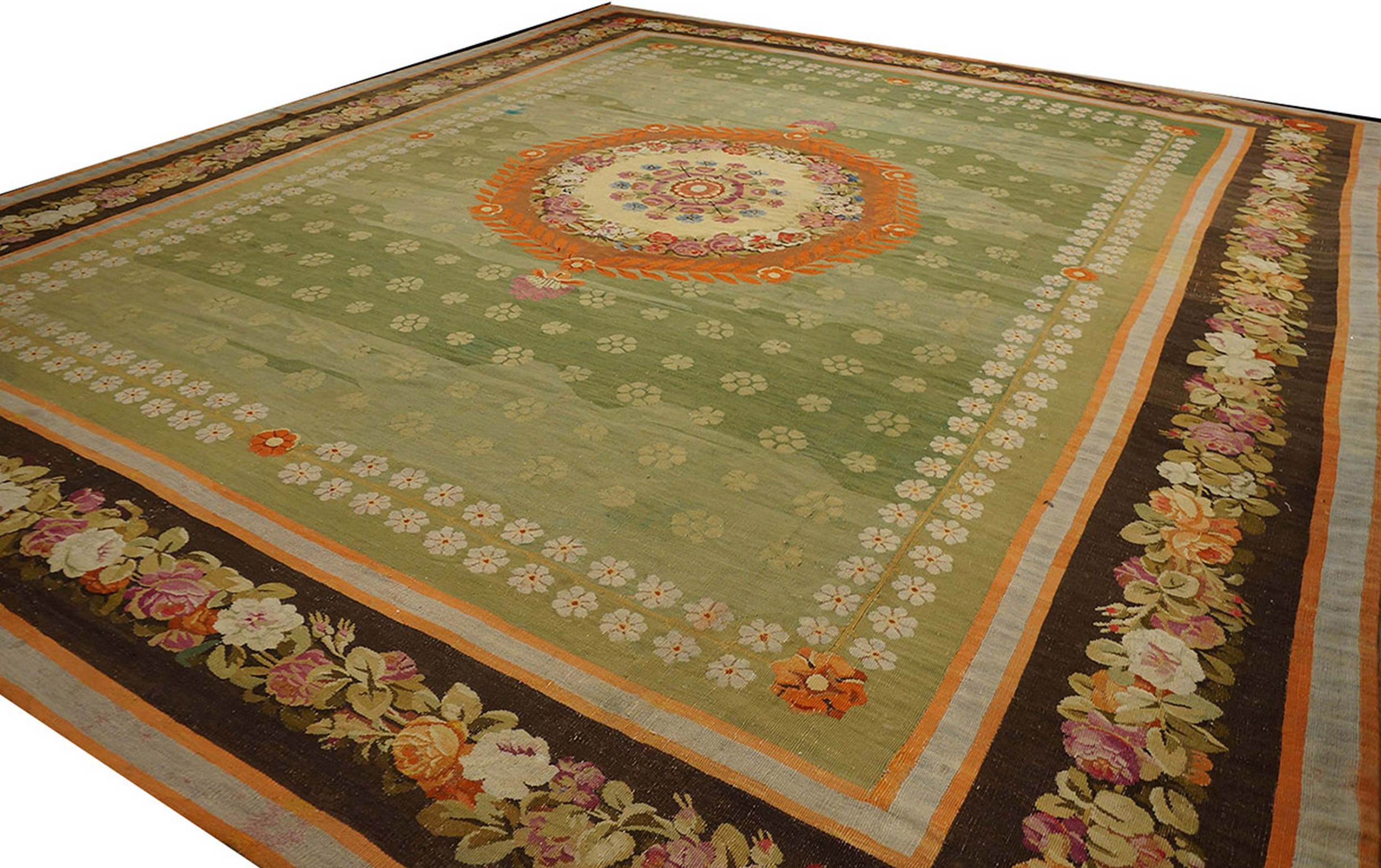
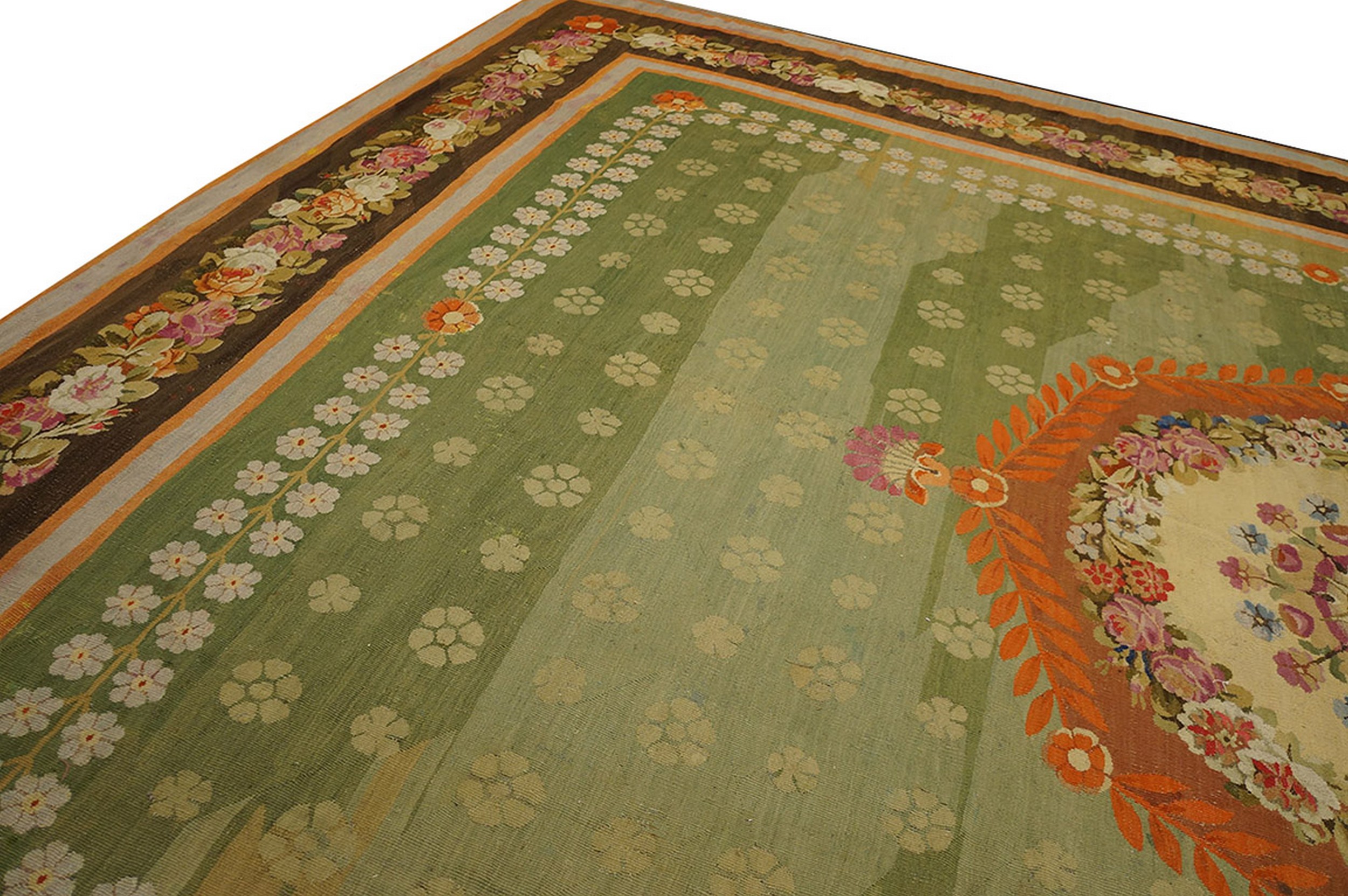
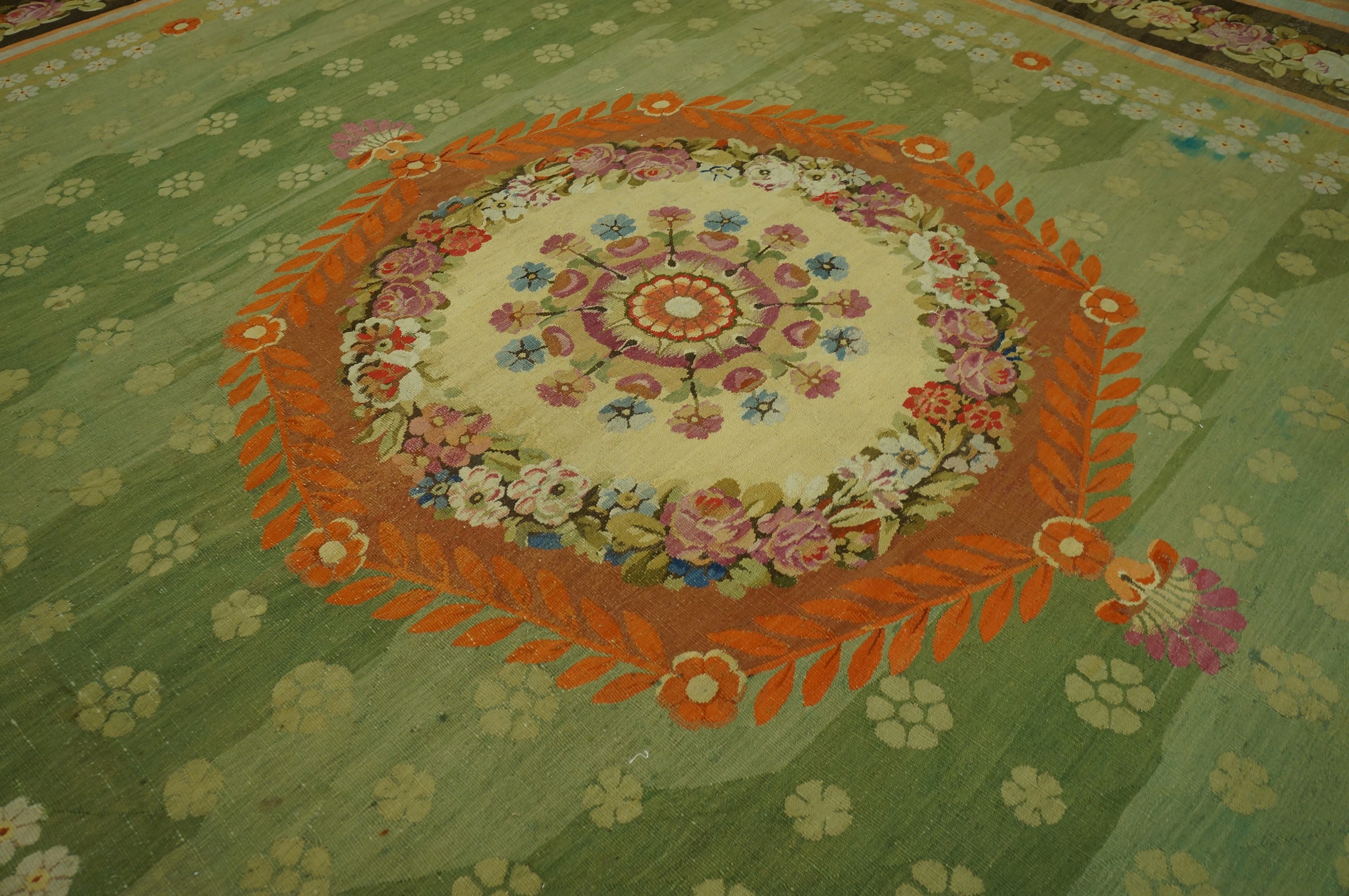
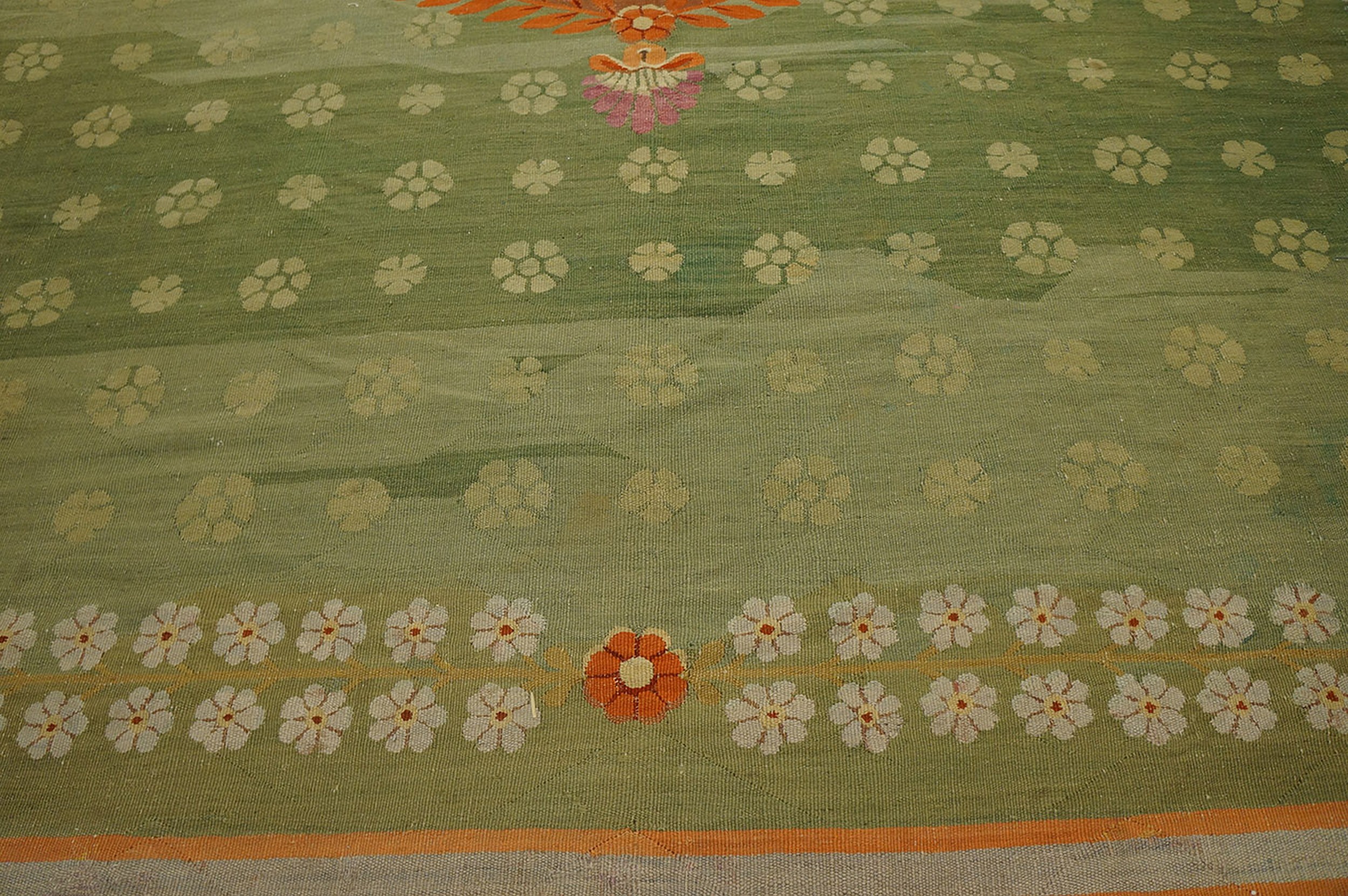
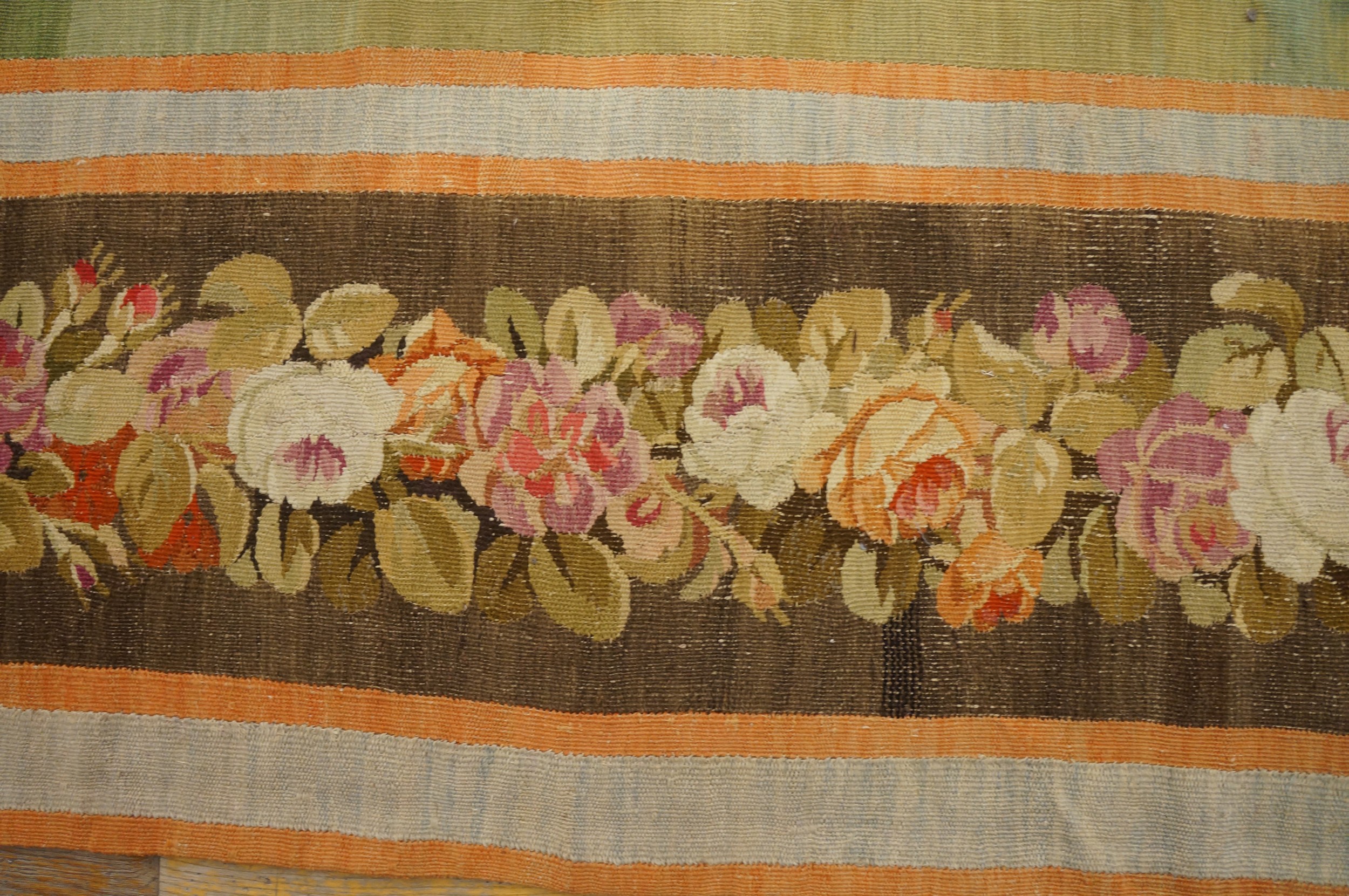
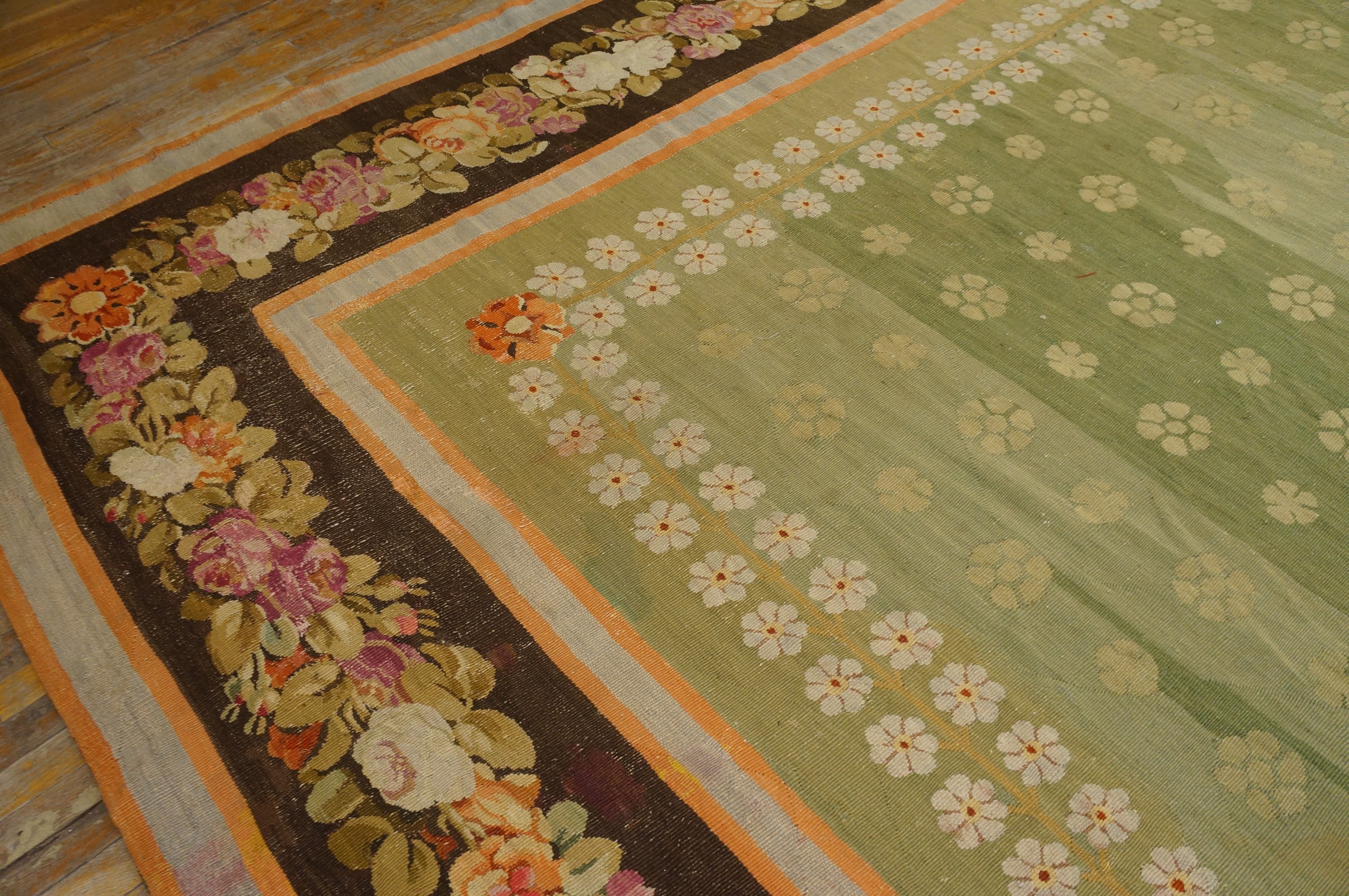
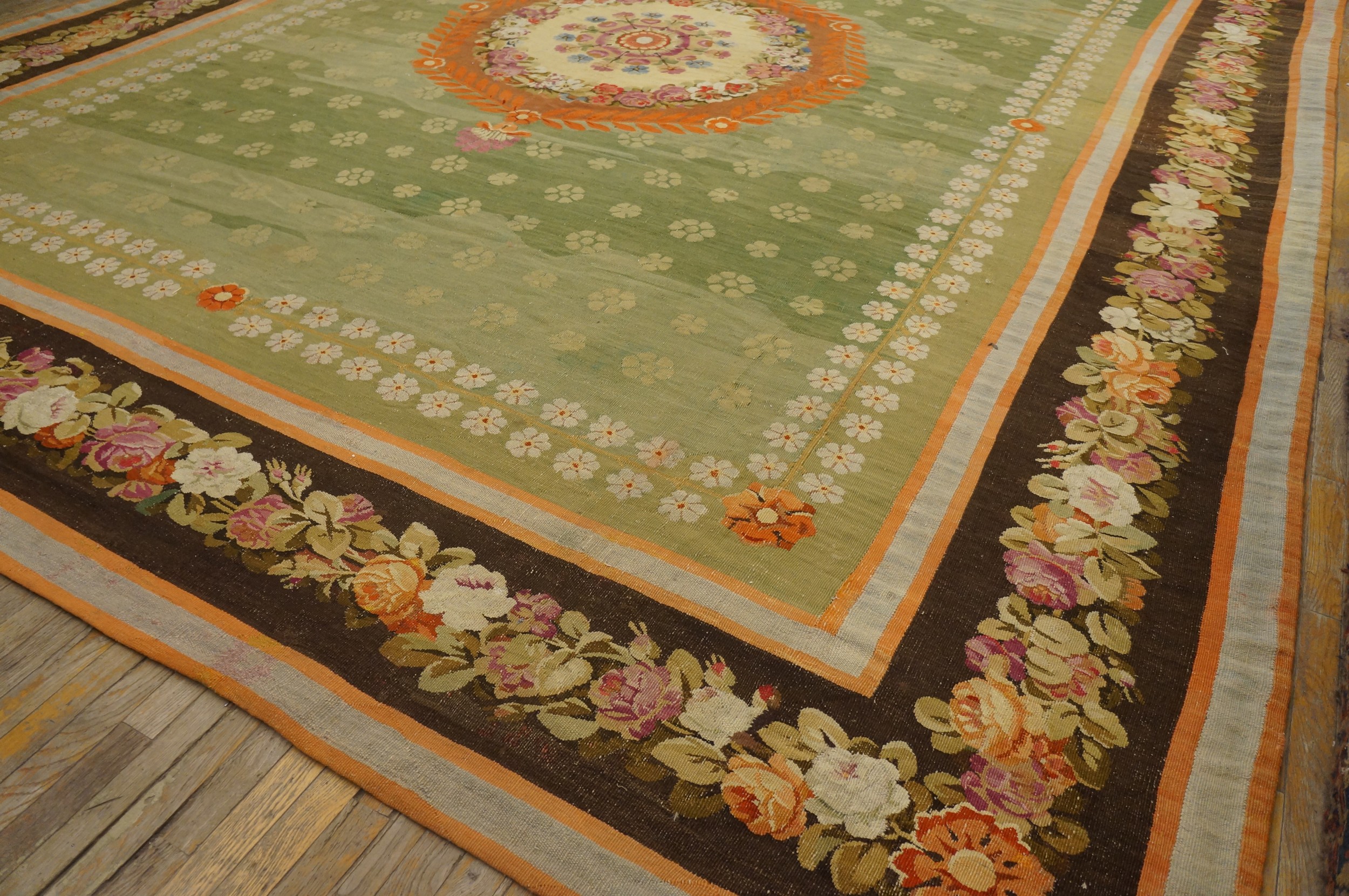
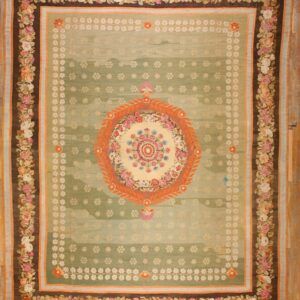
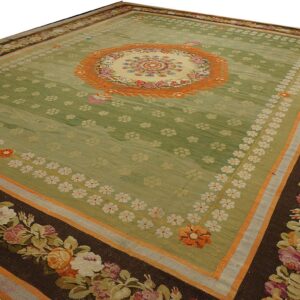
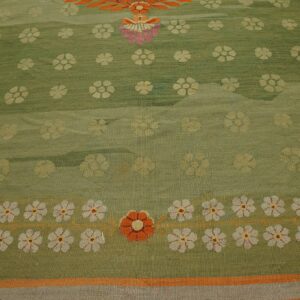
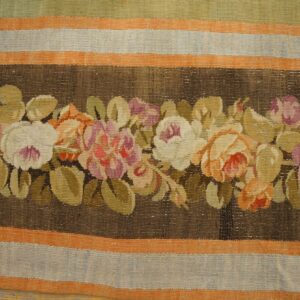
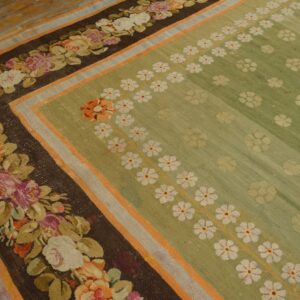
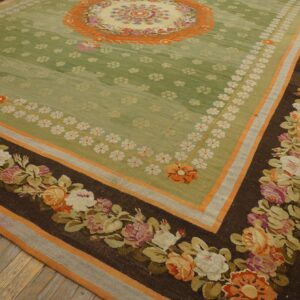
An exceptional survivor of the French Restoration period, this antique Aubusson carpet is a masterpiece of neoclassical symmetry and botanical elegance. Dating to the early nineteenth century, the rug features a vibrant central rosace encased within a bold, terracotta-orange octagonal frame—a color palette synonymous with the sophisticated “Pompeian” style of the 1820s. The soft sage-green field is delicately patterned with repeating floral sprigs, leading the eye to a magnificent perimeter border of lushly blooming roses.
Worn by time into a soft, supple handle, the flat-woven wool retains a remarkable clarity of design. This piece represents a pivotal moment in French decorative arts, where the rigid discipline of the Napoleonic Empire began to soften into the lush romanticism of the mid-century. It is a stately and historically significant floor covering, perfect for an interior that demands both architectural rigor and garden-inspired warmth.
Historical & Technical Identification
Title: Restoration Era Floral Medallion Aubusson
Origin: Aubusson, France.
Period: Circa 1825–1840 (Transitional Restoration to Louis-Philippe).
Structure: Hand-woven wool flat-weave (slit tapestry technique).
Design / Style: First Empire Revival / Neoclassical with early Romantic floral borders.
Iconography & Design
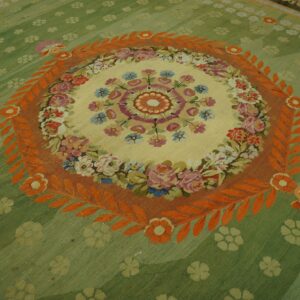
The Central Rosace: A complex floral medallion featuring a multi-layered bouquet of roses, tulips, and forget-me-nots. This center acts as a “sunburst,” radiating outward to the geometric frame.
The Octagonal Frame: Rendered in a striking terracotta/burnt orange, this frame utilizes architectural acanthus scrolls at the cardinal points. This color was highly prized in the 1820s for its “antique” Roman feel.
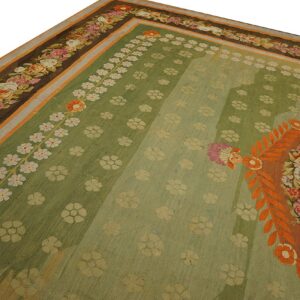
The Sage Field: The green field is decorated with a “semis” (sowing) of small white florets, a hallmark of early 19th-century French floor coverings intended to hide minor wear while providing visual interest.
The Floral Garland Border: A dense, continuous wreath of garden roses set against a dark chocolate ground. This “framed” look was designed to define the architectural space of a formal dining room or salon.