

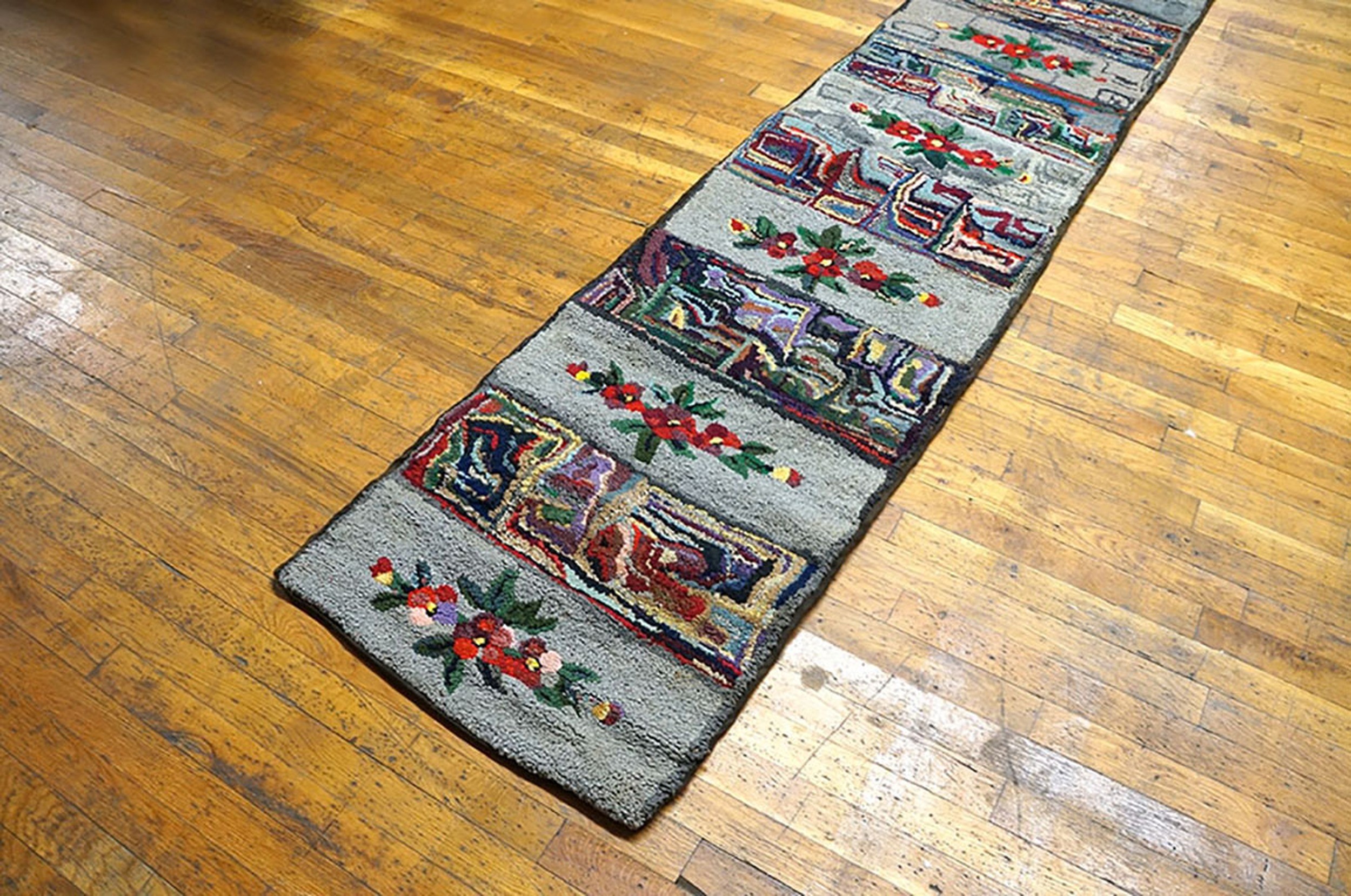
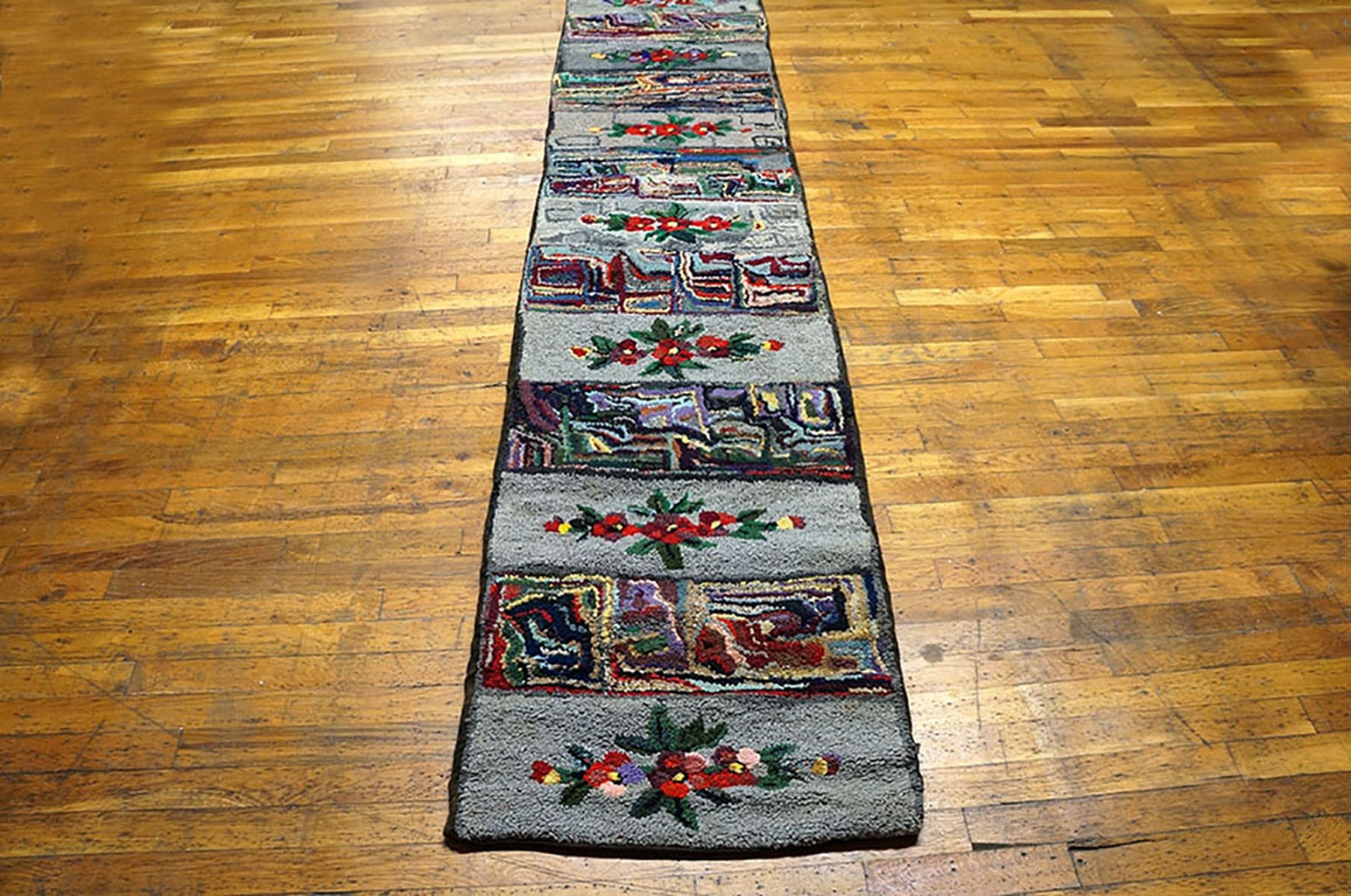
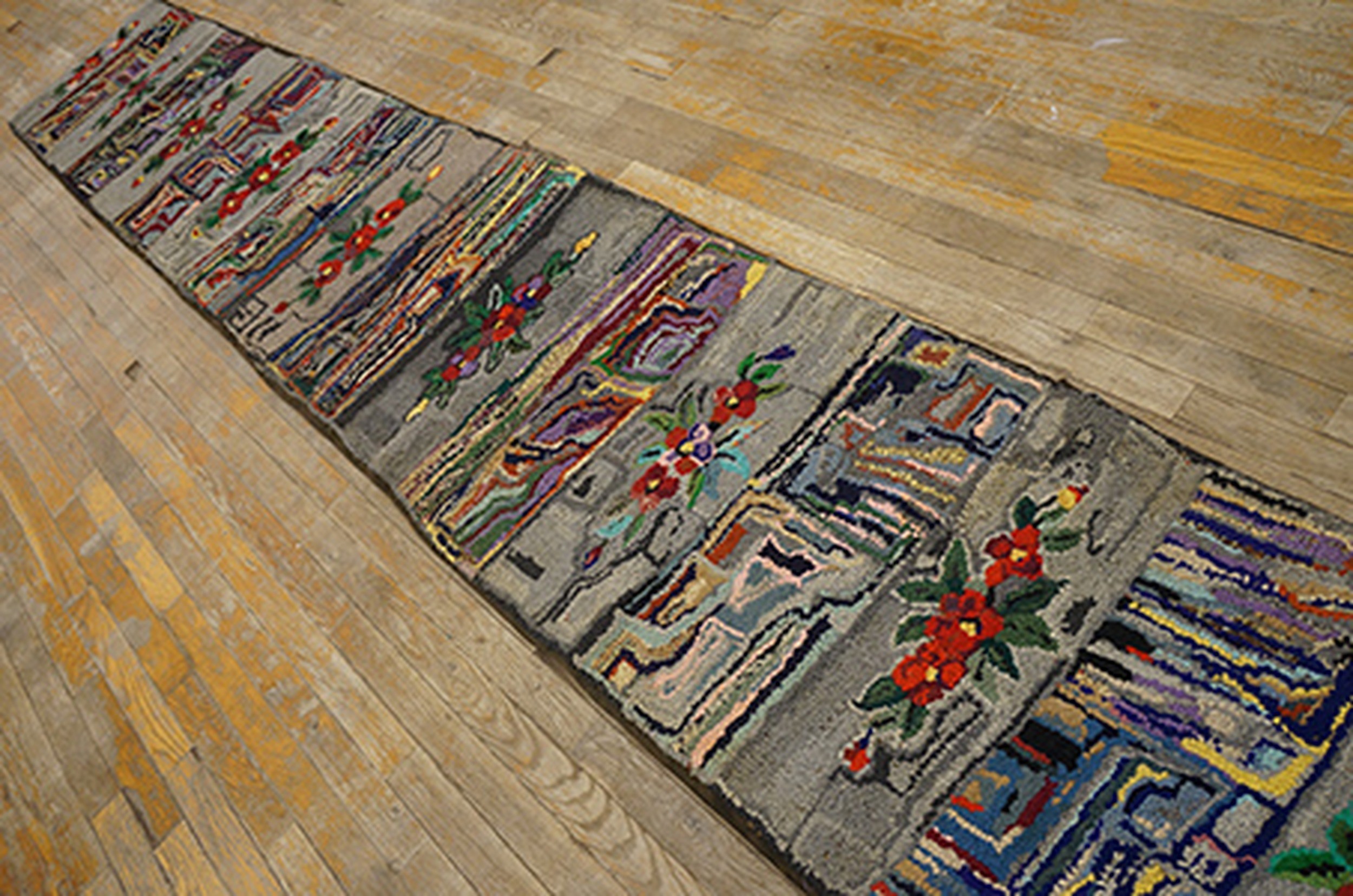
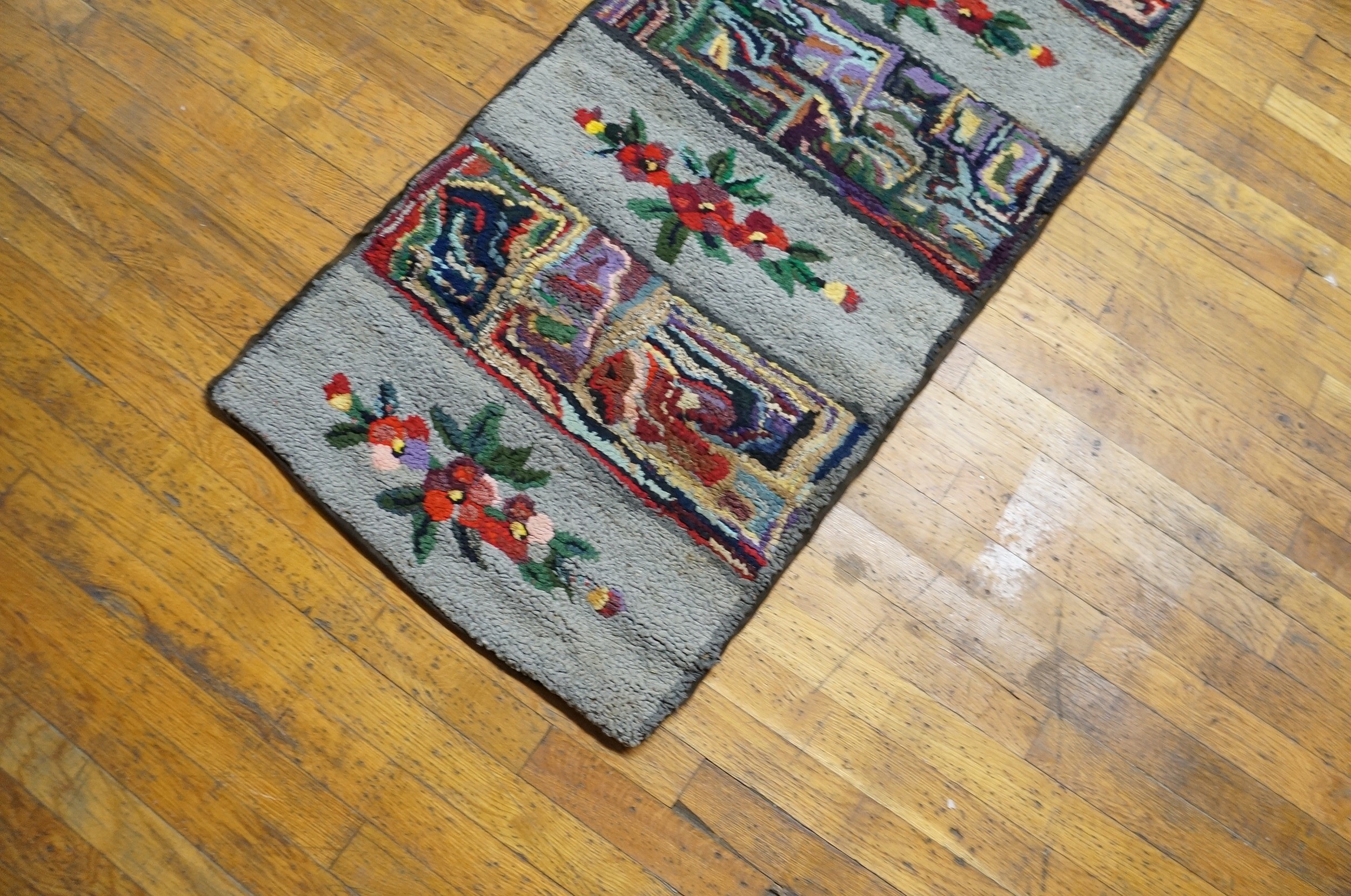
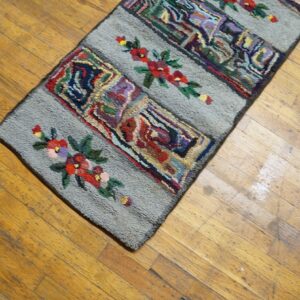
This early 20th-century antique American hooked narrow hallway runner rug is a rare and sophisticated “Cultural Artifact,” representing a transition in folk art toward a more atmospheric and modern color palette. While many antique hallway rugs runners utilized high-contrast black or ivory foundations, this specimen is defined by its subtle, smoky tonality, making it an exceptionally versatile find for contemporary interiors that require both historical soul and a neutral anchor.
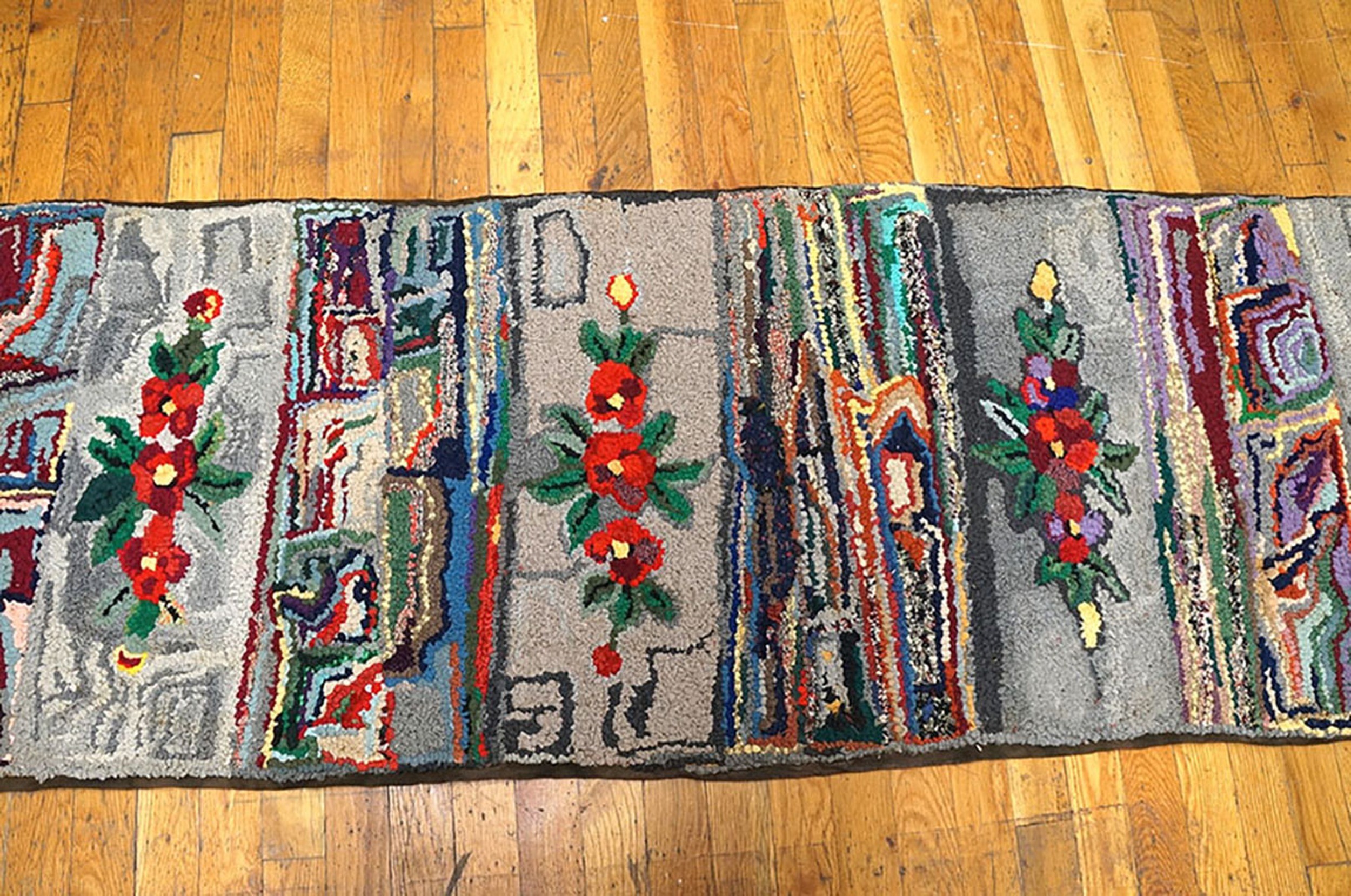
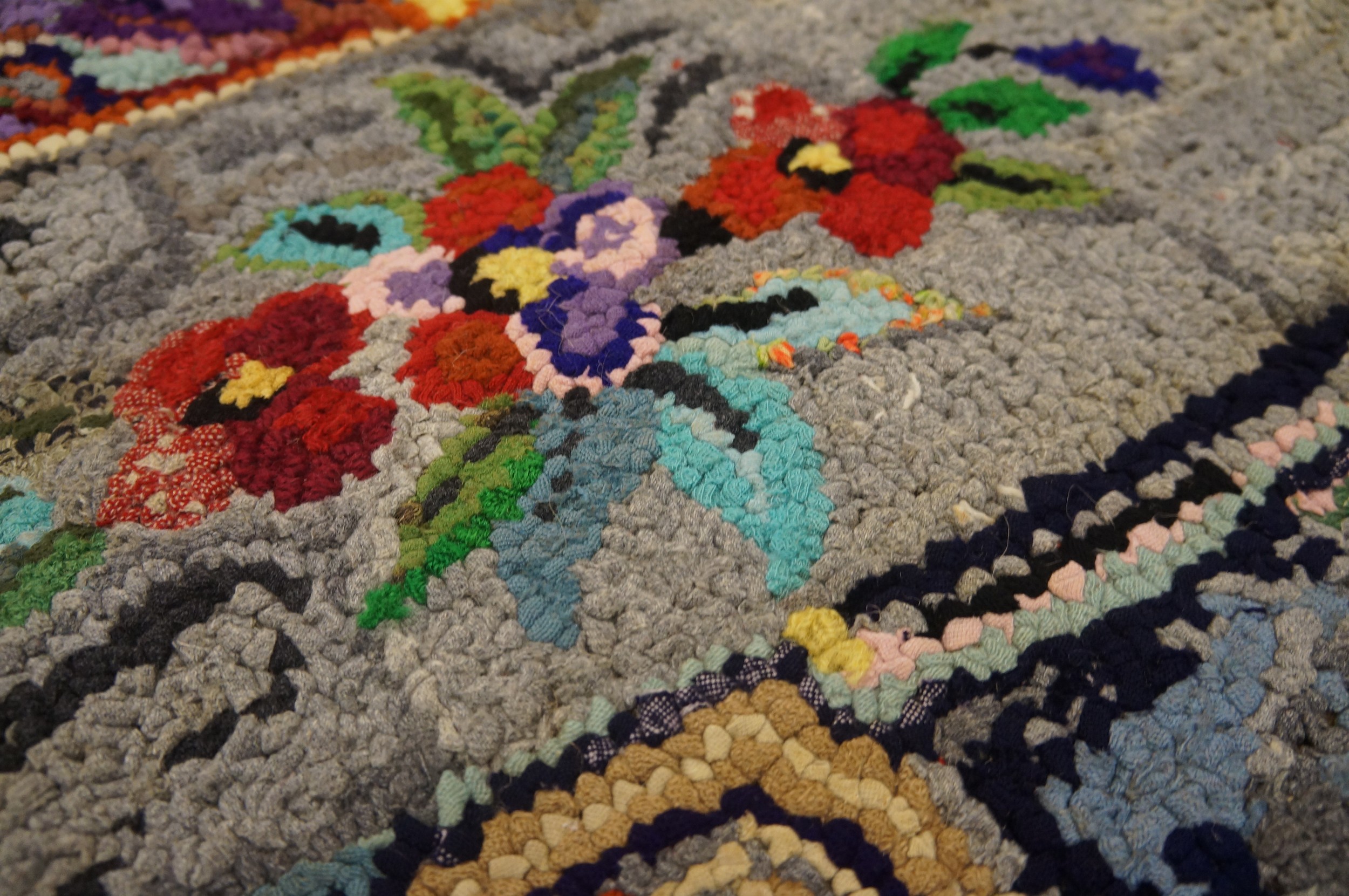
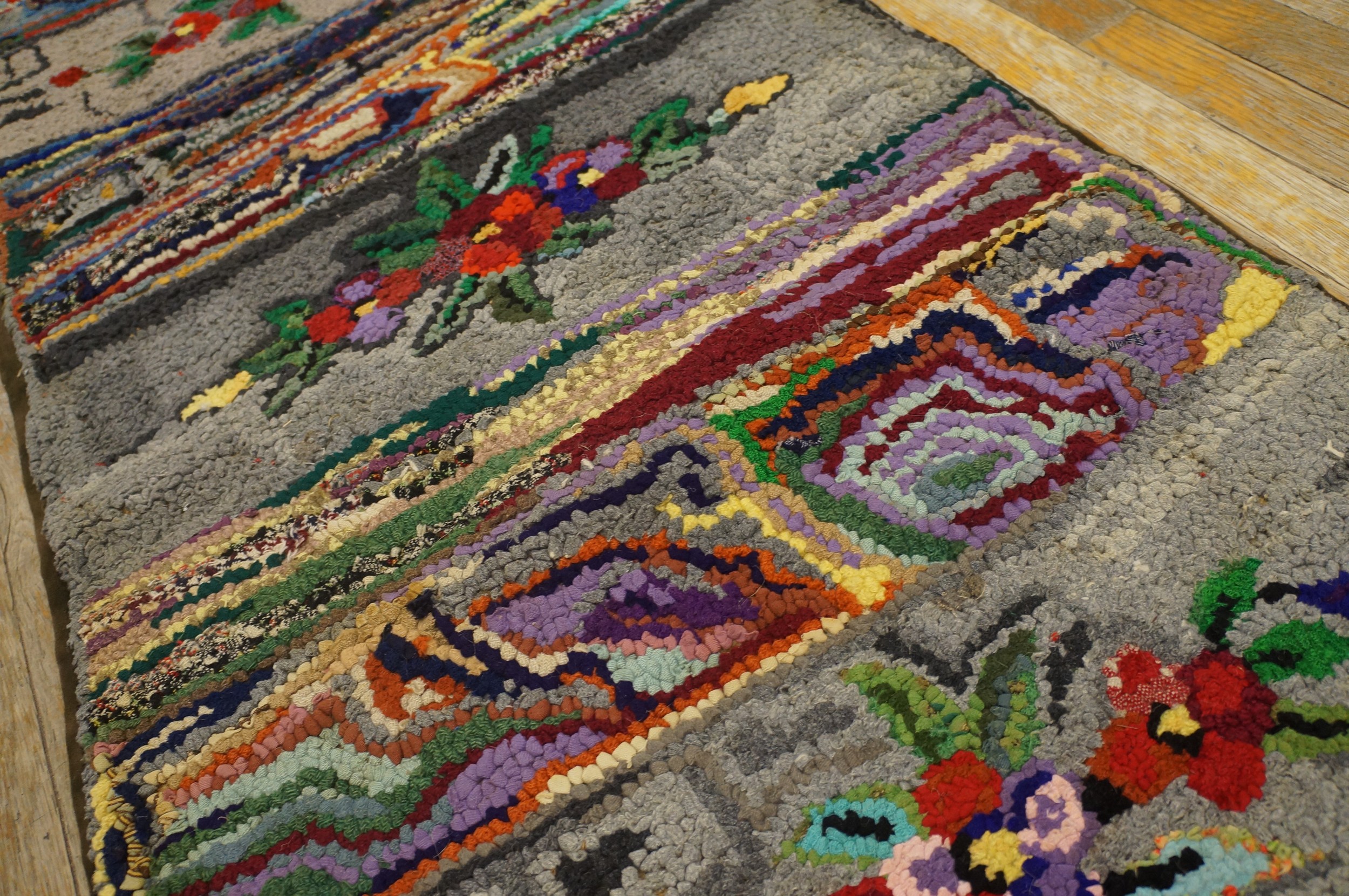
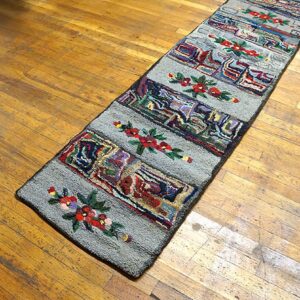
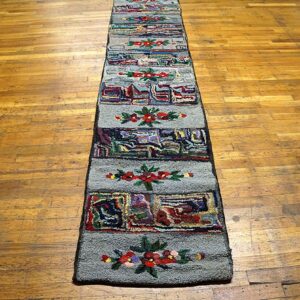
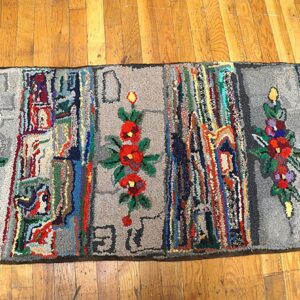
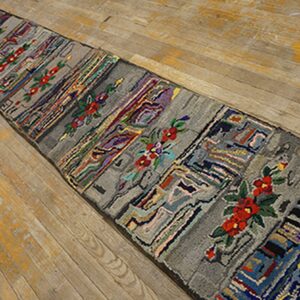
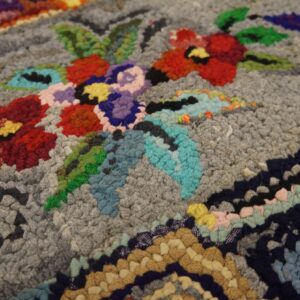
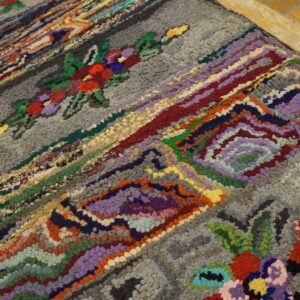
The composition is centered upon a rhythmic American floral folk art design that stretches the entire length of the hallway format. The drawing is quintessentially “Primitive”—featuring hand-drawn botanical sprigs, delicate vines, and whimsical blossoms that possess a soulful, asymmetrical charm. Unlike the rigid symmetry of European machine-made runners, this piece exhibits the “spontaneous” spirit of the maker, where no two floral elements are exactly alike. This organic movement creates a sense of a “growing garden” along the narrow field, perfectly suited for the transitional energy of a long corridor.
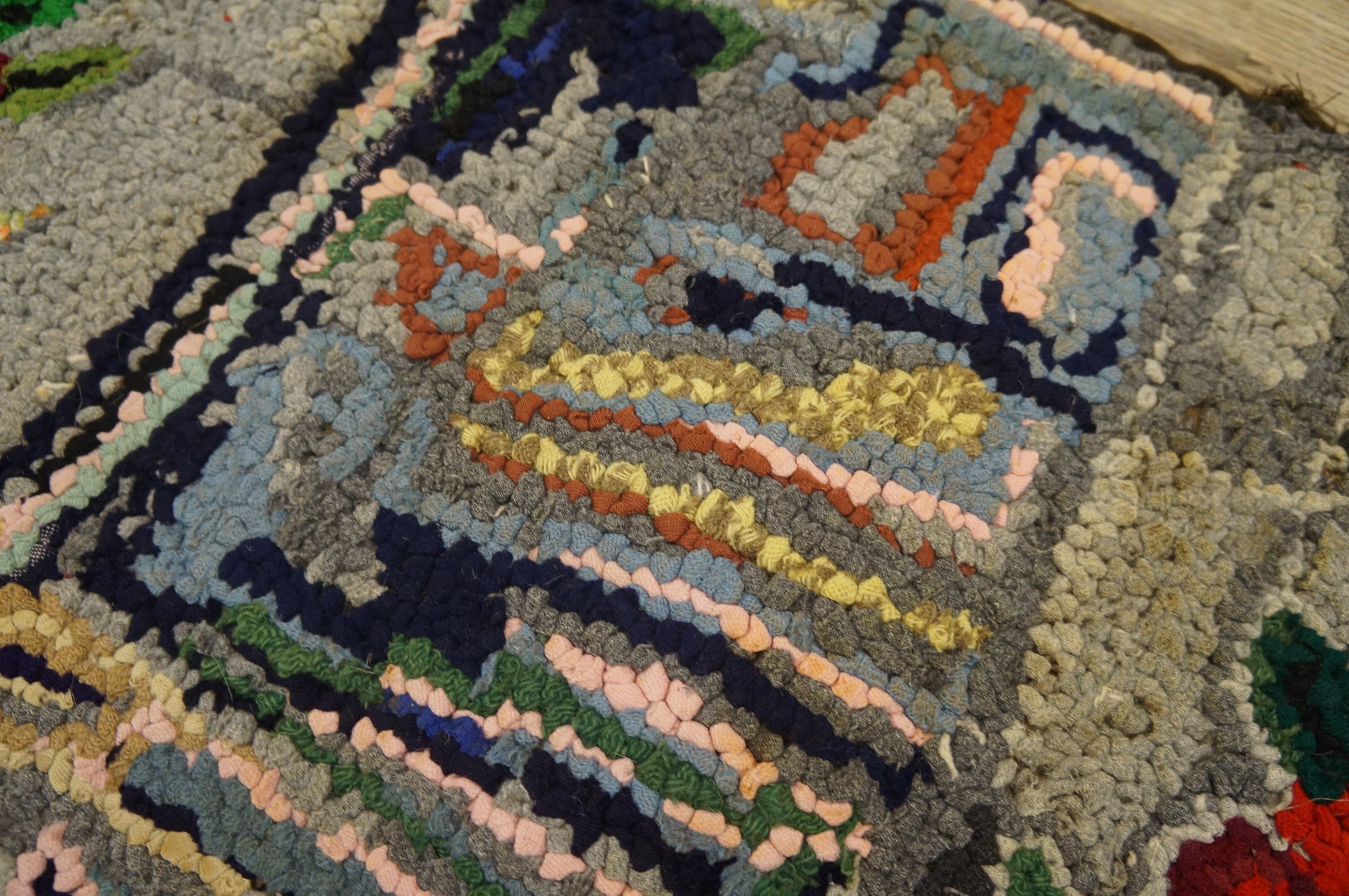
The palette is anchored by a remarkable antique gray and silver-slate foundation. In the world of early 20th-century antique American hooked rugs, gray is a highly coveted “neutral” achieved through the masterful blending of undyed wools or oxidized natural dyes. Against this cool, “parchment-gray” backdrop, the secondary accents—rendered in muted rose, sage green, and soft ochre—possess a “watercolor” delicacy. Because the rug was created in the USA using hand-cut strips of recycled wool flannel and old clothing, the gray field exhibits a magnificent “marbled” variegation (the folk-art equivalent of abrash), giving the long expanse a shimmering, three-dimensional depth.
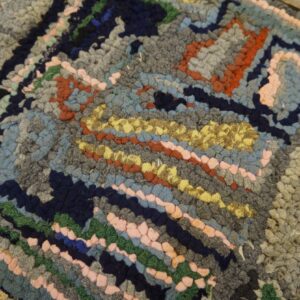
Technically, this long hallway runner is prized for its tightly looped, nubby texture and substantial, “meaty” handle. The process of hand-hooking individual loops through a burlap or linen backing creates a dense surface that is remarkably durable. Over more than a century, the wool fibers have slightly “felted” together, resulting in a velvety, suede-like patina that has softened the edges of the floral drawing, imbuing the piece with a sense of historical gravity and quiet luxury.
The borders typically act as a soft architectural frame, often utilizing a slightly darker “mottled” tone to “lock in” the airy elegance of the gray field. To possess this antique gray American floral hooked hallway runner is to own a monument to 19th-century domestic art. It bridges the gap between humble colonial resourcefulness and a sophisticated, almost modern, color theory—transforming a transitional hallway into a sanctuary of historical grace and serene, botanical brilliance.