
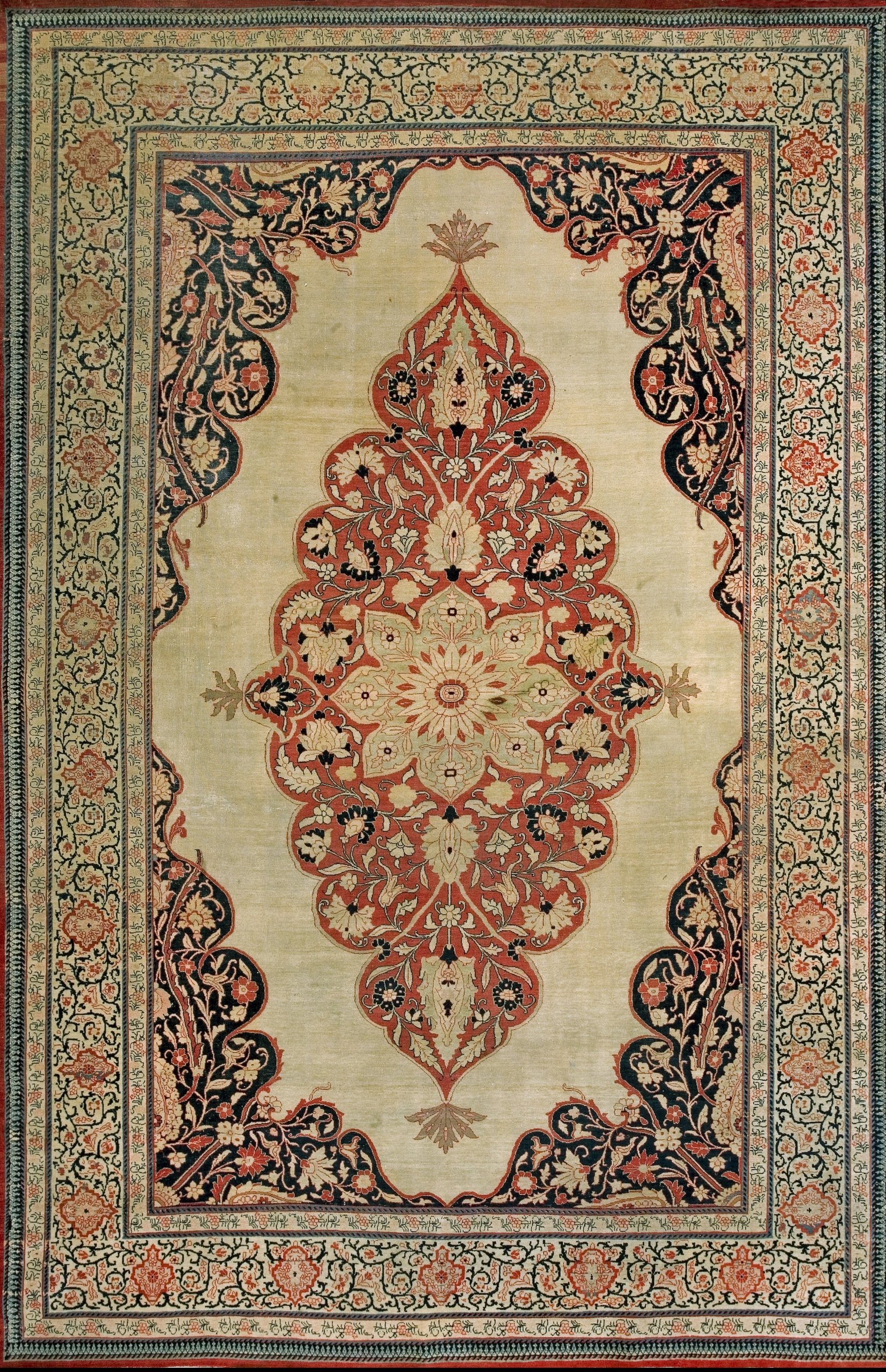
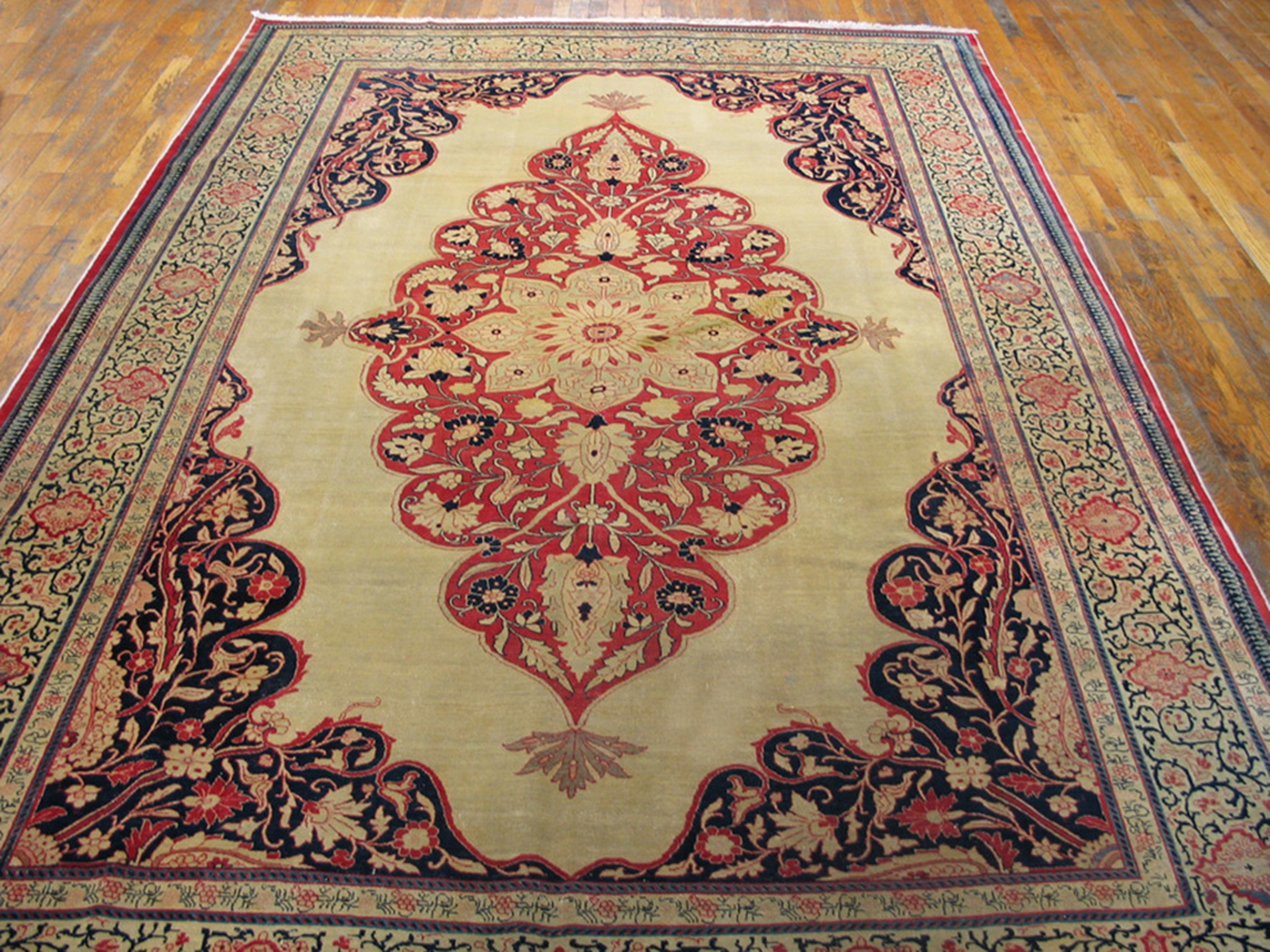
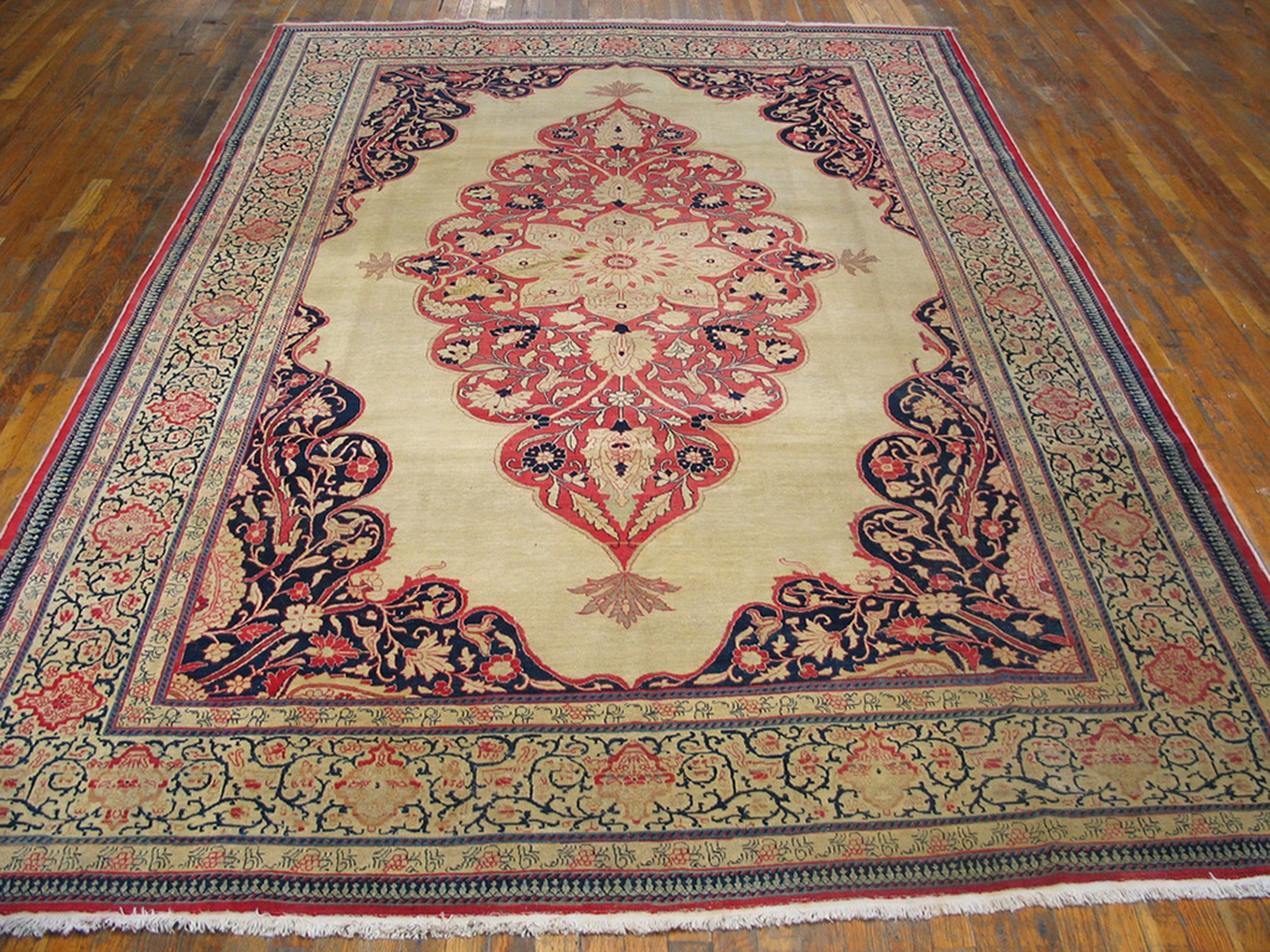
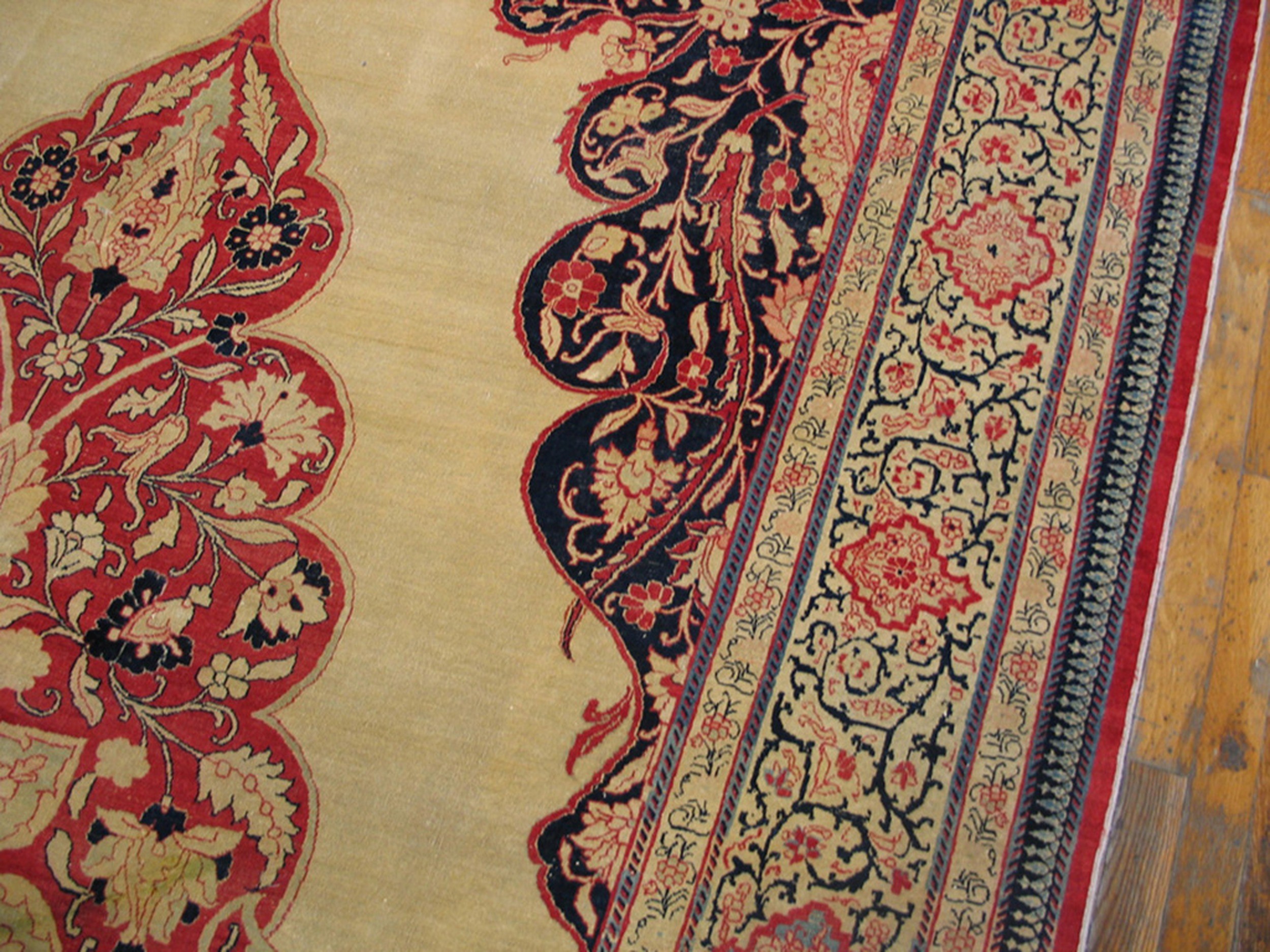
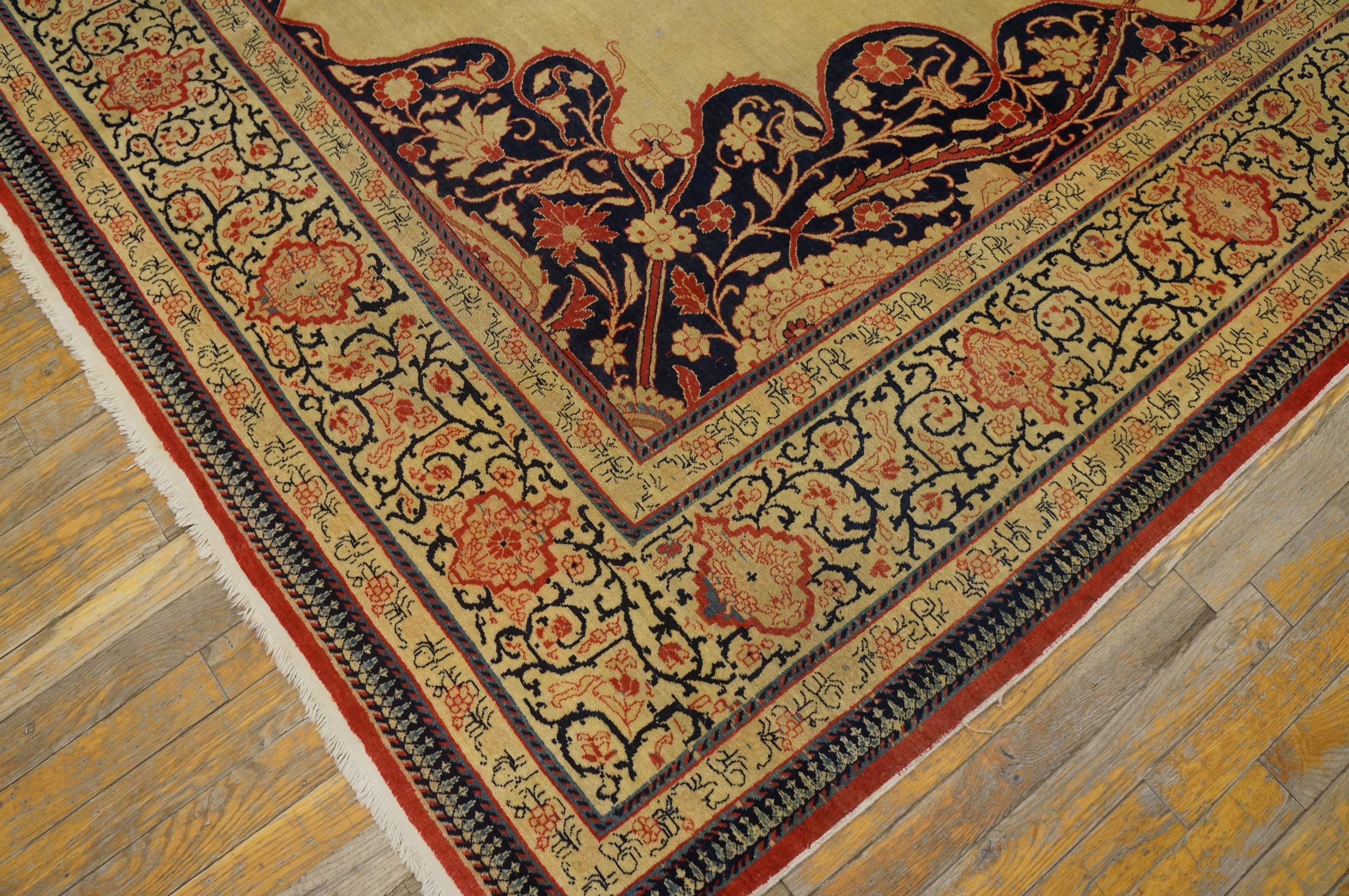
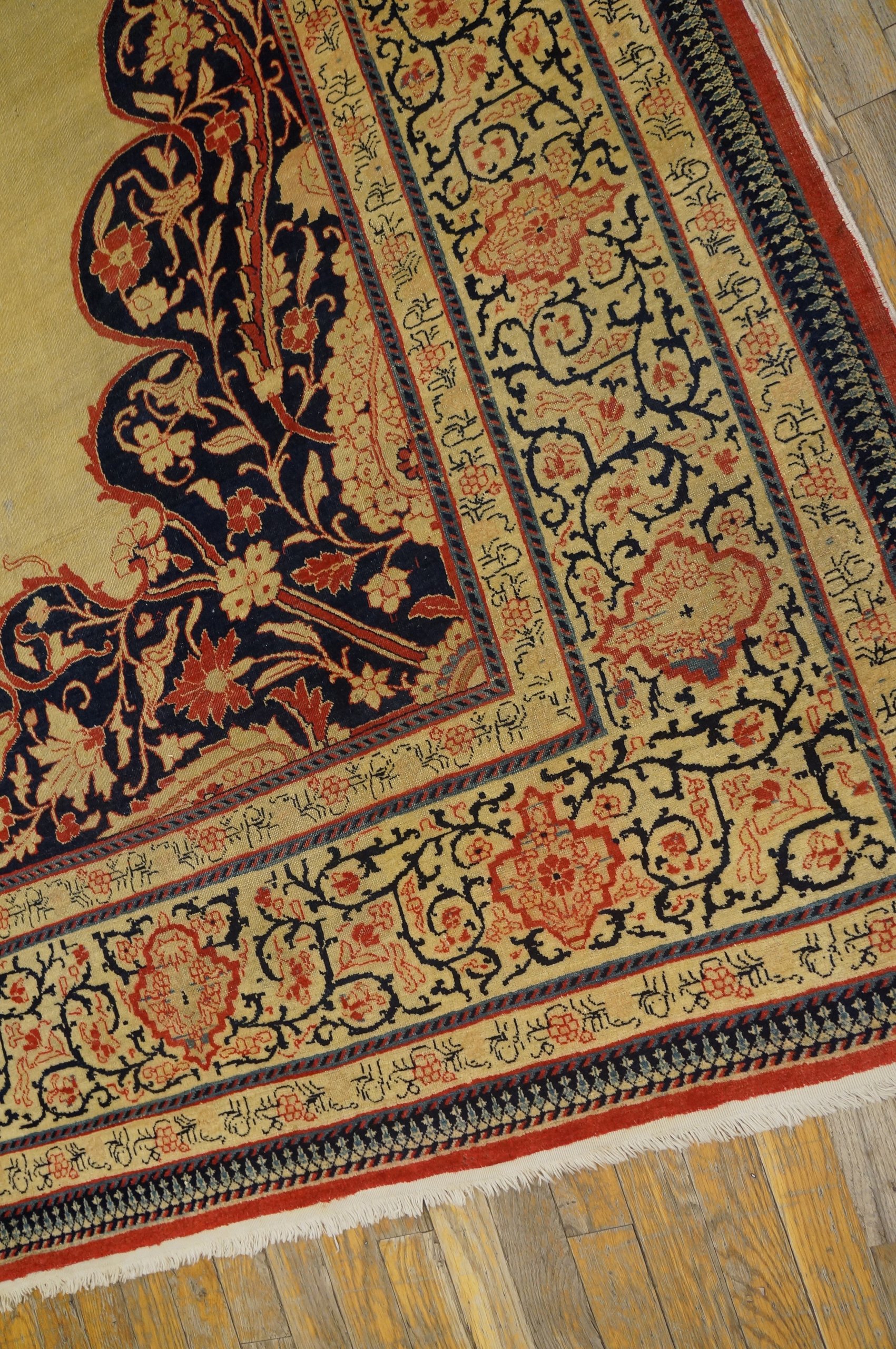
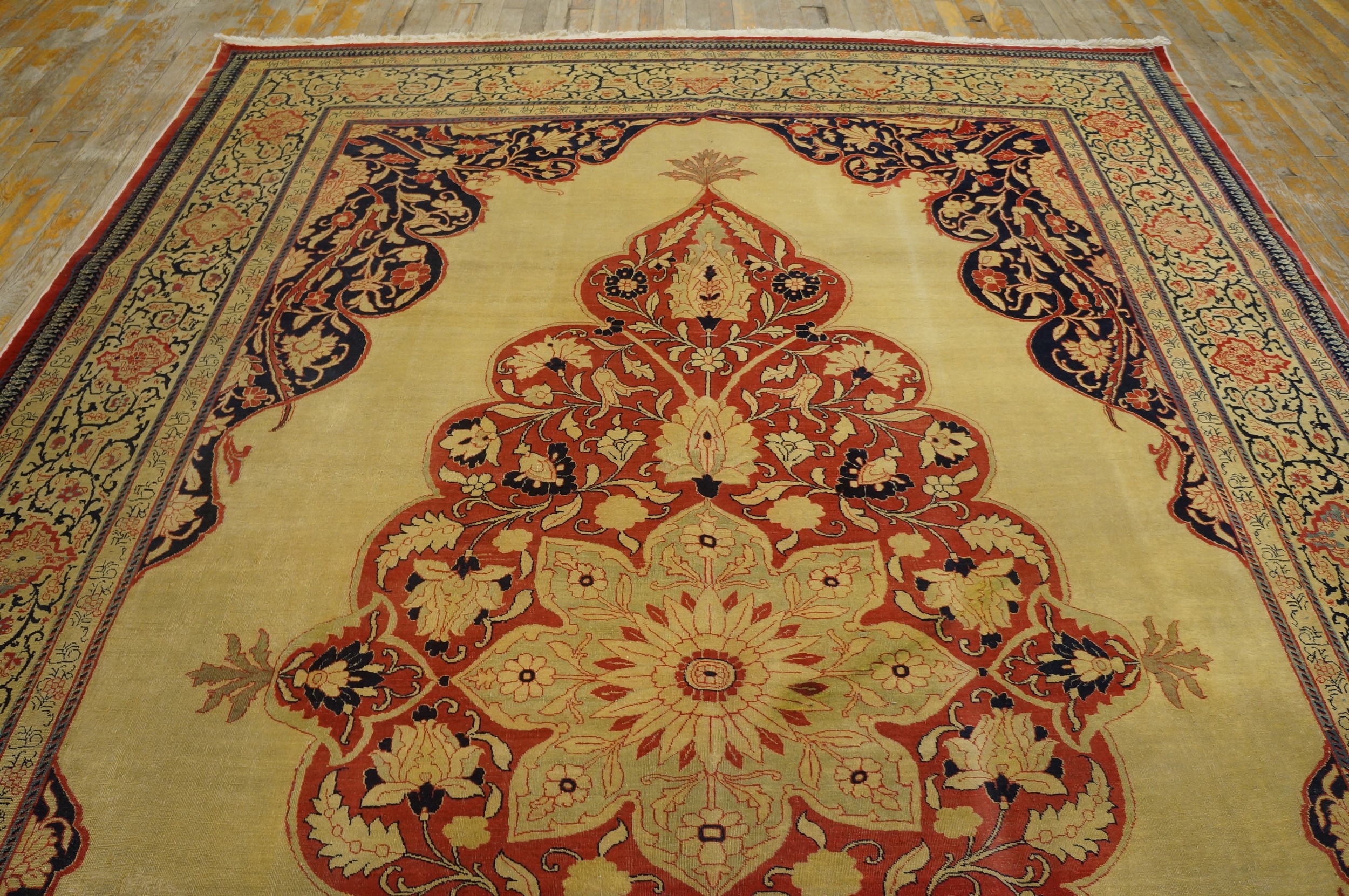
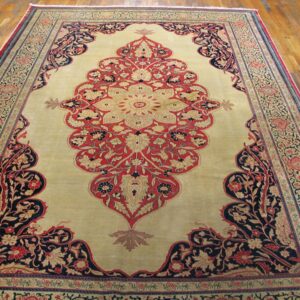
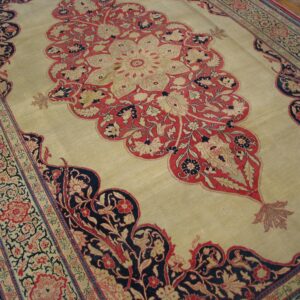
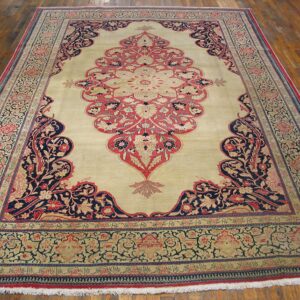
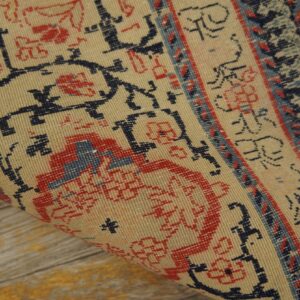
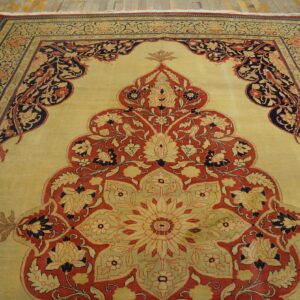
This magnificent room-sized fine antique Persian Tabriz rug, dating to the late nineteenth century, is a superlative example of the “Open Field” aesthetic—a design philosophy that prioritizes spatial harmony and the purity of color over dense ornamentation. Historically, the city of Tabriz has served as the intellectual heart of Persian rugs and weaving, where master ustads (designers) drew upon centuries of Safavid court traditions to create textiles that mirrored the architectural grandeur of the city’s mosques and palaces. This specific specimen features a classic ivory ground, a choice that was exceptionally rare and prestigious in the 1800s. Achieving a consistent, luminous ivory required the use of the highest quality “Kork” wool—the softest under-fleece of the sheep—and a meticulous cleaning process to ensure the field remained untainted by the saturated dyes of the surrounding motifs.
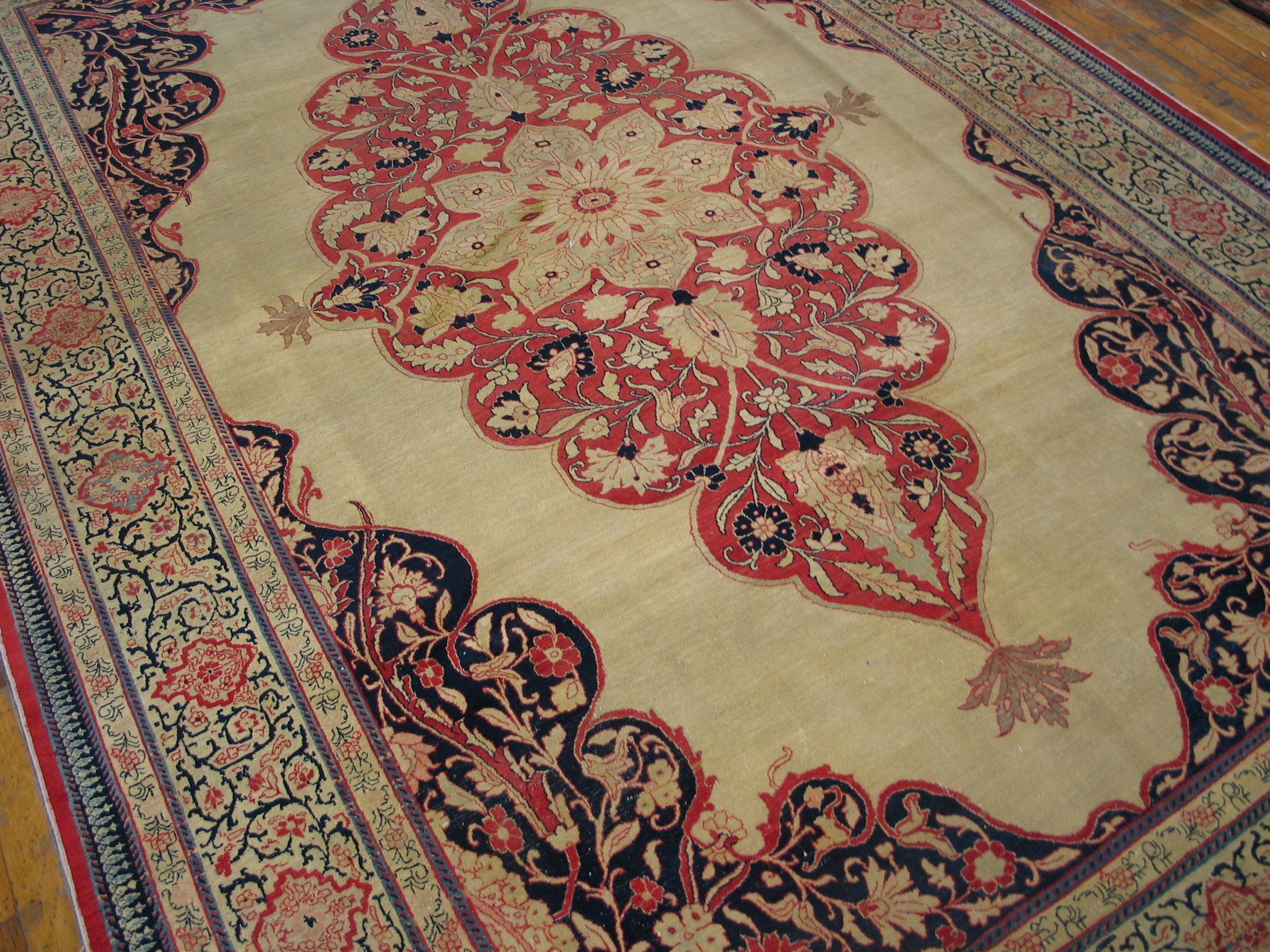
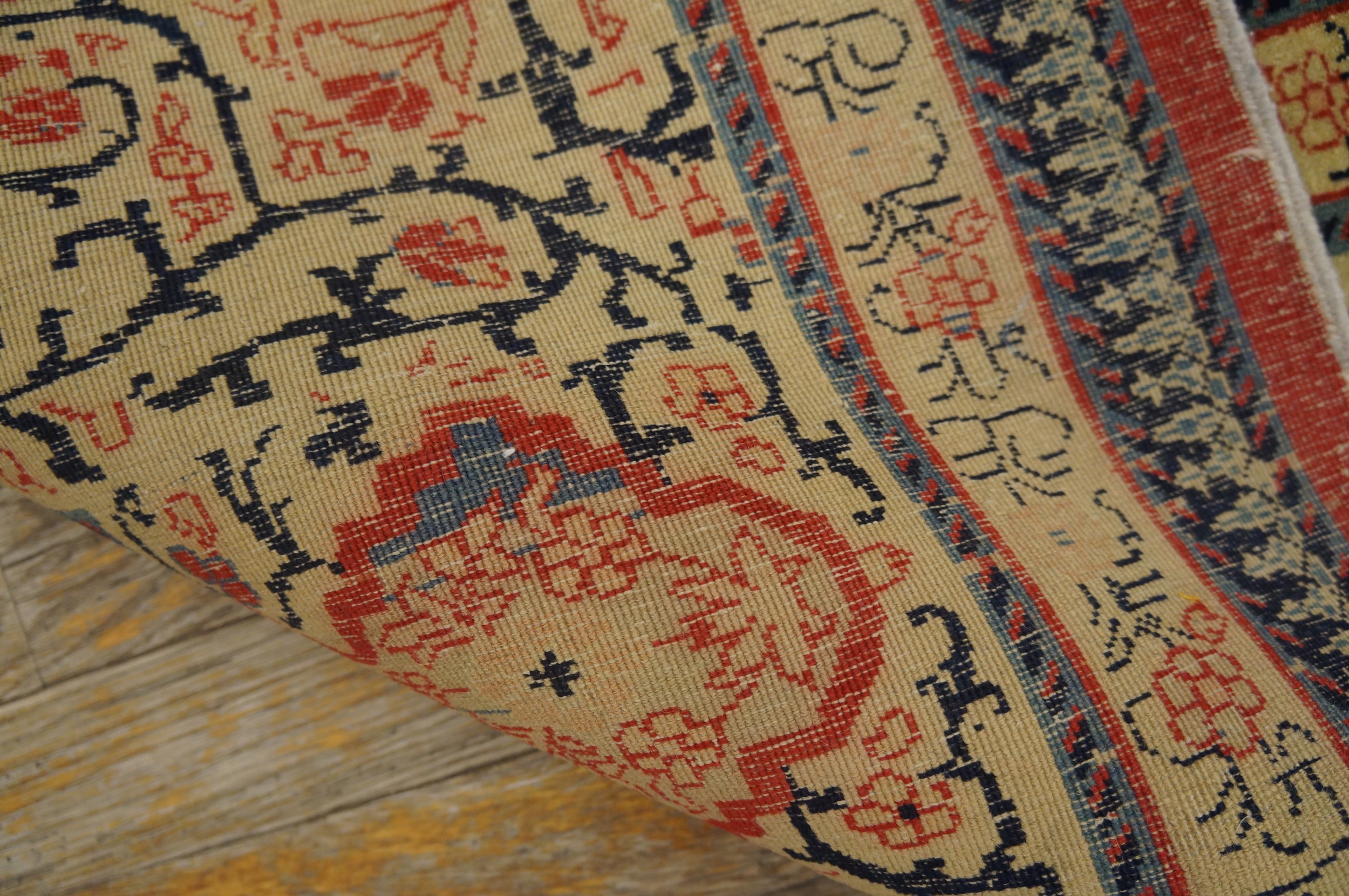
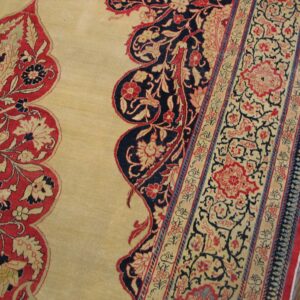
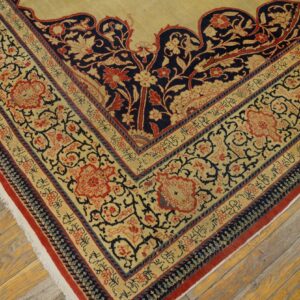
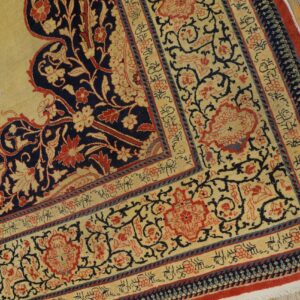
The composition is centered upon a majestic floral medallion, a motif that traces its lineage to the “Charbagh” or Persian Paradise Garden. In this Tabriz, the medallion acts as a celestial sunburst, radiating outward with delicate scrolling vines and palmettes that appear to float upon the expansive ivory field. This “Open Field” style was a deliberate stylistic evolution intended to appeal to the Western Victorian and Edwardian aristocracy; by leaving the ground unencumbered, the rug provides a sense of “understated opulence” that accommodates grand furniture without overwhelming the decorative balance of a room. The technical execution utilizes the symmetrical Turkish knot, which provides the crisp, razor-sharp definition necessary to render the intricate botanical borders and the sophisticated “Isfahan-style” scrolling foliate guards.
From a historical perspective, the late 19th century was a “Golden Age” for Tabriz commissions, as the city became the primary gateway for Persian art entering the European market. A rug of this size and “ivory-open” clarity was likely a bespoke order for a high-status interior, such as a diplomatic salon or a grand manor library. The palette of soft blushes, sage greens, and ochres was achieved through the masterful application of vegetable dyes, ensuring a tonal depth that develops a beautiful abrash (natural color variation) over time. To possess this antique Tabriz is to hold a monument to Persian scholarship and textile engineering—a work that bridges the gap between the mathematical precision of Islamic geometry and the airy, romantic elegance of the nineteenth-century global elite.