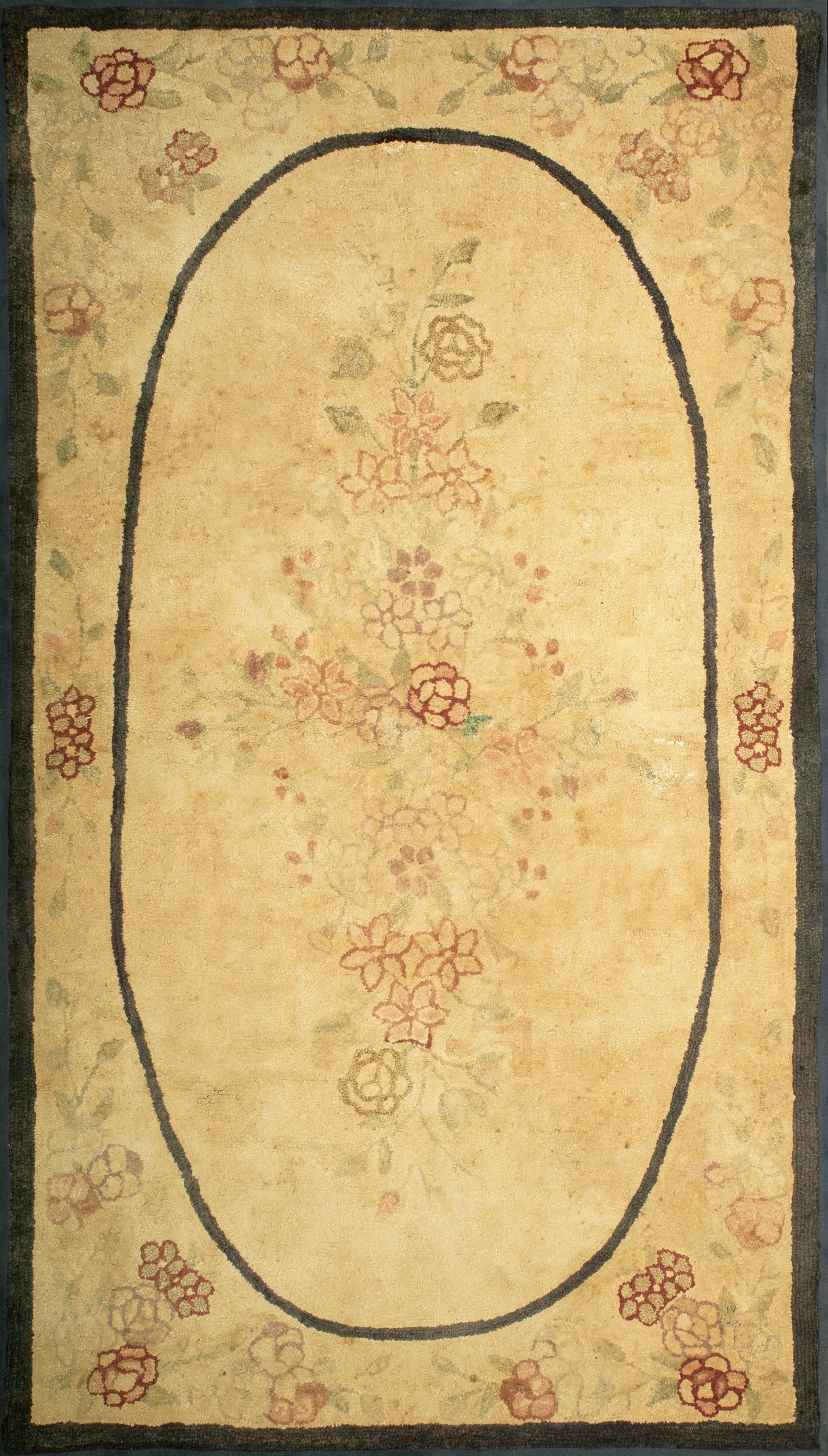
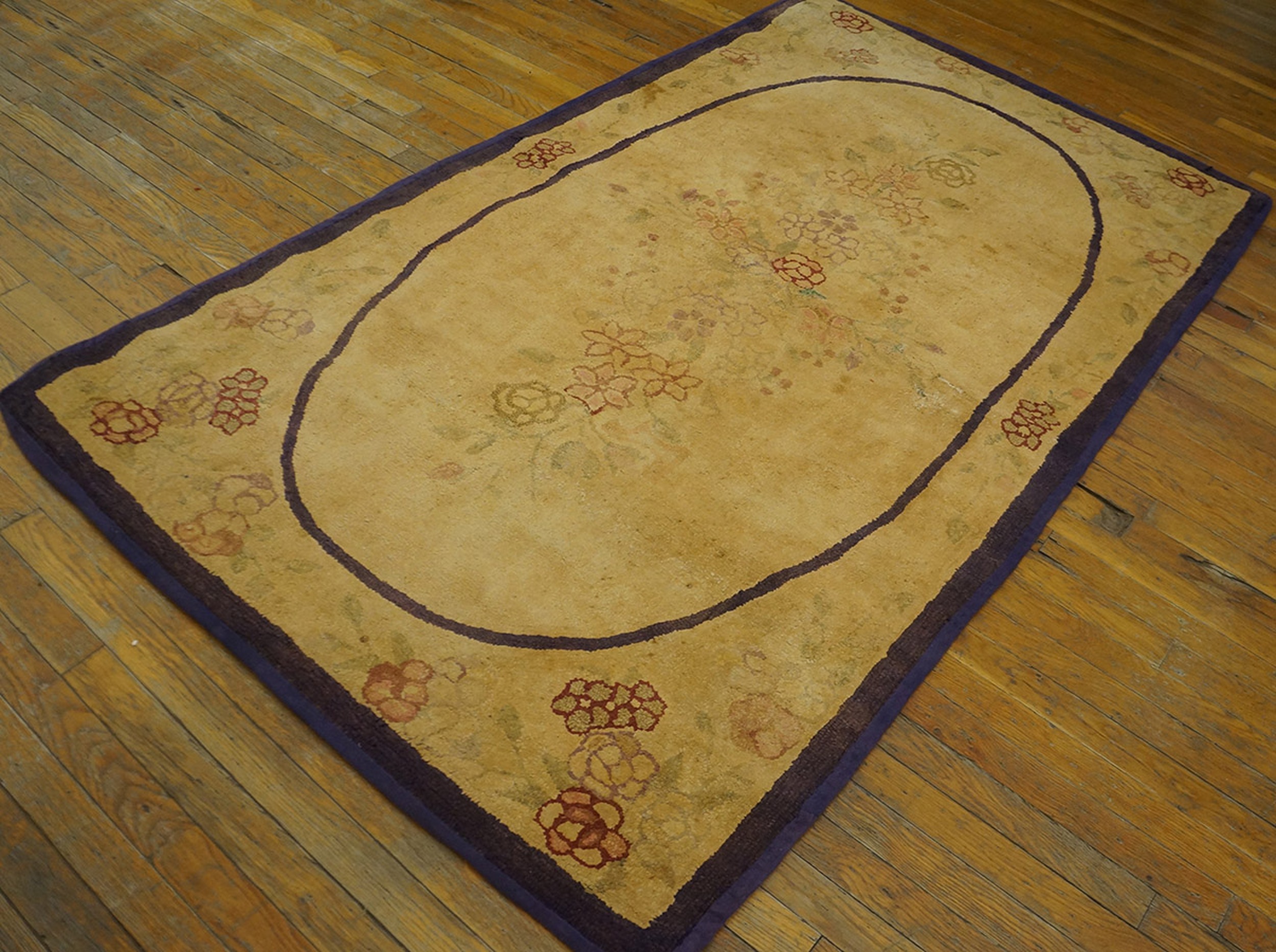
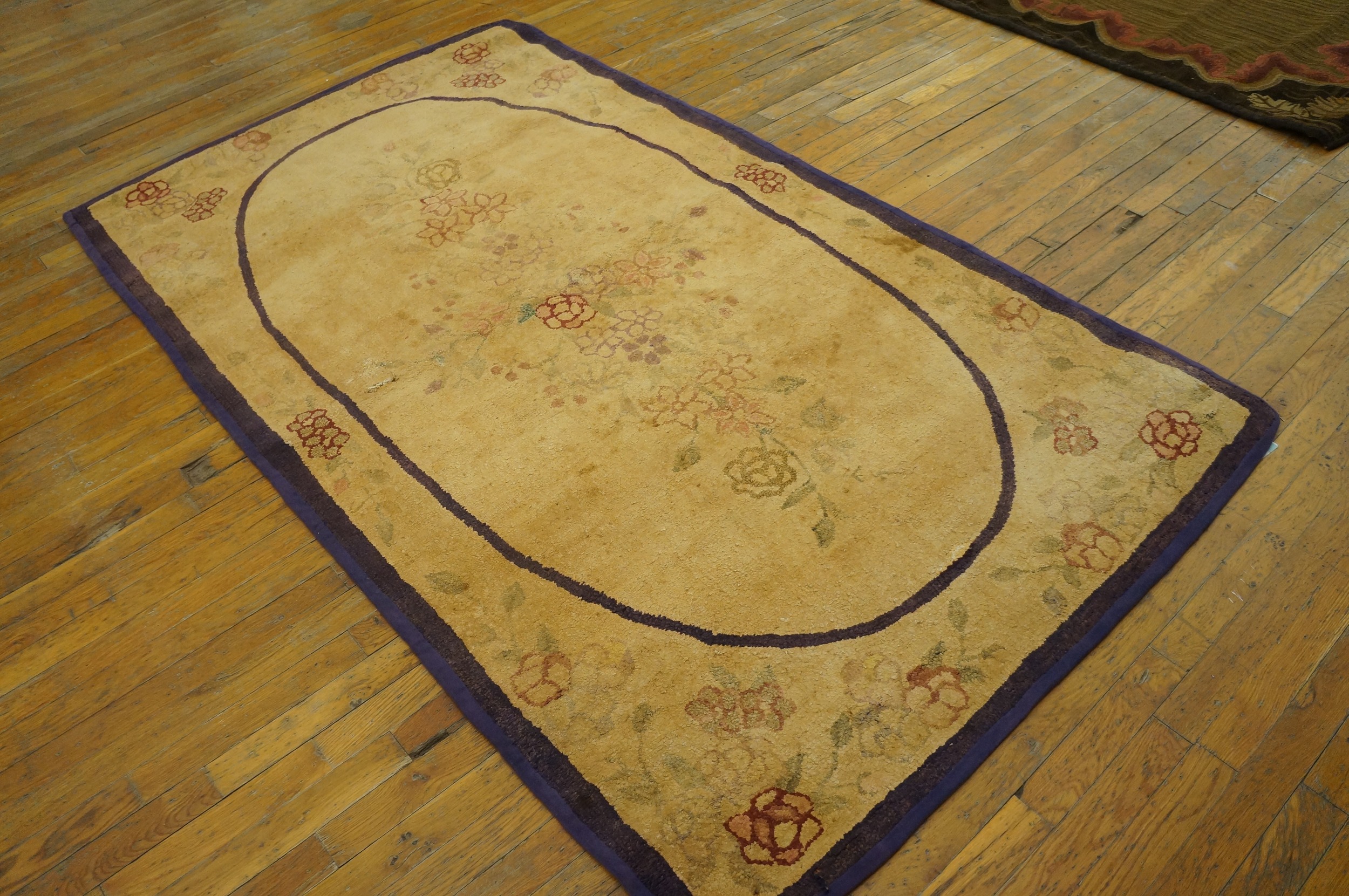
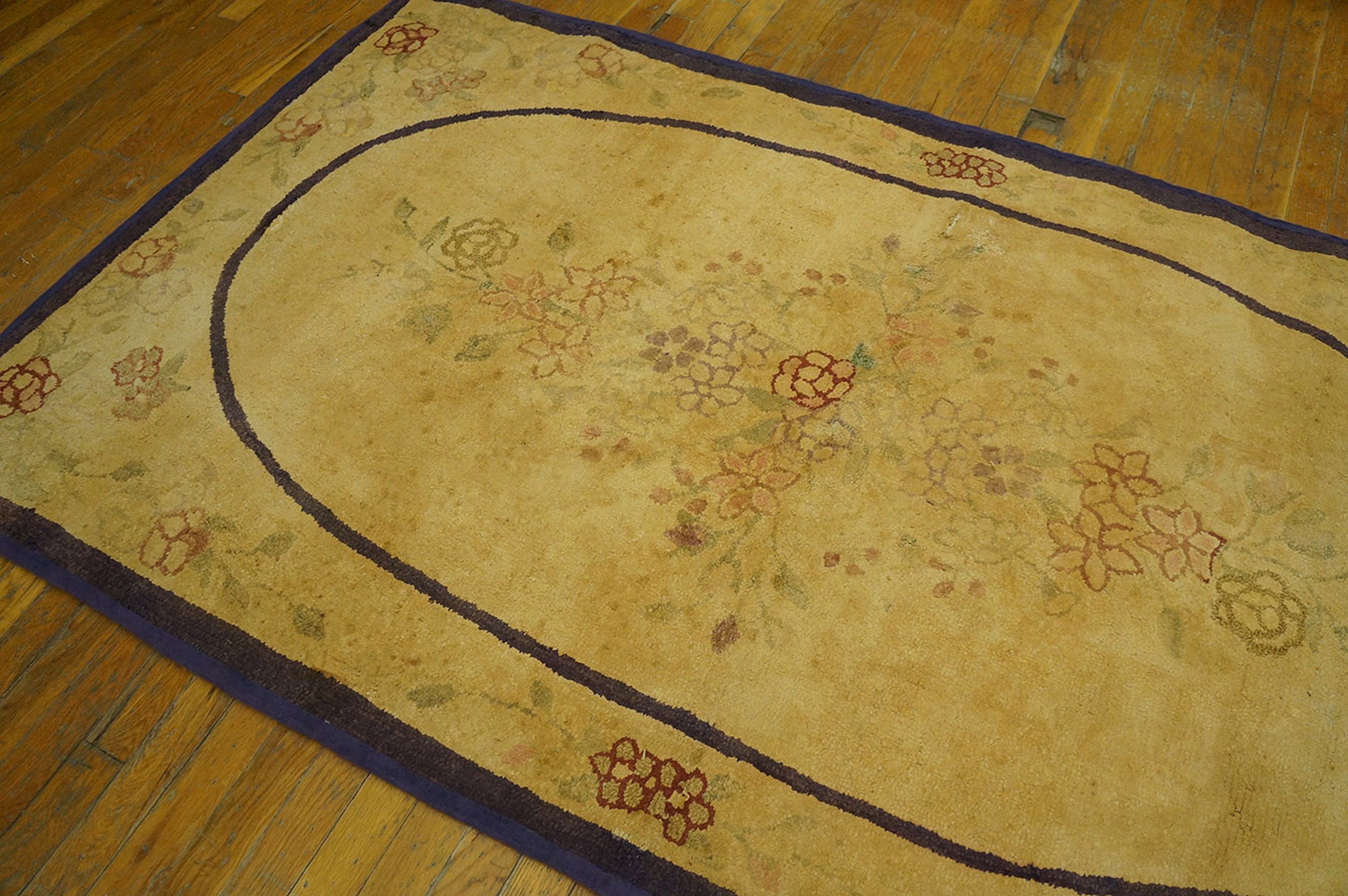
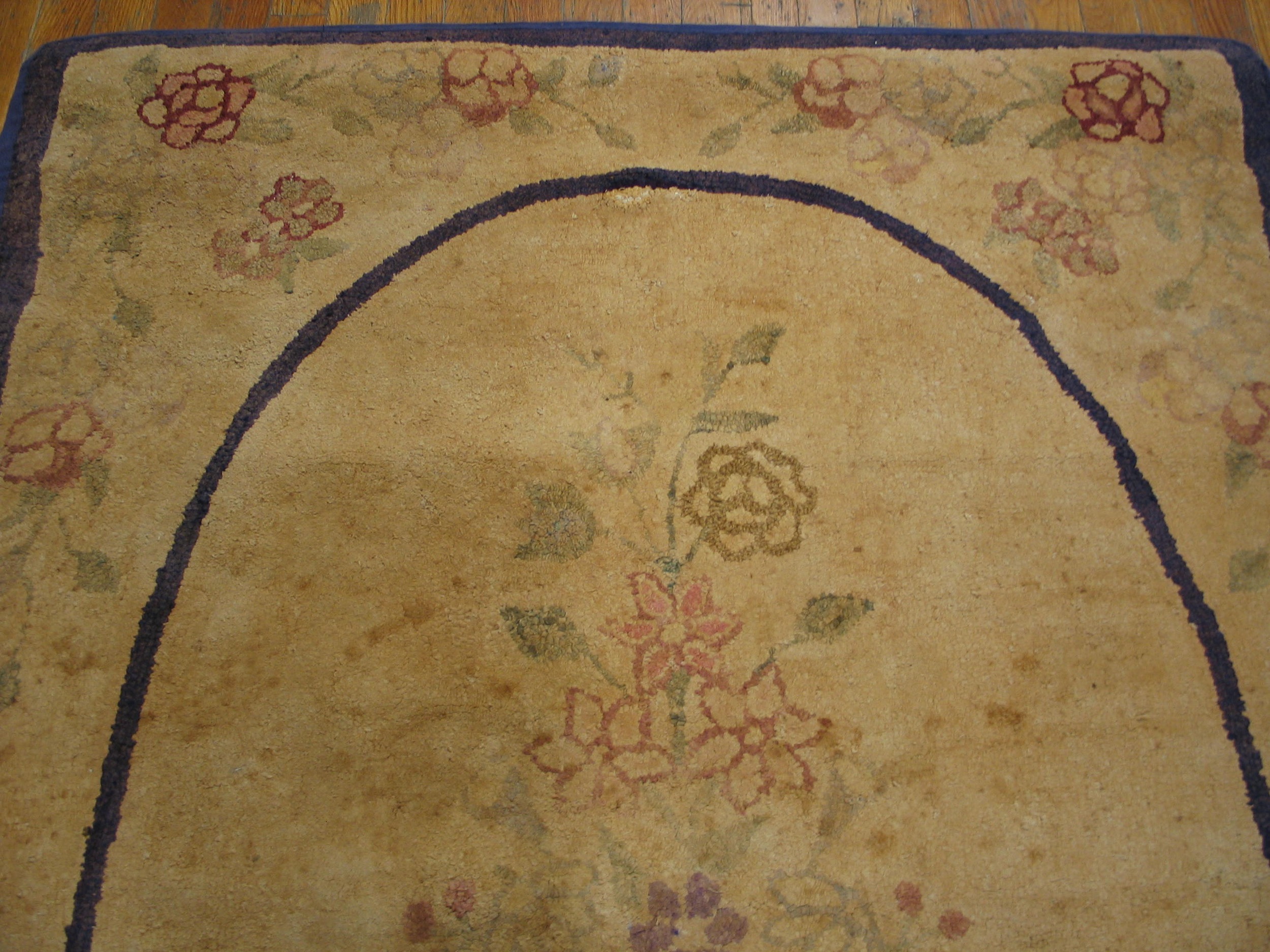
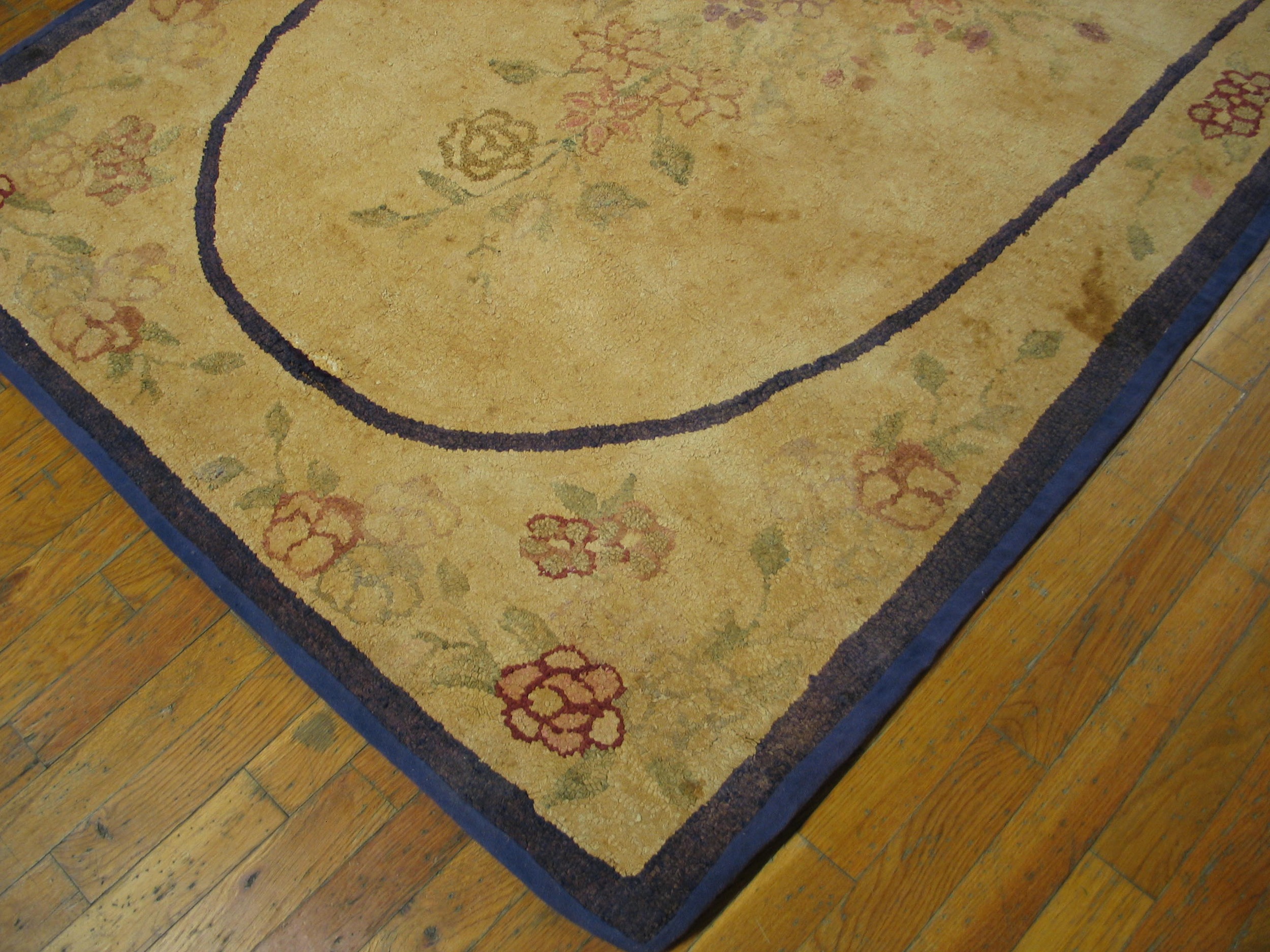
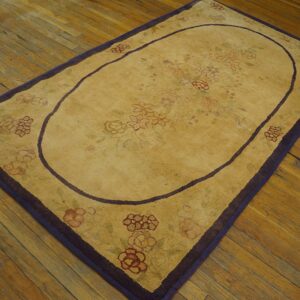
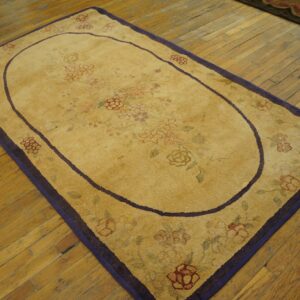
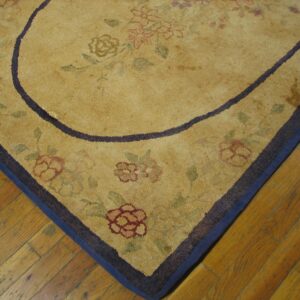
This early 20th-century American hooked rug is a charming and intimate example of “Homegrown Artistry,” capturing the transition from Victorian decorative complexity to the cleaner, more whimsical aesthetics of the early Modern era. This small scatter-size specimen serves as a “tactile snapshot” of early 20th-century domestic life, where resourcefulness and personal expression met to create a unique piece of “Floor Art.”
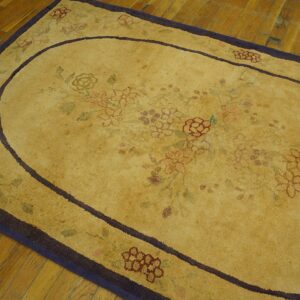
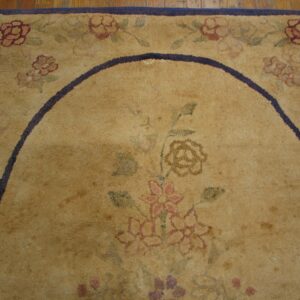
The composition is centered upon a delightful Floral Folk Art design, characterized by a “naive” and heartfelt drawing style. Unlike the rigid, symmetrical patterns found in formal European or Persian carpets, the blossoms here appear to “bloom” with an organic, almost spontaneous energy. The proportions are often playful and oversized, reflecting a “Primitive” sensibility that values the spirit of the flower over anatomical precision. This hand-drawn quality makes each of the antique American hooked rugs a singular work of art, as no two weavers’ “shorthand” for a leaf or petal were ever exactly the same.
The palette is anchored by a luminous antique ivory color foundation. This soft, “parchment” ground provides a tranquil and high-contrast stage for the secondary accents of the floral motifs—typically rendered in a “Country Garden” palette of dusty rose, soft sage, golden ochre, and pale cornflower blue. Because the weaver used hand-cut strips of recycled wool flannel and old clothing, the colors exhibit a magnificent “marbled” variegation (the folk-art equivalent of abrash). This shimmering, “salt-and-pepper” texture gives the ivory field a watercolor-like depth and a soft, historical glow.
Technically, this beautiful area rug from America is prized for its nubby, tightly looped texture and its surprisingly heavy, “meaty” handle. The process of pulling individual loops of wool through a burlap or linen backing creates a dense, three-dimensional surface. Over nearly a century, the wool fibers have slightly “felted” together, resulting in a velvety, suede-like patina that is incredibly soft to the touch and serves to round out the “primitive” edges of the design.
The borders act as a simple architectural frame, often featuring a darker, “mottled” edge that “locks in” the airy lightness of the ivory center. The small size makes it an incredibly versatile textile, perfect for adding a layer of historical soul to a bedside, an entryway, or even being displayed on a wall as a piece of textile art. To possess this early 20th-century antique American floral folk art design rug is to hold a piece of North American heritage—a hand-wrought sanctuary of historical gravity and sun-drenched, botanical grace.