
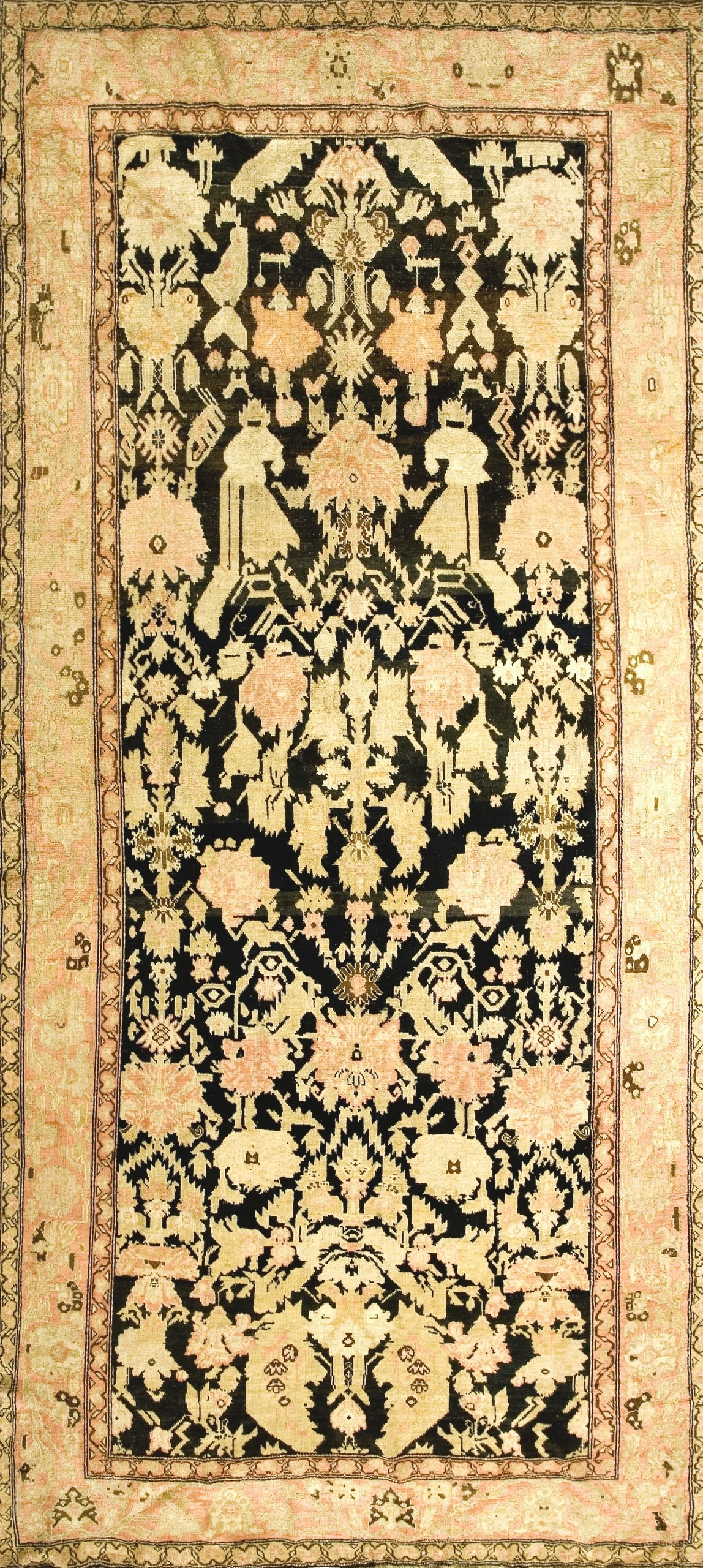
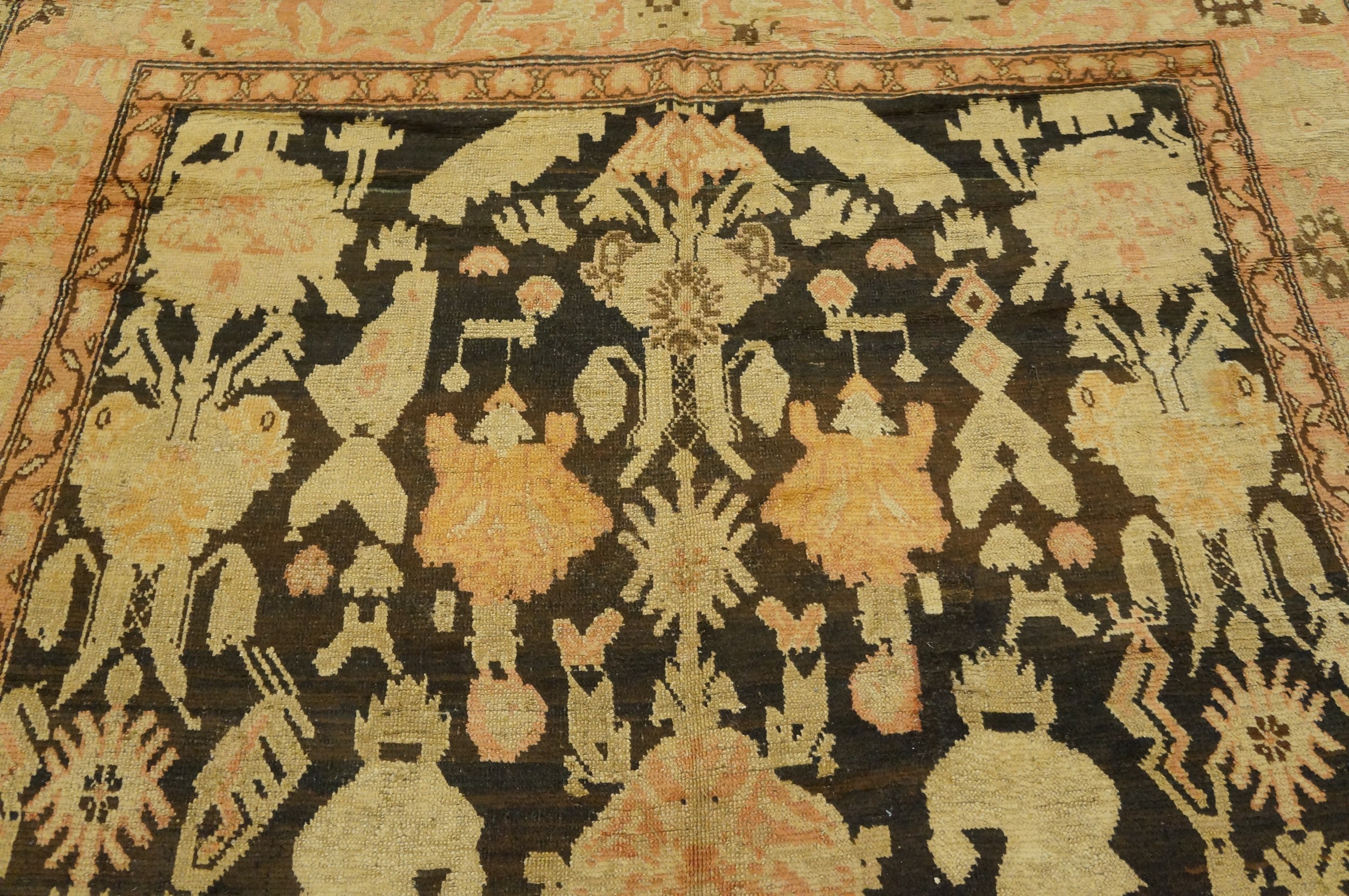
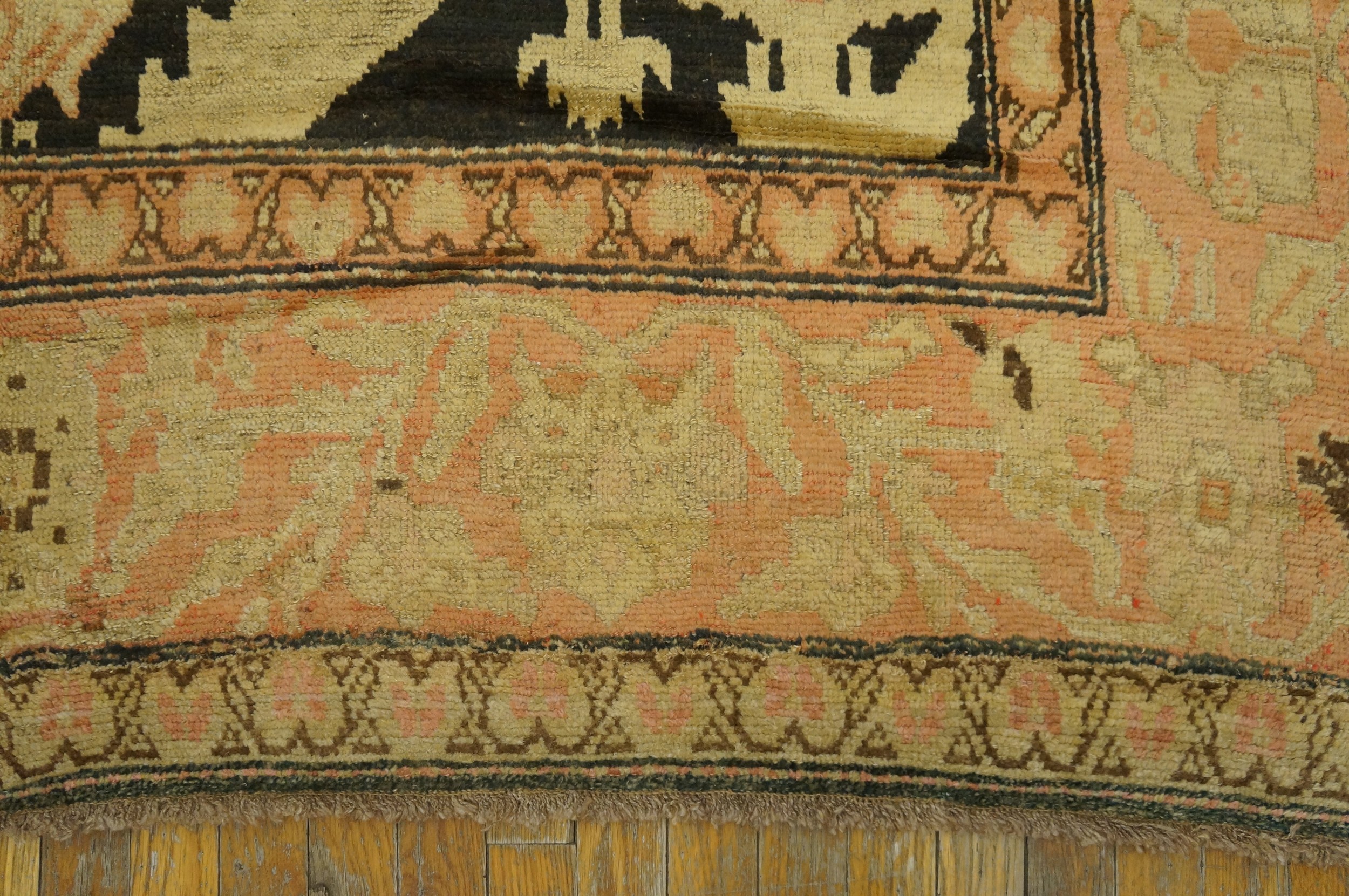
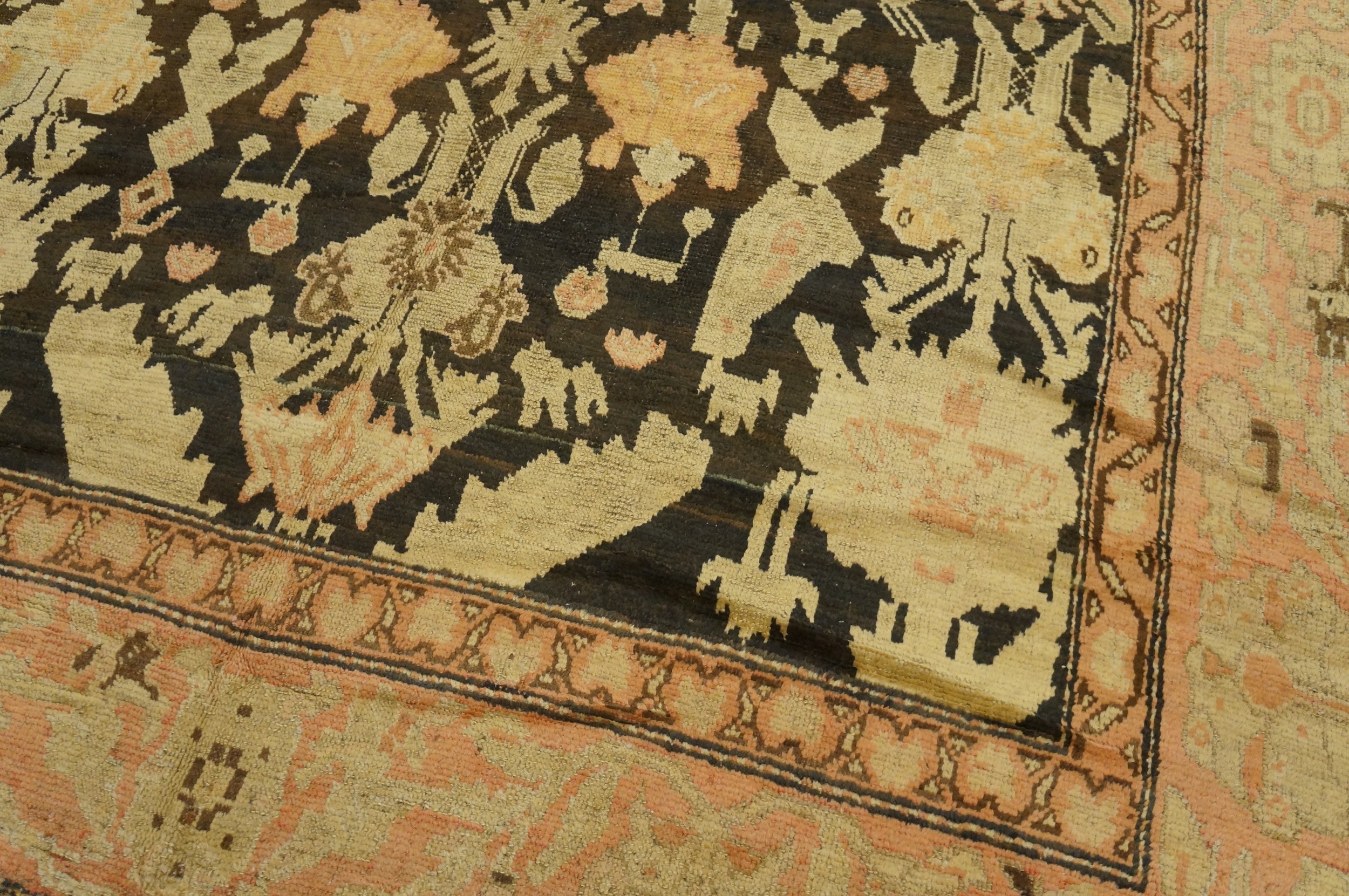
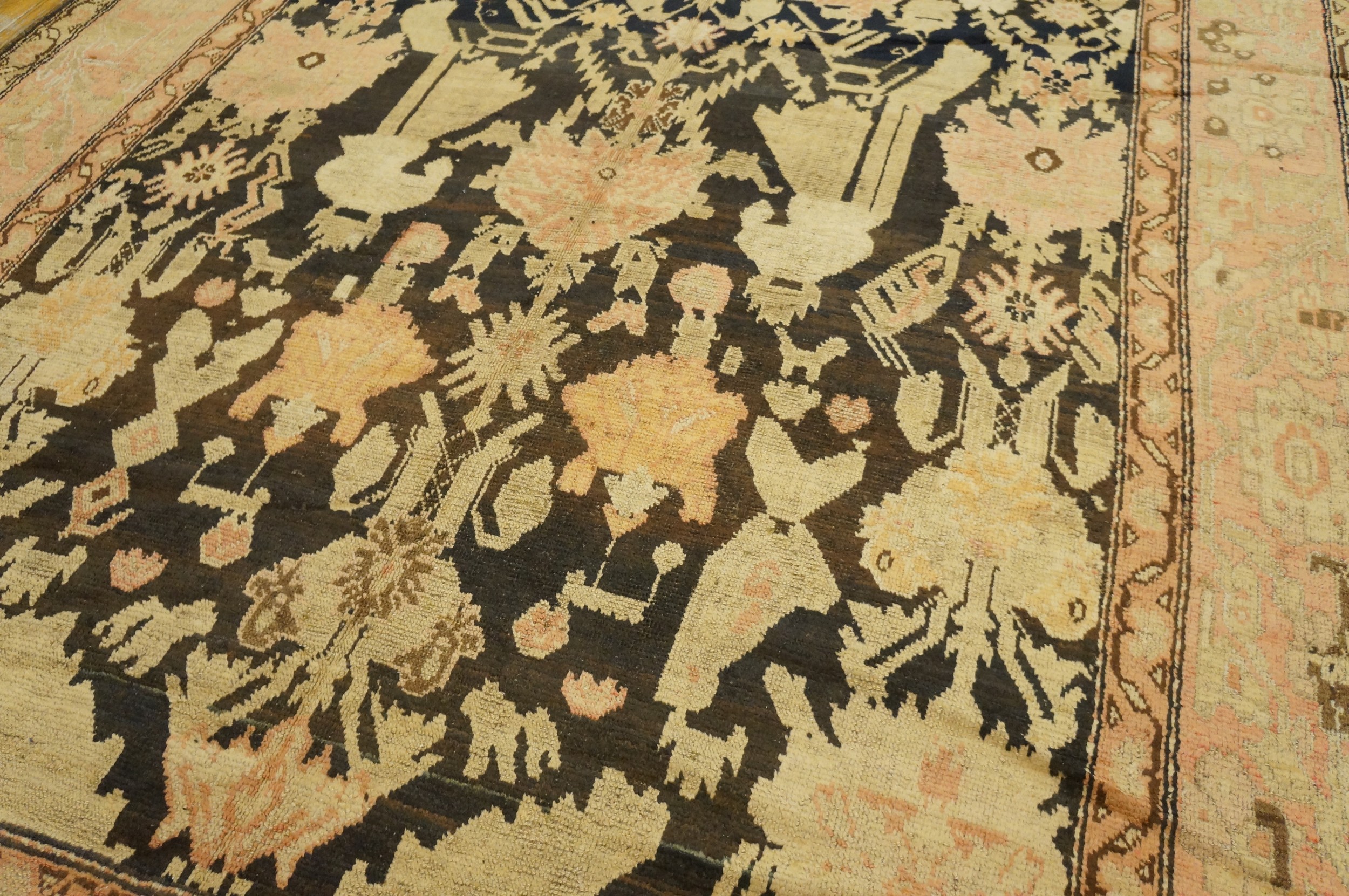
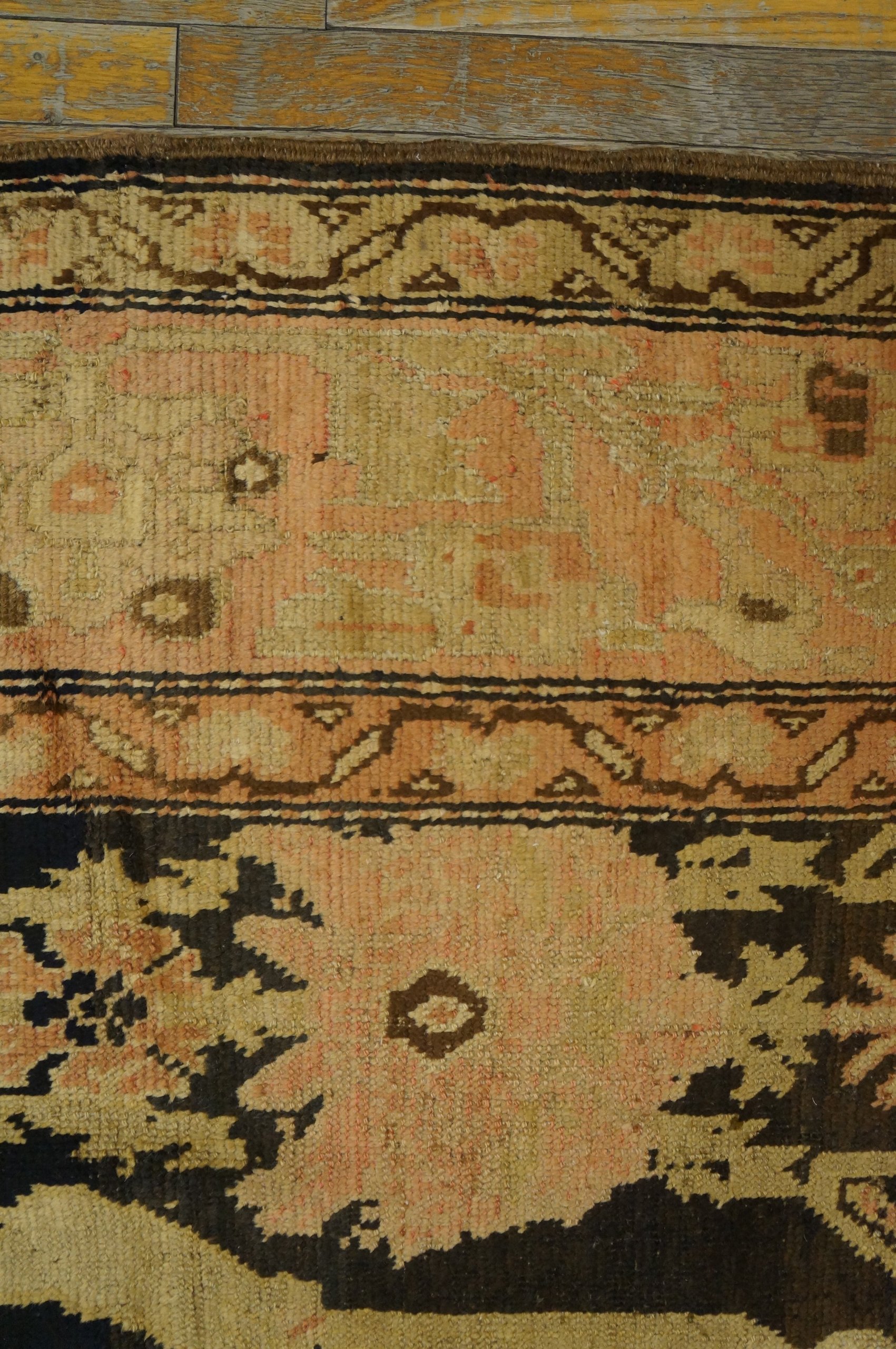
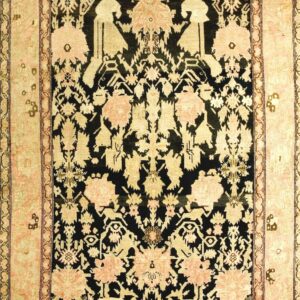
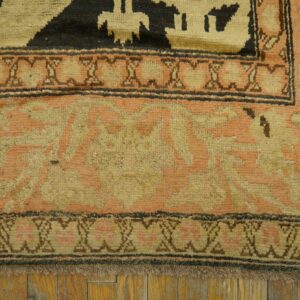
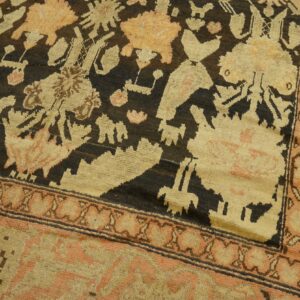
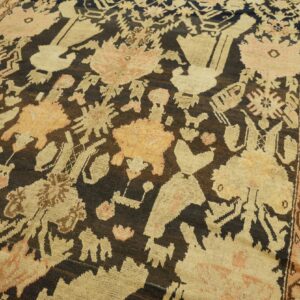
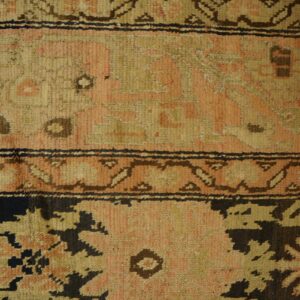
This magnificent late nineteenth-century Caucasian carpet is a premier example of the tribal artistry from the Karabagh region, situated in the southern reaches of the Caucasus mountains. Historically, Karabagh weavers were renowned for creating larger, “corridor” or “gallery” sized rugs that bridged the gap between the bold, geometric spirit of nomadic village weaving and the sophisticated floral sensibilities of neighboring Persia. This specific specimen is distinguished by its long and narrow gallery format and its rare, earthy brown field, a palette that exudes an ancient, “primitive” sophistication.
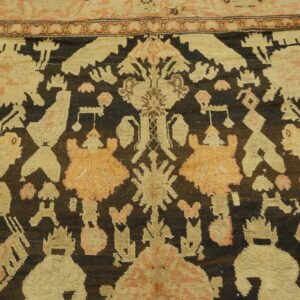
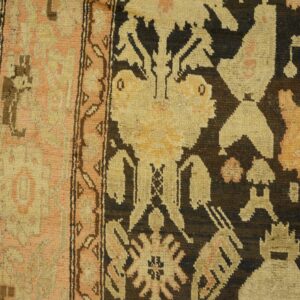
The composition is defined by its powerful tribal character, often featuring a repeating series of monumental medallions or a sophisticated “Herati” or “Mina Khani” floral trellis. In the lexicon of Karabagh design, these motifs are rendered with a deliberate “staccato” geometry—transmuting flowing Persian botanicals into the crystalline, high-contrast language of the mountains. The dark brown field, likely derived from the natural, undyed wool of local sheep or a rich walnut-husk dye, provides a somber and grounding foundation that allows the vibrant ochres, madder reds, and icy blues of the pattern to “shimmer” with a jewel-like intensity.
Technically, a Karabagh of this “Long and Narrow” caliber is prized for its structural presence. Unlike the finer, thinner weaves of the Northern Caucasus (like Shirvan), Karabagh rugs possess a substantial, fleshy pile and a heavy handle, designed to provide warmth and durability in rugged stone dwellings. The wool is typically lanolin-rich and high-gloss, which, over the course of a century, develops a luminous patina. The “Gallery” proportions make it an architecturally significant piece, specifically intended to ground long hallways or to serve as a regal “running” anchor in a grand master suite or library.
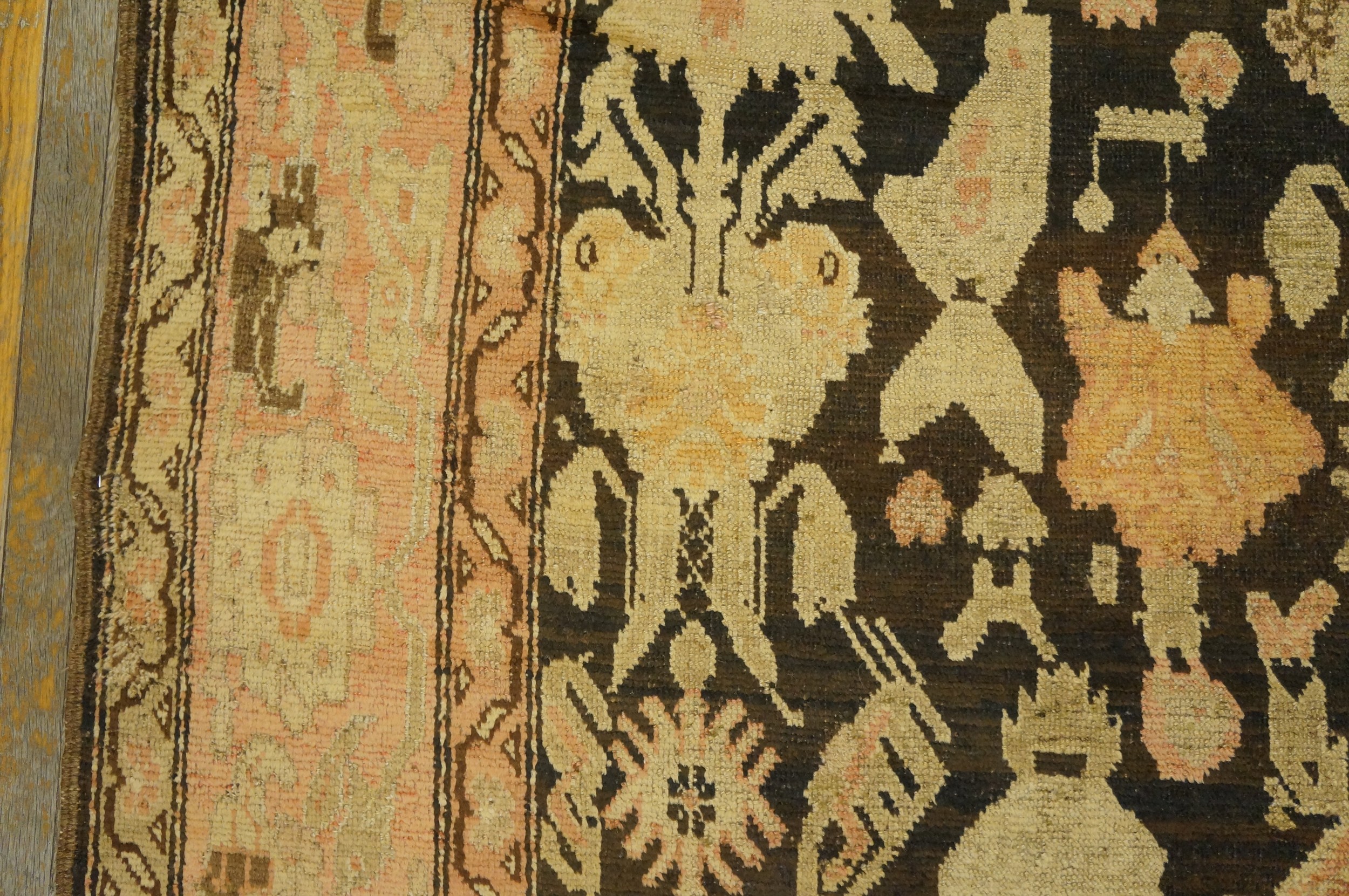
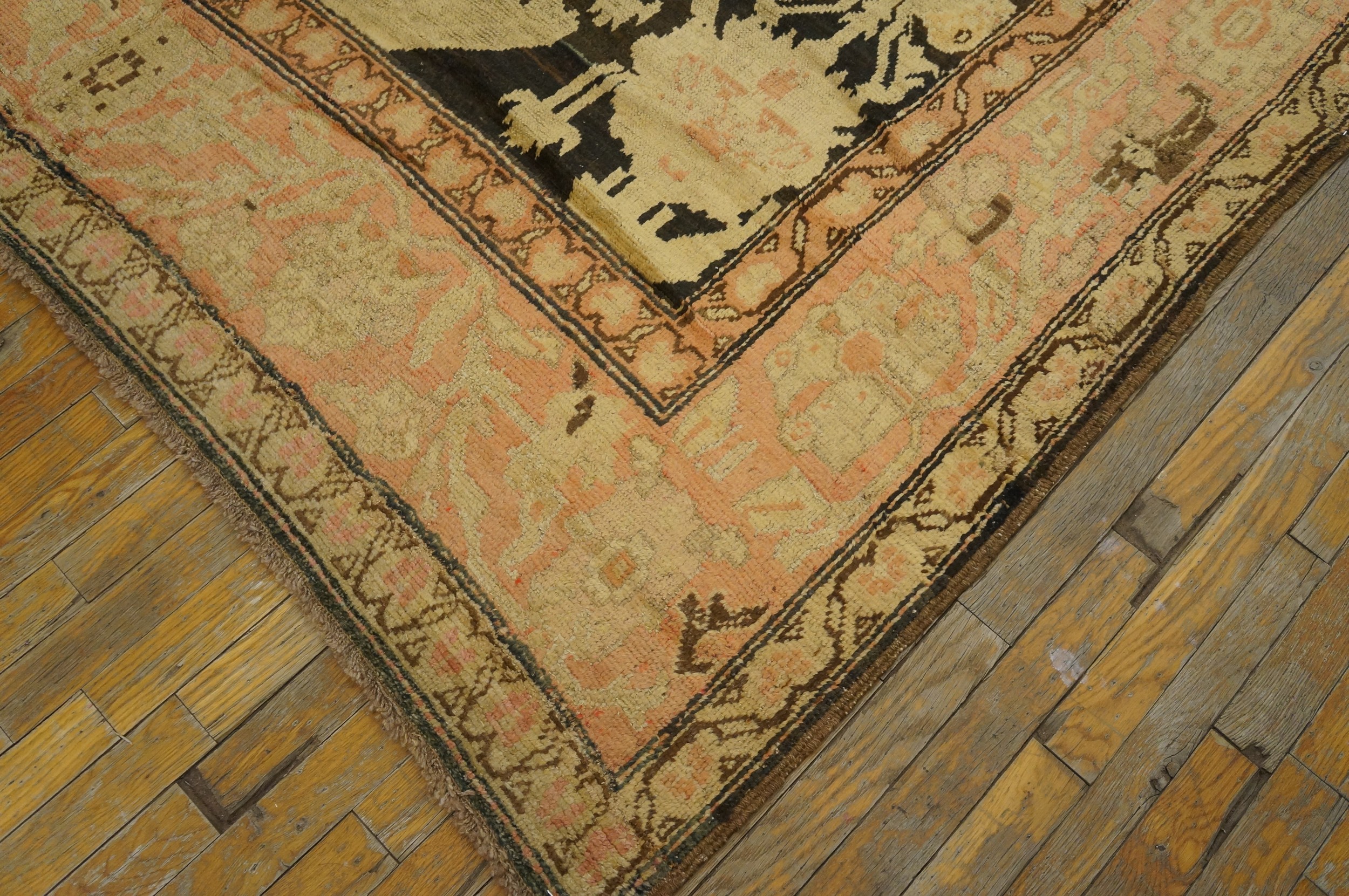
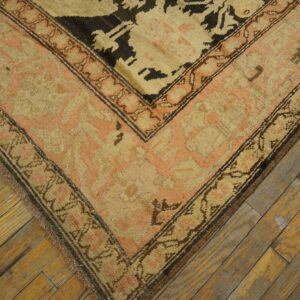
The borders are a virtuoso display of Caucasian symbolism, frequently featuring the “Crab” palmette, the “Running Dog” scroll, or stylized dragon motifs that speak to the region’s deep mythological roots. To possess a late 19th-century brown-ground Karabagh gallery carpet is to hold a monument to a vanishing world—a work that bridges the gap between nomadic tradition and aristocratic scale, transforming a transition space into a gallery of hand-wrought, tribal history and timeless, earthy opulence.