
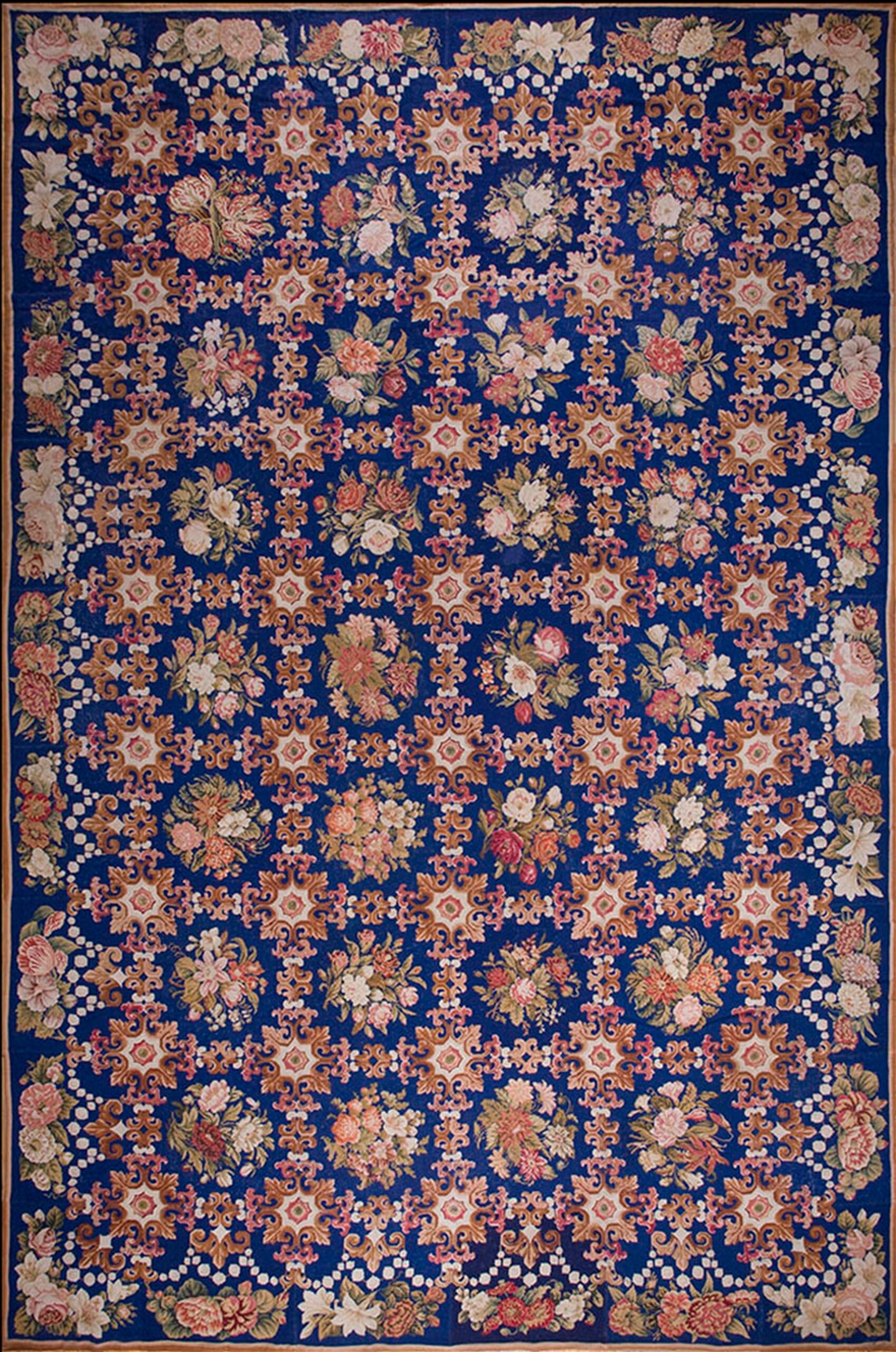
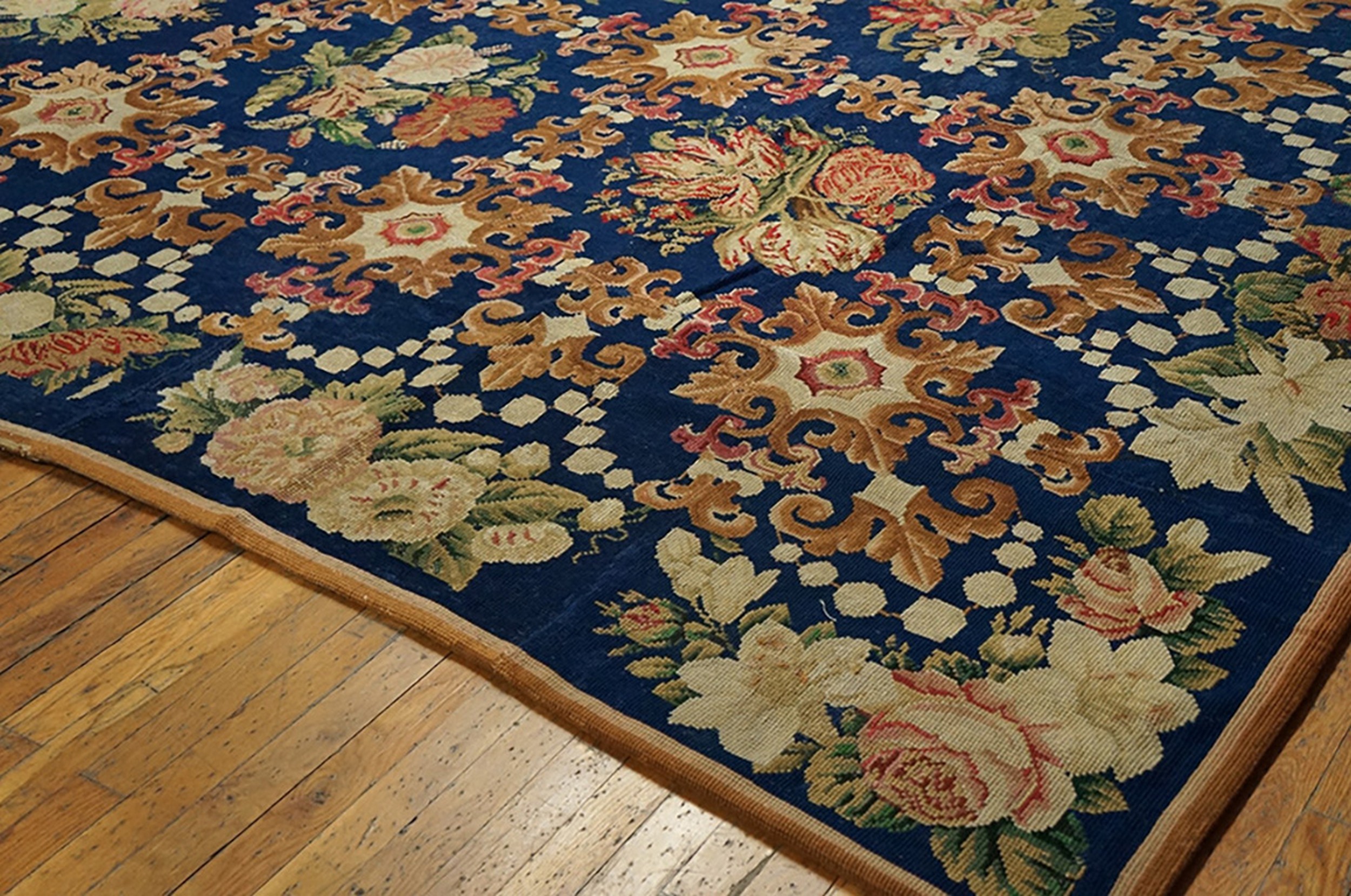
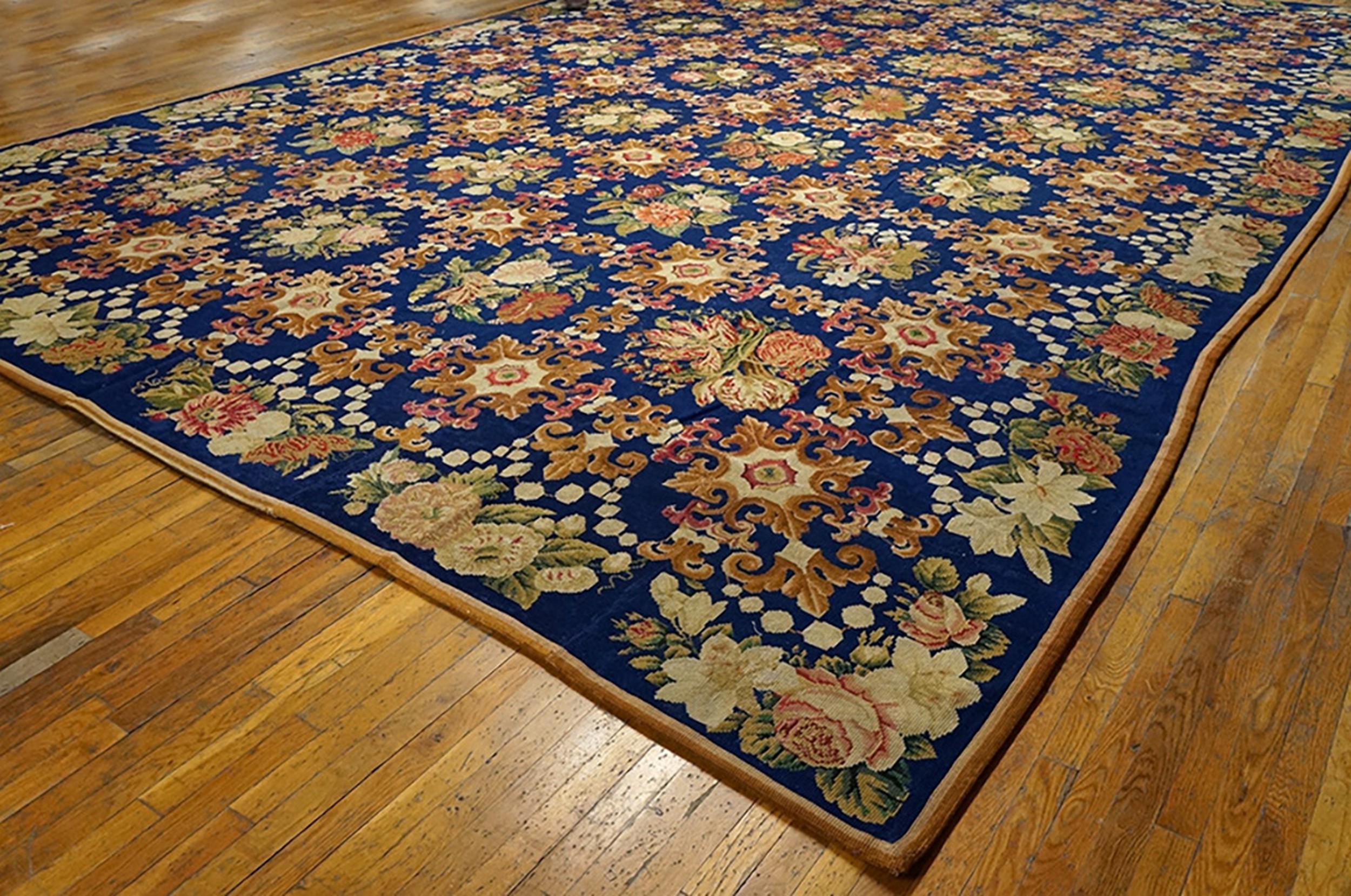
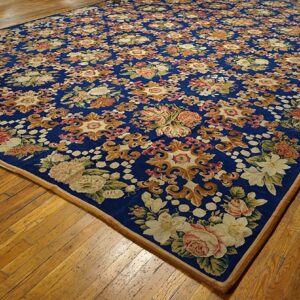
This early nineteenth-century Needlepoint carpet from England is a monumental achievement of European textile history, representing the aristocratic elegance of the Georgian and early Victorian eras. While most needlepoints from this period are found in small scatter sizes, this oversized specimen is a rare “stately home” piece, likely commissioned for a grand manor or a formal drawing room where it would serve as the foundational anchor of a classical interior.
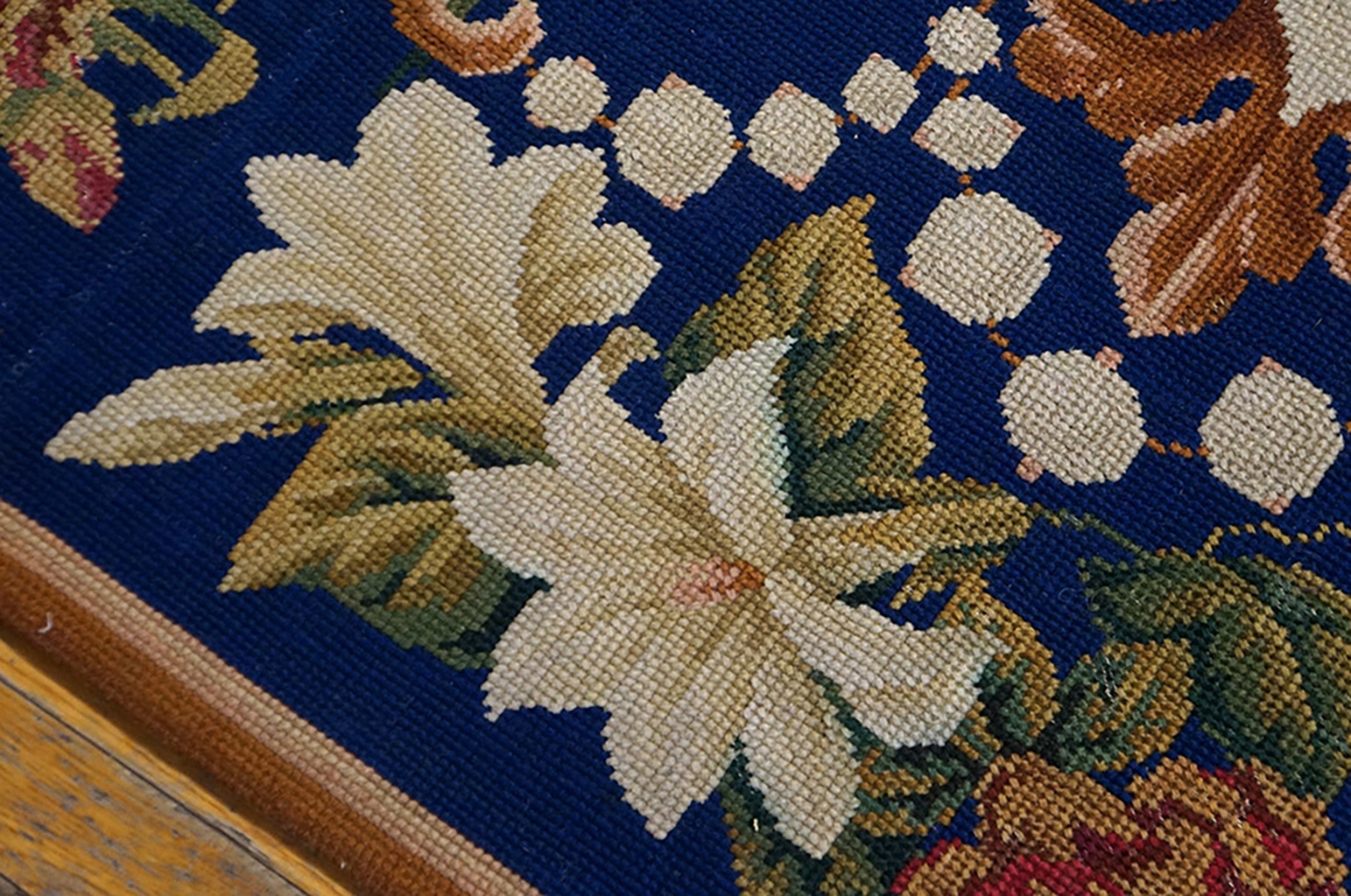
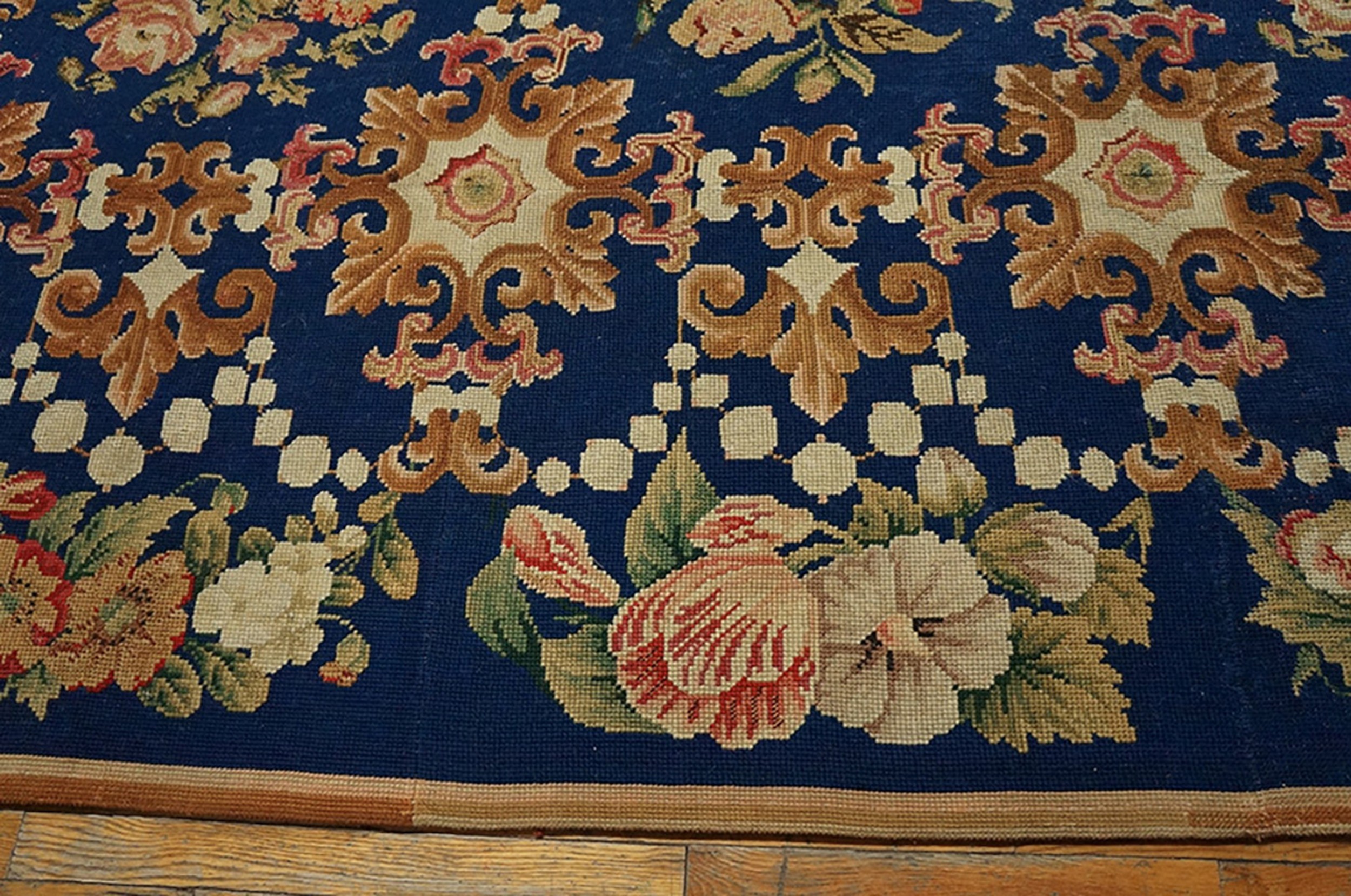
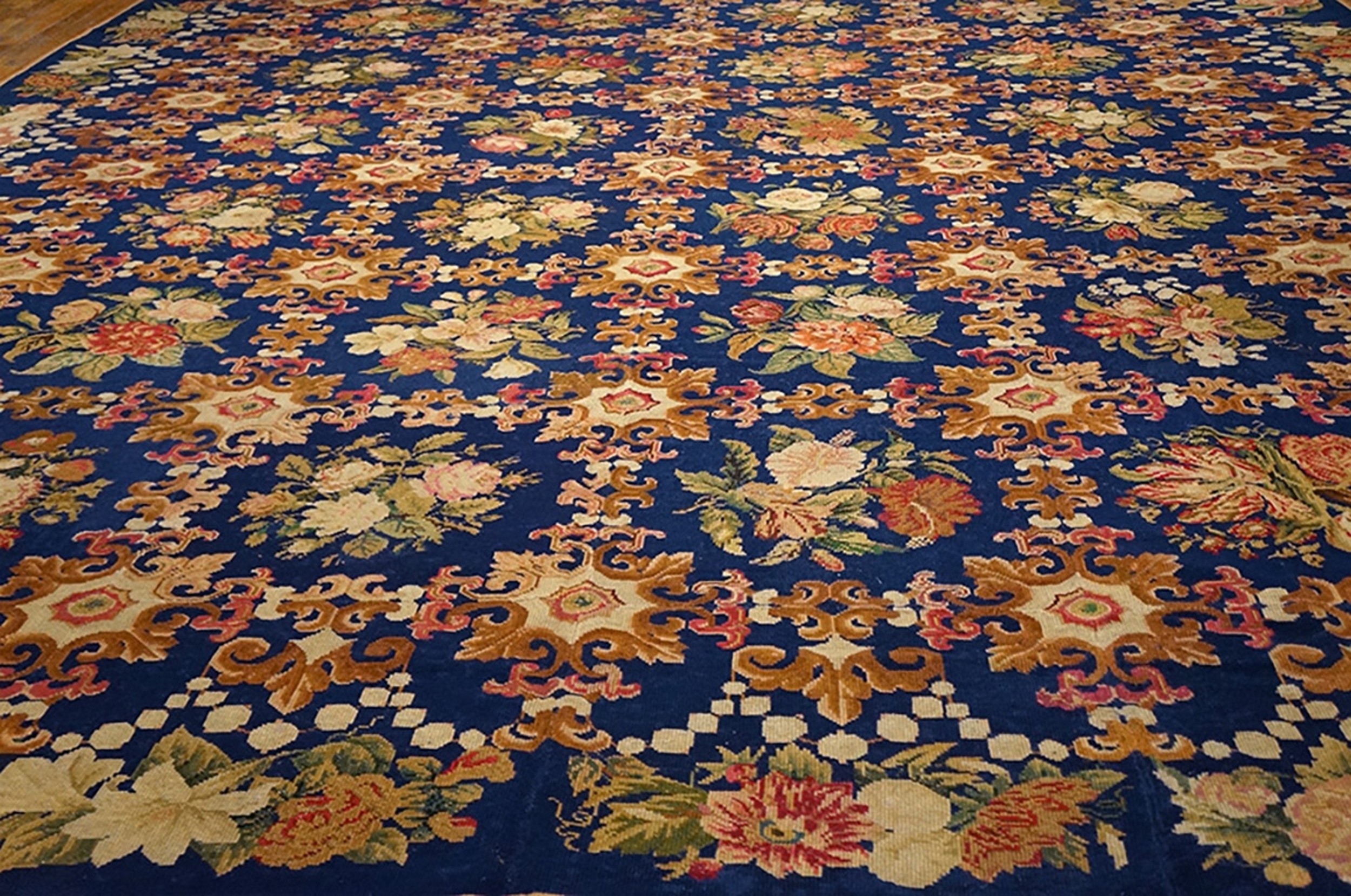
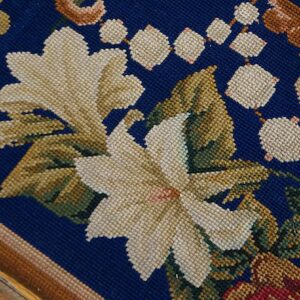
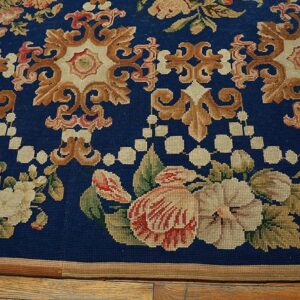
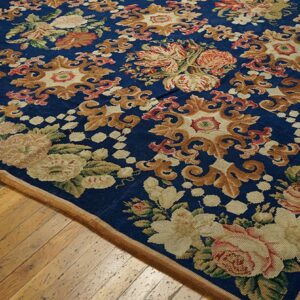
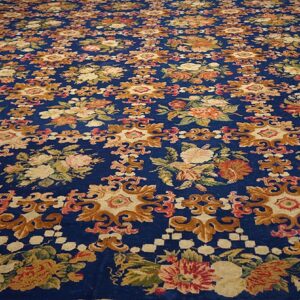
The composition is centered upon a regal blue floral and Fleur-de-Lis rug design pattern. The Fleur-de-Lis, a stylized lily symbolizing royalty, light, and life, is integrated into a rhythmic botanical grid that is quintessentially British in its disciplined grace. The drawing is remarkably detailed, featuring a lush garden of English roses, bluebells, and scrolling foliage. Unlike the knotted pile of Persian rugs, the needlepoint (gros point) technique—hand-stitched with wool yarn onto a structural canvas—allows for a “painterly” precision that mimics the fine embroidery of the era, creating a surface that feels like a massive, hand-wrought tapestry for the floor.
The palette is anchored by a sophisticated and cool Blue color theory. The various shades of indigo, sky, and slate blue provide a tranquil, “watery” foundation that was highly fashionable in 19th-century European design and decor. Against this cool stage, the secondary accents of ivory, soft rose, and muted gold possess a luminous, high-contrast quality. Because this is an antique specimen, the colors have mellowed over two centuries into a soft, matte patina. The natural dyes exhibit a magnificent tonal depth, giving the blue field a watercolor-like resonance that shifts beautifully under natural light.
Technically, this carpet from England is prized for its flat, rhythmic texture and substantial, “fabric-like” handle. The hand-stitched nature of the piece creates a dense, uniform surface that is both durable and incredibly soft to the touch. One of the most remarkable aspects of an oversized needlepoint is the sheer labor involved; a piece of this scale represents thousands of hours of meticulous hand-work, a testament to a bygone era of domestic craftsmanship. The lack of a raised pile makes it an ideal choice for rooms with fine antique furniture, as it provides a stable, “low-profile” surface of immense historical weight.
The borders act as a grand architectural frame, often mirroring the central Fleur-de-Lis motifs or featuring a heavy scrolling acanthus leaf design to “lock in” the airy elegance of the field. To possess this Antique Oversized English Needlepoint is to own a monument to European heritage. It bridges the gap between the grandeur of the palace and the soulful warmth of hand-stitched art—transforming a large space into a sanctuary of historical gravity and serene, blue-toned grace.