
Introduction to Black Rugs
Discover our exclusive range of sophisticated black rugs ready to ship today.
The Power and Role of Black in Rug-Making
Black has long held a distinct role in rug-making, not as a dominant shade but as a powerful supporting player. In antique and traditional weaving, achieving a true, lasting black was technically challenging. Natural dyes often produced deep charcoals, blue-blacks, or earthy brown-blacks instead of pure black, and these subtle variations gave historic rugs a layered, organic quality.
Because of this difficulty, black was reserved for precise applications—outlining motifs, creating definition within intricate borders, or offering a grounding field of depth against brighter tones. Symbolically, black was treated with care. In some weaving cultures, it suggested authority, mystery, or solemnity, while in others it served as a counterbalance to colors associated with vitality and abundance.
In all cases, the presence of black amplified the surrounding hues, making reds appear more vibrant, blues more luminous, and golds more radiant. Its function was not merely decorative but structural, anchoring compositions and ensuring motifs stood out with clarity. Today, black continues to serve as a tool of sophistication in rug weaving and design.
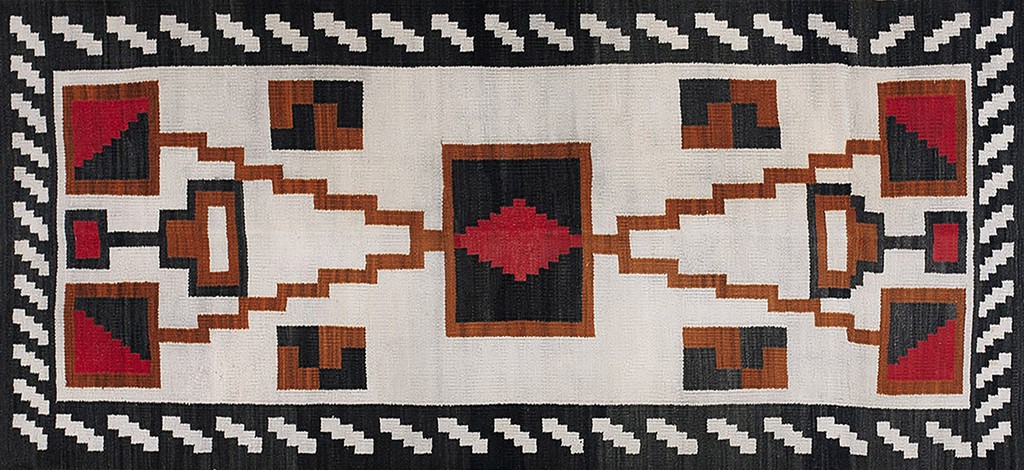
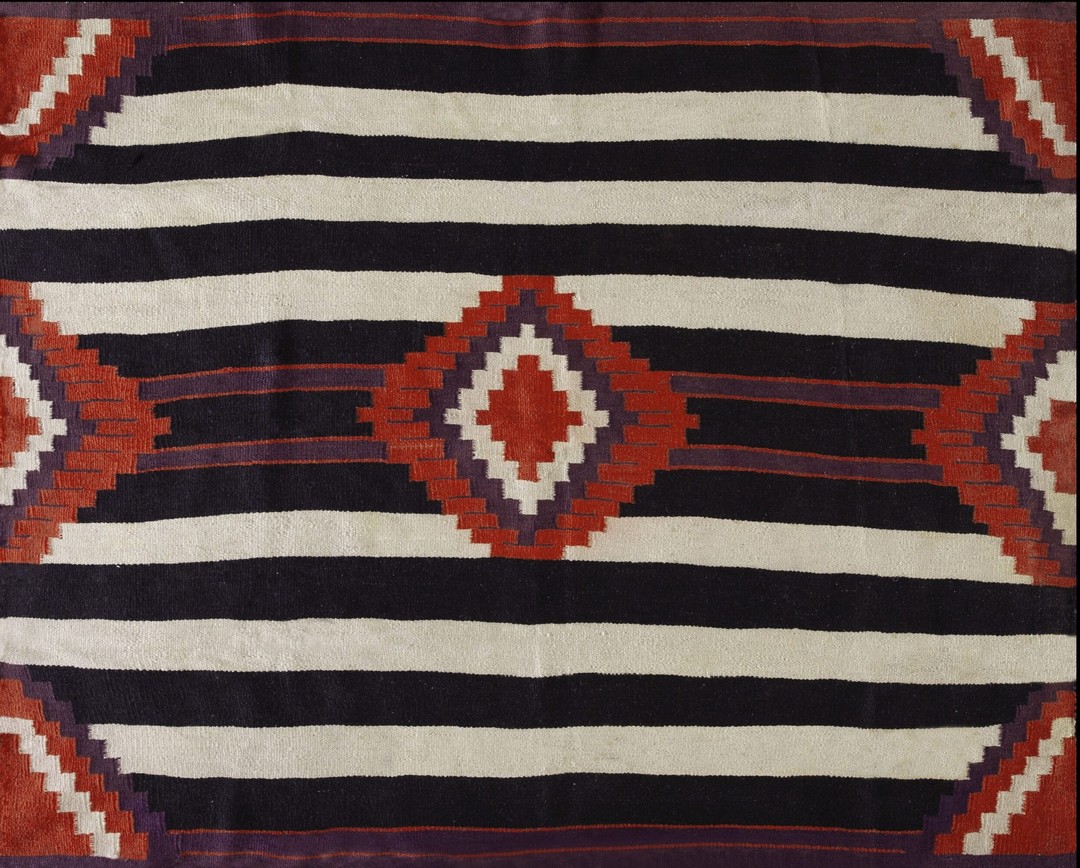
Antique Native American Navajo Geometric Design Ivory Color Rug by Rugs On Net
In modern production, consistent black dyes are readily achievable, allowing weavers and manufacturers to experiment with black fields, bold geometric designs, and tonal textures. In interior settings, black area rugs and black accent rugs embody drama and elegance, serving either as a backdrop that frames a room’s design or as a statement piece that commands attention.
Quick Facts: Black as a Design Tool
- Amplifies Contrast — Why: Black enhances visual contrast, making surrounding colors appear brighter and sharper, which is why it remains an essential outlining shade in traditional and modern visual contrast rugs.
- Grounds a Space — Why: Black rugs add weight and stability to a room, creating a grounded atmosphere that can balance light walls or furnishings.
- Versatile in Style — Why: Black accent rugs fit equally well in minimalistic, industrial, bohemian, or luxury interiors, shifting seamlessly between casual and formal aesthetics.
- Mood Influencer — Why: The presence of black in rug décor can influence perception, making a room feel more intimate, dramatic, or sophisticated depending on context and lighting.
- Historically Rare — Why: True black tones were difficult to achieve with natural dyes, making antique black rugs especially prized for their depth and patina.
Black rugs remain versatile in décor precisely because of this balance between utility and drama. They can soften a brightly colored room by adding grounding depth, or they can heighten minimal spaces with a bold, monochrome statement.
Their ability to alter perception means a black rug can make a large room feel cozier, or lend an intimate, gallery-like mood to modern interiors. Whether used sparingly as a border or embraced as a full field of color, black carries a weight and intensity few other shades can match.
The Science & Art of Black Dye in Rugs
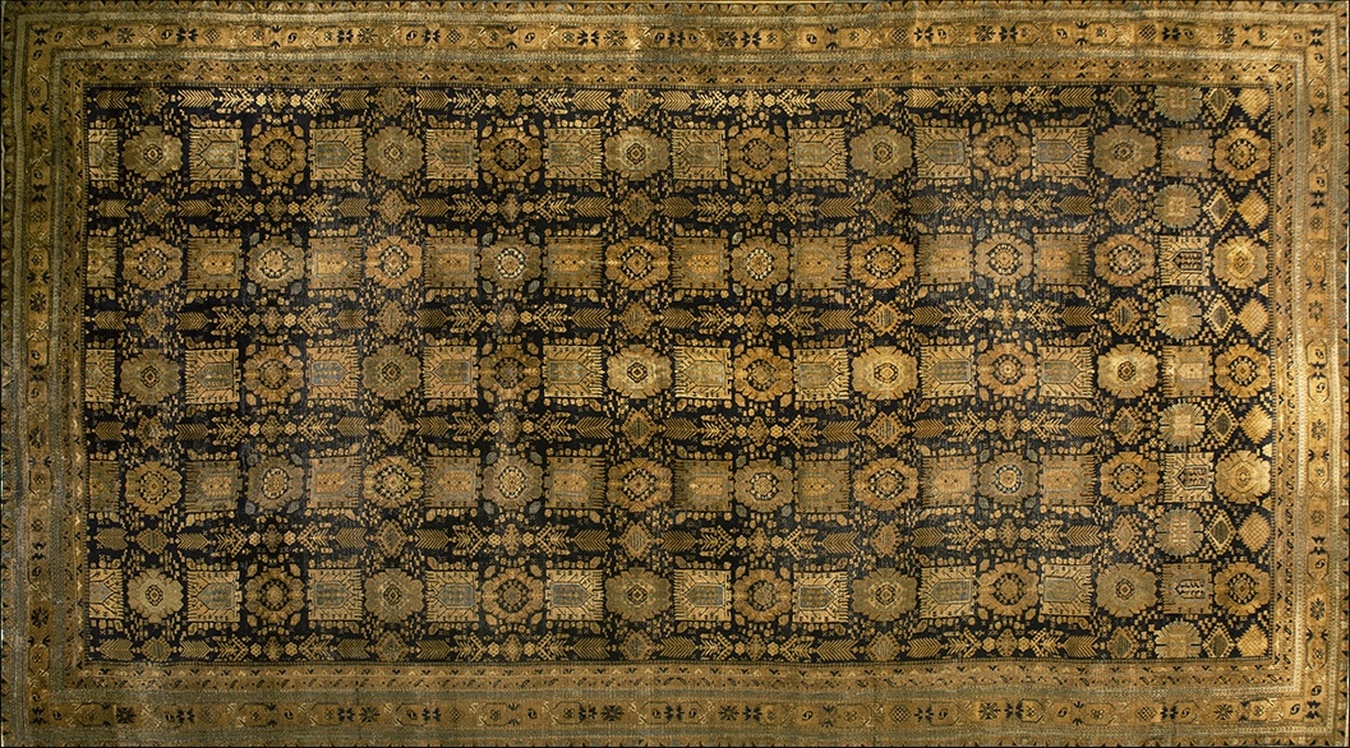
Antique Oversized Agra Indian Knotted Rug – by Rugs On Net
Traditional Methods of Achieving Black
Creating black in traditional rug-making was both an art and a science. Natural dyers rarely relied on a single source; instead, they built depth through layered processes. A common method involved combining tannin-rich substances such as oak galls, walnut husks, or pomegranate rinds with iron salts. This iron-tannin dye produced a deep, dark tone that could range from gray-black to nearly jet depending on ratios and mordanting.
Another approach was overdyeing: applying indigo or madder red as a base, then layering with darker tannin-iron solutions to achieve a richer finish. When available, weavers also turned to natural black wool from dark-fleeced sheep. While convenient, it carried its own limitations—the natural pigment in wool fibers is prone to oxidation, meaning areas of pure black wool in antique rugs often fade to brown or gray over time. These variations, however, became part of the charm, with many collectors admiring the nuanced patina of aged blacks.
Natural vs Synthetic Black Dyes
- Iron-Tannin Black — Why: Produced from natural sources, it created complex tones but could corrode wool fibers over centuries, leaving recessed pile (known as corrosive black).
- Plant- or Mineral-Based Blacks — Why: Less corrosive than iron-tannin, but often lacked the depth and stability needed for colorfast black rugs, especially in high-traffic or sunlit spaces.
- Natural Black Wool — Why: Offered an organic alternative but oxidized with age, limiting long-term uniformity.
- Synthetic Black (Aniline, Chrome, Acid Dyes) — Why: Revolutionized rug dyeing in the late 19th–20th centuries, producing consistent, jet-black tones with far greater stability, though early synthetics sometimes caused preservation problems.
The Chemistry and Challenges of Black
The difficulty of black lies in its chemistry. Iron-tannin dyes bond tightly to wool, but over time the iron can weaken keratin in the fibers, leading to a “bitten” look where dark outlines sink below surrounding colors. This dye corrosion has become a hallmark of authenticity in antique pieces, yet it underscores the risks inherent in older methods.
Synthetic black dyes largely solved these challenges by offering improved lightfastness and reducing corrosive effects. Chrome and acid dyes, in particular, provided rug makers with a stable palette, opening the door for solid black fields, bold geometrics, and modern minimalistic designs. Yet even with synthetics, exposure to direct sunlight can still fade dark tones—hence the importance of UV-conscious placement in interior décor.
The legacy of black dye demonstrates how chemistry and artistry intersect. From corrosive yet beautiful iron-tannin tones to stable synthetic jet-blacks, each method reflects both technical innovation and cultural aesthetics, shaping how black has been used in rugs across centuries.
Black in Rug-Making Traditions: Symbolism & Cultural Use
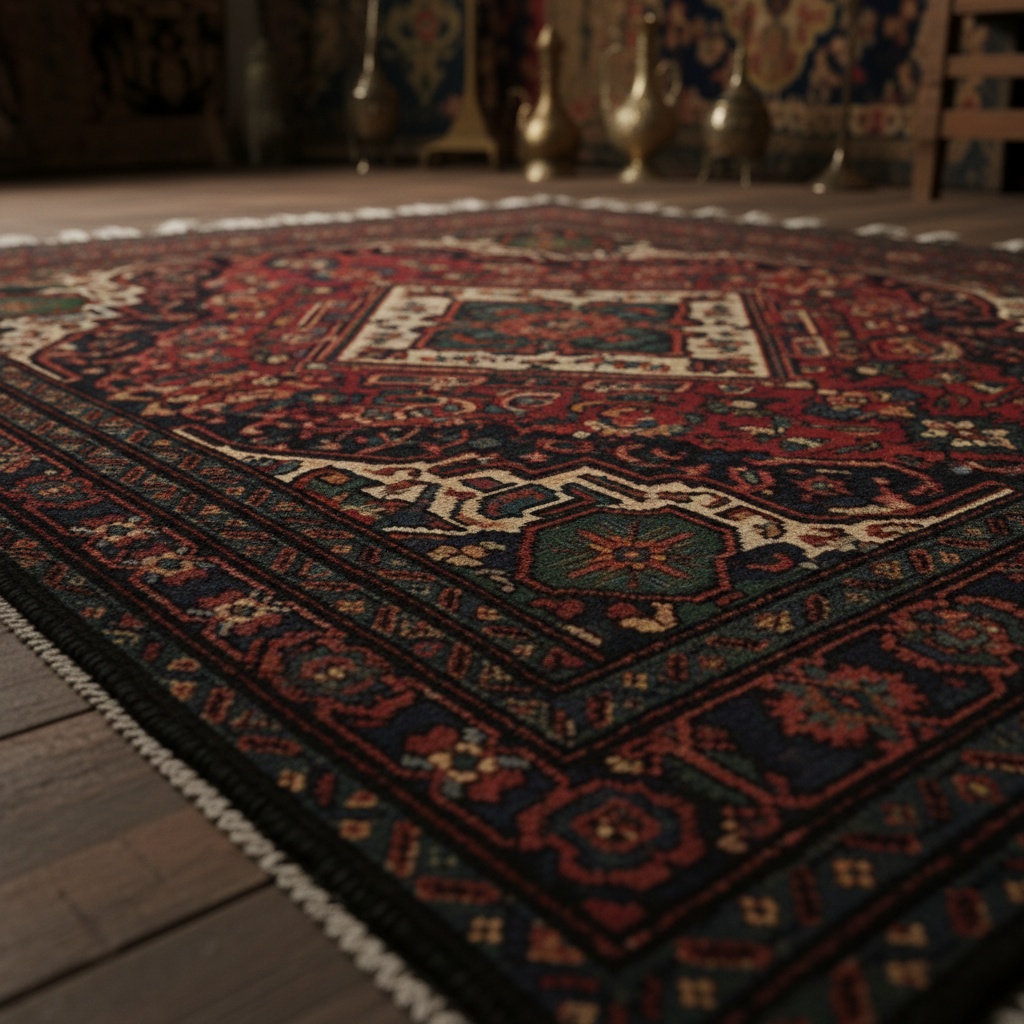
Deeply saturated colors including black in a traditional rug pattern.
Persian, Turkish, Caucasian, Central Asian Symbolism
- Persian Rugs — Why: In Persian weaving traditions, black is rarely used in abundance because it is tied to themes of mourning, destruction, or the void. It most often appears as fine outlines or dark accents in borders, offering definition without overwhelming the field. Its restrained use reflects a cultural hesitation to let somberness dominate beauty.
- Turkish Rugs — Why: Among Anatolian weavers, black is understood as protective. Outlines in dark tones act as a symbolic shield, warding off evil influences and enclosing motifs like medallions or stars. This protective rug motif function gave black a spiritual role beyond aesthetics.
- Caucasian Rugs — Why: In the Caucasus, black represents both mystery and mourning, but it is also embraced as a powerful neutral. Karabagh “black garden” rugs are especially famous for their lush floral patterns set against deep black fields, creating striking contrasts that dramatize the design.
- Central Asian & Baluch Rugs — Why: Here, black is a structural and symbolic color. It can stand for earth, night, or grounding forces. Baluch weavers, for example, often pair dark browns and blacks to highlight red and ivory motifs, combining symbolism with strong graphic impact.
Meaning of Black in Rug Motifs
- Mourning and Loss — Why: In Persian rug symbolism, black stands for grief or destruction, used sparingly to convey solemnity without dominating design.
- Protection Against Evil — Why: Turkish traditions see black outlines as symbolic barriers, encasing motifs to protect the weaver or owner from harm.
- Mystery and Strength — Why: In Caucasian contexts, black suggests resilience and depth, adding dramatic weight to motifs or full rug fields.
- Grounding and Contrast — Why: Central Asian weavers employ black to stabilize patterns, provide structural clarity, and symbolize earth or night.
Modern Interpretations and Trends
In today’s interiors, black rugs are viewed less as carriers of spiritual meaning and more as versatile tools for visual design. While collectors continue to value antique Karabagh black garden rugs or Baluch pieces with rich black accents for their symbolic depth, contemporary designers embrace black primarily for its aesthetic power.
Black Moroccan rugs, often rendered in minimalist tribal patterns, are especially popular in modern interiors for their bold yet versatile appeal. Black’s influence on mood perception carries into this contemporary use: a black area rug can make a spacious room feel intimate, give a sleek and minimalist space more edge, or lend dramatic sophistication to otherwise neutral décor. Designers prize black rug décor for its ability to ground colorful elements or sharpen clean, architectural lines.
The symbolism of black rugs, then, is twofold. Historically, black carried heavy cultural meanings—mourning in Persian pieces, protection in Turkish weaving, strength and mystery in Caucasian rugs, grounding in Central Asian traditions. In modern rug culture, those associations still echo, but black is now equally embraced as a timeless visual statement, bridging tradition with trend.
Regional Styles Featuring Black Rugs
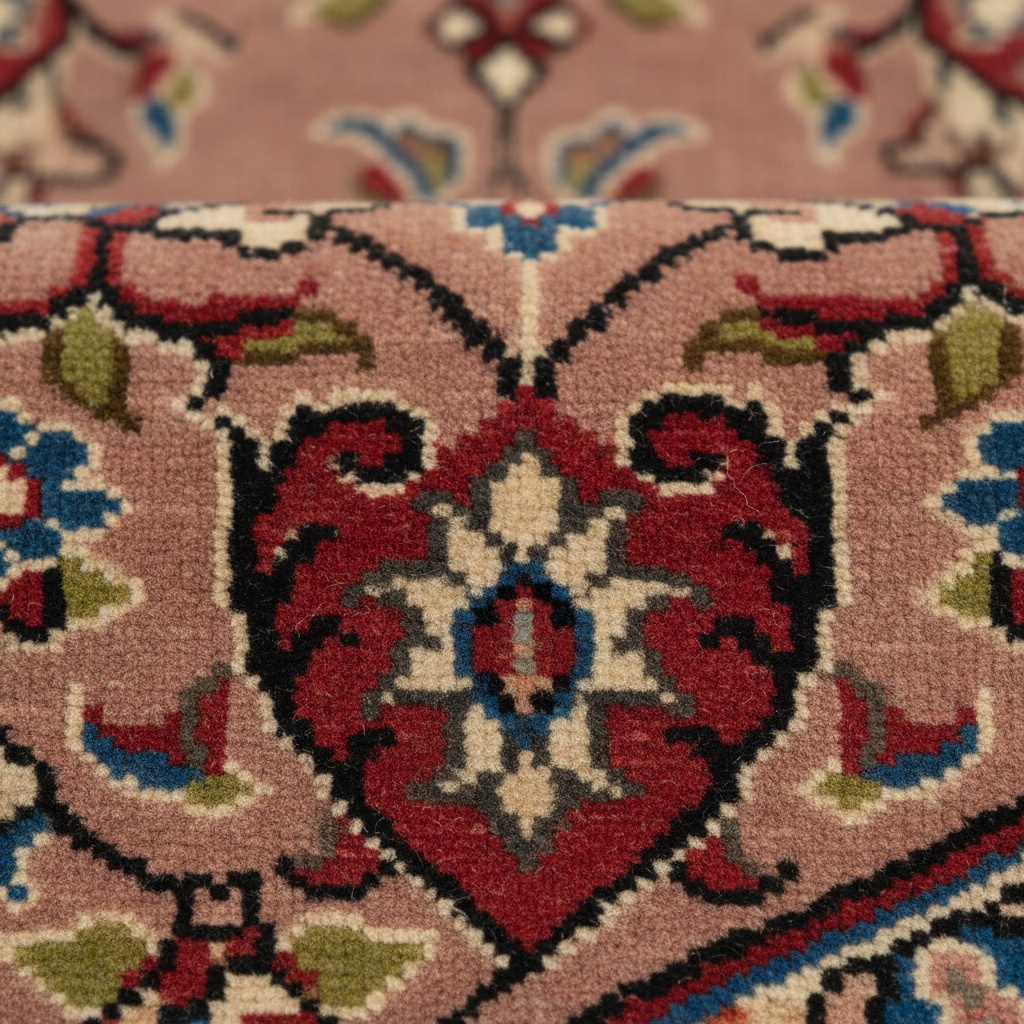
Detail of a traditional pattern showing dark outlines.
Persian Rugs (Black as Accent, Symbolism)
In Persian weaving traditions, black is rarely used as the dominant field color, but it plays a critical role in defining and amplifying motifs. City rugs from Kashan, Isfahan, and Tabriz typically rely on black for outlining floral arabesques, medallions, and borders, ensuring clarity against rich reds, blues, and ivory grounds.
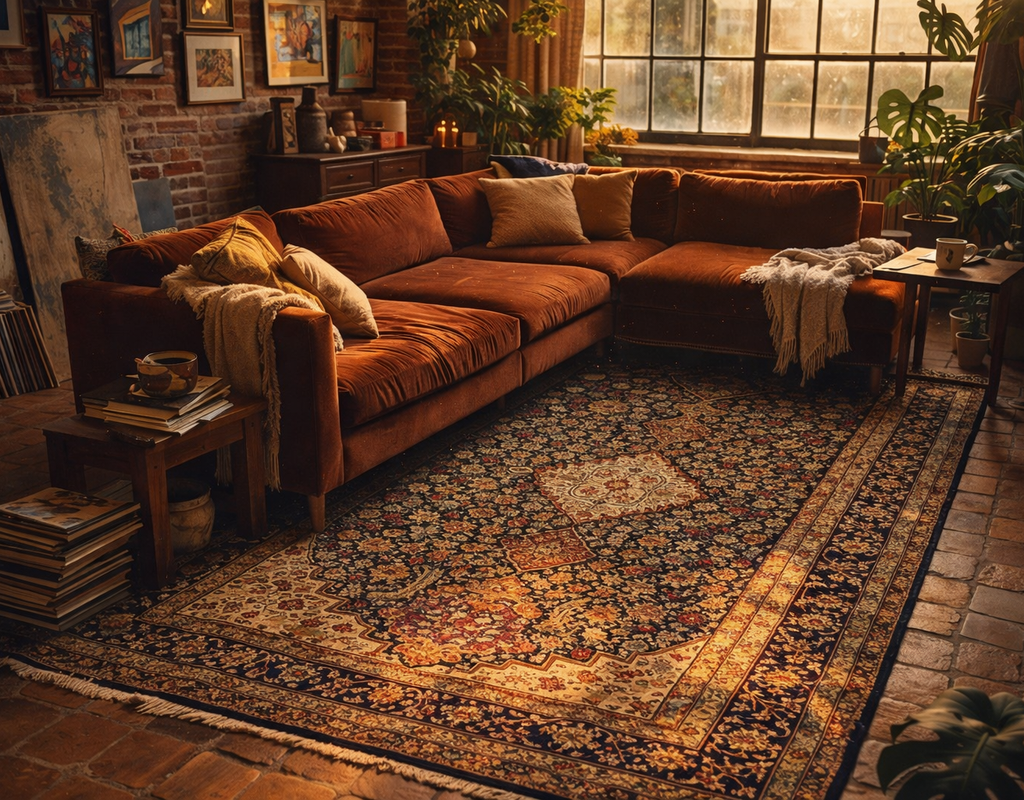
A richly patterned traditional rug anchors this cozy, light-filled living area with its velvet sofa and exposed brick.
Symbolically, black carries associations of mourning and solemnity, so its use has historically been restrained. After 1900, however, some Persian workshops—such as those producing Bakhtiari and Kashan rugs—experimented with full black fields, creating striking pieces that balanced tradition with modern taste. These black Persian rugs stand out as rare examples where symbolism gave way to dramatic aesthetics.
Turkish & Anatolian Rugs (Outlining, Protection)
In Anatolian and Kurdish weaving, black was more than just a visual tool; it was a protective color. Black Anatolian rugs often feature motifs enclosed in dark outlines, a symbolic barrier against evil forces. Regional variations sometimes employed brown-black or charcoal fields, particularly in tribal works where naturally dark wool was readily available. The dual function of black here—both technical, to sharpen contrasts, and spiritual, as a protective device—highlights the cultural depth embedded in these weavings.
Caucasian Rugs (Karabagh, Black Grounds)
Few regional traditions embraced black as boldly as the Caucasian Karabagh workshops. The famous Karabagh black garden rug type features a solid black ground bursting with colorful floral arrangements, a dramatic inversion of Persian garden carpets.
Elsewhere in the Caucasus, black served primarily to outline geometric motifs or mark somber symbolism, particularly in rugs tied to funerary or memorial contexts. The use of a black field, however, remains a hallmark of Karabagh artistry, blending both drama and cultural meaning.
Central & South Asian Rugs (Contrast & Tradition)
In Turkmen and Baluch weaving, black frequently appears as a contrast shade, either in outlining red octagonal guls or as part of the background structure. Many Baluch rugs used natural black wool, producing deep, earthy tones that gave their designs a subdued, almost mysterious atmosphere.
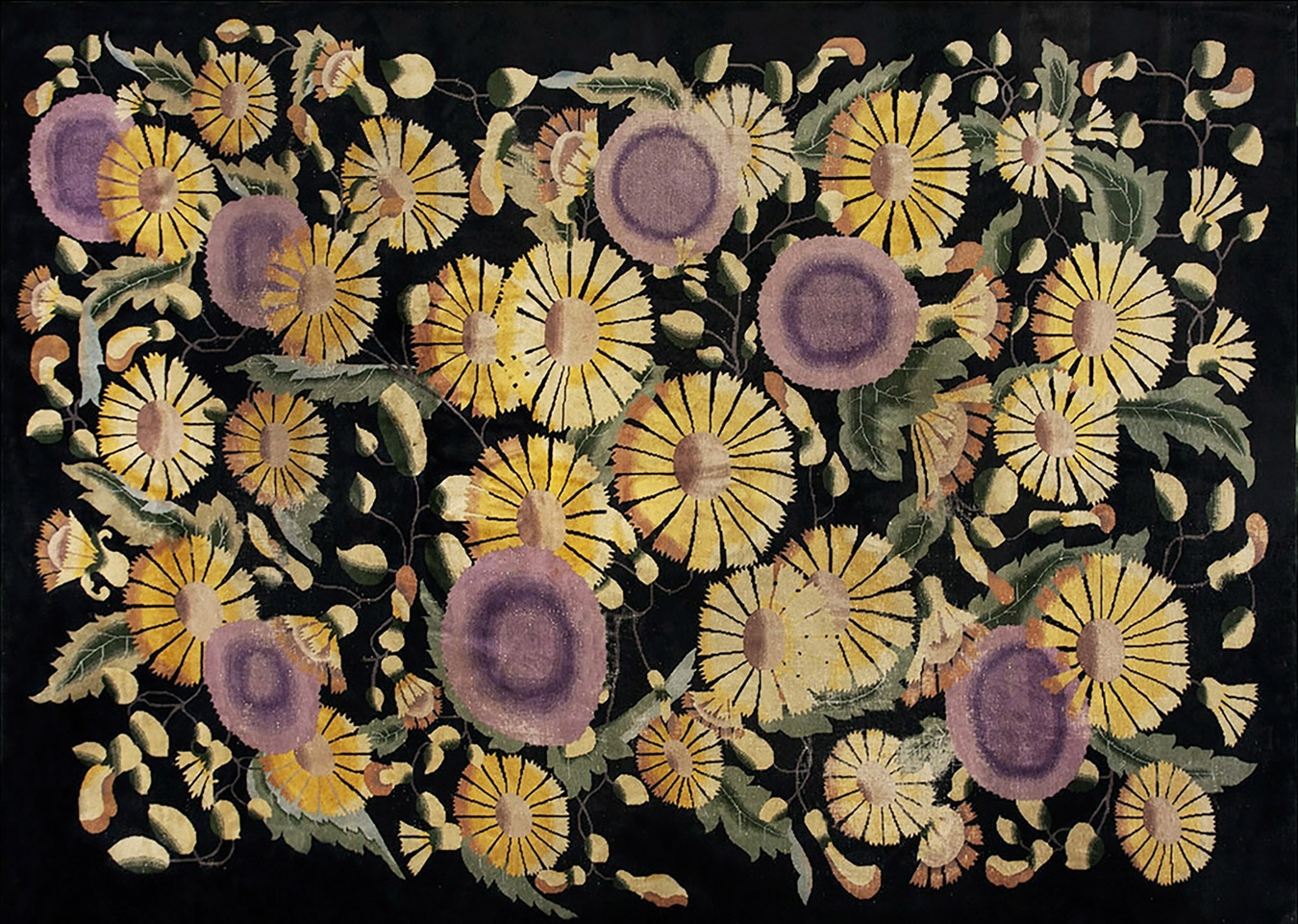
Antique Art Deco Chinese Allover Geometric Knotted Rug – by Rugs On Net
In Central Asia, black could symbolize the earth or night, reinforcing its role as a grounding element in tribal textiles. These traditions illustrate how black served practical needs of contrast while reflecting symbolic ties to the land and cosmos.
Black in Moroccan, Chinese, & Modern Styles
- Moroccan Rugs — Why: Modern Moroccan weaving, especially the Beni Ourain style, often incorporates black in bold geometric patterns on ivory fields. Today, black Moroccan rugs are highly popular in contemporary interiors for their minimalism and strong graphic appeal.
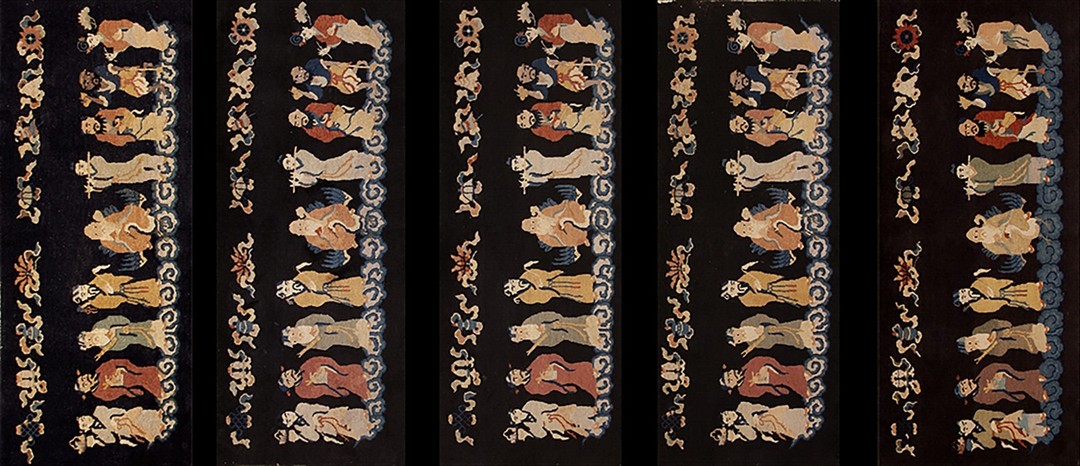
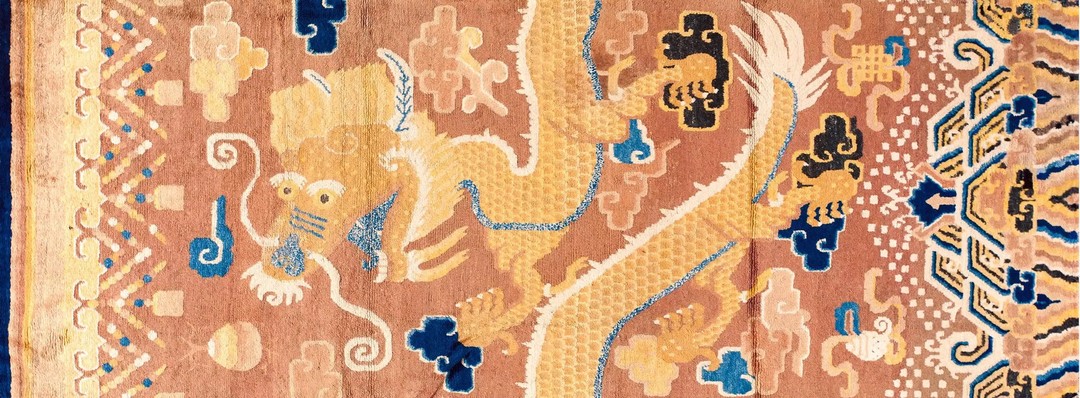
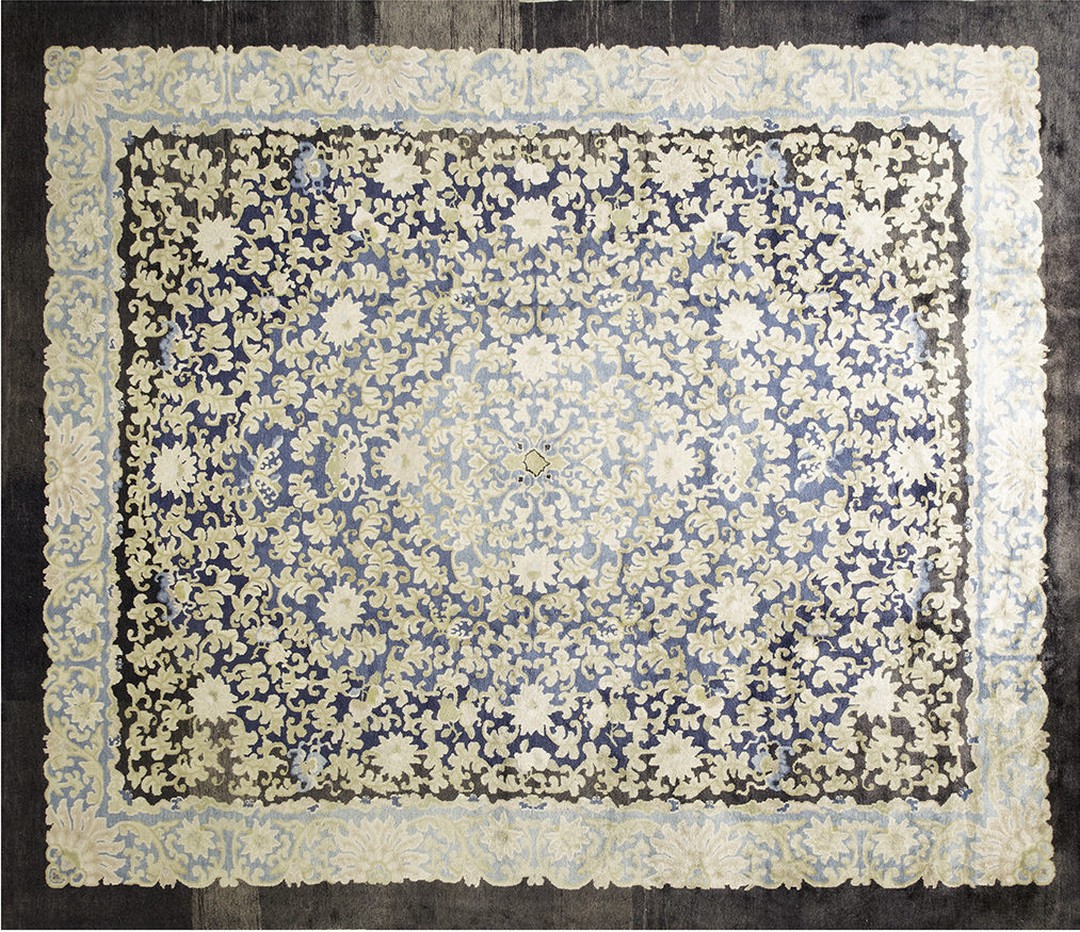
- Chinese Rugs — Why: Antique Chinese rugs occasionally employed black fields to symbolize night, profundity, or infinity. These black field carpets are dramatic and rare, often paired with gold and blue motifs for regal contrast.
- Modern & Art Deco Rugs — Why: The 20th century introduced over-dyed and solid black rugs into fashion, especially in Art Deco and later minimalist design. A black over-dyed rug is an excellent choice when aiming for bold, moody interiors that balance vintage textile structure with modern palette sophistication.
Across all these traditions, black demonstrates remarkable versatility. Whether used sparingly as a protective outline in Turkish and Persian rugs, boldly in Karabagh floral carpets, or as the chic foundation of Moroccan and modern designs, black remains one of the most powerful tools in rug-making.
Its dual role as a technical device and a symbolic color continues to shape both antique traditions and cutting-edge interiors.
Black Rugs in Modern Décor
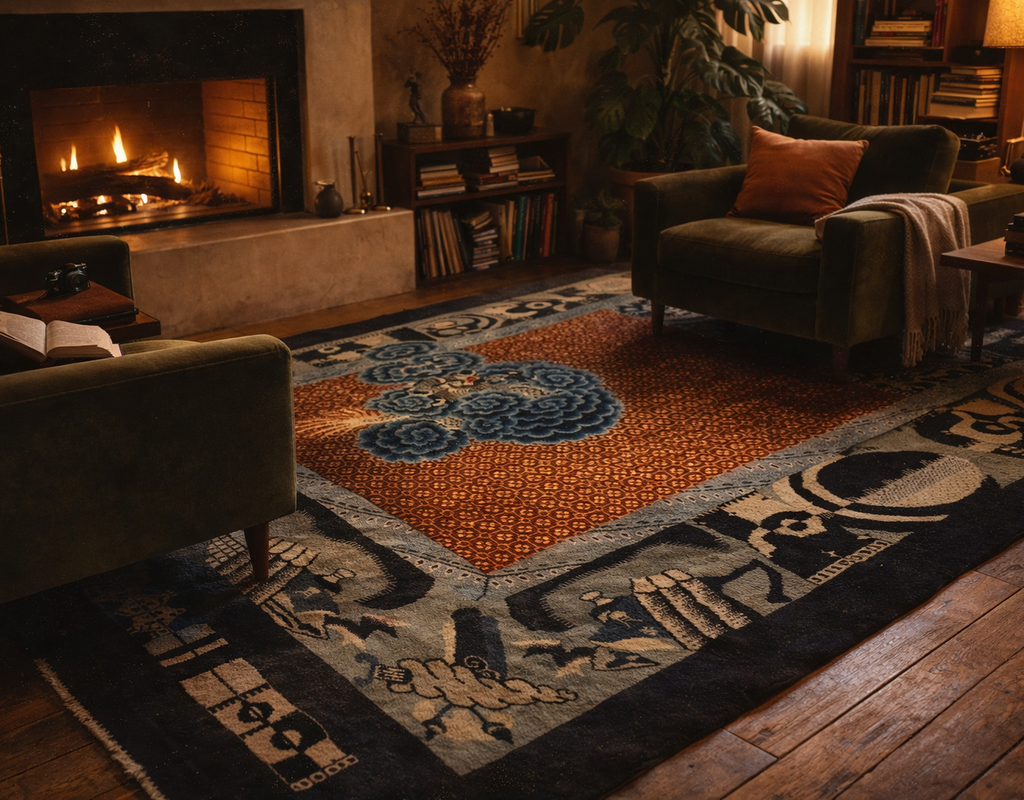
A striking Oriental-style rug anchors this richly textured and warmly lit reading nook by the fireplace.
Why Black Rugs are Versatile
- Contrast and Drama — Why: Black rugs create sharp visual contrast, amplifying the brightness of surrounding colors and adding depth, making them some of the most versatile area rugs in design.
- Neutral Backdrop — Why: Acting as a visual base, black complements nearly any palette, from minimalist neutrals to bold jewel tones.
- Practical Performance — Why: As stain-hiding rugs, black conceals dirt, spills, and wear better than light-colored alternatives, making them ideal for high-traffic areas.
- Adaptable Style — Why: Black rugs transition seamlessly between modern, traditional, industrial, or eclectic interiors, serving equally well as subtle grounding or dramatic centerpiece.
Mood, Light, and Space Effects
A black area rug can transform how a room feels. In a bright, airy space, it introduces intimacy and balance, anchoring floating furniture and preventing the design from feeling scattered.
In minimalist interiors, it brings edge and sophistication, while in eclectic settings it provides a steady base for colorful or patterned furnishings. Mood-wise, black communicates elegance, strength, and drama.
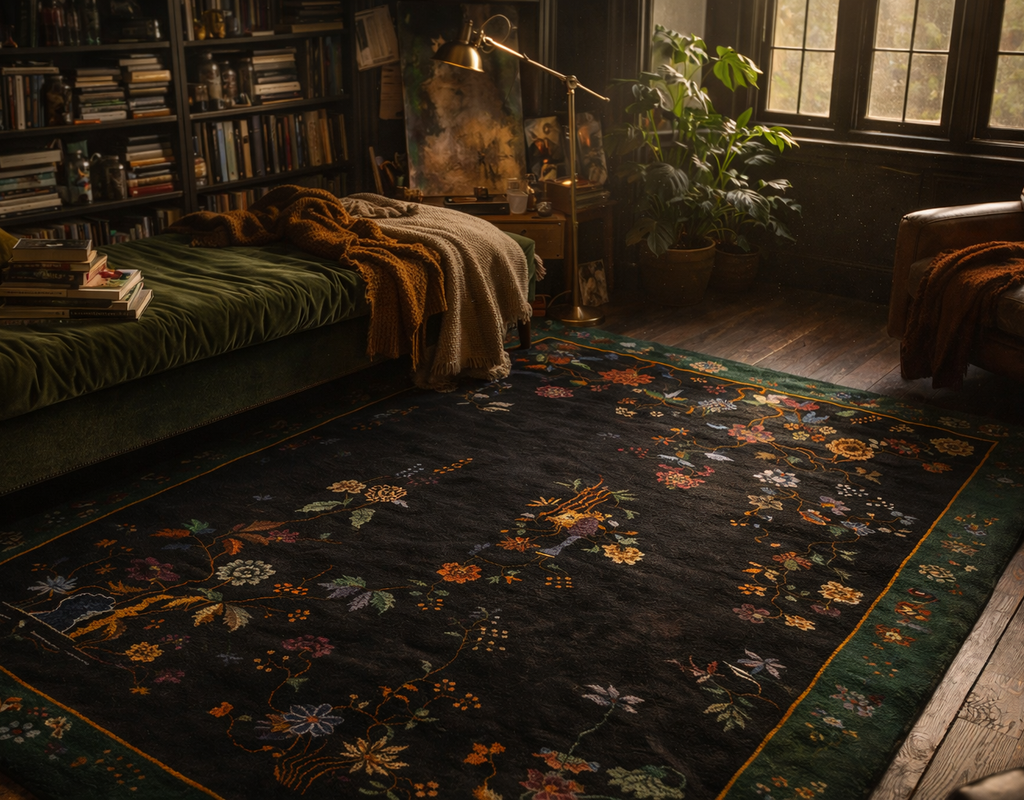
A richly patterned oriental rug anchors the dark, cozy aesthetic of this eclectic reading nook.
It can make large spaces feel cozier or add gallery-like refinement to modern décor. At the same time, designers note that in dust-prone rooms, black rugs can highlight lint and particles more readily, requiring consistent upkeep despite their stain-hiding advantages.
Best Color Pairings & Styling Ideas
- White & Cream — Why: Classic pairing for timeless contrast; ideal for modern monochrome interiors.
- Gold & Metallics — Why: Accents of gold or brass against a black rug evoke luxury and warmth.
- Jewel Tones (Emerald, Ruby, Sapphire) — Why: Rich hues pop vividly against a black foundation, enhancing vibrancy.
- Natural Neutrals — Why: Cream, beige, and taupe layered over black balance boldness with softness.
- Bold Patterns — Why: Striped or geometric designs on a black rug color pairing scheme feel contemporary and striking.
When decorating with a black rug in a living room, consider pairing it with lighter upholstery to avoid heaviness, then add metallic or colorful accents for dimension. In bedrooms, black rugs can balance soft linens and create a grounding effect under a bedframe.
Layering & Defining Spaces with Black Rugs
Black rugs excel in open-concept homes where space needs visual organization. A black rug in an open space helps define zones—such as separating dining from living areas—without the need for walls or dividers. In smaller rooms, it can anchor a central furniture group and provide structure. Layering is another powerful technique: placing a patterned or textured rug on top of a solid black base enhances depth and richness.
This method allows playful combinations without overwhelming the room, as the black rug serves as a stabilizing anchor. Black rugs are versatile in décor because they combine drama, neutrality, and practicality. A black area rug hides stains better than lighter rugs, though it may reveal dust in high-shedding environments.
The best color pairings include white, cream, gold, jewel tones, and neutrals, depending on the desired style. Layering with a black base rug does indeed anchor bold patterns, while using black in open spaces effectively defines zones. Decorating with a black rug in a living room works best when balancing dark tones with light or metallic accents.
Finally, black rugs influence mood perception—adding coziness, elegance, or edge depending on placement and styling. In modern décor, black rugs are not just stylish but strategic. They offer grounding, versatility, and drama, making them a designer’s secret weapon for interiors that feel complete, balanced, and timeless.
Buying, Caring for, and Preserving Black Rugs
Preventing Fading and Corrosion
- Limit Sunlight Exposure — Why: Direct UV light is the primary cause of black rug fading; using curtains, blinds, or UV films helps preserve depth of color.
- Rotate Regularly — Why: Shifting rug position distributes wear and sunlight exposure, preventing uneven fading.
- Avoid Moisture and Iron Reactions — Why: Antique iron-tannin blacks are prone to corrosion; excess humidity or harsh cleaners can accelerate fiber breakdown.
- Test Colorfastness — Why: Even modern synthetic blacks may bleed if poorly set; testing with a damp cloth before full cleaning prevents damage.
Cleaning and Maintenance (Best Practices)
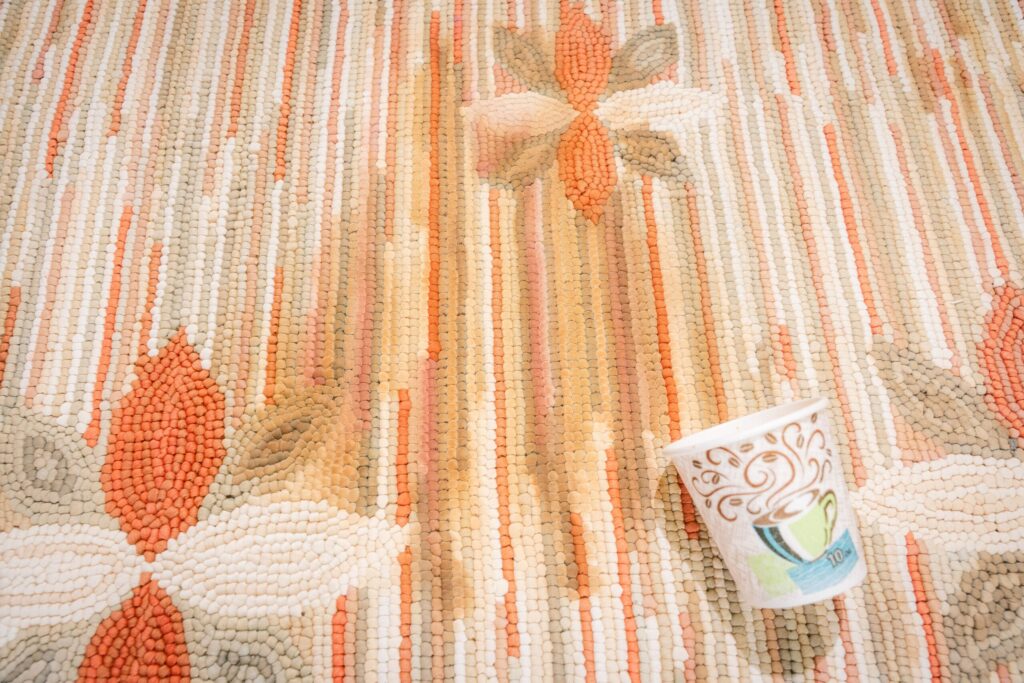
Close-up view of a tipped paper coffee cup resting on a handwoven wool rug, highlighting the rug’s dense pile, subtle color variations, and traditional geometric motifs in warm neutral and terracotta tones.
Proper black rug cleaning is essential for both aesthetics and preservation. For wool rugs, vacuum gently with a brushless attachment to avoid pulling fibers. Spot clean using pH-neutral products and blotting, never scrubbing.
Excess water should be avoided, as moisture can leach dyes or leave pale watermarks. For deep cleaning, professional wool-safe services are strongly recommended, particularly for antiques or hand-knotted rugs. Regular care not only protects the fibers but also ensures black tones remain rich and vibrant.
Common Aging Patterns: Flatweave vs Pile Rugs

A detailed focus on the intricate, vivid colors and geometric weave of a traditional textile rug.
- Flatweave Black Rugs — Why: A black flatweave rug tends to age evenly, as its surface lacks pile height to corrode or recede. The color lightens gradually but maintains overall uniformity.
- Pile Black Rugs — Why: In pile constructions, iron-tannin dyed areas often corrode, producing a recessed or “embossed” effect where the black recedes below surrounding motifs. While prized by collectors as a sign of authenticity, it represents significant structural wear.
Black Rug Value and Resale
The value of black rugs depends heavily on condition and type. Antique black rugs, especially Karabagh black garden carpets or Persian rugs with black fields, can be highly prized in the collectors’ market. Their rarity and dramatic design elevate resale potential, provided the black pile is well-preserved. In contrast, modern designer black rugs are gaining popularity in contemporary décor, and while they lack centuries of provenance, their rising demand contributes to strong resale performance. A black Persian rug in good condition typically retains higher resale value than a plain modern black field carpet, but both appeal to distinct markets.
Choosing the Right Black Rug for Your Home
- High-Traffic Areas — Why: Choose synthetic-dyed or dark wool black rugs that resist fading and conceal stains effectively.
- Low-Traffic or Showcase Rooms — Why: Antique or fine black rugs can shine in spaces where preservation outweighs wear.
- Open-Concept Homes — Why: A black rug can help define zones, grounding furniture layouts without visual clutter.
- Dust-Prone Rooms — Why: Black rugs can highlight lint and dust; in such spaces, regular cleaning is necessary, or lighter-toned rugs may be preferable.
- Decor Goals — Why: Black rugs can add intimacy, drama, or contemporary edge—buyers should consider mood as much as function.
To prevent a black rug from fading in sunlight, avoid direct exposure, rotate rugs, and use UV protection on windows. The safest cleaning methods for black wool rugs include gentle vacuuming, pH-neutral spot cleaners, and professional wool-safe services. Compared to pile rugs, flatweave black rugs age more evenly, while pile constructions often show recessed “corrosive black” areas.
Black Persian rug resale values are typically higher than modern black rugs due to heritage and rarity. While black hides stains, dust-prone rooms may highlight particles on dark surfaces, requiring more upkeep. Conserving and preserving black rugs requires specialized knowledge.
From antique corrosive blacks to modern synthetics, their longevity depends on careful placement, cleaning, and respect for the chemistry behind the color. Buyers who weigh care needs alongside style and symbolism will enjoy rugs that remain both practical and powerful for decades.
Explore a Few of Our Favorite Black Rugs
FAQ
- What’s a smart maintenance routine for black rugs?
Vacuum weekly (daily in busy areas), spot-clean immediately, and rotate the black rug every 3–6 months to even wear and fading.
- Are black-and-white checkered rugs risky for dye transfer?
Possibly—dark dyes can migrate when wet. Test for colorfastness and avoid over-wetting; seek professional cleaning for natural fibers.
- Will a black rug show footprints and vacuum marks?
Smooth, dense piles (e.g., Saxony/velvet) show tracking. Choose textured, loop, or low-pile black rugs to reduce visible marks.
- How much should I budget for an 8x10 black rug?
Synthetic black rugs often run about \$100–\$300; wool typically ranges \$400–\$2,000+. Hand-knotted or designer pieces can exceed \$5,000.
- Can I layer a black rug for a lighter look?
Yes—layer a smaller patterned or natural-fiber rug atop a black rug. It softens the visual weight and adds texture.
- Do black rugs get hotter outdoors?
Dark surfaces absorb more sun, so a black outdoor rug can feel warmer. Place in shade or use sandals on sun-baked patios.
- Are black wool rugs a good choice for kids and babies?
Yes—wool is durable and naturally soil-resistant. Vacuum with a HEPA filter and spot-clean promptly to minimize dust exposure.
- How do I style a black rug without darkening the room?
Pair the black rug with light walls, pale upholstery, and reflective accents. Add warm wood or brass to balance contrast.
- Are washable black rugs truly colorfast?
It varies by make. Wash cold on gentle, avoid bleach, line-dry, and colorfast-test an inconspicuous corner before the first wash.
- Do black rugs hide stains better than light rugs?
Some spills hide, but dust, lint, and footprints show more on black rugs. Patterns help disguise everyday marks between cleanings.
- How do I remove winter salt stains from a black rug?
Vacuum loose crystals, then blot with a 1:1 white-vinegar and warm-water mix. Rinse with clean water and blot dry; test first for colorfastness.
- Are black shag rugs good for dining rooms?
Not ideal—crumbs embed in high pile. Choose a flatweave or low-pile black rug so chairs glide and cleanup is quick.
- Which rug pad is safest under black rugs on hardwood or vinyl?
Use felt or natural-rubber pads on hardwood; avoid rubber/latex on vinyl/LVP, which can discolor floors. Trim pads 1–2 inches smaller than the rug.
- Can a black rug bleed dye during cleaning?
It can if not colorfast. Always blot-test with a white cloth first and avoid high-alkaline cleaners on wool or natural fibers.
- Are black rugs safe over radiant floor heating?
Yes, if you use breathable rugs and low-tog pads. Wool, cotton, and jute black rugs generally transmit heat better than thick foam-backed options.
- Do black rugs shed more, or just show it?
Shedding depends on fiber, but black rugs make fuzz more visible. New wool rugs often shed for the first few months, then settle.
- What size black rug is best for a living room?
Common choices are 8×10 or 9×12 black rugs. Leave roughly 18–24 inches of floor around the perimeter for proportion.
- What size black rug works under a queen bed?
An 8×10 black rug fits most queen setups so both sides land on soft flooring. In tighter rooms, a 6×9 can work.
- Will a black rug make my room look smaller?
It can feel cozier if the space lacks contrast. Balance a black rug with light walls, mirrors, or metallic accents to keep the room airy.
- What materials make the best black outdoor rugs?
Solution-dyed polypropylene and polyester resist UV, moisture, and stains. They’re easy to hose off and dry quickly after rain.
- Do black rugs fade faster in sunlight?
Dark dyes make fading more noticeable. Rotate the black rug every 3–6 months and use UV-filter shades or film near sunny windows.
- How should I vacuum a black wool rug?
Use suction only or a beater bar set high/off to protect fibers. Vacuum with the nap, then against it, to lift dulling dust.
- Will a robot vacuum avoid my black rug?
Many models misread very dark rugs as “cliffs.” Check your model’s settings or boundaries and test a small area before scheduling whole-home runs.
- Do black rugs show dust and lint more than lighter rugs?
Usually yes; light debris contrasts against a black rug. Plan on quick touch-ups and vacuuming 2–3 times weekly in high-traffic areas.
- Are black rugs practical for homes with pets?
Yes, but they highlight light fur and lint. Choose low-pile or patterned black rugs and vacuum often; a lint roller or rubber pet-hair broom helps between cleanings.