
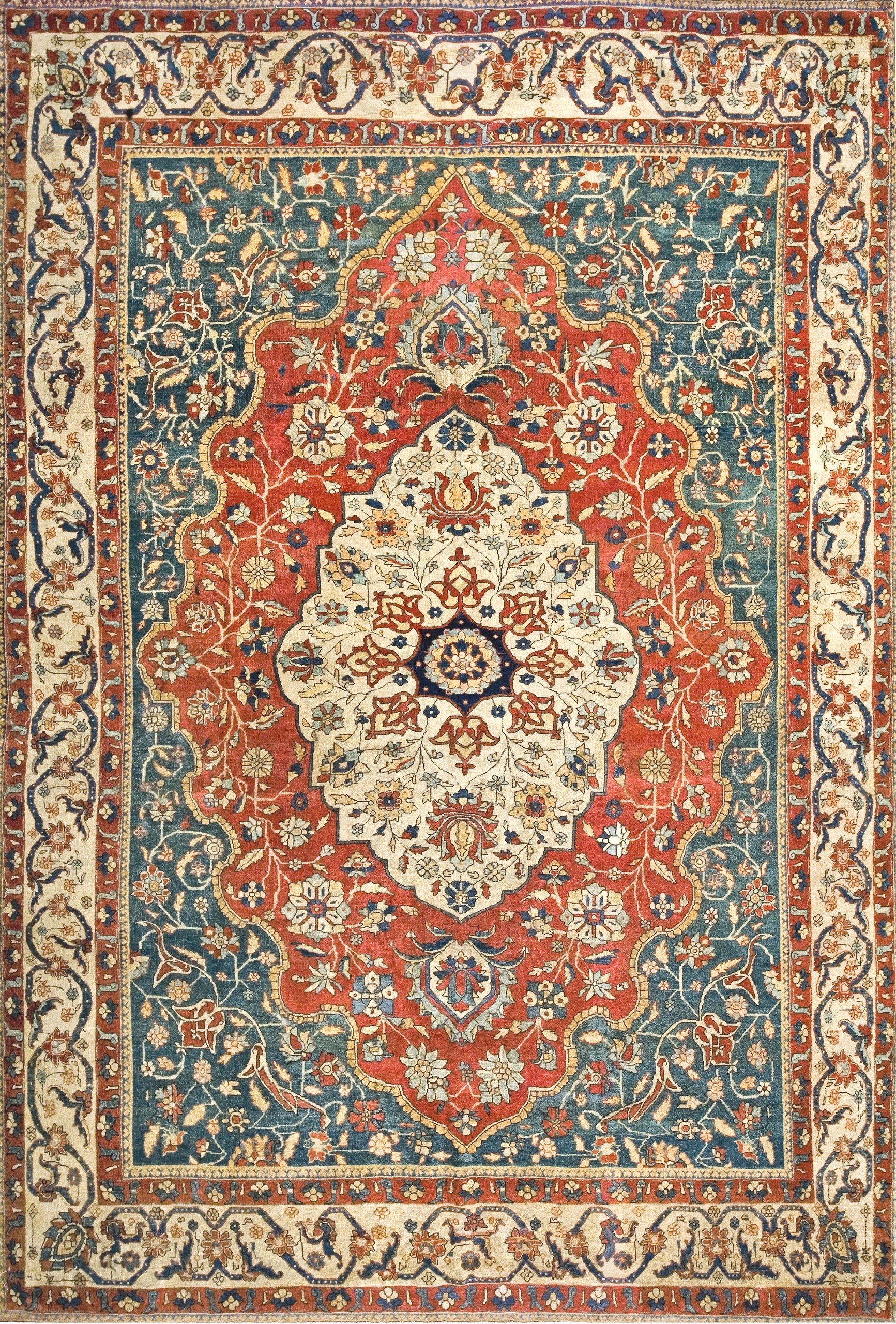
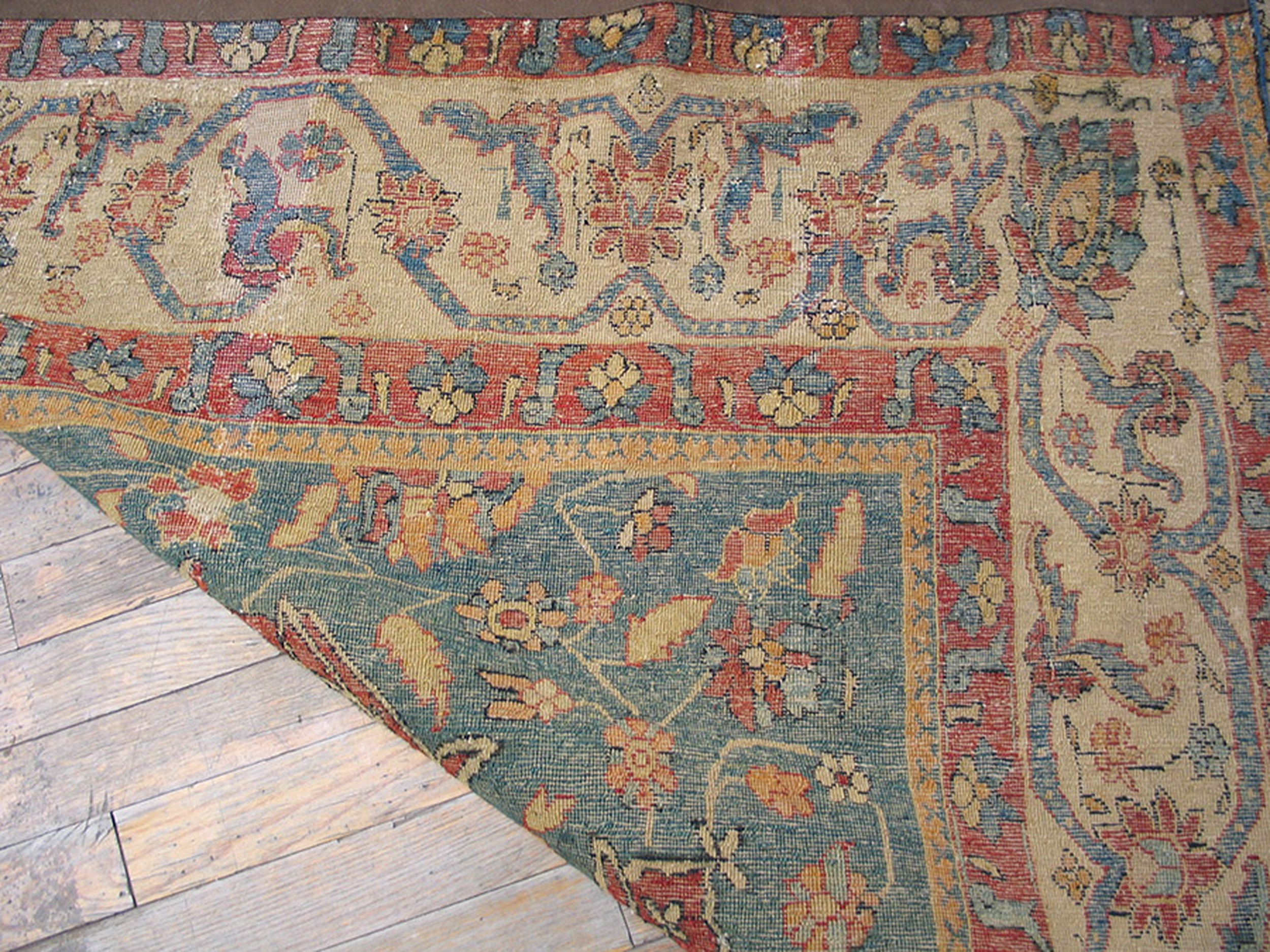
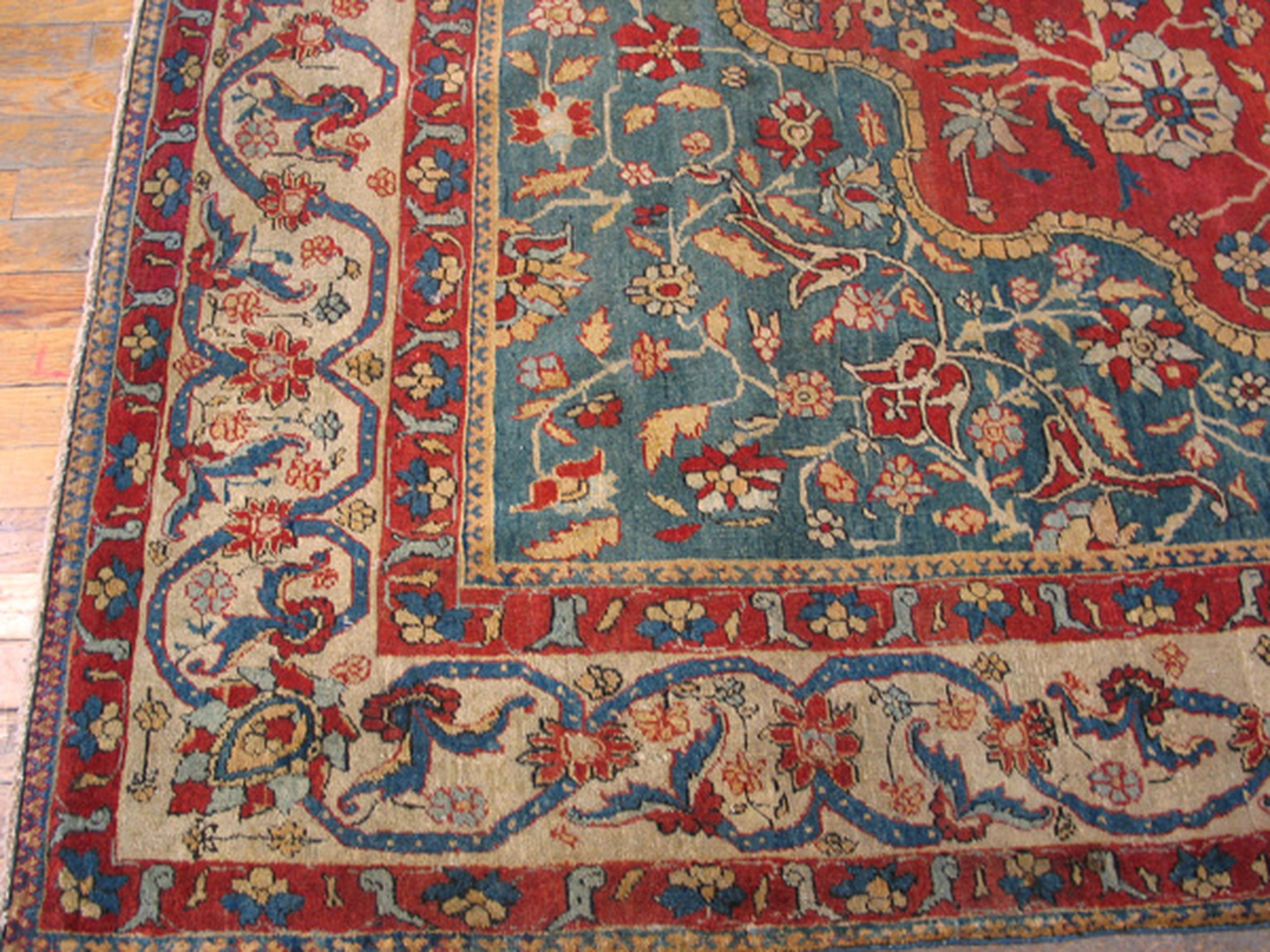
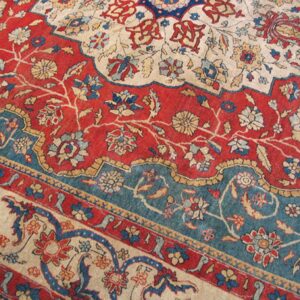
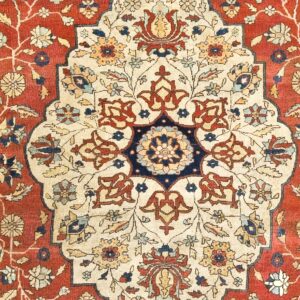
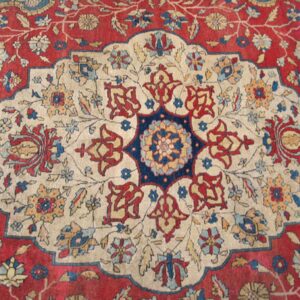
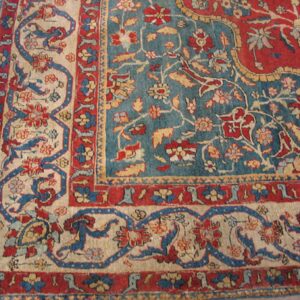
This magnificent late nineteenth-century Persian Sarouk rug is a quintessential exemplar of the “Classical” period of Sarouk weaving, representing the height of artistic production in the Markazi province before the commercial “American Sarouk” boom of the early 20th century. Historically, these Persian rugs were the favored choice of the Persian elite and Western connoisseurs alike, prized for their exceptional structural integrity and their sophisticated, scholarly interpretations of Safavid-era designs. This specific antique area rug is defined by its “classic traditional” composition, featuring a powerful central medallion that serves as the heart of a perfectly balanced, symmetrical universe.
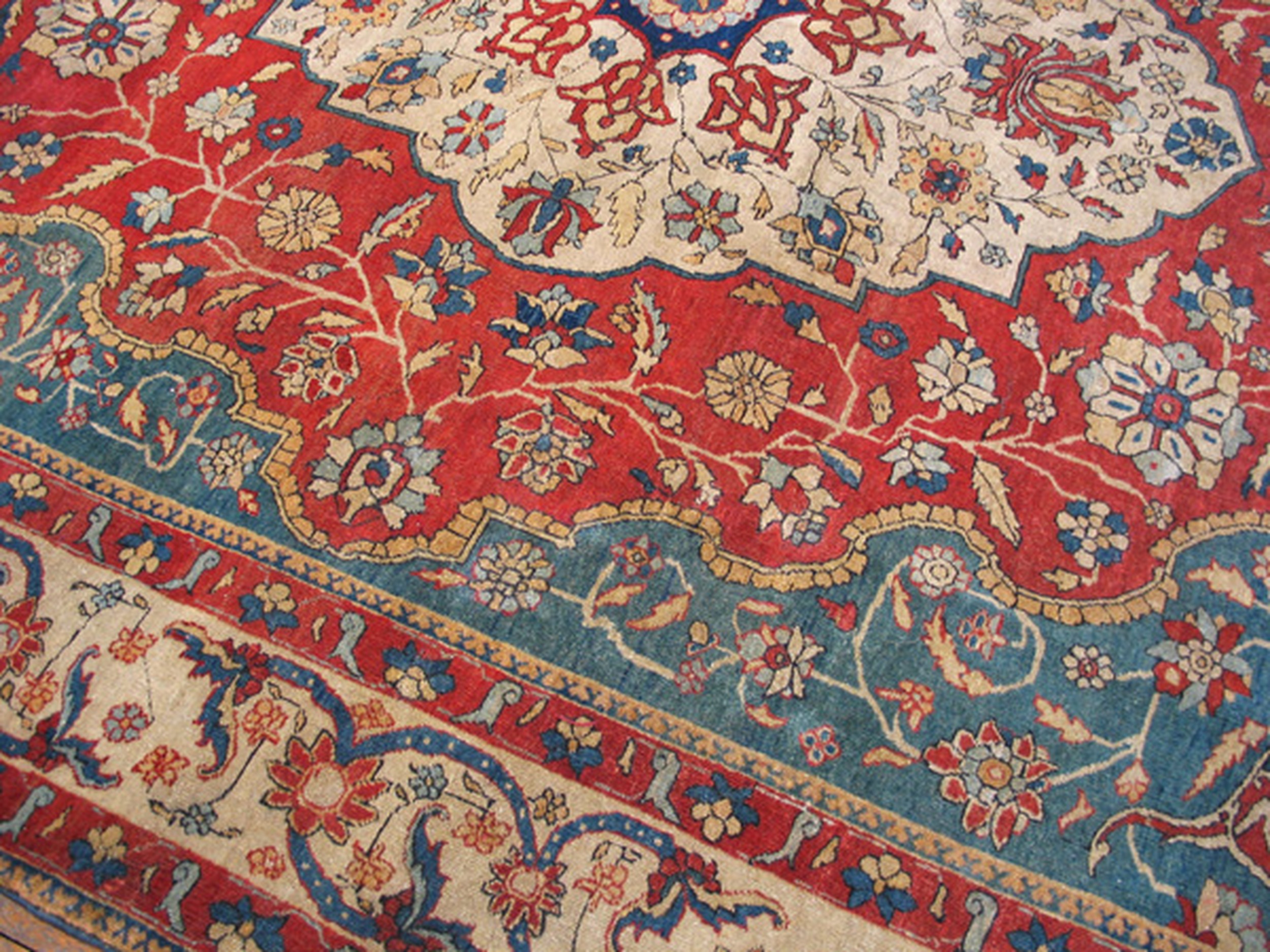
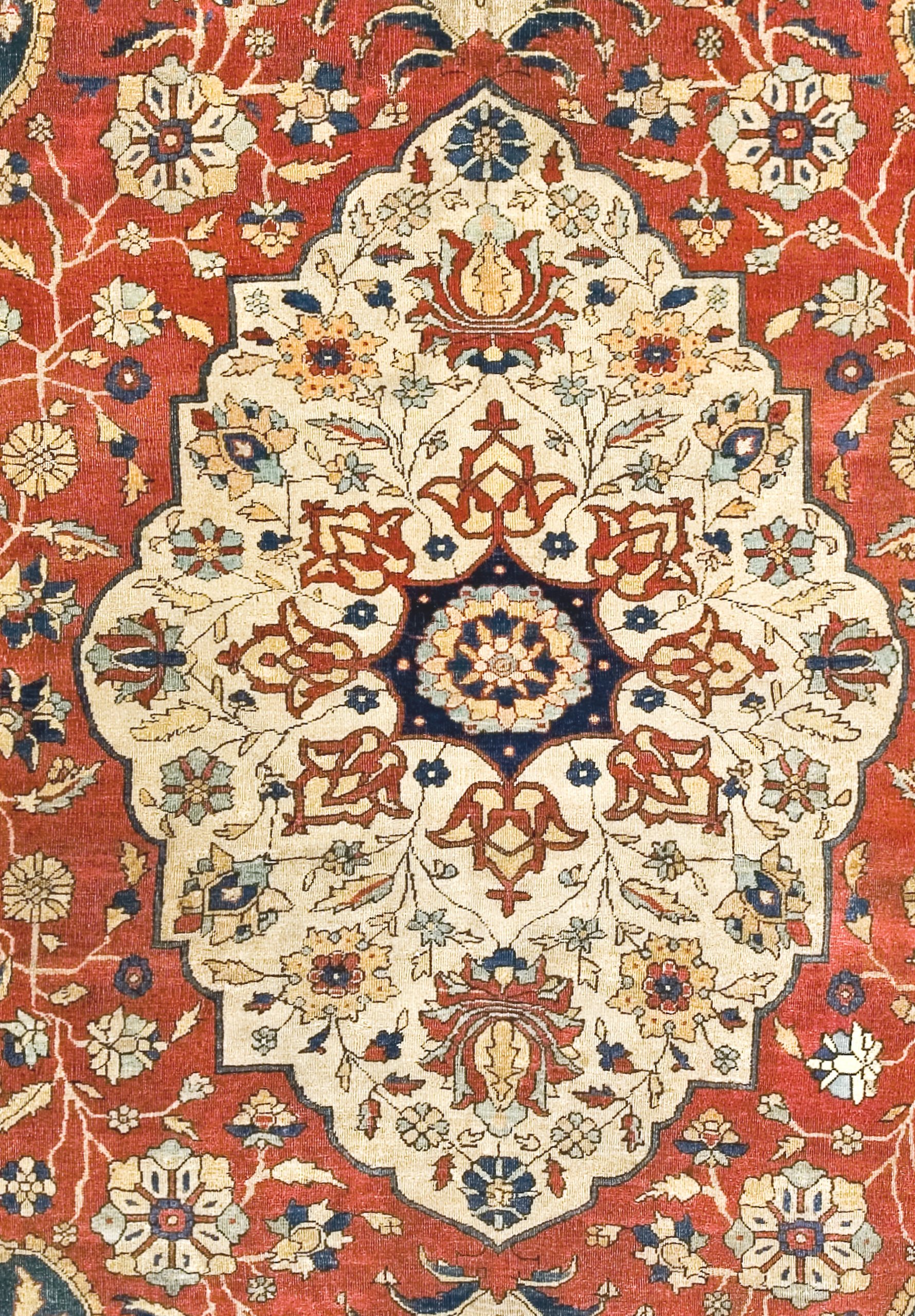
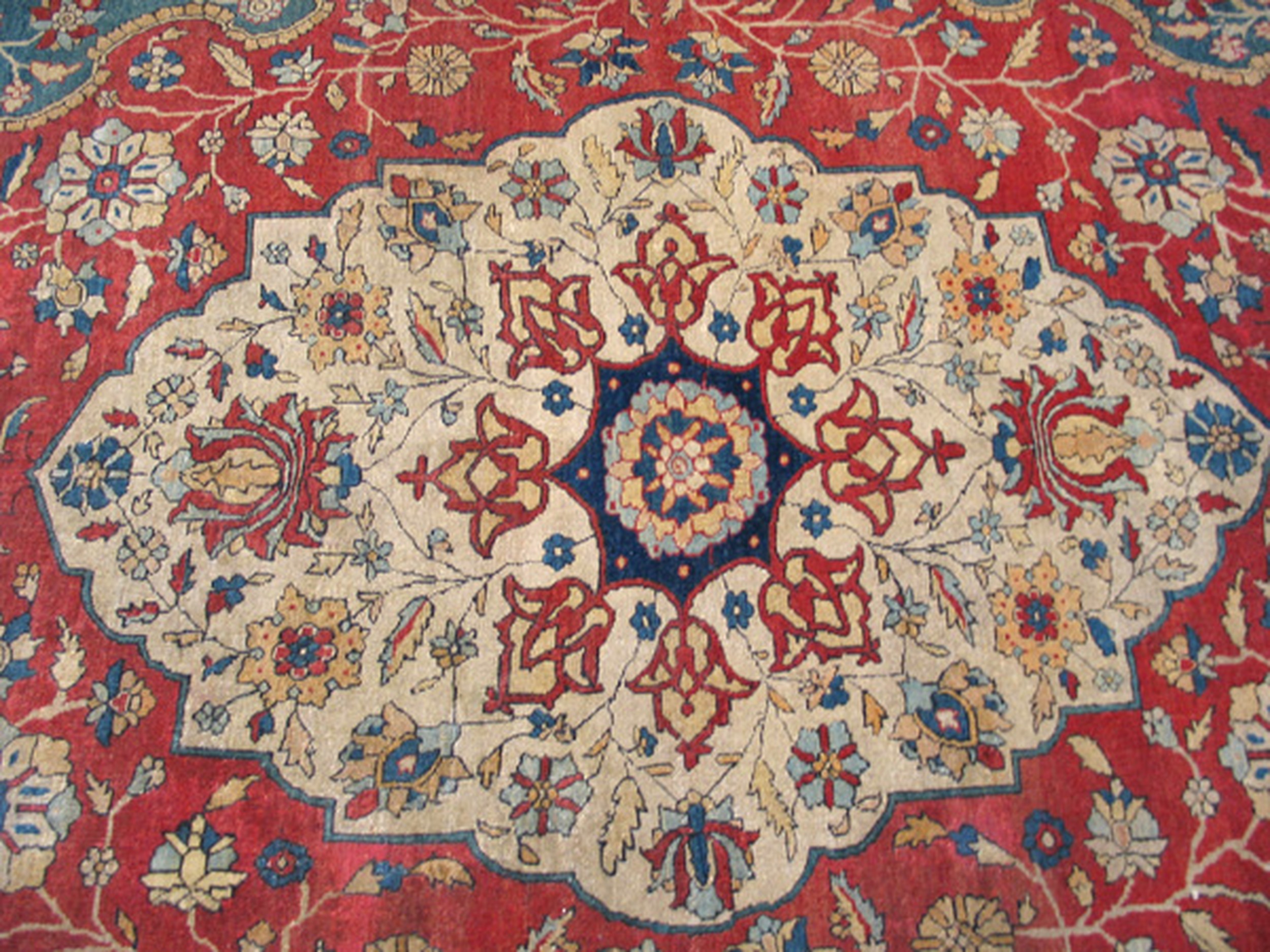
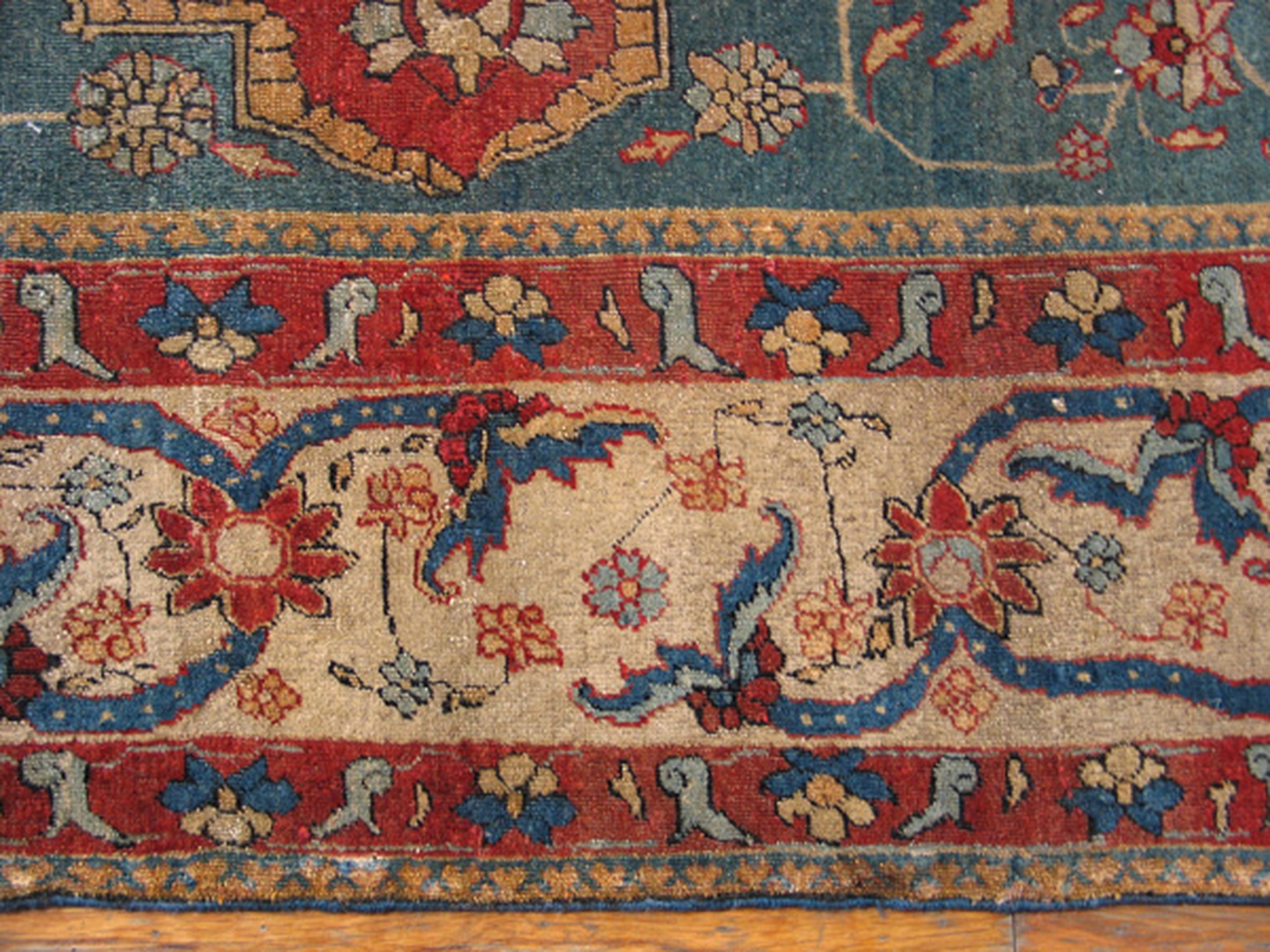
The design is anchored by a complex, multi-lobed floral medallion that radiates outward into a field of densely packed botanical motifs. Unlike the later, more spaced-out floral sprays of the 1920s, this 19th-century piece features an intricate “all-over” density, where scrolling vines, delicate rosettes, and palmettes are interwoven with mathematical precision. The palette is a masterclass in the use of natural vegetable dyes: the deep, lustrous madder reds and midnight indigos are softened by accents of cream, sage green, and ochre. These colors have aged into a rich, multi-dimensional patina, a hallmark of the high-quality, lanolin-rich wool used in the Sarouk workshops during this “Masterpiece” era.
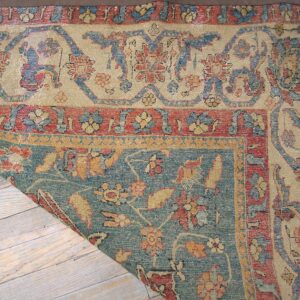
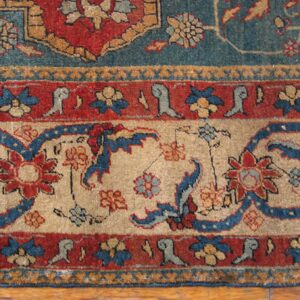
Technically, antique Persian Sarouk rugs of this period are renowned for their “velvety” handle and substantial weight. The fine, tight weave allows for the “razor-sharp” definition of the floral patterns, creating a painterly effect that mimics the detail of a Persian miniature. The field is framed by a stately primary border—likely featuring the classic “Herati” or “Samovar” pattern—which provides a sense of architectural permanence and anchors the exuberant energy of the central medallion. To possess a late 19th-century Sarouk of this caliber is to hold a monument to the peak of Persian textile engineering; it is a work that bridges the gap between the rugged durability of a village rug and the courtly elegance of the great city looms.