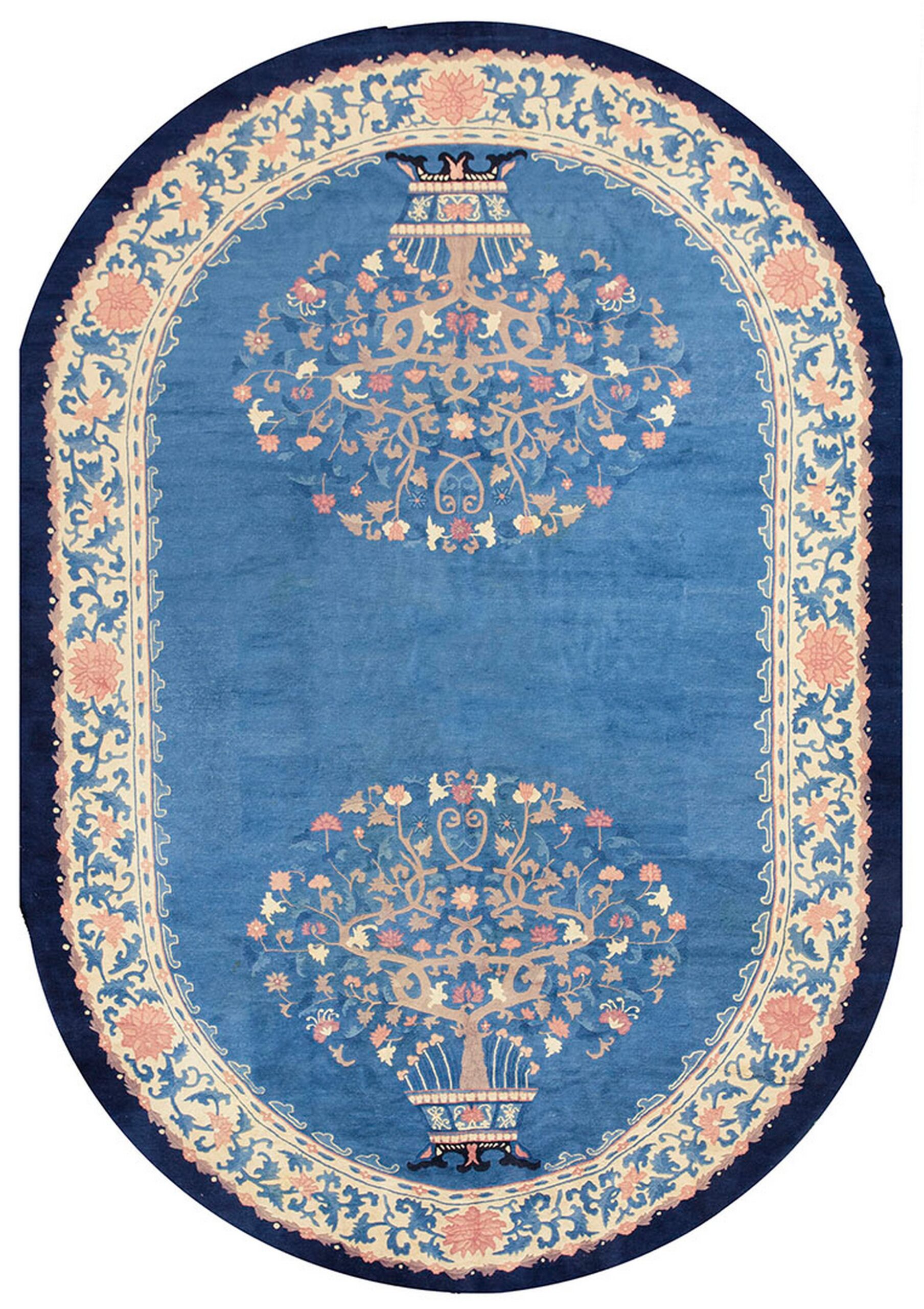
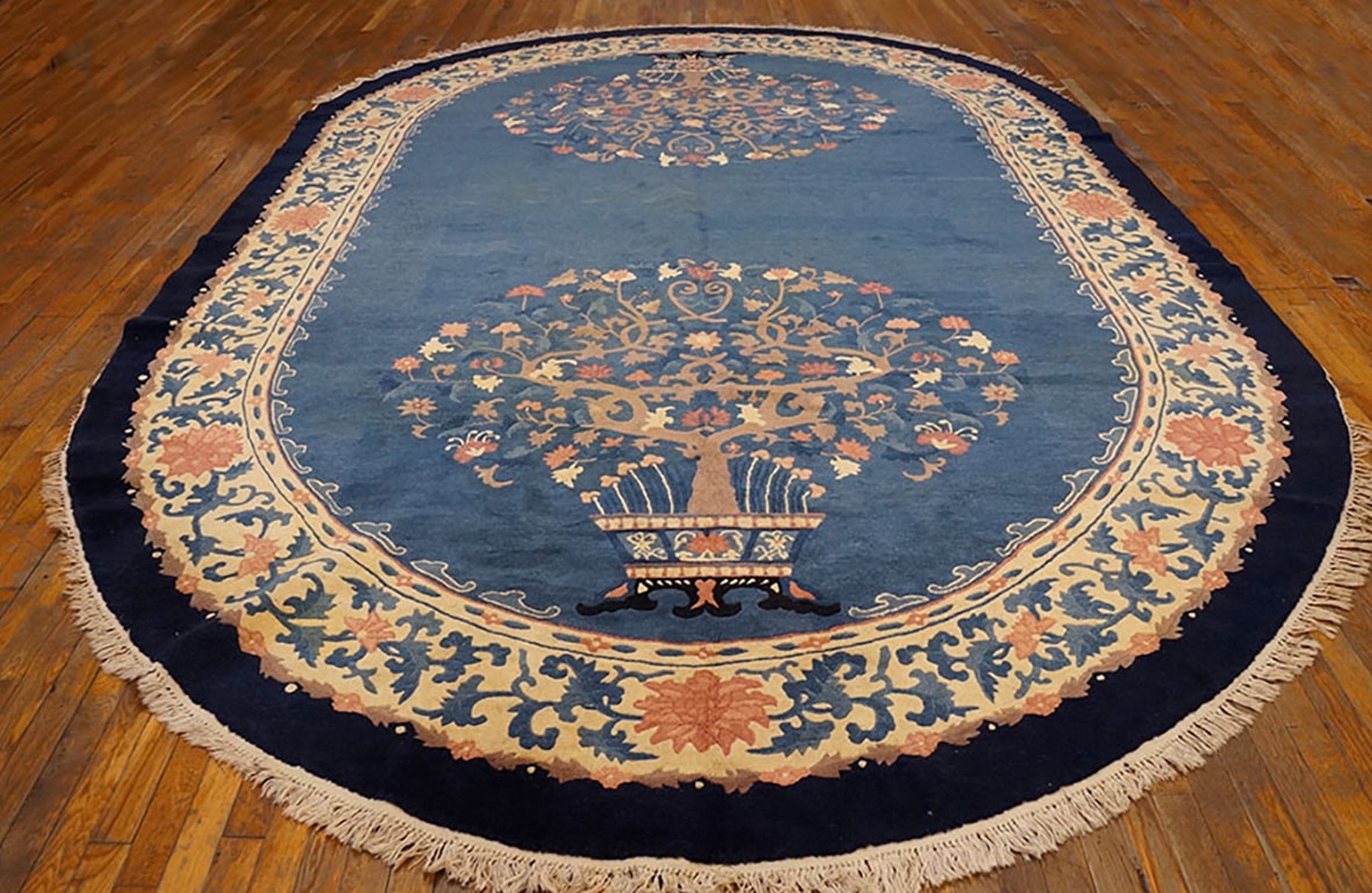
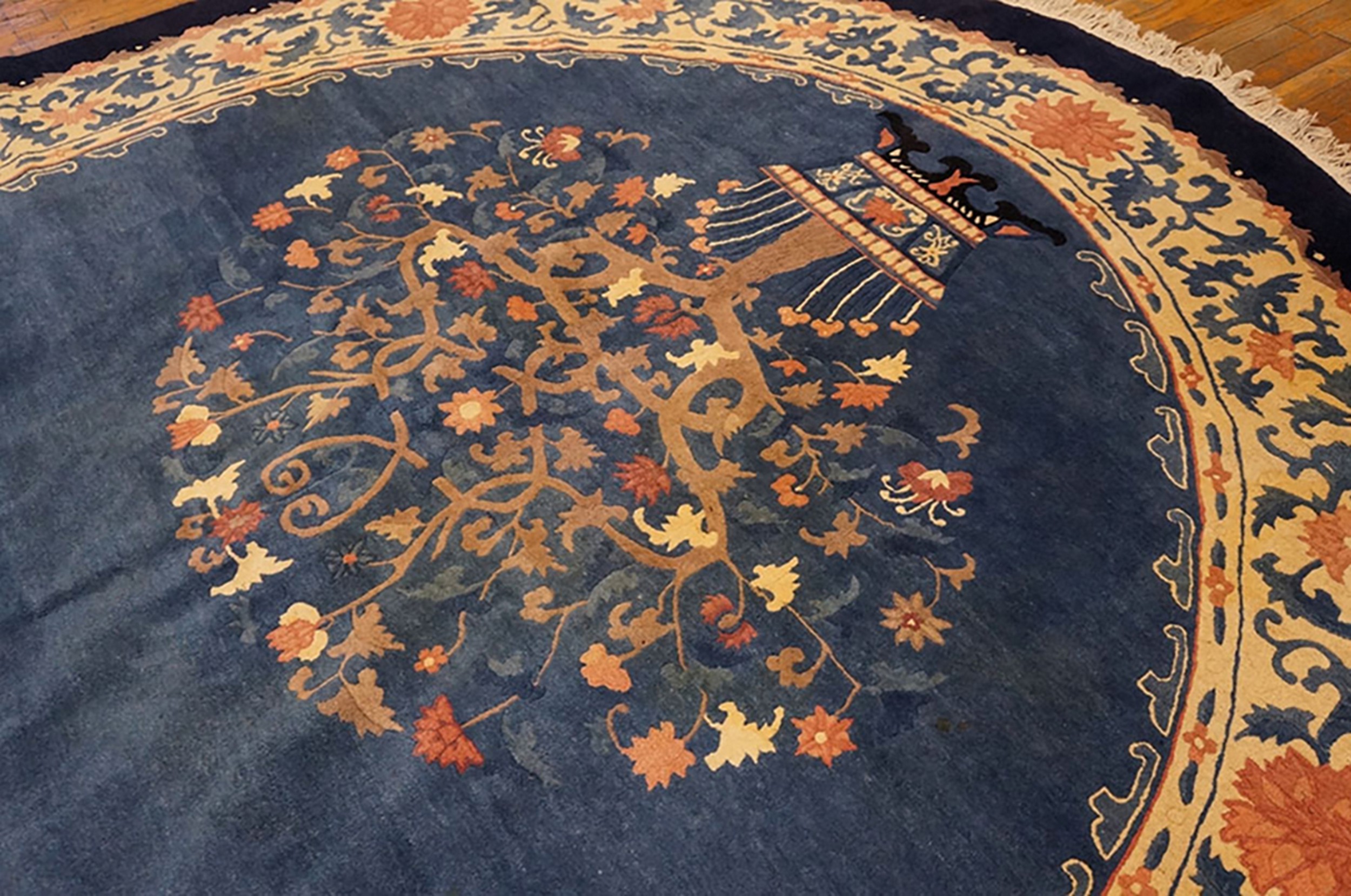
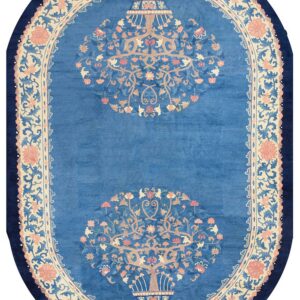
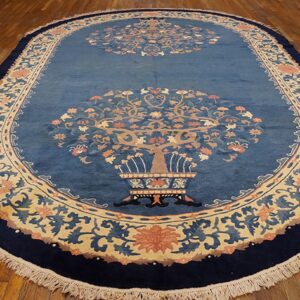
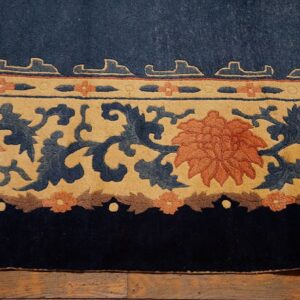
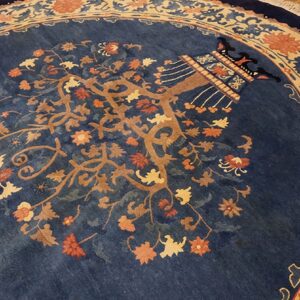
This early twentieth-century Chinese Peking rug is a rare and whimsical treasure of the Republican era, distinguished by its exceptionally uncommon Oval Shape. While the vast majority of antique Chinese rugs follow a strict rectangular format, oval specimens were almost always custom commissions, designed to accommodate specific architectural niches, rounded entryways, or to serve as a focal point beneath a circular table in a high-fashion 1920s interior.
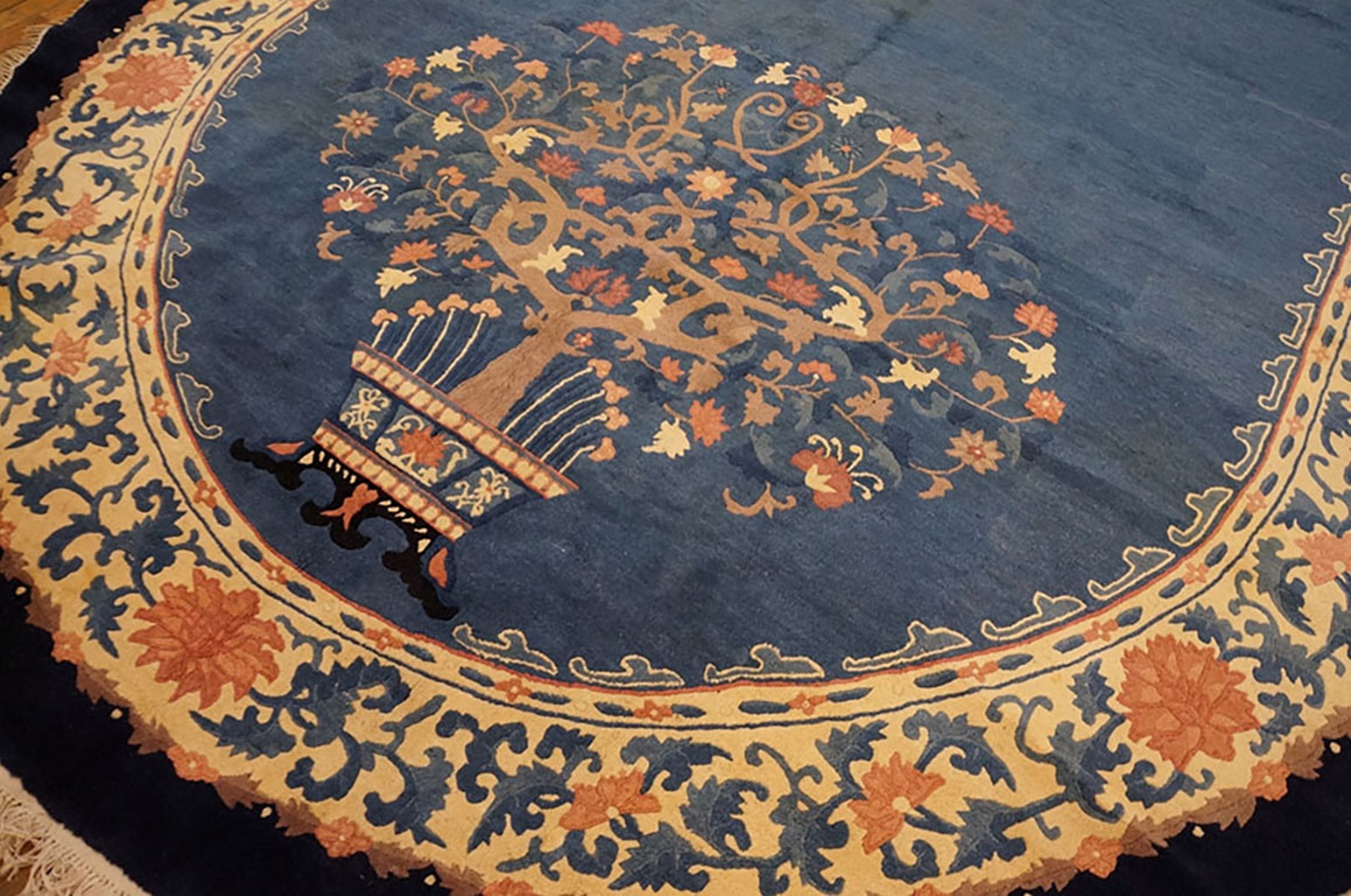
The composition is centered upon a magnificent solid color open field rug design, a hallmark of the “Scholar’s Taste” that prioritizes tranquility and negative space. Rather than a central medallion, the calm Oriental rug features delicate asymmetrical floral sprays—likely including the peony (symbolizing wealth) and the lotus (symbolizing purity)—that appear to “float” organically near the curved edges. The drawing is fluid and calligraphic, capturing a “painterly” sense of nature that feels both ancient and remarkably modern.
The palette is anchored by a rare and serene Light Blue and Sky-Blue foundation. This watery, tranquil ground has aged into a soft, matte patina that reflects light with a subtle, luminous glow. Against this “celestial” stage, the botanical motifs are rendered in a sophisticated range of indigo blue, creamy ivory, and Slate. Because this is an antique specimen, the blue field exhibits a magnificent “watercolor” abrash, where the tones shift subtly like the surface of a lake, giving the limited palette a three-dimensional depth.
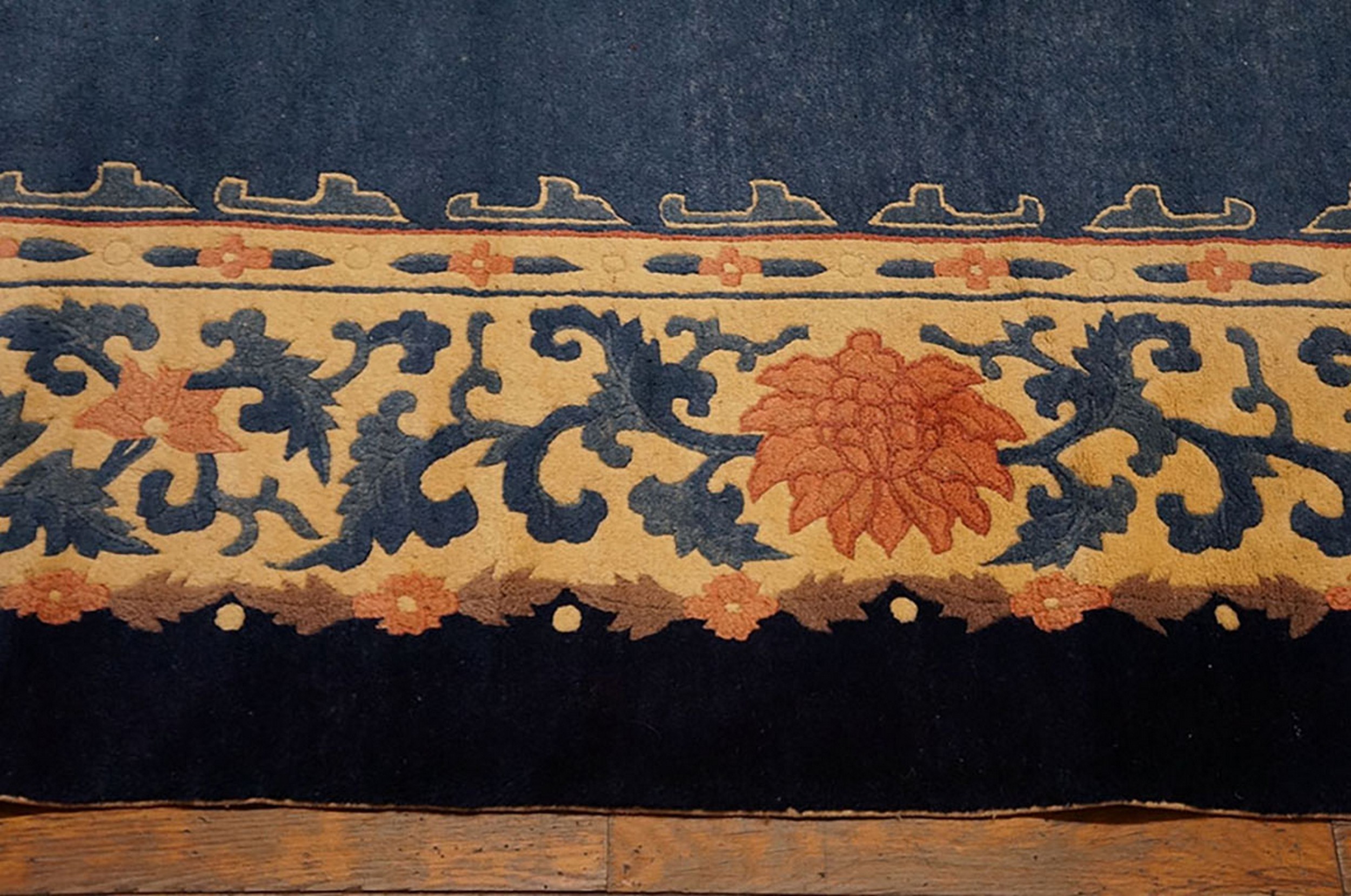
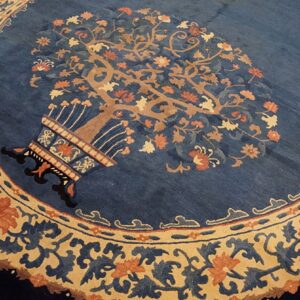
Technically, this Peking rug is prized for its lush, “meatier” wool pile and substantial handle. The wool used during this period was rich in natural lanolin, resulting in a surface that is both durable and incredibly soft. A defining characteristic of this tradition is the hand-carving or “embossing” technique, where the weaver hand-clipped the wool around the floral motifs to create a sculptural depth. This makes the blossoms appear to lift away from the blue field, adding a tactile, high-relief quality to the floor.
The border follows the unique oval shape of the rug, often featuring a simple solid-color band or a delicate “T-fret” pattern that provides a disciplined architectural “frame” for the airy field. To possess this antique oval light blue Peking room size area rug is to own a piece of unique design history. It bridges the gap between the formal symmetry of Chinese tradition and the playful, avant-garde spirit of the early 20th century—transforming any space into a sanctuary of historical soul and serene, curved grace.