
Bedroom Rugs: What They Are and Why They Matter (Comfort, Quiet, Safety)
Choosing a rug for the bedroom is about more than aesthetics; it is about designing the daily ritual of your rest. As the first surface your feet touch in the morning and the last they leave at night, a high-quality bedroom rug acts as a sensory bridge between sleep and the waking world.
By prioritizing tactile comfort, sound insulation, and natural air quality, you transform a standard sleeping quarters into a grounded, intentional sanctuary.
Start here for the big-picture plan: the complete Rug Buying Guide and room-by-room placement & positioning tips.
Explore the other room guides: Study, Living Room, Family Room, Dining Room, Foyer / Entry, Library, Kids Rooms.
What Are Bedroom Rugs?
Bedroom rugs are a specialized textile floor covering—typically a large area rug or a coordinated set of runners—selected to anchor the bed visually and improve the physical comfort of the sleeping quarters. Unlike floor coverings in high-traffic zones like hallways or entryways, Bedroom rugs serve a dual purpose: they frame the furniture to create a cohesive interior design and provide a functional barrier between the sleeper and the subfloor.
Why put an area rug in bedroom?
Technically, the rug defines the sleeping zone, transforming a floating bed frame into a grounded, intentional centerpiece. It acts as a thermal and acoustic insulator, softening the hard lines of a room that requires an atmosphere of relaxation. It also offers a nice soft textural feeling underfoot when you get in and out of bed.
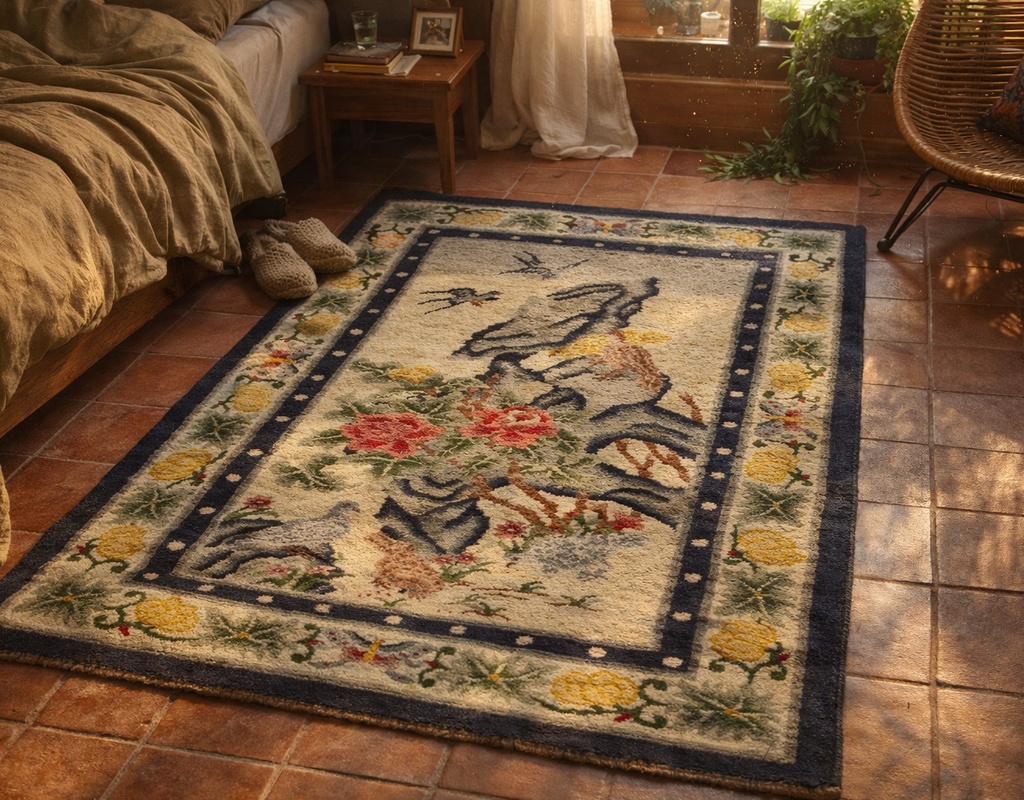
Curated for comfort, quiet, and air quality.
Bedroom Rugs Priorities vs Other Rooms
When selecting a rug under bed setups, the criteria differ significantly from other rooms in the home. Bedrooms are “comfort + quiet” rooms; therefore, you must pick for feel and safety first, rather than focusing solely on heavy-duty durability.
- Acoustics: A quiet, soft bedroom area rug dampens noise, reducing the echo of footsteps or dropped items, which is essential for maintaining a sleep-conducive environment.
- Tactile Experience: Since barefoot use is frequent in the bedroom, the texture must be gentle on the skin.
- Hygiene Considerations: The hidden under-bed zone collects fine dust and allergens. When considering whether you should choose plush or low-pile bedroom rugs, weigh the luxury of a high-pile plush against the maintenance ease of a low-pile rug. Plush offers maximum comfort, but tighter weaves are easier to vacuum under the bed frame.
The “Landing Zone” Concept
The bedroom rugs landing zone is the specific surface area where feet make contact with the floor immediately upon waking. This is the most critical functional part of the installation. While the center of the rug is obscured by the bed, the rug’s visible edges and first-step area matter more than the hidden center.
This zone provides immediate warmth and shock absorption. Stepping onto a cold, hard surface can shock the system, whereas a soft landing zone eases the transition from sleep to wakefulness. From a safety perspective, this area requires secure footing to prevent slips when navigating the room in the dark or while groggy.
Quick “Good Choice” Checklist
To ensure the rug enhances the room rather than hindering its function, evaluate potential purchases against these criteria:
- Door Clearance — Why: Door placement and clearance geometry often decide success; placement and clearance can outweigh style preference if a thick rug blocks a door from swinging open.
- Texture Softness — Why: The rug must provide a soft, warm barrier for bare feet, prioritizing tactile comfort over rugged durability.
- Safety Grip — Why: Safe footing is essential to prevent slipping during late-night movements; the rug must be heavy enough or padded enough to stay stationary.
- **Geometric Sizing** — Why: The rug must extend sufficiently beyond the bed frame to ensure the “landing zone” is covered, rather than stopping short at the bed’s edge.
Bedroom Rugs Placement Layouts That Actually Work
In a bedroom, a rug isn’t just a floor covering—it’s your first transition from sleep to the day. We call the 24 inches surrounding your bed the ‘Sensory Zone.’ While the center of the rug is hidden under the mattress, these visible perimeters provide the thermal and tactile comfort that defines a luxury sleeping environment.”
Full Under-Bed Layout
The most traditional and luxurious bedroom rugs placement strategy is the full under-bed layout. In this configuration, the rug serves as a foundation for the entire sleeping setup, anchoring both the bed frame and the flanking nightstands. This creates a cohesive “bed + nightstands” composition that visually separates the sleeping area from the rest of the room.
For a true “designer” look, the rug must be large enough to extend at least 18 to 24 inches beyond the sides and the foot of the bed. This ensures that when you step out of bed, your feet land on soft textile rather than hard floor. While this layout requires the largest investment due to rug size, it offers maximum sound dampening and creates a unified, hotel-style aesthetic.
One of the most common installation errors is placing the front legs of a nightstand on the rug while the back legs remain on the bare floor.
This creates a subtle tilt that causes drawers to stick and lamps to wobble:
- The Full Anchor: For King suites, use a 9×12 or 10×14 rug size so the entire nightstand sits level on the textile.
- The Floating Nightstand: If using an 8×10, start the rug 6 inches in front of the nightstands. This ensures the furniture remains level on the floor while your feet still hit the rug when you wake up.”
Lower Two-Thirds Layout
The two-thirds rug placement is the industry standard for balancing visual impact with budget efficiency. Rather than placing the rug underneath the nightstands, this layout positions the rug perpendicular to the bed frame, starting roughly 12 to 18 inches in front of the bedside tables.
This arrangement preserves the best visual payoff on a tighter budget because it utilizes a smaller rug size (typically an 8×10 instead of a 9×12 for a King bed) without sacrificing the softness at the foot and sides of the bed. It frames the bed effectively while reducing the amount of hidden, wasted textile under the headboard.
Two Runners Layout
Using runners beside bed frames is often the most “practical luxury” solution, particularly for smaller rooms or layouts with complex door swings. This approach involves placing two matching or complementary runners on either side of the bed, parallel to the mattress. The ideal positioning is to center the runner along the length of the bed, ensuring it covers the “landing zone” where you stand up.
This layout solves critical geometric problems: it avoids interfering with door clearances and allows for much easier cleaning, as the runners can be lifted and shaken out without moving heavy furniture. An optional third runner can be placed at the foot of the bed to complete a “U” shape configuration. (See our rug runners sizing guide for specific dimension recommendations).
Small Bedside Accents
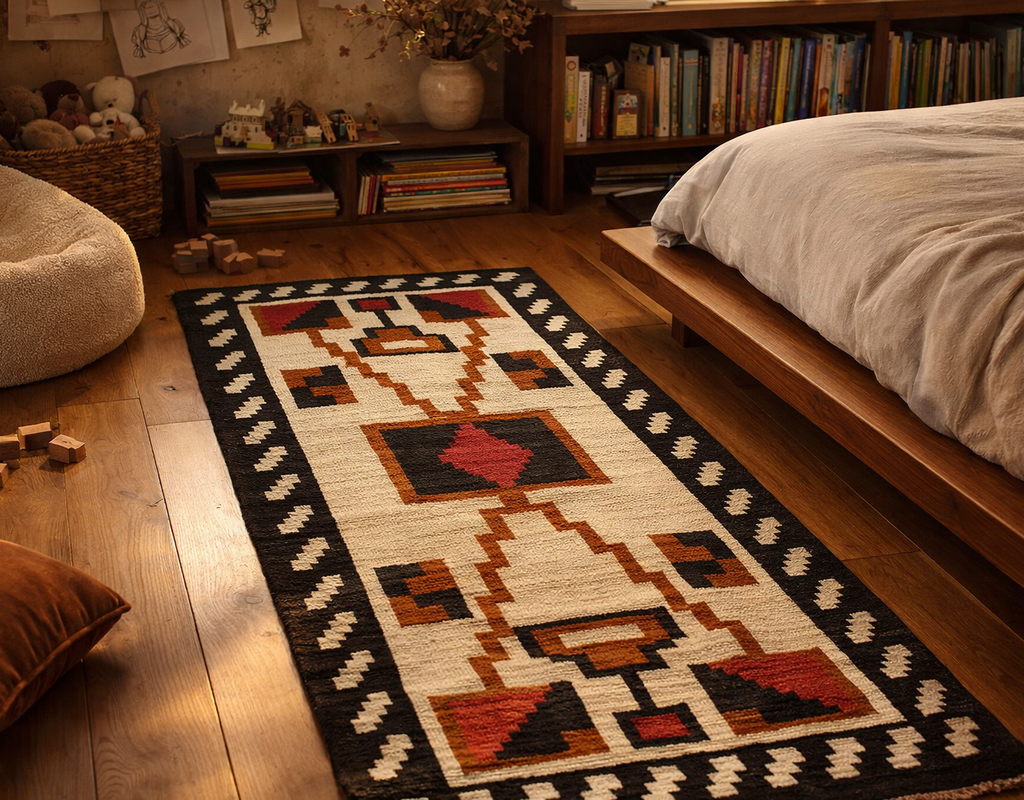
For those who prioritize flexibility and character, a bedside accent rug offers a distinct advantage over large Area Rugs. This layout utilizes small-format, handwoven rugs—such as 2×3 or 3×5 , small scatter size area rugs, placed strategically right where your feet hit the floor.
This is the easiest way to add heritage Textiles or high-value antique pieces to a room without the cost of a room-sized carpet.
Can You Put a Rug Over Carpet in a Bedroom?
Yes, layering an area rug over wall-to-wall carpet is an excellent way to define the sleeping zone and add a layer of sound-dampening luxury.
- How to Layer: To prevent the top rug from bunching or “creeping,” use a firm rug-to-carpet pad.
- Styling Tip: For a “Designer Look,” layer a smaller, high-texture rug (like a plush wool or a vintage find) at an angle over a larger, neutral low-pile base. This solves the “how to layer rugs in a bedroom” dilemma while adding instant character.
Common Placement Mistakes
To ensure your rug under bed placement functions correctly, avoid these frequent errors:
- The “Floating” Rug — Why: Placing a rug too far down toward the foot of the bed leaves the bedside floor bare, defeating the purpose of a soft landing zone for your feet.
- Insufficient Borders — Why: Skimping on size results in a “postage stamp” effect where the rug is hidden entirely by the bed, offering no visual anchor or practical comfort at the edges.
- Blocking Vents or Doors — Why: Ignoring the pile height near swing doors causes friction and jamming; high-Pile Rugs must clear the bottom of the door sweep.
- Wall-to-Wall Mimicry — Why: Leaving less than 10-18 inches of bare floor between the rug edge and the wall creates a cramped look rather than a defined area.
Bedroom Rugs Sizing and Geometry: Twin to King
Step-down Comfort Zone
The most critical geometric dimension in a bedroom setup is the “step-down” width. When determining how far should rug extend past bed sides, the industry standard for comfort and visual balance is between 18 and 24 inches. This spacing ensures that an adult can step out of bed with both feet landing securely on the textile surface rather than straddling the edge of the rug and the cold floor.
Prioritize this comfortable step-down width over maximizing the hidden area under the bed. If a rug is too narrow to provide this 18-inch clearance, the room will feel visually pinched, and the functional purpose of the rug—warmth and softness—is lost. In scenarios where room width is restricted, opting for runners is often a superior design choice compared to forcing a too-small Central Rug into the space.
How to Measure for Bedroom Rugs
To find your ideal rug size, measure the width of your bed frame first. For a balanced look, you want a rug that is at least 36 to 48 inches wider than your bed (allowing for an 18–24 inch ‘landing zone’ on each side).
The Painter’s Tape Trick: Before buying, use painter’s tape to outline the rug’s dimensions on your floor. Walk around the bed to ensure you have enough space to stand comfortably on the tape and that all doors clear the perimeter.
Rug Size Suggestions by Bed Size
To eliminate guesswork, use this bedroom rugs size guide to match standard mattress dimensions with the appropriate rug area. These pairings ensure the rug extends past the foot of the bed, which is crucial for anchoring the furniture visually.
Bedroom Rug Size & Room Match Guide
| Room or Bed Size | Recommended Rug Size | Why It Works |
|---|---|---|
| 12′ x 12′ Bedroom | 8′ x 10′ | Leaves a clean 12-inch “frame” of floor around the rug. |
| Standard Queen Bed | 8′ x 10′ | The “Gold Standard” for a two-thirds layout with a 24-inch side reveal. |
| Large King Suite | 9′ x 12′ | Ensures both the bed and nightstands sit level on the textile. |
| Small Twin/Guest Room | 5′ x 7′ or 6′ x 9′ | Perfect for placing horizontally at the foot of the bed to anchor the space. |
Start Point Under Bed
The starting point of the rug relative to the headboard drastically alters the room’s proportions.
What happens when bedroom rugs are too small?
If a Small Rug is placed fully under the bed, it disappears entirely, leaving the perimeter bare. Conversely, if it is placed too far down, it creates a disjointed “floating island” effect at the foot of the bed.
For Queen and King rooms, the layout often “looks right” when the rug starts roughly 12 to 18 inches away from the nightstands and extends significantly past the foot of the bed. This “lower two-thirds” geometry balances the visual weight of the bed frame. If you have a particularly large master suite, a 9×12 or 10×14 rug allows you to start the rug at the wall behind the headboard (full coverage), keeping the nightstands on the rug for a grounded, unified look.
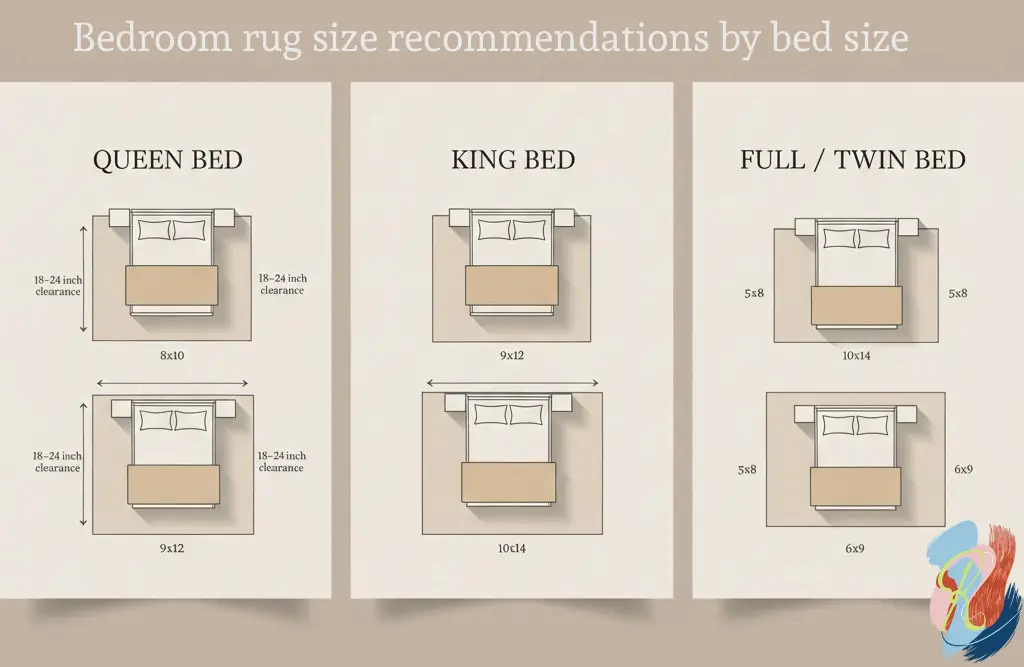
Measuring for Bedroom Rugs
To accurately measure for rug under bed layouts and avoid costly returns, follow this checklist before purchasing:
- Mark the Perimeter: Use painter’s tape to outline the potential area rug sizes on the floor; this helps you visualize the physical footprint and how much floor remains exposed.
- Verify the “Step-Down”: Measure from the edge of the mattress to the tape line to ensure you have at least 18 inches of usable rug width.
- Check Door Swings: Open and close all doors (entry and closet) to ensure the rug pile will not obstruct movement or get caught under the sweep.
- Account for Vents: Ensure the rug does not cover floor registers, which creates fire hazards and blocks HVAC efficiency.
Bare Floor Reveal
This negative space separates the rug from the architecture, preventing the “wall-to-wall carpet” look which can make a room feel smaller and stuffier. If the gap is less than 6 inches, the rug is likely too large for the room; if the gap is greater than 24 inches, the rug may appear to float without anchoring the space effectively.
Construction Choices for Bedroom Rugs: Feel, Shedding, Repairability
Construction Types Overview
When evaluating bedroom rugs construction, the context of use shifts from durability against foot traffic to intimacy and air quality. While bedrooms are generally low-to-moderate traffic zones, they are high-dust environments due to bedding fibers and skin cells. Therefore, “low traffic” doesn’t mean “no performance needs.”
The method of manufacture dictates how the rug holds onto dust and how easy it is to clean. Hand-knotted rugs offer the highest longevity and ease of cleaning because they lack the glue foundation found in other types. In contrast, hand-tufted rugs, while plush and affordable, often use latex backings that can break down over time. Machine-made options offer precision and lower costs but often lack the repairability of handmade textiles.
Shedding, Longevity, Repairability
Construction is the hidden driver of comfort over time, specifically regarding matting and shedding. In a bedroom, where barefoot use is frequent, the tactile degradation of a rug is immediately noticeable. Low shedding bedroom rugs are preferable to keep the air clean and reduce the accumulation of “dust bunnies” in the hard-to-reach areas under the bed frame.
When comparing a hand-knotted vs tufted rug for bedroom use, note that tufted rugs rely on a canvas backing glued to the fibers. Over time, this glue can dry out and release fine particulate matter. Hand-knotted rugs, constructed by tying individual knots around the warp, do not shed backing material and are fully repairable, making them a “forever” choice for master suites.
Flatweave and Kilim Construction in Bedrooms
Flatweave bedroom rugs / Kilims lack a pile entirely, created instead by interweaving warp and weft threads. This construction is thinner than knotted or tufted and hand knotted pile area rugs. So while they may look nice, they will not offer the cozy factor you probably would prefer to have in you bedroom rugs.
Foundation and Backing Implications
The backing of a rug is critical for indoor air quality, a major priority in sleeping quarters. Many tufted and machine-made rugs use synthetic latex adhesives that can off-gas, releasing chemical odors that may be irritating in a closed bedroom environment.
Backing choice can affect both smell sensitivity and pad selection. A natural foundation allows the rug to breathe, preventing moisture entrapment under the bed. Furthermore, understanding rug backing and rug pad compatibility is essential; rugs with abrasive backings need a felt-and-rubber pad to protect the hardwood floor, while soft-backed rugs need a grip-focused pad to prevent sliding.
“Buying Smart” Identifiers
To identify quality construction suitable for the bedroom, look for these indicators:
- Pliable Backing: A flexible back indicates a lack of excessive stiff glue, suggesting better longevity and less potential for cracking or off-gassing.
- Fringe Integration: On hand-knotted rugs, fringe is the warp threads extending from the rug; sewn-on fringe usually indicates a machine-made or tufted construction with potential durability shortcuts.
- Pile Density: Press your fingers into the pile; if you can easily feel the backing, the rug may mat down quickly in the path from the bed to the door.
- Natural Material Weight: A heavier rug generally stays in place better without tape, providing the secure footing necessary for late-night safety.
Pile Type and Underfoot Feel: Plush, Springy, Firm
Cut Pile vs Loop Pile
The fundamental decision for underfoot feel lies between cut pile and loop pile. Plush bedroom rugs typically feature cut pile construction, where the fiber loops are sheared off to create upright tufts. This results in a velvety, dense surface that allows toes to sink in, offering a luxurious, “hotel-like” sensation.
In contrast, loop pile rugs retain their curved structure, creating a surface that feels springy and resilient rather than velvety. While often associated with durability, high-quality Wool loop rugs provide a unique tactile massage effect that is firm yet comfortable. When deciding whether you should choose plush or low-pile bedroom rugs, consider that cut pile feels softer to the touch, while loop pile generally bounces back better from the weight of furniture legs.
High Pile/Shag
Shag pile bedroom rugs represent the extreme end of softness. With long fibers that drape and cushion, high-pile options offer the maximum sensory comfort for a “landing zone.” They isolate the sleeper from the floor more effectively than any other type.
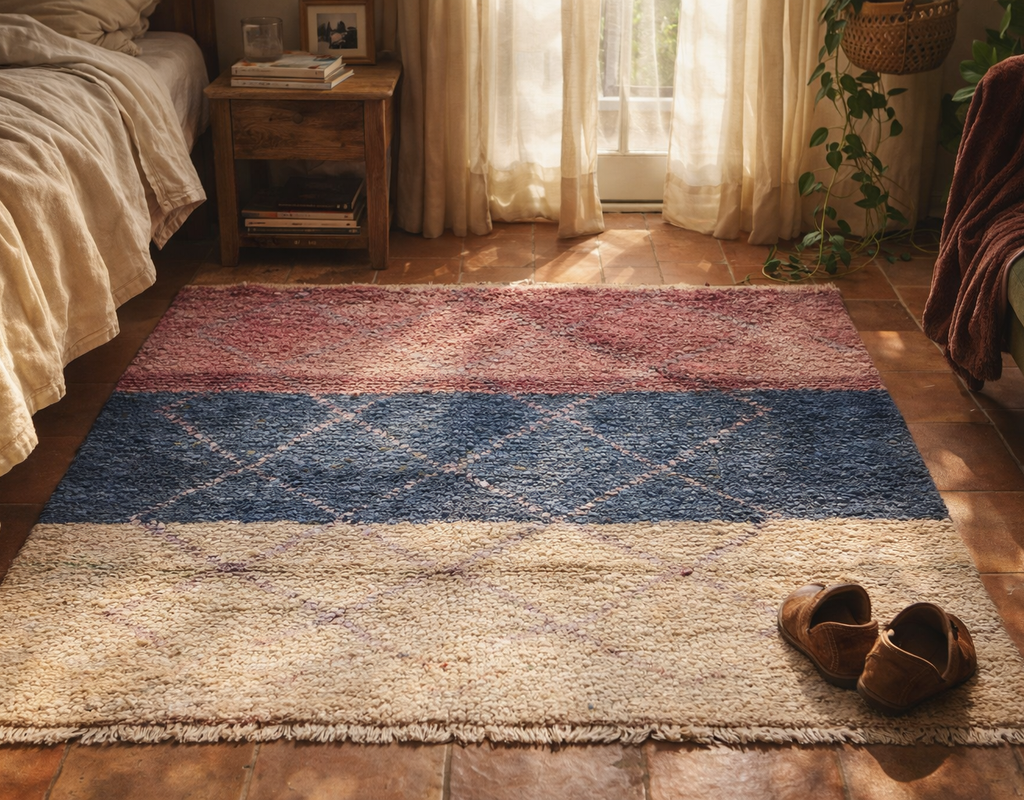
However, this luxury comes with a significant maintenance trade-off. Ultra-high pile creates deep crevices that trap dust, skin cells, and allergens—a critical consideration for a room designed for breathing and sleeping. High pile is best reserved for rooms with very strict “no shoes” policies and rigorous vacuuming routines (using suction only, as beater bars destroy the fibers).
Flatweave
For rooms with tight clearances, flat weave rugs in a bedroom might be a pragmatic champion. Because these rugs have no pile standing up from the foundation, they have the lowest possible profile. This is often the best pile height for bedroom rugs layouts where the door must swing inward over the rug.
While they lack the cushioning of a plush rug, flatweaves offer a firm, reliable surface that never shows footprints. To compensate for the lack of pile, it is standard practice to layer a thick felt rug pad underneath, adding the necessary comfort without increasing the pile height that catches on doors.
Comfort vs Compression Paths
A common error is equating height with comfort. In reality, comfort comes from density as much as height. A taller, sparse rug will flatten quickly underfoot, creating “troughs” in the traffic path from the bed to the bathroom or door.
Low pile bedroom rugs that is extremely dense—packed tight with wool or Silk knots—will resist this compression better than a loose shag. Dense medium pile often delivers the best balance, providing long-term resilience and cushioning without the heavy dust retention of high-pile alternatives.
Misconceptions
When selecting the surface texture for your bedroom, avoid these common pitfalls:
- “Softer Is Always Better”: Ultra-soft, high-pile rugs often mat down quickly and become difficult to clean; density is a better indicator of lasting comfort than initial softness.
- “Shape Over Substance”: Almost always people pick rectangular shaped rugs to align with the bed. Choosing a novelty shape (like Round rugs or irregular shapes) often compromises the critical “step-down” coverage.
- “Loop Pile Is Rough”: While Berber loops can be coarse, fine wool loops are smooth and offer superior temperature regulation without trapping debris like cut pile does.
- “Height Equals Warmth”: Thermal insulation is driven by the material and the backing density, not just the length of the fiber strands.
Materials for Bedroom Rugs: Warmth, Texture, and Sensitivities
Wool
Wool is the undisputed industry standard for the “sleep-space” due to its unique combination of warmth and resilience. Wool bedroom rugs utilize the natural crimp (coil) of the sheep’s fleece, which acts as a microscopic spring. This structure provides superior cushioning underfoot and allows the pile to bounce back from the weight of bed frames and nightstands better than any other fiber.
Beyond physical resilience, wool is an active insulator. It traps air within its fibers, helping to regulate the temperature of the room and keeping floors warm on cold mornings. For acoustic control, the dense protein fibers absorb sound waves effectively, contributing to the quiet atmosphere essential for a bedroom.
Cotton
While cotton is ubiquitous in bedding, its role in rugs is different. It is most frequently used as the foundational warp and weft threads in hand-woven rugs, providing a flexible skeleton for the pile.
When used as the primary face fiber (the part you walk on), cotton offers a soft, matte finish that feels pleasant against the skin. However, it lacks the elasticity of wool; cotton fibers tend to flatten under heavy furniture and traffic. Therefore, cotton is best utilized in flatweave constructions or smaller accent rugs that can be easily washed, rather than large structural rugs under a king bed.
Silk
The bedroom is one of the few rooms in the home where fine silk rugs for bedroom placement is not just practical, but recommended. Silk area rugs offers luxuriously luminous sheen and an incredibly soft, cool-to-the-touch texture that is unmatched by other fibers.
Because bedrooms typically experience low abrasion demands—mostly bare feet or slippers rather than dirty shoes—the delicate nature of silk is protected. Whether pure silk or a silk-wool blend, using these as your bedroom rugs add a layer of sophistication and light reflection that brightens dark corners under the bed.
Plant Fibers
Natural plant fibers like jute, sisal, and seagrass offer a textured, organic aesthetic popular in minimalist or coastal designs. However, when weighing jute bedroom rugs pros cons, the texture is the primary drawback.
While they are firm and durable, these fibers can feel coarse and scratchy to bare feet, making them less “cozy” than wool or silk. They are best suited for rooms where the rug serves a visual anchoring purpose rather than a comfort purpose, or when layered underneath a smaller, softer hide or wool rug at the stepping-out point.
Synthetics
Synthetic bedroom rugs (typically Nylon, Polypropylene, or Polyester) is often the value-oriented choice. These materials are inherently stain-resistant and easy to clean, making them attractive for high-maintenance households.
However, in the enclosed environment of a bedroom, air quality is paramount. Lower-quality synthetic rugs rely on latex backings and chemical finishes that can off-gas Volatile Organic Compounds (VOCs). If choosing synthetic for the bedroom, it is crucial to air the rug out in a garage or open space before installation to minimize respiratory irritation.
Allergy-Friendly Materials
For sleepers with sensitivities, material choice intersects directly with health.
Consider these options that resist mold, bacteria, and dust mite proliferation:
- Low-Pile Wool: Wool is naturally hypoallergenic and creates a dry environment that discourages dust mites; low pile prevents allergens from getting trapped deep in the base.
- Natural Jute / Sisal: Hard plant fibers do not hold static electricity, meaning they do not attract dust and pollen like synthetic fibers do.
- Polypropylene This synthetic bedroom rugs weaving material is essentially non-absorbent plastic, meaning it resists moisture and mold growth completely, though it must be vacuumed frequently to remove surface dust.
- Organic Cotton Flatweaves: These allergy friendly bedroom rugs materials are often machine washable, allowing you to physically remove allergens through laundering.
Indoor Air Quality, VOCs, and “New Rug Smell” in Sleep Spaces
Why IAQ Matters More in Bedrooms
Indoor Air Quality (IAQ) is critical in bedrooms because they are the “highest exposure” rooms in the home. The average person spends roughly 8 hours a day in this single space, typically with the door closed and ventilation reduced.
Because exposure is continuous and occurs during sleep—when the body’s respiratory rate changes—the accumulation of airborne chemicals from furnishings can have a more pronounced effect here than in a well-ventilated living room.
VOC / SVOC Emissions from New Rugs / Carpets
It is a documented phenomenon that new area rugs and carpets release Volatile Organic Compounds (VOCs) and Semi-Volatile Organic Compounds (SVOCs).
Bedroom rugs off gassing occurs as chemicals used in the manufacturing process—such as dyes, flame retardants, and stain repellents—vaporize into the air at room temperature. While many of these emissions dissipate quickly, they can cause temporary respiratory irritation or headaches in sensitive individuals.
“New Carpet Odor” Chemistry
This suggests that the backing and adhesive layers, rather than the face fiber itself, are often the primary drivers of odor. Not all rugs behave the same; hand-knotted rugs without latex backings typically lack this specific chemical signature.
Low-Emission Programs
To address these concerns, industry standards have been developed to certify low VOC bedroom rugs option. The most recognized certification is the Carpet and Rug Institute’s (CRI) Green Label Plus program.
This testing protocol identifies carpets, cushions, and adhesives with very low emissions of VOCs. When shopping for a Green Label Plus rug pad or rug, you are selecting a product that has been rigorously tested to ensure it meets high standards for indoor air quality.
The “Clean Sleep” Audit: Why Fiber Matters
You spend 1/3 of your life in your bedroom. In an enclosed sleep space, the off-gassing of synthetic latex backings (common in “big-box” tufted rugs) can degrade indoor air quality.
Our hand-knotted wool rugs are processed without harsh chemical adhesives. Wool is naturally hypoallergenic and traps dust particles, keeping them out of your breathing zone until you vacuum.
Unlike tufted rugs that use rubber-based glues, our traditional weaves are held together by knots alone. This means zero VOC off-gassing and a healthier respiratory environment for your home.
Practical Mitigation Steps
If you are sensitive to odors or chemicals, taking these practical steps can significantly improve your experience with a new rug:
- Pre-Installation Ventilation — Why: Unroll the rug in a garage or spare room with open windows for 48-72 hours before placing it in the bedroom to allow the initial surge of off-gassing to dissipate harmlessly.
- Increase Air Exchange — Why: Run an air purifier with a carbon filter or keep bedroom windows cracked for the first week to dilute any remaining airborne compounds.
- Choose Natural Backings — Why: Opt for rugs with natural cotton, jute, or wool foundations rather than synthetic latex to eliminate the primary source of 4-PCH.
- Vacuum Immediately — Why: Use a HEPA-filter vacuum to remove loose fibers and manufacturing dust that may carry adsorbed chemical residues.
Wool Adsorption Research
Beyond simply being low-emitting, certain materials can actively improve air quality. Research into indoor air quality and rugs has shown that wool fibers have the unique capacity to adsorb (trap) common indoor pollutants, such as formaldehyde and nitrogen dioxide, from the air.
Under studied conditions, wool can lock these contaminants away for up to 30 years without re-releasing them, effectively acting as a passive air filter for your sleeping space.
Curated for comfort, quiet, and air quality.
Rug Pads, Slip Resistance, and Door Clearance
Slip Prevention Basics
In the bedroom, where late-night movements are often made in the dark, the rug pad is a safety tool, not an accessory. Its primary function is to lock the rug to the floor to ensure safe footing on that crucial first step out of bed. Without a pad to stop rug from slipping bedroom floors can become hazardous skating rinks, especially with lightweight runners or flatweaves that lack the mass to stay stationary on their own.
How do rug pads prevent bedroom rugs from slipping?
They utilize materials with high coefficients of friction—typically natural rubber or felt/rubber hybrids—that grip both the textile above and the hard surface below. This creates a unified assembly that resists lateral force, preventing the “surfing” effect that occurs when you step onto an unsecured rug.
Pad Trimmed Slightly Smaller
To function correctly, the pad must be invisible. It should be trimmed slightly smaller than the rug itself—typically 1 to 2 inches inward from the perimeter on all sides.
This “beveled edge” technique serves two purposes:
- It ensures the rug edges drape naturally toward the floor, preventing a raised lip that could cause tripping.
- It reduces edge lift and creeping, keeping the rug flat and reducing wear on the vulnerable binding or serging at the perimeter.
Pad Compatibility Mistakes
A common misconception is that “any pad works” for every floor. In reality, choosing the wrong rug pad for hardwood bedroom installations can lead to chemical reactions that damage the floor finish. Cheap PVC pads can fuse to polyurethane finishes or leave permanent waffle-grid marks.
Always avoid pads that contain plasticizers or adhesives that might react with your specific flooring type. For high-end hardwood, a felt-and-rubber combination is often the best pad for bedroom rugs use, as the needle-punched felt provides cushion while the natural rubber backing offers safe, non-marking grip.
Does furniture wobble when partly on the rug?
The answer depends on the pad’s density and thickness. If you use a thick, plush pad under only half of a nightstand, the furniture will tilt.
To mitigate this, either choose a thinner, firmer pad (like a 1/8-inch felt) that minimizes the height differential, or use small furniture shims (wedges) under the off-rug legs to level the piece. Ensuring the pad does not extend under the furniture legs also helps, allowing the heavy furniture to compress the rug fibers directly against the floor for better stability.
Heated Floors
If your bedroom rugs feature radiant heating, you must verify rug on heated floors compatibility.
How do you choose a rug for floor heating?
You must select materials that allow heat to transfer efficiently without trapping it (which can damage the heating elements) or degrading the rug backing.
Natural materials like wool and jute are generally safe, but synthetic latex backings can dry out and crumble when exposed to constant heat. Similarly, the rug pad must be rated for radiant heat; solid rubber pads can act as insulators, blocking the warmth, whereas specialized felt or perforated pads allow the heat to rise and circulate into the room.
Door Clearance
Before purchasing a high-pile or shag rug, you must measure the gap between the bottom of your bedroom door and the floor. Door clearance rug pile height issues are a leading cause of returns.
If the rug is too thick, the door will drag, damaging both the rug fibers and the door alignment. If clearance is tight (under 0.5 inches), flatweave constructions or runners that avoid the door swing entirely are the only viable options.
Care and Longevity: Dust, Allergens, and Cleaning Reality
Bedroom Dust and Allergens
The bedroom presents a unique hygiene challenge compared to the rest of the home: the “hidden zone” underneath the bed frame. While living room furniture is often moved or elevated, heavy beds remain stationary for years. This creates a static environment where dust bunnies, skin cells, and microscopic allergens accumulate undisturbed.
Bedroom rugs maintenance must account for this reality. Unlike high-traffic hallways where dirt is ground in by shoes, bedroom rugs suffer from airborne particulate settling. If neglected, the area under the bed becomes a reservoir for allergens that are released into the air every time you step on the exposed edges of the rug, potentially disrupting sleep quality.
Allergy-Friendly Routines
For those with sensitivities, the cleaning routine is as important as the material choice. To maintain an allergy friendly bedroom environment, effective removal of particulate matter is essential.
- HEPA Filtration: Standard vacuums often recirculate fine dust; use a vacuum equipped with a HEPA filter to permanently trap allergens.
- Rotation: Rotate the rug 180 degrees annually to expose the area previously hidden under the bed, allowing for thorough vacuuming and equalizing wear.
- Washability: For severe allergy sufferers, you may consider washable rugs. The ability to launder the rug removes 100% of the dust mites, a feat impossible with vacuuming alone. However, this often requires sacrificing the plush, sound-dampening qualities of a traditional wool rug.
Materials like low-pile wool or natural plant fibers are best for preventing allergen entrapment, but only if combined with a rigorous cleaning schedule.
Wool Maintenance
If you select a wool rug for its comfort and insulation, you must adopt a specific wool rug care bedroom strategy to protect the pile structure.
Wool is durable, but aggressive cleaning can cause fuzzing:
- Suction Only: Disengage the beater bar (rotating brush) on your vacuum when cleaning loop-pile wool rugs to prevent snagging.
- Gentle Agitation: For cut-pile wool, use the beater bar on the highest height setting so it barely touches the fiber tips, vibrating the dust loose without abrading the yarn.
- Spot Cleaning: Address spills immediately by blotting (never rubbing) with a clean towel and a wool-safe detergent. (See our rug care guide for detailed stain removal steps).
Periodic Professional Cleaning
How to clean bedroom rugs deep-set grime goes beyond weekly vacuuming. Over time, fine grit filters down to the foundation of the rug, acting like sandpaper that cuts the fibers from the bottom up.
To ensure longevity, professional immersion cleaning (where the rug is fully washed in a plant) is recommended every 3 to 5 years. This removes the compacted sediment that home vacuums cannot reach, restoring the fiber’s bounce and vibrancy.
“Character Wear” vs Structural Damage
When evaluating a rug’s condition over time, distinguish between “character” and damage. High-quality rugs will develop a “patina”—a slight smoothing of the pile or mellowing of colors—which is desirable.
However, structural damage includes unraveling edges or exposed backing. Note that high-pile and shag rugs will show compression paths (flattened areas where you walk from the bed to the door) much faster than dense, medium-pile rugs. This matting is often irreversible, which is a key factor when choosing pile height for the landing zone.
Budget vs Size Trade-offs
The temptation is often to buy a lower-quality synthetic rug to get the massive 9×12 size needed for a King bed.
However, a smart rug size vs budget bedroom rugs strategy is to prioritize quality over coverage. It is better to invest in two high-quality runners that are easy to clean and made of long-lasting wool than to purchase a cheap, room-sized rug that will off-gas, mat down quickly, and need replacing in two years.
If the budget allows for a Large Rug, ensure you are not paying for expensive materials that will remain permanently hidden under the bed; focus your budget on the durability of the visible “step-down” areas.
A Brief Cultural and Historical Lens: Bedchamber Textiles and Meaning
Bedroom Rugs as Privacy and Protection
Bedroom area rug history reveals that soft furnishings in the sleeping quarters have always served a dual purpose: privacy and protection. Historically, the bedchamber was often the only truly private space in a home, and textiles were the primary means of insulating this sanctuary.
Before central heating, heavy wool textiles created a physical “comfort zone” that trapped heat and dampened sound, transforming a cold, drafty room into a secure environment for rest. This historical context informs modern design; we still use rugs to create a psychological barrier between the outer world and our inner sanctum.
American Bed Rugs Tradition
In the 17th and 18th centuries, the term “rug” in a sleeping context often referred to the bed rug colonial America tradition. These were not floor coverings, but heavy, shaggy wool textiles placed directly on the bed for warmth.
One of the most famous documented examples is the Rebekah Harris bed rug (dated 1776), held in museum collections. These textiles showcased immense needlework skill and provided critical insulation in unheated New England homes.
Over time, as bedding materials became lighter and heating improved, these heavy wool textiles migrated from the mattress to the floor, evolving into the area rugs we recognize today. This lineage underscores why plush, warm textures remain the standard for bedroom flooring.
Ottoman Yastiks and Layered Furnishing Culture
While American traditions focused on heavy pile, Eastern traditions prioritized flexible, layered arrangements. The Yastik rug bedside layout has deep roots in Ottoman culture. Yastik rugs were originally woven as covers for bolster pillows on divans, but their specific dimensions (typically narrow rectangles around 1.5 to 3 feet long) make them the historical archetype for traditional bedside runners.
Modern Layering Resurgence
The current trend of layered bedroom rugs styling is essentially a resurgence of the “movable textile architecture” found in nomadic and Ottoman traditions.
Can you layer a smaller rug under bed?
Absolutely. This approach mimics historical methods where smaller, precious hand-woven pieces were layered over larger, coarser mats (or today, over wall-to-wall carpet or sisal). This allows you to introduce an antique or high-value textile in a low-traffic zone without it slipping, anchoring the room with a sense of history while preserving the rug’s condition.
Documented Examples
Museum-documented examples confirm that bedroom rugs and textiles were purpose-built for specific spatial needs. Just as the Rebekah Harris rug was sized for a colonial bed, antique Yastik rugs were woven with specific border motifs intended to be viewed from above or the side.
Understanding this helps modern buyers realize that “comfort zoning”—placing a rug specifically for the user’s tactile experience rather than just filling the room—is a design principle with deep historical validity. We do not need to over-mystify motifs to appreciate that the proportions of these antique rugs are perfectly suited for the bedside.
Strategic Integration of Bedroom Rugs
Why put an area rug in bedroom layouts?
The decision to place an area rug in the bedroom is driven by more than just aesthetics. It is fundamentally about creating a sensory sanctuary. The primary function your bedroom rug is to anchor the sleeping zone visually while providing a thermal and acoustic buffer.
This transforms the room from a utilitarian space into a “comfort zone,” reducing noise and insulating the sleeper from cold subfloors. A comprehensive strategy integrates size, placement, and material to maximize this effect.
Addressing Sizing and Dimensions
Selecting the correct dimensions is the most common hurdle for homeowners.
What size rug fits under a queen bed?
The 8 x 10 rug size format is the industry standard for queen size beds. They offering sufficient coverage for the bed and nightstands.
What size rug works for a king bed?
King beds require at least a 9×12 rug size to maintain proportion. Anything smaller will look diminutive against the wide mattress.
How much bare floor should show around rug perimeters?
Aim for 10 to 18 inches of exposed flooring between the rug edge and the wall to frame the space effectively.
How far should a rug extend past bed sides?
You need 18 to 24 inches of textile width to ensure your feet land on the rug, not the cold floor, when stepping out of bed. To measure for bedroom rugs, use painter’s tape to outline these dimensions on the floor, verifying that doors can open freely and vents remain unblocked.
Layout and Positioning
Where should bedroom rugs start under bed depends on the rug’s size relative to the room. For a luxurious look, start the rug at the headboard wall (under the nightstands). If utilizing a smaller rug or aiming to save budget, start the rug 12 to 18 inches in front of the nightstands.
Does the rug need to go under nightstands?
No, but stopping short of them requires ensuring the rug extends further past the foot of the bed to balance the visual weight.
What rug shape looks best in bedrooms?
Rectangular rugs almost always mirror the bed’s geometry best. However, if space is tight, utilizing rug runners bedside is a valid alternative.
How do you place runners on both sides?
Center them along the length of the bed frame, parallel to the mattress.
Comfort, Pile, and Materials
The debate over “should you choose plush or low-pile bedroom rugs” centers on maintenance versus feel. Plush or high-pile rugs offer the best option for bedroom rugs as far as comfort, creating a cloud-like experience. However, low-pile options are easier to clean and better for allergy sufferers.
Regarding materials, wool remains the gold standard for temperature regulation and resilience.
How to Choose the Right Rug Color for Your Bedroom
Selecting a color is about more than matching your curtains; it’s about setting a “Sleep Mood.”
- For Restfulness: Choose muted earth tones, soft blues, or “washed-out” vintage patterns. These lower the visual energy of the room.
- To Make a Small Room Look Larger: Opt for light-colored rugs with open, airy patterns.
- The “Jute” Question: Are jute rugs good for bedrooms? While they look beautiful in coastal or minimalist designs, jute can be scratchy. If you choose jute, we recommend it as a base layer for a softer wool rug where your feet actually hit the floor.
Health and Air Quality
For sensitive environments, material choice is a health decision.
What materials are best for allergy-friendly bedroom rugs?
Low-pile wool, organic cotton, and natural plant fibers reduce allergen entrapment compared to synthetics.
When concerned about air quality, look for a low VOC rug for bedroom use, certified by programs like Green Label Plus, to minimize the smell associated with off-gassing adhesives.
Stability and Safety
Safety is paramount in dark / sleep environments.
Budget and Maintenance
How do you balance rug size and budget for your bedroom rugs?
Prioritize the “touch points.” When buying rugs, it is better shop for area rugs that are high-quality runners that feel great underfoot than a massive, cheap synthetic rug that covers unused floor space under the bed.
Are washable rugs worth it in bedrooms?
They are valuable for nurseries, pet owners, or severe allergy sufferers who need to sanitize bedding frequently, though they often lack the acoustic dampening of traditional constructions.
Bedroom Final Inspection
The 5-point check for a perfect sleep space installation.
- ✅ The 18-Inch Reveal: Does the rug extend at least 18″ past the sides of your mattress to capture your “First Step”?
- ✅ Door Clearance Check: If the rug is near a closet or entry door, will the pile height (thickness) allow the door to swing freely?
- ✅ Foundation Stability: If the rug doesn’t reach the nightstands, is there enough distance to prevent a “tilted” furniture look?
- ✅ Fiber Breathability: Is the material natural wool or silk to ensure optimal air quality and temperature regulation?
- ✅ The Border Check: Since the bed covers the center, is the rug’s border pattern substantial enough to act as the room’s visual anchor?
Curated for comfort, quiet, and air quality.
Explore a Few of Our Favorite Bedroom Rugs


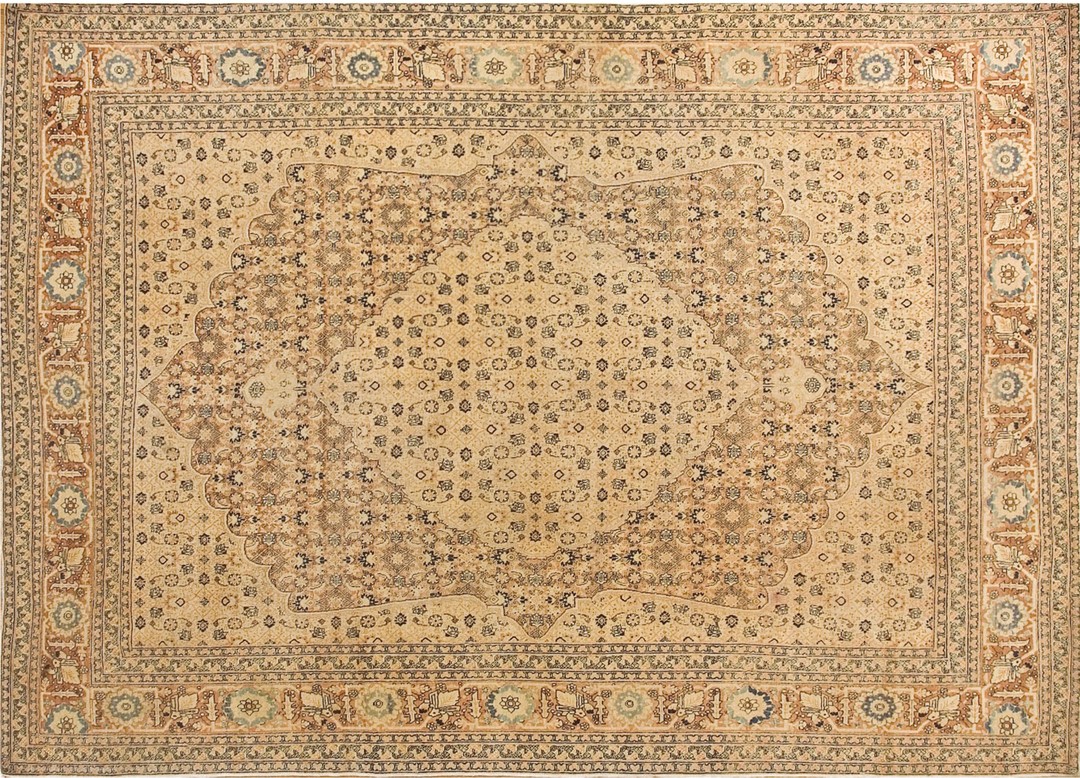


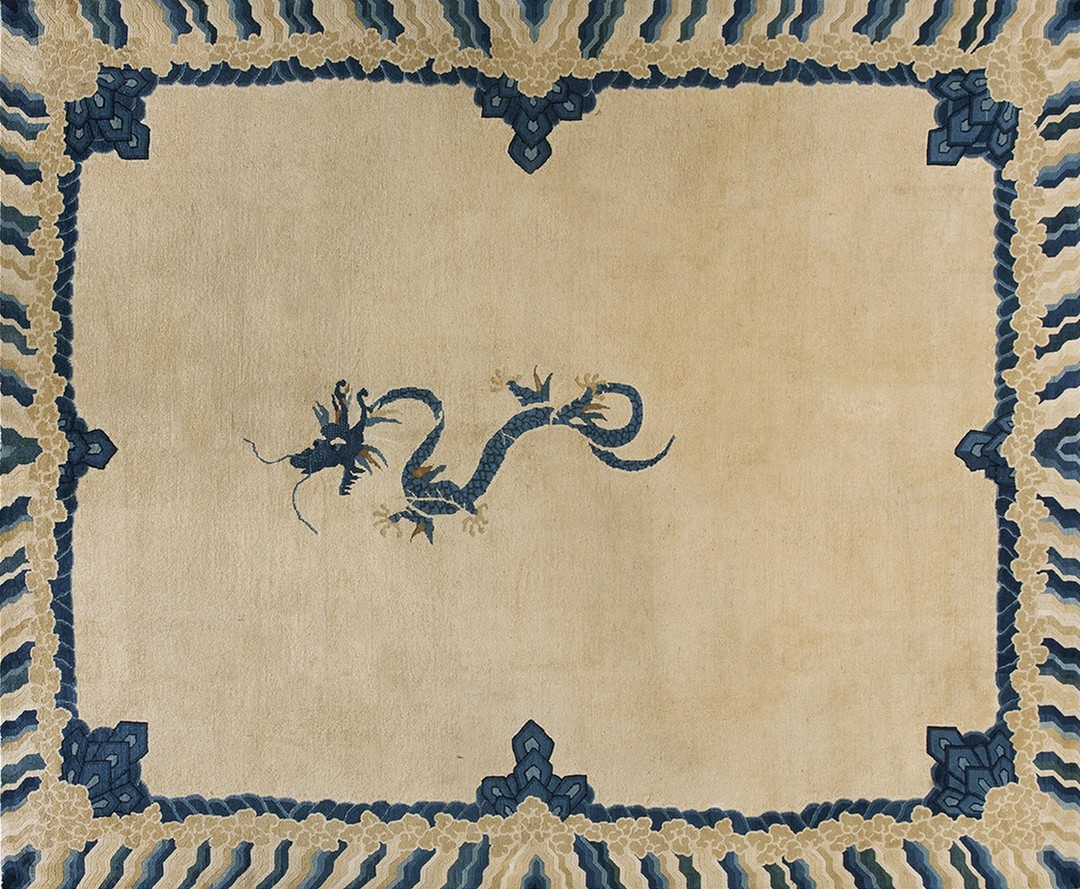


FAQ
- How do you choose bedroom rugs for a minimalist style?
Minimalist bedroom rugs typically feature subtle textures, neutral colors, and simple patterns that don’t distract from the space.
- Should bedroom rugs extend past nightstands?
Bedroom rugs usually look more balanced when they extend under nightstands, creating a unified furniture layout.
- What shape bedroom rugs work best?
Rectangular bedroom rugs are most common, but round rugs can work well under smaller beds or in reading corners.
- Can bedroom rugs handle pets?
Bedroom rugs with dense weaves and low pile handle pet hair better and are easier to vacuum regularly.
- Are handmade bedroom rugs worth the cost?
Handmade bedroom rugs often cost more but typically last longer and offer better materials and craftsmanship.
- Do bedroom rugs help with noise reduction?
Bedroom rugs help reduce noise by absorbing sound, which is especially useful in apartments or rooms with hardwood floors.
- Should bedroom rugs be centered in the room?
Bedroom rugs usually look best centered under the bed rather than centered in the room, keeping the bed as the focal point.
- What bedroom rugs work best in small rooms?
In small bedrooms, 5×8 rugs or side runners help add comfort without overwhelming the space.
- Are bedroom rugs safe for hardwood floors?
Bedroom rugs are safe for hardwood floors when used with breathable rug pads that prevent moisture buildup and scratches.
- How often should bedroom rugs be cleaned?
Bedroom rugs should be vacuumed weekly and professionally cleaned every 12–24 months, depending on foot traffic.
- Can bedroom rugs go wall to wall under furniture?
Bedroom rugs typically don’t need to go wall to wall, but they should be large enough to fit under the bed and nearby furniture.
- How do you keep bedroom rugs from slipping?
Bedroom rugs stay in place best when paired with a rug pad, which adds grip and prevents bunching on hard floors.
- Are wool bedroom rugs good for allergies?
Wool bedroom rugs can be allergy-friendly because they trap dust particles until vacuumed, unlike some synthetic fibers.
- What pile height is ideal for bedroom rugs?
Low to medium pile bedroom rugs offer a balance of softness and easy cleaning, making them practical for everyday use.
- Are patterned bedroom rugs better than solid ones?
Patterned bedroom rugs help hide wear and add visual interest, while solid rugs create a quieter, more minimalist bedroom feel.
- Should bedroom rugs match the bedding?
Bedroom rugs don’t need to match bedding exactly, but coordinating tones or complementary colors creates a more cohesive look.
- What colors work best for bedroom rugs?
Bedroom rugs often look best in soft neutrals or muted tones, such as beige, gray, or faded blues, which promote a calm atmosphere.
- Are bedroom rugs necessary if you have carpet?
Bedroom rugs aren’t required over carpet, but they can add texture, warmth, and visual separation, especially under the bed.
- How big should bedroom rugs be for a king bed?
King-size bedroom rugs usually measure 9×12, ensuring the rug extends evenly beyond the bed and anchors the furniture visually.
- How big should bedroom rugs be for a queen bed?
Bedroom rugs for queen beds are typically 8×10, allowing the rug to extend beyond the sides and foot of the bed for balance.
- Are high-pile bedroom rugs comfortable to sleep next to?
High-pile bedroom rugs feel plush underfoot, but low-to-medium pile rugs are often easier to clean and maintain in daily use.
- What is the best rug material for bedroom rugs?
Wool is the most popular material for bedroom rugs because it’s soft, insulating, and durable, making it comfortable for bare feet.
- Should bedroom rugs go under the bed or beside it?
Bedroom rugs are most commonly placed partially under the bed so they frame it, but runners on each side also work well in smaller bedrooms.
- What size bedroom rugs work best for most bedrooms?
Bedroom rugs usually work best when they extend at least 18–24 inches beyond the bed, with common sizes being 8×10 or 9×12 for queen and king beds.