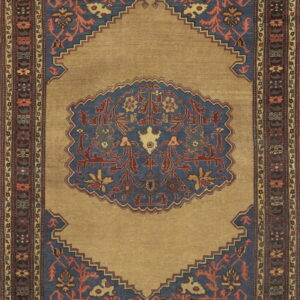
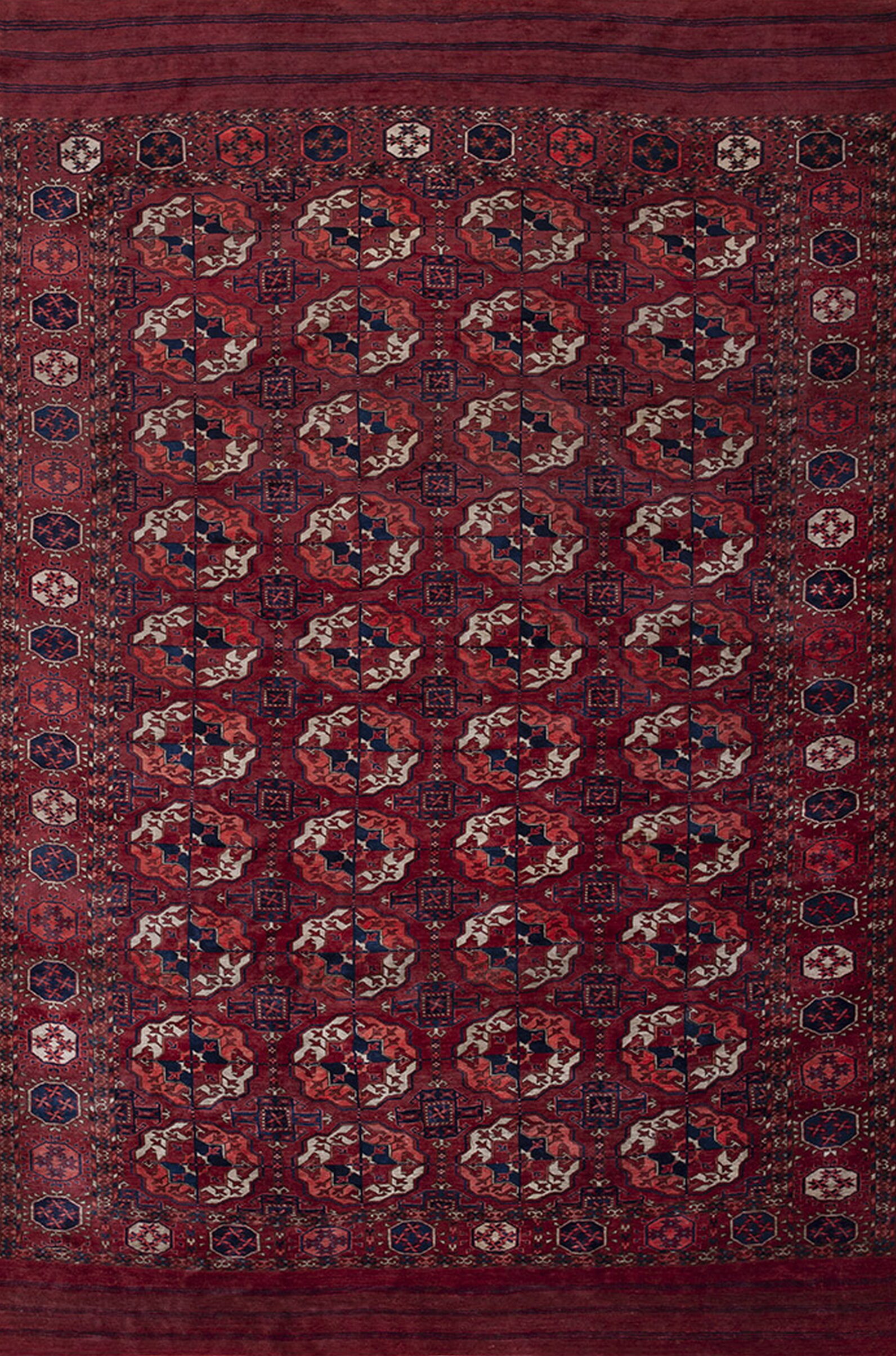

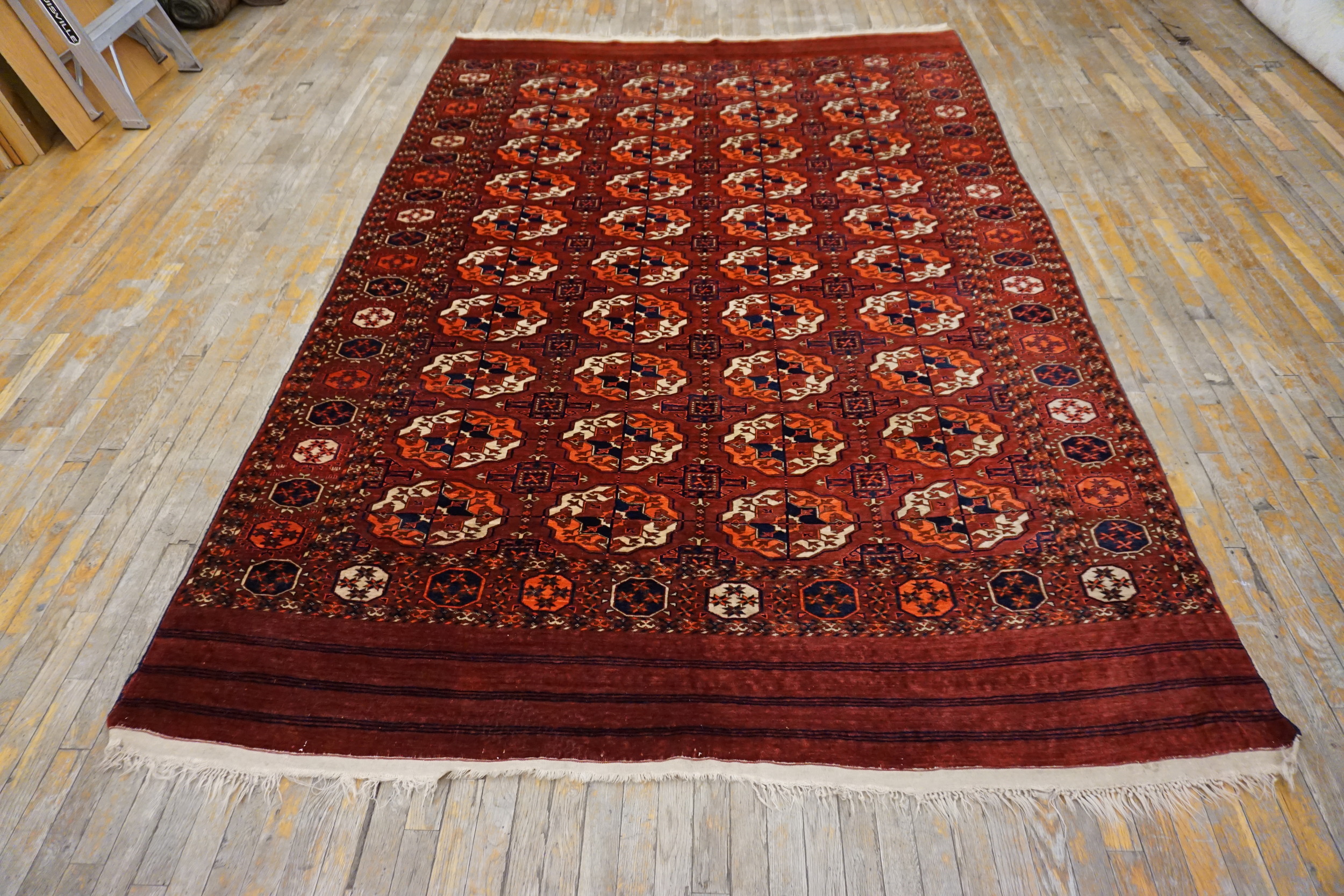
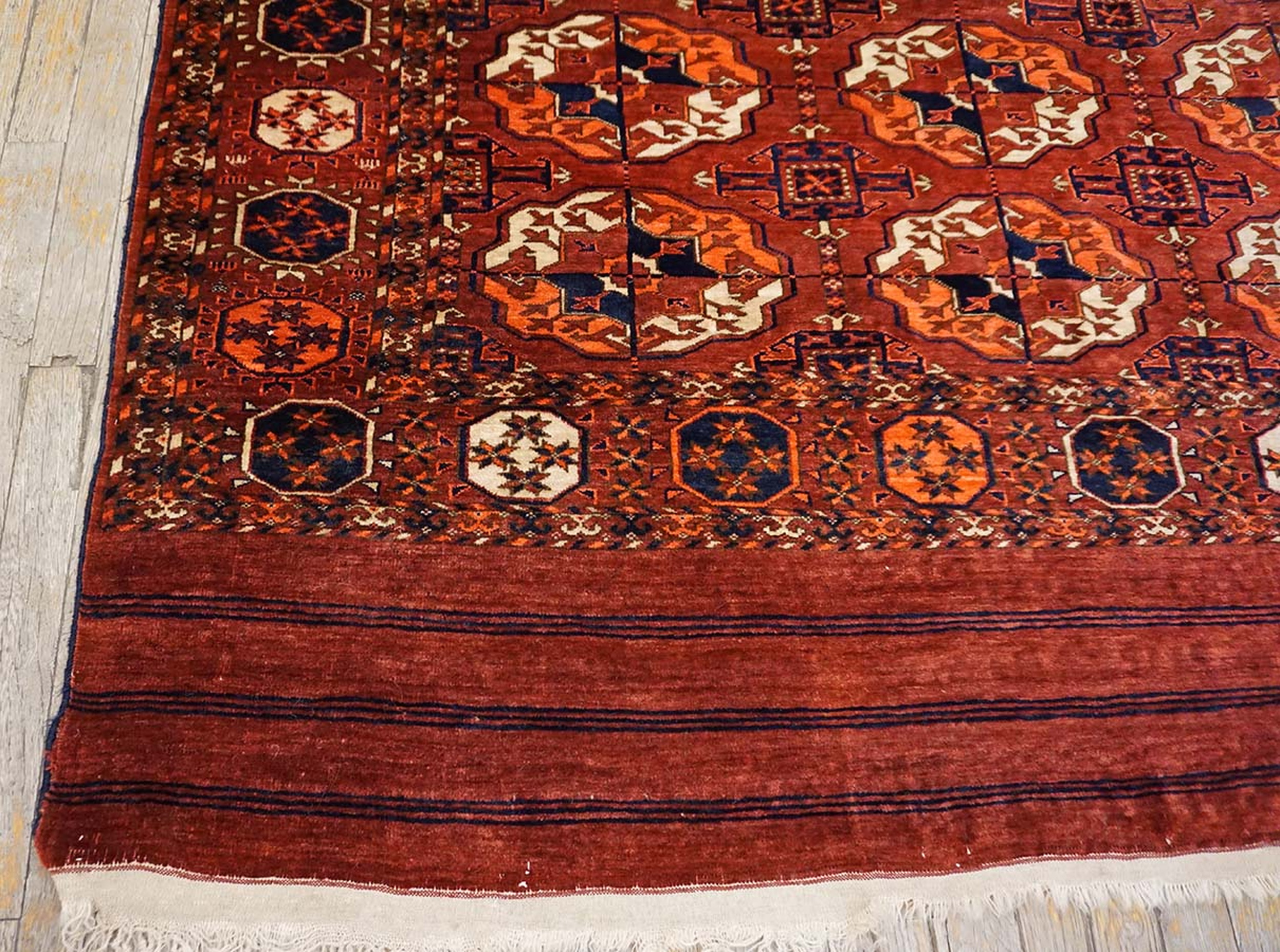



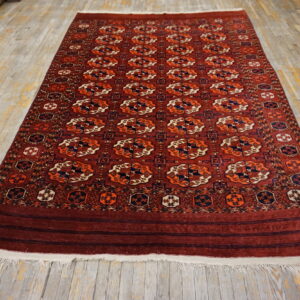
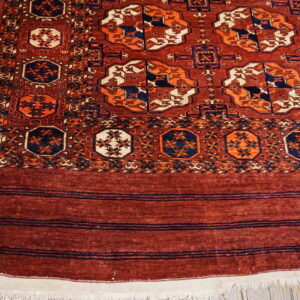


Antique Turkmen – Tekke Caucasus 1850s Rug, Country of Origin: Caucasus, Circa Date: 1850s. This exceptional example of nomadic weaving originates from the Central Asian regions under the influence of Tsarist Caucasus during the mid-19th century. The Tekke tribe’s masterful use of hand-spun wool and natural dyes is immediately apparent in the rich, saturated red palette of madder and indigo.
The field is dominated by the characteristic Tekke Gul, a repeating octagonal medallion rendered in deep red crimson, navy blue, and ivory accents. This highly organized, repeating structure creates a mesmerizing visual rhythm across the surface, typical of an allover design favored by tribal weavers to maximize visual impact and density within the composition.
Dating to the 1850s, this piece predates the widespread commercialization of rug production, representing a pure expression of tribal artistry and utility. Such early examples are highly sought after by collectors of antique rugs for their superb handle, robust construction, and the incomparable patina achieved through generations of careful use.
The enduring geometric beauty and historical depth of this red weaving make it a foundational element for any sophisticated interior design scheme. While many Tekke weavings were created in smaller formats, the substantial size of this particular piece allows it to function effectively as a statement accent or a grand entryway runner, offering the decorative weight of larger room-size rugs.