
Introduction to Art Nouveau Rugs
Discover our curated selection of luxurious Art Nouveau rugs and elevate your home decor instantly.
What Defines an Art Nouveau Rug?
An Art Nouveau rug is instantly recognizable by its signature whiplash curves, a term coined to describe the sweeping, fluid lines that ripple across its surface. Unlike rigid geometric patterns or symmetrical medallions of earlier styles, these rugs favor organic movement, echoing the way vines curl or water flows. Their designs draw heavily from nature—stylized florals, intertwining vines, and delicate botanical motifs—yet they are never literal imitations. Instead, they are transformed into patterns that feel at once ornamental and modern, striking a balance between representation and abstraction. The color palettes of Art Nouveau carpets are equally integral to their identity.
Muted greens, soft golds, dusty blues, and earthy tones harmonize in a way that reflects the movement’s pursuit of unity between art and life. Beyond surface beauty, these rugs embody a philosophy: they were not conceived as mere floor coverings but as decorative art rugs, part of a total design aesthetic where every object in a room contributed to the larger artistic vision. In this sense, they were a form of functional fine art, bridging utility and beauty.
Brief History and Significance
The Art Nouveau movement emerged in the late 19th century, flourishing roughly between 1890 and 1910 across Europe and beyond. Born out of a reaction against industrial mass production and the historical revival styles that dominated Victorian interiors, it sought to establish a new language of design that was unmistakably modern yet deeply rooted in nature.
Art Nouveau rugs became an essential medium for this vision, helping to define interiors that embraced the ideal of the Gesamtkunstwerk—the “total work of art” in which architecture, furniture, textiles, and decorative objects coexisted in perfect harmony. Leading figures in the decorative arts contributed to this transformation.
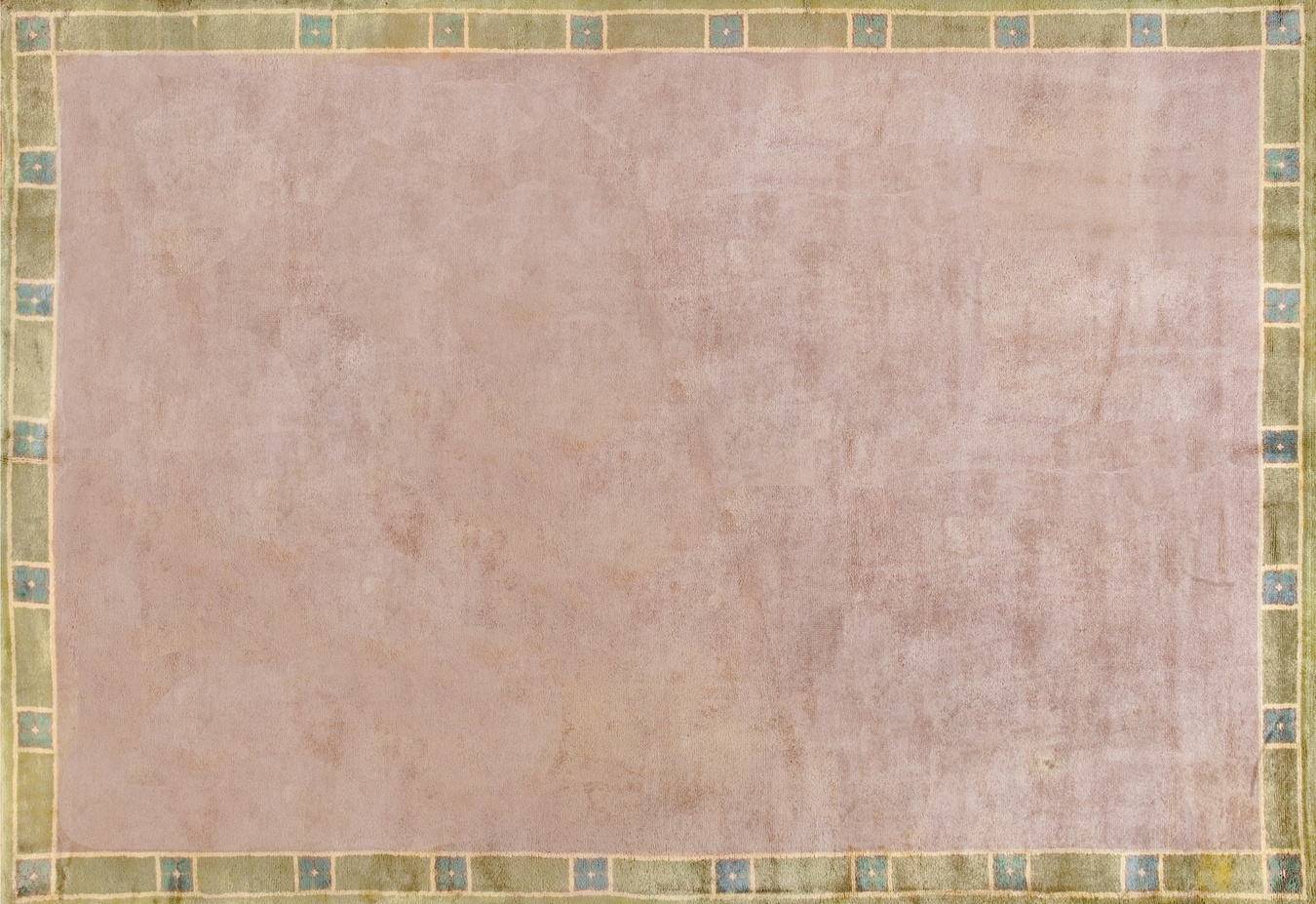
William Morris, whose earlier Arts and Crafts work inspired the movement, set the precedent for nature-inspired rugs with handwoven designs that emphasized craftsmanship. Designers such as C.F.A. Voysey and Charles Rennie Mackintosh pushed these ideas forward, introducing bolder abstractions of flowers, birds, and flowing lines that embodied Art Nouveau’s ethos.
On the Continent, architects and designers like Victor Horta integrated these rugs into their interiors, ensuring they worked in concert with curving staircases, stained glass, and wrought iron details. The historical significance of these rugs lies not only in their visual innovation but also in their cultural role. They reflect a period when art was democratized—brought into everyday life through objects that were both functional and beautiful. Unlike purely ornamental paintings or sculptures, nature-inspired rugs offered a tactile, lived experience of the new style.
They transformed the domestic sphere, aligning private spaces with the radical artistic spirit of their age. Today, surviving Art Nouveau carpets stand as artifacts of a movement that reshaped design history. Their sinuous lines, botanical pattern rugs, and harmonious palettes continue to resonate with collectors, interior designers, and historians alike. As much as they are prized for their craftsmanship, they also embody an era’s dream of uniting life and art in every detail of the home.
Origins & Development
When Did Art Nouveau Rug Weaving Begin?
Art Nouveau rug weaving began in the late 19th century, roughly between 1890 and 1910, coinciding with the height of the broader Art Nouveau movement. This was a time when decorative arts underwent a radical transformation, breaking away from historical revival styles and embracing a distinctly modern aesthetic rooted in nature and fluidity.
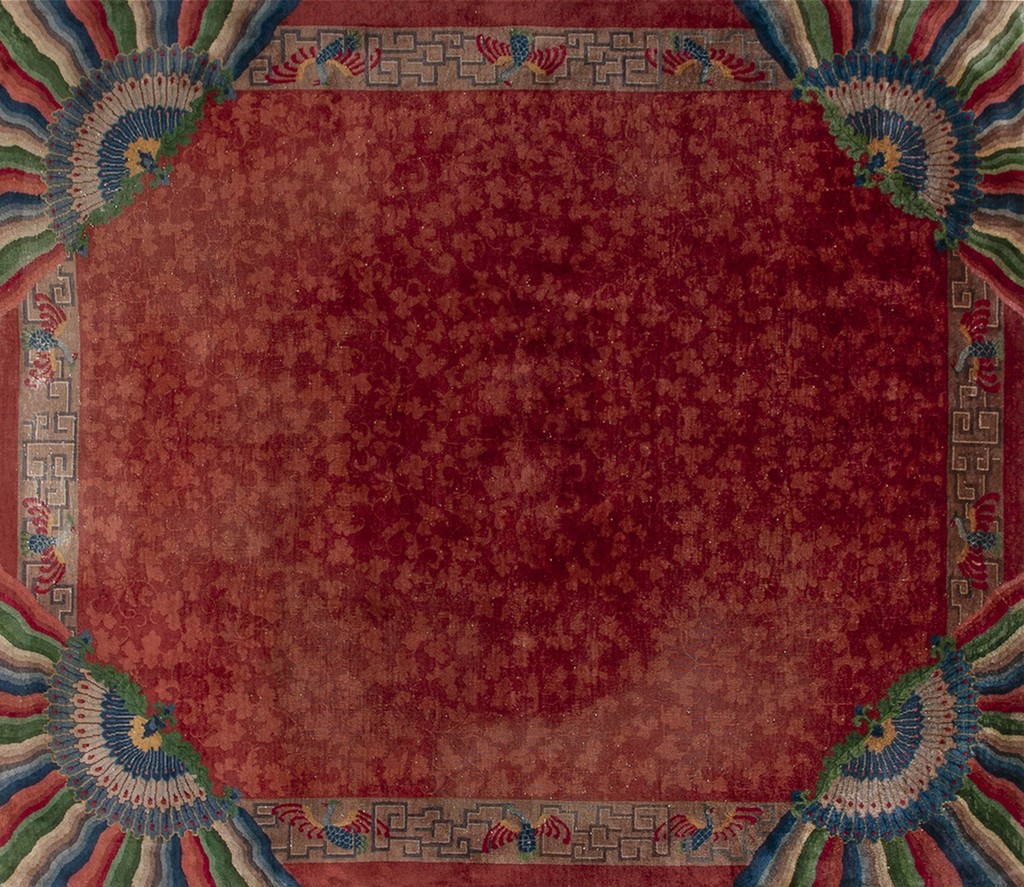
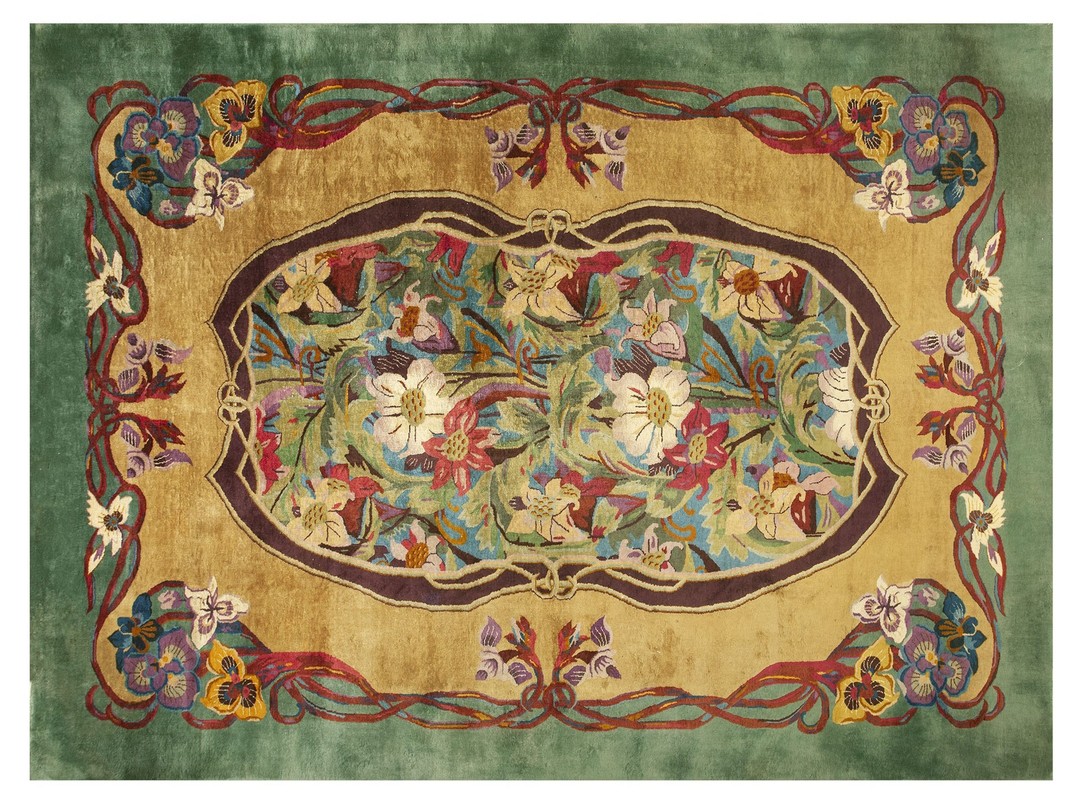
Allover Hand Knotted Antique Chinese Art Nouveau Design Rug by Rugs On Net
Rugs emerged as an ideal medium for this experimentation, as they could carry the new motifs into the heart of domestic interiors. The origins of Art Nouveau rugs lie in this desire to merge fine art with functional craft, ensuring that beauty was not confined to galleries but lived with every day.
Where Were the Earliest Art Nouveau Carpets Produced?
The first Art Nouveau carpets were produced across several cultural centers in Europe, each adding its own interpretation to the style. In Britain, William Morris and his firm Morris & Co. laid the groundwork through their Arts & Crafts carpets, emphasizing handcraft, natural dyes, and stylized botanical designs.
In France and Belgium, particularly in Paris and Brussels, workshops produced rugs that echoed the fluid elegance of Art Nouveau architecture and furniture. Austria’s Vienna Secession played a decisive role, with designers creating carpets under the Wiener Werkstätte that married curvilinear patterns with restrained geometric precision.
Beyond Europe, the United States contributed through the Arts & Crafts movement, where designers translated the organic motifs of the style into rugs suited for American interiors.
Geographic & Cultural Origins
The story of Art Nouveau rugs is inseparable from the cultural exchange among key cities and countries. Britain contributed the ethos of the Arts & Crafts carpet, where craftsmanship was elevated as a form of social reform. France infused the style with artistic flair, as seen in Parisian decorative arts that emphasized elegance and sensual linework.
Belgium, especially Brussels, became a hub for textile artistry, producing carpets that complemented the architecture of Victor Horta. In Central Europe, Vienna brought a more rational, geometric character to the designs, showing how Art Nouveau could intersect with early modernist ideas. Even Ireland’s Donegal workshops produced rugs in this style, proving the reach of the movement.
Together, these centers demonstrate a cross-pollination of British craft ideals, French artistry, and Central European geometry, creating a unified yet diverse expression of the Art Nouveau spirit.
Name & Etymology
The very name Art Nouveau originated in Paris, from Siegfried Bing’s Maison de l’Art Nouveau, a gallery that championed the new style around 1895. However, the movement quickly acquired different names across Europe, reflecting its international scope. In Germany, it was called Jugendstil, after the avant-garde magazine Die Jugend. In Austria, it was known as Sezessionstil, tied to the Vienna Secession group of artists and designers.
In Italy, the term Stile Liberty referenced the influence of London’s Liberty & Co. store, while in Spain, the parallel movement became Modernismo, with Barcelona as its epicenter. These varying terms—whether Jugendstil carpet, Sezessionstil textile, or Stile Liberty rug—all describe a shared artistic language that transcended borders.
By the turn of the century, Art Nouveau carpets had become more than decorative objects: they were symbols of a global movement, fusing local traditions with international ideas. From the Wiener Werkstätte rug to the Arts & Crafts carpet of Britain, each piece reflects the interconnectedness of an era that sought to unify art, design, and life.
Design Characteristics of Art Nouveau Rugs
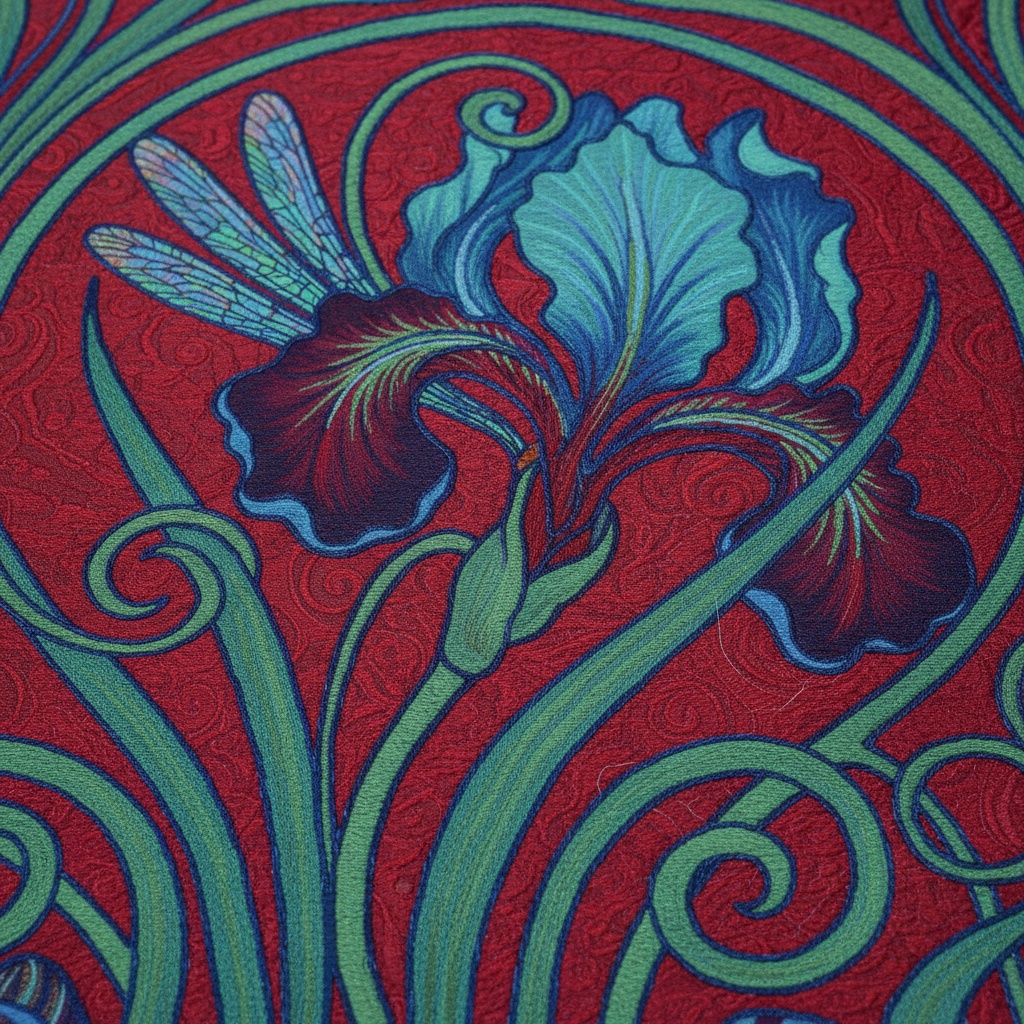
Curving lines and natural forms in an iris motif.
Why Do Art Nouveau Rugs Feature Organic Curves?
The defining feature of an Art Nouveau rug is its reliance on organic curves, often sweeping in asymmetrical arcs across the textile. These forms were meant to echo the rhythms of nature—vines unfurling, water flowing, flowers bending in the wind.
For the designers of the period, rigid Victorian symmetry represented a stifling past, while these curves suggested vitality, renewal, and growth. An organic curve carpet conveyed more than surface decoration: it embodied the very philosophy of Art Nouveau, where life and art intertwined. By weaving curves into textiles, artisans could bring movement into static surfaces, allowing floors and interiors to feel alive with natural energy.
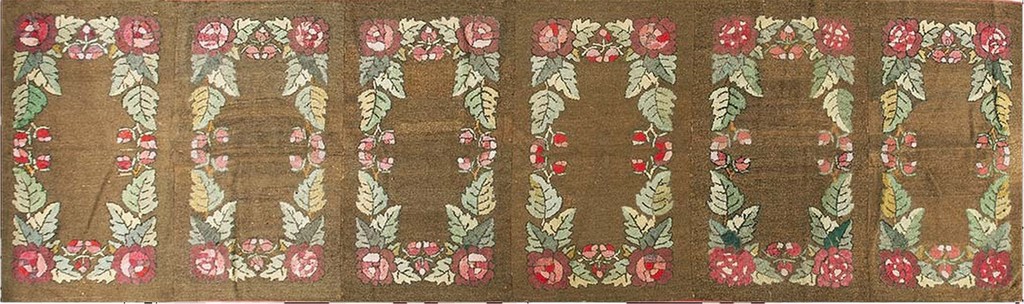
Antique Large American Hooked – Loop Pile Rug by Rugs On Net
Key Motifs & Patterns
- Vines and Tendrils — Why: These symbolize growth and interconnectedness, forming natural frames that wind throughout the rug’s surface.
- Irises, Lilies, Roses, and Poppies — Why: Each flower carried symbolic weight, from the iris representing faith and wisdom to the poppy evoking beauty and sleep. Their stylized forms became staples of the Art Nouveau floral rug.
- Peacocks — Why: Known for their shimmering plumage, peacocks represented renewal, immortality, and luxurious beauty, making them a favorite motif.
- Dragonflies and Butterflies — Why: These delicate creatures stood for transformation and fleeting grace, fitting the era’s fascination with ephemerality.
- Femme-Fleur (Woman-Flower) — Why: A distinctly Art Nouveau theme, this motif blended the feminine form with blossoms, symbolizing harmony between humanity and nature.
Together, these patterns transformed symbolic rug patterns into a visual language that extended beyond ornamentation into cultural meaning.
Color Palettes: From Natural Dyes to Jewel Tones
Color was as carefully considered as line and motif. Early Art Nouveau carpets often relied on natural dyes—moss greens, earthy ochres, muted indigos—that mirrored the landscapes inspiring their designs. As the movement progressed, richer tones began to dominate. Deep ruby reds, sapphire blues, emerald greens, and even metallic accents entered the vocabulary, imbuing rugs with a jewel-like radiance.
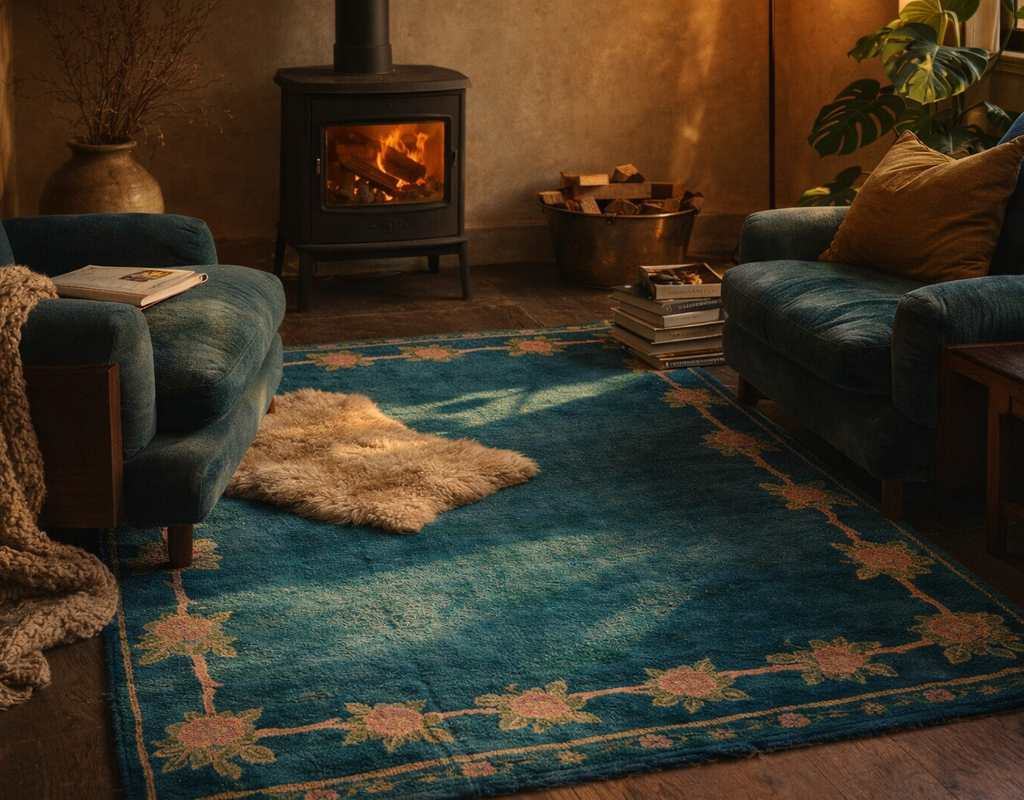
A richly colored teal rug anchors this inviting reading nook warmed by a crackling fire.
This transition reflected both advances in dye technology and the stylistic shift toward opulence that would pave the way for Art Deco. Whether subtle or bold, these palettes always emphasized harmony, reinforcing the idea that every hue should feel organically connected to the natural world.
Symbolism in Art Nouveau Rug Design
- Iris — Why: Associated with faith and spiritual depth, its inclusion lent rugs a sense of reverence.
- Lily — Why: A traditional emblem of purity, lilies added serenity and refinement.
- Rose — Why: Linked to love and passion, roses underscored the emotional richness of design.
- Peacock — Why: Renewal and immortality, a statement of timeless elegance.
- Dragonfly — Why: Transformation, reminding viewers of life’s fleeting beauty.
This symbolic layering ensured that an Art Nouveau rug was not simply decorative but also narrative—each pattern told a story that resonated with the ideals of the age.
Whiplash Motifs and Their Influence
The whiplash motif—a rapid, looping curve that darts across the surface—became the movement’s most iconic device. It conveyed energy, dynamism, and modernity, offering a deliberate rejection of static, ornamental symmetry. In rugs, the motif often appeared as interlacing lines that suggested both botanical forms and pure abstraction.
Its impact extended well beyond 1900: the same sweeping arcs informed Art Deco geometry of the 1920s and even resurfaced during the 1960s design revival. Contemporary designers still draw upon this visual language, proving that the whiplash line remains one of the most enduring and influential contributions of Art Nouveau textile design.
Materials & Construction
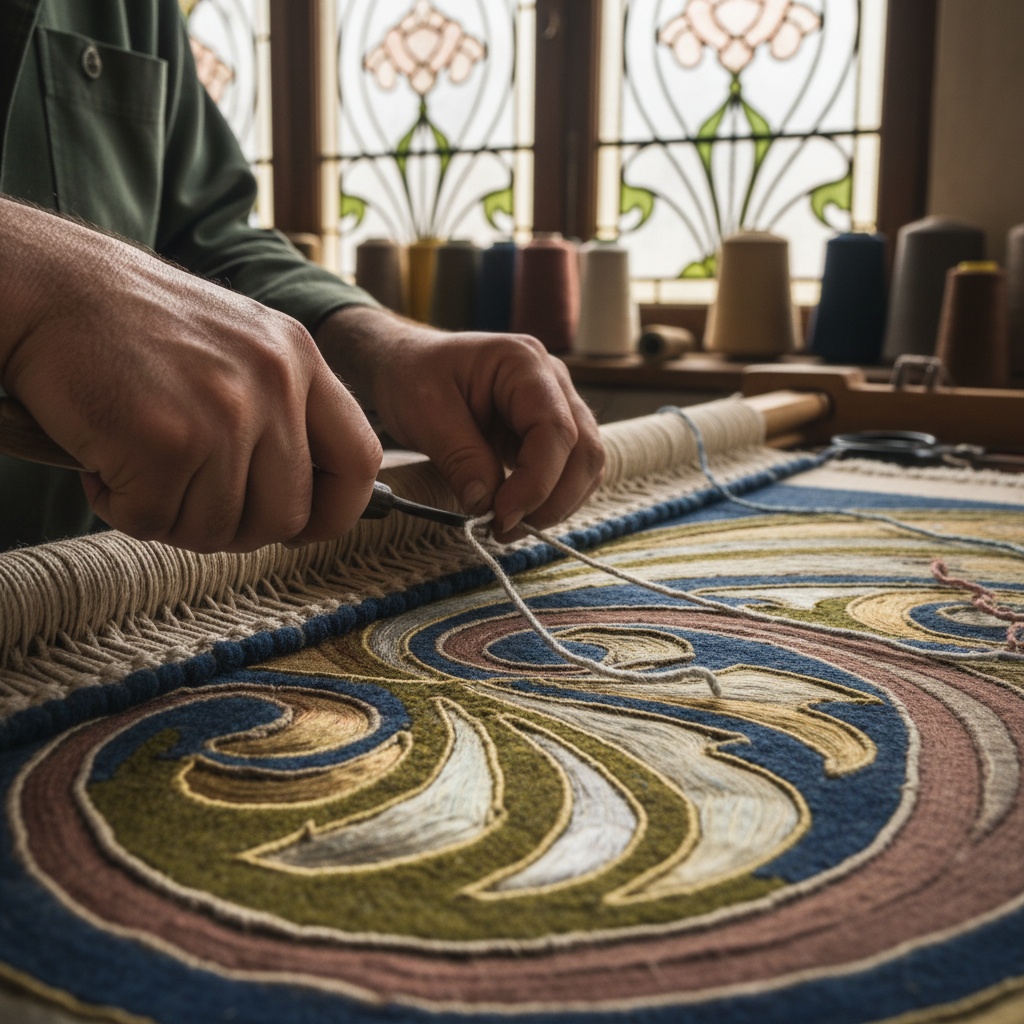
Close view of hand-knotting yarn into a rug.
How is an Art Nouveau Rug Constructed Traditionally?
A traditional Art Nouveau rug was typically created through hand-knotting, the time-honored method that allowed intricate patterns and flowing lines to be woven with precision. Artisans used a wool pile knotted onto cotton or silk foundations, ensuring both durability and flexibility in the weave. The Turkish knot (Ghiordes knot) was often employed, giving the rugs resilience underfoot while maintaining the ability to render fine detail.
Alongside pile carpets, tapestry-weaving and flatweaves were also produced, particularly in workshops influenced by Arts & Crafts ideals. This combination of construction methods underscores the movement’s experimental spirit, embracing both tradition and innovation in textile arts.
What Materials Are Common in Art Nouveau Carpets?
The most common material in an Art Nouveau carpet was wool, valued for its ability to absorb natural dyes richly and for its durability in everyday use. Wool piles gave the rugs warmth and softness, making them as functional as they were beautiful.
Silk was also used, though less frequently, either as a foundation or as inlay within the pile. Cotton formed another frequent foundation, providing stability. Together, these materials reflect the dual goals of practicality and artistry. A wool pile Art Nouveau rug offered the best balance of wear and aesthetics, while occasional silk inclusions elevated the design into a true luxury piece.
Does Silk Enhance Art Nouveau Rug Detailing?
Yes—silk enhances Art Nouveau rug detailing by providing luster and contrast. A silk detail rug allowed artisans to highlight fine curves, floral veins, or shimmering feathers in motifs like peacocks and dragonflies. The reflective quality of silk fibers caught light differently than wool, adding depth and dimension to the pattern. In high-end pieces, silk could make the whiplash motif or botanical forms appear almost animated, reinforcing the movement’s fascination with dynamism and natural vitality.
Are Art Nouveau Designs Hand-Knotted or Machine-Made?
Both approaches existed. At the artisanal end, hand-knotted carpets from workshops such as Morris & Co. and Donegal carried the hallmarks of craftsmanship and individuality. At the same time, the late 19th century saw the rise of industrial weaving centers, where machine-woven rugs—notably from Wilton and Axminster looms—brought Art Nouveau aesthetics to a wider audience.
The machine-made versions were often coarser and lacked the subtle irregularities of handspun wool, but they democratized access to the new decorative style, allowing middle-class households to participate in the movement.
Signs of Authentic Art Nouveau Craftsmanship
Recognizing an authentic antique rug involves paying attention to materials and construction details. Hallmarks include:
- Natural dye patina — subtle fading that deepens rather than diminishes the design.
- Handspun wool — creating slight variations in thickness that give texture and life to the surface.
- Minor irregularities — asymmetries in knots or pattern repeats that reveal the artisan’s hand rather than a machine’s uniformity.
- Silk highlights — when present, carefully integrated rather than mass-applied.
These signs not only confirm authenticity but also reflect the values of the era, when craftsmanship was celebrated as a union of art and labor. Ultimately, the value of an Art Nouveau carpet—whether a wool pile Art Nouveau rug or a rarer silk detail rug—rests on the interplay between material, method, and the unmistakable design language of the period.
Regional Styles & Variations
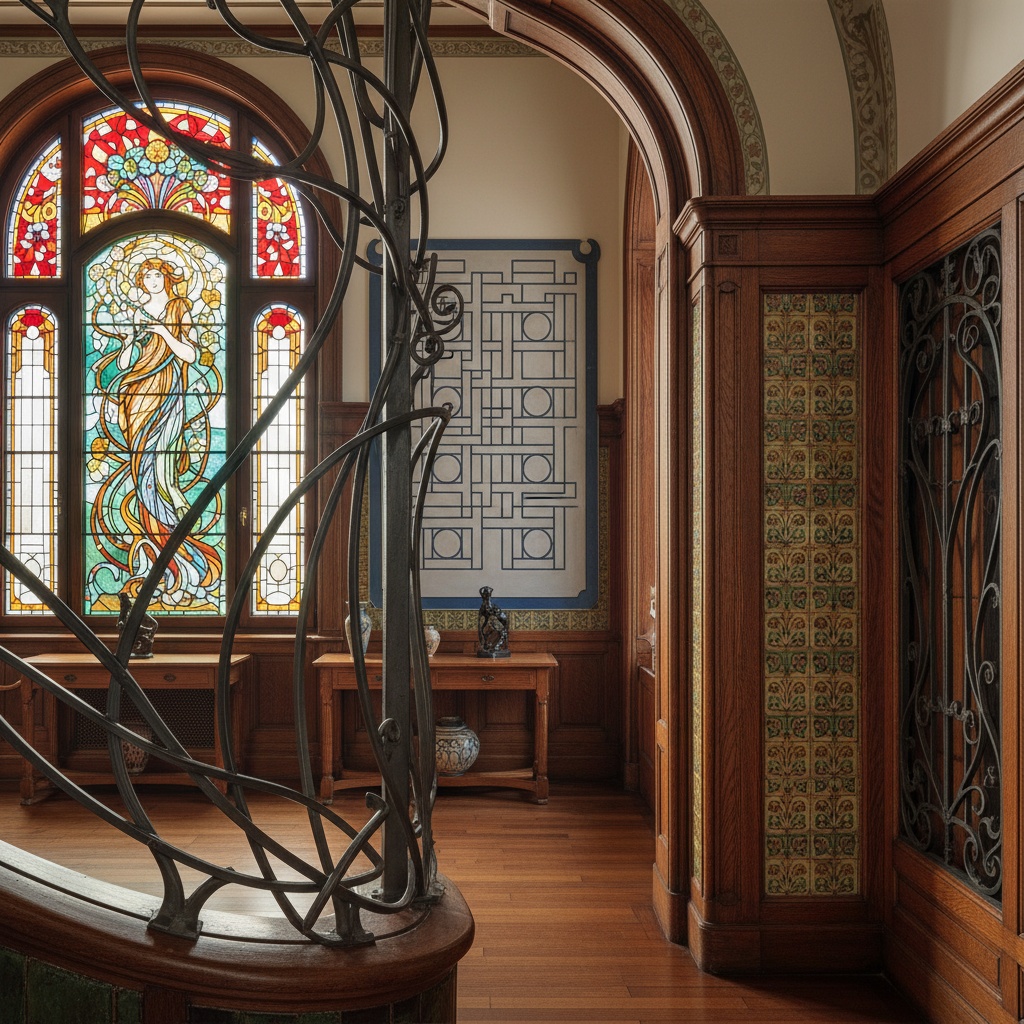
Wood paneling and tile detailing in an interior space.
Britain & Arts & Crafts Influence
In Britain, Art Nouveau rugs emerged directly out of the Arts & Crafts movement, where designers such as William Morris championed craftsmanship, natural dyes, and traditional weaving methods. British interpretations tended to favor orderly floral repeats, sometimes framed with Celtic-inspired borders, which gave them a structured rhythm.
Color palettes leaned toward muted greens, soft reds, and earthy browns, aligning with the Arts & Crafts preference for tones drawn from nature rather than synthetic brilliance. The Irish workshops of Donegal played a pivotal role, producing the now-iconic Donegal Art Nouveau rug that married Morris’s vision of handcraft with the new flowing lines of continental design. These British contributions set a moral and aesthetic foundation for the style, emphasizing honesty of material and clarity of form.
France & Belgium: Sensuality and Asymmetry
In contrast, France and Belgium infused their rugs with the movement’s sensuality, often emphasizing asymmetry and richly curving lines. Designers in Paris and Brussels embraced the whiplash motif, letting it coil across surfaces in dynamic sweeps. The femme-fleur motif—where a female figure merges with blossoms—was especially prominent in French rugs, underscoring the theme of harmony between humanity and nature.
Color palettes here were far bolder than in Britain, with vibrant reds, jewel tones, and luminous contrasts. These Art Nouveau carpets mirrored the architectural and decorative masterpieces of Victor Horta and Hector Guimard, functioning as tactile equivalents of their sinuous wrought iron and stained glass.
Central Europe: Secessionist Geometry
In Austria and Germany, the Art Nouveau style—called Sezessionstil and Jugendstil—moved away from pure organic naturalism toward more abstract and geometric motifs. The Secessionist rug often featured stylized floral forms reduced to flat planes, grids, or repeating angular patterns, reflecting the broader Vienna Secession philosophy of uniting art with rational structure.
The Wiener Werkstätte workshops in Vienna became known for these designs, where rugs frequently echoed architectural detailing or graphic design principles. The restrained use of line and flattened color created carpets that anticipated the clarity of modernist abstraction, showing how Art Nouveau in Central Europe acted as a bridge to the next era of design.
United States & Global Adaptations
Across the Atlantic, the United States adopted Art Nouveau aesthetics largely through the Arts & Crafts overlap, as seen in rugs produced for mission-style interiors. The style’s international reach also extended into unexpected centers. In Jerusalem, the Bezalel School fused Art Nouveau linework with Jewish iconography, creating the distinctive Bezalel carpet—a blend of tradition and modernity.
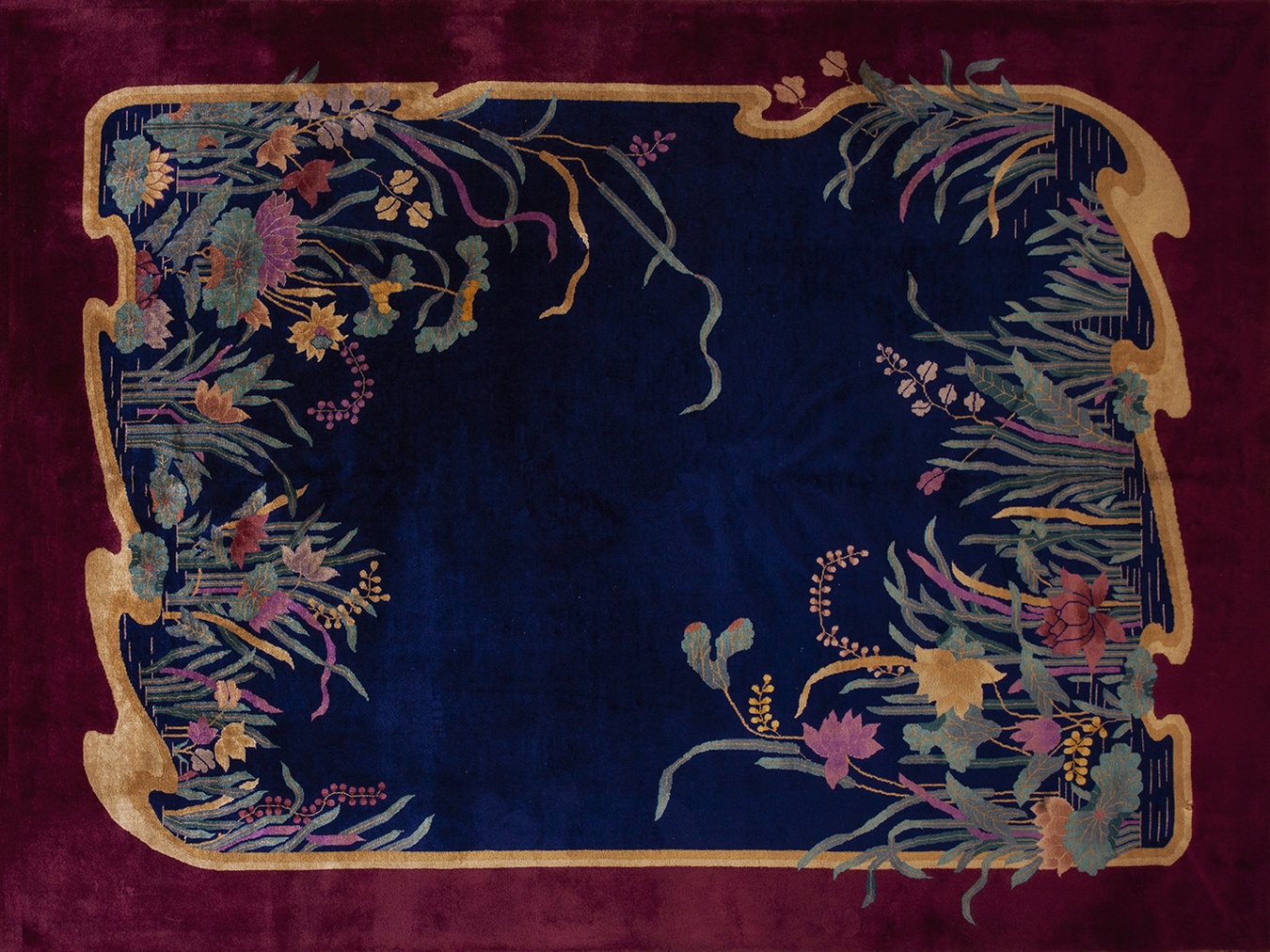
Antique Chinese – Art Deco Room Size Wool Blue Rug – by Rugs On Net
In Spain, Modernismo rugs drew from the same decorative principles but reflected Catalan exuberance, echoing the swirling forms of Antoni Gaudí’s architecture. These adaptations demonstrate how local culture reshaped the universal Art Nouveau vocabulary, ensuring that no two regions produced identical results. The variety of regional expressions underscores a central truth: Art Nouveau rugs were never monolithic.
From the muted orderliness of Britain to the sensual vibrancy of France, from the geometric abstraction of Vienna to the cultural fusions of Jerusalem and Barcelona, each style reflected its place of origin. This global reach created a rich diversity under one unifying design philosophy, allowing the Donegal Art Nouveau rug, the Secessionist rug, the Bezalel carpet, and the Modernismo rug to coexist as distinct yet related chapters in the same artistic story.
Comparison: Antique Originals vs. Modern Reproductions
How Do Vintage Art Nouveau Rugs Compare to Reproductions?
The distinction between an antique vs modern Art Nouveau rug lies in both materials and execution. Antique originals, woven between 1890 and 1910, were typically hand-made using handspun wool, natural dyes, and traditional knotting techniques. This gave them subtle gradations of color, irregularities that reflected the artisan’s touch, and a surface that aged gracefully into a warm patina.
By contrast, many rug reproductions employ synthetic dyes and machine-spun fibers, producing brighter but less nuanced hues. Machine weaving also leads to uniformity, which can flatten the vitality that characterizes authentic Art Nouveau carpets. While reproductions can capture the general look, they often lack the depth of texture, tone, and individuality that make antique pieces enduringly collectible.
Motif Complexities and Value
The value of an Art Nouveau rug depends heavily on motif complexity and knot density. Original pieces with intricate whiplash curves, layered floral motifs, and detailed figurative elements—such as peacocks or femme-fleur imagery—demonstrate the highest level of artistry and therefore command greater prices. Rugs with simpler or repetitive designs tend to be less valuable, especially if machine-made.
In the marketplace, collectors prioritize pieces that show both artistic daring and technical excellence. These rug value factors—authenticity, materials, knot count, and the subtlety of motifs—are what separate an everyday decorative carpet from a collectible carpet with lasting historical and financial significance.
Modern Revivals: Materials & Methods
- Natural Wool and Dyes — Why: High-quality modern reproductions sometimes return to handspun wool and natural dyes, ensuring richer tones and a closer match to antique originals.
- Silk Highlights — Why: Used selectively, silk threads can replicate the shimmer and detailing of historic luxury pieces.
- Synthetic Fibers — Why: Found in lower-end reproductions, these materials make rugs more affordable but sacrifice authenticity and texture.
- Machine Weaving — Why: Industrial looms allow for mass production and consistency, though at the cost of individuality.
- Traditional Hand-Knotting — Why: Reproductions by workshops like Morris & Co. maintain historical fidelity, preserving the artistry and charm of originals.
Ultimately, whether antique or reproduction, the key for buyers is awareness. Authenticity, material quality, and design intricacy drive both value and collectability. A true antique offers irreplaceable character, while a faithful reproduction may provide the look and spirit of an Art Nouveau carpet at a more accessible price. Knowing how to evaluate these rug reproduction quality factors ensures informed choices for collectors, decorators, and investors alike.
Collecting, Value & Investment
Why Do Auction Prices for Art Nouveau Rugs Vary?
The auction price factors behind Art Nouveau rugs are tied to a combination of artistry, condition, and historical context. Elements such as rarity, maker, motif complexity, knot density, and materials all affect value. A rug designed by a recognized figure like William Morris or produced in a prestigious workshop such as Donegal or the Wiener Werkstätte will typically command far higher prices than anonymous or machine-made examples.
Condition also matters: rugs with intact borders, vibrant natural dyes, and minimal wear are more desirable than those with extensive damage or fading. In short, Art Nouveau rug value reflects both tangible qualities of craftsmanship and intangible qualities of cultural significance.
Does Provenance Add Significant Premium?
Yes—rug provenance can dramatically elevate the value of an Art Nouveau carpet. A piece linked to a renowned designer, workshop, or documented owner carries a story that collectors prize as much as the rug itself.
For instance, a rug tied to a notable Arts & Crafts designer or documented as part of a historic collection can sell for multiples of a similar but undocumented piece. Provenance provides assurance of authenticity and uniqueness, making it one of the most powerful drivers of premium prices at auction.
Are Limited-Edition Art Nouveau Reproductions Good Investments?
Limited-edition reproductions can represent worthwhile rug investments if they are produced to a high standard, using traditional materials and methods. Reproductions issued by reputable makers—such as Morris & Co. revivals—tend to retain value over time, especially when released in small numbers. However, mass-produced machine-made versions rarely appreciate.
Collectors should assess whether the reproduction is hand-knotted, employs natural dyes, and has clear documentation. While not equivalent to antiques, high-quality editions provide an accessible entry point into Art Nouveau collecting and may hold their value well within design markets.
Where Can Collectors Source Museum-Quality Art Nouveau Rugs?
Collectors seeking museum-quality Art Nouveau rugs typically look to major auction houses such as Christie’s or Sotheby’s, which occasionally feature rare examples in decorative arts sales. Specialist galleries in London, Paris, and New York also handle top-tier pieces, often with provenance and condition reports.
Additionally, museum deaccession sales occasionally release rugs to private buyers, though these opportunities are rare. Trusted expert dealers who specialize in antique textiles remain a crucial source, offering both inventory and professional guidance. For those building a serious collection, documentation and authenticity certificates are essential safeguards.
Should I Restore a Damaged Art Nouveau Carpet?
Restoration is a delicate issue. In many cases, rug restoration by a qualified professional can stabilize and preserve an antique’s value, especially if damage threatens the structure. Expert repairs that use period-appropriate materials and techniques can maintain integrity without erasing history. However, amateur or overly aggressive restoration—such as patching with mismatched fibers, over-dyeing, or trimming pile—often diminishes both value and authenticity.
For collectors, the rule is simple: if restoration is needed, it should always be carried out by textile conservators or highly skilled rug restorers who understand the nuances of Art Nouveau craftsmanship. At every level—whether considering rug provenance, auction price variability, or restoration decisions—the same principle applies: documentation, authenticity, and professional care are critical to protecting both the artistic and financial value of an Art Nouveau carpet.
Practical Advice & Modern Use
Can Art Nouveau Runners Suit Narrow Hallway Spaces?
Yes—an Art Nouveau runner can be an ideal rug for hallway spaces. The elongated whiplash curves and flowing floral motifs guide the eye forward, enhancing rather than overwhelming a narrow corridor.
Because many original and reproduction runners were designed with proportion in mind, their patterns stretch gracefully along the length of a hallway. Beyond aesthetics, wool runners also add warmth, reduce noise, and protect flooring in high-traffic areas. When chosen carefully, they turn what is often a transitional space into an artistic passageway.
Is Modern Furniture Compatible with Art Nouveau Carpets?
Absolutely. While these rugs originated around 1900, their versatility allows them to pair seamlessly with contemporary interiors. Modern décor with an Art Nouveau rug works especially well when the rug is used as a statement piece, its organic curves playing against minimalist furniture or geometric architecture.
In eclectic settings, the botanical motifs soften sharper design elements, while in minimalist spaces, they inject warmth and vitality. The adaptability of Art Nouveau carpets proves that they are not limited to period-style homes; they thrive in diverse environments, from sleek lofts to layered bohemian interiors.
Can Professional Cleaning Affect Art Nouveau Rug Pigments?
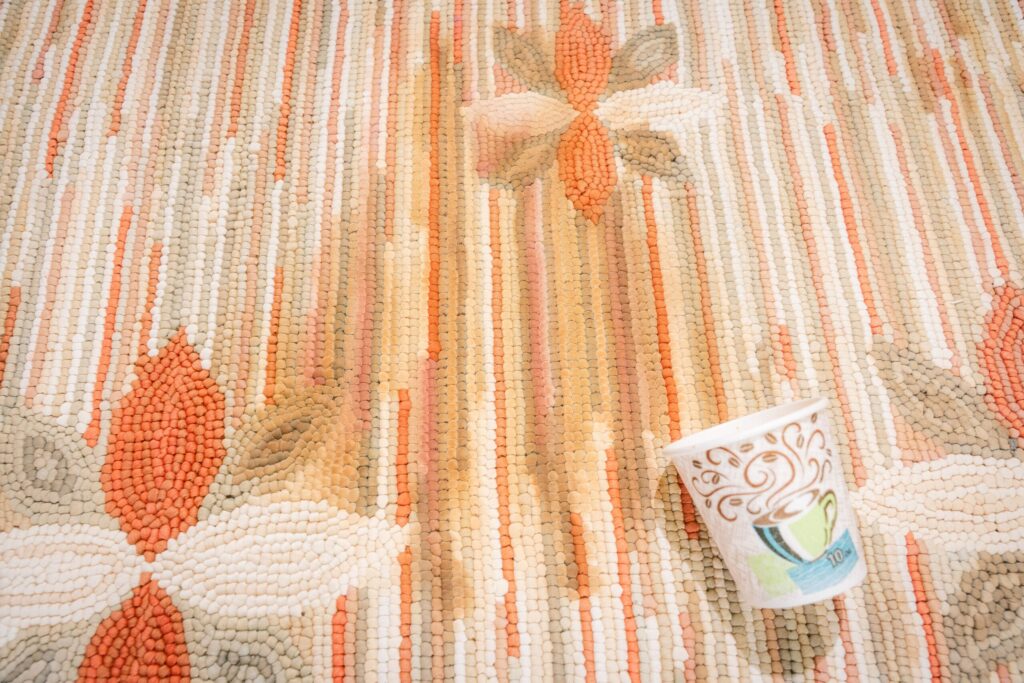
Close-up view of a tipped paper coffee cup resting on a handwoven wool rug, highlighting the rug’s dense pile, subtle color variations, and traditional geometric motifs in warm neutral and terracotta tones.
Yes, professional cleaning can affect the pigments of an antique carpet, especially when natural dyes are involved. Aggressive washing or the use of harsh chemicals risks bleeding or fading colors that have mellowed over a century.
For this reason, it is essential to use specialists trained in cleaning antique carpets, particularly conservators familiar with natural wool dyes and silk detailing. Gentle, pH-balanced methods preserve both vibrancy and fiber strength. Routine vacuuming and cautious care at home can minimize the need for intensive professional cleaning, prolonging both the life and authenticity of the rug.
Decorating Tips: Integrating Art Nouveau Rugs
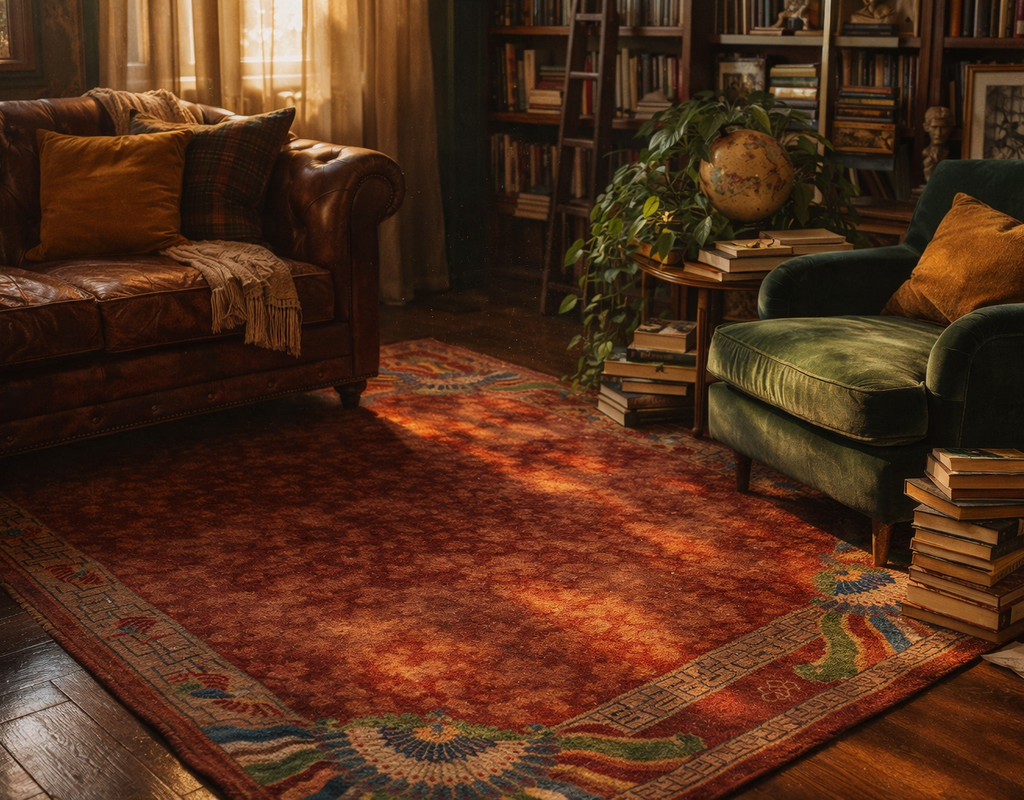
Sunlight catches the rich tones of the patterned rug in this inviting, book-lined reading nook.
- Use as Statement Art Underfoot — Why: The flowing motifs and jewel tones turn the rug into a centerpiece, transforming even a simple room into a curated space.
- Contrast with Modern Décor — Why: Pairing organic curves with clean-lined furniture emphasizes the rug’s artistry while keeping interiors balanced.
- Layer with Biophilic Design — Why: Since these rugs celebrate nature, combining them with plants, wood, and natural light enhances harmony.
- Frame Zones in Open Layouts — Why: Large Art Nouveau carpets can delineate living or dining areas, guiding flow without the need for walls.
- Accentuate Transitional Spaces — Why: Placing runners in hallways or stair landings elevates overlooked areas into design highlights.
By integrating carefully and maintaining them with expert care, Art Nouveau rugs reveal themselves as timeless companions for both historic and contemporary interiors—functional artworks that continue to inspire more than a century after their creation.
Legacy & Enduring Appeal
Lasting Impact on Rug & Interior Design
The legacy of Art Nouveau rugs extends far beyond their original decades of production. Their signature whiplash curves and botanical motifs directly influenced the streamlined geometry of Art Deco carpets, while their emphasis on natural inspiration foreshadowed today’s biophilic rug design.
The movement proved that rugs could be more than floor coverings—they could act as vehicles of artistic philosophy, merging craft, utility, and symbolism. In museums, surviving originals are treasured as cultural artifacts, representing one of the first truly modern design languages. At auction, they continue to attract collectors not only for their historical rarity but also for the enduring elegance of their design vocabulary.
Art Nouveau Rugs in Contemporary Spaces
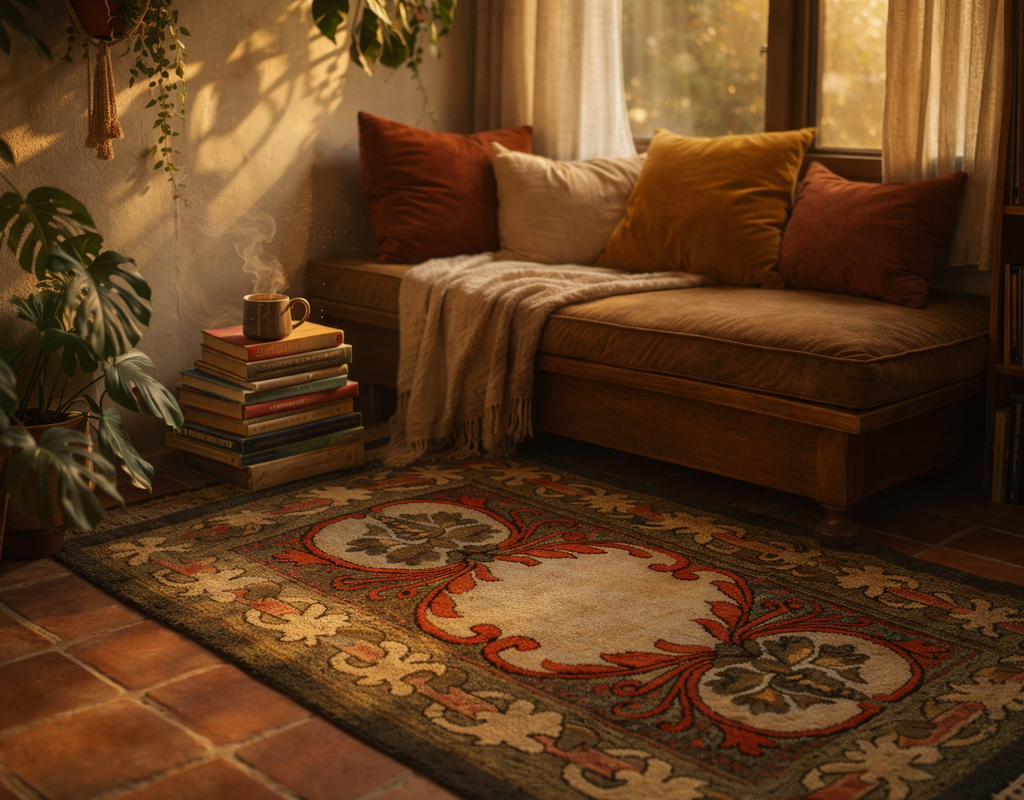
A perfect sanctuary for relaxation, featuring warm lighting, natural textures, and a beautifully detailed traditional rug.
Even more than a century after their creation, contemporary Art Nouveau rugs remain relevant in modern interiors. Designers draw upon their motifs to bring softness and fluidity into spaces dominated by clean lines and minimalism. Their organic forms resonate with current interests in sustainability and nature-focused living, making them natural companions to wood, stone, and plant-rich environments.
For some, they serve as statement pieces—functional artworks underfoot. For others, they provide a bridge between past and present, connecting modern lifestyles to a historic pursuit of unity between art and life. Ultimately, their appeal rests on qualities that never go out of fashion: organic elegance, symbolic richness, and a harmony between art and nature.
Whether preserved in a museum or reinterpreted in a modern home, Art Nouveau rugs continue to bridge historical and contemporary taste, ensuring that their influence endures in every generation of design.
Explore a Few of Our Favorite Art Nouveau Rugs
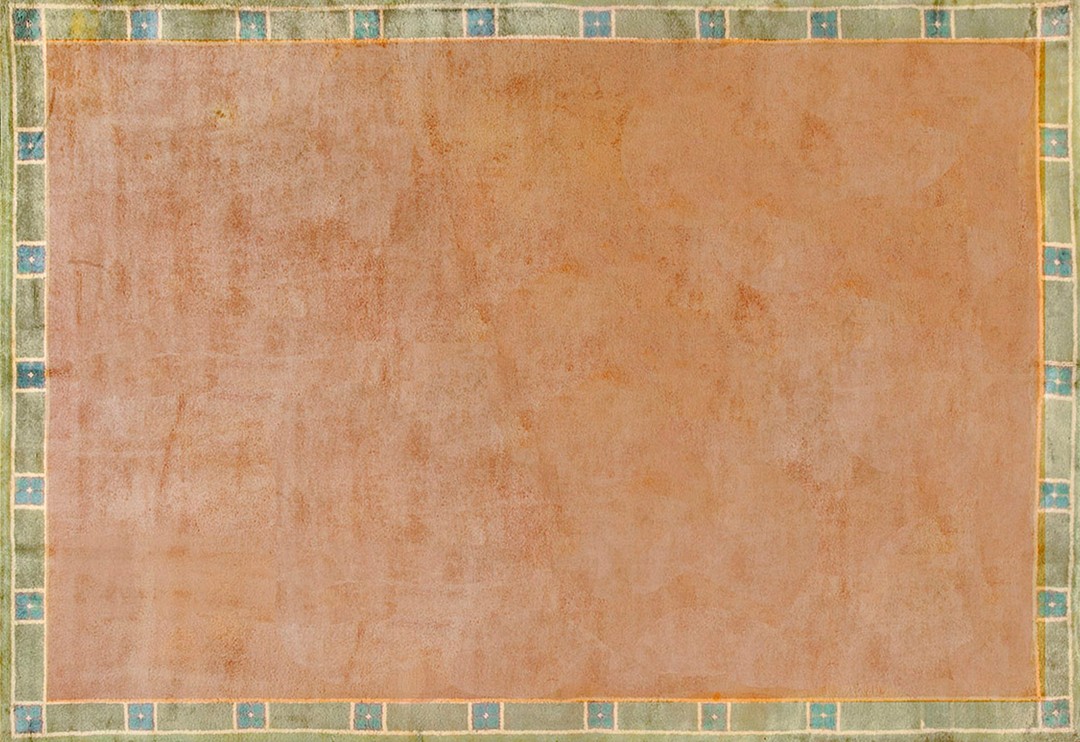
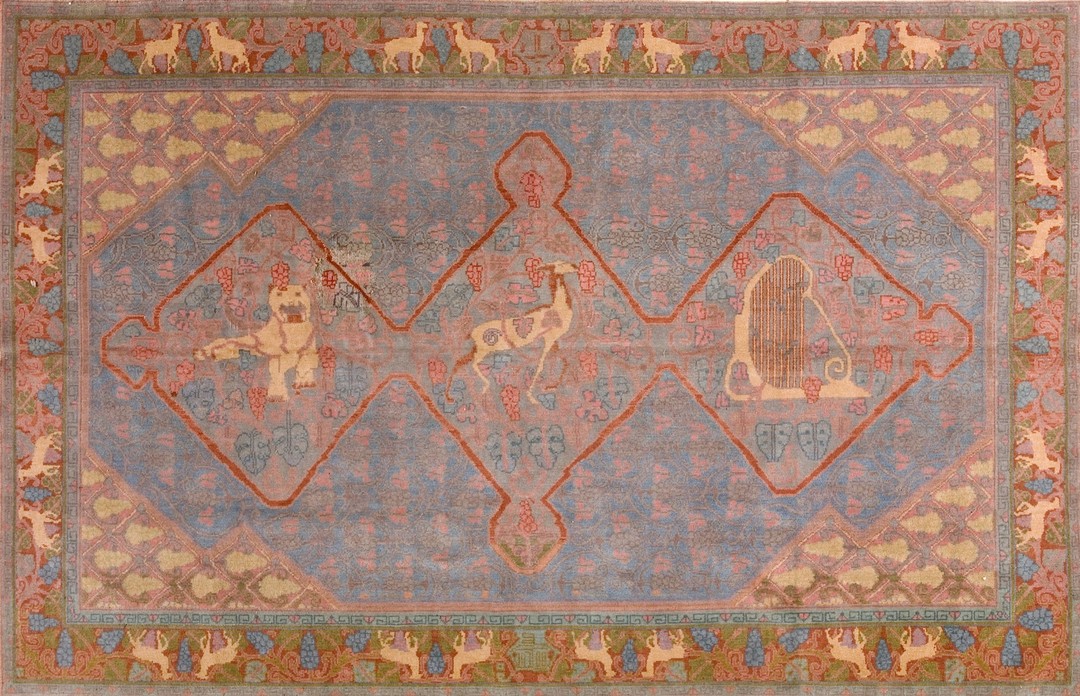
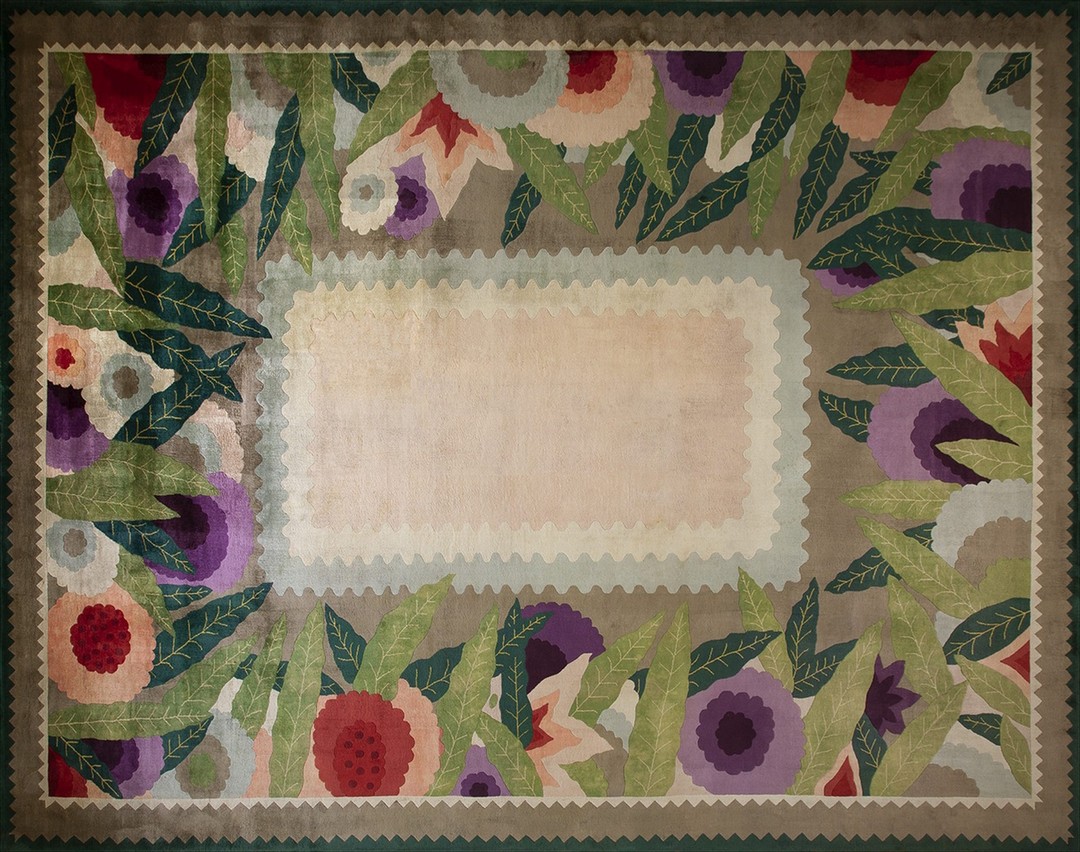
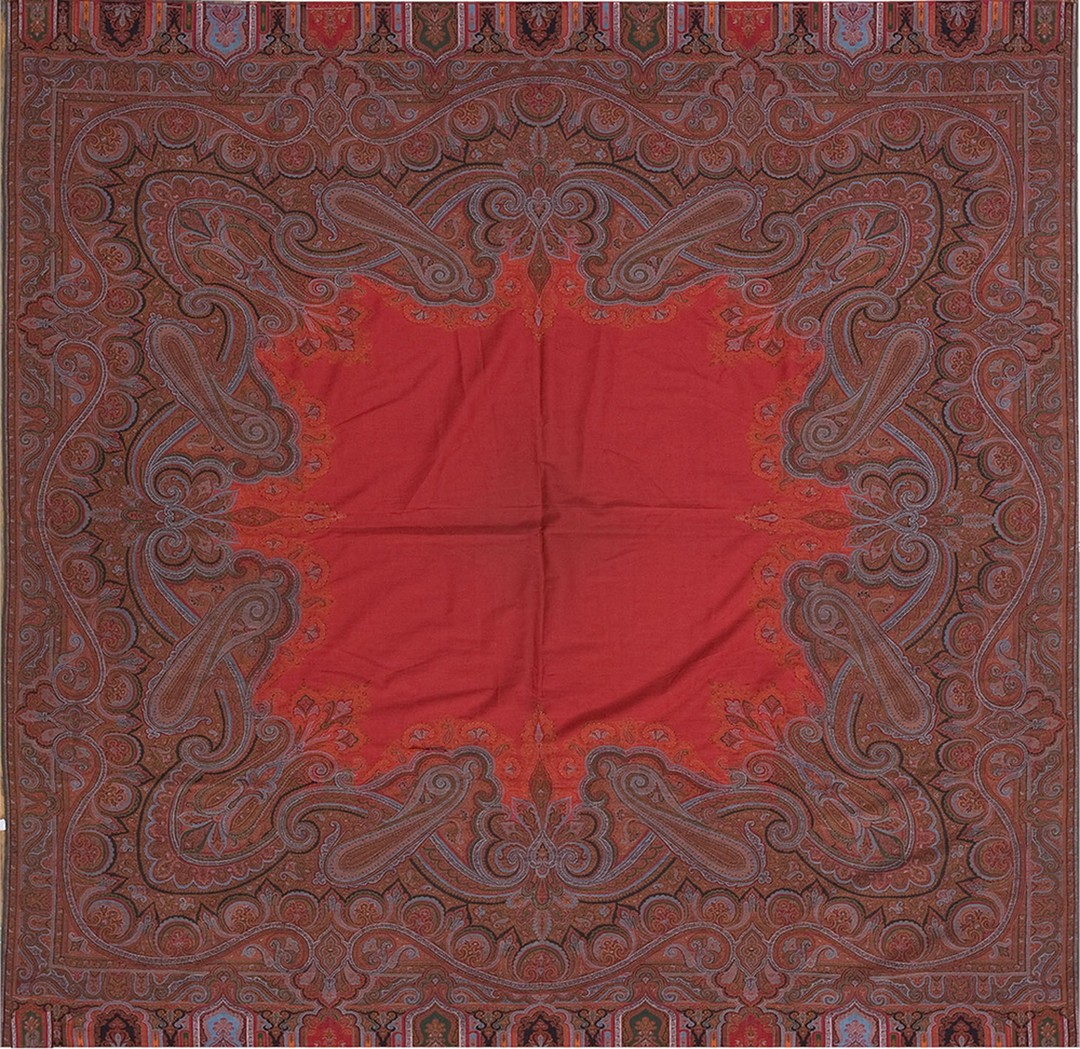
FAQ
- How do Art Nouveau rugs compare to contemporary prints inspired by them?
Originals offer natural dyes, hand processes, and historical value; contemporary prints trade authenticity for price and easy care. Choose based on budget, traffic, and conservation needs.
- Which designers or makers matter for Art Nouveau rugs?
Seek Donegal works and designs linked to C.F.A. Voysey or Glasgow-influenced studios. British Axminster/Wilton and French Aubusson/Savonnerie examples are also noteworthy.
- How should I style Art Nouveau rugs at home?
Let the rug’s curves and botanicals lead; pair with neutral walls, curved lighting, and simple furniture. One bold Art Nouveau rug can anchor an otherwise minimal room.
- How do I store Art Nouveau rugs safely?
Roll face-out on a wide, acid-free tube with tissue, elevate off the floor, and avoid light. Aim for \~68–75°F and \~40–55% relative humidity.
- Are Art Nouveau rugs a good investment?
They can be, especially Donegal or designer-linked pieces in strong condition. For insurance or resale, get a written valuation from ISA/AAA-credentialed appraisers.
- Are there affordable Art Nouveau-style rugs?
Yes—machine-woven Art Nouveau-style rugs often cost \$50–\$300 in smaller sizes. Hand-tufted or hand-knotted contemporary versions start higher.
- Where can I buy Art Nouveau rugs in the U.S.?
Check specialist dealers and major auction platforms; request provenance and condition reports. Museum-quality pieces appear periodically with estimated ranges published.
- Can robot vacuums run on Art Nouveau rugs with fringe?
Fringes can tangle in brush rollers. Tuck or tape fringes, set no-go zones, or vacuum these edges manually.
- What rug pad is best under Art Nouveau rugs?
Use felt for cushioning plus natural rubber for grip, trimmed 1–1.5 inches smaller than the rug. Avoid PVC/vinyl pads that can stick or off-gas.
- Do Art Nouveau rugs work over radiant-heated floors?
Typically yes—wool flatweaves/low-pile perform best. Keep surface temps around 80°F/27°C and use heat-safe felt or natural-rubber pads.
- What size Art Nouveau rug works under a dining table?
Choose a rug extending \~24 inches beyond the table on all sides so chairs stay on the rug when pulled out. An 8×10 suits most six-chair tables.
- What’s the right living-room size for Art Nouveau area rugs?
In U.S. homes, 8×10 or 9×12 usually fits best. Aim for front furniture legs on the rug and at least 6–8 inches wider than the sofa each side.
- Can I steam clean Art Nouveau rugs?
Avoid steam; heat and moisture can cause dye bleed and shrinkage. Use a professional wool rug wash for periodic deep cleaning.
- How should I vacuum Art Nouveau rugs?
Vacuum gently with suction only—no beater bar or on “high pile” setting. Avoid catching fringes; use an upholstery nozzle along edges.
- Are Art Nouveau rugs practical with kids or pets?
Yes if protected—wool resists soiling and rebounds well. Blot spills immediately and avoid pet urine; use an absorbent felt/rubber pad.
- Are Art Nouveau rugs durable for high-traffic areas?
Wool Art Nouveau rugs are resilient, but antiques warrant caution. Use a quality pad, rotate quarterly, and avoid dragging furniture.
- How can I authenticate Art Nouveau rugs?
Look for period materials, construction, natural wear, and workshop ties (e.g., Donegal labels). Compare to auction comps and consult a certified textile appraiser.
- How much do Art Nouveau rugs cost today?
Antique Art Nouveau rugs commonly range from about \$5,000 to \$70,000+, depending on size, condition, and maker. Modern Art Nouveau-style rugs can run \$100–\$2,000.
- Are Art Nouveau rugs hand-knotted or machine-woven?
Both exist—Donegal pieces are typically hand-knotted; Axminster/Wilton are loom-woven; Aubusson are flatwoven tapestries. Construction impacts durability, texture, and appraisal.
- What motifs and colors are common on Art Nouveau rugs?
Expect whiplash vines, lotus/iris, dragonflies, and peacocks. Colors often include moss greens, ochres, botanical pastels, and occasional jewel tones.
- Where were Art Nouveau rugs made?
Art Nouveau rugs came from Ireland (Donegal), Britain (Axminster/Wilton), and France (Aubusson/Savonnerie), plus influences from Persian/Turkish weaving. Provenance affects value significantly.
- Which years are authentic Art Nouveau rugs from?
Most authentic Art Nouveau rugs were produced roughly 1890–1910. A few late examples continue to about 1914 depending on region and workshop.
- What’s the difference between Arts & Crafts and Art Nouveau rugs?
Arts & Crafts rugs use simpler repeats and earthier palettes; Art Nouveau rugs emphasize sinuous lines and more fluid, ornamental botanicals. Voysey/Donegal often straddle both aesthetics.
- How do Art Nouveau rugs differ from Art Deco rugs?
Art Nouveau rugs are curvy and organic; Art Deco rugs are geometric and streamlined. Deco typically spans the 1920s–30s, while authentic Art Nouveau pieces predate World War I.
- What defines Art Nouveau rugs?
Art Nouveau rugs feature flowing “whiplash” curves, stylized botanicals (iris, lily, peacock), and asymmetry. Most date to c.1890–1910 and favor earthy greens, ochres, and soft pastels.