
England at a Glance: Land, Legacy, and Landmarks
Discover our sophisticated selection of authentic English rugs and bring timeless elegance to your home today.
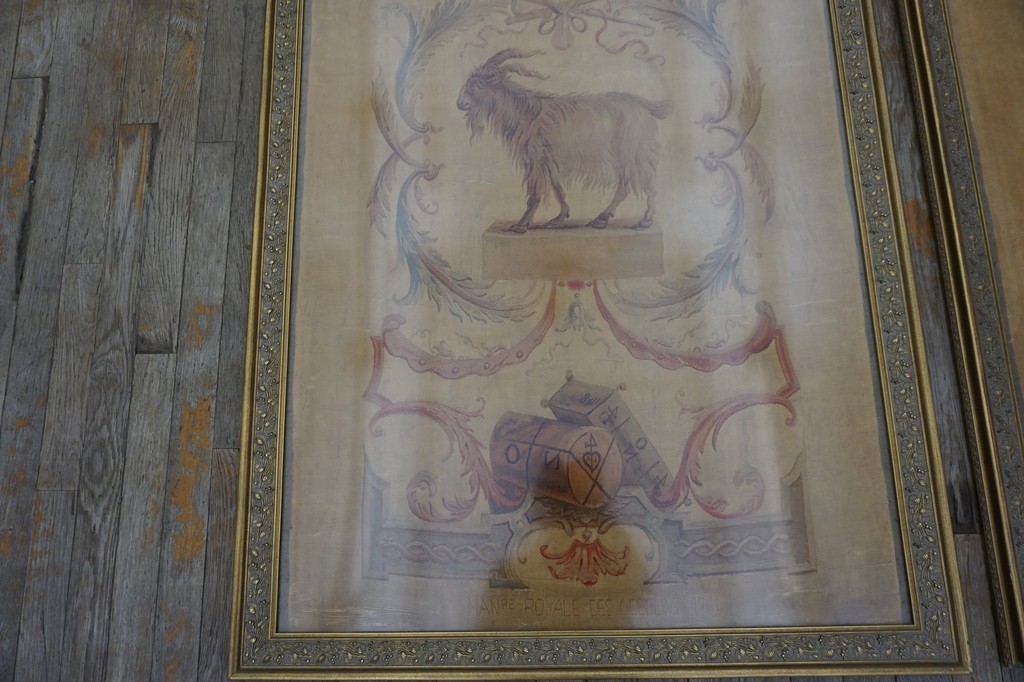
Pair of Scenic Antique 18th Century Beauvais French Tapestries by Rugs On Net
The Nation’s Role in Textile History
England, the largest and most populous part of the United Kingdom with nearly 58 million people, holds a distinct identity within the broader British textile tradition. While Persia and Turkey dominate the early history of handwoven rugs, England carved its place much later, yet decisively, through innovation and industrialization. Before the 16th century, English interiors relied largely on rushes and mats, with imported “Saracen” carpets reserved for nobility. Local production of pile carpets did not exist, but by the 18th and 19th centuries, England had transformed from modest floor coverings to becoming a global hub of luxury and mass-market carpeting. This evolution highlights England carpet history as separate from Scotland’s tartan weaving, Welsh tapestry traditions, or Irish linen, underscoring England’s own legacy in rugs and carpet-making.
Iconic Landmarks & Rug Connections
- Stonehenge — Why: This prehistoric monument reflects England’s deep cultural past, setting the stage for the nation’s broader heritage that later extended into decorative arts and textiles.
- Tower of London — Why: A UNESCO World Heritage Site where imported carpets and tapestries once signified royal wealth, foreshadowing the later rise of English rug craftsmanship.
- Stately Homes of the 18th–19th centuries — Why: Palaces and manor houses across England prominently displayed carpets as emblems of status and taste, cementing the role of rugs in English high society.
- Westminster and Parliamentary Halls — Why: These iconic English landmarks often featured Axminster or Wilton carpets, showcasing how carpeting became woven into the nation’s political and cultural identity.
The Place of Rugs in English Life
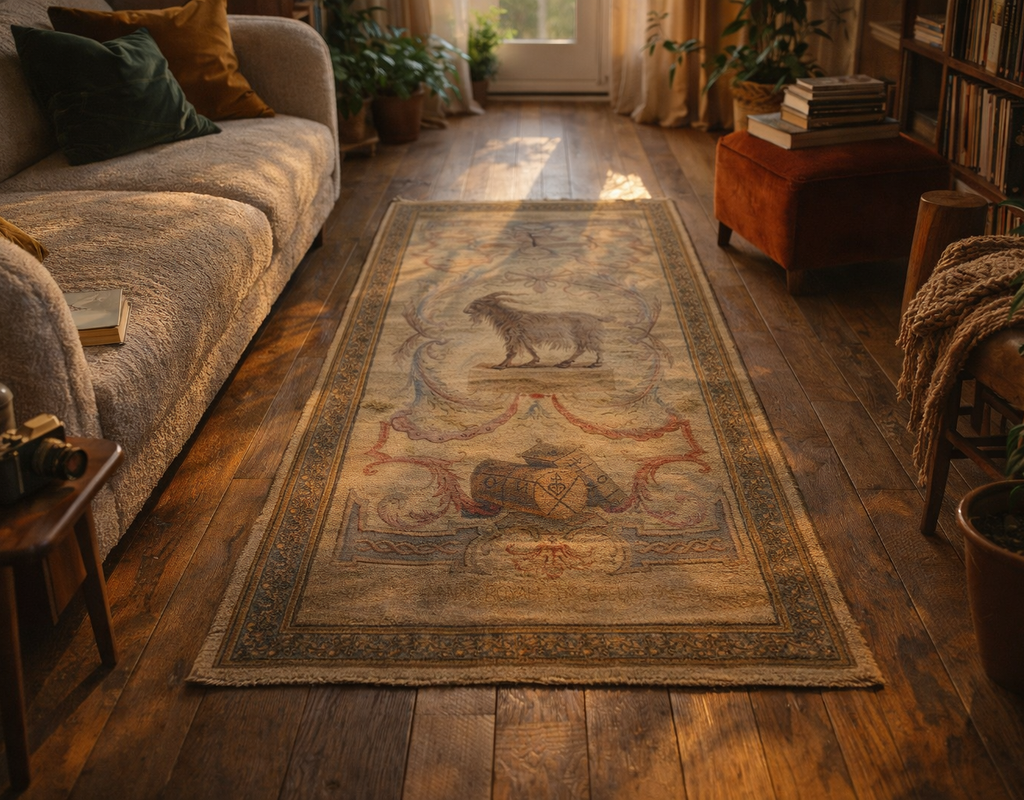
A unique, animal-themed area rug anchors the rustic and comfortable arrangement of the living space.
The story of rugs in stately homes and everyday life traces a remarkable shift. In medieval England, floors were strewn with rushes or covered with plain mats, offering only practicality. By the Renaissance, imported Eastern carpets began appearing in aristocratic chambers and halls, valued as much for display as for comfort. The true transformation came with the rise of Axminster and Wilton weaving, which brought carpets into both royal residences and, eventually, middle-class households. By the 19th century, carpets were not only luxury goods but also widely available symbols of modern domestic refinement. This progression from rushes to mass-produced floor coverings underscores how deeply carpets became embedded in English domestic culture.
Historical Evolution of English Rug Weaving
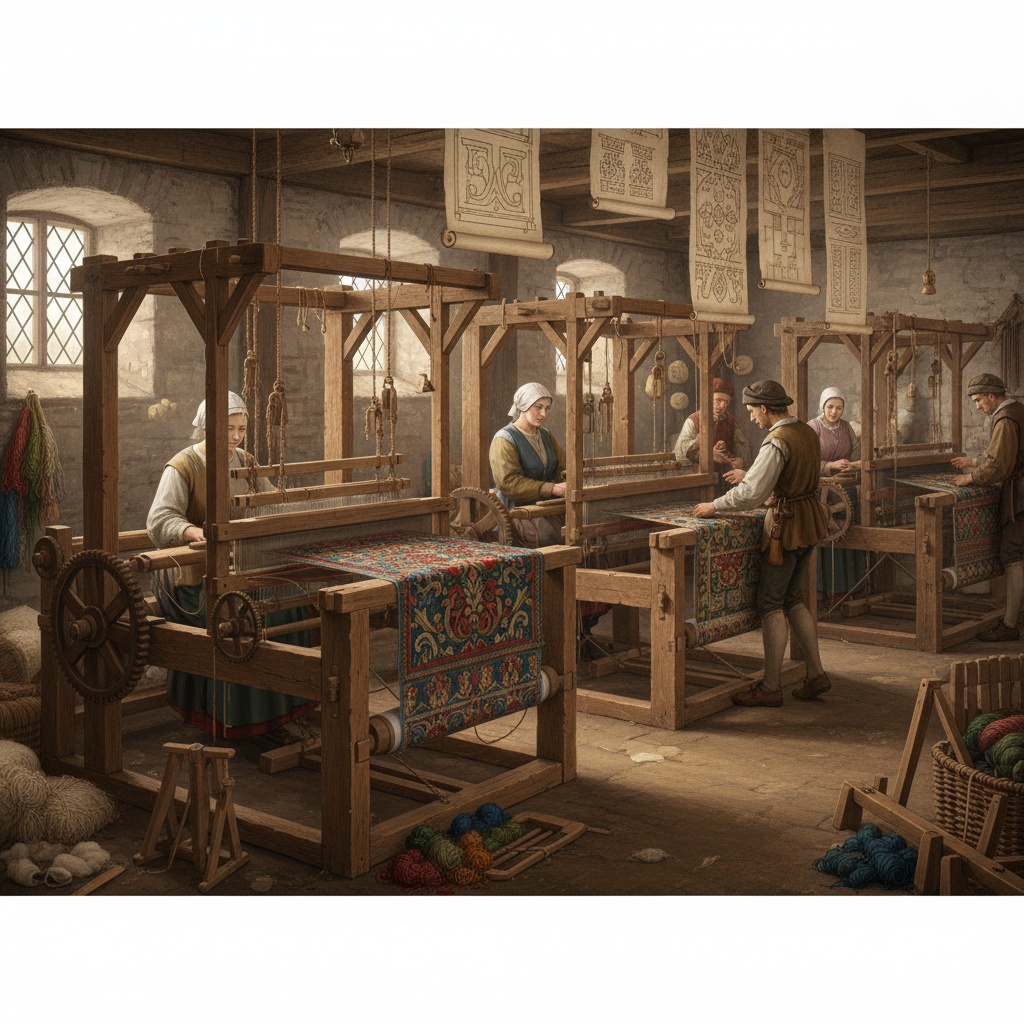
Historical loom setup for textile production
Early Influences: Flemish Weavers and Medieval Traditions
The history of English carpet weaving begins with outside influence. In the 16th century, Flemish and French Calvinist refugees brought with them the skills of knotted pile weaving, laying the groundwork for England’s domestic carpet production. These Flemish weavers introduced techniques previously unknown in England, helping transition interiors from simple rushes to richly patterned coverings. Their designs often imitated Anatolian and Persian styles, inspiring early experiments such as the Norwich carpets, which became the first locally produced pile types. Without these artisans, the foundation of rug-making in England would not have developed as quickly or effectively.
Rise of English Workshops: Axminster, Wilton, Kidderminster
- Axminster (Devon) — Why: Founded in 1755, Axminster pioneered hand-knotted luxury carpets that rivaled Oriental imports, producing bespoke pieces for royalty and stately homes. This was the origin of the world-renowned Axminster carpets, still synonymous with English craftsmanship.
- Wilton (Wiltshire) — Why: Known for loom-woven cut-pile carpets, Wilton introduced refined production methods that allowed consistency and durability, helping establish England’s reputation for quality.
- Kidderminster (Worcestershire) — Why: The town specialized in double-faced flatweave carpets, producing affordable yet stylish options. Its dominance grew through the Industrial Revolution, making it the hub of the English carpet trade and earning it recognition as the capital of the national industry.
The Industrial Revolution: Power Looms & Mass Market
The Industrial Revolution transformed English power loom carpet production. In 1839, the introduction of power looms doubled output, while the Jacquard mechanism enabled complex patterns at scale. Mechanization allowed carpets to move beyond the aristocracy, becoming accessible to the growing middle class. By the mid-19th century, England stood at the forefront of the global carpet market, exporting across Europe and the colonies. The rise of Axminster, Wilton, and Kidderminster during this period highlights how technology democratized what was once a symbol of exclusivity.
Postwar Era & Industry Decline
The post-WWII boom in carpet demand gave way to structural changes in the industry. The rise of the tufted carpet in England, imported from America and produced at lower costs, undercut traditional weaving towns. Cheaper foreign imports in the late 20th century further eroded England’s market share, leading to a decline in large-scale carpet manufacturing. Yet even amid contraction, niche markets for high-end, sustainable, and heritage carpets have preserved England’s legacy, ensuring that towns like Axminster and Kidderminster remain part of the international conversation in textiles.
Weaving Heritage: Techniques, Materials, and Craftsmanship
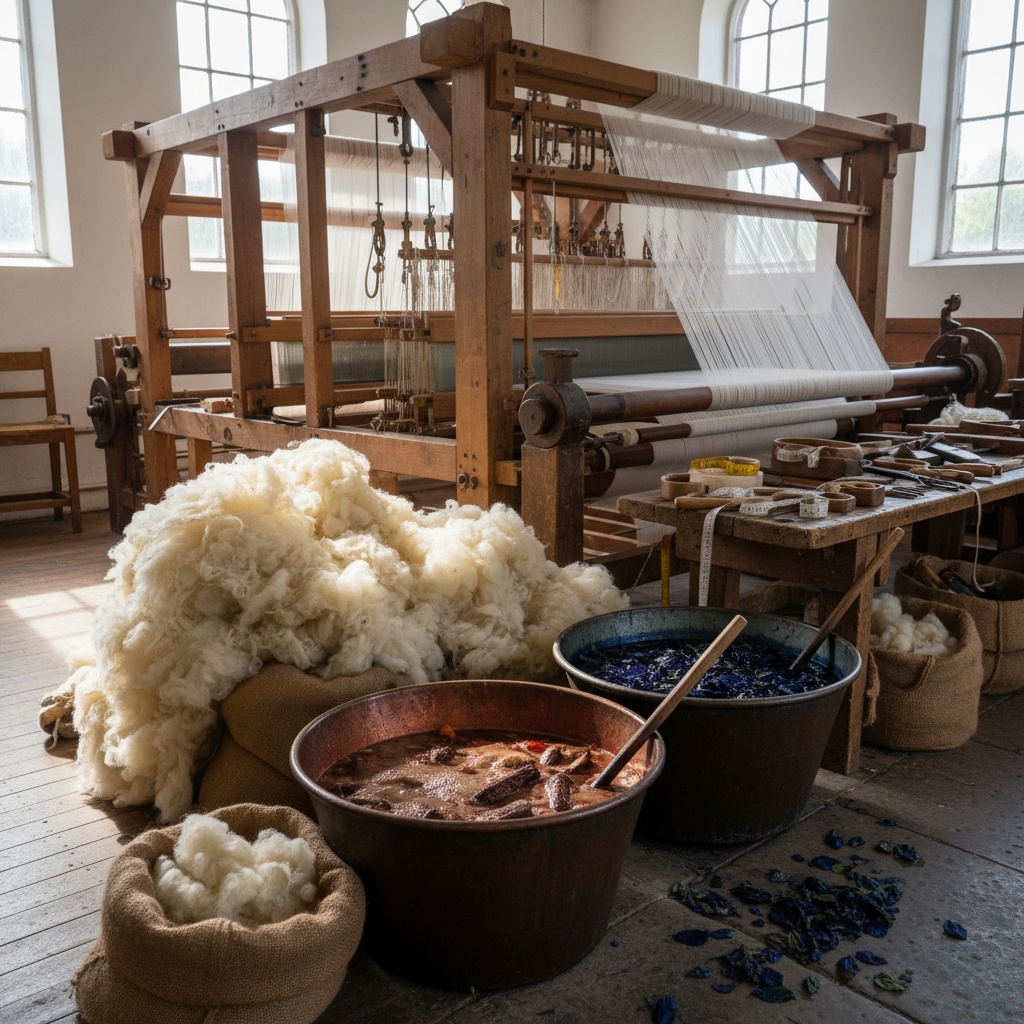
weaving Materials and tools for traditional yarn dyeing and weaving.
Traditional Materials in English Rugs
- Wool — Why: The defining fiber of English rug materials, prized for its warmth, durability, and ease of dyeing.
- Cotton — Why: Commonly used in warps or backings, adding strength and structure to woven carpets.
- Silk (occasional use) — Why: Rare but present in high-end commissions, silk lent sheen and luxury to English carpets, especially in stately homes.
- Vegetable dyes and later synthetics — Why: Essential for creating the signature reds, blues, and earthy tones that gave natural dye carpets in England their character.
Why British Wool?
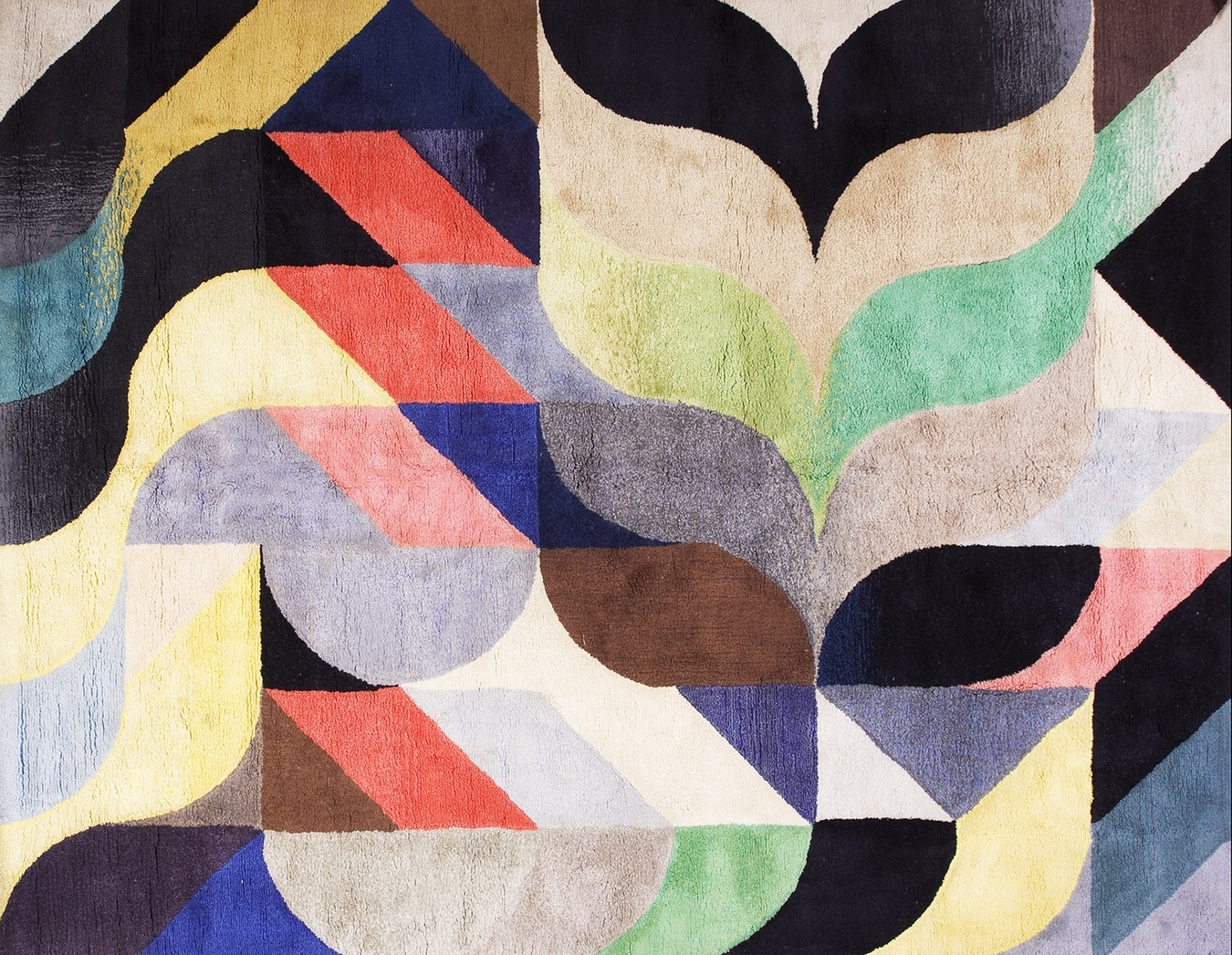
British wool rugs gained worldwide recognition because of the fiber’s unique qualities. The climate and breeds of sheep in England produced wool that was both soft underfoot and exceptionally resilient, making it perfect for high-traffic floor coverings. British wool’s spring-like fibers return to shape after pressure, ensuring carpets hold up over decades. Its eco-friendly reputation comes from centuries of sustainable grazing practices and continued support for local farmers. Today, its low environmental impact, biodegradability, and renewable nature make British wool a benchmark in sustainable textiles and one of the strongest reasons why sustainable English rugs remain highly valued.
Technical Milestones: Hand-Knotting, Wilton & Ingrain Weaves
Though hand-knotting was never as central as in Persia or Turkey, it was refined in Axminster workshops for bespoke luxury commissions. The Wilton weave in Wiltshire became a hallmark of cut-pile construction, producing plush surfaces with uniform design. In Kidderminster, the double-sided ingrain weave allowed reversible flatweaves that were both economical and fashionable. These technical milestones show how English ingenuity in weaving techniques made carpets both aspirational and accessible.
English Dye Traditions
The legacy of natural dye carpets in England is inseparable from the nation’s rug history. Early workshops favored vegetable-based dyes, producing rich crimsons from madder, indigo blues, and earthy browns and greens. These natural colors defined the aesthetic of 18th- and early 19th-century English carpets, their depth and subtle variation adding value and character. With the advent of synthetic dyes in the late 19th century, color ranges expanded, but the earthy elegance of natural dyes continued to shape perceptions of authenticity and heritage. Dye traditions still influence the way collectors and homeowners value antique English carpets today.
Contemporary Artisans and Revivals
- Yorkshire mills — Why: Still spin high-quality wool for carpeting, sustaining England’s textile link between tradition and modern interiors.
- Cotswold carpet weaving — Why: A handful of mills continue to produce wool for rugs, keeping alive a centuries-old regional craft.
- Independent hand-weavers — Why: Fewer than 50 remain, but they champion natural materials and bespoke designs, keeping English craftsmanship visible on a global stage.
- Eco-focused revival brands — Why: Modern companies emphasize organic fibers, natural dyes, and recyclable backings, ensuring sustainable English rugs meet today’s décor needs.
Signature English Rug Styles: Axminster, Wilton, Kidderminster
Axminster Carpets: Origins, Techniques, and Prestige
The jewel of English rug styles, Axminster carpets of Devon began in 1755 when Thomas Whitty established his manufactory. Drawing on Turkish hand-knotting traditions, these rugs were known for their elaborate curvilinear patterns, floral medallions, and custom room-sized commissions. Each carpet was painstakingly hand-knotted, making them symbols of wealth and refinement. Axminster carpets adorned some of England’s most prestigious interiors, from Windsor Castle to the exotic interiors of the Brighton Pavilion. Their prestige rests not only on technical excellence but also on their role as bespoke artistic statements that set the benchmark for English luxury weaving.
Wilton Carpets: Distinct Features and Ongoing Tradition
In contrast to Axminster’s knotted luxury, Wilton rugs of Wiltshire developed a different signature: a plush cut-pile velvet texture woven on specialized looms. Wilton carpets quickly became associated with royal and ceremonial use, including the one commissioned for Queen Elizabeth II’s coronation. While Axminster emphasized artistry and handcraft, Wilton distinguished itself with mechanical innovation, producing consistent, lush surfaces that still carried a sense of grandeur. Today, Wilton Carpets Ltd. continues the tradition, uniting past and present in Wiltshire. Together, Axminster and Wilton show two sides of the English legacy—one rooted in bespoke craftsmanship, the other in refined, enduring production.
Kidderminster (Ingrain) Carpets: Flatweave Distinction
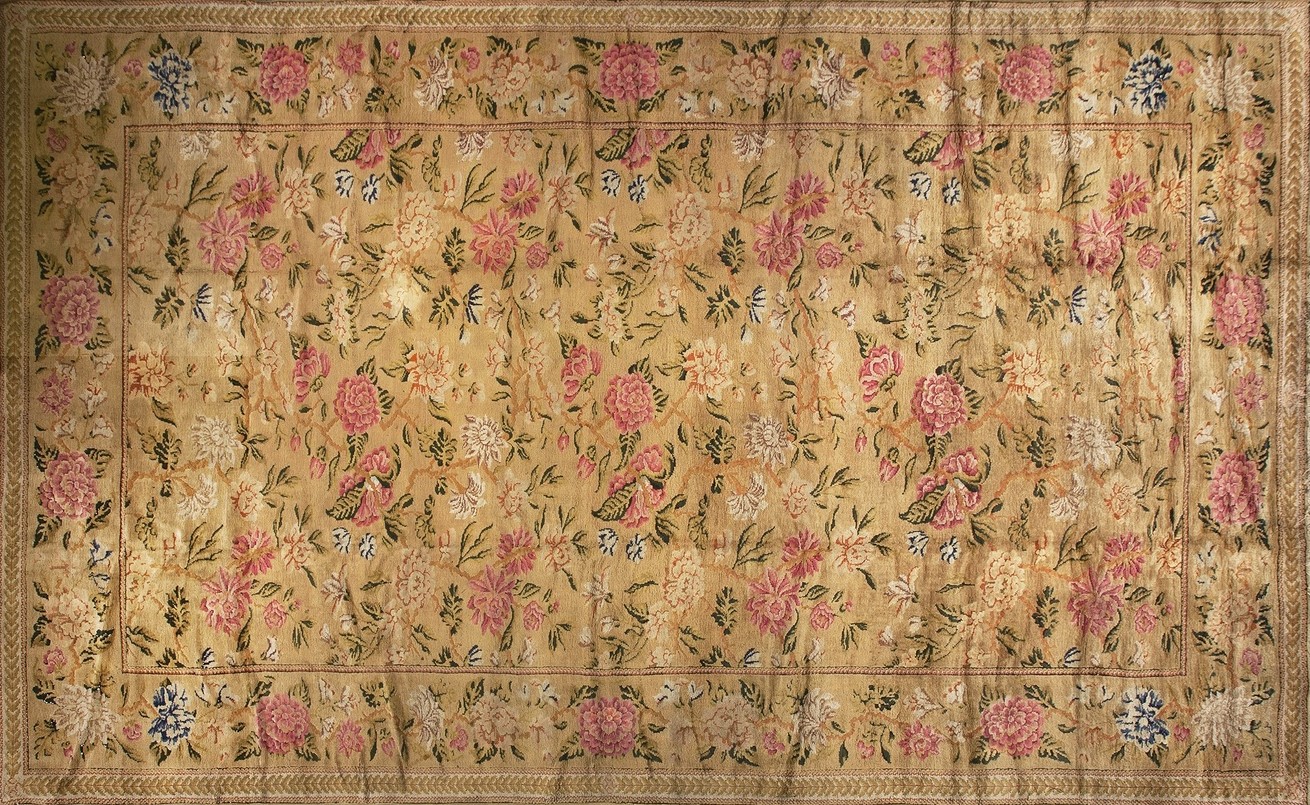
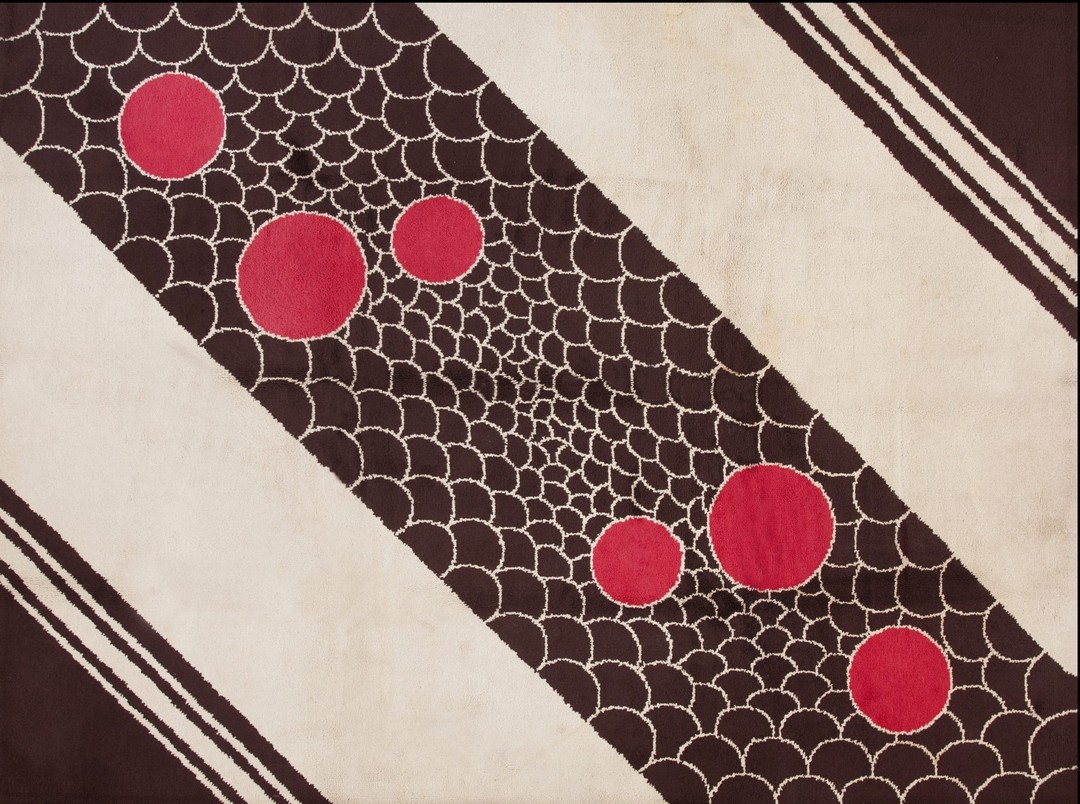
Antique Large Wool Brown Earth Tone Hand Knotted Pile Rug – by Rugs On Net
Unlike pile-based Axminster and Wilton carpets, Kidderminster flatweaves represented practicality and versatility. Known as ingrain carpets, they were double-faced, reversible, and entirely without pile. Their geometric and floral repeats made them suitable for everyday use, and their durability gave them dominance in the 18th and 19th centuries. These carpets were particularly popular in American colonial homes, where practicality was prized. The town’s central role in this weaving tradition is celebrated at the Museum of Carpet in England, located in Kidderminster, which preserves its industrial and cultural heritage.
Fun/Unique Facts by Type
- Axminster — Why: King George III was one of its earliest patrons, commissioning designs for Windsor Castle.
- Wilton — Why: A Wilton carpet covered the floor of Westminster Abbey during Elizabeth II’s coronation, cementing its ceremonial importance.
- Kidderminster — Why: Its reversible ingrain carpets became so iconic that “Kidderminster” itself became shorthand for the flatweave style.
Regional Hotspots: Where English Rugs are Made
Kidderminster, Worcestershire
The heart of Kidderminster carpet heritage, this Worcestershire town once produced half of all carpets made in England. Known for its ingrain flatweaves and later Brussels and Wilton pile varieties, Kidderminster became synonymous with practical yet stylish floor coverings throughout the 18th and 19th centuries. Its dominance earned it the title of England’s carpet capital, and its story is preserved at the Museum of Carpet, the only one of its kind in the UK. Today, Kidderminster remains central to England’s rug history, with heritage and trade celebrated through exhibitions and local festivals.
Axminster, Devon
The Axminster rug origin traces back to 1755 when Thomas Whitty began hand-knotting carpets in this small Devon town. His workshop established Axminster as a name equal to Persian and Turkish luxury weaving. The legacy continues through Axminster Carpets Ltd., which still produces bespoke pieces, and the Axminster Heritage Centre, where visitors can explore the weaving history firsthand. For travelers, Devon remains a destination for bespoke rug shopping, connecting centuries of craftsmanship with contemporary interiors.
Wilton, Wiltshire
The town of Wilton is the birthplace of the Wilton carpet factory, where loom-woven cut-pile rugs became synonymous with royal prestige. “Carpet Street” in Salisbury reflects the town’s enduring ties to the craft. The factory still holds a Royal Warrant, producing rugs that grace state ceremonies and royal households. For anyone tracing the ongoing tradition of English carpets, Wilton offers both heritage and living craftsmanship.
Yorkshire & West Country Mills
- Yorkshire (Halifax, Bradford, Dewsbury) — Why: Historic mills developed Brussels and tapestry carpets, blending industrial innovation with artistry. Dean Clough Mills in Halifax, once a giant carpet producer, now thrives as an arts and business hub while preserving its textile heritage.
- West Country mills — Why: These remain important for spinning and preparing wool, linking traditional raw materials to modern rug and carpet production. Yorkshire flat-weave rugs remain a regional specialty, reflecting both practicality and industrial creativity.
London/Moorfields & Other Historical Centers
- Moorfields, London — Why: In the 18th century, workshops here supplied carpets influenced by French Savonnerie, serving the royal court and nobility. Today, the area is more associated with trading and retail but retains echoes of its weaving past.
- Cotswolds rug mills — Why: While small in number, mills in the Cotswolds continue to weave contemporary English rugs, often with an emphasis on eco-friendly materials and traditional wool-spinning. Their survival underscores a growing demand for sustainable craft.
English Rugs in Palaces, Heritage, and Design
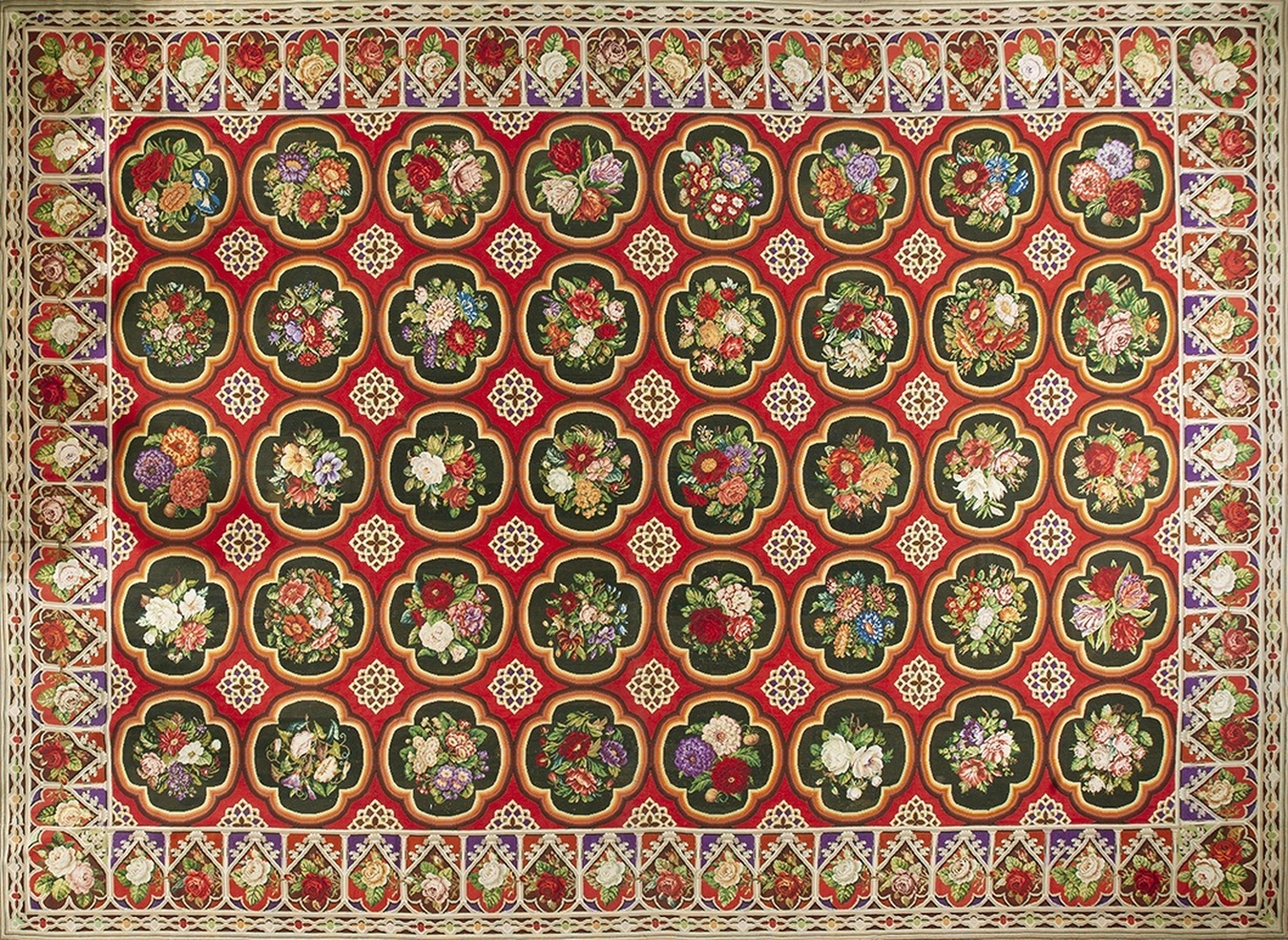
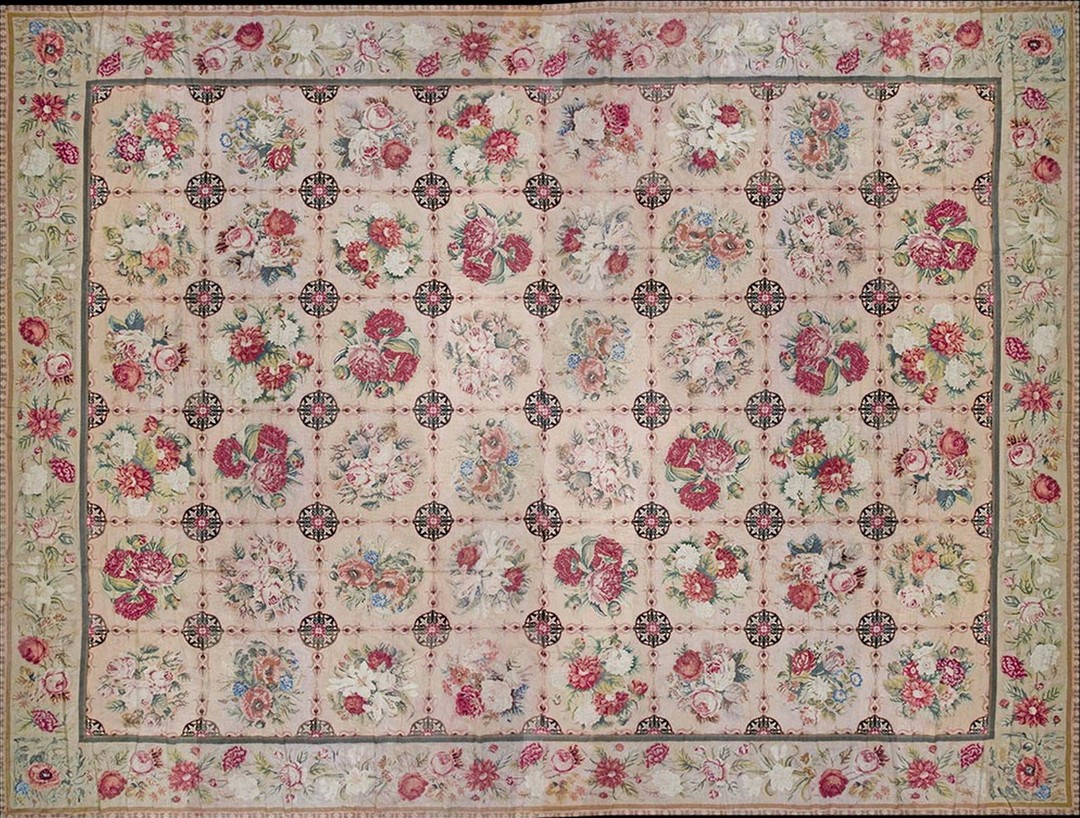
Antique Large Needlepoint English Flat Weave Rug – by Rugs On Net
Notable Locations Showcasing Historic Carpets
- Windsor Castle rugs — Why: Home to some of the finest Axminster carpets, Windsor Castle showcases pieces commissioned for the Georgian state rooms, where they still embody regal craftsmanship.
- Brighton Pavilion Axminster — Why: Commissioned by George IV, these exotic and richly patterned carpets complemented the Pavilion’s dramatic interiors, making them some of the most iconic English rugs ever woven.
- UK palaces Wilton carpet — Why: Palaces and parliamentary halls used Wilton cut-pile carpets in ceremonial spaces, including Westminster Abbey during the coronation of Queen Elizabeth II, reinforcing Wilton’s enduring role in state tradition.
Rug Roles in Royal & Historic English Interiors
From the Georgian era onward, English carpets became more than floor coverings—they became markers of power and artistry. Axminster and Wilton carpets adorned royal residences such as Windsor Castle, Buckingham Palace, and the Brighton Pavilion, often woven to exact dimensions of state rooms. These bespoke commissions elevated interiors with both luxury and symbolism, affirming England’s global reputation for weaving prestige. Historic houses across the country similarly used Kidderminster and Wilton weaves to display wealth, with rugs serving as visual centerpieces in grand drawing rooms, galleries, and parliamentary chambers.
How Museums & Centres Preserve Rug Weaving
The Axminster Heritage Centre in Devon preserves rug weaving through displays of original looms, archival patterns, and demonstrations of hand-knotting techniques. It provides a rare opportunity to witness how carpets once made for royalty are still crafted today. Likewise, the Museum of Carpet in Kidderminster documents the town’s industrial dominance, showcasing machinery, design archives, and oral histories from weavers. These English rug museums not only safeguard tradition but also inspire modern designers by connecting them with centuries of craft.
Visiting England for Rugs: Where & Why
- Devon (Axminster) — Why: Best for exploring the origins of Axminster weaving and purchasing bespoke rugs directly from the makers.
- Wiltshire (Wilton) — Why: Offers a living tradition with Wilton Carpets Ltd., which still holds a Royal Warrant and produces ceremonial rugs.
- Kidderminster (Worcestershire) — Why: The Museum of Carpet makes the town essential for anyone tracing England’s industrial textile story.
- Cotswolds — Why: Home to smaller artisan mills that focus on eco-conscious production and natural fibers, appealing to those seeking heritage rugs with sustainable credentials.
Modern Industry, Sustainability, and Future Outlook
Major Manufacturers & Market Position
- Brintons — Why: Founded in 1783, Brintons remains one of the world’s premier carpet manufacturers, producing high-end woven designs for hotels, casinos, and royal commissions.
- Wilton Carpets — Why: Based in Wiltshire, Wilton maintains its royal connections and continues to craft ceremonial rugs under a Royal Warrant, ensuring prestige within the market.
- Brockway Carpets — Why: A leader in domestic wool carpets, Brockway emphasizes sustainability and craftsmanship, appealing to the eco-conscious homeowner.
- Axminster Carpets — Why: Still produced in Devon, Axminster retains its bespoke luxury status, making it synonymous with heritage, quality, and custom-made artistry.
Together, these manufacturers keep England competitive in the global carpet trade, even as imports outpace domestic production.
The State of Handmade Weaving in England Today
Handmade rug weaving in England has reached an endangered stage, with fewer than 50 full-time weavers still practicing. Yet the tradition has not disappeared. Heritage institutions such as the Axminster Heritage Centre and the Museum of Carpet, alongside independent artisans, are actively working to preserve skills through demonstrations, apprenticeships, and bespoke commissions. While machine-made rugs dominate the market, the handmade craft survives as a niche, high-value offering that connects modern buyers with centuries of English weaving heritage.
Sustainability Initiatives & British Wool
The sustainability story of English carpets rests heavily on sustainable British wool carpets. Wool is a renewable, biodegradable fiber with low environmental impact, prized for both durability and softness. By supporting British sheep farming, the carpet industry also sustains local agriculture. Meanwhile, Carpet Recycling UK coordinates efforts to repurpose and recycle carpets, with major manufacturers like Brintons and Wilton pursuing near-zero waste goals. Combined with a revival of natural dye practices, these initiatives emphasize the eco-advantages of English rug production.
Are English Rugs Sustainable Home Décor?
- British wool — Why: Renewable, long-lasting, and biodegradable, making it one of the most eco-friendly materials for flooring.
- Natural dyes — Why: Traditional dyeing methods produce rich reds, blues, and earthy tones without synthetic waste, tying back to England’s heritage of English eco-friendly rugs.
- Recycling efforts — Why: Through Carpet Recycling UK and manufacturer-led programs, carpets can be diverted from landfills and reintroduced into circular production cycles.
- Durability — Why: English wool rugs last for decades, reducing the need for frequent replacement and aligning with green home décor in England.
Explore Some of Our Favorite Rugs of England

FAQ
- What is “Brussels” carpet, and how is it related to English rugs?
Brussels is a loop-pile weave historically made in Britain; Wilton is similar but with cut loops. Both influenced English carpet styles and terminology.
- Do English rugs fade in sunlight?
Sunlight can fade natural dyes over time. Rotate every 3–6 months and use UV-filtering window treatments where possible.
- Can I layer an English rug over carpet?
You can—layering adds comfort and style. Use a low-pile rug with a non-slip pad to prevent rucking and bunching.
- How do I spot a genuine William Morris design versus a reproduction?
Check construction (hand-knotted vs hand-tufted), period dyes, and provenance. Auction records and museum comparables are useful verification tools.
- Are modern English rugs machine-made or handmade?
Both exist. Hand-knotted Morris-era rugs are collectible, while most modern English rugs are woven or tufted for consistency and cost.
- Where were English rugs historically made?
Key hubs include Axminster (Devon), Wilton (Wiltshire), and Kidderminster (Worcestershire). Brintons began in Kidderminster in 1783.
- How old is the English rug-making tradition?
The woven-carpet tradition dates to the mid-18th century. Axminster began in 1755, with Wilton and Kidderminster powering 19th-century growth.
- What patterns are typical of English rugs?
Expect florals, scrolling vines, neoclassical medallions, and Arts & Crafts botanicals. William Morris motifs like “Honeysuckle” and “Willow” are classics.
- Are English rugs a good investment?
Rare Morris or early Axminster pieces with provenance can be collectible. Most contemporary rugs are décor purchases rather than investment assets.
- How much do English rugs cost?
Prices vary by age and construction. Antique Arts & Crafts examples can reach five-figure sums, while modern machine-woven pieces are often budget-friendly.
- Do English rugs work with robot vacuums?
Generally, yes if pile is moderate. Lift or secure fringes, set medium suction, and avoid loose-fringe edges that can tangle.
- Are English rugs good for homes with pets and kids?
Wool resists soiling and springs back, making it family-friendly. Choose low-pile patterns to disguise mess and add a non-slip pad for stability.
- How do I prevent moth damage to a wool English rug?
Vacuum regularly, clean before storage, and seal items; freezing infested textiles for 72 hours kills eggs and larvae. Pheromone traps and cedar help monitor.
- What rug pad should I use under an English rug?
Use a felt pad for grip and cushioning on hard floors; pick low-profile, breathable hessian/jute or heat-rated pads over underfloor heating. Avoid thick foam or polyurethane.
- Are English rugs safe with underfloor heating?
Usually, with proper setup. Keep floor-surface temperature under \~27 °C (81 °F), choose thinner natural fibers, and avoid rubber-backed rugs or thick pads that trap heat.
- How do I clean an English wool rug at home?
Vacuum routinely and blot spills with cool water and a pH-neutral, wool-safe cleaner. Avoid high-alkaline products (above about pH 8).
- Do English wool rugs shed?
New wool rugs may shed lightly for weeks due to loose fibers. Regular vacuuming (avoid beating bars on fringes) reduces shedding.
- What UK sizes translate to common US sizes?
160×230 cm is about 5’3″×7’7″, and 200×300 cm is about 6’7″×9’10”. Those map roughly to US 5×8 and 7×10/8×10 placements.
- What materials do English rugs use most?
Wool is standard, sometimes blended 80% wool/20% nylon for strength. You’ll also see 100% wool flatweaves and modern tufted builds.
- Are English rugs durable for high-traffic areas?
Woven Axminster and Wilton handle heavy traffic well. Dense wool piles and strong constructions are why hotels and theaters use them.
- Are William Morris rugs hand-knotted?
Many are—Hammersmith and Merton Abbey carpets were hand-knotted using Turkish (Ghiordes) knots. Later Morris designs were also produced as machine-woven Axminster or Wilton.
- How can I tell Axminster from Wilton by looking at the back?
Axminster backs usually show ribbed lines across the width from double weft shots. Wilton backs look more uniform, with yarns running lengthwise and less pronounced ribbing.
- Can you explain what a Wilton rug entails?
Wilton is a woven carpet where pile yarns run continuously; loops may be left (Brussels) or cut. It excels at texture and can mix loop and cut areas.
- What is an Axminster rug?
Axminster is a woven cut-pile carpet developed in Devon in 1755. It’s known for durability and complex patterns, often in wool or 80/20 wool-nylon blends.
- What are English rugs, and how are they different from Persian rugs?
English rugs include Axminster and Wilton weaves and Arts & Crafts designs from England. Persian rugs are typically hand-knotted; English pieces are often woven, with some hand-knotted Morris-era examples.