
Introduction to Rug Placement
Why Rug Placement Matters
Rug placement is more than a finishing touch—it defines the way a room feels and functions. An area rug anchors furniture groupings, connecting chairs, sofas, and tables into a cohesive arrangement rather than leaving them floating in space.
Proper scale ensures that the rug supports the size of the room, making spaces feel balanced instead of disjointed. When chosen and positioned thoughtfully, a rug enhances harmony by aligning proportions, guiding movement, and setting the tone for the entire design.
This is why any effective rug placement guide emphasizes not only aesthetics but also the flow and usability of the space.
A well-placed rug shapes the room’s energy, making it both welcoming and visually grounded.
You may want to review: Buying Foyer / Entry Way Rugs | Buying Living Room Rugs | Buying Bedroom Rugs | Buying Dining Room Rugs | Buying Family Room Rugs | Buying Library Rugs | Buying Rugs for Kids Rooms | Buying Rugs for the Study
Core Rug Placement Principles
- Anchor with Furniture — Why: Placing major furniture pieces such as sofas or beds on the rug ties the elements together, preventing a fragmented look.
- Maintain Scale — Why: A rug that is too small makes a room feel cramped; one that is properly scaled reinforces spaciousness and proportion.
- Balance the Layout — Why: Positioning rugs relative to furniture groupings rather than wall lines creates symmetry and harmony, avoiding awkward gaps.
- Consider Traffic Flow — Why: A rug should guide natural pathways through a room without creating tripping hazards or disrupting circulation.
- Frame the Space — Why: Rugs define functional zones in open layouts, from dining areas to conversation corners, allowing each area to feel intentional.
The “Robot Vacuum” Check
In the age of smart homes, your rug placement needs to be “tech-friendly.” Many robot vacuums use infrared cliff sensors to prevent falling down stairs. Deep black or dark navy borders on a rug can “absorb” these infrared beams, tricking the vacuum into thinking the rug’s edge is a dangerous drop-off.
If you rely on automated cleaning, opt for rugs with lighter perimeter colors or low-contrast borders.
Common Mistakes to Avoid
- Floating Rugs — Why: A rug placed too far from furniture looks disconnected, making the room appear smaller and poorly planned.
- Choosing Rugs Too Small — Why: Undersized rugs disrupt scale and leave furniture visually unanchored.
- Aligning Only with Walls — Why: Placing rugs strictly parallel to walls can ignore the furniture arrangement, resulting in awkward spacing.
- Ignoring Proportions — Why: Rugs that don’t match the proportions of the room throw off balance, undermining harmony.
- Overcrowding the Rug — Why: Forcing all furniture legs onto a small rug creates clutter and diminishes comfort.
Rug placement shapes the entire design of a room. A rug is not simply décor—it is the foundation that unites scale, flow, and comfort.
By avoiding common rug placement mistakes and applying core principles of anchoring rugs with furniture, homeowners can transform a room’s function and aesthetic with one strategic choice.
This is why rug placement matters in design: it establishes the visual and functional framework upon which all other décor rests.
The “Rug-as-Art” Exception
While we generally advise against “floating” rugs, a high-collectible textile is the exception. Small, intricate pieces—like a silk prayer rug or a rare tribal salt bag—should not be hidden under a coffee table.
Place these in “low-traffic galleries” (like a wide hallway or a reading nook) without any furniture on top. This signals to guests that the rug is a curated piece of art, not just a floor covering.
General Rules of Thumb for Rug Placement
Standard Margins and Exposed Floor Guidelines
A central principle of rug placement rules is to frame a room with consistent borders of exposed flooring. In smaller rooms, leaving a 6–12 inch margin between the rug and the walls keeps the space from feeling crowded.
In larger rooms, this margin can widen to 12–24 inches, creating a sense of proportion and elegance. Allowing visible flooring around the rug emphasizes the rug as an intentional anchor rather than an afterthought, while also preserving architectural features like baseboards or woodwork.
Consistent Leg Placement Rules
When it comes to furniture on rugs, consistency matters more than any single approach. Designers recommend two clear strategies: either place all legs of the major furniture pieces fully on the rug, or keep just the front legs on. Both create balance and coherence, but mixing the two can look awkward and unplanned.
For example, a sofa with only its front legs on the rug can feel connected to the rug’s design, while fully placing chairs on it keeps seating arrangements unified. The key is to pick one method and apply it across the arrangement.
Shape Matching
- Rectangular Rug with Rectangular Table — Why: Maintains symmetry and ensures chairs fit neatly within the rug’s boundary.
- Round Rug with Round Table — Why: Echoes the table shape, reinforcing visual harmony and centrality.
- Runner Rugs in Hallways — Why: Mirrors the narrow dimensions of the space, creating flow without overwhelming.
- Square Rug in Square Rooms — Why: Aligns proportions to prevent imbalance and highlight architectural geometry.
Rug Pads for Stability
Rug pad benefits go beyond keeping rugs in place. Pads prevent slipping, which is crucial for safety in high-traffic zones. They also provide cushioning underfoot, making rugs more comfortable for daily use.
Just as importantly, pads extend the lifespan of a rug by reducing friction with the floor and absorbing wear. Skipping a rug pad can lead to premature damage, curling edges, and accidents, making them a non-negotiable component of proper rug placement.
The golden rules of rug placement emphasize proportion, consistency, and safety. Rugs should extend from walls with even margins, follow consistent furniture leg rules, align with the shape of the room or table, and always sit on a pad. These guidelines ensure that a rug not only looks intentional but also supports durability and day-to-day function.
Rug Size vs. Room Dimensions
Measuring Formulas
These formulas form the backbone of any rug size guide, ensuring that rugs are scaled to both the furniture and the room. Measuring rugs this way prevents awkward overhangs or undersized looks that diminish balance.
Bigger vs. Too Small Rugs
When in doubt, choose larger rather than smaller rugs. A generously sized rug expands the perceived space, making the room feel open and proportionate. By contrast, too-small rugs chop up the floor visually, leaving furniture floating and disrupting flow.
Oversized rugs not only anchor the main pieces but also create a sense of unity by tying all elements into one harmonious frame. The best rug dimensions are those that embrace furniture fully while respecting margins of exposed flooring.
Visualizing with Tape
Before purchasing, tape out the planned rug’s footprint directly on the floor. This step prevents sizing errors by letting you see how furniture will sit in relation to the rug. Taping also highlights traffic paths, ensuring the rug won’t intrude into walkways. This must-do practice saves costly mistakes and helps homeowners select with confidence.
The key to selecting the best rug dimensions is simple: measure carefully, follow clear formulas for each room type, and always test placement with tape before buying your rugs. Larger rugs elevate scale and harmony, while undersized ones fragment the design. With this approach, measuring rugs becomes the foundation of effective room planning.
Furniture Placement & Rugs
What Goes on the Rug
The most common approach to furniture rug placement is to put the major anchor points—sofas, chairs, and coffee tables—directly on the rug. This establishes cohesion and ties the entire seating group together.
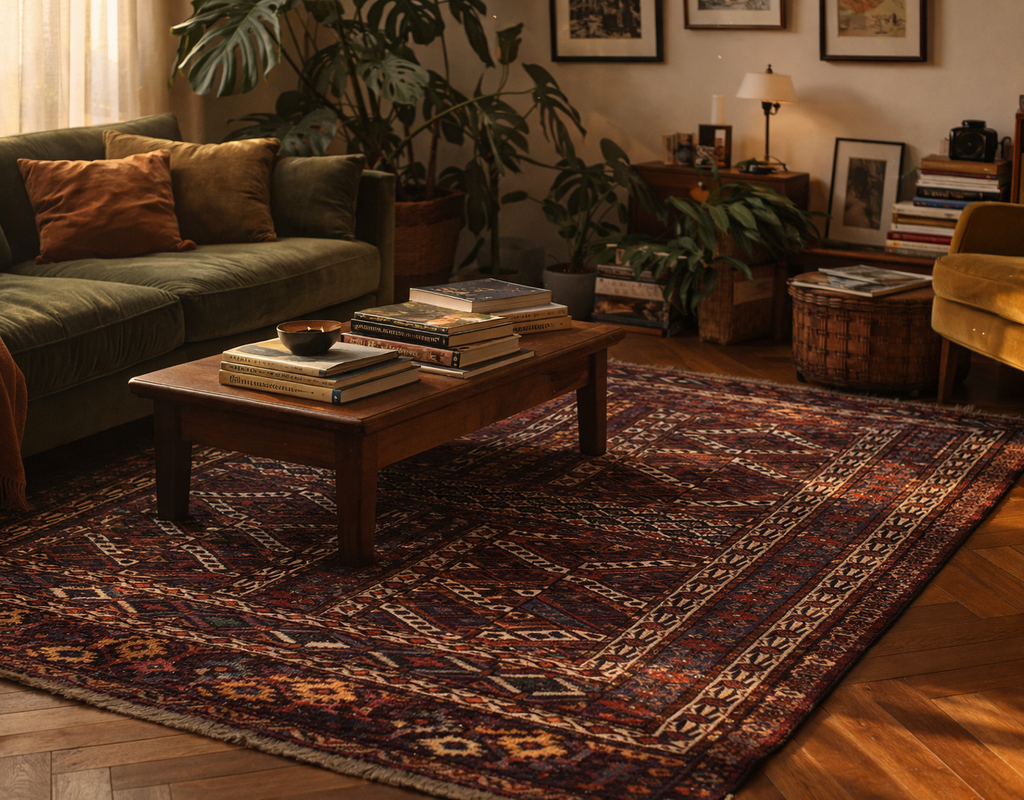
In dining areas, the same principle applies: both the table and chairs should sit fully on the rug, allowing smooth movement and visual harmony. When furniture sits fully on a rug, it signals intentionality and defines a clear zone for gathering.
What Goes Off the Rug
Not every piece of furniture must fit on the rug. Side tables, consoles, or shelving units along walls can remain fully off, as they serve more functional than anchoring roles. In smaller spaces, allowing some furniture to sit entirely off the rug avoids crowding and keeps circulation open.
The goal is to prioritize anchor points over peripheral pieces.
What Sits Partially on the Rug
When rugs are slightly smaller than the furniture grouping, the front legs rule offers a safe fallback. Placing only the front legs of sofas or chairs on the rug still maintains cohesion while saving space and budget.
This method keeps pieces connected without the need for oversized rugs. It is especially useful in compact rooms where fully covering furniture would overwhelm proportions.
Centering Rugs with Furniture
Rugs should always be centered relative to the seating cluster, not just the empty floor space. The sofa rug rules emphasize alignment with the main seating zone, ensuring the rug feels like the foundation of the arrangement.
A centered rug keeps coffee tables balanced and seating areas symmetrical, reinforcing comfort and flow. Floating rugs that sit apart from furniture, by contrast, break cohesion and make the design feel incomplete.
Rugs define furniture zones, and whether all legs or just the front legs rest on the rug, consistency matters most. By following these sofa rug rules and anchoring core pieces, homeowners can achieve balance, unity, and intentional design in any living space.
Dealing with Curved Furniture
Curved “kidney” sofas or circular sectionals are high-design pieces that often look awkward on standard rectangular rugs. To harmonize these shapes, consider a Large Round Rug. A round rug mimics the “embrace” of curved furniture, creating a soft, organic flow.
If you must use a rectangle, ensure it is oversized enough that the entire curve of the sofa sits comfortably within the borders, with at least 12 inches of rug visible behind the sofa’s back.
Layering Rugs for Depth and Style
Neutral Base + Accent Rug
One of the most effective rug layering ideas begins with a neutral foundation such as jute or sisal. These natural fiber rugs offer durability and subtle texture without overpowering the design. On top, a patterned, colorful, or plush rug adds character and warmth.
The contrast between the understated base and the expressive top rug creates a layered rug style that feels both intentional and dynamic. Designers often recommend that the top rug be about 1–3 feet smaller than the base rug to ensure the foundation frames the accent piece effectively.
Pairing Textures
- Flatweave + Shag — Why: Combines structure with softness, adding tactile richness.
- Jute + Wool — Why: Grounds the space with natural fibers while introducing warmth and comfort.
- Sisal + Kilim — Why: A practical, neutral backdrop for bold patterns and colors.
- Leather + Cotton — Why: Contrasting smooth with woven brings depth and visual intrigue.
Pairing textures in this way makes layering rugs in a living room or bedroom not only stylish but also sensory, adding depth that single rugs can’t achieve.
Layering for Zones
Layering rugs is especially useful in open-plan spaces where one large rug might feel overwhelming. By stacking rugs, homeowners can carve out functional zones—for example, one layered rug style to define a conversation corner and another to anchor a dining area.
This approach helps organize large rooms without heavy partitions, maintaining flow while enhancing design.
Budget Layering Hacks
Layering is also a cost-effective strategy. Instead of investing in a massive statement rug, place an affordable, durable sisal or jute rug underneath and showcase a prized designer or vintage area rug on top. This not only protects delicate pieces but also allows smaller rugs to shine in larger rooms.
Layering adds visual texture and depth, while also solving practical challenges of scale and budget. From grounding open spaces to showcasing smaller vintage finds, layered rug styles provide flexibility, character, and a designer look that elevates any room.
Living Rooms & Family Rooms
Sofa and Armchair Placement
Living room rug placement begins with the seating arrangement. Ideally, both sofas and armchairs should have all legs on the rug, creating a unified and anchored zone. In smaller spaces, the front legs rule provides a workable compromise, allowing the furniture to feel connected without overwhelming the proportions of the room.
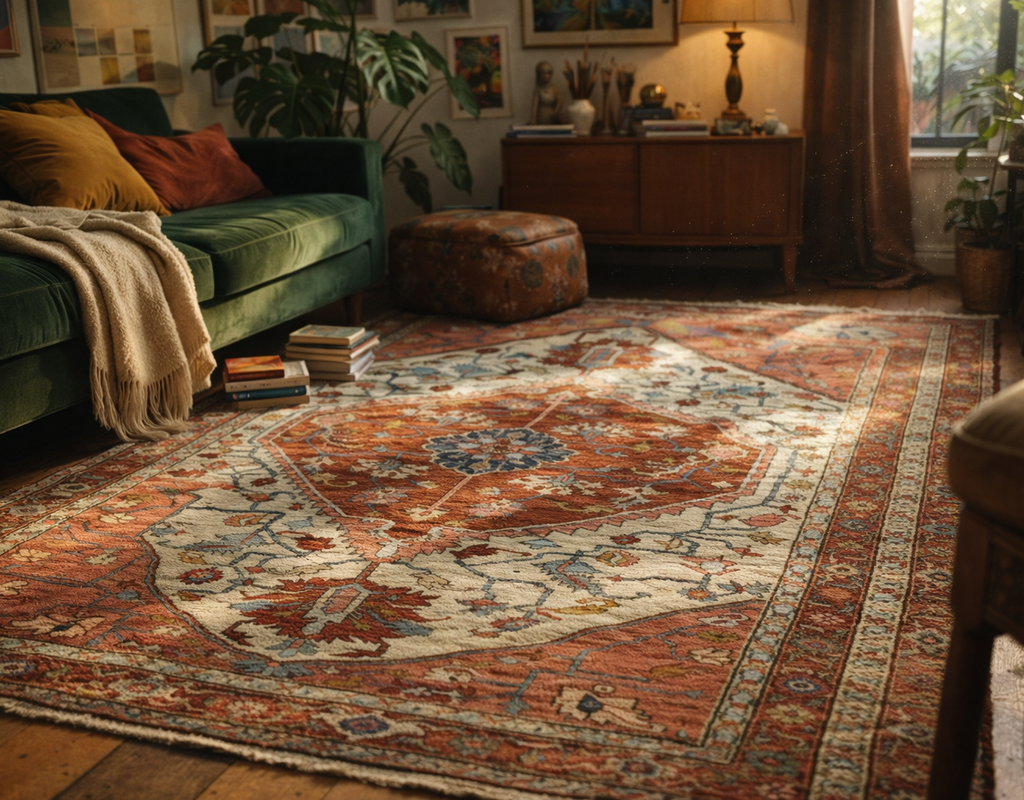
To reinforce balance, rugs should always run longer and wider than the sofa, ensuring that the seating cluster sits comfortably within its frame. Following these sofa rug rules helps avoid the fragmented look caused by undersized rugs.
Coffee Table Centering
- Centered on Rug — Why: Establishes symmetry and balance between all seating elements.
- Adequate Border Space — Why: Leaving equal rug space around the coffee table ensures the table doesn’t dominate the arrangement.
- Proportional to Seating Zone — Why: A centered rug with a coffee table in the middle naturally organizes the surrounding chairs and sofas.
Coffee tables act as visual anchors within family room rugs, and centering them properly helps keep the space balanced and inviting.
Open-Plan Layouts
In open-plan homes, one large rug is the best strategy to tie together multiple seating areas into a cohesive grouping. A single oversized rug visually separates the living area from dining or kitchen zones without interrupting flow.
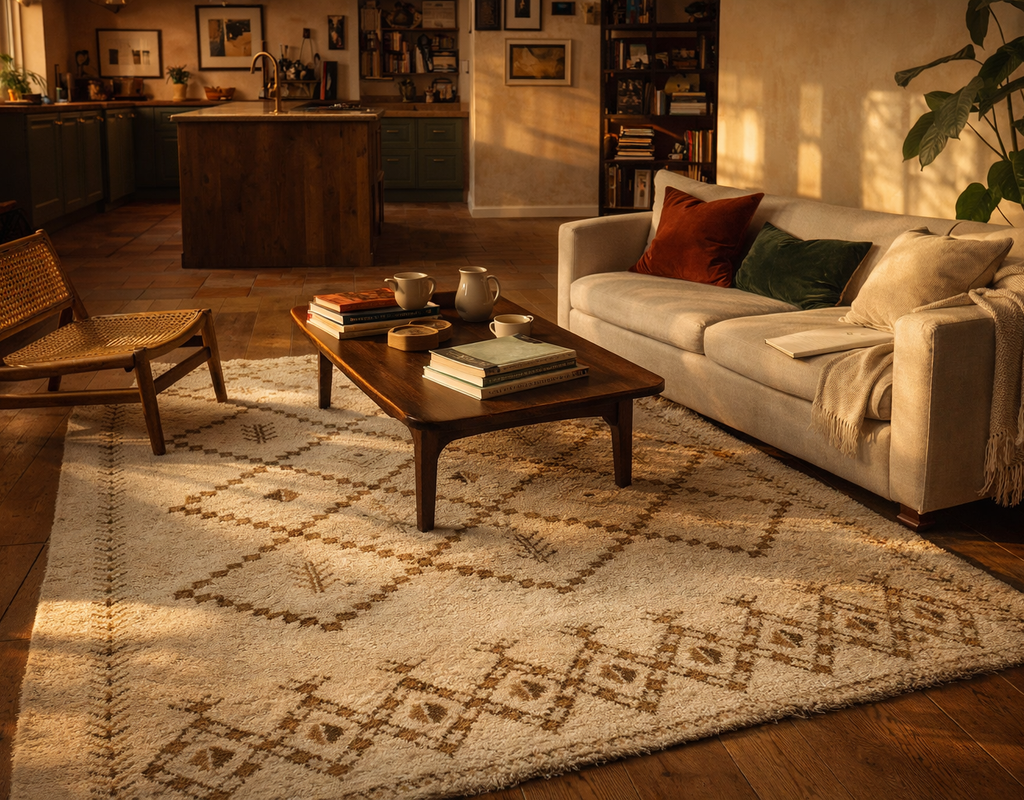
By keeping all major pieces connected to the rug, the room gains definition without sacrificing openness.
Avoid Floating “Rug Islands”
A common mistake in living room rug placement is isolating a rug away from furniture, leaving it to float in the middle of the floor. These “rug islands” look visually disconnected and diminish the purpose of the rug as an anchor. Instead, every rug should clearly interact with the seating arrangement, reinforcing its role as the foundation of the room.
Bigger is always better in living rooms, where rugs must unify furniture rather than isolate it. By following sofa rug rules, centering coffee tables, and avoiding floating rugs, homeowners can achieve both comfort and design cohesion in family room rugs.
The “Diagonal Fireplace” Dilemma
In many modern homes, fireplaces are set into a corner at a 45-degree angle. Placing a rug parallel to the walls in these rooms creates a jarring visual conflict. The pro solution: Angle the rug. Align the rug with the hearth of the fireplace. This “breaks” the room’s grid but creates an intentional, cozy conversation zone that feels anchored to the room’s architectural focal point.
Dining Room Rug Placement
Rug Size Formulas
These dining rug placement rules ensure that rugs not only fit the table but also provide adequate clearance for chairs. The consistent 3-foot extension prevents awkward edges and keeps furniture comfortably anchored.
Round vs. Rectangular Rugs
The shape of the rug should always echo the shape of the dining table for harmony. A round rug under a round table highlights symmetry and centrality, while a rectangular rug under a rectangular table maintains balance across the full length.
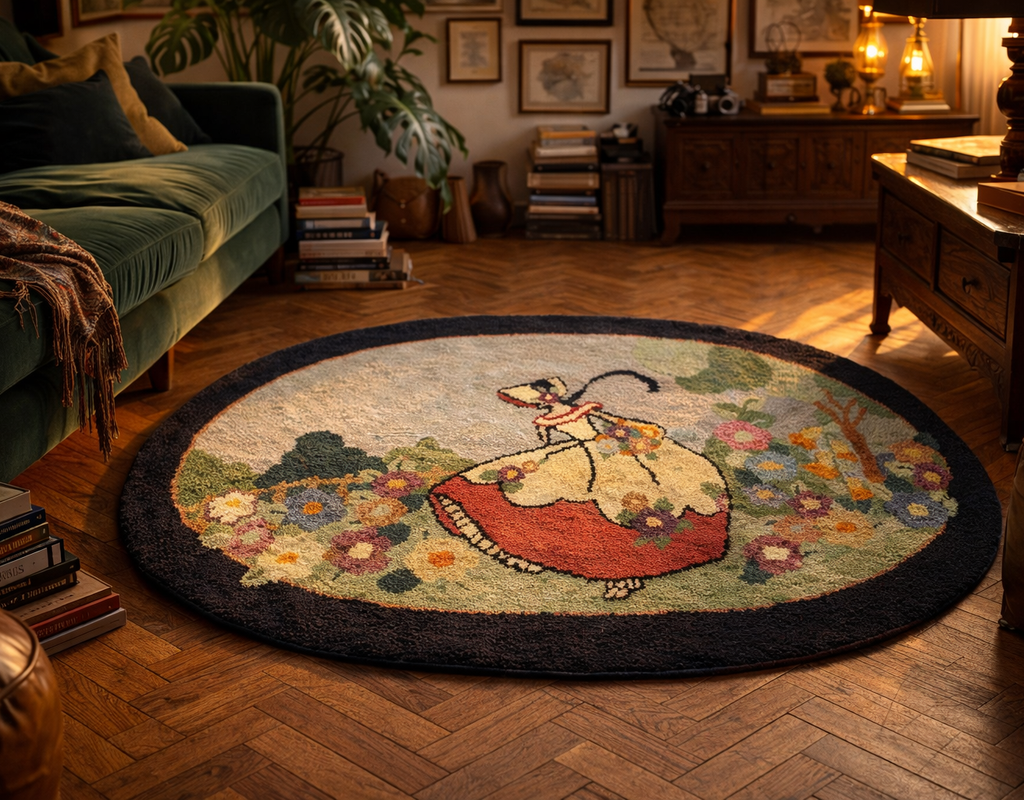
Choosing mismatched shapes can create imbalance, whereas shape alignment emphasizes proportion and design intent.
Chair Clearance Rule
The single most important principle in dining room rug size is accounting for chair movement. Chairs should remain fully on the rug even when pulled back.
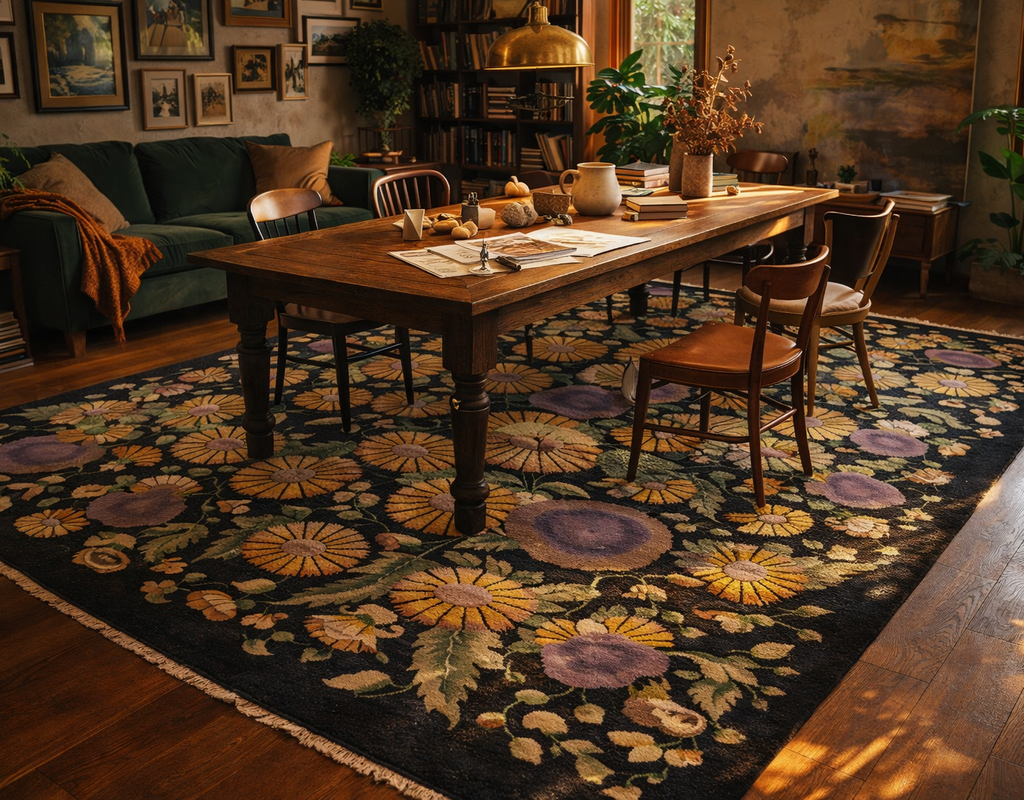
This prevents uneven seating, tripping hazards, and damage to both chairs and flooring. Dining rugs must always extend at least 3 feet beyond the table edges to ensure seamless functionality.
Common Dining Mistakes
- Undersized Rugs — Why: Chairs slide off edges, breaking flow and frustrating guests.
- Ignoring Shape Harmony — Why: Rug and table mismatch creates visual tension.
- Too Narrow Rugs — Why: Side chairs feel cramped, and rugs fail to anchor the setting.
- Skipping Chair Clearance — Why: Causes discomfort and damages flooring when chairs scrape off-rug.
The right dining room rug size creates both beauty and practicality. By following clear placement rules—extending rugs three feet past the table, matching shapes, and ensuring chairs never slide off—homeowners can create dining spaces that feel intentional, comfortable, and elegant.
Bedroom Rug Placement
Rug Sizes Under Beds
Placing a rug under the bed ensures proportionate scale. The rug should not stop short of nightstands, as this creates imbalance. Instead, it should extend enough to visually ground the bed while leaving walking space around the perimeter.
Runners on Bed Sides
- One Runner on Each Side — Why: Offers symmetry and hotel-style comfort.
- Single Runner Across Foot of Bed — Why: Adds definition while saving costs compared to a full-size rug.
- Compact Rooms — Why: Bedroom runner rugs are a budget-friendly way to bring softness underfoot without needing a large area rug.
Runners create a polished look while offering practicality, especially for guest rooms or smaller bedrooms.
Nightstand and Footboard Alignment
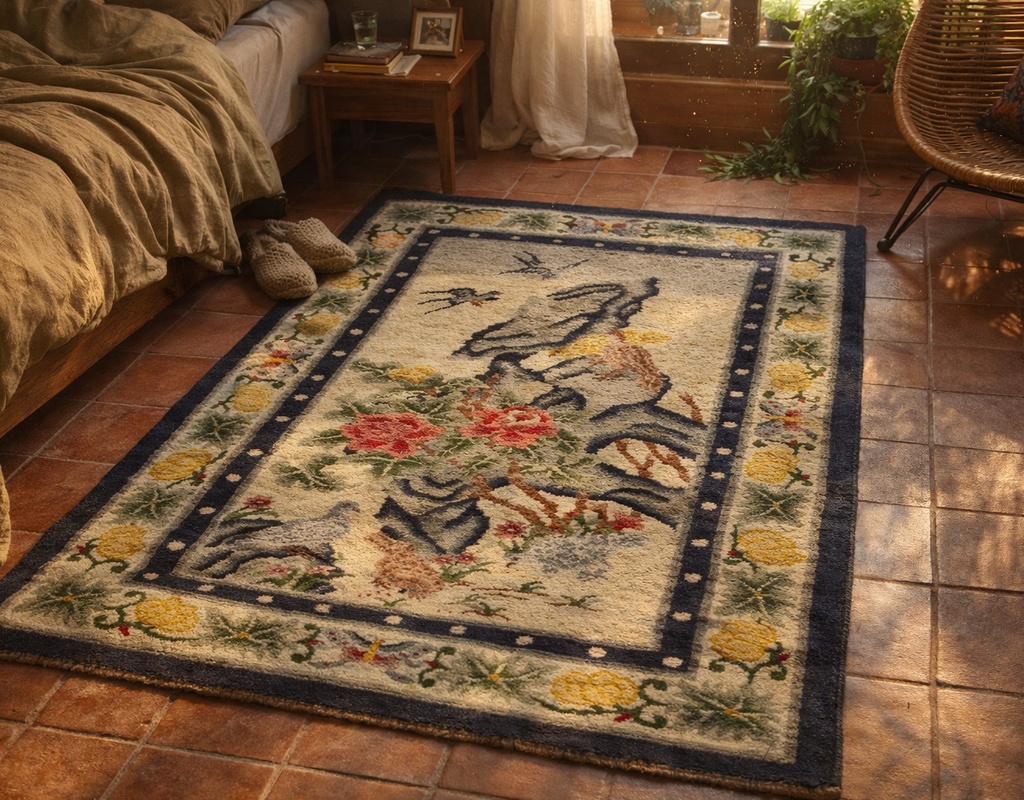
For proper bedroom rug placement, the rug should extend to the base of nightstands without running fully beneath them. At the foot of the bed, it should project 2–3 feet outward, creating balance and comfort. This alignment visually anchors the bed while keeping proportions harmonious.
Guest Rooms and Nurseries
In guest rooms, smaller rugs or runners are cost-effective yet still add warmth. In nurseries, soft rugs provide a safe, cushioned surface while balancing proportions with crib size. Both spaces benefit from rugs that ground furniture while maintaining comfort.
Rugs bring warmth and comfort to bedrooms, transforming them from functional sleeping quarters into restful retreats. Whether using a 9×12 under a king bed, an 8×10 under a queen, or runners for a streamlined look, the key is to balance rug size with the bed’s scale while extending coverage for both function and design.
Entryways, Hallways, and Transitional Spaces
Entryway Rug Dimensions
For proper entryway rug placement, the rug should align with the width of the doorway. This ensures that it feels proportionate and immediately grounds the entrance.
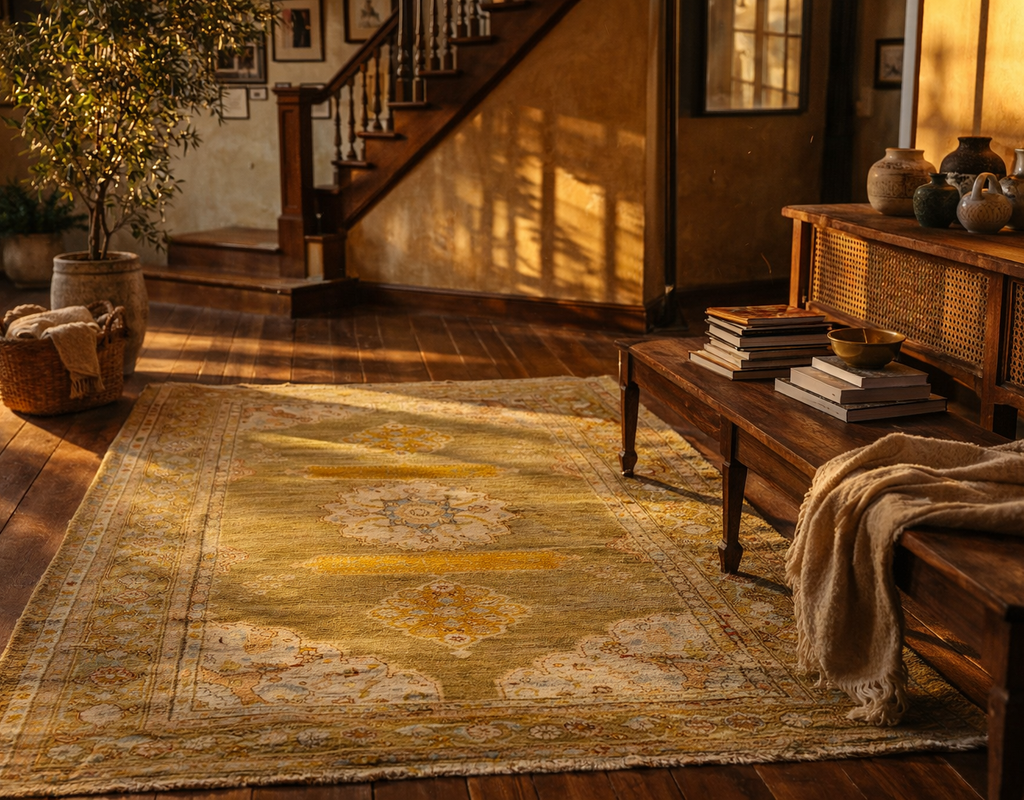
Entry rugs serve both functional and decorative purposes—capturing dirt and moisture while also creating a welcoming first impression. A rug that is too small looks like an afterthought, while one too large disrupts flow into the adjoining space.
Runner Placement in Halls
Hallway runners should always be centered, leaving 3–4 inches of exposed flooring along each edge. This framing creates balance and makes narrow spaces appear more intentional.
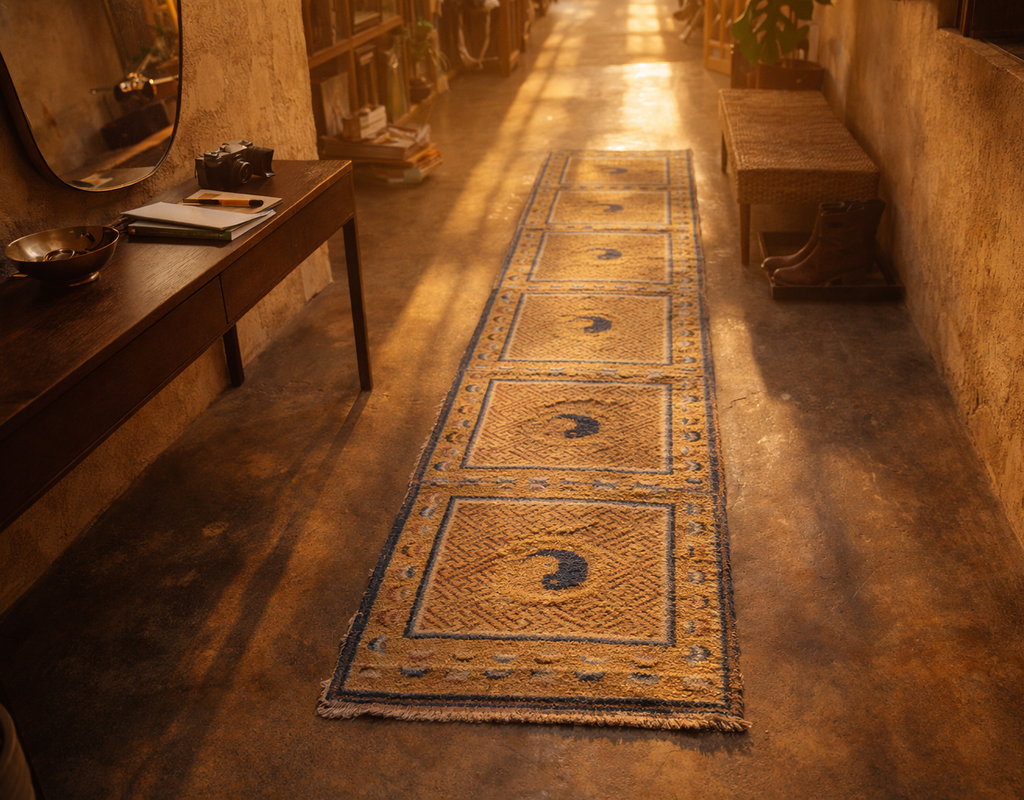
For those wondering what rug placement makes narrow hallways look wider, the answer lies in a long, centered runner: it visually elongates the space while guiding the eye forward, giving the illusion of greater width.
Mudroom and Laundry Rug Rules
Mudroom rugs need to be washable, low-pile, and highly durable. These high-traffic zones benefit from rugs that resist dirt, moisture, and wear. Flatweaves or indoor-outdoor styles are ideal choices, as they combine practicality with easy maintenance.
In laundry rooms, slim, durable runners add comfort underfoot while withstanding spills and frequent foot traffic.
Acoustic Benefits
Beyond style, rugs in transitional spaces provide acoustic advantages. Hard flooring in entryways and hallways tends to echo, but rugs absorb sound and soften footsteps. This makes the space quieter and more inviting, especially in homes with open layouts.
Rugs in transitional spaces balance safety and style. They prevent slips in entryways, define pathways in hallways, and add durability in mudrooms, all while enhancing acoustics.
Whether using hallway runners or mudroom rugs, their placement should be both functional and visually cohesive, transforming pass-through areas into purposeful design moments.
Specialty & Utility Rooms
Kitchens
Kitchen rugs serve both comfort and utility. The most effective placement is a runner positioned along high-use areas such as the sink or stove. These kitchen rugs reduce fatigue from standing while also protecting flooring from spills. Low-pile or washable designs are best, ensuring practicality without interfering with foot traffic or cabinetry.
Home Offices
For proper office rug placement, the rug should extend at least 2 feet beyond the back of the desk chair. This allows smooth rolling without catching on edges, while also anchoring the desk area as a defined workspace.
A well-sized rug not only prevents floor wear but also adds professionalism and comfort to the office setting.
Libraries
In home libraries, rugs are most effective when placed beneath seating clusters rather than solely under shelves. A rug beneath armchairs, reading tables, or couches creates a warm, inviting environment while defining zones within a larger room.
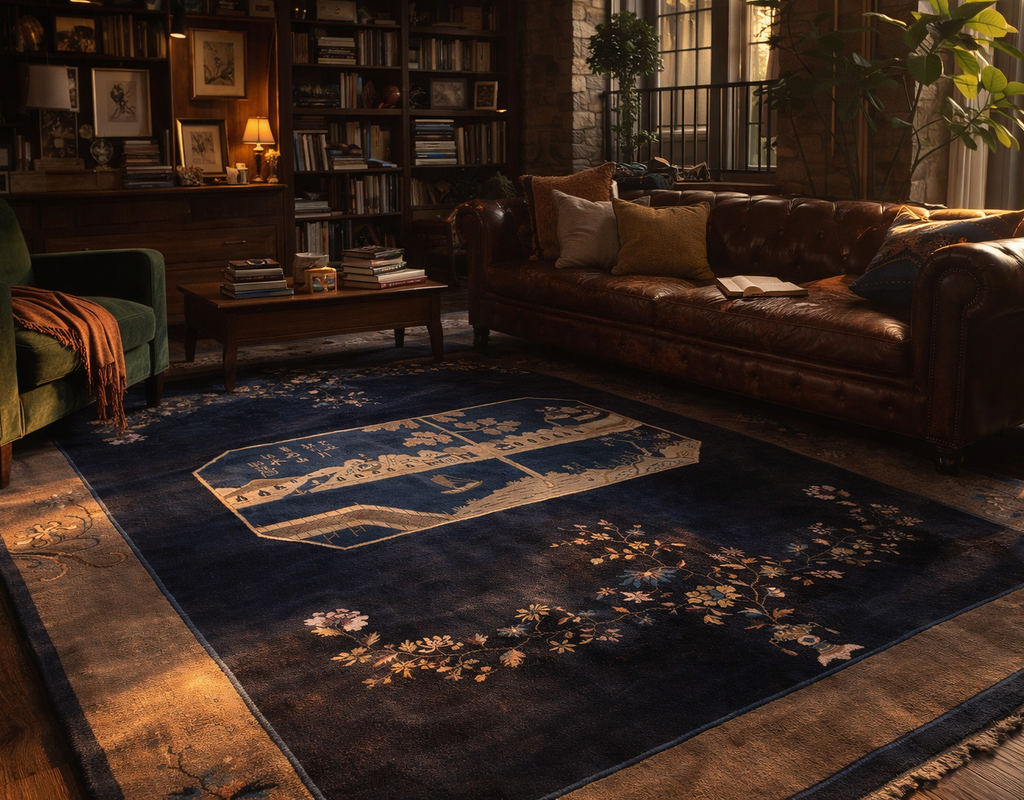
By focusing on seating areas, rugs transform libraries into cozy, functional spaces.
Yoga and Meditation Rooms
Yoga rugs should be chosen as both functional anchors and aesthetic centers. Round or square rugs work particularly well, providing symmetry and a defined practice area. Soft textures enhance comfort during meditation, while natural fibers contribute to a calm, grounding environment.
Specialty and utility rooms benefit from tailored rug function. Kitchen rugs protect and cushion, office rugs expand usability, library rugs create warmth, and yoga rugs establish focus. Each placement enhances both the practicality and spirit of the space.
Entertainment & Lifestyle Rooms
Home Bars, Game Rooms, and Man Caves
Entertainment room rugs in social spaces like bars or game rooms follow similar rules to dining rugs: they should extend beyond the edges of bar stools or tables to allow comfortable seating.
In man caves or casual lounges, larger rugs unify seating clusters, preventing furniture from feeling scattered. By anchoring groupings, rugs not only define zones but also add personality and comfort to spaces designed for relaxation and fun.
Music and Media Rooms (Acoustics)
Plush rugs play an important role in media and music rooms. Hard floors amplify echoes, but thick rugs absorb sound, improving acoustics and creating a richer listening or viewing experience.
Rugs also prevent sound from bouncing off surfaces, making them essential in spaces where clarity and comfort matter. For homeowners asking if rugs improve acoustics in media rooms—the answer is a clear yes.
Wine Cellars and Conservatories
In wine cellars, rugs bring warmth and sophistication, counterbalancing cool stone or tile flooring. Conservatories and solariums, filled with natural light, benefit from rugs that soften and ground the space.
By choosing durable yet stylish pieces, homeowners can highlight the elegance of these lifestyle rooms while adding layers of comfort.
Boudoirs and Solariums
Rugs in boudoirs, sunrooms, or solariums add softness, intimacy, and a sense of retreat. Light-toned rugs emphasize airiness, while plush textures enhance relaxation. Here, placement should focus on anchoring seating or lounging areas rather than filling the entire floor, keeping the room airy yet cohesive.
Rugs enhance both function and ambiance in lifestyle spaces. Whether improving sound in media rooms, grounding furniture in game rooms, or elevating the mood of solariums, thoughtful rug placement turns entertainment areas into inviting, purposeful environments.
Large & Formal Spaces
Grand Halls and Galleries
In galleries and grand halls, rugs must bring order to otherwise vast, empty stretches of flooring. Using multiple rugs to anchor zones creates symmetry while ensuring furniture doesn’t feel lost.
Gallery rug design often employs long runners or large rugs framed by exposed flooring to emphasize architectural grandeur.
Lofts and Open-Concepts
Loft rug placement relies on defining distinct zones within open floor plans. A rug under a sofa cluster separates the living space, while another beneath a dining table marks a new function.
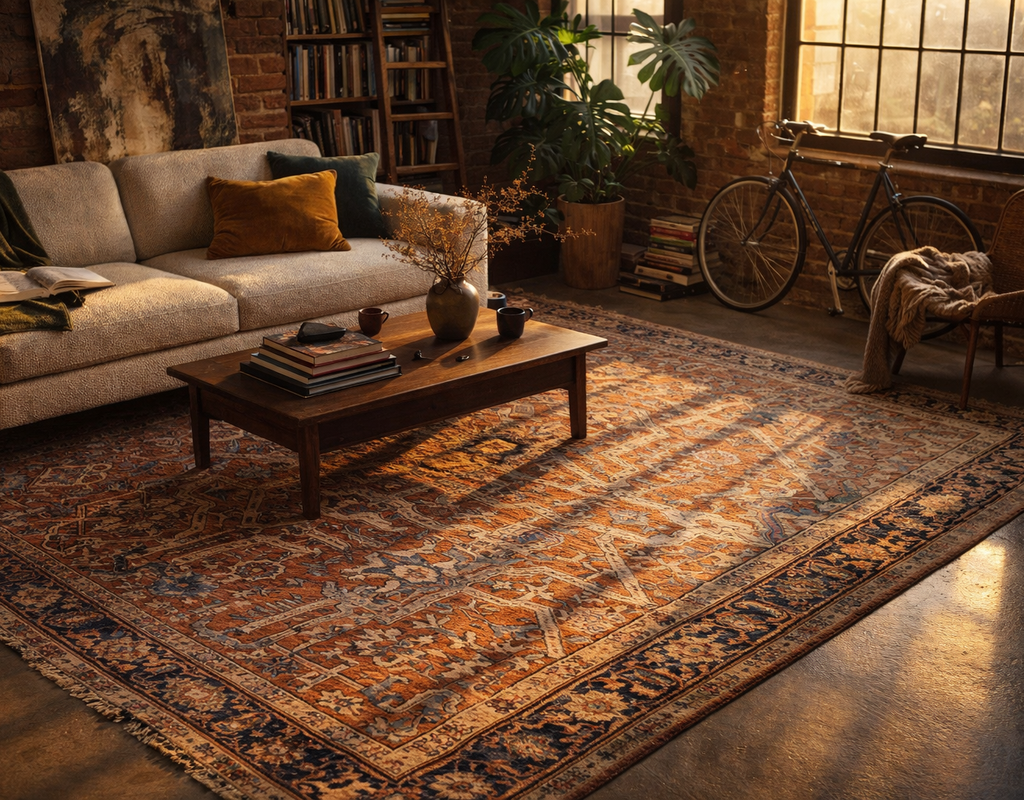
Coordinating patterns or color palettes keeps the overall space cohesive, ensuring that even with multiple rugs, the design feels unified rather than fragmented.
Ballrooms and Oversized Family Rooms
In ballrooms or oversized family rooms, both strategies work: a single oversized rug can unify the entire space, or multiple coordinated rugs can anchor smaller seating clusters.
Large space rugs that echo each other in tone or pattern maintain flow while still providing definition. For gatherings, these rugs prevent vast floors from feeling empty and cold, instead creating warmth and usability.
Rugs organize massive spaces by breaking them into purposeful zones. Whether through one oversized rug connecting multiple seating areas or several smaller rugs uniting different functions, the right placement provides both structure and elegance in even the grandest of rooms.
Outdoor & Commercial Placement
Outdoor Patios and Porches
Outdoor rug placement should follow the same principles as indoor spaces while accounting for durability. Weather-resistant rugs are essential, designed to withstand moisture, sun, and heavy use.
On patios and porches, rugs should be sized to fit beneath outdoor furniture groupings—dining tables, lounge chairs, or sectional sofas—so the arrangement feels cohesive rather than piecemeal.
Properly placed outdoor rugs extend indoor comfort into exterior living areas.
Hospitality and Hotels
In hotels, rugs play a crucial role in shaping perception and ambiance. Large lobby rugs anchor lounge seating and create intimate gathering spaces within expansive open areas.
Hallway runners guide traffic flow, while rugs in suites reinforce a sense of comfort and luxury. Hotel rugs are not only decorative but also functional, balancing style with the ability to withstand constant foot traffic.
Business Offices
Office rug placement is both practical and professional. In conference rooms, rugs should extend far enough under the table so that all chairs remain fully on the rug, even when pulled back. This prevents awkward edges and maintains symmetry.
In executive offices, rugs anchor desks and seating clusters, creating structure and refinement. For those asking whether rugs should be used in commercial offices, the answer is yes—they improve acoustics, add comfort, and elevate the professional atmosphere.
Retail and Commercial Spaces
In retail environments, rugs reinforce branding by reflecting the store’s identity through pattern, color, or texture. They also help direct customer flow, guiding movement naturally through displays and checkout areas.
In commercial settings such as galleries or showrooms, rugs soften acoustics and make spaces feel more approachable while highlighting focal products.
Rugs shape perception in professional and public spaces just as much as they do in homes. From outdoor rug placement on porches to hotel rugs in lobbies, to carefully scaled office and retail installations, thoughtful rug positioning enhances both function and impression.
Common Rug Placement Mistakes to Avoid
Rugs Too Small
The most frequent rug placement mistake is choosing rugs that are too small for the room. Undersized rugs create a chopped-up look, leaving furniture floating and disrupting flow.
In living rooms, rugs should always extend beyond sofas and chairs; in dining rooms, they must cover the full chair area even when pulled out. The small rugs problem makes even well-furnished spaces feel incomplete and visually cluttered.
Not Centering
Another common error is failing to center rugs with furniture arrangements. When a rug is off-center, the entire room feels awkward and unbalanced, even if other design elements are strong.
Rugs should always align with the main cluster of furniture, such as sofas, tables, or beds, rather than with walls or empty floor space.
Blocking Doors
Placing rugs where they block door swings or drag against thresholds is both impractical and unsightly. Thick rugs can prevent doors from opening smoothly, causing damage to both the rug and the door.
This mistake disrupts functionality and can quickly turn a decorative element into a daily frustration.
Wrong Shapes
- Round Rug Under Rectangular Table — Why: Creates visual mismatch and disrupts proportion.
- Square Rug in Long Hallway — Why: Breaks the flow of movement, making the space look segmented.
- Oversized Rug in Small Room — Why: Overwhelms proportions and swallows furniture.
- Runner Too Short — Why: Leaves gaps at hallway ends, reducing continuity.
Avoiding these rug placement mistakes ensures cohesive design.
By choosing appropriately sized rugs, centering them with furniture, avoiding blocked doors, and matching shapes to room and furniture proportions, homeowners can prevent the most common pitfalls and achieve balanced, functional, and polished spaces.
Final Checklist & Placement Formulas
Dining, Living, Bedroom Formulas
These rug size formulas act as a rug measuring guide, ensuring that rugs are scaled appropriately for each type of room. Applying them consistently prevents awkward layouts and guarantees proportional balance.
Quick Placement Checklist
- Always Tape Before Buying — Why: Visualizing with painter’s tape confirms scale and flow before committing.
- Anchor Furniture, Don’t Float — Why: Rugs should connect sofas, chairs, or tables, avoiding isolated “rug islands.”
- Leave Standard Margins — Why: Exposed flooring (6–12″ small rooms, 12–24″ large rooms) frames rugs elegantly.
- Match Shapes to Functions — Why: Round rugs under round tables and rectangular rugs in long rooms maintain harmony.
- Use Rug Pads — Why: They add safety, extend rug life, and improve comfort.
Following this rug placement checklist ensures a professional, polished outcome every time.
Taping and Measurement Tips
To measure a room for rug placement, mark the rug’s intended dimensions with painter’s tape directly on the floor. This shows how the rug will interact with furniture and walkways.
In open layouts, larger rugs are typically better, as they unify multiple seating areas and expand the perceived scale of the room.
Closing Summary
Simple formulas prevent costly missteps, ensuring rugs are sized and placed with precision. Whether using a rug measuring guide to determine the right fit or relying on a placement checklist for consistency, rugs serve as the anchors of harmony, comfort, and style in any space.
By combining clear measurement rules with thoughtful placement, homeowners can achieve designs that are functional, cohesive, and timeless.
FAQ
-
What’s the easiest way to test rug placement before buying?
Tape the outline on the floor to preview clearances and pathways; visualize 12–18-inch wall gaps and chair pull-back of 24–30 inches.
-
How do I center rug placement when the room isn’t symmetrical?
Center to the furniture grouping or focal point (sofa, fireplace), not the room’s walls, to make the layout feel intentional.
-
What rug placement works for a home office with a rolling chair?
Put a low-pile rug under both desk and chair and size it to extend 18–24 inches beyond the desk so the chair doesn’t roll off.
-
Is there a safe rug placement distance near fireplaces?
Keep standard rugs at least 3 feet from open flames; if closer, use a certified hearth rug designed for ember resistance.
-
What rug placement fits narrow entry halls best?
Choose a runner aligned to the length of the hall with 3–6 inches of reveal per side; avoid running flush against walls.
-
How do I layer rug placement safely?
Start with a flat, low-profile base; keep the top rug 1–3 feet smaller per side than the base and add pads to prevent shifting.
-
What outdoor rug placement protects decks and patios?
Use breathable, quick-dry rugs and pads; lift and dry after rain and avoid rubber backings that trap moisture against wood.
-
Can rug placement over carpet work, or will rugs creep?
It works—use a carpet-to-carpet pad or grippers and anchor edges with furniture; keep top rugs flatter than the plush carpet below.
-
Any rug placement tips for robot vacuums?
Favor low-pile rugs without long fringe; many robots handle \~0.5–0.8-inch thresholds, while dark borders can confuse cliff sensors.
-
What rug placement rules apply over radiant floor heating?
Prefer thin, low-resistance rugs and pads; avoid covering most of the heated area and skip thick or rubber-blocked backings.
-
How should rug pad placement be sized?
Choose a pad 1–2 inches smaller than the rug on all sides (about 2–3 inches for thicker pads) to hide edges and prevent trips.
-
What coffee-table rug placement keeps proportions balanced?
Center the coffee table on the rug and allow roughly 18 inches of rug around it; also keep 16–18 inches from sofa to table.
-
What rug placement orientation suits long rooms?
Run the rug lengthwise with the room’s longest wall or main seating axis to emphasize flow and visually elongate the space.
-
How does rug placement define zones in an open floor plan?
Use one rug per zone (living, dining, office). Align each rug with its furniture group to create clear pathways between areas.
-
What bathroom rug placement improves safety?
Place non-slip mats outside the tub/shower and at the sink; choose rubber-backed, low-profile designs to reduce tripping.
-
What kitchen rug placement is most practical?
Put a low-pile, washable runner in front of the sink or between sink and island; confirm appliances and doors clear the rug.
-
What entryway rug placement avoids door drag?
Use a low-profile rug/pad and leave 6–18 inches from walls; ensure the rug is at least as wide as the door and clears the swing.
-
What hallway runner rug placement looks right?
Center runners with 4–6 inches of floor showing on each long side and leave 6–12 inches at each end.
-
How does round table rug placement work?
Choose a round rug equal to the table diameter plus 24–30 inches total clearance; e.g., a 60-inch table pairs with \~9–10 feet.
-
What dining room rug placement prevents chair legs from catching?
Size so the rug extends 24–30 inches beyond the tabletop on all sides; this keeps chairs fully on the rug when pulled out.
-
Is side-runner rug placement in bedrooms a good option?
Yes—use matching runners 2–3 feet wide along both sides; leave a few inches from the nightstands and 3–6 inches off walls.
-
What’s ideal rug placement for a king bed?
Place a 9×12 under the bed, extending 18–24 inches around the sides/foot; alternatively, use two runners on either side for flexibility.
-
What rug placement works under a queen bed?
Center the rug and let it extend 18–24 inches beyond both sides and the foot; an 8×10 rug usually fits a queen best.
-
How can rug placement fix a living room rug that’s too small?
Layer it over a larger neutral base (jute/sisal); keep the top rug roughly two-thirds the size of the base to look intentional.
-
Which living room rug placement is better—front legs on or all legs on?
Both work; front-legs-on anchors small spaces, while all-legs-on suits large rooms and makes layouts feel more cohesive.
-
What are the golden rules of living room rug placement?
Aim for at least the front legs of seating on the rug and leave about 12–18 inches (up to 24) of bare floor from rug edge to walls for a framed look.