
Introduction to the Swastika design in Rugs
Explore our unique collection of Swastika motif rugs today.
Swastika Design Meaning and Symbolism in Traditional Rugs
In the context of traditional rug weaving, the swastika design has always carried associations with good fortune, protection, and cosmic order. Long before its modern distortion, the symbol appeared as a geometric motif representing the cycle of life, the movement of the sun, and the harmony of the natural world.
In Sanskrit, the term “swastika” literally translates to “well-being” or “good fortune,” and this meaning informed its placement in textiles. When woven into carpets, kilims, or tribal flatweaves, the swastika design rug symbolism conveyed an invocation of auspiciousness, ensuring prosperity for the household or blessings upon the community.
Its geometric simplicity allowed it to be repeated as borders, central emblems, or secondary details, where it acted not only as decoration but also as a protective emblem against misfortune. In this way, the swastika design meaning in textiles was deeply sacred, tied to cycles of regeneration and renewal, and should be understood within the broader spiritual traditions of ancient artisans rather than through later associations.
Etymology and Ancient Origins
The word “swastika” comes from the Sanskrit “su” (good) and “asti” (to be), meaning “to be good” or “well-being.” From its linguistic roots in South Asia, the design traveled far beyond India, appearing independently in cultures across Central Asia, Persia, China, Europe, and the Americas. Archaeologists have identified swastika design forms carved into pottery, painted onto temple walls, and embroidered into garments dating back more than 7,000 years.
This pan-cultural adoption shows that the symbol held universal appeal as a sign of cosmic cycles, fertility, and divine blessing. The design’s four arms, often bent at right angles, could suggest the rotation of the heavens, the eternal return of seasons, or the four cardinal directions.
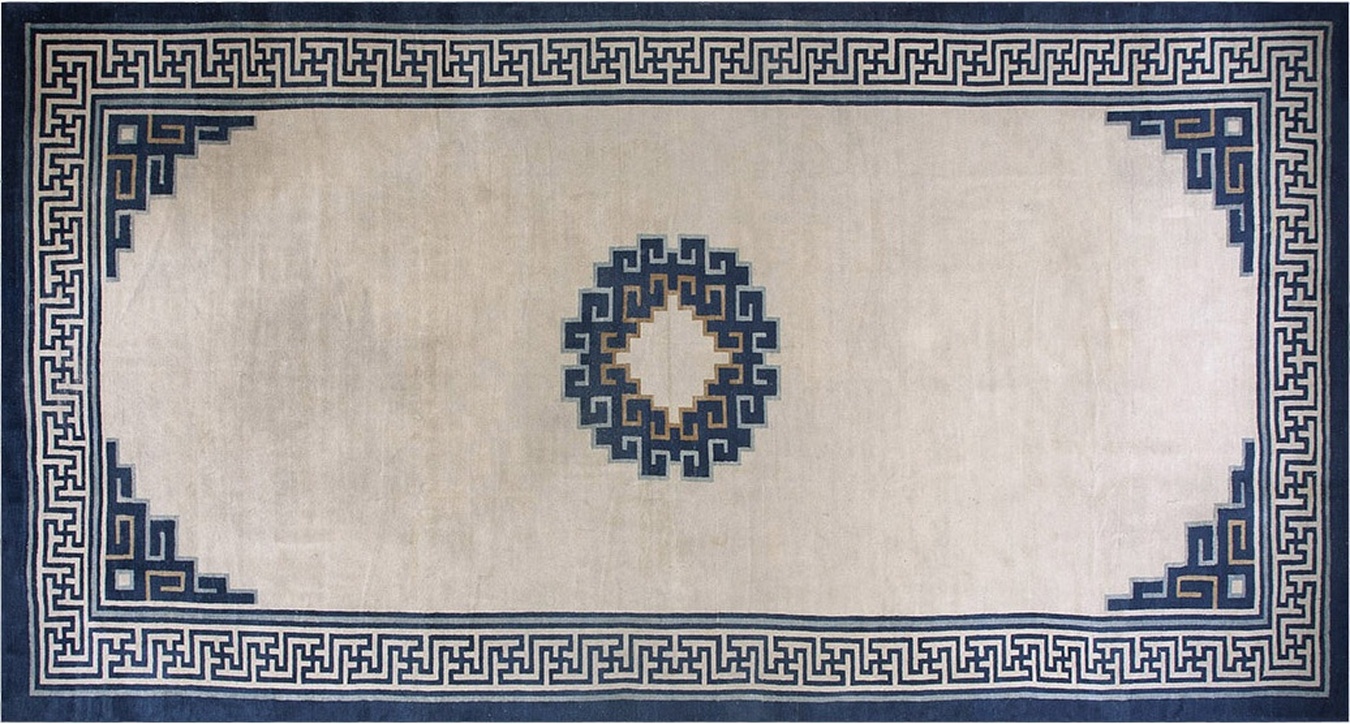
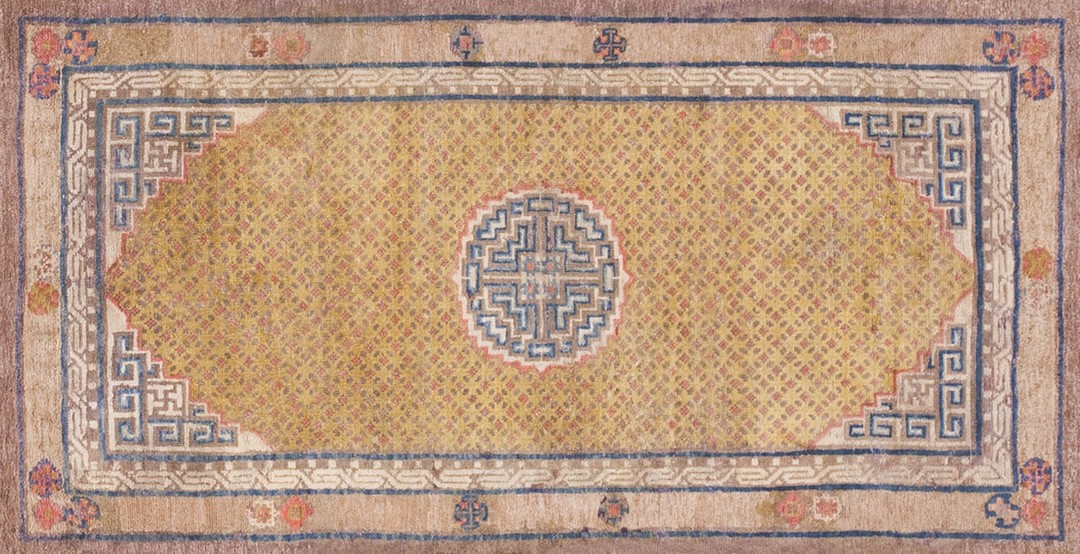
Antique Chinese – Mongolian Large Room Size Wool Ivory Rug – by Rugs On Net
For weavers, who often worked in communities where oral tradition, ritual, and cosmology were closely intertwined, the swastika was both an ornament and a prayer, woven into fabric to materialize unseen forces of balance and vitality.
How the Swastika Design First Appeared in Rug Weaving
The swastika design motif entered the history of swastika in rugs through both pile-knotted carpets and flatweave textiles, reflecting the shared symbolic language of early weaving traditions. Archaeological evidence from Central Asia and Anatolia shows early textiles where the swastika appeared as repeating borders or central medallions, often alongside other auspicious rug motifs like rosettes, solar discs, and animal totems.
Some of the oldest woven fragments bearing the design come from Bronze Age burial textiles in the Eurasian steppe, where nomadic tribes carried the motif across trade and migration routes. From there, it was adopted by tribal groups in Persia, the Caucasus, and later into Anatolian kilims, each culture reinterpreting the form to suit its weaving grammar.
In rug weaving, its presence was never ornamental alone—it was a deliberate choice by artisans to encode sacredness, luck, and continuity into household items that were used daily but carried the weight of spiritual heritage.
The earliest rugs with swastika design motifs reveal that the symbol was valued not for political meaning but for its cosmic resonance. This helps us understand why it appears across multiple, unconnected traditions worldwide, from Navajo weavings in North America to Buddhist ritual textiles in Asia.
Its universal qualities made it a powerful motif for artisans who saw weaving not only as craft but as a medium to connect with forces larger than themselves.
Ultimately, swastika rug symbolism reflects a legacy of ancient belief systems where every thread could carry a prayer, every pattern could hold protective power, and every woven symbol tied human life to the eternal cycles of nature.
Historic Production and Geographic Spread

Ancient symbols on desert monuments and terrain.
Primary Weaving Regions for Swastika Design Rugs
Swastika design rugs emerged across an extraordinary range of weaving traditions, each community adapting the motif to its own cultural and aesthetic framework.
In North America, Navajo weavers incorporated the symbol as the whirling logs, a sacred emblem of harmony, healing, and the four directions.
In the Caucasus, the design appeared in Pinwheel Kazak rugs, where the swastika conveyed cosmic order and perpetual movement, often radiating from the center of bold medallions.
In Central Asia, particularly in Turkmen and Khotan workshops, the motif was integrated into borders and repeating fields, sometimes transformed into intricate geometric meanders.
In Anatolia, kilim weavers used the swastika as a protective device, weaving it into flatwoven textiles meant for dowries and household use.
In Tibet and China, the swastika design appeared prominently in Buddhist carpets, where it was a symbol of eternity, auspiciousness, and the footprints of the Buddha.
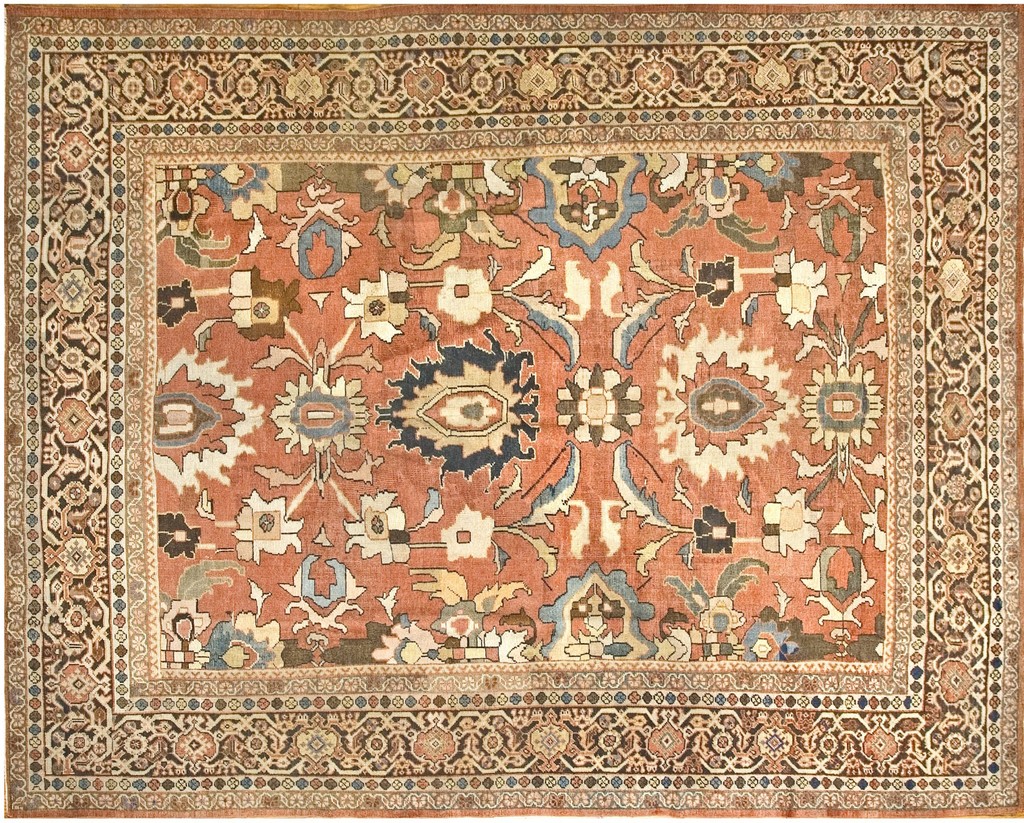
Rustic Coral Color Antique Tribal Large Scale Pattern Persian Sultanabad Rug by Rugs On Net
This geographic spread highlights that the swastika rug motif was never confined to one culture or faith but was instead a shared human symbol interpreted through different weaving grammars.
Timeline: Evolution Across Cultures
- Bronze Age Central Asia — Swastika design forms appear in early steppe textiles and burial goods. — Why: Nomadic groups carried the symbol across Eurasia, embedding it into portable woven items.
- Early Navajo Tradition (19th century) — Whirling logs pattern becomes a healing emblem in rugs and sand paintings. — Why: It represented balance, wellness, and the sacred four directions in Diné cosmology.
- Caucasus, 18th–19th century — Pinwheel Kazak carpets showcase the motif in bold central medallions. — Why: It embodied cosmic rotation and order, fitting the region’s geometric design language.
- Anatolian Kilims (19th century) — Flatwoven textiles feature swastikas in borders and central devices. — Why: Used as talismanic emblems to protect households and newlyweds.
- Tibetan and Chinese Carpets (19th–20th century) — The swastika design motif appears in temple textiles and domestic rugs. — Why: In Buddhism, it symbolized eternity, good fortune, and the turning of the Dharma wheel.
Cultural Contexts and Symbolism
- Navajo Whirling Logs Rug — Expressed healing, well-being, and harmony with nature. — Why: The symbol was central to rituals and sand paintings, carried into rug weaving as a sacred sign.
- Pinwheel Kazak — Depicted cosmic rotation and universal order. — Why: The Caucasian weaving tradition emphasized bold geometry, and the swastika fit within this spiritual grammar.
- Khotan Swastika Border — Used as repeating meanders in East Turkestan rugs. — Why: The endless repetition signified continuity, prosperity, and eternal return.
- Tibetan Swastika Carpet — Incorporated into temple carpets and meditation mats. — Why: It aligned with Buddhist doctrine of eternity, immortality, and auspiciousness.
- Anatolian Kilims — Placed in dowry weavings and household goods. — Why: Functioned as protective amulets, safeguarding family prosperity and fertility.
Across these diverse weaving traditions, the swastika meaning remained overwhelmingly positive, tied to luck, cosmic cycles, and protection. Its adoption on nearly every continent underscores its universality and resilience as one of the most enduring Central Asian rug motifs and global symbols in textile art.
Today, surviving examples of Navajo whirling logs rugs, Pinwheel Kazaks, Khotan swastika design borders, and Tibetan swastika carpets can be found in museum and private collections worldwide, bearing witness to a shared human heritage that predates modern reinterpretations.
Design Features and Rug Construction
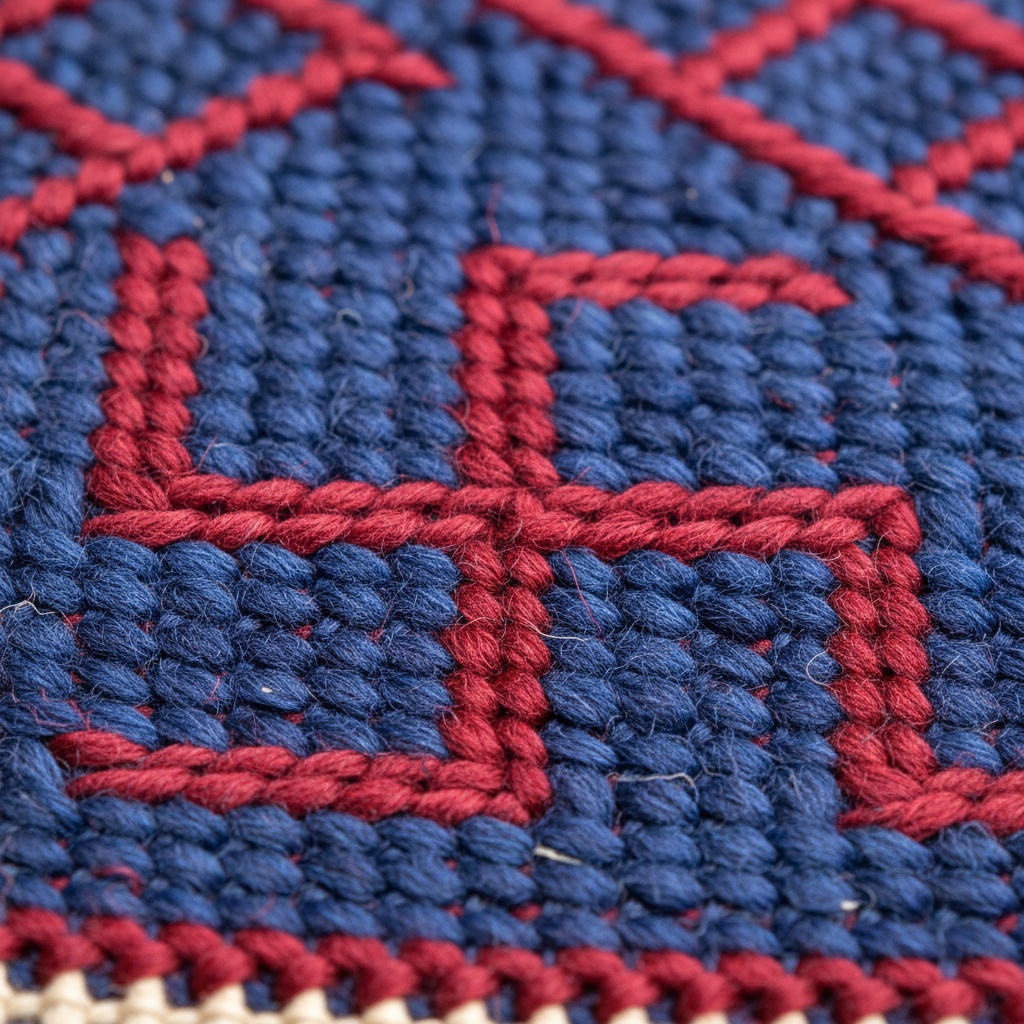
Close-up of interlocking geometric pattern construction
Visual Elements of Swastika Designs in Tribal Carpets
The most recognizable feature of a swastika design rug is the bold geometric motif itself, which may appear as a single central medallion, a repeating interlocked field, or a rhythmic border meander.
In Caucasian weaving, the motif often takes the form of Pinwheel arrangements, radiating from a central axis. Navajo artisans used the whirling logs form, with arms sometimes extended into surrounding patterns that echo sand painting iconography.
A traditional patterned rug enhances the cozy, scholarly atmosphere of this dark wood library.
In Anatolian and Central Asian textiles, the motif was frequently placed in linear succession, creating a sense of perpetual motion. These structural choices—central placement, repetition, or border integration—are deliberate visual strategies to emphasize the symbol’s cyclic nature and protective power.
Colors and Visual Impact
Antique swastika design rugs were woven with natural materials, primarily handspun wool and occasionally silk, dyed using vegetal or early aniline dyes. Common antique rug colors include rich reds, indigo blues, ivory, ochre, and deep earth tones. In Tibetan and Chinese rugs, golden yellows and saffron hues were also popular, reflecting Buddhist ritual palettes.
The contrast between dark and light shades was critical in highlighting the swastika design motif: ivory backgrounds might frame bold crimson or navy arms, while secondary patterns in green, brown, or black enhanced the overall depth.
A richly textured, traditional patterned rug anchors this inviting, warmly lit corner filled with books and greenery.
This careful balance of color ensured the motif was both immediately visible and harmoniously integrated into the rug’s larger design scheme.
Swastika Design Motifs in Flat-Weave Kilims vs. Pile Rugs
Flat-weave textiles such as kilims and Navajo tapestries render swastika design motifs with exceptional precision. In a swastika kilim, the tapestry technique produces sharp, angular lines that emphasize the motif’s geometry.
By contrast, in pile rugs, the symbol is equally recognizable but can appear more rounded, depending on knot density and pile height. The hooked or stepped rendering often seen in Caucasian pile carpets demonstrates how weavers adapted the motif to the knotting structure, ensuring it retained its clarity even in wool-on-wool construction.
A jewel-toned blue rug with golden patterning brings warmth and pattern to this plant-filled, sunlit reading nook.
Both methods—flatweave and pile—preserve the motif effectively, but flatweave rugs are generally considered the clearest medium for geometric symbols.
Does Pile Height Affect Design Clarity?
Yes. Pile height plays a direct role in the clarity of swastika design rug designs. A low to medium pile maintains crispness, with each arm of the motif appearing clearly defined. If the pile is cut too high, however, the swastika’s sharp geometry can soften, producing a blurred or clouded effect.
Antique rugs with carefully sheared medium piles often showcase the ideal balance: soft underfoot while still presenting motifs with precision.

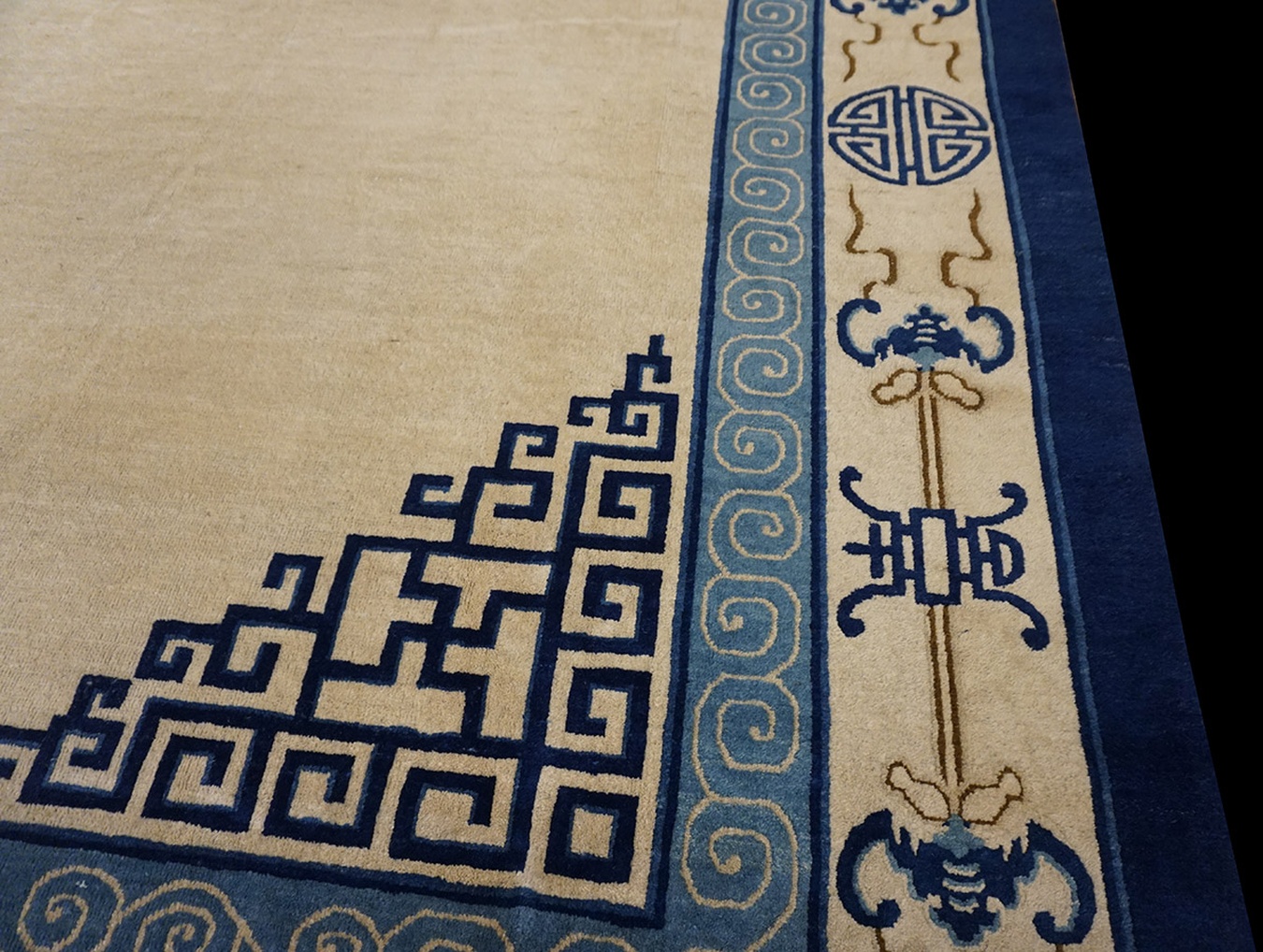
A detailed focus on the intricate, vivid colors and geometric weave of a traditional textile rug.
This relationship between pile rug motif clarity and visual sharpness explains why some weavers favored flatter constructions for complex geometric ornamentation.
Weaving Methods and Construction Techniques
- Symmetrical (Turkish) Knot or Asymmetrical (Persian) Knot — Determines knot density and the level of detail possible. — Why: A finer knot count allows sharper motifs, making geometric designs more precise.
- Flatweave/Tapestry Weaving — Produces angular, linear clarity ideal for swastika design patterns. — Why: The interlocking warp and weft create natural right angles, aligning with the motif’s form.
- Warp and Weft Foundation (Wool, Cotton, or Silk) — Provides structural integrity. — Why: Strong foundations increase durability regardless of motif.
- Natural Dyes and Handspun Wool — Adds vibrancy and resilience to colors. — Why: Stable natural dyes preserve contrast, keeping motifs distinct over centuries.
Durability and Longevity
The durability of swastika design rugs depends entirely on traditional craftsmanship and material quality, not the motif itself. High-quality wool, tight knot density, and robust warp foundations ensure rugs can withstand generations of use. Flatweaves, though thinner, can last centuries if properly maintained, while pile rugs benefit from the natural resilience of wool fibers.
With proper care, including protection from excessive wear and moisture, both swastika kilims and pile rugs demonstrate exceptional longevity. In short, it is the construction techniques and materials, rather than the presence of a symbol, that determine whether these rugs endure as usable textiles and cultural artifacts.
The Swastika Design Motif Through Time
Rise, Global Use, and 20th-Century Decline
For thousands of years, the swastika design thrived as one of the most recognizable symbols in rug weaving. From Navajo whirling logs textiles in the American Southwest to Pinwheel Kazaks in the Caucasus and Tibetan swastika carpets, it served as an emblem of harmony, eternity, and good fortune. During the late 19th and early 20th centuries, swastika rugs flourished in both domestic use and international trade.
Collectors in Europe and America prized them for their bold geometry and connection to ancient symbolism. This global spread, however, came to an abrupt halt in the mid-20th century, marking one of the clearest historical turning points in the history of textile design.
Reasons for Decline After WWII
The decline of the swastika design motif was not a matter of changing aesthetic tastes but the result of a profound political and cultural rupture. With the Nazi appropriation of the swastika in the 1930s and 1940s, the symbol became indelibly linked to a regime responsible for devastation and genocide.
After WWII, its display was legally restricted in many countries, including Germany and Austria, where bans on the emblem remain in place.
In the United States, Native communities such as the Navajo, Hopi, Apache, and Pueblo issued a joint resolution in 1940 voluntarily ceasing the use of the whirling logs in weaving, beadwork, and ceremonial art out of respect for global sensitivities.
From this moment, production of swastika design rugs either stopped entirely or was drastically altered, with motifs disguised, rotated, or omitted. What had been an ancient cross-cultural symbol of good fortune was now burdened by a stigma too great for mainstream use.
How Modern Weavers Reinterpret the Motif
Today, the modern swastika design rug revival is limited and cautious, undertaken mainly in cultural or educational contexts. Some Navajo weavers have revived the whirling logs in small runs, framing it explicitly within traditional healing and cosmological narratives. In Tibet and India, the symbol continues to appear in Buddhist and Hindu ritual textiles, where it retains its sacred meaning of eternity and auspiciousness.
These modern interpretations are rarely commercialized for Western markets; instead, they serve as acts of cultural continuity, reclaiming the motif’s original meanings from the distortions of the 20th century. The act of weaving the swastika today requires deliberate explanation, reminding audiences that this was once a universal emblem of life and well-being, not hate.
Can Restoring Faded Motifs Harm Value?
The question of rug restoration and value is especially delicate with swastika rugs. While conservation is necessary to preserve antique textiles, over-restoration—including aggressive re-dyeing, repainting motifs, or attempting to “brighten” the swastika—can permanently diminish a rug’s value. Collectors and scholars prize authenticity, and intrusive interventions disrupt both the textile’s historical integrity and its provenance.
Minimal, sensitive cleaning or stabilization is preferred, ensuring the rug retains its original character while preventing further deterioration. The principle is clear: a faded or partially worn swastika design motif is far more valuable, historically and financially, than one whose details have been artificially restored at the cost of authenticity.
Through these phases—rise, decline, and limited revival—the swastika design motif demonstrates how external political events, rather than inherent design qualities, determined its disappearance from mainstream rug weaving. Its story underscores the importance of understanding textile art within both cultural and historical contexts.
Market, Value, and Collecting
Swastika Design Rugs as Culturally Sensitive Purchases
In the present day, acquiring a swastika design rug requires both appreciation of historic craftsmanship and an awareness of the symbol’s modern associations. While these textiles were woven long before the 20th-century political appropriation, their imagery can still provoke strong reactions.
Collectors must approach the antique swastika rug market with cultural sensitivity, ensuring they contextualize pieces as authentic artifacts of pre-WWII weaving traditions rather than as political symbols. For museums, scholars, and private owners alike, the ethical dimension of ownership is as important as aesthetic or financial value.
Where to Find Authentic Antique Swastika Design Carpets
- Specialist Dealers — Established dealers in Navajo, Caucasian, or Tibetan rugs often maintain vetted inventories. — Why: These professionals typically provide provenance details and ensure authenticity.
- Auction Houses — Major auction houses (e.g., Sotheby’s, Christie’s, Bonhams) occasionally list swastika design rugs during tribal, Islamic, or ethnographic art sales. — Why: Auctions offer transparent market prices and published catalog notes.
- Private Collections and Museums — Institutions sometimes deaccession duplicates, or collectors resell with documentation. — Why: Museum or collection provenance significantly increases buyer confidence.
- Reputable Online Platforms — High-end platforms occasionally list Navajo whirling logs or Pinwheel Kazak carpets. — Why: Online sales allow access to a global market, but due diligence is critical.
See [Antique Navajo Rugs] for further exploration.)
Price Range for Early 1900s Swastika Design Rugs
The swastika design rug value in today’s market varies widely. Early 20th-century examples—whether Navajo whirling logs, Caucasian Pinwheel Kazaks, or Tibetan swastika carpets—generally sell between $2,000 and $50,000+.
Condition, rarity, and size all influence final price, with exceptional pieces achieving higher figures. Unique designs, rare regional variants, or rugs with ceremonial significance often command premiums beyond this range.
Does Provenance Documentation Boost Value?
Yes. Provenance and rug price are closely linked. Documentation that traces a rug’s history—whether identifying the original weaver, linking to a well-known collector, or confirming exhibition in a museum—adds both scholarly and market value.
Buyers are willing to pay more for rugs with well-documented ownership, as provenance mitigates uncertainty and strengthens the piece’s authenticity.
Appraisal: How Cultural Context Affects Value
A swastika design motif appraisal must account for cultural and geographic context. In Western markets, stigma surrounding the motif can suppress demand, sometimes lowering sale prices compared to other rugs of similar age and quality.
In contrast, within Tibetan or Indian cultural contexts, where the swastika retains its sacred meaning, value is measured differently, emphasizing symbolism rather than stigma. Appraisers must balance these factors, recognizing that the same rug can carry different valuations depending on where and to whom it is sold.
Chemical Dye Tests for Authentication
One of the most reliable ways of authenticating antique rugs is through chemical dye analysis. Pre-WWII swastika rugs typically feature vegetal dyes, while the presence of certain synthetic aniline dyes can help establish earliest possible production dates.
The absence of post-1940 synthetic compounds provides strong evidence that a swastika design carpet predates the Nazi era, which is crucial for both collectors and cultural institutions.
Does Insurance Cost Differ for Swastika Design Rugs?
In most cases, insurance costs for swastika design rugs do not differ from other antique textiles. Premiums are calculated based on appraised value, rarity, and condition, not the motif itself. However, some insurers may require additional documentation for high-value or culturally sensitive items.
Collectors of swastika rugs should expect to present provenance, condition reports, and formal appraisals during the underwriting process.
Ultimately, collecting swastika rugs demands a balance of respect, knowledge, and professional verification. Their value is shaped not only by craftsmanship and age but also by provenance and the cultural narratives that accompany them.
Museums, Ethics, and Public Display
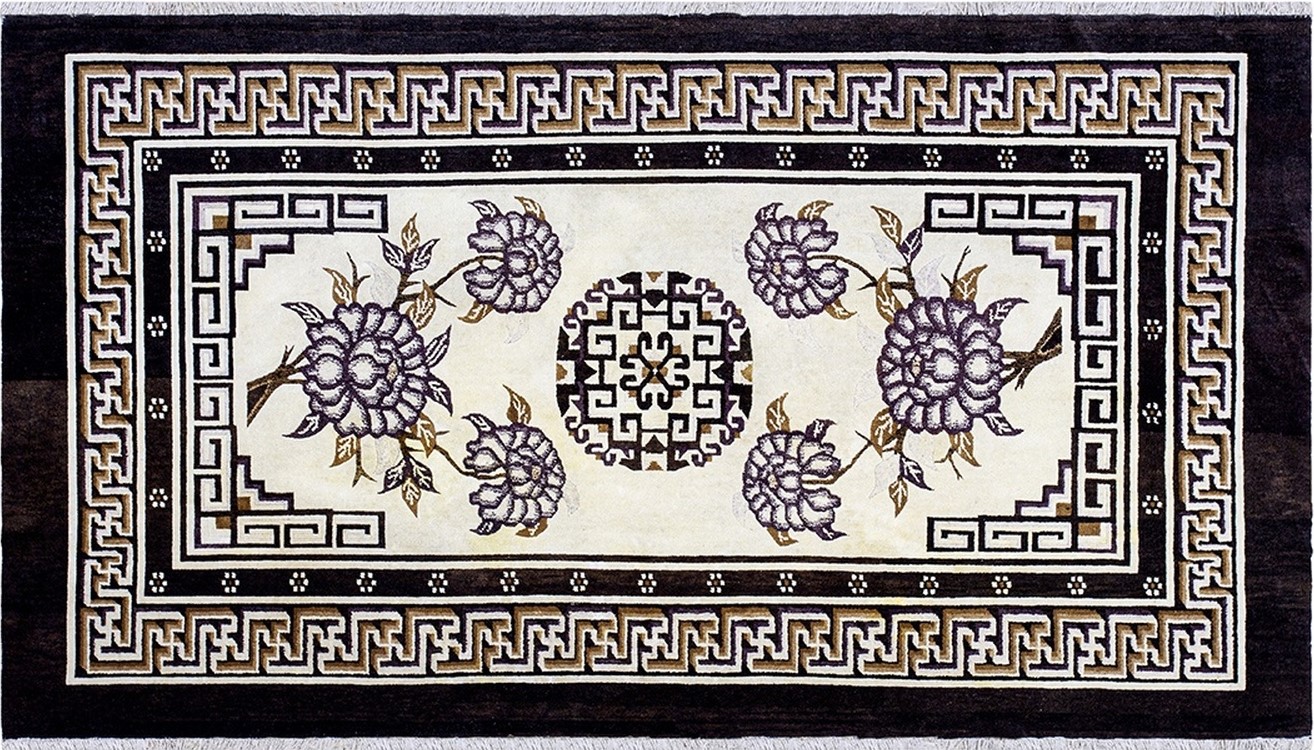
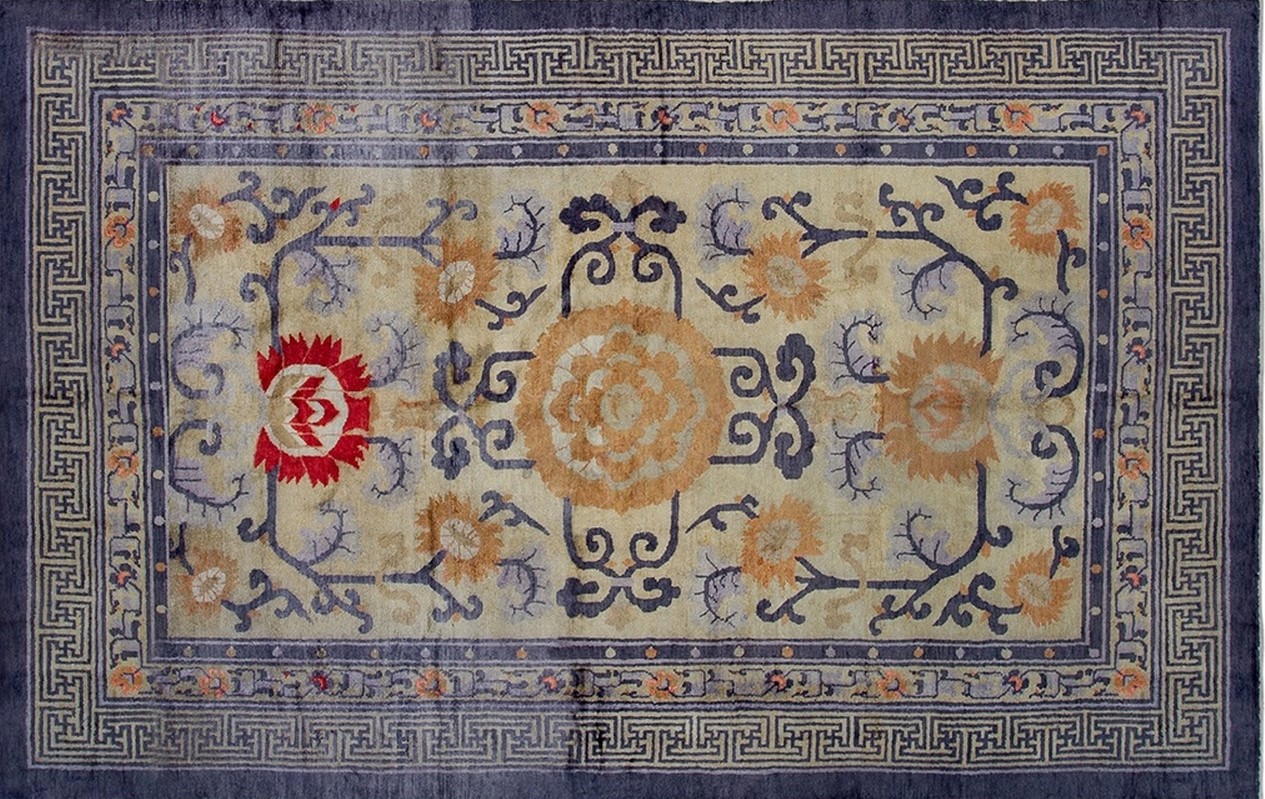
Antique Chinese – Baotou Allover Medallion Knotted Rug – by Rugs On Net
Should Museums Display Swastika Rugs?
The question of museum swastika rug display balances the educational importance of cultural artifacts against the potential for controversy. Many institutions argue that rugs featuring the swastika design must be exhibited with clear interpretive materials, emphasizing their pre-20th-century origins as symbols of luck, cosmic cycles, and sacred harmony.
By presenting them with labels that explain both their traditional meanings and the later Nazi appropriation, museums can highlight how a once-universal emblem was transformed by political misuse. Some institutions, especially in regions with legal bans on the symbol, choose not to display such works at all. Others have opted for orientation adjustments or curated settings that reduce the risk of accidental offense.
Increasingly, however, leading museums favor transparent, context-rich exhibitions as a way to foster understanding rather than erasure.
Educational Outreach and Interpretation
- Contextual Labels and Guides — Museums often provide wall text explaining the Sanskrit etymology, Navajo whirling logs tradition, and Tibetan Buddhist usage. — Why: Visitors learn that the motif’s primary meanings were auspicious and ancient, not political.
- Public Lectures and Programs — Talks by textile historians, cultural representatives, or curators contextualize the symbol’s cross-cultural history. — Why: Direct interpretation helps dismantle misconceptions while deepening appreciation of rug traditions.
- Digital Resources and Catalogs — Online exhibitions and searchable databases include essays on symbolism and historic uses. — Why: Extends education beyond the gallery, reaching global audiences.
- Collaborations with Descendant Communities — Partnerships with Navajo, Tibetan, or Central Asian cultural organizations. — Why: Ensures interpretations respect and amplify the voices of those for whom the motif retains sacred meaning.
Ethical Considerations When Selling
The ethics of swastika design carpet sales demand transparency and sensitivity. Sellers—whether private dealers, auction houses, or collectors—must provide full disclosure of a rug’s age, cultural context, and symbolic history. Misrepresentation, whether by omission or marketing for provocation, is widely considered unethical.
Responsible transactions emphasize that these are cultural artifacts, not political emblems, and that buyers should be motivated by historical and artistic appreciation. Respect for descendant communities is also key; for example, Navajo rugs with whirling logs should be acknowledged as sacred items with specific cultural meanings.
By maintaining honesty, respect, and educational framing, sellers ensure that ownership of swastika rugs supports preservation of heritage rather than exploitation.
In sum, both display and sale of swastika rugs require contextual education, cultural respect, and ethical transparency. Approached thoughtfully, they can serve as powerful tools for learning, connecting global traditions, and correcting misunderstandings of one of humanity’s oldest geometric symbols.
Legacy and Symbolic Meaning
Traditional and Modern Symbolic Layers
The swastika design rug legacy embodies one of the most complex journeys in textile art. In its earliest contexts, the motif signified good fortune, cosmic order, and sacred harmony, whether woven into a Navajo whirling logs rug, a Tibetan swastika carpet, or a Caucasian Pinwheel Kazak. These designs expressed an affirmation of life, balance, and protection, rooted in shared human traditions across continents.
By the mid-20th century, however, the Nazi appropriation of the swastika fractured its meanings, transforming a universal symbol of well-being into one of political trauma. Museums and collectors today navigate this layered legacy by balancing respect for the motif’s ancient cultural role with sensitivity to its modern stigma. In this sense, the meaning of swastika textile design must always be explained as both a sacred, premodern emblem and a contested modern sign, reflecting the paradox of continuity and rupture in global cultural history.
Cultural, Spiritual, and Artistic Significance
- Cultural Significance — The swastika is a cross-cultural textile motif, appearing independently in Asia, the Americas, and Europe. — Why: Its universality testifies to the shared symbolic imagination of humanity, making it one of the most recognizable ancient designs in rugs.
- Spiritual Significance — In traditions from Buddhism to Navajo cosmology, the motif conveyed protection, balance, and the eternal cycles of life. — Why: Weavers often imbued their textiles with prayers for harmony and prosperity, turning rugs into vessels of belief.
- Artistic Significance — As a geometric form, the swastika lent itself to both flatweave kilims and pile carpets, appearing in medallions, borders, and repeating fields. — Why: Its adaptability across weaving structures demonstrates its enduring aesthetic power and flexibility in design grammar.
The Future of Swastika Design Motifs in Textile Art
The future of traditional rug symbols like the swastika design remains uncertain. While mainstream rug production largely avoids the motif due to its politicized associations, efforts at cultural revival and education are emerging. Some Navajo and Tibetan weavers cautiously reintroduce the design, contextualizing it within traditional meanings of luck, eternity, and cosmic order.
Museums increasingly favor context-rich displays that reclaim the motif as part of world textile heritage, rather than suppress it entirely. Whether or not the swastika will return to broader rug design, its presence in scholarship, collections, and cultural education ensures that it will continue to be studied, debated, and remembered.
Ultimately, the swastika design rug legacy mirrors the evolution of world culture: once a symbol of shared spiritual well-being, later fractured by modern politics, and now cautiously revisited through scholarship and cultural dialogue.
Respectful education remains the key to appreciating its role in rug history—acknowledging both its ancient sacredness and its modern complexities, while preserving its place among the most important cross-cultural textile motifs ever woven.
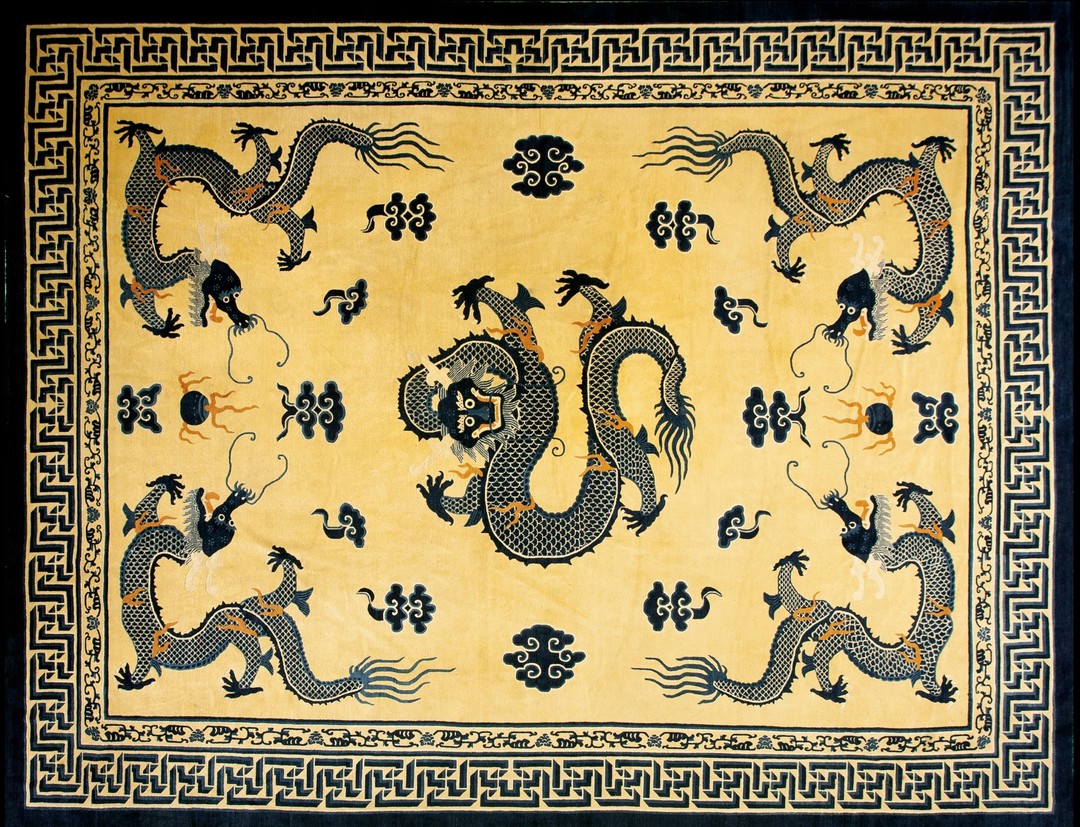
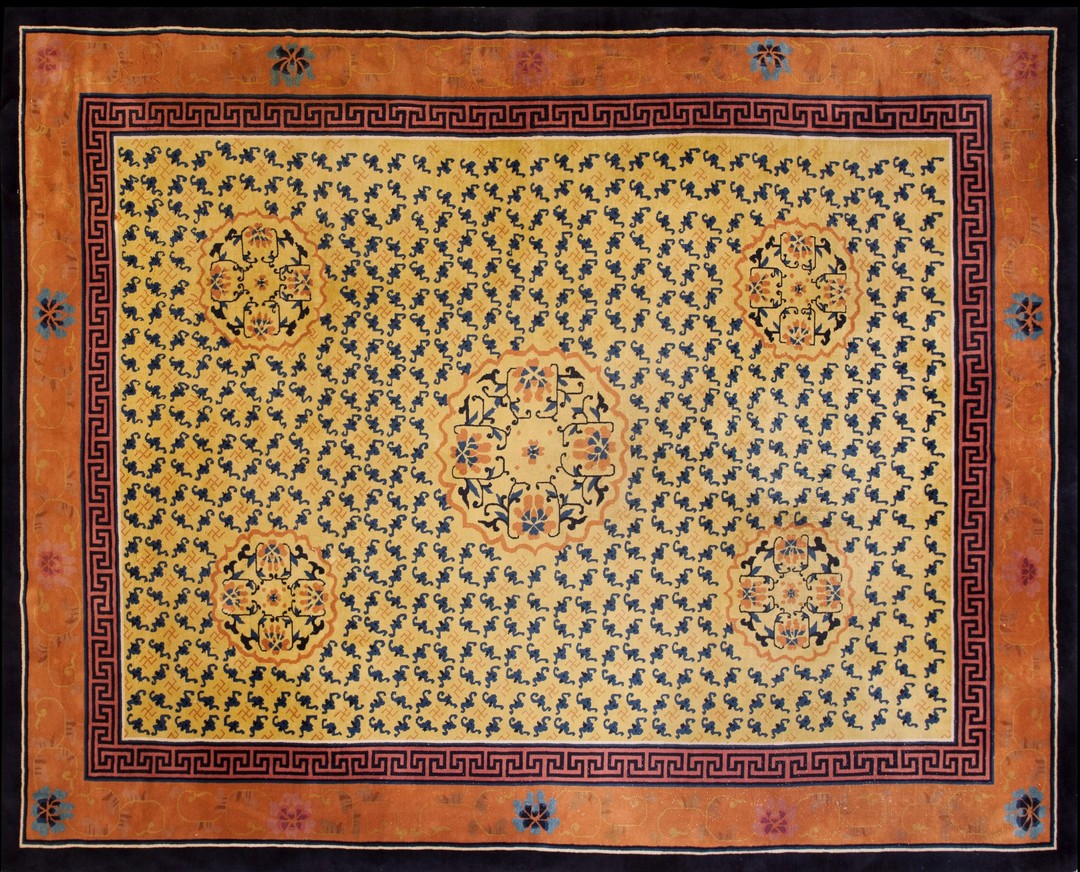
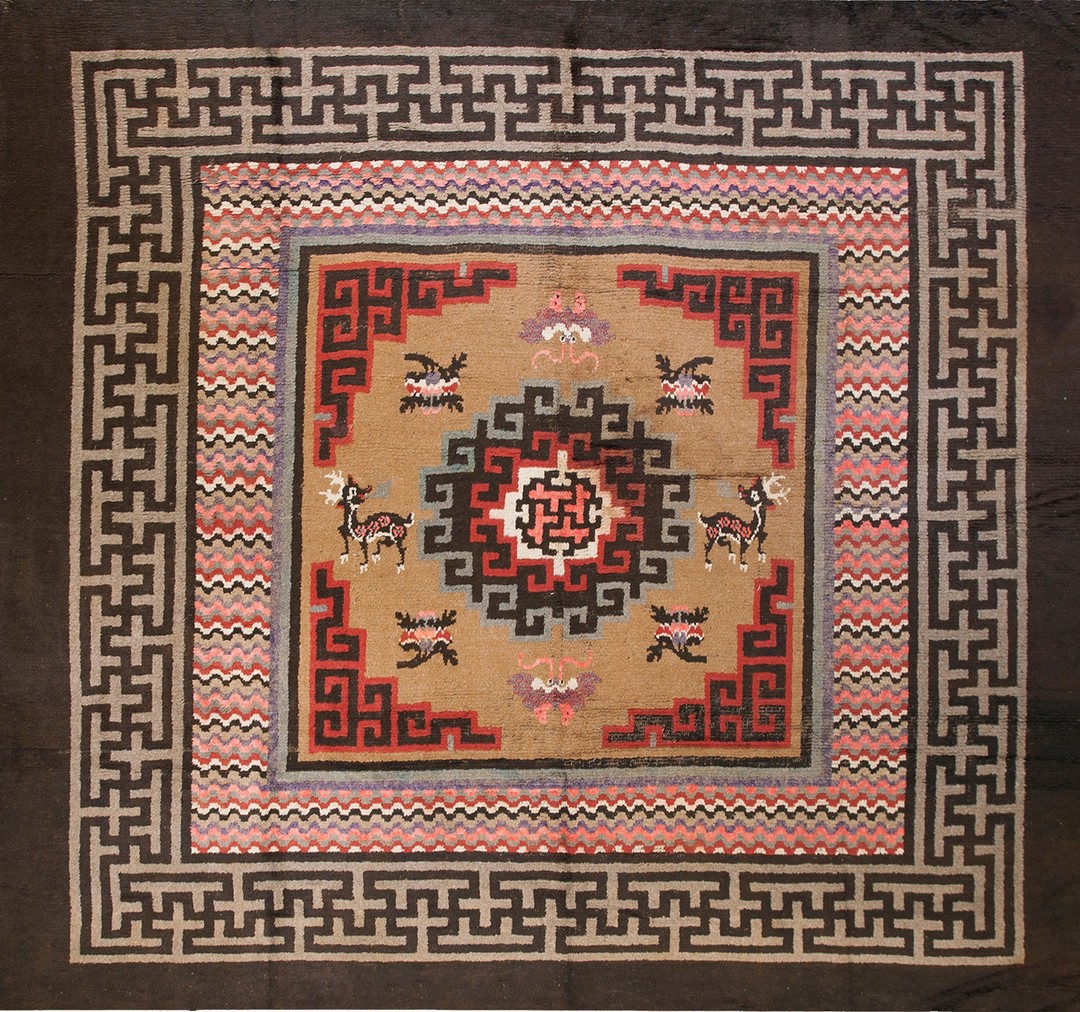
Explore a Few of Our Swastika Design Rugs
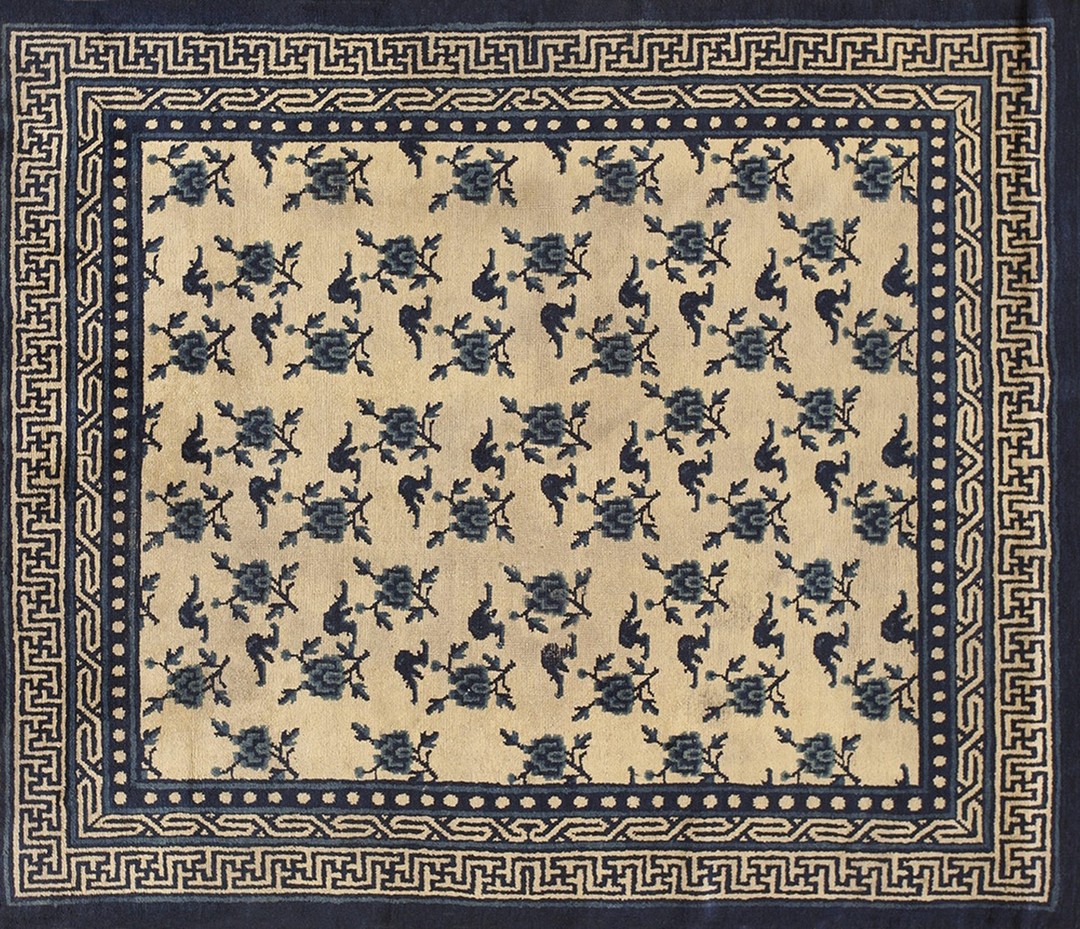
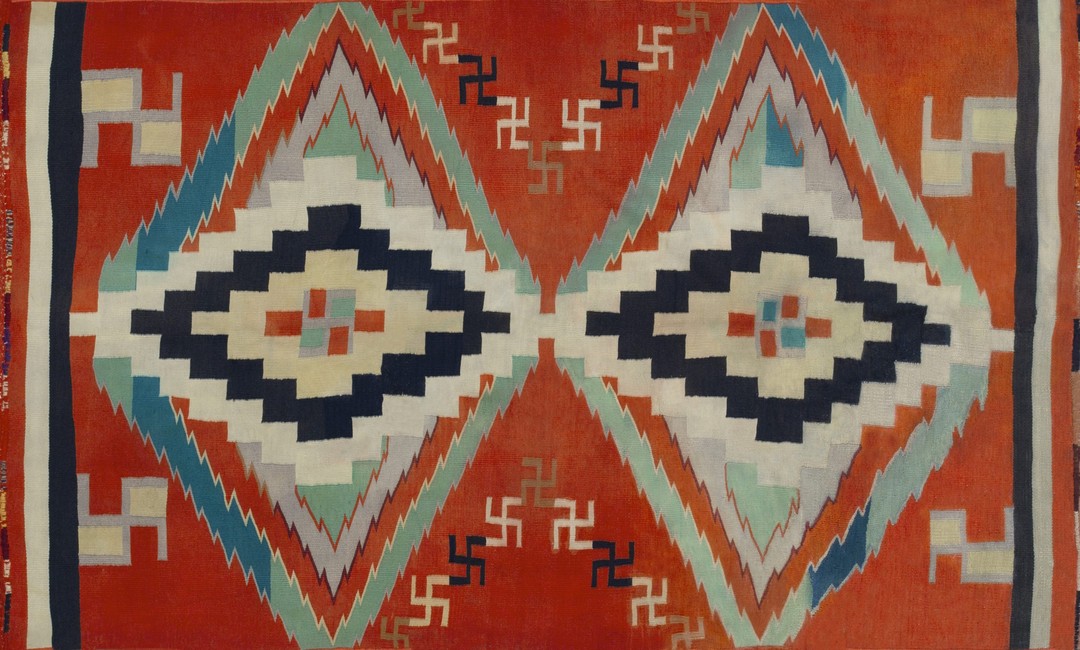
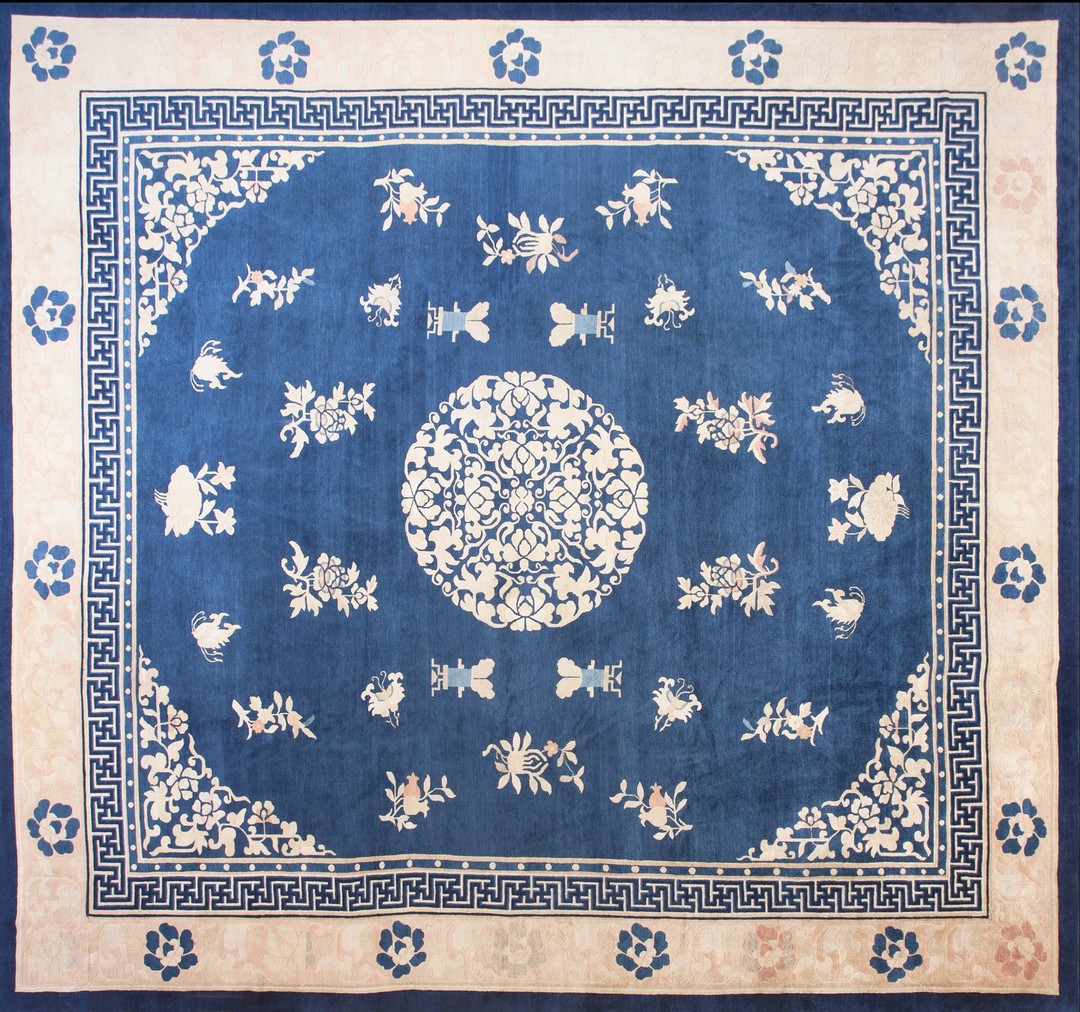
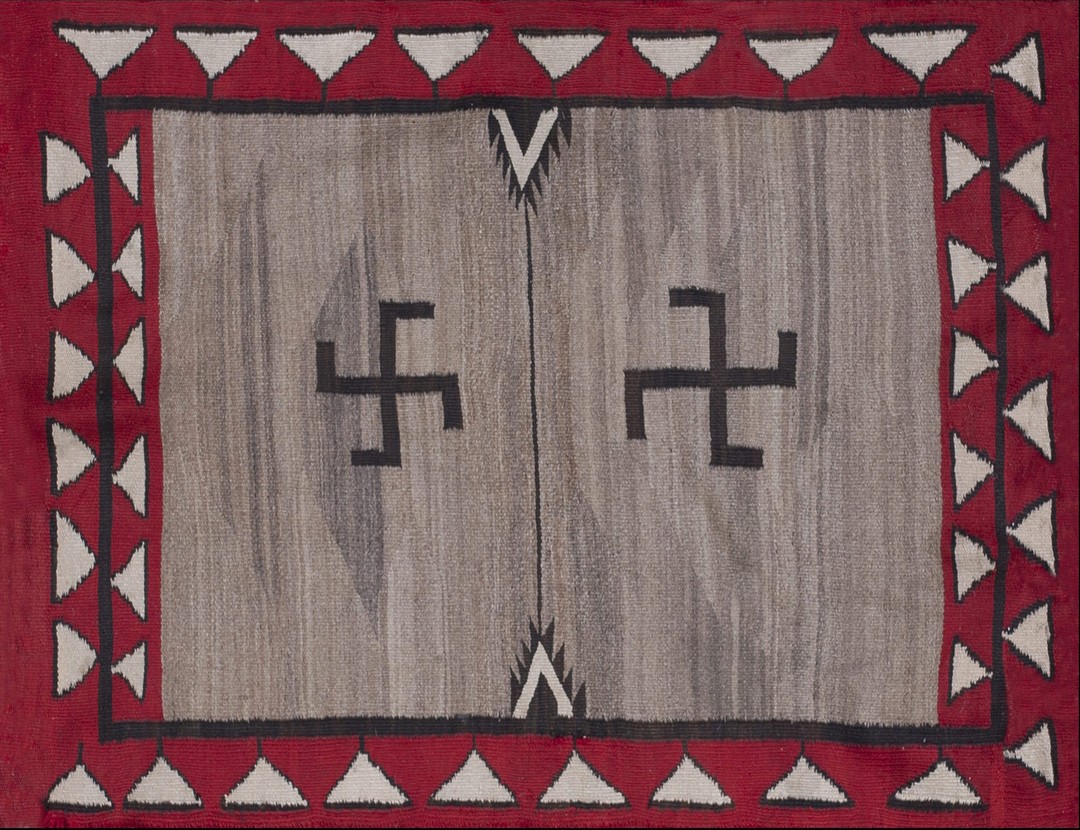
FAQ
- Where should US buyers seek swastika motif rugs responsibly?
Use specialist dealers, vetted auctions, or museum-affiliated sales that provide provenance and cultural framing. Avoid platforms with explicit swastika bans and confirm shipping legality for your destination.
- Can restoration alter or cover a swastika on a rug?
Overdyeing or motif alteration is ethically fraught and can reduce value; always disclose any changes. Many restorers prefer conservation that preserves, rather than conceals, original design.
- What ethical notes belong with swastika motif rugs?
Provide cultural context, date range, and origin, and clearly state that the rug does not endorse extremist ideologies. For public display, consider signage explaining pre-20th-century meanings.
- How are swastika motifs placed within rugs?
Tibetan rugs often use swastikas in borders or corners; Pinwheel Kazaks may fill the entire field in staggered rows; Navajo designs usually center a whirling-log element within geometric frameworks.
- How do I authenticate a Navajo swastika motif rug?
Look for handspun churro-type wool, period dyes, lazy lines, edge finishes, and trading-post provenance c. 1890–1939. Work with a Navajo textiles specialist for verification and cultural sensitivity.
- What materials and weaves appear on swastika motif rugs?
Caucasian examples are usually wool pile on wool with symmetrical knots; Tibetan rugs use thick wool pile (often khaden sizes); Navajo whirling log pieces are wool flatweaves or sandpainting rugs.
- Are modern swastika motif rugs still woven?
In Asia, traditional manji/yungdrung motifs persist in religious textiles. In Western markets, production and sale are rare due to sensitivities and platform policies, limiting mainstream availability.
- How can I distinguish swastika motif rugs from Greek key borders?
Greek key (meander) runs as continuous right-angle fretwork; swastika motifs have discrete arms bent at 90°. Some meanders incorporate small swastikas, but they’re visually and structurally distinct.
- What other names describe swastika motif rugs?
You’ll see “fylfot,” “gammadion,” “hooked cross,” “pinwheel” (Kazak), and “whirling log” (Navajo), plus “manji/yungdrung” in Buddhist contexts. Using correct local term improves accuracy.
- Are museum-held swastika motif rugs documented?
Yes. Institutions document Caucasian rugs with hooked swastika fields and Tibetan pieces with swastika borders. Museum catalog notes often reference “hooked swastika forms” or “manji/yungdrung” motifs.
- Can cleaning remove a swastika design from a rug?
No—the swastika motif is woven or dyed-in. Aggressive cleaning risks dye bleed, pile distortion, or abrash shift; test small areas and use pH-neutral methods or a qualified rug cleaner.
- How should I photograph a swastika motif rug?
Shoot full rug, close-ups of the motif, borders, and back weave. Include orientation, a ruler or color card, and any inscriptions; clear documentation supports appraisal and policy compliance.
- What terms should I use when listing swastika motif rugs?
Use neutral, specific language: “Pinwheel Kazak with hooked swastika field, Caucasus, late 19th c.” or “Navajo whirling log rug, c.1910.” Avoid praise or ideological framing; add cultural context.
- How can I date a swastika motif rug quickly?
Start with origin cues: Kazak examples are often 19th century; Navajo whirling logs peak c. 1890–1939; Tibetan manji borders span 19th–20th centuries. Confirm with dyes, weave structure, and provenance.
- How do swastika motif rugs affect value?
The motif narrows mainstream demand but may increase interest among specialist collectors (e.g., Pinwheel Kazaks or early Navajo). Expect longer selling times and require careful, contextual description.
- Can I ship a swastika motif rug to Germany or Austria?
Be cautious. Germany’s StGB §86a and Austria’s Verbotsgesetz tightly restrict Nazi symbols; context exceptions exist but are narrow. Seek legal advice and written carrier approval before exporting.
- Can I sell a swastika motif rug on US marketplaces?
Many platforms, including eBay, restrict listings bearing swastikas, especially items after 1933. Specialist dealers or auction houses with historical framing are safer channels.
- Are swastika motif rugs legal to own in the US?
Generally yes, under free-speech protections, though local ordinances and venue policies may restrict public display. When in doubt, consult an attorney before exhibiting or advertising.
- Does swastika direction matter on rugs?
In Indian and Buddhist contexts, right-facing (swastika) and left-facing (sauwastika/manji) can carry different associations. On rugs, orientation helps with cultural attribution but isn’t a reliable dating method alone.
- Are Tibetan swastika motif rugs religious?
Often, yes. Tibetan and Bön rugs use the swastika (yungdrung/manji) as an auspicious emblem, sometimes in border repeats or corner medallions, symbolizing eternity or good fortune.
- How do Navajo swastika motif rugs differ from Nazi symbols?
Navajo “whirling log” designs relate to healing stories and sacred fours; forms are typically square, rotating logs. Many tribes publicly renounced the symbol’s use in 1940.
- What is a “Pinwheel” Kazak swastika rug?
A Caucasian village rug with staggered rows of hooked swastikas across a bold field, typically 19th century. The Metropolitan Museum describes one with alternating hooked forms on red ground.
- Where are swastika motif rugs most often found?
Antique Caucasian Kazak/Pinwheel rugs, Tibetan khaden and temple carpets, and Navajo “whirling log” pieces from roughly 1890–1940 commonly feature the motif. Museum examples confirm this spread.
- Are swastika motif rugs inherently Nazi?
No—most swastika designs in rugs predate the 20th century and symbolize auspiciousness in Asia or cosmology in Navajo traditions. Context, date, and origin determine meaning.
- What is a swastika motif in rugs?
A design element of hooked or rotating arms seen across cultures, centuries before Nazism. In rugs it appears as borders, medallions, or allover repeats, especially in Caucasian, Tibetan, and pre-1940 Navajo weaving.